There’s little doubt that Cinéma du réel, Paris, continues to offer an expansive, challenging programme (and definition) of documentary cinema, one that is as formally adventurous as it is alert to the iniquities and bloody upheavals of our world. Working through this year’s competition lineup, I was, however, struck by the considerable amount of space the festival has secured for works of an opposite kind, films that seem to take deliberate flight from the tumult of the times and find refuge in a serene, rarefied realm beyond politics and history.
To be sure, the festival is still dominated by urgent, pointedly political work, with special sections dedicated to Palestine, Eco-feminism and “Artists and the peoples’ struggle”. Even within the competition, titles such as With Love and Rage (which revisits a feminist organization’s picketing of the Pentagon in 1980), El León (an elliptical commemoration of those killed by the military in Colombia in the 1980s and 90s) and Narrative (centring on a workshop regrouping the family members of those killed in the pro-democracy protests in Thailand in 2010) grapple directly with specific political moments.
Yet, for all the confrontation Cinéma du réel enables with the sordid state of things, this year’s competition section also opens up a vast space for calm and contemplation, for beauty beyond all the bloodshed.
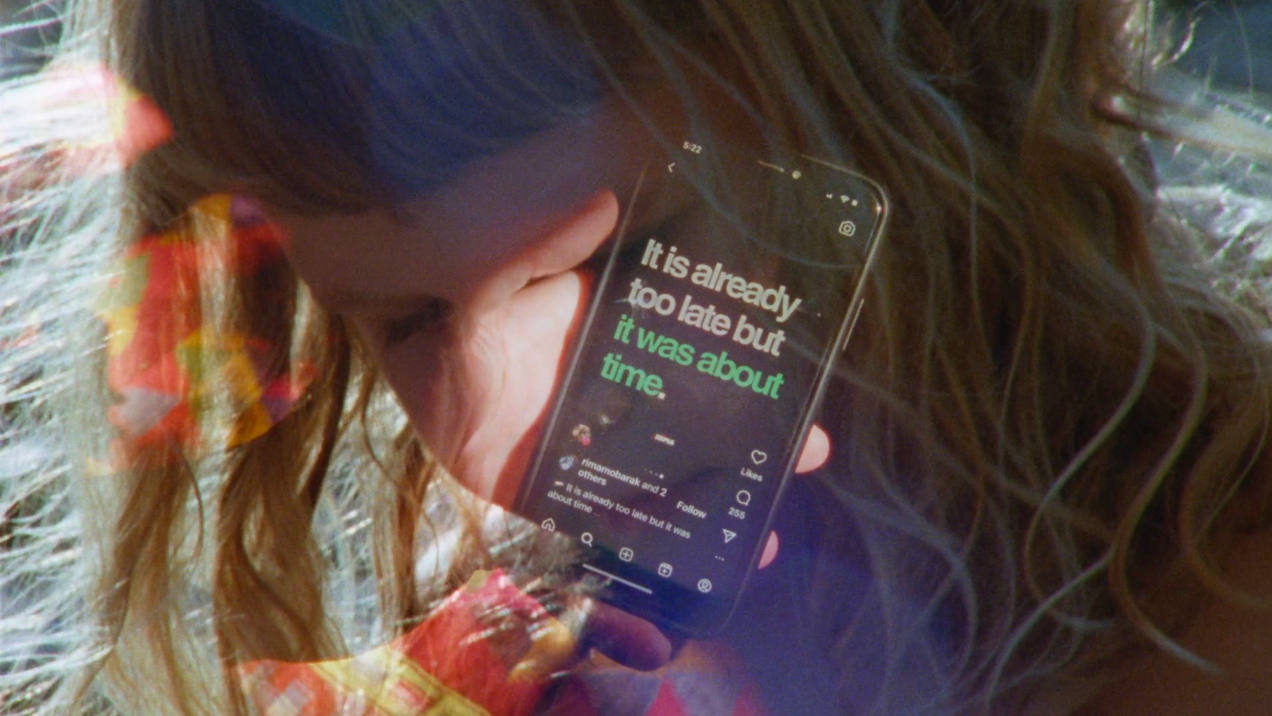
Perhaps no other work embodies this transition better than Ben Russell’s Another Earth. This 13-minute film begins in a kind of tautology: a closeup of a mouth uttering a short text about humanity’s long history of living underground, an experience forever lost after the industrial age. As the actor repeats the text with minor hiccups, the film incrementally layers new visual information over her face — colour-saturated shots of caves, a child playing by the lake, fingers doomscrolling through harrowing war news and, finally, glimpses of protests — suggesting that, underneath layers of civilizational debris, may lurk primal instincts of the Platonic cave. “Time is not what it is, but how it is felt”, go the final words of the looping text. The idyll of the child by the lake indeed evokes a sense of time starkly different from the accelerated sensorial assault that the omniscience of contemporary life enables. Is it possible, desirable to return to subterranean bliss?
A response may be suggested by some of the other titles in competition: meditative landscape films, pastoral portraits, vehemently non-didactic essays and durational experiments that have the salutary effect of calming the viewer’s nerves.
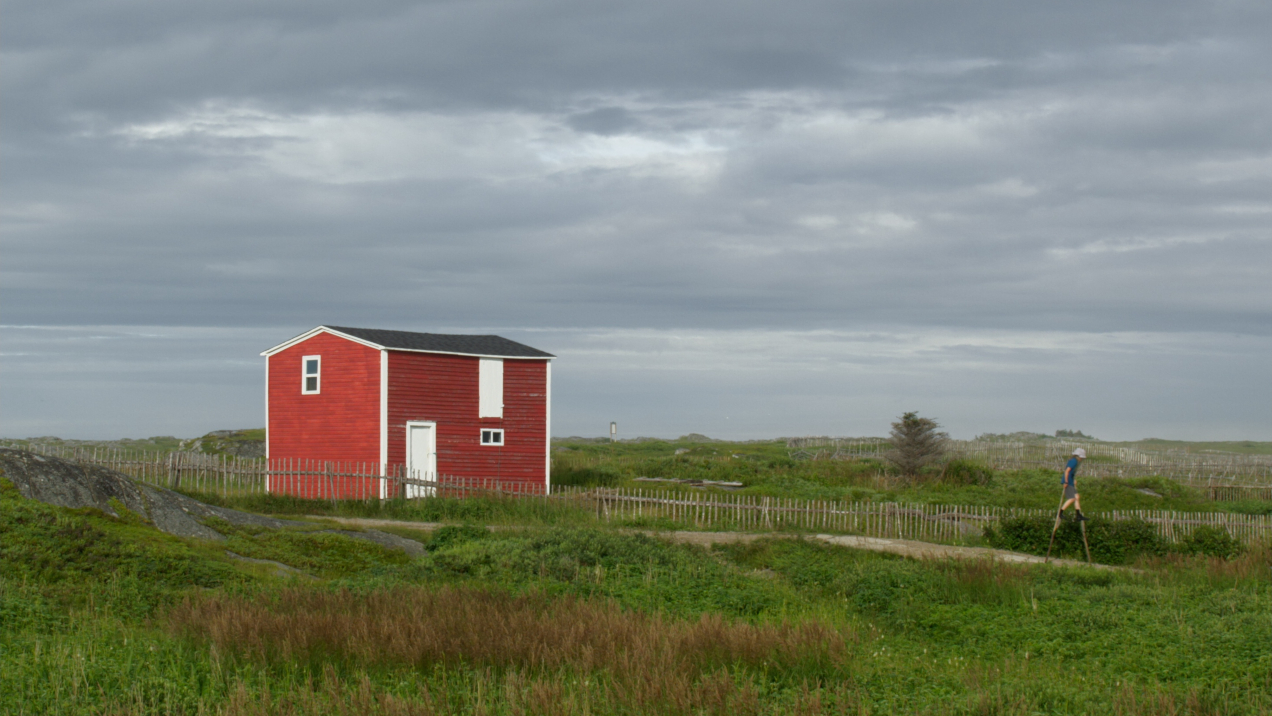
Among the more rewarding entries is Sharon Lockhart’s Windward, set on the scarcely populated Fogo Island, located near the coast of Newfoundland, Canada. The film is something of an extension, a chromatic inversion of Lockhart’s mid-length Eventide (2022). Where that single-shot featurette took place under the twilight skies, its actor-participants piercing the dark frame with their torchlights, this new work unfolds entirely in daylight. Comprising twelve static shots of about five minutes each, the film also echoes Pine Flat (2006) in that it centres on children or young adults engaged in leisurely, summertime activities outdoors.
In extremely long, wide shots that turns them into little more than mobile pixels, we watch the youngers take a swim, chase each other, fly kites, walk on stilts or just sit quietly on the rocky coasts of the island. The landscape is breathtaking, particularly in Lockhart’s painterly composition of them, but it’s the human elements that invigorate it. Our gaze is locked on the children’s activity, which is both a vehicle of chaos within a stately pictorial order and a dynamic formal element that activates the frame. This is most spectacularly felt in a shot where a girl feeds a flock of seagulls on a rock. The birds lunge at the fish that the young woman tosses one by one, and their moving mass keeps shifting the visual centre of the shot to thrilling effect.
But the children in the film are, above all, a source of emotional warmth. Very simply, the sight of boys and girls, frequently dressed in white, enjoying themselves in sunny nature is deeply gratifying. As they say, not a phone in sight, just people living in the moment… As always with this filmmaker, there is a touch of theatre beneath the apparent spontaneity of action. Lockhart often captures the children’s actions midway, but ends the shots just after they have exited the frame — in a manner that recalls the trains in James Benning’s RR (2007). Despite the overwhelming presence of nature, man, quite literally, becomes the measure of things in Windward.
Rebecca Digne’s Barefoot Maria operates in an adjacent thematic territory, but limits its scope to one young girl. Eight-year-old Maria leads an enchanted childhood in the Tuscan countryside, with cats, dogs, geese and horses for playmates, in a lovely country house that is marked for eviction by its new owners. Digne pays remarkable attention to Maria’s leisure-time behaviour (and leisure is all that she seems to have), shaping the material to give us the impression that she lives alone in this heavenly demesne. She also lends Maria a Super-8 camera, and the girl regularly sends back tapes that she has filmed of her own life. What emerges from this intergenerational correspondence is a charming, almost timeless picture of a childhood at once insular and privileged, untouched by the anxieties and demands of modern life. Maria grapples with boredom, invents ingenious ways to pass time and manages to achieve perfect harmony with her environment just as it is taken away from her.
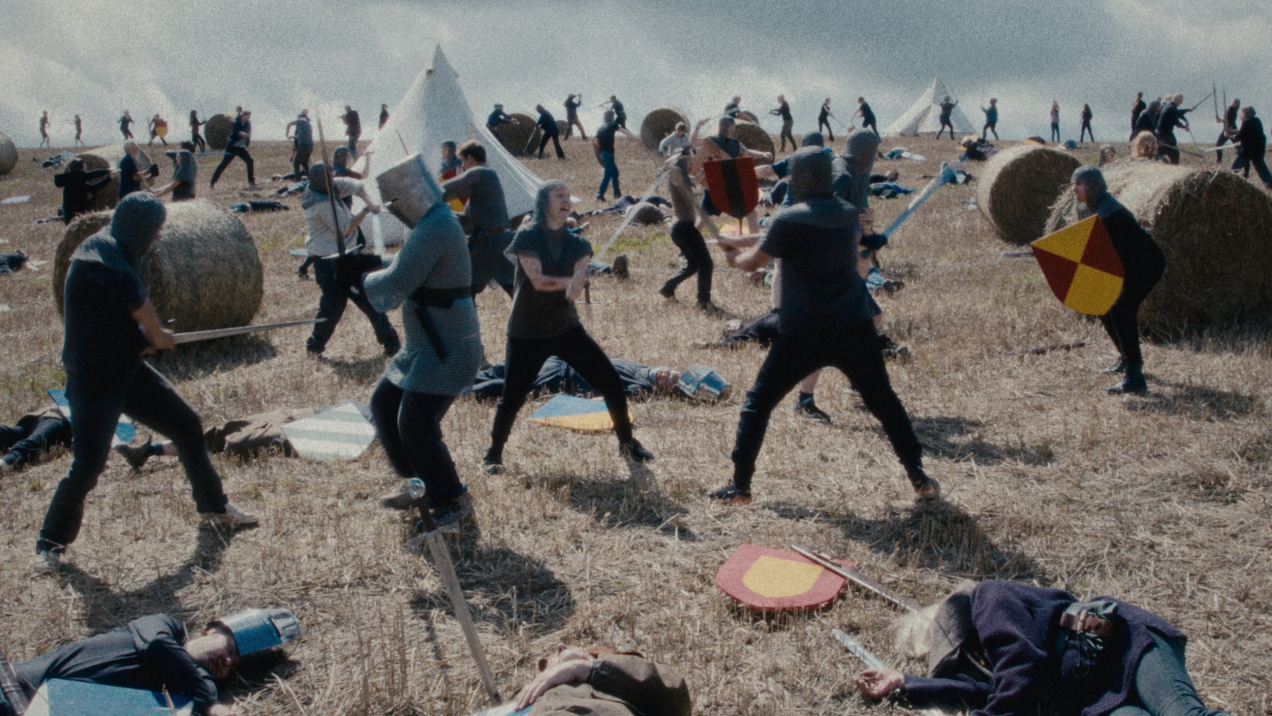
The horrors of the world are scarcely to be seen in Matter of Britain too. Peter Treherne’s enigmatic, rapturously shot debut feature unfolds in an unnamed, lushly wooded village in the south of England. Vignettes from everyday life in the village – farming, deer hunting, sheep rearing, churchgoing, cattle trading — are interspersed with fictional passages in which the villagers enact episodes from Arthurian legend, particularly the Knights’ quest for the Holy Grail, in full costume. Realized in a high-theatrical style, and bathed in Caravaggian darkness, these passages monumentalize ordinary lives in a manner that recalls Roberto Minervini’s use of rural Southerners in The Damned (2024). Treherne’s film doesn’t expound on this strange mix of fantasy and ethnographic document, although an early radio soundbite about climate change-induced agrarian crisis hints at a possible connection to the Holy Grail’s capacity to restore barren lands. Does the Quest represent a living myth for the villagers, a collective, subconscious yearning? Are they looking for some kind of deliverance? Matter of Britain doesn’t explain.
Several titles in the competition take this refusal of discursivity to its furthest limits, almost to the point of unintelligibility — a tendency that has become increasingly common in experimental documentary, both in the fly-on-the-wall and the essay traditions. Presented without context or comment, large parts of these ‘slow’, solemn films come across like unprocessed inventories of found images that ask the viewers to make what they will of them.
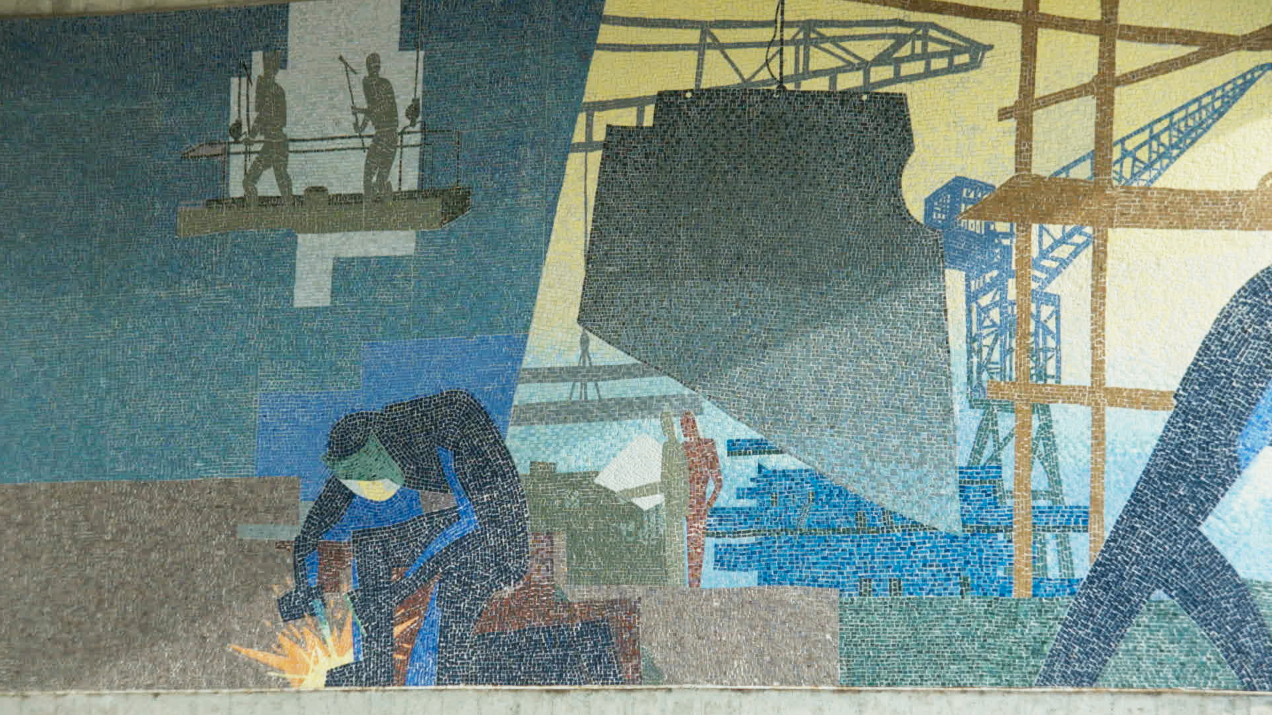
That’s perhaps why I found Juliette Achard’s Labore Nobile appealing in its openness, sincerity and capacity for commitment. The film is a fairly dense, focused treatise on the evolution of labour and industry as seen through the changing fortunes of Saint-Nazaire, a port town in Northern France. The film’s lucid voiceover is conceived as a sort of letter to a future where work has ceased to have the meaning it has always had in human history, and the narrative is completed by interviews with people working in different sectors of Saint-Nazaire.
While the filmmaker takes us through the economic history of the town — dominated by heavy industries such as ship building and aircraft assembly that have proven to be increasingly indifferent to worker rights and public health — she also weaves in short, poetic monologues performed by its blue-collar residents. Labore Nobile (which translates to “Ennobling through work”, not free of the ominous echoes of Arbeit macht frei) makes many small inventions within the framework of a classic essay film. Despite specific subject matter and a limited geography of focus, Achard manages to undertake considerable formal and thematic digressions, pushing a traditional form from within in the vein of Harun Farocki. Her film amply demonstrates Luc Moullet’s maxim that “thirty square kilometres or a little more is enough to know the whole world, to have all its keys.”
 The Seventh Art
Leave a comment