There’s little doubt that Cinéma du réel, Paris, continues to offer an expansive, challenging programme (and definition) of documentary cinema, one that is as formally adventurous as it is alert to the iniquities and bloody upheavals of our world. Working through this year’s competition lineup, I was, however, struck by the considerable amount of space the festival has secured for works of an opposite kind, films that seem to take deliberate flight from the tumult of the times and find refuge in a serene, rarefied realm beyond politics and history.

To be sure, the festival is still dominated by urgent, pointedly political work, with special sections dedicated to Palestine, Eco-feminism and “Artists and the peoples’ struggle”. Even within the competition, titles such as With Love and Rage (which revisits a feminist organization’s picketing of the Pentagon in 1980), El León (an elliptical commemoration of those killed by the military in Colombia in the 1980s and 90s) and Narrative (centring on a workshop regrouping the family members of those killed in the pro-democracy protests in Thailand in 2010) grapple directly with specific political moments.

Yet, for all the confrontation Cinéma du réel enables with the sordid state of things, this year’s competition section also opens up a vast space for calm and contemplation, for beauty beyond all the bloodshed.

Perhaps no other work embodies this transition better than Ben Russell’s Another Earth. This 13-minute film begins in a kind of tautology: a closeup of a mouth uttering a short text about humanity’s long history of living underground, an experience forever lost after the industrial age. As the actor repeats the text with minor hiccups, the film incrementally layers new visual information over her face — colour-saturated shots of caves, a child playing by the lake, fingers doomscrolling through harrowing war news and, finally, glimpses of protests — suggesting that, underneath layers of civilizational debris, may lurk primal instincts of the Platonic cave. “Time is not what it is, but how it is felt”, go the final words of the looping text. The idyll of the child by the lake indeed evokes a sense of time starkly different from the accelerated sensorial assault that the omniscience of contemporary life enables. Is it possible, desirable to return to subterranean bliss?

A response may be suggested by some of the other titles in competition: meditative landscape films, pastoral portraits, vehemently non-didactic essays and durational experiments that have the salutary effect of calming the viewer’s nerves.

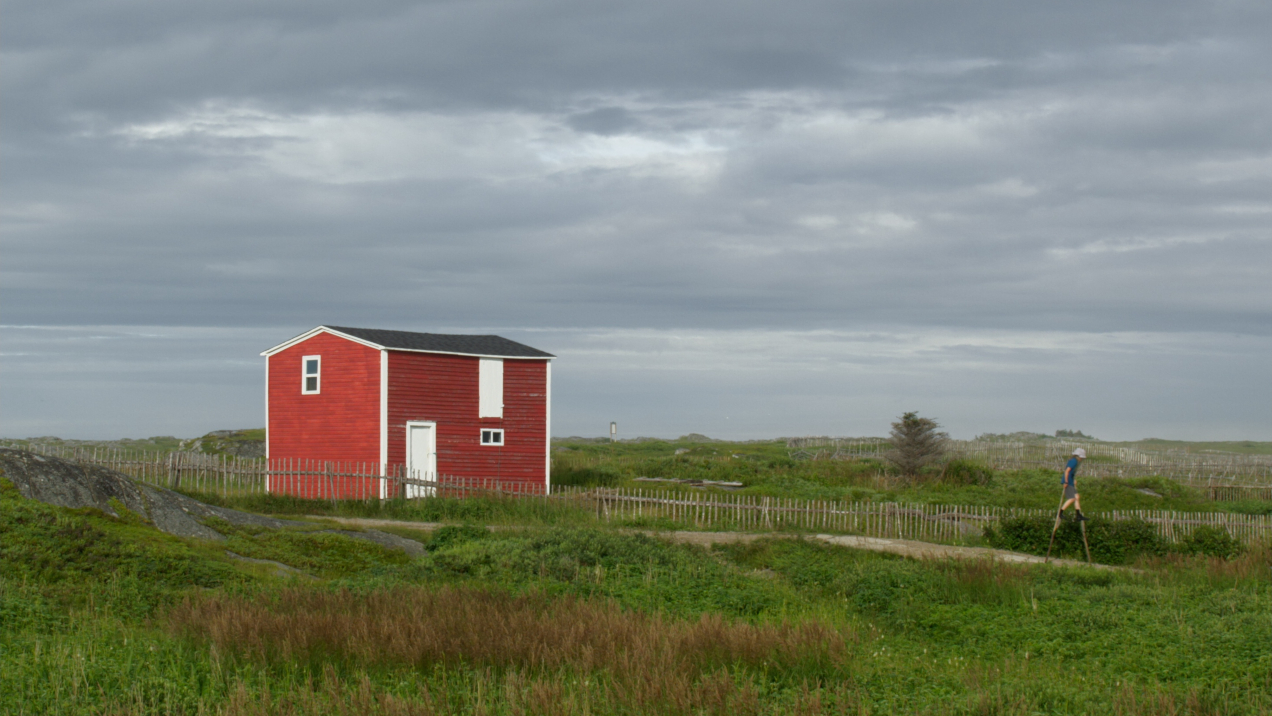
Among the more rewarding entries is Sharon Lockhart’s Windward, set on the scarcely populated Fogo Island, located near the coast of Newfoundland, Canada. The film is something of an extension, a chromatic inversion of Lockhart’s mid-length Eventide (2022). Where that single-shot featurette took place under the twilight skies, its actor-participants piercing the dark frame with their torchlights, this new work unfolds entirely in daylight. Comprising twelve static shots of about five minutes each, the film also echoes Pine Flat (2006) in that it centres on children or young adults engaged in leisurely, summertime activities outdoors.

In extremely long, wide shots that turns them into little more than mobile pixels, we watch the youngers take a swim, chase each other, fly kites, walk on stilts or just sit quietly on the rocky coasts of the island. The landscape is breathtaking, particularly in Lockhart’s painterly composition of them, but it’s the human elements that invigorate it. Our gaze is locked on the children’s activity, which is both a vehicle of chaos within a stately pictorial order and a dynamic formal element that activates the frame. This is most spectacularly felt in a shot where a girl feeds a flock of seagulls on a rock. The birds lunge at the fish that the young woman tosses one by one, and their moving mass keeps shifting the visual centre of the shot to thrilling effect.

But the children in the film are, above all, a source of emotional warmth. Very simply, the sight of boys and girls, frequently dressed in white, enjoying themselves in sunny nature is deeply gratifying. As they say, not a phone in sight, just people living in the moment… As always with this filmmaker, there is a touch of theatre beneath the apparent spontaneity of action. Lockhart often captures the children’s actions midway, but ends the shots just after they have exited the frame — in a manner that recalls the trains in James Benning’s RR (2007). Despite the overwhelming presence of nature, man, quite literally, becomes the measure of things in Windward.
Rebecca Digne’s Barefoot Maria operates in an adjacent thematic territory, but limits its scope to one young girl. Eight-year-old Maria leads an enchanted childhood in the Tuscan countryside, with cats, dogs, geese and horses for playmates, in a lovely country house that is marked for eviction by its new owners. Digne pays remarkable attention to Maria’s leisure-time behaviour (and leisure is all that she seems to have), shaping the material to give us the impression that she lives alone in this heavenly demesne. She also lends Maria a Super-8 camera, and the girl regularly sends back tapes that she has filmed of her own life. What emerges from this intergenerational correspondence is a charming, almost timeless picture of a childhood at once insular and privileged, untouched by the anxieties and demands of modern life. Maria grapples with boredom, invents ingenious ways to pass time and manages to achieve perfect harmony with her environment just as it is taken away from her.

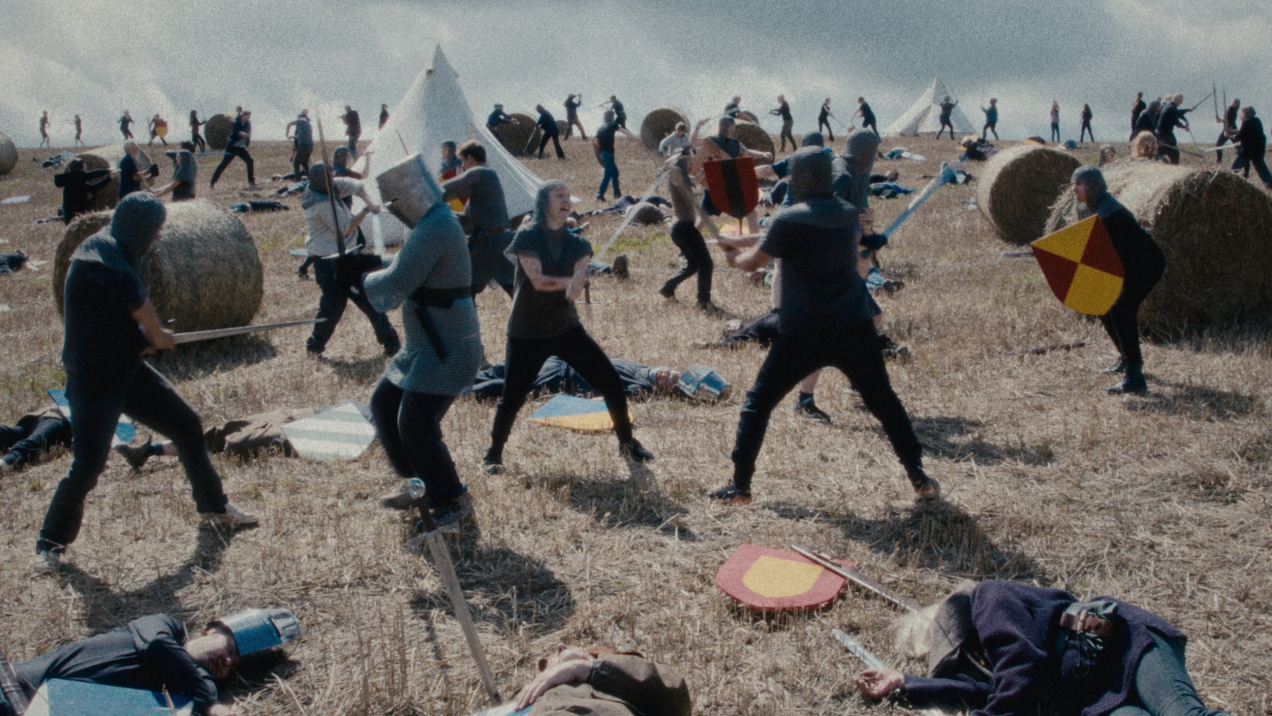
The horrors of the world are scarcely to be seen in Matter of Britain too. Peter Treherne’s enigmatic, rapturously shot debut feature unfolds in an unnamed, lushly wooded village in the south of England. Vignettes from everyday life in the village – farming, deer hunting, sheep rearing, churchgoing, cattle trading — are interspersed with fictional passages in which the villagers enact episodes from Arthurian legend, particularly the Knights’ quest for the Holy Grail, in full costume. Realized in a high-theatrical style, and bathed in Caravaggian darkness, these passages monumentalize ordinary lives in a manner that recalls Roberto Minervini’s use of rural Southerners in The Damned (2024). Treherne’s film doesn’t expound on this strange mix of fantasy and ethnographic document, although an early radio soundbite about climate change-induced agrarian crisis hints at a possible connection to the Holy Grail’s capacity to restore barren lands. Does the Quest represent a living myth for the villagers, a collective, subconscious yearning? Are they looking for some kind of deliverance? Matter of Britain doesn’t explain.
Several titles in the competition take this refusal of discursivity to its furthest limits, almost to the point of unintelligibility — a tendency that has become increasingly common in experimental documentary, both in the fly-on-the-wall and the essay traditions. Presented without context or comment, large parts of these ‘slow’, solemn films come across like unprocessed inventories of found images that ask the viewers to make what they will of them.

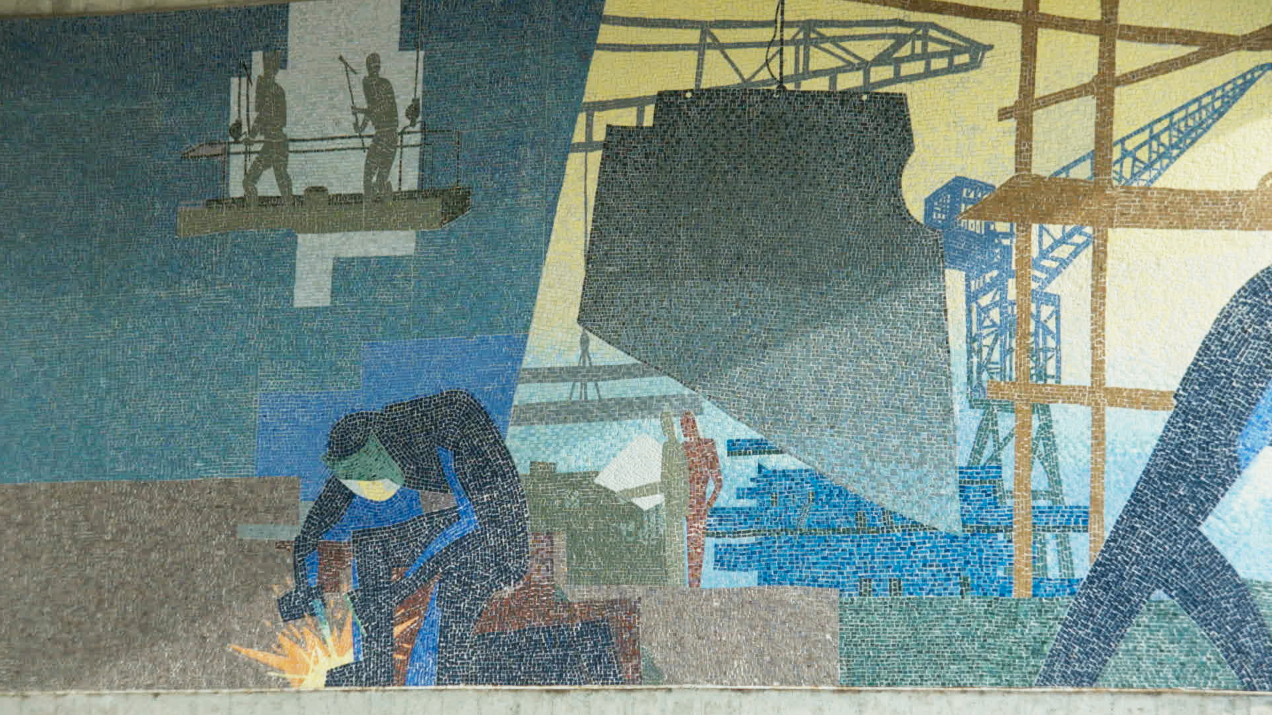
That’s perhaps why I found Juliette Achard’s Labore Nobile appealing in its openness, sincerity and capacity for commitment. The film is a fairly dense, focused treatise on the evolution of labour and industry as seen through the changing fortunes of Saint-Nazaire, a port town in Northern France. The film’s lucid voiceover is conceived as a sort of letter to a future where work has ceased to have the meaning it has always had in human history, and the narrative is completed by interviews with people working in different sectors of Saint-Nazaire.

While the filmmaker takes us through the economic history of the town — dominated by heavy industries such as ship building and aircraft assembly that have proven to be increasingly indifferent to worker rights and public health — she also weaves in short, poetic monologues performed by its blue-collar residents. Labore Nobile (which translates to “Ennobling through work”, not free of the ominous echoes of Arbeit macht frei) makes many small inventions within the framework of a classic essay film. Despite specific subject matter and a limited geography of focus, Achard manages to undertake considerable formal and thematic digressions, pushing a traditional form from within in the vein of Harun Farocki. Her film amply demonstrates Luc Moullet’s maxim that “thirty square kilometres or a little more is enough to know the whole world, to have all its keys.”

Sharon Lockhart

Sharon Lockhart 
(1964-)

Sharon Lockhart was born in 1964 in Norwood, Massachusetts. The American artist and filmmaker studied at the Art Center College of Design in Pasadena, and at the San Francisco Art Institute. She lives and works in Los Angeles. Her work has been shown in numerous exhibitions and screenings in America, Europe and in Japan and has won many awards. Lockhart is the recipient of fellowships from the Guggenheim Foundation, the Rockefeller Foundation and the Asian Cultural Council. Her films NO and TEATRO AMAZONAS both screened at the Berlinale, Forum of New Cinema. In February 2006, her work, PINE FLAT, was shown at the Berlinale within the context of Forum expanded, the new platform for video art and installations, hosted by Forum and KW Institute for Contemporary Art. [Bio Courtesy: Split Film Festival, Image Courtesy: Walker Art Center]


Photographer and experimental filmmaker Sharon Lockhart’s cinema is one that straddles multiple realms. It has been noted that her film works attempt to explore the boundary between photography and cinema. For one, most of her films are composed with a static camera and with self-conscious framing that photographs actions head on. The compositions serve to remind us that the camera’s vision is highly restricted and there’s a world that lies beyond its four edges. This is also reinforced by the numerous activities that take place off-screen in the films. Since the prime distinguishing factor between cinematography and photography is time, these works are highly conscious of their temporal dimension. While Lockhart introduces the element of time in her photography by perturbing the order in which the photographs were taken, she chooses to preserve the linearity of time in her films. Instead, she invokes the sense of passing of time by retaining the photographed image for a long time – by using overly prolonged shots of largely unchanging actions. It is perhaps best to look at her films in relation to her photographs and vice versa. Another prominent aspect of her cinematographic work is the relationship between people and the spaces they inhabit. These surroundings may counterpoint (an opera house in the Amazon, a basketball court in Japan) or define (a labyrinthine industrial corridor, dusty Polish courtyards) the way of life of the people within them, but, in all cases, the kinship between the two remains of central interest.

Another dialectic that permeates Lockhart’s filmography is that between art and ethnography/anthropology – between straightforward documentation and authorial stylization. Lockhart seems to be conscious of the fact that such a tug-of-war always runs the risk of entering the territory of exploitation and unwarranted anesthetization (“I was well aware of the problems of filming in another culture and had begun to think about the way ethnographic film works within an art context.”). She overcomes this deadlock, as do other documentary filmmakers, by choreographing routines (there are dance trainers and movement advisors who work in Lockhart’s films), by making the subjects active participants in the filmmaking process and by not imposing preformed psychoanalytic notions on them. She cites Jean Rouch as a major inspiration (“I became even more fascinated with ethnographic film, especially Jean Rouch. He took ethnographic film to a whole new level. His ideas of collaboration and being a catalyst are especially interesting to me, like the way he lets his subjects choose fictional characters or roles, through which something very real comes out”). Consequently, the actions in her films are both spontaneous (the anthropological) and rigged (the aesthetic) wherein the participants both perform and behave. They are carrying out their daily tasks and, at the same time, executing the choreography they have practiced.

Goshogaoka (1998)

GoshogaokaLockhart’s debut project, Goshogaoka (1998), shot in 16mm in a basketball stadium in Japan, opens with the image of a theatre curtain, thereby setting up the motif of theatricality that pervades the rest of the film. The stillness of the image is interrupted as we witness almost two dozen high school girls in sports outfit running in and out of the frame – apparently in a circle – making the shot indicative of the cinematic system itself – the projector and the screen (In one segment, the “actors” run towards the camera, projecting themselves on us, as if mirroring the light particles that bombard the screen within the film). In fact, Goshogaoka, in its entirety, could pass of as a metaphor for filmmaking where seemingly random acts are shaped and stylized into a coherent whole (“everyday routines recontextualized and reinterpreted as dance”), where order is arrived at through disorder and where the banal moulds itself into the beautiful. The impeccably ritualized nature of the activities in the early part of the film – as one would associate with the Japanese-ness of the participants – gives way to more improvised individual tasks where the girls “perform” consciously in front of the camera, floundering at times, as if on the audience’s demand. The illusion of the work being a straightforward documentation of routines is also broken by Lockhart’s self-referential framing and utilization of off-screen space wherein we are made to acknowledge that all that we see is as much posed as it is improvised. This concept of the cinema space, by its very purpose, being a zone of contemplation would be explored further in Lockhart’s next film.

Teatro Amazonas (1999)

Teatro AmazonasTeatro Amazonas (1999) is set in the eponymous opera house in Manaus, Brazil, which one might remember from Herzog’s Fitzcarraldo (1982), and consists of a single half-hour shot filmed in 35mm of a native audience listening to a piece of avant-garde music (scored by Becky Allen). As the film progresses, the voices of the audience completely overpower the vocals of the music in the same way our concentration is distracted by the length of the shot. The camera is on the stage and observes the audience head on, essentially making the film screen a portal of sorts through which cultural exchange – between two worlds, one might say – takes place. One is reminded of Kiarostami’s Shirin (2008) in the way the screen additionally acts as a mirror where one audience – watching Lockhart’s experimental work – resembles the other – listening to Allen’s experimental work. Being set in South America, the reversal of the subject-audience relationship here elicits other intriguing responses from us as well. Lockhart’s camera places us on the stage, with the Native American audience staring at us, and hence manages to reverse the colonial gaze (if one makes the fairly questionable assumption that the audience is predominantly European/North American). The “colony-wise” credits at the end only compound this revisionism. In that sense, each passing minute ratchets up the tension instead of accustoming us to the new space. Although Lockhart’s films don’t possess such overt political objectives, this particular film works on such an extreme Brechtian level that such a response doesn’t seem invalid.

NŌ (2003)

NoA companion piece to Goshogaoka in a number of ways, (2003) is a highly formalist work that attempts to study the properties of the film frame with the agricultural process of mulching as the backdrop (the ethnographic aspect of the film is very subdued). The film documents two Japanese farmers (Masa and Yoko Ito) amassing heaps of hay and later spreading them out on a field. We see that farther the farmers are from the camera, the longer they take to traverse the breadth of the frame. As the amount of hay gathered decreases with decreasing distance of the workers from the frame, we realize that the geographical and representational areas of a region are in inverse proportion to each other and that the field of vision of a camera is conical rather than cubical. Although is an examination of the relation between the XY plane and the Z-axis, it also functions as a painting unfolding in time. The screen is bisected by the horizon which separates the black soil from the reddish sky. As the farmers spread the hay over the soil, they end up coloring the lower half of the frame, literally assembling it. Coupled with ambient sounds of bird chirps, is like an impressionist painting on film in which both rapidly and gradually varying hues of light are registered (A little more plot and it could pass off as Jean Renoir). In that respect, the semi-static-semi-dynamic composition of the film largely resembles those of James Benning, where, too, quick changes in landscape are pitted against microscopic ones.

Pine Flat (2006)

Pine FlatLockhart’s longest feature to date, Pine Flat (2006) is shot in the eponymous rural area in California where she apparently lived for four years. Consisting of twelve silent ten minute sketches – most of them presented through skewed compositions – all of which deal with kids and teenagers residing the locality, Pine Flat preoccupies itself with the study of cinematic time. The first six sketches deal with children who are alone and the next six with groups of teenagers and kids hanging out together. Lockhart reveals that she wanted to investigate the subjective experience of time in both these types of situations. In both cases, the kids seem to be somehow beating boredom by indulging themselves and each other (The viewer’s experience of these stretches of time also plays a part in the film’s exploration). Lockhart’s idea of disrupting chronology in her photo works translates to prolongation of the film image in this work. Consequently, the segments are reduced to their functional minimum and come across as little more than photographic – a girl reading a book, a boy playing the harmonica, a kid waiting for the school bus, a boy sleeping on the ground and so on. This return to cinematic zero (if one can approximate cinema as photography in time) is also mirrored in the implied return to zero of nature. The kids playing and carrying out their petty activities happily in the lush woods is the image of serenity itself. Alternately, this sort of persistence on mundane gestures defamiliarizes them, elevating the quotidian into the realm of art (similar to Walhol’s works) and eventually urging us to see them with fresh eyes.

Lunch Break (2008)

Lunch BreakIn Lunch Break (2008), Sharon Lockhart seems to have taken to heart the Douglas Adams quip that time is an illusion and lunchtime doubly so. Shot in Bath Iron Works, Maine during the titular break period on a typical day, the film consists of a single tracking shot through the central corridor of the factory slowed down digitally to 75 minutes (It is probably the only film I’ve seen that takes longer to see than to shoot!). The dolly moves along the Z-axis of the frame – reminiscent of Kubrick’s tracking shots in the WW1 trenches – as rusty lockers and other furniture trudge past us. The film almost entirely consists of vertical planes, straining and training our eyes to such an extent that we start recognizing the minutest of lateral movements that the camera undergoes. Beyond a point, our eyes start playing tricks on us. If we concentrate at the centre of the image, the edges seem to melt away and the camera seems to move pretty fast and if we choose to pay attention to the edges, the camera seems slower than ever (an illusion that might be very useful in genre filmmaking). At times, when there are only machines in our view, we are not sure if we are witnessing a tracking shot within a real space or a zoom into a photograph (The one Lockhart film that most resembles Wavelength (1967) is this). It is only when the humans enter the frame that we have reference for the camera’s motion. Likewise, it is only during the lunch break that the human elements, for once, triumph over their mechanical counterparts, which continue to drone even during this cherished recess time.

Exit (2008)

ExitOver a 110 years after the Lumiére brothers photographed workers coming out of a factory, Sharon Lockhart embarks on a similar project, attempting to chronicle workers exiting a factory – Bath Iron Works again – over a time span of five days. Unlike in the earlier film, we don’t get to see the worker’s faces. Only a few of them even seem to notice the presence of a camera. Over the week, we see a number of workers walking into the frame, moving away from the camera and vanishing at a point near the centre. There is no strict pattern – in attendance, in attire or in mood – that is evident as we move from Monday to Friday. No insight into the psychology of the workers is given either. Instead we are left to speculate about the contents of the lunch boxes (which had made their debut in Lunch Break) and back packs (which many seem to be carrying), about the kind of work these workers are doing (not all seem to be involved in physical labor) and about the time of the day and season of the year (given the changes in the intensity of natural light). It’s kind of like guessing the contents of those mysterious trains in RR (2007). A man stops to chat with another. We barely hear their voices and are left wondering about the poetry of their lives. One striking thing that is evident is that the majority of the workers are wearing denim. This might give us an insight into the taste and economic standing of these people, but it is also suggestive of mass production of commodities, discrediting of human skill and homogenization of culture.

Podwórka (2009)

PodworkaPodwórka (2009) is shot in Lodz, Poland and consists of six sketches depicting the kids of the neighbourhood playing with each other in the courtyards of the city. A miniature version of sorts of Pine Flat, this film, too, presents a string of vignettes from the lives of children of a particular city. But, unlike Lockhart’s earlier film which shot the kids from at eye level and from a close distance, the kids here are photographed with a detached perspective and in long shots as if integrating them with their environment. This, in effect, presents them as human elements maneuvering through industrial landscapes which are – a la Lunch Break – marked by rusted pipes and seemingly defunct structures. Like Pine Flat, Podwórka attempts to study a locality by viewing it from different angles and through different people and to synthesize a version of the region that stays true to the filmmaker’s experience of it (although I don’t understand the geo-specificity of Poland for this project) – as if trying to hold on to the fleeting memories of childhood, which is influenced only too deeply by one’s environment. If it was the green trees in Pine Flat, it is Lodz’s mellowed courtyards that seem to be engulfing the children in Podwórka. The soiled, dilapidated walls of the neighbourhood seem to be of no bother to the kids, who are gleefully engaged in playing with mud, bicycles, footballs and the surrounding buildings. In that sense, one could say that the film is, as is Weerasethakul’s debut feature, a paean to dead times of the afternoon and to the power of human imagination.


(You can watch two of Lockhart’s films here)