April 2008
Monthly Archive
April 19, 2008
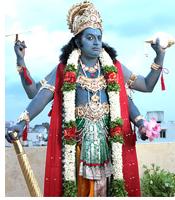 This is it. One of the two movies I was looking forward this year is here (The other one OBVIOUSLY being “Dasavatharam”). After having seen V. Priya painful fall from “Kanda Naal Mudhal” to “Kannamoochi Yenada”, I did not want to see another successful debutant taking a hard second step. But “Arai Enn 305-il Kadavul” is a large disappointment from a person who gave the genuinely comic “Imsai Arasan, 23-am Pulikesi“.
Rasu (Santhanam) and Mokkai (‘Ganja’ Karuppu) are two roomies living in a wretched part of the city. Their life follows the highly predictable path of humiliation-humiliation-humiliation. With no consolidated job in hand and a love life that is strictly one-sided, Rasu is left with no other option than to curse his creator. And ho! look who’s here…it’s Him (Prakashraj). With the usual “Still don’t believe I’m god?” conversation followed by some gimmicks, God reveals the source of His power – a completely portable, rechargeable galaxy controller box* (*Batteries not included). Our mortals turn green-eyed and steal the galaxy box from God himself!. What follows is their realization that you don’t need superpowers to solve your problems and superpowers don’t solve all your problems.
With an offbeat storyline such as this, what you expect as a follow up to “Imsai Arasan…” is something that is uniquely rib tickling and perhaps even slightly satirical. Not only does “Arai Enn…” fail to maintain a consistent streak of humour but also breaches the thin line between thought-provocation and preaching. The film does intend to create a festive atmosphere with its battalion of characters, but fails to handle them with equal sincerity. As a result, these characters become nothing but props that act as targets to God’s kind deeds. Also, the toying around with the galaxy box goes on for too long, thoroughly hampering the already hurt second half.
Santhanam is not able to emote. You tend to expect a Lollu Sabha punchline (like “Yenna Goinda, nethu rathiri kottaru ashtu full tight pola…”) every time the camera focuses him. Not to mention ‘Ganja’ Karuppu who takes ages to deliver the punchline. Surprisingly, it is the underdogs (Buvana’s mother, ‘Java’ Sundaresan and Mokkai’s nephew) whose performances are commendable. As usual, the heroines (Madhumita and Jyothirmayee) are punctual for their duets and both of them do have an unexpected “twist” at the end.
Vidyasagar‘s score is passable with “Kadhal Sei” being one of the better ones. The biggest technical fall for the movie has to be in the editing department. The first half hour has scenes where you are left puzzled about what’s going on and the meddling around with the galaxy box comes way too late in the second half. A lot of effort has gone into the special effects and it shows (except for some fleeting shots).
In all, “Arai Enn…” is far from interesting and way too short of the standards set by Chimbudevan‘s debut. The movie takes much liberty in endorsing its views than in providing entertainment throughout. Without doubt, Chimbudevan has ideas that could well save a drowning industry, but those are like fine works of glass. Even if one breaks, it is a great story unfortunately wasted. Chimbudevan has to clean up the remains of “Arai Enn…” and move ahead carefully.
Verdict: 


April 18, 2008
 Russian Ark: Montage has always been a characteristic of Russian Cinema. Alexander Sokurov discards exactly that in this breathtaking film that takes us through the history and heritage of Russia in the past few hundred years- All in a single, continuous, unedited shot!. Makes us think how difficult it would have been to assemble the whole crew and sets. The film serves as an example of how long shots can be composed well by proper direction.

Salo: 120 Days Of The Sodom: Banned in many countries world over, Pasolini’s final venture is one of the most “indigestible” ever made. Call it a satire on capitalism or a commentary on misuse of power, the film is shocking and depressing by all means. The film never intentionally portrays graphic images even though the content is definitely not for the weak-hearted. A film that redrew the boundaries of rights-and-wrongs of cinema.
 The Man With A Movie Camera: Though overshadowed by his Russian contemporaries Eisenstein and Pudovkin, Dziga Vertov managed to come up with this gem about a man shooting whatever he comes across in Moscow with his camera. Serves as a showcase of all the editing and camera techniques available in the nascent stages of cinema. Offbeat and way ahead of its times while the others were busy making films endorsing communism.
 Un Chien Andalou: Kings of surrealism Luis Buñuel and Salvador Dali co-script this less than a quarter hour long film that may be hailed as the most influential French film ever made. Carefully assembled sequences that do not have any solid meaning and plethora of shocking images pave the way for hundreds of surreal films that were to come from filmmakers around the world and from Buñuel himself.
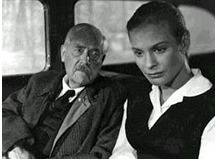 Wild Strawberries: An old professor retrospects his life, its disappointments and his mistakes while he is on his way to receive an honorary degree. Bergman’s masterful direction utilizes the monochrome with such perfection, that the film has become a staple for any film student. Fraught with images that last for a lifetime, this is one film that may change the way you look at life.

 Special mention must be made to Jafer Panahi’s Ayneh and Daniel Myrick and Eduardo Sanchez’s Blair Witch Project for redefining the lines between reality and fiction, the former in its typical Iranian fashion and the latter in the American camp style. Let’s hope more such movies come up in the future and explore this medium to the fullest possible extent.
April 18, 2008
“Photography is truth. The cinema is truth 24 times per second.” – Jean Luc Godard
It is doubtless that the power of cinema, the youngest of all arts, is not exploited to the fullest. Though many masters of the medium continuously strive to provide a whole new look and feel to the seventh art, it still has a lot of unexplored content. I present here, ten of the very many films that had successfully utilized the power of cinematic expression and redefined cinema in their respective periods.

2001: A Space Odyssey: “Open the pod bay doors, HAL”– A line that has been etched in cinema history. Stanley Kubrick’s magnum opus provides a new interpretation to the classic man versus machine theme. Co-scripted with Arthur C. Clarke, the film’s amazing use of sound and time line has class written all over. With HAL’s cold yet human voice and the stunning “dawn of man” opening sequence, the film is definitely in the top ten movies ever made.
 Apocalypse Now: Adapted from Joseph Conrad’s novella “Heart Of Darkness”, this Coppola classic is not only the journey of a disturbed man into the bowels of a war-torn nation but also into the darkness of his own mind. Classic portrayal of effects of war and the discovery of evil within oneself. The graded natural lighting throughout the film coupled with the short-but-chilling performance of Marlon Brando as Colonel Kurtz is the best combination you can ask for.
 Jurassic Park: Special Effects – The latest boon given to cinema. Though used now to tasteless extents, the movie that made it big and neat is this Steven Spielberg fantasy. Oozing with the “Magic of the big screen”, it is just scintillating to see the big creatures roam about and live in the big screen. Spielberg’s unquenchable thirst for science fiction succeeds big time when his ideas meet the tools.
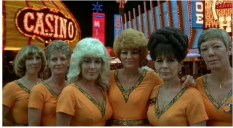 Koyaanisqatsi: Godfrey Reggio’s tradition-defying “movie” is a seemingly unconnected set of images powered by great music (Philip Glass). But there is definitely more to it than meets the eye. Unlimited number of plausible interpretations make this a brand new movie no matter how many times you watch it. This gem in interactive cinema requires the viewer to think and draw conclusions- a very rare thing indeed.

Rashomon: Perhaps the most influential Asian film, Kurosawa’s Rashomon was the prime reason for the inclusion of a best foreign film category in the Oscars. Endlessly imitated for its breakthrough screenplay and simplicity, the film has been remade and plagiarized many times over. Thoroughly exploiting the features of cinematic medium, Rashomon remains an object of amazement for filmmakers and film buffs around the world.
April 12, 2008
 Ikiru is another gem from the great filmmaker. A sincere officer in a government office realizes that he is going to die in a few months due to a disease. He does all he can against all odds to finish a public park before his death. The final moment in the movie shows him sitting in the snow on a swing in the completed park. This remains one of the most memorable moments in world cinema.
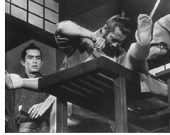 Another example of Kurosawa’s perfection is Red Beard which revolves round a hospital in a disease-stricken village. Kurosawa had asked all the actors to not sign any other film during the two and a half year shoot so that they get into the character’s skin. Even the sets in the movie were made of rotting wood to show the time line of the movie. The operation scene in the movie is way ahead of its times and even now it makes us wince.
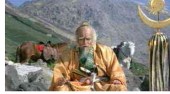 There are numerous other examples from all his films that shows his mastery over the medium. The fate of the impersonator in Kagemusha after the king dies is true of the acting profession as a whole. The contrast of classes in the final sequence of High And Low remains one of the most subtle scenes ever. The intense heat wave throughout Stray Dog directly places us into the protagonist’s boots. Ran is as grand as an epic gets.
 These are images that are cherished by filmmakers and movie buffs all over the world. Even though he had a huge downfall in his career monetarily after Red Beard, the films that followed did not show any aging or fall in quality. In fact, the movies that came in the dusk of his career are some of the most different and daring film works ever. Even now, when a samurai film is made, it is endlessly compared with Kurosawa and labeled “Nah! Not as good as Kurosawa!”.
April 12, 2008
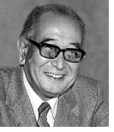 Ask some film buff to name a Japanese film director. The first answer (may be the only answer) would be Akira Kurosawa. The name of Akira Kurosawa has become synonymous with samurai cinema. His film techniques have been the fuel to numerous other filmmakers around the world including George Lucas and Kamal Haasan. The powerful imagery he assembles in his shots produces a terrific impact on the viewer’s minds instantly. Ironically, this film genius is recognized more outside Japan than in it.
Perhaps his most famous film, Rashomon is one venture that changed not only the way the world looked at cinema, but also introduced a new term in English, The Rashomon Effect. The sheer minimalist mode that the film is shot in, sets up the mood for such a thrill. The shot where the woodcutter comes across the corpse early on is shown from the point of view of the corpse and looks as if it is going to get him. This innovation instantly familiarizes us with the corpse as a character that is to come later in the movie. Also, the use of rain as a metaphor for the pettiness of human nature and negative connotation of man’s ego provides that dream ending one expects.
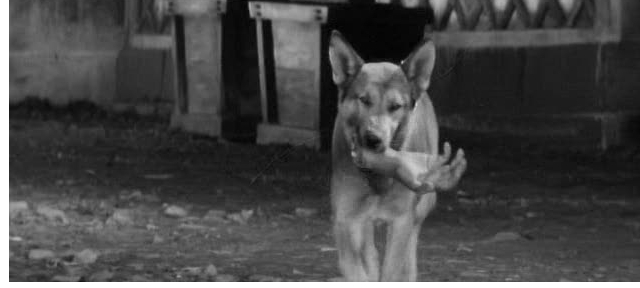
 Take Yojimbo for instance, the film that spawned a new genre of movies called the spaghetti westerns. The bodyguard has just lost his identity and wanders into a barren town. The shot where he realizes that the town is war-torn is probably the most thrilling moment of the movie. A dog comes around a corner carrying a human hand! The vast barren stretches of land in the movie are reminiscent of the wild west, providing the perfect platform for remake into Fistful Of Dollars.
Adapted from Shakespeare’s Macbeth, Throne Of Blood provides a whole new interpretation to the work. An ambitious man who is manipulated by his wicked mistress and the reasons for his subsequent fall. The story is cleverly blended with Japanese folklore and the feudal system to provide a whole new look. Toshiro Mifune‘s best performance may just be in this movie. He does a perfect job as a man who is swallowed by his own pride.
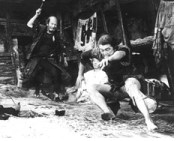 In one of my favorites, The Lower Depths, Kurosawa adapts the Maxim Gorky work into the slums of Japan and the various issues there. The final scene where one of the partying inmates of the house exclaims after the suicide of the wretched wannabe-actor (“Stupid actor, he spoiled all the fun”) defines the whole life in the slums and portrays their everyday struggles with ease. The Lower Depths remains one of his most underrated works.





 The Seventh Art