12 Angry Men (1957)
Sidney Lumet
English
“I’m just saying it’s possible”
If I was to choose one debut movie from Hollywood that I would have loved to make, it would not be Citizen Kane (1941), it would not be Duel (1971) but it would be Sidney Lumet’s 12 Angry Men (1957). Perhaps the word “Powerhouse” was coined keeping 12 Angry Men in mind. The film still has the raw power to shake, thrill and move audience of any generation. The granddaddy of all courtroom dramas.
12 Angry men follows the decision making process of the 12 titular men, coming from carious strata of the society, on a teenage murder convict inside a single room as all of them but one ritualistically try to wrap up things with the seemingly solid evidence provided to them. Juror #8 (Henry Fonda) is disgusted at disposing off a life so simply and tries to make the rest of them deliberate over their decision. What begins as a single dissident voice turns out into a fierce tug of war that gradually descends into a no competition. All of them slowly realize that what they have at hand is supposed to be a qualitative process and not quantitative and that there is more than a vote at stake.
12 Angry men remains one of the best character studies made on film till date. The protagonists enter the room with wide range of mentalities ranging from boredom and arrogance to curiosity and apathy. As the day progresses, each person’s mentality catalyses the others’ and the chemistry within the members changes in order to suit each other’s ideologies. At the end of it all, not only is the prejudice of the characters shattered but so is the audience’s preconceived notion about the power of cinema. The viewer will walk out of the movie with open minds as the characters walk out of the dreaded room.
The most stunning aspect about the film is that nobody knows the truth at the end of the ordeal – Neither the characters nor the audience. One is reminded slightly of Kurosawa‘s minimalist masterpiece Rashomon (1950), for both deal with subjective accounts of crimes and yearning for absolute truth. Kurosawa’s film leaves the audience helpless and craving for objectivity with the woodcutter’s benign act being the only comforting element, whereas 12 Angry Men makes them gradually reconcile with the fact that there is much more to “truth” than meets the eye. The film’s greatest success lies not in changing the decision of the characters, but in making them and the audience acknowledge the fact that there are possibilities outside their frame of minds.
Minimalism in film is ironically a very tough job and not many have achieved it with success. As they say, it is difficult to be simple. Pulling off a film inside a single room and with a dozen characters is definitely not an easy task and Lumet has done it with more than perfection. What could have easily rolled off to a claustrophobic garrulous mess is instead fabricated into a gripping study of human characters and group dynamics. The performances are all top rate and one wonders if these characters were written with the corresponding actors in mind. Lee. J. Cobb‘s loud arrogance is as moving as Martin Balsam‘s quiet leadership. Such great casting never comes often.
Needless to say, 12 Angry Men forms the cream of greatest American films ever made and is in the same league as Kubrick’s and Ford’s masterpieces, if not better. Be whatever your mood while you watch the film, you will end up awe-struck at the flawless execution and at the realization that only “Seeing is Believing“.
Riding on the huge success of Chennai 600028 and on huge expectations from the young crowd, Venkat Prabhu has set out on his new flick Saroja. Much has been spoken about the closely knit team and the boundless enthusiasm that they share. That is a good thing for with a good team comes a great working atmosphere. Unfortunately, Saroja seems to be caught between the choices of being so fascinatingly funny as in Chennai 600028 and the “need” to be different from its predecessor.
The plot spans one day in the lives of four laymen visibly heading towards their thirties, Ajay (Shiva), Ganesh (Premji) and the Babu Brothers (Charan and Vaibhav), who have planned to see a cricket match in Hyderabad. They set out on their bizarre vehicle on to the Hyderabad highway carrying along with them booze in hand and songs on lips. All is fresh and fun at this point and one can be hasty to label it the Indian reply to Easy Rider (1969) or more recently Little Miss Sunshine (2006). The group comes to a scene of accident and is forced to go through a different route. Thanks to the chutzpah of the lead, they take a wrong turn and so does the story.
There is also a parallel thread involving troubled businessman Viswanathan (Prakashraj) whose daughter, the nocturnal titular character, gets kidnapped and solicits the help of police officer Ravichandran (Jayaram) to save her. As events go from bad to worse, the four try to save their skin and return home, in the process meeting the hostage Saroja (Vega), at a pirate factory run by the hoodlum Sampath (Sampath). Additionally, there is a sub-plot involving Sampath and his lover Kalyani (Nikita) using which the filmmakers perhaps intended to portray the character’s depth. And that don’t work man! He is nothing but a textbook stereotype and a photocopy of himself from Polladhavan (2008) and Velli Thirai (2008).
After this point the film goes on. And goes on. And goes on. And goes on…And by the time the supposed-to-be all important scene nears, nobody cares. If you repeat a bad joke over and over, it eventually becomes hilarious. And if you repeat a good one over and over, it becomes sickening. Premji’s typically Kodambakkam attitude and surreal visions are amusing to begin with but as the film meanders, his lines are totally out of place and one feels that he should have had a “I’m just the token jackass required for comic relief” T-shirt on. The Dil Chahta Hai-esque magic that the friends shared in the first half hour is completely lost and one craves for those moments again.
I get the idea that a hand held camera enhances the restlessness and the thrill of a scene, but come on. Almost whole of the hour long showdown is presented in the headache inducing format and the clichéd rapid cuts are nothing but nauseating. And the editor’s scissors seem to be jammed at the most important places. On the positives, everything that takes place in daylight seems so close to heart and has the power to charm any audience. Only the end credits offer any consolation for the unwarranted kidnapping of those moments.
It is saddening to see a film that sets out as a fresh concept and ends up in the gutter of the bandwagon. In some ways, I am reminded of Chimbudevan’s decline after his charming debut in Pulikesi (2007). Venkat Prabhu looked consistent with his couple of films before this one and has ended up, fortunately, marginally better than the former. Let’s hope his penchant for depicting effortless ease among friends remains unmitigated and we get to see a real stunner next time around.
Sátántangó (1994) (aka Satan’s Tango)
Béla Tarr
Hungarian
“They haven’t a clue that it is this idle passivity that leaves them at the mercy of what they fear most”
Since the death of Andrei Tarkovsky, the search has been on for the heir to the throne he left behind. Many believed that his fellow countryman Alexander Sokurov would be the chosen one. Indeed, his films like Mother and Son (1997) and Russian Ark (2002), that disregarded montage in the same way as the Russian master, strike an immediate chord with viewers familiar with Tarkovsky’s works. But in a country a bit west to Russia, a Hungarian visionary called Béla Tarr had showed the world he had arrived, big time. In 1994, came out his long-cherished project – an epic by all measures – Sátántangó.
It seems like the fall of the Communist regime in the unnamed country. With their leader missing for a couple of years, a group of workers in a community farm decide to call it quits and plan to split up with the remaining money. With their supposedly great plan on the way, they spend their time carousing and sleeping around. Just when they think that their lives are going to change for the good, Irimias, their leader turns up exactly at a time when a girl at the farm does the unthinkable. The wizard of speech, Irimias, leverages the situation towards his favour and coaxes the workers into his big plan. Slowly (I mean slowly) the characters of everybody take shape and their weaknesses get exposed.
Just as funny as it sounds, this 7 hour long film never once feels long. There are many 10 minute shots that feel like any other. Typically in these shots, you see a very ordinary picture, say of barroom dance or a group of cows grazing. As the length of the shot increases you’ll feel a bit edgy, waiting for a cut. When the shot further prolongs to unimagined lengths, you’ll start noticing finer details in the images that you failed to pay heed to in the previous minutes. You’ll gather a lot from the still life of the shot and from objects and events that appeared to be banal till now. And as you slowly get enthralled by these tableau like images, Tarr cuts to the next, leaving you craving for a longer shot! In a way, each cut seems like a turning point in the seemingly simple plot.
Sátántangó is the sort of film that you live in, instead of staying separated by the fourth wall. Each sound is so carefully documented that you’ll feel wet every time a character walks in the rain and pull up a blanket every time you get those cold nasty winds on screen. The ambience of the film is so properly somber that you sense some ill omen gaining momentum, even in the most ordinary of frames. And the monochrome world is so enchantingly dull that you feel like one of the servile characters whiling away time in fruitless activities.
Though there is a political subtext to the film, Sátántangó serves more as a tale about domination and voluntary subordination. Literally, it depicts how an idle mind is a devil’s workshop and how man proposes and the devil disposes. Using various points of views of a single event, that would become popular in later films like Amores Perros (2000), Sátántangó meditatively moves towards an all apocalyptic ending that haunts you long after the credits roll out.
The 420+ minute runtime may be daunting for many viewers, without doubt. But, believe me, take your time and watch the film, preferably in three sittings. You’ll feel more than contended at the end of the film. This is one film that will easily change the way you look at cinema.
The Killing (1956)
Stanley Kubrick
English
“It isn’t fair. I never had anybody but you. Not a real husband. Not even a man. Just a bad joke without a punch line…”
Whenever Kubrick’s canon of films is discussed, this quiet little early gem is invariably lost out amidst the mammoths like 2001: A Space Odyssey (1968), and A Clockwork Orange (1971). But very much in the same way the latter films defined cinema of their decades, The Killing (1956) forms a vital film of the 50’s Hollywood.
The Killing follows a group of men who plan to carry out a robbery in a race course booking center. The group includes a cop in financial distress, an ex-convict who dreams of getting away to a remote place with his all-trusting girlfriend, the bumbling cashier at the booking counter, an employee at the course and a couple of other contract hires. They carry out the plan as per the text book alright, but the real trouble begins later, as usual. Things deviate from the schedule and needless to say, go awry. Thus follows a Tarantino-esque proceeding towards an immortal climactic scene.
When viewed today, it is inevitable that one is reminded of films like Reservoir Dogs (1992) and similar movies of the Tarantino age. The ultra-solemn genre of heist films is considered to be resurrected by the wry humour of Reservoir Dogs. But Kubrick had done the same even during the inception of the genre. Consider the scene where Sherry (Marie Windsor) is shot by her husband George (Elisha Cook). She goes down saying “It isn’t fair. I never had anybody but you. Not a real husband. Not even a man. Just a bad joke without a punch line.”. Now which director (but Kubrick) in his right senses would have made such a move in the age of Rififi (1954) and Asphalt Jungle (1950)?
The Killing is perhaps the oldest film with non-linear narration that I have seen. Multiple points of view give rise to different visual segments that overlap temporally and evoke a sense of thrill that is so uncharacteristic of the 50’s. I don’t know how the audience would have reacted then, but when viewed today, the film seems to have grown with time and its potency to enthrall audience has visibly become enhanced, considering the slew of films based on similar structures that flooded the 90’s. The film provides ample scope for a remake, for it seems tailor made for the new audience.
Black comedy, that would go on to become a strong point in many Kubrick films, clearly shows its roots in The Killing. The movie’s intense plot never becomes heavy handed, thanks to the presence of a comic thread throughout, be it in the strained relationship between the Peatty couple or be it in the intriguing arrogance of Nikki Arcane. Though the explicit oral narration becomes irritating at places, the film’s dynamics have enough to overcome that. At a time when film-noir had become a genre and heist films had become a sub-genre, The Killing sought to break away from rigid rules and provide fluidity and hence novelty to the genre.
It is fascinating to see what Kubrick has churned out without the use of even one A-list actor. The Killing was enough to launch Kubrick big time and tell the industry that he had arrived. There was no stopping the master now.
Przypadek (1981) (aka Blind Chance)
Krzysztof Kieślowski
Polish
“If I hadn’t missed a train one month ago, I wouldn’t be here with you”
Krzysztof Kieslowski’s films often deal with the themes of fate, coincidences and choices. The phenomenal Decalogue (1988) teased us with the possibilities of seemingly disparate lives being connected. Equally staggering Three Colours trilogy (1993-94) completed a full circle and testified Kieslowski’s theory. But almost a decade before the trilogy, Kieslowski had made Przypadek (1981) that had already embraced the possibility of plasticity of fate and existence of truly free will.
Blind Chance starts with a large number of minor shots that would define the key events in the film. After this, we are taken into the life of Witek, a medical student who has just received the news of his father’s death and decides to leave for Warsaw. He enters the railway station as the train gets ready to leave the platform. Right here, the film separates into three distinct threads. In the first one, Witek boards the train successfully and goes on to become a member of the Polish Communist Party and meets his first love on the way. In the next scenario, Witek misses the train and picks up a fight with the station guard. He is sentenced to public service and eventually goes on to join the Polish Resistance movement against the Communist Party. In the final one, he misses the train but avoids the fight with the guard. Also, he resumes his studies and becomes a “good citizen”.
Each situation drives Witek’s life in completely different yet connectable paths. In all the scenarios, it is interesting to see that Witek’s morals remain the same. His view of right and wrong, good and bad and love and hatred does not depend on whether he is political, anti-political or apolitical. It is essentially his choices that define his life. In each of the scenarios, Witek never manages to get what he wants completely. Perhaps, Kieslowski is suggesting that freedom never comes free and requires sacrifice of interest, ideology or free will itself. Naturally, for the heavy political content in the film, it went under the scissors of the censor board of Poland. This soured the relations between Kieslowski and the censor board that would prompt him to go abroad to make films.
Though seldom listed in the list of great foreign films, Blind Chance deserves to be called one of the most powerful films, if not influential, in terms of screenwriting. It not only employs non-linear narrative that would go on to become the trend in the subsequent decade, but also traverses over the same time line multiple times. What Rashomon (1950) dealt with on the basis of subjectivity over one single reality, Blind Chance deals with using multiple objective realities. Quite a few films adopted similar screenplays in the future most notably two films from 1998 – Peter Howitt’s Sliding Doors (which ironically won the BAFTA for best original screenplay (!) which only shows how much Blind Chance’s fame was low key) and Tom Tykwer’s Run Lola Run (2002) (with whom Kieslowski himself collaborated for Heaven (2002))
Although one can understand the film better with a good knowledge of the political scenario of the country during its time, the universal themes of fate and predestination will appeal to all and one will easily be able to empathize with Witek. Considering the deluge of films that try to play with time, reality and subjectivity and in the process gain success easily, one can feel how massive Blind Chance was in its vision and scope and one just feels pity that the film hasn’t got its due recognition so far.
Goodfellas (1990) is one Scorsese film that made it big with both the audience and the critics. Its worm’s eye view of the underworld places it apart from all the films in the genre that still cling to the top level of the hierarchy.
Check this sequence in the film that takes place at a party club called Copacabana. The scene just shows Henry reaching his table with his girlfriend starting from the entrance. Though it’s a scene that is quite light on the minds and introduces us to the vital characters of the plot, the execution of the scene is so solemn and so thought over. The whole scene is captured in a single uninterrupted shot. The camera snakes in and out of thin paths, narrowly avoids collisions and tries to squeeze out into the destination. The way to the table is also too serpentine and access to it seems like a Herculean task, very much like the underworld that the film depicts.
Take a look:
Michael Ballhaus employs the camera like his eyes. Instead of using it as a tool for documentation, he gives it life and makes it an invisible character in the film. He makes it look at events, he makes it empathize and he transfers it onto the viewers. This effect is more pronounced in his earlier collaborations with German wunderkind Rainer Werner Fassbinder, whose setups not only imposed physical restrictions on the movement of the camera, but also evoked a sense of claustrophobia that often reflected the characters’ own. The same period gave rise to his characteristic Ballhaus shot (or the 360 degree shot), again, testifying his opinion on the medium.
Though a lot of films off late have used the long snaky shot to gain unwarranted appreciation, none of them gels with the film as effectively as the Copacabana shot.
P.S: Sorry for another Scorsese scene. But what to do, he is one of the best scene composers alive!
Apocalypse Now (1979)
Francis Ford Coppola
English
“The Horror, The Horror.”
The name Francis Ford Coppola has become synonymous with The Godfather (1972). The Coppola-Puzo-Brando-Rota quartet had indeed pulled off what many could not even have dreamt of. But a film released a few years after the lionization of Don Vito Corleone, Apocalypse Now (1979), may arguably be Coppola’s real masterpiece. Fraught with stars such as Marlon Brando, Martin Sheen, Harrison Ford, Robert Duvall, Laurence Fishburne and Dennis Hopper, Apocalypse Now has the raw power to top the list of best (anti-)war movies.
Captain Willard (Sheen) lies on his bed in the interiors of Vietnam. He is fed up by the war yet is unable to detach himself from it. He tries to vent out his frustration physically. Note that many things here were completely improvised including the mirror shattering. He is called for action by his superiors and learns that he has to go in search of a man called Colonel Kurtz (Brando), who has deserted the army and had taken a course of action on his own somewhere in the neighbouring country. Willard is asked to “exterminate him with extreme prejudice”. Here begins Willard’s journey of discovering Kurtz and hence himself.
Coppola’s masterful use of imagery is at its peak in Apocalypse Now. The film starts with bright light and sparse locales. As the film progresses and as Willard ventures into his own dark psyche, the lights dim and the surroundings descend into thick impenetrable jungles and raging streams. By the end of the film, nothing but silhouettes is visible and Willard has discovered that he and Kurtz are one and the same by now. Though visibly inspired by Werner Herzog‘s astounding Aguirre: The Wrath of God (1972) in the use of landscapes, Coppola’s work has enough horsepower to be considered a standalone classic. Herzog’s film had a very fantastic setting and contemporary themes whereas Coppola’s is a more Americanized and hostile version rooted in reality.
The film’s relationship with Aguirre does not stop there. Very much like the trouble between the lead and the director in Aguirre (Herzog had made Kinski act at gunpoint!), Apocalypse Now, too, marked the souring of relationship between Brando and Coppola. First off, Brando refused to read Joseph Conrad‘s book as was needed by Coppola. Furthermore, Brando had accumulated lots of flak from the industry for supporting the cause of the natives and hence the Oscar refusal. He had become apathetic towards Hollywood and had become quite irritable by now. The epic documentary Brando (2007) provides some nice insights to the making of the film. Interestingly, Brando refused to share the screen space with Hopper stating that the latter hadn’t had a bath for days.
Primarily, Apocalypse Now depicts the variegated impact of war and violence on the minds of men and how a small perturbation can increase alarmingly into madness. Kurtz went awry, the photographer succumbed to it and Willard breaks away. If it was the mellifluous and grand waltz of Nino Rota, it is the aggressive and unmitigated freedom of The Doors. Right from the first minute with “This is the end”, their soundtrack embodies what could be called the zeitgeist of the 70’s. Master DOP Vittorio Storaro captures the escalating fright and savagery of the protagonist and the environment with equal vigour and provides an unparalleled showdown for this unparalleled war movie.
Though Andrei Tarkovsky’s canon consisted of only seven features, three student films, one documentary and a couple of stage plays and there were more unrealized projects than filmed ones, each of the ideas that were completed were gems and remain unparalleled to date. Looking back, each one seems hand picked and “sculpted” second by second and without doubt, the experience just improves with multiple viewings. Of course, Tarkovsky means different things to different people and the section just attempts to give a universal outline of the projects.
Andrei Tarkovsky and his classmates Alexander Gordon and Marika Beiku, on the suggestion of the former, decided to collaborate and adapt the Ernest Hemingway short story. The Killers (1956)is Tarkovsky’s first documented work and is, for most of the runtime, un-Tarkovskian. The quarter hour long thriller consists of three scenes with the first and the last scenes directed by Tarkovsky. The film has a pretty conventional execution and carries a film noir feel with it. Its open ended nature and stress on off-screen events would ring a bell for one who has watched Ivan’s Childhood before. Apparently, the film was praised by Tarkovsky’s professor at VGIK.
Tarkovsky’s next collaboration with Alexander Gordon at the VGIK, There Will Be No Leave Today (1958), is larger in scope and vision than its short predecessor. Written on the lines of the Clouzot classic The Wages of Fear (1953), the film revolves around a group of soldiers who try to transport a very sensitive bunch of weapons to an explosion area. The thrill never wanes even for a minute and screenplay is kept as taut as possible. This was possibly an influence of the very many thrillers from France and the USA at that time and Tarkovsky’s style was yet to be revealed to the world.
The Steamroller and the Violin (1959) would be Tarkovsky’s first independent venture and was presented as his graduation film at the VGIK. The Steamroller and the Violin does show some characteristics of a Tarkovsky film, especially the emphasis on the seclusion of the artist from the society and the subsequent bonding of the Artist and the Worker. The film’s use of music, however, seems to be inspired by the Russian directors (Kalatazov et al.) of that time with tones of opera standing out. Also, the restriction on the colour palette, which would become stricter with subsequent films, is let loose and the film poses a childlike vivacity, much like the protagonist himself. The film won the best film at the New York Student’s film festival in 1961.
Tarkovsky’s first commercial feature, Ivan’s Childhood (1962), would be the starting of depiction of major autobiographical elements. Tarkovsky himself had spent a large part of childhood at the country side due to the war and he felt that many children who had such wonderful childhood were forced to witness the cruelty of the war. Pregnant with typically Tarkovskian imagery, the film remains one of the best anti-war films till date. The elements of nature depicted on monochrome are just perfect for the somber atmosphere it builds. Rather than showing the direct impact of violence on their minds, Ivan’s Childhood consists of the titular character’s life in between missions interspersed with dreams of the past. Ivan’s Childhood won the Golden Lion at the Venice film festival and would be his last film to win an award without any haggle.
1966 would witness Tarkovsky’s magnum opus, Andrei Rublev. Ingmar Bergman called it the best film he had seen till then and the world hailed it unanimously as a masterpiece of epic proportions. Indeed, Andrei Rublev is massive in its vision and execution and one does not hesitate to place it in the same league as Ran (1985), Spartacus (1960) and the like. Though set in the medieval era of Russia, Andrei Rublev is very much a contemporary film and serves as a commentary on art, the artist, his duty and his obstacles. Co-scripted by director Andrei Konchalovsky, the film shows that a true artist should not merely practice his art, but he should find faith in his work, connect with the natural and the supernatural and hence bridge them both with compassion. Tarkovsky favorite, Anatoly Solonitsyn plays the title character with perfection. Clearly, the film alludes to Tarkovsky’s own struggles in the Soviet that would exacerbate in the following years.
Dubbed as the Soviet reply to Kubrick’s 2001: A Space Odyssey (1968), Tarkovsky’s Solaris (1972) is much more human and much less of a science fiction than the former. Tarkovsky’s spat with co-writers continued for a third time, this time the reason being his departure from hardcore sci-fi of the book to the version he completed. Tarkovsky distorts time, space and reality like never before and disorients the viewer form any trace of rational explanation, perhaps mirroring the very nature of human memory. He shows how our own memories, past and experiences are inescapable and become an integral part of our own personality. True to its theory, Tarkovsky’s trauma of a fractured personal life directly shows in the relation between Kelvin and Hari. Tarkovsky describes how human love is still a complex phenomenon and even in this advanced age of science. The film also argues that knowledge should be based on morality and the fragility of both inner and outer nature must be respected.
Tarkovsky’s next feature Mirror (1974) is by far his most personal work and the most enigmatic too. Most of the events, locations and characters in the film are autobiographical and Tarkovsky makes a very personal mark on screen with them. His pining for lost beauty and innocence of childhood is evident. Repeatedly, Alexei tries to enter his dream as if to revive the past. He also sees the image of his mother and the absence of his father. This is contrasted with Alexei’s constrained relationship with his wife, who incidentally resembles his mother and his negligence towards his son. The most striking aspect of mirror is its use of past and historical events in the form of newsreels, perhaps suggesting that history, like the past, is ineluctable and forms a part of us. Through undifferentiated images of the past and the present, Tarkovsky blurs the line between dreams and reality and yet provides a stark contrast between the two. This poem of a film is hailed by many as his best work.
Stalker (1979) is arguably Tarkovsky’s most accessible work as far as its themes are concerned. The film takes us into the journey of a writer, a professor and a stalker into the Zone where one can realize one’s innermost wishes. The journey is that of discovery of faith with the professor representing the rational brain, the writer representing the intuitive heart and the stalker himself representing the doubting soul. The Zone, much like the Ocean of Solaris, is a reason-defying place that acts as the human mind and “changes by the minute”. The film’s amazing production design captures the spiritual decay in modern world effectively with its narrow colour range. Stalker, in more than one way, marks Tarkovsky’s transition from his earlier works to his trademark style that would be visible in the subsequent years. First off, Tarkovsky’s use of extremely long shots shows its roots here. Also, the quest for faith in a rotting post-modern world, that was also Tarkovsky’s own, would go on to become the primary theme in his next films.
During his journey to Italy in the early eighties, Tarkovsky shot his only documentary, Voyage in Time (1980), in collaboration with writer Tonino Guerra. Though not deliberately filmed for that purpose, Voyage in Time serves well as a companion piece to Tarkovsky’s next film Nostalgia. Not only does one get a partial insight into the mind of one of the most mysterious directors, but also gets to know how life and film was not much different for the director, the advice that he gives in the film for budding filmmakers The measured style of Tarkovsky is retained and one can see how Tarkovsky uses his experience and memories to reconstruct, almost exactly, the required situations and locations into his films. Voyage in Time lets us know the directors that Tarkovsky considered great, with the film never once feeling like a plain interview.
If one were to pick one film from Tarkovsky’s filmography that embodies all of his styles, ideologies and trademarks, it would most definitely be Nostalgia (1983). A deeply multi-layered film that conveys much more upon contemplation. The film follows, ironically, a translator Gorchakov who is unable to relate to his new country and yearns for return to past. He fails his Italian assistant who craves for his attention and eventually splits. Once again, Tarkovsky places his protagonist between inner and external conflicts. Gorchakov struggles to abolish internal and external boundaries in order to come to peace with himself. He finds faith with the help of Domenico, an outcast who asks the former to carry a candle across the pool in order to save the world. Nostalgia mirrors the director’s own struggles to believe and come to terms with his exile to Italy. The 9 minute shot of Gorchakov carrying the candle across is not just a revelation for the character but the viewer himself.
In 1986, Tarkovsky went on to make what would become a befitting end to a majestic career. The Sacrifice is out and away the most verbose of Tarkovsky’s films. Perhaps Tarkovsky, a person who had been consistently accused of being inarticulate and self-indulgent, foresaw what was to come and tried to express what he wanted to as clearly as possible. Taking off from Gorchakov’s act of faith in Nostalgia, The Sacrifice demands Alexander to make a large sacrifice in exchange for restoration of peace within himself and outside. Shot beautifully by Bergman favorite Sven Nykvist (both of whom passed away recently), Sacrifice takes Tarkovsky’s theory of “time-sculpting” to new heights with the film comprising of just 115 shots. The film is dedicated to Tarkovsky’s son, who wasn’t allowed to return to his father in exile, and like Bergman’s The Silence (1963), The Sacrifice hopes that sanity and belief will be restored by the new generation.
Tarkovsky died in the December of 1986 months after the premiere of The Sacrifice. In retrospection, it looks as if he had known his end (a psychic once told him that he would make no more than 7 films) and had it transformed on screen. With his demise, a whole new chapter in the history of Soviet cinema came to an end. His legacy was passed on to budding directors like Alexander Sokurov, who has carved a niche for himself in world cinema. Through films of directors like Kiarostami and Sokurov, one is time and again reminded how massive Tarkovsky’s contribution to cinema was and how, in his own words, “There’s no death, there is immortality. Time is one and undivided.”
My discovery of Tarkovsky’s first film was like a miracle. Suddenly, I found myself standing at the door of a room the keys of which had, until then, never been given to me. It was a room I had always wanted to enter and where he was moving freely and fully at ease. I felt encouraged and stimulated: someone was expressing what I had always wanted to say without knowing how. Tarkovsky is for me the greatest, the one who invented a new language, true to the nature of film, as it captures life as a reflection, life as a dream.”
Ingmar Bergman (1918 – 2007)
Such words coming from a person who has been unanimously hailed as the greatest intellectual of our times is a phenomenon by itself. Andrei Tarkovsky’s whole new percept of cinema helped discovering newer boundaries to the medium and aided the formation of some of the greatest directors of the future. Undoubtedly, Tarkovsky is one the immovable pillars in the palace of the seventh art.
Tarkovsky’s features are often condemned to be inaccessible and too cerebral. In fact, it is Tarkovsky’s films that expect the users to eschew interpretation and “live the film”. These are films that require viewing with the heart and not the mind. Tarkovsky was of the opinion that the audience must be shown as little as possible with the viewers filling in the gaps with their own memories and past experiences. Hence, his films become more of an experiential journey than intellectual. As a result, viewers get a unique feeling of the films depending on their own past, present and emotional functions, differing even on subsequent viewings. This, in fact, is the key to all of his works. And it is for this radically different perception of the medium that the director is celebrated worldwide, in spite of his extremely small oeuvre.
Followers of Bergman and other European masters try to decipher the films and assign a meaning to every gesture in them. It should be noted that interpreting Tarkovsky is like translating Dostoyevsky. One false move can take you nowhere. Tarkovsky believed that images were superior to symbols in cinema. By construing a meaning to a symbol, the viewer no longer associates to the object. Images, on the other hand, arouse a visceral relation and hence are ingrained in the viewer’s subconsciousness. Though his films still carry multiple meanings with these images, there are no metaphors for metaphor’s sake. As a result, the images still linger the spectator’s minds and one does not tend to look at them differently.
Right from The Steamroller and the Violin, down to his final film The Sacrifice, all of his major works have autobiographical elements in them. This perhaps is a direct consequence of his opinion of cinema. In his advice to young film makers in Voyage in Time, Tarkovsky urges the latter not to view life and work differently. He asks them to bridge the gap between both and therefore justify their positions as artists. Thus, knowledge about Tarkovsky’s own life helps when watching his films. Though not as troubled as Parajanov or Kieslowski, Tarkovsky’s ventures were consistently thwarted by the Soviet government and recognitions were duly averted by officials even as senior as director Sergei Bondarchuk. This, visibly, impacted Tarkovsky deeply and led to his exile to the west. This, along with his lovely childhood at the countryside, manifests itself in various forms throughout his canon of work.
The protagonists in his films are caught between two contradicting and conflicting worlds – both inner and outer – and straddle them in search of consolation. Yearning for the past and a fear of the future, Rationality based on science and search for faith, bucolic pleasantness of the countryside and defunct lifestyle of the post-modern world, joy and innocence of childhood and distress and banality of adulthood, geographical distance between motherland and present location, disparity between art and life, dreams and reality & mind and heart in general form the basis of the struggles. Needless to say, these were the exact issues in the life of the director himself who was prompted to put them on screen.
If one has watched even one or two of Tarkovsky’s features, he/she would not fail to observe Tarkovsky’s incessant thriving on still objects for imagery. It feels as if he was of the opinion that these immobile objects carried more life than the animate ones. Apples, water jugs and furniture often form a vital part of his mise en scène. Also images animals, especially horses and dogs, are recurrent in his works and dogs, many times, act as links between the two worlds of the protagonists. But most importantly, Tarkovsky’s canvas is fraught with nature and its elements. Rain and still water bring up a sense of ablution and cleansing of the soul, without being symbolic. Fire, in the form of bonfires and candles, also stirs up feelings of purification and restoration of faith.
Being a very religious man himself, Tarkovsky made his films, almost all of them, populated with religious figures and elements. As Tarkovsky seemingly became aware of his cancer, he used elements of the Apocalypse consistently. Starting from Stalker, all his films delineated the central character to be immersed in fear of faithlessness and end of the world because of the same. These characters also seem to believe that an intense personal sacrifice, triggered by a petty ritual, would be required to save the whole society. Regularly, these characters would be holy fools who have been outcast and even condemned insane. Like Karin of Through a Glass Darkly (1961), Tarkovsky seems to suggest that these so called “mad people” are closer to the truth and have a less flawed vision of Him.
Sergei Eisenstein had revolutionized the medium by his montage theory and almost all of the Russian directors were quick to lap up the idea. It seemed that editing was the life of film making until Tarkovsky had changed the perception completely. He completely disregarded montage and took to extremely long shots, some even around 10 minutes. Opposed to his American equivalent Stanley Kubrick who felt that editing was the only entity that separated it from other arts, Tarkovsky employed the long shot to effectively capture the essence of the world that the audience is going to live in and succeeded in capturing “truth” (to borrow Godard) like no other director.
Finally, Tarkovsky’s reverence for artists and their significance is unparalleled. He believed that artists were essential for the society to realize faith and move closer to God. For him, an artist was a connecting link between the divine and the pedestrian. The artist is but a medium of contact between the two. Artists also appear within his films in the form of writers, painters and actors. Artists, for him, capture the essence of the era and facilitate in progressing forward, much like himself.
These are but some of the spectacular facets of Tarkovsky’s cinema. Pages could be filled about his employment of music and silence and his love for distorting time, space and reality and his ability of entrancing the audience in his unique world and giving them a feel (not an idea) of the enigma that was Andrei Tarkovsky.
Santosh Sivan is one of those very few DOP turned directors that are spoken of nowadays. In spite of their box office results, Santosh Sivan’s films always create expectations. It is not often that we see a wide release of his films. And when they do, it is wise to catch them up on the big screen. Watching Tahaan: A Boy With A Grenade, it is inevitable for one to be reminded of his staggering work Theeviravaathi: The Terrorist (1999), for both graze similar and contemporary themes.
Set and shot is the paradisal Indian (!) state of Kashmir, Tahaan (Purav Bhandare) is the story of a young boy of the same name and his friend/donkey Birbal. Situations change for the worse and Tahaan is forced to separate from Birbal. Tahaan is shattered and decides to get back Birbal at any expense. For this, Tahaan travels from one place to another, meeting one character to another and facing one peril to another, in the end being exploited in many ways, much like Birbal himself. Meanwhile, his mute mother (Sarika) is desperately is search for her husband, who went missing three years ago. Though in utter distress, her only hope is a miracle, which seems to be the only way out for all of the valley’s residents. Amidst the echoes of bombs and bullets in the serene valley, Tahaan’s objective, however, remains simple and straightforward – Get Birbal back. Unlike Malli of The Terrorist, Tahaan’s primary aim is utterly disjoint from the state of the affairs of the country.
Made in the same tradition as Iranian gems such as Marooned in Iraq (2002), Turtles Can Fly (2004) and a few others, Tahaan is tightly grounded in the culture of the state and also in the present political turmoil of the region. Unlike many of its Iranian counterparts that enthrall the audience with the sheer simplicity of their plot, Santosh Sivan’s script tries to bring in the larger issues into the picture, but never once changing perspective or taking a stand. Thus, Tahaan strictly remains a story of the titular character, without any pretense.
Few directors in India remain in the same cadre as Sivan when it comes to visual composition. If it was the haunting and dense jungles of coastline Lanka in The Terrorist, it is the vast and white snowy stretches of Kashmir in Tahaan. Sivan’s cinematography effectively uses the widescreen to capture the awe-inspiring peaks of Kashmir in its entirety. The sound design needs a definite mention for its remarkable ear for detail and naturalness with its borderline synchronized sound.
No complaints in the acting department of the film. Anupam Kher is at his easy best and churns out the best performance of the film. All his lines succeed, in spite of being very mediocre and deliberately inserted. Sarika’s self-assuring quietness and her countenance gel well with her character and makes it a very credible effort. Rahul Bose, after a series of debacles, shines as a dimwit in his earthy and lovable role. Purav Bhandare, who plays the title character, does a decent job too.
Like The Terrorist, Sivan goes totally minimalist, in spite of not being under financial constraints this time around. This particularly shows in the film’s near-zero depiction of on-screen violence and its stubbornness against visual extravaganza, reminding us again of its spectacular predecessor. This not only reminds us that grandness does not necessitate lavishness but also shows how Tahaan is shielded from the trauma of war, which apparently is the need of the hour. However, Tahaan does differ from The Terrorist, unfortunately, for the worse. More verbose and noisier than the former, Tahaan tries hard to elucidate the protagonist’s charm and bring in calculated humour, which could have been made very self-sufficient considering the quality of the material at hand. As a result, Tahaan does not linger in the minds of the viewers permanently and fails to stalk them long after the movie is over.
Though more overtly dramatic and conventional than The Terrorist, Tahaan may, to an extent, serve as a companion piece to it. The Terrorist depicts how the basic human nature is interminable and unalterable be what the external situation whereas Tahaan shows how the innocence of childhood is unduly exploited by (anti) social elements, although it remains untainted by them.
 If I was to choose one debut movie from Hollywood that I would have loved to make, it would not be Citizen Kane (1941), it would not be Duel (1971) but it would be Sidney Lumet’s 12 Angry Men (1957). Perhaps the word “Powerhouse” was coined keeping 12 Angry Men in mind. The film still has the raw power to shake, thrill and move audience of any generation. The granddaddy of all courtroom dramas.


 Whenever Kubrick’s canon of films is discussed, this quiet little early gem is invariably lost out amidst the mammoths like 2001: A Space Odyssey (1968), and A Clockwork Orange (1971). But very much in the same way the latter films defined cinema of their decades, The Killing (1956) forms a vital film of the 50’s Hollywood.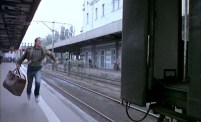


 My discovery of Tarkovsky’s first film was like a miracle. Suddenly, I found myself standing at the door of a room the keys of which had, until then, never been given to me. It was a room I had always wanted to enter and where he was moving freely and fully at ease. I felt encouraged and stimulated: someone was expressing what I had always wanted to say without knowing how. Tarkovsky is for me the greatest, the one who invented a new language, true to the nature of film, as it captures life as a reflection, life as a dream.”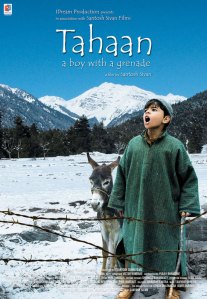
 The Seventh Art