La Dolce Vita (1960) (aka The Sweet Life)
Federico Fellini
Italian
“You are the first woman on the first day of creation. You are mother, sister, lover, friend, angel, devil, earth, home”

Whenever there is a discussion on Fellini’s ultimate masterpiece, the inevitable finalists are 8½ (1963) and La Dolce Vita (1960). Critics are thoroughly polarized on the former with Joseph Bennett (Kenyon Review) even calling it “The worst film made by a major Italian film director”! As for La Dolce Vita, it receives a much warmer response and is hailed as Fellini’s magnum opus almost unanimously. Along with Akira Kurosawa’s phenomenal Yojimbo (1961), it had become the zeitgeist of the 60’s as far as foreign films were considered.
La Dolce Vita takes us through the life of Marcello (Marcello Mastroianni) as a string of seven episodes, all of which start late in the evening and end at dawn the next day. Marcello encounters various situations and people including a one-night stand with lover Maddalena (Anouk Aimée), a fraud congregation revolving around a holy vision, a tantalizing night with an actress Sylvia (Anita Ekberg), a night out with his almost-alien father, a amateurishly done orgy, his relationship with his role model friend Steiner and a high-class party where he is totally out of place yet nobody cares. There is also a brief meeting with a pretty young girl at a beach resort who appears to be the only unsullied entity in the whole film.
Through his various encounters, Marcelo becomes increasingly aware of the vacuous style of his life and the meaninglessness of his existence. He knows he is straddling two worlds – one of reality which, his heart knows is moral, and another raised by his fantasies built around the fake lives of celebrities. Yet, he willingly prefers the latter and opts not to “cross the stream”, unlike Zampano of La Strada (1954) who turns contrite for his brutality. Much credit must go for Mastroianni for handling such a superficial yet complex character with such care. He takes the centre stage in some scenes and sidelines himself in others, all at the right places.
For followers of Fellini, La Dolce Vita may come as quite a big surprise. First off, it does have elements of neo-realism in it. Years after being panned for “betraying his neo-realistic roots”, Fellini came back with this film that included both his fantastic imagery and realistic backdrop. Also, more importantly, the film is devoid of the “Fellini magic” and is wrapped up in an atmosphere of depression and hopelessness, uncharacteristic of Fellini. Additionally, the themes handled in the film are closer in spirit to the works of Michelangelo Antonioni, especially Blowup (1966) and L’Avventura (1960), both of which trace the empty lives of humans in modern times. Considering these anomalies, it is remarkable to note that this quantum leap for Fellini has come immediately after the hugely successful The Nights of Cabiria (1957).
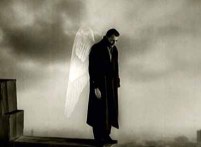
Facts apart, La Dolce Vita till date remains one of the most memorable cinematic journeys ever. The opening sequence, the Jesus statue being flown by a helicopter over the modern day Rome, can make the top five opening sequences any day (8½ can make it too!). The classic scene at the Fontana di Trevi made Anita Ekberg a craze around the world. Not to mention the irritating yet hilarious paparazzi who made it into the big screen for the first time. They not only provided a new word for the language, but also changed the perception of the public about the private lives of the celebrities.
Though a small section of viewers may find the three hour runtime of the film too long, the deluge of restless happenings and the episodic fashion of events keep one hooked irrespective of the age in which one watches the film. La Dolce Vita may not be a good starting point to get acquainted with the works of Fellini, but is an extremely rewarding film in its own right, especially if you are looking for entertainment as well as rumination.


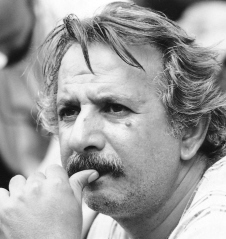 Iranian cinema was first put on the map when the films of Abbas Kiarostami caught the attention of the west. The avant-garde style and the peculiar yet totally fresh concept of “plotlessness” impressed the critics, invariably, throughout the world. After Kiarostami had made way for Iranian filmmakers to venture into the international scenario, it was up to the new generation to develop a stronghold and reserve a unique place for the cinema of their country without mimicking their forerunner. Quite a few of them have made it big, all in their own styles.

 Traditionally, there have been two paths for animation filmmakers. One is to make the films as close to reality as possible. That is the path taken by Pixar and Sony Animation, which try to push animation technology to new extremes and squeeze out every bit of processing power and skill set they have. The other is the conventional path that tries to realize the creators’ most bizarre and outlandish fantasies and attempts to emulate the peaks attained by Disney and Miyazaki. The second path is what companies like Dreamworks Animation have adopted and, to an extent, succeeded. Their latest offering, Kung Fu Panda is a clever idea, but inefficiently harnessed.


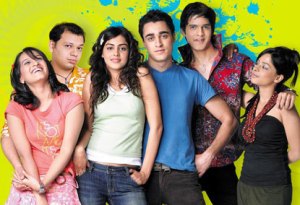 No, this is not a review of Nagesh Kukunoor’s box office bomb Bombay To Bangkok (2007) but of debutant director Abbas Tyrewala’s Jaane Tu Ya Jaane Na. Even before the film had got completed, the director had called it a typical Bollywood love story complete with its own quota of songs, fights and even the quintessential over-the-top airport climax. With that kind of a statement from a man who has some very successful scripts behind him, you can’t help but expect the film’s USP to be something completely fresh.
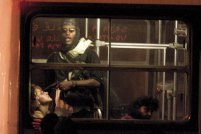
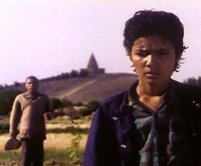 For a large part of the world Majid Majidi’s filmography begins with the disarmingly charming Children of Heaven (1997). But the Iranian auteur had already struck gold a year before the first Oscar nomination from Iran. The themes, style and idiosyncrasies that were to mesmerize the world in the years following Children of Heaven clearly show their roots in Pedar (1996) (aka Father).

