All Posts


With only a handful of posts published, the blog pretty much went into hibernation this year. While 2024 was full of opportunities, encounters and discoveries that I am immensely grateful for, it was also, personally, a year of greater flight from the world, including the world of cinema in some ways. I cut myself off more and more from the news cycle and social media for sanity’s sake, which has meant that I’m woefully unaware of, among other things, what’s making waves in the awards circuit and what the “important” films of this year are. At a glance, I don’t recognize most of the titles featured on major year-end lists.

At the same time, I find myself more embedded than ever in the professional world of cinema, working with different film festivals in various capacities, minor or otherwise. While I haven’t been able to write and translate as much as I would love to, I’ve found myself increasingly involved in programming and selecting films. This has had, I think, considerable consequence on the way I watch and write about cinema.

Firstly, the majority of the titles I saw this year were works-in-progress (WIP): projects in post-production, without CGI, colour grading, sound-mix, and even some shots or subplots. Such a ‘pre-natal’ view of films tends to put the viewer in a state of disenchantment in which one becomes too aware of the strings being pulled: actors simulating shock, disgust or joy in front of blank screens, interacting with inexistant elements of the décor, suspended on ropes, drowned in ambient noise or struggling to convey an emotion, hoping that the music will do that rest.

Over time, watching such volumes of unfinished films could also make a year-end list like this a hassle, since it I have to constantly check whether a particular WIP that I liked last year has released this year or is still waiting for a premiere. More crucially, such lists will likely be even more aleatory and subject to the vagaries of my viewing assignments rather than, as in the past, seeking to take into consideration, even if nominally, consensus titles and popular favourites.

The bulk of my writing this year has also been of a private nature, tied to the programming work. Destined for a handful of known people within a festival, instead of a wider readership online, the texts have undergone a change in kind. If they have gained in freedom and concision, they have lost the rigour and rhetorical force that comes with public writing. I can’t yet imagine what kind of impact this might have on my instincts – and mental capacity to engage with films – in the long run.

All this preamble to say that this blog may continue to remain inactive in the coming year(s). While that is nothing new – it was already in cold storage along with my cinephilia from 2016 to 2019 – it does feel different not to be identifying primarily as a critic/translator anymore. Interesting times ahead.

Here’s wishing a happy new year.


1. The Adamant Girl (P.S. Vinothraj, India)

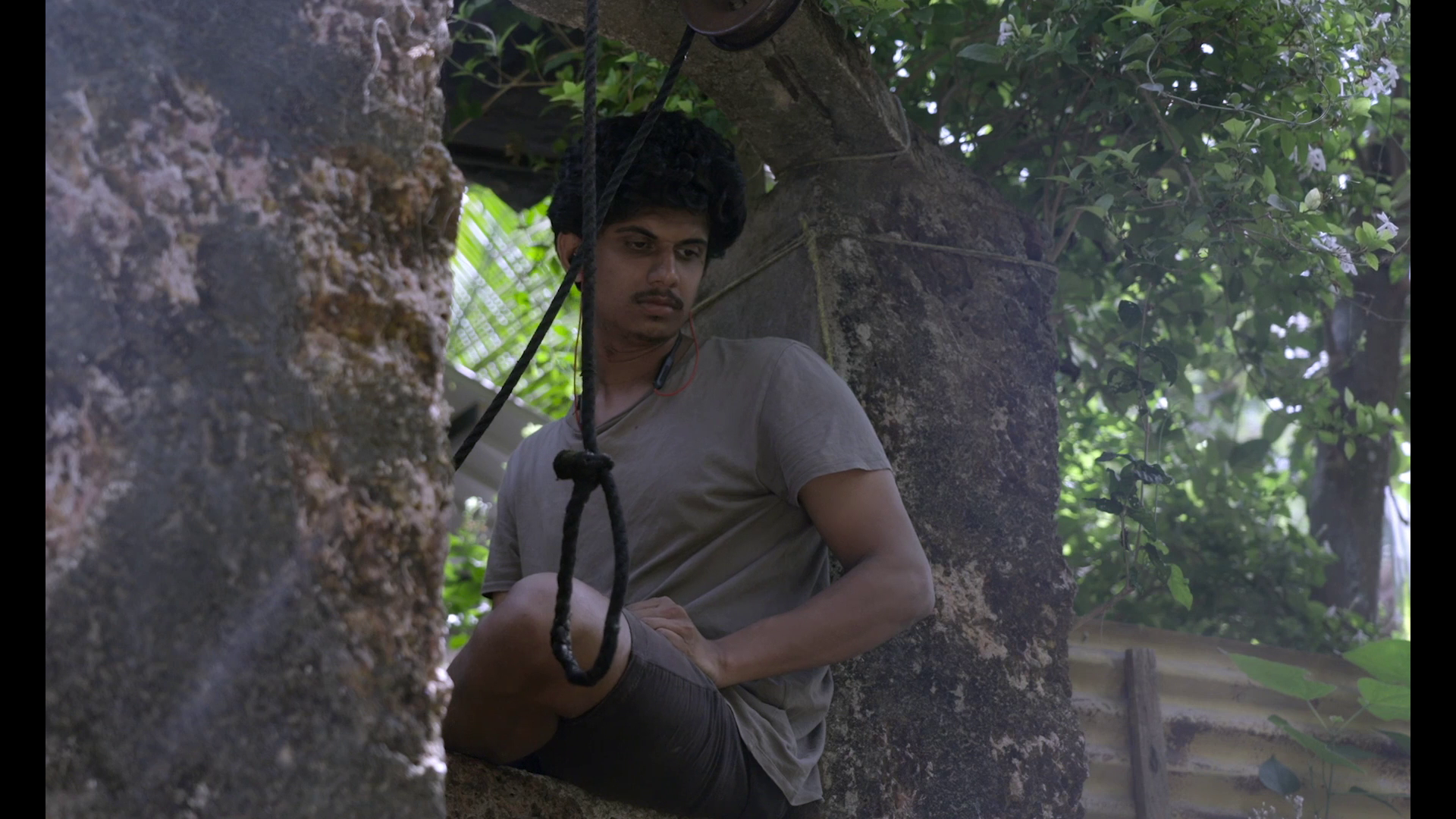
When Kottukkaali (The Adamant Girl) released in theatres, miraculously, in August in Tamil Nadu, it was accompanied by substantial popular backlash. Admittedly, Kottukkaali is a tough-minded work, one that is perhaps harder to instantly ‘like’ than Vinothraj’s debut Koozhangal (2021). Like the latter, it makes us intimate with the unbridled rage of its male lead, but it does so without the emotional cushion of a child’s perspective. Instead, the film performs a high-wire act, tensely balancing different, conflicting points of views towards its protagonist, Meena, a young lovelorn girl deemed possessed and taken to a local godman for exorcism by her extended family that includes Pandi, the hot-tempered cousin she is betrothed to. While the entourage constantly discusses what is to be done about the girl, Meena herself remains resolutely mute, her silence conveying both defiance and stoic resignation. Kottukkaali explores both the horrific dimensions of this pervasive practice and the subversive space of resistance it offers to the ‘possessed’, temporarily immune from secular violence. At once sophisticated and utterly simple, Kottukkaali respects its audience’s imagination and intelligence while withholding nothing from them. In its formal wit, its trenchant social portraiture and its uncompromising humanism, it represents a significant leap forward for Vinothraj. [World Premiere: Berlin International Film Festival]


2. Twilight of the Warriors – Walled In (Soi Cheang, Hong Kong)

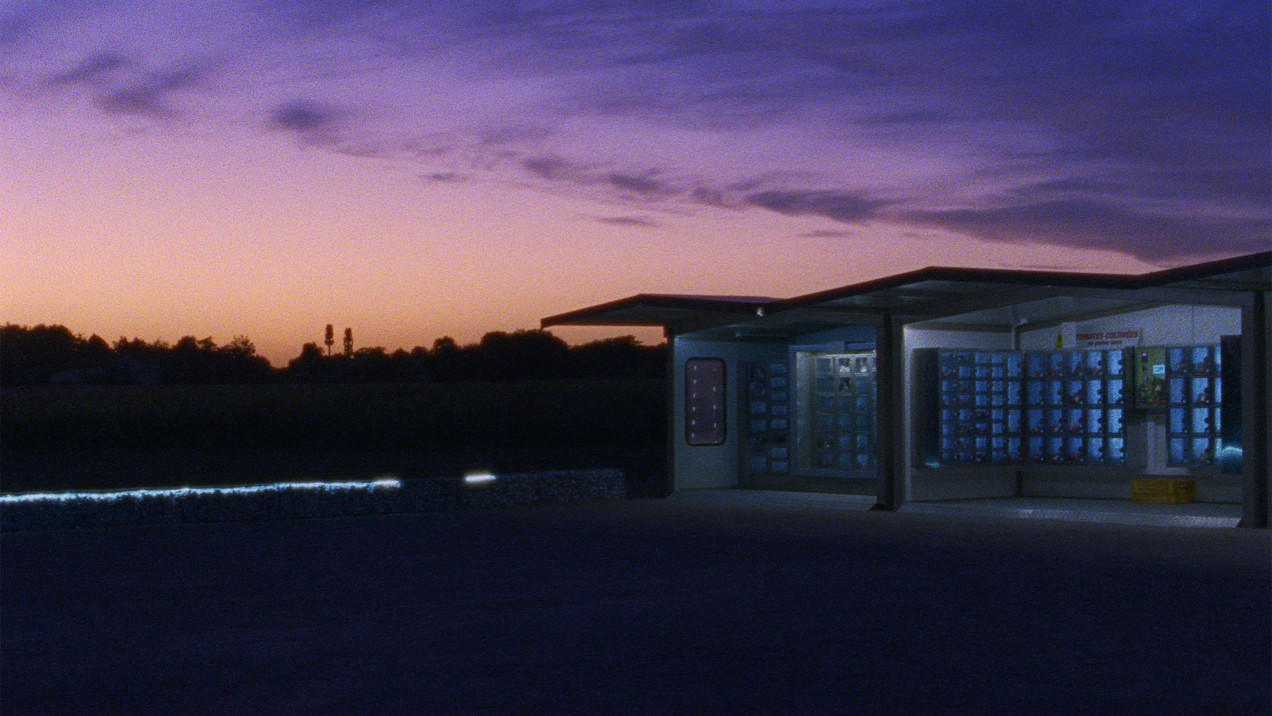
Decades in the making, Twilight of the Warriors: Walled In, Soi Cheang’s supremely kinetic martial arts epic, forges a double legend linking the mythical past of the now-demolished Walled City and a vibrant, close-knit Hong Kong of the eighties before the island’s handover to China. In gargantuan sets of stunning detail, the film recreates the ramshackle complex, not just the densely packed mass of its buildings, but also the thriving economy and community of this dizzyingly vertical ghetto. Desperate to evade the police and gang members, scrappy refugee Lok enters the Kowloon Walled City, a seedy, crime-ridden slum complex exempt from the law and run under the benign authority of Cyclone. Lok’s diligence and fighting spirit attract the paternal Cyclone, but when the young man’s past comes to light, the very existence of the Walled City is endangered. A masterclass in modern cinematic action, the film conceives its astonishing martial-arts sequences in a close co-choreography of camera movement, continuity editing, geometric décor and athletic performers, the whole presented at human scale and close to real-time speed. With every shot having the force of an abstract painting in its dynamic sight lines, Walled In delivers a sweeping, sensational spectacle. [WP: commercial release]


3. Who Cares? (Alexe Poukine, Belgium)

Kneel down, and you will believe, said Pascal. In That Which Does Not Kill (2019), Alexe Poukine had actors re-enact another person’s reason-defying testimony of sexual assault, allowing them to find pathways to empathy through text, performance and the spoken word. Deeping this line of inquiry, Who Cares? looks at a soft-skill course in Lausanne, Switzerland, in which trainee doctors and caregivers engage in simulated conversations with actors playing patients, with the goal of being more mindful of patients’ feelings during diagnosis. At the heart of this course aimed at humanising healthcare is the belief that empathy, like other qualities, can be learnt through performance, repetition and critical feedback. Even as it brings us close to this view, Poukine’s film qualifies it, presenting us another theatre-based training session in which real medical staff grapple with their professional frustrations born of difficult working conditions, revealing how individual goodwill finds its limits in institutional realities. Like Harun Farocki’s best work, Who Cares? zeroes in on the niche rituals of a highly specialized field, only to lay bare broader civilization and historical undercurrents; in this case, the contradictions generated by the high premium placed on individual wellbeing in western societies. [WP: Cinéma du Réel]


4. The Damned (Roberto Minervini, Italy/USA)

In 1862, during the American Civil War, a troop of Union soldiers is sent to survey the uncharted territories of the West. The young men only have a vague understanding of the reasons for the war, but have their own motivations for donning the uniform. They bide their time, play cards and baseball, and engage in occasional skirmishes against a looming, largely invisible enemy. In his first fictional feature, Minervini forges a spare, brooding Western featuring the rural White southerners who populated his documentaries on backwoods America. Their dialect, diction and body language are modern, and this deliberate anachronism lends the film the texture of a filmed performance. In casting marginalized, stereotyped individuals as Union soldiers and placing them at the very origin of the creation of the United States, Minervini monumentalizes them in the vein of Straub-Huillet’s peasants-turned-gods. At the same time, the counter-casting obliges the non-actors to creatively participate in a founding myth that is very different from the “lost cause” narrative dear to the South. The result is a kind of Lehrstück for both the participants and the audience, a vital gesture of bridge-building in a house that finds itself divided once more. [WP: Cannes International Film Festival]


5. Kiss Wagon (Midhun Murali, India)

In a film culture where a project shepherded through half-a-dozen funding bodies, script labs, residencies and international co-producers is deemed ‘indie’, here is a film that obliges us to recalibrate our notions of what independent cinema could mean. The credit roll of Midhun Murali’s animated digital saga is entirely split between the filmmaker, his creative partner Greeshma Ramachandran and the voice actor Jicky Paul. Kiss Wagon charts the sprawling odyssey of Isla, a cocaine-addled courier girl, who leads a disengaged life in a police state under the sway of a powerful, puritanical cult. When she is entrusted by a mysterious client to deliver a kiss to an encrypted address, Isla finds herself on the wrong side of a massive military-theocratic conspiracy. Narrated in a mix of tongues real and invented, using a range of animation techniques classical and cutting-edge, Midhun’s film tells a mythical tale of the planetary struggle between the darkness of religious dogma and the light of cinema. A revisionist testament in four chapters, Kiss Wagon is an epic ballad of a paradise lost and regained; regained not through the force of institutionalized virtue, but through the agitations of outsiders, non-conformists, misfits and weirdos. A homemade cinematic A-bomb, delivered with a kiss. [WP: International Film Festival Rotterdam]


6. We Are Inside (Farah Kassem, Lebanon)

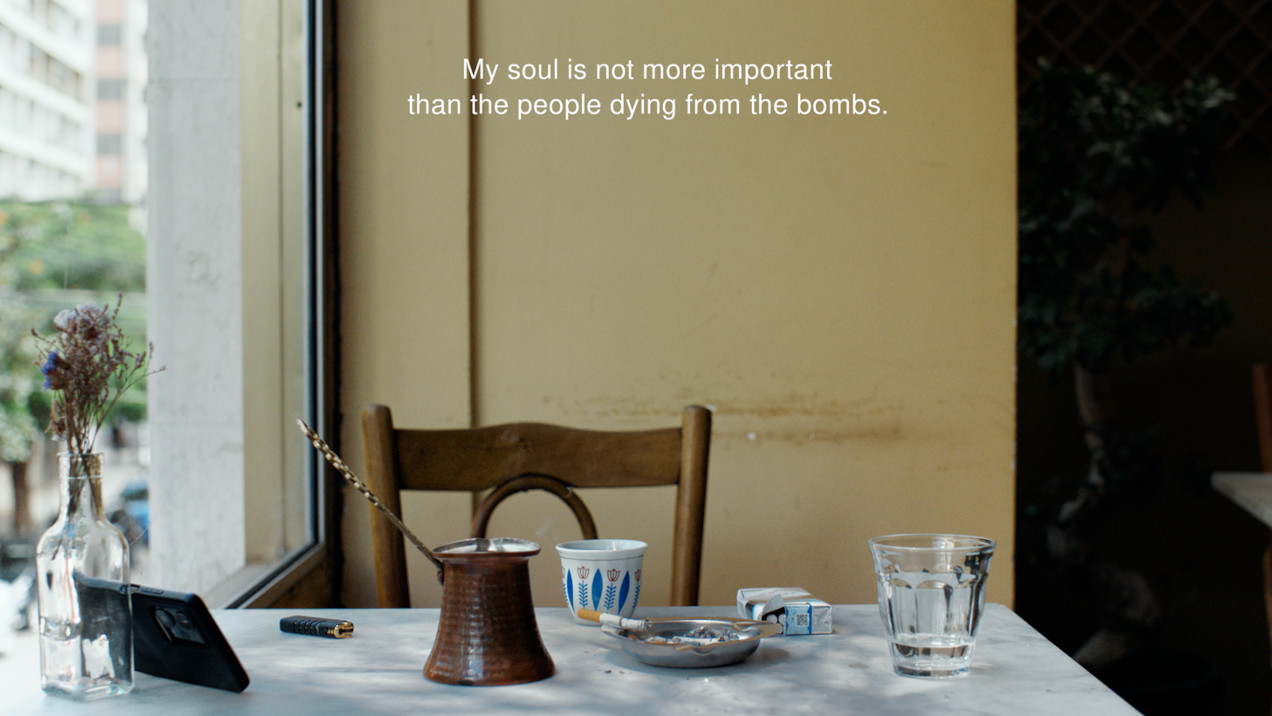
The family documentary may currently be the most shopworn, convention-ridden genre in non-fiction film. But Farah Kassem’s three-hour-long domestic epic We Are Inside represents a sweeping personal work that makes a strong case for its continued existence. Following the demise of her mother, thirty-something European resident Kassem returns home to Tripoli, Lebanon, after fifteen years of absence to live with her cantankerous octogenarian poet-father. She spends her time learning Arabic from him, cutting his hair, tending to his wounds, sorting his medicine, driving him around and, most entertainingly, participating in his old boys’ meetups. Poetry becomes both an heirloom the filmmaker inherits and the means through which she concretises the daughterly bond. As the world outside falls apart, with Lebanon experiencing one shock after another, the film turns into a rumination on the role of artmaking during times of political crises, the artist oscillating between the pursuit of beauty and the reflection of truth, between the personal and the political, between inside and the outside. An instructive companion piece to Abbas Fahdel’s Tales of the Purple House (2022), We Are Inside offers a rich, funny and moving work that deserves wider viewing.  [WP: Visions du Réel]


7. Wikiriders (Clara Winter, Mi(gu)el Ferràez, Megan Marsh, Mexico/Germany)

If you ever wondered where the missing Human Surge sequel was, here is a less punishing proposition. A super-chill hangout film, Wikiriders centres on a multilingual band of three friends – one speaking English, the other Spanish and the third German, interchangeably and out of lip sync – who undertake a road trip from Mexico to the USA in search of a powerful (fictional?) family that has had an outsized influence on the history of the two countries. The trio may be navigating the Mexican landscape, but they are also virtual surfers, following the rabbit hole of Wikipedia edits about/by the members of the family. Wikiriders takes the epistemological processes of the internet as inspiration for its structure, hopping from one narrative tab to another, featuring memes for characters and making maps of meaning out of digital babel, while also raising pertinent questions about the rewriting of popular history and the resistance to it through voluntary international collaboration. Imbibing the spirit of the Nouvelle Vague as well as the road movies of Monte Hellman, Ron Rice and Wim Wenders, Wikiriders embraces the fact that it’s largely discovered on the editing table. Fun, experimental and very accessible. [WP: Berlin Critics’ Week]


8. Kajolrekha (Giasuddin Selim, Bangladesh)

Adapted from a medieval folk ballad from the Mymensingh region of present-day Bangladesh, Giasuddin Selim’s sumptuous, widescreen musical fairytale Kajolrekha is a melodrama in the etymological sense of the word: music + drama. The film employs nearly twenty songs, sung by characters and narrators alike, to advance the plot, deepen emotions, comment on actions and, at points, critically distance the viewer from the story. Bankrupted by his gambling addiction, merchant Dhwaneshwer is given a second chance when a mysterious monk gifts him a soothsaying bird. The bird restores Dhwaneshwer’s lost glory, but also instructs him to exile his 13-year-old daughter Kajolrekha. Forced to lead a life of anonymity and hardship, Kajolrekha perseveres until the tides turn, even if it means paying a heavy price. Selim’s actors adopt a precisely stylized repertoire of theatrical gestures, postures and voice tones to express the essence of their roles, be they slaves, merchants or aristocrats. This conscious revival of a classical narrative tradition isn’t carried out ironically, but with a modernist sense of the latent possibilities of a lost artform. Moving tragically flawed characters across a perfectly orchestrated chessboard of fate and destiny, Kajolrekha reaffirms the inevitability of a just and benevolent world. [WP: commercial release]


9. Sleep #2 (Radu Jude, Romania)

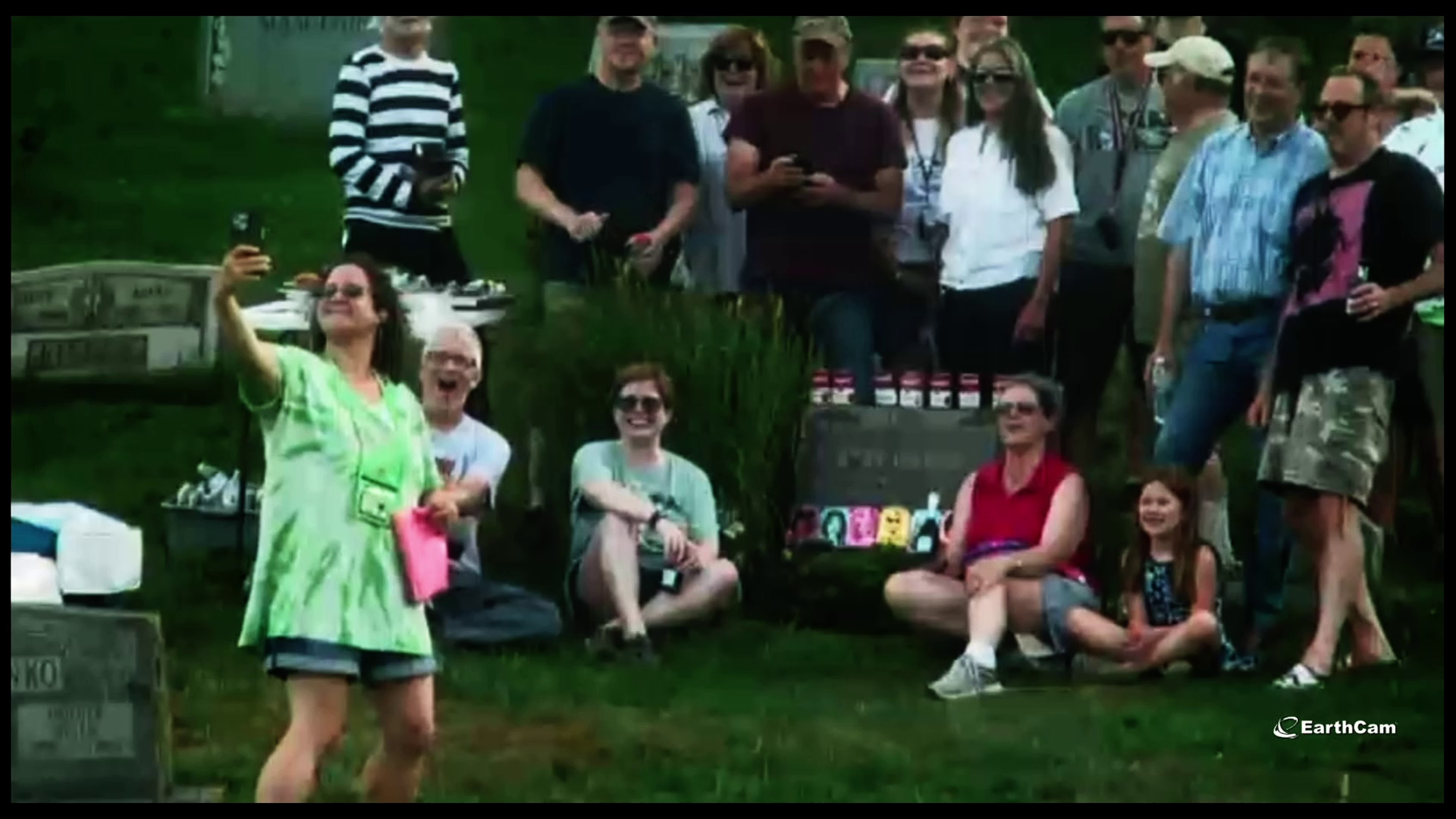
Culling from four seasons’ worth of footage from EarthCam’s live-stream of Andy Warhol’s tomb in Pennsylvania, Radu Jude fashions a spiritual sequel to Warhol’s blockbuster of boredom, Sleep (1964). Where the older film turned the dormant body of Warhol’s lover into a monument comparable to the Empire State Building, Jude’s film, almost equally unwatchable, fixates on Warhol’s own body repurposed into a public monument. As fans and curious passersby click pictures, pose flowers, decorate it with Campbell soup cans and even organize parties around it, the artist’s tomb becomes something like a collective work of art, vested with a social signification. A modern cinematic readymade, Jude’s desktop documentary crafts an unassuming essay on celebrity and fame, entirely in line with Warhol’s work. What happens when television ceases to be the arbiter of mass taste and simply becomes the condition of everyday life? Not fifteen minutes, but the possibility of eternal fame? Just as the visitors bestow the grave with meanings it doesn’t possess in itself, the act of watching the live-stream turns out to be the means by which operational images become aesthetic objects. Critically interrogating spectatorship, Jude’s fascinating film affirms the triumph of life over eternal sleep. [WP: Locarno International Film Festival]


10. Journey of the Shadows (Yves Netzhammer, Switzerland)

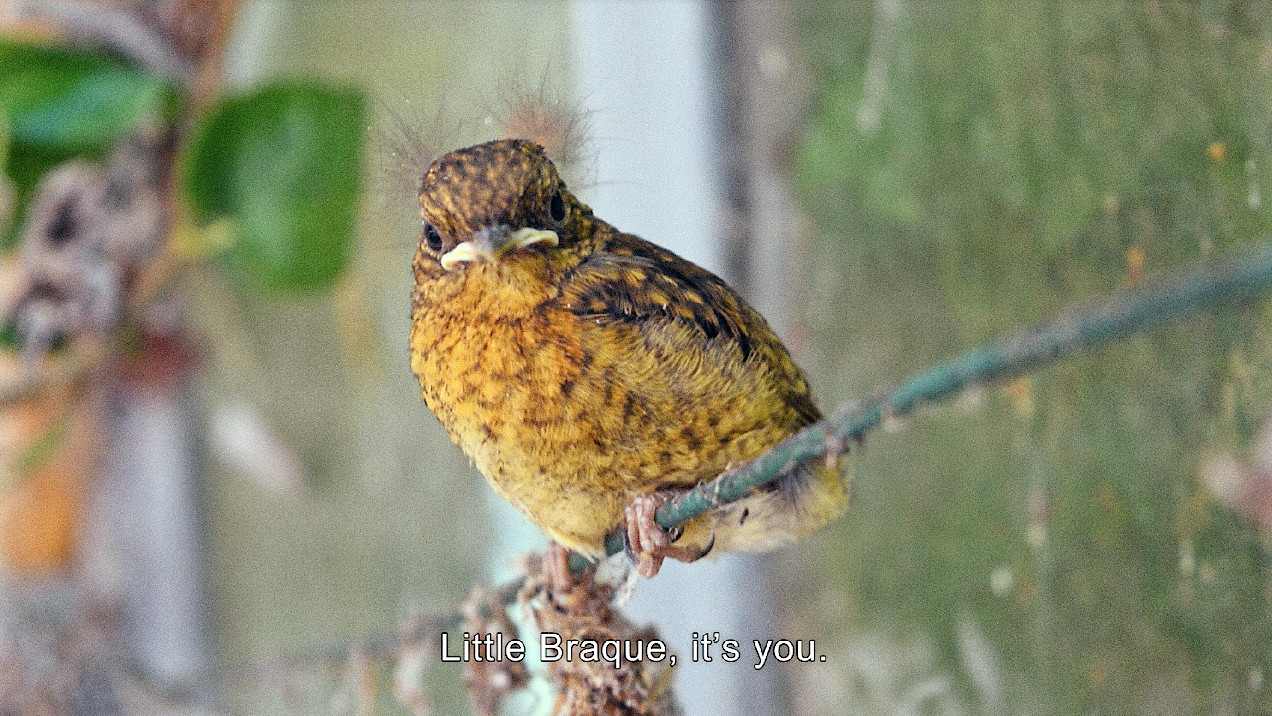
Once living a life of harmony in a dystopian world, two bipedal figures – humanlike but featureless, genderless – fall out under the influence of a mystical pet fish. One of them perishes, and the other embarks on an odyssey across the seas, intermittently led by a book and a candle. After countless catastrophes, this wandering being washes ashore on a pristine island, where it tries to overcome its loneliness, alas in vain. This probably isn’t what happens in Swiss multimedia artist Yves Netzhammer’s wordless, mind-bending first feature, in which identities, relations and situations are in such a flux as to resist any kind of linear synopsis. Where traditional animation advances evermore towards a utopian combination of naturalism and expressivity, Journey operates at a zero degree of digital image-making, dealing in primitive figures, bald volumes, harsh lighting, rudimentary physics, sickeningly unmodulated colours, oneiric movements, and an oppressive clarity of visual field recalling Dali or Magritte. At its best, Netzhammer’s abstract film has the subversive, Kafkaesque quality of Central European animation from the 1960s and ‘70s. Defying binaries of nature/civilization, human/technology, organic/synthetic, Journey crafts a deeply disturbing meditation on freedom, creation and self-discovery whose brutality shocks all the more in a universe so unreal.  [WP: International Film Festival Rotterdam]


Special Mention: Dahomey (Mati Diop, Senegal/Benin/France)


Favourite Films of

2023 • 2022 • 2021 • 2020 • 2019 • 2015

2014 • 2013 • 2012 • 2011 • 2010 • 2009

Forty years after its original premiere, the Odia film Maya Miriga (1984), a touchstone of the Parallel Cinema movement, will be presented in a restored version at the Cinema Ritrovato Festival in Bolonga, Italy, in June. Directed by Nirad Mohapatra (1947–2015), Maya Miriga was part of the Critics Week at the Cannes Festival in 1984, alongside such titles as Billy Woodberry’s Bless Their Little Hearts and Leos Carax’s Boy Meets Girl. The film has been restored by the Film Heritage Foundation (FHF) at the L’Immagine Ritrovata laboratory in Bologna, in association with Digital Film Restore and Prasad Corporation in Chennai.

A graduate of the 1971 batch of the Film and Television Institute of India, Mohapatra made numerous documentaries, television series, industrial and educational films across his three-decade career, but Maya Miriga remained his sole fictional feature. “I had conceived the idea [for the film] in one of my intense moments of loneliness and deep depression and it had undergone several changes in various phases.”, notes the filmmaker. Shot by Rajgopal Mishra in a warm, sober colour palette, the film demonstrates a great feeling for the interplay of harsh natural light and deep shadows — a sensuous quality that can be appreciated fully in the pristine new version.

Set in the town of Puri, Maya Miriga is the saga of a joint family driven to disintegration by ambition, opportunity, festering resentment and, simply, changing times. A stern but honest headmaster on the brink of retirement, Raj Kishore Babu (Bansidhar Satpathy) lives in a fairly capacious house with his elderly mother, wife and five children: the dull and reliable college lecturer Tuku, the IAS hopeful Tutu, the self-doubting MA graduate Bulu, the rebellious and cricket-obsessed Tulu and the only daughter Tikina. While the men pore over files or hang out on the terrace, Prabha, Tuku’s wife, bears the burden of the upkeep of the house. The apparent stability of the home comes undone when Tutu cracks the civil service examination.

The narrative spans many months and proceeds by substantial leaps in time. We witness Tutu becoming a bigshot who marries into money, Prabha suffocating under the patriarchal order of the house, Tulu trying to break out on his own, Bulu imploding when surrounded by high achievers and Raj Babu grappling with post-career emptiness.

Through gradual buildup of dramatic detail, the film shapes into a poignant tragedy of a middle-class family torn apart by its own cherished values. The father’s insistence on academic excellence, the pressure on the sons to find respectable jobs, the irreconcilable expectations of wealth and traditionalism from the daughters-in-law — all turn out to be ticking time bombs for the household.

We also learn that the family has property back in their ancestral village that no one takes care of, suggesting that Raj Babu is himself a migrant who left his landlord father for greener pastures in Puri. Mohapatra’s film thus captures a crucial moment in Indian social history between two generations of labour migration, one giving rise to joint families inhabiting independent houses in towns and the other producing nuclear families looking towards metropolises.

Maya Miriga is a veritable compendium of middle-class mores and codes of behaviour: how do individuals get their decision ratified by other members of the family, what are one’s duties when returning home after a stroke of success, how should guests comport themselves when visiting? With finesse and grace, Mohapatra’s film illuminates the gendered division of labour, the intergenerational etiquette and the power hierarchy that holds sway in an undivided family.

An abandoned site spruced up for the film, the house itself plays a central role, exercising a gravitational pull that the characters struggle to escape. Actors move in and out of its dark recesses, as though consumed and spat out by the structure. Its imposing pillars, its bright courtyard and its open terrace all seem extensions of the power relations binding its inhabitants.

Maya Miriga is certainly a melodrama, but on a subtler register than seen on most Indian screens. The influence of Satyajit Ray, especially of a work like Mahanagar (1963), is discernible here, but Mohapatra’s film also shares lineage with the innumerable family dramas of contemporary theatre and popular cinema across the country. “The balance that I ultimately wanted to achieve”, the director remarks, “was between realism and simplicity on the one hand and my preoccupation with a certain cinematic form on the other.”

An admirer of Japanese filmmaker Yasujiro Ozu, Mohapatra strips away his material of all dramatic fireworks. The non-professional actors are all filmed in mid-shots, and never in close-ups, in a way that integrates them with their surroundings. Their emotions are muted; the dialogue, music and reactions whittled down to a minimum. A sense of serenity reigns over the film, which progresses with relative equanimity through both joys and sorrows.

The question, to my mind is an ethical one – to excite the senses to the point of disturbing their rational thinking is a certain sign of disrespect to the audience.”, writes Mohapatra, proposing that filmmakers must leave the viewers “a margin to move closer to the work and have a more active participation, a greater sense of involvement in the process.” “I believe, freedom is alienated in the state of passion.”, he adds, “One should not therefore seek to overwhelm the audience.

Maya Miriga represents the FHF’s second restoration project this year after Shyam Benegal’s Manthan (1976), which had its premiere in the Classics section of the Cannes Film Festival in May. Carried out in association with Sandeep Mohapatra, the filmmaker’s son, the restoration process was long and arduous. The original 16mm camera negatives, found abandoned in a warehouse in Chennai, were severely compromised and had to be manually repaired over several months before it could be scanned in Bologna. The results were complemented with material from a 35mm print of the film from the National Film Archive in Pune, which also served as the source for the soundtrack. With the revival of this seminal film, Odia cinema promises to draw much needed attention from the rest of the country as well as the world.


[First published in Mint Lounge]

[Part of Curator’s Corner, a section dedicated to showcasing work of emerging and marginal filmmakers. See here for details.]

“What if the Kardashians were born in a rural Rajasthani family and lived in Baroda on a budget?” So goes the logline for Dhruv Solanki’s beguiling debut feature It’s All in Your Head (2023), now available for rent on Gudsho in India and on NoBudge in the US.

A family movie, it is, but perhaps unlike any other. At the centre of this carefree comedy are two sets of real-life siblings from the Rajpurohit clan: freelance photographer Jyotsana, the largely absent Deepshikha and aspiring model Bonita who are cousins to office worker Bhagyashree, model Manshree and wannabe dancer Bhuvnesh. They live in two different flats in suburban Baroda, Gujarat, but they seem more at home on Instagram, where they run a thrift store. The film, which opens with an Insta live session, will follow the six characters over the course of a day, charting their individual hopes and frustrations in both the professional and domestic spheres: applications, rejections, flirtations, confrontations, breakups and reconciliation, the whole deal. Any two of the six siblings would periodically appear together, but the whole gang is never to be seen under a single roof.

A self-taught filmmaker, Solanki grew up in Ghaziabad, Uttar Pradesh, and trained as an engineer before teaching chemistry. When he moved to Baroda, he was working on a script about young male hopefuls, but that changed when he came in contact with the Rajpurohits through a common friend. As someone with little interest in social media, Solanki found the sisters’ lives as far removed from his own as possible. “But, ultimately, I realized we were the same,” he remarks, pointing to the common struggles with money and family approval that he was also experiencing at the time.

Some of the names involved in the film aren’t new to this blog. Bonita Rajpurohit is one of the actors in Dibakar Banerjee’s Love Sex aur Dhokha 2 (2024). Dhruv Solanki and Jyotsana Rajpurohit play the leads in Petals in the Wind (2024) by Abdul Aziz, who is credited for the subtitles in It’s All in Your Head. Solanki’s film bears certain similarities to Aziz’s work. Shot on a smart phone with non-actors in real locations and sync sound, it weaves a loose fiction over a bedrock of documentary details, stripped off the kind of stylization we see in even the most realist of mainstream cinema.

But where Aziz chooses a hyper-naturalist mode predicated on uninterrupted chunks of real-time (in)action, Solanki’s film takes the opposite route in terms of technique and tone. Avoiding long takes or complex camera movements, it instead progresses in a series of static or nearly static shots. Sequences sometimes unfold in master shots, but are generally broken down into close ups and mid-shots with odd eyelines. The most pronounced element is the music, composed of an assortment of genres — Hong Sang-soo-esque classical pieces, jazz, Latino, soft rock numbers — at times suggesting hidden emotional undercurrents, but mostly lending a frivolous, sitcom-like texture to the film.

All this nudges the film into Mumblecore territory that seems to be experiencing a new surge in Indian independent filmmaking of late: low-budget productions about the sexual hangups and romantic foibles of young urban professionals. It’s All in Your Head, however, doesn’t have the psychological penetration and fine-grained performances that characterized Mumblecore cinema. Notwithstanding the emotionally resonant final stretch, the actors themselves seem to barely believe in the story they are participating in.

What it lacks in acting prowess, It’s All in Your Head makes up for in the exciting discrepancy it sets up between reality and fiction. Solanki’s film takes a particular familial reality, wraps it in a loose swathe of fiction only in order to get back to a deeper reality. Like Aziz’s films, it presents the lifeworld of a certain class of suburban Indian youth — one firmly embedded in an image economy — with an endearing candour, featuring dialogue, locations and body types that we seldom see on screen. “What I felt responsible towards was the energy and essence of each person,” says Solanki, adding that he wanted to capture the way each sibling negotiated different environments. To this end, he shot dozens of exercises, following the sisters in their routine, making them play out pre-written roles or filming them in real-life situations and gatherings.

Solanki’s film stands out in how it thrusts viewers into a microcosm with its own laws, not offering outsider perspectives from which to judge its inhabitants. It challenges us to place these characters socially — there’s little sense here of the normative world of parents or neighbours — and derives much of its appeal out of the incongruence between their aspirational lifestyles and the mundane reality of the world around them: Bonita lounging in a nightgown in a cramped flat, the punk-like Jyotsana walking up the stairs of a certain Sai Vihar apartments, Manshree and her sister eating by a roadside chat joint, or any of them making rotis in the kitchen. Bonita’s transness is taken for granted, as is the social bubble they all seem to move around in. Solanki confesses that he isn’t as interested in the conflict between the characters and their world as in the one they have with and within themselves. It’s all in their head.

Marching to a private beat, the siblings seem to have carved out their own Malibu in mofussil Gujarat. Are we in a utopia, a Baroda that isn’t, but could be? Is the film defiance or wish-fulfilment? It’s All in Your Head offers an unusual, idiosyncratic vision of small-town India: not rotting in backward biases, but scrappy, hungry and punching above its weight.


Bio

Dhruv Solanki is a writer-director based in Vadodara, Gujarat. He has co-written and directed Blah Blah Blah, an independent comedy currently in post-production. He developed The Rebels of Shakambhari, a period action feature, as a fellow of the Writers Ink Screenwriting Lab. It was an official selection at the Cinephilia Film & TV development workroom and was also invited to participate in Rewrite, a screenwriting residency lab. It’s All in Your Head is his debut feature as a writer and director.

Contact

dhruvsolanki.1719@gmail.com InstagramFacebookYouTube

Filmography

  • Hashim Khan (2018), 26 min., digital
  • Parichay (2019), 2 min., digital
  • Love (2021), 1 min., smartphone
  • Scenes from a Room (2021), 5 min., smartphone
  • Drink (2022), 10 min., smartphone
  • My India (2022), 3 min., smartphone
  • It’s All in Your Head (2023), 84 min., smartphone
  • Blah! Blah! Blah! (work-in-progress, co-dir. Bonita Rajpurohit), smartphone
  • Writer, The Rebels of Shakambhari (unproduced)
  • Writer, Home (unproduced)
  • Co-writer, Qualia (dir. Devankur Sinha), 2021
  • Actor, What a Difference a Day Made (dir. Devankur Sinha), 2022
  • Actor/co-writer, Pankhudiyaan (Petals in the Wind, dir: Abdul Aziz), 2024
  • Producer, If You Know You Know (dir. Bonita Rajpurohit), 2024

Showcase

Trailer for It’s All in Your Head (2023)

Love (2021)

Scenes from a Room (2021)

[The following essay was first published in Film Comment and was written for the Navroze Contractor tribute event at the Film at Lincoln Centre.]

In January 2023, the Experimenta Film Festival in Bangalore presented two films by the Yugantar Film Collective. Founded in 1980 by Deepa Dhanraj, Abha Bhaiya, Meera Rao, and Navroze Contractor, this short-lived feminist collective made half hour–long documentary-fiction hybrids on issues of domestic violence, grassroots resistance to deforestation, and labor organizing among maids and factory workers. While Dhanraj took questions from the audience after the screening, her husband and cinematographer, Contractor, remained seated at the very back of the auditorium among students and festival volunteers, speaking up only when Dhanraj deferred to him.

Something of this withdrawn, thoughtful quality permeates the work of Contractor, who died in a motorcycle accident in June 2023. A renowned still photographer, amateur percussionist, and jazz aficionado, not to mention a legendary motorcycling enthusiast who also wrote on the subject, the 79-year-old Contractor was widely remembered in his obituaries as a master raconteur who could charm an audience with his wit and intelligence. As a cameraman for the first generation of Indian documentaries made without state patronage, Contractor was one of the key image-makers of Indian independent cinema. The insightful, non-patronizing films that he shot for Dhanraj and other documentarians in the ’80s, attentive to life on the ground and sensitive to historical context, may be said to embody the first stirrings of a democratic visual media movement in the country.

Born in 1944, Contractor grew up in Ahmedabad, in the western Indian state of Gujarat, and was trained in painting and photography at the Faculty of Fine Arts in Baroda. He applied to the Film and Television Institute of India (FTII) in Pune—the country’s premier film school, and alma mater of stalwarts like Adoor Gopalakrishnan, Kumar Shahani, and Shabana Azmi—to study cinematography, but he could only get a seat in the direction department. However, under the tutelage of the illustrious archivist P.K. Nair, who founded the National Film Archive of India, Contractor learned the ropes of cinematography and lab processing outside the curriculum. When a strike by the institute’s Acting students led to classes being canceled in 1969, the young man dropped out of his course to pursue a career in photography.

In the late ’60s, Contractor was employed by the Ford Foundation as a still photographer to document their socio-economic development projects in Punjab. The color slides that Contractor produced as part of this stint caught the eye of filmmaker and fellow FTII alumnus Mani Kaul, who told the cameraman that if he ever made a color film, Kaul would enlist him—a promise that came to fruition when the director’s regular cinematographer K.K. Mahajan dropped out of Duvidha (1973) because it was to be shot on a Bolex camera under “amateur” conditions.

That Kaul entrusted the cinematography of his first color film to someone who’d never shot a movie before is astounding given the delicate beauty of what they accomplished together. Based on a short story of the same name by acclaimed writer Vijaydan Detha, Duvidha centers on the dilemma of a taciturn teenage bride (played by Raisa Padamsee) whose miserly husband goes away on business a day after their wedding. Smitten by the bride at first sight, a ghost inhabiting a nearby tree takes the form of the absent husband and moves in with her. Things come to a head when the real husband gets wind of the impostor back home.

Partly financed by the leading lady’s father, the painter Akbar Padamsee, Duvidha was shot on 16mm Kodachrome II reversal stock (later blown up to 35mm) in the village of Borunda in Rajasthan, not far from Kaul’s birth city of Jodhpur. “We had very little money, just two sun guns for lights, a Uher non-sync tape recorder, no trolley and tracks… nothing,” Contractor recalled in an interview. Since Borunda was home to Detha, who personally requested the villagers’ cooperation, they were willing to comply with special requests from the film crew, such as painting all the houses of the village white or not turning on their lights at night so that the shooting could proceed without hiccups.

Inspired by the approach to space in Indian miniature painting, Kaul and Contractor sought to disrupt linear perspective as the basis for their image construction. This influence is perhaps most apparent in the film’s many high-angle shots in which the camera adopts the elevated “balcony view” characteristic of miniature paintings, while also suggesting the point of view of the ghost on the tree. With these off-kilter flourishes, sudden changes of scale, extreme foreshortening, deliberate underlighting, and partial framing of faces, Duvidha demands constant visual readjustment on the part of the viewer.

“Often when a camera movement had to be made,” Contractor said of Kaul in an interview, “he would sing in my ear, that was my speed, rhythm of the shot.” While the director asked Contractor to pan the camera only horizontally or vertically—never diagonally—the actors’ bodies, the staircases, and the oblique eyelines nevertheless produce a warped perspective with strong diagonals. The most striking visual element of the film may be the freeze-frames that Kaul employs to telescope the narrative. But equally notable are the various zooms, used at key moments to intimate the supernatural dimensions of the story—most memorably in the shot in which Padamsee, clad in a red saree and leaning against a white wall, stares back blankly into the telescoping lens.

The consistent use of roving zooms is perhaps the single most recognizable aspect of Contractor’s cinematography, and in his documentary work with the Yugantar Film Collective, he elevated this device into something like a modus operandi. The handheld zoom provided Contractor the nimbleness required in such dynamic situations as the conferences, rallies, and strikes that he often found himself recording. A remarkable shot at the end of Tobacco Embers (1982), lasting more than five minutes without a cut, offers a shining example. As a group of women discuss strategies for an upcoming protest, the camera travels from face to face—now zooming into one speaker, now darting over to the next. Within the film’s fly-on-the-wall framework, the zoom lens allows Contractor to move seamlessly between the individual and the collective, between consensus and dissent.

By the time he came to work on Sanjiv Shah’s Love in the Time of Malaria (1992), Contractor had shot more than 20 documentary works of varying length, including ones made by Shah, and five narrative features. Shot largely in Contractor’s hometown of Ahmedabad, Love in the Time of Malaria takes place in the fictional kingdom of Khojpuri and charts the fortunes of Hunshilal (Dilip Joshi), a young scientist who follows the king’s call to develop a concoction to eliminate “dissident” mosquitoes from the country. Hunshilal succeeds in his mission, but when he falls in love with a fellow scientist and underground revolutionary, his loyalties are challenged.

Shah’s film may be described as a “political musical comedy,” but that wouldn’t do justice to the sui generis work that it is. Blending a host of genres and expositional modes, it brings together archival footage, documentary sequences, musical numbers, and absurd vaudeville-like tableaux into an unholy composite that plays as broad, blunt satire. Brimming with references to contemporary personalities and events, Love in the Time of Malaria sharply encapsulates the anxieties of India in the early 1990s, a period marked by religious strife and economic liberalization—principal forces that have shaped, and continue to shape, present-day India.

The eclectic form of the film is reflected in its heterogeneous visual texture: pastel-colored sequences in serene daylight rub shoulders with grainy archival clips, seductively lit indoor musical numbers, and gritty street photography. The cinematographer of the spectral Duvidha and the steely Yugantar documentaries may have been particularly well-suited for this unique mix of granite and rainbow, of fable and hard fact. An example: as an exhortatory poem about dissent is recited on the soundtrack (by iconic Indian actor Naseeruddin Shah), the camera zoom-pans across a shipyard full of toiling workers, stopping finally at a narrator in a hard hat who breaks into a song.

Like many cinematographers, Contractor was a protean professional who adapted his technique and style to the needs of individual films and filmmakers. He made both single-shot films about local artisans and narrative features with no camera movement, such as Vishnu Mathur’s austere study of bachelor anomie Pehla Adhyay (1981). Though he cut his teeth on 16mm, he also studied video production at Sony Corporation in Tokyo in the 1980s and later shot one of the earliest Indian films in high-definition digital video, Chetan Shah’s English-language campus thriller Framed (2007). From embedded documentaries to low-budget fiction to works of high modernism, Contractor has left behind an eclectic body of cinematographic work, spanning almost half a century, unified by its fierce independence from the commercial mainstream.

[Part of Curator’s Corner, a section dedicated to showcasing work of emerging and marginal filmmakers. See here for details.]

Ever since the Sunday in 1895 when Louis Lumière photographed workers streaming out of the gates of his factory in Lyon-Monplaisir, the history of cinema has been tied up with issues of labour, leisure and workplace surveillance. In the century that followed, the image-making tools sometimes made it to the hands of the workers themselves, or to those of sympathetic filmmakers speaking on their behalf, throwing open questions around representation, ethics and consent. Who wields the camera? Who is the subject? Who holds sway over whom? Can an employee, especially dependent on the next paycheque, ever withhold permission to be filmed? Is consent paramount when filming people bound by lopsided contracts?

These questions all surface vividly in Renu Savant’s compelling new documentary The Orchard and the Pardes (Bageecha aur Pardes, 2024). An alumna of the Film and Television Institute of India, Savant is a Mumbai-based independent artist with an acute awareness of the complications of her practice and positionality. Her most prominent undertaking is the four-hour-long feature Many Months in Mirya (2017), shot in her ancestral village in coastal Maharashtra in Western India. A warm and unassuming pastoral diary film, Many Months in Mirya surveys not just the social fabric and the rhythm of life in this heterogenous village, but also the visual and aural experience of living in the place, in addition to its history, politics and ecology. Interweaving microscopic details and macroscopic events, it crafts a cinema of the land, demonstrating that a work of art can limit itself to a few square kilometres and still discover the world underneath.

The Orchard and the Pardes is set in a private mango orchard outside the town of Ratnagiri, one of the epicentres of mango production in the country, not far from Mirya. It follows the everyday activities of immigrant workers who come down to Ratnagiri from Nepal every year during the harvest season. We see the workers gathering the fruits, pruning trees and carrying out whatever tasks their Marathi-speaking employer assigns them. To get through their arduous days under a beating sun, they drink locally brewed liquor, talk over the phone or sing songs. It is the summer of 2021 and the pandemic is posing a threat to both the men’s livelihood and their timely return home.

Discussing what The Orchard and the Pardes is about risks reducing it to an issue-based documentary. Savant’s film is instead animated by the spaces in between people, each shot a record of the shifting dynamics of trust, power and language between the filmmaker, the workers and their employer. An opening intertitle clarifies the social position of the filmmaker: “The film is a document of the conditions of migrant labour in Konkan, Maharashtra, India. The film is also about the encounter between an urban woman filmmaker from the dominant caste and rural, Bahujan caste men from a male-dominated, agro-business field.”

As a lone woman engaging with an all-male environment, Savant finds herself in a complex power equation with the people she is filming. For the workers, she appears first as an emissary of their employer, and the camera a surveillance device. Their natural distrust of her presence leads them to perform for the camera, on the one hand, and take refuge in their native Nepali tongue, on the other. Throughout, we see them saying one thing to Savant in Hindi and adding something else among themselves in Nepali, despite their awareness that everything they utter could be translated. These quips, often teasing the filmmaker and sometimes of a lewd nature, are subtitled post-facto for us, but Savant herself doesn’t fully understand what is being said during the shoot.

At the same time, a sexual tension permeates the air, with these anxious bachelors sizing up the filmmaker, wondering what a single woman is doing in their midst. The threat becomes palpable in one particular sequence, in which Savant’s reticent camera records the group of men drinking during their break. With alcohol lowering the workers’ inhibitions, the camera turns into a kind of protective shield for the filmmaker, now comparably vulnerable and out of place as the workers are in Ratnagiri.

For the employer, whom we don’t see as much as the workers, the filmmaker is a potential embarrassment, someone who could record unflattering things that the labourers have to say about him or the unfair working routine he is putting them through. He is withdrawn, but his power is felt in the instructions he gives and in the workers’ testimonies of how ruthless and money-minded he is. We also sense that he has the capacity to evict the filmmaker were things to go out of control.

This three-way tug-of-war between the workers, their employer, and the filmmaker is embodied perfectly in a shot in which the camera gazes up at one of the men on a tree trying to cut down a branch. It is a dangerous job that the worker, speaking into a lapel mic, is reluctant to do despite the boss’ insistence. As he unwillingly completes the task, barely avoiding a major mishap, the filmmaker records the scene perched next to the employer. In this particular instance, the three stakeholders seem to have expectations that are orthogonal to each other. Standing shoulder to shoulder with the employer, the camera monitors the worker, while also potentially incriminating the employer for the hazardous working conditions he has put in place. But the camera itself isn’t beyond reproach. While it may not wish for an accident, the act of filming nonetheless produces a voyeuristic moment pregnant with high drama.

Despite these standoffish situations, a gradual trust develops between the filmmaker and the workers. The camera’s presence seemingly allows the men to carve out moments of leisure and imagination from their regimented schedule, and over time, they feel secure enough to talk ill of their boss or to plan to abuse him verbally. To be sure, this isn’t total solidarity, and the workers are never beyond playing the filmmaker for a fool, such as when they pass off popular Nepali songs as their own. But there is a modicum of affection and mutual respect that becomes apparent.

Part of the reciprocity has to do with language, particularly poetry. One of the workers, Kushal, says that he likes to make up songs during work — a claim that the filmmaker pursues, urging him to pen down his poems in a notebook. While he begins by claiming authorship to popular Nepali numbers, as time passes, he comes to make them his own, even writing original lines for them. Kushal’s vulnerability as he reads his original compositions for the camera, risking ridicule by the other boys, is touching. And it is the filmmaker’s intervention that makes this unveiling possible.

The Orchard and the Pardes offers a virtual compendium of the roles that the documentary camera has historically assumed: a device for capitalistic surveillance, a tool for journalistic exposé and academic knowledge production, and finally a poetic instrument probing beneath surface appearances. Rather than a fly on the wall observing an inviolable reality, the camera becomes a fly in the soup, self-consciously catalysing the reality it sets out to document. Within the outline of an ethnographic portrait, Savant’s deceptively simple film manages to explore fundamental undercurrents coursing through all of documentary cinema.

The Orchard and the Pardes had its world premiere at the Kolkata People’s Film Festival earlier this year and is awaiting its international showing.


Bio

Renu Savant’s film work has centred on methodologies of video documentation and reflexivity and story-telling in fiction. While a student at the Film and Television Institute of India, she was the winner of two National Film Awards in 2012 and 2015 respectively for her short fiction films, and other awards such as the Special Jury Mention at IDSFFK, 2011, and the 3rd National Students’ Film Award for Best Short Film in 2015. Her film Many Months in Mirya received the John Abraham National Award for Best Documentary, 2017, and an invitation to the Yokohama Triennale, 2020. In 2020, BAFTA selected her for their Breakthrough India programme.

Contact

renusavant@gmail.com | Instagram

Filmography

  • Darkroom (2008), 16 min., DV
  • Airawat (2011), 10 min., 35mm
  • Aaranyak (2014), 22 min., 35mm
  • Many Months in Mirya (2017), 230 min., HD digital
  • Mod Bhaang (The Ebb Tide) (2019), 60 min., HD digital
  • Brave Revolutionary Redubbed (co-directed with Kush Badhwar) (2020), 20 min., HD digital
  • Crime and Expiation by JJ Granville or How to Shoot an Open Secret? (2021), 10 min., HD digital
  • Bageecha aur Pardes (The Orchard and the Pardes) (2024) 116 min., HD digital

Showcase

Excerpt from The Orchard and the Pardes (2024)

Mod Bhaang (The Ebb Tide) (2019)

Aaranyak (2014)

https://vimeo.com/92515193/7efea486c9?share=copy

Airawat (2011)

https://vimeo.com/94201873/33371e96bc?share=copy


Whether one admires it or not, it is hard to deny that Dibakar Banerjee’s Love Sex Aur Dhokha 2 is unlike anything being made in Mumbai right now. The array of trailers that preceded my screening of the film offers a good sample of where Bollywood is otherwise right now: Bhaiyya Ji (a Southern-inspired actioner), Srikanth (an underdog biopic) and The Sabarmati Report (a rabblerousing right-wing political drama), the latter produced by Balaji Motion Pictures, the same company that has issued Banerjee’s film. Like its 2010 predecessor, LSD 2 positions itself consciously at the margin of the industry, drawing its energies from both new media environments and independent filmmaking while at the same time profiting from the mechanisms of professional production and distribution.

The original LSD was a three-part morality play that probed the unsavoury intersection of salacious sex, burgeoning media and cheap digital image-making. The new film retains the structure and the stridency of the original, but goes further by removing the last remaining guardrails that assured us that there may be a way to steer clear of this impending dystopia. Expanding the earlier film’s scope to newer forms of mediation, LSD 2 informs us that we are now fully living in a technocratic nightmare and the only way out is further inside; that delulu is the only solulu.

The opening part of LSD 2 is set entirely inside a Big-Brother-like online reality TV show titled Truth Ya Naach (Truth or Dance), where viewers with smartphones can tune into the camera of any of the participants as well as bet on them in each episode. Participants, in turn, can choose to turn off their cameras at the risk of audience disengagement. At the end of each episode, one participant is eliminated by the panel of judges, played by Anu Malik, Sophie Choudry and Tusshar Kapoor. Banerjee amplifies the self-cannibalizing nature of this ecosystem by mixing show footage with viewer reactions to each episode in the form of vlogs, podcasts and memes.

The nominal protagonist of the section is Noor (Paritosh Tiwari), a transwoman participant whose ratings skyrocket once her estranged mother (Swaroopa Ghosh) is invited on to the show. However, a change in sponsors of Truth Ya Naach has meant that the show has to pivot to family friendly audiences, forcing the showrunners to evict Noor within the logic of the show. The show’s progressive veneer of inclusion makes way for mother sentiment, both thrown out once they are milked to their limits. Within this totalizing simulacrum, the mother’s sceptical outsider perspective is first presented as a point of identification for us, the viewers of the film who are invited to look at everything on display with contempt, but it is jettisoned when mother herself internalizes the rules of the game.

This kind of narrative rug pulling continues in the second (and possibly the weakest) segment of the film, albeit on a less ironic and more realistic register. Kullu (Bonita Rajpurohit), a transgirl working as a janitor at the metro station, is assaulted in a park. Kullu’s boss Lovina (Swastika Mukherjee) helps her file a case, but when compromising details emerge from the police investigation, she finds a PR disaster on her hands. No more a perfect victim, Kullu is a timebomb for the company whether she withdraws the case or pursues it, and Lovina, like the showrunners of Truth Ya Naach, is forced to orchestrate Kullu’s exit by other means. Unfolding through video calls and Zoom conferences, this segment immerses us into the disintegrating mind of Lovina, a single mother whose motives are obscured by her constant frustrations. Things are further complicated with the introduction of other plot elements, such as a housing crisis and an extra-marital affair.

But the film really piles it on in the third segment. An influencer named Game Paapi (Abhinav Singh) is on the verge of internet legend when doctored sex pictures of him are leaked during a live stream by a bad actor. As a reputation management firm tries to put a positive spin on this, Game Paapi himself takes flight in shame and denial, rejecting the iniquities of the real world to establish a cult in the metaverse. Or something. A ChatGPT-level rehash of half-informed boomer techno-prophesies, this section throws in everything you’ve heard about the dangers of artificial intelligence and cyberbullying and then some. Things veer further into incomprehensibility thanks to some aggressive mumbling by the actors, esoteric internet speak and a good dose of enthusiastic censorship.

Each segment of the film is inspired by a specific video medium — live television, video conference and webcasting respectively — and the colours, editing, camera movement, the choice of lenses and the production design are all determined in accordance with these devices. Banerjee’s impressive attention to the specific visual texture and syntax of each medium is superseded only by his incredible ear for language and speech patterns. The third section performs an accelerationist sensory assault, employing a bone-rattling synthesis of webcam footage, recreated memes, AI-generated poop, cable news blight and some queasy-making animation. The film’s sound, on the other hand, is uniformly dull, dousing all the amateur visual spice in a professionally mixed sonic soup.

Throughout, Banerjee takes pains to remind us that everything we are seeing is mediated by a camera with a vested interest. To this end, he even uses points-of-view shots in sequences where a diegetic camera is absent — a blunt tactic normalized half way into the film. LSD 2 foregrounds the inescapability of these media environments, moving from traditional television’s self-rejuvenating search for total reality to Web 3.0’s rejection of reality in favour of an alternate, synthetic universe. This absolute, conspiratorial conception is offset by characteristically dry humour, such as the sight of Game Paapi’s mother bringing lunch to the desk of her YouTuber son, or Noor’s mother on Truth Ya Naach belting out a number titled “Gandi Taal” (Dirty Beat) with the decorum of a ghazal singer.

One of the most striking things about LSD 2 is how unprovocative it is despite handling sensational material and hot-button issues. (As an aside, this film is a good example of how to cinematically engage with bigotry and discrimination without recreating it in the name of realism.) Banerjee is not a provocateur, but a moralist at heart, and for all its bleak cynicism and psychological murkiness, the film is remarkably single-minded in its critique. LSD 2 puts its finger on a historical moment when public-facing corporate capitalism, social movements around marginalized sexual identities and a rapidly changing media landscape run up against two-faced middle-class values. Each of these forces is now an ally, now an enemy to the other, each one interacting with the other with a view to self-perpetuate. It is pertinent that the film ends with an interview between a traditional television anchor and a multiverse personality, both connected to pliant viewers on one end and corporate sponsors on the other. In LSD 2, you can check out of late capitalism any time you like, but you can never leave.

[The following interview was conducted for the Forum section of the Berlinale, where the filmmaker’s second feature Kottukkaali had its world premiere in February 2024.]


Berlinale Forum: As far as I know, the starting point for your film was an incident in your own family. Could you speak a bit about how you developed this into a script and a film?

PS Vinothraj: Yes, such occurrences were very common in my childhood, and I just internalized them growing up: “that’s how things are.” But once I became a filmmaker, there was another event in our extended family. That’s when I started exploring this idea, of how these foolish beliefs are fed into people when growing up. Doing so, I realized that it’s not an isolated incident in one village in the south of India. Rather, it happens all across the country. And women are usually the centre of such rituals and practices. This is when I felt it deserved to be made into a film.

Even as we speak, people are either making plans to visit seers for this ritual of exorcism, or they’re on their way back. It’s happening every minute.

The protagonist Meena is silent for most of the film. How did that develop?

In situations such as these in real life, the girl is usually silent and hardly allowed to express herself. It’s everyone around the girl who constantly speaks about her. And this is one of the reasons why I tried to portray Meena as a silent character. But I also think silence can convey adamance, more than overt arguments or fights. Meena has made up her mind, and no matter what the people around her do or say, she is steadfast in her thoughts and desires. I wanted to visually convey her grit and resolve, and that’s why I wrote her that way. Her silence is a defiant, adamant kind of silence.

We were wondering if the English title The Adamant Girl is the literal translation of Kottukkaali, or there’s some other meaning to the word.

In Southern Tamil Nadu, the word ‘kottukkaali’ is a dismissive term used to describe women, young and old, who do or say what they want. It’s very much related to the sense of an adamant girl.

Speaking about the form of the film, our selection committee liked that it is a road movie, and that you don’t exploit the more melodramatic aspects of it. How did you make this decision?

The intention was to closely follow people who have a certain belief system. And the goal was not to demonize or falsify them. The violence that they cause is an unwitting, innocent kind of violence. And the idea was to follow the characters in their world and observe their behaviour and beliefs, before finally arriving at a statement. That’s what led to the form of the film, which basically follows the characters in their everyday behaviour, speech and rituals.


[Read the full interview here]

[Part of Curator’s Corner, a section dedicated to showcasing work of emerging and marginal filmmakers.]

When I remarked earlier this year that South Asia is currently a hotbed of exciting cinematic work, one of the filmmakers I had in mind was 24-year-old Abdul Aziz, an alumnus of Whistling Woods International, Mumbai, who has already three feature films to his credit. A digital native, Aziz’s foray into filmmaking was in the form of short VFX exercises, tongue-in-cheek takes on popular cinema with homemade CGI. Following his graduation in 2019, he set out to make a two-part fictional film exploring romantic relationships across age groups, but as the project took shape, the Chennai-born filmmaker came to the conclusion that it may be better served if each part were a feature in its own right, to which was added a third film. The result was a trilogy of riveting and wholly refreshing works: the Tamil-language Window Flowers (Jannal Pookkal), the Telugu-language Monsoon Breeze (Ruthupavanalu) and the Hindi-language Petals in the Wind (Pankhudiyaan).

Watching the films together, several commonalities surface. All three stories take place over an emotionally eventful evening and culminate at the crack of dawn. They begin indoors, take long detours outdoors and feature extremely low-light sequences illuminated by computer screens or electronic trinkets. Shot quickly over a few days, the films contain no more than two or three characters and typically pivot around a single dramatic revelation, flanked by other events of quotidian drama involving objects such as a plastic bag, a wallet or rose petals. There is a great deal of food banter — preparing meals, discussing menus, talking recipes — but hardly any sight of food. Other subtler crosscurrents unite the trilogy, but Aziz is conscious not to overwhelm individual films with an overarching conceptual design.

Window Flowers (2023, world premiere at International Film Festival Pame, Nepal) begins with a young man (Ajay Serma) knocking at the door of someone who wouldn’t open. After kicking about for a while, he rides back home on his motorcycle to his Mumbai apartment, which he shares with two other men, to spend an evening of disappointment and low-grade heartbreak. Until the funny and spectacular final shot of the film — running for over half an hour — we don’t know what’s eating the young man, but the film works up an inchoate atmosphere of bachelor pad melancholia that is raw and unrelenting. With a bold mid-film excursion into loosely related archival footage, Window Flowers reveals a curious filmmaker working out the poetics of smartphone cinematography — low-light, auto-focus, optical image stabilization, vertical format, long durational — which find fuller expression, formal unity and technical control in Monsoon Breeze.

The second, and in my view the strongest, film in the trilogy, Monsoon Breeze (awaiting world premiere) hits the ground running in setting up scenario of high domestic drama. Deepu (Deepshika Dinapatti) has moved with her mother to Mumbai for her master’s studies. Just when the two prepare to spend an evening shopping, Deepu learns that her estranged father (T.B Naidu) has come home to visit them after nearly a year, right on her parents 25th wedding anniversary. In the cut of the film I saw, this confrontation is staged in a single shot of over an hour, in which we share the father’s barely veiled discomfort in visiting his family, his pretence of normalcy, his forced sense of paternalism, but also his streaks of grace and genuine affection. But the film is centred on the mother, played superbly by Latha Naidu with a reserve, wile and toughness no doubt intimate to Indian viewers but seldom seen on screen.

The strength of Monsoon Breeze lies in the way it plays off an experimental form against a classical dramaturgical outline. The constant threat of the film’s fiction rupturing at any moment, by a stray incident or a technical botch up, is attenuated by the conscious fiction of happy homecoming that the father enacts on his arrival. Among other things, Monsoon Breeze puts a finger on what familial estrangement in an Indian context looks like, every strained moment between father and daughter filled not with uncomfortable silence, but crushingly banal small talk. And when the talk stops, it all comes down like a ton of bricks.

The tension is less familial than sexual in the third film, Petals in the Wind (in post-production), set this time in a tourist-filled Goa. A young couple (Jyotsana Rajpurohit and Dhruv Solanki), dressed like figures in a studio photograph from the 1980s, checks into a secluded guesthouse just after their wedding. They change and go to the beach on a bike, click pictures, take a ride on the giant wheel and return home late without having had anything to eat all afternoon. As they order food online and begin to make love, minor inconveniences snowball into major conflict. Shot (by Devankur Sinha with a digital camera) largely on crowded locations around the beach, the film offers a stark change in scenery from its Mumbai-set predecessors. Crafting a work about the collapse of a honeymoon fantasy, Petals in the Wind offers a perfect midpoint between the romantic frustrations of Window Flowers and the marital disillusionment of Monsoon Breeze.

Window Flowers

Window Flowers

Monsoon Breeze

Monsoon Breeze

Petals in the Wind

Petals in the Wind

Window Flowers and Monsoon Breeze were shot on a smartphone by Aziz himself in real locations and lighting conditions, with live sound and non-professional actors. Although professionally trained, Aziz is inspired by the specific emotional qualities of phone videos. “I would say my usage of the phone camera is more ‘phone’ than ‘camera’,” he remarks, adding that he finds “the emotions evoked by these new-age ‘home videos’ in our phone galleries to be quite a powerful cinematic experience.” The filmmaker had a revelation in college when he revisited a video shot at a party. “I knew everything about the people in it, their relationships and the drama in their lives” he says. Watching the video, he recalls feeling that “there is no film that has ever conveyed more emotional truth than what I’m seeing now.” As a filmmaker, he thought, “you just need to bring your audience to a point where they think I know these people and what’s going on with them.”

There is a pointedly embodied quality to Aziz’s films, both in their hypermobile, handheld cinematography and in the way the films allow viewers to project themselves into their material worlds in an unbroken, video-game like manner. Stylistically speaking, Aziz’s films seem to inhabit an underexplored area of contemporary cinema located between the kind of muscular neo-realism that has become de rigueur in international filmmaking and contemplative slow cinema, dominated by static framing and long shots. Aziz’s work broadly shares with the former a belief in the revelatory aspect of the camera and a tendency to immerse the viewer in a plausible, coherent world resembling ours. At the same time, like slow cinema works, Aziz’s films pay obsessive attention to the minutiae of everyday living, its precise rhythms and its inexhaustibly rich textures.

A lot of this attention develops through exceptionally long shots, often of a labyrinthine choreography, lasting dozens of minutes, that follow the actors from up so close that their features are unflatteringly warped. It isn’t just a question of chaining together stunning long takes — although some of the shots, spanning different apartment complexes and times of the day, are indeed stunning. What gives Aziz’s films their power, I think, is the way they assert the intransigent reality of things taking their own time. These things may be material, like polaroids developing or idlis being prepared over the course of a single shot, or more abstract ones, like the time it takes for the father’s ego to subside in Monsoon Breeze or for the bride to prepare herself mentally for the wedding bed in Petals in the Wind. This insistence on real-time development produces remarkable passages of on-screen poetry, like breaths of a loved one preserved in a balloon.

Then there is the matter of the writing. Aziz’s films are scripted to the last detail, but looking at them, it is hard to believe that they weren’t entirely improvised. What stand out are the filmmaker’s ear for the essential bizarreness of quotidian chatter, his attention to moments that seem so random that they could only have come from real life and the employment of props that are remarkably uncinematic. The persistent mundanity of the dialogue, always compelling but divested of the need to reveal character or impress the audience, isn’t the kind of slick, anti-climactic patter you find, say, in Tarantino’s films. It rather elevates the ordinariness of everyday speech, rendering it interesting in a manner that traditional movie scripts refuse to.

All this turns Aziz’s films into a kind of vernacular urban ethnography that documents the behaviour, body language and mores of a specific social stratum with a precision and candour that is bracing. There is nothing crowd-pleasing about these films, little concession to character types and a whole lot of faith in the audience. In their internal variations, Aziz’s three films become testimonies to the filmmaker’s evolving ideas about screen realism, its limits and its relationship to higher truths. Embracing mistakes and refusing surface polish, they constitute an imperfect, rough-edged cinema that broaches the formal taboos of industrial and academic filmmaking. I can’t wait for the world to discover these films, vivid and throbbing with life.

If you are a critic or a programmer wishing to see these films, please reach out to Aziz at the address below.


Bio

Abdul Aziz is a 24-year-old filmmaker from Chennai, Tamil Nadu, based in Mumbai. He passed out of Whistling Woods International (specialized in film direction) in 2019. He was awarded at the 52nd International Film Festival of India (IFFI) in the first edition of their Creative Mind of Tomorrow program for his diploma film Tulips. He has written and directed three independent feature films Window Flowers, Monsoon Breeze and Petals in the Wind. He has also co-written a commercial black comedy starring Swastika Mukherji titled Dead Dead Full Dead and an indie road movie titled Blah Blah Blah.

Contact

abuthoaziz@gmail.com | Instagram | Twitter

Filmography

  • Tulips, 2019, 18 min., digital
  • Trees and Their Loved Ones, 2022, 30 min., digital
  • Jannal Pookal (Window Flowers), 2023, 105 min., digital
  • Ruthupavanalu (Monsoon Breeze), 2024, 120 min., digital
  • Pankhudiyaan (Petals in the Wind), 2024, 103 min., digital
  • Writer, Dead Dead Full Dead (dir. Pratul Gaikwad), 2024
  • Writer, Blah Blah Blah (dir. Dhruv Solanki), 2024

Showcase

Trailer for Window Flowers (2023), password: WF


Trailer for Monsoon Breeze (2024), password: MB


[The following text was written for the Boris Barnet dossier in the inaugural issue of the amazing Outskirts Film Magazine, an annual print publication on classic and contemporary cinema currently preparing its third edition. You can buy the first two issues here and also at various outlets across Europe.]

Between Masters of Ukrainian Art in Concert (1952), Boris Barnet’s preceding film, and Lyana (1955), the ground had practically shifted in the Soviet Union: Stalin passed away (as did Pudovkin and Vertov), Khrushchev won the political power struggle, prisoners were released from the gulags, the Korean War formally ended and the Warsaw Pact was signed. These events need mention not because Barnet’s work reflects the tumult of the times, but because it clinically keeps it out. At this point, Barnet was himself something of an object of history, obliged to wander across the eastern republics, floating through aborted projects and studio assignments.

Shot in the vineyards of Moldavia, Lyana is a kolkhoz musical, that is to say, a film about collectives, like much else in Barnet’s oeuvre. A group of amateur musicians from the “New Life” kolkhoz travel to the capital to perform at the national theatre. Among them are Lyana (Kyunna Ignatova), her beau Andrei (Aleksandr Shvorin) and their friends. They are a success, but the director of the kolkhoz (Eugeniu Ureche) withholds the diplomas of Andrei and his two pals for ignoring farm duties. This means that the boys risk missing the Moscow tour of the troupe, which puts a strain on Andrei and Lyana’s relationship.

Unlike the Stakhanovite frenzy of Bountiful Summer (1950), Barnet’s previous musical made in Ukraine, work takes a back seat in Lyana, whose characters spend more time rehearsing numbers than crunching them. The mood is uniformly light. There are no villains, no conflicts and whatever little trouble befalls the protagonists stems from the benevolent pedagogical intentions of their social betters. All dramatic progression is promptly thwarted: withheld diplomas are given away at a throwaway moment and the much-anticipated Moscow concert is simply elided. The focus is instead on the symmetry of the lovers’ absurd rituals, frivolous fights and who-blinks-first standoff, a fiction that the participants themselves barely believe in.

In its sense of openness, its postcard-like approach to landscape and its mix of warm and cool tones, Lyana resembles Bountiful Summer, and there is little promise here of the painterly use of colour found in Barnet’s next two features. Scenes are composed with a chain of short camera movements that either move close from a wider view or pull back to reveal one. At periodic intervals, actors hurtle across the frame, jump over fences, fall on their faces or backs. Barnet’s stylistic tendencies make token appearances: the work on gesture (Lyana restraining herself from an impulsive slap or tying her pigtails into a confused knot), the blending of opposed emotions (Andrei charging at his friends for matchmaking behind his back, then turning around to thank them), the use of ellipses (Andrei becomes part of the troupe over a single cut) and the persistent refusal to let scenes play out.

Lyana may be regarded as the first part of a loose trilogy completed by Barnet’s next two films. Coursing through these works is an unresolved ambiguity about the responsibility of artists in a revolutionary society. Party line or personal conviction, a staple of Barnet’s cinema is the belief that an artist must be useful to the community, whether he is going on a suicidal mission into enemy territory (A Good Lad) or only repairing a sewing machine (Whistle Stop). Skipping rehearsals to bone up on agricultural techniques may not sound exciting, but as the kolkhoz director would have the young men learn, praxis is part of one’s education as a Soviet artist. The renegade musicians are eager to prove their usefulness as well, and their earnestness will be rewarded by a readmission into the collective.

Yet this faith in the system is qualified, its limits determined by the price of transgression. In the trilogy that Lyana inaugurates, artists are kicked about by higher powers, compelled by contract and forced to produce to the point of depletion. Startling shots of an outlawed Menshevik poet retreating from a celebratory crowd (Poet) or a defeated wrestling champion walking off the stage (The Wrestler and the Clown) relativize the protagonist’s life by hinting at other forms of being an artist, at other revolutions to be served.

In that sense, the anchor figure in Lyana is not the flautist Andrei, but the older fiddler Georgiy (Konstantin Konstantinov), a merry tippler who encourages the young men to be independent and enterprising. Never recognized by the establishment, he once made his living by going from wedding to wedding, but now down on his luck and out of work, he has become a violinist without a violin. If not a nakedly autobiographical character, Georgiy is at least reflective of Barnet’s situation during Lyana — Otar Iosseliani speaks of the filmmaker being “dead-drunk” and “surrounded by gypsies singing and dancing through the shoot.”[1]

It is hard to imagine that Barnet, who was married five times and who found himself time and again on the wrong side of studio bosses, really believed in the benign authority and starry-eyed romance of Lyana. However marginal, Georgiy’s outsider view tempers the film’s optimism, furnishing a weary framing perspective that allows one to observe the exuberance without participating in it. “Barnet’s outlook on the world, on the Soviet universe,” wrote Jacques Rivette, “is one of innocence, but not of an innocent.”[2] Barnet may not have perhaps believed, but he chose to believe. Innocence may have died much before Stalin, but Barnet drifted from one arcadia to another, trying to see, as Rivette wrote elsewhere, “if there isn’t a small door at the back that will allow us to return to the original paradise.”[3]


Footnotes:

[1] Iosseliani quoted in Bernard Eisenschitz, “A Fickle man, or Portrait of Boris Barnet as a Soviet director,” Inside the Film Factory: New Approaches to Russian and Soviet Cinema, 1995.

[2] Jacques Rivette, “Un nouveau visage de la pudeur,” Cahiers du cinéma, February 1953.

[3] Jacques Rivette, “Le secret et la loi,” La Lettre du cinema, autumn 1999.

[Part of Curator’s Corner, a section dedicated to showcasing work of emerging and marginal filmmakers. See here for details.]

Class, cuisine, Catholicism and climate change intersect in compelling ways in Rishi Chandna’s absorbing new work Virundhu (The Feast), set for its world premiere at the Clermont-Ferrand International Short Film Festival in February 2024. Produced in collaboration with the Krea university, Andhra Pradesh, The Feast is the first of a trilogy of films around the broad theme of water, with a focus on the sociological aspects of the relationship between humans and water systems.

A self-taught filmmaker with a professional background in advertising, Chandna honed his craft making candid, feature-length wedding documentaries for his friends. After a few years of making commercials, he chanced upon the subject of his first documentary, the widely circulated Tungrus (2017). This short, endearing portrait presents an eccentric glimpse into the foibles of human-animal co-existence. Featuring a middle-class family in Mumbai that has a rowdy rooster for a pet, the film draws its energies from the surreal sight of this rustic bird lording over the urbane surfaces of a high-rise apartment until it’s shown who’s the boss.

If Tungrus limits itself to the private realm of a cramped apartment, Party Poster (2022), in my opinion Chandna’s best work yet, is explicitly a work about public spaces. Made during the pandemic, Party Poster trains its lens on the phenomenon of civilian, group-commissioned posters erected during Mumbai’s Ganesh Chaturthi celebrations. Both an aesthetic object subject to meticulous design and densely symbolic field of signs, the poster offers Chandna a chance to examine the city’s fraught class dynamics as well as the contradictions of urban living in general. I’ve written about the film in more detail here.

The observational humour inherent in both these documentaries (which you can watch below) feeds into The Feast, Chandna’s first foray into full-fledged fiction. Set in an impoverished fishing village in the wetland region of Ennore-Pulicat in northern Tamil Nadu, the 25-minute film has two narrative strands. In the first, we follow the efforts of Mary, a woman of about forty, as she sources ingredients for a traditional fiesta she plans to throw: prawns, milkfish, mullets, mud crabs. With the area’s industrial pollution turning the waters increasingly hostile to life, and to fishing as a profession, this is no mean task. Enterprising and resourceful, Mary is obliged to search far and wide to secure her raw material.

The primary (and it turns out, the only) recipient of the feast is Thomas, an affluent politician of some power who was once a boy in the same fishing community. We understand from their interaction that Thomas and Mary were childhood friends who still maintain a cordial if somewhat formal relationship. Christmas is around the corner, and Thomas is dillydallying on an approval he is expected to give for the establishment of a cement factory in the village.

And so, the day of the feast arrives, and the local chapel – which seems both long abandoned and haunted by spectral presence – is spruced up. This place of worship soon turns into a theatrical stage as Mary orchestrates an unforgettable evening for Thomas. The Proustian repast shows him glimpses of a long-lost heaven, while the prayer that precedes it puts the fear of hell in him. The solemnity of the setting, as well as the stateliness of the compositions, are balanced by the wit and the humour of the scene.

The film calls to mind Babette’s Feast (1987), in which a lavish meal thaws the frozen spirits of an orthodox Protestant community in rural Denmark. In The Feast too, food is a repository of shared memories and values, capable of effecting profound spiritual transformation. But the emphasis of Chandna’s film is less theological than political. Mary is a curator figure, and the sumptuous variety of her menu, which has her negotiating with many villagers to get the right kind of fish, speaks of a personal touch. At the same time, it reflects an ecological crisis where the diversity of marine life is endangered by human activity. The film thus zeroes in on the precarity of an extended ecosystem: marine biodiversity, but also the ways of life around it such as food and religious traditions.

The Feast features noteworthy performances by professional actors, primarily Antony Janagi (who is a theatre practitioner) and George Vijay Nelson (who transitioned from television into cinema). But the film’s acute sense of place is entirely a product of the filmmaker’s documentary eye, which makes The Feast a very interesting alchemy of diverse approaches. An alumnus of the 2021 Sundance Screenwriters Lab and the NFDC Film Bazaar’s Co-Production Project, Chandna is currently working on his first feature, Ghol, about a penniless fisherman whose fortunes change when he makes a prize haul of a rare fish.


Bio

Rishi’s debut short documentary, Tungrus (2018), was shown at Hot Docs, Visions du Réel, BFI London Film Festival, IDFA and became an Oscar-qualifying short documentary after winning at the Slamdance Film Festival. His second short, Party Poster (2022), showed at Palm Springs International Film Festival, Krakow Film Festival, DocAviv, Glasgow Short Film Festival and others. Both films released online on New York Times’ Op-Docs. Rishi’s feature film in development was selected at the Sundance Screenwriters Lab, Cannes Film Market and Hong Kong Asia Film Financing Forum where it won the top HAF Fiction Award for a non-Hong Kong project.

Contact

rishichandna2020@gmail.com | Website

Filmography

  • Tungrus (2018), 13 min., digital
  • Party Poster (2022), 20 min., digital
  • Virundhu (The Feast) (2024), 25 min., digital
  • Ghol (The Catch) (work-in-progress)

Showcase

Tungrus (2018)

Party Poster (2022)

« Previous PageNext Page »