Rangha (1976) (aka Colours)
Abbas Kiarostami
Iran
15 Min.
I’m usually wary of tracing auteurist strains in a filmmaker’s very early works since this retrospective ‘curve fitting’ not only turns out contrived but imposes an unwarranted burden on the filmmaker by not allowing him to change with time. One of Abbas Kiarostami’s earliest short films, Colours (1976), both reveals traces of his subsequent preoccupations and stands antithetical to many facets that would become his trademark. Made for the film division of Kanun (Centre for the Intellectual Development of Children and Young Adults established by the Shah’s wife in the 60s), Colours is a educational documentary, possible targeted at the very young, which urges the children to discover various colours in natural and manmade objects around them. Like Satyajit Ray, Kiarostami started out as a graphic artist and Colours appears closer to that vocation than filmmaking. Presenting various items head on, more often than not amidst a white background, with a narrator describing what is shown, the short is completely preoccupied with objects and surfaces (like his very latest, can we say?). The soundtrack, with its redundant voiceover and a corny, loopy soundtrack is in direct contrast to Kiarostami’s later, minimalist ventures. But Colours is also one of the very few completely non-narrative films by the director, who seems to be more at ease here working with still life than live action. Kiarostami’s still on experimental grounds here and the Centre seems to have provided ample opportunities for that, even (especially?) after the revolution. The film ends with shots of drawings on a blackboard, which has quite easily become emblematic of Kiarostami’s early works at the Centre, the works of the Kanun, in general, and even Iranian cinema, in a way.
P.S: There’s an extended scene with toy racecars tracing curves on plastic tracks – so redolent and so-not-redolent of the director’s later works.
(This is a token contribution to Sheila O’Malley‘s Iranian Film Blogathon, which I’m eagerly looking forward to. Get over there pronto!)
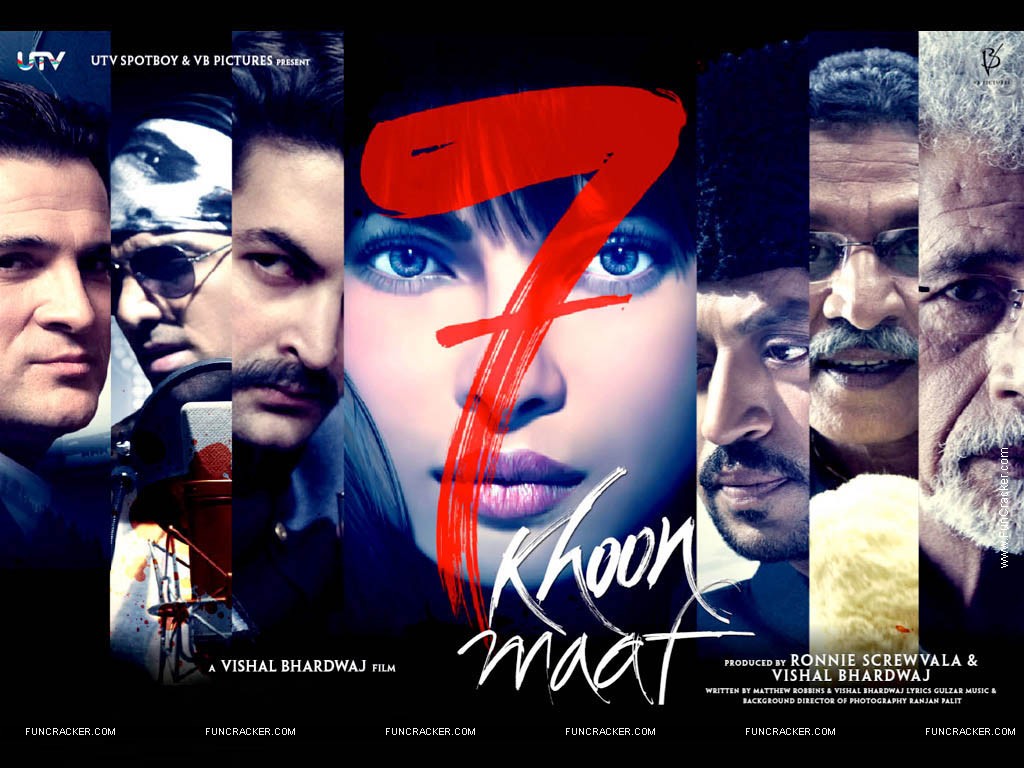
7 Khoon Maaf (2011) (7 Murders Forgiven) Vishal Bhardwaj Hindi
So we have two high-profile filmmakers releasing two remarkably symmetric films this weekend which wear their inspirations on their sleeves. Both these similarly structured films give us serial killers traumatized by childhood events. But, while Menon’s movie is like gazing into a fish bowl, Bhardwaj’s is akin to peeping through the door lens. It is not the protagonist, Susanna (who befittingly misses an emotional arc, played by Priyanka Chopra) but the world around her that is distorted in 7 Khoon Maaf. Right from the beginning, we are told, she is in search of father figures (through her six husbands) to replace her deceased biological father (which, of course, culminates with her marriage to the Son, her ordinance, which wittily distorts her line about drinking her husband’s blood). Along the way, she seems to see herself as a feminist twist on Christ (which goes well with Bhardwaj’s not-so-singular brand of militant feminism) who suffers for the sake of those who follow. She seeks forgiveness for her seven sins, her seventh sin being exactly this misinterpretation of Christ’s mission, to militarize Jesus, to bring him to earth, to replace forgiveness with retribution, to ‘kill’ him. However, where Bhardwaj’s film trumps Menon’s is that, although it lends itself to easy Lacanian reading like Naaygal, 7 Khoon never attempts to reduce characters to psychoanalytical toolboxes. Spanning several decades (Bhardwaj clumsily attempts to contextualize the narrative, using political events while, given the themes, he should have done precisely the opposite: collapse history and let anachronism reign), 7 Khoon hops across film subgenres of the west (costume drama, period film, concert picture etc.) all the while having a very ‘Indian’ heart (The commentary on Indian patriarchy almost swaps targets in the Russian segment), as if remarking upon Bollywood’s skin deep aping of Hollywood cinema. This masking of ‘Indian-ness’ by ‘European-ness’ and of (regressive) actualities by (progressive) surfaces and of the present seemingly repeating itself to eternity is, ultimately, is what 7 Khoon deals with. And it deals with pretty well, even if one gets the feeling that a rewrite would have done more good.
Nadunisi Naaygal (2011)
Gowtham Vasudev Menon
Tamil
Part rip-off, part tribute to Psycho (1960) – right from the plot to the up-down movements of objects and the camera – Gowtham Vasudev Menon’s Nadunisi Naaygal (“Midnight Dogs”) charts the activities of a soft-speaking serial killer, Veera, who lives with his (surrogate) surrogate mother in a mansion consisting of, well, three floors. Menon’s film is nearly as much about transgression – of mores, of geographical boundaries, of industry idioms – as Hitchcock’s picture was about deviation – of the narrative, of normalcy, of sexuality. Menon has said elsewhere that this is a film based on a true story, while it’s actually a pseudo-horror based on the superficies of a pseudo-science (spare me the Oedipii and the Electras), where, unlike the finale of Psycho, it is the director who plays the shrink all along, deeming deviance as just a product of other deviant practices. (Naaygal has one of the ugliest directorial schemes of recent times, with subjective and objective reality clearly delineated by awkward POV patterns). Menon has also proclaimed that Nadunisi Naaygal is his middle-finger-to-all film. True. It is, in fact, the film in which he actually wants his audience to hate him, to consider him as an outlaw. (He succeeds by leaps and bounds: He’s written a character that invites unanimous derision). Evidently, the director recognizes himself in the central character – a psychotic woman-slayer – which is only partly acknowledged by the employment of POV shots for both the filmmaker-killer and the audience-victims. (Tarantino nods abound, starting with the title). This is a refreshingly skewed perspective from and of a director who has been routinely killing off his lead women in his films. With Naaygal, like Veera, he almost denies that he had anything to do with his previous blockbusters at all. May be he’ll deny later that he had nothing to do with Naaygal as well. May be this is a turning point in his career. May be it’s the end of it. May be he hears those dogs howl at midnight.
“A film adrift in the cosmos… A film found on a dump.” – Week End (1967, JLG)
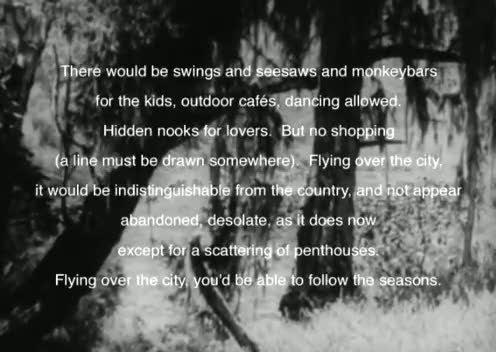
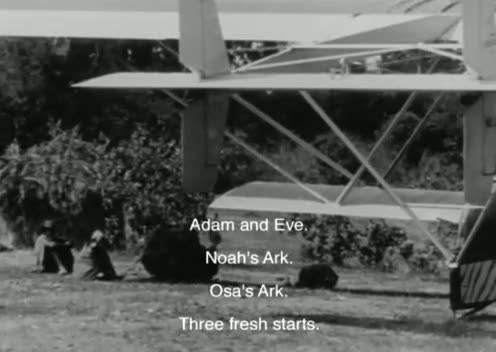
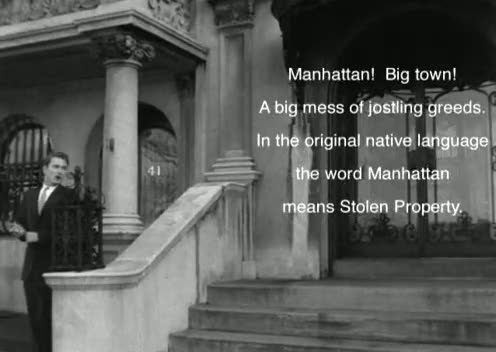
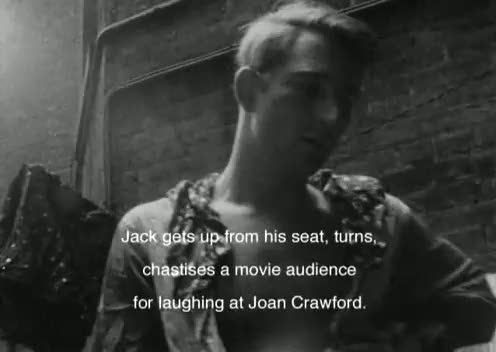
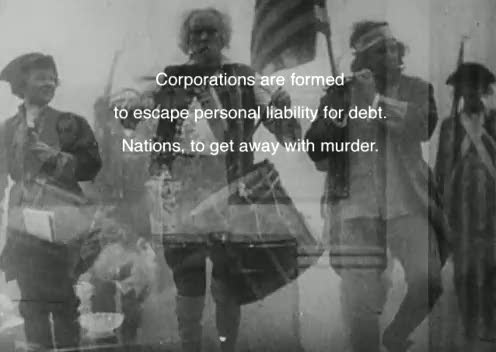
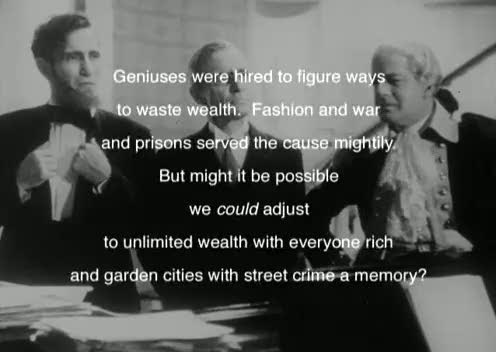
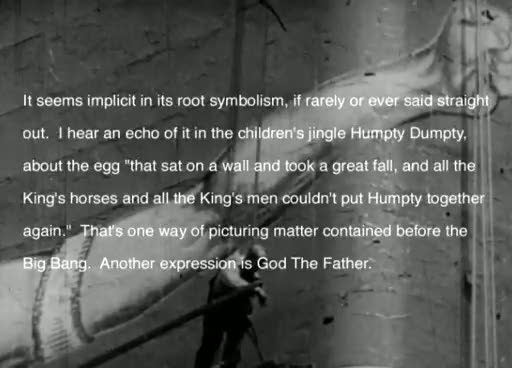
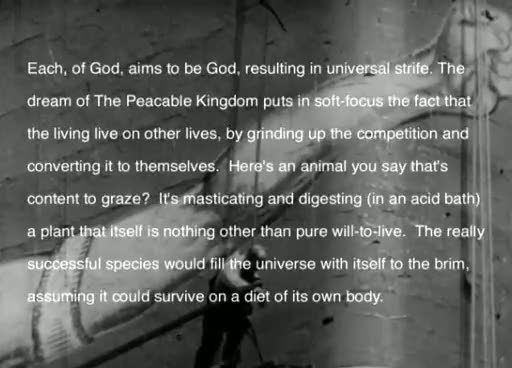
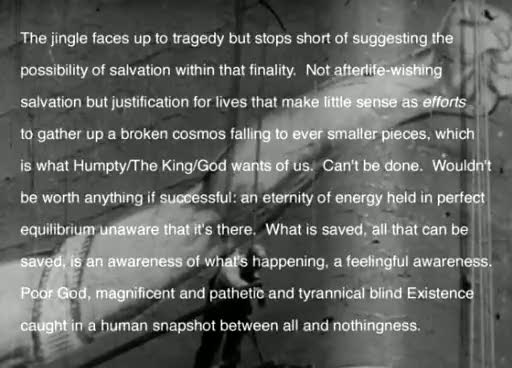
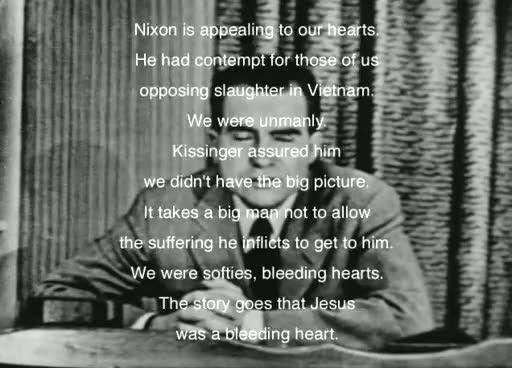
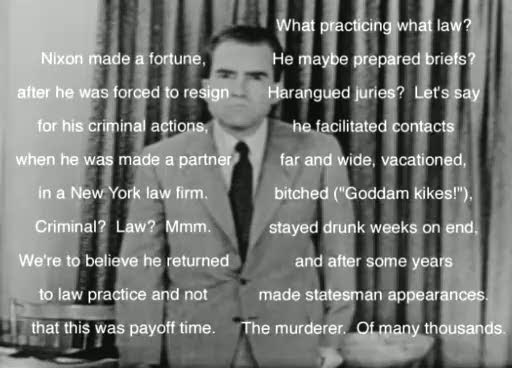
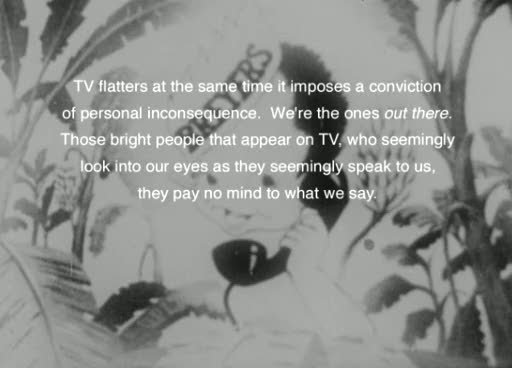
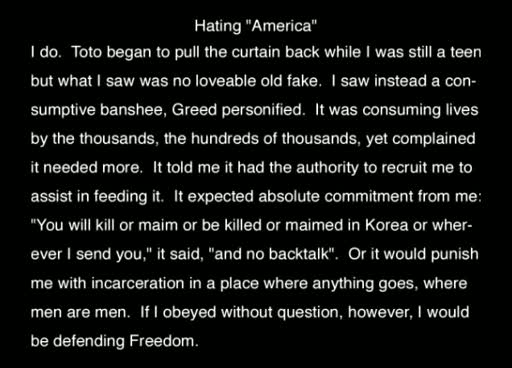
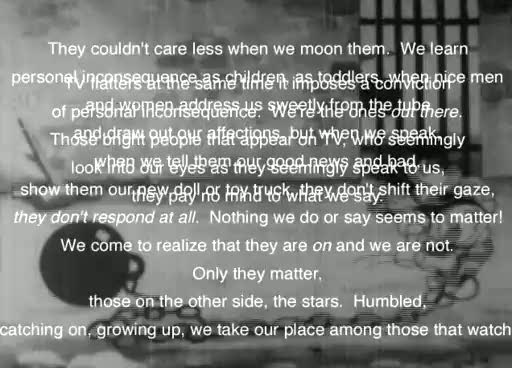
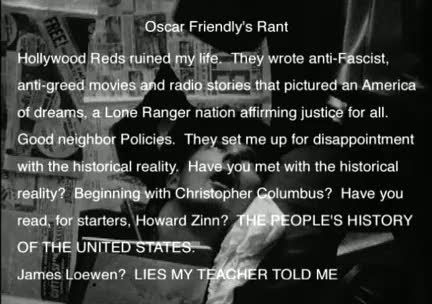
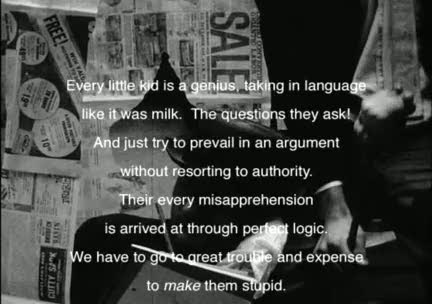
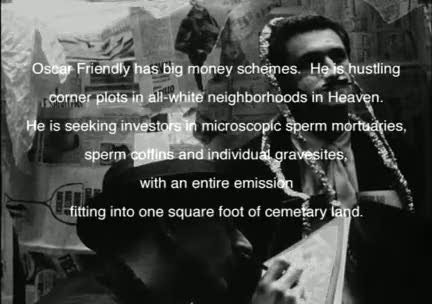
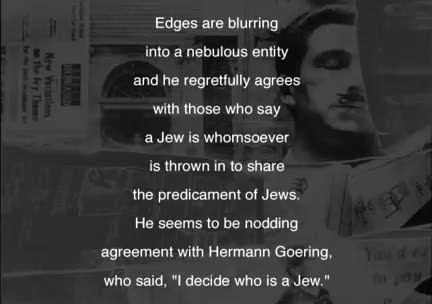
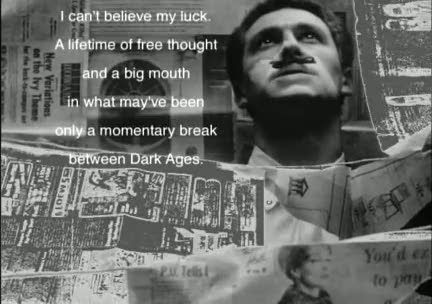
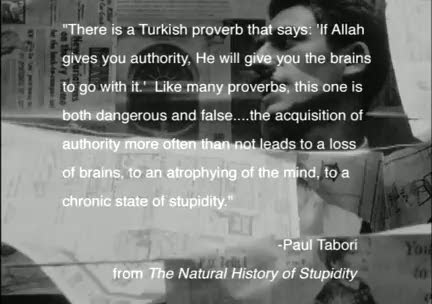
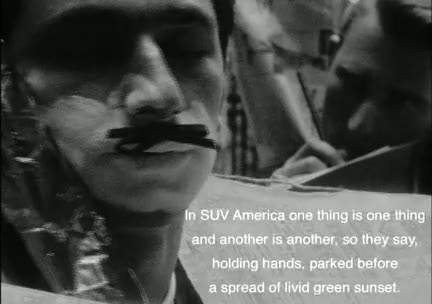
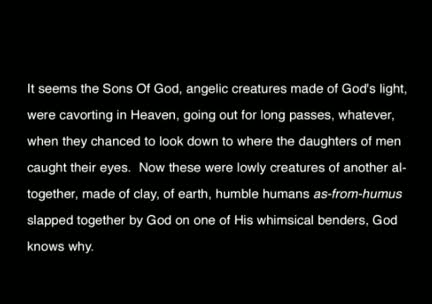
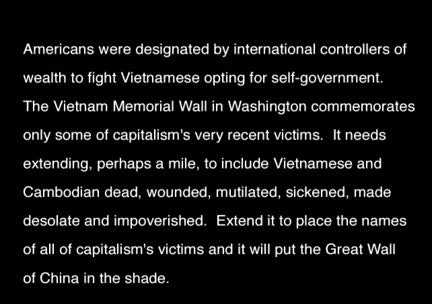
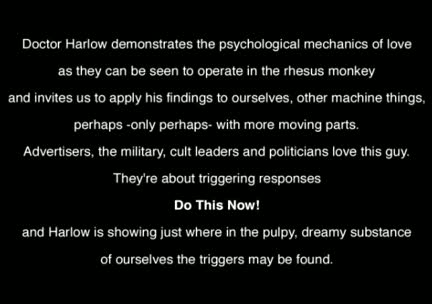
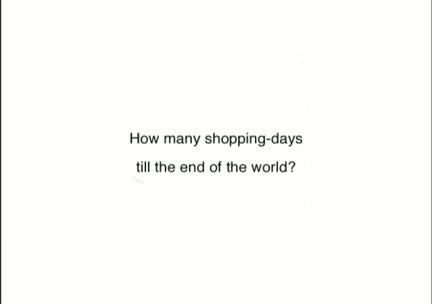
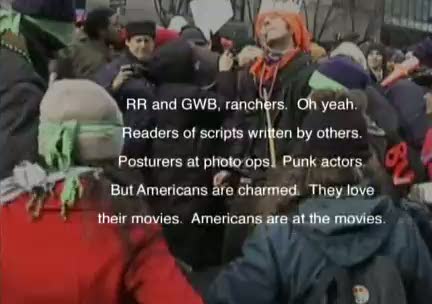
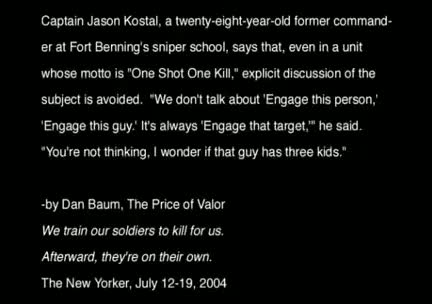
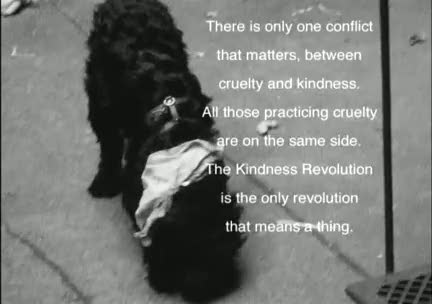
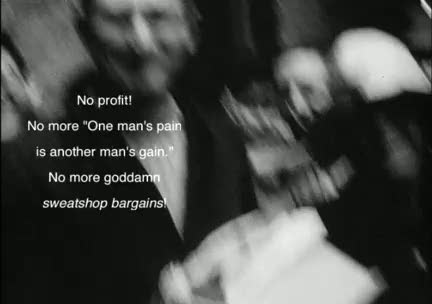
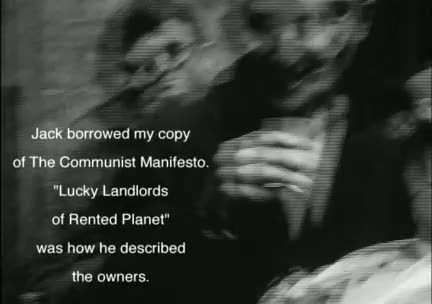
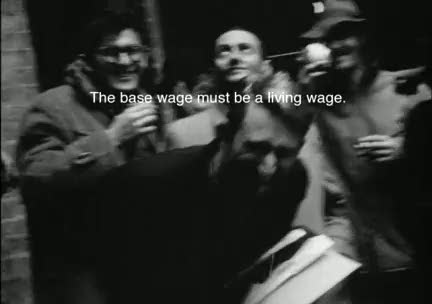
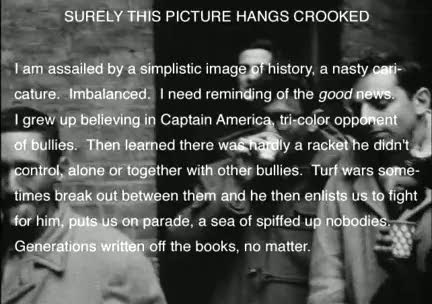
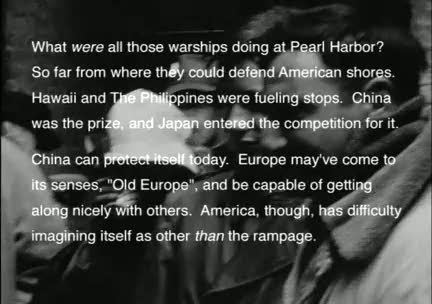
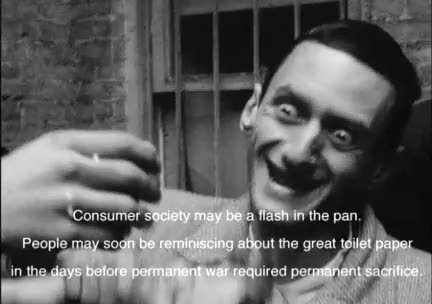
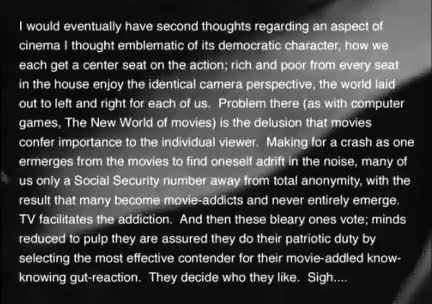
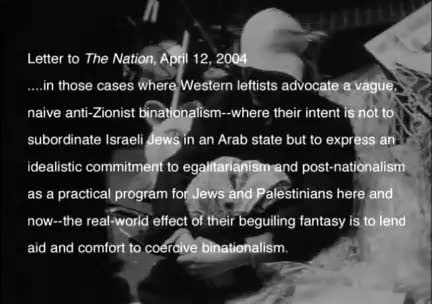
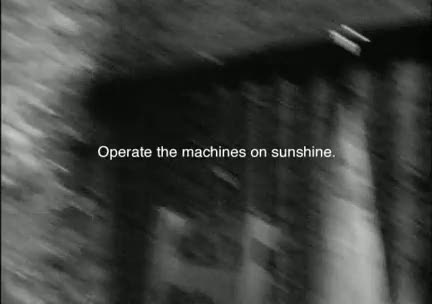
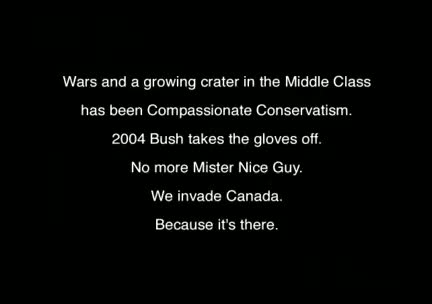
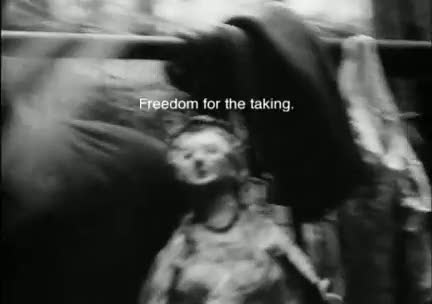
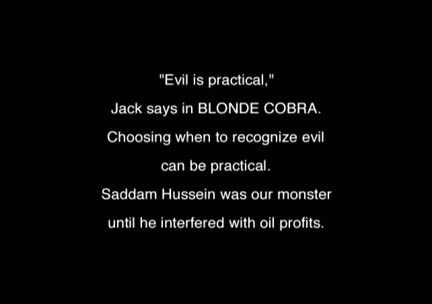
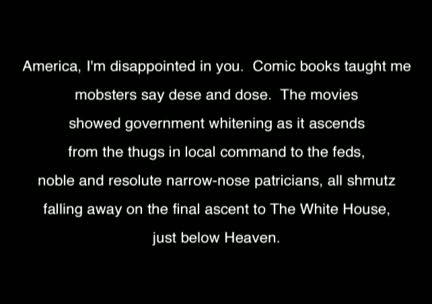
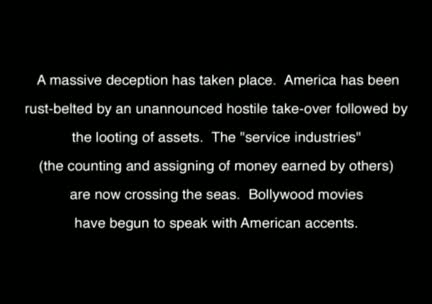
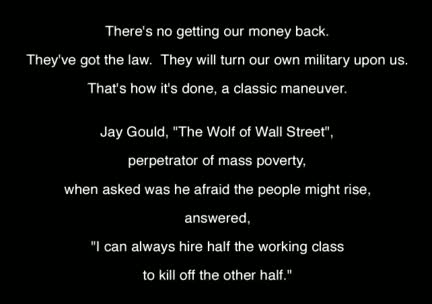
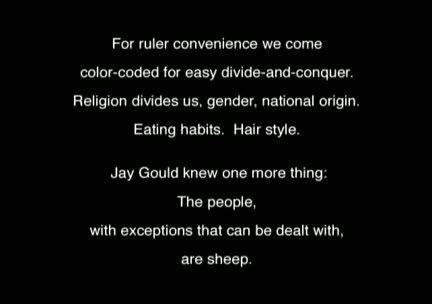
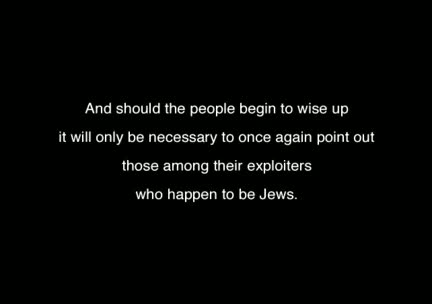
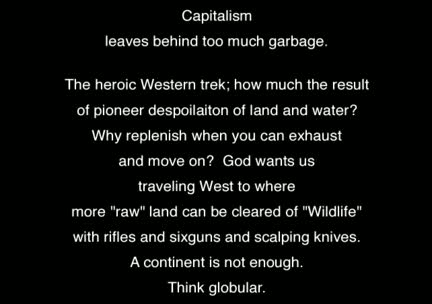
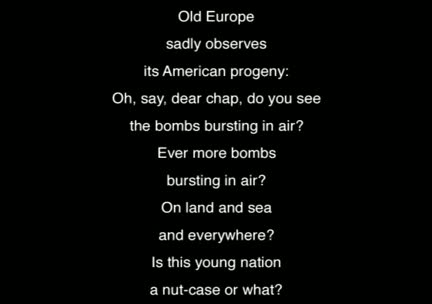
Whatever one attempts to say about Ken Jacobs’ sprawling, pointed, majestic, self-deprecating, playful, serious, enrapturing, frustrating underground work Star Spangled to Death (1957-2004), apart from becoming contradictory, only turns out reductive, for it is an unwieldy beast of a film. A relentlessly fragmented and remarkably sustained reflection on war, xenophobia, imperialism, religion, ideology, racism, resistance, justice and truth – although always in the American context – Jacobs’ film is simultaneously an anarchist critique of the USA and a celebration of its (possible) glories. Constructed using a dizzying amount of news reels, second rate TV specials, Disney cartoons, excerpts from early Hollywood productions, political speeches and amateur footage, among others, Star Spangled to Death is both a history of America constructed using its mass media and a deconstruction of historiography based on mass media. Rather than trying to write an inevitably insufficient review of this massive film, I chose to embark on a much more mechanical, much more pointless, much more painstaking, much more fascinating and, really, much more rewarding exercise.
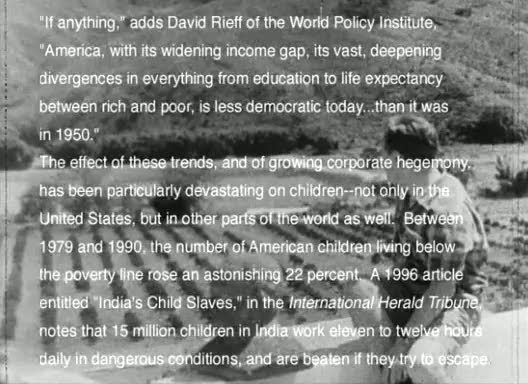
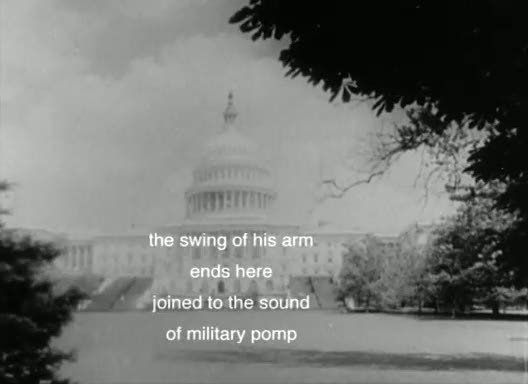
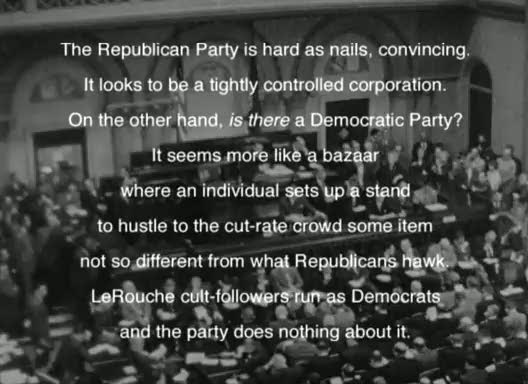
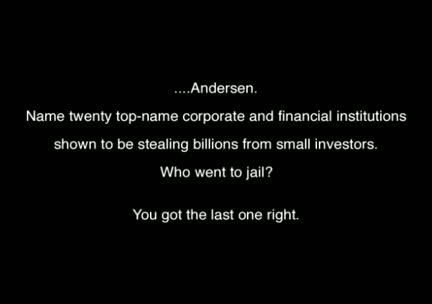
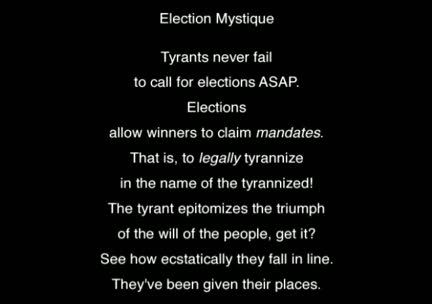
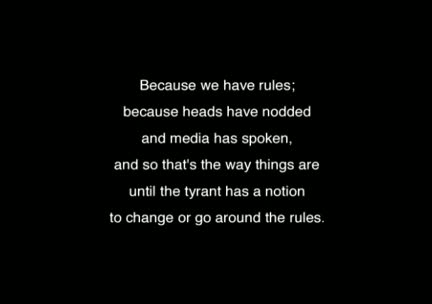
For the uninitiated, Jacobs plants hundreds of single frame flash texts – besides equally elusive shards of images and sounds – throughout the seven hour film, each of which lingers for about one twenty-fifth of a second on the screen, into the film. These texts perform the paradoxical function of aggravating the slippery nature of the film and presenting its ideas cut and dried. Of course, this hit-and-run approach is anything but subtle. It’s more like Freudian seepage from the film’s unconscious to its surface. Much like how Jacobs counterpoints narratives of the establishment with the film’s overall structure and trajectory, these texts prove to be the perfect foil to whatever assertions these dominating materials make. There’s another paradox at work here. One one hand, Jacobs’ film – specifically these flash texts – is one that’s uniquely encoded in the film format. These frames – with fixed position in time and space – are much easier to zero in on a reel of film than on an intangible stream of binary numbers. One the other, it’s only a home video that provides one the luxury to navigate the film with ease in order to grab these frames. If cinephilia, in a sense, is defined as an odyssey to capture for life that elusive frame, Star Spangled To Death literalizes the notion and takes it to its extreme.
There is probably no point to this undertaking at all, but I do think it will be useful for viewers like me who actually feel the itch to read all those transitory intertitles without choking the remote buttons. Of course, I must add that I might have missed a number of frames here. Please feel free to point them out to me or, if possible, provide the missing screenshots. (One of the ones here, thanks to the copy of the film I have, is smudged as well. I’d be grateful if anyone could provide a replacement). Without further ado, I present you those notorious twelve and a half seconds of Star Spangled to Death which, I’m guessing, only a few might have seen in its fragmented entirely. Or whatever.
[Readers who are already cursing me (and will be cursing, until this post ages off the main page) for the increased load times, here (6.7Mb) is the collection in a downloadable pdf format]
Chapter 1: Jack Is The Spirit Not Of Life But Of Living
Kiran Rao’s Dhobi Ghat (2010) is a film about Mumbai (duh!). More precisely, it’s a film about the impossibility of making a film about Mumbai, an impressionistic look at the city which argues that it is the only possible way to look at the city at all. Everyone in Rao’s film is an artist. No, not just the four lead characters but everyone – even the myriad Jia-esque immigrant workers who literally build the city’s canvas – is an artist here, albeit removed from reality to varying degrees. If Rao’s Mumbai is the film crew, the sea at its end is the cinema screen, before whose stoic permanence social divisions vanish. (One character notes that the sea air smells of people’s desires). Everyone, and specifically the quartet at the centre, seems to attempt to find in art a subliminal hope of transcending class, of being on a level ground. Arun (Aamir Khan) – the film critic figure – can relate to the city space only through the arts. Shai (Monica Dogra) desires to level all spaces through her photography. Munna (Prateik Babbar) – ever at right angles to life – dreams of hitching to the mainstream through cinema. Yasmin (Kriti Malhotra) seeks to rationalize her condition through her art and hopes it will outlive her. Alas, right from the first scene, reality seeps in to foil such utopian plans. Rao, likewise, has a keen eye for urban and screen spaces, dividing and subletting the frame to emphasize the fragmentation that exists on multiple levels. This fragmentation is integral to Dhobi Ghat, for it is terrified of a complete view of the city, suggesting that a total understanding of the city – with its frightening disparities, unspoken calamities and tragicomic ironies – can only result in deep silence – of acknowledgement, of paralysis and of powerlessness. Like Arun’s last painting, like the old woman next door, like the sea.
Myshkin’s fourth feature, Yuddham Sei (“Make War”), is a film in reverse. The Jake Gittes-like protagonist of the film JK (a tribute to philosopher Jiddu Krishnamurthy, from whose idea of the individual as the means of social change the film seems to take off from) maneuvers through an inverted world, as is literalized in the numerous garish-yet-impressive upside-down compositions. This is a place where everything revolves around missing persons (rather, missing parts of body), where deaths are the most commonplace of events and where people are more living than dead. JK is played by director Cheran – a casting choice that might be the wisest by Myshkin so far – whose very countenance points to a man whose eyes have been plucked out and soul sucked off through the sockets. An undead hero – not a cold professional as other movies of the genre might indicate – like Melville’s last lead character, he sleepwalks through the narrative space, witnessing physical fragility with utmost equanimity, until his lost past resurrects him back to life, with all its emotional vulnerability and subjectivity. By presenting grotesque instances of violence before revealing them to be calculated acts of revenge against a much more diabolical scheme of things (the sort of emotional swing that Mani Ratnam’s latest failed to achieve), Myshkin indulges in much what-is-justice kind of philosophizing – a la Irreversible (2002) without the flashy puckishness – calling into question the ways of the law (although he cops out by revealing the unjust elements to be merely aberrations in an otherwise healthy establishment). As if providing a corrective note to Anjathey (2008), which might have seemed like valorizing the police force – Myshkin keeps alienating his lead man from institutional justice, seemingly arguing for some abstract notion of individualized justice, even at the risk of glorifying violence. And yes, the legs are all there.
Manzan Benigaki (2001) (Red Persimmons)
Shinsuke Ogawa, Xiaolian Peng
Japanese
Red Persimmons (2001) begins with a movie crew watching the fascinating A Visit To Ogawa Productions (1981), in which the late Shinsuke Ogawa, that Japanese filmmaker who pushed the limits of documentary filmmaking like no other, talks to Nagisa Oshima about his then current project A Japanese Village (1982), a work that is so oppressively modest that it turns out avant-garde. This absence of Ogawa haunts Red Persimmons, which Chinese filmmaker Xiaolian Peng helped complete, especially when it uses on-screen text instead of Ogawa’s usual, casual voiceover. Less digressive than the typical Ogawa picture but as sensitive and attentive to the rhythms of the countryside as any of his works, Red Persimmons attempts to trace the history of Kaminoyama with the science and commerce of persimmon farming, which forms the lifeline of the village, at its focal point. We see how personal and collective histories are tied to the production of this fruit, how persimmons have use, exchange and even symbolic value for the villagers and how the technology that develops alongside evolves primarily to address necessities and reduce effort than for expansion or multiplication of revenue. We observe, through the course of the film, that the persimmon itself becomes representative of ‘the Japanese village’ in the way it goes from being an organic part of a lifestyle, through being a commodity under simple capitalism and then a fiercely competitive economy, to gradually losing its ritualistic qualities and finally ending up as a low-demand produce. Beautiful, like a Dovzhenko film, humble, essential.
Rest Is Silence (Image Courtesy: Mandragora Sales)
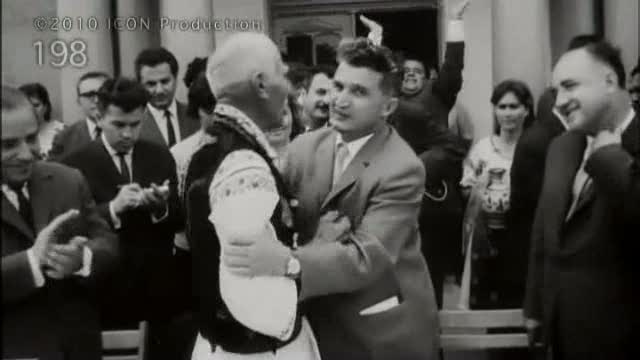
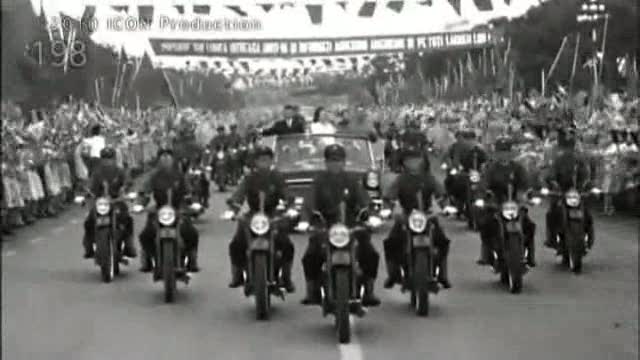
Nicolae Ceausescu lived in denial. In the first scene of Andrei Ujica’s The Autobiography of Nicolae Ceausescu (2010), which is almost the last scene of his life, Ceausescu, in the makeshift TV trial that the revolutionaries have organized, denies that he had anything to do with the atrocities of the previous day. Given sufficient time, he might have denied that he had anything to do with Romania’s dilapidating condition at all. The prosecutors did not give him that privilege. Ujica does. Apparently the result of research on hundreds of hours of historical footage, Autobiography assembles three hours of newsreels that Ceausescu had, indirectly, made for himself, carefully putting together a nationwide mise en scène and a troupe as large as Romania’s population. Ujica’s is a film that resides on the edges of the frame, one that works only on hindsight, with knowledge of what really transpired. We mostly see Ceausescu waving hands and applauding amidst the countless Fordist parades in which people are reduced to flag-waving anonymities. He’s not particularly unlikable. In fact, he seems quite amicable. One could mistake him for a token detective from an American noir or a French film director of the 60s. Contradictory alliances are formed (Both Nixon and Mao seem to have had good relationship with Romania). In fact, Ceausescu seems to have been friends with every major leader. But Ceausescu’s downfall, in which the last hour of the film is interested in, is also, for better or worse, saddening. His words and gestures become more rhetorical than passionate Like Carlos, here is a man who is stuck in a time capsule adhering to his beliefs and illusions when the world has moved beyond him. Nicolae Ceausescu lived in denial.
The first thing that strikes us when watching Autobiography is that it does not insert alternate footage to counterpoint those that we see. (The only external contrasting force comes from our current knowledge of Romania during that period). Neither does Ujica employ shot footage nor does he use other Romanian films of the period to fill in the gaps. (This may be because, as it was the case in Stalinist Russia, the alternates to propaganda cinema were probably only apolitical melodramas or socialist realism). Unlike filmmakers such as Anand Patwardhan and Alanis Obomsawin, Ujica seems to place trust on the propaganda clips themselves to illustrate the interstices between them. He uses clips that Ceausescu himself would have used had he written a film autobiography. For instance, the famed footage of Ceausescu’s final speech and his consequent bewilderment and that of him and Elena fleeing in a helicopter are cleverly omitted. The film cuts from Ceausescu’s trial to the past as if going into a flashback. This shift could either imply Ceausescu trying to vindicate himself using the autobiography that is to follow or Ujica/the prosecutors trying to incriminate him using the same evidence. The film is both an encomium and a critique. It’s Rashomon situation on a national scale. Taking a deconstructive approach wherein he lets the contradictions in the footage surface by themselves and using custom soundtrack to multiply the pomp or, less often, provide irony, Ujica elucidates how the Ceausescu regime was marked by suppression of histories and silencing of oppositions.
After I watched Ujica’s picture, I wondered how it would have turned out if Ceausescu had indeed made his autobiography using the footage he had amassed. Of course, Ceausescu didn’t make such a film but, I guess any such self-serving propaganda made under a dictatorial regime should share traits alluded to by Ujica’s film. I couldn’t get my hands on any such Romanian film, but I did see a North Korean propaganda film made for (by?) Ceausescu’s friend and contemporary, Kim Il Sung, modestly titled President Kim Il Sung Met Foreign Heads of State and Prominent Figures April 1970-December 1975 (1976) which recites by rote the various meetings that the premier held during the aforementioned period. In fact, the title becomes amazingly self-parodying once you see the movie, whose script consists of the following line, with minor variations, repeated a hundred times: “On [Insert Date], President Kim Il Sung met [Insert Name], the [Insert designation] of [Insert name of communist country], in a brotherly environment to express his support for [the people’s struggle against imperialism/strengthening bilateral relationship]. [Name] praised General Kim Il Sung for [his noble virtue and leadership/his immense contributions to anti-imperialist struggle worldwide/his exploits in progressing mankind]”.
The film is never blatant as Ujica’s pseudo-autobiography might suggest, with even remotely problematic areas being cleanly pruned out, (The closest the film (unintentionally) gets to the truth is when the narrator points out that Kim Il Sung “brought about a spectacular reality in Korea”). However, one can still trace, with considerable effort, the counterpoints are seething underneath the rosy audiovisuals. Thousands of dressed-up people gathered for pomp, hundreds “being rounded up” to welcome the premier and the omnipresent absence of the individual are all dehumanizing in a way. The president praises his Japanese counterparts to no end while he talks elsewhere about Korea and China’s joint efforts to ward of Japanese imperialism during the war. In the meeting footages, Kim Il Sung is generally the centre of attraction in the frame – a fact understandable given his imposing physique. His counterparts are regularly pushed to the edges and appear nimble in relation to the composed stature of Il Sung. The president is always cheerful, applauding, waving, at ease and possesses a singular command of his space. One could mistake him for a veteran stage actor. The message here is clear: The world looks up to Kim Il Sung and the way he rules your country. This is the best you’ll get. Looking at the two films, it is clear how Ceausescu was influenced by the North Korean cinema (probably more than its policies), which, in turn, has echoes of Riefenstahl. They seem to have been directors more than dictators.
Ujica’s film is called The Autobiography of Nicolae Ceausescu, but it also holds well as a biography of Romania because not only does it cover a huge ground in terms of historical time, it also seems to allude to attitudes that would define Romanian culture even after his deposition. The figure of Nicolae Ceausescu seems to loom large over contemporary Romanian cinema. Almost all the “New Wave” films from the country have had Ceausescu or his regime at their focal point. Films such as Tales from the Golden Age (2009), which no doubt treat history as a closed project, confront the past directly and provide a neat picture of what it is to live in a communist-dictatorial state (The “hat” and “pig” segments are simultaneously moving and hysterical) while even a work that is so hermetic and microcosmic on the surface like Radu Muntean’s Tuesday, After Christmas (2010), set during the 20th anniversary of Ceausescu’s execution, is haunted by the events of the past. Underneath, Muntean’s film seems to triangulate between a disillusionment with the present (post-globalization Romania), a nostalgia for the past (possibly the socialist age) and the dread produced by the knowledge that nostalgia, more often than not, is the longing for a past that never was. Both features of Corneliu Porumboiu deal with residual theatricality that marks contemporary Romania. In the first film, the revolution against theatricality itself makes way for theatrical claims to glory and pride while, in the second, the capital attempts to project itself as a city that is more significant than it actually is. In fact, this seemingly quintessentially Romanian affinity for theatricality is part of the curriculum in Ujica’s debut feature, Videograms of a Revolution (1992), which he co-directed with Harun Farocki.
Videograms, possibly Ujica’s finest film and clearly a masterwork, presents us shards from the Romanian revolution in the form of small “video packets” that were shot at various locations in Bucharest during the days just preceding Ceausescu’s death. We get to see history as it is happening, in all its tragicomic elements, with multiple parallel governments being set up, phantom enemies generated, impromptu civil wars brewing and the relentless efforts undertaken by either side to restore peace. Unlike any other period in history, possibly with the exception of the clashes in Chile two decades ago that were “immortalized” by Patricio Guzman in his fly-on-the-wall documentaries, we witness how technological progress has enabled us to document history with utmost fluidity and urgency. There is no need for an Eisenstein anymore to recreate the revolution and overwrite the actual event. This relationship between technological progress, the subsequent changes in modes of production and the possibility of social progress is of central interest to Videograms. It tries to find an answer to whether revolution is primarily the seizure of the forces of production from authority or if there are certain fundamental, subtler issues to be tackled.
Interestingly enough, the first thing that the protestors do after storming the party headquarters is to attack the television station. As the revolutionary forces take over the broadcast, we see not only their efforts to disperse the message to the public but also the theatricality that eventually overwhelms their exploits. Appropriation of the television station is taken for the appropriation of political power. Prisoners (generally party members close to the dictator) are presented on TV, subjected to mockery-of-justice type vengeance trials and sentenced by impromptu courts and law makers, The abuse of (TV) power that was to be corrected persists, only under a different political scenario and for a different end. We see this abuse of power off screen as well, where the acrimony towards Ceausescu is misguided towards prisoners. Videograms, however, remains highly ambivalent about the role of television and cinema in the phenomenon. Its view is more rounded and holistic than the critical or exalting stances one might expect. The camera, in Videograms, is as much imprisoning as it’s liberating.
Routinely, at the end of each of the separately titled segment, the narrator of the film startlingly steps back from the immediacy of the upheaval, to perform a formal analysis of the images we see in order to illustrate that the film is more about the revolution as it was perceived than as it happened. Throughout, it probes how the televising of a real event can guarantee its occurrence and authenticate a fictional event. We see European reporters filming the broadcast of Ceausescu’s trial (in place of the trial itself) as if television itself is a transparent window into reality. (This recalls Paul Patton’s account of how CNN reporters in the Gulf during the war were watching CNN in order to find out what was happening). Like great works such as Godard’s History of Cinema(1998) and Marker’s The Last Bolshevik (1993), but far less elegiac and more optimistic, Farocki and Ujica examine film, history and everything in between in Videograms. They note:
“Camera and event. Since its invention, film has seemed destined to make history visible. It has been able to portray the past and stage the present. We have seen Napoleon on horseback and Lenin on the train. Film was possible because there was history. Almost imperceptibly, like moving on a Möbius strip, the side was flipped. We look on and have to think: if film is possible, then history, too, is possible.”
Perhaps this is the biggest irony that marks Ceausescu’s life. The tool that helped him hold power for decades became the very tool that accelerated his downfall. The pageants that highlighted his reign would give way to his own trial on the national television. And all the clapping at the end of those grand ceremonies would only end up in the cheerful applause throughout Bucharest when his death is broadcasted on television. After images of the corpses of the Ceausescus are flashed on television for the confirmation of the event, one reporter yells as the screen fades to black: “That’s it then, turn it off”.
Ujica’s previous film, Out of the Present (1995), also involves a man cut off from the world, literally. Evocative, slightly frightening and borderline-experimental, Out of the Present chronicles Soviet cosmonaut Sergei Krikalev’s 10-month stay at the Mir station during which time his country collapses. Ujica intercuts between the tumults in Moscow and scenes of Krikalev’s floating about in free space to sketch the portrait of a world in transition. He’s a man who, in the process of leaping into the future, loses grip on the present. For Krikalev, like the citizens of Bucharest in the previous film, reality is what the media tells him it is. In addition to his physical severance, he is, like so many of his counterparts on earth, a man alienated from history through the very images that present history. But Krikalev’s case is even more heartbreaking given that fact that he is the only person from his country to have not witnessed this historical juncture and that he’ll be returning to a country totally different from the one he lived in. This idea of media as the appraiser of history and the diaristic construction of Out of the Present presage the autobiographical structure of Ujica’s latest.
Coming back to The Autobiography of Nicolae Ceausescu, which attempts to sum up the entirety of Ceausescu’s regime as a large-scale theater with Romania as the stage, the Romanians as the performers and the Ceausescus as the stars. Ujica’s film suggests that in Ceausescu’s rule, cinema was treated like politics and politics, like cinema, that he was amassing wealth to no end while the whole country was in dire straits and that all was illusion. Although there might be some truth value to it, It seems to me that such a sketch is rather dangerous and complacent since it runs the risk of reducing a ruthless dictator to a charlatan who knew how to make the right moves. Ujica deals with Ceausescu more or less like how Assayas deals with Carlos. Both these political figures have been drained of their potency by their writer-directors and turned into interesting characters with simple psychology and behavioral pattern. There is little reason to believe that all the pomp and self-aggrandizement would have vanished had Ceausescu been a democratic ruler. The cult of the leader is largely independent of such scenarios. Given that Ujica intended to make a film critical of Ceausescu that would have resulted even if the latter had made it himself, it is understandable that he was obliged to leave out certain implicating footage. But this self-imposed restriction becomes a damaging limitation in Autobiography. Ujica’s message is clear even minutes into the film. In trying to develop a pseudo-laudatory autobiography and a stinging critique out of the same material, Ujica, I’m afraid, only dilutes the latter.
Compare this with the density that the remarkable BBC documentary The King of Communism: The Pomp & Pageantry of Nicolae Ceausescu (2002) achieves despite its flaws and its reduced running time. Like Ujica, writer-director Ben Lewis believes that Ceausescu’s regime was fuelled by such grand scale performances. But instead of relying on these very performances to elucidate the flipside, Lewis keeps interjecting anti-narratives of every sort that keep countering reductive narratives such as Ujica’s and Assayas’. One of those interviewed is a TV reporter who was filming Ceausescu during his infamous final speech. When asked why he did not telecast the agitation in front of the palace instead of the unrest at Ceausescu’s balcony, he tells us that it would have been against the ethics of his profession. It is not that he is deluded or against democracy. It is just that such an act would never have been unethical considering his situation. Lewis’ film is rife with such deadlocks that tend to disrupt totalizing narratives such as the one The Autobiography of Nicolae Ceausescu presents. For instance, it probes why ever did the Romanian public cooperate in this mythmaking. After all, it was this nationalistic propaganda that enabled Ceausescu to resist the imperialism of the superpowers and to build a stable nation. Some of the interviewees still assert that Ceausescu represented their country with dignity at the world stage, although it was precisely this misplaced sense of self-respect that turned against both Ceausescu and Romania.
Through interviews with people who had really taken part and performed in these pageants, Lewis arrives at the conclusion that it was all propaganda by the public and for the public, and not a one man show as purported by Ujica’s film. We come to know that people actually looked forward to these shows that helped them regain their trust towards the nation. They’re even nostalgic about it. Lewis points out that the performer-audience relationship was reversed at the end of each show and illustrates how it was of double advantage for Ceausescu. For him, it was both an august propaganda and an effective distraction. For the public, it was both escape and replenishment. Through these accounts, we gradually get the idea that Romania was not being cheated some clever, omnipotent trickster, but that it was in a hyperreal situation where the truth of the matter was overridden by ‘appearances’ that didn’t appear so. One perceptive lady tells us that it might have been better if the Soviet had indeed occupied Romania instead of Ceausescu holding ground. At least then, she points out, the Romanians would have had a visible enemy to fight against. Ujica’s film rejects such nuances, instead replacing them with a blanket rejection of Ceausescu’s regime as totalitarian and deceiving. What it does (and admirably so), however, is to question the way we approach historical material (and, consequently, contemporary material). It urges us to look closer, to keep our eyes open for obscured faces and our ears open for silenced voices.
Rating:
[The Autobiography of Nicolae Ceausescu (2010) Trailer]
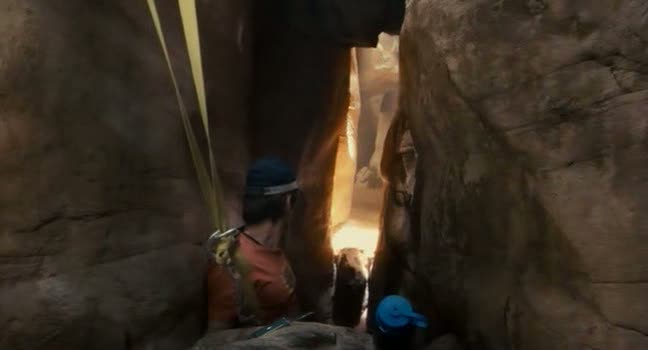
Lest we fail to notice that the time period mentioned in the title of Danny Boyle’s latest refers to the gestation period before the spiritual and quasi-physical rebirth of the protagonist Aron Ralston (James Franco), the director showcases him emerging out of the vaginal cave, in a diminished stature, with his representative umbilical cord severed, struggling to walk and talk and, hang on, suckling on a metallic hook affixed to the ground. That 127 Hours turns out to be a terrific film despite Boyle’s periodic middle brow tendencies is emblematic of the schizophrenic nature of his sensibility, which so wildly swings from adolescent camp and calculated profundity, wherein, surprisingly, even strained poetry soars. Opening portentously with staccato shots of Aron’s right hand, which becomes a MacGuffin later on, 127 Hours follows Ralston’s five-day encampment at nature’s existential purgatory, where realistic emotions become absurd and absurd emotions the only valid ones and where freedom of the mind compensates for physical imprisonment. Aron is like the audience in a film hall whose material reality casts no influence on their psychological state. Likewise, Boyle’s film startlingly segues midway into a heady reflection on digital culture, in which history, memory and even real people are replaced by pop images, in which identities are split in order to deny reality and in which death is but a smudge in the recording. The correct genre to classify Boyle’s film is Erotica – with Anthony Dod Mantle’s camera probing the tanned skin and caressing the sensual curves of the landscape – in which man’s ceaseless love affair with nature both humbles and inspires him. (Aron’s manoeuvres through the canyon and his first attempts to free himself themselves resemble copulation, making him the father of his new self). But aren’t all these philosophical games ultimately exploitative? I think the film’s eventual humanism answers that question.



































































































































































 The Seventh Art