All Posts


On Her Majesty’s Secret Service (1969)
Peter R. Hunt
Bond, James Bond: George Lazenby
Arch Rival: Ernst Blofeld (Telly Savalas)
Bond Girl: Tracy di Vicenzo (Diana Rigg)

On Her Majesty's Secret Service (1969)

On Her Majesty's Secret Service (1969)

It is time for a change in Bond as Connery steps down from the prestigious pedestal to make way for George Lazenby. As Bond is enjoying his stay in Portugal he is kidnapped by Draco’s men. Marc-Ange Draco, is the chief of European organization Unione Corse and has a daughter Tracy Teresa, with whom Bond is already acquainted with. Draco asks Bond to marry his daughter in exchange for valuable information about the whereabouts of Ernst Blofeld. Bond agrees and subsequently travels to Bern with Teresa where He learns that Blofeld has set up a research laboratory on the hills of the Alps. He also comes to know that Blofeld is holding about a dozen women and brainwashing them into spreading his bio-chemical weapons all over the world.  Bond disguises as a professor and enters the institute and tires to bust Blofeld’s plans. He succeeds in destroying the lab and marrying Teresa, but Blofeld’s still alive.

Most atypical Bond so far, On Her Majesty’s Secret Service is chattier and mellower than all the other films in the series. Though his only film as Bond, George Lazenby does well to be remembered by fans. Bond manages to even get involved in a conjugal relationship taking the “unBondness” of the film to the maximum. Sandwiched between two typically Bond Connery films, Lazenby’s quiet venture is a much needed hiatus from the monotony and also a refreshing point for the films to follow.

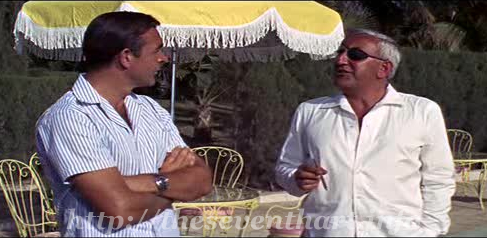
You Only Live Twice (1967)
Lewis Gilbert
Bond, James Bond: Sean Connery
Arch Rival: Ernst Blofeld (Donald Pleasence)
Bond Girl: Kissy Suzuki (Mie Hama)

You Only Live Twice (1967)

You Only Live Twice (1967)

The next installment in the series would be You Only Love Twice, the first Bond film shot in Asia. The film kicks off with strange events in space as a mysterious contraption seems to be swallowing both the American and the Soviet spaceships. Before both the countries pin the blame on each other and jump into another world war, British government asks Bond carry out his investigations in Japan, where they suspect is the hideout of the spacecraft. Bond arrives in the oriental country where he is aided by the local force lead by Tiger Tanaka. He finds out that a local chemical company is shipping rocket chemicals surreptitiously into an unknown area. For this, Bond disguises himself as a Japanese even rigging up a fake marriage with Tanaka’s protégé Kissy Suzuki. Bond sets out on his gyrocopter to find the place, in vain. Finally, with the help of Kissy, Bond finds the secret lair where the craft is and successfully infiltrates it. He meets the Number one of SPECTRE aka Ernst Stavro Blofeld!

If Thunderball was deep inside the water, You Only Live Twice goes aerial. The plot is kept simple and would form the basis of another Bond film Tomorrow Never Dies (1997). You Only Live Twice, to an extent, makes up for the heavy blow dealt to the series by its predecessor Thunderball (1965). Blofeld (more famous as Dr. Evil in Austin Powers series!) makes his first appearance after indirectly threatening in previous three films.

Thunderball (1965)
Terence Young
Bond, James Bond: Sean Connery
Arch Rival: Emilio Largo (Adolfo Celi)
Bond Girl: Domino Derval (Claudine Auger)

Thunderball (1965)

Thunderball (1965)

The fourth offering in the so far successful Bond series, Thunderball,  takes the English agent into the island country of Nassau. The film starts with Angelo, a double who replaces the murdered French pilot Derval, and takes the responsibility of transporting nuclear bombs during a training session . He  tranquilizes the unsuspecting flight crew and crashes the plane into the ocean. Emilio Largo, or Number 2 in the infamous SPECTRE organisation, kills Angelo for protesting and takes away the bombs. Bond, meanwhile, meets Domino in Nassau, who happens to be the Largo’s mistress and tells her the truth about her brother Derval. She helps Bond in going into largo’s lair undercover which reveals Largo’s plans of blowing up Miami. With the help of long tiem CIA friend Felix Leiter, Bond manages to put down largo’s underwater minions and disarm most of the bombs. But Largo’s not down yet…

Undoubtedly the weakest link in the early Bond films, Thunderball is too long, too indulgent and tries too much. The only highlight of the film remains the fantastic underwater sequences that are shot masterfully. Perhaps, the makers got too carried away by the triple success and wanted to take it to a whole new level. Surprisingly remade as an unofficial Bond movie Never Say Never Again (1983) with Connery reprising his role for one last time.

Goldfinger (1964)
Guy Hamilton
Bond, James Bond: Sean Connery
Arch Rival: Auric Goldfinger (Gert Fröbe)
Bond Girl: Pussy Galore (Honor Blackman)

Goldfinger (1964)

Goldfinger (1964)

What followed next would be my favorite Bond film of all time – Goldfinger (1964). In this installment of the series Bond follows Auric Goldfinger, a wealthy gold trafficker whose sole intention remains to control the flow of gold all over the world. He is assisted by his deadpan soldier Oddjob whose throw of his hat can spice a man into two and veteran pilot Pussy Galore and her team of trained fliers. As Goldfinger is concocting a plan called Operation Grand Slam with the Chinese agents Bond overhears and promptly gets captured. Goldfinger later rejoices telling his plan to the seemingly helpless bond. According to it, Pussy Galore’s team of pilots would spread a certain type of nerve gas in the area around Fort Knox and paralyzing everyone around. Goldfinger would meanwhile take a weapon-laden truck into Fort Knox, blow it out and hence destroy the total gold supply of the country. Then the whole world would have to beg him for gold. Mwhahahahaha….

Quintessential Bond film entertains audience with the same charm today as it might have at the time of its release. Intentionally over the top, Goldfinger has become the template of all megalomaniacs that would follow, even the most comic ones. The film’s got everything in boosted proportions – an immensely evil plan, Bond in severe trouble, fantastic action and entertainment. A hat trick film for the young Bond series. You haven’t watched Bond if you haven’t watched Goldfinger.

When Information Technology is lethal

When Information Technology is lethal

Body of Lies is being promoted with the tagline “From the director of Black Hawk Down and American Gangster”.  It is a bit surprising that a director, who has given better films such as Alien (1979) and Blade Runner (1982), has selected two of his lesser films for promotion. But Ridley Scott has the special Knack of jumping from one genre to another genre but still making the film as entertaining as the others. He could well have promoted Kingdom of Heaven (2005) as “From the director of Gladiator and 1492: Conquest of Paradise” or boosted the ratings of the drama A Good Year (2006) as “From the creator of Thelma & Louise and Matchstick Men”.  This time he sticks to the action genre following the moderate success of American Gangster (2007).

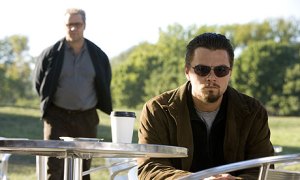
Body of Lies follows the Middle Eastern operations of C.I.A as seen by Roger Ferris (Leonardo DiCaprio), an agent who is sent to Amman, Jordan to find clues to the location of Al Saleem (Alon Abutbul), the leader of one of the biggest terrorist organizations around. He is instructed by the higher official in US, Ed Hoffman (Russell Crowe). The whereabouts of Saleem is totally unknown, for the gang neither uses the wired medium nor the wireless one for communication. Ferris decides to take the help of Hani (Mark Strong), the head of the local intelligence who means business and believes that torture and punishment are different. But Hoffman seems to have higher plans, totally oblivious to Ferris, taking its own course based on the whims of the people in power. Trusts are breached, deception becomes the prime weapon and lying becomes the order of the day

In this age of advanced communication and enhanced methods of surveillance, it sounds too easy to detect or monitor a geographical area or even one single person. But Body of Lies reveals otherwise. It tells us that it is not about “In spite of” but about “because of”. Sometimes, it is the concealment of information that helps one gain upper hand and it is the very availability of information that makes one group vulnerable. Hani mentions in the film that America cannot keep a secret because it is democratic. Indeed, it is the ones with the most primitive methods of communication who maintain anonymity and ones like Sadiki fall prey to higher power in the domain.

Russell Crowe time and again comes out with these wonderful supporting roles that one wonders why he doesn’t act more often and in bigger films. His wry wit and over the phone elegance may just earn him a nomination this time too. But the pick, and naturally, is Leo DiCaprio. After his peak of performance in The Aviator (2004), one expects him to cruise through this one and he does. Although not a groundbreaking or fresh role for him, the energy and intensity he infuses into the Ferris character leaves one trembling at the end of the film.

A film that involves communication and, more than that, struggle for it naturally involves various media of conversation and correspondence and the sound department makes crystal clear distinction between, phone lines, walkie-talkies, rendezvous, TV telecasts and footage tapes with élan. And the rhythmic sound editing aids it big time. It is such a good experience watching it in the big screen with a good sound system. The score of the film also needs a special mention and though conventional, Marc Streitenfeld tries different sounds and tempos that separate it from other war scenes and chase sequences.

With a runtime of around two hours and a half, the film is a bit excruciating to watch especially with its incessant thriving on torture scenes, which in other ways do aid the film’s feel. But let’s face it, Ridley Scott’s biggest advantage is the script he churns out with his writers and that is a job half done. William Monahan (The Departed (2006) fame) adapts David Ignatius’ book well and maintains the pace of the film and does not corrupt it with unwanted twists and turns. Even some important plot details are suitably kept off-screen.

A break from the overdose of superheroes this year, it is good to see the normal ones struggling to live for a day. Body of Lies may not be the starting point of the sober films that usually hit the screens in the late part of the year, but definitely serves as the gateway to better films that are going to reap the awards.

Verdict:

From Russia With Love (1963)
Terence Young
Bond, James Bond: Sean Connery
Arch Rival: Red Grant (Robert Shaw)
Bond Girl: Tatiana Romanova (Daniela Bianchi)

From Russia With Love (1963)

From Russia With Love (1963)

The second in the series of Bond films, From Russia With Love, takes Bond to newer places and heights. In this version, Bond has to capture a decoding machine built by the Russians called Lektor. For this he has to go to Istanbul, Turkey and evade the attempts of SPECTRE to kill him and get their hands on the machine. SPECTRE, the secret organization introduced to us in the previous film, is lead by the unknown Number 1 who will only be revealed in You Only Live Twice (1967). SPECTRE has assigned a female commander, Rosa Klebb, to terminate Bond and avenge the death of Dr. No. Bond is to meet up with Tatiana Romanova, the Embassy official and get the machine from the consulate. They manage to board the Orient Express with the machine. Just as they think they have done their work, they come to know that Klebb is not through yet.

Famous for the absence of the “Bond, James Bond” quote, From Russia With Love lives up to the prequel with more action, more technology and more style. The title sequences, the grand photography and thematic music add up the charm. Many call it the best in the series and the film does live up to all that hype. The film’s premise is so befitting to the cold war era it was made in and no wonder JFK loved this film! A very memorable film as a whole.

Dr. No (1962)
Terence Young
Bond, James Bond: Sean Connery
Arch Rival: Dr. No (Joseph Wiseman)
Bond Girl: Honey Ryder (Ursula Andress)

Dr. No (1962)

The film that started it all – Dr. No. Set in the West Indian country of Jamaica, the film follows a British secret agent Bond who is on the mission of solving the mysterious killing of another fellow British man John Strangways. He eventually arrives to know that a certain island called Crab Key, an arcane place of mysterious happenings, possesses deposits of radioactive rocks and tat Strangways was after the same thing. He also meets Honey Ryder, a shell collecting damsel and as Bond makes way into the island with Honey, he finds out that a huge organization has its base there and is led by Dr. No. After Bond and Honey are captured by the men there, he gets a rendezvous with Dr. No that reveals the organization as SPECTRE. Can bond escape the clutches of Dr. No and save the American rockets from being destroyed by him?

Apart from becoming a historical piece, Dr. No is a damn interesting film with great scenes and a superb score. My favorite Bond title track “Three Blind Mice” is in this film. Sean Connery is the embodiment of style and had already set a very high standard for all the Bond heroes to follow. Although more mellow and deliberate than the subsequent Bond films that had action taking the driver’s seat, Dr. No still remains a must watch for all action fans for the intensity of lead and for the significance of introducing us to quirky yet suave world of Bond, James Bond.

He's back!

With exactly 21 days to go for the next Bond film, I intend to present a series of brief pieces about the 21 official Bond films so far. – One a day – and possibly culminating with the full review of Quantum of Solace. And if you want to gear up for the big event in style, be sure the catch the previous films, preferably, in order. And great news for Indian fans is that they will be getting to watch the film almost on the day of its international release itself.

This series will not provide comprehensive reviews, but will just give an outline of the films, for it is the action and not the words that drive Bond films. Less talk and more watching is the key to Bond films. So sit back and watch the man in action, perhaps with a round of Martini – Shaken, not Stirred!

Sayat Nova (1968) (aka The Colour of Pomegranate)
Sergei Paradjanov
Armenian

“I am the man whose life and soul are torture”


Sayat Nova

If a list of biggest innovations in cinema is made, the Russian directors would arguably occupy the top few slots. Their gift to cinema has been the prime mover for so many other breakthroughs across the world of cinema. And Sergei Paradjanov was one such filmmaker who had the special ability to have a different perspective of cinema, much different from the others. And the most fantastic of all his films, The Colour of Pomegranate (1968) clearly tells why.

Unquestionably arthouse film consists of a series of tableaux-like compositions presented in a deliberately impassive manner by the leading lady who seems to take up various roles, both male and female, as the lifetime progresses. Though seemingly “of-the-moment” and radical, The Colour of Pomegranate does present a narrative if one could resort to the conventional terminology. Strung with the poems of Armenian poet Sayat Nova, the film presents his childhood, coming of age, adulthood, his unsuccessful love life, priesthood and eventual death using the most striking images and symbols one has ever assembled on screen. Decidedly not for all tastes, the images that Paradjanov conjures up are so riveting that it is impossible for one not to make a visceral connection with them that lasts a lifetime. Paradjanov’s use of reddish brown tinge throughout the film, as striking as his tragic classic The Shadows of Our Forgotten Ancestors (1964), provides it the painting-like quality that visibly enhances the “two-dimensionality” of the visuals.

There is virtually no camera movement and the stage-like setting provides the apt platform for the deliberate execution to explore the medium and take it to places it has never been before. The images of Sayat Nova’s death, his life at the monastery, the still life and his view of the world of the child are so strikingly assembled that it transcends the film’s bizarre nature and eliminates any alienation that the viewer may feel. How much one would appreciate and relate to the film remains a big question of subjectivity. But what is sure is that no matter what you feel about the film, you know that this is art, Must see it if one wants to explore the boundaries of filmmaking.


WordPress has introduced this new Poll feature. Thought I will try it out…

Lars and the Real Girl (2007)
Craig Gillespie
English

“I wish I had a woman that couldn’t talk”


Lars And The Real Girl

When almost all of filmdom was heaping praises over Jason Reitman’s refreshing flick Juno (2007), another quiet little independent film had made its mark. Craig Gillespie‘s Lars and the Real Girl (2007) is a little treasure in independent cinema and is as good as the former, if not better. Sadly, the judging panel for the academy seemed to overlook the film and give the nods to Juno. Regrets apart, meditation on modern alienation and urban loneliness has never been so amusing!

Lars (Ryan Gosling), as the title suggests is the lead in the story. He lives in the garage of the house where his brother Gus (Paul Schneider) and his wife Karin (Emily Mortimer) live. He is everything that the word “loner” stands for. He speaks economically and eludes from attention. He never comes out of his closed structure except for the occasional church visit. The human touch burns him and he wears multiple clothes to avoid one. Additionally, he works in an office one of whose employees Margo (Kelli Garner), an enthusiastic female in search of love, tries to win his attention, in vain. Meanwhile, Gus and Karin are also trying to break Lars’ self built shell.

One fine day, Lars receives a parcel from one of the internet sites that sells adult toys and lo! – It is a life size (and anatomically correct!) female doll. He gives life to it and starts treating “her” with respect. We feel as creepy as the characters even though the title of the film has made us cautious. Lars seems to open up to the world after the arrival of Bianca (that’s what he calls the doll). She is everything he is and isn’t. Lars bestows her with everything he likes and everything he dislikes. She is his opening to the real world and the conduit of his suppressed emotions and troubled past.

Gus and Karin decide to consult Dr. Dogmar (Patricia Clarkson) in the pretext of treating Bianca so that Lars visits the doc regularly. Here is where we slowly learn that Lars is fully aware of his situation and Bianca is his method of shedding his shell. She is not a product of his frustration but a tool that clears it. As it becomes evident that it is Lars who is responsible for his own cure, everyone decides to play along till the golden day arrives.

The film’s biggest asset is perhaps Ryan Gosling’s quiet brilliance that is definitely a shining bullet in his résumé. It looks like he is leading the race among the young crowd of Hollywood, all of whom seem like tailor-made for teen comedies. His restrained performance as the titular character leverages his critically acclaimed role in Half Nelson (2006) that fetched him a nomination for the best leading actor and makes him the most promising young actor in industry now. Scenes such as the teddy bear rescue and the dinner table conversation give a glimpse of this handsome young man’s talents and he can rest assured that he is going to be around for a long time.

Though it can be categorized in the conventional feel good flick category all of which are instant hits, Lars and the Real girl avoids all traps that films of its kind usually succumb to. Primarily, with a plot line as bizarre as the one it has, any director would be tempted to flood the script with a deluge of raunchy jokes and the target audience would have drastically changed. But Gillespie eschews all that and yet makes the film light-hearted all the way.

Also, and most importantly, Gillespie never begs for sympathy for Lars. It is easy for a director to paint the screen with the protagonist’s helplessness and hence gain unwarranted attention towards the characters. But Gillespie appeals to the audience to accept Lars as he is. Lars is just another person in the village though the rest of the public start giving excessive attention to him for his condition. One of the characters in the film says “These things happen” and that is all what it is.

« Previous PageNext Page »