All Posts


Russian Ark: Montage has always been a characteristic of Russian Cinema. Alexander Sokurov discards exactly that in this breathtaking film that takes us through the history and heritage of Russia in the past few hundred years- All in a single, continuous, unedited shot!. Makes us think how difficult it would have been to assemble the whole crew and sets. The film serves as an example of how long shots can be composed well by proper direction.

Salo: 120 Days Of The Sodom: Banned in many countries world over, Pasolini’s final venture is one of the most “indigestible” ever made. Call it a satire on capitalism or a commentary on misuse of power, the film is shocking and depressing by all means. The film never intentionally portrays graphic images even though the content is definitely not for the weak-hearted. A film that redrew the boundaries of rights-and-wrongs of cinema.

The Man With A Movie Camera: Though overshadowed by his Russian contemporaries Eisenstein and Pudovkin, Dziga Vertov managed to come up with this gem about a man shooting whatever he comes across in Moscow with his camera. Serves as a showcase of all the editing and camera techniques available in the nascent stages of cinema. Offbeat and way ahead of its times while the others were busy making films endorsing communism.
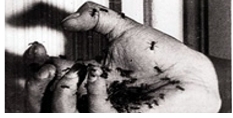
Un Chien Andalou: Kings of surrealism Luis Buñuel and Salvador Dali co-script this less than a quarter hour long film that may be hailed as the most influential French film ever made. Carefully assembled sequences that do not have any solid meaning and plethora of shocking images pave the way for hundreds of surreal films that were to come from filmmakers around the world and from Buñuel himself.
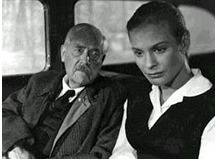
Wild Strawberries: An old professor retrospects his life, its disappointments and his mistakes while he is on his way to receive an honorary degree. Bergman’s masterful direction utilizes the monochrome with such perfection, that the film has become a staple for any film student. Fraught with images that last for a lifetime, this is one film that may change the way you look at life.

Special mention must be made to Jafer Panahi’s Ayneh and Daniel Myrick and Eduardo Sanchez’s Blair Witch Project for redefining the lines between reality and fiction, the former in its typical Iranian fashion and the latter in the American camp style. Let’s hope more such movies come up in the future and explore this medium to the fullest possible extent.

“Photography is truth. The cinema is truth 24 times per second.”Jean Luc Godard

It is doubtless that the power of cinema, the youngest of all arts, is not exploited to the fullest. Though many masters of the medium continuously strive to provide a whole new look and feel to the seventh art, it still has a lot of unexplored content. I present here, ten of the very many films that had successfully utilized the power of cinematic expression and redefined cinema in their respective periods.

2001: A Space Odyssey: “Open the pod bay doors, HAL”– A line that has been etched in cinema history. Stanley Kubrick’s magnum opus provides a new interpretation to the classic man versus machine theme. Co-scripted with Arthur C. Clarke, the film’s amazing use of sound and time line has class written all over. With HAL’s cold yet human voice and the stunning “dawn of man” opening sequence, the film is definitely in the top ten movies ever made.

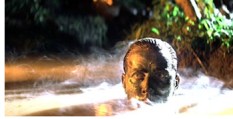
Apocalypse Now: Adapted from Joseph Conrad’s novella “Heart Of Darkness”, this Coppola classic is not only the journey of a disturbed man into the bowels of a war-torn nation but also into the darkness of his own mind. Classic portrayal of effects of war and the discovery of evil within oneself. The graded natural lighting throughout the film coupled with the short-but-chilling performance of Marlon Brando as Colonel Kurtz is the best combination you can ask for.

Jurassic Park: Special Effects – The latest boon given to cinema. Though used now to tasteless extents, the movie that made it big and neat is this Steven Spielberg fantasy. Oozing with the “Magic of the big screen”, it is just scintillating to see the big creatures roam about and live in the big screen. Spielberg’s unquenchable thirst for science fiction succeeds big time when his ideas meet the tools.

Koyaanisqatsi: Godfrey Reggio’s tradition-defying “movie” is a seemingly unconnected set of images powered by great music (Philip Glass). But there is definitely more to it than meets the eye. Unlimited number of plausible interpretations make this a brand new movie no matter how many times you watch it. This gem in interactive cinema requires the viewer to think and draw conclusions- a very rare thing indeed.

Rashomon: Perhaps the most influential Asian film, Kurosawa’s Rashomon was the prime reason for the inclusion of a best foreign film category in the Oscars. Endlessly imitated for its breakthrough screenplay and simplicity, the film has been remade and plagiarized many times over. Thoroughly exploiting the features of cinematic medium, Rashomon remains an object of amazement for filmmakers and film buffs around the world.

ikiru.jpgIkiru is another gem from the great filmmaker. A sincere officer in a government office realizes that he is going to die in a few months due to a disease. He does all he can against all odds to finish a public park before his death. The final moment in the movie shows him sitting in the snow on a swing in the completed park. This remains one of the most memorable moments in world cinema.

Another example of Kurosawa’s perfection is Red Beard which revolves round a hospital in a disease-stricken village. Kurosawa had asked all the actors to not sign any other film during the two and a half year shoot so that they get into the character’s skin. Even the sets in the movie were made of rotting wood to show the time line of the movie. The operation scene in the movie is way ahead of its times and even now it makes us wince.

ran.jpgThere are numerous other examples from all his films that shows his mastery over the medium. The fate of the impersonator in Kagemusha after the king dies is true of the acting profession as a whole. The contrast of classes in the final sequence of High And Low remains one of the most subtle scenes ever. The intense heat wave throughout Stray Dog directly places us into the protagonist’s boots. Ran is as grand as an epic gets.

dreams.jpgThese are images that are cherished by filmmakers and movie buffs all over the world. Even though he had a huge downfall in his career monetarily after Red Beard, the films that followed did not show any aging or fall in quality. In fact, the movies that came in the dusk of his career are some of the most different and daring film works ever. Even now, when a samurai film is made, it is endlessly compared with Kurosawa and labeled “Nah! Not as good as Kurosawa!”.

Ask some film buff to name a Japanese film director. The first answer (may be the only answer) would be Akira Kurosawa. The name of Akira Kurosawa has become synonymous with samurai cinema. His film techniques have been the fuel to numerous other filmmakers around the world including George Lucas and Kamal Haasan. The powerful imagery he assembles in his shots produces a terrific impact on the viewer’s minds instantly. Ironically, this film genius is recognized more outside Japan than in it.

Perhaps his most famous film, Rashomon is one venture that changed not only the way the world looked at cinema, but also introduced a new term in English, The Rashomon Effect. The sheer minimalist mode that the film is shot in, sets up the mood for such a thrill. The shot where the woodcutter comes across the corpse early on is shown from the point of view of the corpse and looks as if it is going to get him. This innovation instantly familiarizes us with the corpse as a character that is to come later in the movie. Also, the use of rain as a metaphor for the pettiness of human nature and negative connotation of man’s ego provides that dream ending one expects.

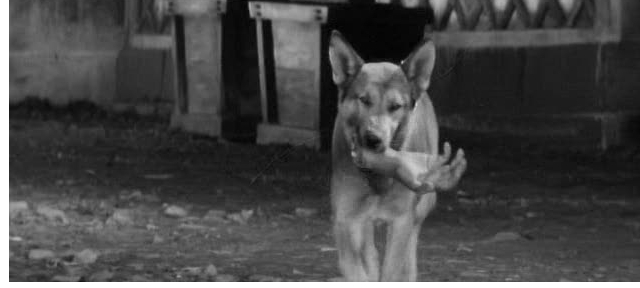
Take Yojimbo for instance, the film that spawned a new genre of movies called the spaghetti westerns. The bodyguard has just lost his identity and wanders into a barren town. The shot where he realizes that the town is war-torn is probably the most thrilling moment of the movie. A dog comes around a corner carrying a human hand! The vast barren stretches of land in the movie are reminiscent of the wild west, providing the perfect platform for remake into Fistful Of Dollars.

Adapted from Shakespeare’s Macbeth, Throne Of Blood provides a whole new interpretation to the work. An ambitious man who is manipulated by his wicked mistress and the reasons for his subsequent fall. The story is cleverly blended with Japanese folklore and the feudal system to provide a whole new look. Toshiro Mifune‘s best performance may just be in this movie. He does a perfect job as a man who is swallowed by his own pride.

lowerdepths.jpg In one of my favorites, The Lower Depths, Kurosawa adapts the Maxim Gorky work into the slums of Japan and the various issues there. The final scene where one of the partying inmates of the house exclaims after the suicide of the wretched wannabe-actor (“Stupid actor, he spoiled all the fun”) defines the whole life in the slums and portrays their everyday struggles with ease. The Lower Depths remains one of his most underrated works.

vellithirai.jpg“Oh, Prakashraj and Prithviraj with Viji at the helm?”, I thought, “It’s Duet movies, it must be good.”. Generalizations suck, don’t they?. It doesn’t matter how famous the cook is, it’s all about the recipe. Vellithirai becomes a cinematic embodiment of this statement.


In one of the best Tamil film openings of recent times, Vellithirai pays tribute to all the stalwarts of Tamil cinema. The film then takes us into the lives of all the unfortunate beings trying to climb the massive tree of Filmdom. The dialogue and the film itself is at its best in their period. All is well till the first plot twist where Kannaiyan steals the script of an assistant director Saravanan and hence becomes a star. The rest of the film tracks how Saravanan wins the battle fair and square and fixes his private and professional life.

The movie suffers from a very inconsistent tone with a very light-hearted first part, a depressing middle where Prakashraj seems to be the only comic relief (At this point, the movie comes to an extent where the protagonist breaks out of the diegesis to comment on the nature of the scene) and an end part where there is no breathing space with Prakashraj himself turning evil. The climactic sequence portrays Prakashraj as if he was a dull head and removes all the weight that could have been associated with his character.

Prithviraj is the pick of the actors and does a good job as the struggling assistant director. Prakashraj turns what could have been the performance of the year into a farce. Gopika is a totally needless add-on that just hampers the movie. M. S. Bhaskar is funny all right, but not memorable at all. Yes, it is a great cast sadly misused. This could well be G. V. Prakash‘s biggest disappointment so far with no song worth humming. The song sequences themselves create excuses for appearing. My guess is that all this is a compromise they have made during the translation from the Malayalam original Udayananu Tharam.

In all, the movie fails to cast the same effortless charm that Mozhi did and exerts itself for nothing. The film becomes a victim of the clichés it mocks and falls prey to its own ideologies. Ironically, the film is dedicated to all the people who have tried to make good films!. This is definitely a step down for Duet movies and I hope it will more than compensate for this in Abhiyum Naanum and Mayilu.

Verdict:

I always thought it couldn’t go below Narasimma. But then it has happened. In the end of 2007 came “Yaarukku Yaaro“, taking the state by storm. Though not more than a handful of people knew that it released, the following it has amassed has taken it to a cult status (Imagine, this thing has torrents floating around the internet!). In spite of a lot of hindrances by friends and well wishers, I watched the film. I just didn’t want to miss out the experience of watching the worst Tamil film ever made. I must confess I was not disappointed at all.

Davit is an automobile engineer/scientist who has always aspired to make the most inexpensive four wheeler (I don’t know if the car was inexpensive, but it was definitely cheap!), affordable by all. In his quest, he is caught between the love of two women in his life. Dheeba, a doctor who has helped him financially to set up his industry and Manjoo, his college mate who returns from Canada to take him along. Davit is torn apart by the moral questions that surround him. This is one of the rare gems that completes the climactic showdown in just 8 minutes and the final twist in around 6 seconds. To add to the agony, the film has an intentional “comedy track” which, needless to say, fails utterly.

Sam Anderson is primarily the reason for the film’s present status and has excelled in scenes he doesn’t appear in. My hunch is that the poor thing was kidnapped and threatened to play the role. Varnika (Hence forth called as “Dream girl 1”, DG1) and Jothi (“Dream girl 2”, DG2) play the love interests (OMG). DG1 has not done what she was asked to do while DG2 has done more than she was asked to.

The film could have hidden behind Narasimma if it were not for the <any derogatory adjective> technique. I wonder why Joe Stanley has taken all the blame for the movie. Produced by Universal Thavamani Cine Arts (No way related to the Hollywood production house), the film has Christianity written all over it, with sin and redemption portrayed in the most distasteful manner. Special mention to the tradition-defying song-sequences (all shot around the same landfill) which has to be seen to be cursed.

However, this film actually shows one thing: How a technical failure is magnified in contrast to a failure in script. That is why Narasimma seems like Indiana Jones in comparison. I should be kicking myself for writing a blog on this piece of junk, but my duties as a responsible film-goer overwhelms.

Verdict:

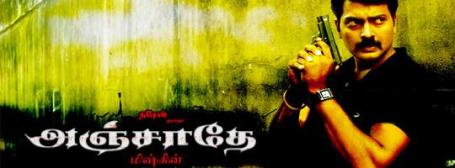
After his previous winner “Chittiram Pesudhadi”, Mysskin is back with “Anjaathey” starring Prasanna and Naren. With Prasanna in a never-seen-before role, the film was one of the films to be watched out for. So, here I am, writing my thoughts and opinions on the film.

The plot of the film is fairly simple. Krupa and Sathya are two friends who are headed towards different lives. By a small inciting incident blown over, their fates take a U-turn and their lives proceed unexpectedly, thanks to Daya. What follows is the realization of their lives by the friends and the moral questions that surround them. With the exception of the slightly overlong climax and about 2-3 overdone scenes containing stereotype situations (M. S. Bhaskar cursing his son, Sathya, for one), the flick boasts of uninterrupted and fast screenplay.

Naren is the pick of all the performances and is all set to set a firm foot in Kollywood. The scene where he realizes the rights and privileges of a policeman oozes with good performance. Prasanna’s portrayal of an eccentric but meticulous baddie with his own set of idiosyncrasies is commendable but not very memorable. Though Pandiyarajan remains for almost the whole movie, he seems to be there only as a comic relief.

Not only Mysskin’s name seems to be Russian, but his techniques too. The extreme close-ups and the montage flow of action in the film are reminiscent of the pre-war soviet cinema. The brilliant use of non-diegetic sound for almost the whole climax provides the grandeur a showdown must have. The cinematography of the film is a very strong point. However, the unrestrained use of free-cam becomes distracting at times. Also, the experimental rapid cutting during the early part of the film does no good to the film. Though the film is very racy through out, it is almost completely humourless. The film cries for relief in the first half with even the costumes and the lighting being dark. The dialogues would have been hard-hitting only if it were not mixed with English in a tasteless manner. The background score has aided the movie big time, except for some obvious emotional manipulation.

The film could have avoided the love track completely, but how else will the director push in one more song?. And where was Krupa’s sanity and composure (that he maintains when he is with Daya) when he failed the IPS test?. All said, the film certainly tells us three things: 1. Naren is here to stay, 2. Mysskin is a bankable director and 3. Prasanna can do more than run around trees and can say more than “Kudunga aunty, naa bag-a thookittu varen…”!

Verdict:

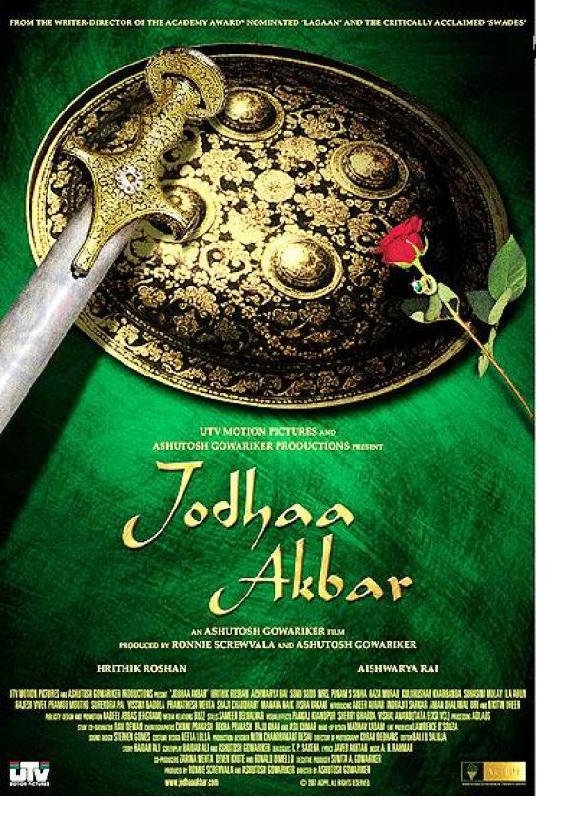
The wait is over. Huge start to the project, lots of opposition from historians, religious controversies, strenuous shoot, massacre at the editing table…It has finally seen the light of the day. And how? Released on the Valentine’s day, the theme of the day blends with the theme of the movie. After having seen how inconsistent Ashutosh Gowariker’s pacing can be in Swades, I started the movie with, I must confess, low expectations. At the end, I had got more than I thought I would.

The theme of Jodhaa Akbar, as one might be tempted to think, is not of Akbar’s ambitions and heritage. Rather, it’s about his softer side that made him fall in love with a totally alien princess and the consequent changes in his political outlook. People tend to equate length to boredom. Gowariker has known this truly and woven a script with Haider Ali that never sags for most part of the movie. Lots of convoluted subplots that are characteristic of the Mughal era definitely aid the movie’s pacing. Special mention should be made to the lyrics and dialogues that not only keep Hindi and Urdu in their native form, but also are made accessible to the common man.

Cinematography for a historic film, obviously needs to be grand and Kiiran Deohans takes care of that. He manages to capture the might of war as well as the strained relationship between the lead pair with utmost care. Gowariker has borrowed cinematic tools from Kurosawa and has used it well especially early on in the movie. However, the editing of the movie leaves a lot to be desired. The editing not only avoids us from sinking into some scenes but also fails in covering up some weak shots especially the fencing scenes. A R Rahman has already delivered the album of the year with Khwaja Mere Khwaja and Inn Lamho Ke Daman Mein being the picks of the album.

Hrithik Roshan, the Leonardo DiCaprio of Bollywood breathes life into Jalaluddin Mohammad and has matured from a being lover boy into a semi-veteran who can play characters with panache. This person is going to be “up there” in the years to come. Aishwarya Rai may not have equaled Hrithik but definitely has done what she was asked to do. The chemistry between these two carries the movie providing both comic relief and script pace. Sonu Sood too has done a wonderful job.

The movie has its own shortcomings with a “too-cinematic” last 20 minutes and weak stunt choreography. Probably the better versions are out there on the cutting table! Jodhaa Akbar is definitely no Mughal-e-Azam, but it does manage to capture the attention of the new millennium.

Verdict:

I usually tune into the channels that play the new movie trailers. Invariably, I would think – “Hey, hold-on. This one looks like a rip off from <Hollywood movie name>. Upon the movie’s release, I would have confirmed that. Johnny Gaddaar didn’t look like an exception. The trailer started off like a heist movie and looked and felt so hollywoodish. I just couldn’t spot the original. After a long time, yesterday, I sat down to watch a Bollywood flick. The next two and a half hours was a power ride I didn’t expect.

Newbie Sriram Raghavan sure looks like he knows his world cinema. He draws a lot of inspiration in the technical aspects from a lot of directors. From Jean Luc Godard’s jump cuts to Stanley Kubrick’s match cuts, from Quentin Tarantino’s use of room space to Soderbergh’s style, from David Lynch’s editing to Alejandro Inarittu’s lighting, the film reminds you of everything. But Raghavan has got his basics right: ” Get the content right, form follows”. With this in mind, he has made such gripping a script, that it makes you wonder if this is the best Bollywood thriller of recent times.

The movie stars off like a regular gang-heist-gone-awry flick with much (intentional) predictability. What follows is told in such a riveting fashion that it feels like something that Bollywood has never tasted before. All the leads have done justice to their roles with no overplay. This proves one thing to Bollywood – you don’t need stars when you have such taut characterization. Sriram Raghavan says NO to all essential Bollywood elements- the item number, revenge, duet songs in exotic locations that come out of thin air and a dozen others. Carefully avoiding sentimentality that plagues even what-could-have-been-great Bollywood thrillers like Humraaz, Raghavan handles emotions without cloying us. I wonder why he chose Shankar-Ehsaan-Loy for the music. He could have used less expensive music directors.

Raghavan pays homage to all the stalwarts of the thriller genre throughout the movie. From James Hadley Chase’s books to Bachchan’s Parwana and Dev Anand’s Johnny Mera Naam. There are numerous references to other directors as well. With a few more scripts like this and a style of his own, Sriram Raghavan can proudly call himself a leading member of the “Indian New Wave”.

In summary, Johnny Gaddaar is a one-man film that is a huge relief from the regular ‘thriller’ films that are made on the constraints of market sales and star values. It has set a new standard for other aspiring directors. Let’s hope it is broken soon !

Verdict:

Having given the biographical background, I would like to put forth my opinions on why Chaplin is such an inspiration to all the present generation of directors.

First of all, Chaplin was a perfectionist. It is evident from the fact that he reshot one scene in City Lights involving a blind girl, the tramp and a rich gentleman over 300 times to ensure that silence in his movies was never a handicap but an advantage. He would tax his actors till he got what he wanted. He would even fire them on unsatisfactory performance.

Chaplin was a thorough optimist. Having come from a poor background optimism was the key attribute that made Chaplin survive the fickle life of Hollywood where you are only as good as your last movie. His dialogues such as “You will never see the rainbows if you look down” (From the song ‘Smile’ in “The Circus” (1928)) and “Life is a magnificent thing, even to a Jellyfish” (From “Limelight” (1952)) reflect this fact.

Charlie was a true artist in the sense that he would make whatever changes to a scene to get the best end result. He would improvise on a script and would check if that was good enough. If not, he would continue improvising with the same vigour. Even on his deathbed when the reverend said ”May God have mercy on your soul”, Chaplin resorted to comedy, replying ”Why not, After all it belongs to Him

Even though he remained a comedian in his professional life, he was a very strict father. He would never be complacent on the freedom of his children. He never wanted them to be the kids of a famous father. He would take them to slums and show tem how the real world is.

Most importantly, he was the one who resurrected slapstick humour, which was thought to be primitive. In my opinion, Slapstick is the most fundamental of all comedies that any audience can associate to. The audience inherently likes physical movements and dark humour. Charlie Chaplin shows that slapstick is limitless and eternal even in Hollywood that thrives on sarcasm and raunchy humour for quick money.

Charles Chaplin was one person that made the world laugh, cry, resent, pity and most importantly THINK. Only such a ‘perfect maverick’ can redeem Hollywood and many other industries from their present state of decay. Without a shadow of a doubt, he is the greatest showman of the 20th century and will be the greatest for generations to come.

« Previous PageNext Page »