
The recently concluded 56th edition of Visions du Réel, Nyon, Switzerland, affirms it as one of the largest documentary festivals in the world, with 154 films from 57 countries in its lineup. Numbers, though, are for accountants and PR agents. What lends Visions du Réel its strength is the continuing vitality and diversity of its programme, its mix of the popular and the experimental. Plenty of films in the selection reflect current trends in commercial documentary — and perhaps even the institutionalization of a distinct Visions du Réel style, but that is a discussion for another day. At the same time, there are also adventurous works here that buck the trend, interrogate existing conventions and expand our conceptions of documentary filmmaking.
The feature that won the top prize of the festival, Clarisa Navas’ The Prince of Nanawa, for instance, may not appear on television or in the local arthouse cinema anytime soon, at least not in its current form. Ten years in the making, Navas’ 212-minute bildungsroman chronicles the life of Angel, a chirpy young boy from Nanawa, an impoverished border town between Argentina and Paraguay. Navas met Angel accidentally in the mid-2010s at a booming black market on a bridge between the two countries. She followed him home and filmed him regularly over the next decade, forging a deep and protective relationship with him.
We witness Angel grow up — from a pre-teen to a teen father — in a disadvantaged milieu mired in drugs and violence, his sensitive, introspective side in constant tussle with his sexist and homophobic environment. Beyond the raw poetry of watching a real human being grow older on screen, what is compelling about The Prince of Nanawa is its challenging of the classic documentary principles of observation and non-intervention. We see how the very act of making a film helps the (liberal, cosmopolitan) filmmakers exert a positive influence on Angel’s life and thoughts, how his continued participation in the project helps him narrativize and assume responsibility of his own life. At one point, Angel confesses his embarrassment at trying out drugs and his fear of disappointing Navas, whose friendship serves as a kind of watchful superego throughout his formative years.
Its uplifting moments notwithstanding, The Prince of Nanawa is not a fairy tale, and it’s not always smooth sailing into adulthood for Angel, who, even at the end of the film, makes a living smuggling goods across the border and cuts his eighteenth birthday cake with an infant in hand. Nevertheless, the film builds a case for a documentary form in which the camera consciously alters the reality it films, makes active interventions into the lives of its subjects.
Like Angel, the protagonists of various other films at Visions du Réel grapple with an unstable present and an unknown future. Obscure Night – “Ain’t I a Child?”, the concluding chapter of Sylvain George’s trilogy on illegal immigration, is an extraordinary object of close, unflinching observation. I haven’t seen the first two films in the trilogy, in which George follows Tunisian teenagers trying to cross over into Europe by entering Mellila, a Spanish enclave in North Africa. In the new film, we find three of them — Malik, Mehdi and Hassan — taking temporary refuge in Paris, after having been shuttled by immigration authorities across various cities in Western Europe.
As young Maghrebi males, Malik and co. are the very posterchildren for anti-immigration sentiment. George recognizes this very well, and within the first quarter hour of his 164-minute film, he pre-empts all the usual right-wing bugbears by acknowledging them: yes, the boys steal for survival; yes, they hold regressive views about women; yes, they want to lead an easy life in Europe and profit from its social welfare policies. Malik and co. aren’t the liberal fetish objects littered across European screens.
Yet, the film deems them worthy of human and aesthetic interest. With remarkable intimacy and equanimity, George’s camera films the gang at slightly below the eye-level as they wander the roads of night-time Paris, huddle around fire, get into nasty fights with their Algerian counterparts, listen to street music or make the occasional phone call back home. An indifferent Eiffel Tower glitters perpetually in the background while the boys find themselves prisoners under an open sky, enslaved to an eternal, sordid present, with no visible way out.
Shot in stark monochrome with eye-popping passages of abstraction, George’s film lends a monumental weight to images and lives we would rather not see. The approach is comparable to Pedro Costa’s work with the residents of Lisbon’s Fontainhas. As a white artist making films on vulnerable sans papiers, George is bound to ruffle some feathers. But his film demonstrates that, sometimes, you need to strain certain ethical boundaries to arrive at newer forms of looking and understanding. Neither incriminating its subjects nor making any apology for them, Obscure Night – “Ain’t I a Child?” reveals the herculean difficulty of creating a truly humanist work.
Sergei Loznitsa’s short Paleontology Lesson takes an oblique approach to an adjacent theme. A change of direction of sorts for this singular Ukrainian filmmaker, Paleontology Lesson centres on a class of middle-schoolers on a trip to the Natural History Museum in Kiev during the Russian invasion. The kids listen to the docent speaking about millennia-old fossils and artefacts carefully preserved in the museum – the present, the past and the future of the country under a single roof, all threatened by the bombs falling outside the facility. The film ends on an eerie note, with dioramas of prehistoric humans and exhibits of their skulls. Will we end up in the Natural History Museums of the future too?
Several titles I saw at the festival featured individuals and institutions coming to grips with a brave new world. Literally so in the case of Valerio Jalongo’s Wider Than the Sky and Jeffrey Zablotny’s Messengers. Both films craft poetic renditions of research work on cutting-edge science and technology — machine consciousness in the case of the first, neutrino astronomy in the second. These are works filled with a sense of awe at human curiosity and capacity for invention, but also at its insignificance faced with the complexity of our inner life and the vastness of the cosmos.
On an earthlier note is Fabienne Steiner’s Fitting In, a fascinating fly-on-the-wall document about a new batch of students at Eendrag, a residence at the Stellenbosch University in South Africa. Once an academic stronghold of the apartheid era, the university now aims at a more ethnically diverse intake reflective of the rainbow nation. Pangs of integration abound: white and non-white students alike struggle to get used to each other’s close presence withing the residence; official communication moves from Afrikaans-only to include Xhosa and English; debates surge around the problematic names assigned to residence sections; inclusivity becomes a major talking point in student elections.
Alas, one step forward, two steps back. News about attacks on Black students echo over the radio from time to time. Edgy jokes are misunderstood, and political correctness cripples spontaneity. Fitting In presents the new Eendrag as a kind of social lab in which otherness is negotiated and understood, a miniature model of South Africa and multicultural societies across the world. There are certainly teething troubles, lingering prejudices, pressures from external culture wars. The students proceed gropingly, sometimes walking on eggshells but always with an openness characteristic of youth. The kids, the film assures, are alright.
Johannes Büttner and Julian Vogel’s Soldiers of Light, in contrast, looks at a flight away from such a new world order. The film revolves around David aka Mister Raw, an alternate healer and social-media influencer advocating raw food, veganism and natural cures. David’s quackery and suspicion of modern medicine is dangerous enough, but he is also part of the “Soldiers of Light,” an eclectic, 23000-strong network of renegades who reject the authority of the Federal Republic of Germany and proclaim to be nationals of a certain Kingdom of Deutschland. On his channel, David, who is curiously a Black man himself, amplifies the views some of these reactionaries: racialists, self-styled spiritual gurus, assorted carpetbaggers and garden-variety right-wingers.
Soldiers of Light picks on a sensational and somewhat facile subject; David and his compatriots are generous in supplying self-incriminating soundbites for the camera. But it manages to put its finger on the mechanics and fallout of conspiratorial thought. David and co. join hands not in shared belief, but in their shared rejection of what they take to be a malevolent system. In the absence of rational voices to do the necessary work of dialectical thinking, these fringe elements come together to prey on the lost and the weak (in David’s case, a schizophrenic young man named Timo) — a phenomenon on full display every day on online platforms like 4chan and Twitter (formerly X). Soldiers of Light shows that evil flourishes there where reason has no incentive to.

 I’ve had no greater screen delight this year than watching two white dudes chat for two hours. Orson Welles and Dennis Hopper hole up in a dark room with half a dozen technicians to talk filmmaking, politics, religion, love, magic, news, television and literature while dutiful assistants scurry about readying one refill of liquor for them after another. Welles plays the Grand Inquisitor, pressing his timid interlocutor to state his artistic and political beliefs, conjuring theories to counter him and never allowing him a resting ground. We never see him, save for rare glimpses of his bellowing pin-striped trousers moving at the edge of the frame. As Hopper’s cinematic forefather, Welles looms large, appearing to be incarnating some kind of metaphysical force, orchestrating a Kafkaesque trial for the young man. What results is a stark power imbalance between the seen and the unseen, the subject and the author, the one who is recorded and the one who wields the camera. But the primary pleasure of the film lies in seeing two artists in a terribly absorbing conversation, grappling with the cinematic-aesthetic problems of their time. Going public after fifty years, Hopper/Welles is both a standalone film and an anniversary celebration. It hasn’t dated one bit.
 Chloé Galibert-Laîné’s funny, sharp and dizzyingly smart video work begins as a commentary on Chris Kennedy’s Watching the Detectives (2017), a desktop film about the crowd-sourced investigation on Reddit following the Boston bombing of 2013. As the director breaks down Kennedy’s film, analysing its narrative construction and its tendency for geometric abstraction, she voluntarily gets caught in an ‘analytical frenzy’, not unlike the Redditors themselves. As Galibert-Laîné seamlessly chains one stream of thought after another, her film evolves into a meta-reflection on our relation to images and our compulsion to create meaning from visual material. If
  What remains of the modernist dream of reshaping human societies from the ground up based on scientific, rationalist principles? Goldstein and Zielke’s ambitious, erudite and formally complex city symphony seeks to find out. Its subject is Brasilia, the artificially created capital of Brazil that architects Oscar Niemeyer and Lúcio Costa forged out of the wilderness in the late fifties. The imposing geometric forms of the city, expressly conceived in cosmic terms and perfected like Kubrickian monoliths from outer space, appear to have all but snuffed out human presence. Machine sees this city as an otherworldly geography unfit for human life, but also allowing the possibilities of imagining utopias, catholic cultists, freemasons, biker gangs and Esperanto evangelists all finding a home within Brasilia’s orbit. Employing heterogenous narrative modes, Goldstein and Zielke develop a visually striking portrait of a city that has come to resemble a religious monument in itself, demanding awestruck worship and constant maintenance by people who can’t afford to live here. Their Brasilia is either a place that inspires dreams of reimagining life or an abyss where dreams come to die. Even as it looks back at a moment in modern intellectual history, Machine evokes questions about the future, inviting us to reflect on the eternal human desire to play demiurge.
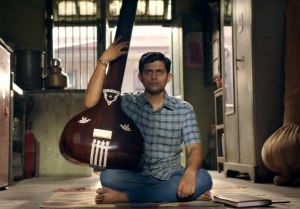 Tamhane’s superb second film feels like home territory for him. Sharad, an apprentice Hindustani music singer, is not the greatest of talents, but imagines himself as part of a tradition, one that gives a structural meaning to his life. But, the promise of omnipresence and instant gratification of the modern world beckoning him, not only does he find himself unable to live up to the lofty ideals of his tradition, he’s also is gradually disabused of these ideals themselves. In a very direct manner, The Disciple zeroes in on a fundamental, civilizational sentiment that underpins artistic succession in the subcontinent: that of filial piety, as opposed to the parricidal narrative that informs the Western conception of self-realization. Even when his faith has been questioned, Sharad continues to serve his elderly teacher, caring for him till the final days, like icon worshippers who hold on to their idols even (and especially) when the meaning behind them is lost. Tamhane builds up gradually to this assault on Sharad’s worldview, with humour, suspense and a calculated formal reserve that redoubles the impact of the emotional violence. His film invites viewers to constantly process narrative information in order to access it, providing a rich dividend for the effort.
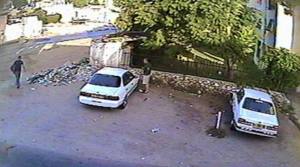 In Unusual Summer, Aljafari repurposes CCTV tapes that his father left behind after his death in 2015. The tapes are from the summer of 2006 and were used record the parking spot outside his home to see who’s been breaking the car window. Despite the dramatic promises of the CCTV aesthetic and the location of the house in the crime-ridden district of Ramla, what we get in this film are quotidian incidents, sightings of neighbours passing by, the picture of a town going about everyday business. Aljafari adds a sparse ambient soundtrack that imparts Tati-esque colour to the proceedings, with the passers-by on screen becoming veritable characters. This transformation of private surveillance footage into a session of window-watching and people-spotting produces a feeling of community and forges a relation of inheritance between the filmmaker and his father, the only two people to have seen these tapes. Supremely calming though it is, Unusual Summer is also seared by loss and mourning, the familiar faces, places, animals and trees that register like spectral presences on the lo-fi video having vanished in the intervening years following intrusions by the Israeli state. A minimalist gem that speaks to our now-amplified urge to reach out to others.
 Dutta’s richly dialectical new film draws out themes from
  The Ross brothers’ new docuficion follows the last day of operation of The Roaring 20s, a downscale bar fictionally set in Las Vegas, at which a bevy of social castaways gather to mourn and celebrate. While all the actors play themselves, the filmmakers loosely fictionalize the scenario, giving direction to it with certain pertinent themes. Set against the backdrop of collapsing American businesses, Bloody Nose is a hymn for failure, a note of solidarity to what the American lexicon calls “losers”. The Roaring 20s is the opposite of everything one associates with the glitz and glamour of Sin City: it’s a floundering venture that is the negative image of the American Dream. For its regulars, however, the bar is something of an institution that provides them with a public (and, at times, private) space that has become scarce elsewhere and where they can be themselves. The film’s broader view of class is compounded by a specific generational perspective that refutes the idea that the young, the ‘millennials’, can’t make it because they don’t work hard enough. A film that hits the right moods without tipping over into condescension or miserabilism, Bloody Nose deserves all the plaudits it’s been getting.
 Perel continues his exploration into Argentina’s military dictatorship by examining the role of large private corporations in enabling and carrying out state-sponsored pogroms against political dissidents of the junta. He photographs the company facilities as they are today while a brisk voiceover lists out how each firm helped military and security forces detain, torture and get rid of problematic workers in exchange for financial perks. The text, read out from an official 2015 report, is numbingly repetitious, and drives home the pervasiveness of these military-industrial operations. Perel’s decision to frame the sites through his car’s windshield creates a sense of illicit access, even though there is visibly little stopping him from going nearer the facilities. Some of the companies continue to operate under their own name, while some others have changed, with at least one site carrying a memorial sign for the injustice perpetrated there. Perel is, in effect, photographing the ur-filmic image of factory entrances, but all we see is a handful of vehicles leaving the gates. This eerie absence of human figures evokes the disappeared workers who, at some companies, were picked up at the entrance, a site, as
  Lynne Sachs’ frank, morally messy documentary turns around her father, Ira Sachs Sr., a ‘hippie businessman’ whose unconventional living and constant womanizing comes down heavily upon his nine children, some of whom have known the existence of the others only after decades. Sachs weaves through footage shot over half a century in half a dozen formats and layers it carefully into a simple, direct account with a voiceover addressed at the audience. She takes what could’ve been a narrow family melodrama into much stickier territory. Her film isn’t a portrait of her father, but a meditation on relationships with this man as the connecting element. Sachs goes beyond all gut responses to her father’s behaviour—disappointment, rage, disgust—towards a complex human reality that can elicit only inchoate sentiments, as suggested by the film’s incomplete title. She isn’t filming people or their stories, but the spaces between people, and how these spaces are always mediated by the actions of others. Father’s wayward life, itself rooted perhaps in a traumatic childhood, profoundly shapes the way his children look at each other. Sachs’ film is ostensibly a massive unburdening project for her; that she has been able to draw out its broader implications is a significant accomplishment.
 As part of his work, Lashay T. Warren, a young family man from Los Angeles, is posted in Cal City, California, a town wrought in the fifties by a lone developer out of the Mojave Desert with the hope that it would become the next Los Angeles—a dream that didn’t come to fruition. Along with other men and women his age, Lashay is responsible for maintaining this ghost town by reclaiming its streets from nature and restoring some semblance of cartographic order. Victoria teases out various thematic layers from this singular scenario. On one level, it is an absurd tale about one of the many dead ends of capitalist enterprise, a kind of anti-Chinatown portrait of a Los Angeles that could’ve been. Lashay is like a worker repairing a remote outpost in space, marvelling at every sign of life in this almost otherworldly landscape. But he also resembles the American pioneers, whose diaries on their way to the West he emulates in the film’s voiceover. Ultimately, Victoria is a poignant, humanist document, in the vein of Killer of Sheep, about the dignity of a young Black man providing for his family, trying to graduate from high school, all the while fighting the gravity of Compton’s streets.





 Chan’s diaristic digital work is divided into chapters named after family members and unfurls as a process of piecing together of familial history. Through various confrontational interviews with her mother and father, the filmmaker attempts to understand their failed marriage, her strained relation with her step-father and the violence that has structured them both. Chan’s decision to put her entire life-story on film is a brave gesture, but the film closes upon itself, satisfied to be a melodrama valorizing personal experience over broader frameworks. (Consider, in contrast, the rigorous domestic formalism of Liu Jiayin or the socio-political tapestry of Jia Zhangke’s early work.) Chan misses the forest for the lone tree. Winner of the Adolfas Mekas award of the fest.
 Beep assembles anti-communist propaganda material from the 60s and the 70s commissioned by the South Korean state that was based on the mythologizing of a young boy, Lee Seung-bok, slain by North Korean soldiers. With the unseen, absent boy-hero at its focus, Kim’s film depicts the dialectical manner in which a nation defines itself in relationship to an imagined Other. Kim makes minimal aesthetic intervention into the source material – our relation to it automatically ironic by dint of our very distance from the period it was made in – restricting himself to adding periodic beep sounds to the footage, producing something like a cautionary transmission from another world.
 Black Sun opens with a composition in deep space presenting a metonym for a country in the process of development: high-rise buildings in the background as a pair of actors in period costumes rehearse a scene in the foreground. In a series of Jia Zhangke-like vignettes of Saigon set in middle-class youth hangouts scored to pop songs and television sounds, interspersed with images of a metamorphosing city, we see the distance that separates art from reality and the middle-class from the changes around it. The film culminates in a complex, home-made long take following the protagonist across her house and out into the terrace, where she dances, presumably to the eponymous song.
 The most challenging and elusive film of the competition I saw is also the most hypnotic. Cloud Shadow gives us a narrative of sorts in first person about a group of people who go into the woods and dissolve in its elements. The film is obliquely a story of the fascination with cinema, of the trans-individualist communal experience it promises, of the desire to dissolve the limits of one’s body into the images and sounds it offers. With an imagery consisting of sumptuous tints, and nuanced colour gradation and superimpositions, the film enraptures as much as it evades easy intellectual grasp. The one film of the festival that felt most like a half-remembered dream.
 Ferri’s teasing, playful Dog, Dear appropriates the filmed record of a Soviet zoological experiment in the 1940s in which scientists impart motor functions to different parts of a dead dog. In the incantatory soundtrack, a woman – presumably the animal’s owner – repeatedly conveys messages to it, with each of them prefaced by the titular term of endearment. Ferri’s film would serve sufficiently as a blunt political allegory about the dysfunction of communism, but I think it’s probably fashioning itself as a metaphysical question: the dog might well be kicking but is he alive? His physical resurrection will not be accompanied by a restoration of consciousness. He will not respond to his master’s voice.
 Put together from footage apparently shot over twenty years at a Thai army officer’s residence, Tesprateep’s film shows us four conscripts working in the general’s garden. We witness their camaraderie, their obvious boredom, the empty bravado in entrapping small animals and intimidating each other. The misuse of power by the officer in employing these youth to mow his lawn reflects a broader militaristic hierarchy, as is attested by the youths’ casual violence towards the animals and their brutal torturing of a prisoner. Endless, Nameless recalls Claire Denis in its emphasis on military performativity and Werner Herzog in its juxtaposition of idyllic nature and seething violence, all the while retaining an
  In Fictitious Force, Widmann incidentally poses himself the age-old challenge of ethnological cinema; how to film the Other without imposing your own worldview on him? The filmmaker smartly takes the Chris Marker route, avoiding explanatory voiceover for the rather physical Hindu ritual he photographs and instead holding it at a slightly mystifying – but never exoticizing – distance. Widmann’s film is about this distance, the chasm between experience and knowledge that prevents the observer from experiencing what the observed is experiencing, however understanding he might be. Fictitious Force’s considered reflexivity carefully circumvents the all-too-common trap of conflating the subjectivities of the photographer and the photographed.
 Fashioned out of footage that the artist shot during his visit to the titular natural reserve in Ontario, Fish Point comes across as an impressionist cine-sketch of the locale. The film opens with Daichi Saito-esque silhouettes of trees against harsh pulsating light – near-monochrome shots that are then superimposed over a slow, green-saturated pan shot of a section of a forest. This segment gives way to a passage with purely geometric compositions consisting of alternating browns and greens and strong horizontals and verticals. Forms change abruptly and tints become more diffuse and earthly. We are finally shown the sea and the horizon, with a rough map of the area overlaid on the imagery.
 A music video for a song that reportedly riffs on a holy chant and the traditional cry of the local ragman, Ye’s film starts out with shots of old women and men lip-syncing to the titular melody before turning increasingly darker. The rag picker of the poem progresses from accepting material refuse to buying off diseases, emotional traumas and even intolerable human characters. Ye builds the video using shots both documentary and voluntarily-performed that portray everyday life in Taiwan as being poised between tradition and modernity. The junkman of the film then becomes a witness to all that the society rejects and, hence, to all that it stands for.
 Set in a suburban Mumbai slum, Bhargava’s film takes a look into one of the reportedly many carrom clubs in the area where young boys come to play, smoke and generally indulge in displays of precocious masculinity. Where Imraan, the 11-year-old manager of the club, seems reticent before the camera, his peers and clients are much more willing to perform adulthood in front of the filming crew. While some of them are acutely aware of the intrusive presence of the camera, urging their friends not to project a bad image of the country, the film itself seems indifferent about the ethics of filming these youngsters, asking them condescending questions with a problematic, non-committal non-judgmentalism.
 Völter’s visually pleasing and relaxing silent film is a compilation of scientific documents of cloud movement over the Mount Fuji recorded from a static observatory by Japanese physicist Masanao Abe in the 1920s and 1930s. Abe’s problem was also one of cinema’s primary challenges: to study the invisible through the visible; in this case, to examine air currents through cloud patterns. The air currents take numerous different directions and these variegated views of the mountain situate the film in the tradition of Mt. Fuji paintings. The end product is a James Benning-like juxtaposition of fugitive and stable forms, a duet between rapidly changing and unchanging natural entities.
 The most narrative film of the competition, Memorials situates itself in the tradition of 21st century Slow Cinema with its elliptical exposition, stylized longueurs, (a bit too) naturalistic sound and its overall emphasis on Bazinian realism. A young man revisits his father’s house long after his passing and starts discovering him through the objects of his everyday use, while a dead fish becomes the instrument of meditation and grieving. Though rather conventional in its workings, Memorials offers the details in its interstices fairly subtly and touches upon the usual themes of inter-generational inheritance and posthumous rapprochement, while also gesturing towards a necessary break from the past.
 Punprutsachat’s work is a straightforward document of the protracted rescue of a water buffalo from a man-made well on a sultry summer afternoon by dozens of village folk. Shot with a handheld digital camera and employing mostly on-location sound, the film presents to us the efforts of the villagers in chipping away at the edifice, restraining the animal from agitating and finally allowing it to go back to its herd. Natee Cheewit attempts to encapsulate the idea of eternal struggle between man and animal and, more broadly, between nature and civilization. The remnants of the demolished pit and the dog wandering about it are reminders of this sometimes symbiotic, sometimes destructive interaction.
 Night Watch is reportedly set in the days following the military coup in Thailand in May, 2014 – a period of state repression dissimulated by triumphalist propaganda about reigning happiness. Chulphuthiphong’s debut film showcases one quiet night during this period. Jacques Tati-esque cross-sectional shots of isolated apartments and office spaces show the citizenry complacently cloistered in their domestic and professional spaces, much like the sundry critters that crawl about in the night. Someone surfs through television channels. Most of them are censored, the rest telecast inane entertainment. Night Watch underscores the mundanity and the ordinariness of the whole situation, which is the source of the film’s horror.
 A rapid editing rhythm approximating the audiovisual assault of the information age, a visual idiom weaving together anime, pencil-drawing and Pink Film aesthetic and a soundscape consisting of reversed audio and noise of clicking mice and shattering glass defines Ouchi’s high-strung portrayal of modern adolescent anxieties. In a progressively sombre, cyclic series of events, a teenager navigates the real and virtual worlds that are haunted by sex and death around her. Ouchi’s pulsating, mutating forms and her preoccupation with the hyper-sexualization of visual culture are reminiscent of
  One of the high points of the festival, Scrapbook consists of videograms shot in 1967 in a care centre in Ohio for autistic children with commentary by one of the patients, Donna, recorded (and curiously re-performed by a voiceover artist at Donna’s request) in 2014. Donna’s words – indeed, her very use of the pronoun ‘I’ – not only attest to the vast improvement in her personal mental condition, but also throw light on the psychological mechanisms that engender a self-identity. For Donna and the other children-patients filming each other, the act of filming and watching substitutes for their thwarted mirror-stage of psychological development, helping them experience their own individuality, reclaim their bodies. Bracing stuff.
 Canadian animator Leslie Supnet’s hand-drawn animation piece is an extension of her previous work
  According to the program notes, the project brings together a real-life DJ who has lost her job after the coup d’etat in 2014 and an actual illegal immigrant boy from Myanmar at a secluded pond in the woods to allow them to do what they can’t in real life. We see the DJ perform for the camera, talking with imaginary strangers, giving and playing unheard songs, while the boy is content in tossing stones into the moss-covered pond. Like a structural film, The Asylum, alternates between the DJ’s ‘calls’ and the boy’s quiet alienation, taking occasional albeit unmotivated excursions into impressionist image-making, to weave a vignette about ordinary people made fugitives overnight.
 A Kiarostami-like narrative minimalism characterizes Radjamuda’s naturalistic sketch in digital monochrome of a lazy holiday afternoon. A young boy perched near the window of his house engages in a series of self-absorbed activities, while actions quotidian and dramatic, including a hinted domestic conflict, wordlessly unfold around him off-screen. A series of shallow-focus shots rally around a wide-angle master shot of the backyard to establish clear spatial relations. Literally and metaphorically set at the boundary between the inside and the outside of the house – home and the world – Radjamuda’s film is a pocket-sized paean to childhood’s privilege of insouciance and to the transformative power of imagination.
 The shadow of Apichatpong Weerasethakul’s work is strongest in Kapadia’s three-part work about the cycles of life, death and reincarnation and the interaction between mankind and nature, between the real and the surreal. Set in various regions of India and in multiple languages and shot predominantly between dusk and dawn, the film has a beguiling though mannered visual quality to it, with its appeal predicated on primal, elemental evocations of the supernatural. While Kapadia’s superimposition of line drawings on shot footage to depict man’s longing for and transformation into nature demands attention, the film itself seems derivative and a bit too enamoured of its influences.
 A potential companion piece to Porumboiu’s
  At least as formally innovative as Rithy Panh’s
  Wind Castle opens with a complex composition made of an unfinished (or destroyed) building behind a burnt crater, with the moon in full bloom. We are somewhere in the Indian hinterlands, a brick manufacturing site tucked inside large swathes of commercial plantations. Basu’s camera charts the territory in precise, X-axis tracking shots that form a counterpoint to the verticality of the trees. Noise from occasional on-location radios and trucks fill the soundtrack. A surveyor studies the area and trees are marked. ‘Development’ is perhaps around the corner. But the rain gods arrive first. Basu’s quasi-rural-symphony paints an atmospheric picture of quiet lives closer to and at the mercy of nature.
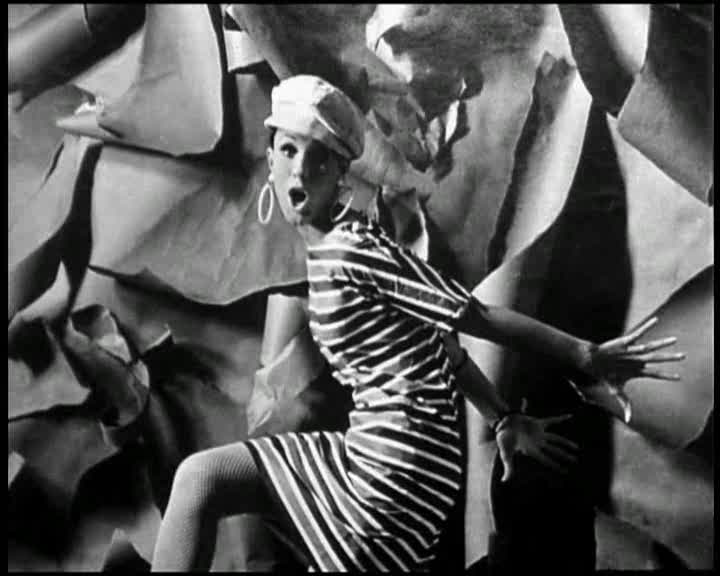


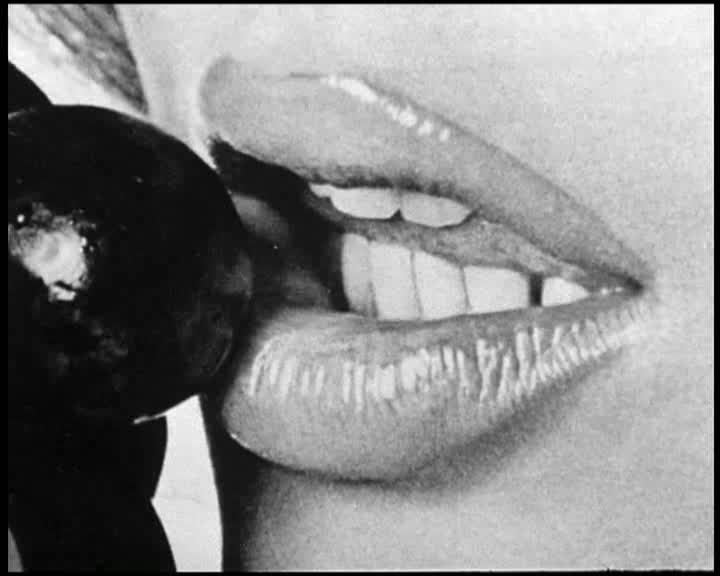


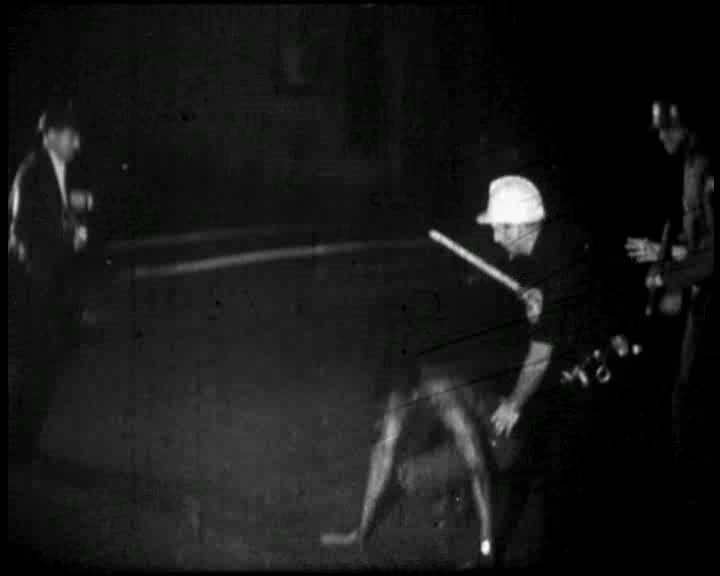


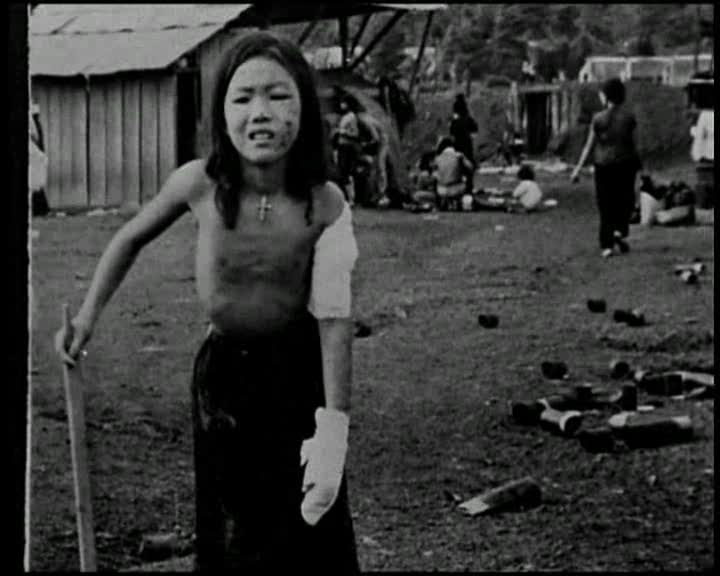


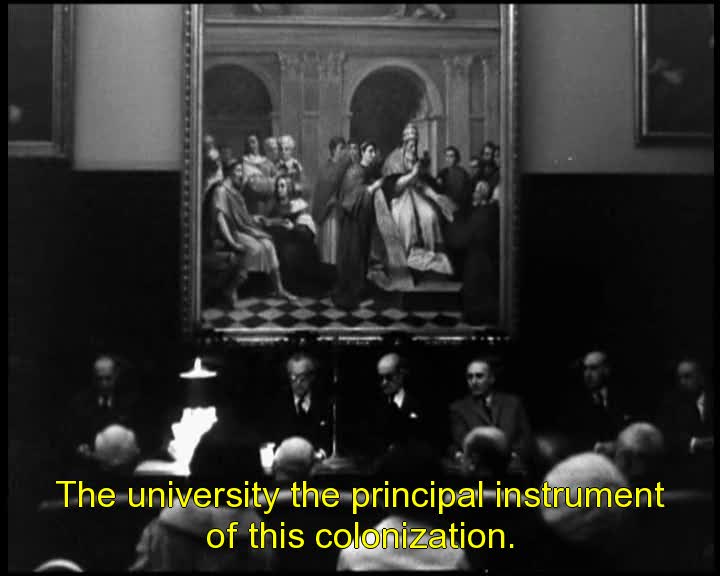


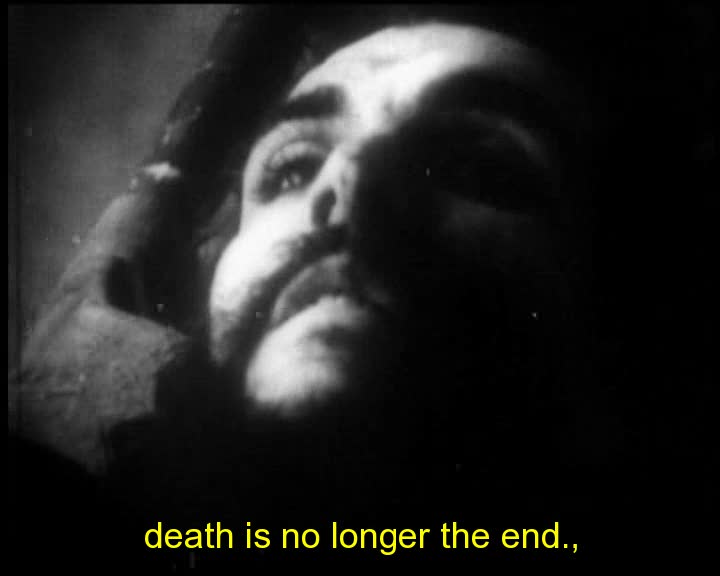


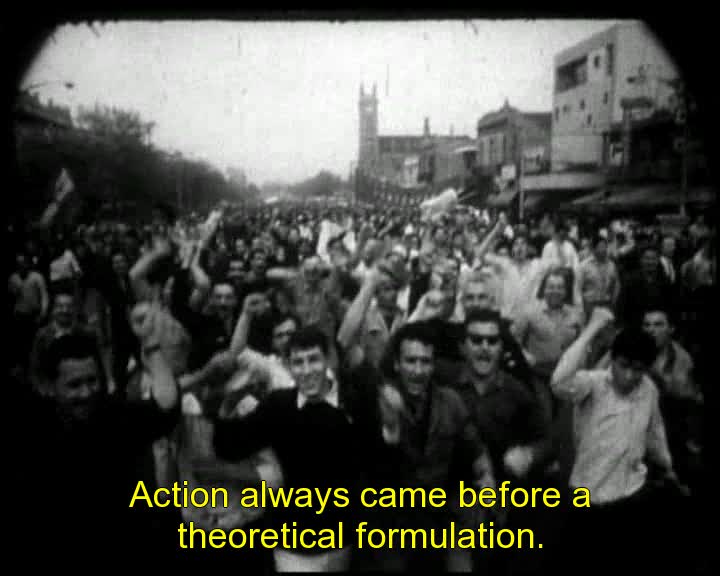


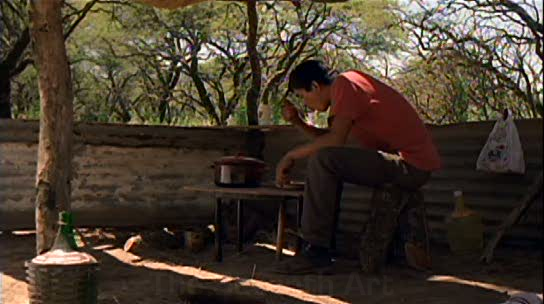
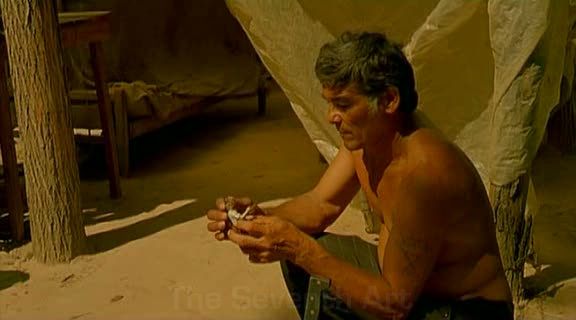

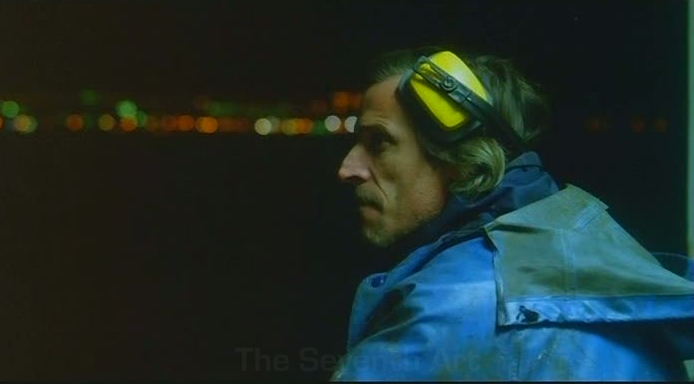
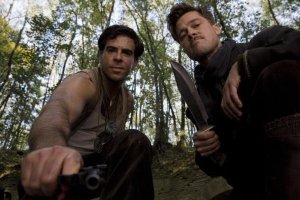 “I don’t know whether it’s a comedy or a tragedy, but in any case it’s a masterpiece”, says one of the characters, self-referentially, in Godard’s
  A sister film, in some ways, to Jonathan Demme’s brilliant Rachel Getting Married (2008), Sebastián Silva’s The Maid is nothing short of a spiritual revelation at the movies. What could have been an one-note leftist tirade about Chile’s class system is instead elevated into the realm of human where one facial twitch, one stretch of silence and one impulsive word can speak much more than any expository monologue or contrived subplot. There is no simplification of human behaviour here, no easily classifiable moral categories and no overarching statement to which truth is sacrificed. Nor does Silva suspend his study of the classes to observe his characters. He merely lets the obvious stay in the background. And just when you think that Silva’s vision of the world is getting all too romantic, he delivers a fatal blow to shatter your smugness – a single, deceptively simple shot during the final birthday party that masterfully sums up everything from the irreconcilable, repressed tension that exists between classes in capitalistic societies to our adaptability as humans to live peacefully with each other despite socio-economic disparities.
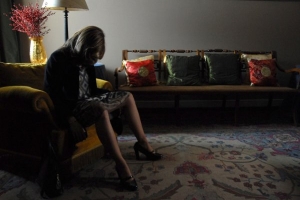 Rigorous but oh-so-tender, centenarian Manoel de Oliveira’s one-hour wonder Eccentricities of a Blonde-haired Girl is a film in one and a half acts. Oliveira translates the work of Eça de Queiroz to the screen, running the 19th century tale of romance through the current economic landscape and harnessing the resultant anachronism to paint an achingly beautiful picture about the inability to transcend class, escape reality and lose oneself in art. Despite its decidedly Brechtian and ceaselessly self reflexive nature, Oliveira’s film is rife with moments of poignancy and touches of humour. Using double, triple and quadruple framing and achieving a mise-en-abyme of art and reality, Oliveira writes a ruminative essay on the impossibility of art and reality to merge, the confusion that exists between them and the classism that exists within and with respect to art. Flooded with references to art and art forms, Eccentricities is such a dense and intricate fabric of the arts that even the past is treated in a detached manner like a piece of art, where each image looks like a painting, each sound feels like a melody and each movement cries out: “cinema!”.
 Of all the recent movies that have attempted to acknowledge dark chapters in national histories and advocated looking forward to the future instead of crying over what is lost, perhaps, none is as sober, ethical and uncompromising as Claudia Llosa’s Golden Bear winner. Llosa inherits her tale from the terrorist atrocities that plagued Peru two decades ago (Inheritance being the prime motif of the film) but, subsequently, discards every possible opportunity for sensationalism or propaganda. Tightly framing the lead character, Fausta (Magaly Solier), within and against claustrophobic structures, doorways, photographs, windows, paintings, mirrors and walls, gradually varying the depth of focus along the movie to detach the protagonist and integrate her with her surroundings and using extremely long shots to dwarf her in vast opens spaces of the tranquil town, Llosa concocts a film of utmost narrative austerity and aesthetic rigor. Punctuating and contrasting these downbeat images of Fausta’s life are slice-of-life sequences from the town depicting various wedding rituals and parties which tenderly highlight Peruvian people’s open-hearted embracing of capitalism and their resolve to come out of the trauma of the past and move on with life.
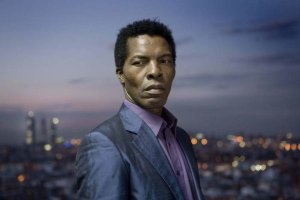 If Inglourious Basterds was a coup from within the system, Jim Jarmusch’s The Limits of Control is an out-and-out war against the machine. The essential piece of cinema of resistance, The Limits of Control eschews simple genre classification and flips every ingredient of Hollywood’s conveyor belt products to surprise, appall, irritate and provoke us with each one of its moves. The complete absence of Jarmuschian brand of deadpan humour announces the film’s seriousness of intent. It is as if Jarmusch wants to establish once and for all that Hollywood does not equal American cinema and that the cinema that the former school marginalizes is truly alive and kicking. The Limits of Control is a film that can easily get on your nerves but, eventually, it succeeds in getting under your skin and evolving gradually to reveal how meticulously crafted it is. Using Cinematographer Christopher Doyle, production designer Eugenio Caballero and editor Jay Rabinowitz masterfully, Jarmusch creates a movie so meditative and relaxing that one feels exactly how William Blake (Johnny Depp) would have at the end of Dead Man (1995).
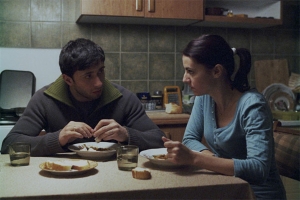 Porumboiu’s follow-up to one of the most hilarious comedies of the decade, 12:08 East of Bucharest (2006), is a companion of sorts to Jarmusch’s film not only in the sense that both of them negate the function of the genre they are supposed to belong to, by completely de-dramatizing their narratives, but also because Porumboiu’s film, too, is a conflict between two types of cinema – the cinema of analytical contemplation represented by the detective-protagonist of the film (Dragos Bucur) and the cinema of thoughtless action represented by his ready-for-ambush boss (Vlad Ivanov). However, more concretely, Police, Adjective is an examination of how our own political and social systems, partly due to the rigidity of our written languages, end up dominating us and how individual conscience and social anomalies are effaced clinically in order to have the bureaucratic clockwork running smoothly. Like Bucharest, Porumboiu, often self-reflexively, sketches the portrait of a bland and pacific city that tries to ape the far west and project itself as more dynamic than it actually is. The film’s disparate themes crystallize deliciously in the final, side-splitting, Tarantino-esque set piece where we witness the police chief urging his subordinates to act by the book, literally.
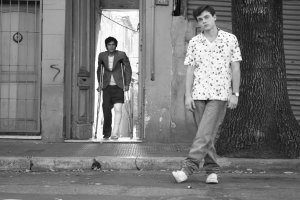 Tetro is a beautiful film. Not just in the way it looks, but in the sheer romance it has for a lost world. The only worthy B&W film of this year out of the four I saw (the other three being Haneke’s
 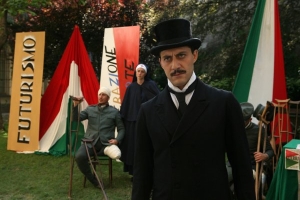 Writer-director Marco Bellocchio’s ballad, based on a nebulous part of fascist leader Benito Mussolini’s life, can teach those so-called historical dramas a thing or two about locating personal ideologies within collective history without being exploitative or pandering to pop demands. Bellocchio’s film is far from a detailed recreation of Mussolini’s political life. It is, in fact, a commentary upon such “detailed recreations” of history based on documents written by winners. Bellocchio’s formidable script and mise en scène keep probing and remarking upon the tendency of fascist systems to suppress histories – personal and national – and exploit popular media, especially the relatively young and emotionally powerful cinema, to blind people of truth and forge a faux reality – a theme underscored in Tarantino’s film too. What more? Bellocchio constructs the film exactly like one of those Soviet agitprop films – not by easy spoofing, but by retaining their spirit and rhythm – using rapid montage, expressionistic performances and operatic sounds. Be it common folk fighting in a cinema hall over a news reel or a bereaved mother breaking down during the screening of The Kid (1921), cinema registers its omnipresence and omnipotence in Bellocchio’s film.
 The perfect antidote to the summer blockbuster, Warwick Thornton’s Samson and Delilah is an extremely assured and undeniably moving piece of cinema that arrives, appositely, as the golden jubilee reboot to Herzog’s thematically kindred movie, Where the Green Ants Dream (1984). Cleverly relegating specific issues such as the Australian government’s intervention and relocation policies for the Aborigines to the background, Thornton frees his films of broad, propagandist political agendas, without ever making the film lack social exploration. With an extraordinary sound design, Thornton keeps the word count in the film to an absolute minimum, letting the stretches of silence shared by his lead characters speak for themselves. The film’s observations about banality of racism in contemporary Australia, exploitation of tribal art and its consequences, the effect of colonialism, especially due to Christian missionaries, on the Aboriginal culture and the ever growing chasm between the tribal and white life styles themselves are fittingly subordinated to the beautiful, unspoken love story that, essentially, forms the heart of the film.
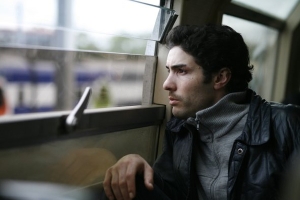 Let me dare to say this: Jacques Audiard’s A Prophet is either the most profound or the most pretentious movie of the year. For now, I choose the former. Audiard’s decidedly unflinching feature breaks free from the limitations of a generic prison drama and takes on multiple dimensions as the apolitical and irreligious protagonist of the film, Malik (played by Tahar Rahim), finds himself irreversibly entangled in ethnic gang wars within and outside the prison. A trenchant examination of religion as both a tool of oppression and a vehicle for political escalation, A Prophet is an audacious exploration of Muslim identity in the western world post-9/11. Although the plot developments may leave the viewer dizzy, it is easy to acknowledge how Audiard confronts the issues instead of working his way around it or making cheeky and superficial political statements. Strikingly juxtaposing and counterpointing Sufism and Darwinism in Malik’s search for identity, Audiard creates an immensely confident and nonjudgmental film that trusts its audience to work with the rich ambiguity it offers.
 The Seventh Art