
2022 witnessed the demise of several towering figures of cinematic modernism, none more iconic than Jean-Luc Godard. With their passing, it really feels like the end of a chapter in the story of film, one in which cinema was the privileged artform to interrogate history and the world. But their death also registers as strangely liberating in a way, like a clearing in the woods produced by fallen trees that allows us a new, privileged view. Let us hope that the work of these giants will continue to guide filmmakers and critics in their thought and practice.
In August this year, I was lucky to attend the 75th Locarno Film Festival, my first fest outside India. Basking in the gorgeous summertime scenery of Ticino and soaking up the equally sumptuous Douglas Sirk retrospective was an experience to remember, but I’m most grateful for the chance to get to know some terrific people from around the globe, among them cinephiles, curators and critics I’d known online for years but had never met. I’m truly grateful for their insight and company. Mistake: not reaching out to Luc Moullet when I was in Paris after the festival.
In a year that saw the world return to some semblance of normalcy,[citation needed] my own moviegoing habits seemed to have changed for good. The Locarno festival notwithstanding, I went to the theatres, I think, no more than four times this year (Vikram, Ponniyin Selvan: I, Kantara (all 2022) and the 50th anniversary re-release of The Godfather (1972)), which is four more than the last year. Ominous signs. That said, I was fortunate to watch three silent films on 35mm with mesmerizing live piano accompaniment at a King Vidor retrospective at the Jérôme Seydoux-Pathé Foundation in Paris in September: The Sky Pilot (1921), Wine of Youth (1924) and The Crowd (1928), the latter screening a highlight of my cinephile life.
Although I saw more films this year than any other in my memory, I didn’t watch as many new productions as I normally would, especially from India. Despite the absurd overvaluation it has been subject to in the West, I haven’t see a finer action movie in the recent past than RRR, which felt like a masterclass on how to imbue action with emotional-moral stakes, the missing soul of so many contemporary blockbusters. For all its saturated spectacle, RRR is a minimal film in the way it weaves the fewest of narrative elements in different combinations to emphatic, expressive ends. Gehraaiyaan was a compelling piece of slick, professional filmmaking, as was Jalsa. I’ve always admired the streak of self-sabotage in the career of Gautam Menon, and his superb gangster epic Vendhu Thanindhathu Kaadu harnesses that impulse productively, channelling it through screenwriter Jeyamohan’s touching, tragic vision.
A good part of my viewing this year consisted of a dive into Iranian cinema, which, I can say for certain now, is my single favourite national cinema. Among the 200-odd auteur and genre films (from native as well as expatriate Iranian directors) that I watched, there was very little that I disliked, scores of great works and at least two dozen masterpieces. I hope to publish a list soon. In the meantime, check out Another Screen‘s formidable programme dedicated to Iranian/Iranian-origin women filmmakers, which ends on the 4th of January.
Other personal discoveries this year were the films of Costa-Gavras (Picks: Family Business (1986) and Music Box (1989)), the mid-tier features of Boris Barnet (on whose Lyana (1955) I wrote a text for the amazing Outskirts magazine) and the astounding, hyper-caffeinated anime of Masaaki Yuasa (essay coming up). Without further ado, my favourite films of 2022:
1. Matter Out of Place (Nikolaus Geyrhalter, Austria)
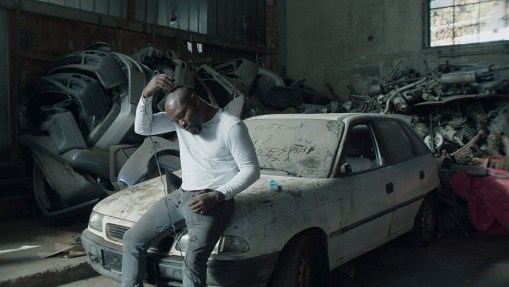
 If researchers a few hundred years from now were to try and understand how humankind lived in the year 2022 AD, they would do well to turn to Geyrhalter’s spellbinding Matter Out of Place, an expansive survey of foreign objects littering the remotest nooks of the earth. Filmed in a dozen locations on different continents, the film traces the planetary movement of human-generated waste, the great paradoxes shaping its production and the massive efforts needed to manage its proliferation. Garbage doesn’t just cover the landscape in Geyrhalter’s film, it becomes the landscape. With cheeky visual rhymes, astute sound design, proto-Lubitschian humour and a subtly psychoanalytic approach to the physical world, Matter unearths the repressed material unconscious underlying the enticements of consumer society and international tourism. But the film offers no easy answers, presenting instead a universe whose horrors and beauties are inextricably linked, one which evokes awe and terror at humanity’s godlike capacity to create and destroy. In its firm belief that the secrets of the world reveal themselves to the questioning camera eye, Geyrhalter’s work possesses a spiritual dimension directly sdescending from the writings of André Bazin, and his new film elevates the sight of rubbish into a religious epiphany.
2. Crimes of the Future (David Cronenberg, Canada)
 Somewhere in the dematerialized wastelands of Cosmopolis (2012), overrun now by the vacuous celebrity culture of Maps to the Stars (2014), lives Saul Tenser, an “artist of the inner landscape” who grows new organs that are surgically removed by his partner Caprice during their feted public performances. Saul is a conservative in denial of the rapid transformation the human body is undergoing—a Clint Eastwood of the New Flesh—who would rather excise his new organs than embrace his true, deviant self. As governments and corporates look to quell the insurrection triggered by a cult of anti-Luddite ecoterrorists who sabotage not technology but the human body, Saul must decide whether to remain at the mercy of the algorithms or take the evolutionary leap. The most rewarding way to approach Cronenberg’s stellar, career-capping new work is to take it not as an allegory of current political debates, but literally. In Crimes of the Future, the body is indeed the final frontier, the last repository of all meaning, the sole means to spiritual edification or revolutionary change—a truism already in our Age of the Body. Filled wall-to-wall with dad jokes and dumb exposition, Cronenberg’s silly, sublime, supremely stylish treatise on corporeal capitalism is the most thought-provoking film since Pain and Gain (2013).
3. A German Party (Simon Brückner, Germany)
 Politics is dirty, and electoral politics doubly so. Few filmmakers possess the curiosity, intellectual mettle and good faith—leave alone the necessary access—to examine the unglamorous negotiations and compromises that are fundamental to the democratic process. Made over three years, Simon Brückner’s magnificent fly-on-the-wall documentary about the workings of the far-right German outfit Alternative für Deutschland (AfD) immerses us into the party’s operations, ranging from cool deliberations of executive meetings to high-temperature grassroots confrontations. The result is a markedly composite picture that offers a sense of the heterogeneity of an organization popularly considered an ideological monolith. Over six illuminating chapters, A German Party presents a political body fully caught up in the dialectical process of self-definition, an organization trying to identify itself through differentiation. The need for the AfD to go mainstream, to form alliances and influence policy runs up against the image that it has built for itself, namely that it represents a force outside the establishment. The most intriguing suggestion of Brückner’s film may be that rightward shift of the party, far from signalling the formation of a coherent ideology, may actually be the fruit of a lack of clear identity. Whether the AfD is the elephant in the room or a paper tiger, A German Party leaves it to the viewer to judge.
4. Stomp (Sajas & Shinos Rahman, India)
 The Rahman brothers’ boundary-smashing formalist work is nominally a documentary about a theatre group named the Little Earth School of Theatre. For the most part, the film showcases the troupe’s preparations for an upcoming performance at the annual function of a middle-class housing association in Kerala. We see the company’s rehearsal in considerable detail, their work on gesture, movement, voice and cadence, but the nature of their play is sketchy and elusive, like pieces of a puzzle that never fit. Rejecting literary and psychological explanations, Chavittu subverts the conventional artist profile, supplying no commentary on the meaning or significance of the rehearsal and complicating it with absurd interludes. What the filmmakers offer instead is a bracing procedural work intently focused on the physicality of its subjects, emptied of emotional life and operating together as a consummate professional unit. The sensuality that the film radiates comes not through dramatic or formal devices, but from the raw presence of young, athletic bodies populating the frame. Even when it places this performance within a satirical, self-reflexive social context, the film remains gentle, focused on the troupe’s single-minded artistry in the face of indifference and marginalization. Chavittu is all grace.
5. Nazarbazi (Maryam Tafakory, Iran-UK)
 The problem with film censorship, as Judith Williamson pointed out, isn’t that it rids movies of objectionable matter, but that it makes everything else seem dirty. Drawing images and sounds from almost a hundred Iranian films made since the 1979 revolution, overlaying them with evocative fragments of citations and original text, Maryam Tafakory’s ambitious, enrapturing video collage Nazarbazi illuminates how the Islamic regime’s censorship codes, specifically its restriction on showing men and women touching each other on screen, displaced this repressed sexuality onto other sensations, objects and aesthetic elements. An astonishing example of film criticism as an artwork in itself, Tafakory’s exhilarating, tactile montage locates the erotics of cinematic art in fluttering fabric, clinking bangles, slashed wrists, breaking glass, aromatic food, sweeping camera movements and, of course, the play of glances. Supressed desire finds a way to manifest not just in filmmakers’ cunning paraphrase of taboo actions, but simply in the ontology of the medium; sensuality in cinema is revealed not just as what artists express, but as what they can’t help but express, thanks to the inherent voluptuousness of moving bodies, caressing textures and resonating sounds. Watching Iranian films after Nazarbazi, you might find yourself asking the same question as Diane Keaton in Love and Death (1975): can we not talk about sex so much?
6. Footnote (Zhengfan Yang, USA-China)
 Terror floats in the air in Footnote, not just due to the pandemic, but also because the film’s soundtrack consists entirely of police radio communication from Chicago city. The incoming complaints are by turns petty and serious, ranging from minor disagreements with neighbours to drive-by shootings, and officers are tasked with everything from delivering a lost pet home to checking on isolated senior citizens. Seemingly gathered over a year, these excerpts reveal an extremely busy, probably understaffed police force grappling with the tensions of a diverse, multicultural city. The image, meanwhile, comprises wide-angle shots of open spaces filmed from a higher vantage point— intersections, highways, beaches, parking lots, rooftops—almost always featuring ant-like, solitary human figures animating the frame. Thanks to the thrillingly dialectical relation that Footnote sets up between sound and image, these calming panoramas become vehicles of anxiety, with human bodies turning into agents of both biological and criminal threat. Widening the chasm between the home and the world, the radio chatter colours the images with a feeling of alienation and paranoia. In the way the airwaves convert ordinary window views into something akin to CCTV footage, pregnant with dramatic incident, Footnote might be tapping into a fundamental psychological condition of life in America. Also, the finest Hitchcock remake in ages?
7. The Plains (David Easteal, Australia)
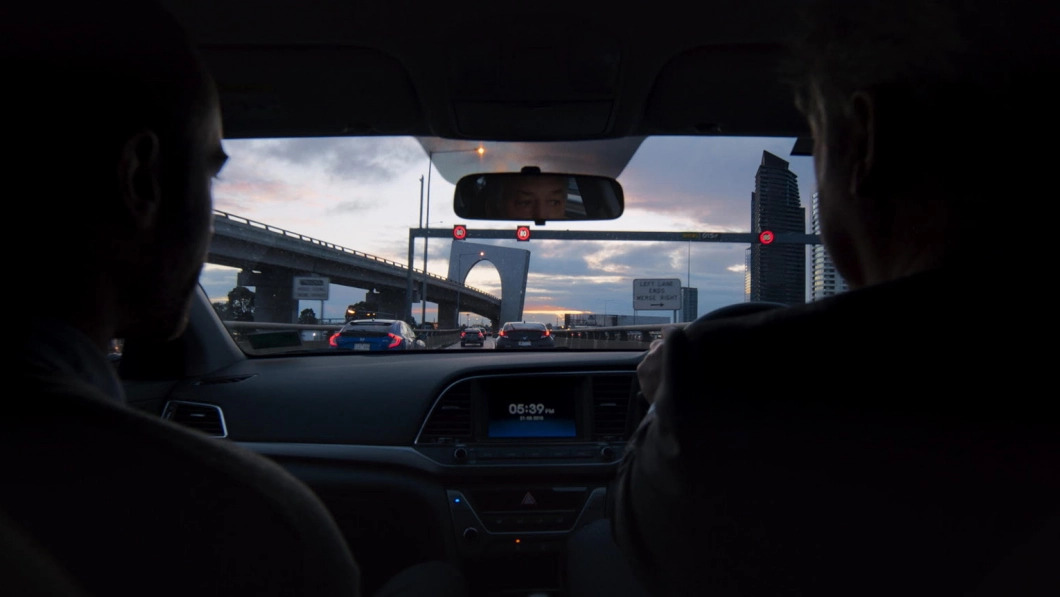 The Plains channels the spirit of Jeanne Dielman into Andrew Rakowski, a middle-aged lawyer who leaves office every evening just past 5 P.M. to drive home to suburban Melbourne. Easteal’s cyclical road movie formalizes this routine, filming Andrew’s commute over eleven different days of the year with a fixed camera from the back seat of his car. On some days, Andrew offers a lift to his colleague David (Easteal himself), probing the reticent young man on his private life while also generously talking about his own: relatives, career, romance, wealth, mental health. Literally compartmentalizing work and life, the commute creates a transitional zone where Andrew can view each as an escape from the grind of the other. It provides a moment of unwinding, freedom from roleplay that both life and work demand. Yet, for all the me-time the drive home affords, there is an eerie silence whenever Andrew isn’t chatting away or the radio isn’t on, as though this non-place, non-time were forcing him to reflect on Important Things. Despite the apparent sameness, every day brings small deviations that threaten Andrew’s reassuring routine, all accumulating into a powerful meditation on aging and the passing of time, a view of life’s parade from the wheel of his car.
8. Red Africa (Alexander Markov, Russia)
 Rivalling the best work of Sergei Loznitsa, Alexander Markov’s resplendent found-footage project samples propaganda and reportage films that the USSR made during the Cold War to strengthen its ties with newly liberated African states. In this gorgeous Sovcolor assemblage, we see Soviet Premiers and African heads of state visit each other amidst ceremony and pomp, exhibitions showcase the latest in Soviet culture and technology to the African public and students use the knowledge they have gained in Moscow for the betterment of their countries, whose exported resources return as value-added products from behind the Iron Curtain. It’s a poignant glimpse into a nascent utopia, a world that could have been, which hides as much as it reveals. With cunning visual associations, Red Africa recasts decolonisation as a formal process that concealed fundamental continuities between the departing Western powers and the Eastern hegemon. Uplifting notions of bilateral ties between Africa and the USSR are belied by the strictly unilateral flow of influence and ideology. In its attempts at creating a new world order, Markov’s sharp film demonstrates, the Soviet Union espoused anti-colonial struggles in fraught areas of the globe even as it held sway over its diverse republics—a tragic irony made apparent when the chickens came home to roost in 1991.
9. The DNA of Dignity (Jan Baumgartner, Switzerland)
 Jan Baumgartner’s moving, loosely fictionalized documentary The DNA of Dignity follows the patient, heroic work of individuals and organizations involved in identifying victims buried in mass graves during the Yugoslav wars. Along with bones, volunteers retrieve articles of clothing, toiletries and other knickknacks, all hinting at stories to be told of those they have outlived. With witnesses passing away each year and new structures waiting to be erected over these burial sites, the excavations are truly a race against time, fighting both political amnesia and nature’s complicity in the oblivion. In their quest to rescue war victims from anonymity, forensic scientists assemble excavated bones into skeletons, carry out DNA tests to ascertain identities and hand over the remains to grieving families, who haven’t had closure despite the end of the war and who confess to no longer being able to enjoy landscape without being reminded of what it hides. Baumgartner’s film obscures political and institutional details to focus on the scientific process, offering a fascinating, inspiring picture of the how the abstractions of science eventually coalesce into human stories. Its success lies in finding the right tone and distance necessary for a subject as grave and delicate.
10. Animal Eye (Maxime Martinot, France-Portugal)
 Martinot’s funny, free-spirited, quietly radical Animal Eye features a 30-year-old Breton filmmaker discussing his next project with his producer in Lisbon. He isn’t very articulate, but knows that the film will be an “autobiographic animal diary” about his dog Boy. “Films are filled with humans,” he says, “all liars.” Animals, in contrast, are not aware of the camera—or don’t care about it—and as chaotic beings of “pure present,” they evade the signifying operations of the image, emptying it of meaning and intention. As the muddled filmmaker slowly “hands over” the project to his smart, wry producer, the film’s central theme crystallizes: in neither owing anything to imagemakers nor expecting anything from them, the filmed animal offers a way out of the crippling egocentrism of artistic creation. In being just an image, the filmed animal becomes a just image. Animal Eye takes the first tentative steps towards the faint understanding that a “cinema of animals” shouldn’t consist of simply filming the world from their eyes, but filming as them, whatever that might entail. Chaining together clips of dogs from across movie history—subject to sadistic torture, sentimentalism and signification, locked out of the human realm—Martinot’s film embodies a rousing rallying cry on behalf of a “deanthropocentrized” cinema. In its own modest way, Animal Eye marks a milestone in anti-speciesist filmmaking.
Special Mention: Saturn Bowling (Patricia Mazuy, France)
Favourite Films of
2021 • 2020 • 2019 • 2015 • 2014 • 2013 • 2012 • 2011 • 2010 • 2009


 While multiple films this year about old age have presented it as a time of reckoning, Kore-eda’s European project The Truth offers an honest, rigorous and profoundly generous picture of life’s twilight. In a career-summarizing role, Catherine Deneuve plays a creature of surfaces, a vain actress who struts in leopard skin and surrounds herself with her own posters. Her Fabienne is a pure shell without a core who can never speak in the first person. She has written an autobiography, but it’s a sanitized account, a reflection of how her life would rather have been. “Truth is boring”, she declares. Responding to her daughter Lumir’s (Juliette Binoche) complaint that she ignored her children for work, she bluntly states that she prefers to be a good actress than a good person. Behaviour precedes intent in the mise en abyme of Kore-eda’s intricate monument to aging, as performance becomes a means of expiation and a way of relating to the world. A work overflowing with sensual pleasures as well as radical propositions, The Truth rejects the dichotomy between actor and role, both in the cinematic and the existential sense. In the end, Fabienne and her close ones come together as something resembling a family. That, assures Kore-eda’s film, is good enough.
 The across-the-board success of Parasite invites two possible inferences: either that the cynical logic of capital can steer a searing critique of itself to profitable ends or that this twisted tale of upward ascension appeals to widely-held anxiety and resentment. Whatever it is, Bong Joon-ho’s extraordinary, genre-bending work weds a compelling social parable to a vital, pulsating form that doesn’t speak to current times as much as activate something primal, mythical in the viewer. With a parodic bluntness reminiscent of the best of seventies cinema, Bong pits survivalist working-class resourcefulness with self-annihilating bourgeois prejudice and gullibility, the implied sexual anarchy never exactly coming to fruition. He orchestrates the narrative with the nimbleness and legerdemain of a seasoned magician, the viewer’s sympathy for any of the characters remaining contingent and constantly forced to realign itself from scene to scene. Parasite is foremost a masterclass in describing space, in the manner in which Bong synthesizes the bunker-like shanty of the working-class family with the high-modernist household of their upper-class employers, tracing direct metaphors for the film’s themes within its topology. It’s a work that progresses with the inevitability of a boulder running down a hill. And how spectacularly it comes crashing.
 Vitalina Varela is an emblem of mourning. In recreating a harrowing moment in her life for the film, the middle-aged Vitalina, who comes to Lisbon following her husband’s death, instils her loss with a meaning. It’s a film not of political justice but individual injustice, the promise to Vitalina the that men in their resignation and madness have forgotten. It’s also a bleak, relentless work of subtractions. What is shown is arrived at by chipping away what can’t/won’t be shown, this formal denuding reflective of the increasing dispossession of the Cova da Moura shantytown we see in the film. Costa’s Matisse-like delineation of figure only suggests humans, enacting the ethical problems of representation in its plastic scheme. The film is on a 4:3 aspect ratio, but the viewer hardly perceives that, the localized light reducing the visual field to small pockets of brightness. Vitalina is a film of and about objects, whose vanishing echoes the community’s dissolution and whose presence embodies Vitalina’s assertive spirit. Her voice has its own materiality, her speech becomes her means to survival. Costa’s film is a vision of utter despair, a cold monument with an uplifting, absolutely essential final shot. A dirge, in effect.
 The bird island of the title is a utopian place, a refuge for those wounded or cast aside by modernity. For sixty minutes, we are invited to look at five people working silently alongside each other in a bird shelter, tending to birds dazed by the airport next door. They don’t ask where these birds come from, nor do they expect them to leave soon. They simply treat the feathered creatures, re-habituate them into the wild and set them free. The reclusive Antonin, the new employee, is one such bird too, and his social healing at the shelter is at the heart of the film. Bird Island is full of violence, natural and man-made, all of which it treats with stoic acceptance, but it’s a work primarily about the curative power of community, the capacity for individuals to coexist in mutual recognition of each other’s frailties. In that, it’s the Catholic film par excellence, an allegory of the origin of religion. It’s also an exceptionally relaxing film to look at. Observing the participants absorbed like Carthusian monks in their individual tasks, even while working in a group, places the viewer on the same meditative state.
 Without question, Heimat is a Space in Time is the best 3½-hour film of the year. Heise’s sprawling experimental documentary uses largely personal documents—letters sent between family members, handed-down private documents—to evoke a broad history of 20th century Germany. As a narrator reads out the exchanges—Heise’s grandfather trying to reason with the Nazi state against his forced retirement, heart-rending accounts from his Jewish great grandparents describing their impending deportation, letters between his parents who were obliged to be in two different places in DDR—we see quotidian images from current day Germany and Austria, urban and rural. For Heise’s family, always made to justify their own place in the country and to never truly belong, the Germanic idea of Heimat seems positively a fantasy. While he reads out his great grandparents’ descriptions of their increasingly impossible conditions of living, Heise presents a scrolling list of Viennese deportees prepared. We try to look for the inevitable arrival of their names in the alphabetical list, our gaze forever deferred. When they do arrive, it feels arbitrary. In other words, what we hear could well be the story of any of the thousand preceding names. Perhaps all of them.
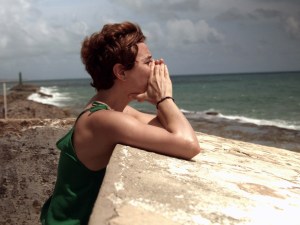 A worthy heir to Tarkovsky’s Solaris, Slits draws its inspiration from quantum physics to explore patently human concerns of loss, grief and memory. The uncertainly principle it offers is a choice between being in this world, awake to the problems of living, and finding meaning in the elsewhere. Physicist Catarina (Roberta Rangel) makes ‘sound-photos’ to study quantum the properties of light. She makes extreme zooms into a digital image to perceive the noise issuing from particular coordinates. These ‘dives’ enable her to listen to conversations from another space-time. Grieving from the loss of her child, Catarina unconsciously attempts to find closure through her research. But trying to inspect the surface of things from too close, she loses sight of her immediate reality; trying to find solace in the objectivity of science, she ends up rediscovering the great lesson of 20th century science (and cinema): that the observer influences the observation. Shot in high-definition digital video, Slits is to this new format what Blow-up was to photography. It locates in the trade-offs of the medium—between details and stability, between richness of palette and noise—visual correlatives to its key idea of quantum uncertainty. A brilliant, sophisticated work of politico-philosophical science fiction.
 Of all the recent classical Hollywood riffs in mind, none reinvigorates the B-movie tradition as intelligently or potently as Little Joe. Hausner’s modernist creature feature is a monster movie unlike any other: the dangers of the genetically-modified “happiness” plant that biologist Emily (Alice Woodard) develops is exposed early on, and there’s no triumphal reassertion of mankind to counter its menace. What we get instead is a protracted, total submission of individuality to a hegemony of happiness. Little Joe is many things at once: a multi-pronged attack on the wellness industry straight out of Lanthimosverse, the difficulty of being less than happy in an environment that demands you to be constantly upbeat, the fallout of women artists trying to expunge their maternal complexes in their work and of mothers having to lead double lives. Hausner’s camera appears to have a mind of its own, settling on the space between people, which is what the film is about: the culturally mediated relations between individuals. It’s notable that the titular plant reproduces not biologically but culturally. With its terrific score and work on colour, Hausner turns the cheesecake aesthetic of the film against itself. The result is a film of unusual intellectual density and formal frisson.
 In Status and Terrain, the German obsession with documentation and due process is called to testify to the dialectical process of historical remembrance. Adamczewski’s gently moving camera surveys the length and breath of public spaces in the Saxony region, once a Nazi stronghold, now seemingly anaesthetized under liberal democracy. Official communication, bureaucratic reports and private testimonies read on the voiceover incriminate the buildings and monuments we see on screen, revealing their role in power struggles through the ages. Just as the documents vie for a narrative on the soundtrack, ideologies once thought dead and buried surface to stake their claims on the urban landscape in the present. Adamczewski moves through 80 years of German history non-chronologically, the collage of information pointing to the living, breathing nature of political belief systems. Nazi detention of political opponents in concentration camps, Soviet retribution and blindness to victims of persecution, rise of neo-fascist groups post reunification and the historically indifferent, bulldozing force of current-day neoliberalism play out on the surface of seemingly sedate cities and towns. Status and Terrain is a sober, bracing examination of the manner in which prejudice becomes writ, which in turn becomes history, but also of the way in which this history is contested.
 The premise is a throwback to the clichés of the eighties: a group of teenagers at a suburban school prepare for their prom night. But in Taormina’s sure-handed treatment, this banal event assumes a spiritual dimension. In the film’s cubist first half, different groups of boys and girls make their way to the restaurant-turned-dance hall, where they will take part in rites of initiation into adulthood and experience something like a religious communion. And then, right after this VHS-ready high, a void descends over the film, turning its raptures into a mourning, not for those who have left this small-town existence but for those left behind: disaffected youth drift about the town or going through robotic social rituals, devoid of magic or warmth. It’s a work evidently deriving from personal experience, but one that’s refracted through a formalist lens. The strength of Ham on Rye is not the depth of its ideas, but the vigour of its prose. Taormina’s manifestly personal style emphasizes the surface of things, the idiosyncratic shot division focuses on gestures and minor physical details to construct scenes, and the eclectic sense of music imposes a global consciousness on a narrative that is otherwise extremely local.
 “Cinephiles are sick people”, said Truffaut. Frank Beauvais agrees. Following his father’s passing and a breakup, Beauvais shut himself up in his house in a trou perdu in Eastern France, and watched over 400 films in a period of seven months. Out of this glut, this sickness that Beauvais calls ‘cinéfolie’, came Just Don’t Think I’ll Scream, a film about looking, made wholly of clips from these 400 movies. Through a rapid, self-aware voiceover, the filmmaker reflects on his self-imposed isolation, his panic attacks, the poverty that prevents him from changing his lifestyle, his complicated feelings towards with political action, the conservatism of those around him and his relationship with his parents. Beauvais’s film is a record of his malady as well as its cure. In its very existence, it demonstrates what anyone sufficiently sickened by cultural gluttony must’ve felt: that the only way to give meaning to the void of indiscriminate consumption is to produce something out of it. Just Don’t Think I’ll Scream is not just a cinephile’s film, filled end to end with references, but the preeminent film about cinephilia, the solipsistic hall of mirrors that Beauvais breaks down and rebuilds inside out.



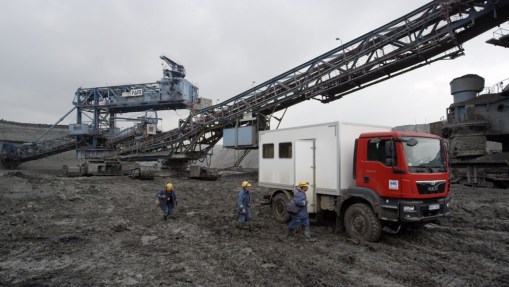
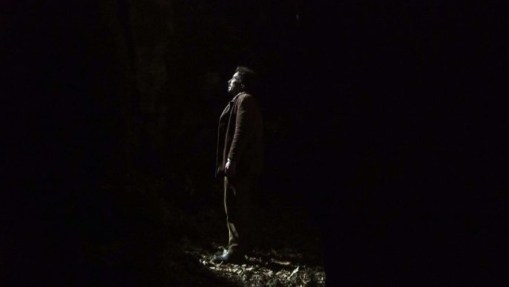





 Surely, it takes a bona fide auteur like David Cronenberg to locate his signature concerns in a text – such as Don Delillo’s – that deals with ideas hitherto unexplored by him and spin out the most exciting piece of cinema this year. Holed up in his stretch limo – an extension of his body, maneuvering through Manhattan inch by inch as though breathing – Eric Packer (Robert Pattinson) comprehends the universe outside like cinema, through a series of moving images projected onto his car windows. Why not? This world, whose master he is, is experiencing the epistemological crisis of late capitalism: the increasing abstraction of tactile reality into digital commodities. Packer, like many Cronenberg characters, is more machine than man, attempts – against the suggestions of his asymmetrical prostate and of the protagonist of Cronenberg’s previous film – to construct a super-rational predictable model of world economy – a project whose failure prompts him to embark on an masochistic odyssey to reclaim the real, to experience physicality, to be vulnerable and to ultimately die. At the end of the film, one imagines Packer shouting: “Death to Cyber-capitalism! Long live the new flesh!”
 Un chant d’amour for cinema, Leos Carax’s Holy Motors is an ambitious speculation about the total transformation of life into cinema and cinema into life – the death of the actor, audience and the camera. The European cousin to Apichatpong Weerasethakul’s Uncle Boonmee Who Can Recall His Past Lives (2010), Carax’s return-to-zero work draws inspiration from the process of film itself – death, resurrection and persistence of vision – and takes cinema to its nascence – fairground attractions, popular theatre and zoopraxography – while opening up to its future possibilities. Uncle Oscar (Denis Lavant, the raison d’etre of Holy Motors), like Cronenberg’s Packer, cruises the streets of Paris in his limo in search of purely physical experiences – a series of performance pieces carried out solely for “the beauty of the act” – only to find that the city is a gigantic simulacrum in which everyone is a performer and a spectator (and thus no one is) and where the distinction between the real and the fictional becomes immaterial. At the very least, Holy Motors is a reflection on the passing of “things”, of physicality, of the beauty of real gesture, of the grace of movement of men and machines.
 Nicolas Rey’s third feature, consisting of 9 short segments (reels, to be precise) projected in a random sequence, is a radical project that re-politicizes the cinematic image. Not only does the randomization of the order of projection of the reels circumvent the problem of the authoritarianism of a fixed narrative, it also exposes the seam between the semi-autonomous theses-like segments, thereby making the audience attentive to possible ideological aporias that are usually glossed over by the self-fashioned integrity of filmic texts. Furthermore, the existence of the film in the form separate reels is a breathing reminder of the material with which it was made: 16mm. The persistent dialectic between the visual – shots of highways, industries, farms and modernist suburban housing in the eponymous fictional city registering the sedate rhythm of everyday life – and the aural – snippets of conversations between two politicized industrial workers about the invisible tendons that enable a society to function smoothly – strongly drives home the chief, Althusserian concern of the film: the essential unity of the various, seemingly autonomous, strands of a state, contrary to claims of disjunction and autonomy.
 A film that is reminiscent of Weerasethakul’s many bipartite films, Miguel Gomes’ singular Tabu, too, works on a range of binaries – past/present, youth/old age, city/countryside, abundance/scarcity, modern/primitive, colonizer/colonized – and sets up a conversation between the carefree, profligate days of the empire full of love, laughter and danger and Eurocrisis-inflected, modern day Portugal marked by alienation and loneliness. The opening few minutes – a melancholy mini-mockumentary of sorts chronicling the adventures of a European explorer in Africa with a native entourage –announces that the film will be balancing distancing irony and classicist emotionality, donning an attitude that is in equal measure critical and sympathetic towards the past. In Gomes’ sensitive film, the heavy hand of the past weighs down on the present both on aesthetic (silent cinema stylistics, film stock, academy ratio, the excitement of classical genres) and thematic (collective colonial guilt, residual racism, punishment for forbidden love) levels and this inescapability of the past is also functions as (sometimes dangerous) nostalgia for the simplicity and innocence of a cinema lost and an entreaty for the necessity of exploring and preserving film history.
 What partially elevates the first film of Ulrich Seidl’s Paradise trilogy from its rather undistinguished concerns about emotional alienation and old age loneliness is the nexus of intriguing cultural forces that it brings into the picture by having a relatively affluent, 50-year old Austrian single-mother (Margarete Tiesel, in a no-holds-barred performance) indulge in sex tourism in Kenya along with five other women friends. The result is a rich, provocative negotiation along class, gender, race and age divides that upsets conventional, convenient oppressor-oppressed relationships. In doing so, the film wrenches love from the realm of the universal and the ahistorical and demonstrates that between two people lies the entire universe. Seidl’s heightened, bright colour palette that provides a sharp chromatic contrast to the bodies of Kenyan natives and his confrontational, static, frontal compositions (Seidl’s nudes are antitheses to those of the Renaissance), which make indoor spaces appear like human aquariums, both invite the voyeuristic audience to take a peek into this world and place it on another axis of power – of the observer and the observed.
 Sri Lankan filmmaker Prasanna Vithanage’s exquisite, exceptional adaptation of Fyodor Dostoyevsky’s The Meek One (1876) aptly locates the Russian tale of matrimonial discord between a bourgeois pawnbroker and the gentle creature he weds within the ethno-political conflict between nationalist and rebel factions of the country. Unlike humanist war dramas that, often naively, stress the underlying oneness among individuals on either side, Vithanage’s intelligent film underscores how the political haunts the personal and how the tragic weight of history impacts the compatibility between individuals here and now, while deftly retaining Dostoyevsky’s central theme of ownership of one human by another. Though liberal in narration and moderate in style compared to Mani Kaul’s and Robert Bresson’s adaptations of the short story, Vithanage, too, employs an attentive ambient soundtrack that counts down to an impending doom and numerous shots of hands to emphasize the centrality of transaction in interpersonal relationships. The metaphysical chasm between the possessor and the possessed finds seamless articulation in concrete sociopolitical relations between Sinhalese and Tamils, between the army and refugees, between the poor and the wealthy and between man and woman.
 There has always been something intensely spiritual about Tsai’s films, even when they seem to wallow in post-apocalyptic cityscapes and defunct social constructions. In Tsai’s hands, it would seem, an empty subway corridor shot in cheap digital video becomes the holiest of spaces ever filmed. Walker, a high-def video short made as a part of the Beautiful 2012 project commissioned by Hong Kong International Film Festival, crystallizes this particular tendency in the director’s work and centers on a Buddhist monk played by Lee Kang-sheng (a muse like no other in 21st century cinema). As the monk walks the hyper-commercialized streets of Hong Kong at a phenomenally slow pace for two days and two nights, his red robe becomes a visual anchor in stark contrast to the greys of the urban jungle and the blacks of people’s winter clothing and his very being, his eternal presence, becomes a spiritual grounding point amidst the impersonal hustle-bustle of this super-capitalist Mecca. Part performance art with a gently cynical punch line, part an exploration of the limits of DV, Walker is a deeply soothing and often moving work from one of Asia’s finest.
 Moving unsteadily with the help of a walking stick, the 79-year old founder of the National Film Archive of India (NFAI), P. K. Nair, despite himself, becomes a metaphor for the state of film archiving in the country. It is of considerable irony that, in a nation that prides itself for its rich cultural heritage, film archiving is considered a useless exercise. During the three decades that Nair headed the NFAI, he was instrumental in discovering the silent works and early talkies of Bombay and south Indian cinema, including those of Dadasaheb Phalke, the “father of Indian cinema”. Celluloid Man, bookended by scenes from Citizen Kane (1941), draws inspiration from Welles’ film and sketches a fascinating if reverential portrait of Nair constructed from interviews with international filmmakers, scholars, historians and programmers and curiously hinged on the fact of Nair’s “Rosebud” – ticket stubs, promotional material and assorted film-related curios that the man collected during his childhood. Shivendra Singh’s film is a irresistible romp through early Indian cinema and an endlessly absorbing tribute to a man who is fittingly dubbed the “Henri Langlois of India”. To paraphrase one of the interviewees, Phalke gave Indian cinema a past, Nair gave it a history.
 Although it might appear that it is perhaps the hollowness of Xavier Dolan’s previous feature that makes his latest, 160-minute music video look like a cinematic coup, Laurence Anyways really does succeed in accomplishing more than most of contemporary “LGBT-themed independent cinema”. While the latter – including this year’s Cahiers darling – almost invariably consists of realist, solidarity pictures that use social marginalization as shorthand for seriousness, Dolan’s emotionally charged film takes the game one step further and probes the inseparability of body and character, the effect of the physical transformation of a person on all his relationships – a transformation that is mirrored in the flamboyant, shape-shifting texture of the film – without sensationalizing the transformation itself. Rife, perhaps too much so, with unconventional aesthetic flourishes and personal scrapbook-ish inserts, the film rekindles and enriches the youthful verve of the Nouvelle Vague – a move that should only be welcome by film culture. If not anything more, Laurence Anyways establishes that critics need to stop using its author’s age as a cudgel and look at his cinema du look as something more than a compendium of adolescent affectations.
 Let me confess upfront that putting Wes Anderson’s (surprise!) whimsy, twee and self-conscious Moonrise Kingdom in my year-end list is less a full-hearted appreciation of the film than a confession that I find Anderson to be an important voice that I’m genuinely keen about, but can’t entirely celebrate. I don’t think I’ve seen any film that employs so many elements of industrial cinema yet feels meticulously artisanal, a film that, on the surface, seems to (literally) play to the gallery yet is so full of personality and one that is oddly familiar yet thoroughly refuses instant gratification. Moonrise Kingdom appears to have every ingredient of an obnoxious family comedy, but the unironic, straight-faced attitude and the single-minded conviction with which it moulds the material into an anti-realist examination of the anxieties of growing up, alone, is something not to be found either in cynical mainstream cinema or in the overwrought indie scene of America. Anderson’s neo-sincere film is, as it were, a classicist text couched within a postmodern shell, an emotional film without affect. Paper blossoms, but blossoms nonetheless.
 The Seventh Art