Cinema of Bangladesh


With only a handful of posts published, the blog pretty much went into hibernation this year. While 2024 was full of opportunities, encounters and discoveries that I am immensely grateful for, it was also, personally, a year of greater flight from the world, including the world of cinema in some ways. I cut myself off more and more from the news cycle and social media for sanity’s sake, which has meant that I’m woefully unaware of, among other things, what’s making waves in the awards circuit and what the “important” films of this year are. At a glance, I don’t recognize most of the titles featured on major year-end lists.

At the same time, I find myself more embedded than ever in the professional world of cinema, working with different film festivals in various capacities, minor or otherwise. While I haven’t been able to write and translate as much as I would love to, I’ve found myself increasingly involved in programming and selecting films. This has had, I think, considerable consequence on the way I watch and write about cinema.

Firstly, the majority of the titles I saw this year were works-in-progress (WIP): projects in post-production, without CGI, colour grading, sound-mix, and even some shots or subplots. Such a ‘pre-natal’ view of films tends to put the viewer in a state of disenchantment in which one becomes too aware of the strings being pulled: actors simulating shock, disgust or joy in front of blank screens, interacting with inexistant elements of the décor, suspended on ropes, drowned in ambient noise or struggling to convey an emotion, hoping that the music will do that rest.

Over time, watching such volumes of unfinished films could also make a year-end list like this a hassle, since it I have to constantly check whether a particular WIP that I liked last year has released this year or is still waiting for a premiere. More crucially, such lists will likely be even more aleatory and subject to the vagaries of my viewing assignments rather than, as in the past, seeking to take into consideration, even if nominally, consensus titles and popular favourites.

The bulk of my writing this year has also been of a private nature, tied to the programming work. Destined for a handful of known people within a festival, instead of a wider readership online, the texts have undergone a change in kind. If they have gained in freedom and concision, they have lost the rigour and rhetorical force that comes with public writing. I can’t yet imagine what kind of impact this might have on my instincts – and mental capacity to engage with films – in the long run.

All this preamble to say that this blog may continue to remain inactive in the coming year(s). While that is nothing new – it was already in cold storage along with my cinephilia from 2016 to 2019 – it does feel different not to be identifying primarily as a critic/translator anymore. Interesting times ahead.

Here’s wishing a happy new year.


1. The Adamant Girl (P.S. Vinothraj, India)

When Kottukkaali (The Adamant Girl) released in theatres, miraculously, in August in Tamil Nadu, it was accompanied by substantial popular backlash. Admittedly, Kottukkaali is a tough-minded work, one that is perhaps harder to instantly ‘like’ than Vinothraj’s debut Koozhangal (2021). Like the latter, it makes us intimate with the unbridled rage of its male lead, but it does so without the emotional cushion of a child’s perspective. Instead, the film performs a high-wire act, tensely balancing different, conflicting points of views towards its protagonist, Meena, a young lovelorn girl deemed possessed and taken to a local godman for exorcism by her extended family that includes Pandi, the hot-tempered cousin she is betrothed to. While the entourage constantly discusses what is to be done about the girl, Meena herself remains resolutely mute, her silence conveying both defiance and stoic resignation. Kottukkaali explores both the horrific dimensions of this pervasive practice and the subversive space of resistance it offers to the ‘possessed’, temporarily immune from secular violence. At once sophisticated and utterly simple, Kottukkaali respects its audience’s imagination and intelligence while withholding nothing from them. In its formal wit, its trenchant social portraiture and its uncompromising humanism, it represents a significant leap forward for Vinothraj. [World Premiere: Berlin International Film Festival]


2. Twilight of the Warriors – Walled In (Soi Cheang, Hong Kong)

Decades in the making, Twilight of the Warriors: Walled In, Soi Cheang’s supremely kinetic martial arts epic, forges a double legend linking the mythical past of the now-demolished Walled City and a vibrant, close-knit Hong Kong of the eighties before the island’s handover to China. In gargantuan sets of stunning detail, the film recreates the ramshackle complex, not just the densely packed mass of its buildings, but also the thriving economy and community of this dizzyingly vertical ghetto. Desperate to evade the police and gang members, scrappy refugee Lok enters the Kowloon Walled City, a seedy, crime-ridden slum complex exempt from the law and run under the benign authority of Cyclone. Lok’s diligence and fighting spirit attract the paternal Cyclone, but when the young man’s past comes to light, the very existence of the Walled City is endangered. A masterclass in modern cinematic action, the film conceives its astonishing martial-arts sequences in a close co-choreography of camera movement, continuity editing, geometric décor and athletic performers, the whole presented at human scale and close to real-time speed. With every shot having the force of an abstract painting in its dynamic sight lines, Walled In delivers a sweeping, sensational spectacle. [WP: commercial release]


3. Who Cares? (Alexe Poukine, Belgium)

Kneel down, and you will believe, said Pascal. In That Which Does Not Kill (2019), Alexe Poukine had actors re-enact another person’s reason-defying testimony of sexual assault, allowing them to find pathways to empathy through text, performance and the spoken word. Deeping this line of inquiry, Who Cares? looks at a soft-skill course in Lausanne, Switzerland, in which trainee doctors and caregivers engage in simulated conversations with actors playing patients, with the goal of being more mindful of patients’ feelings during diagnosis. At the heart of this course aimed at humanising healthcare is the belief that empathy, like other qualities, can be learnt through performance, repetition and critical feedback. Even as it brings us close to this view, Poukine’s film qualifies it, presenting us another theatre-based training session in which real medical staff grapple with their professional frustrations born of difficult working conditions, revealing how individual goodwill finds its limits in institutional realities. Like Harun Farocki’s best work, Who Cares? zeroes in on the niche rituals of a highly specialized field, only to lay bare broader civilization and historical undercurrents; in this case, the contradictions generated by the high premium placed on individual wellbeing in western societies. [WP: Cinéma du Réel]


4. The Damned (Roberto Minervini, Italy/USA)

In 1862, during the American Civil War, a troop of Union soldiers is sent to survey the uncharted territories of the West. The young men only have a vague understanding of the reasons for the war, but have their own motivations for donning the uniform. They bide their time, play cards and baseball, and engage in occasional skirmishes against a looming, largely invisible enemy. In his first fictional feature, Minervini forges a spare, brooding Western featuring the rural White southerners who populated his documentaries on backwoods America. Their dialect, diction and body language are modern, and this deliberate anachronism lends the film the texture of a filmed performance. In casting marginalized, stereotyped individuals as Union soldiers and placing them at the very origin of the creation of the United States, Minervini monumentalizes them in the vein of Straub-Huillet’s peasants-turned-gods. At the same time, the counter-casting obliges the non-actors to creatively participate in a founding myth that is very different from the “lost cause” narrative dear to the South. The result is a kind of Lehrstück for both the participants and the audience, a vital gesture of bridge-building in a house that finds itself divided once more. [WP: Cannes International Film Festival]


5. Kiss Wagon (Midhun Murali, India)

In a film culture where a project shepherded through half-a-dozen funding bodies, script labs, residencies and international co-producers is deemed ‘indie’, here is a film that obliges us to recalibrate our notions of what independent cinema could mean. The credit roll of Midhun Murali’s animated digital saga is entirely split between the filmmaker, his creative partner Greeshma Ramachandran and the voice actor Jicky Paul. Kiss Wagon charts the sprawling odyssey of Isla, a cocaine-addled courier girl, who leads a disengaged life in a police state under the sway of a powerful, puritanical cult. When she is entrusted by a mysterious client to deliver a kiss to an encrypted address, Isla finds herself on the wrong side of a massive military-theocratic conspiracy. Narrated in a mix of tongues real and invented, using a range of animation techniques classical and cutting-edge, Midhun’s film tells a mythical tale of the planetary struggle between the darkness of religious dogma and the light of cinema. A revisionist testament in four chapters, Kiss Wagon is an epic ballad of a paradise lost and regained; regained not through the force of institutionalized virtue, but through the agitations of outsiders, non-conformists, misfits and weirdos. A homemade cinematic A-bomb, delivered with a kiss. [WP: International Film Festival Rotterdam]


6. We Are Inside (Farah Kassem, Lebanon)

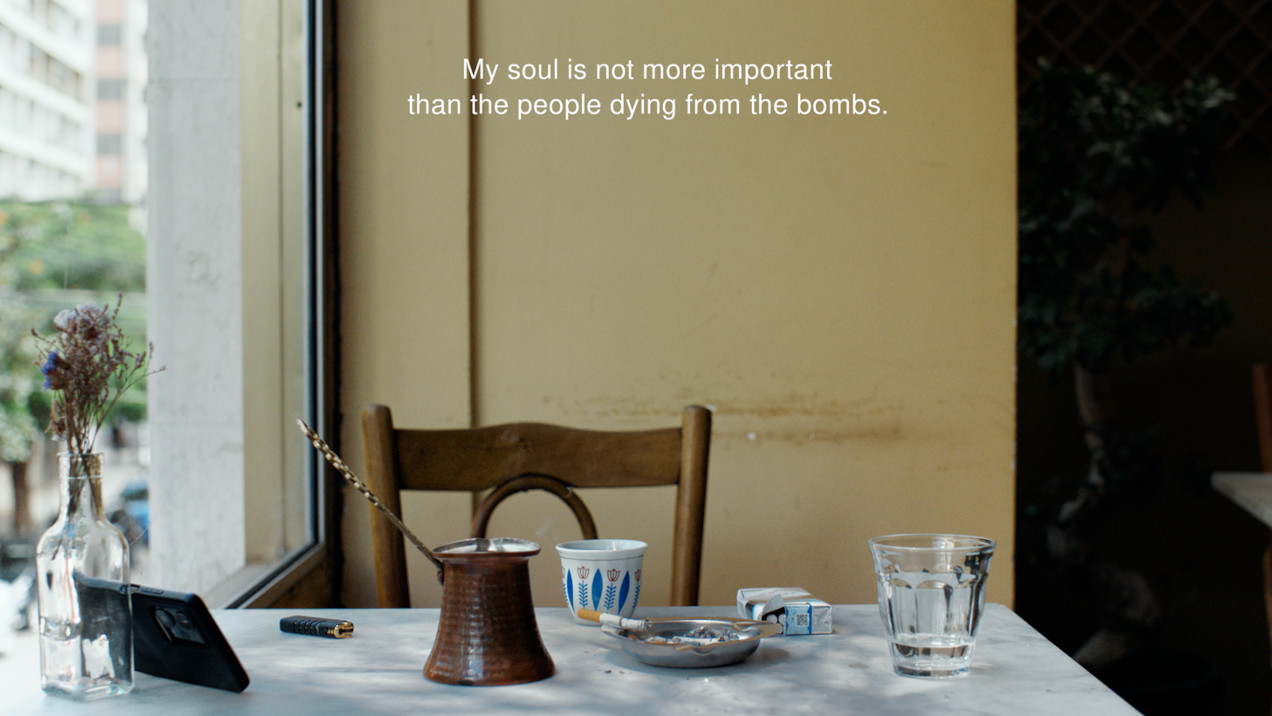
The family documentary may currently be the most shopworn, convention-ridden genre in non-fiction film. But Farah Kassem’s three-hour-long domestic epic We Are Inside represents a sweeping personal work that makes a strong case for its continued existence. Following the demise of her mother, thirty-something European resident Kassem returns home to Tripoli, Lebanon, after fifteen years of absence to live with her cantankerous octogenarian poet-father. She spends her time learning Arabic from him, cutting his hair, tending to his wounds, sorting his medicine, driving him around and, most entertainingly, participating in his old boys’ meetups. Poetry becomes both an heirloom the filmmaker inherits and the means through which she concretises the daughterly bond. As the world outside falls apart, with Lebanon experiencing one shock after another, the film turns into a rumination on the role of artmaking during times of political crises, the artist oscillating between the pursuit of beauty and the reflection of truth, between the personal and the political, between inside and the outside. An instructive companion piece to Abbas Fahdel’s Tales of the Purple House (2022), We Are Inside offers a rich, funny and moving work that deserves wider viewing.  [WP: Visions du Réel]


7. Wikiriders (Clara Winter, Mi(gu)el Ferràez, Megan Marsh, Mexico/Germany)

If you ever wondered where the missing Human Surge sequel was, here is a less punishing proposition. A super-chill hangout film, Wikiriders centres on a multilingual band of three friends – one speaking English, the other Spanish and the third German, interchangeably and out of lip sync – who undertake a road trip from Mexico to the USA in search of a powerful (fictional?) family that has had an outsized influence on the history of the two countries. The trio may be navigating the Mexican landscape, but they are also virtual surfers, following the rabbit hole of Wikipedia edits about/by the members of the family. Wikiriders takes the epistemological processes of the internet as inspiration for its structure, hopping from one narrative tab to another, featuring memes for characters and making maps of meaning out of digital babel, while also raising pertinent questions about the rewriting of popular history and the resistance to it through voluntary international collaboration. Imbibing the spirit of the Nouvelle Vague as well as the road movies of Monte Hellman, Ron Rice and Wim Wenders, Wikiriders embraces the fact that it’s largely discovered on the editing table. Fun, experimental and very accessible. [WP: Berlin Critics’ Week]


8. Kajolrekha (Giasuddin Selim, Bangladesh)

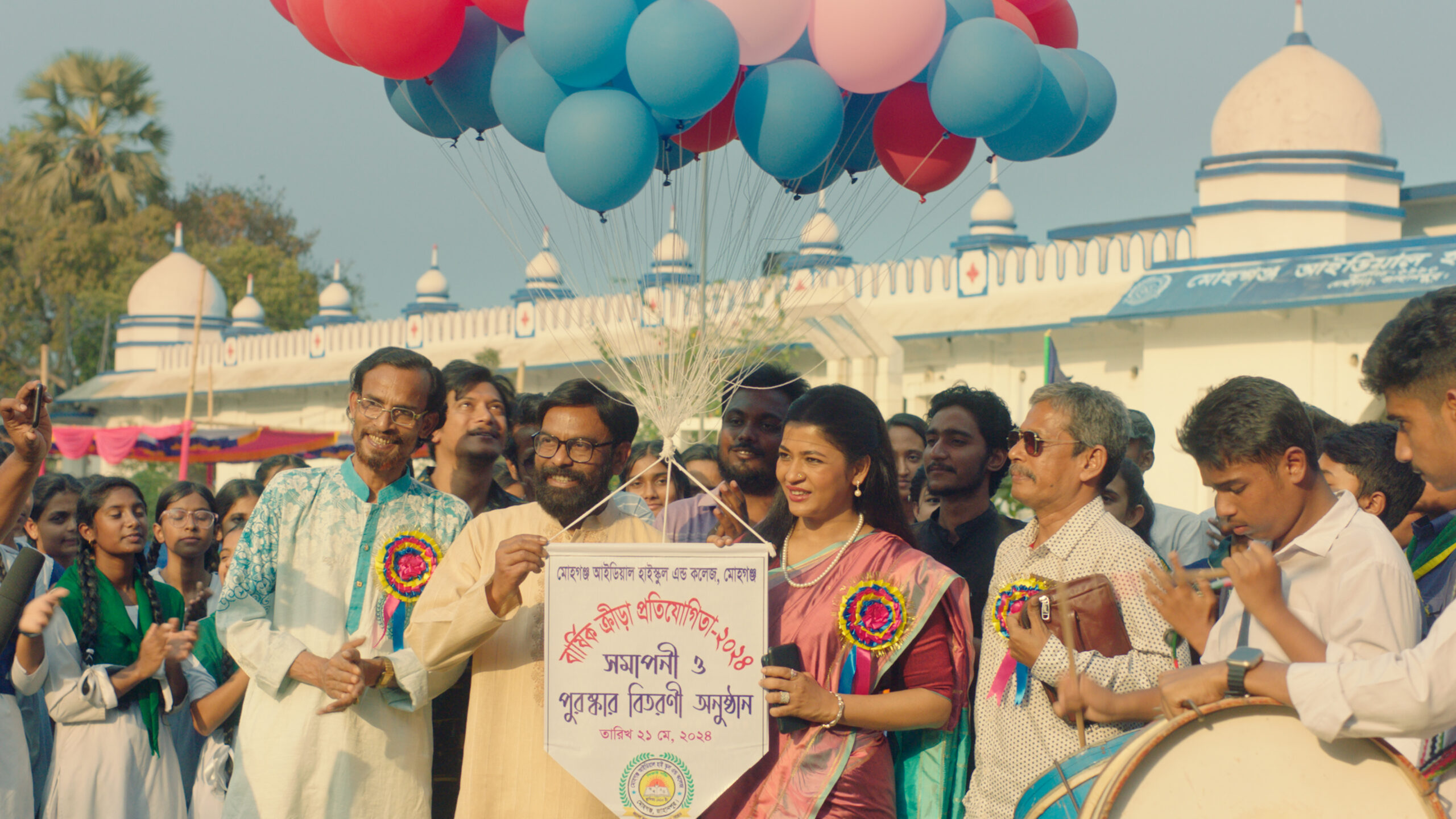
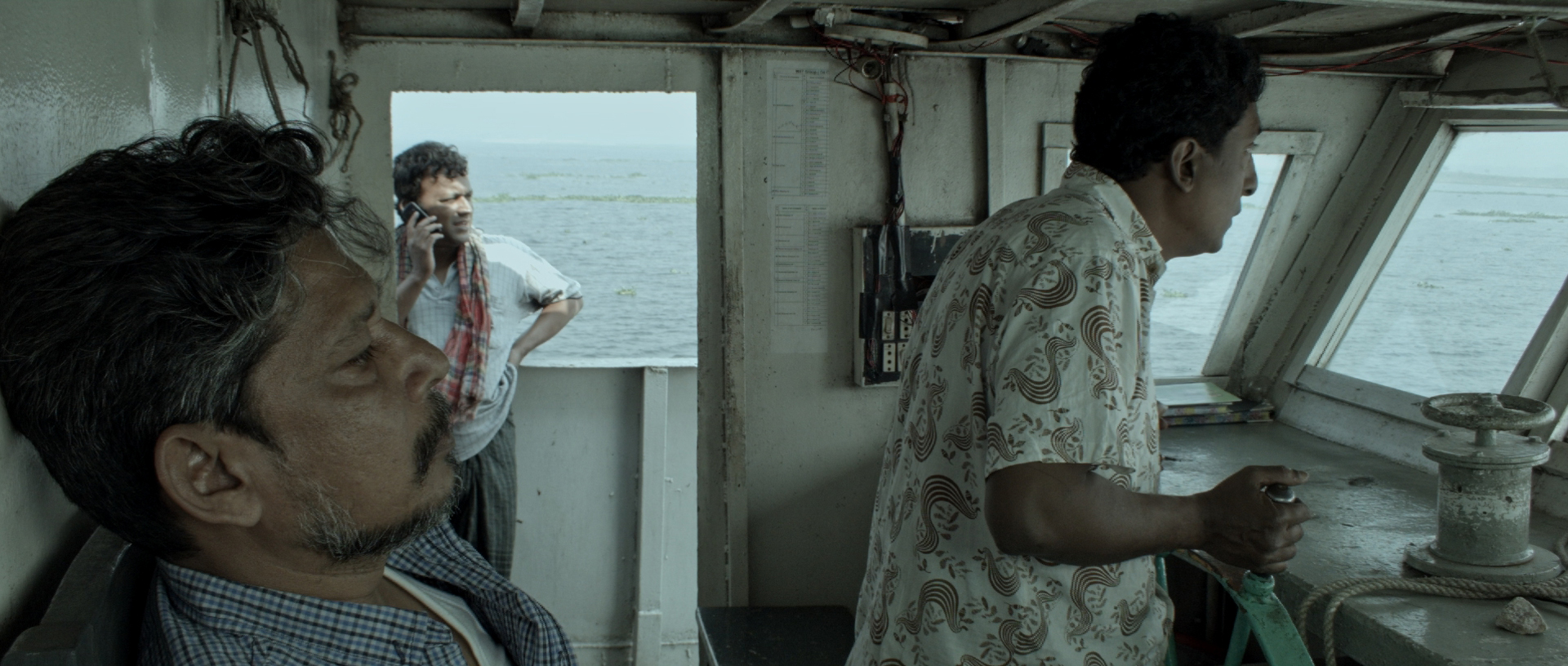
Adapted from a medieval folk ballad from the Mymensingh region of present-day Bangladesh, Giasuddin Selim’s sumptuous, widescreen musical fairytale Kajolrekha is a melodrama in the etymological sense of the word: music + drama. The film employs nearly twenty songs, sung by characters and narrators alike, to advance the plot, deepen emotions, comment on actions and, at points, critically distance the viewer from the story. Bankrupted by his gambling addiction, merchant Dhwaneshwer is given a second chance when a mysterious monk gifts him a soothsaying bird. The bird restores Dhwaneshwer’s lost glory, but also instructs him to exile his 13-year-old daughter Kajolrekha. Forced to lead a life of anonymity and hardship, Kajolrekha perseveres until the tides turn, even if it means paying a heavy price. Selim’s actors adopt a precisely stylized repertoire of theatrical gestures, postures and voice tones to express the essence of their roles, be they slaves, merchants or aristocrats. This conscious revival of a classical narrative tradition isn’t carried out ironically, but with a modernist sense of the latent possibilities of a lost artform. Moving tragically flawed characters across a perfectly orchestrated chessboard of fate and destiny, Kajolrekha reaffirms the inevitability of a just and benevolent world. [WP: commercial release]


9. Sleep #2 (Radu Jude, Romania)

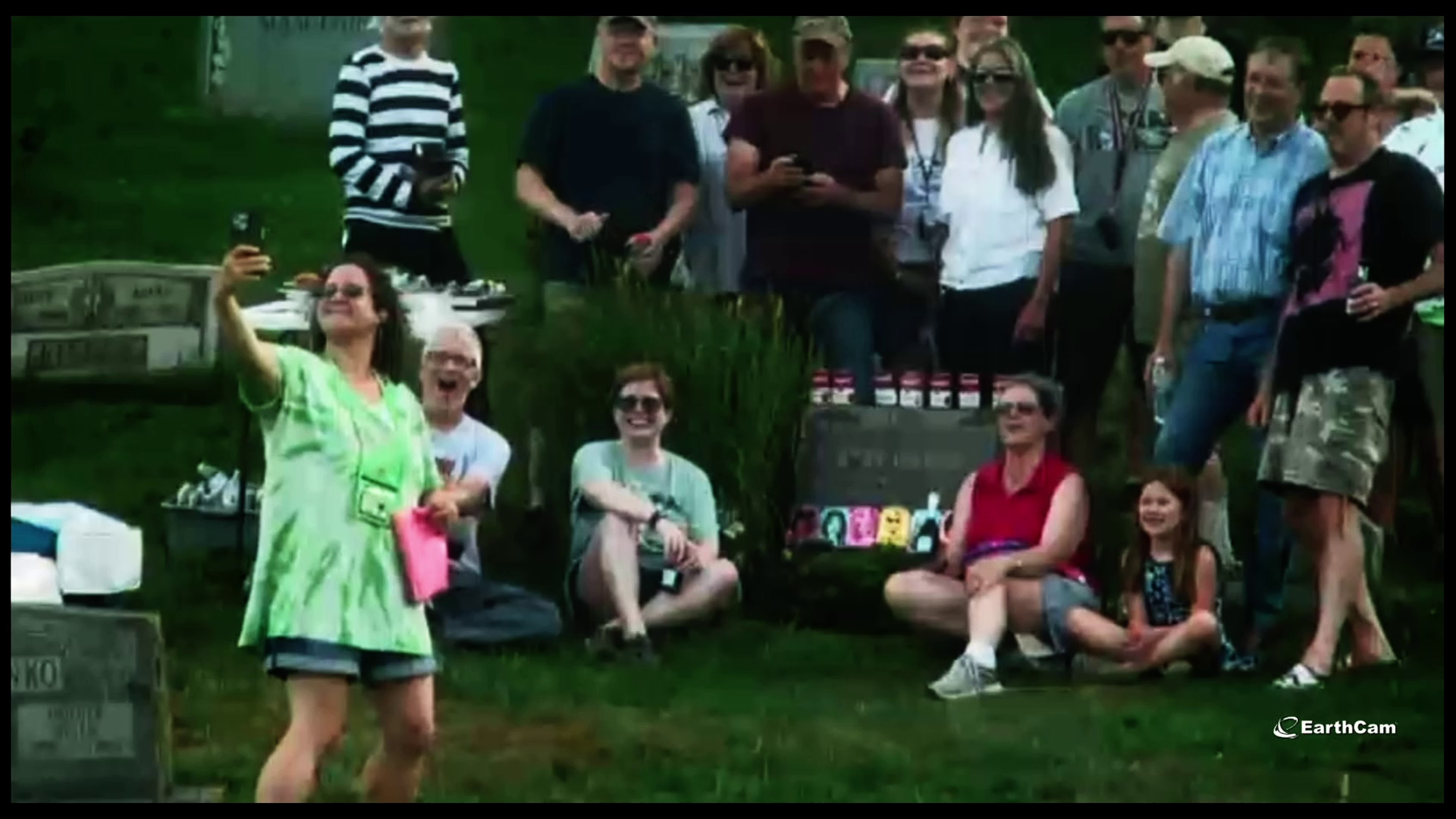
Culling from four seasons’ worth of footage from EarthCam’s live-stream of Andy Warhol’s tomb in Pennsylvania, Radu Jude fashions a spiritual sequel to Warhol’s blockbuster of boredom, Sleep (1964). Where the older film turned the dormant body of Warhol’s lover into a monument comparable to the Empire State Building, Jude’s film, almost equally unwatchable, fixates on Warhol’s own body repurposed into a public monument. As fans and curious passersby click pictures, pose flowers, decorate it with Campbell soup cans and even organize parties around it, the artist’s tomb becomes something like a collective work of art, vested with a social signification. A modern cinematic readymade, Jude’s desktop documentary crafts an unassuming essay on celebrity and fame, entirely in line with Warhol’s work. What happens when television ceases to be the arbiter of mass taste and simply becomes the condition of everyday life? Not fifteen minutes, but the possibility of eternal fame? Just as the visitors bestow the grave with meanings it doesn’t possess in itself, the act of watching the live-stream turns out to be the means by which operational images become aesthetic objects. Critically interrogating spectatorship, Jude’s fascinating film affirms the triumph of life over eternal sleep. [WP: Locarno International Film Festival]


10. Journey of the Shadows (Yves Netzhammer, Switzerland)

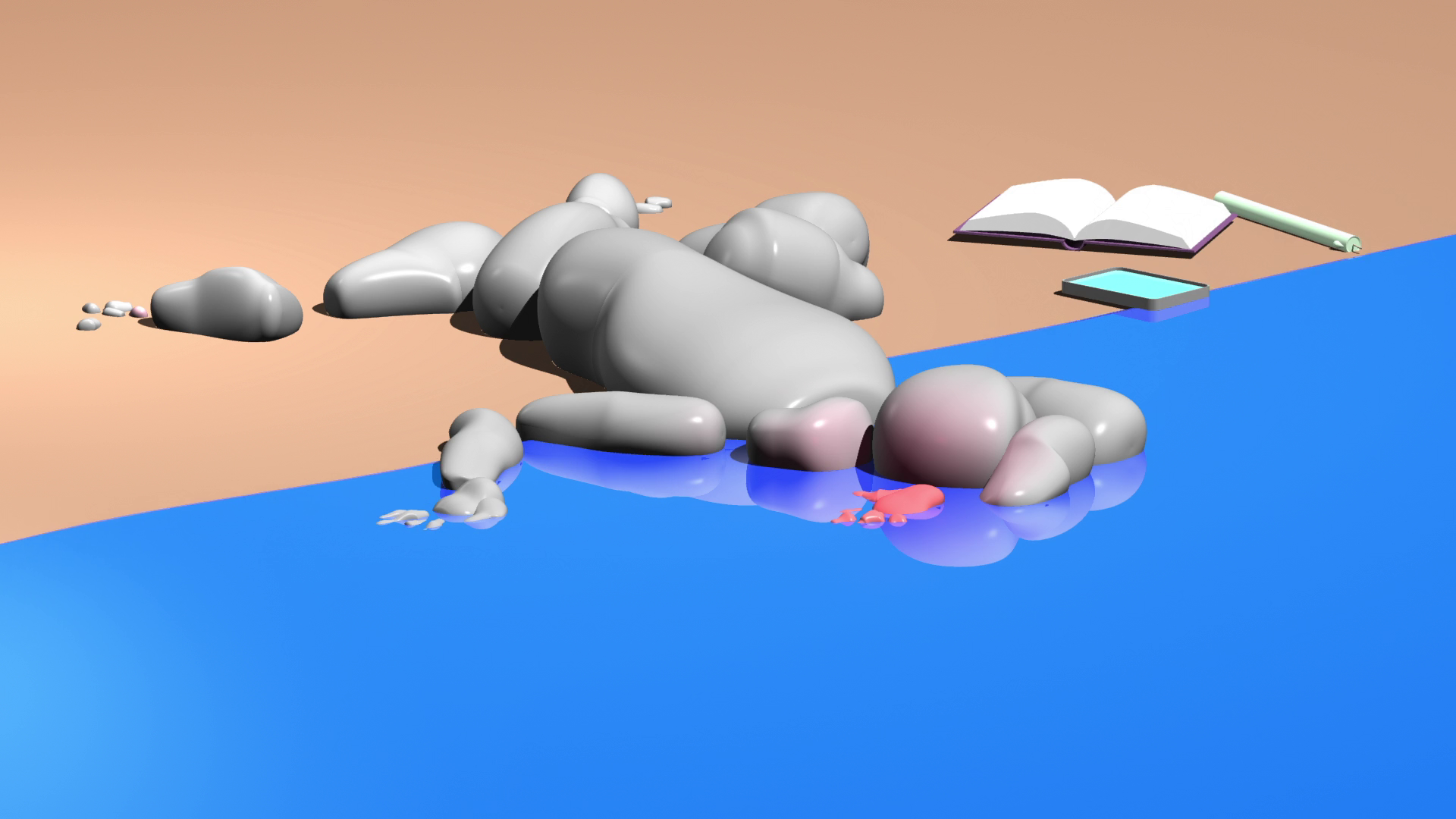
Once living a life of harmony in a dystopian world, two bipedal figures – humanlike but featureless, genderless – fall out under the influence of a mystical pet fish. One of them perishes, and the other embarks on an odyssey across the seas, intermittently led by a book and a candle. After countless catastrophes, this wandering being washes ashore on a pristine island, where it tries to overcome its loneliness, alas in vain. This probably isn’t what happens in Swiss multimedia artist Yves Netzhammer’s wordless, mind-bending first feature, in which identities, relations and situations are in such a flux as to resist any kind of linear synopsis. Where traditional animation advances evermore towards a utopian combination of naturalism and expressivity, Journey operates at a zero degree of digital image-making, dealing in primitive figures, bald volumes, harsh lighting, rudimentary physics, sickeningly unmodulated colours, oneiric movements, and an oppressive clarity of visual field recalling Dali or Magritte. At its best, Netzhammer’s abstract film has the subversive, Kafkaesque quality of Central European animation from the 1960s and ‘70s. Defying binaries of nature/civilization, human/technology, organic/synthetic, Journey crafts a deeply disturbing meditation on freedom, creation and self-discovery whose brutality shocks all the more in a universe so unreal.  [WP: International Film Festival Rotterdam]


Special Mention: Dahomey (Mati Diop, Senegal/Benin/France)


Favourite Films of

2023 • 2022 • 2021 • 2020 • 2019 • 2015

2014 • 2013 • 2012 • 2011 • 2010 • 2009

Crisis unites homes. If the pandemic has forced us to reassess the terms of our relationships, it has also perhaps sharpened our sensibility to the frailties of the body and the mind. That is, at least, the impression one gets from the recently concluded Visions du Réel documentary festival in Nyons. Several works that premiered at the event find expatriate filmmakers returning home, often obliged by aging and ailing parents, to capture less-than-flattering aspects of family life, elevating them into subjects worthy of cinematic consideration.

To be sure, there is nothing sordid about My Old Man, in which director Stephen Vit accompanies his successful salesman dad, Rudi, on his last business trip to China. Rudi works at a large multinational firm and is about to retire after 43 years of service. A Canadian by birth, he lives with his wife in a lush corner of Switzerland that one of his clients calls “paradise.” As a young man, though, he was a perennial globetrotter who always came home “smelling of airplanes and hotel rooms.” His retirement thus offers Stephen a chance to understand the remote figure of his childhood.

Rudi’s retired life, which his son documents on his yearly trips home, is the stuff of middle-class dreams: health, affluence, real estate, recreation. There is obviously some restlessness and boredom stemming from Rudi’s sudden loss of purpose and some discord with his wife born of his mean streak. There is also a degree of malaise in the couple’s (re)adjustment to life under a single roof after decades of virtual singledom. But the existential crisis and marital breakdown that Stephen forebodes, almost hopes for, never materializes. Yet, as his father watches old home movies on VHS tapes, something like the regret of lost years traverses his teary face. Rudi has become old.

When Peter Entell began documenting his father Max in Getting Old Stinks, the latter was already over seventy-five. An American settled in Switzerland, Peter filmed his father on his annual stateside trips over fifteen years until the old man’s death in the early 2000s. But the filmmaker didn’t revisit the footage until 2021, when he was sixty-seven years old himself, the age that senior Entell had his first cardiac arrest. For Peter, then, the film is something of a meditation on his own aging, and its title appears to reflect his feeling about the process.

The filmmaker assembles his material chronologically in a repeating structure. In each variation, we see Peter and his three elder siblings travel from all over the world to visit their father at an assisted living facility in California. The occasion is Max’s birthday and the family goes to lunch at a Chinese restaurant, gathering at the same table and ordering with the same waiter. They all wish the old man, read fortune cookie predictions and make jokes about it. After a few cordial hours back at the old-age home, they bid farewell. These variations are bridged together by old family photographs, with voiceover by Peter addressing the film to their absent mother who never had the chance to grow old.

Over the course of fifteen years, we see Max deteriorate from a sharp super-senior who trots out songs from memory to a frail figure who is hard put to recall his wife’s name. A favourite poem that he recites turns from a token of his charm to a test of his memory. The children, too, grow old, yet the jokes on the lunch table remain the same, becoming quainter with each passing year. A longitudinal study of the Entell family’s annual ritual, Getting Old Stinks is a poignant document about the ravages of time on human bonds.

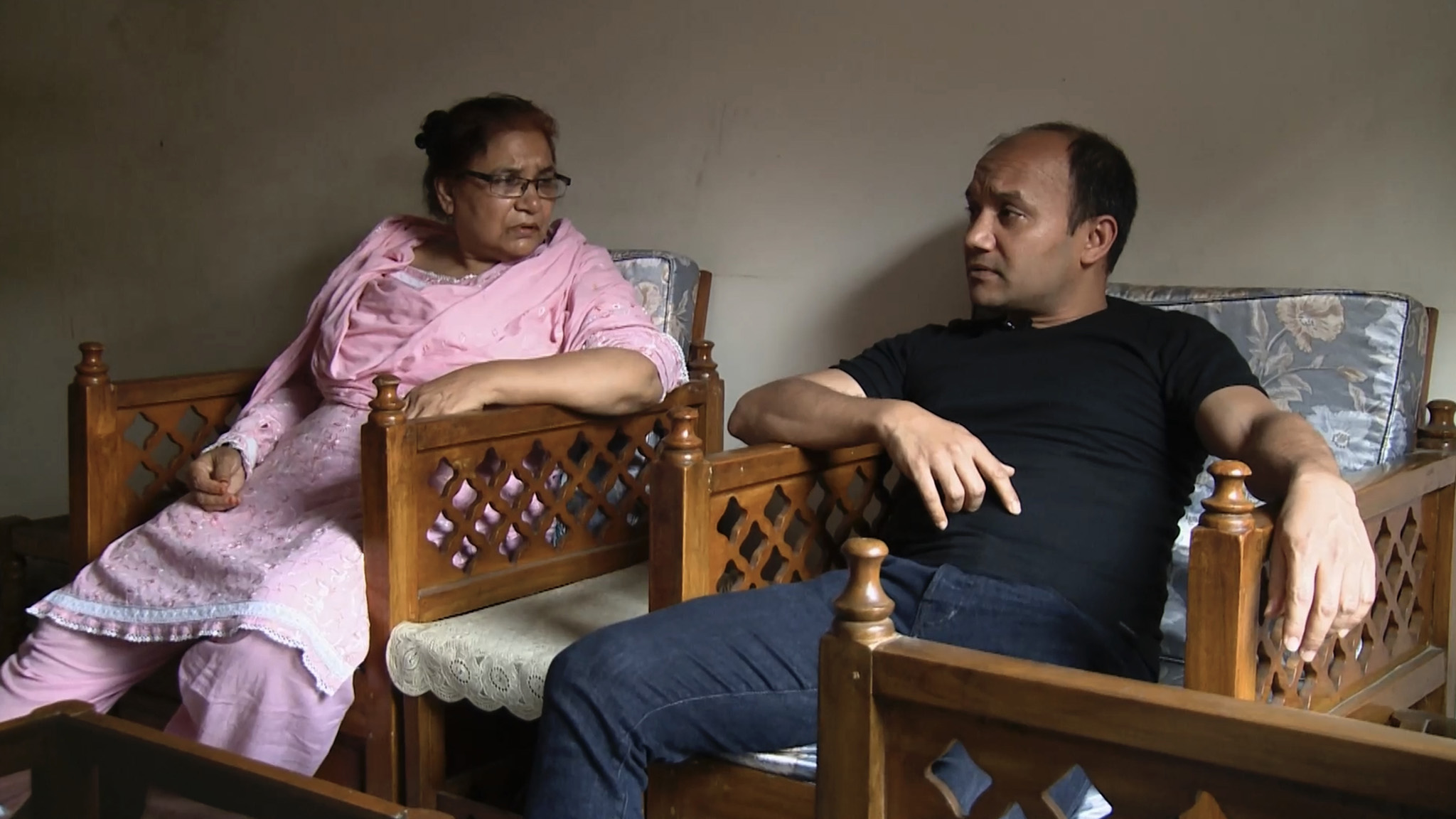
When Humaira Bilkis, the director of Things I Could Never Tell My Mother, returned home to Dhaka after her studies in India, she found her once-liberal mother Khaleda transformed into a devout woman after a pilgrimage to Mecca. Where young Khaleda wanted her daughter to grow up to be a painter, she now repudiates images. She laments the fact that her daughter makes films, collects old photographs, stays out late and, most importantly, refuses to get married. It is left to the viewer’s imagination how she would react if she learnt that Humaira has a Hindu boyfriend in Calcutta with whom she has trysts in a friend’s apartment.

Khaleda’s constant sense of disappointment and maternal failure weighs heavily on Humaira. When the pandemic hits, the filmmaker is obliged to take care of her ailing parents, forced to live with all this corrosive emotional furniture. Her response? To film her life, to turn the overly familiar into something akin to a “text” that could afford her the necessary distance. It is telling that the relationship between mother and daughter is at its most cordial when Humaira is away on work in Japan and makes video calls to Khaleda, telling her of the freedom women that enjoy there.

All through, Humaira imagines her romance in terms of the love poems her mother wrote as a young woman. In turn, she narrativizes her mother’s life through the images of her film. In Things I Could Never Tell My Mother, art becomes a mediator in family life, the crutch using which individuals tolerate one another.

Filmmaker Wenqian Zhang’s mother is worried about her daughter’s future too in A Long Journey Home. Like Humaira, Wenqian has completed her film studies abroad and has now returned home to mainland China. Her mother’s worries and appeals notwithstanding, she doesn’t yet want to get married to her boyfriend (and co-producer), Yue Huang. She says she doesn’t believe all that much in marriage.

For good reason, since her own parents are an irreparably damaged couple. After a series of failed business ventures across the country, Wenqian’s father Bo is now a stay-at-home husband mistreated by pretty much everyone around. His wife belittles him at every opportunity, even hitting him at one point. His brother-in-law insults him for owing money. Even his parents-in-law, who live in the same house, use him to run errands. A pitiful figure, Bo seems the quintessential product of patriarchal pressures on men. The most tender scenes of the film feature Wenqian lending a sympathetic ear to the broken man, who is in turn more understanding of her feelings and aspirations than her excessively pragmatic mother.

Wenqian composes the film as a series of static shots, all of which are interesting in their studied composition and some of which are downright dazzling in their use of off-screen space. This formalist reserve allows her to describe the domestic space with fluency and provide us a glimpse into the relative affluence of the Zhangs.

Located at the farther end of the class spectrum, the family of Elvis A-Liang Lu, director of A Holy Family, is something you might imagine having seen in a Tsai Ming-Liang film. Laconic to a fault, his father is an incurable gambler who cannot keep away from the numbers racket even when he is dying of cancer. His mother is a perpetual sufferer who walks up and down the stairs to maintain the home shrine. His brother fashions himself as a spiritual medium, relaying concerns of paying customers to a pantheon of gods. On the side, he grows cash crops on a small patch of land subject to the vagaries of weather. The whole family seems to have surrendered its future to faith and luck, which are at times indistinguishable.

It is perhaps not surprising then that A-Liang left for Taiwan as a young man to determine his own life. His mother calls him home at the beginning of the film, broaching the subject of her death, audibly making him uncomfortable. Over the course of A Holy Family, A-Liang changes from a seemingly indifferent son to someone with pangs of guilt over ‘abandoning’ his family. Like with Humaira Bilkis, filmmaking here serves as an instrument of reconciliation with the family. A-Liang’s lot is unhappy in its own way, but his film is bracing in the way it transforms this unhappiness into a graceful portrait of a modest family playing with the cards it has been dealt.

[First published in News9]

In the Romanian film Graduation (2016), a doctor helps a local politician jump the queue for a liver transplant in exchange for fixing his daughter’s test scores. The moral corruption of an entire society is refracted through cheating in exams also in Abdullah Mohammad Saad’s Rehana Maryam Noor (2021), which screened in the New Directors/New Films programme at the Museum of Modern Art in April. Assistant professor Rehana (Azmeri Haque Badhon) is a medical professional too, but unlike the compromised physician of Graduation, she is an idealist acutely sensitive to wrongful conduct. Saad’s film describes the price that she has to pay for staying upright in a world that is forever willing to bend.

Shortly after she expels a student for cheating in an exam, Rehana becomes witness to what she perceives to be a sexual assault by Arefin (Kazi Sami Hassan), one of her colleagues at the medical college. The victim is a student who had, just earlier, spoken out against Rehana’s expulsion of her friend at the exam hall. Rehana’s conviction that the injustice needs to be exposed is at loggerheads with the victim’s desire to stay low and let it pass. Worse, her simmering anger at her colleague’s action comes up against the fact that she hasn’t actually seen the incident and the creeping doubt that there may have been extenuating circumstances.

Saad’s film puts Rehana in a pressure-cooker atmosphere, letting her resentment come to a boiling point. Set entirely within the premises of a medical college — the architecture of which is never clear — Rehana refuses to go outdoors even when its protagonist is in perennial interaction with the world outside. Even at work, Rehana is constantly on the phone, now asking her ne’er-do-well brother to pick her daughter up from school, now talking with the school principal over a disciplinary action or admonishing her mother. A single mom supporting an extended family, she needs to keep her job, a dependency that Arefin and the college dean exploit to keep her silent.

Badhon, who carries the film from start to finish, plays Rehana not just as a morally sensitive person, but as a thorough sceptic with a chip on her shoulder. The zealousness with which she guilt-trips Arefin in passive-aggressive (and sometimes plain aggressive) encounters reflects a moralist who has personal stakes in the matter. At one point, she even assumes the role of the victim to lodge a false harassment complaint — a grey area that the film uses solely to take the plot forward. Moving briskly in and out of the frame, Badhon’s Rehana has little time for either rest or idle chatter — an attitude established by her contemptuous scowl after she receives an unwanted touch early in the film.

Rehana’s vehemence is, however, understandable. After all, she has a young daughter who has been asked to apologize at school for no mistake of hers. Moreover, the film is set in 2015, that is before the explosion of the #MeToo movement, and as such, it appears to articulate the conspiracy of silence that surrounds the subject in Bangladesh, a country that is believed to have been, by and large, indifferent or at least a latecomer to the movement.

Rehana is made in the intense, muscular style that is the malaise of so much of post-Dardennes art cinema: handheld cinematography, shallow focus, realist sound design and an absence of musical score. The camera never stops moving, oscillating to impart some tension even when it is supposed to be still. It follows the protagonist from up close, observing her from over the shoulder and making the viewer intimate with her experience of her surroundings. This results in a spate of profile shots, including a long passage where Rehana repeatedly splashes water on her face to telegraph her angst. In her confrontation with authorities, in contrast, she is filmed from behind, often decentred and made vulnerable.

The decision to never leave the hospital lends the film its claustrophobic keynote, just as the dull choice of soaking the film in shades of steely blues offers no visual relief. These pre-formed ideas produce the intended effect, but at the cost of sucking all air out of the project. Too tightly bound to its script for its own good, Rehana has no more space for its audience than its protagonist. The film directs our attention at every moment, cruising like a well-oiled vehicle on autopilot, with director Saad betraying very little by way of personality or character.

The filmmaker’s personality is right at the centre of Humaira Bilkis’ Things I Could Never Tell My Mother (2022), a poignant home movie from Bangladesh that premiered at the Visions du Réel in Nyons. A portrait of familial reciprocity through art, the film inhabits the space between Humaira and her mother Khaleda. Once a liberal woman who gave her surname to her daughter and who wrote playful, longing love poems in the Hindu manner, Khaleda became a devout Muslim after a journey to Mecca, swapping her evocative Bengali verse for prayers in broken Arabic. Where she once wanted Humaira to become a painter, she now disapproves of her daughter’s vocation, declaring that, to Allah, “photos are worthless.”

Humaira’s faith, in contrast, resides in images. A collector and conserver of photographs, the filmmaker views them as ramparts against death. “You can’t see the soul,” she replies to her mother’s warning against images, “but you can see the body.” She is unmarried, a fact that gives her mother great grief. But Humaira can’t possibly tell her pious mother that she has a Hindu boyfriend in Calcutta. The filmmaker formalizes the opposition between her mother’s faith and her love affair by interweaving her interviews with mother with shots of her sneaking away to meet her boyfriend, the latter passages charmingly accompanied by Humaira reading her mother’s love poems.

Khaleda’s religiosity, it must be said, isn’t as intransigent for all that and her beliefs take a rest from time to time. She has no qualms watching cricket or television serials, and even the veil comes down when prayer is not on the mind. The filmmaker asks her mother what is it that troubles her about her daughter’s life. Khaleda thinks that her daughter is living in sin and sees it as a reflection of bad parentage; she hopes to help Humaira mend her ways by taking her on hajj. The daughter acquiesces, seeing in the pilgrimage a good opportunity to tell her mother about her romantic entanglement.

Alas, the pandemic strikes, ruling out the journey to Mecca, but also producing other kinds of stress. The filmmaker’s father is diagnosed with tumour and he loses his memory to the point of not recognizing his daughter. Mother slips into a depression and begins to lose weight rapidly. Humaira’s own relationship dissolves and she finds herself taking care of her ailing parents. The most touching passages of the film involve Humaira playing a caregiver to her father, a counsellor to her mother. She struggles to find a language to encourage her mother, drawing despite herself from the Prophet’s messages. Palliating her mother’s fear at outliving her husband, Humaira offers her own single life as a model, but it only accentuates her mother’s sense of failure.

Through all this, Humaira keeps filming, as though capturing these difficult episodes of family life were in some way a means to gain control over them. Like Chantal Akerman in No Home Movie (2015), the filmmaker holds on to images of her mother as a way of warding off her physical disappearance. In a process of filial reciprocation, she offers documentary images in return for her mother’s poems, which had so far provided commentary to her life. “May this film give a new dimension to our togetherness,” she muses, “the same way my mother’s poems give a new meaning to my life.”


[First published in News9]