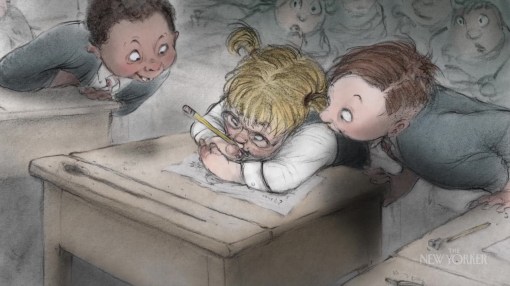
The list of nominees for the Academy Award for Best Animated Short Film this year presents an eclectic slate. Spanning different genres, subject matters and styles, these works demonstrate that animation can sometimes deepen ideas and feelings in a way that live-action filmmaking cannot.
The Windshield Wiper (2021) is perhaps the most striking of the nominees in terms of animation technique, which here consists of 3D modelling over painted backgrounds. The gestures of the central character — a middle-aged man smoking in a corner of a café, lost in thoughts — are so precise and expressive that it is hard to believe that the film wasn’t rotoscoped out of a live-action film played by real actors. The impression of realism is accentuated by the ambient sound mix, which captures stray conversations in the café, as well as mock-cinematic devices like out-of-focus shots and cloud effects.
A painter by training, director Alberto Mielgo is nevertheless careful not to imitate photographic reality closely. To this end, he only picks out the salient features of his human characters and renders the play of light on their bodies in thick painterly strokes. There also appears to be some frame dropping, which takes the film further away from realism.
As the man in the café muses on what love is, Mielgo cuts to vignettes of unfulfilled romance: a young pair at a sunny beach staring at the sea in silence, a homeless man talking with a mannequin as though she were his old flame, a Japanese schoolgirl jumping off a high-rise in Tokyo, a man with a bouquet of roses in Berlin rushing for a planned date, two tattooed Tinder hopefuls in a supermarket who don’t realize that their match is standing next to them. At first, these scenes feel like the man’s reminiscences, but it turns out that they are just unconnected scenes connected by the theme of love and given the music video treatment.
Romance is also at the centre of the Anton Dyakov’s Boxballet (2020), in which a fading heavyweight boxer in Soviet Russia falls in love with a ballerina. Over their courtship, the two exchange personalities: visiting museums and dance halls, the pugilist discovers the softer side in him; the dancer, in turn, develops the inner strength to defy her sleazy trainer who offers her the lead role in his next production in exchange for sexual favours. It’s an unlikely romance between two characters whose careers are on the wane. Also on the wane is the USSR, whose history has a complex relationship with ballet. The film thus has an unusual political resonance: it is conceivable that the couple might not have existed in a different era.
While its setup recalls American film noir, Boxballet opts for an exaggerated cartoony style with caricatured characters, aquarelle colours, visible contours, charcoal-like shading and rapid cuts. Figures in the ballerina’s scenes are elongated to underscore her long legs and her flexibility, but also her frailty. The environment of the boxer, on the other hand, is characterized by an accent on volumes and solidity. He is a sack of potatoes compared to the ballerina’s carrot. This simple duality makes for some effective contrast and formal rhyming. His bulk attaches him to the ground while her litheness draws her towards the skies. Raising her hand to slap her trainer, the ballerina instead curls it to punch him on the nose.
Hugo Covarrubias’s Bestia (2021) is also a period narrative, one set in Chile during the Pinochet regime in which political dissidents were tortured and killed, often with the cooperation of private companies. The film is based on the ghastly life of Íngrid Olderöck, an executive in Pinochet’s intelligence agency, who allegedly used her dog to rape her detainees. Bestia begins by emphasizing Íngrid’s everyday life, her culinary habits, her relationship with her German shepherd and her commute to ‘work’. This quotidian reality becomes progressively unsettling as Íngrid murders abducted prisoners to upbeat music or has her pet perform sexual acts on her.
The corpulent Íngrid is modelled like a cracked china doll, with light bouncing off its glazed surface, to reflect the hollow, broken woman that she is, but also to underline her porcelain coldness. Her tiny, painted mouth hardly moves, but the film puts this impassivity to good effect. The lovingly designed décor, made of everyday material such as cardboard, wool or fur, aptly echoes the film’s central theme of the banality of evil.
Much more children friendly is Robin Robin (2021), an old-style Christmas movie about a bird that grows up among a family of mice, ill-suited to the business of stealing food from humans. It’s the only nominee that has the glossy finish of a Pixar production, with its dynamic ‘camera’ movements, hyper-sensitive character features and extremely detailed object textures. The voluptuousness of nature on display harks all the way back to Bambi (1942). The animals all have a fur that resembled pilled wool, conveying a feeling of warm domesticity.
With a runtime of just over thirty minutes, Robin Robin is also twice as long as the other nominees. The length helps the film pack four musical numbers penned by directors Dan Ojari and Michael Please. The best of these is a Tim Burton-esque sequence set in a tool shed and features a villainous cat taunting our hapless robin. As the cat bandies his victim across the shed, mechanical tools come to life in coordinated motion, turning into instruments of torture, just as the cat’s apparently consoling verses become threatening: “A robin or a mouse? After all, under the skin, you’re all the same.”
A cat is at the receiving end of violence in the fifth and the funniest nominee, Affairs of the Art (2021), made by British animators Joanna Quinn and Les Mills, who have been developing the lead character, Beryl, for over three decades now. A middle-aged housewife in a family of obsessives, Beryl recalls how monomania runs in her family. Her sister Beverly, a natural-born sadist and a precocious taxidermist, tortures small animals and is haunted by Lenin’s preserved body. Beverly’s obsession with death and decay perhaps comes from their grandmother, who would pickle any living thing that came her way. Beryl’s son Colin speaks only in Dutch and is possessed by railway signals. Beryl, for her part, is into art now, “drinking from the cup of creativity.” She makes her husband repeatedly come down the stairs naked in order to capture “the movement in between the moment of change.”
It’s the kind of neurotic bunch that you might find in films by Woody Allen or Wes Anderson. And the animation is appropriately nervous: the hand-drawn lines pile on top of one another, the colour fields exceed the lines, corrections are left visible, figures quiver with repressed energy. The writing and the voice acting are superb, and the animation matches it in its suppleness and expressivity. Motifs of aging, beauty, violence and death recur in different forms. But it is the manner in which Affairs of the Art treats patently morbid subjects with irreverent humour that stands out. It could be the winning film.
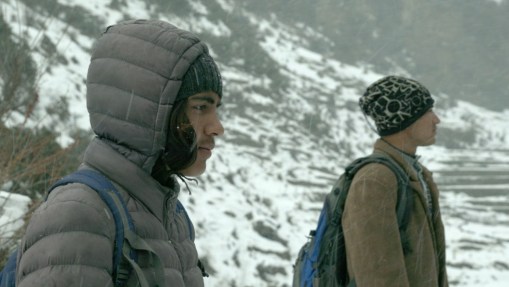
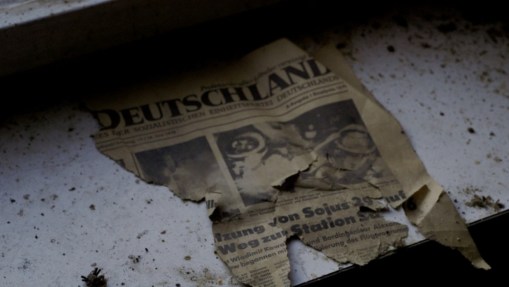


 At a time when Daesh funds itself by trafficking cultural artifacts and Europe announces asylum for threatened art works, Sokurov’s marvelous, piercing film offers nothing less than a revisionist historiography of art itself. For Francofonia, History is not the content of art but its very skin. Museums flatten time, and justifiably present their contents as the highest achievements of a culture, obfuscating, in effect, their history as objects involved in power brokerage, class conflict and market manipulation. Sokurov’s film flips this perspective inside out, identifying art as being frequently the currency of diplomatic power possessing the capacity to purchase peace and as being instruments in service of totalitarian collaboration. Napoleon,
  The jeu de mots in the title says it all. Not only is this deeply death-marked, Ozuvian film an unordinary home movie, but it is also a film about not having a home. Composed of footage shot in the filmmaker’s mother’s Brussels apartment and recorded video-conference sessions between the two, No Home Movie contrasts Akerman’s professional nomadism with the perennial confinedness of her mother Natalia. Between Chantal’s constant off-screen presence and Natalia’s self-imposed captivity (within the apartment as well as the computer screen), between Here and Elsewhere, lies the film’s true space – a part-real, part-virtual space of filial anxiety and affection. Akerman’s matrilineal counterpart to Porumboiu’s
  Taxi opens with a shot of downtown Tehran photographed from the dashboard of a car. Announcing Panahi’s first cinematic outdoor excursion since his house arrest in 2011, this shot sets up the dialectics that would define the film: home/world, individual/social and freedom/captivity. Through the course of Taxi, the spied-upon filmmaker drives around the city in the guise of a cabbie, chauffeuring clients-actors from various strata of the society, and realizing a pre-scripted scenario with them whose urgent, didactic purpose can’t be more obvious. The Iranian state has forged a private prison for Panahi from the public spaces of Tehran, allowing him a mobility and false freedom that’s regulated by its watchful eyes. Panahi turns this power dynamic upside down, transforming the private space of the vehicle into a public space for debate, discussion, instruction and critique. Watching the film, I was constantly reminded of that saying beloved of Wittgenstein: “It takes all kinds to make a world”. Panahi’s very presence in the film – his image, his voice – becomes an audacious act of political defiance, a gesture of tremendous existential courage that stares at the possibility of death floating in the air. Taxi makes cinema still matter.
 A beautiful marine cousin to Guzman’s previous film, Nostalgia for the Light (2010), The Pearl Button turns its attention from the arid stretches of the Atacama to the waterfront and ice field of Southern Patagonia. Threading metaphor over metaphor, the director fashions a typically associative, richly suggestive essay film that turns the nature documentary form on its head. Guzman’s film plumbs the depths of the ocean, trying to uncover traces of suppressed, unseen history embodied by countless “missing people” – a project that derives its impetus from the filmmaker’s bittersweet childhood experience of the sea. Despite Chile’s economic indifference to its 4000-kilometer-long coastline, he notes, the sea has been indispensable those in power, serving first as the entry point of the European invaders, who wiped out the Patagonian natives, and then as the dumping ground of political prisoners during the Pinochet regime. Guzman teases out the different values that the sea holds for him, the autochthons and the Chilean state, in effect politicizing and historicizing that which conventional wisdom takes to be apolitical and ahistorical: geography and the perception of it. The result is a film of immense poetry and horror – a horror that only poetry can convey.
 The most impressive debut film of the year, Alexandra Gerbaulet’s ambitious, intoxicating Shift excavates the evolution of her hometown, Salzgitter, along with that of her family with archaeological care and scientific detachment. In Gerbaulet’s heady narration, anchored by a powerful, quasi-declamatory, rhythmic voiceover, Salzgitter’s transformation from a Nazi mining stronghold and concentration camp, through a waning industrial hub and to a nuclear waste dump parallels the gradual disintegration of the Gerbaulet family under the weight of unemployment, sickness and sexual repression. The filmmaker closely intercuts photographs and diary entries of her mother with impersonal material from popular and scientific culture, weaving in and out of both registers with ease. Gerbaulet’s film is literally an unearthing project, as the director scoops out the various historical, political and geographical layers of this war-weathered city whose tranquil current-day model housing sits atop a makeshift Jewish graveyard consisting of camp workers buried using industrial debris. “Man gets used to everything, even the scar”, declares the narrator bluntly. Shift unscrambles such a habituated view of things, observing the tragicomic tautologies in which history revisits the city. The more you dig, it would seem, the more of the same you get.
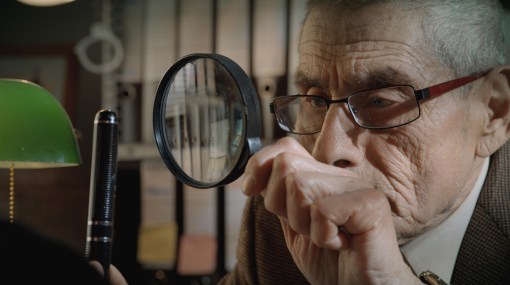
 One of my favorite films of the year is a commercial for a major power corporation made by a 106-year-old artist.
  Thomas McCarthy’s dramatization of Boston Globe’s exposé of child abuse in the Church is a robust, smart procedural that is less about picking apart the Catholic establishment than about elucidating the epistemological processes of the Information Age. Set at the transitional period between print and online news media, the film underscores the soon-to-be-outmoded physical nature of journalistic investigation. There are no antagonists of the traditional kind in Spotlight. The only obstacles to the knowledge required to carry out the exposé are the numerous procedures and institutional protocols that have for objective the protection or publication of information. It is telling that the entire film is about a pack of newswriters seeking information that’s already out in the open. What’s more, the film recognizes that the Spotlight team’s attempts to mount an institutional critique is itself inscribed within kindred ideological biases, operational strategies and structural iniquities of Boston Globe as an institution and that the metaphysical crisis that their story can potentially wreak amidst readers is but similar to the disillusionment the newsmen experience vis-à-vis their Protestant weltanschauung. With relatively uncommon formal and ethical restraint, McCarthy crafts an arresting film about how a society’s narratives are made, predicated they are as much on the dissemination of information as on their marginalization.
 ergei Loznitsa’s formidable follow-up to Maidan (2014) furthers the earlier film’s exploration of the aesthetics and mechanics of revolution, capturing a people coming together to make sense of a political limbo. Without context or a framing perspective, the film drops us straight into the streets of St. Petersburg just after the attempted reactionary coup d’état in Moscow in 1991. Confusion and mundanity – not heroics and determination – reign as we observe the formative process of a people’s movement and the imagined/imaginary social glue that causes individuals to cohere into a group. State apparatuses compete with each other for imposing a narrative onto the events, while the very toponymy of the city becomes an ideological battleground. Working off priceless archival footage, much of which is incredibly reminiscent of the filmmaker’s own cinematographic style, Loznitsa provides an invaluable glimpse into the unfurling of history, chronicling how numerous banal, unsure gestures and actions snowball into Historical Events. If Eisenstein’s better-than-the-original recreation of the October Revolution was the abstraction of materialist history into ideas, Loznitsa’s film, taking place at the same Palace Square 63 years later, rescues history from the reductions of ideology and brings it right back into the realm of the material.
 A remarkable American counterpart to J. P. Sniadecki’s The Iron Ministry (2014), In Transit unfolds predominantly as a series of interviews with a mixed bag of travellers on board The Empire Builder, a long-distance passenger train running over 3500 kilometers and spanning almost the entire width of the United States. The accounts of passengers seeking out professional and financial breakthroughs evoke the pioneer myth hinged on a “Go West” imperative while the stories of those aboard in search of their ‘calling’ demonstrate the essentially spiritual, even religious nature of their pilgrimage-like journey. The diversity and range of the interviewees and their interactions help the film depict the train as a miniature America, à la Stagecoach, and carve out a quasi-utopian space in which members across class, race and gender divides get an opportunity to converse with each other without personal baggage. Nonetheless, In Transit is less a cultural vision of a possible America than an existential meditation on what makes people embark on these journeys. One elderly war veteran remarks that he’ll never be able to see these plains again. To cite John Berger, “the desire to have seen has a deep ontological basis.”
 One of a piece with Gianvito’s Vapor Trail (Clark) (2010), Wake continues its precedent’s important investigation into the ecological consequences of the presence of America’s largest military bases in the Philippines during most of the 20th century. Like Profit Motive and the Whispering Wind (2007), Wake is guided by the spirit of Howard Zinn’s approach to history and sketches an economically-founded account of US-Philippines political and cultural relations – a history that seems to be have been lamentably wiped off from the Filipino national consciousness. Gianvito juxtaposes images from the Philippine-American war with current day images from the contaminated Subic naval base area, suggesting, in effect, the poisonous persistence of an agonizing, unacknowledged history. Wake is imperfect cinema – unwieldy and resourceful – and employs fly-on-the-wall records, talking heads, on-screen text, photographs and news clips to mount a potent critique of a historiography defined political amnesia and economic opportunism. More importantly, it is a necessary reminder that imperialism is not always about presence, action and exercise of power but sometimes also about the refusal of these very elements, that history is not only a matter of events but also processes and phenomena and that geography is always political.
 “I don’t know whether it’s a comedy or a tragedy, but in any case it’s a masterpiece”, says one of the characters, self-referentially, in Godard’s
 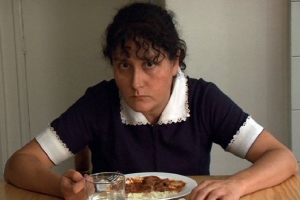 A sister film, in some ways, to Jonathan Demme’s brilliant Rachel Getting Married (2008), Sebastián Silva’s The Maid is nothing short of a spiritual revelation at the movies. What could have been an one-note leftist tirade about Chile’s class system is instead elevated into the realm of human where one facial twitch, one stretch of silence and one impulsive word can speak much more than any expository monologue or contrived subplot. There is no simplification of human behaviour here, no easily classifiable moral categories and no overarching statement to which truth is sacrificed. Nor does Silva suspend his study of the classes to observe his characters. He merely lets the obvious stay in the background. And just when you think that Silva’s vision of the world is getting all too romantic, he delivers a fatal blow to shatter your smugness – a single, deceptively simple shot during the final birthday party that masterfully sums up everything from the irreconcilable, repressed tension that exists between classes in capitalistic societies to our adaptability as humans to live peacefully with each other despite socio-economic disparities.
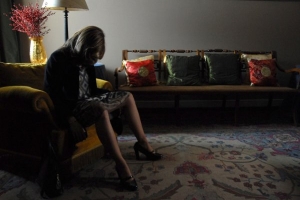 Rigorous but oh-so-tender, centenarian Manoel de Oliveira’s one-hour wonder Eccentricities of a Blonde-haired Girl is a film in one and a half acts. Oliveira translates the work of Eça de Queiroz to the screen, running the 19th century tale of romance through the current economic landscape and harnessing the resultant anachronism to paint an achingly beautiful picture about the inability to transcend class, escape reality and lose oneself in art. Despite its decidedly Brechtian and ceaselessly self reflexive nature, Oliveira’s film is rife with moments of poignancy and touches of humour. Using double, triple and quadruple framing and achieving a mise-en-abyme of art and reality, Oliveira writes a ruminative essay on the impossibility of art and reality to merge, the confusion that exists between them and the classism that exists within and with respect to art. Flooded with references to art and art forms, Eccentricities is such a dense and intricate fabric of the arts that even the past is treated in a detached manner like a piece of art, where each image looks like a painting, each sound feels like a melody and each movement cries out: “cinema!”.
 Of all the recent movies that have attempted to acknowledge dark chapters in national histories and advocated looking forward to the future instead of crying over what is lost, perhaps, none is as sober, ethical and uncompromising as Claudia Llosa’s Golden Bear winner. Llosa inherits her tale from the terrorist atrocities that plagued Peru two decades ago (Inheritance being the prime motif of the film) but, subsequently, discards every possible opportunity for sensationalism or propaganda. Tightly framing the lead character, Fausta (Magaly Solier), within and against claustrophobic structures, doorways, photographs, windows, paintings, mirrors and walls, gradually varying the depth of focus along the movie to detach the protagonist and integrate her with her surroundings and using extremely long shots to dwarf her in vast opens spaces of the tranquil town, Llosa concocts a film of utmost narrative austerity and aesthetic rigor. Punctuating and contrasting these downbeat images of Fausta’s life are slice-of-life sequences from the town depicting various wedding rituals and parties which tenderly highlight Peruvian people’s open-hearted embracing of capitalism and their resolve to come out of the trauma of the past and move on with life.
 If Inglourious Basterds was a coup from within the system, Jim Jarmusch’s The Limits of Control is an out-and-out war against the machine. The essential piece of cinema of resistance, The Limits of Control eschews simple genre classification and flips every ingredient of Hollywood’s conveyor belt products to surprise, appall, irritate and provoke us with each one of its moves. The complete absence of Jarmuschian brand of deadpan humour announces the film’s seriousness of intent. It is as if Jarmusch wants to establish once and for all that Hollywood does not equal American cinema and that the cinema that the former school marginalizes is truly alive and kicking. The Limits of Control is a film that can easily get on your nerves but, eventually, it succeeds in getting under your skin and evolving gradually to reveal how meticulously crafted it is. Using Cinematographer Christopher Doyle, production designer Eugenio Caballero and editor Jay Rabinowitz masterfully, Jarmusch creates a movie so meditative and relaxing that one feels exactly how William Blake (Johnny Depp) would have at the end of Dead Man (1995).
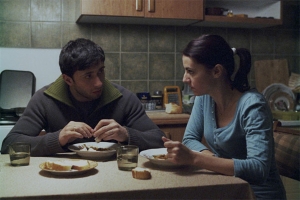 Porumboiu’s follow-up to one of the most hilarious comedies of the decade, 12:08 East of Bucharest (2006), is a companion of sorts to Jarmusch’s film not only in the sense that both of them negate the function of the genre they are supposed to belong to, by completely de-dramatizing their narratives, but also because Porumboiu’s film, too, is a conflict between two types of cinema – the cinema of analytical contemplation represented by the detective-protagonist of the film (Dragos Bucur) and the cinema of thoughtless action represented by his ready-for-ambush boss (Vlad Ivanov). However, more concretely, Police, Adjective is an examination of how our own political and social systems, partly due to the rigidity of our written languages, end up dominating us and how individual conscience and social anomalies are effaced clinically in order to have the bureaucratic clockwork running smoothly. Like Bucharest, Porumboiu, often self-reflexively, sketches the portrait of a bland and pacific city that tries to ape the far west and project itself as more dynamic than it actually is. The film’s disparate themes crystallize deliciously in the final, side-splitting, Tarantino-esque set piece where we witness the police chief urging his subordinates to act by the book, literally.
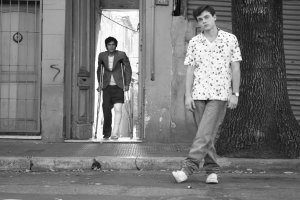 Tetro is a beautiful film. Not just in the way it looks, but in the sheer romance it has for a lost world. The only worthy B&W film of this year out of the four I saw (the other three being Haneke’s
 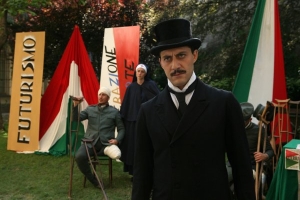 Writer-director Marco Bellocchio’s ballad, based on a nebulous part of fascist leader Benito Mussolini’s life, can teach those so-called historical dramas a thing or two about locating personal ideologies within collective history without being exploitative or pandering to pop demands. Bellocchio’s film is far from a detailed recreation of Mussolini’s political life. It is, in fact, a commentary upon such “detailed recreations” of history based on documents written by winners. Bellocchio’s formidable script and mise en scène keep probing and remarking upon the tendency of fascist systems to suppress histories – personal and national – and exploit popular media, especially the relatively young and emotionally powerful cinema, to blind people of truth and forge a faux reality – a theme underscored in Tarantino’s film too. What more? Bellocchio constructs the film exactly like one of those Soviet agitprop films – not by easy spoofing, but by retaining their spirit and rhythm – using rapid montage, expressionistic performances and operatic sounds. Be it common folk fighting in a cinema hall over a news reel or a bereaved mother breaking down during the screening of The Kid (1921), cinema registers its omnipresence and omnipotence in Bellocchio’s film.
 The perfect antidote to the summer blockbuster, Warwick Thornton’s Samson and Delilah is an extremely assured and undeniably moving piece of cinema that arrives, appositely, as the golden jubilee reboot to Herzog’s thematically kindred movie, Where the Green Ants Dream (1984). Cleverly relegating specific issues such as the Australian government’s intervention and relocation policies for the Aborigines to the background, Thornton frees his films of broad, propagandist political agendas, without ever making the film lack social exploration. With an extraordinary sound design, Thornton keeps the word count in the film to an absolute minimum, letting the stretches of silence shared by his lead characters speak for themselves. The film’s observations about banality of racism in contemporary Australia, exploitation of tribal art and its consequences, the effect of colonialism, especially due to Christian missionaries, on the Aboriginal culture and the ever growing chasm between the tribal and white life styles themselves are fittingly subordinated to the beautiful, unspoken love story that, essentially, forms the heart of the film.
 Let me dare to say this: Jacques Audiard’s A Prophet is either the most profound or the most pretentious movie of the year. For now, I choose the former. Audiard’s decidedly unflinching feature breaks free from the limitations of a generic prison drama and takes on multiple dimensions as the apolitical and irreligious protagonist of the film, Malik (played by Tahar Rahim), finds himself irreversibly entangled in ethnic gang wars within and outside the prison. A trenchant examination of religion as both a tool of oppression and a vehicle for political escalation, A Prophet is an audacious exploration of Muslim identity in the western world post-9/11. Although the plot developments may leave the viewer dizzy, it is easy to acknowledge how Audiard confronts the issues instead of working his way around it or making cheeky and superficial political statements. Strikingly juxtaposing and counterpointing Sufism and Darwinism in Malik’s search for identity, Audiard creates an immensely confident and nonjudgmental film that trusts its audience to work with the rich ambiguity it offers.
 The Seventh Art