Cinema of China


2025 was disappointing, even frustrating in both personal and historical terms. At the beginning of the year, I had set myself simple goals, all of which I failed at. My reading plummeted to almost zero, as did my public writing. I had hoped to add more entries to the Curator’s Corner column, but it was not to be. A few projects and opportunities that I was looking forward to didn’t materialize. Not to mention a host of health issues and family emergencies.

The political optimism of 2024 proved not just short lived, but derisory given the impunity with which the lunatics in power and their rabid supporters continued to destroy everything decent, human and life-sustaining. In India, state and market censorship alike have reached absurd levels, awards are now so compromised as to make satirists twiddle their thumbs, festivals are pushed to the brink of dysfunction by a philistine information ministry, naked propaganda seems to be the only way to box-office salvation, critics have been harassed by industry insiders and barbaric hordes on social media for precisely doing their job, celebrities continue to toe the line or silence themselves out of a justified fear of reprisal. All this, just in the domain of cinema.

The only respite for me came in the form of encounters with interesting, reasonable and committed people, especially at the Jakarta Film Week and International Film Festival Kerala, both of which I attended for the first time. The passion and the international camaraderie that I witnessed were welcome assurances that, no matter its immediate currency, bigotry and parochialism will forever be uncool.

In more solitary undertakings, I had the chance to explore parts of Indian documentary history I was unfamiliar with. Among these, I strongly recommend Chalam Bennurkar’s Children of Mini-Japan (1990), Anjali Monteiro and K.P. Jayasankar’s YCP 1997 (1997), David MacDougall’s Doon School Quintet (2000-04), Deepa Dhanraj’s Invoking Justice (2011) and especially R.V. Ramani’s My Camera and Tsunami (2011).

Besides acclaimed and popular films from Kerala made after 2010, I also caught up on a significant swathe of Malayalam cinema from the 80s and the 90s. This included two canonical masterpieces in Perumthachan (1991) and Ponthan Mada (1994) in addition to numerous remarkable features emerging from a short, bountiful period of heightened creativity: Irakal (1985), Deshadanakkili Karayarilla (1986), Thaniyavarthanam (1987), Amrutham Gamaya (1987), Ponmuttayidunna Tharavu (1988), Dasharatham (1989), Varavelpu (1989), Sandhesam (1991), Bharatham (1991) and Njan Gandharvan (1991), to name but a few. Farewell Sreenivasan, the recently departed actor-director-screenwriter behind many of these titles.

As always, the following list is based on an arbitrary eligibility criterion: films that had a world premiere in 2025.


1. Happiness (Firat Yücel, Turkey/Netherlands)

Fatigued and sleep deprived, a Turkish filmmaker in Amsterdam tries to find ways to reduce his excessive screen usage and catch some shuteye. But the horrors of the world, beamed onto digital screens in real time, know no respite. Firat Yücel’s extraordinary desktop essay departs from this premise in all directions, only to return to it with new insights and dizzyingly far-reaching associations. Tracing the agonized drifts of a sensitive, hyperconnected mind, Happiness lays bare a highly contemporary double bind: if the screens we are hooked to keep us away from living in the real world, it is these very screens that helps us make sense of our lived experiences. The filmmaker’s investigation into his bodily malaise leads him to unpack its historical conditions: the colonial legacy that underpins the prosperity of his host country, its flourishing happiness industry and its dubious foreign policies. Yücel’s inward observation takes him ever outward; his exasperation at the immediate present, into the distant past. Rigorous as it is witty and playful, Happiness perfectly embodies the agitations of the modern liberal consciousness, present everywhere and nowhere at once, all too aware of the immensity of human misery as well as its own impotence in the face of it. [World Premiere: Visions du Réel]


2. Peter Hujar’s Day (Ira Sachs, USA)
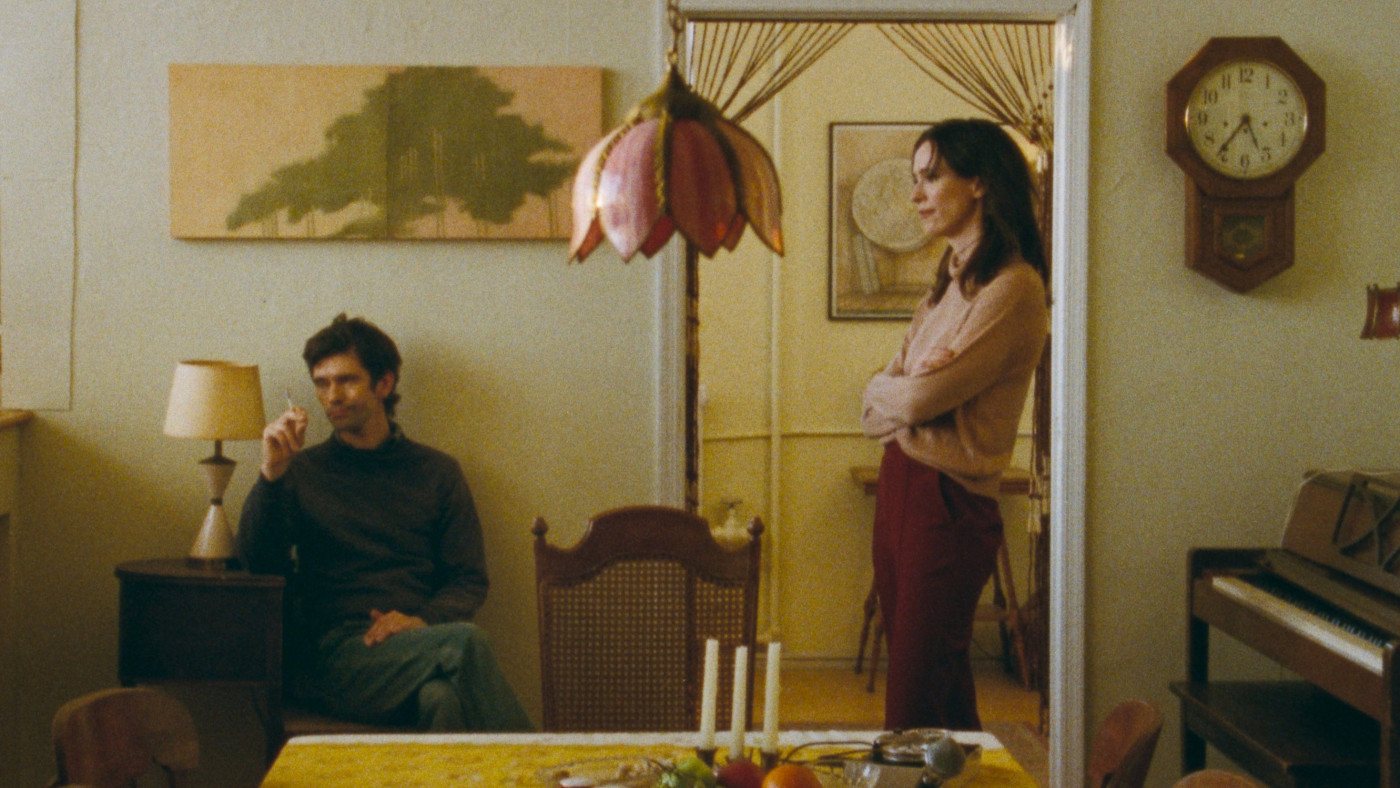
Ira Sachs’ eminently cinematic re-creation of a tape-recorded conversation, from December 1974, between writer Linda Rosenkrantz (played by Rebecca Hall) and photographer Peter Hujar (Ben Whishaw) is an object lesson in the creative possibilities of redundancy, a vital illustration of how the film medium can actualize itself, not by shunning the written word but, on the contrary, by faithfully embracing it. Over 76 condensed minutes, Hujar recollects a day from his life in New York City in rigorous detail — a fascinating mix of the ordinary and the extraordinary, recalling The Philosophy of Andy Warhol (1975) — to an attentive, sympathetic Rosenkratz amid the changing light of his apartment. As Hujar’s endless stream of speech washes over us to the point of exhaustion, our focus turns from its specific content to the process by which memory becomes material. Drawing from transcripts of the conversation — and not Rosenkrantz’s original recording, now lost —Whishaw’s incredibly textured performance reveals the task of imaginative translation that underlies all actorly work. For all its thrilling verbosity, Sachs’s film is a tribute to the art of listening, to this intimate space of friendship in which the hierarchy between the memorable and the mundane ceases to exist. [WP: Sundance Film Festival]


3. Manal Issa, 2024 (Elisabeth Subrin, Lebanon/USA)
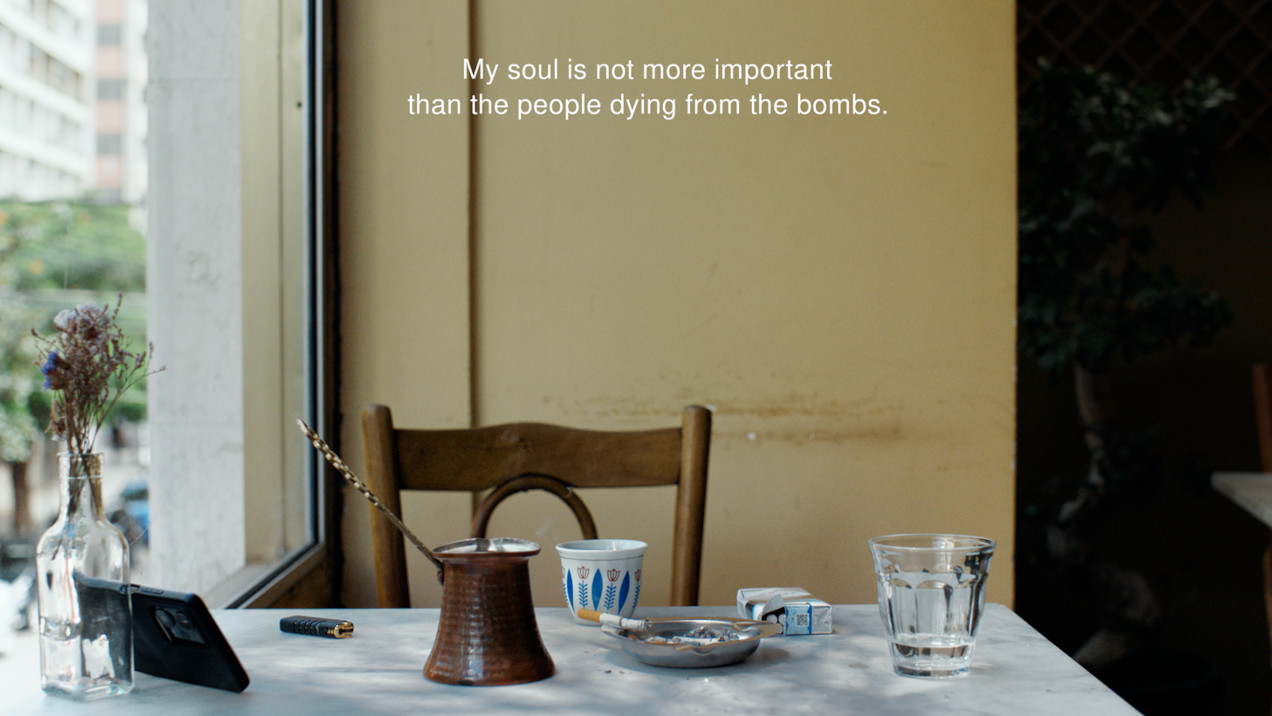
Where Elisabeth Subrin’s powerful Maria Schneider, 1983 (2022) — based on a televised interview of the eponymous French actress — created doubles, Manal Issa, 2024 proposes a negation. Here, Subrin asks the Lebanese-French actress Manal Issa, one of the three participants of the former film, the same questions that Schneider was posed in the original interview. Vocal about her stances, Issa talks about the poverty of meaningful roles offered to Arab-origin actresses, the limitations of the capitalist production model, the choice of moving back to Lebanon during crisis and the importance of speaking up against political iniquity. She adds that she feels professionally isolated for voicing her opinions, for calling out Israel’s bombing of Gaza. While we listen to her responses, Issa herself remains offscreen, her refusal to sustain her career by censoring herself echoed by Subrin’s refusal to show her. “If I can’t be true to myself, there is no point showing myself,” the actress concludes. Like Schneider’s palpable reluctance, Issa’s self-negation stems from an outlook that privileges life over films, reality over fiction. Six hours after the shoot, an end card notes, “Israeli airstrikes escalated throughout Lebanon, killing over 500 people in one day.” [WP: Cinéma du Réel]


4. One Battle After Another (Paul Thomas Anderson, USA)
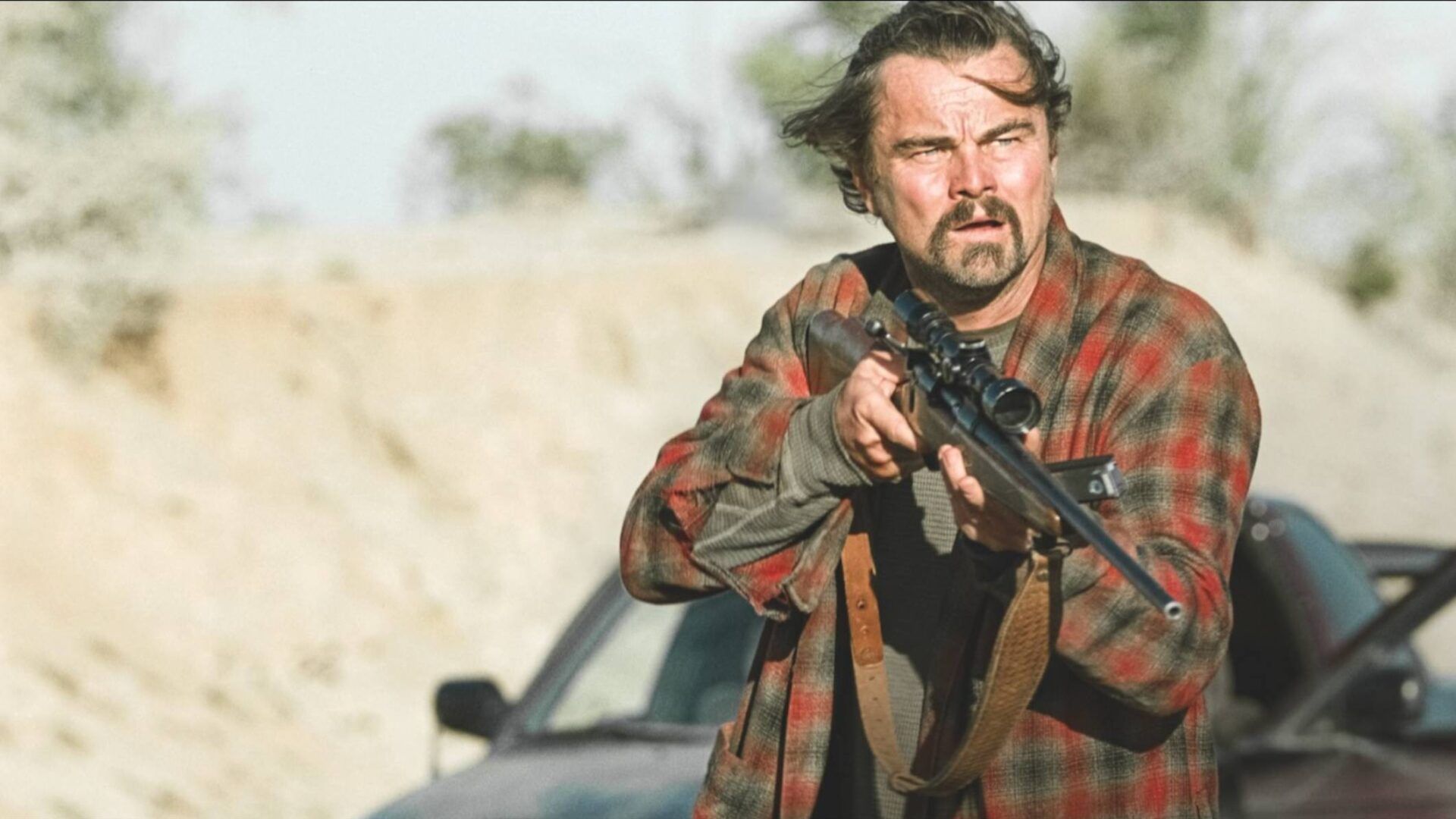
All appeal is sexual, political appeal especially so. Among other things, Paul Thomas Anderson’s wild, action-filled, hysterically funny ride through a caricatural America torn between white supremacists and antifa insurgents — each more paranoid than the other about imagined contaminations — lays bare the erotic drive animating ideological cohesion (and ideological sabotage). Leonardo DiCaprio’s failed revolutionary, mentally arrested in the 1970s, and Sean Penn’s boyish, waif-like sergeant are twisted projections of each other’s fears. Whether the film is reactionary, apolitical or progressive is beside the point. This is a work by an artist who contemplates a polarized society, its excesses and its mess-ups with sage amusement, or a stoner’s delight, without giving in to cynicism or misanthropy. DiCaprio delivers the performance of the year in a movie filled with performances of the year, each one on a different register, all of it nevertheless brought into perfect harmony by dint of sheer directorial orchestration. One Battle After Another stands tall in a movie culture dominated by safe, anaemic films calculated to say the right things and avoid broaching the wrong things. It made me wish we had more filmmakers who actually felt something between their legs. [WP: international commercial release]


5. Beyond the Mast (Mohammad Nuruzzaman, Bangladesh)
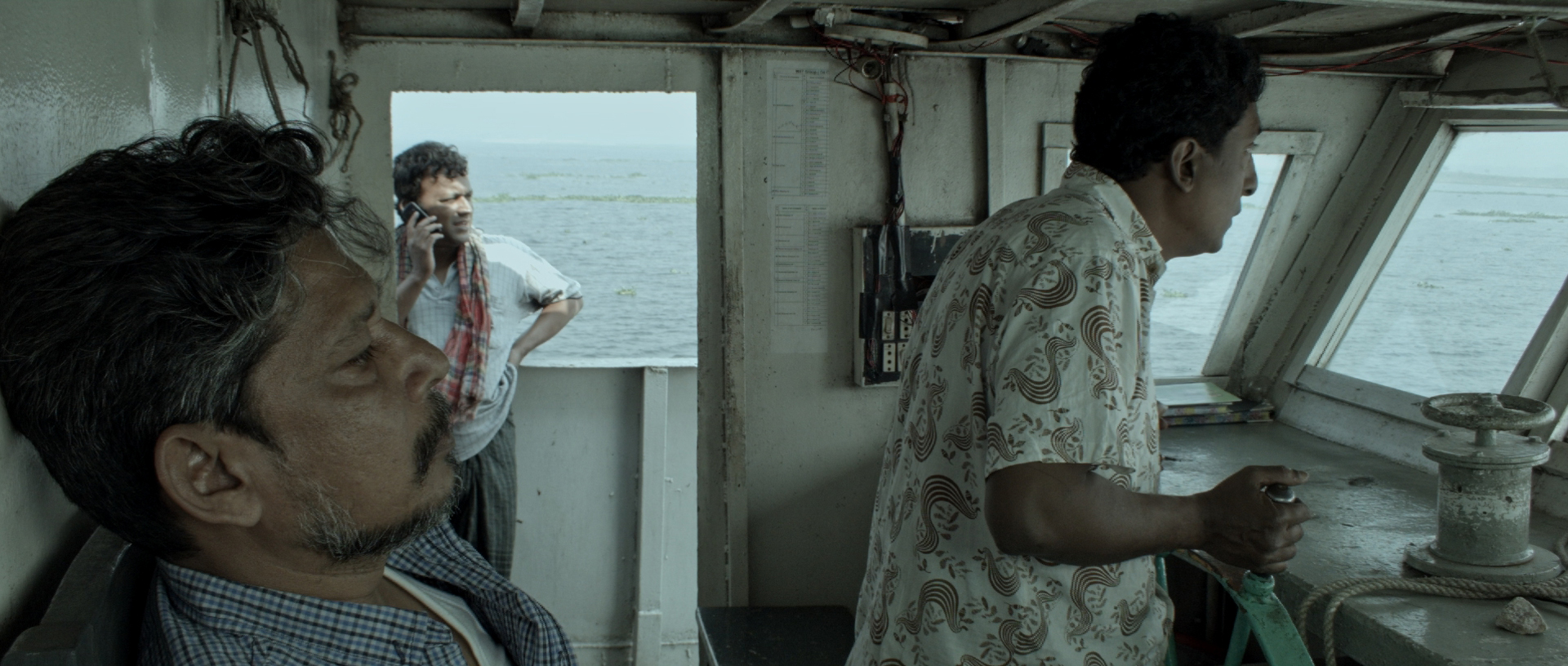
In this rapturous slice-of-life portrait, a small commercial boat with an all-male crew goes from port to port along a river in Bangladesh selling oil. When the crew’s kindly cook takes a stowaway child under his aegis, he runs afoul of the boat’s ill-tempered, scheming helmsman, covetous of the captain’s job. Despite a good deal of on-board intrigue, there is very little drama, strictly speaking, in Mohammad Nuruzzaman’s artisanal second feature, which doesn’t even seek to create lyrical moments in the vein of, say, Satyajit Ray. Yet, this is a highly poetic work, the poetry arising primarily from the filmmaker’s intent, non-judgmental way of looking at a small, enclosed world, its rituals, its diverse people and their human foibles: touches of jealousy, compassion, malevolence, ambition and camaraderie; a parade of life simply passing by. The form is meditative yet brisk — with very elegant camera choreography — and remains indifferent to fashionable arthouse formulas, stylistic shorthand or established screenplay structures. Even the film’s casual neo-realism doesn’t aim at traditional qualities of empathy and psychological description; it rather inspires Ozu-like contemplation. Just a lovingly crafted film. [WP: Moscow International Film Festival]


6. Roohrangi (Tusharr Madhavv, India/Netherlands)
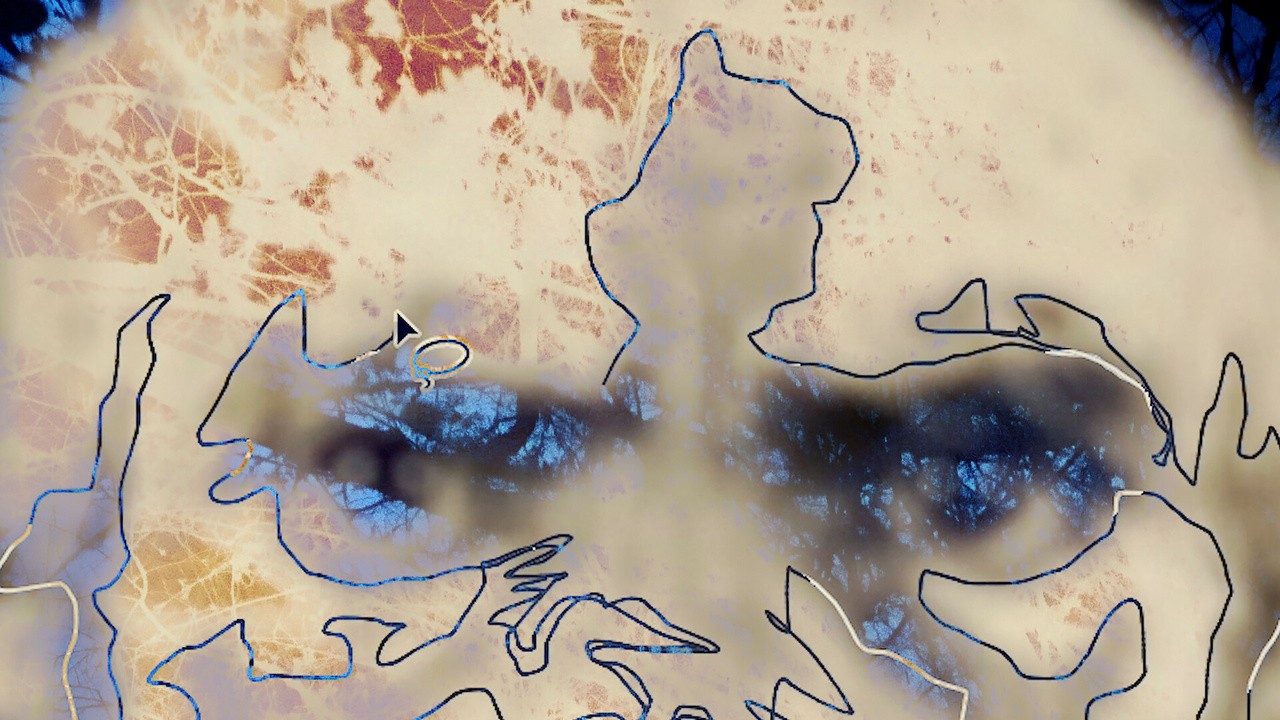
With a camera in hand, a gay filmmaker from South Asia walks around in a park in Amsterdam known as a cruising hotspot. What he finds in this place of fleeting encounters is a kind of time warp, the apparent permanence of its majestic trees, their gnarled roots and variegated textures reminding him of his own roots back in Lucknow, India. They recall, in particular, his grandfather’s discoloured skin, caused by leukoderma, which made him look like a white man — a dual identity paralleling the filmmaker’s own. Echoing this image, Roohrangi starts to lose its colours too, shedding its skin to reveal various layers of memory, history and fantasy underlying a leisurely stroll, as different geographies and eras interpenetrate one another. Like in the films of Apichatpong Weerasethakul, the forest in Roohrangi is a liminal, essentially queer space that enables communion with other lives, other worlds — a glimpse into different possibilities of being. With curiosity and formal openness, Tusharr Madhavv mixes stylized, essayistic passages with casual interviews with the park’s denizens. The result is an evocative, visually striking work, at once experimental and accessible, that achieves the right balance of discursivity, mystery and invention. [WP: Ann Arbor Film Festival]


7. Past Is Present (Shaheen Dill-Riaz, Germany/Bangladesh)
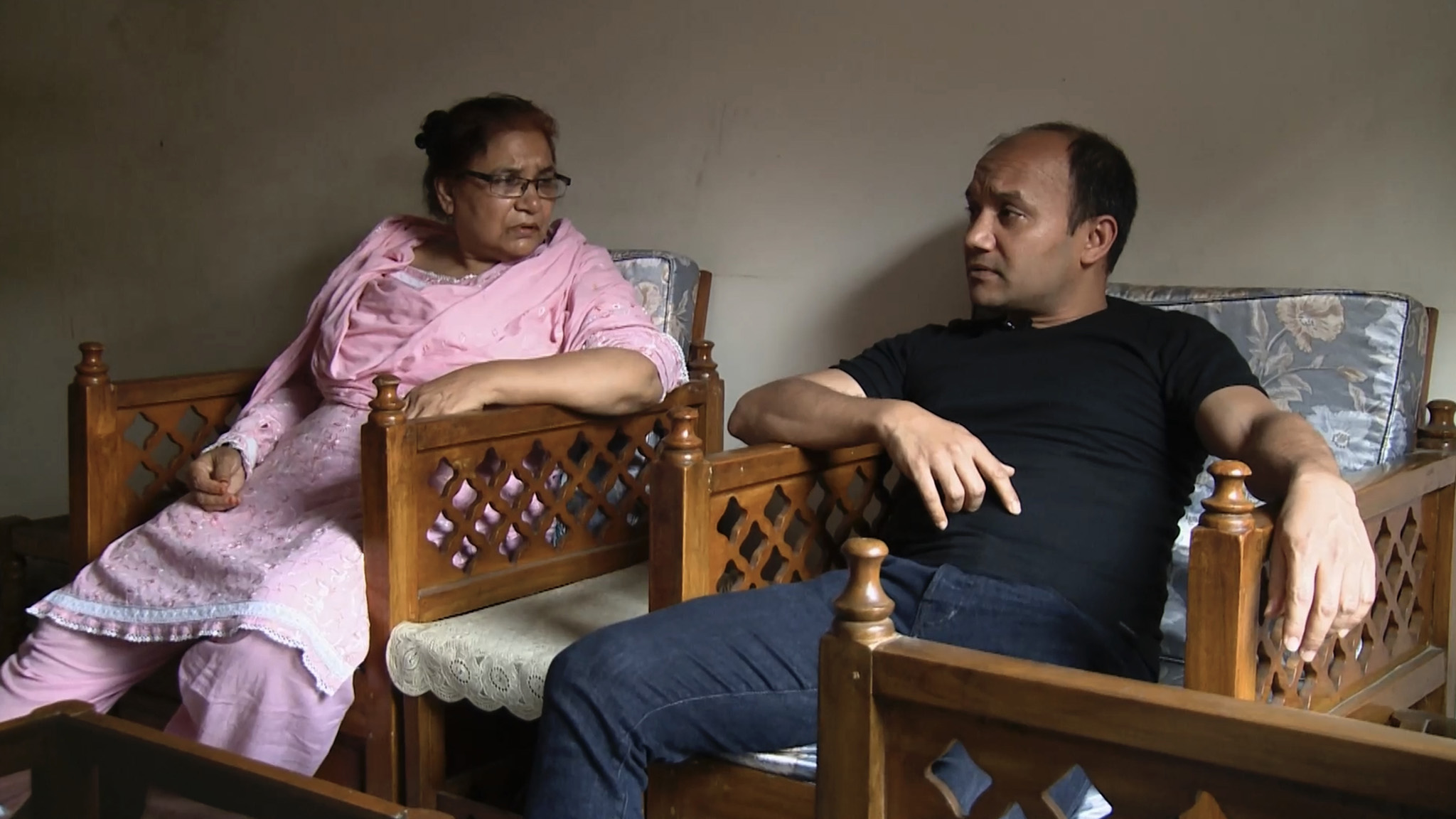
In 2007, Berlin-based Bangladeshi documentarian Shaheen Dill-Riaz found himself in the midst of a family scandal: while studying abroad, his sister Mitul had secretly married her cousin to the great chagrin of her parents. As this taboo union began to tear the family apart, Dill-Riaz decided to mediate between Mitul in Australia, his elder brother Amirul in the USA and his heartbroken parents back home in Dhaka. In Past Is Present, Dill-Riaz turns his camera onto himself and his dear ones, producing a sweeping domestic saga shot over fourteen years and across four continents. Tracing his parents’ journey from rural Bangladesh to Dhaka, and their three children’s subsequent drift to far-flung corners of the globe, the filmmaker examines the complex personal fallout of voluntary migration, presented here in all its liberating and melancholic dimensions. Dill-Riaz seamlessly interweaves moments of torrid drama with passages of mundane poetry, his handheld camera adopting a transparent, unassuming style. The film’s international narrative produces a startling contrast of textures and lifestyles, but also crystallizes the profound continuities in emotional and moral values across cultures. A touching study in the tyranny of distance, Past Is Present actualizes the immortal struggle between the home and the world. [WP: International Film Festival Rotterdam]


8. Obscure Night – Ain’t I a Child? (Sylvain George, France)

The concluding chapter of Sylvain George’s trilogy on illegal immigration is an extraordinary object of close, unflinching observation. The film follows three Tunisian teenagers who take temporary refuge in Paris after having been shuttled by immigration authorities across various cities in Western Europe. With remarkable intimacy and equanimity, George’s camera films the gang at slightly below the eye-level as they wander the roads of night-time Paris, huddle around fire, get into nasty fights with their Algerian counterparts, listen to street music or make the occasional phone call back home. An indifferent Eiffel Tower glitters perpetually in the background as the boys find themselves prisoners under an open sky. Shot in stark monochrome with eye-popping passages of abstraction, George’s film lends a monumental weight to images and lives we would rather not see. As a white artist making films on vulnerable sans papiers, George is bound to ruffle some feathers. But his film demonstrates that, sometimes, you need to strain certain ethical boundaries to arrive at newer forms of looking and understanding. Neither incriminating its subjects nor making any apology for them, Obscure Night – “Ain’t I a Child?” reveals the herculean difficulty of creating a truly humanist work. [WP: Visions du Réel]


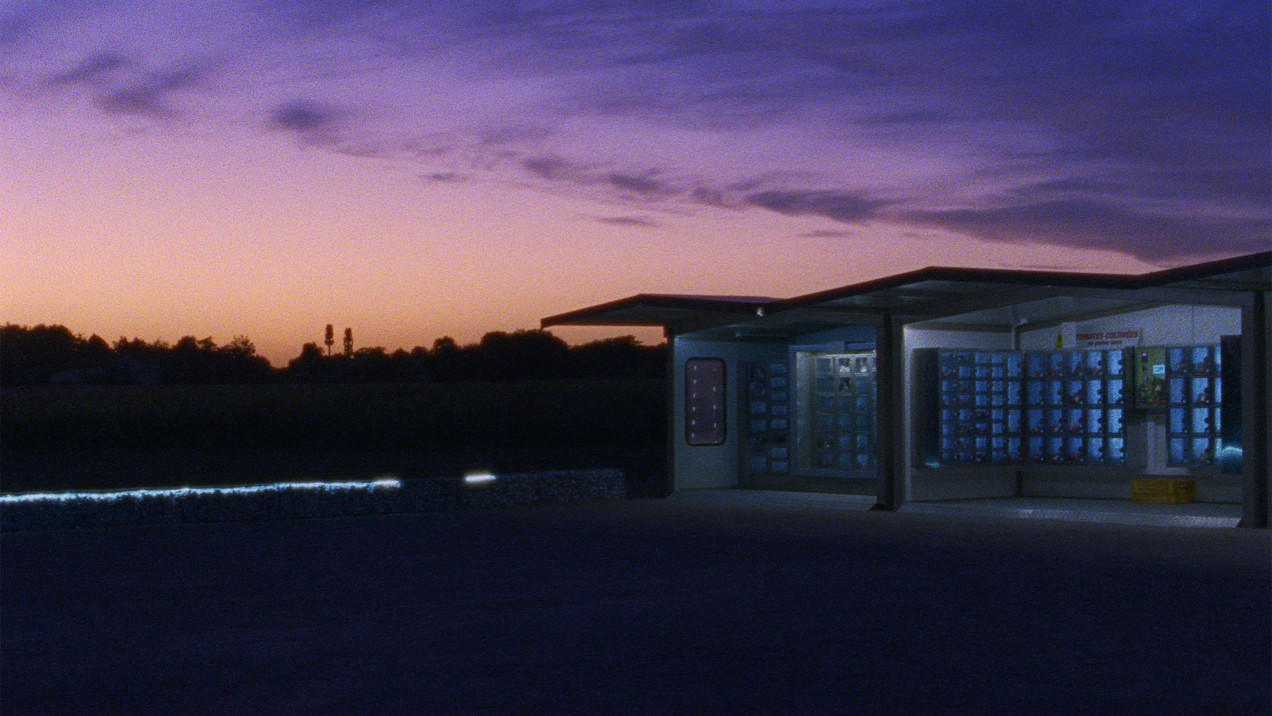
9. May the Soil Be Everywhere (Yehui Zhao, China/USA)
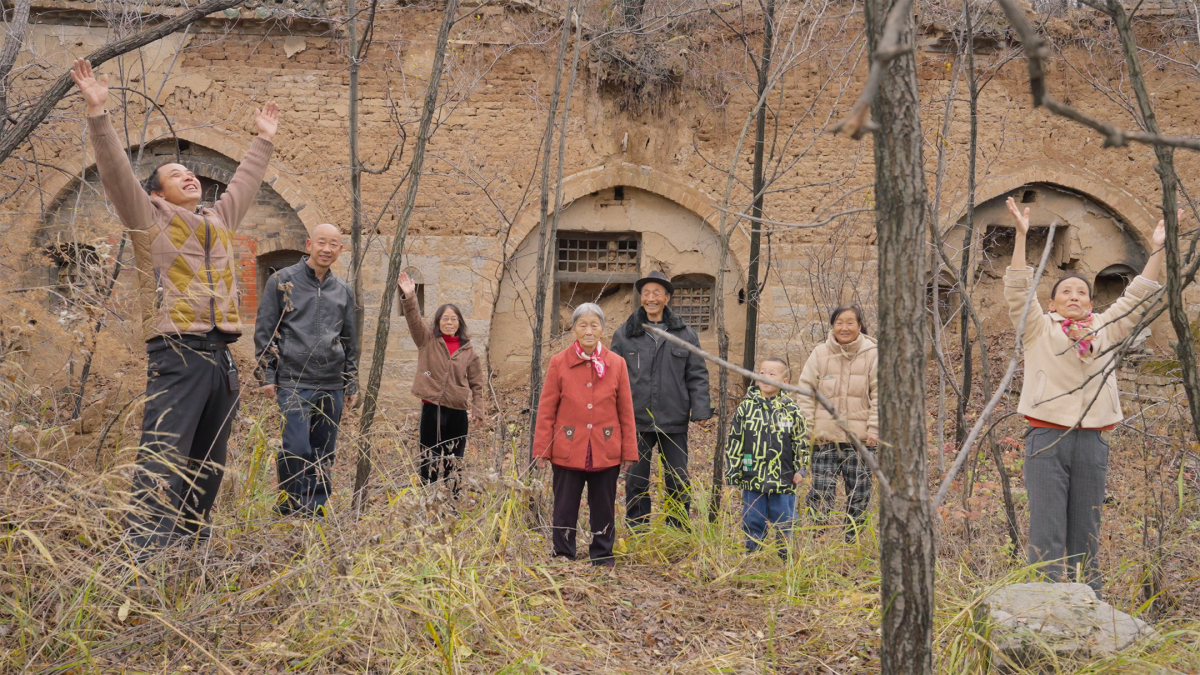
Yehui Zhao’s winsome debut feature begins as a personal documentary about the filmmaker’s search for her roots, but it gradually blooms into a sprawling examination of Chinese society and its evolving relationship to the land across modes of production. In her quest to unearth her family tree, the filmmaker finds herself peeling back layers upon layers of violent history — an excavation that takes her back to the soil, to a primordial ecology: caves that have now become sand mines, dogs that were once wolves, high-speed rail that now cut through unmarked graves. May the Soil Be Everywhere offers a rare and unusual glimpse into China’s pre-revolutionary past that takes us across vastly different terrains, time periods, generations: we learn of landlords who, during the revolution, became persecuted cave dwellers who then turned into Stakhanovite foot soldiers of Mao and are now digital filmmakers in a globalized world. The film’s direct and unaffected voiceover enables the overdone format of the personal documentary to break loose into a free-form essay featuring humorous animation and re-enacted tableaux. If the filmmaker’s attachment to familial lineage feels a little excessive, it undeniably carries a subversive force within post-revolutionary Chinese society. [WP: True/False Film Fest]


10. Admission (Quentin Hsu, Taiwan)
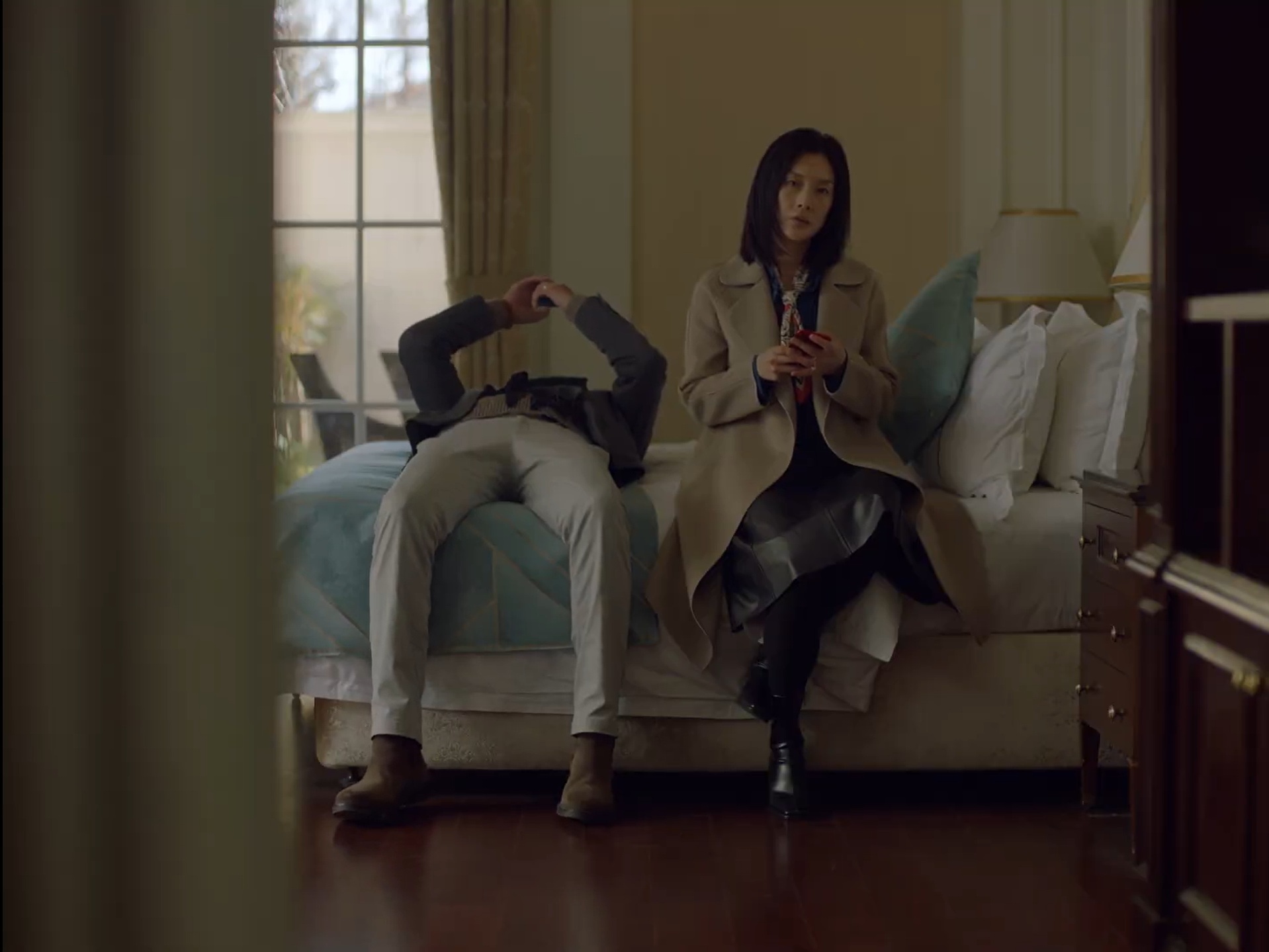
Panicked by the rejection of their six-year-old ward at an elite boarding school, an affluent tiger couple convenes an emergency meeting with their “fixer” and one of the school’s board members at a resort. Emerging from their negotiations and blame games is a stark portrait of a childhood labouring under someone else’s dreams. Quentin Hsu’s razor-sharp debut is a formalist kammerspiel that is Mungiu/Farhadi-like in its dissection of the moral corruption of the Chinese middle-class. But the approach to the material is entirely anti-naturalistic, pointedly theatrical. The film makes phenomenal use of its 4:3 aspect ratio and off-screen space, with the masquerade and subterfuge of the dramatic situation reflected in actors constantly gliding in and out of the frame, their bodies now eclipsed by the décor, now irrupting into the shot. The frame is constantly energized and de-energized by these microscopically choreographed movements in a way that recalls the Zürcher brothers. The actors are little more than props in the director’s precise, Kubrick-like design, but it’s bracing to witness a work that articulates its ideas through brute mise en scène, especially for a subject that would have called for a more psycho-realist treatment. [WP: Tallinn Black Nights Film Festival]


Special Mention: Living the Land (Huo Meng, China)


Favourite Films of

2024 • 2023 • 2022 • 2021 • 2020 • 2019

2015 • 2014 • 2013 • 2012 • 2011 • 2010 • 2009
Let’s begin by stating the obvious: Cinéma du réel, Paris, programmes weird stuff. Its main offering could be broadly described as experimental documentaries: works recognizably grappling with the real world, but demonstrating a strong commitment to formal innovation of the kind that challenges both our expectations of a film’s ostensible subject and our notion of what documentaries are. Rarely does one find in the festival’s lineup the sort of production that oils the machinery of the international documentary market. Few issue-based expository works are to be found here, hardly any fly-on-the-wall records, and no human-interest stories with appealing protagonists and clear dramaturgy.

The tendency is instead to embrace gaps, hesitations, ellipses, rough edges, acts of self-sabotage and blind leaps into the void. The image and sound in any given title in the selection are almost always orthogonal, the work deriving its meaning and affect instead from their dialectical organization. Films that may look like stubs, doodles, outtakes or half-formed sketches, by dint of adventurous curation and passionate presentation (evident from the insightful catalogue texts produced by the programming team), come to demand from the viewer a different way of looking and listening, and often a renewed conception of what a documentary can be.

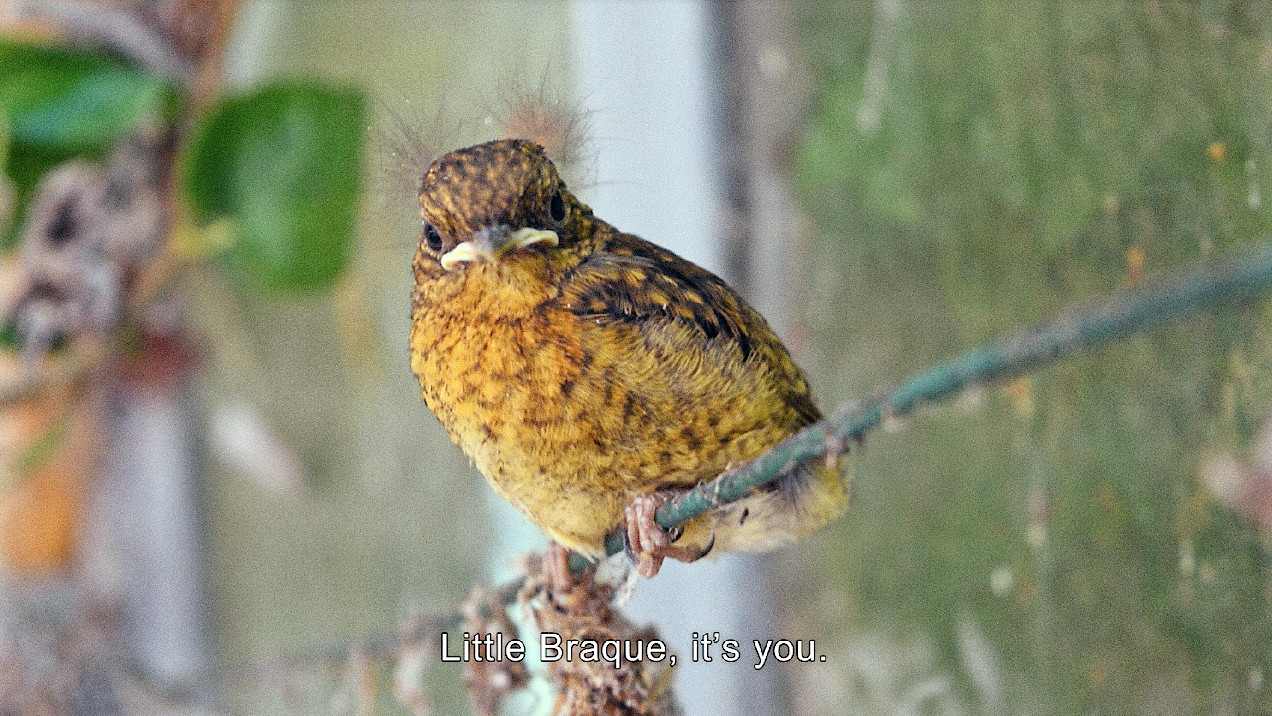
Consider, for instance, Look Through My Eyes and Give Me Your Own. Noëlle Pujol’s half-hour documentary features the filmmaker walking through Cubist pioneer Georges Braque’s studio in Varengeville-sur-Mer, Northern France. For the most part, the camera surveys the now abandoned structure, taken over by nature, and the vestiges of human culture still visible on its walls. Recalling Picasso’s aphorism “I don’t search, I find”, Pujol’s casual, liberatingly purposeless gaze roves about before resting on a small, exotic bird perched on a wire inside the studio. Unfazed by the intruder, the gorgeous little creature stares back at the camera, which resumes its aimless drift after this uncanny encounter.

Free of a conceptual framework or a conventional narrative outline, Pujol’s film is only as discursive as the viewer wants it to be. The same goes for Léo Bizeul’s Robert Taschen (whose synopsis simply reads “A man in his home.”). A seven-minute portrait of a poor, middle-aged man eking it out in a nondescript hovel, Bizeul’s beautifully shot but bafflingly sparse film furnishes very little that is specific beyond its title. Yet the sharpened quality of attention that it extracts from us, and the duration it imposes, elevate this everyman into a subject worthy of a renaissance tableau.

The longer works in the selection equally reflect this resistance to clear exposition and overarching meaning. Films such as Luo Li’s Air Base, Gaspard Hirschi’s I Am Night at Noonday and Ico Costa’s Balane 3 are, at the outset, quasi-sociological studies set in particular locations, but even so, they play it loose, letting their framing concept fall apart under the weight of stylization. Li’s film is nominally set around a hobbyist fishing pond in Wuhan just after the easing of pandemic restrictions. What begins like a record of the psychological toll of the lockdown takes vast excursions to observe the city through a slightly absurdist lens, full of formal rhymes and quirky images. The result grasps at a poetic truth rather than a rational analysis.

I Am Night at Noonday takes off, in fact, from a highly literary idea: dressed as Don Quixote, theatre director Manolo Bez wanders around Marseille on a horse along with a reluctant Sancho, a pizza guy named Daniel Saïd on a motorbike, engaging in humorous encounters with the people and landscapes of the port city. A relatively classical satire in the line of Borat (2006), the film employs Quixote’s outsider perspective to expose the paranoia and distrust gripping the racially diverse but economically polarized city. Yet the film scrambles this setup midway, segueing first into a cinema-vérité mode that allows Bez and Saïd to step out of their characters to address the camera as their real selves.

Coursing through the Cinéma du réel programme is the general sense that reality can only be accessed obliquely, through an elliptical form that conceals as much as it reveals. Two of the most remarkable films in the programme take this throughline to a conclusion of sorts, adapting a refusal to image the human body. Maureen Fazendeiro’s Les Habitants is set in an unnamed French village. We see this quaint commune go about its immutable routine, its picturesque streets well-maintained, its meadows neatly kept and its many glasshouses yielding rich produce. On the soundtrack, we hear letters from a mother to her daughter recounting the arrival of a group of Roma into the village, the opposition of the municipality to their presence and the material support that a few of the villagers offer to their nomadic guests.

Featuring interesting repetitions of banal information, the film’s voiceover offers a site of dramatic conflict – between the efforts of those trying to legally evict the squatters and those helping them prolong their stay in the village – while the visuals present a source of harmony. This contradiction between the sordid living conditions of the Roma group detailed on the soundtrack and the plush, first-world life on display serves to throw into relief the violence underlying suburban order. In filming the village after the immigrants’ departure, and refusing to feature them in any shape or form, Les Habitants points up cinema’s delay in keeping up with reality while also exploring the creative possibilities of this delay, of this spectral absence.

Elisabeth Subrin’s Manal Issa, 2024 goes further, eliminating the human body altogether. This ten-minute film is a companion piece to Subrin’s powerful 2022 work, Maria Schneider, 1983, in which the filmmaker had three actresses of varied backgrounds reenact an interview that Schneider gave for a French television show. In the interview, a visibly uncomfortable Schneider discusses the second-class treatment that actresses suffer in the industry, reveals that she turns down a lot of roles, deflects questions about Last Tango in Paris (1972) and generally resists the niceties and rituals of movie journalism. While the actors in Subrin’s film fastidiously re-create Schneider’s look and diction, they bring their own perspectives to bear upon the reenactment, locating themselves in Schneider’s experience as an exploited, marginalized film worker while extending her activist legacy to the present.

Where Maria Schneider, 1983 created doubles, excess bodies, Manal Issa, 2024 proposes a negation, one body too few. Here, Subrin poses to the Lebanese-French actress Manal Issa, one of the three participants of the former film, the same questions that Schneider was posed in the original interview. A publicly vocal actress, Issa talks about the poverty of meaningful roles offered to Arab-origin actresses, the limitations of the capitalist production model, the choice of moving back to Lebanon during crisis and the importance of speaking up against political iniquity. While we listen to her responses, Issa herself remains offscreen; all that we see is a table by the window containing signs of human presence: a pack of cigarettes, a lighter, an ashtray, a tea cup, a glass of water and a smartphone.

Issa’s refusal to take up pointless roles to sustain a career, to maintain a screen presence while censoring her critical voice, is echoed by Subrin’s refusal to show her. “If I’m on screen I’m something, and if I’m not I’m nothing? Khalas?” asks the actress, adding that she feels punished for her political opinions, for calling out Israel’s bombing of Gaza. “If I can’t be true to myself, there is no point showing myself,” Issa concludes, as the camera gently pans from the table to a street outside the window. Like Schneider’s, Issa’s self-negation stems from an outlook that privileges life over films, reality over fiction. Six hours after the filming, an end card notes, “Israeli airstrikes escalated throughout Lebanon, killing over 500 people in one day.”

Each passing year seems objectively, measurably worse than the one before, at least on a world-historical level, unveiling new lows for evil, stupidity, hypocrisy and tyranny across the globe. I’ve done nothing to change any of it, but I’m glad that, unlike me, there are people who aren’t desensitized, wilfully blind or paralyzed by analysis fighting the good fight. More power to them.

The blog hasn’t been terribly active this year. In February, I started a curatorial section on the site to showcase work from up-and-coming filmmakers, but I haven’t been able to keep it up at a rate I would like. I hope I can resume the section in 2024, even if at irregular intervals.

The primary reason for the inactivity is that I made my first foray into festival programming this year. I was on the South Asia selection committee for the Jio MAMI Mumbai Film Festival (October-November 2023) as well as the upcoming Berlin Critics Week (February 2024). Both assignments meant six months of intense, non-stop film viewing. A revelation from my time on the MAMI committee is that South Asian cinema is absolutely exploding, with crazy, ambitious works emanating from unlikely corners of the subcontinent, made by passionate individuals with little institutional or industry connections, with private resources unrelated to traditional channels of funding. It was truly an eye-opening discovery. Exciting times ahead for South Asian cinema.

For the first few months, however, I had a voluntary, almost systematic immersion into the history of avant-garde film, especially works from North America. I watched over 700 titles, long and short, canonical and lesser-known. I complemented this with reading books on the subject: Sheldon Renan, Amos Vogel, P. Adams Sitney, A.L. Rees, Stephen Dwoskin, William C. Wees, Jonathan Rosenbaum. But the single most instructive source was Scott MacDonald’s A Critical Cinema (1988-2005), five volumes of magnificently detailed interviews with avant-garde filmmakers from across generations and geographies. These exhilarating, demanding months of watching and reading truly felt like a substantial phase of my cinephile education.

It was also the year I published by second book, Moving Images, Still Lives, a lavishly illustrated monograph on Amit Dutta’s film Nainsukh (2010), published by Artibus Asiae of the Museum Rietberg Zurich. (Readers in India may consider buying a copy off Amazon, where a very, very limited number is on sale.) This book was an opportunity for me to undertake a different kind of writing — less spontaneous but more scholarly, with arguments propelled more by citations than passion. Also, until now, my references in visual arts were almost entirely European and American. Writing on Nainsukh meant researching into Pahari miniature painting and the world it issues from — an exposure I’m really grateful to have gotten.

I had no greater experience this year than watching Lijo Jose Pellissery’s Nanpakal Nerathu Mayakkam (2022), a work I would without hesitation count among the ten or so finest films ever made in India. Heck, had I seen it a few months earlier, it would’ve made it to my ballot for Sight & Sound’s all-time poll. With age, I encounter fewer and fewer films capable of shaking me up the way Pellissery’s masterpiece has. It is one of the great spiritual works of the cinema.

I didn’t see as many commercial releases as I would’ve liked, and the ones I did weren’t too inspiring. I’ve consistently had problems with Martin Scorsese’s films set in cultures foreign to him, and despite the thrilling opening hour, Killers of the Flower Moon felt crippled by the same respectful distance that hamper Kundun (1997) and Silence (2016). I found Oppenheimer and Barbie equally tedious, both movies arriving with their own halo. Among Indian releases, I found things to like in several works, such as Thankam, Maaveeran, Kaadhal: The Core, Chithha, Jigarthanda DoubleX, Animal, Viduthalai Part 1 and Haddi, but few were convincing in their entirety. So the list below is entirely composed of titles I saw at festivals or as part of my programming work. They all had their world premieres in 2023 at the festivals mentioned. Needless to say, this is a somewhat arbitrary list, and I can count about seventy other films that could be here instead. But I’ll spare you the hand-wringing. Happy new year.


1. Kayo Kayo Colour? (Shahrukhkhan Chavada, India)

Rare are Indian films centred on marked Muslim characters, and rarer are those that don’t employ these characters primarily as objects of violence and social injustice. In Shahrukhkhan Chavada’s tender, trailblazing Kayo Kayo Colour?, Muslim bodies exist in an existential autonomy, untouched by dramatic aggression and capable of accessing a whole range of human experience. Chavada’s film depicts the everyday life of an extended working-class family in a Muslim quarter in the outskirts of Ahmedabad on a historic day. We see a woman waking up early to do household chores, her husband trying to procure funds to buy an autorickshaw, their children playing gender-segregated games. Public spaces come alive with shrieking middle-schoolers, a mother folds clothes with a daughter who has made it out of the ghetto, a girl sleeps over at her grandparents’ place—routines that become electrifying expressions of communal life. With striking passages of dead time and non-narrative digressions, the film creates space for its characters to breathe freely, to simply be. This is a work that opens up a new way of looking at life in India. In its wonderous gaze at the world, in its incredible generosity, in its profound humanity, there’s little I’ve seen of late that comes close. [World Premiere: International Film Festival Rotterdam]


2. Mr. Junjun (Niu Niu, China)

In a masterpiece the world is sleeping on, Niu Niu forges a simmering, Dardennes-style character study of a middle-aged taxi driver on the brink of explosion. A fifty-year-old single man responsible for a recalcitrant, semi-paralyzed father, Mr. Junjun must recover his debts to get out of a deep financial hole, but every effort he makes in this direction pushes him further towards the point of no return. The cruel pleasure the film offers is in prolonging Junjun’s moment of rupture through a series of secondary errands that he must run order just to stay afloat: the picture of life passing by even before you can get a hold on it. And yet, this is no mean neorealist melodrama. We have very little access to the inner universe of the bespectacled Junjun, who is a pure man of action, filmed from behind, moving purposefully through the world if only in order to stay where he is. You sense that this man will break down any minute, yet there is tremendous tenderness and grace in him — and in the film, for him. Prepare to be knocked down by the most sublime ending of the year. [WP: Pingyao International Film Festival]


3. Slow Shift (Shambhavi Kaul, India-USA)

The work of Shambhavi Kaul, which has a knack for transforming real landscapes into otherworldly vistas, finds its perfect subject in the medieval city of Hampi in Southern India. The seat of the Vijayanagara Empire in the fourteenth century, Hampi is today a World Heritage Site attracting tourists from across the globe. In Slow Shift, Kaul crafts a spectral, non-narrative travelogue of the site that unearths its historical, mythical, geological, ecological and cultural layers. Weaving together images of stately rock-cut monuments, precariously posed stone clusters and an army of langurs taking over the depopulated site, the film forges a post-human space eerily resonant with the barren cityscapes that became common during the pandemic years. In a manner reminiscent of Richard Serra’s monumental steel sculptures, Slow Shift strikes a precarious balance between majestic stasis and imminent collapse. By combining moments of instantaneous change in the landscape with more long-term transformations as evidenced by Hampi’s weatherworn structures, the film evokes the different time scales simultaneously at work in nature, reminding us that even the mightiest empire will turn to rubble one day. It’s truly a planet of the apes, and we’re only squatters. [WP: Toronto International Film Festival]


4. Fauna (Pau Faus, Spain)

Aging shepherd Valeriano lives with his herd on the outskirts of Barcelona. With his children away and with a debilitating orthopaedic problem that requires him to hang his boots, he struggles to keep his profession alive. He supplies sheep to a high-tech laboratory next door, which runs tests on them as part of its research to develop a vaccine for the Covid19 virus. Except for animals brought in through carefully controlled doorways, the lab is hermetically sealed from all biological intrusions, while Valeriano makes periodic visits to the city hospital for his therapy. From this incredibly rich scenario, Pau Faus’ Fauna weaves an extraordinary, complex examination of the ways in which science, ecology and tradition prove inextricably linked in contemporary life. “I believe that truth has only one face: that of a violent contradiction,” these words from Georges Bataille form the epigraph to Faus’ deeply moving, frequently heartrending observational documentary. With equanimity and wit, the film shines a light on humankind’s curious tendency to accelerate change while also fighting it, to master nature and technology while also being overwhelmed by them. Fauna creates ample space for reflection and critique, but supplies no easy answers. [WP: Visions du Réel, Nyon]


5. The Film You Are About to See (Maxime Martinot, France)

Maxime Martinot’s short essay is a brilliant investigation into the ways in which cinema exhibition and spectatorship are mediated by paratexts within and outside the films. Repurposing a range of verbal material intended to set context for viewing — disclaimers, introductory warnings, fourth-wall breaking intertitles, notices from theatre management — the film examines the fraught, slippery nature of the relationship between text and image in cinema. Systematically interspersed with these title cards are excerpts from across the history of moving images, arranged more or less in chronology. The Film You Are About to See cogently demonstrates the extent to which such title cards serve to fix the meaning and affect of images, and to counter, as Roland Barthes put it, “the terror of uncertain signs.” The disclaimers we see in the film have a striking resemblance to modern-day trigger warnings that seek to shield viewers from presumed psychic assaults. However, in its savvy assembly of ambiguous movie clips, Martinot’s film suggests that this is an ultimately futile enterprise, for images will always find a way to escape domestication and remain polysemous in the face of texts that seek to pin them down. [WP: Cinéma du Réel, Paris]


6. Valli (Manoj Shinde, India)

Valli is a man forced to be a Jogta, a living deity with a female form, believed to be capable of blessing those who worship and honour her. When he isn’t in his Jogta form, though, Valli is bullied by the village men for his feminine ways. The premise prepares you for an overwrought, sentimentalist work, yet Valli is anything but. Manoj Shinde’s stellar film is less about an individual trapped in a body than about a body trapped in a role, deified and debased, outcast and central to the social fabric at once. Valli takes an ultra-melodramatic subject and drains it off all excess, at times with the grace and wisdom of Hou-hsiao Hsien. The lead character is subjected to abuse and insult, but what we see as his reaction is defiance, contempt, indifference, anger, humour — everything that assures us that his dignity and integrity can’t be taken away. Vast passages of non-dramatic action allow the individual to just be. Delivering what is for me the screen performance of the year, Deva Gadekar is phenomenal as Valli, infusing every frame he is in with astounding bits of non-narrative magic, his androgynous body and its gratuitous gestures becoming transfixing without being fetishized. [WP: Singapore International Film Festival]


7. Camping du Lac (Éléonore Saintagnan, Belgium-France)

“I’d like to tell you an odd thing that happened.” So begins Éléonore Saintagnan’s gentle shape-shifting epic that metamorphoses from an understated fable to an absorbing myth to an startlingly immediate ecological parable. There will be no shortage of odd things in this one-of-a-kind film that revels in the power of invention and storytelling. Éléonore, played by the director herself, is stranded in Brittany, France, after her car breaks down on the way to the ocean. With little choice, she decides to lodge at a camping site by the Lake Guerlédan while her car is repaired. As she observes a host of characters at the camp, the film itself embarks on strange and beautiful narrative excursions. Together, these quaint detours, whose significance remains tantalizingly elusive, impart a starkly spiritual dimension to Saintagnan’s film, a sense of wonder at the various realities around us, visible and invisible. A gorgeously shot exploration of isolation and community, Camping du Lac may ultimately be about the ways we are (or fail to be) in communion with the mysteries of the world, and in that regard, this is a work wholly in tune with our times. [WP: Locarno International Film Festival]


8. Mithya (Sumanth Bhat, India)

After the sudden death of their parents, eleven-year-old Mithya and his young sister are taken by their aunt and uncle to their home in Udupi, much to the exasperation of the boy’s paternal relatives back in Mumbai. While the two clans fight for custody, Mithya struggles to find his moorings in a new environment, his growing sense of security undermined by a creeping feeling of re-living his original tragedy. Engineer-turned-filmmaker Sumanth Bhat’s supremely assured first feature makes us intimate with the experience of its young protagonist while also keeping us at a critical remove from his thoughts. A work that trusts the audience’s capacity for imagination and empathy, Mithya equally respects the complexity of a bereaved child’s inner world, never giving into facile poetry or genre convention. The adults, too, are invested with great dignity even when they are flawed individuals; Mithya’s uncle gets possibly the most piercing line of dialogue I heard this year, one that reveals an entire childhood. With its magnificent child performances in long shots, bold sense of ellipsis, delicately sketched character motivations and unnerving editing associations, Mithya is a virtuoso work end-to-end, an exemplar of honest, personal filmmaking. [WP: MAMI Mumbai Film Festival]


9. Dreams About Putin (Nastia Korkia & Vlad Fishez, Russia)

Following the Russian invasion of Ukraine, the widely reported phenomenon of people dreaming about Vladmir Putin found a new life, with Russian citizens turning to social media to describe their nocturnal encounters with their dear leader. In Dreams About Putin, Nastia Korkia and Vlad Fishez put together a hypnotic anthology of such dreams, recounted by interviewees to the camera and subsequently rendered as oneiric mindscapes in a 3D video-game engine. Periodically woven between these animated passages are archival clips of the real Putin delivering a Christmas address, atop a glider or going on a hike. Are the interviewees dreaming, or are they being dreamt? A work perfectly reflective of a world of tinpot dictators, lopsided wars and generative AI, Dreams About Putin presents a stunning look into the deliriums of those in power and the powerlessness of those who can only be witnesses to it. Korkia and Fishez concoct a bleak vision of a Russia trapped in a megalomaniac’s nightmare in which even live-action footage of Putin’s macho outings acquires a thoroughly surreal quality. Simple, funny, entrancing, with an end sequence that is the most glorious dream of all. [WP: International Documentary Film Festival Amsterdam]


10. Berlin (Atul Sabharwal, India)

Few Indian filmmakers have a firmer command over vernacular genre filmmaking than Atul Sabharwal, who is at the top of his game in Berlin, a scintillating spy thriller revolving around sign language (!) in which we become, as one character puts it, outsiders who feel like insiders. 1993, New Delhi. The Indian Intelligence Bureau has arrested a deaf-mute man suspected of plotting the assassination of Russian president Boris Yeltsin, who is in the country to renew diplomatic ties after the fall of the Soviet Union. They recruit Pushkin, a sign-language instructor, to help them with their interrogation, but the translator is soon nudged out of his neutrality by a rival governmental organization. Berlin, named after a café that was a safe trading post for spies of all stripes, finds Pushkin, as well as India, at a moment of swaying allegiances. A masterclass in staging what is essentially an extended, talky interrogation, Sabharwal’s super-smart, giddily plotted film sweeps us into a treacherous terrain of self-preserving intelligence agencies competing for legitimacy in a new world order. Come for the spectacle of Rahul Bose chewing scenery, stay for an exquisite treatise on the slow demise of the Non-Alignment Movement. [WP: Indian Film Festival of Los Angeles]


Special Mention: The Other Profile (Armel Hostiou, France-DRC)


Favourite Films of

2022 • 2021 • 2020 • 2019 • 2015 • 2014 • 2013 • 2012 • 2011 • 2010 • 2009

2022 witnessed the demise of several towering figures of cinematic modernism, none more iconic than Jean-Luc Godard. With their passing, it really feels like the end of a chapter in the story of film, one in which cinema was the privileged artform to interrogate history and the world. But their death also registers as strangely liberating in a way, like a clearing in the woods produced by fallen trees that allows us a new, privileged view. Let us hope that the work of these giants will continue to guide filmmakers and critics in their thought and practice.

In August this year, I was lucky to attend the 75th Locarno Film Festival, my first fest outside India. Basking in the gorgeous summertime scenery of Ticino and soaking up the equally sumptuous Douglas Sirk retrospective was an experience to remember, but I’m most grateful for the chance to get to know some terrific people from around the globe, among them cinephiles, curators and critics I’d known online for years but had never met. I’m truly grateful for their insight and company. Mistake: not reaching out to Luc Moullet when I was in Paris after the festival.

In a year that saw the world return to some semblance of normalcy,[citation needed] my own moviegoing habits seemed to have changed for good. The Locarno festival notwithstanding, I went to the theatres, I think, no more than four times this year (Vikram, Ponniyin Selvan: I, Kantara (all 2022) and the 50th anniversary re-release of The Godfather (1972)), which is four more than the last year. Ominous signs. That said, I was fortunate to watch three silent films on 35mm with mesmerizing live piano accompaniment at a King Vidor retrospective at the Jérôme Seydoux-Pathé Foundation in Paris in September: The Sky Pilot (1921), Wine of Youth (1924) and The Crowd (1928), the latter screening a highlight of my cinephile life.

Although I saw more films this year than any other in my memory, I didn’t watch as many new productions as I normally would, especially from India. Despite the absurd overvaluation it has been subject to in the West, I haven’t see a finer action movie in the recent past than RRR, which felt like a masterclass on how to imbue action with emotional-moral stakes, the missing soul of so many contemporary blockbusters. For all its saturated spectacle, RRR is a minimal film in the way it weaves the fewest of narrative elements in different combinations to emphatic, expressive ends. Gehraaiyaan was a compelling piece of slick, professional filmmaking, as was Jalsa. I’ve always admired the streak of self-sabotage in the career of Gautam Menon, and his superb gangster epic Vendhu Thanindhathu Kaadu harnesses that impulse productively, channelling it through screenwriter Jeyamohan’s touching, tragic vision.

A good part of my viewing this year consisted of a dive into Iranian cinema, which, I can say for certain now, is my single favourite national cinema. Among the 200-odd auteur and genre films (from native as well as expatriate Iranian directors) that I watched, there was very little that I disliked, scores of great works and at least two dozen masterpieces. I hope to publish a list soon. In the meantime, check out Another Screen‘s formidable programme dedicated to Iranian/Iranian-origin women filmmakers, which ends on the 4th of January.

Other personal discoveries this year were the films of Costa-Gavras (Picks: Family Business (1986) and Music Box (1989)), the mid-tier features of Boris Barnet (on whose Lyana (1955) I wrote a text for the amazing Outskirts magazine) and the astounding, hyper-caffeinated anime of Masaaki Yuasa (essay coming up). Without further ado, my favourite films of 2022:


1. Matter Out of Place (Nikolaus Geyrhalter, Austria)

If researchers a few hundred years from now were to try and understand how humankind lived in the year 2022 AD, they would do well to turn to Geyrhalter’s spellbinding Matter Out of Place, an expansive survey of foreign objects littering the remotest nooks of the earth. Filmed in a dozen locations on different continents, the film traces the planetary movement of human-generated waste, the great paradoxes shaping its production and the massive efforts needed to manage its proliferation. Garbage doesn’t just cover the landscape in Geyrhalter’s film, it becomes the landscape. With cheeky visual rhymes, astute sound design, proto-Lubitschian humour and a subtly psychoanalytic approach to the physical world, Matter unearths the repressed material unconscious underlying the enticements of consumer society and international tourism. But the film offers no easy answers, presenting instead a universe whose horrors and beauties are inextricably linked, one which evokes awe and terror at humanity’s godlike capacity to create and destroy. In its firm belief that the secrets of the world reveal themselves to the questioning camera eye, Geyrhalter’s work possesses a spiritual dimension directly sdescending from the writings of André Bazin, and his new film elevates the sight of rubbish into a religious epiphany.


2. Crimes of the Future (David Cronenberg, Canada)

Somewhere in the dematerialized wastelands of Cosmopolis (2012), overrun now by the vacuous celebrity culture of Maps to the Stars (2014), lives Saul Tenser, an “artist of the inner landscape” who grows new organs that are surgically removed by his partner Caprice during their feted public performances. Saul is a conservative in denial of the rapid transformation the human body is undergoing—a Clint Eastwood of the New Flesh—who would rather excise his new organs than embrace his true, deviant self. As governments and corporates look to quell the insurrection triggered by a cult of anti-Luddite ecoterrorists who sabotage not technology but the human body, Saul must decide whether to remain at the mercy of the algorithms or take the evolutionary leap. The most rewarding way to approach Cronenberg’s stellar, career-capping new work is to take it not as an allegory of current political debates, but literally. In Crimes of the Future, the body is indeed the final frontier, the last repository of all meaning, the sole means to spiritual edification or revolutionary change—a truism already in our Age of the Body. Filled wall-to-wall with dad jokes and dumb exposition, Cronenberg’s silly, sublime, supremely stylish treatise on corporeal capitalism is the most thought-provoking film since Pain and Gain (2013).


3. A German Party (Simon Brückner, Germany)

Politics is dirty, and electoral politics doubly so. Few filmmakers possess the curiosity, intellectual mettle and good faith—leave alone the necessary access—to examine the unglamorous negotiations and compromises that are fundamental to the democratic process. Made over three years, Simon Brückner’s magnificent fly-on-the-wall documentary about the workings of the far-right German outfit Alternative für Deutschland (AfD) immerses us into the party’s operations, ranging from cool deliberations of executive meetings to high-temperature grassroots confrontations. The result is a markedly composite picture that offers a sense of the heterogeneity of an organization popularly considered an ideological monolith. Over six illuminating chapters, A German Party presents a political body fully caught up in the dialectical process of self-definition, an organization trying to identify itself through differentiation. The need for the AfD to go mainstream, to form alliances and influence policy runs up against the image that it has built for itself, namely that it represents a force outside the establishment. The most intriguing suggestion of Brückner’s film may be that rightward shift of the party, far from signalling the formation of a coherent ideology, may actually be the fruit of a lack of clear identity. Whether the AfD is the elephant in the room or a paper tiger, A German Party leaves it to the viewer to judge.


4. Stomp (Sajas & Shinos Rahman, India)

The Rahman brothers’ boundary-smashing formalist work is nominally a documentary about a theatre group named the Little Earth School of Theatre. For the most part, the film showcases the troupe’s preparations for an upcoming performance at the annual function of a middle-class housing association in Kerala. We see the company’s rehearsal in considerable detail, their work on gesture, movement, voice and cadence, but the nature of their play is sketchy and elusive, like pieces of a puzzle that never fit. Rejecting literary and psychological explanations, Chavittu subverts the conventional artist profile, supplying no commentary on the meaning or significance of the rehearsal and complicating it with absurd interludes. What the filmmakers offer instead is a bracing procedural work intently focused on the physicality of its subjects, emptied of emotional life and operating together as a consummate professional unit. The sensuality that the film radiates comes not through dramatic or formal devices, but from the raw presence of young, athletic bodies populating the frame. Even when it places this performance within a satirical, self-reflexive social context, the film remains gentle, focused on the troupe’s single-minded artistry in the face of indifference and marginalization. Chavittu is all grace.


5. Nazarbazi (Maryam Tafakory, Iran-UK)

The problem with film censorship, as Judith Williamson pointed out, isn’t that it rids movies of objectionable matter, but that it makes everything else seem dirty. Drawing images and sounds from almost a hundred Iranian films made since the 1979 revolution, overlaying them with evocative fragments of citations and original text, Maryam Tafakory’s ambitious, enrapturing video collage Nazarbazi illuminates how the Islamic regime’s censorship codes, specifically its restriction on showing men and women touching each other on screen, displaced this repressed sexuality onto other sensations, objects and aesthetic elements. An astonishing example of film criticism as an artwork in itself, Tafakory’s exhilarating, tactile montage locates the erotics of cinematic art in fluttering fabric, clinking bangles, slashed wrists, breaking glass, aromatic food, sweeping camera movements and, of course, the play of glances. Supressed desire finds a way to manifest not just in filmmakers’ cunning paraphrase of taboo actions, but simply in the ontology of the medium; sensuality in cinema is revealed not just as what artists express, but as what they can’t help but express, thanks to the inherent voluptuousness of moving bodies, caressing textures and resonating sounds. Watching Iranian films after Nazarbazi, you might find yourself asking the same question as Diane Keaton in Love and Death (1975): can we not talk about sex so much?


6. Footnote (Zhengfan Yang, USA-China)

Terror floats in the air in Footnote, not just due to the pandemic, but also because the film’s soundtrack consists entirely of police radio communication from Chicago city. The incoming complaints are by turns petty and serious, ranging from minor disagreements with neighbours to drive-by shootings, and officers are tasked with everything from delivering a lost pet home to checking on isolated senior citizens. Seemingly gathered over a year, these excerpts reveal an extremely busy, probably understaffed police force grappling with the tensions of a diverse, multicultural city. The image, meanwhile, comprises wide-angle shots of open spaces filmed from a higher vantage point— intersections, highways, beaches, parking lots, rooftops—almost always featuring ant-like, solitary human figures animating the frame. Thanks to the thrillingly dialectical relation that Footnote sets up between sound and image, these calming panoramas become vehicles of anxiety, with human bodies turning into agents of both biological and criminal threat. Widening the chasm between the home and the world, the radio chatter colours the images with a feeling of alienation and paranoia. In the way the airwaves convert ordinary window views into something akin to CCTV footage, pregnant with dramatic incident, Footnote might be tapping into a fundamental psychological condition of life in America. Also, the finest Hitchcock remake in ages?


7. The Plains (David Easteal, Australia)

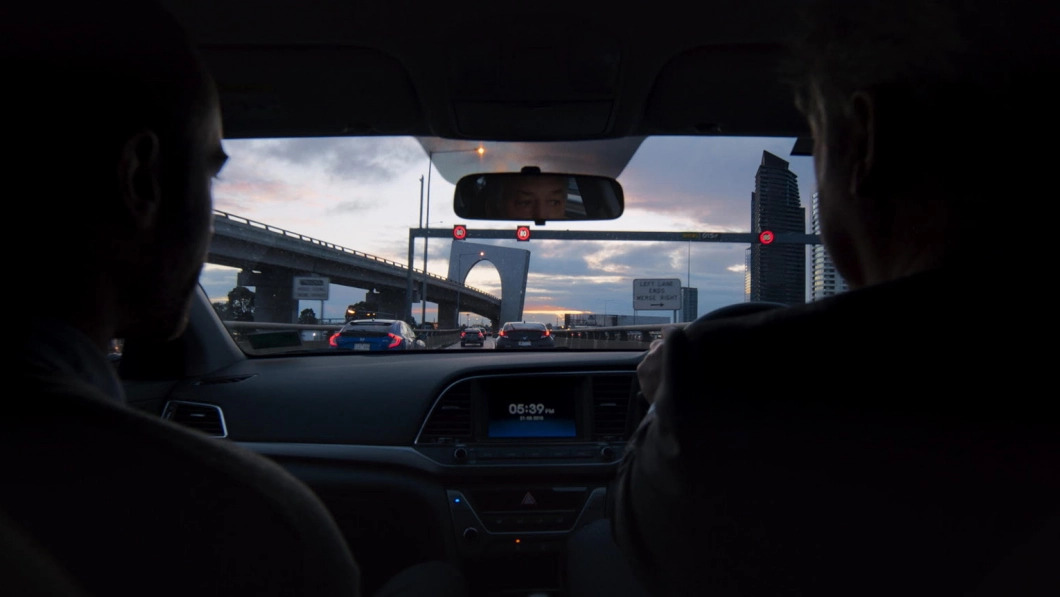
The Plains channels the spirit of Jeanne Dielman into Andrew Rakowski, a middle-aged lawyer who leaves office every evening just past 5 P.M. to drive home to suburban Melbourne. Easteal’s cyclical road movie formalizes this routine, filming Andrew’s commute over eleven different days of the year with a fixed camera from the back seat of his car. On some days, Andrew offers a lift to his colleague David (Easteal himself), probing the reticent young man on his private life while also generously talking about his own: relatives, career, romance, wealth, mental health. Literally compartmentalizing work and life, the commute creates a transitional zone where Andrew can view each as an escape from the grind of the other. It provides a moment of unwinding, freedom from roleplay that both life and work demand. Yet, for all the me-time the drive home affords, there is an eerie silence whenever Andrew isn’t chatting away or the radio isn’t on, as though this non-place, non-time were forcing him to reflect on Important Things. Despite the apparent sameness, every day brings small deviations that threaten Andrew’s reassuring routine, all accumulating into a powerful meditation on aging and the passing of time, a view of life’s parade from the wheel of his car.


8. Red Africa (Alexander Markov, Russia)

Rivalling the best work of Sergei Loznitsa, Alexander Markov’s resplendent found-footage project samples propaganda and reportage films that the USSR made during the Cold War to strengthen its ties with newly liberated African states. In this gorgeous Sovcolor assemblage, we see Soviet Premiers and African heads of state visit each other amidst ceremony and pomp, exhibitions showcase the latest in Soviet culture and technology to the African public and students use the knowledge they have gained in Moscow for the betterment of their countries, whose exported resources return as value-added products from behind the Iron Curtain. It’s a poignant glimpse into a nascent utopia, a world that could have been, which hides as much as it reveals. With cunning visual associations, Red Africa recasts decolonisation as a formal process that concealed fundamental continuities between the departing Western powers and the Eastern hegemon. Uplifting notions of bilateral ties between Africa and the USSR are belied by the strictly unilateral flow of influence and ideology. In its attempts at creating a new world order, Markov’s sharp film demonstrates, the Soviet Union espoused anti-colonial struggles in fraught areas of the globe even as it held sway over its diverse republics—a tragic irony made apparent when the chickens came home to roost in 1991.


9. The DNA of Dignity (Jan Baumgartner, Switzerland)

Jan Baumgartner’s moving, loosely fictionalized documentary The DNA of Dignity follows the patient, heroic work of individuals and organizations involved in identifying victims buried in mass graves during the Yugoslav wars. Along with bones, volunteers retrieve articles of clothing, toiletries and other knickknacks, all hinting at stories to be told of those they have outlived. With witnesses passing away each year and new structures waiting to be erected over these burial sites, the excavations are truly a race against time, fighting both political amnesia and nature’s complicity in the oblivion. In their quest to rescue war victims from anonymity, forensic scientists assemble excavated bones into skeletons, carry out DNA tests to ascertain identities and hand over the remains to grieving families, who haven’t had closure despite the end of the war and who confess to no longer being able to enjoy landscape without being reminded of what it hides. Baumgartner’s film obscures political and institutional details to focus on the scientific process, offering a fascinating, inspiring picture of the how the abstractions of science eventually coalesce into human stories. Its success lies in finding the right tone and distance necessary for a subject as grave and delicate.


10. Animal Eye (Maxime Martinot, France-Portugal)

Martinot’s funny, free-spirited, quietly radical Animal Eye features a 30-year-old Breton filmmaker discussing his next project with his producer in Lisbon. He isn’t very articulate, but knows that the film will be an “autobiographic animal diary” about his dog Boy. “Films are filled with humans,” he says, “all liars.” Animals, in contrast, are not aware of the camera—or don’t care about it—and as chaotic beings of “pure present,” they evade the signifying operations of the image, emptying it of meaning and intention. As the muddled filmmaker slowly “hands over” the project to his smart, wry producer, the film’s central theme crystallizes: in neither owing anything to imagemakers nor expecting anything from them, the filmed animal offers a way out of the crippling egocentrism of artistic creation. In being just an image, the filmed animal becomes a just image. Animal Eye takes the first tentative steps towards the faint understanding that a “cinema of animals” shouldn’t consist of simply filming the world from their eyes, but filming as them, whatever that might entail. Chaining together clips of dogs from across movie history—subject to sadistic torture, sentimentalism and signification, locked out of the human realm—Martinot’s film embodies a rousing rallying cry on behalf of a “deanthropocentrized” cinema. In its own modest way, Animal Eye marks a milestone in anti-speciesist filmmaking.


Special Mention: Saturn Bowling (Patricia Mazuy, France)


Favourite Films of

2021 • 2020 • 2019 • 2015 • 2014 • 2013 • 2012 • 2011 • 2010 • 2009

Crisis unites homes. If the pandemic has forced us to reassess the terms of our relationships, it has also perhaps sharpened our sensibility to the frailties of the body and the mind. That is, at least, the impression one gets from the recently concluded Visions du Réel documentary festival in Nyons. Several works that premiered at the event find expatriate filmmakers returning home, often obliged by aging and ailing parents, to capture less-than-flattering aspects of family life, elevating them into subjects worthy of cinematic consideration.

To be sure, there is nothing sordid about My Old Man, in which director Stephen Vit accompanies his successful salesman dad, Rudi, on his last business trip to China. Rudi works at a large multinational firm and is about to retire after 43 years of service. A Canadian by birth, he lives with his wife in a lush corner of Switzerland that one of his clients calls “paradise.” As a young man, though, he was a perennial globetrotter who always came home “smelling of airplanes and hotel rooms.” His retirement thus offers Stephen a chance to understand the remote figure of his childhood.

Rudi’s retired life, which his son documents on his yearly trips home, is the stuff of middle-class dreams: health, affluence, real estate, recreation. There is obviously some restlessness and boredom stemming from Rudi’s sudden loss of purpose and some discord with his wife born of his mean streak. There is also a degree of malaise in the couple’s (re)adjustment to life under a single roof after decades of virtual singledom. But the existential crisis and marital breakdown that Stephen forebodes, almost hopes for, never materializes. Yet, as his father watches old home movies on VHS tapes, something like the regret of lost years traverses his teary face. Rudi has become old.

When Peter Entell began documenting his father Max in Getting Old Stinks, the latter was already over seventy-five. An American settled in Switzerland, Peter filmed his father on his annual stateside trips over fifteen years until the old man’s death in the early 2000s. But the filmmaker didn’t revisit the footage until 2021, when he was sixty-seven years old himself, the age that senior Entell had his first cardiac arrest. For Peter, then, the film is something of a meditation on his own aging, and its title appears to reflect his feeling about the process.

The filmmaker assembles his material chronologically in a repeating structure. In each variation, we see Peter and his three elder siblings travel from all over the world to visit their father at an assisted living facility in California. The occasion is Max’s birthday and the family goes to lunch at a Chinese restaurant, gathering at the same table and ordering with the same waiter. They all wish the old man, read fortune cookie predictions and make jokes about it. After a few cordial hours back at the old-age home, they bid farewell. These variations are bridged together by old family photographs, with voiceover by Peter addressing the film to their absent mother who never had the chance to grow old.

Over the course of fifteen years, we see Max deteriorate from a sharp super-senior who trots out songs from memory to a frail figure who is hard put to recall his wife’s name. A favourite poem that he recites turns from a token of his charm to a test of his memory. The children, too, grow old, yet the jokes on the lunch table remain the same, becoming quainter with each passing year. A longitudinal study of the Entell family’s annual ritual, Getting Old Stinks is a poignant document about the ravages of time on human bonds.

When Humaira Bilkis, the director of Things I Could Never Tell My Mother, returned home to Dhaka after her studies in India, she found her once-liberal mother Khaleda transformed into a devout woman after a pilgrimage to Mecca. Where young Khaleda wanted her daughter to grow up to be a painter, she now repudiates images. She laments the fact that her daughter makes films, collects old photographs, stays out late and, most importantly, refuses to get married. It is left to the viewer’s imagination how she would react if she learnt that Humaira has a Hindu boyfriend in Calcutta with whom she has trysts in a friend’s apartment.

Khaleda’s constant sense of disappointment and maternal failure weighs heavily on Humaira. When the pandemic hits, the filmmaker is obliged to take care of her ailing parents, forced to live with all this corrosive emotional furniture. Her response? To film her life, to turn the overly familiar into something akin to a “text” that could afford her the necessary distance. It is telling that the relationship between mother and daughter is at its most cordial when Humaira is away on work in Japan and makes video calls to Khaleda, telling her of the freedom women that enjoy there.

All through, Humaira imagines her romance in terms of the love poems her mother wrote as a young woman. In turn, she narrativizes her mother’s life through the images of her film. In Things I Could Never Tell My Mother, art becomes a mediator in family life, the crutch using which individuals tolerate one another.

Filmmaker Wenqian Zhang’s mother is worried about her daughter’s future too in A Long Journey Home. Like Humaira, Wenqian has completed her film studies abroad and has now returned home to mainland China. Her mother’s worries and appeals notwithstanding, she doesn’t yet want to get married to her boyfriend (and co-producer), Yue Huang. She says she doesn’t believe all that much in marriage.

For good reason, since her own parents are an irreparably damaged couple. After a series of failed business ventures across the country, Wenqian’s father Bo is now a stay-at-home husband mistreated by pretty much everyone around. His wife belittles him at every opportunity, even hitting him at one point. His brother-in-law insults him for owing money. Even his parents-in-law, who live in the same house, use him to run errands. A pitiful figure, Bo seems the quintessential product of patriarchal pressures on men. The most tender scenes of the film feature Wenqian lending a sympathetic ear to the broken man, who is in turn more understanding of her feelings and aspirations than her excessively pragmatic mother.

Wenqian composes the film as a series of static shots, all of which are interesting in their studied composition and some of which are downright dazzling in their use of off-screen space. This formalist reserve allows her to describe the domestic space with fluency and provide us a glimpse into the relative affluence of the Zhangs.

Located at the farther end of the class spectrum, the family of Elvis A-Liang Lu, director of A Holy Family, is something you might imagine having seen in a Tsai Ming-Liang film. Laconic to a fault, his father is an incurable gambler who cannot keep away from the numbers racket even when he is dying of cancer. His mother is a perpetual sufferer who walks up and down the stairs to maintain the home shrine. His brother fashions himself as a spiritual medium, relaying concerns of paying customers to a pantheon of gods. On the side, he grows cash crops on a small patch of land subject to the vagaries of weather. The whole family seems to have surrendered its future to faith and luck, which are at times indistinguishable.

It is perhaps not surprising then that A-Liang left for Taiwan as a young man to determine his own life. His mother calls him home at the beginning of the film, broaching the subject of her death, audibly making him uncomfortable. Over the course of A Holy Family, A-Liang changes from a seemingly indifferent son to someone with pangs of guilt over ‘abandoning’ his family. Like with Humaira Bilkis, filmmaking here serves as an instrument of reconciliation with the family. A-Liang’s lot is unhappy in its own way, but his film is bracing in the way it transforms this unhappiness into a graceful portrait of a modest family playing with the cards it has been dealt.

[First published in News9]

Slavoj Žižek once argued to the effect that capitalism can only truly be actualized in a communist state like China. In Ascension (2020), nominated for the Best Documentary Feature Oscar, American filmmaker Jessica Kingdon travels to the country that she has roots in to test this hypothesis, as it were. Amassing footage from factories, markets, corporate offices, training seminars, recycling plants, business conferences and theme parks, Kingdon builds an experimental documentary that seeks to illustrate the march of the free market, Chinese style.

The film opens in a literal labour market where head-hunters from various companies recruit blue collar workers like hawkers selling wares. They announce the nature of the job (standing/sitting), wages offered, allowances and other curious requirements: no tattoos, no prison record, perfect vision, no metal implants in the body and maximum allowed height. Once the quorum is achieved, company buses ferry the new recruits to their respective dormitories and workplaces.

Shortly after this, we see vignettes of Taylorized labour from the food, textile and packaging industries: workers sort roasted ducks, jeans pants, plastic bottles or syringes, while elsewhere, they segregate incoming trash for recycling. The job is repetitive, but the procession of commodities on conveyor belts makes for alluring patterns. Soundbites present employees’ complaints with their bosses and their pay.

This section also contains the most extraordinary find of the film: a nearly all-woman shop floor that manufactures life-size sex dolls. The women are absorbed in work, either designing the dolls or instructing trainees on finer details. Their precision and skill make them look like gynaecologists or coroners; they measure the size of nipples, craft private parts, glaze the skin and fill cavities. They handle chemicals and high-temperature tools without gloves, and this scene of women exposing their real bodies to hazard in order to produce fantasy bodies makes for some uncanny images.

Half-an-hour into the film, the attention turns to the service industry, where neophytes in different domains are put through arduous, even inhuman training regimes. This is evident in the episode set in a company that supplies security personnel. Indistinguishable from an army boot camp, the firm’s induction programme humiliates recruits for their mistakes, makes them slap each other until they are sore and has them perform dangerous car stunts. But equally rigorous are the preparatory classes in the field of hospitality, where candidates are instructed on how many teeth to show when smiling or how high to raise the arms when going for a hug.

How is capitalism à la chinoise different from capitalism elsewhere? For one, it is complicated by forces external to the market, but not inimical to it. Ascension traces how the Chinese state’s emphasis on civic virtues combines with free market values to inculcate an economic morale in the citizens. Trainees pledge their “loyalty” to the company: “I will behave myself!  I will follow orders!” they declare marching. The Chinese dream — hard work guarantees success — is only the American dream in garb, but when laced with a dose of wounded nationalism, it can become a moral imperative.

Ascension, however, has greater ambitions and makes forays into the informal economy of freelancers and influencers — the subject of Shengze Zhu’s fine documentary Present.Perfect (2019). Streaming their lessons or everyday life simultaneously on different online portals using multiple smartphones, these young entrepreneurs use the same predatory language of their corporate counterparts: “knowledge that is monetized is useless” avows one personal branding guru; “influence or be influenced,” states another.

The film trains its guns finally on the consumers themselves: hordes of young college goers enjoying theme park rides, kiddies on a day out at the water world, gamers sealed to their seats playing Dota in internet cafes. We accompany an affluent family that at an upscale restaurant, served by the waiters we have just seen in training. They discuss European table manners, cutlery design, ski resorts and the trade war with US. It would seem that the elites are in some kind of self-training too, modifying their manners to imitate old world bourgeoisie.

Ascension contains some on-screen text and snatches of conversations between factory workers. But there are no voiceovers or talking head interviews with authorities to guide us through its narrative. It is indeed admirable that the film expects the audience to do the intellectual labour of accessing its meaning. But this comes at the cost of rigour.

Ascension is characterized by the bloat that often accompanies an overabundance of research material. Like American documentarian Lauren Greenfield, Kingdon has enviable access to scores of factory floors, corporate training programs and consumer forums — access whose details she does not care to reveal. Her film seems gripped by the anxiety of leaving anything out from the wealth of footage that must have come from this outing.

The result is a highly unwieldy film that goes everywhere and nowhere in particular. It isn’t that Ascension has no discursive framework, but that its material is so wide-ranging and scattershot that the film’s argument is generalized and its focus spread thin. Kingdon jumps not just across industries, factories, work sites and job descriptions, but also across economic activities and modes of being. The film’s vignettes are all connected by the single fact that the participants in them are embedded in the capitalist machinery. But then, who isn’t? Filmmakers perhaps. That Ascension is produced by MTV, a network known for shaping late-capitalist visual culture, is an irony that the film lets pass by.

It is to Kingdon’s credit that the film does not devolve into a freak show like Greenfield’s Generation Wealth (2018) or Sascha Schoeberl’s Mirror, Mirror on the Wall (2020), although the shot here of an automatic piano playing the Addams Family theme doesn’t exactly feel out of place. The filmmaker is also able to capture workers during their “down time”, breaking for lunch, taking a nap or watching videos at work.

These embellishments aside, the dominant note of Ascension, amplified by a nervous-making score, will only serve to reinforce the viewer’s prejudices: factories are dehumanizing places, the rich are fake and shallow, the service industry is a put-on, and the planet is drowning in our greed and glut. The film’s formal gambit, which has precedents in non-narrative works such as Godfrey Reggio Koyaanisqatsi (1982) and Ron Fricke’s Baraka (1992), means that we barely get to know the opinions of the participants themselves on work, money and good living.

The concern that Ascension exhibits about the malaise of our times is obviously justified. But its diagnosis lacks the discipline and precision needed to advance the debate. There is a shot of a caged ostrich late in the film, sandwiched between sequences about video gamers and theme park visitors. Its purpose or emotional logic is unclear, and like much else in the film, it is washed away in the excess on display. Kingdon’s film needed just what its subjects do: a little bit of minimalism and abstinence.


[First published at News9]

Build the Wall (Joe Swanberg)

Why would Joe Swanberg, 39, feel the need to focus on the aging pangs of a fifty-year-old? Perhaps the precocious auteur, who had a body of work by the time he turned thirty, feels professionally, mentally much older than he actually is. Or perhaps forty is the new fifty. In any case, we are far from the interpersonal dynamics of Drinking Buddies (2015). Kent (Kent Osborne), who is the anchoring perspective of the film, is set in his ways. He is turning fifty, a fact he isn’t particularly fond of, and is having an old flame Sarah (Jane Adams) come over for his birthday. Unfortunately, another friend Kev (Kevin Bewersdorf) invites himself over at the same time, insisting that he will build the stone wall in Kent’s garden that he has long promised and that he will be as discreet as possible about it. Kent tries in vain to dissuade Kev because he has made romantic and work-related plans with Sarah that he doesn’t want to upset. But even Sarah occasions deviations from Kent’s routine; she gifts him a new vacuum cleaner he had made clear he doesn’t need. In a scene that’s literally a boner killer, he interrupts sex with Sarah only to get hung up on a shower curtain she keeps dislodging everyday. Kent’s mounting exasperation doesn’t derive as much from not ‘living in the moment’ as from the frustration of his wholly reasonable desire to keep his life simple and organized.

All of Kent’s expectations are thwarted: he falls out with Sarah, who ends up helping out Kev with the wall, around which a veritable community takes shape. The narrative partly hinges on the comic reversal that the over-serious, self-parodical, lone wolf Kev ends up forging a more wholesome relation with others than the sensitive, laid back Kent. But Swanberg doesn’t milk this scenario for its third-wheel comedy. (All the characteristically uncomfortable humour stems, instead, from Kent’s days out with Sarah.) He is rather interested in exploring the contours of romance at an age where you possibly expect to be accepted as you are. There is, equally, a simplification of form evident in the film, which runs for less than an hour. To be sure, scenes are still constructed around improvised acting and predominantly natural lighting, but there is an economy of exposition that feels positively mid-to-late career. With an exception of a pan shot here, a handheld shot there, most of the film unfolds in static shots, with the director occasionally drawing us in to the conversations using tighter setups. The more explicit flourishes, like cutting on sound cues, are muted by the overall austerity of the film. The film is set in a lush, wooded corner of Vermont and its meditative pace is redoubled by the natural expanse of the region. Swanberg also sets a series of formal counterpoints: intense, lone outdoor activities (wall building, axe throwing, woodcutting) that sublimate domestic frustrations, harsh sounds of sawing and stonework piercing the sylvan silence, and Kev’s DIY documentary sequences interspersed with Kent and Sarah’s fumbling. He perhaps forces the issue a little towards the end, but a shot of Kent in a jumpsuit sawing wood on his birthday is poignantly emblematic.

Coronation (Ai Weiwei)

A documentary on Wuhan’s COVID-19 outbreak made by Ai Weiwei: fair to expect that the artist’s iron fist will come down hard on China. It indeed does, but it’s the velvet glove that comes first. Coronation opens with overview shots of Wuhan’s impressive skyscrapers and advanced highways. Two people drive into the cordoned-off Hubei province and are interrogated by cops at the border. When they do manage to get in, the region registers like a ghost town from a modern horror movie, with no gas station open for hundreds of miles. They somehow make it to their home in Wuhan, only to find the fish in their aquarium dead. Ai constantly shuttles between such personal accounts of the lockdown and a macroscopic view of state-controlled healthcare and funeral activities in the province: treatment of patients on ventilators, extremely strict safety precautions followed at a hospital, song-and-dance exercises for patients that instruct them in best hygiene practices, construction of sprawling health facilities overnight, the equally rapid evacuation from the facility, package and delivery of the ashes of the cremated to the bereaved. A good part of the footage is slick, employing zany camera setups even in highly-restricted locations. Working from Cambridge, UK, Ai doesn’t reveal how he commissioned/obtained all this material (some of which were already circulating on the internet), nor does he get caught up with ethical questions such an approach raises. By all appearances, it’s a supremely efficient machinery that we witness in Wuhan. At times, Ai overlays these images with an 8-bit musical tune, as though to suggest the state’s video-game-like approach to problem solving. But the critique in these ‘macroscopic’ project remains muted as the sequences retain a Wiseman-like surface level neutrality.

The critical burden is, instead, placed on individual testimonies: a delivery man who is stuck in Hubei and is unable to return home, a lady who couldn’t see her father-in-law after he was diagnosed with the virus and died, patients at the hospital who claim they are being retained even after recovery just for image management purposes, a man who is prevented from collecting his father’s ashes without being accompanied by a ‘work unit’ in charge of his father’s case. A humorous sequence features an old woman, once a diligent middle-level executive in the Party, who fully trusts her government and refuses to consider information that might upset this faith. Earlier, workers at the hospital reception ask the cameraman to show only positive images of Hubei and to avoid emphasizing the outbreak. What emerges from this composite portrait is a sense that the source of China’s greatest strengths—executive efficacy, responsiveness, technological progress—is also the source of its more worrisome qualities—citizenry that lives in fear and denial, complete control over private data, an autonomous political will. Of course, none of this is news to anyone, but the personal testimonies introduce a grain of resistance that cuts down the stakes to human level. As the young man who is trying to recover his father’s ashes says, “one can’t just vanish silently in this world”.

A Shape of Things to Come (Lisa Malloy, J.P. Sniadecki)

Sundog (an inspiration for McConaughey’s Moondog in The Beach Bum?) is an elderly white recluse who lives somewhere near the Mexican border in a desert stretch of Arizona. He resides in his barely recognizable trailer, around which a tiny ecosystem has sprouted. Several cats live with Sundog, who also rears a battalion of pigs with great care. With his rifle, he hunts boars to feed himself and the cats. At one point, we see him catch toads, wash them and extract glue from their feet, which serves as smoking material once it’s dry. Save for a series of grunts and chortles, he doesn’t speak to the camera. At times, we see him calling someone, presumably his son, asking him to come over for a visit or pontificating on the state of things. This stilted exposition device, combined with the filmmakers’ decision not to be seen or to interact with Sundog, reveals a slight fictionalization at work. Like wildlife photographers, Malloy and Sniadecki are discreet, content in filming the old man in his routine. Almost exclusively, they photograph him in very tight shots such that we hardly get to see his immediate surroundings or even his actions. This, combined with the shallow visual field, inhibits our vision and produces a sense of unwelcome, suffocating intimacy. This way, the film dislodges Sundog from his environment while also avoiding picturesque images of the desert.

The film naturally calls to mind another fly-on-the-wall portrait of a recluse, Wang Bing’s Man with No Name (2009). But unlike Wang’s film, A Shape of Things to Come has little anthropological or philosophical inclination. Its attention is more on the human-interest story offered by the person of Sundog. Moreover, in contrast to the hermit in Wang’s film, Sundog is not a ‘primitive’, ‘naturally’ independent of human communities. He is, in fact, a sophisticate, an emissary from the countercultural movements of the seventies, who has deliberately removed himself from society. He wears jeans, has a mobile phone, drives a pickup truck, purchases books at the nearest shop from time to time, and listens to music on the radio. He even goes to the local concert, where he dances. He doesn’t need to be on his own; it’s a choice. Interspersed with vignettes from Sundog’s routine are images of military presence: A10s flying over the desert, border patrol presumably monitoring illegal migration, incongruent surveillance towers scanning the desert. Increasingly bothered by this ‘encroachment’, Sundog decides to take out a couple of towers with a powerful sniper rifle, and becomes something of an eco-terrorist in the process. As its title indicates, the film proposes Sundog’s story as one possible sign of things to come. I am not entirely sure if there’s any significant ideological inference to be made from Sundog’s actions. They could as easily represent a form of redneck libertarianism as much as a militant environmentalist consciousness. This is where the filmmakers’ refusal to intervene, either within the film or through a framing commentary, arguably hurts the work.

A Night at the Opera (Sergei Loznitsa)

The protean, prolific Sergei Loznitsa makes his documentaries using one of two kinds of material: original footage shot on location or archival footage. Considering his recent projects, I find that films fashioned out of Loznitsa’s own stock tend to be markedly superior to his found footage work. In both cases, the filmmaker assembles his sequences without any voiceover commentary and with hardly any on-screen text. The construction has a tendency to be deliberately diffuse, with shots of extended lengths furnishing very little narrative material at first glance. This approach turns out to be quite productive in the “original footage” films such as Maidan (2014) and Austerlitz (2016) because the impression of a synthesis at work is more evident. What is possibly also helpful is that what we see in these films doesn’t come with a received narrative, which means that the viewer is expected to do more work in negotiating with them. On the other hand, Loznitsa’s found footage projects, like The Event (2015) and State Funeral (2019), by the weight of their subject matter, greatly limit the number of ways the viewer could approach them. For instance, the latter film consists of a veritable onslaught of state-sponsored pageantry at Stalin’s funeral whose meaning is exhausted even before we are through with the film. There’s hardly any ‘justification’ of why one shot was selected over another or why the film lasts as long as it does. With Loznitsa vehemently refusing any discursive framework, the viewer is no more enlightened or surprised than at the beginning of the film, save perhaps an admiration for the enviable access that the filmmaker has to archival material.

I won’t push this objection too far, for it can be made to almost any found footage work. Moreover, The Event demonstrates why even such an approach can be illuminating in light of current global crises such as the one featured in Maidan. On the other hand, Loznitsa’s new archival work, A Night at the Opera, is another baffler. For just under twenty minutes, we see the who’s who of international politics and culture trickle into the Garnier Opera in Paris. The timeline can be roughly pegged at the late fifties, or the early sixties, but it isn’t clear whether the footage is of one single event or many. The VIPs arrive at the entrance, greeted by teeming fans, pose for the press and enter the opera. A few stray, intimate moments capture a smiling guard or little girls anxiously waiting with bouquets, but for the most part, it’s a high-society affair. After the national anthem, we see a telephoto sequence of a prima donna performing to great applause. As the film ends with images of the Parisian public celebrating on the road, I wondered what to make of it. The sole emotion the work evoked was the pathos inherent to all archival footage: a sense of death at work, all the pomp and power leading to the grave. Like those aristocrats in Russian Ark (2002), indulging in one last flourish before the fall, the top bananas at the gala affair seem ready to be culled by time. It’s a melancholy feeling, but it’s hard to deny that it’s also the product of laziness. With the absence of any knowledge about the Garnier Opera during the fifties or any accompanying text to ‘pin down’ the context, the material we see seems no more special than what you might find in the Agence France-Presse vault. That may not be Loznitsa’s problem. But then, maybe it is.

Ridge (John Skoog)

Swedish filmmaker John Skoog’s debut is set in his native Skåne County in the south of the country. Ridge revolves around a dairy farm in the countryside, but doesn’t follow a familiar narrative line. What we get is a mosaic of scenes from the vicinity of the farm involving men, animals and machines in isolation or in interaction: foreign workers from Poland arriving by ferry to the farm, a local supervisor walking them through the routines, harvest machines working on the fields, cows being milked by robots, residents collecting snails at night with flashlights, a migrant worker writing a musical greeting card to someone back home, two children playing a farm simulator game, a largely mute girl corralling cows that have broken free, a flea market suggested through a tracking shot of a stall with objects, fully costumed hunters entering cane fields, a cat in the house being thrown out, a picnic of young people in which one passes out, a machine cutting trees all alone in the dark, a burning car, a disco party and so on. There are a handful of protagonists that emerge, characters and locations that appear in multiple scenes, but there’s no sense of progress or causality across them. These documentary shards of information are, instead, loosely held together by the sensation of northern midsummer and the generally upbeat and mischievous feeling that goes with it.

Skoog, consequently, emphasizes the ambience. His smooth tracking shots glide over fields and pastures at golden hour. His meticulous sound design, which regularly drowns out human voice, mixes electronic music, machine drones and natural sounds. Despite not being about individuals or even humans per se, Skoog’s work with actors is noteworthy. An improvised scene with a Polish youth receiving a haircut becomes an impromptu lesson on immigrant behaviour and cultural differences, which then turns into a bullying session. The film opens with a voiceover recounting the legend of two cows that go wild; the two cows will make their appearance at the end. The work thus blends personal experience, folklore, fictional and documentary passages without favouring any of them. To some extent, Ridge recalls Koyaanisqatsi in its weaving of human, mechanical, animal and natural presences into a larger tapestry of life in a particular region. But Skoog’s film is vehemently anti-didactic, refuses as it does even the basic enticements of a narrative. On the other hand, it’s a work full of surface pleasures, especially Zbroniec-Zajt’s twilight cinematography. The result is a beguiling if befuddling portrait of migrant experience in the vein of Apichatpong Weerasethakul.

Those That, at a Distance, Resemble Another (Jessica Sarah Rinland)

Jessica Rinland’s unusually titled film (and unusually presented in two aspect ratios, 1.33 and 1.85) is also an unusual museum documentary. It begins with an on-screen text that muses on the relation of a replica to the original, tracing the parentage of painted animals to real animals, which themselves are DNA replicas of original specimen. The film opens with a replica too. A researcher-curator has a replica produced of an elephant tusk. She unpacks it carefully from its container, sucking out the flour-like powder protecting it. We will remain with this replica for a large part of the film, as the curator cleans it, has it broken with a hammer for an unspecified reason and glues back the broken pieces again for an unknown reason. Interspersed between these actions are other allied activities at the museum restoration section. What makes Rinland’s film go against the grain is that it refuses to give any context for the actions we witness. The activities we see are, in fact, undertakings at different museums across the world, but we don’t know that until the final credits. We assume that it’s the same cast replica of the ivory being processed, but we are in fact observing several artefacts, real and replicas. This destabilizing erasure of the boundary between real and fake also makes the viewer suspicious of the film’s apparently documentary nature.

Rinland is no Frederick Wiseman, her interest is not in the politics of art objects and institutions. If her patient observation of restoration activity recalls Harun Farocki’s work, the patently anti-explanatory bent of her film couldn’t be more different. Unlike traditional museum documentaries, Those That Resemble provides no supplementary information, no detail on the nature or history of the artefacts, the institutions sheltering and handling them. Rinland’s camera is relentlessly trained on hands performing a range of tasks: brushing casts, turning book pages, kneading dough to secure the casts, removing layers of packing material, chipping stones, drawing graphs and measurements, fixing ivory-lined boxes, cutting sponge into blocks that are then used to prime a tusk, laser cleaning a piece of ivory and so on. These activities take on a hypnotic quality in their zen-like focus on objective-bound activities; they are also very pleasurable to the obsessive-compulsive part of the brain trying to complete patterns. Large stretches of the film unfold like unbox therapy or five-minute craft videos, underscoring the care and precision with which the artefacts are handled. Recalling the cinematography of Claire Denis and Claire Mathon, Rinland’s camera exhibits a curious material fetish, fixated as it is on various textures natural and artificial. I was also reminded of Mani Kaul’s Mind of Clay at many points.

America (Garrett Bradley)

America opens with one of its many references that go over my head: a photo of black entertainer Bert Williams, who becomes a springboard for the film’s critical reflection on the visual history of black performers and entertainers. Stills and extracts from silent films featuring Afro-American actors are excerpted over ambient noise from the present. This archival material is intertwined with fictional passages shot in strongly monochrome 35mm: a black woman in post-Civil war South walks by cane fields and strips a white man wrapped in a long white cloth. The cloth flies over the field, becomes a plaything for a group of kids. It’s then trampled over by a unit of black Union cavalrymen, before being appropriated by them as a flag. The film’s dreamlike central section features even more disconnected vignettes: a boy scout group from Louisiana two of whose members play with telephone cables, a baptism filmed in split compositions, a table fan in the open, rotating doors, women skating, a couple dancing, disco lights, a knife falling and men with musical instruments staring at the camera. These seemingly unrelated glimpses of 20th century (Louisianian?) black experience, however, converge as the focus shifts to professional entertainment.

Louisiana-based Bradley, it appears, is interrogating the history of black representation as consumed and internalized by black viewers. Clips from silent films show Afro-American performers in exaggerated blackface caricaturing black life for a predominantly white audience, whether they are bumbling in a barroom dance or romancing on a merry-go-round. Bradley provides corrective recreations in the present, black performers executing graceful movements, gestures and actions in their respective fields. Bradley’s telescoped look at the history of black representation is sometimes quotational, as with the familiar image of athletes and baseball players, and sometimes revisionist, like as when we see an Afro-American orchestra conductor or a female aviator—images of black cultural contribution we aren’t regularly exposed to. The schema becomes apparent in a scene, filmed in tracking shots and canted angles, which recreates the Last Supper with black Jesus and apostles. The performers striking tableaux in America, in contrast to their predecessors, are black entertainers playing as and for themselves. In its exploration of the place of black figures in popular visual culture, America is a companion work to Ja’Tovia M. Gary’s The Giverny Document, in which the marked absence of black bodies in the Western artistic canon is juxtaposed with the safety of black women in public spaces. If less ambitious or polemical, Bradley’s film is more attuned to cinema history and, with its baroque compositions, superpositions and sharp chiaroscuro images, is also formally alive.

Present.Perfect. (Shengze Zhu)

Present.Perfect. is about China’s live streaming craze, which witnessed a regular user base of 422 million in 2017. To explore this phenomenon, Zhu has reportedly sifted through 800 hours of streamed footage and fashioned a film of two hours. The first section of her film is democratic and presents a mosaic of video clips. The selection predominantly consists of uniformly young men and women in blue collar jobs telecasting their everyday routine: wrecking buildings, transporting bags, running a pig farm, cutting trees, welding, digging ditches, and so on. One host offers “agritainment” to “rich city folks” through his organic farming sessions. Curiously resembling regular, festival-level contemplative cinema, this genre of streaming transforms boring jobs into spectacles enjoyed by people around the country. And Zhu’s non-hierarchical assembly of these clips offers something akin to the crowdsourced documentary Life in a Day, the cumulation of several idiosyncratic users functioning as a kind of collective portrait of young China. What we perceive is an entire country entertaining and being entertained by each other, a massive service economy masquerading as entertainment industry. As one host puts it, while streaming a cockroach carcass being raided by ants, “I’ll talk about whatever you want to hear”.

While this process of constantly turning private life into a public spectacle might appear worrisome, we see liberative strands emerge. In this snapshot of how a nation looks at itself, we observe how individuals, especially the most disenfranchised, build a self-image. Queer users and sex workers seem to have found a relatively safe space to express their voice or ply their trade. The terminally lonely find community, the terminally bored get entertainment, and those anonymized by assembly line work recuperate a sense of individuality through their devoted viewership: shooting with a selfie camera, they literally position themselves at the centre of a world that otherwise consigns them to the margins. In the longish title card, we are told about the popularity of the medium, but also the government’s measures to shut down channels telecasting unlawful content, such as violence and self-harm. This dialectic between private aspiration and state control, however, vanishes when the film abandons its sampling approach to focus on five particular hosts: a burn survivor who preaches against god, a single mother working at a undergarment factory, a street dancer with an awkward style, a mendicant with severely disfigured limbs and a factory worker suffering from a sexual maturity disorder which makes him look like a boy. The interest wanes—and the insight vanishes—as the film devolves into a freak show of sorts. On the other hand, as the film’s witty title indicates, Present.Perfect. demonstrates that live streaming profoundly transforms the nature of cinema as we understand it. The ‘cinema of the past’, based on recording reality and later transmitting it, makes way for a cinema in the present, viewed at the same time it’s made. The real-time exchange facilitated by the platform paradoxically takes cinema closer to its origins, turning it into a kind of low-grade, interactive vaudeville. How long before the corporates jump in?

Unpublished

The striking feature of recent cinema is the scattering, disappearance even, of human presence, or at least the suppression of the individual, his dilution, his erosion, his erasure, his atomization, I don’t know what the right word is. In order not to compromise myself too much, I’ll speak of “rarefaction”.


The situation manifests itself in many forms.

Firstly, there is human erasure to the advantage of the animal. We have in this category some of our successful documentaries, Winged Migration, Microcosmos. But the phenomenon has expanded: the contagion also impacts fiction (The Bear, The Big Blue and its dolphin, Two Brothers and its tigers, Roselyne and the Lions¸ The Fox and the Child). We sense here a desire to seek “nature” in general, rather precious in an era marked by technology. Moreover, Jacques Perrin, the producer of the two aforenamed documentaries has also produced Himalaya, which shows life in a current-day society, but one untouched by civilization. Annaud, the man behind The Bear, also tackled Quest for Fire and His Majesty Minor, a prehistoric super-production, a nostalgia for barbarism that paradoxically requires the most sophisticated technical means.

The predominance of the animal over man already existed in Hollywood cinema in a more specific way through Rin Tin Tin, King Kong, the Disney factory and the products of MGM, which glorified the dog Lassie, the cervid of The Yearling, the nag of National Velvet, the MGM that was, by far, the most reactionary company in Hollywood.

We find a similar equation in France.

Brigitte Bardot, who admirably campaigns for seals, reveals herself through her Mémoires to be rather close to certain racist stances. It’s also true that there still exist canine competitions based on… the purity of breed. Love for animals and racist or right-wing behaviour (cf. François Nourissier) are often interrelated, just like how the love for sport or nature frequently coincides with a reactionary or pro-government ideology.

This massive animal intrusion in cinema is enabled by the very principle of the film exhibition system. Children often go to cinema with their loved ones, which makes for a large viewership. It’s thus a very, very profitable market, much more than that of children’s books, which only children read.

And what the child likes is animals. Many animals are of kids’ size, or even smaller (canaries, dogs, cats). The child can hence dominate them, whereas he is at the mercy of adults. He can even tame a large animal (there are ten-year old mahouts), generally and logically more stupid than the kid.

The infantilization of the entire cinema audience is hence a given, even though most animal films are made specifically for kids. The cream of the crop would be to make films for children that are not too stupid and which even adults can appreciate (Cocteau’s Beauty and the Beast, Demy’s Donkey Skin). Mind you, adults love showing their parental love by going to idiotic movies with their kids. It allows for quid pro quos like this: “You forced me to go see 101 Dalmatians. Now, you’ll help me by staying out of trouble.”

Animal and children’s movies have the advantage of lasting forever: a ten-year old child will go see Snow White in 2009 or in 2039 as much as in 1939. No need for expensive remakes, necessary on the other hand for fiction films, dependent as they are on new stars and modern costumes. Hence, colossal profits.
We see then that man’s erasure to the advantage of the animal, if it’s increasingly frequent in cinema, doesn’t offer much of interest. It’s pretty low-brow stuff.


On the other hand, there exists a temporary distancing of man, a distancing that I’d call “tactical”, which can turn out to be very productive. We find it in classical American cinema. It’s not a distancing of man in general, but an obscuration, a withholding of the hero, specifically at the beginning of a film. The hero doesn’t appear until several minutes, sometimes half-an-hour, into the film, and we find it hard to spot him. A good example would be the beginning of Sergeant York, where we don’t immediately recognize Gary Cooper, who appears at the end of the second reel, deep in the frame, somewhat hidden. The beginning of the film helps depict the ambiance. The other characters of the film, always blended into the story, seem to have been picked up on the spot, played as they are by less-known actors. The viewer hence has an impression of reality unfolding. A while later, there is the sudden entrance of the hero, who is not only the beloved star, but apparently also someone like the others whom we’ll have the pleasure of recognizing (we had paid to see him, we aren’t conned, phew!), someone who is close to you and anchored in the reality of a quasi-documentary. It’s the same device we find in Raoul Walsh, notably in A Lion is in the Streets.

This also corresponds to the structure of the classical novel: twenty or thirty pages of presenting the place, the milieu, the era, the secondary characters, before coming to the protagonists. It is, for example, Balzac’s approach in The Duchess of Langeais, whose main action starts very late.

We find this tactic in Tavernier’s films such as Captain Conan or Safe Conduct. The device doesn’t work as well in Conan given it’s not Gary Cooper, but less-famous actors, like Philippe Torreton or Didier Bezace, whom we don’t necessarily recognize. When it’s Gary Cooper, we at least understand right away that he’s the hero…

In every sequence of Safe Conduct, thanks to a colossal effort, Tavernier succeeds in making his hero, Gamblin, emerge after a few seconds in an ambiance that’s already carefully developed. Gamblin becomes part of the reality. His character becomes incontestable, irrefutable.

This initial erasure of the protagonist is a brilliant dramatic trick that glorifies his future presence all the more.

We find an even more modern approach that begins with Purple Noon (Réné Clément, 1959), where, in the middle of a police plot, the camera loses track of the story and lazily shows various stalls of a fish market—a nice diversion that Pierre Kast will repeat in 1978 with Le Soleil en face.

The principle will be amplified in Antonioni. In L’Avventura (1959), the heroine, Lea Massari, mysteriously disappears from a small island. The other characters will spend a good part of the film looking for her in vain (there will be a similar disappearance of the heroine mid-film in Hitchcock’s Psycho, made three months later, but it turns out better: we see right away that she is murdered).

And there’s the astounding ending of L’Éclipse (1961): Antonioni leaves the star couple Alain Delon-Monica Vitti once and for all to linger for about ten minutes on urban still life, roads, buildings, cars, trees etc., forgetting human beings altogether.

I confess that I don’t appreciate most of Antonioni’s films; they are boring, but I must acknowledge that he set a precedent, that he started something. He’s a precursor. In my opinion, he paid the price. But his influence, as well will see later, seems incontestable. He is singlehandedly responsible for the existence of more elaborate works his colleagues and imitators will produce.

Godard’s entire career seems to constitute a quest towards an increasingly provocative and radical erasure of man, of the individual, of the actor. Starting from the omnipresence of Anna Karina or Belmondo, he’ll proceed, step by step, to diminish the human being, to exclude him, forget him, to deny his identity. For a start, the dubbing of Belmondo by Godard himself in Charlotte et son Jules (1958) was prophetic. And later, there were the long theoretical speeches made by an invisible actor over the image of a silent worker in the middle of Week-end (1967). And even more drastically, the non-performance of the two superstars Yves Montand and Jane Fonda, often filmed from behind, in Tout va bien (1973): the presence of stars and their vacuity for the sake of the form; their fall from the pedestal… we can also wonder whether it’s the imposture of the star system or the minimalism proper to each human being, a simple atom lost in the world, that the film expresses. Or maybe both at once.

Godard will go farther with Nouvelle Vague (1990), where Alain Delon—decidedly destined for the suppression his personality seems to cry out for—occupies an insignificant place compared to the invasive trees, who will be the only stars of Germany Year Zero (1991).


Long live oaks, down with penguins. Such is the lesson of modern cinema1.

These films by Godard belong to his Maoist or post-Mao period, and so it wouldn’t be surprising to find a very similar perspective of man in Asian or Chinese filmmakers2.


To simplify things, I’ll take three examples (but there are many more): Goodbye South Goodbye (Hou Hsiao-Hsien, Taiwan, 1996), Syndromes and a Century (Apichatpong Weerasethakul, Thailand, 2006) and Still Life (Jia Zhang-ke, China, 2006). I’m certainly a little embarrassed to put in the same Asian bag filmmakers from distant places separated by three-thousand kilometres, different languages and belief systems. It reminds me of my guide in Peru, who clubbed the Spanish and the Finnish under the same word: “Europa” … But as we will see, there is nevertheless a number of commonalities.

Hou’s film certainly shows us human beings throughout its runtime. But our perspective of them is seriously disturbed by the mise en scène, which makes sure that we only see very little of them. They frequently remain in the shadows, they are filmed from behind, women’s faces remaining covered by their hair. And all this in vast, static group shots, in which humans appear lost. Characters have an important and animated discussion in the background, somewhat concealed and hardly visible, while in the foreground we clearly see a dog and a man who are simply eating. A while later, we see a rather dramatic scuffle deep in the frame. And there’s absolutely nothing in the foreground. Sequence-shots are often filmed from up high, which allows to pack more people into the frame and reduces human beings to puppets. Long sequences interrupt the story to show us a car or a motorbike in transit (line in Apichatpong Weerasethakul’s Blissfully Yours) or to present the city’s neon lights.

The image of the broken-down car with the protagonists in it is reduced to nothing by the darkness of the night. The petty intrigues of the principal characters are all the more diminished, minimized, revealed to be Lilliputian compared to the grand fresco of life, often centred on the car or the motorbike.

This is what surfaces from Apichatpong Weerasethakul’s film as well. Shots of green nature or of modern buildings break the fragile story containing two plots. The female character is only a stray reflection within the general image of the meadow. The unsettling, surrealist, round orifice of the airduct robs the actors of their star status. Perhaps to prevent the risk of our identification with the actor, the film changes its story midway, as is always the case with Weerasethakul. There are two vague centres of interest, one after the other. The relationship between them remains rather feeble, as in Still Life, which I’ll come back to. This predilection for the diptych or the triptych format is affirmed even more evidently in Hou’s Three Times, and the Singaporean Khoo’s Be with Me and Twelve Storeys. A single story would give too much importance to the individual, who must always be embedded in a collective fresco encompassing other humans and the universe.

We shouldn’t be surprised to find this importance of the collective and of unanimity in the China of Still Life, but it could seem more surprising in a Thai filmmaker and in the Taiwanese Hou, who, it is true, was born in continental China. It’s perhaps that communism has established itself all the more easily in these lands because the mental and religious ambiance of the Asian continent is inherently predisposed to facilitate this galloping collectivism. The suppression of man seen in films from the Far East can also be explained by the fact that Asian religions endure better than Christianity, torpedoed by triumphant individualism.

In Apichatpong Weerasethakul’s work, we find not only this scattering of the individual within the shot or the film (like in Hou), but also the increasing importance of the natural, temporal element, which make us forget about man a little. Syndromes is firstly the story of natural or artificial landscape, of the sun and the moon, just like how Blissfully Yours was the story of the Edenic forest and river, of their repetitive and haunting sonic ambiance. In Blissfully, characters exist through a part of their body—like in Bresson—and not through their face or their thoughts, rather mysteriously for us.

What counts especially is “time”. We might see an immobile character for eternity. What’s important is not the character, but the time that flows—a sprawl alien to the norms of film production.


Still Life makes this constant of Asian cinema even more evident. It involves, first and foremost, showing the relationship of man to the world3, his real, miniscule place within the universe. The two plots narrated here, which are finally the same despite their surface inversion (the search for the lost spouse is undertaken, in the first part, by a man and, in the second, by a woman), are a pretext to a quasi-documentary revelation of exterior world.

The word “pretext” is perhaps excessive since these plots are not uninteresting, nor devoid of meaning. But it’s that this expansion of romantic problems doesn’t last long since we feel that, beyond the temporal limits Jia sets them, it’s all likely to collapse into soap opera or melodrama.

Jia can thus end up, thanks to a discreet common thread represented by one character or another, with a “smooth-flowing” presentation, like the Yangtze River, of a cosmic whole that includes, among other things, light effects (the illumination on the bridge), the fascination of a new spectacle provided by the destruction and submersion of a city (a theme that Villier’s and Giono’s Girl and the River, Kazan’s Wild River and even Dovzhenko’s Poem of the Sea could exploit well), the customary plots, schemes and fights in contemporary China, a certain natural and artificial fantasy based on an astounding dialectic. I’m thinking of the building that collapses without warning in the background to the discussion between two protagonists and of the rocket that takes off while, in the same frame, a woman hangs her laundry on a cord. We have here, in the same shot, neorealism and Star Wars at once.

And the mutation of the city (thanks to a destruction that’s a nice change for us from the interminable, gigantic constructions offered by industrial, super-spectacular cinema) only reinforces the feeling of mutation of the characters during the time that has passed before the beginning of the film and which is invoked here.

Finally, in Jia’s work, the erasure of man, of the protagonist, is part of a general, cosmic plan for the film that requires that no single element—psychological, thematic, visual or aesthetic—be preponderant.

Of course, this rarefaction of the individual remains somewhat theoretical since each image is filmed by a team of invisible human beings, since the landscape of cities and fields has been elaborated by man. But let’s remember, on the other hand, that the films where we only see heroes talking in tight shots are often lazy and empty of humanity.

It’s clear that this insertion of the individual bit by bit into the film’s body, an uncommon sprinkling, is likely to unsettle western audience, used as it is to follow the hero’s journey from beginning to end, to whose eyes all shots without the protagonists or without humans are “longueurs”.

But our excessive glorification of individualism, beyond all ideological positions, opens up only limited and beaten paths in cinema in 2007, compared to all the perspectives that this new insertion into the filmic work offers: fragmentary, implicit and in outlines. The fixation on the individual has nothing do with a purported cinematic ontology, it was already brilliantly broached by some of our occidental filmmakers and by the loss, which I’d label Bressonian, of the fundamental role of the actor, doomed by Hollywood to cover up the shortcomings of a false, unbelievable and conventional American script through his art, his body language, his facial expression, his phrasing and his rhythm.


1Note the importance of trees in Straub and Serreau (Saint Jacques… La Mecque). Trees that outlive man.

2Antonioni was to make a long documentary on China himself. This new Sinophilia (cf. Ivens or Bertolucci) succeeds a return to India started from 1950 onwards by Renoir, Rossellini, Malle, even Lang and Cukor.

3Jia’s cinema, and Far Eastern cinema in general, make a more pertinent use of stereoscopy than Hollywood, too preoccupied with easy effects: man in the middle and, on the right and left of the screen, the rest of the world.


[From Luc Moullet’s Piges choisies (2009, Capricci). See Table of Contents]

Experimenta

The ninth edition of Experimenta, the now-biennial experimental and avant-garde film festival of India helmed by Shai Heredia, took place between 25th and 29th of November in Bangalore. Besides the international competition section, the roster consisted of sidebars on the politics of film form, the materially violent personal films of Louise Bourque (curated by Lauren Howes), the digital-video and television-based experiments of Bjørn Melhus (himself), the tranquil cine-haikus of Helga Fanderl (herself) and contemporary Indonesian (Akbar Yumni) and Filipino experimental cinema (Shireen Sono), each of them introducing me to unexplored territories of the avant-garde. The festival also sought to respond to the recent happenings in the country and show solidarity with the student protests at the Film and Television Institute of India (FTII). Three realizations from the festival:

  1. Although a forward-looking curiosity to explore what the formats of the new century have to offer finds a salutary counterpoint from a tendency to militate for film (Melhus’ cinema, always in conversation with the latest technological developments, and Fanderl’s Super-8 partisanship that includes the act of changing-reels as part of the presentation), the exigencies of festival programming and the ease of breaking in to the filmmaking scene has, at least in this festival, rendered digital video ubiquitous (only 4 of the 30 films in competition were made on film, and these too were projected digitally).
  2. Dictatorship and state repression, for better or worse, continue to be very productive frameworks to work within and supply artists with perennial inspiration. The Philippines has come a quarter century since the Marcos regime, Indonesia’s been recovering for 17 years since Suharto’s fall and Thailand’s reeling from last year’s military coup. The films from these countries in the festival all respond to them in ways direct and oblique.
  3. Apichatpong’s opened a Pandora’s box.

(The following are some notes on 23 of the 30 films in competition. I could not see the rest and will update this post if I get to see them any time soon.)


32 AND 4 (Chan Hau Chun, China, 2015, 32min)

32 And 4Chan’s diaristic digital work is divided into chapters named after family members and unfurls as a process of piecing together of familial history. Through various confrontational interviews with her mother and father, the filmmaker attempts to understand their failed marriage, her strained relation with her step-father and the violence that has structured them both. Chan’s decision to put her entire life-story on film is a brave gesture, but the film closes upon itself, satisfied to be a melodrama valorizing personal experience over broader frameworks. (Consider, in contrast, the rigorous domestic formalism of Liu Jiayin or the socio-political tapestry of Jia Zhangke’s early work.) Chan misses the forest for the lone tree. Winner of the Adolfas Mekas award of the fest.

BEEP (Kyung-man Kim, South Korea, 2014, 11min)

BeepBeep assembles anti-communist propaganda material from the 60s and the 70s commissioned by the South Korean state that was based on the mythologizing of a young boy, Lee Seung-bok, slain by North Korean soldiers. With the unseen, absent boy-hero at its focus, Kim’s film depicts the dialectical manner in which a nation defines itself in relationship to an imagined Other. Kim makes minimal aesthetic intervention into the source material – our relation to it automatically ironic by dint of our very distance from the period it was made in – restricting himself to adding periodic beep sounds to the footage, producing something like a cautionary transmission from another world.

BLACK SUN (Truong Que Chi, Vietnam, 2013, 12min)

Black SunBlack Sun opens with a composition in deep space presenting a metonym for a country in the process of development: high-rise buildings in the background as a pair of actors in period costumes rehearse a scene in the foreground. In a series of Jia Zhangke-like vignettes of Saigon set in middle-class youth hangouts scored to pop songs and television sounds, interspersed with images of a metamorphosing city, we see the distance that separates art from reality and the middle-class from the changes around it. The film culminates in a complex, home-made long take following the protagonist across her house and out into the terrace, where she dances, presumably to the eponymous song.

CLOUD SHADOW (Anja Dornieden & Juan David Gonzalez Monroy, Germany, 2015, 17min)

WolkenschattenThe most challenging and elusive film of the competition I saw is also the most hypnotic. Cloud Shadow gives us a narrative of sorts in first person about a group of people who go into the woods and dissolve in its elements. The film is obliquely a story of the fascination with cinema, of the trans-individualist communal experience it promises, of the desire to dissolve the limits of one’s body into the images and sounds it offers. With an imagery consisting of sumptuous tints, and nuanced colour gradation and superimpositions, the film enraptures as much as it evades easy intellectual grasp. The one film of the festival that felt most like a half-remembered dream.

DOG, DEAR (Luca Ferri, Italy, 2014, 18min)

Dear DogFerri’s teasing, playful Dog, Dear appropriates the filmed record of a Soviet zoological experiment in the 1940s in which scientists impart motor functions to different parts of a dead dog. In the incantatory soundtrack, a woman – presumably the animal’s owner – repeatedly conveys messages to it, with each of them prefaced by the titular term of endearment. Ferri’s film would serve sufficiently as a blunt political allegory about the dysfunction of communism, but I think it’s probably fashioning itself as a metaphysical question: the dog might well be kicking but is he alive? His physical resurrection will not be accompanied by a restoration of consciousness. He will not respond to his master’s voice.

ENDLESS, NAMELESS (Mont Tesprateep, Thailand, 2014, 23min)

Endless NamelessPut together from footage apparently shot over twenty years at a Thai army officer’s residence, Tesprateep’s film shows us four conscripts working in the general’s garden. We witness their camaraderie, their obvious boredom, the empty bravado in entrapping small animals and intimidating each other. The misuse of power by the officer in employing these youth to mow his lawn reflects a broader militaristic hierarchy, as is attested by the youths’ casual violence towards the animals and their brutal torturing of a prisoner. Endless, Nameless recalls Claire Denis in its emphasis on military performativity and Werner Herzog in its juxtaposition of idyllic nature and seething violence, all the while retaining an immediate critical concern.

FICTITIOUS FORCE (Philip Widmann, Germany, 2015, 15min)

Fictitious ForceIn Fictitious Force, Widmann incidentally poses himself the age-old challenge of ethnological cinema; how to film the Other without imposing your own worldview on him? The filmmaker smartly takes the Chris Marker route, avoiding explanatory voiceover for the rather physical Hindu ritual he photographs and instead holding it at a slightly mystifying – but never exoticizing – distance. Widmann’s film is about this distance, the chasm between experience and knowledge that prevents the observer from experiencing what the observed is experiencing, however understanding he might be. Fictitious Force’s considered reflexivity carefully circumvents the all-too-common trap of conflating the subjectivities of the photographer and the photographed.

FISH POINT (Pablo Mazzolo, Argentina, 2015, 8min)

Fish PointFashioned out of footage that the artist shot during his visit to the titular natural reserve in Ontario, Fish Point comes across as an impressionist cine-sketch of the locale. The film opens with Daichi Saito-esque silhouettes of trees against harsh pulsating light – near-monochrome shots that are then superimposed over a slow, green-saturated pan shot of a section of a forest. This segment gives way to a passage with purely geometric compositions consisting of alternating browns and greens and strong horizontals and verticals. Forms change abruptly and tints become more diffuse and earthly. We are finally shown the sea and the horizon, with a rough map of the area overlaid on the imagery.

HAIL THE BODHISATTVA OF COLLECTED JUNK (Ye Mimi, Taiwan, 2015, 7min)

Hail The BodhisattvaA music video for a song that reportedly riffs on a holy chant and the traditional cry of the local ragman, Ye’s film starts out with shots of old women and men lip-syncing to the titular melody before turning increasingly darker. The rag picker of the poem progresses from accepting material refuse to buying off diseases, emotional traumas and even intolerable human characters. Ye builds the video using shots both documentary and voluntarily-performed that portray everyday life in Taiwan as being poised between tradition and modernity. The junkman of the film then becomes a witness to all that the society rejects and, hence, to all that it stands for.

IMRAAN, C/O CARROM CLUB (Udita Bhargava, India, 2015, 14min)

ImraanSet in a suburban Mumbai slum, Bhargava’s film takes a look into one of the reportedly many carrom clubs in the area where young boys come to play, smoke and generally indulge in displays of precocious masculinity. Where Imraan, the 11-year-old manager of the club, seems reticent before the camera, his peers and clients are much more willing to perform adulthood in front of the filming crew. While some of them are acutely aware of the intrusive presence of the camera, urging their friends not to project a bad image of the country, the film itself seems indifferent about the ethics of filming these youngsters, asking them condescending questions with a problematic, non-committal non-judgmentalism.

MASANAO ABE – CLOUDGRAPHY (Helmut Völter, Germany, 2015, 5min)

CloudographyVölter’s visually pleasing and relaxing silent film is a compilation of scientific documents of cloud movement over the Mount Fuji recorded from a static observatory by Japanese physicist Masanao Abe in the 1920s and 1930s. Abe’s problem was also one of cinema’s primary challenges: to study the invisible through the visible; in this case, to examine air currents through cloud patterns. The air currents take numerous different directions and these variegated views of the mountain situate the film in the tradition of Mt. Fuji paintings. The end product is a James Benning-like juxtaposition of fugitive and stable forms, a duet between rapidly changing and unchanging natural entities.

MEMORIALS (Korou Khundrakpam, India, 2014, 25min)

MemorialsThe most narrative film of the competition, Memorials situates itself in the tradition of 21st century Slow Cinema with its elliptical exposition, stylized longueurs, (a bit too) naturalistic sound and its overall emphasis on Bazinian realism. A young man revisits his father’s house long after his passing and starts discovering him through the objects of his everyday use, while a dead fish becomes the instrument of meditation and grieving. Though rather conventional in its workings, Memorials offers the details in its interstices fairly subtly and touches upon the usual themes of inter-generational inheritance and posthumous rapprochement, while also gesturing towards a necessary break from the past.

NATEE CHEEWIT (Phaisit Punprutsachat, Thailand, 2014, 20min)

ExperimentaPunprutsachat’s work is a straightforward document of the protracted rescue of a water buffalo from a man-made well on a sultry summer afternoon by dozens of village folk. Shot with a handheld digital camera and employing mostly on-location sound, the film presents to us the efforts of the villagers in chipping away at the edifice, restraining the animal from agitating and finally allowing it to go back to its herd. Natee Cheewit attempts to encapsulate the idea of eternal struggle between man and animal and, more broadly, between nature and civilization. The remnants of the demolished pit and the dog wandering about it are reminders of this sometimes symbiotic, sometimes destructive interaction.

NIGHT WATCH (Danaya Chulphuthiphong, Thailand, 2014, 10min)

Night WatchNight Watch is reportedly set in the days following the military coup in Thailand in May, 2014 – a period of state repression dissimulated by triumphalist propaganda about reigning happiness. Chulphuthiphong’s debut film showcases one quiet night during this period. Jacques Tati-esque cross-sectional shots of isolated apartments and office spaces show the citizenry complacently cloistered in their domestic and professional spaces, much like the sundry critters that crawl about in the night. Someone surfs through television channels. Most of them are censored, the rest telecast inane entertainment.  Night Watch underscores the mundanity and the ordinariness of the whole situation, which is the source of the film’s horror.

REPLY; REPEAT; REPEATED; DELETE; FAVORITE; FAVORITED (Ouchi Reiko, Japan, 2014, 6min)

reply repeat repeatedA rapid editing rhythm approximating the audiovisual assault of the information age, a visual idiom weaving together anime, pencil-drawing and Pink Film aesthetic and a soundscape consisting of reversed audio and noise of clicking mice and shattering glass defines Ouchi’s high-strung portrayal of modern adolescent anxieties. In a progressively sombre, cyclic series of events, a teenager navigates the real and virtual worlds that are haunted by sex and death around her. Ouchi’s pulsating, mutating forms and her preoccupation with the hyper-sexualization of visual culture are reminiscent of Nobuhiro Aihara’s work and the spirit of Maya Deren also hovers above in the film’s centralization of the female body and mind.

SCRAPBOOK (Mike Hoolboom, Canada, 2015, 18min)

ScrapbookOne of the high points of the festival, Scrapbook consists of videograms shot in 1967 in a care centre in Ohio for autistic children with commentary by one of the patients, Donna, recorded (and curiously re-performed by a voiceover artist at Donna’s request) in 2014. Donna’s words – indeed, her very use of the pronoun ‘I’ – not only attest to the vast improvement in her personal mental condition, but also throw light on the psychological mechanisms that engender a self-identity. For Donna and the other children-patients filming each other, the act of filming and watching substitutes for their thwarted mirror-stage of psychological development, helping them experience their own individuality, reclaim their bodies. Bracing stuff.

SECOND SUN (Leslie Supnet, Canada, 2014, 4min)

Second SunCanadian animator Leslie Supnet’s hand-drawn animation piece is an extension of her previous work First Sun (2014), with the monochrome drawings of the latter giving way to bright primary pencil colours. Like its predecessor, Second Sun extensively employs basic geometrical shapes to represent cosmic phenomena and is scored to an exhortative percussive soundtrack hinting at a ritual, a summoning. The figures move strictly horizontally or vertically on checkered paper as though underscoring their mathematically precise cyclicity, with the central solar circle spawning clone stars, moons, planets and an entire solar system. The overall impression is that of witnessing a trance-inducing cultic invocation.

THE ASYLUM (Prapat Jiwarangsan, Thailand, 2015, 10min)

The AsylumAccording to the program notes, the project brings together a real-life DJ who has lost her job after the coup d’etat in 2014 and an actual illegal immigrant boy from Myanmar at a secluded pond in the woods to allow them to do what they can’t in real life. We see the DJ perform for the camera, talking with imaginary strangers, giving and playing unheard songs, while the boy is content in tossing stones into the moss-covered pond. Like a structural film, The Asylum, alternates between the DJ’s ‘calls’ and the boy’s quiet alienation, taking occasional albeit unmotivated excursions into impressionist image-making, to weave a vignette about ordinary people made fugitives overnight.

THE BACKYARD (Yusuf Radjamuda, Indonesia, 2013, 12min)

The BackyardA Kiarostami-like narrative minimalism characterizes Radjamuda’s naturalistic sketch in digital monochrome of a lazy holiday afternoon. A young boy perched near the window of his house engages in a series of self-absorbed activities, while actions quotidian and dramatic, including a hinted domestic conflict, wordlessly unfold around him off-screen. A series of shallow-focus shots rally around a wide-angle master shot of the backyard to establish clear spatial relations. Literally and metaphorically set at the boundary between the inside and the outside of the house – home and the world – Radjamuda’s film is a pocket-sized paean to childhood’s privilege of insouciance and to the transformative power of imagination.

THE LAST MANGO BEFORE THE MONSOON (Payal Kapadia, India, 2015, 19min)

THe Last Mango Before The MonsoonThe shadow of Apichatpong Weerasethakul’s work is strongest in Kapadia’s three-part work about the cycles of life, death and reincarnation and the interaction between mankind and nature, between the real and the surreal. Set in various regions of India and in multiple languages and shot predominantly between dusk and dawn, the film has a beguiling though mannered visual quality to it, with its appeal predicated on primal, elemental evocations of the supernatural. While Kapadia’s superimposition of line drawings on shot footage to depict man’s longing for and transformation into nature demands attention, the film itself seems derivative and a bit too enamoured of its influences.

THEY’RE NOT FAVA BEANS, THEY’RE SCARLET RUNNER BEANS (Tânia Dinis, Portugal, 2013, 10min)

Fava BeansA potential companion piece to Porumboiu’s The Second Game (2014), Dinis’s digitally shot home movie unfolds as a commentary upon itself. Consisting of scenes from the everyday routine of the filmmaker’s animal-loving grandmother, overlaid with a spontaneous conversational commentary on them by Dinis and her rather talkative and humourous granny, the film is partly a tribute to the latter personality and partly a reflection on the capacity of cinema to preserve memory of people, time and place. Like in Porumboiu’s movie, cinema furnishes the possibility of continuity between generations and the opportunity to meditate on the similarity and difference between them.

WHAT DAY IS TODAY (Colectivo Fotograma 24, Portugal, 2015, 13min)

What Day Is TodayAt least as formally innovative as Rithy Panh’s The Missing Image (2014), What Day Is Today, made by a young film collective from Montemor-o-Novo based on testimonies from older compatriots, digitally carves out from newspapers and newsreels human figures that act out the history contained in them. Charting the course of Portugal from the fascist period, through the Carnation Revolution and up to its Eurozone woes, the film depicts a nation which overcame oppression, poverty, superstition and inequality only to lapse into a passive consumerist catatonia, in the process abandoning the vision of the revolution and letting itself be hostage to a host of external economic forces.

WIND CASTLE (Prantik Basu, India, 2014, 14min)

Wind CastleWind Castle opens with a complex composition made of an unfinished (or destroyed) building behind a burnt crater, with the moon in full bloom. We are somewhere in the Indian hinterlands, a brick manufacturing site tucked inside large swathes of commercial plantations. Basu’s camera charts the territory in precise, X-axis tracking shots that form a counterpoint to the verticality of the trees. Noise from occasional on-location radios and trucks fill the soundtrack. A surveyor studies the area and trees are marked. ‘Development’ is perhaps around the corner. But the rain gods arrive first. Basu’s quasi-rural-symphony paints an atmospheric picture of quiet lives closer to and at the mercy of nature.

(Images courtesy: Various film festival websites)

Next Page »