Cinema of France


2025 was disappointing, even frustrating in both personal and historical terms. At the beginning of the year, I had set myself simple goals, all of which I failed at. My reading plummeted to almost zero, as did my public writing. I had hoped to add more entries to the Curator’s Corner column, but it was not to be. A few projects and opportunities that I was looking forward to didn’t materialize. Not to mention a host of health issues and family emergencies.

The political optimism of 2024 proved not just short lived, but derisory given the impunity with which the lunatics in power and their rabid supporters continued to destroy everything decent, human and life-sustaining. In India, state and market censorship alike have reached absurd levels, awards are now so compromised as to make satirists twiddle their thumbs, festivals are pushed to the brink of dysfunction by a philistine information ministry, naked propaganda seems to be the only way to box-office salvation, critics have been harassed by industry insiders and barbaric hordes on social media for precisely doing their job, celebrities continue to toe the line or silence themselves out of a justified fear of reprisal. All this, just in the domain of cinema.

The only respite for me came in the form of encounters with interesting, reasonable and committed people, especially at the Jakarta Film Week and International Film Festival Kerala, both of which I attended for the first time. The passion and the international camaraderie that I witnessed were welcome assurances that, no matter its immediate currency, bigotry and parochialism will forever be uncool.

In more solitary undertakings, I had the chance to explore parts of Indian documentary history I was unfamiliar with. Among these, I strongly recommend Chalam Bennurkar’s Children of Mini-Japan (1990), Anjali Monteiro and K.P. Jayasankar’s YCP 1997 (1997), David MacDougall’s Doon School Quintet (2000-04), Deepa Dhanraj’s Invoking Justice (2011) and especially R.V. Ramani’s My Camera and Tsunami (2011).

Besides acclaimed and popular films from Kerala made after 2010, I also caught up on a significant swathe of Malayalam cinema from the 80s and the 90s. This included two canonical masterpieces in Perumthachan (1991) and Ponthan Mada (1994) in addition to numerous remarkable features emerging from a short, bountiful period of heightened creativity: Irakal (1985), Deshadanakkili Karayarilla (1986), Thaniyavarthanam (1987), Amrutham Gamaya (1987), Ponmuttayidunna Tharavu (1988), Dasharatham (1989), Varavelpu (1989), Sandhesam (1991), Bharatham (1991) and Njan Gandharvan (1991), to name but a few. Farewell Sreenivasan, the recently departed actor-director-screenwriter behind many of these titles.

As always, the following list is based on an arbitrary eligibility criterion: films that had a world premiere in 2025.


1. Happiness (Firat Yücel, Turkey/Netherlands)

Fatigued and sleep deprived, a Turkish filmmaker in Amsterdam tries to find ways to reduce his excessive screen usage and catch some shuteye. But the horrors of the world, beamed onto digital screens in real time, know no respite. Firat Yücel’s extraordinary desktop essay departs from this premise in all directions, only to return to it with new insights and dizzyingly far-reaching associations. Tracing the agonized drifts of a sensitive, hyperconnected mind, Happiness lays bare a highly contemporary double bind: if the screens we are hooked to keep us away from living in the real world, it is these very screens that helps us make sense of our lived experiences. The filmmaker’s investigation into his bodily malaise leads him to unpack its historical conditions: the colonial legacy that underpins the prosperity of his host country, its flourishing happiness industry and its dubious foreign policies. Yücel’s inward observation takes him ever outward; his exasperation at the immediate present, into the distant past. Rigorous as it is witty and playful, Happiness perfectly embodies the agitations of the modern liberal consciousness, present everywhere and nowhere at once, all too aware of the immensity of human misery as well as its own impotence in the face of it. [World Premiere: Visions du Réel]


2. Peter Hujar’s Day (Ira Sachs, USA)
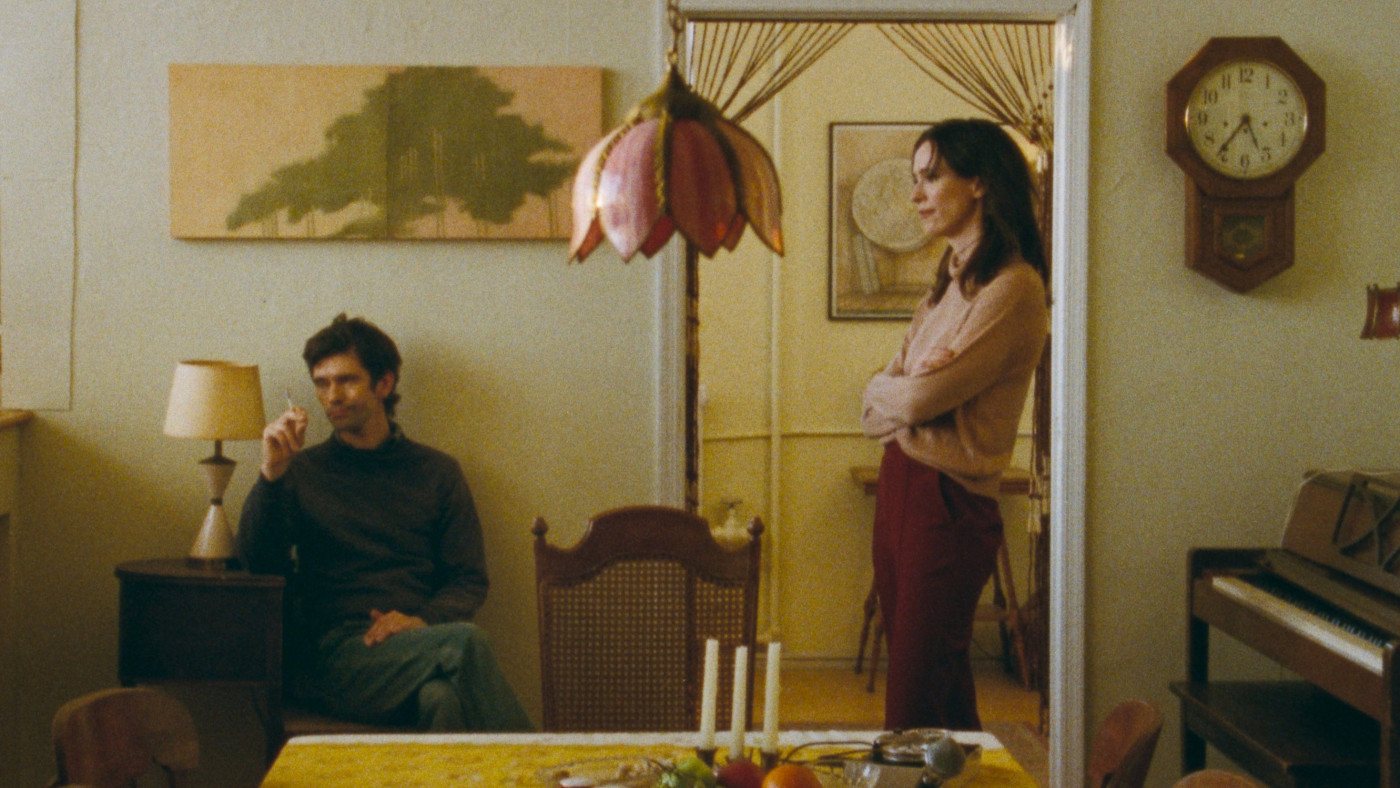
Ira Sachs’ eminently cinematic re-creation of a tape-recorded conversation, from December 1974, between writer Linda Rosenkrantz (played by Rebecca Hall) and photographer Peter Hujar (Ben Whishaw) is an object lesson in the creative possibilities of redundancy, a vital illustration of how the film medium can actualize itself, not by shunning the written word but, on the contrary, by faithfully embracing it. Over 76 condensed minutes, Hujar recollects a day from his life in New York City in rigorous detail — a fascinating mix of the ordinary and the extraordinary, recalling The Philosophy of Andy Warhol (1975) — to an attentive, sympathetic Rosenkratz amid the changing light of his apartment. As Hujar’s endless stream of speech washes over us to the point of exhaustion, our focus turns from its specific content to the process by which memory becomes material. Drawing from transcripts of the conversation — and not Rosenkrantz’s original recording, now lost —Whishaw’s incredibly textured performance reveals the task of imaginative translation that underlies all actorly work. For all its thrilling verbosity, Sachs’s film is a tribute to the art of listening, to this intimate space of friendship in which the hierarchy between the memorable and the mundane ceases to exist. [WP: Sundance Film Festival]


3. Manal Issa, 2024 (Elisabeth Subrin, Lebanon/USA)
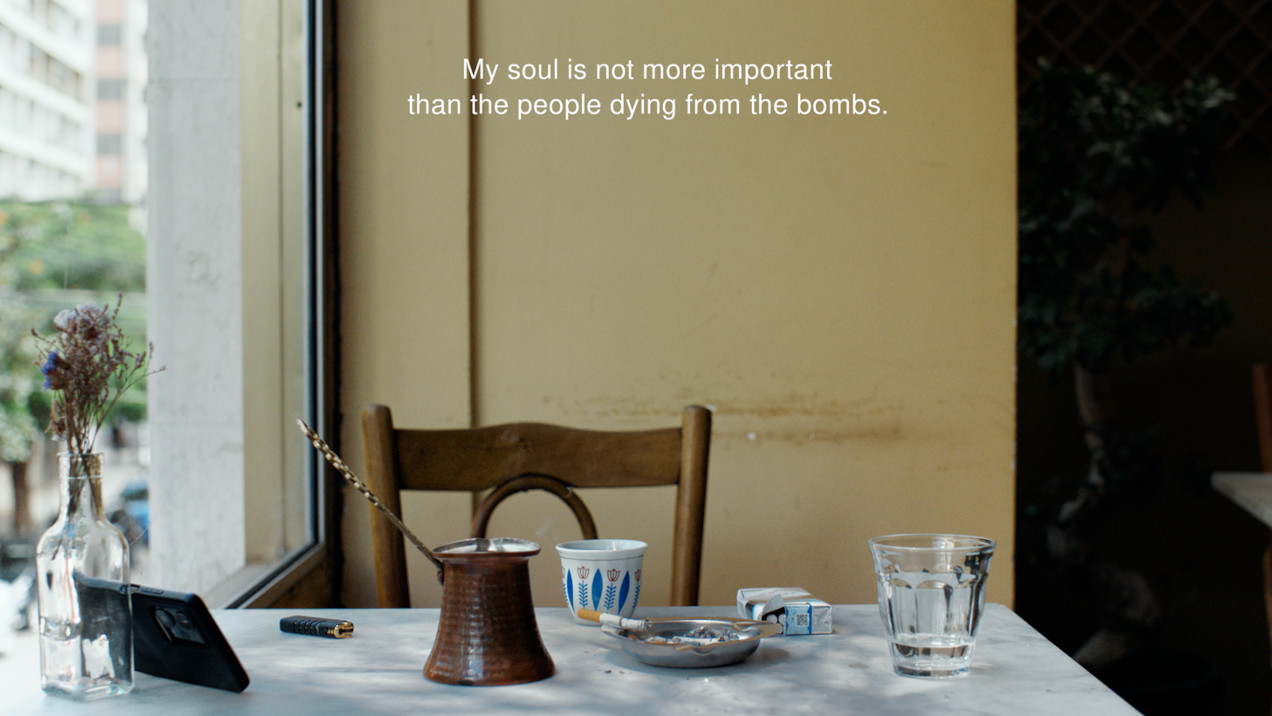
Where Elisabeth Subrin’s powerful Maria Schneider, 1983 (2022) — based on a televised interview of the eponymous French actress — created doubles, Manal Issa, 2024 proposes a negation. Here, Subrin asks the Lebanese-French actress Manal Issa, one of the three participants of the former film, the same questions that Schneider was posed in the original interview. Vocal about her stances, Issa talks about the poverty of meaningful roles offered to Arab-origin actresses, the limitations of the capitalist production model, the choice of moving back to Lebanon during crisis and the importance of speaking up against political iniquity. She adds that she feels professionally isolated for voicing her opinions, for calling out Israel’s bombing of Gaza. While we listen to her responses, Issa herself remains offscreen, her refusal to sustain her career by censoring herself echoed by Subrin’s refusal to show her. “If I can’t be true to myself, there is no point showing myself,” the actress concludes. Like Schneider’s palpable reluctance, Issa’s self-negation stems from an outlook that privileges life over films, reality over fiction. Six hours after the shoot, an end card notes, “Israeli airstrikes escalated throughout Lebanon, killing over 500 people in one day.” [WP: Cinéma du Réel]


4. One Battle After Another (Paul Thomas Anderson, USA)
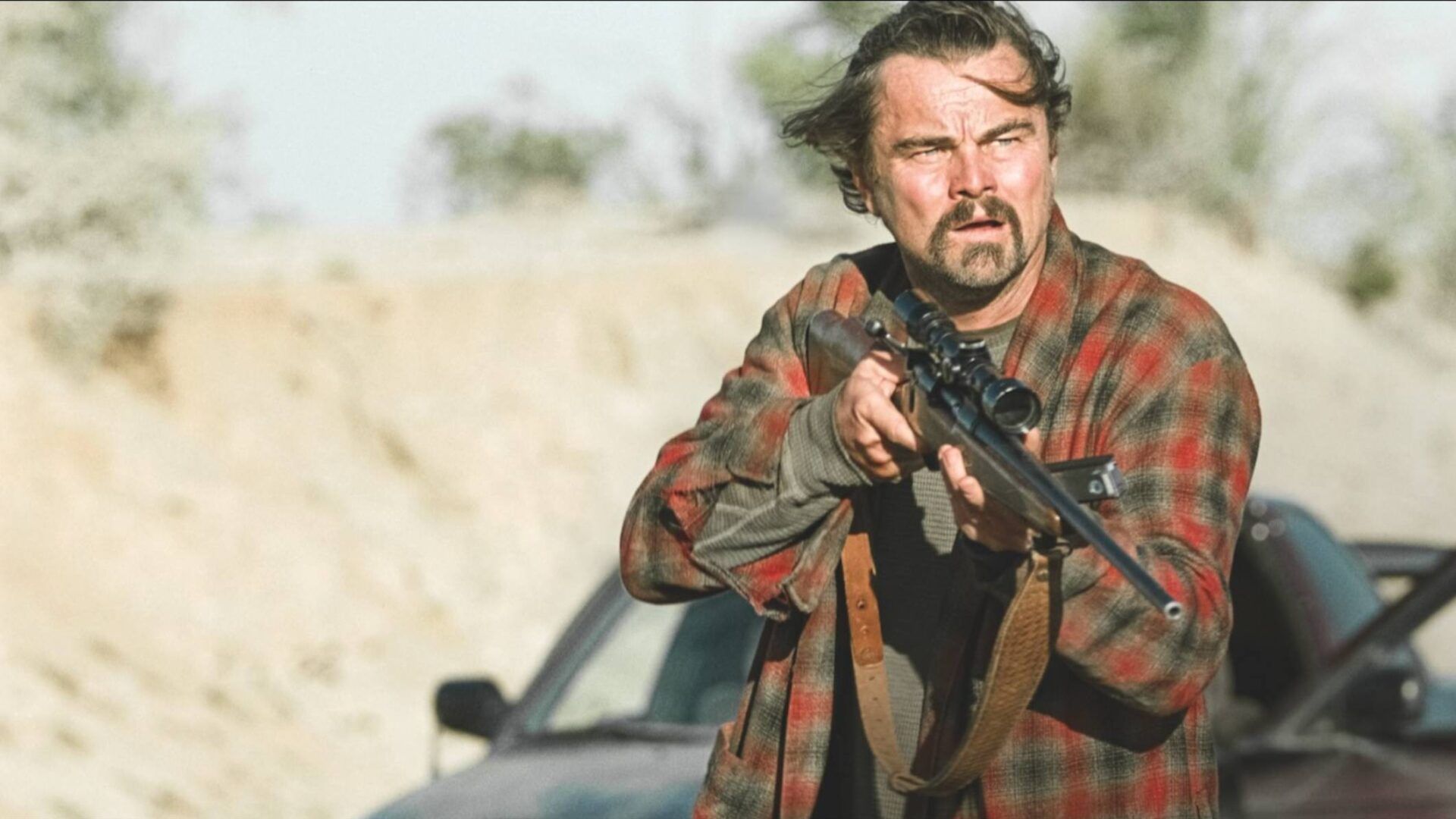
All appeal is sexual, political appeal especially so. Among other things, Paul Thomas Anderson’s wild, action-filled, hysterically funny ride through a caricatural America torn between white supremacists and antifa insurgents — each more paranoid than the other about imagined contaminations — lays bare the erotic drive animating ideological cohesion (and ideological sabotage). Leonardo DiCaprio’s failed revolutionary, mentally arrested in the 1970s, and Sean Penn’s boyish, waif-like sergeant are twisted projections of each other’s fears. Whether the film is reactionary, apolitical or progressive is beside the point. This is a work by an artist who contemplates a polarized society, its excesses and its mess-ups with sage amusement, or a stoner’s delight, without giving in to cynicism or misanthropy. DiCaprio delivers the performance of the year in a movie filled with performances of the year, each one on a different register, all of it nevertheless brought into perfect harmony by dint of sheer directorial orchestration. One Battle After Another stands tall in a movie culture dominated by safe, anaemic films calculated to say the right things and avoid broaching the wrong things. It made me wish we had more filmmakers who actually felt something between their legs. [WP: international commercial release]


5. Beyond the Mast (Mohammad Nuruzzaman, Bangladesh)
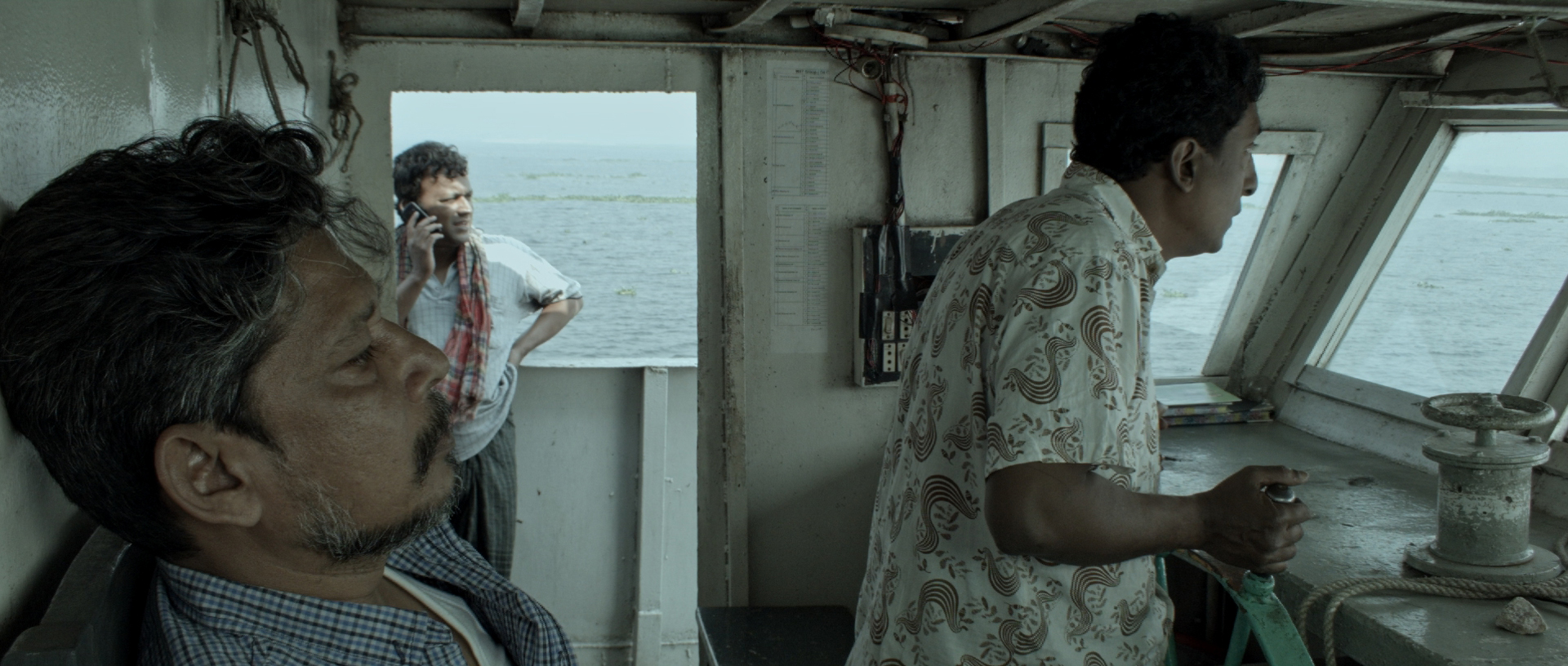
In this rapturous slice-of-life portrait, a small commercial boat with an all-male crew goes from port to port along a river in Bangladesh selling oil. When the crew’s kindly cook takes a stowaway child under his aegis, he runs afoul of the boat’s ill-tempered, scheming helmsman, covetous of the captain’s job. Despite a good deal of on-board intrigue, there is very little drama, strictly speaking, in Mohammad Nuruzzaman’s artisanal second feature, which doesn’t even seek to create lyrical moments in the vein of, say, Satyajit Ray. Yet, this is a highly poetic work, the poetry arising primarily from the filmmaker’s intent, non-judgmental way of looking at a small, enclosed world, its rituals, its diverse people and their human foibles: touches of jealousy, compassion, malevolence, ambition and camaraderie; a parade of life simply passing by. The form is meditative yet brisk — with very elegant camera choreography — and remains indifferent to fashionable arthouse formulas, stylistic shorthand or established screenplay structures. Even the film’s casual neo-realism doesn’t aim at traditional qualities of empathy and psychological description; it rather inspires Ozu-like contemplation. Just a lovingly crafted film. [WP: Moscow International Film Festival]


6. Roohrangi (Tusharr Madhavv, India/Netherlands)
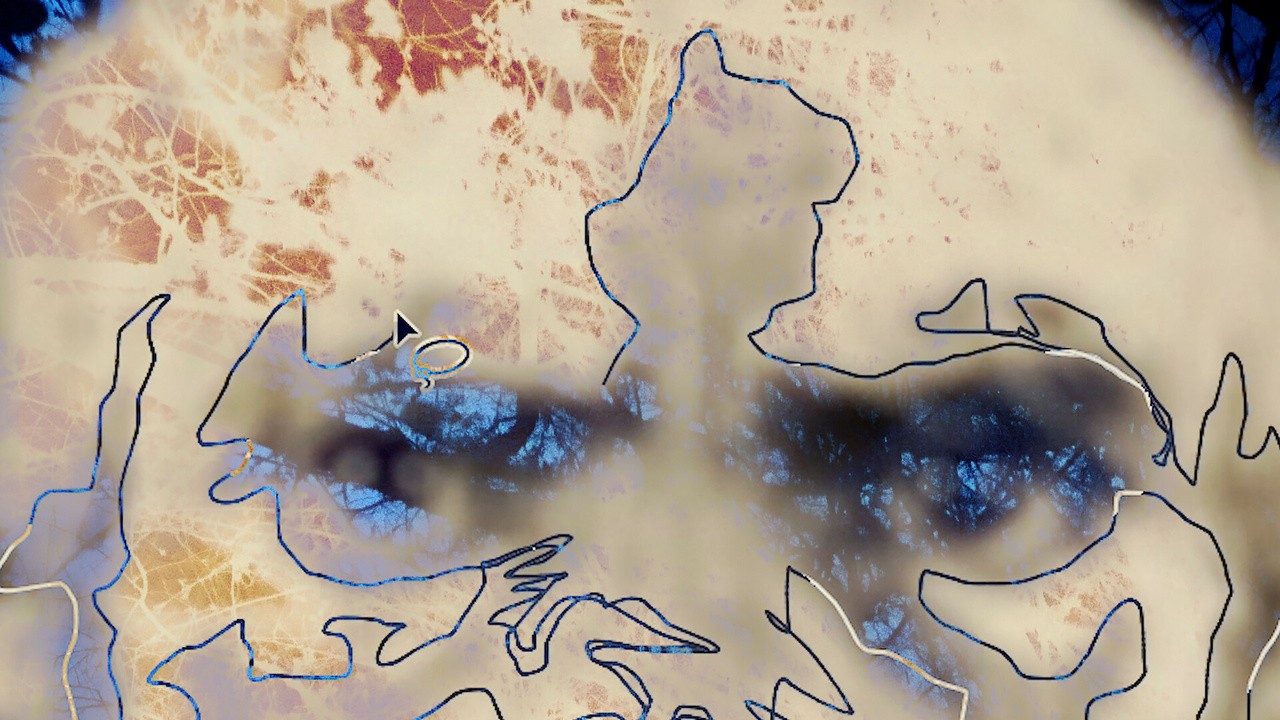
With a camera in hand, a gay filmmaker from South Asia walks around in a park in Amsterdam known as a cruising hotspot. What he finds in this place of fleeting encounters is a kind of time warp, the apparent permanence of its majestic trees, their gnarled roots and variegated textures reminding him of his own roots back in Lucknow, India. They recall, in particular, his grandfather’s discoloured skin, caused by leukoderma, which made him look like a white man — a dual identity paralleling the filmmaker’s own. Echoing this image, Roohrangi starts to lose its colours too, shedding its skin to reveal various layers of memory, history and fantasy underlying a leisurely stroll, as different geographies and eras interpenetrate one another. Like in the films of Apichatpong Weerasethakul, the forest in Roohrangi is a liminal, essentially queer space that enables communion with other lives, other worlds — a glimpse into different possibilities of being. With curiosity and formal openness, Tusharr Madhavv mixes stylized, essayistic passages with casual interviews with the park’s denizens. The result is an evocative, visually striking work, at once experimental and accessible, that achieves the right balance of discursivity, mystery and invention. [WP: Ann Arbor Film Festival]


7. Past Is Present (Shaheen Dill-Riaz, Germany/Bangladesh)
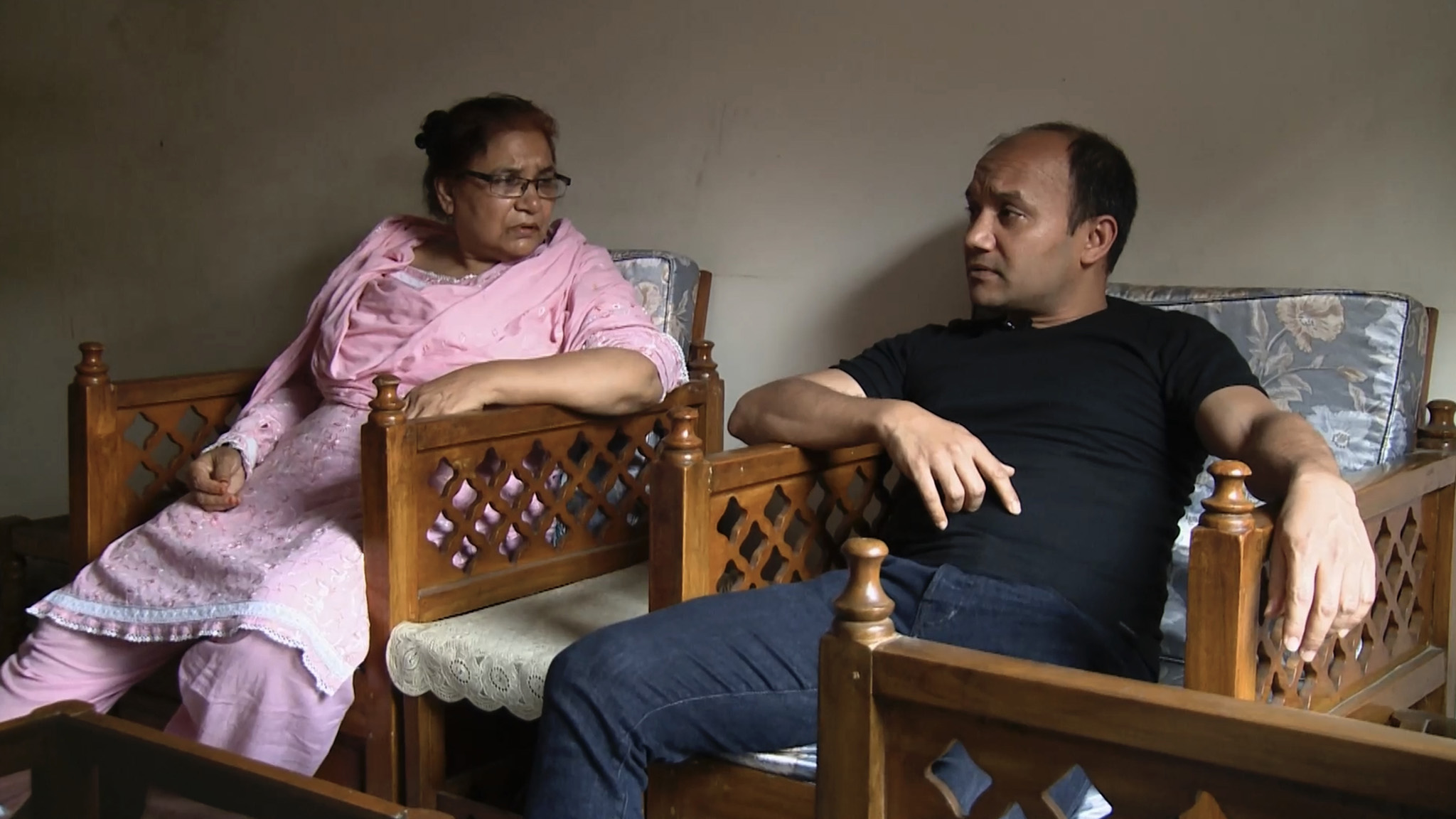
In 2007, Berlin-based Bangladeshi documentarian Shaheen Dill-Riaz found himself in the midst of a family scandal: while studying abroad, his sister Mitul had secretly married her cousin to the great chagrin of her parents. As this taboo union began to tear the family apart, Dill-Riaz decided to mediate between Mitul in Australia, his elder brother Amirul in the USA and his heartbroken parents back home in Dhaka. In Past Is Present, Dill-Riaz turns his camera onto himself and his dear ones, producing a sweeping domestic saga shot over fourteen years and across four continents. Tracing his parents’ journey from rural Bangladesh to Dhaka, and their three children’s subsequent drift to far-flung corners of the globe, the filmmaker examines the complex personal fallout of voluntary migration, presented here in all its liberating and melancholic dimensions. Dill-Riaz seamlessly interweaves moments of torrid drama with passages of mundane poetry, his handheld camera adopting a transparent, unassuming style. The film’s international narrative produces a startling contrast of textures and lifestyles, but also crystallizes the profound continuities in emotional and moral values across cultures. A touching study in the tyranny of distance, Past Is Present actualizes the immortal struggle between the home and the world. [WP: International Film Festival Rotterdam]


8. Obscure Night – Ain’t I a Child? (Sylvain George, France)

The concluding chapter of Sylvain George’s trilogy on illegal immigration is an extraordinary object of close, unflinching observation. The film follows three Tunisian teenagers who take temporary refuge in Paris after having been shuttled by immigration authorities across various cities in Western Europe. With remarkable intimacy and equanimity, George’s camera films the gang at slightly below the eye-level as they wander the roads of night-time Paris, huddle around fire, get into nasty fights with their Algerian counterparts, listen to street music or make the occasional phone call back home. An indifferent Eiffel Tower glitters perpetually in the background as the boys find themselves prisoners under an open sky. Shot in stark monochrome with eye-popping passages of abstraction, George’s film lends a monumental weight to images and lives we would rather not see. As a white artist making films on vulnerable sans papiers, George is bound to ruffle some feathers. But his film demonstrates that, sometimes, you need to strain certain ethical boundaries to arrive at newer forms of looking and understanding. Neither incriminating its subjects nor making any apology for them, Obscure Night – “Ain’t I a Child?” reveals the herculean difficulty of creating a truly humanist work. [WP: Visions du Réel]


9. May the Soil Be Everywhere (Yehui Zhao, China/USA)
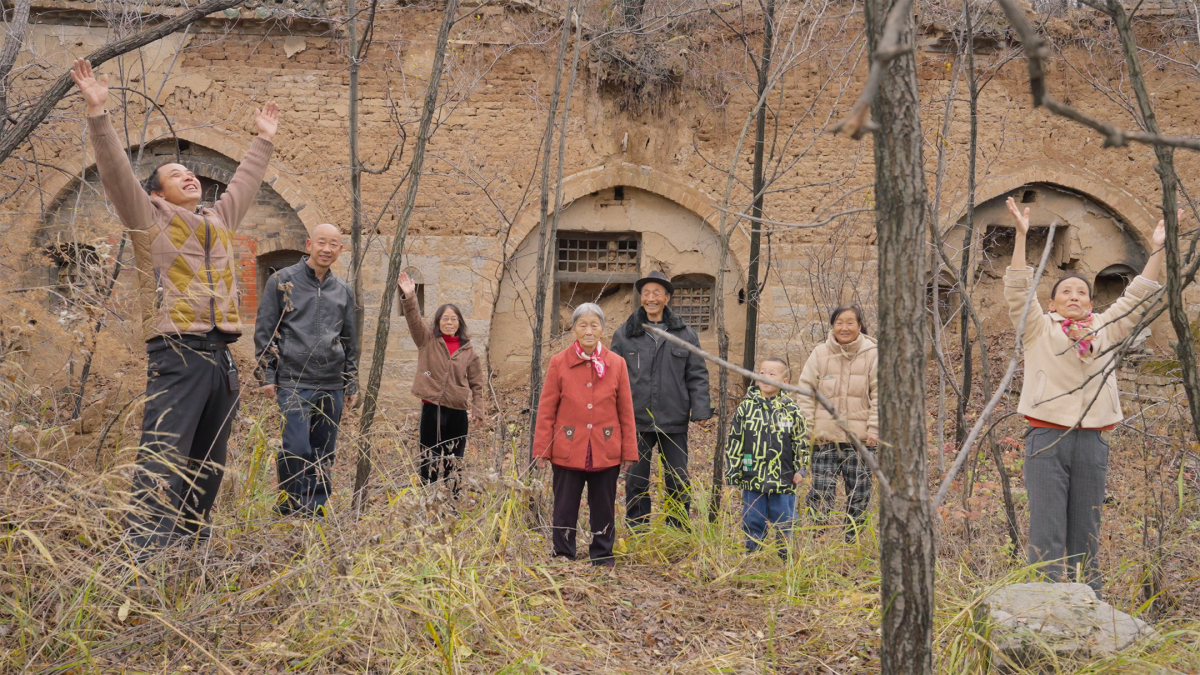
Yehui Zhao’s winsome debut feature begins as a personal documentary about the filmmaker’s search for her roots, but it gradually blooms into a sprawling examination of Chinese society and its evolving relationship to the land across modes of production. In her quest to unearth her family tree, the filmmaker finds herself peeling back layers upon layers of violent history — an excavation that takes her back to the soil, to a primordial ecology: caves that have now become sand mines, dogs that were once wolves, high-speed rail that now cut through unmarked graves. May the Soil Be Everywhere offers a rare and unusual glimpse into China’s pre-revolutionary past that takes us across vastly different terrains, time periods, generations: we learn of landlords who, during the revolution, became persecuted cave dwellers who then turned into Stakhanovite foot soldiers of Mao and are now digital filmmakers in a globalized world. The film’s direct and unaffected voiceover enables the overdone format of the personal documentary to break loose into a free-form essay featuring humorous animation and re-enacted tableaux. If the filmmaker’s attachment to familial lineage feels a little excessive, it undeniably carries a subversive force within post-revolutionary Chinese society. [WP: True/False Film Fest]


10. Admission (Quentin Hsu, Taiwan)
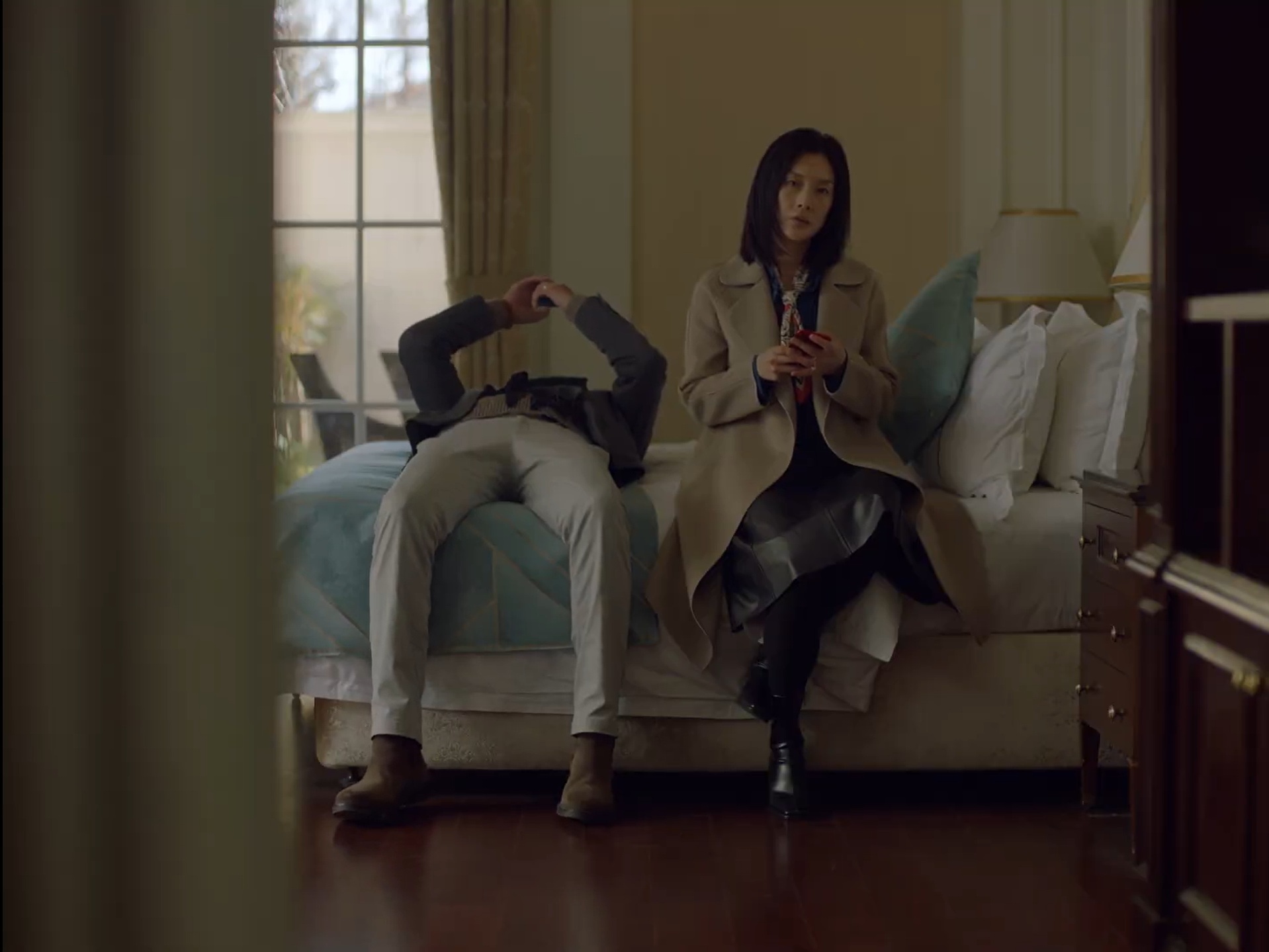
Panicked by the rejection of their six-year-old ward at an elite boarding school, an affluent tiger couple convenes an emergency meeting with their “fixer” and one of the school’s board members at a resort. Emerging from their negotiations and blame games is a stark portrait of a childhood labouring under someone else’s dreams. Quentin Hsu’s razor-sharp debut is a formalist kammerspiel that is Mungiu/Farhadi-like in its dissection of the moral corruption of the Chinese middle-class. But the approach to the material is entirely anti-naturalistic, pointedly theatrical. The film makes phenomenal use of its 4:3 aspect ratio and off-screen space, with the masquerade and subterfuge of the dramatic situation reflected in actors constantly gliding in and out of the frame, their bodies now eclipsed by the décor, now irrupting into the shot. The frame is constantly energized and de-energized by these microscopically choreographed movements in a way that recalls the Zürcher brothers. The actors are little more than props in the director’s precise, Kubrick-like design, but it’s bracing to witness a work that articulates its ideas through brute mise en scène, especially for a subject that would have called for a more psycho-realist treatment. [WP: Tallinn Black Nights Film Festival]


Special Mention: Living the Land (Huo Meng, China)


Favourite Films of

2024 • 2023 • 2022 • 2021 • 2020 • 2019

2015 • 2014 • 2013 • 2012 • 2011 • 2010 • 2009
The recently concluded 56th edition of Visions du Réel, Nyon, Switzerland, affirms it as one of the largest documentary festivals in the world, with 154 films from 57 countries in its lineup. Numbers, though, are for accountants and PR agents. What lends Visions du Réel its strength is the continuing vitality and diversity of its programme, its mix of the popular and the experimental. Plenty of films in the selection reflect current trends in commercial documentary — and perhaps even the institutionalization of a distinct Visions du Réel style, but that is a discussion for another day. At the same time, there are also adventurous works here that buck the trend, interrogate existing conventions and expand our conceptions of documentary filmmaking.

The feature that won the top prize of the festival, Clarisa Navas’ The Prince of Nanawa, for instance, may not appear on television or in the local arthouse cinema anytime soon, at least not in its current form. Ten years in the making, Navas’ 212-minute bildungsroman chronicles the life of Angel, a chirpy young boy from Nanawa, an impoverished border town between Argentina and Paraguay. Navas met Angel accidentally in the mid-2010s at a booming black market on a bridge between the two countries. She followed him home and filmed him regularly over the next decade, forging a deep and protective relationship with him.

We witness Angel grow up — from a pre-teen to a teen father — in a disadvantaged milieu mired in drugs and violence, his sensitive, introspective side in constant tussle with his sexist and homophobic environment. Beyond the raw poetry of watching a real human being grow older on screen, what is compelling about The Prince of Nanawa is its challenging of the classic documentary principles of observation and non-intervention. We see how the very act of making a film helps the (liberal, cosmopolitan) filmmakers exert a positive influence on Angel’s life and thoughts, how his continued participation in the project helps him narrativize and assume responsibility of his own life. At one point, Angel confesses his embarrassment at trying out drugs and his fear of disappointing Navas, whose friendship serves as a kind of watchful superego throughout his formative years.

Its uplifting moments notwithstanding, The Prince of Nanawa is not a fairy tale, and it’s not always smooth sailing into adulthood for Angel, who, even at the end of the film, makes a living smuggling goods across the border and cuts his eighteenth birthday cake with an infant in hand. Nevertheless, the film builds a case for a documentary form in which the camera consciously alters the reality it films, makes active interventions into the lives of its subjects.

Like Angel, the protagonists of various other films at Visions du Réel grapple with an unstable present and an unknown future. Obscure Night – “Ain’t I a Child?”, the concluding chapter of Sylvain George’s trilogy on illegal immigration, is an extraordinary object of close, unflinching observation. I haven’t seen the first two films in the trilogy, in which George follows Tunisian teenagers trying to cross over into Europe by entering Mellila, a Spanish enclave in North Africa. In the new film, we find three of them — Malik, Mehdi and Hassan — taking temporary refuge in Paris, after having been shuttled by immigration authorities across various cities in Western Europe.

As young Maghrebi males, Malik and co. are the very posterchildren for anti-immigration sentiment. George recognizes this very well, and within the first quarter hour of his 164-minute film, he pre-empts all the usual right-wing bugbears by acknowledging them: yes, the boys steal for survival; yes, they hold regressive views about women; yes, they want to lead an easy life in Europe and profit from its social welfare policies. Malik and co. aren’t the liberal fetish objects littered across European screens.

Yet, the film deems them worthy of human and aesthetic interest. With remarkable intimacy and equanimity, George’s camera films the gang at slightly below the eye-level as they wander the roads of night-time Paris, huddle around fire, get into nasty fights with their Algerian counterparts, listen to street music or make the occasional phone call back home. An indifferent Eiffel Tower glitters perpetually in the background while the boys find themselves prisoners under an open sky, enslaved to an eternal, sordid present, with no visible way out.

Shot in stark monochrome with eye-popping passages of abstraction, George’s film lends a monumental weight to images and lives we would rather not see. The approach is comparable to Pedro Costa’s work with the residents of Lisbon’s Fontainhas. As a white artist making films on vulnerable sans papiers, George is bound to ruffle some feathers. But his film demonstrates that, sometimes, you need to strain certain ethical boundaries to arrive at newer forms of looking and understanding. Neither incriminating its subjects nor making any apology for them, Obscure Night – “Ain’t I a Child?” reveals the herculean difficulty of creating a truly humanist work.

Sergei Loznitsa’s short Paleontology Lesson takes an oblique approach to an adjacent theme. A change of direction of sorts for this singular Ukrainian filmmaker, Paleontology Lesson centres on a class of middle-schoolers on a trip to the Natural History Museum in Kiev during the Russian invasion. The kids listen to the docent speaking about millennia-old fossils and artefacts carefully preserved in the museum – the present, the past and the future of the country under a single roof, all threatened by the bombs falling outside the facility. The film ends on an eerie note, with dioramas of prehistoric humans and exhibits of their skulls. Will we end up in the Natural History Museums of the future too?

Several titles I saw at the festival featured individuals and institutions coming to grips with a brave new world. Literally so in the case of Valerio Jalongo’s Wider Than the Sky and Jeffrey Zablotny’s Messengers. Both films craft poetic renditions of research work on cutting-edge science and technology — machine consciousness in the case of the first, neutrino astronomy in the second. These are works filled with a sense of awe at human curiosity and capacity for invention, but also at its insignificance faced with the complexity of our inner life and the vastness of the cosmos.

On an earthlier note is Fabienne Steiner’s Fitting In, a fascinating fly-on-the-wall document about a new batch of students at Eendrag, a residence at the Stellenbosch University in South Africa. Once an academic stronghold of the apartheid era, the university now aims at a more ethnically diverse intake reflective of the rainbow nation. Pangs of integration abound: white and non-white students alike struggle to get used to each other’s close presence withing the residence; official communication moves from Afrikaans-only to include Xhosa and English; debates surge around the problematic names assigned to residence sections; inclusivity becomes a major talking point in student elections.

Alas, one step forward, two steps back. News about attacks on Black students echo over the radio from time to time. Edgy jokes are misunderstood, and political correctness cripples spontaneity. Fitting In presents the new Eendrag as a kind of social lab in which otherness is negotiated and understood, a miniature model of South Africa and multicultural societies across the world. There are certainly teething troubles, lingering prejudices, pressures from external culture wars. The students proceed gropingly, sometimes walking on eggshells but always with an openness characteristic of youth. The kids, the film assures, are alright.

Johannes Büttner and Julian Vogel’s Soldiers of Light, in contrast, looks at a flight away from such a new world order. The film revolves around David aka Mister Raw, an alternate healer and social-media influencer advocating raw food, veganism and natural cures. David’s quackery and suspicion of modern medicine is dangerous enough, but he is also part of the “Soldiers of Light,” an eclectic, 23000-strong network of renegades who reject the authority of the Federal Republic of Germany and proclaim to be nationals of a certain Kingdom of Deutschland. On his channel, David, who is curiously a Black man himself, amplifies the views some of these reactionaries: racialists, self-styled spiritual gurus, assorted carpetbaggers and garden-variety right-wingers.

Soldiers of Light picks on a sensational and somewhat facile subject; David and his compatriots are generous in supplying self-incriminating soundbites for the camera. But it manages to put its finger on the mechanics and fallout of conspiratorial thought. David and co. join hands not in shared belief, but in their shared rejection of what they take to be a malevolent system. In the absence of rational voices to do the necessary work of dialectical thinking, these fringe elements come together to prey on the lost and the weak (in David’s case, a schizophrenic young man named Timo) — a phenomenon on full display every day on online platforms like 4chan and Twitter (formerly X). Soldiers of Light shows that evil flourishes there where reason has no incentive to.

Let’s begin by stating the obvious: Cinéma du réel, Paris, programmes weird stuff. Its main offering could be broadly described as experimental documentaries: works recognizably grappling with the real world, but demonstrating a strong commitment to formal innovation of the kind that challenges both our expectations of a film’s ostensible subject and our notion of what documentaries are. Rarely does one find in the festival’s lineup the sort of production that oils the machinery of the international documentary market. Few issue-based expository works are to be found here, hardly any fly-on-the-wall records, and no human-interest stories with appealing protagonists and clear dramaturgy.

The tendency is instead to embrace gaps, hesitations, ellipses, rough edges, acts of self-sabotage and blind leaps into the void. The image and sound in any given title in the selection are almost always orthogonal, the work deriving its meaning and affect instead from their dialectical organization. Films that may look like stubs, doodles, outtakes or half-formed sketches, by dint of adventurous curation and passionate presentation (evident from the insightful catalogue texts produced by the programming team), come to demand from the viewer a different way of looking and listening, and often a renewed conception of what a documentary can be.

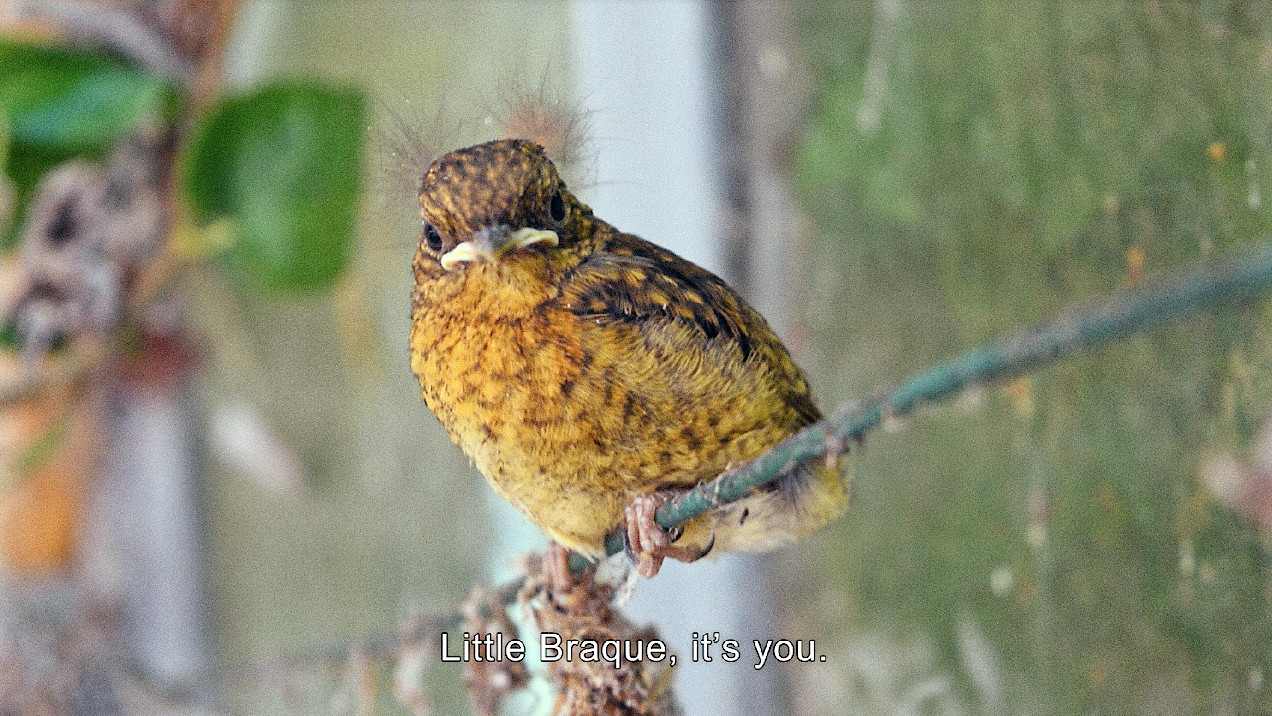
Consider, for instance, Look Through My Eyes and Give Me Your Own. Noëlle Pujol’s half-hour documentary features the filmmaker walking through Cubist pioneer Georges Braque’s studio in Varengeville-sur-Mer, Northern France. For the most part, the camera surveys the now abandoned structure, taken over by nature, and the vestiges of human culture still visible on its walls. Recalling Picasso’s aphorism “I don’t search, I find”, Pujol’s casual, liberatingly purposeless gaze roves about before resting on a small, exotic bird perched on a wire inside the studio. Unfazed by the intruder, the gorgeous little creature stares back at the camera, which resumes its aimless drift after this uncanny encounter.

Free of a conceptual framework or a conventional narrative outline, Pujol’s film is only as discursive as the viewer wants it to be. The same goes for Léo Bizeul’s Robert Taschen (whose synopsis simply reads “A man in his home.”). A seven-minute portrait of a poor, middle-aged man eking it out in a nondescript hovel, Bizeul’s beautifully shot but bafflingly sparse film furnishes very little that is specific beyond its title. Yet the sharpened quality of attention that it extracts from us, and the duration it imposes, elevate this everyman into a subject worthy of a renaissance tableau.

The longer works in the selection equally reflect this resistance to clear exposition and overarching meaning. Films such as Luo Li’s Air Base, Gaspard Hirschi’s I Am Night at Noonday and Ico Costa’s Balane 3 are, at the outset, quasi-sociological studies set in particular locations, but even so, they play it loose, letting their framing concept fall apart under the weight of stylization. Li’s film is nominally set around a hobbyist fishing pond in Wuhan just after the easing of pandemic restrictions. What begins like a record of the psychological toll of the lockdown takes vast excursions to observe the city through a slightly absurdist lens, full of formal rhymes and quirky images. The result grasps at a poetic truth rather than a rational analysis.

I Am Night at Noonday takes off, in fact, from a highly literary idea: dressed as Don Quixote, theatre director Manolo Bez wanders around Marseille on a horse along with a reluctant Sancho, a pizza guy named Daniel Saïd on a motorbike, engaging in humorous encounters with the people and landscapes of the port city. A relatively classical satire in the line of Borat (2006), the film employs Quixote’s outsider perspective to expose the paranoia and distrust gripping the racially diverse but economically polarized city. Yet the film scrambles this setup midway, segueing first into a cinema-vérité mode that allows Bez and Saïd to step out of their characters to address the camera as their real selves.

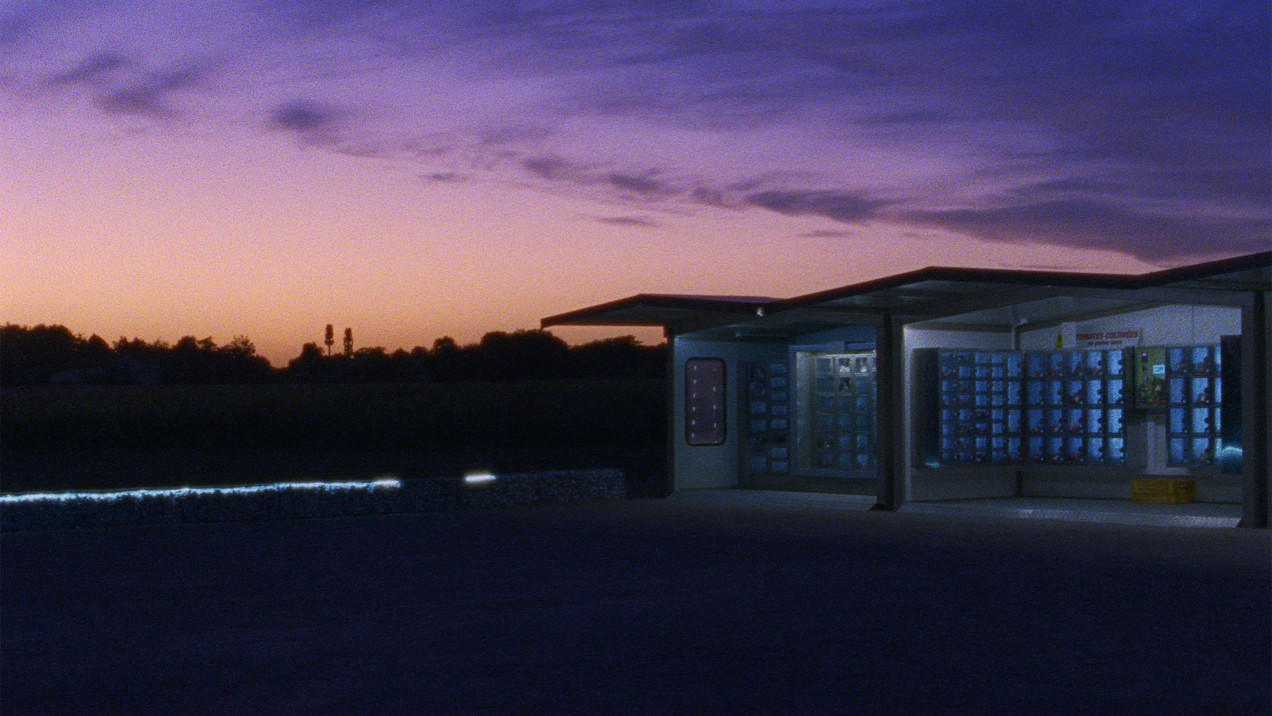
Coursing through the Cinéma du réel programme is the general sense that reality can only be accessed obliquely, through an elliptical form that conceals as much as it reveals. Two of the most remarkable films in the programme take this throughline to a conclusion of sorts, adapting a refusal to image the human body. Maureen Fazendeiro’s Les Habitants is set in an unnamed French village. We see this quaint commune go about its immutable routine, its picturesque streets well-maintained, its meadows neatly kept and its many glasshouses yielding rich produce. On the soundtrack, we hear letters from a mother to her daughter recounting the arrival of a group of Roma into the village, the opposition of the municipality to their presence and the material support that a few of the villagers offer to their nomadic guests.

Featuring interesting repetitions of banal information, the film’s voiceover offers a site of dramatic conflict – between the efforts of those trying to legally evict the squatters and those helping them prolong their stay in the village – while the visuals present a source of harmony. This contradiction between the sordid living conditions of the Roma group detailed on the soundtrack and the plush, first-world life on display serves to throw into relief the violence underlying suburban order. In filming the village after the immigrants’ departure, and refusing to feature them in any shape or form, Les Habitants points up cinema’s delay in keeping up with reality while also exploring the creative possibilities of this delay, of this spectral absence.

Elisabeth Subrin’s Manal Issa, 2024 goes further, eliminating the human body altogether. This ten-minute film is a companion piece to Subrin’s powerful 2022 work, Maria Schneider, 1983, in which the filmmaker had three actresses of varied backgrounds reenact an interview that Schneider gave for a French television show. In the interview, a visibly uncomfortable Schneider discusses the second-class treatment that actresses suffer in the industry, reveals that she turns down a lot of roles, deflects questions about Last Tango in Paris (1972) and generally resists the niceties and rituals of movie journalism. While the actors in Subrin’s film fastidiously re-create Schneider’s look and diction, they bring their own perspectives to bear upon the reenactment, locating themselves in Schneider’s experience as an exploited, marginalized film worker while extending her activist legacy to the present.

Where Maria Schneider, 1983 created doubles, excess bodies, Manal Issa, 2024 proposes a negation, one body too few. Here, Subrin poses to the Lebanese-French actress Manal Issa, one of the three participants of the former film, the same questions that Schneider was posed in the original interview. A publicly vocal actress, Issa talks about the poverty of meaningful roles offered to Arab-origin actresses, the limitations of the capitalist production model, the choice of moving back to Lebanon during crisis and the importance of speaking up against political iniquity. While we listen to her responses, Issa herself remains offscreen; all that we see is a table by the window containing signs of human presence: a pack of cigarettes, a lighter, an ashtray, a tea cup, a glass of water and a smartphone.

Issa’s refusal to take up pointless roles to sustain a career, to maintain a screen presence while censoring her critical voice, is echoed by Subrin’s refusal to show her. “If I’m on screen I’m something, and if I’m not I’m nothing? Khalas?” asks the actress, adding that she feels punished for her political opinions, for calling out Israel’s bombing of Gaza. “If I can’t be true to myself, there is no point showing myself,” Issa concludes, as the camera gently pans from the table to a street outside the window. Like Schneider’s, Issa’s self-negation stems from an outlook that privileges life over films, reality over fiction. Six hours after the filming, an end card notes, “Israeli airstrikes escalated throughout Lebanon, killing over 500 people in one day.”

Each passing year seems objectively, measurably worse than the one before, at least on a world-historical level, unveiling new lows for evil, stupidity, hypocrisy and tyranny across the globe. I’ve done nothing to change any of it, but I’m glad that, unlike me, there are people who aren’t desensitized, wilfully blind or paralyzed by analysis fighting the good fight. More power to them.

The blog hasn’t been terribly active this year. In February, I started a curatorial section on the site to showcase work from up-and-coming filmmakers, but I haven’t been able to keep it up at a rate I would like. I hope I can resume the section in 2024, even if at irregular intervals.

The primary reason for the inactivity is that I made my first foray into festival programming this year. I was on the South Asia selection committee for the Jio MAMI Mumbai Film Festival (October-November 2023) as well as the upcoming Berlin Critics Week (February 2024). Both assignments meant six months of intense, non-stop film viewing. A revelation from my time on the MAMI committee is that South Asian cinema is absolutely exploding, with crazy, ambitious works emanating from unlikely corners of the subcontinent, made by passionate individuals with little institutional or industry connections, with private resources unrelated to traditional channels of funding. It was truly an eye-opening discovery. Exciting times ahead for South Asian cinema.

For the first few months, however, I had a voluntary, almost systematic immersion into the history of avant-garde film, especially works from North America. I watched over 700 titles, long and short, canonical and lesser-known. I complemented this with reading books on the subject: Sheldon Renan, Amos Vogel, P. Adams Sitney, A.L. Rees, Stephen Dwoskin, William C. Wees, Jonathan Rosenbaum. But the single most instructive source was Scott MacDonald’s A Critical Cinema (1988-2005), five volumes of magnificently detailed interviews with avant-garde filmmakers from across generations and geographies. These exhilarating, demanding months of watching and reading truly felt like a substantial phase of my cinephile education.

It was also the year I published by second book, Moving Images, Still Lives, a lavishly illustrated monograph on Amit Dutta’s film Nainsukh (2010), published by Artibus Asiae of the Museum Rietberg Zurich. (Readers in India may consider buying a copy off Amazon, where a very, very limited number is on sale.) This book was an opportunity for me to undertake a different kind of writing — less spontaneous but more scholarly, with arguments propelled more by citations than passion. Also, until now, my references in visual arts were almost entirely European and American. Writing on Nainsukh meant researching into Pahari miniature painting and the world it issues from — an exposure I’m really grateful to have gotten.

I had no greater experience this year than watching Lijo Jose Pellissery’s Nanpakal Nerathu Mayakkam (2022), a work I would without hesitation count among the ten or so finest films ever made in India. Heck, had I seen it a few months earlier, it would’ve made it to my ballot for Sight & Sound’s all-time poll. With age, I encounter fewer and fewer films capable of shaking me up the way Pellissery’s masterpiece has. It is one of the great spiritual works of the cinema.

I didn’t see as many commercial releases as I would’ve liked, and the ones I did weren’t too inspiring. I’ve consistently had problems with Martin Scorsese’s films set in cultures foreign to him, and despite the thrilling opening hour, Killers of the Flower Moon felt crippled by the same respectful distance that hamper Kundun (1997) and Silence (2016). I found Oppenheimer and Barbie equally tedious, both movies arriving with their own halo. Among Indian releases, I found things to like in several works, such as Thankam, Maaveeran, Kaadhal: The Core, Chithha, Jigarthanda DoubleX, Animal, Viduthalai Part 1 and Haddi, but few were convincing in their entirety. So the list below is entirely composed of titles I saw at festivals or as part of my programming work. They all had their world premieres in 2023 at the festivals mentioned. Needless to say, this is a somewhat arbitrary list, and I can count about seventy other films that could be here instead. But I’ll spare you the hand-wringing. Happy new year.


1. Kayo Kayo Colour? (Shahrukhkhan Chavada, India)

Rare are Indian films centred on marked Muslim characters, and rarer are those that don’t employ these characters primarily as objects of violence and social injustice. In Shahrukhkhan Chavada’s tender, trailblazing Kayo Kayo Colour?, Muslim bodies exist in an existential autonomy, untouched by dramatic aggression and capable of accessing a whole range of human experience. Chavada’s film depicts the everyday life of an extended working-class family in a Muslim quarter in the outskirts of Ahmedabad on a historic day. We see a woman waking up early to do household chores, her husband trying to procure funds to buy an autorickshaw, their children playing gender-segregated games. Public spaces come alive with shrieking middle-schoolers, a mother folds clothes with a daughter who has made it out of the ghetto, a girl sleeps over at her grandparents’ place—routines that become electrifying expressions of communal life. With striking passages of dead time and non-narrative digressions, the film creates space for its characters to breathe freely, to simply be. This is a work that opens up a new way of looking at life in India. In its wonderous gaze at the world, in its incredible generosity, in its profound humanity, there’s little I’ve seen of late that comes close. [World Premiere: International Film Festival Rotterdam]


2. Mr. Junjun (Niu Niu, China)

In a masterpiece the world is sleeping on, Niu Niu forges a simmering, Dardennes-style character study of a middle-aged taxi driver on the brink of explosion. A fifty-year-old single man responsible for a recalcitrant, semi-paralyzed father, Mr. Junjun must recover his debts to get out of a deep financial hole, but every effort he makes in this direction pushes him further towards the point of no return. The cruel pleasure the film offers is in prolonging Junjun’s moment of rupture through a series of secondary errands that he must run order just to stay afloat: the picture of life passing by even before you can get a hold on it. And yet, this is no mean neorealist melodrama. We have very little access to the inner universe of the bespectacled Junjun, who is a pure man of action, filmed from behind, moving purposefully through the world if only in order to stay where he is. You sense that this man will break down any minute, yet there is tremendous tenderness and grace in him — and in the film, for him. Prepare to be knocked down by the most sublime ending of the year. [WP: Pingyao International Film Festival]


3. Slow Shift (Shambhavi Kaul, India-USA)

The work of Shambhavi Kaul, which has a knack for transforming real landscapes into otherworldly vistas, finds its perfect subject in the medieval city of Hampi in Southern India. The seat of the Vijayanagara Empire in the fourteenth century, Hampi is today a World Heritage Site attracting tourists from across the globe. In Slow Shift, Kaul crafts a spectral, non-narrative travelogue of the site that unearths its historical, mythical, geological, ecological and cultural layers. Weaving together images of stately rock-cut monuments, precariously posed stone clusters and an army of langurs taking over the depopulated site, the film forges a post-human space eerily resonant with the barren cityscapes that became common during the pandemic years. In a manner reminiscent of Richard Serra’s monumental steel sculptures, Slow Shift strikes a precarious balance between majestic stasis and imminent collapse. By combining moments of instantaneous change in the landscape with more long-term transformations as evidenced by Hampi’s weatherworn structures, the film evokes the different time scales simultaneously at work in nature, reminding us that even the mightiest empire will turn to rubble one day. It’s truly a planet of the apes, and we’re only squatters. [WP: Toronto International Film Festival]


4. Fauna (Pau Faus, Spain)

Aging shepherd Valeriano lives with his herd on the outskirts of Barcelona. With his children away and with a debilitating orthopaedic problem that requires him to hang his boots, he struggles to keep his profession alive. He supplies sheep to a high-tech laboratory next door, which runs tests on them as part of its research to develop a vaccine for the Covid19 virus. Except for animals brought in through carefully controlled doorways, the lab is hermetically sealed from all biological intrusions, while Valeriano makes periodic visits to the city hospital for his therapy. From this incredibly rich scenario, Pau Faus’ Fauna weaves an extraordinary, complex examination of the ways in which science, ecology and tradition prove inextricably linked in contemporary life. “I believe that truth has only one face: that of a violent contradiction,” these words from Georges Bataille form the epigraph to Faus’ deeply moving, frequently heartrending observational documentary. With equanimity and wit, the film shines a light on humankind’s curious tendency to accelerate change while also fighting it, to master nature and technology while also being overwhelmed by them. Fauna creates ample space for reflection and critique, but supplies no easy answers. [WP: Visions du Réel, Nyon]


5. The Film You Are About to See (Maxime Martinot, France)

Maxime Martinot’s short essay is a brilliant investigation into the ways in which cinema exhibition and spectatorship are mediated by paratexts within and outside the films. Repurposing a range of verbal material intended to set context for viewing — disclaimers, introductory warnings, fourth-wall breaking intertitles, notices from theatre management — the film examines the fraught, slippery nature of the relationship between text and image in cinema. Systematically interspersed with these title cards are excerpts from across the history of moving images, arranged more or less in chronology. The Film You Are About to See cogently demonstrates the extent to which such title cards serve to fix the meaning and affect of images, and to counter, as Roland Barthes put it, “the terror of uncertain signs.” The disclaimers we see in the film have a striking resemblance to modern-day trigger warnings that seek to shield viewers from presumed psychic assaults. However, in its savvy assembly of ambiguous movie clips, Martinot’s film suggests that this is an ultimately futile enterprise, for images will always find a way to escape domestication and remain polysemous in the face of texts that seek to pin them down. [WP: Cinéma du Réel, Paris]


6. Valli (Manoj Shinde, India)

Valli is a man forced to be a Jogta, a living deity with a female form, believed to be capable of blessing those who worship and honour her. When he isn’t in his Jogta form, though, Valli is bullied by the village men for his feminine ways. The premise prepares you for an overwrought, sentimentalist work, yet Valli is anything but. Manoj Shinde’s stellar film is less about an individual trapped in a body than about a body trapped in a role, deified and debased, outcast and central to the social fabric at once. Valli takes an ultra-melodramatic subject and drains it off all excess, at times with the grace and wisdom of Hou-hsiao Hsien. The lead character is subjected to abuse and insult, but what we see as his reaction is defiance, contempt, indifference, anger, humour — everything that assures us that his dignity and integrity can’t be taken away. Vast passages of non-dramatic action allow the individual to just be. Delivering what is for me the screen performance of the year, Deva Gadekar is phenomenal as Valli, infusing every frame he is in with astounding bits of non-narrative magic, his androgynous body and its gratuitous gestures becoming transfixing without being fetishized. [WP: Singapore International Film Festival]


7. Camping du Lac (Éléonore Saintagnan, Belgium-France)

“I’d like to tell you an odd thing that happened.” So begins Éléonore Saintagnan’s gentle shape-shifting epic that metamorphoses from an understated fable to an absorbing myth to an startlingly immediate ecological parable. There will be no shortage of odd things in this one-of-a-kind film that revels in the power of invention and storytelling. Éléonore, played by the director herself, is stranded in Brittany, France, after her car breaks down on the way to the ocean. With little choice, she decides to lodge at a camping site by the Lake Guerlédan while her car is repaired. As she observes a host of characters at the camp, the film itself embarks on strange and beautiful narrative excursions. Together, these quaint detours, whose significance remains tantalizingly elusive, impart a starkly spiritual dimension to Saintagnan’s film, a sense of wonder at the various realities around us, visible and invisible. A gorgeously shot exploration of isolation and community, Camping du Lac may ultimately be about the ways we are (or fail to be) in communion with the mysteries of the world, and in that regard, this is a work wholly in tune with our times. [WP: Locarno International Film Festival]


8. Mithya (Sumanth Bhat, India)

After the sudden death of their parents, eleven-year-old Mithya and his young sister are taken by their aunt and uncle to their home in Udupi, much to the exasperation of the boy’s paternal relatives back in Mumbai. While the two clans fight for custody, Mithya struggles to find his moorings in a new environment, his growing sense of security undermined by a creeping feeling of re-living his original tragedy. Engineer-turned-filmmaker Sumanth Bhat’s supremely assured first feature makes us intimate with the experience of its young protagonist while also keeping us at a critical remove from his thoughts. A work that trusts the audience’s capacity for imagination and empathy, Mithya equally respects the complexity of a bereaved child’s inner world, never giving into facile poetry or genre convention. The adults, too, are invested with great dignity even when they are flawed individuals; Mithya’s uncle gets possibly the most piercing line of dialogue I heard this year, one that reveals an entire childhood. With its magnificent child performances in long shots, bold sense of ellipsis, delicately sketched character motivations and unnerving editing associations, Mithya is a virtuoso work end-to-end, an exemplar of honest, personal filmmaking. [WP: MAMI Mumbai Film Festival]


9. Dreams About Putin (Nastia Korkia & Vlad Fishez, Russia)

Following the Russian invasion of Ukraine, the widely reported phenomenon of people dreaming about Vladmir Putin found a new life, with Russian citizens turning to social media to describe their nocturnal encounters with their dear leader. In Dreams About Putin, Nastia Korkia and Vlad Fishez put together a hypnotic anthology of such dreams, recounted by interviewees to the camera and subsequently rendered as oneiric mindscapes in a 3D video-game engine. Periodically woven between these animated passages are archival clips of the real Putin delivering a Christmas address, atop a glider or going on a hike. Are the interviewees dreaming, or are they being dreamt? A work perfectly reflective of a world of tinpot dictators, lopsided wars and generative AI, Dreams About Putin presents a stunning look into the deliriums of those in power and the powerlessness of those who can only be witnesses to it. Korkia and Fishez concoct a bleak vision of a Russia trapped in a megalomaniac’s nightmare in which even live-action footage of Putin’s macho outings acquires a thoroughly surreal quality. Simple, funny, entrancing, with an end sequence that is the most glorious dream of all. [WP: International Documentary Film Festival Amsterdam]


10. Berlin (Atul Sabharwal, India)

Few Indian filmmakers have a firmer command over vernacular genre filmmaking than Atul Sabharwal, who is at the top of his game in Berlin, a scintillating spy thriller revolving around sign language (!) in which we become, as one character puts it, outsiders who feel like insiders. 1993, New Delhi. The Indian Intelligence Bureau has arrested a deaf-mute man suspected of plotting the assassination of Russian president Boris Yeltsin, who is in the country to renew diplomatic ties after the fall of the Soviet Union. They recruit Pushkin, a sign-language instructor, to help them with their interrogation, but the translator is soon nudged out of his neutrality by a rival governmental organization. Berlin, named after a café that was a safe trading post for spies of all stripes, finds Pushkin, as well as India, at a moment of swaying allegiances. A masterclass in staging what is essentially an extended, talky interrogation, Sabharwal’s super-smart, giddily plotted film sweeps us into a treacherous terrain of self-preserving intelligence agencies competing for legitimacy in a new world order. Come for the spectacle of Rahul Bose chewing scenery, stay for an exquisite treatise on the slow demise of the Non-Alignment Movement. [WP: Indian Film Festival of Los Angeles]


Special Mention: The Other Profile (Armel Hostiou, France-DRC)


Favourite Films of

2022 • 2021 • 2020 • 2019 • 2015 • 2014 • 2013 • 2012 • 2011 • 2010 • 2009

Premiering at the 45th Cinéma du Réel in Paris, Maxime Martinot’s short essay The Film You Are About to See (Le Film Que Vous Allez Voir) offers a brilliant investigation into the ways in which cinema exhibition and spectatorship are mediated by paratexts within and outside the films. Repurposing a range of verbal material intended to set context for viewing — disclaimers, introductory warnings, fourth-wall breaking intertitles, notices from theatre management — the film examines the fraught, slippery nature of the relationship between text and image in cinema. In doing so, it also throws light on contemporary institutional outlook towards problematic works from film history.

The texts that Martinot gathers greatly vary in their tone, style and function. A number of them are pre-emptive disclaimers about the films not being representative of the real world (“merely an ancient fable”), forestalling perceived slight to such institutions as the police, the Red Cross and the Catholic church. A few extend the language of publicity, hard-selling the provocations of the film or preparing the audience for the experience to follow (“not a detective genre movie”). Yet others instruct the projectionist to keep an eye out for spectators pirating the film, while one intertitle registers a feeble protest against the censors: “In its original version, the film ended here, but the censorship demanded an optimistic ending as you are about to see.”

Systematically interspersed with these title cards are thirty-two excerpts from across the history of moving images, from Jules Janssen’s Passage de Vénus (1874) to Angus MacLane’s Lightyear (2022). Arranged more or less in chronology, these images often have a dialectical relationship to the intertitles, which, for their part, are presented in a reverse-chronological order, culminating in slides preceding magic lantern shows in the seventeenth century. This historical regression of the title cards goes not only against their anticipatory function and forward thrust within their respective films, but also against the increasingly slick, sophisticated images on display.

The Film You Are About to See cogently demonstrates the extent to which such title cards serve to fix the meaning and affect of the images, and to counter, as Roland Barthes put it, “the terror of uncertain signs.” Taken together, these paratexts attempt to tame the image and protect the audience, cautioning them about the kinds of violence that the images could subject them to: nausea, dizziness, motion sickness, temptation to vice, even moral outrage. One intertitle reproduces a notice that a theatre in Oklahoma had put up to alert the viewers of Lightyear about “scenes of gender ideology,” assuring them that a same-sex kiss will be fast-forwarded as soon as it appears on screen.

In this regard, the counter-chronological arrangement of intertitles and filmic excerpts also evokes regressing cultural attitudes to potentially disturbing films, the atavistic fear of the power of images. The disclaimers we see in the film have a striking resemblance to modern-day trigger warnings that seek to shield viewers from presumed psychic assaults. However, in its savvy assembly of ambiguous movie clips, Martinot’s film suggests that this is an ultimately futile enterprise, for images will always find a way to escape domestication and remain polysemous in the face of texts that seek to pin them down. In this and its fixation on the perverse detail, The Film You Are About to See comes across as a quintessential work about cinephilia, that illicit passion for smuggling personal significance into curated, tamed images.

2022 witnessed the demise of several towering figures of cinematic modernism, none more iconic than Jean-Luc Godard. With their passing, it really feels like the end of a chapter in the story of film, one in which cinema was the privileged artform to interrogate history and the world. But their death also registers as strangely liberating in a way, like a clearing in the woods produced by fallen trees that allows us a new, privileged view. Let us hope that the work of these giants will continue to guide filmmakers and critics in their thought and practice.

In August this year, I was lucky to attend the 75th Locarno Film Festival, my first fest outside India. Basking in the gorgeous summertime scenery of Ticino and soaking up the equally sumptuous Douglas Sirk retrospective was an experience to remember, but I’m most grateful for the chance to get to know some terrific people from around the globe, among them cinephiles, curators and critics I’d known online for years but had never met. I’m truly grateful for their insight and company. Mistake: not reaching out to Luc Moullet when I was in Paris after the festival.

In a year that saw the world return to some semblance of normalcy,[citation needed] my own moviegoing habits seemed to have changed for good. The Locarno festival notwithstanding, I went to the theatres, I think, no more than four times this year (Vikram, Ponniyin Selvan: I, Kantara (all 2022) and the 50th anniversary re-release of The Godfather (1972)), which is four more than the last year. Ominous signs. That said, I was fortunate to watch three silent films on 35mm with mesmerizing live piano accompaniment at a King Vidor retrospective at the Jérôme Seydoux-Pathé Foundation in Paris in September: The Sky Pilot (1921), Wine of Youth (1924) and The Crowd (1928), the latter screening a highlight of my cinephile life.

Although I saw more films this year than any other in my memory, I didn’t watch as many new productions as I normally would, especially from India. Despite the absurd overvaluation it has been subject to in the West, I haven’t see a finer action movie in the recent past than RRR, which felt like a masterclass on how to imbue action with emotional-moral stakes, the missing soul of so many contemporary blockbusters. For all its saturated spectacle, RRR is a minimal film in the way it weaves the fewest of narrative elements in different combinations to emphatic, expressive ends. Gehraaiyaan was a compelling piece of slick, professional filmmaking, as was Jalsa. I’ve always admired the streak of self-sabotage in the career of Gautam Menon, and his superb gangster epic Vendhu Thanindhathu Kaadu harnesses that impulse productively, channelling it through screenwriter Jeyamohan’s touching, tragic vision.

A good part of my viewing this year consisted of a dive into Iranian cinema, which, I can say for certain now, is my single favourite national cinema. Among the 200-odd auteur and genre films (from native as well as expatriate Iranian directors) that I watched, there was very little that I disliked, scores of great works and at least two dozen masterpieces. I hope to publish a list soon. In the meantime, check out Another Screen‘s formidable programme dedicated to Iranian/Iranian-origin women filmmakers, which ends on the 4th of January.

Other personal discoveries this year were the films of Costa-Gavras (Picks: Family Business (1986) and Music Box (1989)), the mid-tier features of Boris Barnet (on whose Lyana (1955) I wrote a text for the amazing Outskirts magazine) and the astounding, hyper-caffeinated anime of Masaaki Yuasa (essay coming up). Without further ado, my favourite films of 2022:


1. Matter Out of Place (Nikolaus Geyrhalter, Austria)

If researchers a few hundred years from now were to try and understand how humankind lived in the year 2022 AD, they would do well to turn to Geyrhalter’s spellbinding Matter Out of Place, an expansive survey of foreign objects littering the remotest nooks of the earth. Filmed in a dozen locations on different continents, the film traces the planetary movement of human-generated waste, the great paradoxes shaping its production and the massive efforts needed to manage its proliferation. Garbage doesn’t just cover the landscape in Geyrhalter’s film, it becomes the landscape. With cheeky visual rhymes, astute sound design, proto-Lubitschian humour and a subtly psychoanalytic approach to the physical world, Matter unearths the repressed material unconscious underlying the enticements of consumer society and international tourism. But the film offers no easy answers, presenting instead a universe whose horrors and beauties are inextricably linked, one which evokes awe and terror at humanity’s godlike capacity to create and destroy. In its firm belief that the secrets of the world reveal themselves to the questioning camera eye, Geyrhalter’s work possesses a spiritual dimension directly sdescending from the writings of André Bazin, and his new film elevates the sight of rubbish into a religious epiphany.


2. Crimes of the Future (David Cronenberg, Canada)

Somewhere in the dematerialized wastelands of Cosmopolis (2012), overrun now by the vacuous celebrity culture of Maps to the Stars (2014), lives Saul Tenser, an “artist of the inner landscape” who grows new organs that are surgically removed by his partner Caprice during their feted public performances. Saul is a conservative in denial of the rapid transformation the human body is undergoing—a Clint Eastwood of the New Flesh—who would rather excise his new organs than embrace his true, deviant self. As governments and corporates look to quell the insurrection triggered by a cult of anti-Luddite ecoterrorists who sabotage not technology but the human body, Saul must decide whether to remain at the mercy of the algorithms or take the evolutionary leap. The most rewarding way to approach Cronenberg’s stellar, career-capping new work is to take it not as an allegory of current political debates, but literally. In Crimes of the Future, the body is indeed the final frontier, the last repository of all meaning, the sole means to spiritual edification or revolutionary change—a truism already in our Age of the Body. Filled wall-to-wall with dad jokes and dumb exposition, Cronenberg’s silly, sublime, supremely stylish treatise on corporeal capitalism is the most thought-provoking film since Pain and Gain (2013).


3. A German Party (Simon Brückner, Germany)

Politics is dirty, and electoral politics doubly so. Few filmmakers possess the curiosity, intellectual mettle and good faith—leave alone the necessary access—to examine the unglamorous negotiations and compromises that are fundamental to the democratic process. Made over three years, Simon Brückner’s magnificent fly-on-the-wall documentary about the workings of the far-right German outfit Alternative für Deutschland (AfD) immerses us into the party’s operations, ranging from cool deliberations of executive meetings to high-temperature grassroots confrontations. The result is a markedly composite picture that offers a sense of the heterogeneity of an organization popularly considered an ideological monolith. Over six illuminating chapters, A German Party presents a political body fully caught up in the dialectical process of self-definition, an organization trying to identify itself through differentiation. The need for the AfD to go mainstream, to form alliances and influence policy runs up against the image that it has built for itself, namely that it represents a force outside the establishment. The most intriguing suggestion of Brückner’s film may be that rightward shift of the party, far from signalling the formation of a coherent ideology, may actually be the fruit of a lack of clear identity. Whether the AfD is the elephant in the room or a paper tiger, A German Party leaves it to the viewer to judge.


4. Stomp (Sajas & Shinos Rahman, India)

The Rahman brothers’ boundary-smashing formalist work is nominally a documentary about a theatre group named the Little Earth School of Theatre. For the most part, the film showcases the troupe’s preparations for an upcoming performance at the annual function of a middle-class housing association in Kerala. We see the company’s rehearsal in considerable detail, their work on gesture, movement, voice and cadence, but the nature of their play is sketchy and elusive, like pieces of a puzzle that never fit. Rejecting literary and psychological explanations, Chavittu subverts the conventional artist profile, supplying no commentary on the meaning or significance of the rehearsal and complicating it with absurd interludes. What the filmmakers offer instead is a bracing procedural work intently focused on the physicality of its subjects, emptied of emotional life and operating together as a consummate professional unit. The sensuality that the film radiates comes not through dramatic or formal devices, but from the raw presence of young, athletic bodies populating the frame. Even when it places this performance within a satirical, self-reflexive social context, the film remains gentle, focused on the troupe’s single-minded artistry in the face of indifference and marginalization. Chavittu is all grace.


5. Nazarbazi (Maryam Tafakory, Iran-UK)

The problem with film censorship, as Judith Williamson pointed out, isn’t that it rids movies of objectionable matter, but that it makes everything else seem dirty. Drawing images and sounds from almost a hundred Iranian films made since the 1979 revolution, overlaying them with evocative fragments of citations and original text, Maryam Tafakory’s ambitious, enrapturing video collage Nazarbazi illuminates how the Islamic regime’s censorship codes, specifically its restriction on showing men and women touching each other on screen, displaced this repressed sexuality onto other sensations, objects and aesthetic elements. An astonishing example of film criticism as an artwork in itself, Tafakory’s exhilarating, tactile montage locates the erotics of cinematic art in fluttering fabric, clinking bangles, slashed wrists, breaking glass, aromatic food, sweeping camera movements and, of course, the play of glances. Supressed desire finds a way to manifest not just in filmmakers’ cunning paraphrase of taboo actions, but simply in the ontology of the medium; sensuality in cinema is revealed not just as what artists express, but as what they can’t help but express, thanks to the inherent voluptuousness of moving bodies, caressing textures and resonating sounds. Watching Iranian films after Nazarbazi, you might find yourself asking the same question as Diane Keaton in Love and Death (1975): can we not talk about sex so much?


6. Footnote (Zhengfan Yang, USA-China)

Terror floats in the air in Footnote, not just due to the pandemic, but also because the film’s soundtrack consists entirely of police radio communication from Chicago city. The incoming complaints are by turns petty and serious, ranging from minor disagreements with neighbours to drive-by shootings, and officers are tasked with everything from delivering a lost pet home to checking on isolated senior citizens. Seemingly gathered over a year, these excerpts reveal an extremely busy, probably understaffed police force grappling with the tensions of a diverse, multicultural city. The image, meanwhile, comprises wide-angle shots of open spaces filmed from a higher vantage point— intersections, highways, beaches, parking lots, rooftops—almost always featuring ant-like, solitary human figures animating the frame. Thanks to the thrillingly dialectical relation that Footnote sets up between sound and image, these calming panoramas become vehicles of anxiety, with human bodies turning into agents of both biological and criminal threat. Widening the chasm between the home and the world, the radio chatter colours the images with a feeling of alienation and paranoia. In the way the airwaves convert ordinary window views into something akin to CCTV footage, pregnant with dramatic incident, Footnote might be tapping into a fundamental psychological condition of life in America. Also, the finest Hitchcock remake in ages?


7. The Plains (David Easteal, Australia)

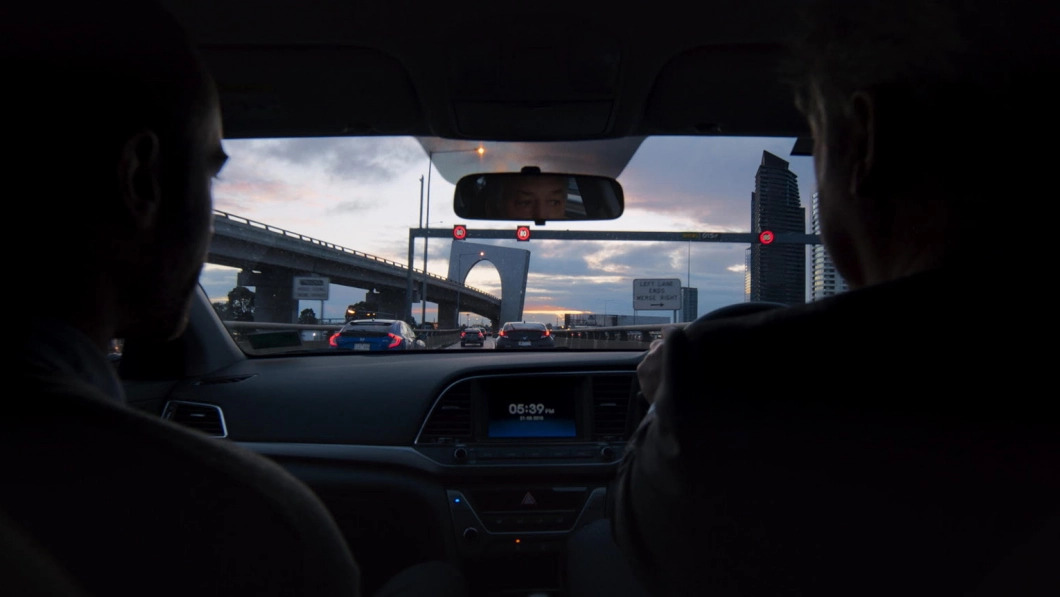
The Plains channels the spirit of Jeanne Dielman into Andrew Rakowski, a middle-aged lawyer who leaves office every evening just past 5 P.M. to drive home to suburban Melbourne. Easteal’s cyclical road movie formalizes this routine, filming Andrew’s commute over eleven different days of the year with a fixed camera from the back seat of his car. On some days, Andrew offers a lift to his colleague David (Easteal himself), probing the reticent young man on his private life while also generously talking about his own: relatives, career, romance, wealth, mental health. Literally compartmentalizing work and life, the commute creates a transitional zone where Andrew can view each as an escape from the grind of the other. It provides a moment of unwinding, freedom from roleplay that both life and work demand. Yet, for all the me-time the drive home affords, there is an eerie silence whenever Andrew isn’t chatting away or the radio isn’t on, as though this non-place, non-time were forcing him to reflect on Important Things. Despite the apparent sameness, every day brings small deviations that threaten Andrew’s reassuring routine, all accumulating into a powerful meditation on aging and the passing of time, a view of life’s parade from the wheel of his car.


8. Red Africa (Alexander Markov, Russia)

Rivalling the best work of Sergei Loznitsa, Alexander Markov’s resplendent found-footage project samples propaganda and reportage films that the USSR made during the Cold War to strengthen its ties with newly liberated African states. In this gorgeous Sovcolor assemblage, we see Soviet Premiers and African heads of state visit each other amidst ceremony and pomp, exhibitions showcase the latest in Soviet culture and technology to the African public and students use the knowledge they have gained in Moscow for the betterment of their countries, whose exported resources return as value-added products from behind the Iron Curtain. It’s a poignant glimpse into a nascent utopia, a world that could have been, which hides as much as it reveals. With cunning visual associations, Red Africa recasts decolonisation as a formal process that concealed fundamental continuities between the departing Western powers and the Eastern hegemon. Uplifting notions of bilateral ties between Africa and the USSR are belied by the strictly unilateral flow of influence and ideology. In its attempts at creating a new world order, Markov’s sharp film demonstrates, the Soviet Union espoused anti-colonial struggles in fraught areas of the globe even as it held sway over its diverse republics—a tragic irony made apparent when the chickens came home to roost in 1991.


9. The DNA of Dignity (Jan Baumgartner, Switzerland)

Jan Baumgartner’s moving, loosely fictionalized documentary The DNA of Dignity follows the patient, heroic work of individuals and organizations involved in identifying victims buried in mass graves during the Yugoslav wars. Along with bones, volunteers retrieve articles of clothing, toiletries and other knickknacks, all hinting at stories to be told of those they have outlived. With witnesses passing away each year and new structures waiting to be erected over these burial sites, the excavations are truly a race against time, fighting both political amnesia and nature’s complicity in the oblivion. In their quest to rescue war victims from anonymity, forensic scientists assemble excavated bones into skeletons, carry out DNA tests to ascertain identities and hand over the remains to grieving families, who haven’t had closure despite the end of the war and who confess to no longer being able to enjoy landscape without being reminded of what it hides. Baumgartner’s film obscures political and institutional details to focus on the scientific process, offering a fascinating, inspiring picture of the how the abstractions of science eventually coalesce into human stories. Its success lies in finding the right tone and distance necessary for a subject as grave and delicate.


10. Animal Eye (Maxime Martinot, France-Portugal)

Martinot’s funny, free-spirited, quietly radical Animal Eye features a 30-year-old Breton filmmaker discussing his next project with his producer in Lisbon. He isn’t very articulate, but knows that the film will be an “autobiographic animal diary” about his dog Boy. “Films are filled with humans,” he says, “all liars.” Animals, in contrast, are not aware of the camera—or don’t care about it—and as chaotic beings of “pure present,” they evade the signifying operations of the image, emptying it of meaning and intention. As the muddled filmmaker slowly “hands over” the project to his smart, wry producer, the film’s central theme crystallizes: in neither owing anything to imagemakers nor expecting anything from them, the filmed animal offers a way out of the crippling egocentrism of artistic creation. In being just an image, the filmed animal becomes a just image. Animal Eye takes the first tentative steps towards the faint understanding that a “cinema of animals” shouldn’t consist of simply filming the world from their eyes, but filming as them, whatever that might entail. Chaining together clips of dogs from across movie history—subject to sadistic torture, sentimentalism and signification, locked out of the human realm—Martinot’s film embodies a rousing rallying cry on behalf of a “deanthropocentrized” cinema. In its own modest way, Animal Eye marks a milestone in anti-speciesist filmmaking.


Special Mention: Saturn Bowling (Patricia Mazuy, France)


Favourite Films of

2021 • 2020 • 2019 • 2015 • 2014 • 2013 • 2012 • 2011 • 2010 • 2009

Filmmaker Jean-Luc Godard chose to end his life on 13 September at the age of 91 in his home in Rolle, Switzerland. Many of the tributes from around the world have likened his passing to no less than the death of cinema itself. The comparison has to do as much with the outsized influence that Godard has in film history as with the filmmaker’s own melancholy pronouncements about the end of the medium that he had shaped in his image for almost six decades.

Born in 1930 to a French doctor father and a Franco-Swiss mother of high-bourgeois extraction, young Jean-Luc had a childhood split between Paris and Nyon. Summers were spent in Haute-Savoie at the estate of his maternal grandparents, the Monods, in a culture of literature, sport and religion. This protestant upbringing, notes biographer Antoine de Baecque, had a marked influence on “Godard’s relation to spirituality, but also to modesty, to money, to Switzerland, to nature, to isolation and withdrawal from the world and to irreverence and iconoclasm…”

Relationship between parents soured after the war, owing partly to class difference, and the resulting tensions bore down on Jean-Luc. The boy, in the meantime, turned out to be a kleptomaniac, and his increasingly serious exploits led the Monods to cut off ties with him. (He would later be behind bars in Zurich.) This disavowal evidently left a deep scar on the teenager, who composed a passionate screed against the family, portraying them as hypocritical snakes that can never get along. Much of Godard’s subsequent life comes into relief in light of this primal domestic rupture.

As an adolescent, Godard harboured ambitions of publishing a novel with Gallimard, born of a desire to emulate the poet Paul Valéry, a close friend of his maternal grandfather’s. Literature, however, came with centuries worth of history, not to mention the approbation of the clan that had disowned him. The young man thus abandoned the idea, frequenting instead the film clubs of post-war Paris, cinema offering an illicit passion and education disapproved by his family.

It is at these screenings that Godard struck up friendships with other young cinephiles who would constitute the posterchildren of the French New Wave: François Truffaut, Éric Rohmer, Jacques Rivette and Claude Chabrol. Despite great difference in tastes and temperaments, the group was united in its impatience for literary-minded French cinema and a penchant for Hollywood films, which were being dumped en masse into Parisian theatres after years of wartime hiatus.

Godard and his cohort gorged on these transatlantic works, as well as on silent classics at the Cinémathèque française curated by Henri Langlois. At the renowned film magazine Cahiers du cinema, where all of them soon found a place, they defended popular Hollywood movie directors as authors worthy of not just their literary counterparts, but the pantheon of Western literature. Indeed, Godard’s first review for Cahiers, on an American melodrama called No Sad Songs for Me (1950), invoked no less than Plato and Stendhal to make its case.

Unlike with literature, though, Godard found in cinema a young form of expression not yet ossified into Art, without the baggage of legacy or the anxiety of influence. “With writing,” the filmmaker would later remark, “I have a pointed sense of inferiority, which I don’t have at all with cinema.” Films spoke through and to reality; as a medium coming into being, cinema was the privileged witness to the century it was coterminous with. It could show, as Godard put it, “boys and girls as we see them in the real world.”

Boys and girls, not men and women. The importance of youth to Godard’s early work, and to the New Wave in general, cannot be overstated. Cinema was a young art, but it was also an art of the young. In Masculine Feminine (1966), Paul (Jean-Pierre Léaud) is at a movie theatre with his girlfriend Madeline (Chantal Goya). As he sees an older couple on screen involved in miserable rituals of submission and domination, Paul muses: “At movies, the screen would light up, and we’d shiver. But more often, we’d be disappointed, Madeline and I. The images seemed old and flickery. Marilyn Monroe had aged terribly. We were sad. This wasn’t the film we’d imagined, the perfect film each of us carried within, the film we would like to have made, or perhaps even to have lived.”

In contrast, Masculine Feminine, and Godard’s other features set in Paris, capture the precise textures and moods of being young in the City of Lights. Cafés, bars, dance halls, pool clubs, parking lots, publicity hoardings, laundries, photo booths and theatres dominate the imagery and the soundtrack, to the point that the films become documentaries about the city at a particular point in time. This tendency to be in unceasing communion with the world around him remained intact all through Godard’s professional life. “There is in him the constant, almost diehard and touching wish to be contemporary,” writes de Baecque, “He has a sometimes unhappy, but always sensitive relation to the present of his time.”

This wish is manifest most directly in the filmmaker’s turn to radical politics at the end of the sixties. With its ambivalent if sympathetic portrayal of the fledgling Maoist movement, La Chinoise (1967) captured the foreshock of the historical events of 1968. But the film was, excoriated by the far-left for its hesitations and Godard deemed “the stupidest of all the pro-Chinese Swiss.” The director recanted, pulled down the shutters on filmmaking and embarked on a process of re-education. He dissolved his individual identity in filmmaking collectives and let himself be guided by the voices of the next generation. For the second time in his life, he burnt all his bridges to begin anew. In her memoirs Un an après (2015), actress Anne Wiazemsky tenderly describes this acute spiritual crisis that drove her then husband onto the streets to jump barricades or exchange blows with the police.

The Maoist experiment, however, came undone along with the dreams of a generation. Following a near-fatal motorbike accident in 1971, Godard was forced to reassess his priorities. The time of collectives officially over, he moved from Paris to Grenoble with his third partner Anne-Marie Miéville, with whom he lived in Rolle until his death. In the new city, Godard began again from zero, as he often did, finding new inspiration in video technology. The period also marked his ‘return’ to fiction filmmaking, resulting in a series of sumptuously photographed films that are nevertheless coloured with a bitterness about the end of utopian aspirations.

The crowning achievement of this period, though, was the eight-part video work, Histoire(s) du cinema (1988-98). Pillaging from hundreds of films, paintings and literary texts, and expanding on the lectures he had given in Montréal, Godard offers a dizzying personal meditation on the history of cinema and its relation to the world. While the global film fraternity was celebrating the centenary of the medium with consumerist cheeriness, Godard’s project mourned its death, its missed opportunities and its tortured relationship with the horrors of the twentieth century. In its philosophical scope, in the erudite, far-reaching associations it draws from its juxtaposition of image, text and sound, Histoire(s) remains unmatched in the annals of the seventh art.

Cinema, to be sure, hasn’t died with Godard, but it would be hard to deny that it has become significantly poorer. Not only did Godard’s work span the whole spectrum of filmmaking practice — commercial, experimental, documentary, amateur — but it also helped place cinema at the forefront of the story of art. Even in his final years, the filmmaker never ceased to interrogate the world through images. He was working on two new films when he decided to end his life by assisted suicide. “He was not ill,” reported someone close to him, “he was simply exhausted.”

The last minutes of his last feature film, The Image Book (2018), thus constitute a fitting coda. In the film’s final words, uttered over a black screen, Godard repeats to a coughing fit a quote from Peter Weiss’ The Aesthetics of Resistance (2005): “Even if nothing turned out how we’d hoped, it would not have changed what we’d hoped for.” This is followed by a long, mute excerpt from Max Ophüls’ Le Plaisir (1952), which Godard once called the greatest post-war French film: a masked old man dances himself into exhaustion and collapses on the ballroom floor. Let us hope that the music goes on.


[First published in Frontline]

How does one begin to speak about Jean-Luc Godard, the Swiss filmmaker who chose to end his life on Wednesday at the age of 91? Or more precisely, which Godard does one speak of? The renegade critic at the iconic film magazine Cahiers du cinéma who championed directors working at the lower depths of the Hollywood studio system? The young independent filmmaker who inspired, and continues to inspire, generations of movie brats with an astounding series of insouciant, dynamic and self-aware works, starting with Breathless (1960)? The angry Maoist who quit filmmaking in the late sixties to work in anonymity within various political collectives, most notably the Dziga Vertov Group? The melancholy recluse who, alongside his partner and filmmaker Anne-Marie Miéville, experimented with video and made one of the greatest cinematic works of all time, Histoire(s) du Cinéma (1988-1998)? Or the Old Master who continued to shake up the film form in the first two decades of our century, with a series of mournful, caustic digital essays?

If Godard has taught us anything, it is that we can begin anywhere. Beginning anew, restarting at zero, is a theme that had characterized Godard’s entire professional life. His films from the 1990s onwards are shot through with a lamentation about the premature death of cinema, the snuffing out of its possibilities by commerce and art. Yet, Godard was never a purist and he embraced most every technological development — lightweight handheld cameras, television, analogue and digital videos, 3D stereoscopy, smartphones and even Instagram — at a time that these were seen as inimical to cinematic practice. Godard’s body of work is defined by such ruptures and recommencements, so much so that they become its defining elements.

It may be odd to talk about the body of work of a filmmaker who hated careerism and couldn’t perhaps be bothered less about his legacy; he was, after all, working on new films at the time of his death by assisted suicide. Yet as a colossus of twentieth-century art, he casts a tall shadow. Godard’s legacy would be secure even if he hadn’t made a single film; his passionate, typically epigrammatic film criticism, published in English as the book Godard on Godard (1986), has countless imitators, but few equals. Filmmaking, he famously remarked, was criticism by other means. His reflexive and densely allusive films are shining instances on the medium’s capacity to reflect not just on itself, but on its relation to history and the world. In Breathless, a celebrity writer is asked by the journalist-heroine what his ambition is. He replies, “To become immortal, and then to die.” Has Godard achieved that? As a lifelong contrarian and a master of cryptic aphorisms, Godard would have no doubt had a zinger in response.


[First published on Cinema Express]

[From Luc Moullet’s book with Emmanuel Burdeau and Jean Narboni, Notre Alpin Quotidien (2009, Capricci). See Table of Contents]

In the introduction to the collection of your articles, Piges choisies (from Griffith to Ellroy), you state that your best critical texts are the most recent ones, but that for your films the evolution has not been the same: your best period would cover the years 1976-1989, from Anatomy of a Relationship to Les Sièges de l’Alcazar.

I don’t know. Whether my critical writing is good or not is not very important, at least not as important as it is for my films. The quality of my writing has undoubtedly improved over time; for films I don’t know. Those from 1976-1989 are generally held in higher esteem. And I don’t think there has been a step forward since those years. It’s rather up to you to tell me! I don’t care that much, but well… it’s a feeling. Filmmakers whose work extends over a long period of time often experience a setback at the end of their careers.

In a text from the special issue of Cahiers on John Ford, “The Slide of the Admiral,” you suggest on the contrary that the last shot of his last film, Seven Women, is his most beautiful.

Ford is atypical; Americans generally flag at the end: Hawks, Hitchcock, Nicholas Ray, Anthony Mann, Griffith and many others. There is longevity, circumstances…

Piges choisies also reproduces your unorthodox answer to the Libération survey “Why do you film?”: “To make big bucks, to go on big trips and to meet pretty girls.”

If there is a questionnaire, there necessarily has to be a winner. I wanted to have the best answer. I received a lot of phone calls; my answer made a lot of readers laugh. I think I won. At the time—1987—I was an ascetic figure; I was almost seen as another Straub. I am still seen today as an unadulterated filmmaker who does not compromise. Jansenist, even.

It’s true that I don’t make many complacent films. In order to depress my interlocutors, I often have fun saying that I was forced to make a film to put food on the table. “Ah my poor fellow! What is it called? – Origins of a Meal.” So my reputation for integrity also has a playful side.

I think the answer would have been even funnier had it been given by Straub or Bresson. I had phoned Bresson to suggest it, but he took it badly.

My answer, moreover, corresponds to reality, or at least to certain aspects of reality. It was not for nothing, for example, that my first films always had two actresses in the lead roles. I was single, my chances were multiplied by two. I have to admit that it was a very bad calculation.

Did you put them in competition with each other?

I didn’t go that far, but two chances are better than one, or zero.

When you were writing at Cahiers, Rohmer once made this strange remark, which you also recall in Piges choisies: “Moullet, I know why you love Buñuel. It’s because you’re both slackers.”

This is the most beautiful compliment I have ever received. Rohmer put me in the same boat as Buñuel, without kissing up to him for all that, since he presented his comparison as a kind of insult. He didn’t realize the compliment he was paying me, I thought. I don’t know if he would repeat the compliment today, even if his appreciation of Buñuel has become more positive.

“Slacker” in what sense? The rejection of rhetoric, mannerism, everything that makes cinema?

A certain zero degree, once again. That’s what Rohmer meant, in a sense. Buñuel didn’t have a visual structure like Murnau or Eisenstein. He is therefore a slacker. And so am I…

Do you consider yourself a slacker?

Of course. That is, in any case, the evolution of cinema. In the silent era, everything was structured around the frame. With talkies, filmmaking became more subtle, more composite, less determined on the level of pictorial construction. The composition of a discreet whole, chiselled in the manner of Murnau’s genius, became outdated. Those who want to make films like Eisenstein today are, moreover, admen, or very retrograde directors.

(more…)

[From Luc Moullet’s book with Emmanuel Burdeau and Jean Narboni, Notre Alpin Quotidien (2009, Capricci). See Table of Contents]

Brigitte and Brigitte (1966)

There are no hard-and-fast rules, only useful guidelines. Every law must be bent, that’s the only obligation—and that’s precisely what can be great in cinema. Nine times out of ten, what is taught in film schools today is in fact the opposite of what was taught sixty years ago.

Two illustrations as a preamble and a warning:

  • It was once forbidden to move directly from a wide shot to a close-up. This rule is palpable in a film I like very much, Children of Paradise: it systematically uses an annoying—and seemingly forced—gradation between the shot sizes. Today, however, the transition from the wide shot to the close-up works magnificently, provided it is well managed, even if some filmmakers abuse it, starting with Sergio Leone.
  • The 180-degree rule prohibits crossing the shot-reverse shot line so that the viewer isn’t disoriented. But the truth is that it all depends on the actor. With Jeanne Moreau, Brigitte Bardot or John Wayne, you can blithely cross the 180-degree line, because the actor is known and well placed, like a pillar: he or she serves as a visual reference. It is much more difficult with beginners whom no one knows, lack as they do a stable facial reference in the frame.

Like a majority of the technical rules in use, this is also a strictly western law. The Japanese constantly break the shot-reverse shot line; for them the problem does not arise. Imagine: had Japan won the war, that would have been the end of 180 degrees!

This is true of almost all laws: they are dependent on history or geography. None of them is indisputable or eternal. You just have to be aware of the risk you are taking when you decide to apply them. Or not apply them! Conscious of this risk, I have chosen to include in the vade mecum that follows the objections that have been made or that could be made to me. Also those that will be made, no doubt.


Production, Generalities

The plumber principle (choose a title starting with A or B)

Open the phone book, all plumbers have a shop name that starts with A. They all sit at the top of the directory. Being at the top of catalogues is important, because festival catalogues play a big role. All catalogues for that matter. You can’t always do it, but it is recommended, especially for short films. Maybe there will soon be a rush of short films starting with AAA, as with plumbers.

I can already hear the first objection. My first short, Un steack trop cuit (1960), is not exactly at the top of the alphabet: an error of youth, sorry. As for the following ones, Ma première brasse (1981), Essai d’ouverture (1988), Le Ventre de l’Amérique, Le Système Zsygmondy (2000) etc., they are a bit all over; that’s because, with time, I’ve become surer of myself.

(more…)

[From Luc Moullet’s book with Emmanuel Burdeau and Jean Narboni, Notre Alpin Quotidien (2009, Capricci). See Table of Contents]

Just as tales—which we’ll come back to later, since the genre isn’t foreign to your cinema—begin in French with “Il était une fois…” (once upon a time…), we’d like to begin with “Il était un Foix…,” In 1994, you made a short film that bears this name, a small town in the Pyrenees. Foix is a film representative of your work; it is built on a geographical principle that you are fond of: to sketch a nearly exhaustive portrait of a place, to wander across it and survey it in all directions until its spatial, comic, dramatic and aesthetic possibilities are exhausted. But in general, you film familiar places, places that you have known and loved for a long time. In Foix, it is the opposite, and that is also why we wanted to start there: you present a completely ugly city, its ugliness accentuated by the laconic irony of a tourist-style voice-over. Foix is therefore a film against something, a negative portrait. It is the exception to one of the rules of your work, a contradiction within a work that has no shortage of them. How did the film come to be?

It must have been 17 September 1973, shortly after Allende’s fall. I was walking in the Pyrenees with my wife. When we stayed the night in Foix, we both had the feeling that we had discovered the most backward town in France. For the next twenty years, I travelled around the country to gather several proofs of this stellar backwardness. I didn’t do just that for twenty years, but I did that. I could see that, yes, this town was the champion in this regard. The script had time to mature: more than twenty years of work for a thirteen-minute short film.

Invited by Toulouse for a conference, I made a detour to see Foix again. It was a painful experience. From Toulouse, I wanted to go up to the Montagne Noire, where I hadn’t been before. I had to leave early, at seven o’clock. At the station, I stumbled on the new pavements, which are a bit slanted. I hurt my foot very badly. I travelled for 30 kilometres with a huge abscess on my toe. The right, I think. I delivered my lecture and then I went to the hospital the next morning to have the abscess removed. In the afternoon, I went to Foix. Because of my foot, I could scout it only slowly. The town was almost in the same state that I had left it twenty years earlier. It was really typical, very impressive. I don’t think it’s possible to go this far into degeneration. It’s quite a nice town in itself: there’s a chateau, it’s well situated. But you can sense that there has been no real town planning. It’s a complete mess.

Based on the photos that I had taken, I submitted a project to the CNC [National Centre for Cinema] for support with the short film. In photos with cars, I scratched out the two digits pertaining to Ariège region. Worried about a leak, I rechristened the project Vesoul. I added that the film would not be shot there, without specifying where. I thought that the people at the CNC would be keen to know where I would shoot, and that they would give me the money to find out. That’s what happened. We got the grant. We did a combined shoot, which is very cost-effective: I shot Toujours plus, which ended in Toulouse, and in the evening, we went to Foix to shoot Foix. The shoot went on for about three days. There was only one minor problem: Toujours plus being a TV film, we shot at twenty-five frames; but my sound engineer continued to record at twenty-five frames for Foix, instead of twenty-four, the normal frame rate for a cinema film.

Many people and institutions are thanked in the credits. Did the production actually involve them, or was it out of caution?

Not out of caution. It was to make the viewer laugh. I asked the town hall and the police for some little things so that I could put them in the credits. “I thank the town of Foix very much…” That’s funny.

Did the city respond?

Not directly, except on the day the film was shown on TV. The town hall phoned the production manager, who acted as a buffer. They couldn’t say anything, I hadn’t asked them for money. The town hall had done only one thing: turn on the little geysers on the ground—these “watering limbs” that make the water come out thirty centimetres from the ground—which only work in summer, whereas the shooting took place in winter.

Was the idea of the fake tourist documentary there from the outset?

The idea was inspired by Georges Franju’s Hôtel des Invalides, a film commissioned by the army that made everyone laugh. Well, almost everyone… As it was a short film, Foix was practically written down to the last detail. It’s tiring to draw up a complete découpage for a feature film. On the contrary, for a short documentary, it’s fun to do it, and it pleases the producer, who incidentally hadn’t invested a lot of money, since there was money from the Centre for Cinema. In these towns, everyone is happy when you come to shoot. No one comes to shoot in Foix. One day, I filmed in Toulouse, in the largest supermarket in the world. There were ninety-four counters. I was warmly received; at the end, we were even offered champagne. It’s rather in Paris that one can feel unwelcome. Everybody comes to shoot there; people are suspicious, they have had it up to here.

Did you go back to Foix?

I saw the city from the train. I’ve bought a Ray-Ban since then, so I might try to go back there. My face has changed a bit, I’ve lost hair. I should stop by the town someday.

(more…)

Next Page »