La Pianiste (2001) (aka The Piano Teacher)
French
Michael Haneke
“Schubert’s dynamics range from scream to whisper, not loud to soft”
 Michael Haneke‘s disturbing portrayal of an aging music teacher is definitely not for every one. Very graphic in nature and strongly thematic, La Pianiste (2001) attempts to simply document its central characters rather than offering a judgment on their conduct. A truly multi-layered film with characters that can be analyzed for hours.
Erika is a very talented piano teacher who has always been controlled and ruled by her mother’s orders and wishes. This has not only resulted in her social isolation but also has risen a need for upholding her esteem. Thus she is straddled between two mindsets- one of a domineering male who wants to take control of all her actions, the other being a typical female craving for all the love she never had got in her youth. She meets Walther, a young dashing engineering student who loves music. He is quite opposite in character, very clement and conventional. He is attracted to Erika for reasons unknown and enrolls in her class. Erika, too, is attracted to and possessive of Walther. But she does not reveal it for it may seem like she is not under her control. When she finally decides to reveal what’s in her mind to Walther, the latter is disgusted by her weird sexual fantasies and tries to quit, but finds he is unable to. Finally, fed up from it all, he does what Erika asked him to do. The climactic scene deciding Erika’s fate can be interpreted in a number of ways.
Music is a critical point in the film. Not only does it provide the atmosphere, but also stresses on the characters. Erika specializes in Schubert who was extreme in thoughts became unstable of mind late in his life. The moderate Walther is unable to adapt to Schubert as opposed to Erika. Isabelle Huppert is one of the best actors around and La Pianiste shows why. Right from the cold stares in the piano classes to the quibbles with her mother, Huppert lives as Erika. Benoit Magimel as Walther too provides the right kind of reinforcement that a character like Erika needs. Both of them won the top honours at Cannes Film Festival in 2001 for their performances.
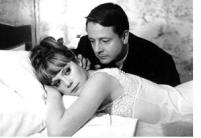 La Peau Douce (1964) is perhaps François Truffaut‘s least talked about good movie. Release alongside Jacques Demy‘s big favorite Les Parapluies De Cherbourg, La Peau Douce could well be called “eclipsed” by the former. From the outside the film could be written off as a mild drama, the characters in the films have much more impact than any melodrama. At first watch, it is but natural to think of Woody Allen‘s wonderful film Match Point – An illicit affair, the secrets revealed, tensions high for protecting egos. But neither is the film as verbose or as happening as Match Point.
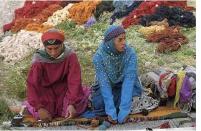 A co-production of the French and the Iranian film industry, Gabbeh (1996) is perhaps the best and most typical starting point for the westerners who would like to get an insight into the cinema of the east. Released in 1996 Gabbeh has managed to enchant the westerners and the Asians alike for not only its artistic merits but also for its subtle exposure of the culture of Iran. The film is centered around a nomadic tribe, which is tightly bound by blood relations. The tribe has its own rituals and beliefs which it passes on for posterity. One such practice is the weaving of carpets for a person depicting the journey of their life. The tribe carries and updates the carpets wherever they go.
 The Seventh Art