Ten (2002) (aka 10)
Abbas Kiarostami
Persian
“You are wholesalers. We are retailers”

There are not more than a handful of directors who have the special ability to look beyond the boundaries and hop over the conventions of the medium. Abbas Kiarostami, with his radically fresh perspective and consistent streak of “different” films, undoubtedly is in the cream of that list. The loose and naturalistic style, that would have made Tarkovsky proud, still remains potent to intrigue the audience, even decades after its inception. Ten (2002) serves as an embodiment of that statement.
The whole film takes place inside a car whose driver is a married woman. She travels around the city the whole day and in the process meets women from various age groups and social strata. This group includes her insolent and impatient son, her sister, a jilted bride, an old woman on her way to a prayer and a prostitute. She listens to all their complaints and tries to console them, even though an act of formality. It is also revealed that the driver herself is on the brink of a break-up. The whole action takes place in a single day and inside the same car.
As ironical as it sounds, Kiarostami tries to provide a broad social commentary employing his alarmingly limited set of resources. The position of women in the Iranian society has been elaborated upon by contemporaries from the country such as Jafar Panahi and Tahmineh Milani. Kiarostami, taking a slightly different path (as usual!), does not stress explicitly upon the issue, but lets his characters and conversations drive the point. The range of characters that the driver meets helps the audience to delve into the social conditions, one step at a time.
What, ultimately, the viewers take away from Ten is its daring execution and its fearlessness at that. Whole of the film is shot using 2 cameras placed inside the car. The film is so claustrophobic and even borderline nauseating that one can almost smell the fumes from the car engine. The viewer, mentally, tries to break away from the spatial restriction imposed and the resulting suffocation and get out of the car, into the fresh. This, as in most Abbas Kiarostami films, is precisely what the director wants. The immense social and political restriction placed upon the women of the nation is directly mirrored in their physical placement in the car. As a result, both the viewers and the characters yearn for visual and social emancipation respectively.
As with all of the director’s films, Ten too has its fair share of admirers and haters. Its avant-garde style and non-judgmental observation of reality may be the revelation for many, but it still is a difficult watch. One can be easily cramped by the hour and a half of sitting on the music player of the car, unable to even turn his/her head towards a different view. But considering that such unexampled films do not come very often, nobody complains.

 I’m sure many would have watched Quentin Tarantino’s Reservoir Dogs (1992) or Pulp Fiction (1994) and become fascinated with the style of film making – Long conversations about…er, just conversations, dark humour, petty issues magnified, weird characters. Though Tarantino was influenced much by the works of Godard, the effect of Truffaut’s Tirez Sur Le Pianiste (1960) on his style cannot be written off. Tirez Sur Le Pianiste primarily acts as a cross between the 50’s film-noir style and Hitchcock’s troubled characters.
 Michael Haneke‘s disturbing portrayal of an aging music teacher is definitely not for every one. Very graphic in nature and strongly thematic, La Pianiste (2001) attempts to simply document its central characters rather than offering a judgment on their conduct. A truly multi-layered film with characters that can be analyzed for hours.
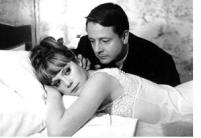 La Peau Douce (1964) is perhaps François Truffaut‘s least talked about good movie. Release alongside Jacques Demy‘s big favorite Les Parapluies De Cherbourg, La Peau Douce could well be called “eclipsed” by the former. From the outside the film could be written off as a mild drama, the characters in the films have much more impact than any melodrama. At first watch, it is but natural to think of Woody Allen‘s wonderful film Match Point – An illicit affair, the secrets revealed, tensions high for protecting egos. But neither is the film as verbose or as happening as Match Point.
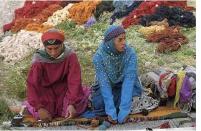 A co-production of the French and the Iranian film industry, Gabbeh (1996) is perhaps the best and most typical starting point for the westerners who would like to get an insight into the cinema of the east. Released in 1996 Gabbeh has managed to enchant the westerners and the Asians alike for not only its artistic merits but also for its subtle exposure of the culture of Iran. The film is centered around a nomadic tribe, which is tightly bound by blood relations. The tribe has its own rituals and beliefs which it passes on for posterity. One such practice is the weaving of carpets for a person depicting the journey of their life. The tribe carries and updates the carpets wherever they go.
