2019 was a special year for me. I came back to cinema in an abiding way after a break of over three years. It was also this year that I quit my day job to write and translate full time, even if it has mostly been for this site. This second innings of my cinephilia has been more guarded, and I find it hard to be excited about watching this or that film, even if it’s by a favourite filmmaker. Part of the reason for this change, I think, is that I don’t repose as much faith in the taste-makers I was earlier guided by (major festivals, branded auteurs, critical consensus). This has weakened, if not completely collapsed, the structure in my mind of what constitutes important cinema of a particular year. Adding to this is the fact that the way I react to films has changed. In my writing, I see myself responding to certain aspects of a work rather than forming strong opinion on its overall merit. As a result, I’m as stimulated by lesser works with strong moments or ideas as I am by expectedly major projects. Whether this breaking down of hierarchies is a sign of openness to new things or a symptom of waning faith, I don’t know.
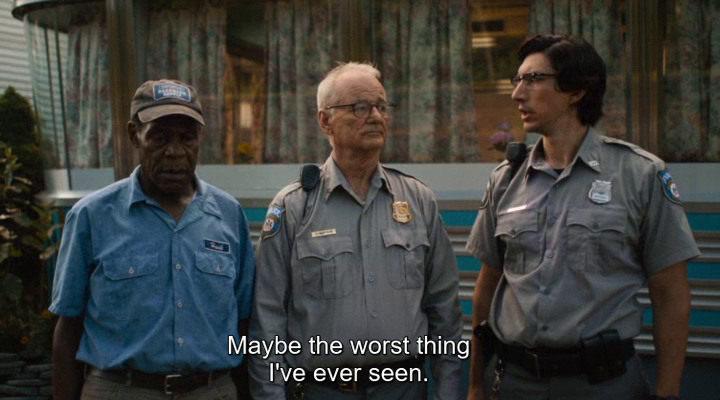
The state of affairs in the world outside cinema hasn’t been easy either. The staggering return of the politically repressed around the world has found an expression in some of this year’s films too (Zombi Child, The Dead Don’t Die, Atlantics, Ghost Town Anthology, Immortal). Personally speaking, the increasingly dire situation in India hasn’t been without its influence on the way I relate to cinema. The brazenness of the Citizenship Amendment Act (CAA) has now paled in comparison to the mind-numbing institutional violence towards the ongoing protests against the act. Looking at videos of police brutality on my social media feed, I wondered, as anyone else involved in matters of lesser urgency must have, if writing about cinema at this point even had a personal significance, leave alone a broader, social one. The directness of the videos, the clarity of their meaning and the immediacy of their effect made me doubt whether cinematic literacy—contextualization, analysis, inference, interpretation—was a value worth striving for. Weakening of convictions is perhaps part of growing old, but it makes writing all the more difficult. Every utterance becomes provisional, crippled by dialectical thought. I don’t have a hope-instilling closing statement to give like Godard does in The Image Book, so here’s a top ten list instead. Happy new year.
0. 63 Up (Michael Apted, UK)
1. The Truth (Hirokazu Kore-eda, Japan/France)
 While multiple films this year about old age have presented it as a time of reckoning, Kore-eda’s European project The Truth offers an honest, rigorous and profoundly generous picture of life’s twilight. In a career-summarizing role, Catherine Deneuve plays a creature of surfaces, a vain actress who struts in leopard skin and surrounds herself with her own posters. Her Fabienne is a pure shell without a core who can never speak in the first person. She has written an autobiography, but it’s a sanitized account, a reflection of how her life would rather have been. “Truth is boring”, she declares. Responding to her daughter Lumir’s (Juliette Binoche) complaint that she ignored her children for work, she bluntly states that she prefers to be a good actress than a good person. Behaviour precedes intent in the mise en abyme of Kore-eda’s intricate monument to aging, as performance becomes a means of expiation and a way of relating to the world. A work overflowing with sensual pleasures as well as radical propositions, The Truth rejects the dichotomy between actor and role, both in the cinematic and the existential sense. In the end, Fabienne and her close ones come together as something resembling a family. That, assures Kore-eda’s film, is good enough.
2. Parasite (Bong Joon-ho, South Korea)
 The across-the-board success of Parasite invites two possible inferences: either that the cynical logic of capital can steer a searing critique of itself to profitable ends or that this twisted tale of upward ascension appeals to widely-held anxiety and resentment. Whatever it is, Bong Joon-ho’s extraordinary, genre-bending work weds a compelling social parable to a vital, pulsating form that doesn’t speak to current times as much as activate something primal, mythical in the viewer. With a parodic bluntness reminiscent of the best of seventies cinema, Bong pits survivalist working-class resourcefulness with self-annihilating bourgeois prejudice and gullibility, the implied sexual anarchy never exactly coming to fruition. He orchestrates the narrative with the nimbleness and legerdemain of a seasoned magician, the viewer’s sympathy for any of the characters remaining contingent and constantly forced to realign itself from scene to scene. Parasite is foremost a masterclass in describing space, in the manner in which Bong synthesizes the bunker-like shanty of the working-class family with the high-modernist household of their upper-class employers, tracing direct metaphors for the film’s themes within its topology. It’s a work that progresses with the inevitability of a boulder running down a hill. And how spectacularly it comes crashing.
3. Vitalina Varela (Pedro Costa, Portugal)
 Vitalina Varela is an emblem of mourning. In recreating a harrowing moment in her life for the film, the middle-aged Vitalina, who comes to Lisbon following her husband’s death, instils her loss with a meaning. It’s a film not of political justice but individual injustice, the promise to Vitalina the that men in their resignation and madness have forgotten. It’s also a bleak, relentless work of subtractions. What is shown is arrived at by chipping away what can’t/won’t be shown, this formal denuding reflective of the increasing dispossession of the Cova da Moura shantytown we see in the film. Costa’s Matisse-like delineation of figure only suggests humans, enacting the ethical problems of representation in its plastic scheme. The film is on a 4:3 aspect ratio, but the viewer hardly perceives that, the localized light reducing the visual field to small pockets of brightness. Vitalina is a film of and about objects, whose vanishing echoes the community’s dissolution and whose presence embodies Vitalina’s assertive spirit. Her voice has its own materiality, her speech becomes her means to survival. Costa’s film is a vision of utter despair, a cold monument with an uplifting, absolutely essential final shot. A dirge, in effect.
4. Bird Island (Sergio da Costa & Maya Kosa, Switzerland)
 The bird island of the title is a utopian place, a refuge for those wounded or cast aside by modernity. For sixty minutes, we are invited to look at five people working silently alongside each other in a bird shelter, tending to birds dazed by the airport next door. They don’t ask where these birds come from, nor do they expect them to leave soon. They simply treat the feathered creatures, re-habituate them into the wild and set them free. The reclusive Antonin, the new employee, is one such bird too, and his social healing at the shelter is at the heart of the film. Bird Island is full of violence, natural and man-made, all of which it treats with stoic acceptance, but it’s a work primarily about the curative power of community, the capacity for individuals to coexist in mutual recognition of each other’s frailties. In that, it’s the Catholic film par excellence, an allegory of the origin of religion. It’s also an exceptionally relaxing film to look at. Observing the participants absorbed like Carthusian monks in their individual tasks, even while working in a group, places the viewer on the same meditative state.
5. Heimat is a Space in Time (Thomas Heise, Germany)
 Without question, Heimat is a Space in Time is the best 3½-hour film of the year. Heise’s sprawling experimental documentary uses largely personal documents—letters sent between family members, handed-down private documents—to evoke a broad history of 20th century Germany. As a narrator reads out the exchanges—Heise’s grandfather trying to reason with the Nazi state against his forced retirement, heart-rending accounts from his Jewish great grandparents describing their impending deportation, letters between his parents who were obliged to be in two different places in DDR—we see quotidian images from current day Germany and Austria, urban and rural. For Heise’s family, always made to justify their own place in the country and to never truly belong, the Germanic idea of Heimat seems positively a fantasy. While he reads out his great grandparents’ descriptions of their increasingly impossible conditions of living, Heise presents a scrolling list of Viennese deportees prepared. We try to look for the inevitable arrival of their names in the alphabetical list, our gaze forever deferred. When they do arrive, it feels arbitrary. In other words, what we hear could well be the story of any of the thousand preceding names. Perhaps all of them.
6. Slits (Carlos Segundo, Brazil)
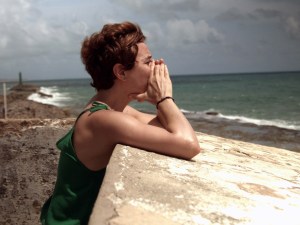 A worthy heir to Tarkovsky’s Solaris, Slits draws its inspiration from quantum physics to explore patently human concerns of loss, grief and memory. The uncertainly principle it offers is a choice between being in this world, awake to the problems of living, and finding meaning in the elsewhere. Physicist Catarina (Roberta Rangel) makes ‘sound-photos’ to study quantum the properties of light. She makes extreme zooms into a digital image to perceive the noise issuing from particular coordinates. These ‘dives’ enable her to listen to conversations from another space-time. Grieving from the loss of her child, Catarina unconsciously attempts to find closure through her research. But trying to inspect the surface of things from too close, she loses sight of her immediate reality; trying to find solace in the objectivity of science, she ends up rediscovering the great lesson of 20th century science (and cinema): that the observer influences the observation. Shot in high-definition digital video, Slits is to this new format what Blow-up was to photography. It locates in the trade-offs of the medium—between details and stability, between richness of palette and noise—visual correlatives to its key idea of quantum uncertainty. A brilliant, sophisticated work of politico-philosophical science fiction.
7. Little Joe (Jessica Hausner, UK/Austria)
 Of all the recent classical Hollywood riffs in mind, none reinvigorates the B-movie tradition as intelligently or potently as Little Joe. Hausner’s modernist creature feature is a monster movie unlike any other: the dangers of the genetically-modified “happiness” plant that biologist Emily (Alice Woodard) develops is exposed early on, and there’s no triumphal reassertion of mankind to counter its menace. What we get instead is a protracted, total submission of individuality to a hegemony of happiness. Little Joe is many things at once: a multi-pronged attack on the wellness industry straight out of Lanthimosverse, the difficulty of being less than happy in an environment that demands you to be constantly upbeat, the fallout of women artists trying to expunge their maternal complexes in their work and of mothers having to lead double lives. Hausner’s camera appears to have a mind of its own, settling on the space between people, which is what the film is about: the culturally mediated relations between individuals. It’s notable that the titular plant reproduces not biologically but culturally. With its terrific score and work on colour, Hausner turns the cheesecake aesthetic of the film against itself. The result is a film of unusual intellectual density and formal frisson.
 In Status and Terrain, the German obsession with documentation and due process is called to testify to the dialectical process of historical remembrance. Adamczewski’s gently moving camera surveys the length and breath of public spaces in the Saxony region, once a Nazi stronghold, now seemingly anaesthetized under liberal democracy. Official communication, bureaucratic reports and private testimonies read on the voiceover incriminate the buildings and monuments we see on screen, revealing their role in power struggles through the ages. Just as the documents vie for a narrative on the soundtrack, ideologies once thought dead and buried surface to stake their claims on the urban landscape in the present. Adamczewski moves through 80 years of German history non-chronologically, the collage of information pointing to the living, breathing nature of political belief systems. Nazi detention of political opponents in concentration camps, Soviet retribution and blindness to victims of persecution, rise of neo-fascist groups post reunification and the historically indifferent, bulldozing force of current-day neoliberalism play out on the surface of seemingly sedate cities and towns. Status and Terrain is a sober, bracing examination of the manner in which prejudice becomes writ, which in turn becomes history, but also of the way in which this history is contested.
9. Ham on Rye (Tyler Taormina, USA)
 The premise is a throwback to the clichés of the eighties: a group of teenagers at a suburban school prepare for their prom night. But in Taormina’s sure-handed treatment, this banal event assumes a spiritual dimension. In the film’s cubist first half, different groups of boys and girls make their way to the restaurant-turned-dance hall, where they will take part in rites of initiation into adulthood and experience something like a religious communion. And then, right after this VHS-ready high, a void descends over the film, turning its raptures into a mourning, not for those who have left this small-town existence but for those left behind: disaffected youth drift about the town or going through robotic social rituals, devoid of magic or warmth. It’s a work evidently deriving from personal experience, but one that’s refracted through a formalist lens. The strength of Ham on Rye is not the depth of its ideas, but the vigour of its prose. Taormina’s manifestly personal style emphasizes the surface of things, the idiosyncratic shot division focuses on gestures and minor physical details to construct scenes, and the eclectic sense of music imposes a global consciousness on a narrative that is otherwise extremely local.
 “Cinephiles are sick people”, said Truffaut. Frank Beauvais agrees. Following his father’s passing and a breakup, Beauvais shut himself up in his house in a trou perdu in Eastern France, and watched over 400 films in a period of seven months. Out of this glut, this sickness that Beauvais calls ‘cinéfolie’, came Just Don’t Think I’ll Scream, a film about looking, made wholly of clips from these 400 movies. Through a rapid, self-aware voiceover, the filmmaker reflects on his self-imposed isolation, his panic attacks, the poverty that prevents him from changing his lifestyle, his complicated feelings towards with political action, the conservatism of those around him and his relationship with his parents. Beauvais’s film is a record of his malady as well as its cure. In its very existence, it demonstrates what anyone sufficiently sickened by cultural gluttony must’ve felt: that the only way to give meaning to the void of indiscriminate consumption is to produce something out of it. Just Don’t Think I’ll Scream is not just a cinephile’s film, filled end to end with references, but the preeminent film about cinephilia, the solipsistic hall of mirrors that Beauvais breaks down and rebuilds inside out.
Special Mention: Gully Boy (Zoya Akhtar, India)










 The Seventh Art