Cinema of India


[Part of Curator’s Corner, a section dedicated to showcasing work of emerging and marginal filmmakers. See here for details.]

In this edition of Curator’s Corner, I’m happy to bring to your attention Searcher (2022), a short film by New Delhi-based independent filmmaker, Divya Sachar. A graduate from the first batch of the television department of the FTII, Divya was convinced early on — thanks to the intense experience at the institute of watching films from around the world, especially those of Ingmar Bergman — that she didn’t want to just find a place in the Bombay movie industry. Her diploma project, titled The Dead (2004), is an intimate, localized adaptation of James Joyce’s eponymous short story.

While working in the field of advertising, Divya made her first film for the Public Service Broadcasting Trust. It was called A Short Film About… (2008), and as that title indicates, it was about a subject around which an awkward silence reigns: breasts. In this half-hour documentary, several teenagers and young women talk about their breasts and how they impact their everyday lives, their relationships and their view of themselves. Woven alongside these highly articulate interviews are clips from popular movies and music videos, a personal voiceover by the filmmaker and an assortment of punning images that evoke the film’s subject.

While insightful and ripe for academic analysis, A Short Film About… derives its value in sticking close to the participants’ lived experience and not theorizing it on our behalf. The testimonies are remarkably candid and grounded in everyday life. Structured in a simple, snappy rhythm, the work defuses a great, perhaps universal taboo with warmth and humour. “It usually makes for good community viewing because it’s quite a funny film,” says the filmmaker, “and laughing alone isn’t as much fun as being among a group of gigglers.”

A Short Film About… is explicitly about the body image, but it is also in some ways about the cinematic image; a film as much about human sight as it is about breasts, which, the interviews reveal, occupy an uneasy space between the private and the public — objects to be concealed but inevitably subject to visual scrutiny. Throughout the film, Divya varies the framing pattern, now photographing the participants chest-up, now in close-up. These variations have the effect of making us aware of our own gaze and reflexively grapple with the problems of filming the female body.

Divya made her next film after a break of over a decade, induced by an undiagnosed health condition. Searcher, a play on Divya’s family name, is framed as a self-interrogation. After an opening title card invokes the neuroscientific basis for the existence of inter-generational trauma, the filmmaker informs us that she was diagnosed with schizophrenia a few years before. The film that follows is an attempt to understand her condition through the story of her grandmother, who migrated to India from present-day Pakistan during the Partition, only to lead a short-lived life of drudgery and suffering.

At the centre of Searcher is a house, an ancestral property, where the filmmaker’s grandmother once lived. The residence looks at once occupied and abandoned; where the thickly furnished interiors give a sense of inhabited space — an impression reinforced by muffled sounds of cooking and chatting — shots of wilting plants, discarded furniture, peeling paint and rusting locks suggest a forlorn site, a haunted bungalow even. The multiplication of mirrors and reflective surfaces, on which we periodically glimpse the filmmaker, amplify the feeling of inwardness, of the filmmaker being locked in.

As the house is surveyed in a mix of roving and static shots, a dialogue ensues between the filmmaker and the jamun tree adjoining the property. The tree narrates the harsh life experiences of the filmmaker’s grandmother. At one point, when the camera encircles a chakki (a traditional grindstone), we are shown Margaret Bourke-White’s photographs of the horrors of the Partition while the soundtrack plays ethnomusicologist Alan Lomax’s field recording of Old Alabama, sung by African-American prisoners. Adding to the implied tyranny of this domestic rigour is a traumatic incident in which, the tree tells us, grandmother was thrown out of the house in a state of undress by her husband.

Grandmother, we are informed, died shortly before the filmmaker was born, making the tree a kind of stand-in for the old lady, a reincarnation; Divya films the tree in tilt shots the same way she films her grandmother in photographs. Searcher articulates the inheritance of malaise across these three figures, invoking the filmmaker’s mental illness in direct relation to her grandmother’s trauma as well as to the blight that the jamun tree is suffering. Each one thus takes on the quality of a metaphor for the other: the Partition is recast as the schizophrenia of a nation torn apart, while the filmmaker views her own condition in terms of the inescapability of the grind of life.

Searcher is a looser, less regimented film than A Short Film About… Its shot composition is more intuitive and the sound mix — with high-volume music and ambient noise sharply cutting into the voiceover — deliberately abrasive. “One aspect of my approach to sound was to be completely unsentimental,” says Divya. “In contrast to dissolves, straight cuts are unsentimental.” What Searcher sacrifices in expositional and structural clarity compared A Short Film About…, it gains in emotional density. It’s a lyrical, reflective work that dwells on surfaces and textures, shadows and forms, the spaces between objects and the inchoate feelings they conjure.

A poetic diary film that is also an oblique ghost story, Searcher hints at apparitions and revenants. The camera has a markedly physical quality, only to be suddenly disembodied by the sight of the filmmaker holding another camera. In the final minutes, we see Divya editing the film seated at a desk in the house. Cut to solemn notes from a harmonium, the image evokes a propitiative ritual, a kind of rapprochement that allows the filmmaker to come to terms with the lineage of her pain. “The idea was to show the process of my recovery,” remarks Divya. “Making the film was therapeutic for me, as was the spiritual intervention of my guru.”

Searcher is not yet available for viewing online, but residents of New Delhi can catch a screening at Studio Safdar on 15 April 2023 as part of reFrame’s G-Fest, with the filmmaker in attendance. Divya hopes that the film can find a wider audience very soon.


Bio

Divya Sachar is a Delhi-based filmmaker, photographer and writer. She completed her Masters in English Literature from Delhi University and postgraduate specialization in Television Direction from the Film and TV Institute of India, Pune. Her first directorial work A Short Film About… received critical acclaim and aired on national television. Her second film Searcher has traveled to festivals such as Prismatic Ground, New York, and International Documentary and Short Film Festival of Kerala. She also writes on films and the visual arts, and has taught screenwriting and direction at Bennett University, Greater Noida. Divya‘s photography and creative nonfiction have been published by Fall Line Press. She is currently working on her first photobook.

Contact

culdivsac[at]gmail[dot]com | Twitter | Instagram

Filmography

  • The Dead, 2004, 24 min., Betacam
  • A Short Film About…, 2008, 29 min., digital
  • Searcher, 2022, 20 min., digital
  • Conflict (work-in-progress)
  • Unstory (work-in-progress)

Showcase

A Short Film About… (2008)

Indian cinema was in spotlight at the recently concluded International Film Festival Rotterdam, with over thirty titles presented at the two-week event. The majority of these were part of a special non-competitive section titled “The Shape of Things to Come?”, curated by Stefan Borsos, that sought to explore the following question: “Is the institutional success of right-wing Hindu-nationalist groups and the persecution of dissenting voices a sign for the shape of things to come – and not only in India?”

The formally eclectic program showcased a mix of acclaimed fiction features, documentaries, experimental YouTube videos and Bollywood productions, alongside a lecture and a panel discussion. The political ascent of Hindutva was the dominant theme of the curation, with a number of films delving into the ideological and operational aspects of the Bharatiya Janata Party, the Rashtriya Swayamsevak Sangh and the Vishwa Hindu Parishad. Many of the works  dealt with particular events—demolition of the Babri Masjid, Godhra riots, anti-CAA protests, COVID-19 lockdown—while some others evoked the atmosphere of fear, intolerance and disillusionment prevalent at different times and places in the country in the last thirty years. A notable subset of films trained their lens on the phenomenon of radicalization and the role that digital media has played in exacerbating it.

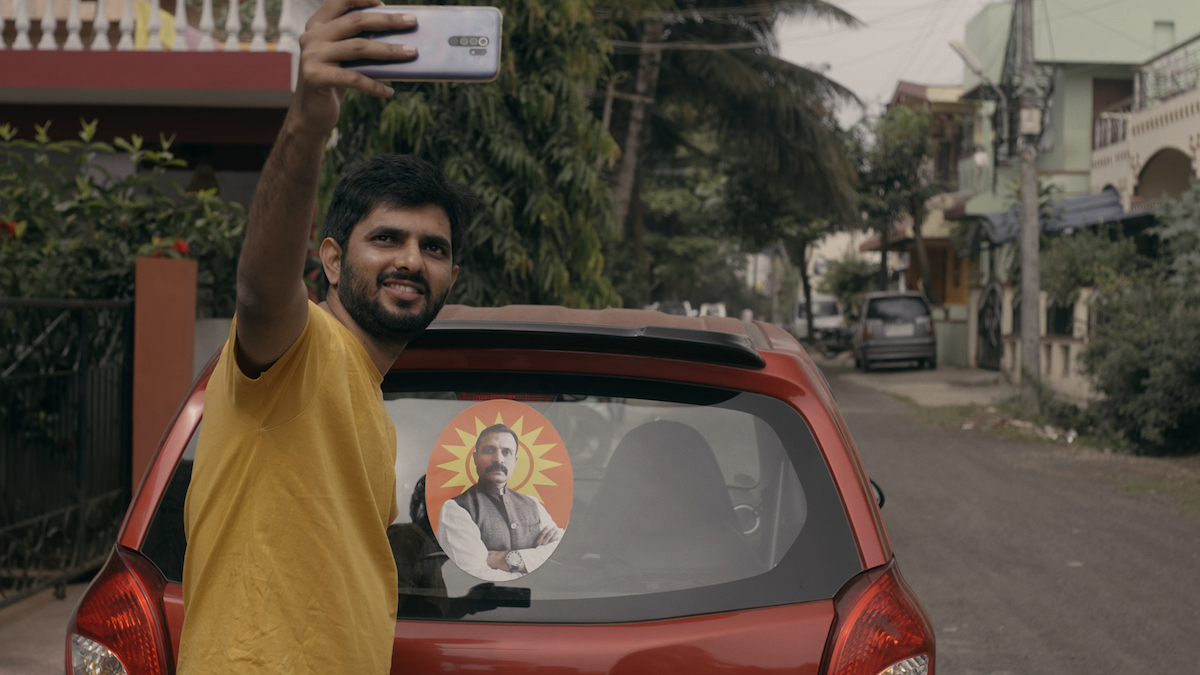
Harshad Nalawade’s smart, sympathetic drama Follower confronts the issue of radicalization head on, but remaps it along linguistic lines, bypassing the conservative-liberal dichotomy typical of culture wars. The film takes place in the border town of Belgaum, which, an infographic at the beginning apprises us, has long been a bone of contention between Kannada and Marathi chauvinists. Raghu is an activist at an online media outlet affiliated with a Marathi political party. When his inflammatory posts result in tragedy, we are taken in back in time to understand how a decent, kind young man came to be an internet thug.

The younger Raghu is close friends with Sachin, a successful Kannadiga YouTuber from a perceivably more affluent family, and with Parveen, a single mother whom he has feelings for. Seemingly immune to language wars, the three friends converse in a mixture of tongues and are at ease with their differences. Yet, at various moments, Raghu is shown his place by those that around him, made to feel like an outsider in his own home. These everyday frustrations and untimely mishaps snowball into a psychic assault on Raghu, persuading him to see himself as a victim. Follower touchingly illustrates the corrosive power of political narratives, capable of corrupting the deepest of bonds.

Anurag Kashyap’s short film, Four Slippers (“Chaar Chappalein”) affirms Follower’s diagnosis, but its subject is the personal cost of radicalization. Written by Varun Grover, the film is divided into four chapters wittily modelled on the four ashramas of Hindu life. In the first episode, set in Varanasi in the 1970s, a boy named Rajat is caught fantasizing in class and humiliated by a sadistic schoolmaster. This brutal repression marks the young man for good, catapulting him into a life of progressive social and emotional isolation that comes to an ironic end some twenty years from now.

Despite its coolly analytical approach that obliges the viewer to observe Rajat rather than identify with him, Four Slippers manages to convey the tragedy of a sensitive individual lost to hatred and communal polarization. Rajat’s trajectory, from a young lad who stutteringly sings Kishore Kumar’s “O Saathi Re” to a crush to a lonely man who spends his days online abusing people disagreeing with him, tells the story of an increasing alienation from the world. It is a sad portrait of a gradual inner exile that puts a finger on a very contemporary malaise.

Both Follower and Four Slippers view social media as an indispensable way station on the journey to political extremism. How has the telecom revolution of the past decade changed the shape of Indian democracy? Avijit Mukul Kishore’s short documentary An Election Diary considers this question against the backdrop of the 2019 general elections. Confining itself to the suburban constituency of Phulpur in Allahabad, the film examines the efforts of the BJP in both reaching out to voters through targeted campaigns and bringing them to the booth on election day.

Made as part of a research project for the University of Göttingen, An Election Diary furnishes no voiceover commentary, nor does it place its material within a national context. What we get instead is a highly local mixture of street interviews, kitschy YouTube clips and revealing IT-cell meetings. The cadres, organized into niche social-media units responsible for particular tasks, discuss the strategy of using smartphones to rally voters. Their campaign consistently foregrounds the personality of Narendra Modi, whose shining image is used to gloss over infrastructural issues affecting the constituency. In this scheme of things, digital media becomes a veritable simulacrum replacing reality.

Smartphones and social media, on the other hand, enjoy only a marginal presence in Varun Chopra’s Holy Cowboys. Set in the environs of Vapi in Gujarat, Chopra’s loosely fictionalized documentary keeps its ears to the ground in its attempt to trace a classic pathway to radicalization. Gopal, a teenager who works at a packaging plant, comes across a calf feeding on the kind of plastic bags he produces at work. In genuine concern, he brings the stray animal to a cow shelter run by a Hindu volunteer organization. He becomes a regular visitor to this place and is soon caught up in the outfit’s vigilante operations.

Narrated like a coming-of-age tale with moody music, Holy Cowboys devotes significant time to Gopal’s interactions with his teenage peers. We don’t get to know what the boy thinks of the organization’s activities, but it is apparent that his attraction to it originates from the camaraderie and the sense of community it offers—an empowerment sorely missing in his daily life. In shining a light on the weaponization of compassion, Chopra’s film agrees with Follower and Four Slippers that forces of radicalization feed on deep-seated human issues, offering hatred as a coping mechanism. Illness masquerading as cure.


[First published in Mint Lounge]

What struck me first watching Thuramukham, a large-scale period picture about docker struggle in coastal Kerala, is how abstract and timeless it feels. Rajeev Ravi’s fourth feature is certainly set in a specific location and era—the area of Mattanchery in Cochin during the forties and the fifties—but it isn’t until a good while that these particulars come to the fore. Where Rajeev’s previous films establish time and place in their opening minutes, Thuramukham immerses us into a fable-like world that feels untouched by history. When the camera descends into an anonymous settlement of huts in the first shot — one of the film’s many convergences with Bala’s Paradesi (2013) — it’s not even clear if it’s a real space.

Living in this netherworld—a cinematographer’s paradise, with its candlelit rooms and nocturnal action—are dockhands who fight every day for chapas, work permits tossed at them by exploiting contractors, and spend what remains of their wages on alcohol and gambling. Part of Thuramukham traces the evolution of this lumpen mass into a proletariat fighting for its rights, developed through the characters of brothers Moidu (Nivin Pauly) and Hamza (Arjun Ashokan). This vast, generation-spanning narrative arc gives the film an epic sweep comparable to that of Anurag Kashyap’s Gangs of Wasseypur (2012), on which Rajeev was cinematographer.

The sprawl of the film has another possible source. Rajeev Ravi is a filmmaker with a weakness for classic literature. He gravitates towards stories of individuals swept along by the forces of time. His characters are often passive witnesses of history who, by choice or circumstance, become its protagonists. Thuramukham, written by Gopan Chithambaran and dipping in and out of Russian literature, fissures the leading character of Kammattipaadam (2016) into the figures of Moidu and Hamza, men whose nihilism or passivity renders them victims of history, only to fuse them again in their choice to act.

The monumentality of Thuramukham is only part of the story. What really nuances this testosterone-driven saga, and why I find the film to be a significant departure from Rajeev’s earlier work, is the way it relentlessly balances the epic with the intimate. The world of Thuramukham is very distinctly divided into domestic and public spheres, which respectively translate to feminine and masculine domains of action. Politics is the means by which men look out for one another, while women find solace in each other through shared suffering and mutual care.

The lack of feminine agency in Rajeev’s films has been noted, and I can’t help but feel that Thuramukham is working out an answer to that reproach. At first glance, the film only adds fuel to the fire. Confined to their homes, the women nurture, love and suffer in silence as men get out there to take control of their fates. But, for once, we also see the havoc the men wreak by their actions or inaction. The film reserves its most evocative closeups for its leading women, the terrific Poornima Indrajith and Nimisha Sajayan, whose faces bear the brunt of men’s follies.

So the film responds to the exclusion of women from public sphere by revalorizing the domestic sphere. For one, its political story is couched within an intricate filial narrative in which the class consciousness of the prodigal son coincides with his coming home while that of his brother coincides with his leaving home for the streets. It is also substantial that, unlike its predecessors, Thuramukham ends on the closeup of a woman, one who has been forced to leave her household and mourn in public.

[Originally written for IFFR 2021]

[Part of Curator’s Corner, a section dedicated to showcasing work of emerging and marginal filmmakers. See here for details.]

For film lovers fairly active on Facebook, cinephile extraordinaire Mehdi Jahan perhaps needs no introduction. His evocative posts, often screenshots of superpositions and dissolves used in films but also lyrical texts drawing comparisons across the history of cinema, attest to a voracious, formidably wide-ranging viewing habit. Although I knew Mehdi had made several films himself, I hadn’t come around to seeing them. And ever since the idea for this curatorial section of the site came up, I was certain that I wanted Mehdi to be the filmmaker to inaugurate it. So I’m very happy and proud to present his work to the readers of this blog.

Currently based in his hometown of Guwahati, Assam, in North-eastern India, Mehdi makes works that weave family stories, historical events, folktales and film history into a melancholy, highly romantic tapestry of personal reflections. Episodes such as the Partition, Sino-Indian war of 1962, the Assamese insurgency of the 1990s constitute recurring narrative elements, but they are refracted through the life experience of his friends and family directly affected by the events. The resulting films are poetic meditations on the violence of time, offering both fantasies of a lost idyll and testimonies to a fractured present.

Mehdi’s debut film Jyoti and Joymoti (2017) opens with a list of five crucial events from Assamese cultural and political history, but these combine freely in the film’s Chinese-box structure in which each story gives birth to the next: a wounded insurgent, an old woman who tends to him, her husband who runs a border canteen, the flautist he observes from the window, and finally the flautist’s long-absent lover. These nested stories take us back in time, overlaying different periods and film-historical fantasies in disregard of conventional logic, but in a manner faithful to the workings of memory. Mehdi attributes this digressive organization to his love for Latin American literature, but also the influence of his paternal grandparents’ oral practice of Sufi storytelling—a syncretic tradition now on the wane.

That Mehdi is more interested in the process of storytelling than the stories themselves is apparent from any of his films, which largely take shape through the words of their characters. Each of the stories of Jyoti and Joymoti is introduced by a preceding narrator, while Can They Hear Our Songs? (2022) unfolds as nightmares recounted by its two protagonists. The Home My Mother Never Found (2021) relies on unsent letters written by the filmmaker’s mother, who also narrates He Used to Bring Me Apples (2019). “The storyteller is as much a part of events he describes as those involved in them,” remarks Mehdi. “People celebrate rulers and warriors for fighting for their ideas, but it is the storyteller who preserves their stories.”

Despite their deep realism of time and space, Mehdi’s films are not naturalistic. If anything, in their markedly stylized dialogue and performances, they have a deliberate anti-naturalistic bent. Layering memories, dreams, fantasies and legends, they instead attempt to capture a total reality that encompasses the inner lives and felt experience of the characters. This slippage between time periods and levels of reality is an extension of how the filmmaker perceives his personal and cultural history. Mehdi recollects: “When I was a kid, my grandfather used to tell me stories about the Sino-Indian war; my parents used to tell me stories about the insurgency. In my mind, it’s all a muddle. Now I can’t make out which story took place when. That is how I relate to the entire history of Assam. It’s all one single story.”

Taken together, Mehdi’s films comprise a cinema of separations and longings, of men who have left the scene and women who hold fort waiting for them. The filmmaker ascribes this dynamic to growing up under the influence of his mother, his father having to constantly be away on account of his job. His films privilege the perspective of resilient women—women who have taken a vow, who resist coercion, who have unwavering faith in their love but yet stand on their own—all inheriting from the prototypical personality of the seventeenth century Ahom princess Joymoti, who refused to reveal her husband’s whereabouts even under torture. “Joymoti is a crucial figure in Assamese history and is remembered as this great woman who sacrificed her life for her husband and her nation,” says the filmmaker, “but no one remembers who she was as a woman.”

He Used to Bring Me Apples features Mehdi’s mother as Ayesha, a middle-aged woman whose husband, played by the filmmaker’s father, left many decades ago to join the insurgency, never to return. In his absence, Ayesha has taken over the responsibility of overseeing their village, now gripped by an epidemic of a dubious origin. As she remembers scenes from her childhood and youth, the past and present come to occupy the same time and place. In the process, scars from Assam’s own political history are reactivated as invisible machinations threaten the villagers with eviction from their land.

If their engagement with politics and history is unequivocal, Mehdi’s films are nevertheless pointedly inward-looking, contemplative. They are not calls to action, but testaments to loss. The sentiment underpinning them isn’t triumphalism, but a doomed romanticism. Notwithstanding striking notes of heel-digging defiance, their dominant emotions are yearning, nostalgia, anxiety and sorrow. In that, Mehdi’s films are contiguous, entirely of a piece, with his posts on Facebook as a cinephile.

The history of cinema does, of course, play a part in the films, whether in the silent passages of Jyoti and Joymoti or the Dreyer-like interrogation scenes of Can They Hear Our Songs? While his impressionistic influences are tangible in his approach to nature and memory, Mehdi avoids citation or pastiche, instead treating quaint technical devices like intertitles and dissolves as useful tools still conducive to original expression. History is unkind to lovers in his films, but cinema has the power to unite them across time and space. Characters rarely see each other in the eye, and the editing performs the work of integrating their glances. The two protagonists of Can They Hear Our Songs? never meet, but each of their nightmares resolves the other through a kind of solidarity brought about by cinematic means.

Does an extreme awareness of the richness of the history of cinema hinder creativity? Is there an anxiety of influence that comes with cinephilia? “I don’t think so.” responds Mehdi. “I really like what Jacques Rivette said about every film resembling twenty other films. I think it’s very true; I try to embrace it. I love the concept of dérive, this constant drifting across images that seemingly have no connection to one another. I think of films like that.”


Bio

Mehdi Jahan is a filmmaker, visual artist, and teacher based in Guwahati (Assam), India. His films have been screened and exhibited at several places internationally and nationally, as part of film festivals and exhibitions, such as The Millennium Workshop (New York) , Garage Museum of Contemporary Art (as part of Moscow International Experimental Film Festival), FILMADRID, Bogoshorts (Bogota Short Film Festival), Camara Lucida – Encuentros Cinematograficos (Cuenca, Ecuador), MUTA Festival (Peru), Pan-Cinema Experimental  (Curitiba, Brazil), Ribalta Experimental Film Festival (Vignola, Italy), Simultan Festival (Timisoara, Romania), Signs Film Festival (Kerala, India), etc. He has taught film studies, direction, and screenwriting at several institutes, including Satyajit Ray Film and Television Institute, Kolkata, Seamedu Media School, Pune, and Guwahati University.

Contact

mehdi.jahan01[at]gmail[dot]com | http://www.mehdijahan.com

Filmography

  • Jyoti aru Joymoti (Jyoti and Joymoti), 2017, 28 min., digital
  • Teu muloi aapel anisil (He Used to Bring Me Apples), 2019, 27 min., digital
  • Do You Remember Our Last Spring?, 2020, 3 min., digital
  • Maaye ketiyau bisari nupuwa ghorkhon (The Home My Mother Never Found), 2021, 6 min., digital
  • Teuluke aamar geet bur xune janu? (Can They Hear Our Songs?), 2022, 16 min., digital
  • Hands of the Future (with Sabrina D. Marques & Dan Shoval), 2022, 13 min., digital
  • A Letter the Fire Spared, 2022, 5 min., digital
  • Eku nothoka hole ki thakil hoi? (What Would Have Been There Had There Been Nothing?), 2023, 7 min., digital

Showcase

[It is recommended to watch the films at the highest resolution.]

Jyoti and Joymoti (2017), password: hawa35


He Used to Bring Me Apples (2019), password: alphonso06


The Home My Mother Never Found (2021), password: home123

The story of grown-up children feeling burdened by aging parents has been told innumerable times since Leo McCarey’s Make Way for Tomorrow (1937) and its more influential Japanese remake in Yasujiro Ozu’s Tokyo Story (1953). Dozens of Indian films, most famously Baghban (2003), have milked the theme of elder abuse for maximum melodramatic effect. Premiering at the International Film Festival Rotterdam (IFFR), Vignesh Kumulai’s Karparaa presents an extreme rarefaction of the premise that swaps moralism for stoic reflection.

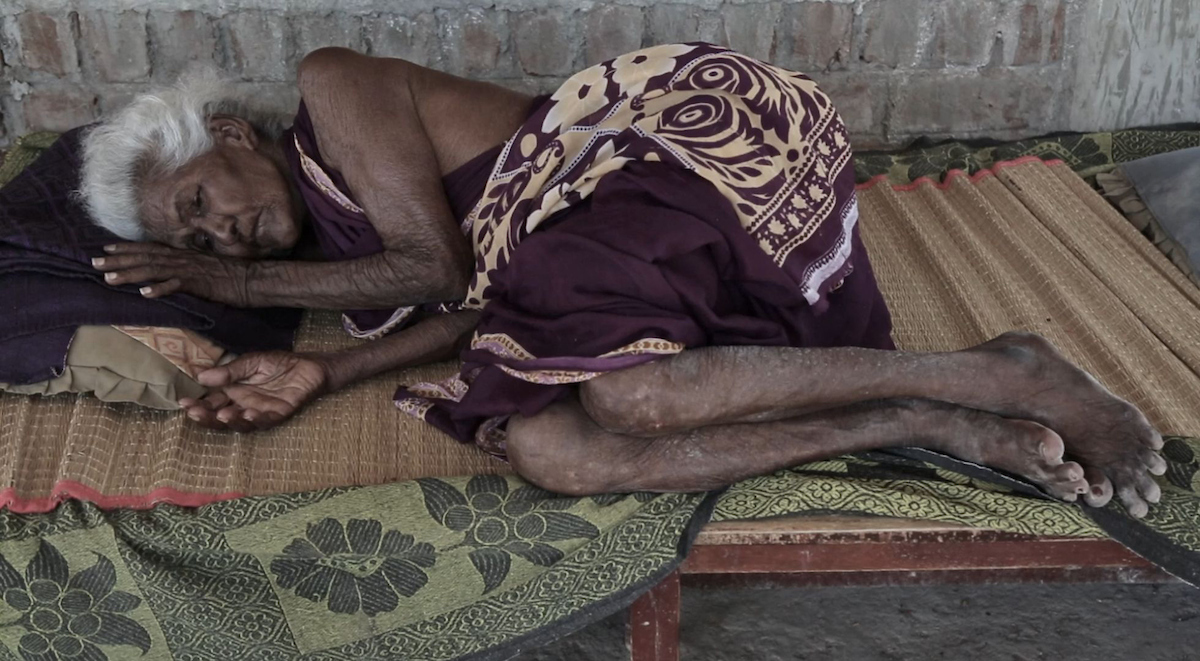
At the centre of the film is an elderly couple in rural Tamil Nadu. Both husband (Arumugam) and wife (Sundharathamal) are bedridden and live separately under the care of different children and relatives. Karparaa doesn’t elucidate their relations; instead, it presents vignettes from their everyday life seemingly gathered over a year. We see their guardians attend to them reluctantly: grandsons who wash them like cattle, daughters-in-law who are weary of cooking for them, young ones who would rather be busy with their smartphones on lazy afternoons than take them to the toilet.

We notice the casual cruelty of children aggrieved by unwanted caregiving responsibility. But director Vignesh relegates most of this harshness to the film’s margins to focus on the world around the couple. Vast stretches of Karparaa are devoted to recording the daily activities of the village: men and women tending to cows, feeding chicken, winnowing rice, building canals, harvesting groundnuts, spraying pesticides or taking afternoon naps. These documentary sequences serve to both illustrate the situation of the couple, locked out of any productive labour and therefore becoming a ‘liability,’ and to evoke a sense of life moving on, indifferent to their plight.

The filmmaker reinforces this cosmic perspective through close attention to cycles of nature. Leisurely paced, Karparaa is structured as much by alternating day-and-night sequences as by the changing seasons. Images of animals nurturing their young ones abound—a touch of sentimentalism in an otherwise austere work—most notably a calf butting its head against its mother’s udder. The camera lingers on old, gnarled trees, on the brink of being uprooted, that come to resemble and represent the couple. Repeated appearance of these elements of nature suggests generational cycles, a sign that the next generation will endure the same fate, as will the one after that.

Vignesh was the cinematographer on P.S. Vinothraj’s breakout feature Pebbles (2021), winner of the top prize at IFFR 2021. The muscular, sunburnt cinematography of that work makes way for a subtler approach to colour and movement in Karparaa. Perhaps the most startling aspect of Vignesh’s film is its unflinching examination of frail, aged human bodies in extreme close-ups—a taboo in cinema where such images are associated with abjection and disgust. The manner in which the camera pores over wrinkled skin, silver hair, ocular secretions, toothless jaws chewing betel leaves, unwashed mouths—recalling the street portraiture of Khalik Allah—transforms these faces into landscapes in their own right, fusing human bodies with nature at large.

It is equally noteworthy that, unlike the recalcitrant parents of Make Way for Tomorrow and its successors, the couple in Karparaa lack the physical agency to respond to their predicament. Having withdrawn into themselves due to old age, they hardly talk, react or resist. They become purely external beings, biding their time, waiting for the inevitable. We are made witness to their fading consciousness, to the sordid spectacle of dignity dying a quiet death. Midway, the film breaks this inexorability with a voice-over by the man reminiscing about the past and expressing disappointment at the iniquities of his sons. The couple neither meets, nor expresses a desire to. And yet, as the film arrives at its shattering final minutes, we wonder what they are feeling or thinking even when we know we’ll never know.


(First published on Film Companion)

[Disclaimer: I know the filmmaker, Don Palathara, on Facebook and wrote this review following a note from him.]

I find it a little uncomfortable to refrain from giving “spoilers” when writing about a film like Don Palathara’s Family, to leave out — as most reviews of the film no doubt will — the single important piece of character detail around which it turns. Primarily because the film doesn’t treat this information as a spectacular reveal in the first place, giving it to us right at the 20-minute mark, without fuss or fireworks. Secondly because treating this information like some twisted secret to be discovered for kicks feels plain wrong, given the film’s subject matter. Even so, since Family has just premiered at the IFFR, I will write my review around this detail, although it should be amply clear for any imaginative reader what I’m talking about.

Set in a wooded village in Idukki, Kerala, Don’s sixth feature centres on Sony, a kindly young man who is the beating heart of his small Christian community. He helps out women with their household chores, he gives free lessons to struggling schoolchildren and he lends a hand in rescuing a cow trapped in a pit meant for a leopard menacing the village. When an outcast family is struck by tragedy, he intervenes with the Church to rehabilitate them. Everybody loves Sony, and they just can’t seem to do without him. There is, however, more to this sympathetic man than what meets the public eye.

Within the village, Sony appears to be everywhere at once and nowhere in particular. Completely anomalous yet strangely invisible. On the one hand, he behaves like a pastor who exerts great influence over his parish, worried about getting every lost sheep back into the fold: teenagers who are experiencing the pangs of adolescence, youth unsure about their careers, old men lamenting their plight. Like a pastoral prophet, Sony seems to be miraculously present wherever and whenever help is needed. He steers clear of the pervasive alcoholism that plagues the community, appears to defy its strict gender segregation, and shares none of its mistrust of cities and outsiders. In his easy mobility across public and intimate domestic spaces, he seems to be a rank exception.

Yet, in his self-effacing demeanour, in his laconism, in his unremarkable appearance and posture, Sony manages to dissolve into his surroundings. Don often films him deep in space, lost in the crowds and the setting, such that it becomes hard to work out where he is in the frame. Vinay Forrt — who plays Sony brilliantly and in good faith, without trying to tell us what we should think of him — has a touch of feline grace that greatly helps the animal metaphor the film sets up. In a terrific single-shot funeral sequence, timed like a ballet, he tiptoes out of a crowd of men in the background, vanishes behind a house, re-emerges in the foreground and exits right. With extraordinary economy, the scene conveys Sony’s capacity to appear and disappear without anyone noticing, even the viewer.

But Family is as much about the village as about Sony himself. With evident familiarity, the filmmaker presents the habits, rituals and mores of this self-enclosed community under the sway of Catholicism. He does not elucidate the exact relationship between the film’s two dozen characters — everyone is aunty/uncle, brother/sister, grandpa/grandma to everyone else — which gives the impression of the village being one big family united by the Church. Abounding in scenes in which two characters talk about a third person, Family plays particular attention to the way knowledge is produced and circulated within this hierarchical community. Secrets become public knowledge and public knowledge becomes secret as soon as it runs contrary to the prevailing order. A powerful dissolve late in the film takes us from the image of Sony walking with a boy over a hill to an influential nun arriving at the village; it’s that no information escapes the eyes of the Church, if not God.

“God is watching every small deed of ours and judging us,” this nun tells Sony nonetheless. You feel the weight of that line in Family, in which images of saints, prophets and pontiffs watch over every household. Many tableaux present the characters from a slightly elevated, “altar” view corresponding to the pictures on the wall; a few others feature characters looking up offscreen in prayer, as though waiting for intimations from an invisible power. The shot in which we learn the truth about Sony is perversely cut to a painting of the Christ, as though He is overseeing these events in silence. Family is a film about seeing, not seeing and refusing to see, and it is filled with electrifying reverse shots hinting at unseen, unknown forces.

Among the filmmaker’s previous features, I’ve only watched Everything Is Cinema (2021), whose total subjectivity seems starkly different the objective, omniscient approach of Family. Everything Is Cinema operates entirely on an ironic level, staking its success on the viewer’s capacity to distinguish between the protagonist’s and the filmmaker’s points of view. It chose to tread a very tricky territory, so it made sure it put quotation marks around the lead character’s perspective whenever the viewer identification with him proved too problematic.

Family, in that regard, is a more assured work. It still incriminates its characters, but does so with a confidence and flair that stems from a firmer subject position. The film is rigorously composed, with a fine sense of balance within static frames. The elliptical storytelling, the sparing score, and the purposeful construction of shots, with every glance and movement invested with specific meaning, oblige us to pay close attention. In return, they refine our understanding of the story and the characters. (There is a Haneke-like quality to Family, with all its attendant strengths and drawbacks.) As the film unfolds, even mundane scenes, such as a child playing around the house, become gripped by an ineffable dread. This dread finds expression in the climactic image of a majestic leopard — a stunning reverse shot that both shocks in its unexpected directness and offers a strange closure by representing the unrepresentable.

Yet the film isn’t overdetermined by its central conceit. What we learn about Sony may colour our view of his behaviour, but it doesn’t exhaust it. Emanating from the film is the impression that, beyond personal motivations for integrating himself more and more into his community, Sony is genuinely concerned with its betterment, that the community represents for him a reprieve from the harsh reality of his home. Similarly, the community’s attempts to suppress scandal and silence objectors may be a self-preservation mechanism, but it also comes to reflect the community’s essential fragility, its reasonable fear that the cohesive force keeping the village together will come undone.

I suspect some of these nuances will be lost in discussions around the film, given our era of renewed moral puritanism. To be sure, Family does not mince its words. If anything, it is too blunt and severe in its criticism of the Church, which looms large later in the film. The characters around Sony may not be entirely convinced of his wrongdoing, but the film makes his misdemeanour absolutely clear to us, while at the same time not allowing us to be complicit in it as witnesses. In doing so, however, the film doesn’t feel the need to be sanctimonious, to segregate good from evil on our behalf. For Family deals in human and systemic complexity, refusing easy answers to questions that we would rather brush under the carpet.

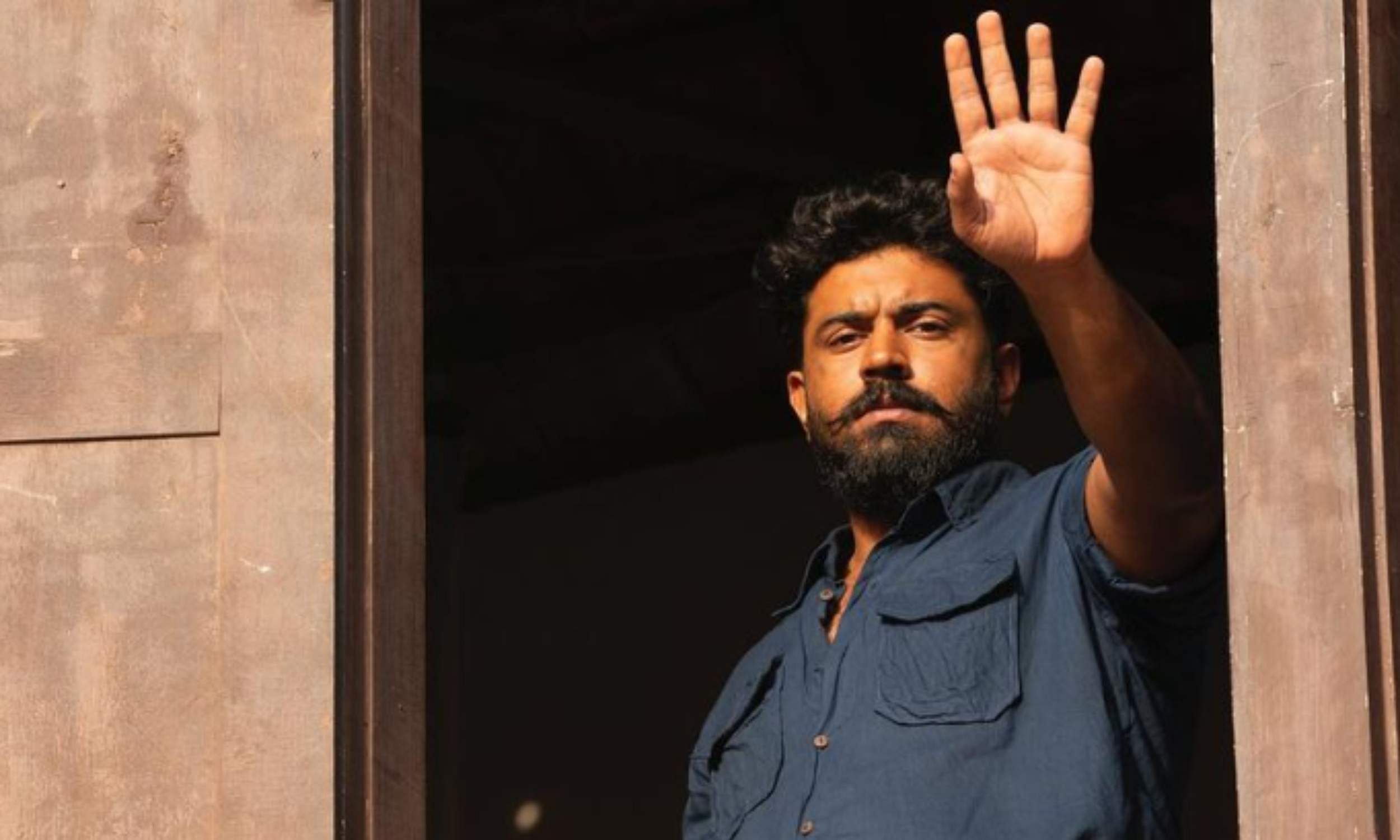
Shahrukhkhan Chavada’s ground-breaking debut feature Kayo Kayo Colour (Which Colour?”) offers a sobering, quietly radical corrective to a certain tendency in Indian cinema that favours an instrumental approach to the figure of the Muslim, often reduced to a narrative trope, political argument or fetish object. Chavada’s film follows a working-class family in a Muslim ghetto in Kalupur, Ahmedabad, over twenty-four hours: as Raziya (Samina Shaikh) gets up early to do the chores and take care of her children Faiz (Fahim Sheikh) and Ruba (Yushra Shaikh), her unemployed husband Razzak (Imtiyaz Shaikh) sets out to procure funds for an autorickshaw in the hope of striking out on his own.

In charting the family’s everyday routine, Kayo Kayo Colour? is able to zero in on the social mores and gender codes determining life in the neighbourhood, where girls play house indoors as boys chase chicken in the streets. Razzak chafes under the pressure of not having a job, but nevertheless seeks the privileges of a traditional breadwinner. Ruba is sent on errands so her brother can focus on his studies, Faiz is taunted by his mates for playing with the girls, and Razzak’s mother balks at the idea of moving in with the family of her married daughter who has made it out of the ghetto.

In elegantly double-framed static shots, and with an eye comparable to Hirokazu Koreeda, Chavada documents the family’s cluttered, lower-middle class home: buckets filled with water suggesting the intermittence of supply, a now-useless piece of kids’ furniture dumped on an equally useless sewing machine, a swivel chair relegated to an inaccessible spot next to the refrigerator. This material excess stands in stark contrast to the sparse furnishing of the upscale apartment that Razzak’s sister lives in. The bare walls and modish décor of this deluxe flat conveys an expansive sense of domestic space that Chavada multiplies through striking mirror shots. The film’s physical environment thus assumes a subtly expressionist quality, reflecting the characters’ diverging prospects in life.

As the sun sets, the film becomes suffused with a mix of hope and despondence, a faint sense that the walls are closing in on Razzak even as he figures a way out of his money crunch. A revelation late in the film dramatically recasts our perspective of the day’s events, unveiling the essential precarity of the lives on display. Yet Kayo Kayo Colour? allows its characters ample scope to carve out a space outside the drama, to find meaningful connections in a benevolent community, to simply exist as human beings capable of enjoying a range of experiences and emotions. In that, it has few precedents in Indian cinema.


[First published in Sight and Sound]

[First part: A Letter to Lijo Jose Pellissery]

A second viewing of Lijo Jose Pellissery’s Nanpakal Nerathu Mayakkam confirms it as one of the highest achievements in Indian filmmaking and among the great spiritual works of the cinema. More than a film that respects its audience, it is one that intimates us of the mysteries beyond the everyday. I still cannot wrap my head around its existence and believe/hope that its innermost secrets will continue to elude me.

Nanpakal is certainly an exploration of religious hypocrisy, but not with the derision and anger that it usually goes with. In my first viewing, I was moved to think of Luis Buñuel because of the peripatetic nature of the story, the absurd humour and the focus on group dynamic. But a more pertinent point of reference is the cinema of Roberto Rossellini, in which “there’s but one step from scandal to miracle” (Alain Bergala).

Set ostensibly around the month of Margazhi/Christmas time, Nanpakal is playing with both Hindu and Christian mythology, specifically the notions of reincarnation and resurrection, complete with a “noli me tangere” moment. James-as-Sundaram is a revenant whose return only occasions disbelief and suspicion among the devout. (The soundtrack plays “Paartha Nyabagam Illayo” from Puthiya Paravai (1964), another tale of a revenant.) Like Rossellini’s The Miracle (1948), in which a simple shepherdess takes a passing vagabond for St. Joseph and becomes pregnant, inviting the ridicule of her upright Catholic community, Nanpakal reflects on the impossibility of true belief. Or rather, on the tragedy that miracles can appear only in the form of heresy or delusion.

Part of why it may be hard to see that a miracle does indeed occur in Nanpakal is that the film doesn’t signal its shift into a meta-fictional mode as openly as, say, Certified Copy (2010) or Fauna (2020). We are introduced to James in the first act of the film as a control freak, and his transformation into Sundaram, a man who is capable of letting go, is not supported by rational explanation. And cinematic structures don’t allow for viewer identification over such radical discontinuities of consciousness (which is the reason films about multiverses like Everything Everywhere All at Once (2022) cannot transcend fundamental emotional limitations). As a result, it is not James, but his unchanging co-passengers who offer us a stable if sceptical guiding perspective through the remainder of the film. (I wonder how the film would have played had James and Sundaram been portrayed by two different actors.)

Yet I think a more rewarding if demanding way to watch Nanpakal is remain with James/Sundaram, to believe. That is the only way to get a sense of the Christ-like tragedy he is put through. What does it mean for James to walk away from his wife Sally (Ramya Suvi) and enter the bedroom of another woman, to be placed in a situation of infidelity? A chastening punishment? Purification through sin? To be turned into everything you hate sounds less like a miracle than a curse, but it is also a calling, a Damascene conversion through unlikely grace.

But there is another marital triangle in Nanpakal. We are told that the original Sundaram, whom we glimpse out of focus at the end of the film, disappeared in the holy town of Pazhani two years ago, creating a breach in the fabric of his community. In James-Sundaram’s familiarity with the place and its people, we see how closely the man was integrated into the life of the village. It is hinted vaguely that Sundaram’s wife Poovally (an excellent Ramya Pandian) has now been ‘promised’ to his brother (Namo Narayana) and that she is/was suspected of infidelity—an accusation refuted by the faithful dog that guards her and the household. Even though she speaks little, Poovally gets the most moving moments of the film. In Sundaram’s magical reappearance lies both a hope and a vindication for her, a closure for a grieving community.

Sundaram’s visually-impaired mother is the only one who has the power of recognizing the miracle, of believing in Sundaram’s return; rather, she seems to have never had a doubt. She serves as the film’s Greek chorus, laughing when others are distressed, crying when others are relieved. If her privileged perspective mimics that of the impossible, ideal viewer of the film, Poovally and Sally offer more intriguing, transitional points of view, between mother’s iron-clad faith and the disbelieving crowd, receptive to doubt and amenable to revision. Suspended in confusion, they accept their altered circumstances wordlessly, letting those around them decide the course of action on their behalf.

It is however through the patience and willing passivity of the two women that the miracle is consummated, that everyone manages to find a way out of their situation. Little happens, in contrast, when men take things into their own hands. The pilgrims and villagers eventually get out of the crisis just as they got into it, that is to say, through the arbitrary workings of transcendent will. “The Rossellinian character is touched by grace when he is least expecting it,” notes Bergala. “The real miracle for Rossellini,” he continues “is that which happens necessarily outside of deliberate choice, conscious thought and even faith.” This is true of Nanpakal too.

Unlike Jallikattu (2019) and Churuli (2021), the two earlier works that Pellissery developed with writer S. Hareesh, Nanpakal is sparse on dramatic incident, which means that there are fewer literary themes and moral lessons to be drawn. Instead, the film harks back persistently to cinematic spectatorship even as it draws on painterly and theatrical traditions. Nanpakal is the cinephile movie par excellence, and watching it as an irate viewer sandwiched between noisy, distracted people, as I did the second time, was an uncanny experience. Rejecting his real community (which happens to be that of theatre), James yearns to belong to another that won’t have him. And what is cinephilia if not the illicit thrill of being in places, seeing and listening to things that weren’t intended for you?

I don’t think any other film has ever quite captured the violently destabilizing feeling of stepping out of the dark of the movie theatre as Nanpakal does in its final moments, when Sundaram dissociates from his role to become James again and the entire pilgrim group trickles out of the village in ruminative silence like a stunned audience. The penultimate shot where James is alone in the bus, solemnly looking out to the village—and at us—so startlingly captures (and in Nanpakal’s case foreshadows) the experience of a perceptive spectator returning home after a particularly overwhelming viewing experience.

I did not have trouble with the film’s pervasive audio citation the second time around, and I think the film’s soundtrack is beautifully mixed in the way it drifts in and out of our conscious attention. All the syrupy scores, the cynical soundbites from M.R. Radha and the advertisements of the 90s combine to hold us in a state of fugue, and Nanpakal deploys them for sudden swings in mood, tone and texture. At several points, Pellissery’s film flits wildly from sad to funny, from absurd to touching, accessing emotional terrains I have rarely experienced in Indian cinema. A supremely spiritual work will stand the test of time.

Dear Lijo,

Like many other viewers, I’ve been an admirer of your tendency to make a film against the grain of the previous one; the way you swapped the fevered cutting of Angamaly Diaries with the long-shot aesthetic of Ee.Ma.Yau, whose scathing social portraiture devolved into the harrowing metaphysical nightmare of Jallikattu, sustained and upended by Churuli. The word I’m thinking of is perversity, that bent of mind which allows you to employ a macho, vein-popping style to meditate on masculinity, to use the event of death to reflect on a community’s self-sustaining reactions to death.

I should’ve therefore already expected a curveball walking into Nanpakal Nerathu Mayakkam, especially given its ‘U’ certification; but nothing prepared me to be blown down by the tenderness of your new film. I’m not sure how to describe the anti-climactic gut punch that watching Nanpakal was. It was perhaps like the muscular reflex you feel when you try to pick up a bottle full of water and discover that it is empty and light, or when you expect a step at the end of a steep staircase only to have your foot land on level surface.

Your story, developed into a scenario by S. Hareesh, is comically simple: on their way back from the Velankanni church in Tamil Nadu, a group of Malayali pilgrims fall asleep on the bus. When he wakes up, James (Mammootty) gets off the bus in the middle of nowhere, walks into a house in a Tamil village nearby, and fully assumes the assumes the role of Sundaram, a man long gone. The dark comedy that ensues involves the pilgrim party’s bumbling attempts at getting James/Sundaram back onto the bus.

Your film revolves around a miracle, but it’s equally miraculous that it exists: a Malayalam movie that develops mostly in Tamil. Or is it a Tamil movie that features Malayalam actors and dialogue? Doesn’t matter, you don’t seem to have patience for language chauvinism and if Nanpakal has anything to say on the matter, it may be that Malayalis are wannabe Tamils or that Tamils are hallucinating Malayalis stuck in time.

And the height of perversity is to win the cooperation of a star the stature of Mammootty and strip him of all aura, dissolve him into the image. I’m referring not just to Mammootty’s brutally casual entry in profile, rubbing pain balm on his wife’s knee (!), or his utterly unremarkable costume and hair. I’m talking about the way you lock him into the master shot, refuse to give him close-ups, minimize him with landscape and architecture, block his body with décor elements, drown his voice in ambient music, film him from the back, at a distance, among the crowd or in the shadows. Half of Nanpakal is, after all, about Mammootty vanishing, leaving the frame.

I would call Mammootty daring, broadminded for choosing to do your film, but that would not do justice to the statistical improbability of what you two have pulled off. Stars participating in auteur projects are rare enough, but I’m hard put to recall a film that has treated its main star so offhandedly or subject him to such aesthetic violence (Even internationally, such glorious cross-connections of the seventies as Jane Fonda in Godard’s Tout Va Bien or Jack Nicholson in Antonioni’s The Passenger seem impossible to imagine today.) Not only have you made real what sounds like an implausible concept project, but also answered such pointless cinephile hypotheticals as “How would Mammootty do a Sivaji Ganesan movie?”

Yet what you offer us is an extremely modern work that benefits from an extremely modern performance. Like Mohan Lal in Drishyam, Mammootty here plays a middle-aged man who wills his way into a starring role as an act of existential negation, an attempt at escape from his life through performance—a metatextual resonance that would have been lost had your film featured a lesser star. You place Mammootty in an overwhelmingly melodramatic soundscape, contrasting the actor’s underplaying with the expressionist acting the music suggests, distancing us from his emotions only to have him wallop us in a climactic moment of dissociation from his role.

But there’s so much more happening on the formal level. Unlike your previous films, you narrate Nanpakal largely through master shots, filmed with a static camera, without building scenes through tighter setups and thus keeping the emotional temperature of your film in control. (A pair of cavorting canines get a pan shot that your star doesn’t.) A strong rectilinearity marks both your visual composition and the way you position your actors in the frame and have them move across it. Your arresting manner of composing in deep space, using all the picture planes, means that there is always something interestingly off-key happening in the foreground or the background for us to linger on: a seasoned parotta master at work, a foreboding lorry at the back, elderly ladies laughing at a private joke or an amorous couple bickering over a mysterious object.

I’m familiar with your serialized style, where actors engage in similar actions one after the other or do one action incrementally, such as when Muthu, Sundaram’s teenage daughter, changes clothes amid bursts of temper (what a magnificent sequence!). But never have I ever seen so much dramatic negative space or so much action thrust offscreen in a star-led film. It is one thing to construct your film symmetrically, or have visual parallels as between a lateral shot of a bus cutting through a corn field and an overhead view of milk washing down the drain. But it is something else when the movie suspends the story to have the star wander across a picturesque village for minutes on end or slip into his afternoon reverie in a montage of loosely related, densely scored, out-of-focus shots. (Nasir did it too, but it didn’t have Mammootty.)

Most of all, I was struck by your insistence on the Z-axis of the image. From the first to the last shot of the film, you have actors and objects relentlessly heading straight towards the camera or away from it. This frontal composition of movement strikes me as deliciously quaint—like echoes from silent comedy calling out to be bookended by irises—in the way they eliminate dramatic diagonals from your film almost completely. (The few shots that are composed along the diagonal are as ravishing as any in Adoor Gopalakrishnan’s work.)

I want to ask you if this emphasis on the Z-axis has a religious dimension, but it certainly serves here to heighten the theatricality of your film. Theatre is, of course, the central theme of your work, which elegantly introduces its three acts with three sequences of collective slumber. The world is indeed a stage, but Nanpakal’s reflexivity became most evident to me in the big scene where Mammootty finally gets to chew scenery. As he continuously asks the villagers if he truly doesn’t belong there, as though finding himself in an old Tamil potboiler, the villagers gather around and in front of him in silence that recalls both street theatre and old-timey film staging.

Redoubling the theatricality is your film’s unremitting sound design, which is filled wall-to-wall with song and dialogue excerpts from classical Tamil cinema, rendering Nanpakal almost a found-footage work in terms of audio. I wish to felicitate you especially on this aspect. Your voracious sampling of archival sound is a testament to the Malayali love for Tamil music, but it also goes directly against the nostalgic button-pushing that so much of Tamil cinema intertextuality has become. Pointedly, your audio largely consists of works from before your growing-up years, sound bites that are not always easy to recall. Instead of finding common ground with the viewers through shared cultural consumption, you seem to be confronting us with an uncanny soundscape that is neither ear candy nor entirely alien.

I confess that I was exhausted by the sound palette at a few places, and there were moments where it embraces the prevalent Tamil cinema practice of ironic commentary. But for the most part, it offers us a total, inescapable sound atmosphere that the characters inhabit, to which they mime or against which they act. A good deal of the sound samples, I will add, is appropriately maudlin, melodramatic. But given you open the film with images of faith at the Velankanni church mixed with shots of religious knickknacks sold around the premise, it seems that kitsch for you is inextricable from belief.

Belief seems to be an important aspect of your work, but not so much, it seems to me, of your personal life. If I were to guess based on your films, you probably aren’t very religious, notwithstanding the Biblical imagery you mobilize. I would’ve invoked Luis Buñuel, but your attitude to religion seems much too ambivalent for radical subversion. I find it interesting, even so, that in Nanpakal you place a group of pilgrims in a situation that obliges them to disbelieve, suspend their faith. The only character who is able to believe without doubt is Sundaram’s blind mother, a TV addict living in the world of sounds. (Talk about perversity! John 20:29.)

To be fascinated by belief without believing oneself is the plight of many a modern artist. And I can’t help but feel that your film gives a certain form to this tension. Without belabouring the point, you offer us a “movie-movie” that creates a space where disbelief can morph into belief (and vice versa); it is telling that the agnostic James turns devout when he becomes Sundaram. This permeability feels crucial to your film; unfolding between dream and waking life, along state borders, it deals with liminal faiths, liminal languages, liminal mind-states and liminal places. Likewise, the time period of the film isn’t very clear, the sound bites spanning fifty years, and this sedimentation of timelines hints at the time machines that movies are.

Seeing may not be believing in Nanpakal, but it is in cinema. Just as the Velankanni church attracts common people of all religious persuasions, movies reflect our indomitable need for transcendent belief, allowing us to lower our rational incredulousness and accept the bizarre, the far-fetched and the inconceivable. In offering the possibility of belief, of return to innocence, cinema trumps reality.

I have a personal reason to thank you for your tremendous film. The last several movies I had seen in the theatres—widely acclaimed projects to boot—had been uniformly uninspiring, whereas I found myself liking those I saw on streaming. I had begun to think that the theatrical medium was somehow affecting my capacity to enjoy films. But Nanpakal has shown me that the fault was indeed in the stars and not in myself. At a time when movies are determined to bludgeon us into submission, your film sharpens our sensibilities. All of Nanpakal’s choices, the theatrical space of action, the frontality and the rectilinearity of composition, the self-reflexivity of the story send our gaze back at us, asking us to consider our spectatorship as we are watching your film. It is a work that invites a conversation, one that takes little and gives back much more.

Your film comes a week after Tamil filmmakers organized a meet to congratulate themselves for their radicalism, to marvel at default setting. Nanpakal will not make a fraction of the money their films make—heck, it will likely be out of theatres this Friday—but in a single stroke, it makes all their pontifications sound like empty hand-wringing.

So thank you, really.

Just Another Film Buff

PS: Your film, I hear, is titled Like an Afternoon Dream in English, but given its theme, might it be more fitting to call it Matinee Madness?

[Read Part 2 here]

2022 witnessed the demise of several towering figures of cinematic modernism, none more iconic than Jean-Luc Godard. With their passing, it really feels like the end of a chapter in the story of film, one in which cinema was the privileged artform to interrogate history and the world. But their death also registers as strangely liberating in a way, like a clearing in the woods produced by fallen trees that allows us a new, privileged view. Let us hope that the work of these giants will continue to guide filmmakers and critics in their thought and practice.

In August this year, I was lucky to attend the 75th Locarno Film Festival, my first fest outside India. Basking in the gorgeous summertime scenery of Ticino and soaking up the equally sumptuous Douglas Sirk retrospective was an experience to remember, but I’m most grateful for the chance to get to know some terrific people from around the globe, among them cinephiles, curators and critics I’d known online for years but had never met. I’m truly grateful for their insight and company. Mistake: not reaching out to Luc Moullet when I was in Paris after the festival.

In a year that saw the world return to some semblance of normalcy,[citation needed] my own moviegoing habits seemed to have changed for good. The Locarno festival notwithstanding, I went to the theatres, I think, no more than four times this year (Vikram, Ponniyin Selvan: I, Kantara (all 2022) and the 50th anniversary re-release of The Godfather (1972)), which is four more than the last year. Ominous signs. That said, I was fortunate to watch three silent films on 35mm with mesmerizing live piano accompaniment at a King Vidor retrospective at the Jérôme Seydoux-Pathé Foundation in Paris in September: The Sky Pilot (1921), Wine of Youth (1924) and The Crowd (1928), the latter screening a highlight of my cinephile life.

Although I saw more films this year than any other in my memory, I didn’t watch as many new productions as I normally would, especially from India. Despite the absurd overvaluation it has been subject to in the West, I haven’t see a finer action movie in the recent past than RRR, which felt like a masterclass on how to imbue action with emotional-moral stakes, the missing soul of so many contemporary blockbusters. For all its saturated spectacle, RRR is a minimal film in the way it weaves the fewest of narrative elements in different combinations to emphatic, expressive ends. Gehraaiyaan was a compelling piece of slick, professional filmmaking, as was Jalsa. I’ve always admired the streak of self-sabotage in the career of Gautam Menon, and his superb gangster epic Vendhu Thanindhathu Kaadu harnesses that impulse productively, channelling it through screenwriter Jeyamohan’s touching, tragic vision.

A good part of my viewing this year consisted of a dive into Iranian cinema, which, I can say for certain now, is my single favourite national cinema. Among the 200-odd auteur and genre films (from native as well as expatriate Iranian directors) that I watched, there was very little that I disliked, scores of great works and at least two dozen masterpieces. I hope to publish a list soon. In the meantime, check out Another Screen‘s formidable programme dedicated to Iranian/Iranian-origin women filmmakers, which ends on the 4th of January.

Other personal discoveries this year were the films of Costa-Gavras (Picks: Family Business (1986) and Music Box (1989)), the mid-tier features of Boris Barnet (on whose Lyana (1955) I wrote a text for the amazing Outskirts magazine) and the astounding, hyper-caffeinated anime of Masaaki Yuasa (essay coming up). Without further ado, my favourite films of 2022:


1. Matter Out of Place (Nikolaus Geyrhalter, Austria)

If researchers a few hundred years from now were to try and understand how humankind lived in the year 2022 AD, they would do well to turn to Geyrhalter’s spellbinding Matter Out of Place, an expansive survey of foreign objects littering the remotest nooks of the earth. Filmed in a dozen locations on different continents, the film traces the planetary movement of human-generated waste, the great paradoxes shaping its production and the massive efforts needed to manage its proliferation. Garbage doesn’t just cover the landscape in Geyrhalter’s film, it becomes the landscape. With cheeky visual rhymes, astute sound design, proto-Lubitschian humour and a subtly psychoanalytic approach to the physical world, Matter unearths the repressed material unconscious underlying the enticements of consumer society and international tourism. But the film offers no easy answers, presenting instead a universe whose horrors and beauties are inextricably linked, one which evokes awe and terror at humanity’s godlike capacity to create and destroy. In its firm belief that the secrets of the world reveal themselves to the questioning camera eye, Geyrhalter’s work possesses a spiritual dimension directly sdescending from the writings of André Bazin, and his new film elevates the sight of rubbish into a religious epiphany.


2. Crimes of the Future (David Cronenberg, Canada)

Somewhere in the dematerialized wastelands of Cosmopolis (2012), overrun now by the vacuous celebrity culture of Maps to the Stars (2014), lives Saul Tenser, an “artist of the inner landscape” who grows new organs that are surgically removed by his partner Caprice during their feted public performances. Saul is a conservative in denial of the rapid transformation the human body is undergoing—a Clint Eastwood of the New Flesh—who would rather excise his new organs than embrace his true, deviant self. As governments and corporates look to quell the insurrection triggered by a cult of anti-Luddite ecoterrorists who sabotage not technology but the human body, Saul must decide whether to remain at the mercy of the algorithms or take the evolutionary leap. The most rewarding way to approach Cronenberg’s stellar, career-capping new work is to take it not as an allegory of current political debates, but literally. In Crimes of the Future, the body is indeed the final frontier, the last repository of all meaning, the sole means to spiritual edification or revolutionary change—a truism already in our Age of the Body. Filled wall-to-wall with dad jokes and dumb exposition, Cronenberg’s silly, sublime, supremely stylish treatise on corporeal capitalism is the most thought-provoking film since Pain and Gain (2013).


3. A German Party (Simon Brückner, Germany)

Politics is dirty, and electoral politics doubly so. Few filmmakers possess the curiosity, intellectual mettle and good faith—leave alone the necessary access—to examine the unglamorous negotiations and compromises that are fundamental to the democratic process. Made over three years, Simon Brückner’s magnificent fly-on-the-wall documentary about the workings of the far-right German outfit Alternative für Deutschland (AfD) immerses us into the party’s operations, ranging from cool deliberations of executive meetings to high-temperature grassroots confrontations. The result is a markedly composite picture that offers a sense of the heterogeneity of an organization popularly considered an ideological monolith. Over six illuminating chapters, A German Party presents a political body fully caught up in the dialectical process of self-definition, an organization trying to identify itself through differentiation. The need for the AfD to go mainstream, to form alliances and influence policy runs up against the image that it has built for itself, namely that it represents a force outside the establishment. The most intriguing suggestion of Brückner’s film may be that rightward shift of the party, far from signalling the formation of a coherent ideology, may actually be the fruit of a lack of clear identity. Whether the AfD is the elephant in the room or a paper tiger, A German Party leaves it to the viewer to judge.


4. Stomp (Sajas & Shinos Rahman, India)

The Rahman brothers’ boundary-smashing formalist work is nominally a documentary about a theatre group named the Little Earth School of Theatre. For the most part, the film showcases the troupe’s preparations for an upcoming performance at the annual function of a middle-class housing association in Kerala. We see the company’s rehearsal in considerable detail, their work on gesture, movement, voice and cadence, but the nature of their play is sketchy and elusive, like pieces of a puzzle that never fit. Rejecting literary and psychological explanations, Chavittu subverts the conventional artist profile, supplying no commentary on the meaning or significance of the rehearsal and complicating it with absurd interludes. What the filmmakers offer instead is a bracing procedural work intently focused on the physicality of its subjects, emptied of emotional life and operating together as a consummate professional unit. The sensuality that the film radiates comes not through dramatic or formal devices, but from the raw presence of young, athletic bodies populating the frame. Even when it places this performance within a satirical, self-reflexive social context, the film remains gentle, focused on the troupe’s single-minded artistry in the face of indifference and marginalization. Chavittu is all grace.


5. Nazarbazi (Maryam Tafakory, Iran-UK)

The problem with film censorship, as Judith Williamson pointed out, isn’t that it rids movies of objectionable matter, but that it makes everything else seem dirty. Drawing images and sounds from almost a hundred Iranian films made since the 1979 revolution, overlaying them with evocative fragments of citations and original text, Maryam Tafakory’s ambitious, enrapturing video collage Nazarbazi illuminates how the Islamic regime’s censorship codes, specifically its restriction on showing men and women touching each other on screen, displaced this repressed sexuality onto other sensations, objects and aesthetic elements. An astonishing example of film criticism as an artwork in itself, Tafakory’s exhilarating, tactile montage locates the erotics of cinematic art in fluttering fabric, clinking bangles, slashed wrists, breaking glass, aromatic food, sweeping camera movements and, of course, the play of glances. Supressed desire finds a way to manifest not just in filmmakers’ cunning paraphrase of taboo actions, but simply in the ontology of the medium; sensuality in cinema is revealed not just as what artists express, but as what they can’t help but express, thanks to the inherent voluptuousness of moving bodies, caressing textures and resonating sounds. Watching Iranian films after Nazarbazi, you might find yourself asking the same question as Diane Keaton in Love and Death (1975): can we not talk about sex so much?


6. Footnote (Zhengfan Yang, USA-China)

Terror floats in the air in Footnote, not just due to the pandemic, but also because the film’s soundtrack consists entirely of police radio communication from Chicago city. The incoming complaints are by turns petty and serious, ranging from minor disagreements with neighbours to drive-by shootings, and officers are tasked with everything from delivering a lost pet home to checking on isolated senior citizens. Seemingly gathered over a year, these excerpts reveal an extremely busy, probably understaffed police force grappling with the tensions of a diverse, multicultural city. The image, meanwhile, comprises wide-angle shots of open spaces filmed from a higher vantage point— intersections, highways, beaches, parking lots, rooftops—almost always featuring ant-like, solitary human figures animating the frame. Thanks to the thrillingly dialectical relation that Footnote sets up between sound and image, these calming panoramas become vehicles of anxiety, with human bodies turning into agents of both biological and criminal threat. Widening the chasm between the home and the world, the radio chatter colours the images with a feeling of alienation and paranoia. In the way the airwaves convert ordinary window views into something akin to CCTV footage, pregnant with dramatic incident, Footnote might be tapping into a fundamental psychological condition of life in America. Also, the finest Hitchcock remake in ages?


7. The Plains (David Easteal, Australia)

The Plains channels the spirit of Jeanne Dielman into Andrew Rakowski, a middle-aged lawyer who leaves office every evening just past 5 P.M. to drive home to suburban Melbourne. Easteal’s cyclical road movie formalizes this routine, filming Andrew’s commute over eleven different days of the year with a fixed camera from the back seat of his car. On some days, Andrew offers a lift to his colleague David (Easteal himself), probing the reticent young man on his private life while also generously talking about his own: relatives, career, romance, wealth, mental health. Literally compartmentalizing work and life, the commute creates a transitional zone where Andrew can view each as an escape from the grind of the other. It provides a moment of unwinding, freedom from roleplay that both life and work demand. Yet, for all the me-time the drive home affords, there is an eerie silence whenever Andrew isn’t chatting away or the radio isn’t on, as though this non-place, non-time were forcing him to reflect on Important Things. Despite the apparent sameness, every day brings small deviations that threaten Andrew’s reassuring routine, all accumulating into a powerful meditation on aging and the passing of time, a view of life’s parade from the wheel of his car.


8. Red Africa (Alexander Markov, Russia)

Rivalling the best work of Sergei Loznitsa, Alexander Markov’s resplendent found-footage project samples propaganda and reportage films that the USSR made during the Cold War to strengthen its ties with newly liberated African states. In this gorgeous Sovcolor assemblage, we see Soviet Premiers and African heads of state visit each other amidst ceremony and pomp, exhibitions showcase the latest in Soviet culture and technology to the African public and students use the knowledge they have gained in Moscow for the betterment of their countries, whose exported resources return as value-added products from behind the Iron Curtain. It’s a poignant glimpse into a nascent utopia, a world that could have been, which hides as much as it reveals. With cunning visual associations, Red Africa recasts decolonisation as a formal process that concealed fundamental continuities between the departing Western powers and the Eastern hegemon. Uplifting notions of bilateral ties between Africa and the USSR are belied by the strictly unilateral flow of influence and ideology. In its attempts at creating a new world order, Markov’s sharp film demonstrates, the Soviet Union espoused anti-colonial struggles in fraught areas of the globe even as it held sway over its diverse republics—a tragic irony made apparent when the chickens came home to roost in 1991.


9. The DNA of Dignity (Jan Baumgartner, Switzerland)

Jan Baumgartner’s moving, loosely fictionalized documentary The DNA of Dignity follows the patient, heroic work of individuals and organizations involved in identifying victims buried in mass graves during the Yugoslav wars. Along with bones, volunteers retrieve articles of clothing, toiletries and other knickknacks, all hinting at stories to be told of those they have outlived. With witnesses passing away each year and new structures waiting to be erected over these burial sites, the excavations are truly a race against time, fighting both political amnesia and nature’s complicity in the oblivion. In their quest to rescue war victims from anonymity, forensic scientists assemble excavated bones into skeletons, carry out DNA tests to ascertain identities and hand over the remains to grieving families, who haven’t had closure despite the end of the war and who confess to no longer being able to enjoy landscape without being reminded of what it hides. Baumgartner’s film obscures political and institutional details to focus on the scientific process, offering a fascinating, inspiring picture of the how the abstractions of science eventually coalesce into human stories. Its success lies in finding the right tone and distance necessary for a subject as grave and delicate.


10. Animal Eye (Maxime Martinot, France-Portugal)

Martinot’s funny, free-spirited, quietly radical Animal Eye features a 30-year-old Breton filmmaker discussing his next project with his producer in Lisbon. He isn’t very articulate, but knows that the film will be an “autobiographic animal diary” about his dog Boy. “Films are filled with humans,” he says, “all liars.” Animals, in contrast, are not aware of the camera—or don’t care about it—and as chaotic beings of “pure present,” they evade the signifying operations of the image, emptying it of meaning and intention. As the muddled filmmaker slowly “hands over” the project to his smart, wry producer, the film’s central theme crystallizes: in neither owing anything to imagemakers nor expecting anything from them, the filmed animal offers a way out of the crippling egocentrism of artistic creation. In being just an image, the filmed animal becomes a just image. Animal Eye takes the first tentative steps towards the faint understanding that a “cinema of animals” shouldn’t consist of simply filming the world from their eyes, but filming as them, whatever that might entail. Chaining together clips of dogs from across movie history—subject to sadistic torture, sentimentalism and signification, locked out of the human realm—Martinot’s film embodies a rousing rallying cry on behalf of a “deanthropocentrized” cinema. In its own modest way, Animal Eye marks a milestone in anti-speciesist filmmaking.


Special Mention: Saturn Bowling (Patricia Mazuy, France)


Favourite Films of

2021 • 2020 • 2019 • 2015 • 2014 • 2013 • 2012 • 2011 • 2010 • 2009

« Previous PageNext Page »