
With only a handful of posts published, the blog pretty much went into hibernation this year. While 2024 was full of opportunities, encounters and discoveries that I am immensely grateful for, it was also, personally, a year of greater flight from the world, including the world of cinema in some ways. I cut myself off more and more from the news cycle and social media for sanity’s sake, which has meant that I’m woefully unaware of, among other things, what’s making waves in the awards circuit and what the “important” films of this year are. At a glance, I don’t recognize most of the titles featured on major year-end lists.
At the same time, I find myself more embedded than ever in the professional world of cinema, working with different film festivals in various capacities, minor or otherwise. While I haven’t been able to write and translate as much as I would love to, I’ve found myself increasingly involved in programming and selecting films. This has had, I think, considerable consequence on the way I watch and write about cinema.
Firstly, the majority of the titles I saw this year were works-in-progress (WIP): projects in post-production, without CGI, colour grading, sound-mix, and even some shots or subplots. Such a ‘pre-natal’ view of films tends to put the viewer in a state of disenchantment in which one becomes too aware of the strings being pulled: actors simulating shock, disgust or joy in front of blank screens, interacting with inexistant elements of the décor, suspended on ropes, drowned in ambient noise or struggling to convey an emotion, hoping that the music will do that rest.
Over time, watching such volumes of unfinished films could also make a year-end list like this a hassle, since it I have to constantly check whether a particular WIP that I liked last year has released this year or is still waiting for a premiere. More crucially, such lists will likely be even more aleatory and subject to the vagaries of my viewing assignments rather than, as in the past, seeking to take into consideration, even if nominally, consensus titles and popular favourites.
The bulk of my writing this year has also been of a private nature, tied to the programming work. Destined for a handful of known people within a festival, instead of a wider readership online, the texts have undergone a change in kind. If they have gained in freedom and concision, they have lost the rigour and rhetorical force that comes with public writing. I can’t yet imagine what kind of impact this might have on my instincts – and mental capacity to engage with films – in the long run.
All this preamble to say that this blog may continue to remain inactive in the coming year(s). While that is nothing new – it was already in cold storage along with my cinephilia from 2016 to 2019 – it does feel different not to be identifying primarily as a critic/translator anymore. Interesting times ahead.
Here’s wishing a happy new year.
1. The Adamant Girl (P.S. Vinothraj, India)
 When Kottukkaali (The Adamant Girl) released in theatres, miraculously, in August in Tamil Nadu, it was accompanied by substantial popular backlash. Admittedly, Kottukkaali is a tough-minded work, one that is perhaps harder to instantly ‘like’ than Vinothraj’s debut Koozhangal (2021). Like the latter, it makes us intimate with the unbridled rage of its male lead, but it does so without the emotional cushion of a child’s perspective. Instead, the film performs a high-wire act, tensely balancing different, conflicting points of views towards its protagonist, Meena, a young lovelorn girl deemed possessed and taken to a local godman for exorcism by her extended family that includes Pandi, the hot-tempered cousin she is betrothed to. While the entourage constantly discusses what is to be done about the girl, Meena herself remains resolutely mute, her silence conveying both defiance and stoic resignation. Kottukkaali explores both the horrific dimensions of this pervasive practice and the subversive space of resistance it offers to the ‘possessed’, temporarily immune from secular violence. At once sophisticated and utterly simple, Kottukkaali respects its audience’s imagination and intelligence while withholding nothing from them. In its formal wit, its trenchant social portraiture and its uncompromising humanism, it represents a significant leap forward for Vinothraj. [World Premiere: Berlin International Film Festival]
2. Twilight of the Warriors – Walled In (Soi Cheang, Hong Kong)
 Decades in the making, Twilight of the Warriors: Walled In, Soi Cheang’s supremely kinetic martial arts epic, forges a double legend linking the mythical past of the now-demolished Walled City and a vibrant, close-knit Hong Kong of the eighties before the island’s handover to China. In gargantuan sets of stunning detail, the film recreates the ramshackle complex, not just the densely packed mass of its buildings, but also the thriving economy and community of this dizzyingly vertical ghetto. Desperate to evade the police and gang members, scrappy refugee Lok enters the Kowloon Walled City, a seedy, crime-ridden slum complex exempt from the law and run under the benign authority of Cyclone. Lok’s diligence and fighting spirit attract the paternal Cyclone, but when the young man’s past comes to light, the very existence of the Walled City is endangered. A masterclass in modern cinematic action, the film conceives its astonishing martial-arts sequences in a close co-choreography of camera movement, continuity editing, geometric décor and athletic performers, the whole presented at human scale and close to real-time speed. With every shot having the force of an abstract painting in its dynamic sight lines, Walled In delivers a sweeping, sensational spectacle. [WP: commercial release]
3. Who Cares? (Alexe Poukine, Belgium)
 Kneel down, and you will believe, said Pascal. In That Which Does Not Kill (2019), Alexe Poukine had actors re-enact another person’s reason-defying testimony of sexual assault, allowing them to find pathways to empathy through text, performance and the spoken word. Deeping this line of inquiry, Who Cares? looks at a soft-skill course in Lausanne, Switzerland, in which trainee doctors and caregivers engage in simulated conversations with actors playing patients, with the goal of being more mindful of patients’ feelings during diagnosis. At the heart of this course aimed at humanising healthcare is the belief that empathy, like other qualities, can be learnt through performance, repetition and critical feedback. Even as it brings us close to this view, Poukine’s film qualifies it, presenting us another theatre-based training session in which real medical staff grapple with their professional frustrations born of difficult working conditions, revealing how individual goodwill finds its limits in institutional realities. Like Harun Farocki’s best work, Who Cares? zeroes in on the niche rituals of a highly specialized field, only to lay bare broader civilization and historical undercurrents; in this case, the contradictions generated by the high premium placed on individual wellbeing in western societies. [WP: Cinéma du Réel]
4. The Damned (Roberto Minervini, Italy/USA)
 In 1862, during the American Civil War, a troop of Union soldiers is sent to survey the uncharted territories of the West. The young men only have a vague understanding of the reasons for the war, but have their own motivations for donning the uniform. They bide their time, play cards and baseball, and engage in occasional skirmishes against a looming, largely invisible enemy. In his first fictional feature, Minervini forges a spare, brooding Western featuring the rural White southerners who populated his documentaries on backwoods America. Their dialect, diction and body language are modern, and this deliberate anachronism lends the film the texture of a filmed performance. In casting marginalized, stereotyped individuals as Union soldiers and placing them at the very origin of the creation of the United States, Minervini monumentalizes them in the vein of Straub-Huillet’s peasants-turned-gods. At the same time, the counter-casting obliges the non-actors to creatively participate in a founding myth that is very different from the “lost cause” narrative dear to the South. The result is a kind of Lehrstück for both the participants and the audience, a vital gesture of bridge-building in a house that finds itself divided once more. [WP: Cannes International Film Festival]
5. Kiss Wagon (Midhun Murali, India)
 In a film culture where a project shepherded through half-a-dozen funding bodies, script labs, residencies and international co-producers is deemed ‘indie’, here is a film that obliges us to recalibrate our notions of what independent cinema could mean. The credit roll of Midhun Murali’s animated digital saga is entirely split between the filmmaker, his creative partner Greeshma Ramachandran and the voice actor Jicky Paul. Kiss Wagon charts the sprawling odyssey of Isla, a cocaine-addled courier girl, who leads a disengaged life in a police state under the sway of a powerful, puritanical cult. When she is entrusted by a mysterious client to deliver a kiss to an encrypted address, Isla finds herself on the wrong side of a massive military-theocratic conspiracy. Narrated in a mix of tongues real and invented, using a range of animation techniques classical and cutting-edge, Midhun’s film tells a mythical tale of the planetary struggle between the darkness of religious dogma and the light of cinema. A revisionist testament in four chapters, Kiss Wagon is an epic ballad of a paradise lost and regained; regained not through the force of institutionalized virtue, but through the agitations of outsiders, non-conformists, misfits and weirdos. A homemade cinematic A-bomb, delivered with a kiss. [WP: International Film Festival Rotterdam]
6. We Are Inside (Farah Kassem, Lebanon)
 The family documentary may currently be the most shopworn, convention-ridden genre in non-fiction film. But Farah Kassem’s three-hour-long domestic epic We Are Inside represents a sweeping personal work that makes a strong case for its continued existence. Following the demise of her mother, thirty-something European resident Kassem returns home to Tripoli, Lebanon, after fifteen years of absence to live with her cantankerous octogenarian poet-father. She spends her time learning Arabic from him, cutting his hair, tending to his wounds, sorting his medicine, driving him around and, most entertainingly, participating in his old boys’ meetups. Poetry becomes both an heirloom the filmmaker inherits and the means through which she concretises the daughterly bond. As the world outside falls apart, with Lebanon experiencing one shock after another, the film turns into a rumination on the role of artmaking during times of political crises, the artist oscillating between the pursuit of beauty and the reflection of truth, between the personal and the political, between inside and the outside. An instructive companion piece to Abbas Fahdel’s Tales of the Purple House (2022), We Are Inside offers a rich, funny and moving work that deserves wider viewing. [WP: Visions du Réel]
7. Wikiriders (Clara Winter, Mi(gu)el Ferràez, Megan Marsh, Mexico/Germany)
 If you ever wondered where the missing Human Surge sequel was, here is a less punishing proposition. A super-chill hangout film, Wikiriders centres on a multilingual band of three friends – one speaking English, the other Spanish and the third German, interchangeably and out of lip sync – who undertake a road trip from Mexico to the USA in search of a powerful (fictional?) family that has had an outsized influence on the history of the two countries. The trio may be navigating the Mexican landscape, but they are also virtual surfers, following the rabbit hole of Wikipedia edits about/by the members of the family. Wikiriders takes the epistemological processes of the internet as inspiration for its structure, hopping from one narrative tab to another, featuring memes for characters and making maps of meaning out of digital babel, while also raising pertinent questions about the rewriting of popular history and the resistance to it through voluntary international collaboration. Imbibing the spirit of the Nouvelle Vague as well as the road movies of Monte Hellman, Ron Rice and Wim Wenders, Wikiriders embraces the fact that it’s largely discovered on the editing table. Fun, experimental and very accessible. [WP: Berlin Critics’ Week]
8. Kajolrekha (Giasuddin Selim, Bangladesh)
 Adapted from a medieval folk ballad from the Mymensingh region of present-day Bangladesh, Giasuddin Selim’s sumptuous, widescreen musical fairytale Kajolrekha is a melodrama in the etymological sense of the word: music + drama. The film employs nearly twenty songs, sung by characters and narrators alike, to advance the plot, deepen emotions, comment on actions and, at points, critically distance the viewer from the story. Bankrupted by his gambling addiction, merchant Dhwaneshwer is given a second chance when a mysterious monk gifts him a soothsaying bird. The bird restores Dhwaneshwer’s lost glory, but also instructs him to exile his 13-year-old daughter Kajolrekha. Forced to lead a life of anonymity and hardship, Kajolrekha perseveres until the tides turn, even if it means paying a heavy price. Selim’s actors adopt a precisely stylized repertoire of theatrical gestures, postures and voice tones to express the essence of their roles, be they slaves, merchants or aristocrats. This conscious revival of a classical narrative tradition isn’t carried out ironically, but with a modernist sense of the latent possibilities of a lost artform. Moving tragically flawed characters across a perfectly orchestrated chessboard of fate and destiny, Kajolrekha reaffirms the inevitability of a just and benevolent world. [WP: commercial release]
9. Sleep #2 (Radu Jude, Romania)
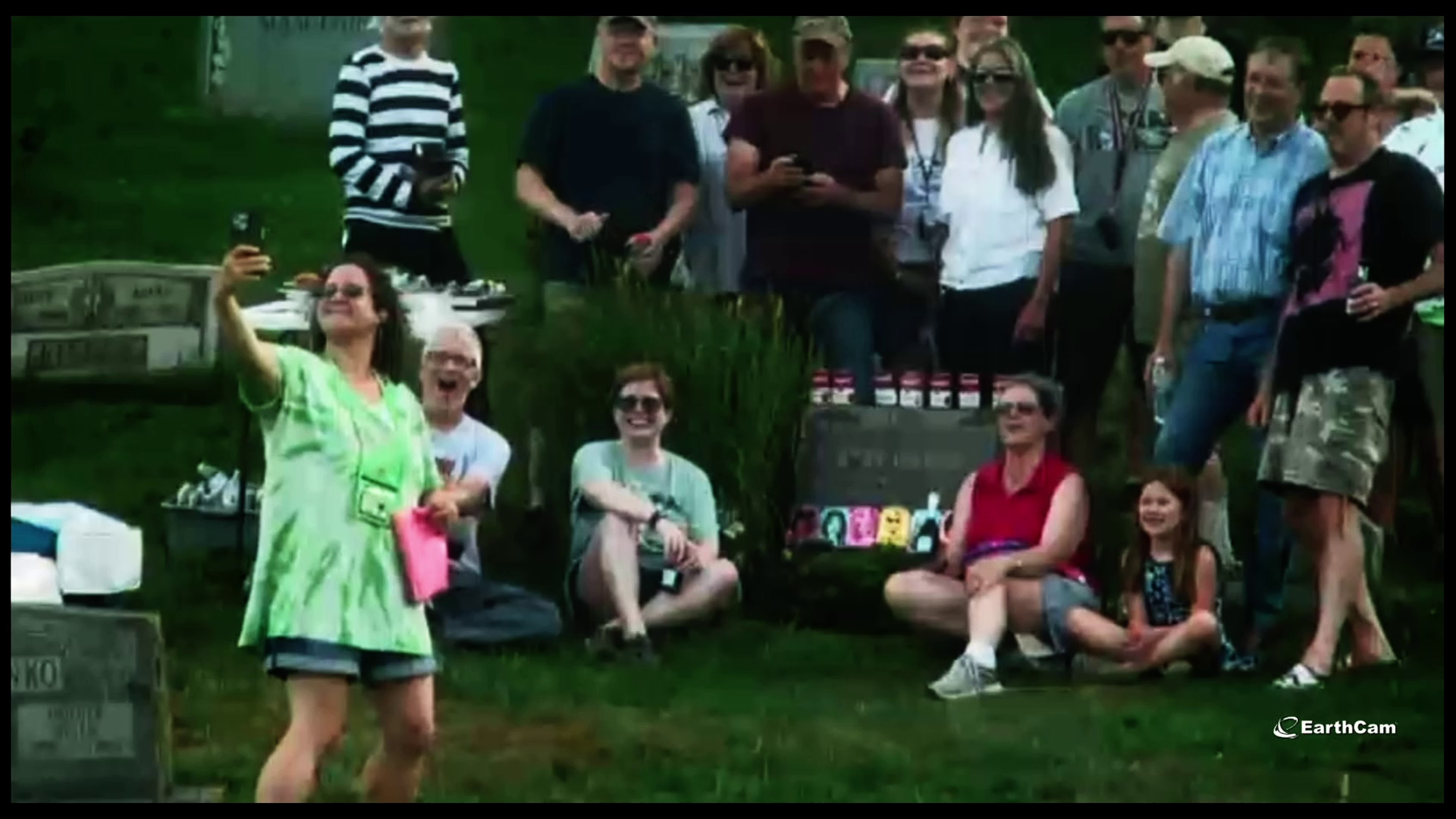 Culling from four seasons’ worth of footage from EarthCam’s live-stream of Andy Warhol’s tomb in Pennsylvania, Radu Jude fashions a spiritual sequel to Warhol’s blockbuster of boredom, Sleep (1964). Where the older film turned the dormant body of Warhol’s lover into a monument comparable to the Empire State Building, Jude’s film, almost equally unwatchable, fixates on Warhol’s own body repurposed into a public monument. As fans and curious passersby click pictures, pose flowers, decorate it with Campbell soup cans and even organize parties around it, the artist’s tomb becomes something like a collective work of art, vested with a social signification. A modern cinematic readymade, Jude’s desktop documentary crafts an unassuming essay on celebrity and fame, entirely in line with Warhol’s work. What happens when television ceases to be the arbiter of mass taste and simply becomes the condition of everyday life? Not fifteen minutes, but the possibility of eternal fame? Just as the visitors bestow the grave with meanings it doesn’t possess in itself, the act of watching the live-stream turns out to be the means by which operational images become aesthetic objects. Critically interrogating spectatorship, Jude’s fascinating film affirms the triumph of life over eternal sleep. [WP: Locarno International Film Festival]
10. Journey of the Shadows (Yves Netzhammer, Switzerland)
 Once living a life of harmony in a dystopian world, two bipedal figures – humanlike but featureless, genderless – fall out under the influence of a mystical pet fish. One of them perishes, and the other embarks on an odyssey across the seas, intermittently led by a book and a candle. After countless catastrophes, this wandering being washes ashore on a pristine island, where it tries to overcome its loneliness, alas in vain. This probably isn’t what happens in Swiss multimedia artist Yves Netzhammer’s wordless, mind-bending first feature, in which identities, relations and situations are in such a flux as to resist any kind of linear synopsis. Where traditional animation advances evermore towards a utopian combination of naturalism and expressivity, Journey operates at a zero degree of digital image-making, dealing in primitive figures, bald volumes, harsh lighting, rudimentary physics, sickeningly unmodulated colours, oneiric movements, and an oppressive clarity of visual field recalling Dali or Magritte. At its best, Netzhammer’s abstract film has the subversive, Kafkaesque quality of Central European animation from the 1960s and ‘70s. Defying binaries of nature/civilization, human/technology, organic/synthetic, Journey crafts a deeply disturbing meditation on freedom, creation and self-discovery whose brutality shocks all the more in a universe so unreal. [WP: International Film Festival Rotterdam]
Special Mention: Dahomey (Mati Diop, Senegal/Benin/France)
Favourite Films of
2023 • 2022 • 2021 • 2020 • 2019 • 2015
2014 • 2013 • 2012 • 2011 • 2010 • 2009


 What comprises the blight of modern life? The reverse shot, answers Bruno Dumont in his scorching new dramedy about celebrity news reporter France, played by a dazzling Léa Seydoux, who cannot help but make it about herself in every story she does. Fresh off two films on
  An apartment evermore waiting to be occupied, letters responding to inquiries not heard, a voice never embodied in the image: Pereda’s five-minute short is a haunting, haunted tribute to the late Chantal Akerman that is structured around absence and substitution. We hear Pereda replying to fictitious queries by the Belgian filmmaker about renting out his sister’s apartment in Mexico City, and we see his sister readying the apartment, moving out paintings or clearing foliage from the skylight. In the film’s robust organization, Pereda, his sister and Akerman become mediums, connecting links in each other’s (after)lives: Pereda, unseen, serving as a middleman between the apartment owner and the impossible future tenant; his sister, unheard, taking the place of Akerman who will never feature in Pereda’s film; and Akerman herself, unseen and unheard, bringing the siblings together in a non-existent real estate deal. In an act of respect and love, Dear Chantal creates a physical space for Akerman to continue to exist, even if not in flesh and blood, just as
  How would Lubitsch do it? Well, if the old master were a contemporary filmmaker, ‘it’ would probably resemble Koberidze’s off-kilter, disarming romantic comedy about two lovers-to-be who work at a shop around the corner without recognizing each other all summer. What Do We See is obviously designed to please, but there is never a sense that it panders to its audience. Like the best storytellers, Koberidze knows that pleasure can be deepened by deferring gratification, and to this end, his film takes surprising excursions away from its central story, restarting at will and relegating its lead couple to the margin as though reposing faith in destiny to bring them together. This vast negative space of the narrative clarifies the larger objective of the film, which is to integrate its characters into the landscape of the ancient town of Kutuisi, whose faces and places, ebbs and flows, become the central subject. Pinning down the fable-like story on the voiceover allows the director to employ a complex, highly unusual visual syntax—that nevertheless derives from classical Hollywood cinema—without disorienting the viewer. The film involves magic, but Koberidze demonstrates that a towel flying through the frame can be as enrapturing as the most outlandish fairy tales.
 The title says it all. Loznitsa’s new documentary represents a modulation of style for the filmmaker. Where his found footage work so far dropped the viewer into specific historical events in medias res, without much preparation, Babi Yar. Context offers a broader picture. With the help of archival material, but also uncharacteristic intertitles, the film details the events leading up to, and following, the Babi Yar Massacre of September 1941, where over 33,000 Jews were killed over two days in the eponymous ravine in Kiev. We see Ukrainian citizens welcoming the occupying Nazi forces with enthusiasm and collaborating in the persecution of their Jewish compatriots. In an illustration of the failure of archival, the massacre itself isn’t represented except in photographs of its aftermath. Loznitsa’s shocking film is a rousing J’accuse! directed at his nation, at the willingness of its citizens in enabling genocide, at the amnesia that allowed for the valley to be turned into an industrial dumping ground. Loznitsa’s newfound desire to contextualize his material should be construed less as a loss of faith in images to speak ‘for themselves’ than as a critical acknowledgement of their power to deceive. After all, the Red Army is welcomed with comparable pomp after they liberate Kiev, this formal continuity with the reception of the Nazis concealing a crisis of content.
 The spectre of Harun Farocki hovers over Herdies and Götmark’s excellent documentary about war, technology and the production of images. A meditation on Western attitudes to armed conflict, Bellum unfolds as an anthology of three human interest stories: a Swedish engineer involved in designing an AI-powered military drone that will take autonomous decisions on bombing a perceived target, a war veteran in Nevada suffering from PTSD and having trouble reintegrating into civilian life, a photojournalist from the East Coast who covers the aftermath of the Afghan war. Well-meaning though these individuals might be, their lives and work are marked by a certain guilt surrounding the fact of war. This is evident in the case of the vet, but the photographer’s own activity may not be untouched by a liberal sense of culpability about her country’s interventions in Afghanistan. The engineer’s efforts to bypass the human factor of war, too, is an attempt to eradicate feelings of guilt about liquidating an enemy, which, the film’s narrator notes, is the only real restraining force in armed conflict. Bellum cogently points out the ways in which technology—of training, of intervention—increasingly eliminates human fallibility from the equation of war, for as Colonel Kurtz put it, “it’s judgment that defeats us.”
 I don’t know if Bruno Dumont and Paul Schrader saw each other’s films this year, but I’m certain they would both have much to say to one another. If
  Even if we are done with the 20th century, suggests Sīmanis’ singular, absurd period comedy, the 20th century isn’t yet done with us. When Hans, an opportunistic doorman at a Riga hotel, is falsely implicated in a bombing, he flees the Latvian capital to shuttle from one European city to another. The Europe of 1913 that Hans traverses is less a real geography than an abstract zone of competing political currents. War is around the corner, and there are several groups trying to influence the course of history. Zealous ideologues seek to entice and co-opt him, subjecting him to what Louis Althusser called “interpellation.” All through, Hans fights hard to follow his own moral compass, flee subjecthood and retain his individuality. A historical picaresque, Sīmanis’ film is interested in the singularity of this particular juncture in Western history—a point at which fin de siècle optimism about technology and human rationality came crashing against the reality of trench warfare—where countless isms sought to impose their own vision on the world. It would seem that Sīmanis views Latvia of the early 20th century as something of an ideological waystation, an unstable intellectual field where free radicals like Hans couldn’t help but be neutralized. And that vision isn’t without contemporary resonance.
 Maria Speth’s expansive documentary about a batch of preteen students, mostly of an immigrant background, in a public school in Stadtallendorf, Hessen, is a classroom film that achieves something special. Remaining with the children for almost its entire four-hour runtime allows it to individuate them, to look at them as independent beings with their own skills, desires and prejudices, just as their charismatic teacher-guide-philosopher Dieter Bachmann adopts a different approach to each of his pupils. For Bachmann, it would seem, whatever the students accomplish academically during the year is of secondary importance. He knows that he is dealing with a group with an inchoate sense of self: first as pre-adolescents, then as new immigrants. Consequently, he spends a great deal of effort in giving them a sense of community, creating a space where they can be themselves. At the same time, the classroom is a social laboratory where new ideas are introduced and the children brought to interrogate received opinion, all under Bachmann’s paternal authority. Speth insists on the particularity of these individuals and there is no sense that our star teacher is indicative of the schooling system in Germany at large. Bachmann is an exception, and in his exceptionalism lies a promise, a glimpse of how things could be.
 It’s an ingenious, wholly cinematic premise: estranged from family and friends, a sound engineer spends her nights at her film studio until she starts to experience a lag between what she sees and what she hears. Juanjo Giménez’s absorbing psychological thriller riffs on this setup, weaving its implications into a coherent character study of a young woman out of sync with her life. The result contains some very amusing set pieces constructed around the delay between sound and image, but also one of the most sublime romantic scenes of all time, one that begins with rude abandonment and ends at a silent movie show. Marta Nieto is brilliant as the unnamed protagonist who withdraws into a shell and then reconnects with herself and the world. She brings a fierce independence to the character that nuances its vulnerability. Its claustrophobic premise notwithstanding, Out of Sync feels like a very open work, integrated gracefully with the urban landscape of beautiful Barcelona. Watching the film in 2021, when so much of real-world interaction has been rendered into digital images and sounds, using Bluetooth speakers with their own latency to boot, is an uncanny experience.
 Ambitious to a fault, American artist Jordan Lord’s new work is nearly unwatchable. Yet it bends the documentary form like few films this year. Shared Resources is a home movie made over a considerable period of time, presented in scrambled chronology. We learn that Lord’s father was a debt collector fired by his bank, that his health is deteriorating due to diabetes, that the family lost most of its possessions in the Hurricane Katrina and that they had to declare bankruptcy shortly after Lord’s acceptance into Columbia University. All this material is, however, offered not directly but with a voiceover by Lord and his parents describing the footage we see, as though intended for the visually challenged, and two sets of subtitles, colour-coded for diegetic and non-diegetic speech, seemingly oriented towards the hearing disabled. In having his parents comment on images from rather difficult episodes in their lives, the filmmaker gives them a power over what is represented. Through all this, Lord initiates an exploration of debt in all its forms and shapes: paternal debt towards children, filial debt towards parents, the debt of a documentary filmmaker towards their subjects, one’s debt to their own body, the fuzzy line between love and indebtedness. This is an American film with an Asian sensibility.


 “I don’t know whether it’s a comedy or a tragedy, but in any case it’s a masterpiece”, says one of the characters, self-referentially, in Godard’s
 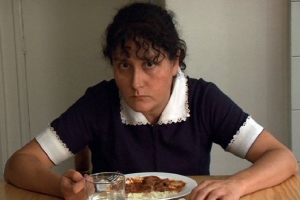 A sister film, in some ways, to Jonathan Demme’s brilliant Rachel Getting Married (2008), Sebastián Silva’s The Maid is nothing short of a spiritual revelation at the movies. What could have been an one-note leftist tirade about Chile’s class system is instead elevated into the realm of human where one facial twitch, one stretch of silence and one impulsive word can speak much more than any expository monologue or contrived subplot. There is no simplification of human behaviour here, no easily classifiable moral categories and no overarching statement to which truth is sacrificed. Nor does Silva suspend his study of the classes to observe his characters. He merely lets the obvious stay in the background. And just when you think that Silva’s vision of the world is getting all too romantic, he delivers a fatal blow to shatter your smugness – a single, deceptively simple shot during the final birthday party that masterfully sums up everything from the irreconcilable, repressed tension that exists between classes in capitalistic societies to our adaptability as humans to live peacefully with each other despite socio-economic disparities.
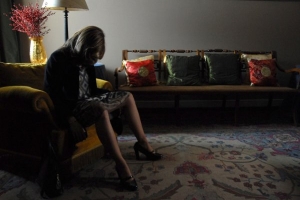 Rigorous but oh-so-tender, centenarian Manoel de Oliveira’s one-hour wonder Eccentricities of a Blonde-haired Girl is a film in one and a half acts. Oliveira translates the work of Eça de Queiroz to the screen, running the 19th century tale of romance through the current economic landscape and harnessing the resultant anachronism to paint an achingly beautiful picture about the inability to transcend class, escape reality and lose oneself in art. Despite its decidedly Brechtian and ceaselessly self reflexive nature, Oliveira’s film is rife with moments of poignancy and touches of humour. Using double, triple and quadruple framing and achieving a mise-en-abyme of art and reality, Oliveira writes a ruminative essay on the impossibility of art and reality to merge, the confusion that exists between them and the classism that exists within and with respect to art. Flooded with references to art and art forms, Eccentricities is such a dense and intricate fabric of the arts that even the past is treated in a detached manner like a piece of art, where each image looks like a painting, each sound feels like a melody and each movement cries out: “cinema!”.
 Of all the recent movies that have attempted to acknowledge dark chapters in national histories and advocated looking forward to the future instead of crying over what is lost, perhaps, none is as sober, ethical and uncompromising as Claudia Llosa’s Golden Bear winner. Llosa inherits her tale from the terrorist atrocities that plagued Peru two decades ago (Inheritance being the prime motif of the film) but, subsequently, discards every possible opportunity for sensationalism or propaganda. Tightly framing the lead character, Fausta (Magaly Solier), within and against claustrophobic structures, doorways, photographs, windows, paintings, mirrors and walls, gradually varying the depth of focus along the movie to detach the protagonist and integrate her with her surroundings and using extremely long shots to dwarf her in vast opens spaces of the tranquil town, Llosa concocts a film of utmost narrative austerity and aesthetic rigor. Punctuating and contrasting these downbeat images of Fausta’s life are slice-of-life sequences from the town depicting various wedding rituals and parties which tenderly highlight Peruvian people’s open-hearted embracing of capitalism and their resolve to come out of the trauma of the past and move on with life.
 If Inglourious Basterds was a coup from within the system, Jim Jarmusch’s The Limits of Control is an out-and-out war against the machine. The essential piece of cinema of resistance, The Limits of Control eschews simple genre classification and flips every ingredient of Hollywood’s conveyor belt products to surprise, appall, irritate and provoke us with each one of its moves. The complete absence of Jarmuschian brand of deadpan humour announces the film’s seriousness of intent. It is as if Jarmusch wants to establish once and for all that Hollywood does not equal American cinema and that the cinema that the former school marginalizes is truly alive and kicking. The Limits of Control is a film that can easily get on your nerves but, eventually, it succeeds in getting under your skin and evolving gradually to reveal how meticulously crafted it is. Using Cinematographer Christopher Doyle, production designer Eugenio Caballero and editor Jay Rabinowitz masterfully, Jarmusch creates a movie so meditative and relaxing that one feels exactly how William Blake (Johnny Depp) would have at the end of Dead Man (1995).
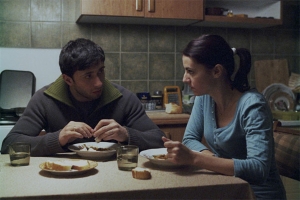 Porumboiu’s follow-up to one of the most hilarious comedies of the decade, 12:08 East of Bucharest (2006), is a companion of sorts to Jarmusch’s film not only in the sense that both of them negate the function of the genre they are supposed to belong to, by completely de-dramatizing their narratives, but also because Porumboiu’s film, too, is a conflict between two types of cinema – the cinema of analytical contemplation represented by the detective-protagonist of the film (Dragos Bucur) and the cinema of thoughtless action represented by his ready-for-ambush boss (Vlad Ivanov). However, more concretely, Police, Adjective is an examination of how our own political and social systems, partly due to the rigidity of our written languages, end up dominating us and how individual conscience and social anomalies are effaced clinically in order to have the bureaucratic clockwork running smoothly. Like Bucharest, Porumboiu, often self-reflexively, sketches the portrait of a bland and pacific city that tries to ape the far west and project itself as more dynamic than it actually is. The film’s disparate themes crystallize deliciously in the final, side-splitting, Tarantino-esque set piece where we witness the police chief urging his subordinates to act by the book, literally.
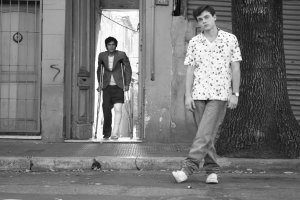 Tetro is a beautiful film. Not just in the way it looks, but in the sheer romance it has for a lost world. The only worthy B&W film of this year out of the four I saw (the other three being Haneke’s
 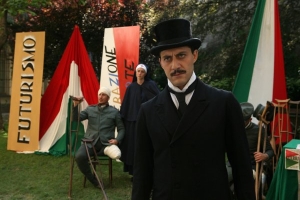 Writer-director Marco Bellocchio’s ballad, based on a nebulous part of fascist leader Benito Mussolini’s life, can teach those so-called historical dramas a thing or two about locating personal ideologies within collective history without being exploitative or pandering to pop demands. Bellocchio’s film is far from a detailed recreation of Mussolini’s political life. It is, in fact, a commentary upon such “detailed recreations” of history based on documents written by winners. Bellocchio’s formidable script and mise en scène keep probing and remarking upon the tendency of fascist systems to suppress histories – personal and national – and exploit popular media, especially the relatively young and emotionally powerful cinema, to blind people of truth and forge a faux reality – a theme underscored in Tarantino’s film too. What more? Bellocchio constructs the film exactly like one of those Soviet agitprop films – not by easy spoofing, but by retaining their spirit and rhythm – using rapid montage, expressionistic performances and operatic sounds. Be it common folk fighting in a cinema hall over a news reel or a bereaved mother breaking down during the screening of The Kid (1921), cinema registers its omnipresence and omnipotence in Bellocchio’s film.
 The perfect antidote to the summer blockbuster, Warwick Thornton’s Samson and Delilah is an extremely assured and undeniably moving piece of cinema that arrives, appositely, as the golden jubilee reboot to Herzog’s thematically kindred movie, Where the Green Ants Dream (1984). Cleverly relegating specific issues such as the Australian government’s intervention and relocation policies for the Aborigines to the background, Thornton frees his films of broad, propagandist political agendas, without ever making the film lack social exploration. With an extraordinary sound design, Thornton keeps the word count in the film to an absolute minimum, letting the stretches of silence shared by his lead characters speak for themselves. The film’s observations about banality of racism in contemporary Australia, exploitation of tribal art and its consequences, the effect of colonialism, especially due to Christian missionaries, on the Aboriginal culture and the ever growing chasm between the tribal and white life styles themselves are fittingly subordinated to the beautiful, unspoken love story that, essentially, forms the heart of the film.
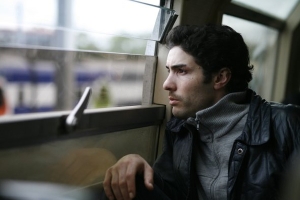 Let me dare to say this: Jacques Audiard’s A Prophet is either the most profound or the most pretentious movie of the year. For now, I choose the former. Audiard’s decidedly unflinching feature breaks free from the limitations of a generic prison drama and takes on multiple dimensions as the apolitical and irreligious protagonist of the film, Malik (played by Tahar Rahim), finds himself irreversibly entangled in ethnic gang wars within and outside the prison. A trenchant examination of religion as both a tool of oppression and a vehicle for political escalation, A Prophet is an audacious exploration of Muslim identity in the western world post-9/11. Although the plot developments may leave the viewer dizzy, it is easy to acknowledge how Audiard confronts the issues instead of working his way around it or making cheeky and superficial political statements. Strikingly juxtaposing and counterpointing Sufism and Darwinism in Malik’s search for identity, Audiard creates an immensely confident and nonjudgmental film that trusts its audience to work with the rich ambiguity it offers.
 If there is a synonym for “iconoclasm” in cinema, it might well be Luis Buñuel. It’s almost as if it is a need for him to go against conventions and established practices, – social, cultural and cinematic – pick out their weak points and hit them so hard that their absurdities are exposed. I’m far from being qualified to make general statements (including the above) about Buñuel, but the few films I’ve watched of him provide a more than clear picture about his role as a cinema pioneer and a social critic. In the legendary debut work Un Chien Andalou (1929), Buñuel and Sali present us a plethora of images – ones that would be termed “Lynchian” nowadays – that refuse temporal and spatial continuity on which popular cinema thrived on at that time. Apart from a filmmaker’s impulse to break stereotypes, what Un Chien Andalou showed us was the way we looked at movies and the elements of cinema that we had taken for granted. The conventional viewer, who tries to assemble the images into some form of theme or narrative, would invariably fail.
 The children in the classic Neo-realist films were sympathetic and often pawns of fate or power plays. Buñuel’s Pedro is also a product of his environment and the prejudices against him. But that does not mean all of Buñuel’s kids are sympathy-magnets. Most of them are, in fact, instigators of social disturbances that the “neo-realist kids” are subjected to. Buñuel breaks away from that “objective gaze” of the Italian pioneers and takes us on a tour into the subconscious world of his protagonists. Moreover, Buñuel questions the moral integrity of its protagonists, or rather does away with that concern completely (Buñuel apparently wanted to put an orchestra as the backdrop to some major scenes which would have broken another tenet of the Italians). But all this subversiveness isn’t just a product of a desperate need to break rules. What Buñuel does here is, like he did in his first two movies, that he exposes the inherent flaws of a cinema movement. In other words, Los Olvidados is a critique of a way of filmmaking written in the form of a film. Buñuel takes up neo-realism in order to explode it from within and boy, does he succeed! In one of the greatest shots in film history, Pedro, in his reformatory, throws an egg at the soberly observing camera. – An in-your-face advice given by the director asking the neo-realists to cease the nonparticipation and do something about it all. Buñuel has driven the final nail into the coffin of Neo-realism.
 The Seventh Art