2025 was disappointing, even frustrating in both personal and historical terms. At the beginning of the year, I had set myself simple goals, all of which I failed at. My reading plummeted to almost zero, as did my public writing. I had hoped to add more entries to the Curator’s Corner column, but it was not to be. A few projects and opportunities that I was looking forward to didn’t materialize. Not to mention a host of health issues and family emergencies.
The political optimism of 2024 proved not just short lived, but derisory given the impunity with which the lunatics in power and their rabid supporters continued to destroy everything decent, human and life-sustaining. In India, state and market censorship alike have reached absurd levels, awards are now so compromised as to make satirists twiddle their thumbs, festivals are pushed to the brink of dysfunction by a philistine information ministry, naked propaganda seems to be the only way to box-office salvation, critics have been harassed by industry insiders and barbaric hordes on social media for precisely doing their job, celebrities continue to toe the line or silence themselves out of a justified fear of reprisal. All this, just in the domain of cinema.
The only respite for me came in the form of encounters with interesting, reasonable and committed people, especially at the Jakarta Film Week and International Film Festival Kerala, both of which I attended for the first time. The passion and the international camaraderie that I witnessed were welcome assurances that, no matter its immediate currency, bigotry and parochialism will forever be uncool.
In more solitary undertakings, I had the chance to explore parts of Indian documentary history I was unfamiliar with. Among these, I strongly recommend Chalam Bennurkar’s Children of Mini-Japan (1990), Anjali Monteiro and K.P. Jayasankar’s YCP 1997 (1997), David MacDougall’s Doon School Quintet (2000-04), Deepa Dhanraj’s Invoking Justice (2011) and especially R.V. Ramani’s My Camera and Tsunami (2011).
Besides acclaimed and popular films from Kerala made after 2010, I also caught up on a significant swathe of Malayalam cinema from the 80s and the 90s. This included two canonical masterpieces in Perumthachan (1991) and Ponthan Mada (1994) in addition to numerous remarkable features emerging from a short, bountiful period of heightened creativity: Irakal (1985), Deshadanakkili Karayarilla (1986), Thaniyavarthanam (1987), Amrutham Gamaya (1987), Ponmuttayidunna Tharavu (1988), Dasharatham (1989), Varavelpu (1989), Sandhesam (1991), Bharatham (1991) and Njan Gandharvan (1991), to name but a few. Farewell Sreenivasan, the recently departed actor-director-screenwriter behind many of these titles.
As always, the following list is based on an arbitrary eligibility criterion: films that had a world premiere in 2025.
1. Happiness (Firat Yücel, Turkey/Netherlands)
 Fatigued and sleep deprived, a Turkish filmmaker in Amsterdam tries to find ways to reduce his excessive screen usage and catch some shuteye. But the horrors of the world, beamed onto digital screens in real time, know no respite. Firat Yücel’s extraordinary desktop essay departs from this premise in all directions, only to return to it with new insights and dizzyingly far-reaching associations. Tracing the agonized drifts of a sensitive, hyperconnected mind, Happiness lays bare a highly contemporary double bind: if the screens we are hooked to keep us away from living in the real world, it is these very screens that helps us make sense of our lived experiences. The filmmaker’s investigation into his bodily malaise leads him to unpack its historical conditions: the colonial legacy that underpins the prosperity of his host country, its flourishing happiness industry and its dubious foreign policies. Yücel’s inward observation takes him ever outward; his exasperation at the immediate present, into the distant past. Rigorous as it is witty and playful, Happiness perfectly embodies the agitations of the modern liberal consciousness, present everywhere and nowhere at once, all too aware of the immensity of human misery as well as its own impotence in the face of it. [World Premiere: Visions du Réel]
2. Peter Hujar’s Day (Ira Sachs, USA)
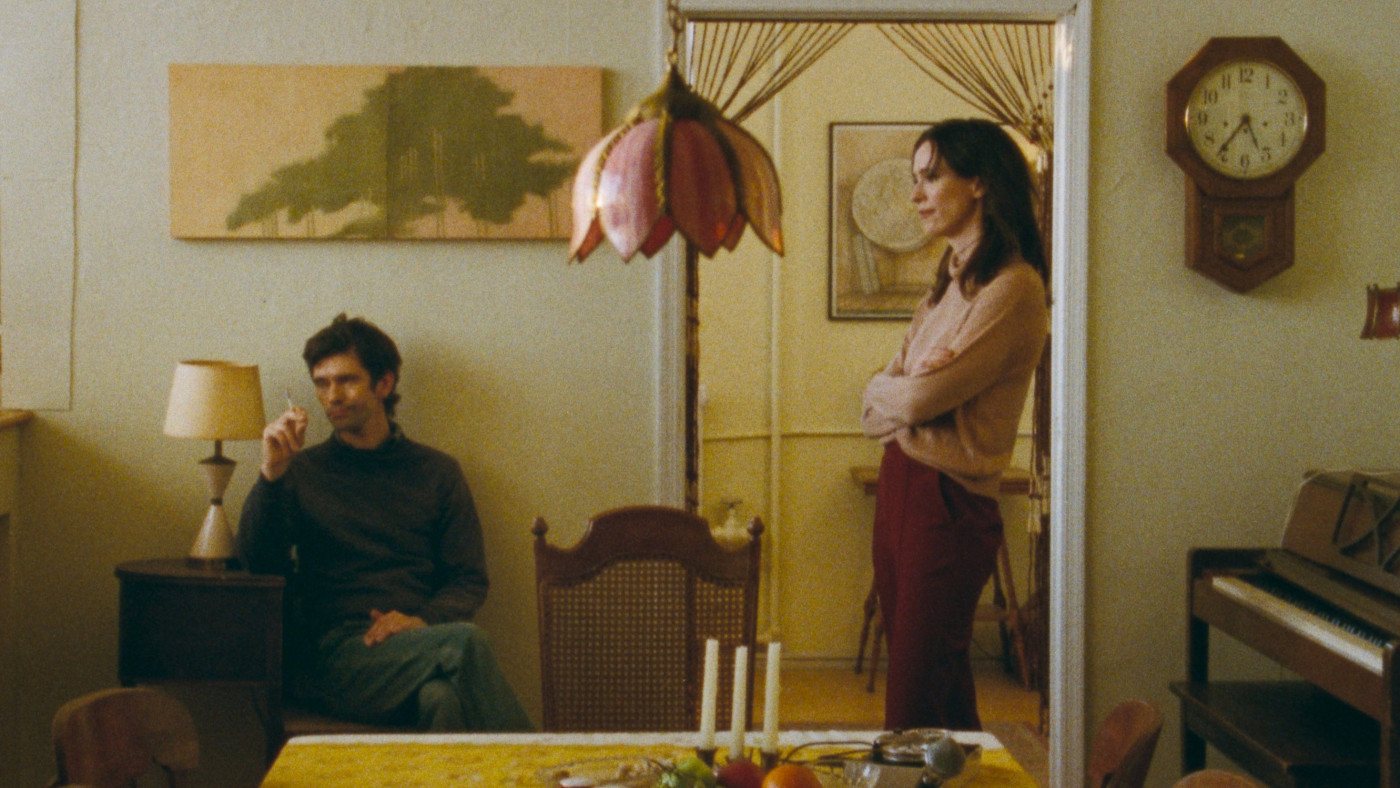 Ira Sachs’ eminently cinematic re-creation of a tape-recorded conversation, from December 1974, between writer Linda Rosenkrantz (played by Rebecca Hall) and photographer Peter Hujar (Ben Whishaw) is an object lesson in the creative possibilities of redundancy, a vital illustration of how the film medium can actualize itself, not by shunning the written word but, on the contrary, by faithfully embracing it. Over 76 condensed minutes, Hujar recollects a day from his life in New York City in rigorous detail — a fascinating mix of the ordinary and the extraordinary, recalling The Philosophy of Andy Warhol (1975) — to an attentive, sympathetic Rosenkratz amid the changing light of his apartment. As Hujar’s endless stream of speech washes over us to the point of exhaustion, our focus turns from its specific content to the process by which memory becomes material. Drawing from transcripts of the conversation — and not Rosenkrantz’s original recording, now lost —Whishaw’s incredibly textured performance reveals the task of imaginative translation that underlies all actorly work. For all its thrilling verbosity, Sachs’s film is a tribute to the art of listening, to this intimate space of friendship in which the hierarchy between the memorable and the mundane ceases to exist. [WP: Sundance Film Festival]
3. Manal Issa, 2024 (Elisabeth Subrin, Lebanon/USA)
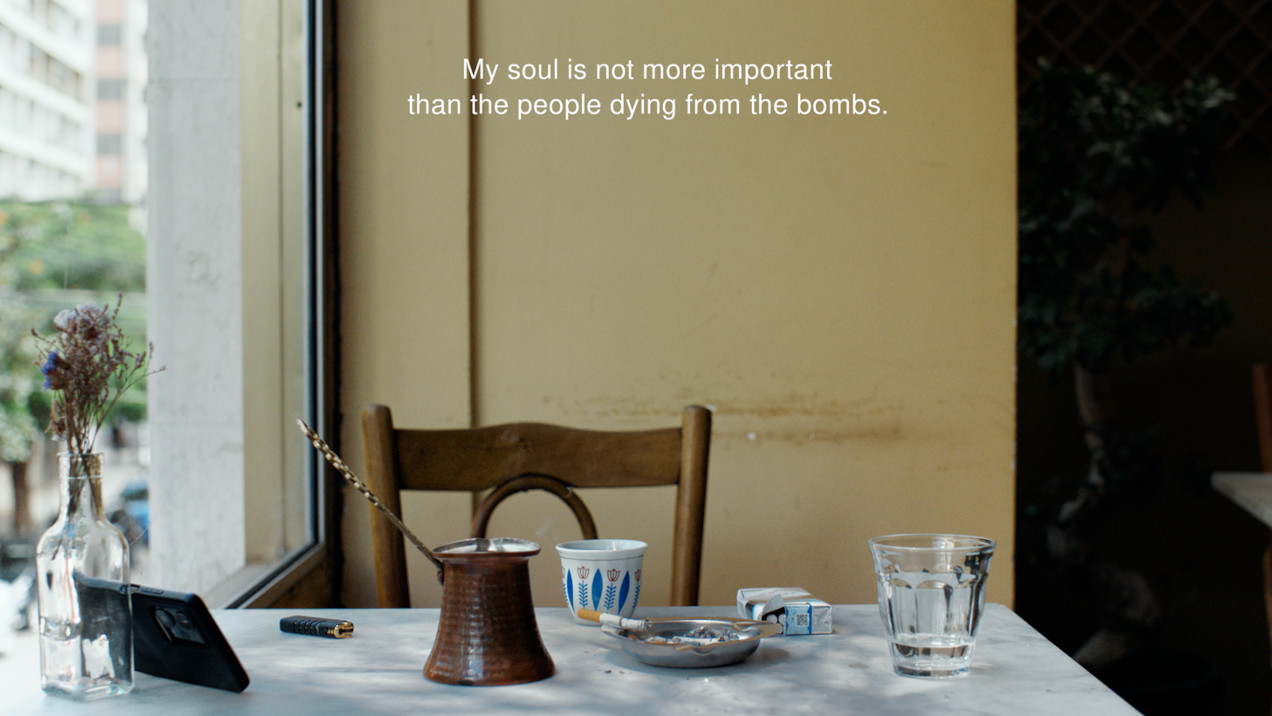 Where Elisabeth Subrin’s powerful Maria Schneider, 1983 (2022) — based on a televised interview of the eponymous French actress — created doubles, Manal Issa, 2024 proposes a negation. Here, Subrin asks the Lebanese-French actress Manal Issa, one of the three participants of the former film, the same questions that Schneider was posed in the original interview. Vocal about her stances, Issa talks about the poverty of meaningful roles offered to Arab-origin actresses, the limitations of the capitalist production model, the choice of moving back to Lebanon during crisis and the importance of speaking up against political iniquity. She adds that she feels professionally isolated for voicing her opinions, for calling out Israel’s bombing of Gaza. While we listen to her responses, Issa herself remains offscreen, her refusal to sustain her career by censoring herself echoed by Subrin’s refusal to show her. “If I can’t be true to myself, there is no point showing myself,” the actress concludes. Like Schneider’s palpable reluctance, Issa’s self-negation stems from an outlook that privileges life over films, reality over fiction. Six hours after the shoot, an end card notes, “Israeli airstrikes escalated throughout Lebanon, killing over 500 people in one day.” [WP: Cinéma du Réel]
4. One Battle After Another (Paul Thomas Anderson, USA)
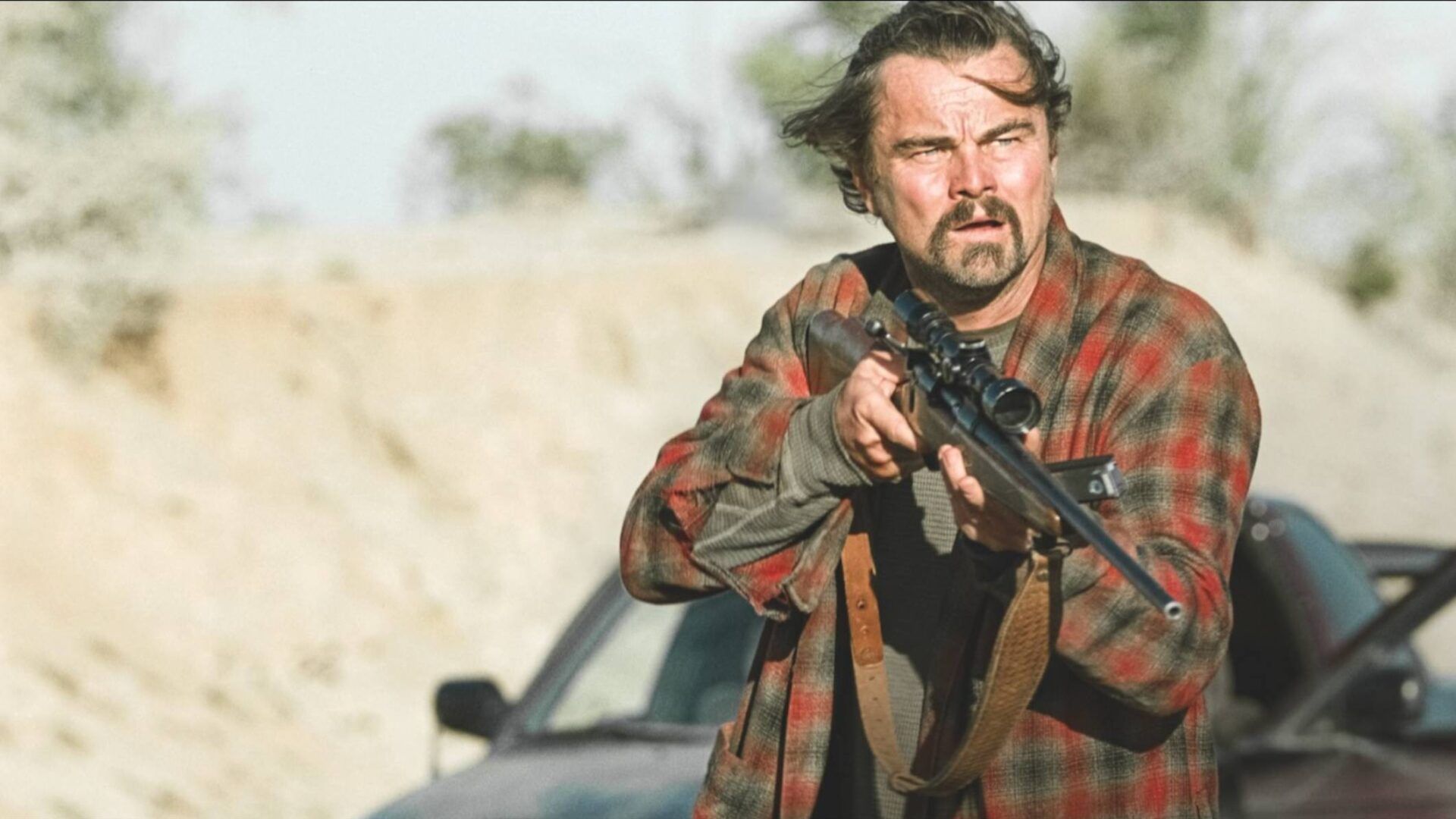 All appeal is sexual, political appeal especially so. Among other things, Paul Thomas Anderson’s wild, action-filled, hysterically funny ride through a caricatural America torn between white supremacists and antifa insurgents — each more paranoid than the other about imagined contaminations — lays bare the erotic drive animating ideological cohesion (and ideological sabotage). Leonardo DiCaprio’s failed revolutionary, mentally arrested in the 1970s, and Sean Penn’s boyish, waif-like sergeant are twisted projections of each other’s fears. Whether the film is reactionary, apolitical or progressive is beside the point. This is a work by an artist who contemplates a polarized society, its excesses and its mess-ups with sage amusement, or a stoner’s delight, without giving in to cynicism or misanthropy. DiCaprio delivers the performance of the year in a movie filled with performances of the year, each one on a different register, all of it nevertheless brought into perfect harmony by dint of sheer directorial orchestration. One Battle After Another stands tall in a movie culture dominated by safe, anaemic films calculated to say the right things and avoid broaching the wrong things. It made me wish we had more filmmakers who actually felt something between their legs. [WP: international commercial release]
5. Beyond the Mast (Mohammad Nuruzzaman, Bangladesh)
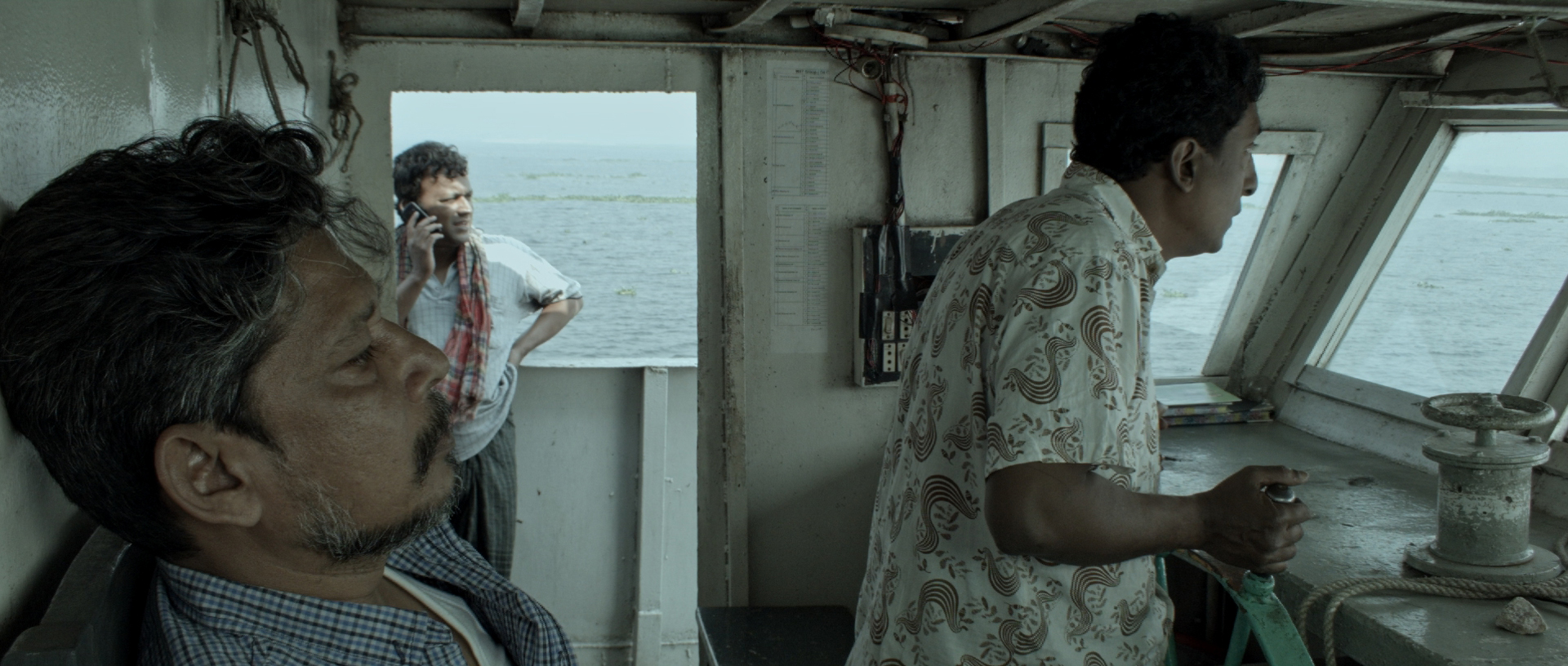 In this rapturous slice-of-life portrait, a small commercial boat with an all-male crew goes from port to port along a river in Bangladesh selling oil. When the crew’s kindly cook takes a stowaway child under his aegis, he runs afoul of the boat’s ill-tempered, scheming helmsman, covetous of the captain’s job. Despite a good deal of on-board intrigue, there is very little drama, strictly speaking, in Mohammad Nuruzzaman’s artisanal second feature, which doesn’t even seek to create lyrical moments in the vein of, say, Satyajit Ray. Yet, this is a highly poetic work, the poetry arising primarily from the filmmaker’s intent, non-judgmental way of looking at a small, enclosed world, its rituals, its diverse people and their human foibles: touches of jealousy, compassion, malevolence, ambition and camaraderie; a parade of life simply passing by. The form is meditative yet brisk — with very elegant camera choreography — and remains indifferent to fashionable arthouse formulas, stylistic shorthand or established screenplay structures. Even the film’s casual neo-realism doesn’t aim at traditional qualities of empathy and psychological description; it rather inspires Ozu-like contemplation. Just a lovingly crafted film. [WP: Moscow International Film Festival]
6. Roohrangi (Tusharr Madhavv, India/Netherlands)
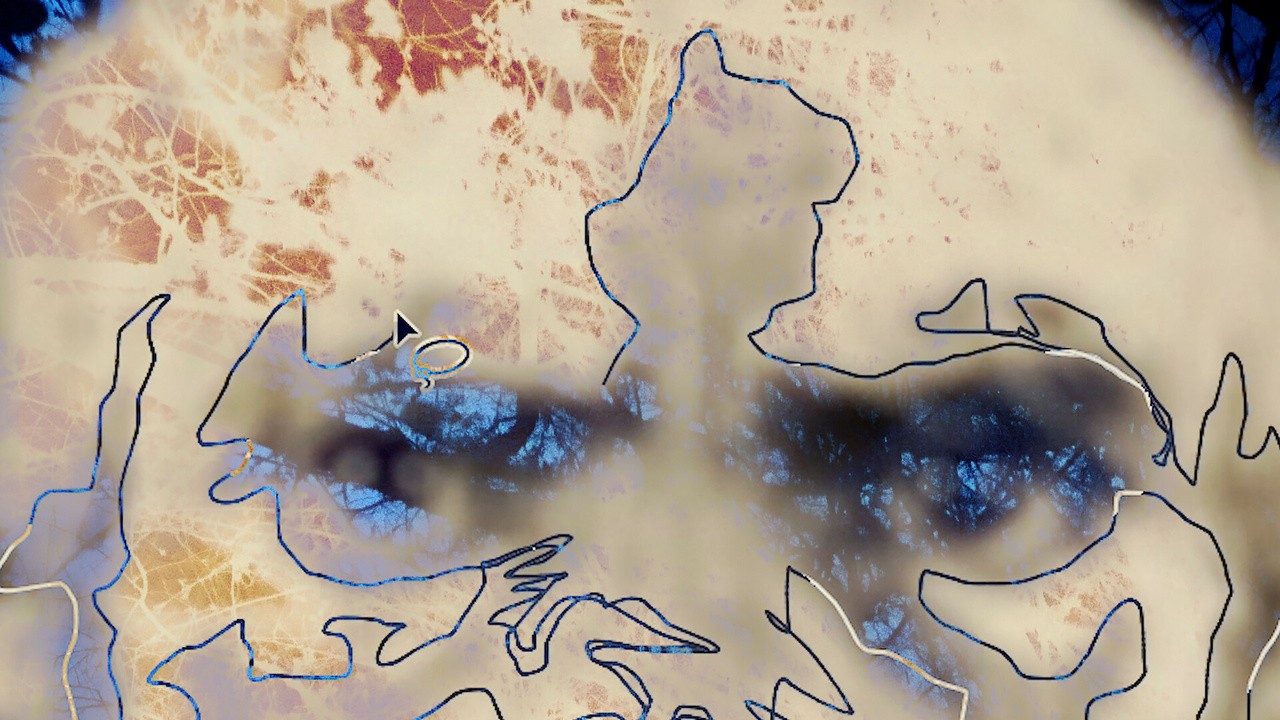 With a camera in hand, a gay filmmaker from South Asia walks around in a park in Amsterdam known as a cruising hotspot. What he finds in this place of fleeting encounters is a kind of time warp, the apparent permanence of its majestic trees, their gnarled roots and variegated textures reminding him of his own roots back in Lucknow, India. They recall, in particular, his grandfather’s discoloured skin, caused by leukoderma, which made him look like a white man — a dual identity paralleling the filmmaker’s own. Echoing this image, Roohrangi starts to lose its colours too, shedding its skin to reveal various layers of memory, history and fantasy underlying a leisurely stroll, as different geographies and eras interpenetrate one another. Like in the films of Apichatpong Weerasethakul, the forest in Roohrangi is a liminal, essentially queer space that enables communion with other lives, other worlds — a glimpse into different possibilities of being. With curiosity and formal openness, Tusharr Madhavv mixes stylized, essayistic passages with casual interviews with the park’s denizens. The result is an evocative, visually striking work, at once experimental and accessible, that achieves the right balance of discursivity, mystery and invention. [WP: Ann Arbor Film Festival]
7. Past Is Present (Shaheen Dill-Riaz, Germany/Bangladesh)
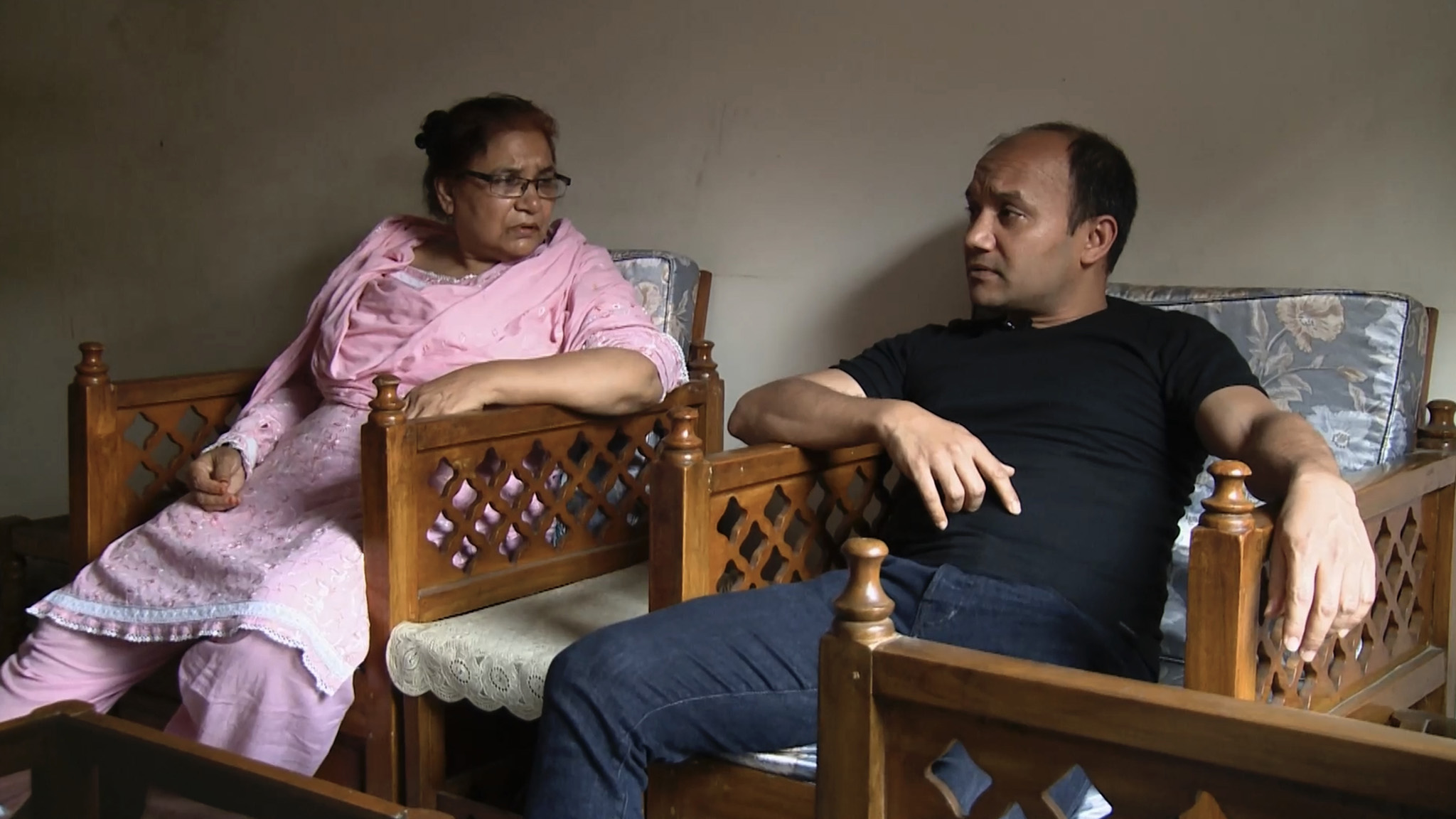
In 2007, Berlin-based Bangladeshi documentarian Shaheen Dill-Riaz found himself in the midst of a family scandal: while studying abroad, his sister Mitul had secretly married her cousin to the great chagrin of her parents. As this taboo union began to tear the family apart, Dill-Riaz decided to mediate between Mitul in Australia, his elder brother Amirul in the USA and his heartbroken parents back home in Dhaka. In Past Is Present, Dill-Riaz turns his camera onto himself and his dear ones, producing a sweeping domestic saga shot over fourteen years and across four continents. Tracing his parents’ journey from rural Bangladesh to Dhaka, and their three children’s subsequent drift to far-flung corners of the globe, the filmmaker examines the complex personal fallout of voluntary migration, presented here in all its liberating and melancholic dimensions. Dill-Riaz seamlessly interweaves moments of torrid drama with passages of mundane poetry, his handheld camera adopting a transparent, unassuming style. The film’s international narrative produces a startling contrast of textures and lifestyles, but also crystallizes the profound continuities in emotional and moral values across cultures. A touching study in the tyranny of distance, Past Is Present actualizes the immortal struggle between the home and the world. [WP: International Film Festival Rotterdam]
8. Obscure Night – Ain’t I a Child? (Sylvain George, France)
 The concluding chapter of Sylvain George’s trilogy on illegal immigration is an extraordinary object of close, unflinching observation. The film follows three Tunisian teenagers who take temporary refuge in Paris after having been shuttled by immigration authorities across various cities in Western Europe. With remarkable intimacy and equanimity, George’s camera films the gang at slightly below the eye-level as they wander the roads of night-time Paris, huddle around fire, get into nasty fights with their Algerian counterparts, listen to street music or make the occasional phone call back home. An indifferent Eiffel Tower glitters perpetually in the background as the boys find themselves prisoners under an open sky. Shot in stark monochrome with eye-popping passages of abstraction, George’s film lends a monumental weight to images and lives we would rather not see. As a white artist making films on vulnerable sans papiers, George is bound to ruffle some feathers. But his film demonstrates that, sometimes, you need to strain certain ethical boundaries to arrive at newer forms of looking and understanding. Neither incriminating its subjects nor making any apology for them, Obscure Night – “Ain’t I a Child?” reveals the herculean difficulty of creating a truly humanist work. [WP: Visions du Réel]
9. May the Soil Be Everywhere (Yehui Zhao, China/USA)
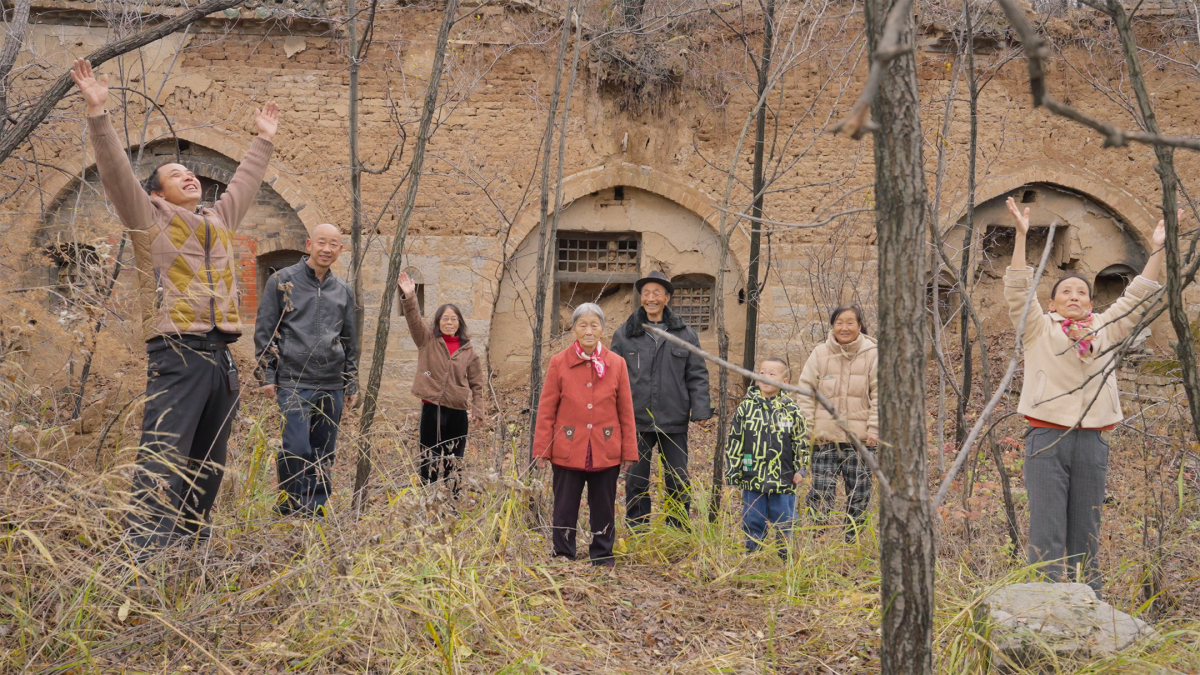 Yehui Zhao’s winsome debut feature begins as a personal documentary about the filmmaker’s search for her roots, but it gradually blooms into a sprawling examination of Chinese society and its evolving relationship to the land across modes of production. In her quest to unearth her family tree, the filmmaker finds herself peeling back layers upon layers of violent history — an excavation that takes her back to the soil, to a primordial ecology: caves that have now become sand mines, dogs that were once wolves, high-speed rail that now cut through unmarked graves. May the Soil Be Everywhere offers a rare and unusual glimpse into China’s pre-revolutionary past that takes us across vastly different terrains, time periods, generations: we learn of landlords who, during the revolution, became persecuted cave dwellers who then turned into Stakhanovite foot soldiers of Mao and are now digital filmmakers in a globalized world. The film’s direct and unaffected voiceover enables the overdone format of the personal documentary to break loose into a free-form essay featuring humorous animation and re-enacted tableaux. If the filmmaker’s attachment to familial lineage feels a little excessive, it undeniably carries a subversive force within post-revolutionary Chinese society. [WP: True/False Film Fest]
10. Admission (Quentin Hsu, Taiwan)
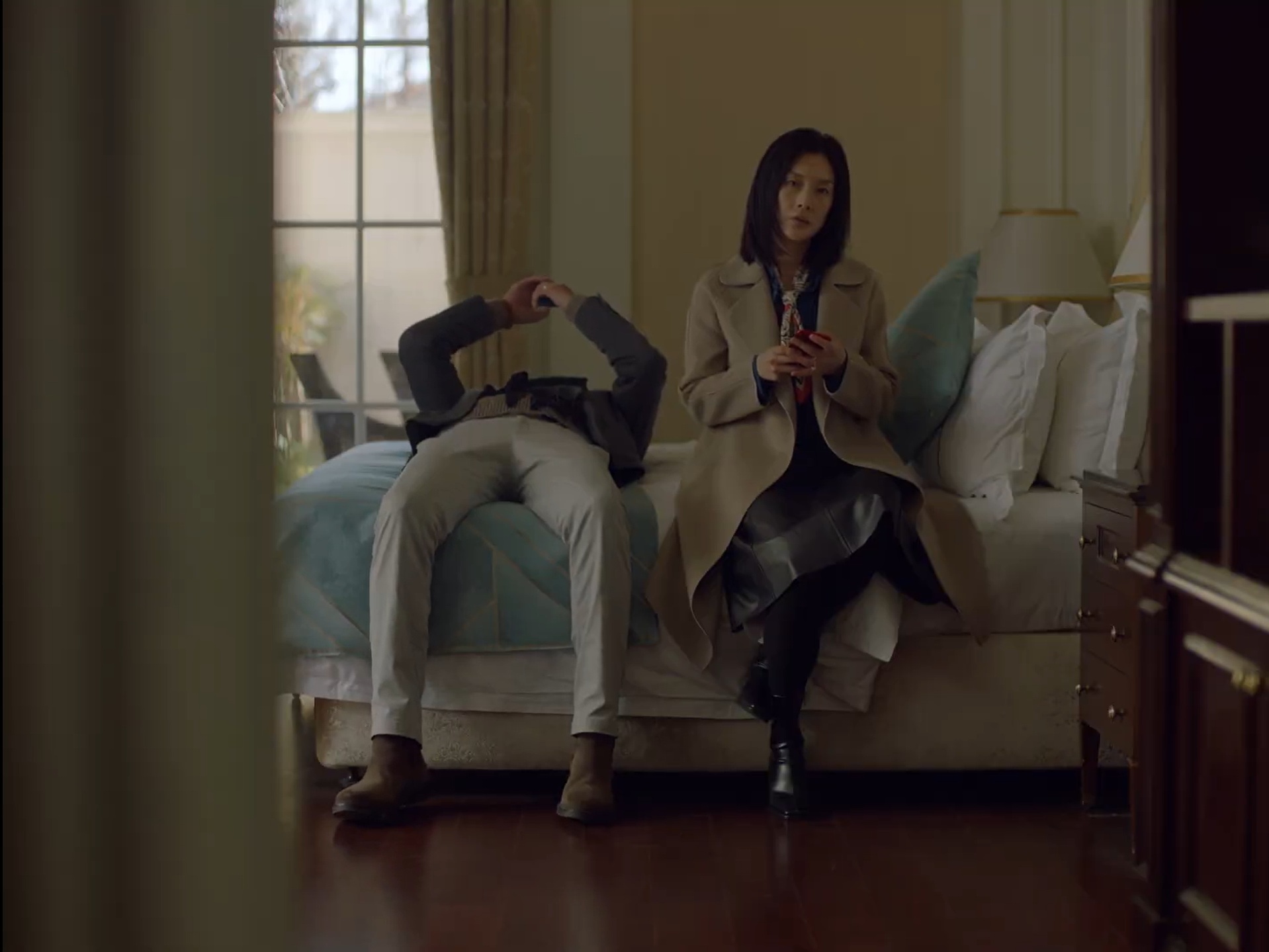 Panicked by the rejection of their six-year-old ward at an elite boarding school, an affluent tiger couple convenes an emergency meeting with their “fixer” and one of the school’s board members at a resort. Emerging from their negotiations and blame games is a stark portrait of a childhood labouring under someone else’s dreams. Quentin Hsu’s razor-sharp debut is a formalist kammerspiel that is Mungiu/Farhadi-like in its dissection of the moral corruption of the Chinese middle-class. But the approach to the material is entirely anti-naturalistic, pointedly theatrical. The film makes phenomenal use of its 4:3 aspect ratio and off-screen space, with the masquerade and subterfuge of the dramatic situation reflected in actors constantly gliding in and out of the frame, their bodies now eclipsed by the décor, now irrupting into the shot. The frame is constantly energized and de-energized by these microscopically choreographed movements in a way that recalls the Zürcher brothers. The actors are little more than props in the director’s precise, Kubrick-like design, but it’s bracing to witness a work that articulates its ideas through brute mise en scène, especially for a subject that would have called for a more psycho-realist treatment. [WP: Tallinn Black Nights Film Festival]
Special Mention: Living the Land (Huo Meng, China)
Favourite Films of
2024 • 2023 • 2022 • 2021 • 2020 • 2019
2015 • 2014 • 2013 • 2012 • 2011 • 2010 • 2009
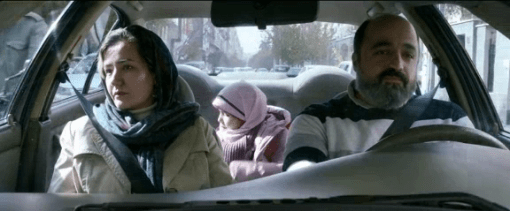


 Chan’s diaristic digital work is divided into chapters named after family members and unfurls as a process of piecing together of familial history. Through various confrontational interviews with her mother and father, the filmmaker attempts to understand their failed marriage, her strained relation with her step-father and the violence that has structured them both. Chan’s decision to put her entire life-story on film is a brave gesture, but the film closes upon itself, satisfied to be a melodrama valorizing personal experience over broader frameworks. (Consider, in contrast, the rigorous domestic formalism of Liu Jiayin or the socio-political tapestry of Jia Zhangke’s early work.) Chan misses the forest for the lone tree. Winner of the Adolfas Mekas award of the fest.
 Beep assembles anti-communist propaganda material from the 60s and the 70s commissioned by the South Korean state that was based on the mythologizing of a young boy, Lee Seung-bok, slain by North Korean soldiers. With the unseen, absent boy-hero at its focus, Kim’s film depicts the dialectical manner in which a nation defines itself in relationship to an imagined Other. Kim makes minimal aesthetic intervention into the source material – our relation to it automatically ironic by dint of our very distance from the period it was made in – restricting himself to adding periodic beep sounds to the footage, producing something like a cautionary transmission from another world.
 Black Sun opens with a composition in deep space presenting a metonym for a country in the process of development: high-rise buildings in the background as a pair of actors in period costumes rehearse a scene in the foreground. In a series of Jia Zhangke-like vignettes of Saigon set in middle-class youth hangouts scored to pop songs and television sounds, interspersed with images of a metamorphosing city, we see the distance that separates art from reality and the middle-class from the changes around it. The film culminates in a complex, home-made long take following the protagonist across her house and out into the terrace, where she dances, presumably to the eponymous song.
 The most challenging and elusive film of the competition I saw is also the most hypnotic. Cloud Shadow gives us a narrative of sorts in first person about a group of people who go into the woods and dissolve in its elements. The film is obliquely a story of the fascination with cinema, of the trans-individualist communal experience it promises, of the desire to dissolve the limits of one’s body into the images and sounds it offers. With an imagery consisting of sumptuous tints, and nuanced colour gradation and superimpositions, the film enraptures as much as it evades easy intellectual grasp. The one film of the festival that felt most like a half-remembered dream.
 Ferri’s teasing, playful Dog, Dear appropriates the filmed record of a Soviet zoological experiment in the 1940s in which scientists impart motor functions to different parts of a dead dog. In the incantatory soundtrack, a woman – presumably the animal’s owner – repeatedly conveys messages to it, with each of them prefaced by the titular term of endearment. Ferri’s film would serve sufficiently as a blunt political allegory about the dysfunction of communism, but I think it’s probably fashioning itself as a metaphysical question: the dog might well be kicking but is he alive? His physical resurrection will not be accompanied by a restoration of consciousness. He will not respond to his master’s voice.
 Put together from footage apparently shot over twenty years at a Thai army officer’s residence, Tesprateep’s film shows us four conscripts working in the general’s garden. We witness their camaraderie, their obvious boredom, the empty bravado in entrapping small animals and intimidating each other. The misuse of power by the officer in employing these youth to mow his lawn reflects a broader militaristic hierarchy, as is attested by the youths’ casual violence towards the animals and their brutal torturing of a prisoner. Endless, Nameless recalls Claire Denis in its emphasis on military performativity and Werner Herzog in its juxtaposition of idyllic nature and seething violence, all the while retaining an
  In Fictitious Force, Widmann incidentally poses himself the age-old challenge of ethnological cinema; how to film the Other without imposing your own worldview on him? The filmmaker smartly takes the Chris Marker route, avoiding explanatory voiceover for the rather physical Hindu ritual he photographs and instead holding it at a slightly mystifying – but never exoticizing – distance. Widmann’s film is about this distance, the chasm between experience and knowledge that prevents the observer from experiencing what the observed is experiencing, however understanding he might be. Fictitious Force’s considered reflexivity carefully circumvents the all-too-common trap of conflating the subjectivities of the photographer and the photographed.
 Fashioned out of footage that the artist shot during his visit to the titular natural reserve in Ontario, Fish Point comes across as an impressionist cine-sketch of the locale. The film opens with Daichi Saito-esque silhouettes of trees against harsh pulsating light – near-monochrome shots that are then superimposed over a slow, green-saturated pan shot of a section of a forest. This segment gives way to a passage with purely geometric compositions consisting of alternating browns and greens and strong horizontals and verticals. Forms change abruptly and tints become more diffuse and earthly. We are finally shown the sea and the horizon, with a rough map of the area overlaid on the imagery.
 A music video for a song that reportedly riffs on a holy chant and the traditional cry of the local ragman, Ye’s film starts out with shots of old women and men lip-syncing to the titular melody before turning increasingly darker. The rag picker of the poem progresses from accepting material refuse to buying off diseases, emotional traumas and even intolerable human characters. Ye builds the video using shots both documentary and voluntarily-performed that portray everyday life in Taiwan as being poised between tradition and modernity. The junkman of the film then becomes a witness to all that the society rejects and, hence, to all that it stands for.
 Set in a suburban Mumbai slum, Bhargava’s film takes a look into one of the reportedly many carrom clubs in the area where young boys come to play, smoke and generally indulge in displays of precocious masculinity. Where Imraan, the 11-year-old manager of the club, seems reticent before the camera, his peers and clients are much more willing to perform adulthood in front of the filming crew. While some of them are acutely aware of the intrusive presence of the camera, urging their friends not to project a bad image of the country, the film itself seems indifferent about the ethics of filming these youngsters, asking them condescending questions with a problematic, non-committal non-judgmentalism.
 Völter’s visually pleasing and relaxing silent film is a compilation of scientific documents of cloud movement over the Mount Fuji recorded from a static observatory by Japanese physicist Masanao Abe in the 1920s and 1930s. Abe’s problem was also one of cinema’s primary challenges: to study the invisible through the visible; in this case, to examine air currents through cloud patterns. The air currents take numerous different directions and these variegated views of the mountain situate the film in the tradition of Mt. Fuji paintings. The end product is a James Benning-like juxtaposition of fugitive and stable forms, a duet between rapidly changing and unchanging natural entities.
 The most narrative film of the competition, Memorials situates itself in the tradition of 21st century Slow Cinema with its elliptical exposition, stylized longueurs, (a bit too) naturalistic sound and its overall emphasis on Bazinian realism. A young man revisits his father’s house long after his passing and starts discovering him through the objects of his everyday use, while a dead fish becomes the instrument of meditation and grieving. Though rather conventional in its workings, Memorials offers the details in its interstices fairly subtly and touches upon the usual themes of inter-generational inheritance and posthumous rapprochement, while also gesturing towards a necessary break from the past.
 Punprutsachat’s work is a straightforward document of the protracted rescue of a water buffalo from a man-made well on a sultry summer afternoon by dozens of village folk. Shot with a handheld digital camera and employing mostly on-location sound, the film presents to us the efforts of the villagers in chipping away at the edifice, restraining the animal from agitating and finally allowing it to go back to its herd. Natee Cheewit attempts to encapsulate the idea of eternal struggle between man and animal and, more broadly, between nature and civilization. The remnants of the demolished pit and the dog wandering about it are reminders of this sometimes symbiotic, sometimes destructive interaction.
 Night Watch is reportedly set in the days following the military coup in Thailand in May, 2014 – a period of state repression dissimulated by triumphalist propaganda about reigning happiness. Chulphuthiphong’s debut film showcases one quiet night during this period. Jacques Tati-esque cross-sectional shots of isolated apartments and office spaces show the citizenry complacently cloistered in their domestic and professional spaces, much like the sundry critters that crawl about in the night. Someone surfs through television channels. Most of them are censored, the rest telecast inane entertainment. Night Watch underscores the mundanity and the ordinariness of the whole situation, which is the source of the film’s horror.
 A rapid editing rhythm approximating the audiovisual assault of the information age, a visual idiom weaving together anime, pencil-drawing and Pink Film aesthetic and a soundscape consisting of reversed audio and noise of clicking mice and shattering glass defines Ouchi’s high-strung portrayal of modern adolescent anxieties. In a progressively sombre, cyclic series of events, a teenager navigates the real and virtual worlds that are haunted by sex and death around her. Ouchi’s pulsating, mutating forms and her preoccupation with the hyper-sexualization of visual culture are reminiscent of
  One of the high points of the festival, Scrapbook consists of videograms shot in 1967 in a care centre in Ohio for autistic children with commentary by one of the patients, Donna, recorded (and curiously re-performed by a voiceover artist at Donna’s request) in 2014. Donna’s words – indeed, her very use of the pronoun ‘I’ – not only attest to the vast improvement in her personal mental condition, but also throw light on the psychological mechanisms that engender a self-identity. For Donna and the other children-patients filming each other, the act of filming and watching substitutes for their thwarted mirror-stage of psychological development, helping them experience their own individuality, reclaim their bodies. Bracing stuff.
 Canadian animator Leslie Supnet’s hand-drawn animation piece is an extension of her previous work
  According to the program notes, the project brings together a real-life DJ who has lost her job after the coup d’etat in 2014 and an actual illegal immigrant boy from Myanmar at a secluded pond in the woods to allow them to do what they can’t in real life. We see the DJ perform for the camera, talking with imaginary strangers, giving and playing unheard songs, while the boy is content in tossing stones into the moss-covered pond. Like a structural film, The Asylum, alternates between the DJ’s ‘calls’ and the boy’s quiet alienation, taking occasional albeit unmotivated excursions into impressionist image-making, to weave a vignette about ordinary people made fugitives overnight.
 A Kiarostami-like narrative minimalism characterizes Radjamuda’s naturalistic sketch in digital monochrome of a lazy holiday afternoon. A young boy perched near the window of his house engages in a series of self-absorbed activities, while actions quotidian and dramatic, including a hinted domestic conflict, wordlessly unfold around him off-screen. A series of shallow-focus shots rally around a wide-angle master shot of the backyard to establish clear spatial relations. Literally and metaphorically set at the boundary between the inside and the outside of the house – home and the world – Radjamuda’s film is a pocket-sized paean to childhood’s privilege of insouciance and to the transformative power of imagination.
 The shadow of Apichatpong Weerasethakul’s work is strongest in Kapadia’s three-part work about the cycles of life, death and reincarnation and the interaction between mankind and nature, between the real and the surreal. Set in various regions of India and in multiple languages and shot predominantly between dusk and dawn, the film has a beguiling though mannered visual quality to it, with its appeal predicated on primal, elemental evocations of the supernatural. While Kapadia’s superimposition of line drawings on shot footage to depict man’s longing for and transformation into nature demands attention, the film itself seems derivative and a bit too enamoured of its influences.
 A potential companion piece to Porumboiu’s
  At least as formally innovative as Rithy Panh’s
  Wind Castle opens with a complex composition made of an unfinished (or destroyed) building behind a burnt crater, with the moon in full bloom. We are somewhere in the Indian hinterlands, a brick manufacturing site tucked inside large swathes of commercial plantations. Basu’s camera charts the territory in precise, X-axis tracking shots that form a counterpoint to the verticality of the trees. Noise from occasional on-location radios and trucks fill the soundtrack. A surveyor studies the area and trees are marked. ‘Development’ is perhaps around the corner. But the rain gods arrive first. Basu’s quasi-rural-symphony paints an atmospheric picture of quiet lives closer to and at the mercy of nature.
 Surely, it takes a bona fide auteur like David Cronenberg to locate his signature concerns in a text – such as Don Delillo’s – that deals with ideas hitherto unexplored by him and spin out the most exciting piece of cinema this year. Holed up in his stretch limo – an extension of his body, maneuvering through Manhattan inch by inch as though breathing – Eric Packer (Robert Pattinson) comprehends the universe outside like cinema, through a series of moving images projected onto his car windows. Why not? This world, whose master he is, is experiencing the epistemological crisis of late capitalism: the increasing abstraction of tactile reality into digital commodities. Packer, like many Cronenberg characters, is more machine than man, attempts – against the suggestions of his asymmetrical prostate and of the protagonist of Cronenberg’s previous film – to construct a super-rational predictable model of world economy – a project whose failure prompts him to embark on an masochistic odyssey to reclaim the real, to experience physicality, to be vulnerable and to ultimately die. At the end of the film, one imagines Packer shouting: “Death to Cyber-capitalism! Long live the new flesh!”
 Un chant d’amour for cinema, Leos Carax’s Holy Motors is an ambitious speculation about the total transformation of life into cinema and cinema into life – the death of the actor, audience and the camera. The European cousin to Apichatpong Weerasethakul’s Uncle Boonmee Who Can Recall His Past Lives (2010), Carax’s return-to-zero work draws inspiration from the process of film itself – death, resurrection and persistence of vision – and takes cinema to its nascence – fairground attractions, popular theatre and zoopraxography – while opening up to its future possibilities. Uncle Oscar (Denis Lavant, the raison d’etre of Holy Motors), like Cronenberg’s Packer, cruises the streets of Paris in his limo in search of purely physical experiences – a series of performance pieces carried out solely for “the beauty of the act” – only to find that the city is a gigantic simulacrum in which everyone is a performer and a spectator (and thus no one is) and where the distinction between the real and the fictional becomes immaterial. At the very least, Holy Motors is a reflection on the passing of “things”, of physicality, of the beauty of real gesture, of the grace of movement of men and machines.
 Nicolas Rey’s third feature, consisting of 9 short segments (reels, to be precise) projected in a random sequence, is a radical project that re-politicizes the cinematic image. Not only does the randomization of the order of projection of the reels circumvent the problem of the authoritarianism of a fixed narrative, it also exposes the seam between the semi-autonomous theses-like segments, thereby making the audience attentive to possible ideological aporias that are usually glossed over by the self-fashioned integrity of filmic texts. Furthermore, the existence of the film in the form separate reels is a breathing reminder of the material with which it was made: 16mm. The persistent dialectic between the visual – shots of highways, industries, farms and modernist suburban housing in the eponymous fictional city registering the sedate rhythm of everyday life – and the aural – snippets of conversations between two politicized industrial workers about the invisible tendons that enable a society to function smoothly – strongly drives home the chief, Althusserian concern of the film: the essential unity of the various, seemingly autonomous, strands of a state, contrary to claims of disjunction and autonomy.
 A film that is reminiscent of Weerasethakul’s many bipartite films, Miguel Gomes’ singular Tabu, too, works on a range of binaries – past/present, youth/old age, city/countryside, abundance/scarcity, modern/primitive, colonizer/colonized – and sets up a conversation between the carefree, profligate days of the empire full of love, laughter and danger and Eurocrisis-inflected, modern day Portugal marked by alienation and loneliness. The opening few minutes – a melancholy mini-mockumentary of sorts chronicling the adventures of a European explorer in Africa with a native entourage –announces that the film will be balancing distancing irony and classicist emotionality, donning an attitude that is in equal measure critical and sympathetic towards the past. In Gomes’ sensitive film, the heavy hand of the past weighs down on the present both on aesthetic (silent cinema stylistics, film stock, academy ratio, the excitement of classical genres) and thematic (collective colonial guilt, residual racism, punishment for forbidden love) levels and this inescapability of the past is also functions as (sometimes dangerous) nostalgia for the simplicity and innocence of a cinema lost and an entreaty for the necessity of exploring and preserving film history.
 What partially elevates the first film of Ulrich Seidl’s Paradise trilogy from its rather undistinguished concerns about emotional alienation and old age loneliness is the nexus of intriguing cultural forces that it brings into the picture by having a relatively affluent, 50-year old Austrian single-mother (Margarete Tiesel, in a no-holds-barred performance) indulge in sex tourism in Kenya along with five other women friends. The result is a rich, provocative negotiation along class, gender, race and age divides that upsets conventional, convenient oppressor-oppressed relationships. In doing so, the film wrenches love from the realm of the universal and the ahistorical and demonstrates that between two people lies the entire universe. Seidl’s heightened, bright colour palette that provides a sharp chromatic contrast to the bodies of Kenyan natives and his confrontational, static, frontal compositions (Seidl’s nudes are antitheses to those of the Renaissance), which make indoor spaces appear like human aquariums, both invite the voyeuristic audience to take a peek into this world and place it on another axis of power – of the observer and the observed.
 Sri Lankan filmmaker Prasanna Vithanage’s exquisite, exceptional adaptation of Fyodor Dostoyevsky’s The Meek One (1876) aptly locates the Russian tale of matrimonial discord between a bourgeois pawnbroker and the gentle creature he weds within the ethno-political conflict between nationalist and rebel factions of the country. Unlike humanist war dramas that, often naively, stress the underlying oneness among individuals on either side, Vithanage’s intelligent film underscores how the political haunts the personal and how the tragic weight of history impacts the compatibility between individuals here and now, while deftly retaining Dostoyevsky’s central theme of ownership of one human by another. Though liberal in narration and moderate in style compared to Mani Kaul’s and Robert Bresson’s adaptations of the short story, Vithanage, too, employs an attentive ambient soundtrack that counts down to an impending doom and numerous shots of hands to emphasize the centrality of transaction in interpersonal relationships. The metaphysical chasm between the possessor and the possessed finds seamless articulation in concrete sociopolitical relations between Sinhalese and Tamils, between the army and refugees, between the poor and the wealthy and between man and woman.
 There has always been something intensely spiritual about Tsai’s films, even when they seem to wallow in post-apocalyptic cityscapes and defunct social constructions. In Tsai’s hands, it would seem, an empty subway corridor shot in cheap digital video becomes the holiest of spaces ever filmed. Walker, a high-def video short made as a part of the Beautiful 2012 project commissioned by Hong Kong International Film Festival, crystallizes this particular tendency in the director’s work and centers on a Buddhist monk played by Lee Kang-sheng (a muse like no other in 21st century cinema). As the monk walks the hyper-commercialized streets of Hong Kong at a phenomenally slow pace for two days and two nights, his red robe becomes a visual anchor in stark contrast to the greys of the urban jungle and the blacks of people’s winter clothing and his very being, his eternal presence, becomes a spiritual grounding point amidst the impersonal hustle-bustle of this super-capitalist Mecca. Part performance art with a gently cynical punch line, part an exploration of the limits of DV, Walker is a deeply soothing and often moving work from one of Asia’s finest.
 Moving unsteadily with the help of a walking stick, the 79-year old founder of the National Film Archive of India (NFAI), P. K. Nair, despite himself, becomes a metaphor for the state of film archiving in the country. It is of considerable irony that, in a nation that prides itself for its rich cultural heritage, film archiving is considered a useless exercise. During the three decades that Nair headed the NFAI, he was instrumental in discovering the silent works and early talkies of Bombay and south Indian cinema, including those of Dadasaheb Phalke, the “father of Indian cinema”. Celluloid Man, bookended by scenes from Citizen Kane (1941), draws inspiration from Welles’ film and sketches a fascinating if reverential portrait of Nair constructed from interviews with international filmmakers, scholars, historians and programmers and curiously hinged on the fact of Nair’s “Rosebud” – ticket stubs, promotional material and assorted film-related curios that the man collected during his childhood. Shivendra Singh’s film is a irresistible romp through early Indian cinema and an endlessly absorbing tribute to a man who is fittingly dubbed the “Henri Langlois of India”. To paraphrase one of the interviewees, Phalke gave Indian cinema a past, Nair gave it a history.
 Although it might appear that it is perhaps the hollowness of Xavier Dolan’s previous feature that makes his latest, 160-minute music video look like a cinematic coup, Laurence Anyways really does succeed in accomplishing more than most of contemporary “LGBT-themed independent cinema”. While the latter – including this year’s Cahiers darling – almost invariably consists of realist, solidarity pictures that use social marginalization as shorthand for seriousness, Dolan’s emotionally charged film takes the game one step further and probes the inseparability of body and character, the effect of the physical transformation of a person on all his relationships – a transformation that is mirrored in the flamboyant, shape-shifting texture of the film – without sensationalizing the transformation itself. Rife, perhaps too much so, with unconventional aesthetic flourishes and personal scrapbook-ish inserts, the film rekindles and enriches the youthful verve of the Nouvelle Vague – a move that should only be welcome by film culture. If not anything more, Laurence Anyways establishes that critics need to stop using its author’s age as a cudgel and look at his cinema du look as something more than a compendium of adolescent affectations.
 Let me confess upfront that putting Wes Anderson’s (surprise!) whimsy, twee and self-conscious Moonrise Kingdom in my year-end list is less a full-hearted appreciation of the film than a confession that I find Anderson to be an important voice that I’m genuinely keen about, but can’t entirely celebrate. I don’t think I’ve seen any film that employs so many elements of industrial cinema yet feels meticulously artisanal, a film that, on the surface, seems to (literally) play to the gallery yet is so full of personality and one that is oddly familiar yet thoroughly refuses instant gratification. Moonrise Kingdom appears to have every ingredient of an obnoxious family comedy, but the unironic, straight-faced attitude and the single-minded conviction with which it moulds the material into an anti-realist examination of the anxieties of growing up, alone, is something not to be found either in cynical mainstream cinema or in the overwrought indie scene of America. Anderson’s neo-sincere film is, as it were, a classicist text couched within a postmodern shell, an emotional film without affect. Paper blossoms, but blossoms nonetheless.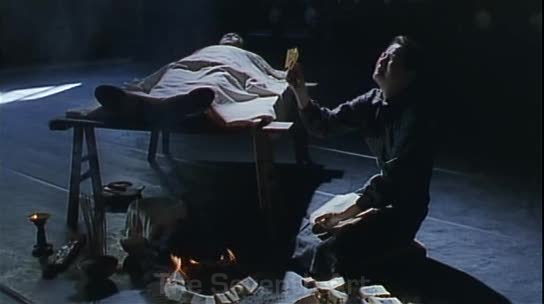





 The Seventh Art