Los Angeles Plays Itself (2003)
Thom Andersen
English
“Los Angeles is where the relation between reality and representation gets muddled.”
 Thom Andersen’s exceedingly engaging Los Angeles Plays Itself (2003) apparently began as a project to illustrate the representation of the city of Los Angeles in Hollywood cinema to the director’s students. But, luckily for us, it went on to become this 168 minutes of unadulterated, deceptively simple, video store joy that presents us with multiple levels of cinematic and sociopolitical discourse. Accumulating an enormous amount of footage from over two hundred films (the director himself is credited for the research), ranging from rare silent films to direct-to-video duds, splicing them with a high degree of meticulousness (Editor Yoo Seung-Hyun is the first technician to be credited on screen) and providing a deliberate, hilarious and nearly atonal voiceover by Encke King (simply brilliant), Andersen, armed with an formidable knowledge of the city’s history, geography, architecture and cinema, writes a dense and trenchant video essay on filmmakers’ perception of Los Angeles, audience’s perception of cinema and Los Angeles’ perception of itself. Los Angeles Plays Itself has to be one of the most entertaining films of last decade. Not only does it serve as a throwback to the very many noir, crime and action films of yesteryear, but it almost always points out the things that we have missed or overlooked in those films.
Los Angeles Plays Itself is divided into three parts that examine, in order, the way the city has been used as a backdrop for the plot, as a character in it and as the subject itself. Before that, Andersen establishes the reasons why he feels this study is justified and his criticism valid. Following this, he also gives a brief synopsis of present day Los Angeles, where permanent structures have become exclusive movie sets and makeshift film sets have become public offices. In the first part, Andersen presents numerous films that have tried to pass off Los Angeles as other American cities (two films even use it as China and Switzerland!), thanks to its seemingly malleable geography. Andersen discusses how action scenes eschew realistic continuity and cut from one place to another separated by tens of miles in actuality. Gone in 60 Seconds (1974) is probably the only film that emerges unscathed here (Andersen sees the film as a materialization of Dziga Vertov’s vision of a cinema that is purely made of mechanical objects). This section certainly throws one off balance with its complaints and it is here that the film comes close, if at all it does, to whining (Andersen openly declares that he dislikes geographic license, that the abbreviation, LA, is derisive and that artistic license is only a euphemism for laziness!).
However, there is another thread in this first part of the film that examines the use of the Los Angeles’ architecture in films. Andersen exemplifies that the modernist office and residential buildings, which were built as platforms for a healthier way of living, have almost always been used as the lairs of the villains and of madmen. The sleek, predominantly glassy, well-ventilated structures have somehow been associated with insidiousness and inhumanity. Perhaps this is a modern way of representing Transylvanian castles and haunted mansions. Andersen calls this “Hollywood’s war with modernist architecture”. In this section, he makes it almost seem like there’s an identity crisis experienced by his city. The second part of the Los Angeles Plays Itself explores films that have used Los Angeles as a character, as an integral part of the proceedings. It is here that he makes a distinction between “low-tourist” filmmakers (Hitchcock, for instance) and “high-tourist” ones (the avant-garde directors). Quite a few films are shown in a positive light here, most notable of them being Wilder’s Double Indemnity (1944), Aldrich’s Kiss Me Deadly (1955) and MacKenzie’s The Exiles (1961). The third and final part deals with films that have used Los Angeles as the subject itself. These are films that have confronted the darker passages of the city’s history head on. Andersen’s film is at its most “serious” here and talks about how films starting from Chinatown (1974) have increasingly been searching for scandalous events and eccentric public figures to tweak the rosy image of Los Angeles and create new ones that are equally flawed.
 Perhaps the best thing about Andersen’s film is that it hints at new ways of watching and reading cinema. By ‘new ways’, I do not mean a radical realignment of our visual sense as Brakhage called for, but a more benign change in the way we receive and assimilate the cinematic image. In a typically Bazinian way, he says: “Movies bury their traces, choosing for us what to watch and moving on to something else. They do the work of our voluntary attention. So we must suppress that faculty as we watch. Our involuntary attention must come to the fore”. This may sound pretty intuitive, but it only goes on to show how submissive we have become to the totalitarianism of the pop-film image. Los Angeles Plays Itself strikingly and consistently segregates various planes of the film image for analysis and indirectly reveals how complacent we have become when it comes to observing an image. Almost always in Andersen’s film, our focus is made to shift from the plane of principal action – usually the foreground – towards the setting and backdrop of the action – the architecture for indoor scenes and geography for the ones shot outdoor. Moreover, Andersen presents us shot footage of the actual buildings and locations before unraveling their presence in older films. As a result, one feels a strange intimacy with these structures that enables one to identify as much with the film space as with the characters. The effect is noteworthy. By separating the foreground and the background of the shot and familiarizing us with the latter beforehand, Andersen’s film makes us notice the artifice underlying the shot’s construction and the sleight of hand behind its execution.
In many ways, as Jonathan Rosenbaum mentions too, Los Angeles Plays Itself is an extended piece of film criticism written in film form. Andersen stacks one insightful observation upon another, almost each of which transcends the particular context it is defined in and evolves into a starting point for discussion about cinema at large. Take the passage where he tangentially talks about the cinema of Robert Altman: “How can I say this politely? It’s hard to make a personal film based on your own experience when you’re absurdly over-privileged. You tend not to notice the less fortunate, and that’s almost everybody. If you ridicule your circle of friends, your film will seem sour and petty. If you turn their problems into melodrama, your film will seem pathetic and self-pitying”. What was made as an offhand comment about Altman’s films makes so much sense with respect to the works of many other filmmakers too. Lines such as these might give an impression that Andersen hates cinema. But a second look reveals that he makes these statements only in a descriptive sense and not a judgmental one (His qualms with Chinatown is more with its legend and its denouement than the quality of film itself). His stance is liberal (even socialist, one might say) and he seems to be championing films that reflect the realities of working-class lives in Los Angeles over ones that speculate about alternate histories and criminal underbellies.
The three parts of the film are not only arranged in an increasing order of importance given to the city by Hollywood cinema, but also in the decreasing order of attention the latter has given to the reality that makes up Los Angeles. By the time Andersen ends his film with a discussion of the UCLA gang of African-American filmmakers, the director’s resentment about the representation of his city in popular films becomes alarmingly clear. Not only have these films stripped the city of its identity to make way for a ‘vanilla city’, but they’ve also managed to overwrite its culture and history with a sensationalist view of the city that is far from the truth. Furthermore, as indicated by Andersen’s choice of closing his film with excerpts from the works of these African-American directors, this tendency has also sidelined personal, political, independent and honest cinema that genuinely cares for its subjects and the city. Hipster cynicism and conspiracy theories have replaced optimistic political discussions and concrete reality. It is only during these glorious final minutes of Los Angeles Plays Itself that it becomes evident that it is, first and foremost, an elegy for a lost world. Like Tsai’s Goodbye, Dragon Inn that released the same year, Andersen’s film is an elegy for the real people, the real buildings, the real locales and the real cinema of his city that have been virtually rendered nonextant by the tyranny of dominant forms of expression.


 “I don’t know whether it’s a comedy or a tragedy, but in any case it’s a masterpiece”, says one of the characters, self-referentially, in Godard’s
  A sister film, in some ways, to Jonathan Demme’s brilliant Rachel Getting Married (2008), Sebastián Silva’s The Maid is nothing short of a spiritual revelation at the movies. What could have been an one-note leftist tirade about Chile’s class system is instead elevated into the realm of human where one facial twitch, one stretch of silence and one impulsive word can speak much more than any expository monologue or contrived subplot. There is no simplification of human behaviour here, no easily classifiable moral categories and no overarching statement to which truth is sacrificed. Nor does Silva suspend his study of the classes to observe his characters. He merely lets the obvious stay in the background. And just when you think that Silva’s vision of the world is getting all too romantic, he delivers a fatal blow to shatter your smugness – a single, deceptively simple shot during the final birthday party that masterfully sums up everything from the irreconcilable, repressed tension that exists between classes in capitalistic societies to our adaptability as humans to live peacefully with each other despite socio-economic disparities.
 Rigorous but oh-so-tender, centenarian Manoel de Oliveira’s one-hour wonder Eccentricities of a Blonde-haired Girl is a film in one and a half acts. Oliveira translates the work of Eça de Queiroz to the screen, running the 19th century tale of romance through the current economic landscape and harnessing the resultant anachronism to paint an achingly beautiful picture about the inability to transcend class, escape reality and lose oneself in art. Despite its decidedly Brechtian and ceaselessly self reflexive nature, Oliveira’s film is rife with moments of poignancy and touches of humour. Using double, triple and quadruple framing and achieving a mise-en-abyme of art and reality, Oliveira writes a ruminative essay on the impossibility of art and reality to merge, the confusion that exists between them and the classism that exists within and with respect to art. Flooded with references to art and art forms, Eccentricities is such a dense and intricate fabric of the arts that even the past is treated in a detached manner like a piece of art, where each image looks like a painting, each sound feels like a melody and each movement cries out: “cinema!”.
 Of all the recent movies that have attempted to acknowledge dark chapters in national histories and advocated looking forward to the future instead of crying over what is lost, perhaps, none is as sober, ethical and uncompromising as Claudia Llosa’s Golden Bear winner. Llosa inherits her tale from the terrorist atrocities that plagued Peru two decades ago (Inheritance being the prime motif of the film) but, subsequently, discards every possible opportunity for sensationalism or propaganda. Tightly framing the lead character, Fausta (Magaly Solier), within and against claustrophobic structures, doorways, photographs, windows, paintings, mirrors and walls, gradually varying the depth of focus along the movie to detach the protagonist and integrate her with her surroundings and using extremely long shots to dwarf her in vast opens spaces of the tranquil town, Llosa concocts a film of utmost narrative austerity and aesthetic rigor. Punctuating and contrasting these downbeat images of Fausta’s life are slice-of-life sequences from the town depicting various wedding rituals and parties which tenderly highlight Peruvian people’s open-hearted embracing of capitalism and their resolve to come out of the trauma of the past and move on with life.
 If Inglourious Basterds was a coup from within the system, Jim Jarmusch’s The Limits of Control is an out-and-out war against the machine. The essential piece of cinema of resistance, The Limits of Control eschews simple genre classification and flips every ingredient of Hollywood’s conveyor belt products to surprise, appall, irritate and provoke us with each one of its moves. The complete absence of Jarmuschian brand of deadpan humour announces the film’s seriousness of intent. It is as if Jarmusch wants to establish once and for all that Hollywood does not equal American cinema and that the cinema that the former school marginalizes is truly alive and kicking. The Limits of Control is a film that can easily get on your nerves but, eventually, it succeeds in getting under your skin and evolving gradually to reveal how meticulously crafted it is. Using Cinematographer Christopher Doyle, production designer Eugenio Caballero and editor Jay Rabinowitz masterfully, Jarmusch creates a movie so meditative and relaxing that one feels exactly how William Blake (Johnny Depp) would have at the end of Dead Man (1995).
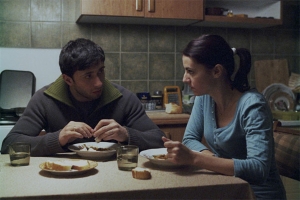 Porumboiu’s follow-up to one of the most hilarious comedies of the decade, 12:08 East of Bucharest (2006), is a companion of sorts to Jarmusch’s film not only in the sense that both of them negate the function of the genre they are supposed to belong to, by completely de-dramatizing their narratives, but also because Porumboiu’s film, too, is a conflict between two types of cinema – the cinema of analytical contemplation represented by the detective-protagonist of the film (Dragos Bucur) and the cinema of thoughtless action represented by his ready-for-ambush boss (Vlad Ivanov). However, more concretely, Police, Adjective is an examination of how our own political and social systems, partly due to the rigidity of our written languages, end up dominating us and how individual conscience and social anomalies are effaced clinically in order to have the bureaucratic clockwork running smoothly. Like Bucharest, Porumboiu, often self-reflexively, sketches the portrait of a bland and pacific city that tries to ape the far west and project itself as more dynamic than it actually is. The film’s disparate themes crystallize deliciously in the final, side-splitting, Tarantino-esque set piece where we witness the police chief urging his subordinates to act by the book, literally.
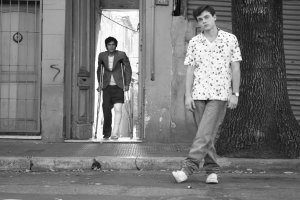 Tetro is a beautiful film. Not just in the way it looks, but in the sheer romance it has for a lost world. The only worthy B&W film of this year out of the four I saw (the other three being Haneke’s
 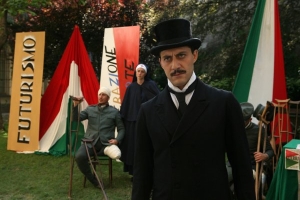 Writer-director Marco Bellocchio’s ballad, based on a nebulous part of fascist leader Benito Mussolini’s life, can teach those so-called historical dramas a thing or two about locating personal ideologies within collective history without being exploitative or pandering to pop demands. Bellocchio’s film is far from a detailed recreation of Mussolini’s political life. It is, in fact, a commentary upon such “detailed recreations” of history based on documents written by winners. Bellocchio’s formidable script and mise en scène keep probing and remarking upon the tendency of fascist systems to suppress histories – personal and national – and exploit popular media, especially the relatively young and emotionally powerful cinema, to blind people of truth and forge a faux reality – a theme underscored in Tarantino’s film too. What more? Bellocchio constructs the film exactly like one of those Soviet agitprop films – not by easy spoofing, but by retaining their spirit and rhythm – using rapid montage, expressionistic performances and operatic sounds. Be it common folk fighting in a cinema hall over a news reel or a bereaved mother breaking down during the screening of The Kid (1921), cinema registers its omnipresence and omnipotence in Bellocchio’s film.
 The perfect antidote to the summer blockbuster, Warwick Thornton’s Samson and Delilah is an extremely assured and undeniably moving piece of cinema that arrives, appositely, as the golden jubilee reboot to Herzog’s thematically kindred movie, Where the Green Ants Dream (1984). Cleverly relegating specific issues such as the Australian government’s intervention and relocation policies for the Aborigines to the background, Thornton frees his films of broad, propagandist political agendas, without ever making the film lack social exploration. With an extraordinary sound design, Thornton keeps the word count in the film to an absolute minimum, letting the stretches of silence shared by his lead characters speak for themselves. The film’s observations about banality of racism in contemporary Australia, exploitation of tribal art and its consequences, the effect of colonialism, especially due to Christian missionaries, on the Aboriginal culture and the ever growing chasm between the tribal and white life styles themselves are fittingly subordinated to the beautiful, unspoken love story that, essentially, forms the heart of the film.
 Let me dare to say this: Jacques Audiard’s A Prophet is either the most profound or the most pretentious movie of the year. For now, I choose the former. Audiard’s decidedly unflinching feature breaks free from the limitations of a generic prison drama and takes on multiple dimensions as the apolitical and irreligious protagonist of the film, Malik (played by Tahar Rahim), finds himself irreversibly entangled in ethnic gang wars within and outside the prison. A trenchant examination of religion as both a tool of oppression and a vehicle for political escalation, A Prophet is an audacious exploration of Muslim identity in the western world post-9/11. Although the plot developments may leave the viewer dizzy, it is easy to acknowledge how Audiard confronts the issues instead of working his way around it or making cheeky and superficial political statements. Strikingly juxtaposing and counterpointing Sufism and Darwinism in Malik’s search for identity, Audiard creates an immensely confident and nonjudgmental film that trusts its audience to work with the rich ambiguity it offers.



 The Seventh Art