[Part of Curator’s Corner, a section dedicated to showcasing work of emerging and marginal filmmakers. See here for details.]
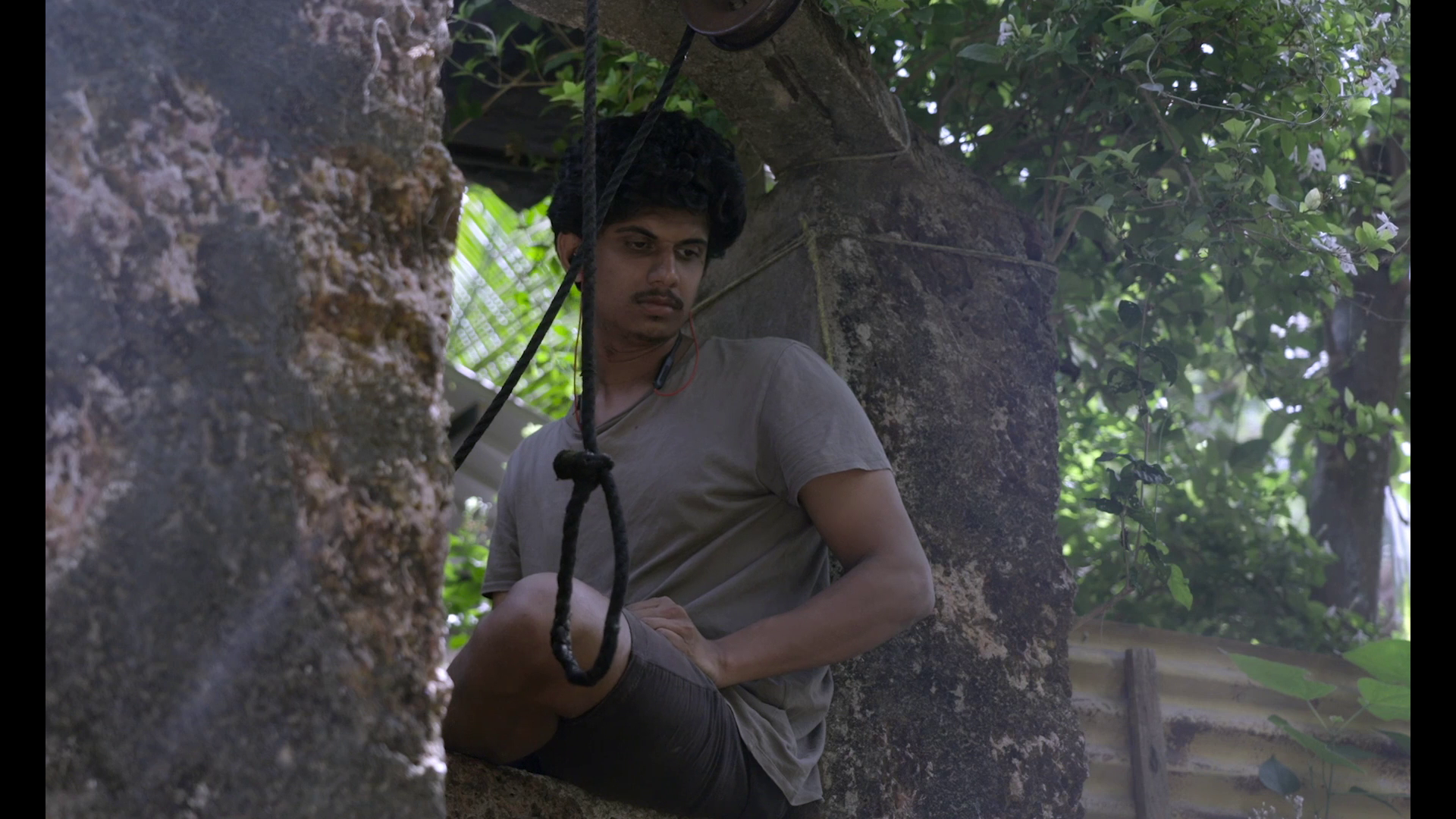
A few days ago, I watched the Malayalam classic Irakal (1985). K.G. George’s dark and disturbing picture of youthful anomie finding outlet in sadistic violence. Irakal locates the root of its protagonist Baby’s malaise in his environment, namely his feudal, power-hungry household of landgrabbers, liquor barons and assorted self-seekers. The family in George’s film is a hotbed of pragmatic evil, Baby being simply its Platonic ideal. A new independent Kannada film by Naresh Hegde Dodmari, Tingl Belku (The Light for the Rest of the Walk), crafts a counter-portrait of sorts, offering a gentle domestic drama where the family is a source of support and salvation for a sensitive young man losing his bearings in life.
A poet who grew up in Honnavara and Yellapura in northwestern Karnataka (not far from the home of his near-namesake Natesh Hegde), Naresh Hegde wasn’t particularly drawn to films in his childhood. It was during his days as an engineering student in Bangalore – and later as an employee in Pune, where he had the chance to interact with film school students – that he became acquainted with international cinema through pirated DVDs and public screenings. Like a number of his self-taught peers, Hegde began his journey with short films made for YouTube before scraping together private equity to produce his first feature.
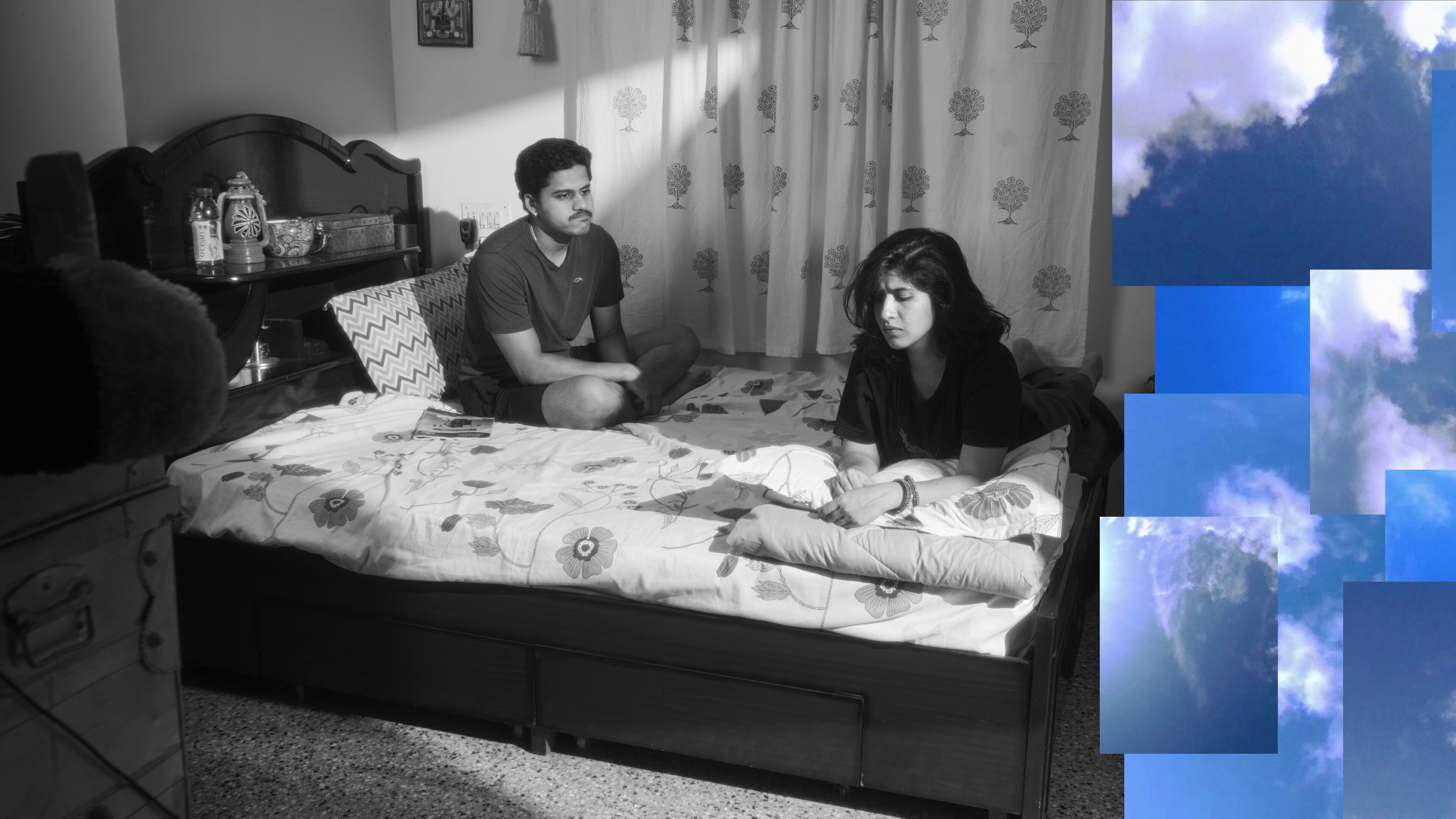
At the centre of Tingl Belku is Sandeep, an engineering student who returns home to Kumta, Uttara Kannada, for the summer vacation. Once an active poet, Sandeep has become, per his editor friend, sporadic and abstruse in his writing. He often takes off on his bike, spending his days alone away from home. Concerned with his aloofness, Sandeep’s parents seek the help of Harish, a local lawyer whom they are in talks with for marriage with their daughter. We gradually learn that Sandeep is under the influence of drugs and that he has been keeping away from college due to a police raid in the campus. As Harish tries to get to the bottom of things, Sandeep becomes increasingly incommunicative and introverted.
Tingl Belku stands out from the horde of cautionary drug dramas in the way it steers clear of the sensationalism inherent in the subject. There are no dramatizations here of withdrawal symptoms, no writhing in underlit corridors, no shocking glimpses of syringes or tie-off belts. Not once do we actually see Sandeep take drugs; we don’t even get to know what kind of drug it is. Part of this elision has to do with Hegde’s abstract treatment of the topic, which doesn’t really delve into the nitty-gritty of substance abuse or its sociological reality; the filmmaker is rather interested in the effects of addiction on the fabric of a rural middle-class family. But it is also the result of a consciously dialled-down approach to drama in which conflicts are defused as soon as they arise and characters are treated with a great deal of dignity.
Hegde depicts Sandeep’s affliction without condescension or pity. A dreamy-eyed poet of a philosophical bent, Sandeep views his drug habit as an exploration into expanded consciousness, a way to access realms of artistic inspiration inaccessible in waking life. Played without frills by Sharath Raysad, Sandeep shares little of the screen conventions of a discontented young man. Although his haze keeps him away from his family for long periods, he is well aware of the implications of his addiction on his near and dear. Not one to vocally rebel, Sandeep lays low and takes particular care not to upset the family cart, dutifully helping his father renovate the house and making sure that his situation doesn’t jeopardize his sister’s impending wedding.
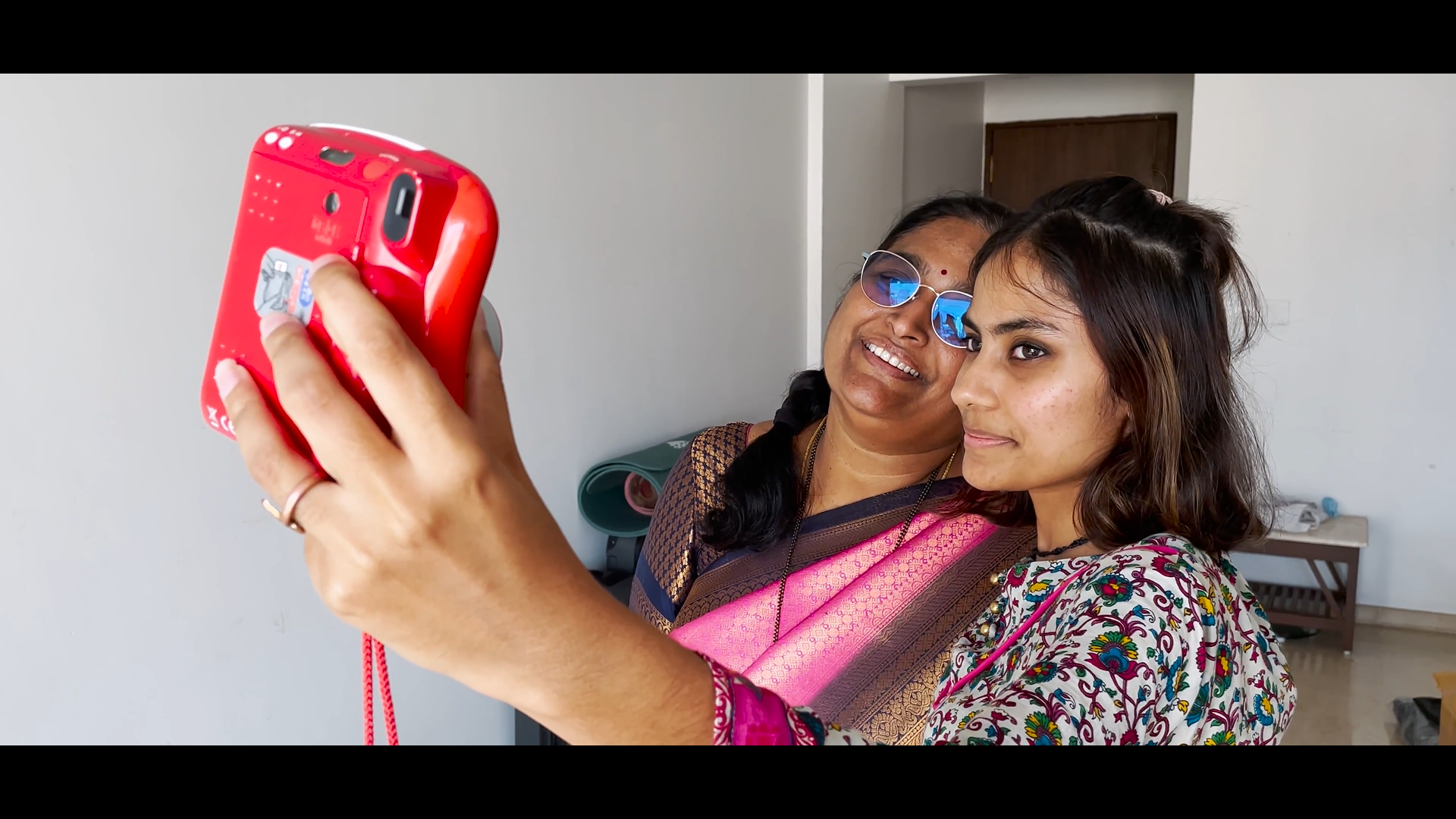
These moral nuances extend to the secondary characters as well. Harish (Naresh Bhat), the prospective brother-in-law, fashions himself as a community leader, a problem solver who likes to make his presence felt everywhere he goes. But he is also a genuinely nice guy who goes out of his way to help Sandeep and his family. Above all, there is Sandeep’s soft-spoken father, Gopal (Venkatraman Gudaballi), the antithesis to the authoritarian patriarchs that dominate Indian cinema. Gopal, who defers to Harish in handling the situation, understands the limits to which he can probe his dodgy ward, the boundaries that he must respect with a son who now towers above his shoulders. More than anything, it is in these closely observed textures of everyday living that the film comes alive.
A beautiful sense of proportion and discretion marks all the relationships in the film: the palpable feeling that these are delicate bonds that it would be unwise to stress beyond a point. The film’s form reflects this reserve. In its leisurely pacing, soft naturalism and refusal of cable-TV hysteria, Tingl Belku may remind one of the telefilms that used to be broadcast on Doordarshan in the 1990s. Scenes are built elegantly, with no more than two (largely static) camera setups and attention paid to the flows of everyday interaction. Even when the style is uneven, caught between description of facts and an elaboration of the Sandeep’s interiority, there is a uniformity in tone that holds the film together.
Hegde imbues Tingl Belku with a heightened sense of place and time, with its scenes unfolding in strikingly varying landscapes that showcase the visual richness of the Uttara Kannada region: vistas of plains, woods, low hills, beaches, highways and fields all find prominent representation. Even if one doesn’t remember plot details, it would be hard to forget the stairways leading down to Sandeep’s house, or the one inside the living room connecting to the young man’s attic. This visual approach lends the film a subtly expressionistic quality where the settings reflect Sandeep’s fluctuating moods: the reclusive forest, the expansive sea, the melancholic horizon and so on.
An admirable debut feature of overarching benevolence, Tingl Belku had its world premiere in competition at the Rajasthan International Film Festival and is currently awaiting its international premiere.
Bio
Writer and director Nareshkumar Hegde (33, BE, MBA) was brought up in the Western Ghats and coastal region of Karnataka. He developed an interest in poetry and creative writing during his college days, which later transitioned to visual storytelling. Before completing his debut feature-length film Tingl Belku (The Light for the Rest of the Walk) in 2024, he made six short films which were selected and awarded in various short film festivals. Three of his short films, Mehnat, Bennigelliya Kannu and Parallel Lines, were finalists in three editions of the Bengaluru International Short Film Festival.
Contact
nareshandfilms@gmail.com | YouTube | Facebook | Instagram
Filmography
- Feet & Patience (2012), 4 min., mobile phone
- Three Boxes (2014), 12 min., digital
- Feathers (2016), 20 min., digital
- Mehnat (2017), 17 min., digital
- Samantara Geregalu (Parallel Lines) (2018), 10 min., digital
- Bennigelliya Kannu (Uncover) (2020), 23 min., digital
- Tingl Belku (The Light for the Rest of the Walk) (2024), 108 min., digital.
Showcase
Teaser for The Light for the Rest of the Walk (2024)







 The Seventh Art