Watching Artavazd Peleshian’s movies, I had this constant feeling of having seen such films elsewhere. A little deliberation reveals that the extraordinary Jean-Luc Godard compilation History of Cinema (1988-98) is, in fact, closer to the works of this Armenian auteur than anyone else’s. Furthermore, it becomes clear that almost all of Godard’s films made in the past couple of decades, especially the many short films, have a notable influence of Peleshian’s style, although they evidently bear Godard’s signature. With a total runtime of hardly three hours, Peleshian’s filmography may not be as prolific as the French director’s, but it shows such degree of consistency of style and unity of content that it almost feels as if Peleshian had decided beforehand what his résumé would read. I guess Peleshian’s films are what could be truly called film poetry. This is because they completely wallow in ambiguity that is so essential to poetry. By ambiguity, I do not mean that they elude meaning or try to deliberately confuse the viewer, but that their meanings are with the audience. That is to say that each viewer would draw out a different meaning or exhibit varied emotional responses that would solely depend on his/her accumulated experiences and thought processes. One might say that this is true of any film. But with Peleshian’s films, all of these responses hold good to some degree. As Peleshian himself says in his interview with Scott MacDonald (found in the book A Critical Cinema: Part 3): “It’s everything”.
I would probably go on talking about Godard’s later works when talking about Peleshian because the similarity here is remarkable. Much like what Godard does with the images from Ivan the Terrible: Part 2 (1958), Angels of Sin (1943) and many of his own films, Peleshian reuses and recycles a number of familiar images and sounds throughout his filmography. And likewise, each of these instances elicits a different meaning every time they occur. Peleshian seems to believe that photography is indeed truth, but alters its frame rate to underscore, enhance and provide meaning. It is as if the director is holding a photograph of stellar importance in his hand, commenting on it, animating and then stopping it, whenever required, to emphasize what he has said, going back to tell us more using the same photograph and, in essence, writing an essay using prefabricated sentences. Only that there is no text or speech as in Godard’s films. In fact, there is not a single word spoken in any of Peleshian’s films, highlighting the deliberately universal nature of his cinema. That is because people, beings to be precise, have always been at the center of Peleshian’s films. Peleshian seems to see humans as a monolithic entity whose ambitions, idiosyncrasies, struggles and emotions, although particularized by history, (to kill a cliché) transcend geographical and ethnological barriers.
But then, this history which Peleshian takes as reference for his examination always seems to be something that is close to Peleshian’s heart, which could perhaps be called truly “Armenian”. A mere look at the country’s history reveals large scale tragedies that have mercilessly plagued it throughout its life. A constant target of imperialism, oppression and, later, nature’s wrath, Armenia has certainly put up with some nasty things. With this knowledge, it is but natural for one to view Peleshian’s films as being also about the resilience of the nation’s residents. This reading seems quite valid at first since Peleshian’s films always seem to be about “movement“ – movement of time, movement of people and movement of life. In almost all of his films, we see various images that denote movement, change and constant transmutation – man made modes of transport, exodus of humans and animals, cycling of seasons, revolutions and of course, birth and death. And Armenia itself has been characterized by such movements and instability as its history tells us – the country’s constant transfer from the hands of one ruler to the other, people made refugees in their own country, forced evacuations and exiles and deformation by natural calamities. It is just too tempting to place these facts alongside and tie Peleshian’s films to a specific nation before generalizing them. But the director seems hesitant to attach any geographical importance to his films:
“The Armenians are simply an opportunity that allows me to talk about the whole world, about human characteristics, human nature. One may with also to see Armenia and the Armenian in that film. But I have never allowed myself to do it then, and would not now.”
Peleshian calls his technique “Distance Montage”, of which, I must admit, I could not make head or tail of, despite the director’s numerous attempts to clarify himself in the interview. But one thing that is clear from his films about his style is that it provides totality to them. That is, what the viewer takes away from the film is the whole and not any fragment or any individual aspect of it. Although certain images and sounds repeat themselves throughout the film, their order and composition are designed to evoke different responses depending on the context. As a matter of fact, without any impact on the individual films, all of Peleshian’s movies could be combined seamlessly into an indexed anthology that produces the same effect as its constituents, for the director’s style is too consistent to make any film seem out of place. Peleshian places the audience always at a distance, giving them an omniscient eye that concerns itself the whole of humanity instead of making them care about individual subjects and their petty objectives and aspirations. Perhaps this is why there are no “characters” in any of Peleshian’s films. It is quite impossible to distinguish between the archival footage and fabricated shots that Peleshian uses since none of these images show any trace of a motive to create a fictional world. The characters, for Peleshian, are already written and exist all around us, merely waiting to be read.
Earth Of People (1966)
Earth of People (Mardkants Yerkire, 1966) is the second student film that Peleshian made while studying at the prestigious VGIK institute and already, it shows the author’s stamp. Early on we are shown images of massive man made structures – bridges, railroads and skyscrapers. As the twisted title starts to make meaning, Peleshian starts showing us human hands, humans at work and the world being constructed by humans. We see people from every profession – doctors, engineers, workers and scientists – carrying on with their routine robotically as the soundtrack suddenly stops giving us conventional score and starts gathering the most bizarre of mechanical sounds. But soon, the optimistic tone of the film gives way to distrust and we realize that we aren’t exactly masters of this world. We see these people are, in fact, trapped within their own creations (which strangely reminds us of 2001: A Space Odyssey (1968)), which gradually takes us back to the title: Whose world is this? No wonder the film opens and closes with the image of a thinker’s statue. Peleshian’s film is symmetrical, as would be his later works, with both the soundtrack and imagery getting reflected along the centre of the film.
Beginning (1967)
Although Peleshian’s style already shows maturity in Earth of People, his official filmography begins with, well, Beginning (Skizbe, 1967). Chronicling the historical events that changed the course of the century following the monumental October Revolution of 1917, Beginning is a powerhouse trip that would definitely rank among the best political films ever made. Running for a mere 10 minute span, Beginning exemplifies Peleshian’s preoccupation with mass movement like no other film. Employing an eclectic mixture of photographs, studio shots and documentary footage, manipulating their speed, repeating them regularly and eventually attaining a musical rhythm like the Soviet pioneers’, Peleshian emphatically registers our recent history that has been marked by an extraordinary number of uprisings and bloodsheds. Peleshian’s soundtrack is remarkable here. Using a combination of highway chase music, gunshots, screams and silence, Beginning shifts gears from a documentary, to an agitprop, to an essay and to an epic in no time. But the true revelation is the ending of Beginning where, after a brief visual and aural pause, Peleshian delivers a moment of epiphany, once again reminiscent of 2001 – an extended close up of a young child staring determinedly into the camera as the soundtrack plays a majestic, Thus Spake Zarathustra like score. Forget the Star Child, what is the human child going to see in the future?
We (1969)
Sheep and mountains have almost become Armenian identities of sorts, thanks to the films of Sergei Paradjanov. We (Menq, 1969), which begins and ends with the image of a gargantuan mountain, is perhaps the most “Armenian” of all Peleshian movies. We are shown images of mountains falling apart before being cut to a large funeral procession. This is followed by visuals of common people carrying on with their everyday work, – some utterly mundane, some shockingly risky – as if proving the adage “Life must go on”. For the first time, religion, which was a major reason for the Armenian Genocide, makes its presence felt in a Peleshian film. It isn’t just personal disappointments that these people seem to putting behind them, but shattering national tragedies, despite (and perhaps because of) which their faith stands affirmed – in religion, in life. The last third of the film acts as a meeting point and the resolution for these two types of calamities as we are presented visuals of reunions of families (and of people who seem to be returning from an exile). More than anything We feels like an ode to the resilience of, in particular, the Armenian people (although Peleshian himself denies this!), who have had to put up with a lot through the centuries and, in general, the spirit of everyday heroes. If at all anything can be made of Peleshian’s attitude here, it must be his unassailable faith on the ability of humanity to survive no matter how difficult it makes it for itself.
Inhabitants (1970)
In contrast to the unusually large number of people in the Beginning and We, Inhabitants (Obitateli, 1970) is almost completely devoid of humans. Peleshian attributes this peculiar absence, quite strangely, to his audience being critical of him for We. Filled with shots of large-scale migrations and stampedes (with, surprisingly, even helicopter shots being present in the film), Inhabitants merely alludes to the presence of the human beings, in the form of a few silhouettes, who seem to be the central cause of panic. Shot in widescreen, Inhabitants, for most part, depicts wildlife, in panic. At first glance, with the anti-mankind tone of the movie, Inhabitants seems to take Peleshian back to the arguably cynical mode of Beginning. But once you begin to see that the humans in the film aren’t exactly humans but far from it, Peleshian’s faith in humanity comes to surface. Surely, the animals are just a normalized form of the people of We, of Beginning and of Earth of People. But the relevant question is whether Inhabitants is connected to the Armenian history directly or not. With the visuals showing us exoduses and captive animals and the soundtrack including gunshots and screams, it is not unfair for one to be reminded once more of the nation’s plight. Whatever the case, the film resonates with quintessentially Peleshian themes – of change, of resilience and of survival.
The Seasons (1975)
The Seasons (Vremana Goda, 1975) is perhaps the most famous of all Peleshian films and just its opening shot would show why – A man, clutching a sheep in his hand, trapped in a raging stream, trying to get to the shore along with the animal. Setting the tone of film and, to an extent, to the director’s whole filmography, The Seasons’ first shot effectively underlines the irony that forms the basis of the relationship between humans and nature. The Seasons, as the title suggests, deals with the change of seasons. In the first section Peleshian presents us images from sunny day in an idyllic pastoral life, where a family of herdsmen lead their sheep through a dark tunnel and then to light. We then see a group of young men dragging huge stacks of hay down a hill slope and then trying to stop it. This scene, once more, illustrates our can’t-live-with-can’t-without relationship with nature, but never once becoming a contrived symbol or a metaphor. It is merely a glimpse of life which reveals a fact rather than expressing it. The same would be true of the sequence that is to follow, where the herdsmen risk their own lives in order to salvage their herd that is caught in the rapids. The film then shifts to an ethno-documentary mode as we witness a marriage ceremony in which a cow forms as much an integral part as the bride and the groom. In a rather prolonged scene that follows, in what looks like an amusing sport, we are shown a few men, each holding a sheep in his hand, sliding down a snowy hill, refusing to let go of the animal – A practice that is as strange as man’s kinship with nature – living with it, living against it, living despite it, living for it and living because of it.
Our Century (1983)
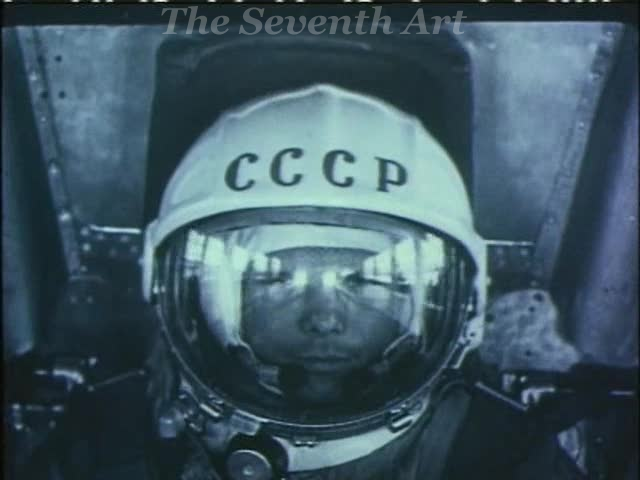
What followed remains Peleshian’s longest film to date, the 50-minute feature Our Century (Mer Dare, 1983). Our Century concerns itself with some cosmonauts (and astronauts) preparing themselves for a space flight. Peleshian constructs the film around this event, quite predictably, exploring his themes through a complex editing system coupled with an equally complex soundtrack. Initially, Peleshian crosscuts between the footage of the activities at a space station, minutes before the launch of a shuttle, and a celebratory procession where the space-heroes are cheered and applauded by the mass. Peleshian frequently presents clips that show the immense stress that the cosmonauts are put under, during the test phase and in space, It is a period of sheer loneliness, physical and mental fatigue and, yet, of excitement and ambitiousness. He then goes on to depict man’s obsession with flight and, in general, his desire to conquer the various elements of nature, where he shows a number of bizarre experiments in aviation, most of which end unsuccessfully. As ever, individual turmoil gives way to and unifies with national tragedies to the point beyond which there is no difference between a nuclear explosion, a rocket launch and the human heartbeat. Our Century arguably presents Peleshian at the top of his game, converting both the form and content of the film into a highly personal mode of expression. In no other Peleshian film has the ecstasy over human achievement mingled with the agony of existence in such an intricate fashion. The point is not the establishment of a simple irony, but of an exploration of what makes humanity go on, against all odds.
Life (1993)
There is some confusion regarding the order of release of the last two Peleshian films. The official Paradjanov site, however, suggests that it is, in fact, Life (Kyanq, 1993) that is the director’s penultimate film thus far. Peleshian uses colour film for the first time, perhaps to enhance the already optimistic tone of the film, and makes his shortest film till date. Running for a mere seven minute time span, Peleshian, for most part of the film, presents us extreme close-ups of a woman delivering a baby. Probably the most moving Peleshian film, Life is also the most overt manifestation of the ever-present Peleshian-ian conversation between human pain and ecstasy in his films. The soundtrack is comparatively simpler here, with only two audible layers – an evocative opera piece and an amplified track of the human heartbeat. Naturally reminiscent of that staggering Stan Brakhage work, Window Water Baby Moving (1962), Life is an equally personal (although far easier to watch), emotionally exhausting and visually stunning piece of film that has the power to dispel any trace of pessimism that anyone may have about humanity. The film ends on a freeze frame showing a mother and her young child looking towards the camera and, possibly, a bright future.
End (1994)
Although Life would have made an astounding end to a solid filmography, it is End (Verj, 1994) that provides a more rounded closure to it. End is a series of shots inside a speeding train, the passengers of which are of diverse age groups, ethnicities and emotional statuses. The train itself feels like a microcosm of the whole world, each of whose inhabitants is moving towards an individual destination but the totality of them going in the same direction. End is perhaps the kind of vision that Damiel (Bruno Ganz) saw in the train in Berlin in Wings of Desire (1987), considering the voyeuristic nature of the camerawork in this film. There are also a few outdoor shots, of mountains (again) and of the sun, that punctuate End. If Life’s ending shot seemed to seal Peleshian’s faith in humanity, the closing shot of End brings back the lifelong dialectic between cynicism and optimism that has so consistently characterized Peleshian’s work. We see the train, after a very long passage through the darkness of the tunnels, suddenly plunging into blinding light. Before it is revealed to us what lies beyond, the end credits roll. Is it a man-made apocalypse foreseen by Earth of People? Is it the Great Armenian Earthquake? Or is it the ultimate redemption for humanity that Life suggests? Looking back at Peleshian’s body of work, it is probably the latter.
Every now and then, when people start saying “Indie is dead”, there comes a filmmaker, who contradicts them and redefines the course of cinema – both mainstream and parallel. John Cassavetes had ridiculed the American mainstream cinema and its incessant thriving on extravagance with his Shadows (1959) and went on to become one of the pioneers of American underground cinema. Cut to the 1980’s when gangsters were ruling Hollywood. Enter Jim Jarmusch with the short film Stranger Than Paradise (1982) which humiliated Hollywood with its normal characters and simple situations. Independent cinema was never the same again.
One can easily note that Jarmusch makes films about people. He films their lives, how they are inevitably interconnected, how their lives get impacted due to others’ all the time and how characters interchange characteristics and opinions all through their lives. What Alejandro González Iñárritu does with the most extravagant and devastating of situations, Jarmusch does using the most banal of happenings, most of them as simple as coffee table conversations and cab rides. Like Godard and Cassavetes, Jarmusch films life’s most normal moments that usually occur in between events. What the mainstream considers implicit and skips with an ellipsis, Jarmusch considers central and interesting. Indeed, his theory that the most fascinating things arise out of the most mundane events proves bang on when one watches even one of his films. The apathetic characters, their interaction (sometimes, the lack of it) and their idiosyncrasies concoct a truly riveting picture of human life.
Jarmusch puts forth his ideas right from his first film Permanent Vacation (1980) which follows the life of Aloysious Parker, a youth without a grip on life. He has lost his father and has an institutionalized mother. Afraid of being sucked into the quagmire of everyday struggle and a textbook life, he does everything in order create an atmosphere of restlessness that mirrors his own inner emotions. This is effectively put forth in the first scene where he starts an impromptu dance in the middle of a serious conversation He interacts with various kinds of people (including a Parisian lad just like him) on his way and hears the most bizarre yet fascinating stories. Possibly the only “self-indulgent” film by Jarmusch, Permanent Vacation still resonates for its handling of a theme most popular among the youth of that time – the quest for meaning of life. Jarmusch’s style shows its roots with its long takes and minimal speech placed over pedestrian events.
Jarmusch’s characters come as stark contrast to the ones that occur in conventional scripts. The latter are first provided a major objective that they achieve at the end of the film. The characters are then expanded and given minor objectives that they complete within each scene or sequence in order to achieve the major one. Jarmusch’s characters, on the other hand, do not possess permanent or long term objectives. They set out on of-the-moment objectives and act on impulses that may or may not be justified by their milieu. They live life as if it were not under their control. This unpredictability is another ingredient that makes Jarmuschian so unique and off the beaten track.
Stranger Than Paradise was extended into a full length film of the same name in 1984 and followed the American way of living of a young man from Hungary, his American friend and his teenage cousin who has just arrived from Hungary. The three of them spend some time in Florida where they lose all their money in a dog race and gain it back in another. Any other director would have made the race and its denouement as the central event driving the lives of the three. But Jarmusch keeps the race off screen and thrives on the petty talk and arguments of the friends with long, single shot scenes. In another similar scene at a cinema hall, the camera focuses on the characters’ faces as they watch an action film, instead of the screen. Amazingly, these usually-hidden images feel more absorbing than their driving events themselves and one feels the immediate power of the mundane that Jarmusch captures effectively.
Another intriguing aspect of Jarmusch’s style is that he loves characters that exist outside the framework of the social world. He takes up people who are outcast, outlawed and totally alien to the environment they are living in. They appear usually as foreigners, convicts and disoriented individuals. These characters seem to be anomalies in the society and their high reactivity towards their amicable yet strange world churns out the most amusing moments. These marginal characters are often filmed along the edges of the frame highlighting that they are out-of-place yet always in the picture. Although Stranger Than Paradise and Permanent Vacation had put that into execution, it was Down By Law (1986) that would take it one step further.
Down By Law follows the life of three convicts who have been framed for all the wrong reasons. They plan a simple escape technique and succeed. But what is more difficult is finding civilization after they have broken out. Typical Jarmuschian characters, they don’t seem to have any aim in life. They live for the moment and leave it to time to decide their future course. Roberto Benigni has an uncanny ability to induce energy into any kind of situations and he tops himself in this film. Again, Jarmusch keeps the escape off screen and makes the characters take the podium. Down By Law is beautifully shot in black and white by Jarmusch regular Robby Müller and out of this seemingly bland monochrome arises a stream of energy that couples itself with the amusing journey of the trio and provides such a colour to the film that no colour film could have provided.
Mystery Train (1989) would take the idea to the extreme as Jarmusch follows the lives of three sets of people staying in adjacent rooms in a hotel in Memphis – A pair of Japanese teenagers who have come to see their music idols’ starting places, a naïve Italian lady who is forced to share a room with a loquacious woman after her flight is delayed, and three natives who have committed a crime out of control. These three situations are visibly so disparate if not for Jarmusch who starts his game of connecting the dots. He places a talkative character and a totally opposite one in each set and once again reminds us of the universality of emotions and dependence of lives. To top this, he places the soul of the city, Elvis Presley, in all their lives as they reflect upon their opinions on the legend.
Jarmusch would expand his integration of world culture in Night on Earth (1991) that documents the lives of five taxi drivers for a period of half an hour each spanning 5 different nations, languages, mentalities and emotions. With each episode lasting hardly twenty five minutes, Jarmusch examines how life offers different choices based on trivial interactions and how distinct yet similar each of their lives are. Once again, Jarmusch employs people out of the ordinary – foreigners, physically challenged, mentally challenged and the seemingly normal. He shatters our prejudices and questions the notions of sympathy and happiness using the tritest conversations. Almost the whole of the film is inside vehicles but the film never once feels claustrophobic or overly long.
It is not only in the characters that Jarmusch captures the spirit of the era, but also in the settings and locales where he places his quirky characters. Almost all of his films are shot in shot in warm little towns in the USA and the quiet neighbourhood is invariably captured by a tracking shot, perhaps his favorite, which reveals the shops, houses, people and atmosphere of the area instantly. Additionally, Jarmusch uses the mellowest of sounds in his soundtrack prominently featuring R&B, jazz and rap that typifies the locales and age in which the film is made. Needless to say, these sounds blend with the deliberately paced imagery to produce the apt atmosphere for the characters to develop.
The tracking shot features strikingly in Jarmusch’s next and most popular film Dead Man (1995) that employs all of Jarmusch’s themes but transcends into a whole new dimension and takes metaphysical meanings. Johnny Depp plays William Blake who has come into a weird little town called Machine and soon gets outlawed for murder. He meets Nobody (Gary Farmer), another pariah who seems to believe that Depp is indeed the reincarnated version of the late English poet and gets him out of the limbo that he is stuck in, the one between the hell called Machine where bigoted “philistines“ chase foreigners away and the heaven called death. Although set in a remote time and age, Dead Man’s characters still have all the characteristics as those of other Jarmusch’s. Both Blake and Nobody are outcast characters that meet up to produce engrossing results. They do not know what each other is saying but still entertain each other.
Similar themes and style is carried onto his next film Ghost Dog: The Way of the Samurai (1999) that follows the life of a modern samurai/hit man Ghost Dog played by Forest Whitaker. He reads ancient Japanese text and lives by the samurai code of honour. He speaks sparsely and his only friends seem to be the little girl with whom he discusses books and the Haitian ice-cream vendor Raymond who can only speak French. Ghost Dog may first seem like an atypical Jarmusch film for it is more narrative-driven than any of his previous films. But Ghost Dog himself is very much like his predecessors created by Jarmusch. He too is a man without a worry for the future who lives for the moment, for the book says so. Like Nobody and Blake of Dead Man, Ghost Dog and Raymond do not understand each other a bit, but still are the best of friends and lick their ice creams over one way conversations.
Interestingly, his most trashed film Coffee and Cigarettes (2003) forms the central point of exhibition of most of Jarmusch’s themes. Made from discrete pieces of shorts that Jarmusch had made as early as 1986, Coffee and Cigarettes comes as a collection of vignettes each involving not more than three people over a cup of coffee and a pack of cigarettes. The black coffee is accompanied with the white cigarettes placed on the alternating black and white pattern on the tablecloths. These adversarial colours are woven together with the gray of the cinematography. Similar to the colours, these seemingly contrasting and independent people’s lives seem connected and influenced forever by the petty conversations over the coffee table that they indulge in.
Consider the sweeping first segment of the film called “Strange to meet you” where Roberto Benigni meets Steven Wright. Wright tells Benigni that he has to rush as he has an appointment with a dentist. But he does not want to go. Benigni tells him that he has got a toothache and he can go instead. So Wright gives him the address and Benigni hurries off informing Wright that he has an appointment with a dentist and has to rush. And that’s it – two lives have interchanged just like that! Not only within segments, but even across segments, Jarmusch ties his theory of interconnected lives and questions the episodic nature of the film.
Jarmusch arguably reaches the peak of his creative prowess in Broken Flowers (2005). Bill Murray (magnificently) plays Don Johnston (with a‘t’!), a quintessential Jarmuschian character with total passivity to the world around. He lives life for the sake of living and his wife jilts him for the same. One great day, he receives a letter from supposedly one of his old flames about his son that he never knew about. He does not care, but upon a nudge from his nosey spy/neighbour, he goes on a trip to find out who had sent the mail, but only as a perfunctory activity. Nothing much happens but at the end of the film he feels an urge to find out the identity of his true son. Jarmusch does the unthinkable here by pushing the inert Jarmuschian character into the clockwork of the daily world and providing him a direction in life. The camera fades to black as the hitherto impassive Johnston shows traces of emotional fatigue.
Some may consider it a running gag that Jarmusch loves, but most of his films have some kind of strange entity running through them like a mysterious train. Dead Man had the tobacco gag, Mystery Train had Elvis Presley and the number 22, Broken Flowers had the Don Johnston confusion and Ghost Dog: The Way of the Samurai had the cartoons. In Coffee and Cigarettes many character across various segments utter the same line to our amusement. “Nikola Tesla perceived the earth to be a conductor of acoustical resonance” they say and that is exactly what Jarmusch emphasizes. Not only do the characters seem connected by the strange statement, but the earth itself seems to conduct their thoughts and acts, stressing on the continuous interaction of lives and characters, independent of geography.
Fascinatingly, this kind of integrating thread that Jarmusch weaves runs across multiple films and even more bafflingly, in his life itself. For instance, the heavily accented Benigni in Down by Law tells his cell mates that he had killed a man with a number 8 snooker ball and we see the equally crazy Benigni with the same accent in Night on Earth where he is using a number 8 snooker ball as the head of the gear of his vehicle! Broken Flowers has Bill Murray asking for only coffee whereas the same Murray had played the coffee addict in Coffee and Cigarettes. The Elvis Presley mystery carries over form Mystery Train into Coffee and Cigarettes. And the Nobody character from Dead Man appears in Ghost Dog: The Way of the Samurai too.
Ghost Dog: The Way of the Samurai and Jean-Pierre Melville’s Le Samourai (1967) bear one such remarkable relationship between them. Both films deal with men, assassins to be precise, who live the life of samurais, but in cities. They are loners and adhere to the moral code defined by the book of samurai. When Melville approached Alain Delon for the lead role, he found out that Delon was immensely into Japanese culture and had his bedroom decorated with antiques related to Samurai Culture. Similarly, when Jarmusch approached Forest Whitaker for the role, he discovered that Whitaker was very much interested in the Eastern culture and martial arts! Now that’s what I call interconnected lives!
Independent cinema has always been the unsung power behind the ever changing face of cinema. Every time the industry feels stale with the flood of “formula” films, some gifted soul pulls off something extraordinary that keeps the river flowing. Although these films polarize the film goers into love-hate relationships on their arrival, looking back at them years later reveals their vitality and contribution to the present state of affairs. However, ones who fall into either the love or hate category seem to perpetually remain in their domain and seldom find themselves feel otherwise.
The year was 1959. And an utterly low key film without any particular banner associated with had released. It was director by a relatively new actor in the industry. 50 years later, the film continues to amaze and charm audiences with the same power as it did at that time. The actor was John Cassavetes and the film, Shadows. Months later, came Jean Luc Godard’s similar structured film Breathless (1960). Celebrated as the renaissance of cinema, Godard’s piece was an instant entrant into film school lessons.
Like the independent invention of calculus by Newton and Leibnitz, both Godard and Cassavetes had simultaneously come up with something peculiar, something hitherto unseen, something so fluid in its execution and hence something great. Both Godard’s and Cassavetes pieces have become chapters in film history. And when one watches Shadows, one is reminded of its concomitant film . However, the similarity ends here and the directors went in different directions. Godard continued to amaze the world with his flashy cuts and out-of-the-blue petty events whereas Cassavetes went on with his improvisational style and serious notes, though their attention towards the relatively banal moments of life persisted. However, Godard was relatively more successful with the critics with his films than Cassavetes who was panned regularly and labeled “self-indulgent”.
Here is a sampling of critic-historian Leonard Maltin’s reviews of Cassavetes films:
“Cassavetes aficionados will probably like it; for others only marginally bearable.” (Love Streams)
“Strange, self-indulgent (even for Cassavetes) home movie” (Killing of a Chinese Bookie)
“Typically overlong, over-indulgent Cassavetes film” (A Woman under The Influence)
“…plagued by Cassavetes’ habitual self-indulgence.” (Husbands)
“Fascinating if you appreciate Cassavetes’ style, interminable if you don’t.” (Opening Night)
That brings us to the question: What is self- indulgence? For some, it is the thin line that separates La Dolce Vita from 8½. And like the latter, Cassavetes’ audience is also split into ones who love his films and those who despise them. Films, and art in general, has always been about how the artist views the world he (or she) lives in (and sometimes about the world only he lives in), his choice of the medium he wishes to express his ideas in and how well he has been able to translate it onto the medium he works. On the other hand, appreciation of the film depends on how much the viewer accepts (not necessarily empathizes with) the world that is synthesized based on the whims of one person alone. And more comfortable the viewer feels in the director’s vision, louder is the viewer’s applause for it. Hence, the question whether a work is self-indulgent or not is strictly a matter of experience, social conditions and the era in which the film is watched. Having said that, Cassavetes films have definitely got more acceptance now than at their release and his work is getting universally recognized as one of the truest portrayal of the American society.
Shadows provides the perfect launch pad to get acquainted with Cassavetes’ style. It is often called an improvisation film and misunderstood that the whole plot was played out as the shooting went on. But, as with all of Cassavetes’ films, he wrote the plot, rehearsed it but let the characters cook up their emotions based on the events as the film was being shot. Hence the improvisation part sustains as far as the reactions are concerned not the actions. And this improvisation is what provides Cassavetes’ films their fluidity, credibility and unfortunately the tag of self-indulgence.
Take for instance, Husbands (1970), the most “self-indulgent” of all Cassavetes in my opinion. Three married friends are shattered by their pal’s death and lose faith in life and the meaning of it. They get away to a foreign country without their wives’ knowledge and engage in debauchery and lots of pointless chatter. This is where Cassavetes’ improvisational style seems to make the difference. He lets his on-the-verge-of-a-nervous-breakdown trio, played by the formidable threesome of Ben Gazzara, Peter Falk and Cassavetes himself, shape up the moments on their own. As a result their idle talk and unwarranted activities seem no more than acts of drunken revelry and are hence forgettable.
This is in stark contrast with the situation in Faces (1968), considered his masterpiece by some. The notable early scene where John Marley and Lynn Carlin talk over the dinner table about their friends and the one where Marley and Gena Rowlands meet for the first time serve as the contrasting points. The situation is all jocular and the humour that it exudes is natural all the way. Everyone must have experienced such simple, magical moments and one loses any hostility and gets involved in the merriment. Contrary to this is Husbands whose primary premise alienates you from any significant experience and makes you question the leads’ motivations and actions. As a result you feel that Cassavetes is trying to universalize something very unique to him suiting his tastes.
Even the most riveting of all Cassavetes films, A Woman Under The Influence (1974), is called self-indulgent by many. With one of the best pair of performances that can challenge the Josephson-Ullmann duo of Scenes From A Marriage (1973) or the Hoffman-Streep duo from Kramer Vs. Kramer (1979), A Woman Under The Influence carves out one of the best portraits of the working-class immigrant family in America. The film might have well been called A Man Under The Influence for it is not only Gena Rowlands who is crumbling under her syndrome, but also Peter Falk, who is trying to establish respectability among the small section of his Italian friends and struggles to juggle the love for his wife and his yearning for honour among his friends. Again, perhaps, because of the bizarreness of the plot or because of the actions of the leads (In one notable scene, Falk allows his kids to booze), the ones not acquainted (and some who are) feel the film is drenched in Cassavetes’ perspective alone.
However, it is surprising to see even Opening Night, probably his most accessible film, being condemned. Opening Night, my favorite Cassavetes, follows the life of stage actress Rowlands and her inability to accept her aging and lost opportunities. It has the quintessential ingredients of a Cassavetes film – the constrained relationship with her husband Cassavetes (who happens to be her real life husband as well), a yearning to re-enter youth and the gravity of loneliness. The stage plays within the film play as vital a part as the plot itself just like later films such as Truffaut’s The Last Metro (1980) and Almodovar’s All About My Mother (1998) (Both of which are unanimously appreciated, though deservedly so). Long and testing agreed, it is still puzzling to see why such a character oriented film fell on the “other side of the line”.
Interestingly, some of his other works that are made in the same tradition as above films are accepted with open arms. Minnie And Moskowitz (1971) opens up to the audience like a regular Cassavetes film as far as his techniques are concerned – the extreme close-ups, the harsh city noise and between-the-crowd cameras et al. However, instead of a marital pair that starts out happy and gradually disintegrates – perhaps Cassavetes’ favorite theme – Minnie and Moskowitz plays as a romantic comedy with the ruffian Seymour Cassel and Gena Rowlands in search of love. Though Cassavetes yet again allows his cast to improvise upon the situations, they are pretty much within the “predictable” context and norms of a rom-com. Hence instead of being called a self-indulgent film, it was hailed as a quirky and uniquely refreshing portrait of love.
Another example of the same situation is Gloria (1980). Remembered for the veteran performance by Rowlands, the film follows the titular character who, reluctant at first, decides to defend an orphaned boy against a huge crowd of mafia led by her ex-lover. Cassavetes wrote this for a mainstream movie without the intention of directing it and he eventually took it up for himself. Virtually, all of his idiosyncrasies are absent and it can be easily taken for any feel good film. Cassavetes’ take on the gangster genre was instantly lapped up by audience and even remade with Sharon Stone in the lead in 1999. Now, that yet again proves that the notion of self-indulgence is more an experiential opinion than an absolute one.
And there is a nice adversarial relationship with two of his films The Killing Of A Chinese Bookie (1976) and Love Streams (1984), both of which involve leads that have their way with the women but yet are thorough loners. Both of them don’t seem to believe much in life except for a thing or two. The Killing Of A Chinese Bookie unfolds as a straightforward story of a straightforward man who is willing to do things he can in order to save one thing he likes – his business. He believes that one’s happiness lies in one’s acceptance of his/her position and not what the society thinks, like the lead of Love Streams. Whatever happens, the show must go on, literally. The Killing Of A Chinese Bookie is grilled by some critics whereas Love Streams is generally considered one of his best films even though it is more mysterious and alien than the former. Perhaps, the somber country atmosphere, the lovely Gena Rowlands and the fact that it became virtually his last film disarmed even the most skeptical, with the film’s final image lingering in the minds of everyone who knew this man and his works.
After seven months, 700 tags and several thousand keystrokes, The Seventh Art reaches its 100th post (or as many Indian bloggers would like to call it, my 100th ranting/rambling/musing). First off, my thanks to the handful of readers who have been increasing my hit counter over the months. It couldn’t have been possible without you (Well, it could have been, but thanks anyways). So being the 100th post, I would like to take the opportunity to scribble about an event that celebrated the number 100 in some other way.
It is now a widely accepted fact that the Lumiére brothers are the fathers of the seventh art, though a few films had already been made as early as 1888 (Roundhay Garden Scene, Dickson’s experiment, Carmentica et al). Their series of films starting in 1895 notably Arrival of a Train at La Ciotat and Employees Leaving the Lumière Factory have become pieces of historical interest. It is said that the audience fled the theatre thinking that a real train is heading their way!
Take a look at the piece:
Cut to 1995. To commemorate the event of 100 years of cinema, a project called Lumiére et Compagnie (Lumiére & Company) was undertaken. Its intention was to gather the most important contemporary directors at one place and give them a task – To make a film using the same camera that was used by the Lumiére brothers!. Not just that, there were three more rules:
1. The movie should not be more than 52 seconds.
2. The directors should not used synchronized sound
3. Only 3 takes allowed!
The film as such follows the directors making their films with the bizarre device interspersed with miniature interviews upon various questions including their views on mortality of cinema and their own motives for taking up the medium in order to express themselves. Some interesting opinions come out during these sections.
The list of 41 directors by itself is mind boggling with the likes of Abbas Kiarostami, David Lynch, Theo Angelopoulos, Michael Haneke, Zhang Yimou, Wim Wenders and many more (See Tags for the list!). The result- 41 minute films with totally different perspectives. Abbas Kiarostami’s “Dinner for One” is typically his style as he makes an omelet. David Lynch’s bizarre piece, as usual, set in a quiet little suburban town that has more mystery than meets the eye is an instant hit. Zhang Yimou’s “cultural piece” near the China Wall, Gabriel Axel’s tracking sot of the various arts and Wim Wenders’ extension of Wings of Desire are all immensely amusing to watch.
Here is David Lynch’s piece for you:
And Spike Lee’s cute one:
The film by itself is not very extraordinary. But it is all about the event and the massive operation of bringing all the masters under one place and putting them under such constraints that no one else would dare to in any other year. A celebration of Cinema and one for the cinephiles.
My discovery of Tarkovsky’s first film was like a miracle. Suddenly, I found myself standing at the door of a room the keys of which had, until then, never been given to me. It was a room I had always wanted to enter and where he was moving freely and fully at ease. I felt encouraged and stimulated: someone was expressing what I had always wanted to say without knowing how. Tarkovsky is for me the greatest, the one who invented a new language, true to the nature of film, as it captures life as a reflection, life as a dream.”
Ingmar Bergman (1918 – 2007)
Such words coming from a person who has been unanimously hailed as the greatest intellectual of our times is a phenomenon by itself. Andrei Tarkovsky’s whole new percept of cinema helped discovering newer boundaries to the medium and aided the formation of some of the greatest directors of the future. Undoubtedly, Tarkovsky is one the immovable pillars in the palace of the seventh art.
Tarkovsky’s features are often condemned to be inaccessible and too cerebral. In fact, it is Tarkovsky’s films that expect the users to eschew interpretation and “live the film”. These are films that require viewing with the heart and not the mind. Tarkovsky was of the opinion that the audience must be shown as little as possible with the viewers filling in the gaps with their own memories and past experiences. Hence, his films become more of an experiential journey than intellectual. As a result, viewers get a unique feeling of the films depending on their own past, present and emotional functions, differing even on subsequent viewings. This, in fact, is the key to all of his works. And it is for this radically different perception of the medium that the director is celebrated worldwide, in spite of his extremely small oeuvre.
Followers of Bergman and other European masters try to decipher the films and assign a meaning to every gesture in them. It should be noted that interpreting Tarkovsky is like translating Dostoyevsky. One false move can take you nowhere. Tarkovsky believed that images were superior to symbols in cinema. By construing a meaning to a symbol, the viewer no longer associates to the object. Images, on the other hand, arouse a visceral relation and hence are ingrained in the viewer’s subconsciousness. Though his films still carry multiple meanings with these images, there are no metaphors for metaphor’s sake. As a result, the images still linger the spectator’s minds and one does not tend to look at them differently.
Right from The Steamroller and the Violin, down to his final film The Sacrifice, all of his major works have autobiographical elements in them. This perhaps is a direct consequence of his opinion of cinema. In his advice to young film makers in Voyage in Time, Tarkovsky urges the latter not to view life and work differently. He asks them to bridge the gap between both and therefore justify their positions as artists. Thus, knowledge about Tarkovsky’s own life helps when watching his films. Though not as troubled as Parajanov or Kieslowski, Tarkovsky’s ventures were consistently thwarted by the Soviet government and recognitions were duly averted by officials even as senior as director Sergei Bondarchuk. This, visibly, impacted Tarkovsky deeply and led to his exile to the west. This, along with his lovely childhood at the countryside, manifests itself in various forms throughout his canon of work.
The protagonists in his films are caught between two contradicting and conflicting worlds – both inner and outer – and straddle them in search of consolation. Yearning for the past and a fear of the future, Rationality based on science and search for faith, bucolic pleasantness of the countryside and defunct lifestyle of the post-modern world, joy and innocence of childhood and distress and banality of adulthood, geographical distance between motherland and present location, disparity between art and life, dreams and reality & mind and heart in general form the basis of the struggles. Needless to say, these were the exact issues in the life of the director himself who was prompted to put them on screen.
If one has watched even one or two of Tarkovsky’s features, he/she would not fail to observe Tarkovsky’s incessant thriving on still objects for imagery. It feels as if he was of the opinion that these immobile objects carried more life than the animate ones. Apples, water jugs and furniture often form a vital part of his mise en scène. Also images animals, especially horses and dogs, are recurrent in his works and dogs, many times, act as links between the two worlds of the protagonists. But most importantly, Tarkovsky’s canvas is fraught with nature and its elements. Rain and still water bring up a sense of ablution and cleansing of the soul, without being symbolic. Fire, in the form of bonfires and candles, also stirs up feelings of purification and restoration of faith.
Being a very religious man himself, Tarkovsky made his films, almost all of them, populated with religious figures and elements. As Tarkovsky seemingly became aware of his cancer, he used elements of the Apocalypse consistently. Starting from Stalker, all his films delineated the central character to be immersed in fear of faithlessness and end of the world because of the same. These characters also seem to believe that an intense personal sacrifice, triggered by a petty ritual, would be required to save the whole society. Regularly, these characters would be holy fools who have been outcast and even condemned insane. Like Karin of Through a Glass Darkly (1961), Tarkovsky seems to suggest that these so called “mad people” are closer to the truth and have a less flawed vision of Him.
Sergei Eisenstein had revolutionized the medium by his montage theory and almost all of the Russian directors were quick to lap up the idea. It seemed that editing was the life of film making until Tarkovsky had changed the perception completely. He completely disregarded montage and took to extremely long shots, some even around 10 minutes. Opposed to his American equivalent Stanley Kubrick who felt that editing was the only entity that separated it from other arts, Tarkovsky employed the long shot to effectively capture the essence of the world that the audience is going to live in and succeeded in capturing “truth” (to borrow Godard) like no other director.
Finally, Tarkovsky’s reverence for artists and their significance is unparalleled. He believed that artists were essential for the society to realize faith and move closer to God. For him, an artist was a connecting link between the divine and the pedestrian. The artist is but a medium of contact between the two. Artists also appear within his films in the form of writers, painters and actors. Artists, for him, capture the essence of the era and facilitate in progressing forward, much like himself.
These are but some of the spectacular facets of Tarkovsky’s cinema. Pages could be filled about his employment of music and silence and his love for distorting time, space and reality and his ability of entrancing the audience in his unique world and giving them a feel (not an idea) of the enigma that was Andrei Tarkovsky.
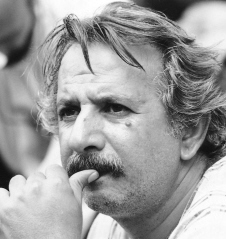
Iranian cinema was first put on the map when the films of Abbas Kiarostami caught the attention of the west. The avant-garde style and the peculiar yet totally fresh concept of “plotlessness” impressed the critics, invariably, throughout the world. After Kiarostami had made way for Iranian filmmakers to venture into the international scenario, it was up to the new generation to develop a stronghold and reserve a unique place for the cinema of their country without mimicking their forerunner. Quite a few of them have made it big, all in their own styles.
Jafar Panahi’s eye for the social issues and status of women in Iran, Bahman Ghobadi’s penchant for the portrayal of the fate of the Kurds and Mohsen Makhmalbaf’s authority on depiction of proletarian life still remain unchallenged. Majid Majidi, taking an altogether different path, too has made his mark on celluloid. His films remain detached from the society and hence radically different from his contemporaries. These films, nevertheless, make an equally deep impact on the viewers, but in a very different sense. The following passages attempt to examine few of the themes and motifs employed in four of his major works – The Father (1996), Children of Heaven (1997), Colour of Paradise (1999) and Baran (2001).
The most evident facet in Majid Majidi’s works is the firm bonding of the central character with his family, especially with his father. Though Mohammad’s relation with his father does not seem to be all rosy, Colour of Paradise is essentially about their eventual bonding. Memar acts as a surrogate father for the orphaned Lateef in Baran and supports him as a real father does. Needless to say, Pedar is all about the father-son relationship. Furthermore, his works also track the sacrifices his characters make for their beloved ones. Mehrollah goes to the city for earning money for his sisters and mother, Ali is determined to win his sister the shoes he promised even if it means wounding his feet and Lateef literally loses his identity to get money for Baran. The exception of Mohammad shows his inability to mend his family’s situation and tackle his own suffering, eventually relying on God to do the needful. However, his love for his family is unvanquished and unadulterated.
Running becomes an integral motif in Majidi’s films. The characters are frequently seen running for life and sometimes running away running away from it. These images are invariably captured by a pan shot, taking the audience along with the character and thereby placing them in the character’s shoes. Additionally, running also becomes the major part in the plot of Children of Heaven with Ali needing to come third in a marathon to win a pair of sneakers.
The protagonists in Majidi’s films are often seen connecting to the outside world and the nature in their moments of solitude and depression. Be it Lateef (Baran) feeding the pigeons, Mohammad (Colour of Paradise) caressing the birds of the nest or Ali (Children of Heaven) being “consoled” by the fishes of the pond (incidentally, the gold fish is a sign of good omen in Iran), the agonists are in a dire need to be heard and soothed. Again, the exception of Mehrollah (The Father), who has no emotional outlet into nature or to his friend, substantiates the closed and inaccessible nature of his mind.
Yet another motif in the four films is the image of a flowing stream of water. The stream, in various manifestations ranging from sleek to tumultuous, represents the flow of life and carries along with it the disappointments and lost opportunities of the characters’ lives. The central characters are shown making contacts with the stream flowing at various rates that reflect the emotional turbulence of the characters themselves.
Another noticeable aspect about the movies of Majidi is their poetic endings that carry with them a sense of resurrection – destruction of the old and beloved and the arrival of a new one. Mehrollah accepts a new father, Lateef notices the departure of one Baran (rain) and the onset of another, Mohammad is free from his paternal alienation and is able to feel God at the end of his fingers and Ali spoils his shoes as he gets a new pair. This kind of visual poetry overflows in Baran.
Of course, this list is non-exhaustive and Majidi’s films carry many more themes and symbols than specified here. For example, the images of Roti (Bread) and tea appear almost consistently. Though no explicit meaning can be assigned to this leitmotif, it does give a sense of realism and struggle for daily survival. Also, the close up of hands doing various activities that define the key idea of the film – hands trying to connect to loved ones, hands unsuccessful at the same and hands attempting to restore lost happiness – provide the right tone for the emphasis of the central ideas sans verbalization.
In a country whose political and artistic barriers are just opening up to the world, Majidi has carved a niche for himself and his films without offending the nation’s sentiments and ideologies or getting into controversies. More than anything, these recurring elements of visual composition and mellifluous poetry affirm Majidi’s position as a true cinematic auteur and have made him the most respected Iranian after Kiarostami and Makhmalbaf.
Ikiru is another gem from the great filmmaker. A sincere officer in a government office realizes that he is going to die in a few months due to a disease. He does all he can against all odds to finish a public park before his death. The final moment in the movie shows him sitting in the snow on a swing in the completed park. This remains one of the most memorable moments in world cinema.
Another example of Kurosawa’s perfection is Red Beard which revolves round a hospital in a disease-stricken village. Kurosawa had asked all the actors to not sign any other film during the two and a half year shoot so that they get into the character’s skin. Even the sets in the movie were made of rotting wood to show the time line of the movie. The operation scene in the movie is way ahead of its times and even now it makes us wince.
There are numerous other examples from all his films that shows his mastery over the medium. The fate of the impersonator in Kagemusha after the king dies is true of the acting profession as a whole. The contrast of classes in the final sequence of High And Low remains one of the most subtle scenes ever. The intense heat wave throughout Stray Dog directly places us into the protagonist’s boots. Ran is as grand as an epic gets.
These are images that are cherished by filmmakers and movie buffs all over the world. Even though he had a huge downfall in his career monetarily after Red Beard, the films that followed did not show any aging or fall in quality. In fact, the movies that came in the dusk of his career are some of the most different and daring film works ever. Even now, when a samurai film is made, it is endlessly compared with Kurosawa and labeled “Nah! Not as good as Kurosawa!”.
Ask some film buff to name a Japanese film director. The first answer (may be the only answer) would be Akira Kurosawa. The name of Akira Kurosawa has become synonymous with samurai cinema. His film techniques have been the fuel to numerous other filmmakers around the world including George Lucas and Kamal Haasan. The powerful imagery he assembles in his shots produces a terrific impact on the viewer’s minds instantly. Ironically, this film genius is recognized more outside Japan than in it.
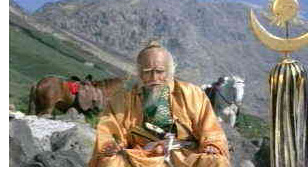
Perhaps his most famous film, Rashomon is one venture thatchanged not only the way the world looked at cinema, but also introduced a new term in English, The Rashomon Effect. The sheer minimalist mode that the film is shot in, sets up the mood for such a thrill. The shot where the woodcutter comes across the corpse early on is shown from the point of view of the corpse and looks as if it is going to get him. This innovation instantly familiarizes us with the corpse as a character that is to come later in the movie. Also, the use of rain as a metaphor for the pettiness of human nature and negative connotation of man’s ego provides that dream ending one expects.
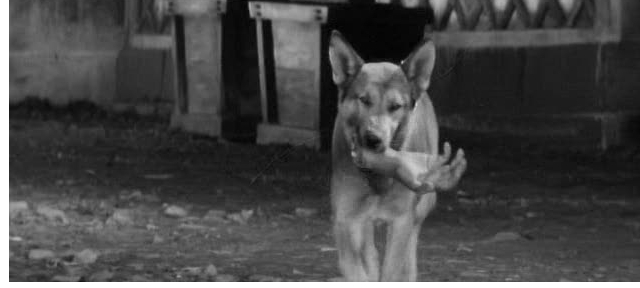
Take Yojimbo for instance, the film that spawned a new genre of movies called the spaghetti westerns. The bodyguard has just lost his identity and wanders into a barren town. The shot where he realizes that the town is war-torn is probably the most thrilling moment of the movie. A dog comes around a corner carrying a human hand! The vast barren stretches of land in the movie are reminiscent of the wild west, providing the perfect platform for remake into Fistful Of Dollars.
Adapted from Shakespeare’s Macbeth, Throne Of Blood provides a whole new interpretation to the work. An ambitious man who is manipulated by his wicked mistress and the reasons for his subsequent fall. The story is cleverly blended with Japanese folklore and the feudal system to provide a whole new look. Toshiro Mifune‘s best performance may just be in this movie. He does a perfect job as a man who is swallowed by his own pride.
In one of my favorites, The Lower Depths, Kurosawa adapts the Maxim Gorky work into the slums of Japan and the various issues there. The final scene where one of the partying inmates of the house exclaims after the suicide of the wretched wannabe-actor (“Stupid actor, he spoiled all the fun”) defines the whole life in the slums and portrays their everyday struggles with ease. The Lower Depths remains one of his most underrated works.
Having given the biographical background, I would like to put forth my opinions on why Chaplin is such an inspiration to all the present generation of directors.
First of all, Chaplin was a perfectionist. It is evident from the fact that he reshot one scene in City Lights involving a blind girl, the tramp and a rich gentleman over 300 times to ensure that silence in his movies was never a handicap but an advantage. He would tax his actors till he got what he wanted. He would even fire them on unsatisfactory performance.
Chaplin was a thorough optimist. Having come from a poor background optimism was the key attribute that made Chaplin survive the fickle life of Hollywood where you are only as good as your last movie. His dialogues such as “You will never see the rainbows if you look down” (From the song ‘Smile’ in “The Circus” (1928)) and “Life is a magnificent thing, even to a Jellyfish” (From “Limelight” (1952)) reflect this fact.
Charlie was a true artist in the sense that he would make whatever changes to a scene to get the best end result. He would improvise on a script and would check if that was good enough. If not, he would continue improvising with the same vigour. Even on his deathbed when the reverend said ”May God have mercy on your soul”, Chaplin resorted to comedy, replying ”Why not, After all it belongs to Him”
Even though he remained a comedian in his professional life, he was a very strict father. He would never be complacent on the freedom of his children. He never wanted them to be the kids of a famous father. He would take them to slums and show tem how the real world is.
Most importantly, he was the one who resurrected slapstick humour, which was thought to be primitive. In my opinion, Slapstick is the most fundamental of all comedies that any audience can associate to. The audience inherently likes physical movements and dark humour. Charlie Chaplin shows that slapstick is limitless and eternal even in Hollywood that thrives on sarcasm and raunchy humour for quick money.
Charles Chaplin was one person that made the world laugh, cry, resent, pity and most importantly THINK. Only such a ‘perfect maverick’ can redeem Hollywood and many other industries from their present state of decay. Without a shadow of a doubt, he is the greatest showman of the 20th century and will be the greatest for generations to come.
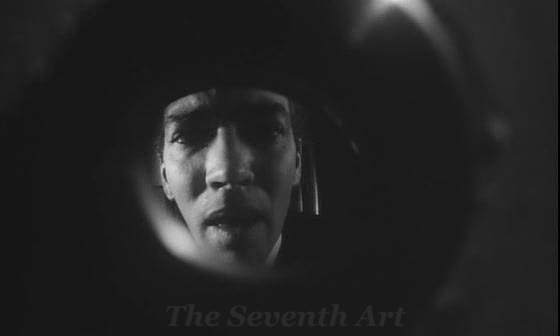


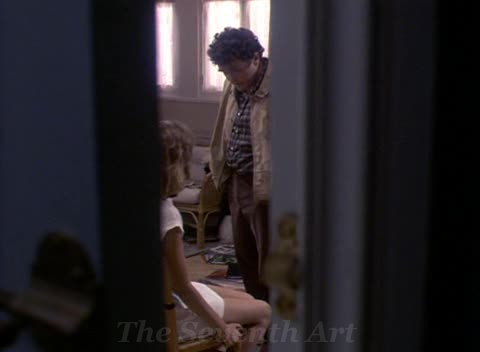
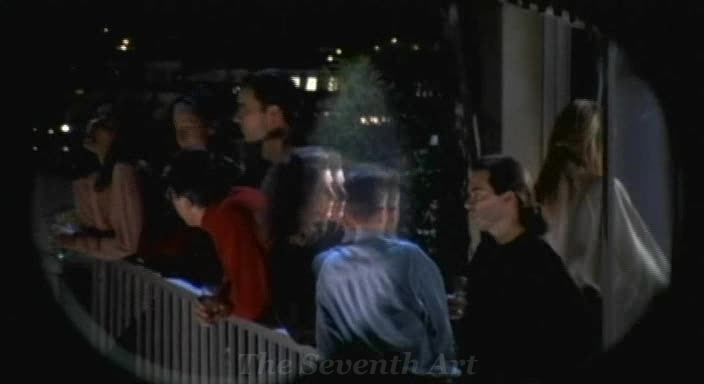

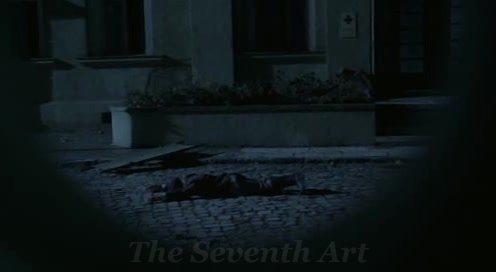




 The list of 41 directors by itself is mind boggling with the likes of Abbas Kiarostami, David Lynch, Theo Angelopoulos, Michael Haneke, Zhang Yimou, Wim Wenders and many more (See Tags for the list!). The result- 41 minute films with totally different perspectives. Abbas Kiarostami’s “Dinner for One” is typically his style as he makes an omelet. David Lynch’s bizarre piece, as usual, set in a quiet little suburban town that has more mystery than meets the eye is an instant hit. Zhang Yimou’s “cultural piece” near the China Wall, Gabriel Axel’s tracking sot of the various arts and Wim Wenders’ extension of
  My discovery of Tarkovsky’s first film was like a miracle. Suddenly, I found myself standing at the door of a room the keys of which had, until then, never been given to me. It was a room I had always wanted to enter and where he was moving freely and fully at ease. I felt encouraged and stimulated: someone was expressing what I had always wanted to say without knowing how. Tarkovsky is for me the greatest, the one who invented a new language, true to the nature of film, as it captures life as a reflection, life as a dream.”
 Iranian cinema was first put on the map when the films of Abbas Kiarostami caught the attention of the west. The avant-garde style and the peculiar yet totally fresh concept of “plotlessness” impressed the critics, invariably, throughout the world. After Kiarostami had made way for Iranian filmmakers to venture into the international scenario, it was up to the new generation to develop a stronghold and reserve a unique place for the cinema of their country without mimicking their forerunner. Quite a few of them have made it big, all in their own styles.




 Having given the biographical background, I would like to put forth my opinions on why Chaplin is such an inspiration to all the present generation of directors.
 The Seventh Art