Capitalism: A Love Story (2009)
Michael Moore
English


Capitalism is an evil. So declares Michael Moore at the end of his latest film, Capitalism: A Love Story (2009), effectively negating its title. Even after having come to terms with the fact that Moore, as a filmmaker, is incorrigible, that he will use his images to multiply the effect of his voiceover and that he will carry on with his self-pitying, self-congratulatory brand of showmanship and provocation, Capitalism: A Love Story turned out to be a large disappoint for me (For the record, I do think that he had a strike with Bowling for Columbine (2002) and the temperature did soar with Fahrenheit 9/11 (2004)). Two facets of this work prove to be the prime nails in its coffin. First of them is Moore’s largely reductive analysis of capitalism. His treatment of religion as a force that is corrupted by capitalism, instead of one that perpetrates it, betrays naïveté, at best, and hypocrisy, at worst. Perhaps, conceiving the project as a mini-series would have helped Moore build a more detailed analysis of the various elements at work. The second: Moore’s temptation for moral simplification. Moore treats all the corporations as a single, monolithic entity driven by profit motive. Instead of illustrating the flaws in the logic of the system, he comfortably resolves its participants into good and evil. Although there may be some truth to that, it is only expected of a film that works on a human level, as Moore’s film most definitely does, to explore the human dimension of both sides and discover where exactly we are going wrong. However, Moore’s film has a lot going for it, especially in the later passages which exude much welcome optimism. Unlike his antiestablishmentarian ancestor Stanley Kubrick (whose Spartacus (1960) is echoed in the opening sequence), Moore is not a cynic by any measure. Fittingly, he tells us: “I refuse to live in a country like this. And I’m not leaving.”

Hou Hsiao-hsien

Hou Hsiao-hsien 
(1947-)

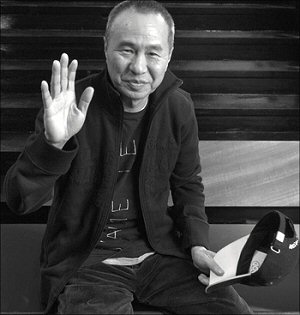
Director Hou Hsiao-hsien, in a 1988 New York Film Festival World Critics Poll, was voted one of three directors who would most likely shape cinema in the coming decades. He has since become one of the most respected, influential directors working in cinema today. In spite of his international renown, his films have focused exclusively on his native Taiwan, offering finely textured human dramas that deal with the subtleties of family relationships against the backdrop of the island’s turbulent, often bloody history. All of his movies deal in some manner with questions of personal and national identity, particularly, “What does it mean to be Taiwanese?“. In a country that has been colonized first by the Japanese and then by Chiang Kai-Shek’s repressive Nationalist Government, this question is pregnant with political connotations.

Hou was born to a member of the Hakka ethnic minority in southern Guangdong province in mainland China, but his parents emigrated to Kaohsiung, Taiwan, in 1949, to escape the bloodshed of the Chinese civil war. After serving in the military, Hou entered the film program at the National Taiwan College of the Arts. He graduated in 1972 and worked as a salesman until he landed a job as an assistant director and a screenwriter. In 1980, he made his directorial debut with Cute Girl, but he did not attract critical attention until The Son’s Big Doll appeared as an episode of the omnibus film Sandwich Man (1983). This film, along with another portmanteau movie, In Our Time (1982), is considered one of the first films of the New Taiwan Cinema movement, which injected a new level of sophistication and vitality into a moribund film industry previously known for martial arts spectaculars; it arose from the Foundation for the Development of Motion Picture Industry and the loosening of censorship laws in the late ’70s and was led by such young filmmakers as Hou and Edward Yang. (Bio Courtesy: All Movie Guide, Image Courtesy: Freakyflicks)


Zai Na He Pan Qing Cao Qing (The Green, Green Grass Of Home, 1983)

The Green, Green Grass of HomeDuring the first quarter hour, The Green, Green Grass of Home (1983), undoubtedly a weak link in Hou Hsiao-Hsien’s early career, seems to safely adhere to the noble-​teacher-​scores-​over-​unruly-​kids-​and-​profoundly-​changes-​their-​lives genre. Instead, Hou diverts the attention of the narrative from the student-teacher relationship towards the one between the kids and their parents and the romance between the teacher, played by Hong-Kong pop icon Kenny Bee, and his colleague in the primary school. There is dramatic tension in the story, which now seems uncharacteristic of the director, in the form of a environmental issue about illegal fishing in the village river, that is used to tie all the characters together in the third act. The director’s signature is barely visible and his methods seem to be in their very nascent stage. Hou shows almost none of his trademark restraint on the soundtrack, employing schlocky sentimental songs to hold attention. Of course, there is also much to take away from the film when the director is not concentrating on the star value of the film, especially when he deals with slice-of-life sequences from the children’s lives (There is a very funny sequence involving a stool test which, I’m sure, has been ripped off elsewhere). Also noteworthy is the way Hou positions his camera amidst the kids, often taking their POV of their teacher. But it is Hou’s choice of repeating certain compositions and locations throughout the film, which also presages a key technique in the director’s modus operandi, to get the audience accustomed to the film’s environment that ultimately saves the film.

Feng Gui Lai De Ren (All The Youthful Days, 1983)

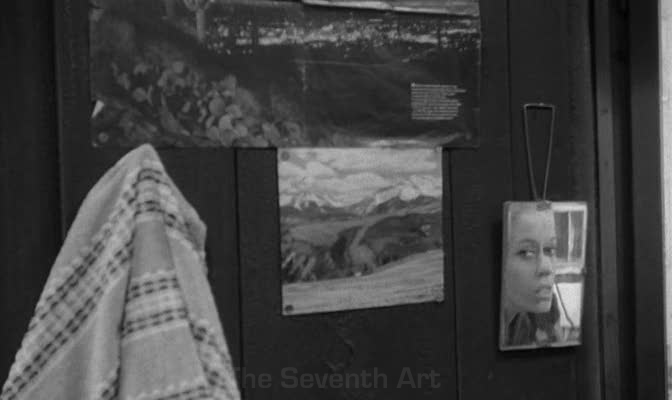
Hou Hsiao-hsien’s fourth feature stands in remarkable contrast to the banality of his previous film, The Green, Green Grass of Home (1983), and should probably be considered as the first signs of a master who is to come. Tinged with nostalgia throughout, as the title would imply, All the Youthful Days presents us the lives of a bunch of rowdy youths from the town of Fengkuei, who move to the city looking for work (in a manner very reminiscent of Goodbye South, Goodbye (1996)). Although much more restrained than the director’s previous, a few of the clichés of the genre still remain. But what really sets apart the film from its predecessor is the confidence of its approach and its formal consistency that would become characteristic of the director later on. All the Youthful Days already shows the filmmaker’s need for direct sound, which he would employ a few films later, while the visual component succeeds in capturing the rhythm of life in the city and in the town with its long and drawn-out shots, restrictive framing, use of off-screen space and employment of multiple planes of action. Hou’s camera takes a detached but ever curious gaze towards its subjects as they engage in gang wars, witness the lives of their neighbours, get cheated in the city and lead a life that is as detached from the past as it is from the future. There is much understated pathos to be found in the final passages of the film, a la I Vitelloni (1953), where the friends are forced to come to terms with the fact that they have to break up and move on with their individual lives. (Republished)

Dong Dong De Jia Qi (A Summer At Grandpa’s, 1984)

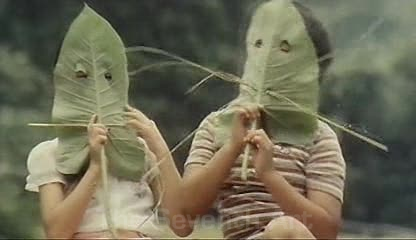
A Summer at Grandpa'sA Summer at Grandpa’s (1984) is a tale of transition – from the chaotic life in the city to la dolce vita of the countryside, from the ennui of scientific modernity to the fascination with nature’s antiquity and from the blissful ignorance of childhood to the mercurial moods of pre-adolescence – and, fittingly, begins with the graduation ceremony of one of the two child protagonists of the film, who are to spend their titular summer at their grandfather’s house while their mother is to undergo a critical surgery in the city. Surely, it is not only the mother who is going to be going through a life-altering phase. The kids come across a host of alien characters and situations, including a pair of robbers and a mentally-challenged woman, that are so intricately woven into the narrative that even the adult viewer finds it increasingly difficult to locate his/her moral footing with respect to the film. A Summer at Grandpa’s is starkly redolent of Victor Erice’s The Spirit of the Beehive (1973) in the way it filters the political and moral complexities of the world though the eyes of children to paint an unsettling portrait of a society that is far from being the paradise it appears to be on the surface. Hou observes, with equal intrigue, both the carefree indulgence of the children in social games (including a hilarious turtle race) and the stark reality that interrupts these activities, as if trying to remind them that the best part of their lives is over.

Tong Nien Wang Shi (A Time to Live, A Time to Die, 1985)

A Time to Live, A Time to DieOf all the early works of Hou Hsiao-Hsien, it is perhaps A Time to Live, A Time to Die (1985) that most warrants a comparison to the works of Ozu given its themes of separation, loss and loneliness. First of the director’s films to be set in post-WW2 period in Taiwan, the film follows a family from mainland China that moves to the south of Taiwan after the war. Hou’s film simultaneously covers three generations– represented by the grandmother, the parents and the children respectively – each of which presents a certain kind of relationship between the present and the past. Grandma believes that she is still in the mainland and keeps looking for a bridge that isn’t there. The parents spend their lives believing that all this travail is temporary (as was the case with Taiwan itself during the period) and the past will return. The children are plainly oblivious to the past, engaging themselves in petty gang wars and bumming around. In addition to the themes, it’s also Hou’s aesthetics that seem highly Ozuvian. The architecture of the family’s house looks very Japanese (whose authenticity is intact given the place and the time the film is set in) with sparse, well-ventilated living rooms and doors, windows and other furniture made of bamboo and glass. The indoor compositions are double-framed with a ground-level camera angle that recalls the respect and humility of the Japanese director. Then there are also those major and minor ellipses that punctuate the narrative to give us a sense of time passing, people departing and life drifting away.

Lian Lian Feng Chen (Dust In The Wind, 1986)

Dust in the WindAs much as Dust in the Wind (1986) takes Hou back to the dialectics between rural and urban life styles that was present in his earlier films, it deviates starkly from the ideas underlying those films. The first five minutes of the film sits alongside the very best sequences that Hou has ever filmed. The film begins with Biblical darkness after which we see a speck of brightness approaching us, gradually growing in intensity and size. We realize soon that we are on a train moving into and out of unlit tunnels regularly. As twilight strikes, a young couple alights from the train and walks into the village. The dark and foreboding clouds gradually drift over the couple’s heads as the boy escorts the girl to her house. This extremely evocative sequence sets both the tone and the themes of the film that’s to come. The boy leaves school to go the city in search of work. The girl follows suit and ends up working in a textile firm. The romance between them is palpable and so is the seemingly unbridgeable gap. Hou and screenwriter Wu Nien-Jen, on whose teenage experiences the film is based, create a tender piece of work about the inability to escape one’s socio-economic and political status to do what one wants. They build the film around (subtly ridiculous) patriarchal structures, wherein it takes nothing more than a pair of cigarettes for males to bond while the whole world seems to be conspiring against the fruition of a romance.

Ni Luo He Nu Er (Daughter Of The Nile, 1987)

Daughter of the NileDaughter of the Nile (1987) is an anomaly of sorts in Hou’s filmography considering the direction his films have hitherto been moving in. The film’s begins like a Markerian tone poem, especially resembling Level Five (1997), establishing a strange connection between Taiwan and ancient Egypt, and goes on to unfold as a Tsai-esque poem about physical and emotional loneliness in a pre-apocalyptic world. Ah-Sang (Fan Yang) is a college-going young woman living with her sister, a school going teenager, her brother, a lifelong thief, now escalating the ladders of the mafia and her grandfather. Ah-Sang tries to find some happiness in the relationships with her family and friends, but is continually hampered by the ever-increasing brutality of the world around her. She tries to escape the bleakness by imagining herself as Carol, a manga character who leaves her family and flees to ancient Egypt only to be killed at 22. The greenery and serenity of the countryside, which had till now played a significant part in Hou’s films, is completely absent as Hou replaces it with saturated primary colours exuded by the luminous advertisements of nighttime Taipei. The spacious and airy interiors of previous films give way to cramped, suffocating rooms. Surely, Ah-Sang is no better than the fish in the tank in her apartment. Even amidst this desolation, she remains hopeful of a meaningful relationship with one of her brother’s mafia friends, only to be disappointed later. These are, truly, victims of the neon god.

Bei Qing Cheng Shi (A City Of Sadness, 1989)

A City of SadnessA City of Sadness (1989), one of Hou Hsiao-Hsien’s finest films, is an ambitious and extremely poignant work that deals with the tumultuous years after the war, during which Taiwan was in the transit between Japanese occupation and communist China’s rule. The film concerns, primarily, with the four sons of the Lin family, the eldest of whom is a straightforward man running a restaurant. The second son has lost his sanity during the war, the third is reported missing and the fourth – a deaf-mute – runs a photo-studio. These are, of course, the most basic of characters among the tens of others that come and go in the film. Hou’s rhythmic and oft-repeated compositions, aided by the runtime of the film, induce such familiarity with the film that they invoke a feeling of having lived with the Lin family for a long time. A City of Sadness deals with the problem of communication, as would the later works of the director, in all its shapes and sizes. There is the communication gap between the past and the present in the form of numerous arrests of the Taiwanese by the new Chinese government. There is the cultural gap between the mainlanders and the islanders exacerbated by the difference in languages of the two counties. Then there is the most basic human gap between the deaf-mute son and the girl he is interested in, which the pair tries to bridge using written language, also flashed on-screen. As a result, A City of Sadness plays out as an elegy about agonizing socio-cultural limbos during an equally painful political limbo in Taiwanese history.

Xi Meng Ren Sheng (The Puppetmaster, 1993)

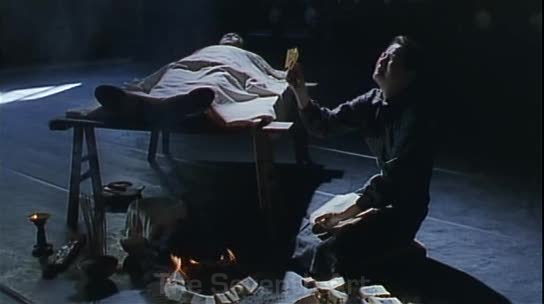
The PuppetmasterThe Puppetmaster (1993), my favorite among the eight films listed here, chronicles the events in the life of a real life puppet master Li Tien-lu, from his birth to the year of Japanese surrender of Taiwan. Hou cuts back and forth between accounts narrated by Li himself, speaking directly to the camera in lengthy shots, and the fictional recreation of those events by the director as if trying to convey the amount of historical time that has passed. As Jonathan Rosenbaum notes, Li may a puppet master, but he is also a puppet himself. Right from the first significant event of his childhood, where he is prompted by his aunt to steal a few manuals, to his adolescent days, where he becomes a cash coughing machine for his father, and up to his mid life, where he does propaganda for the Japanese in Taiwan, Li is always under control of some higher authority, be it Chinese or Japanese. Of course, Li’s fate mirrors that of Taiwan – a country that was attached to strings held by the Dutch, then the Japanese and, finally, the Chinese. Furthermore, as highlighted by the long shots that dwarf the characters with respect to the landscape they are in, by the striking resemblance between puppet shows and stage performances within the film and also by a significant cut from the image of Li sitting in a dressing room, getting ready for a theatrical performance, to his present-day self, The Puppetmaster is also about people’s (specifically Taiwanese) near-complete loss of control of their own lives, courtesy the all-powerful political structure that oversees them and sweeps them along with its laws and decisions.

(To be continued…)

Feng Gui Lai De Ren (1983) (aka All The Youthful Days)
Hou Hsiao-Hsien
Mandarin/Taiwanese


Hou Hsiao-hsien’s fourth feature stands in remarkable contrast to the banality of his previous film, The Green, Green Grass of Home (1983), and should probably be considered as the first signs of a master who is to come. Tinged with nostalgia throughout, as the title would imply, All the Youthful Days presents us the lives of a bunch of rowdy youths from the town of Fengkuei, who move to the city looking for work (in a manner very reminiscent of Goodbye South, Goodbye (1996)). Although much more restrained than the director’s previous, a few of the clichés of the genre still remain. But what really sets apart the film from its predecessor is the confidence of its approach and its formal consistency that would become characteristic of the director later on. All the Youthful Days already shows the filmmaker’s need for direct sound, which he would employ a few films later, while the visual component succeeds in capturing the rhythm of life in the city and in the town with its long and drawn-out shots, restrictive framing, use of off-screen space and employment of multiple planes of action.  Hou’s camera takes a detached but ever curious gaze towards its subjects as they engage in gang wars, witness the lives of their neighbours, get cheated in the city and lead a life that is as detached from the past as it is from the future. There is much understated pathos to be found in the final passages of the film, a la I Vitelloni (1953), where the friends are forced to come to terms with the fact that they have to break up and move on with their individual lives.


[P.S: As you might have guessed, this is a new column intended to keep this blog a bit more active between reviews (and to appease my guilt of being lazy to put up longer posts). Also, although it won’t exactly take me closer to my dream of writing something about every film I’ve seen, I think it would nevertheless help me jot down my instantaneous response to films I’ve just seen]

Now that it’s fairly clear that the Academy awards are purely a business deal, let’s talk about some real year-end recognitions now. Instead of churning out a generic should-would-wish-dark horse list for the Oscars, I would like to present my own token of appreciation to films of (strictly) 2009 that impressed me with some or all of their facets. Of course, I haven’t seen as many films from last year as I would have liked to, but I would like to think that I have missed only about a dozen should-have-seen films (Visage, Around A Small Mountain, In Comparison, Enter the Void, My Son My Son, What Have Ye Done, Ruhr, Wild Grass, Kinatay, White Material and About Elly being some of them). Furthermore, I’d like to propose a handful of changes to the usual (read: Academy’s) categories of awards:

  • No Supporting Actor categories: A category that’s very dubious. It’s been long since popular films have eschewed the one male protagonist-one female protagonist template. And then, who’s to decide who is supporting whom?
  • No separate category for Male Actors and Female Actors: What’s the argument here? That a woman brings a separate sensibility to the character and that they can’t be compared head to head? In that case, we should have such classification in every other category too. Since that’s absurd, we’ll just have one all-encompassing category: Best Actor.
  • No separate category for Original Screenplay and Adapted Screenplay: Is adapting a screenplay from a book or a play easier than writing a original one? Or are we looking at how the film captures the spirit of the book? What are we honoring anyway? Ditch that. Only one: Best Screenplay.
  • No separate categories for Make-Up, Costume Design and Art Direction: I fail to understand how these three can have independent existence. And it seems to me that the first two are a hangover from the star-studded studio era. Again, we’ll be having only one: Best Production Design.
  • No categories for Special Effects and Original Song: Superfluous.
  • No separate category for Animation films: The medium is a mere directorial choice. Why condescend?
  • No separate category for Documentary films: Having watched a few Herzog films, I realize that there is no boundary between fiction and documentary and that, in cinema, every fiction is a documentary and every documentary is a work of fiction, in a way,
  • No category for Foreign Language films: “Foreign” to whom?
  • A separate category for Casting: A largely ignored facet of production and an integral part of the filmmaker’s vision, Actor casting is yet to get its due recognition.
  • A special “For the Love of Cinema” category: A film buff’s desire and invention, these are for films that just love what they are doing and where they come from.
  • Three tiers for each award – denoted by the shorthand Gold, Silver and Bronze – for the Winner, Runner-up ad Second Runner-up. There may be ties within each tier which means that I just wasn’t able to select one over the other.

Without further ado, I present The Seventh Art Awards (!) for 2009:

Best Film

Gold: Inglourious Basterds (Quentin Tarantino)
Silver: The Maid (Sebastián Silva)
Bronze: Eccentricities of a Blonde-haired Girl (Manoel de Oliveira)

Best Director

Gold: Manoel de Oliveira (Eccentricities of a Blonde-haired Girl)
Silver: Quentin Tarantino (Inglourious Basterds)
Bronze: Claudia Llosa (The Milk of Sorrow)

Best Actor

Gold: Christoph Waltz (Inglourious Basterds)
Silver: Hye-ja Kim (Mother)
Bronze: Steve Evets (Looking for Eric)

Best Casting

Gold: Lars von Trier & co. (Antichrist)
Silver: Quentin Tarantino & co. (Inglourious Basterds)
Bronze: Jim Jarmusch & co. (The Limits of Control)

Best Screenplay

Gold: Quentin Tarantino (Inglourious Basterds)
Silver: Juan José Campanella, Eduardo Sacheri (The Secret in Their Eyes)
Bronze: Marco Bellocchio, Daniela Ceselli (Vincere) (tied with) Francis Ford Coppola (Tetro)

Best Cinematography

Gold: Mihai Malaimare Jr. (Tetro)
Silver: Christian Berger (The White Ribbon)
Bronze: Binod Pradhan (Delhi 6) (tied with) Robert Richardson (Inglourious Basterds)

Best Editing

Gold: Jay Rabinowitz (The Limits of Control)
Silver: Sally Menke (Inglourious Basterds)
Bronze: Ethan Coen, Joel Coen (A Serious Man)

Best Production Design

Gold: Eugenio Caballero (The Limits of Control)
Silver: Christian Marti  (Eccentricities of a Blonde-haired Girl)
Bronze: David Gropman (Taking Woodstock)

Best Sound Design and Mixing

Gold: Liam Egan (Samson and Delilah)
Silver: Sin Cohen, Colin Guthrie, Walter Murch, Pete Horner (Tetro)
Bronze: Paul N.J. Ottosson, Ray Beckett, Jeffrey J. Haboush (The Hurt Locker)

Best Sound Editing

Gold: Federico Esquerro, Francisco Pedemonte, Leandro de Loredo, Juan Ferro (Tetro)
Silver: Stephane Rabeau, Francis Wargnier, Caroline Reynaud, Cyrille Richard (A Prophet)
Bronze: Guray Gursel, Mustafa Durma, Danton Tanimura, Sacha Walker, Burak Topalakci (The Breath)

Best Musical Score

Gold: Osvaldo Golijov (Tetro)
Silver: Various (Inglourious Basterds)
Bronze: Alexandre Desplat (Fantastic Mr. Fox)

“For the Love of Cinema” Award

Gold: Inglourious Basterds (Quentin Tarantino)
Silver: Vengeance (Johnnie To)
Bronze: Tetro (Francis Ford Coppola)


2009 Posters

So what are your picks of 2009?

Ljubavni Slucaj Ili Tragedija Sluzbenice P.T.T. (1967) (aka Love Affair, Or The Case Of The Missing Switchboard Operator)
Dušan Makavejev
Serbo-Croatian

“The threat posed to man by rats has still not been fully grasped here. Rats devour enormous quantities of food and other goods. They eat winter coats, entire libraries of books, corpses in autopsy rooms, even film stock.”


Love AffairAlthough such hybrids tend to be heavily reductive, considering Yugoslavian filmmaker Dušan Makavejev’s early features as (stay with me) Godard meets Bertolucci meets Anger meets Buñuel meets Waters proves to be a fairly useful starting point for exploration. Bringing to mind Godard’s self-reflexive examination of cinematic medium, Bertolucci’s Reich influenced analytical fiction, Buñuel’s hyper-surreal interjections, Anger’s extravagant imagery and Waters’ camp outings, Makavejev’s films seem to be completely in line with the French New Wave’s iconoclastic sensibilities, which seem to have remarkably captured the revolutionary spirit of the sixties. Blending news reels, pseudo-documentaries and on-location fictional footage shot in cinema-vérité fashion, Makavejev’s features remain an essential voice of (cinematic and sociopolitical) dissent, analysis and critique of the Tito regime. Like Godard, the primary hurdle for Makavejev in this direction seems to have been the problem of cinematic representation and the consequent need for returning to zero.

His second feature, following Man Is Not A Bird (1965), Love Affair presents us the titular love affair between an Hungarian immigrant Izabela (Eva Ras, who also appears in the director’s previous film), the titular switchboard operator, and Ahmed (Slobadan Aligrudic), a Turkish immigrant, who has served in the army for a considerable amount of time, is a party worker and is currently working as a sanitation officer for the government. Punctuating the affair are instructive documentary sequences where a sexologist and a criminologist go about explaining historical and cultural aspects of sex and homicide respectively. Then there are sequences from the local morgue where a dead body is being examined for cause of death. There are also sequences of extended conversations between Izabela and her friend Ruska (Ruzika Sokic) about the various affairs they have had. To top off this seemingly immiscible collage work is a documentary track that informs us about the history and consequences of rat infestation in Yugoslavia, including a scene where an on-screen text reads an absurd poetry about rodents.

Makavejev uses an interesting flashforward-flashback structure that regularly announces the outcome of the love affair, in effect squelching the tension that could have been generated if the film had gone conventional. During the post-mortem, we see the necklace and the undergarments of the victim presented as exhibits. Makavejev immediately cuts to Izabela wearing the same. A three month old fetus is found inside the victim, following which we see Izabela going to the hospital for a pregnancy test. It is only after Ahmed is identified as the murderer that Makavejev cuts to the actual event. A Godardian bedroom scene where Ahmed admires Izabela gives way to a cold, scientific and disturbing description of her dead body. Makavejev’s intention behind employing this structure may have been mere playfulness. Or it may have been an attempt to shift our attention from specifics of the plot to the nature of the relationship between Ahmed and Izabela. But it is more likely that Makavejev employs this device to denote the Vertigo-esque inevitability of a tragic ending to this doomed love affair (The “murder” itself is visually and thematically reminiscent of the one in Hitchcock’s film).

Love AffairMakavejev’s stance in this film, as in his other features of this period, seems to be that of William Reich, who was against pornography in sex and politics – a position that takes off from his ideology of free love and free-thinking. This pornography of the cinematic image is what Makavejev seems to be fighting against. His early films present themselves as attempts to work against the representation of workers and women in mass media by both (the then-popular) social realist films (in agreement with the maxim that realism does not mean reproducing reality faithfully but in showing how things really are) and Stalinist propaganda. The influence of propaganda art is visible everywhere in the film – through giant size posters of Lenin, Communist gramophone records and laudatory news reels and post card pictures – acting as a counterpoint to actuality. In Love Affair, like he did in his first feature, Makavejev continues to explore this chasm between the popular image of the worker and the truth about him (Here is an excellent essay that discusses Makavejev’s representation of the worker in Man Is Not A Bird).

One particular sequence exemplifies Makavejev’s discrediting of right-wing propaganda as nothing more than political porn. Izabela and Ahmed, after their first formal meeting, sit in her bedroom. She tells him that there is something good on television. Sipping coffee, they look towards the camera. Eschewing conventional eye-line match cut to a TV, Makavejev inserts news reels showing the Communist party destroying churches. She tells him that it is more intimate this way. They loosen up a bit. Ahmed calls Izabela a good homemaker. She places her head on his shoulders. The news reels again. A moment later they are in bed. Apart from this rendering of such Stalinist art as objects of arousal, Makavejev establishes the discrepancy between represented reality and the actual reality through his mise en scène by contrasting the joyous, dynamic, open spaces of the news reels with the empty, static and cramped apartment Ahmed and Izabela reside in. The two girls are often lost visually and aurally amidst the crowd and noise of the city. Even in the final scene, full of pathos, where Ahmed is arrested, Makavejev underscores this effacement of the individual for a faux nationalistic ideology by having exuberant Communist songs overpower Ahmed’s voice.

It seems to me, that for Makavejev, politics is sex and sex is politics. No, not on a metaphorical level, but quite literally. His films seem to present a notion that every authoritarian regime is fuelled by a distinct vision of sexuality – a possible influence of Reich, once again – and that this chauvinism/insecurity consequently shows up as the subjugation of one sex by the other. In line with that thought process, Makavejev fittingly boils down the larger picture down to sexual politics between the lead characters (Izabela looks at the camera, as she does frequently in the film, and shouts: “I didn’t sign up to be your slave”, thus opening up multiple plausible interpretations. Is she, apart from being the “everywoman”, a representative of Yugoslavia? Of represented Yugoslavia? Of cinema itself? A case could be made for each). There are lots of threads in the movie that can be neatly tied up together, I guess, only if the exact context of this film with respect to New Wave Yugoslavian cinema (Novi film) and the intricacies of the Yugoslavian politics is known. For instance, there are a number of stray slices-of-life sequences in the film that seem to serve no other purpose than to provide respite and true warmth to the couple, shielding them from the horrors of the external world. May be Makavejev wanted to avoid the criticism his earlier film received – that it was dark and pessimistic.

Love AffairLove Affair begins with a quote: “Will there be a reform of man? Will the New Man retain certain old organs?” suggesting that the outward ideology of the nation may have changed, but underneath it amounts to one fascism replacing another, with one form of sexual oppression giving way to another (an idea that becomes more streamlined and incisive in WR: Mysteries of the Organism (1971) and Sweet Movie (1974)). In the narrative track about the history of gray rats, the narrator explains us that these pests were let into Europe in order to get rid of the deadly black rats and that the gray ones prevailed being “stronger, tougher, and more bloodthirsty”. And that this new rat turned out to be more resilient than man. The narrator wonders “It’s still unclear who will rule the Earth in 100 years: People or rats?”. The political mapping is only too clear here. But then, that does not render Makavejev as a pure leftist leaning towards capitalism. He remains a centrist in all these early films (He presents Yugoslavia herself as straddling two ideologies as his mise en scène portrays a country in transition, borrowing politics and cultures from both sides of the world), holding both traditional capitalism and tradition Communism at a cynical, if not downright contemptuous, distance and embracing only the “individual” and his right to live and love freely.

A play and its review, under a minute.

Junkopia (1981)
Chris Marker, John Chapman, Frank Simeone
France
7 Min.


In Junkopia, Chris Marker’s filmography, which is more than a simple collection of travelogues that it appears to be, extends itself to a territory that one is tempted to call entirely alien. The short begins with a shot of a bunch of strange mechanical “beings” floating on what appears to be water. Marker and co. confirm our suspicion, that this might indeed be earth, by giving us the geographical coordinates of the place we are looking at – 37º45’ North. A slew of close ups of these “creatures”, powered by an eerie electronic soundtrack, places them on the same dais as the very many interesting people from across the world that Marker has introduced to us through the years. You almost sense them staring at you. The illusion of this post-apocalyptic, other-worldliness is once again shattered as the directors reveal the relative position (in contrast to the meaningless absoluteness of latitudes and longitudes) of this “community” as being just next to a speedy highway located in our own world, in our own time. The soundtrack becomes even more dense as excerpts from radio, satellite communication, TV programs and popular songs arrive in bits and pieces, trying to overpower each other. A shot of vehicles moving on a distant bridge like objects on a conveyor belt. The terror is registered on multiple levels. Is this how we treat things, ideas and people that we deem to be “less important” and “less beautiful”, while unanimously moving towards a pointless destination? Or is this what our entire civilization, the beauty of our arts, our present culture going to be reduced to? Haunting stuff that is perhaps only paralleled by Tsai Ming-Liang’s Fish, Underground (2001)

Death and the Maiden (1994)
English
Roman Polanski

(Spoilers, sort of)

This scene here is the climax of one of Polanski’s very best films, Death and the Maiden (1994). Let me not elaborate on the plot details and just say that Dr. Miranda (Ben Kingsley) is making a certain confession to Paulina (Sigourney Weaver) about his dark past as her husband, Gerardo (Stuart Wilson), watches on. If the whole of Polanski’s filmography is to be summed up in one line, is must be that key quote from Chinatown (1974) – that man is capable of doing anything given the right circumstances. This monologue where Miranda, himself a variant of John Huston’s character from Chinatown, confesses is, arguably, the most important shot in all of Polanski. Death and the Maiden is not a film dealing with the Holocaust per se, but, as it is with most Polanski films, the parallels are striking (it’s kind of like how The Pianist (2002) wasn’t about the Holocaust at all, even when it dealt with it). The film, and particularly this sequence here, is exactly what Holocaust cinema should all be about. There are no painstakingly recreated details of the war here, no tacked up statements about the triumph of the human spirit and, thankfully, no beautification of the horror (a trap that films as latest as Polytechnique and The City of Life and Death (both 2009) fall into) for the sake of creating art. It’s a film that deals with the impact and significance of a holocaust rather than the mishap itself. And, most importantly, it’s a rare film that truly knows, in Peter Rainer’s words, that “it is the artist’s job to show us that the monster is, in fact, a human being”.

This scene here is filmed as a close up and records Miranda, looking slightly towards the left, recollecting the past in fine detail. The composition is noteworthy here. Polanski could have filmed Kingsley head-on, with him staring into the camera, whereby cinema would intimately and truthfully perform its humble, ethical and mandatory function of acknowledging that “the monster is indeed a human”. But, despite its advantages, if it were done so, the image of Ben Kingsley would overwhelm that of Miranda and break the credibility of the diegetic events, thereby going exactly against the purpose of the shot. The casting of Ben Kingsley here as Miranda is remarkable. He is, I believe, one of those stock stars who wouldn’t be as comfortable when cast in roles much different from one another (Brad Pitt, Bill Murray and Jack Nicholson are few others I can think of now). Kingsley excels in indifference. There is something both pitifully innocent and terrifyingly sinister about his introversive image. His voice is flat, nevertheless brimming with pathos. It is simultaneously befitting of the scene’s intent and appalling to realize that this “Gandhi” turns out to be such a “Hitler” and, more importantly, that this Hitler belongs to the same species as Mohandas Gandhi and Itzhak Stern. (It’s the exact kind of casting decision that von Trier made recently when he bestowed Willem Dafoe with the twin distinction of having played both the Christ and the Antichrist). The result is one of Polanski’s finest and a new direction for Holocaust cinema.

So, for the second time, the Pharisees
summoned the man who had been blind and said:
“Speak the truth before God.
We know this fellow is a sinner.”
“Whether or not he is a sinner, I do not know,”
The man replied.
“All I know is this:
Once I was blind and now I can see.”


Right after I posted my epic fail review of Ishqiya, bits and pieces of the film started to sink in. Many of the film’s odd choices seemed to gain a significance of their own and, before I knew it, like those clichéd second act endings, they all fell in place, presenting a whole new perspective to the film. Out of the dozen reviews I’ve read of the film, only my friend Satish Naidu’s review seemed to hit the right notes. I strongly recommend reading his review if you’ve seen the film. And yes, spoilers here too (Well, there isn’t really much in the movie that you can’t guess beforehand).

There is a post script, in Ishqiya, to the kidnap set piece where Krishna, amidst a serious argument between Babban and Khalujaan, drives the car away leaving them gaping. She might well be driving away the film there, for Ishqiya, more than anything, is about the resistance to a male view of a world by a female perspective. Ishqiya is a Western alright, with its war-torn landscape leaving no other philosophy to exist other than “might is right”. But that really doesn’t give anyone a license to call it a man’s world. The story unfolds, primarily, in the point of view of the two men, but, rather than being protagonists with clear cut objectives, they are frames of reference – a telescope – using which we view and, unfortunately, try to ‘solve’ Krishna, that obscure object of desire. Yes, they are characters of considerable depth, but they are also, ultimately, peripheral. A quick note, to begin with, about the casting of the film which seems to me like a stroke of brilliance. We have here Naseeruddin Shah and Arshad Warsi, men who have rarely been the flawless heroes, who have made a career out of bumbling and imperfect protagonists. They automatically bring into the movie with them flawed male visions that belong to two different generations. Krishna is played by Vidya Balan, who has had a popular image that could well pass off as an icon of the chaste Indian female. This incongruity between what appears and what is, which defines the whole of Ishqiya, is only furthered by this distance between Balan’s image and Krishna.

Babban and Khalujaan are closer to Truffaut’s Antoine Doinel (Jean-Pierre Léaud) than any other film character I can think of. These men are (con-) artists too, like Doinel, as exemplified in their introduction scene, where Babban tricks Mushtaq with his story and flees with the money. Like Truffaut’s character, who spent a lifetime wondering if women were magic, these men can understand the opposite sex only in terms of art or, in this case, popular cinema (where Krishna is aptly photographed like being frozen in a film frame). It is only through popular film songs that these characters are able to even express their emotions. Khalujaan may make numerous mistakes in his real life, but never does he get the composer of a song wrong. Babban believes dressing up as a movie star will help him woo the girl. As noted earlier, these are men of flesh and blood. They are deeply flawed and they realize their limitations. Babban drags back Khalujaan from his macho, decidedly Western romanticism of taking Mushtaq head-on, as if reminding him that this genre movie is no place for them. In Leone’s Once Upon A Time in the West (1968), Frank (Henry Fonda), upon being asked if he is a businessman, says: “Just a man”. Like Frank, these two crooks understand every shade of men and their behavioral patterns, no matter what age group they belong to. However, for these men, like Frank, women just can’t fall in any category other than in the binary setup of the mother and the whore (Khalujaan tells Krishna that he can’t tell whether she is an angel or a courtesan) that popular cinema has given them.

But Chaubey doesn’t give a comic tinge to his characters as much Truffaut does. Yes, they do deliver those funny lines, but they are serious men. They have their own issues. Babban, also true to Bollywood morality, does not want Khalujaan to sully his mother’s name. Khalujaan, on the other hand, takes his past seriously too, through his possibly deceased (possibly non-extant) sweetheart. He really does believe that he can settle down in life. But these are not their mistakes. They are, after all, real men with real emotions and problems. These are not caricatures that we can disregard easily. In any other film, they could have been the backbone of fine drama. Their real mistake, however, is in believing that they are the only ones with problems, that they are the film. The sin of these flawed men is in believing that the woman they fall for would be unflawed. Krishna driving away the car should have given them a clue. But, products of a patriarchal society and cinema that they are, they never realize that. In fact, the whole film is built upon such male perspectives that see nothing more than what they want to see. Krishna’s husband chooses a male-dominated caste war over his wife’s love. Mushtaq prefers to keep his wife as a mere voice heard over a telephone like a horoscope (announced by a Bollywood ring tone, of course). For KK, the fidelity of the male is nothing more than a small joke. Even we, the children fed on the stereotypes of Bollywood, attempt only to classify Krishna into rigid adjectives – femme fatale, all-powerful, resilient, gutsy, seductive – whereas she may be as vulnerable as the men around her.

The key is the scene where Krishna meets her husband once again. She breaks down, for the first time in the movie, revealing her vulnerability. She stands there, with her motives exposed, being emotionally hit. All this while she had been toying along with the two conmen, for she was far assured of her modus operandi. She offers tea for the man who gives her a better kidnap plan, only to deliberately fire the other one up. Krishna, in the scene in which she sleeps with Babban, clearly reveals that she is only exploiting this lucky situation that has come her way for her own good and with the assurance that and that the plan is on track. Not now. The petty goons are all down now. It’s now man on man, so to speak. It’s the only showdown this revisionist Western will have (My genre-addicted mind would have liked a couple more extreme close-ups). Film critic Baradwaj Rangan, perceptive as always, notes that Krishna is essentially an updated version of Jill (Claudia Cardinale) in Once Upon a Time in the West. That, I guess, is the only kind of classification that Krishna can be subjected to. The strongest point of the movie is that it does not try to define her or push her into a single zone of existence in which she may be only be moral, immoral or amoral. She, like many of us, could well be straddling all three. What we may be having here, far from being a character study, is personal cinema in which the writer and director are sharing our own inability to understand Krishna, and by the fact that she is the only woman in the film (not considering the old woman, who might well be an aged Krishna), women in general.

We, the audience, on the other hand, are frustrated like Khalujaan because of this inability to break her down into stereotypes. When she sucks the blood out of Babban’s thumb, one is tempted to jump the gun and label her a vamp. But she might just be using another lucky opportunity there, to strengthen her chances of pulling off the kidnap. Or may be not. Krishna defies identification, which we have all been accustomed to, through standard templates reserved for women in Bollywood which, in turn, are derived from popular mythological figures. She might be sharing herself with many men, taking turns, but she is far from the ultra-faithful Draupadi that her name means. She might appear to be pining for her beloved, a la Meera, as she sings, but that pining is for something else altogether. She is like Savitri too, but she prefers dragging back her husband to death (Death and Krishna being the two people he tricked) rather than the usual way. In the final scene, she merely attempts to restore back a reality that wasn’t. When she faces her husband again, she might well have paraphrased  that legendary Bresson line: “I’d rather prefer you leaving me for the love of another woman than for what you call your intellectual life“. And when Babban watches her undress, there is not only the distance of voyeuristic cinema between them, but also this literal wound of Krishna’s past, which only breaks out during the final confrontation, that adds one more layer of enigma for Babban, and consequently us.

It is the opening and closing scenes, or even shots, that really tie the movie together. The film opens with a male perspective, fading out of black, with Krishna on the bed in a reclining, arguably sexist pose. She appears nothing short of a magical being, which is an opinion only the male could have here (Let’s stick to straight orientations for now). And it is a pose that typifies the attractive woman in Bollywood cinema. From this point on, the film’s male perspective, our own “male” perspective and the Bollywood perspective get tied together. And the film closes, literally, with another male point-of-view. Here, Mushtaq watches the three walk away through the lens of his sniper gun. Khalujaan and Babban walk happily, perhaps with the idea that they’ve understood Krishna and one of them will “get the girl”. What they don’t understand is that the real trouble begins after this (This real-drama-begins-after-the-end-credits-roll facet of Ishqiya is one of the reasons why I was reminded of that Almodóvar film whose title I borrowed for the review). Their belief that they will return to a more conventional cinema zone, in which women are easily deconstructed, may well be shattered the next minute by Krishna. As the film presents a POV shot of Mushtaq watching them through the lens, the black circle closes in on the three, thereby ending the film simultaneously through our perspective, Mushtaq’s and in a manner unique to classical feel-good cinema. Chaubey’s film is cynical in a way. It breaks into a new world from within a undoubtedly male world of Bollywood and, at the end, restores that new world back to its obscured state. It unveils the groundbreaking Krishna through a male vision and, then, locks her back using the same, as if suggesting that popular cinema, itself included, will never understand “the woman“. Well, that acknowledgment is a start.

Ishqiya

Once Upon A Time In The North 
(Image courtesy: NDTV)

Thanks to debutant filmmaker Abhishek Chaubey (who shares the writing credits of Kaminey (2009)), I’ve been able to watch a film that is absolutely unprovocative, after a long time. As the end credits rolled, I walked out of the cinema hall trying to recollect what felt like a distant memory, like the story of a film that a friend had recited when you were half asleep. Chaubey’s Ishqiya (2010) is a film that exists in some kind of a cinematic void, with only barebones of a relationship with its predecessors. Chances are that you’ll be pleasantly surprised if you thought the film would stink and disappointed if you expected too much from it. I fear that even if I toss a coin to find my stance regarding the film, it would land on its edge. What can you really say about a film that’s got a set of aesthetics tangible enough to arouse interest and uneven enough to restore your smugness, characters quirky enough to hold your attention and set pieces inefficient enough to allow you to not give a damn about them and a knowledge of cinema that’s impressive enough to tease us with the film’s choices and unambitious enough to not go all the way? Ishqiya is a film that seems to have landed, with considerable luck, smack dab in the eye of a cyclone whereby the film neither attracts nor repels, but just sits, like Bill Murray, in a vacuum. OK, this is getting too abstract.

Khalujaan (Naseeruddin Shah) and his nephew, Babban (Arshad Warsi), are two small time crooks who hit the road after getting their hands on a hefty sum of money. With nowhere to run for cover, they, somehow, land up in a village near the city of Gorakhpur where they find refuge at the residence of an old acquaintance, hoping to cross the national border into Nepal. After putting up with some dodging by their hostess, Krishna (Vidya Balan), they come to know that the man they have come here seeking has been long dead. By a tragic turn of events and the inevitable need to proceed to the second act, the money they’ve been carrying around gets pinched just as the duo get tracked down by the true owner of the money. With one last chance given, the pair, working on a plan charted out by Krishna, decide to kidnap a big shot in the city and make enough money to pay back the stolen sum and to settle down for life. But then, both of them eat the forbidden fruit as they fall for Eve – Krishna – who, in turn, does not give a clear indication to either one of them.  To get a clearer sense of the film’s script, take Mani Ratnam’s Thiruda Thiruda (1993, co-written by Ram Gopal Varma, whose film Rann, incidentally, opens this week and ) and strip down all its grand set pieces, action genre elements and ensemble cast. Bland? Yes.

The central conceit of Ishqiya seems to be that of a Western. The literally explosive opening sets the tone for the tale that’s going to unfold in this outwardly serene yet war-torn land. Speaking of war-torn lands, there are far too few shots of the landscape of the village which is really sad, for what’s a Western without the Wild West?! Apart from this basic glitch, you have broad syntax of the Western more or less intact. There are the typical outsiders – two of them, in this case – who enter a completely alien townscape and find themselves trapped in the local gang wars. These are perfect “road people” that we are talking about. Then there’s Vishal Bhardwaj’s Ennio Morricone-esque score that does a whole lot of good to the film. There’s even an ending where the triumphant “lone rangers” ride off into the sunset. But the fatal blow to this attempt at a wonderful transposition of a foreign genre into an indigenous landscape is dealt by the largely inept development of the protagonists. Let’s make no mistake about this. The Western genre has always been, primarily, about morality, about the need to hold a moral ground in an amoral and hostile environment and about the validity of one’s own moral standing (The Good, The Bad and The Ugly (1966) – it’s all taken apart, right in the title!), thanks to which they retain a timeless, philosophical quality. Ishqiya, unfortunately, turns a blind eye to this requirement.

The lead characters here, on the other hand, are presented with no formidable moral choices at all. If I remember correct, there are exactly two points in the film where Khalujaan has to make a moral decision (the same goes for Babban, who isn’t much different, although we are led to believe otherwise, early in the film). The first is when he is asked to take part in a kidnapping and the second, when he is asked by Babban to kill Krishna. In both cases, Chaubey cuts away too quickly, sacrificing quality drama to carry forward the plot. This moral imbalance is only furthered by the presence of the most important and well rounded character in the film, Krishna, who, thank heavens, for once, does not advertise her moral universe using monologues or outbursts. She constructs her own moral fabric wherein she does not make a fuss about kidnapping a man to get what she wants. Here’s a married woman who does not mind seducing two men simultaneously as long as it helps her purpose (It’s not for nothing that her name is Krishna). She doesn’t flinch one bit to knock off her beloved husband just because he had ditched her earlier. So we have the all-powerful Krishna, who can go any length to get what she wants, on one side of the see-saw and the pair of charlatans, who are ready to even lick boots for survival, on the other. Right there, the moral tension is lost and film turns away from being character-driven, which is how it starts out as, to, sadly, being plot-driven.

[Ishqiya Trailer]

There’s really no problem with that except when you don’t provide any emotional anchor to root for a character (I’m going old school just because the mode of discourse Ishqiya adopts is generic). What happens here, as a result, is that we are only indifferent to the very many actions and gestures unfolding on screen. Consider the sequence where Krishna holds the duo hostages for one last time. This moment is followed by the duo tricking Krishna and getting the pistol back from her. Genre grammar tells us that dramatic tension should be cranked up when at least one of the parties is in power. No. We just don’t give a damn and wait for the next plot point. We don’t feel anything when Babban slaps Krishnaa following this. Why? May be because we never really sided with any of these characters. Only Naseeruddin Shah, with his characteristic quirks and improvisation, adds some flavor to Khalujaan. But even his character is presented with no real challenge in the script and, instead, is made to move along with the plot. Neither are our sentiments with the pivotal Krishna, who is but another instance of the militant brand of feminists “New Bollywood” cinema has been endorsing for some time now. In an attempt to break away from the stereotype of the divine, chaste female who sacrifices herself for her man, these films have resorted to the opposite end of the spectrum where the woman is the ultimate destroyer, which, I think, is equally questionable.

There is something very strange and intriguing, not necessarily bad, about all these characters in Ishqiya. Take the two crooks, Khalujaan and Babban, who, although played by stars, aren’t really heroes or even brave men. All they desire is to survive and, if possible, get the girl (Heck, they start their journey from the grave they have dug for themselves!). They do not wish to outwit the owner of the money they’ve stolen from. They don’t attempt to exploit the gang war for their benefit or for anyone’s (These are not Yojimbos!). They don’t carry out the kidnapping successfully. Why, they even require the help of a bumbling police force and an old woman to pull off the final stunt. These are truly flawed characters. All this takes these characters away from genre cinema, which Ishqiya seems to gleefully build upon, towards realism. In fact, call it the irony of Bollywood cinema, these characters seem so multi-dimensional when they are supposed to play cardboards. Even Krishna’s husband, who is allotted not more than ten screen minutes, feels true to life (and is, sadly, played ‘realistically’!). It is as if these real-life characters have been nudged into a genre movie after being given a brief and asked to improvise their way out of it (opposite of what Tarantino generally does). This does sound really interesting, but it never really amounts to anything. The actual triumph, in fact, comes in the form of a minor character – the owner of the stolen money – who is, probably, the only character who knows where he is and, thankfully, gets to close the film.

The first half hour is perhaps when the film is at its finest, with the relationship between characters being established using well choreographed compositions, and where the feminist stance of the film is at its most commendable. Early on, when both the audience and the two men are struggling to understand what kind of a person Krishna is, she is, fittingly, photographed almost exclusively behind bars, through doorways and within closed structures, as if she’s dodging analysis. We are even led to believe that she is like Meera, but it turns out that she’s far from a woman who pines for her man who’s gone away (This Meera doesn’t mind two more men meanwhile!). And at the end of the film, she’s seen out in the vast open walking peacefully with these two men, with nothing to hide. However, this attention to composition isn’t always consistent and the film, for most of its runtime, loses track of its own aesthetics. This kind of tapering off of intensity is visible within separate set pieces of the film too. What start out as a gritty genre pieces end up nowhere. The kidnap set piece, to cite one example, begins with standard thriller procedures but, eventually, moves towards deadpan comedy wherein it’s the common public that carries out the kidnap. This kind of attempt to work from within and, then, out of genre templates may have been intentional on part of Chaubey, but it doesn’t exactly give a whack. It doesn’t really hurt the film either. The film, somehow, seems to neutralize itself. Go stare at it if you want.

 
Rating: Whatever