[An edited version of the following text was originally published in Pardo, the Locarno Film Festival’s official daily magazine.]
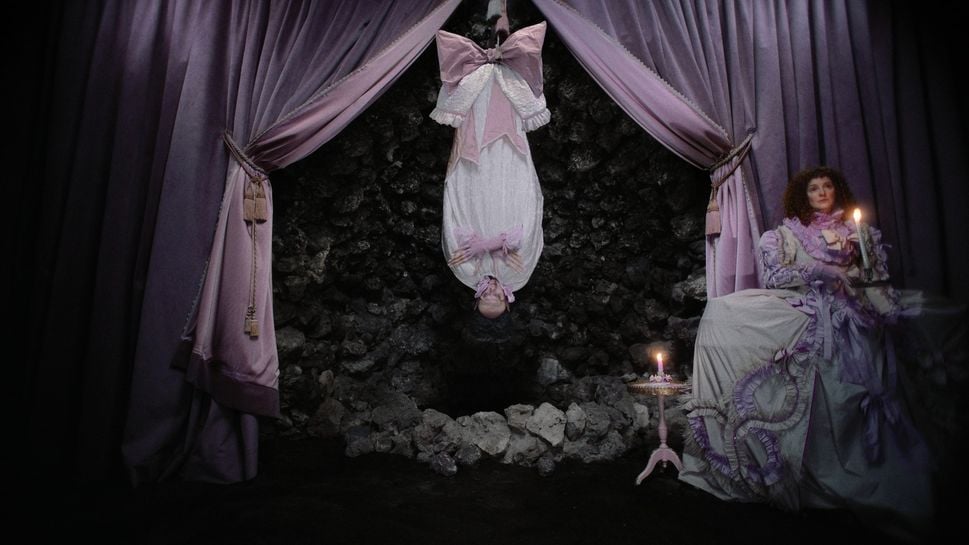
Glancing back at life during the Covid-19 outbreak, the atmosphere of dread that reigned – the pervasive fear of infection, suspicion of the other, the heightened awareness of the fragility of civilization – feels a little quaint and remote. The swift response of modern medicine in curbing the pandemic has made a cataclysmic past seem somewhat abstract, even if the ravages of the virus were anything but.
Spanning three eras, writer-director Eduardo Casanova’s sprightly tragicomedy Silence contemplates not one but two epidemics from the vantage point of the present. The first act, set in a gothic mansion in the 14th century, centres on a family of vampires grappling with an existential threat: with the bubonic plague raging, there are fewer healthy people left to feed on. Worse, one of them, Veronica (Ana Polvorosa), has fallen in love with a human, to the great dismay of her orthodox sisters. Seeking to save him from her siblings’ wrath, Veronica reveals the truth about herself to her lover, only for her trust to be betrayed.
Cut to the 20th century. It’s the late 1980s, and the plague has given way to the AIDS epidemic. Broke, bedridden and as conservative as her sisters once were, Veronica is under the care of her daughter Malva (Lucía Díez), a bleeding heart who prefers synthetic blood to the real thing. Malva is in love with a human too, a drug addict to whom she isn’t confident enough to disclose her identity. But when the contagion outside comes home knocking, she is forced to set things straight.
Full of comic situations and lines, dramatic compositions, rapid-fire editing, and baroque musical passages, Silence is a buoyant, quick-footed work. It bends vampire lore to humorous ends, using it, for instance, to satirize generational differences and political correctness. Yet an unmistakeable tragic undercurrent courses through the film. In the figure of the vampire, Casanova locates both the shame of having to lead a double life and the anguish of having to outlive your loved ones.
More importantly, Silence processes the trauma that the queer community had to suffer during the AIDS epidemic, or what was dubbed the “gay plague” in an act of political weaponization. The prohibitions on love, the stigma of contamination and the self-imposed invisibility that Veronica and Malva endure mirror the experience of the protestors outside their apartment. “Silence = Death,” goes their slogan, questioning the omerta that reigns around the subject of HIV.
Looking back from a more humane world in 2030, the closing stretches of the film evoke at once a sorrow for those who succumbed to AIDS and a relief at the normalization of the disease, which has ceased to be the death warrant that it once was. As Malva and her lover exchange bodily fluids in passionate embrace, Silence becomes as much a celebration of this freedom from mortal fear as the inescapable sensuality of cinema itself.
 The Seventh Art