[From Luc Moullet’s Fritz Lang (1963/70, Seghers). See Table of Contents]

Man Seeks to Conquer the World (1922-1938)


The defeated man of 1918 tries to gather himself, and with the improvement in his condition, he forges a less tragic metaphysics for himself. In this normal reaction, we find two successive variations: the revolutionary impulse, where man seeks to become the master of the whole world, and the asocial impulse, where he seeks simply to become the master of his own life and must transgress an all-too-arbitrary law in order to do that. The revolutionary impulse dominates in the German films, while the asocial impulse belongs rather to the American period.


The Revolutionary Impulse (1922-1932)

The theme of the man who wants to dominate the world was already present in Die Spinnen (1919), before sporadically resurfacing in the expressionist period (Siegfried, Metropolis). But it’s a motif deriving most of all from the convention of crime stories. As always, Lang starts from the thematic and artistic traditions of his time, and not themes particular to his personality, and deepens them, finding their latent meaning.

In the two parts of Dr. Mabuse, der Spieler (Dr. Mabuse the Gambler, 1922), the first carrying the same title and the second Inferno, we find not a deepening of the theme, but a realist depiction of facts and atmosphere which are its most evident components: secret societies, hidden vices, hypnotism, unlimited violence, multiple disguises, lust and depravity, secret doors and betrayals, thieves and forgers. Mabuse the sorcerer’s apprentice, whom we successively see as a psychiatrist, a drunk sailor and a great financier, seduces a degenerate, the countess Told, the top informant of his enemy, the prosecutor Wenk. He kidnaps her and does all he can to ruin her husband. He forces his regular mistress, the dancer Cara Carozza, to poison herself. He tries to get rid of Wenk twice. He hypnotizes him, drives him to commit suicide in his bathtub. The police intervene in time and rescue the countess as well. Mabuse ends up in an asylum.

Doctor Mabuse’s goal is of a practical, and not metaphysical, order: he seeks power for the benefits it brings him, material and sexual benefits in particular. This need for pleasure is justified as compensations for deprivations of the war and for the moral rigidity of the Empire. By way of an extravagant crime story, moreover, the film only reproduces facts prevalent in the depraved and divided Germany of the time: “The fight between the villains and the police recalls the street clashes ordered by Noske, the socialist home minister” (George Sadoul, Histoire du Cinéma mondial, p. 154).

Keeping things at a descriptive level means that there’s no moral judgment yet: Wenk employs the same sneaky means as Mabuse to defeat him, and he is as amoral as him. He intervenes, not as much to rid society of a criminal as to get back at a rival in love and win back his mistress. But one could say that this comes at a price: the first part, very different from the second as always in Lang, an excellent but banal soap opera, can be defined as a study of human gestures and attitudes, their movements and the relation between their movements, a phenomenological study that owes everything to improvisation and observation and almost nothing to expressionism, and which comes close to modern cinema, particularly Lang’s more recent works like Human Desire. With almost nothing—characters that move from one chair to another, light cigarettes and play cards—Lang creates an autonomous world more captivating and original than the mostly spectacular one of the second part, with its by-the-numbers fights and its car chases inspired from the exploits of the Bonnot Gang and the Apaches of Paris in 1910.

(more…)

[From Luc Moullet’s Fritz Lang (1963/70, Seghers). See Table of Contents]

We must undertake a project, accomplish a more commendable task without fail, by voluntarily letting go of the various means of expression that rely on technical virtuosity and which, by that fact, will always reek of artifice.

Fritz Lang (1926)

Born in 1890 in Vienna, Fritz Lang entered the film world in 1916. Having studied architecture, studied and practiced painting and other related arts—caricature, interior decoration, etching etc.—having amassed a vast knowledge of the world through faraway journeys and diverse experiences, the most painful of which was the war, Fritz Lang approached cinema via the intermediary of theatre at a point where he had already attained a certain maturity as a man.

That explains why, in his first directorial efforts (1919-1921) and even in his first scripts (1916-1919), we find themes, guiding principles and figures of style that we notice even in his most recent films, the only difference being a deepening intensified by the years.

Fritz Lang’s body of work is therefore one and indivisible. It’s founded on a certain conception of the world whose rudiments are distinctly discernible even in the first scripts he wrote. Rather than studying the films in chronological order as common sense demands, we must first study this conception of the world, this Idea existing prior to the creations it brought forth. The only possible order then is the one that traces different evolutionary forms of the Idea, which respect chronology only loosely.

(more…)

[The following is a translation of Luc Moullet’s Fritz Lang (1963/70, Seghers). The book consists of two parts: Moullet’s monograph and a collection of writings by and on Lang. I have chosen not to translate the second part because (a) Lang’s articles and interviews were originally published in English and are thus available in English elsewhere, (b) many of the texts on Lang (by Bazin, Godard, Rivette etc.) are already translated in their entirety into English, and (c) I think the second part, with its patchwork of excerpts, registers more as filler material that adds little value to Moullet’s monograph.]

I. Search (1916-1949)

II. Maturity (1951-1960)

III. Conclusion

[From my column on studio-era Hollywood films for Firstpost]
Fritz Lang’s Cloak and Dagger (1946) was made at a peculiar historical moment in 20th century American history. The Second World War had just ended and with it the rivalry with Germany. But the Cold War, marked by red scare and communist witch-hunts, hadn’t yet begun. The effect of this unusually peaceful period, nevertheless characterized by an exhaustion with the long war and an anxiety about the nuclear future, is palpable both in the circumstances of the film’s production as well as its narrative. In its own way, Cloak and Dagger attests to the passing of the baton from Hollywood’s left wing, in the ascendant since the Great Depression, to the conservatives, who will dominate the industry in the subsequent decade.

Made by Warner Brothers, the film is set just before the end of the war and opens in southern France with one of its many wordless sequences: a reconnaissance mission involving freight trains, a liaison with an Allied informant at the back of a bar, a double-crossing leading to a double murder. Back at the Office of Strategic Services (OSS) in Washington D.C., we learn that Germany is amassing raw material for the development of an atomic bomb and that the OSS needs a scientist in their ranks to sabotage this development. So they solicit Professor Alvah Jesper (Gary Cooper), a physicist at “Midwestern University” working on the Manhattan project.

It’s a rather odd casting choice whose oddity is revealing too. As he’s written, Jesper is a nuclear scientist who speaks German, which suggests that his character was imagined as an immigrant (like Lang himself). Casting Cooper—and not someone like, say, Edward Robinson, the star of Lang’s previous two films—transposes a flavour of American exceptionalism over the anxious scientist character. But Jesper remains a man of science only for his first scene, in which Cooper, in suit, fixes a lab equipment, flexes his fingers and plays with an apple as he converses with the OSS emissary sent to persuade him. Convinced of the importance of using science only for humanity’s good, Jesper is reluctant at first, but joins the mission nevertheless when he thinks of the horror of a German nuclear weapon. Once recruited, Jesper becomes a full-time spy—a character that fits Cooper like a glove, even when he’s speaking German with an American accent.

Right away, Jesper flies to Switzerland to gather more information from Dr. Lodor (Helen Thimig), a German scientist who has just fled the Nazis. At the end of a series of twists, Jesper finds himself en route to Italy to meet with Lodor’s colleague Polda (Vladimir Sokoloff). After his illegal crossing into Italy via a lake—another tense, wordless sequence—he meets Gina (Lilli Palmer, also a German immigrant to Hollywood), an Italian resistance fighter who will help him contact Polda and lie low until an escape is planned. His first sight of her is when Gina removes her dark raincoat and hat in the cargo truck, her sexy white dress and blonde hair illuminating the dark interior of the truck. It’s a tender introduction that sets the tone for the film’s first major transition: following a long meeting with Polda, which slows down the narrative tempo and prepares us for the second movement of the film, Jesper is asked by his peers to simply hole up with Gina for a week.

This is where Cloak and Dagger turns into a full-scale romance, as its guiding perspective shifts from Jesper to Gina. The focus of their first night together moves from their mutual seduction, mediated by a hungry cat, to the scars from Gina’s past. We learn that Gina was a hopeful musician in love until the war forced her into an untrusting, broken girl who kisses without feeling. As they flee from her flat—now no more a safe space—to an abandoned circus to a lavish apartment and finally to the ruins, the film enacts a narrative of tortured domesticity, emphasizing the feeling of never being able to settled down. Their journey through these symbols of purity and homeliness becomes a reminder of what the war has damaged, perhaps irreparably. Even so, this time together with Jesper is a moment of respite for Gina, who finally dresses up in a nostalgia for life before the war.

While the transition to sentimentalism can seem jarring for viewers used to tight film noir narratives of the era, Cloak and Dagger deems it important and just to give Gina this passage of peace and warmth before the spy film resumes with all its violence and mayhem. For Lang’s film is first and foremost a fable about the loss of innocence—a theme that preoccupied the filmmaker throughout his working life. In 1945, the year before the film’s production, the Nazi concentration camps were discovered, shaking western civilization’s deep-rooted faith in progress. It was also the year atomic bombs were dropped in Hiroshima and Nagasaki, catapulting humanity into an age of fear and uncertainty.

One of the first Hollywood films to deal with the moral and existential repercussions of the nuclear era, Cloak and Dagger evokes the disillusionment of a civilization with the stories it has been telling about itself. The film was written by Albert Maltz and Ring Lardner Jr., screenwriters blacklisted in 1947 as part of Hollywood’s anti-communist drive, and Jesper’s opening speech spells out their pacifist dispositions. In an interview years later with Peter Bogdanovich, Lang revealed that the film’s original ending had Jesper discover an abandoned concentration camp with several thousand deceased inmates who had been forced to work on the bomb. This conclusion, with its suggestion that the real danger had only begun, was too strong for producer Milton Sperling, who instead ended the film triumphantly with Jesper returning to America with Polda.

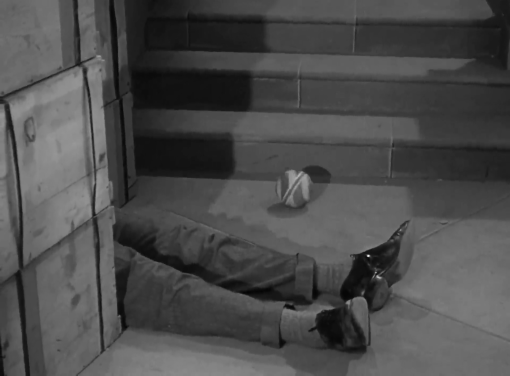
Jesper, too, experiences this loss of innocence in a stylized-yet-austere scene set in an apartment foyer, where he’s forced to fight a henchman tailing Polda. It’s an unsettling, very physical sequence of hand-to-hand combat in which the henchman digs his nails into his rival’s eyes while Jesper, with Gina’s help, strangles the man to death. That this peace-loving scientist of lofty ideals could suffocate a man with his bare hands is the kind of dark irony Lang was adept at driving home. A master of mixing tonalities, Lang amplifies the brutality of the sequence by cutting it with sweet accordion music playing in the streets. As the dead man lies on the floor, a ball comes bouncing towards him from the staircase—a quintessential Lang image of corrupted innocence that harks back to his German-language masterpiece M (1931).

Cloak and Dagger might also be regarded as one of the first examples of the Euro thriller—a sub-genre of Hollywood thrillers whose action takes place in attractive European locations and which is predicated on the prerogative of the American hero to go wherever he wants without hindrance. The challenges of the film’s plot are rather conveniently resolved by Jesper, who wanders around Switzerland and Italy without much trouble. The Italian streets splattered with Mussolini propaganda are, of course, shot in Hollywood studios, whose artificiality sticks out all the more considering Rossellini made the neorealist epic Paisan the same year. Realism of appearance, however, is not the primary concern here. Cloak and Dagger puts its finger on a paranoia that will come to define a decade, attaining its full proportions when the Soviet Union performs its first nuclear weapon test in 1949.


[Originally published at Firstpost]

Metropolis (1927)
Fritz Lang
German

“There can be no understanding between the hand and the brain unless the heart acts as mediator.”


Metropolis

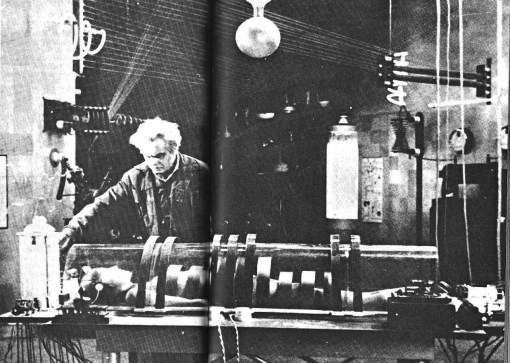
When cinema was in its infancy during the teens and the twenties, many pioneers sought to provide it a definite shape and even assemble various tools and benchmarks for the decades of filmmakers to come. This led to the formation of various cinematic and narrative techniques, characteristic to their country of origin, which were later used by tens of directors from that country. One such trait, expressionism, was extensively used by the filmmakers of Germany such as F. W. Murnau and Fritz Lang. The latter’s magnum opus, Metropolis (1927), is a grand marriage of the expressionist method and unimaginably high ambitions for its time.

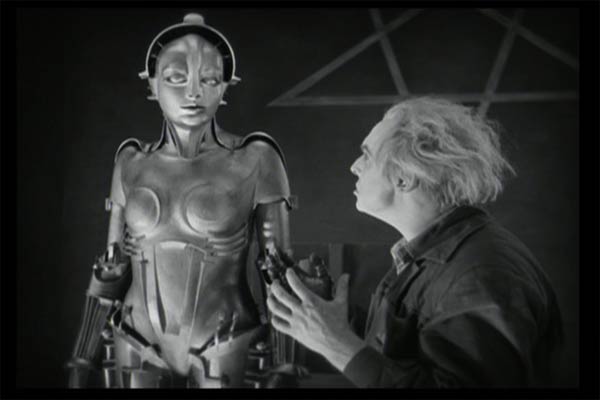
Joh Fredersen is a huge industrialist and the owner of the high-tech city of Metropolis. The workers of Metropolis are overworked and are exploited in exchange for small amounts of wages. This pains Freder (Gustav Fröhlich), the son of Fredersen who seeks to get justice for the workers from his father. The workers are on the verge of a revolution, but are held back by the hopes given by Maria (Brigitte Helm). Knowing this, Fredersen plans to use the evil genius of the city, Rotwang (Rudolf Klein-Rogge), and build a humanoid that resembles Maria in order to disorient the workers. However, Rotwang has his own plans and decides to double-cross Fredersen , in the process endangering everyone’s life.

To get an idea of the film’s influence on cinema it is enough to consider that it was the pioneer of the Sci-Fi genre – the one that Hollywood has never grown tired of. Its ideas of science and future have tricked down to every science fiction film made after it – both great and disastrous. Right from the struggle to create a whole new world (Minority Report, Sky Captain and the World of Tomorrow etc.) to the debate of humanity versus artificiality (Blade Runner, A. I. etc.), the impact of the film is omnipresent in the genre. The film’s special effects, needless to mention, were groundbreaking for their time (The Tower of Babel sequence retains its potency to amaze).

Going hand in hand with expressionism, the film is full of black and white characters and only aids the film’s heightened take on fantasy. Its consistent message of compassion for the working class may be a tad tasteless for viewers of today who do not expect any propaganda from the medium. However, this was, perhaps, required for Lang to drive home the point of the film which would otherwise have been deemed meaningless. Faith in the face of apocalypse becomes a joint theme, along with importance of humanity over science, which is supported well by biblical references.

Special mention must be made for the 2002 restoration of the epic which happens to coincide with its 75th anniversary of release. With over 25 percent of the film’s footage lost, the techies at the F. W. Murnau Foundation have done a staggering job of gathering the remaining material, removing the blemishes from each and every frame and providing intertitles summarizing the missing sections. The conventional score by Gottfried Huppertz for the version majestically supports the grandeur of the film.

Metropolis invariably takes the second place when the works of Fritz Lang are discussed and is overpowered by the dynamism and adrenaline of M (1931), immensely influential by itself and unbound by time. When watched today, Metropolis may look very amateurish in the execution of its themes and dated in its techniques, but placing oneself in its age and assessing its influence on future of the medium and the massiveness of its strides, it is ineluctable to call it a classic.