CHAPTER 14: A YOUNGER BROTHER
 Saket is desperate to get the gun back. Just then he gets a brainwave. He remembers Govardhan telling him that he knows the place in and out. He digs through the trashcan and retrieves the visiting card Govardhan had given him. As the curfew nears, Saket goes into Chandni Chowk with Govardhan. He does not tell till then that he was in search of a truck and not a girl. Govardhan says that he is scared and wants to leave. Saket does not allow him. Govardhan picks up a stick and tries to attack Saket. But he is too slow and too old for Saket, who twists his arm and sends him begging for life.
 As Saket asks Govardhan about the address, he hears someone calling “Hey Ram”. It is Saket’s friend Amjad. He is delighted to see Saket. But Saket is not a bit surprised or happy. Perhaps, he views Amjad as a Muslim and not a friend. Amjad hugs him and asks him if Govardhan is troubling him. The coward Govardhan says that he is a close friend of Saket’s and tries to stick with him in order to save his skin. Amjad asks Saket about Aparna and he comes to know of the mishap. He asks Saket to come to stay at his house till the curfew is lifted. He says that he has moved to India permanently and Saket’s sister Nafisa is there too. But Saket is not interested. Amjad reminds him that this is not South India and will get butchered if he stays out. Saket says that he needs to find this Azad Soda Factory first to retrieve his wallet.
 Amjad smiles and leads them to the place. Possibly, it is his factory. They proceed as Govardhan sticks around for safety. They go through a surreptitious setup to enter the factory. Govardhan tries to leave but Amjad prevents him to go out during curfew. As they enter the factory, they are able to see many Muslim men holding guns and staying low. Amjad asks them to wait till he gets back with the wallet. Amjad talks to a few men about the wallet who hit him back for conniving with a Hindu and tell him that the “wallet” is actually a gun. One of the men, Amjad’s uncle decides to deal with Amjad later and finish off the Hindus now. Saket is not a bit scared, in contrast to Govardhan who is trembling. Saket stands with his cold deadpan face before the Muslims. Amjad defends Saket and says that he is like a brother to him and Nafisa ties a Rakhi every year. He also believes that the gun is not Saket’s. But to his surprise, Saket admits that the gun is indeed his, but is not here to kill anyone. It just came thereby accident and he will go back if it is returned. Govardhan is scared out of his wits and begs for mercy. The other two Muslims get ready to shoot the Hindus as Amjad defends them. He tries to negotiate as Saket takes a good look around and plans his next move.
 One of the two Muslims asks Amjad to move and says that he will only blow Saket’s knee off. As Amjad tries to stop him, Saket jumps into action and manages to ward off the people surrounding him. He falls off the window along with Amjad’s uncle, who dies moments later. He manages to hide here and there as the other Muslims search for him. Amjad helps him to hide too. Meanwhile, Govardhan calls a certain Mr. Chari and tells them about the factory and the ammunitions in it. As Amjad and Saket hide from the eyes of the rest of the Muslims, they talk about the situation, the partition and much more. I’ll give the transcript of the conversation instead of paraphrasing it for more effect.
“Amjad: Tell me the truth. I can still save your life. Did you come here to kill Muslims?
Saket: No
Amjad: But this gun…
Saket: Mine.
Amjad: But why did you bring it here?
Saket: I didn’t. Your Uncle’s truck brought it here. Okay, I am leaving now.
Amjad: Are you mad? Fool! You’ll die. Fool! I don’t know why you are carrying this gun, but you’ll need my help to get out of here.
Saket: I don’t need anyone’s help. I’ll escape on my own.
Amjad: And you’re going to shoot your way through, won’t you? Which means that gun is meant for killing Muslims!
Saket: It isn’t, but it could be.”
Amjad: You too Ram? But why?
 Saket points the gun to Amjad’s forehead who is surprised to find his tame friend carrying a gun. His reply reminds us of Caesar’s final words as Brutus stabs him.
The conversation continues as they find anther place to hide.
“Amjad: Because your Aparna is dead?
Saket: She was killed! Like countless Hindu men, women and children! By Muslims.
Amjad: So you are here as a representative of your religion? Do you remember my father? He didn’t die on his own. The Hindus killed him!”
 They get behind a ruined crate to hide again and the conversation intensifies. Both Amjad and Saket become representatives and symbols of their religion as they talk.
“Saket: Enough! Just go away. Get out! Out of our sight!
Amjad: Go away? Where?
Saket: To your Jinnah’s Pakistan.
Amjad: Jinnah’s daughter considered India as her own country, and stayed back. I am Gandhi’s son. I have decided to stay here.
Saket: Decided? With whose permission?
Amjad: I don’t need anyone’s permission to live in my own country!
Saket: Your country? You foreigners walked across the Khyber and ruled us for 700 years!
Amjad: I was not born then. I belong to your times. Many came from the Khyber. Why pick on me? You call me a Foreigner! Aren’t you also a foreigner?
Amjad: Some say that your Lord Ram came across the Khyber.
Saket: Don’t you dare mention my Ram’s name!
Amjad: If not your Ram, O.K., Can I talk about my Ram? What’s happened to you?”
 Saket mentions that Muslims have settled in India because of the Mughals who had invaded India through the Khyber Pass while Amjad mentions the theory that Rama is actually an Aryan who has his origins in Europe. Both of them get enraged by these comments. Additionally, Amjad mentions that he (Muslims) is Gandhi’s son and very much Indian. He is shattered to see his friend being turned into this animal. He had always seen Saket to be a very calm and peaceful person. He asks him why he had turned like this,
“Amjad: Am I not your brother? At least, am I not your friend?
Saket: That’s just why you are still alive. Leave before I change my mind. Now.
Amjad: Everything was peaceful for a few days, thanks to Gandhi. See what you started!
Saket: You started it. You people killed Aparna!
Amjad: All Right. I will put an end to it too.”
Amjad kneels before Saket and asks him:
“Forgive me for killing your Aparna. I forgive you for killing my father. Now will you accept me as your brother, Ram?”
 The camera is high above Saket’s head denoting his dominance and majority and Amjad’s pleading position and minority. This scene where Amjad asks Saket to be accepted as his brother carries a lot of weight in the film and gives out multiple meanings. As Saket and Amjad have become representatives of their religion during the conversation, this plea by Amjad acts as a plea by the minority Muslims to become brothers with the Majority Hindus. Hence the camera raised angle over Saket’s head. Additionally, it is a plea from a single man, Amjad, a simple one, who has lost his beloved friend and wants to get him back. He requests Saket, straight from the heart, to accept him as his brother. Even though they are born to different mother(land)s (Amjad was born in now-Pakistan whereas Saket was born in now-India), they have been raised by a single undivided mother – the pre-independent India. This again takes off from the conversation between Amjad and Mr. Bright during the Karachi party where Amjad says that Saket and he are from the same alma mater.
Saket turns down the plea. Amjad continues:
“Very well, then. Shoot. I’ll give you the pleasure of killing Muslim. And once you are done, cleanse your heart of the hatred. Let my death save you from this madness. Somebody will have to put a full stop to this.”
Though he does not show it outwardly, Saket is immensely moved by this statement. He says that he is not here to kill Amjad, but the cause of all this – Mohandas Karamchand Gandhi. Amjad is surprised at this and informs Saket that Gandhi is the only sanity in the country. If not for Gandhi, whatever peace is being maintained couldn’t have been possible. Just then he hears a gunshot nearby and tries to check out what it is. Saket senses that it is not the Muslim group but a Hindu group with weapons, which was called by Govardhan.
 Saket asks Amjad to hide immediately. The roles of the saved and the saviour are reversed now. It is Saket, now, who is trying to save Amjad from a fanatic group. Amjad realizes that Saket indeed wants Amjad alive and says that Hindus and Muslims can be brothers if they try, like Gandhiji says. Saket drags Amjad to safety as the fanatics follow. He even hits Amjad to make him quiet and orders him to go into the hiding place he has pointed to. But this is all an act of kindness and possessiveness, like the one between two siblings. Amjad reminds Saket that if anything happens to him, he should take care of Nafisa, their sister. Saket is moved and asks him to hide.
 The fanatic group led by Chari arrives along with Govardhan. They ask Saket to point the way to the factory which contains a lot of Muslims with weapons. He says they want to attack the soda factory so that they can equip themselves with rifles instead of traditional swords and axes. Amjad is shocked to hear this and comes out in to clarify that there are no weapons in the factory, just some old men, women and children. He also offers them to show them the place where guns are there. Saket is surprised and speechless but musters some courage to say something to defend Amjad. Note the frame composition here. The misé-en-scene is strikingly similar to the scene where Amjad defends Saket, with the defended on one side and the fanatic group on the other and the defender in between.
“Saket: He is my brother. Bharat, that’s his name. He’s madly in love with a Muslim girl, Nafisa. He is mentally ill. You are mad. Ever since, he has been dressing up like this. I came to stop him before he converts to Islam in this madness. Come home, Bharat”
Yet again, the Ramayana track being emphasized. Bharat, in Ramayana, was Rama’s half brother. Rama was born to Kaushalya and Bharat was born to Kaikeyi. Even though they were born to different mothers they were the closes than two brothers ever will be. Similarly, in spite of Saket and Amjad being born to different mother(land)s, they are very close and will give their lives for each other.
Amjad turns down Saket’s offer to defend him, in the same way Saket had turned his offer of defense in the soda factory, again highlighting the reversal of roles. He decides to reveal the truth to the gang. He steps to the centre, with chest held high and says
“I am Ram’s brother all right. But not Bharat. My name is Amjad Ali Khan. And if you want, you can add a Bahadur.”
 The “Bahadur” indicating his bravery too. He knows that Saket has always accepted him as his brother. Just as he finishes, he is knocked down from behind with a hammer. Saket is mad and shoots the guy who knocked Amjad down. As Chari comes forward to attack Saket he shoots at him, killing him and Govardhan. The rest of the crowd, scared, runs off.
Go To Chapter
 Cut to Delhi. Saket arrives with a suitcase. He looks the same as he did in Calcutta a few months ago, but with dark glasses for anonymity (like Pandey did in Bombay). He enters a certain Hotel Marina and registers under the name K. Bhairav (Kaal Bhairav, perhaps – An angry form of Lord Shiva, the god of destruction.). He is assigned room number 43 and he proceeds towards it. Govardhan, a local follows him to his room and tries to get close. When Saket is angered and asks him what he really wants, the local replies that he can get girls from any state if Saket wants. Saket turns the offer down. Govardhan hands Saket his visiting card in case if he were to change his mind. Saket takes it and dumps it in the dustbin inside after Govardhan leaves.
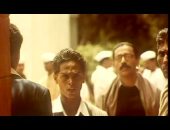 It is morning and Saket immediately gets down to work. He arrives at Gandhiji’s staying place where tight security has been provided and a lot of Gandhians have arrived. He is here to survey the place so that he can execute his work perfectly. As he enters, he sees a group of protestors raising cries against Gandhiji. Saket doesn’t seem to know the reason and enters the villa. We see a fasting Gandhi talking to Nehru and Moulana Azad. As Saket enters, we also notice a group of, what it sounds like, plotters discussing the course of action. Saket does not hear all this as he is busy looking at Gandhi. He sees Azad and Nehru leaving after the chat. He also notices that there is a small cabin behind the stage on which Gandhiji would be addressing his followers everyday. He starts making the plans. He goes around the central building for the access to that cabin.
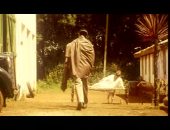 There are goats running around in the compound. This reminds us of Abhyankar’s comparison of Gandhians to goats in Calcutta a few months ago. He approaches a man lying on the cot near the cabin. He learns that the cabin is a servant’s quarter and belongs to the man who is lying there. He asks him if he can go in and take photographs of Gandhi from inside as he delivers his speech. The servant asks him to go inside but warns him about the darkness I the room, again signifying secrecy. Saket gets near the ventilation over the stage and gets on the rickety cot beneath it. He can hear some men on the other side trying to fix the microphone. He makes sure that he gets a good view of the stage and comes out of the room. He learns from the servant that another group has also asked him to let them in for photographs. The servant milks money from Saket as he belonged to a different group. Saket has his suspicions. He pays up and walks towards the stage.
 As he walks, we can see two tense men discussing something about one of their men backing out. We also learn that one of them is called Nathu, the man who would go on change the course of history. Saket, oblivious to the discussion, goes towards the stage. Just then he sees a large crowd coming along with Gandhiji singing a song. Saket is angered, visibly, at Gandhi, his Ravana. Ironically, the song being sung as Gandhi arrives is in praise of Rama! A visibly weak Gandhi is being carried by his followers on to the stage.
 Saket feels a pat on the back. He turns back and is shocked to see Uppili Iyengar, his father-in-law standing behind him. He is euphoric at meeting Saket. He informs him that everybody is soulless at home. Also that his aunt has passed away after his uncle. Saket is shocked but regains composure after reminding himself of his Sanyasa. Apparently he has misconstrued the telegram and thinks Saket left the home to serve Gandhiji in Delhi. He is happy that he left the house for a good cause and introduces Saket to Mr. Subhash Goyal (Om Puri), an influential industrialist who is arranging a meeting between Uppili Iyengar and Gandhiji.
 Gandhiji starts delivering a speech which is announced loud by one of his followers, Dr. Susheela Nair, following the failure of the microphone, denoting that Gandhiji’s fast had made him so weak so that he is not even able to speak loud. As Gandhiji speaks about Muslims still being slaughtered in Calcutta, even after his continued attempts at peace, Saket notices somebody in the servant’s cabin at the ventilator. He also notices a distributed group coordinating something using symbols. This is followed by a minor blast near the building which starts a panic among those gathered. Gandhiji calms them down and asks Dr. Nair why she was so scared and what will she do if someone really comes to assassinate him.
 Saket approaches the scene of the blast as Uppili Iyengar and Mr. Goyal prevent him. He is now almost sure that there is another cabal out with the same mission as his. He sees police chasing the suspects. As they move out, Uppili Iyengar complains to Saket that times have become so bad that someone has even tried to kill Gandhiji. Saket has no words for this and walks along silently as they are stopped by the policemen for security reasons. As Mr. Goyal clarifies their identities Saket notices the man, who had set off the blast moments ago, arrested. We also see that the date is 20th January – 10 days for the fateful day.
 That evening, Saket looks out of the balcony in his hotel room as he hears in the news that a Hindu activist group may be responsible for the blast. He comes down to the reception and asks if there is a movie theatre nearby, so that he can get his mind off all the tension. The receptionist says there is one but does not play a good movie. Saket does not care and steps outside as he notices a group of policemen entering the hotel. He rushes back without getting noticed and comes to know that the police have discovered the to-be-assassin of Gandhi residing in the hotel. They have brought along the suspect with a search warrant and have asked the hotel manager to not allow anyone to go out of the hotel till they finish their job.
 Saket does not understand how the police came to know of him or if they are searching for him at all. He rushes to his room and closes the door. He takes his gun from the drawer and searches for a place to hide. He notices a soda truck beneath his balcony, just within his reach. He gets over the ledge and places the gun in the truck, with the intention of retrieving it later. As the police keep knocking his door, he returns and flushes his commode and unbuttons his pant. He asks the police to wait and returns after a few minutes to open the door. As the police inquire him, he buttons his pant back, making them believe that he was in the bathroom all the while. The police finds that a man named Nathu Ram Godse is in room number 40. They apologize for disturbing him and ask him to stay in the room till they are gone.
 With a sigh of relief, he goes over the balcony to get back the gun only to find that the truck has left. He is shocked and enquires the bearer in the hotel about the truck who says the truck will not come for 5 more days and asks if he wants soda. Saket says that his wallet has fallen into the truck and has around 5000 rupees. The bearer says that it is better to lose 5000 rupees than to lose his life. He informs him that it is a curfew is on at the locality of the Azad Soda Factory, the place where the truck has come from. He also adds that the place, Chandni Chowk, is a predominantly Muslim area and will be dangerous for a Hindu to visit during curfew.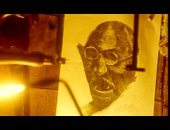
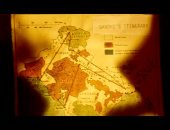

 One of the two Rams selected for the mission has passed away. It is up to Saket Ram to complete the mission and the prophecy. Amazed to see the telegram, he hides it in the magazine as the family enters singing divine verses of Young Krishna. He receives a bigger shock as they reveal that Mythili is pregnant. He is speechless as uncle Bhashyam asks Saket to get the elders’ blessings. They play M. S. Subbalakshmi’s record (about Young Krishna yet again, signifying the birth of the new child) on the gramophone as Saket quietly moves away from the room. He does not return Mythili’s smile, thus clearly unhappy about the situation. He goes upstairs with a heavy heart. As he gets away from the view of everyone, he leans on the wall as a gesture of helplessness. This shot is immediately followed by the shot of Mythili watching him and looking down. She is disappointed yet again by Saket’s indifference towards her. Saket’s guilt doubles now as he not only betrays Mythili’s trust but also his to-be-born child’s.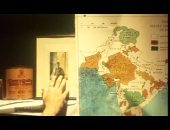

 Saket’s hears some voice from downstairs, from aunt Vasantha’s room. Surprised, he opens the ventilator to check it out. To his shock, it is his uncle, Jegannatha Iyengar, aunt Vasantha’s husband who has been paralyzed for 7 years, who is calling out some indiscernible words (possibly “Mahabahu” (Vishnu’s name meaning one with long arms), suggesting that Vishnu is calling him with arms wide open). Surprised, he rushes to the room and tries to talk to him. Aunt Vasantha is sound asleep. He notices his uncle senseless. He checks for pulse and finds that his uncle has passed away after years of torment. He had spoken his last words to Saket. We know from the “smile conversation” that aunt Vasantha is like his mother. So that automatically makes his uncle equivalent to his father. Interestingly, Rama’s father, Dasharatha, went into a state of mental paralysis after his son was sent into exile as per the wishes of his wife Kaikeyi. He died some time after Rama left the house.





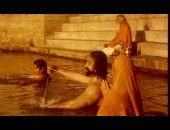 As the rest of the family cries upon the loss, Mythili’s mother continues reading the letter wherein Saket pours out his guilt and apologizes to Mythili for being such a curse in his life in spite of her being very caring towards him. We see him breaking his Upanayanam, breaking off his worldly ties.
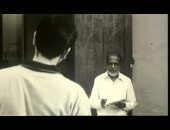 Cut to the present. 1999. Return to Grayscale. Saket struggles for breath. He is taken into the van on a stretcher. Ram asks his father, the son of Saket, to assist him. He refuses and says that it would not be necessary. Ram asks if he had at least informed grandmother Mythili. His father replies that it won’t be necessary either and will tell her later; whatever the result of the treatment is. He is totally indifferent towards his father’s health and does not care about the life of a man that he has never talked to. The conversation shows the change of times from when the South Indian families were tightly bound and each relation was very dear to each other to now, when no one cares unless cared. Ram is infuriated but is urged by the doctor get into the van. This difference in times will be highlighted throughout the rest of the film.
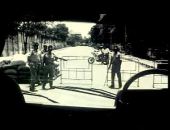 They drive to the hospital but are stopped by a road block on the way. It is found that the road block is set up to prevent the possible riots. It is then they find that the date is December 6, they day when the Babur Mosque in Ayodhya was demolished. Again the contrast of times is shown here. South India, which was so peaceful in spite of the riots in Calcutta, now fears riots due to similar reasons. They ask the policemen to allow them to pass explaining their situation and even trying to bribe them. But the policemen say that they have their own problems and it is better for them to leave.
 As they snake in and out of the city streets they find that the riot has started intensifying. A nice technique, reminiscent of Steven Spielberg’s Schindler’s List (1993) is employed here. All the elements of the monochrome visuals are retained except the shots of fire which is given in true colour. This suggests that ignorance of the past (denoted by the black and white of the video), the communal hatred and riots still carry on from the past and are still fresh. Thus, the elements of the riot viz. the fire and explosions are shown in colour.
 They try to avoid the rioters and start going through different lanes. Saket struggles on the stretcher inside the can. A group of police personnel spot the van and shoot out the tyres of the van. Their leader (Nasser) rushes towards the van and starts evacuating the people inside. It is now that we learn that Ram’s full name too is Saket Ram and the doctor’s full name is Munawar. They explain their situation to the officer who asks them to lower the stretcher into the nearby trench in order to safeguard him. He also asks the rest of them to go along with him into the trench. He closes the trench from above. The officer waits for the green signal for the shooting orders. As he gets the go, he asks his men to stay alert and wait for his command. Just then a couple of rioters throw petrol bombs in the street and the rest of them rush towards the police officers. The men try to counter the rioter. Mean while Saket Ram (senior) returns to his recollection of his past.
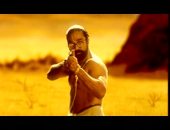 We move into another surreal sequence. The atmosphere is hot and cloudy. The saffron tinge in the film goes up. Stage is set for a storm to rage. Saket Ram is practicing at the target board with his pistol. With the long rifle in his hand he is reminiscent of Rama wielding his bow. Only that this Rama is more mechanical. He fires at a lump of irregular pillar of clay – what may be considered as one of his “inner demons”, formless but prominent.

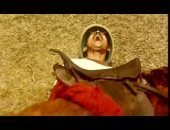 The next day, at the Maharaja’s palace grounds, crowd has gathered to watch a polo match in which Saket and Abhyankar are playing. Mythili and Lalwani have come too. All is well until Abhyankar meets with an accident wherein his horse collapses on his trunk. People rush and retrieve him out and admit him to the hospital.
 Saket and the King come to the hospital to visit Abhyankar. Saket finds here that the King has got Lalwani a good job in exchange for his service. The Maharaja goes inside to meet Abhyankar as Saket waits outside along with Lalwani and Mythili. Lalwani is happy that Saket had helped him put his past back, and thanks him. “Guha” then bids adieu to Saket and leaves. Mythili breaks into tears upon which Saket asks the reason. Mythili says that she is lucky that Saket has survived the accident on the field. She says that she is going to say something that her ancestors never would have said to their spouses and says “I love you”. Saket says he loves her too and that is why he is disturbed. He is not able to digest the fact that he is going to leave this innocent girl suffering in a few weeks.
 Saket says his hands are stained with blood and he should not be with her. She says that it is because of his passion for hunting and it is natural for a tiger (symbol for masculinity yet again) to hunt and kisses him. Little does she know that Saket is not hunting animals but himself is an animal that has hunted a lot of humans and is going to go on. He sympathizes for the girl whose innocence adds more and more to his guilt and he asks if he would find peace if he tells her everything about him. She asks him to tell her everything after he has met Abhyankar. Saket looks at the toe ring on his finger, removes it and slips it onto Mythili’s finger. This ironical shot not only shows his acceptance of Mythili as his wife but also the relinquishment of his last traces of Grihasta. He tries to kiss Mythili as the Maharaja interrupts.





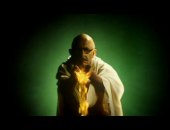


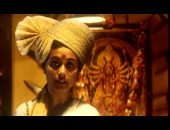


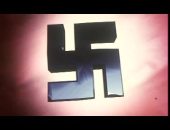

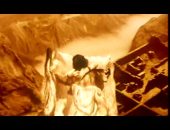
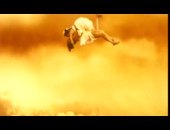
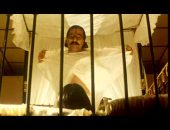 He knows that it his the last time he is making love and it is the road to ruins from now on. The images of Mohanjo-Daro and free fall indicate ruining of his future course of life and his present nonchalance towards it. Saket tears off his shirt hinting his high masculine coefficient at this point as he pounces on Mythili.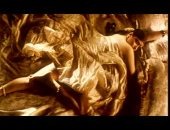

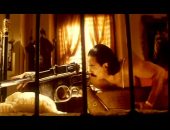 Saket uncovers the gun and kisses it passionately. He is in love with it. The concept of the “mechanical Rama” is evident once more. Additionally, this is the transformation of Saket from a person who wants to get back into peaceful marital life into one who is in determined to carry on in his self destructive mission to satisfy his political ideologies and avenge his wife’s death.
 After he has made love, Saket sits at the piano and plays it mechanically. The image of the piano in the film comes for one last time and produces a very creepy and robotic tone suggesting that this is the last time he connects to his wife and the connection, too, has been a very ritualistic and mechanical one. He stares at Mythili, who is lying on the bed in an almost-angry fashion and gets up to tie his long locks back. He is imposing in stature. Saket is now at the pinnacle of masculinity. He only has to slay his inner demons now and then the outer.
 The plane lands at Bombay Airport. Saket notices Shriram Abhyankar as they proceed to gather their luggage. He is in a completely new attire. He greets Saket with a “Vande Mataram”. He carries some suitcases as Saket introduces him to Mythili. He interrupts Saket and introduces himself as Ramakrishna Pandey, clearly assuming anonymity. Saket introduces Mythili to Pandey as his wife. Pandey is amazed and disappointed at Saket’s “mellowing down”. He is not happy with Saket putting his past behind him. He almost asks why Saket had dome so but restrains himself to asking when he had married. As Saket mentions that it has just been two months, Pandey greets Mythili as a formality and the three walk towards the car. Pandey asks her if she would like to join the hunting party with the Maharaja the next day. She turns down the offer reporting that she is a vegetarian (again the meekness of Mythili is evident). After a vernacular joke about vegetarianism and Hinduism, they get in to the car specially sent for Saket by the Maharaja.
 suggesting Saket’s political leanings have become stronger than personal revenge. The Maharaja is impressed and thinks he is the kind of man for their job. They leave the estate after a group photograph. The photograph again, as in the party at Karachi, fades to grayscale indicating that the stories behind them will be never revealed by Saket to his family.
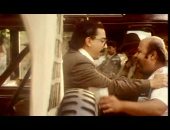 The Maharaja asks Abhyankar to call the man selling Papad to which Abhyankar says that Papad is a poor man’s food. The king again makes a wisecrack that Maharajas will have to learn to eat Papad in Sardar Vallabh Bhai Patel’s rule! The vendor comes to the car as Saket watches somewhere else. The Maharaja buys the whole lot of Papads and pays the vendor a handsome amount. He condescends on the vendor and says that he will be grateful that he prospered because of a fading king and wonders if the vendor could count that sum of money. The vendor is quick to reply that counting loads of money is what he did in Karachi before the riots there. It is only now that Saket notes that the vendor is none but his old friend Lalwani. He is shocked and delighted at the same time. He had never imagined that Lalwani, who was one of the richest businessmen in Karachi, would be selling Papad for meager amounts of money.
 It is Vijayadashami. Lalwani is drunk to his heart’s content. Mythili offers him a sweet that he drops down. As he tries to pick it up to eat, Saket grabs it and throws it away. Lalwani is disappointed and says that bygones are bygones indicating his escape from the past. Just then, Abhyankar offers him what it seems to be alcohol I a cup and asks him to drink. Upon his hesitation and Mythili’s efforts to stop Saket, Abhyankar urges Saket to drink it after he tells him it is just Soma (The drink of the gods), the drink that comes along with the festival. Saket drinks it up as Mythili seems a tad disappointed. They all go to the event of burning the mammoth idol of Ravana by Rama. This is headed by the Maharaja himself. There is a huge crowd at the place. The maharaja starts the proceedings as the large 10-headed figure starts burning. People start the loud chants of “Victory to Sri Ram” and celebrate.
 It would be ideal now to introduce the biggest allegory that runs in the film and intensifies from this point onwards. The whole film is laid on the structure of the Hindu epic Ramayana. Saket is the Rama figure of the story. “Saket” takes up the meaning of “Ayodhya” also. Thus Saket is a representation of the Ayodhya Rama in the film. Saket has lost his wife Aparna in the riots in a similar fashion to the original Rama who loses Sita to Ravana. Ironically, in contrast to the ideal traits of the epic hero, out hero Saket Ram is an imperfect Rama – A Rama that drinks Soma, a Rama who has remarried after his wife’s death and a Rama who has been unable to rescue his wife. Also “Mythili” is another name for Sita – our Rama’s second Sita. Lalwani is the Guha figure of the story whom Saket brings home irrespective of his present social position, similar to Rama declaring that Guha is his brother even though he was born in a lower caste. The references will increase and will be pointed out at relevant places.
 This Vijayadashami is about to change it all. The Soma has got onto Saket’s head. He feels his masculinity as he watches the Ravana idol burn. He feels as if he has regained his masculinity and twists his moustache, now definitely representing his manhood. He looks at Mythili, her inviting lips. He approaches her for the first time sensually. As he tries to touch her, her image transforms into the blind little girl he had seen in Calcutta. He is shocked and moves back just to trip on one of the people he killed. He is haunted by the unexpected hallucinations. He realizes that it is the drink that had brought about the momentary masculinity, that is now gone. As the idol of the demonic Ravana burns, Saket realizes that he has to first slay his inner demons before he can go about slaying his Ravana – Mahatma Gandhi, the man responsible for his wife’s disappearance.
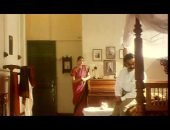 Cut to Srirangam. The contrast of situations between Bengal and the south once more. Mythili is speaking on the phone with her mother. She informs that Mr. Chari’s prediction about Saket returning home was spot on and he had returned safe and sound. She indicates that he looks like the Tamil poet Bharathiyar with his moustache. This becomes an important point as will be seen in a few moments. She hangs up the phone and returns to the bedroom. Saket is getting ready to go out somewhere as she enters the room. She still maintains her distance and walks away from Saket. As she stands away from Saket, observing him, he apologizes. On asking the reason for his apology, he says it is because of his bizarre behaviour and she is too young to understand it. She demands an additional apology for that and tells that she is neither too young to understand things nor is their marriage a child marriage. She tries to assert her position in the relationship for the first time. She tries to tell Saket that she is equal to him and forms half the relationship. Bharathiyar, who never gave a thought about his wife Chellamma being an important person earlier in his life, later realized her value and also of every woman in the society. Eventually he started the feminist movement in Tamil poetry that revolutionized the position of women in the society. Thus the reference of Bharathiyar early on implies evokes a similar relation between Mythili and Saket.
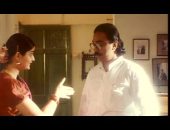 She now requests Saket to accept her as a friend (like the Krishna-Andal relationship) if not wife. She offers a handshake as Saket reciprocates. This is the first time they are close and come under the same depth in camera. Here, they are both physically and emotionally closer for the first time in the film not counting the ritualistic closeness during the marriage. She then asks is she can hug him. He accepts as if fulfilling a child’s petty wish. She hesitantly hugs him. He observer her keenness and mixed fear and is unable to help but smile. She says it is the first time. Upon asking what was, she replies that it was the first time that she saw him smile. Indeed, it was the first time he was smiling in a very long time. He is not able to believe that he smiled and looks into the mirror. He wants to look at the façade he has pulled over himself during the torturous year. He wants to see how he looked smiling. She insists that she had seen it even though it lasted for a fraction of a second. He is happy about that and smiles once again which Mythili is prompt to point out. She even calls for a hatrick after Saket smiles once more for a wisecrack from her about his smile.
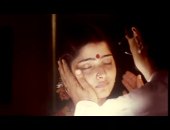 He stares at her for a moment, relishing her child like innocence and her eagerness to bond but immediately feels guilty of not reciprocating the feeling. He is not able to look into her eyes and looks down. The view of the toe ring on her feet just adds to the guilt. He looks up again in her angelic face. He wants to say that he’s sorry for not caring for her and he has not been worthy of her attention. He takes his arms near her face as she places her cheek on his palm. As if consoling, he goes for a passionate hug when uncle Bhashyam interrupts.
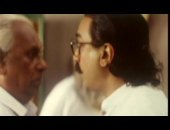 Uncle Bhashyam calls Saket downstairs to meet Mr. Chari, the astrologist who has come a long way to meet him. Saket leaves the bedroom as he grazes Mythili for the first time. Saket goes downstairs to see everybody in the room sitting anxiously, ready for the conversation. Mr. Chari is staring at Saket’s horoscope which is objected by Saket. Upon asking the reason for his scrutiny, Mythili’s grandmother prompts Mr. Chari to tell him what he had told them. Surprised at this Saket looks at Mythili to ask if she had anything to do with this. Mythili gets a bit frustrated and denies it with a shake of her head. Mr. Chari starts explaining that since he has been working with dead bodies and skeletons there has been some force that has taken control over his thought and it can be cured by performing specific rituals. He also says that there is no scientific cure to all this and this is beyond science. Saket asks if it is beyond god too. Cornered, Mr. Chari tries to deny that only to be harshly treated by Saket. He urges Mr. Chari to go out. Saket has found out that all this arrangement is done by uncle Bhashyam in order to make Saket and others believe that he will no longer behave in such strange fashion that he had done once he performs these rituals. He even criticizes uncle Bhashyam who objects his gross faithlessness in astrology and asks Mr. Chari to leave at once which he does. Infuriated by all this, Saket hurries to his room and starts packing.
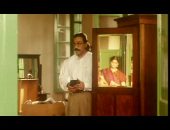 The helpless Mythili, fearing he may leave once again without information, requests him to inform the elders before leaving about his destination. Saket replies that they need not tell others wherever they go. Upon hearing this, she confirms if she should leave with him which Saket affirms. The hitherto far Mythili moves closer to Saket in the shot indicating the increase in closeness of their relationship. Saket asks her to pack and leave with him which she does happily.
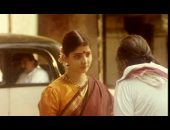 Meanwhile Mythili’s mother Ambujam has packed food for the travel as delivers it to them as they board the car. As Mythili’s mother hands over the food to her daughter, Saket’s mother (read aunt Vasantha, as mentioned in the “smile conversation”) prompts him to take the food during the travel. A while later, uncle Bhashyam calls out Mythili in the pretext of a blessing and asks her to use symbols to convey the name of the railway station where they are heading to so that the rest of the family can follow them. She boards the car and tries to ask the name of the railway station for which Saket gives a smile. She insists on Saket answering her for which Saket reminds her that he had smiled for a fourth time and asks her if she noticed. Saket’s smile is clearly for the fact that he has seen through their petty plan and has devised his own way to break it. They board a flight!
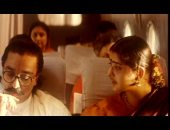 On the flight Saket is reading the book given to him by Shriram. Mythili interrupts him with hesitation and asks him if the book is some lewd novel. Saket replies that some things are done better undercover to which Mythili point out that Gandhiji has said that nothing should be hidden from the world. Saket ridicules the statement and says that her blouse looks good even though it covers. Mythili suggests that Gandhiji means words and actions should not be hidden. Upon this Saket points out to the newspaper headline that she is holding and asks her opinion about that quote by Gandhiji. The headline reads “Protect Muslims in India and then alone would I go to Pakistan to protect the Hindus”. He is unhappy with Gandhi’s incessant support to the Muslims of India. Mythili tells that whatever Mahatma says would have a firm reason and it would be beneficial to follow it, affirming the Southern image of Gandhiji as a demi-god. She adds that revenge will take one nowhere and one has to live in harmony. Saket gets turned off and says that if we are to protect the Muslims here first, the Hindus in Pakistan will be long gone. He interrupts Mythili and makes a comment about Gandhiji. And Mythili replies.
 He starts wallowing in his old world as he tells the watchman that he is here to meet Aparna and starts walking towards the lift. It is a new watchman and is confused but understands that he is here to see Mr. Nair who has just moved into the apartment. He gets into the lift and relives all the good moments when Aparna and he had just moved into the apartment. He recollects the good times and Aparna’s paintings as he stares into the same flat he had lived. As Mr. Nair keeps asking what he wants, Saket keeps staring into the flat. Finally, when Saket snaps back, he can hear Mr. Nair’s words and starts the conversation.
 Saket asks if he could take back Aparna’s painting that is hanging as a decoration on Mr. Nair’s wall and is given the painting. Saket holds the painting to his chest and walks back into the streets. He recollects all the great times with Aparna as he roams the city. The melodious song “Nee partha paarvai” plays on. The night is out and Saket revisits the she sites that had, just a year ago, been plagued with riots. It is totally calm and peaceful. He once again sees the images of people he had killed greeting him into the streets. Somehow, he seems to have been to immune to them and has learned to live with them. He is unshaken by the images and carries on into the settlements. He reaches the house of the little blind girl that he had seen last year. She starts speaking.
 Saket is disgusted and starts puking when a crowd of, what it seems to be, protestors calling out “Down with Gandhi! Down with Suhrawardy!” coming towards him and dragging him with them. The crowd merges onto a bigger one that seems to be gathered outside a large building and is being stopped by a group of Gandhians. In a few moments, it is revealed that Gandhiji is in the building as he opens the windows of the balcony. This is the first time we see Gandhiji (Nasseeruddin Shah) in the film though a lot has been talked about him. Interesting trivia must be presented here. Nasseeruddin Shah was turned down in the final minute for the title role in Richard Attenborough’s Gandhi (1982) which eventually was awarded to Ben Kingsley. He regains the lost chance in this film. He silences the crowd as he calls Suhrawardy to the window. At Gandhiji’s initiation, he starts delivering a showcase speech about peace among Hindus and Muslims. Saket loses temper at this and questions Suhrawardy about his responsibility during the last year’s riots. Suhrawardy tries to escape Saket’s questions diplomatically but is pinned down by Saket and the apparently supportive crowd. Realizing his situation, Suhrawardy admits that it was his responsibility and he has failed. Ironically, the crowd around is amazed and starts appreciating the apology with the cries of “Long live Mahatma Gandhi”. Saket is disgusted by the crowd as it applauds. They seem to be satisfied with the apology. He realizes that the protest was just a formality and was not heart felt at all. He is surprised at the people’s fickleness and is unable to digest people forgetting and forgiving the mishaps that had taken place.
 Shriram hints that the foolish people do not know that there is going to be large scale massacre against the Hindus in the newly formed Pakistan whereas the Muslims in India are going to be protected in India. He is mad that nobody is questioning the happenings. As they walk the streets, they meet a drunk holding an Indian flag and shouting out “Hindu and Muslim! Brothers! Brothers!”. Shriram stops him and starts mocking him. He mentions various political rival and improbable friends for which the drunk replies “Brother”. There is a reference of goat again as in the previous passage indicating the blind followers of Gandhian politics. Shriram continues to mock the guy until he gets confused and grabs the flag from his hands. He walks away with the flag shouting the same thing as Nehru’s “Tryst of Destiny” is broadcast. It is 12.00 A. M. 15th August 1947.
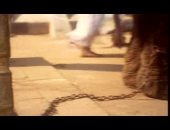 Cut to Srirangam. Saket, his uncle Bhashyam and Aunt Vasantha are traveling in a car. Saket is fully bearded and sports a long hair. He is sitting in the car without any emotion and facial expression. He sits there as if it is forced upon him without choice. This is in total dissonance with the lively and even a bit agitated Saket we have seen in Bengal. The contrast of the situations in North and South India begins here. Apparently, they are going to the house of the bride whom they have chosen for Saket to marry. It is found in the conversation that Saket’s father has passed away. As uncle Bhashyam is trying to coax Saket to accept the alliance, the latter watches an elephant chained to a pillar. The recurrent image of the elephant suggests the new world Saket is in. From an uncontrolled mad man on the loose, Saket is now more passive and in fact chained down to conform to his family’s principles.
 It is a typical Brahmin settlement. It is peaceful. There are no ripples of the riots in this part of the country. People are more preoccupied with the practice of religion rather than the fight about it. Unlike Bengal, people live in independent houses together with all the family members. The people thrive upon superstitions, traditions and formalities for every minute thing they wish to do. They are too finicky about the cultural details around them. These people seem to be total moderates as opposed to the type of people he has been meeting in Bengal. The mellowed down attitude of the people is reflected in every activity they do. They have paintings of the more peaceful Young Krishna as opposed to the bow-bearing Rama and Durga of Bengal. It is although Saket has entered a completely new world.
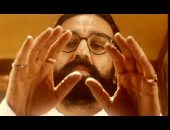 He is greeted by the parents of the bride and called in. All the formalities done, the bride Mythili (Vasundhara Das) is called. The bride is asked to prostrate to the elders and also before Saket. As Saket blesses her he notices the toe ring on his finger and gets a bit upset. He is reminded of his inability to protect his wife and hence questions are raised about his ability and qualification to take up another. He even feels a bit guilty of that. He, however, tries to overcome that and put his past life behind.
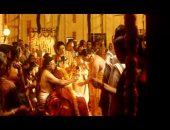 The bride is asked to sing for the groom. Everyone looks on as if it were a monumental event and as if the slightest folly would result in the end of the world, again denoting their addiction towards formalities and cultural rigidity. She sings the Hindu song “Vaishnava Janato”. The song will occur again in the film and will be more relevant at that point. For now, it is just a holy song. As the song completes, we see the marriage taking place in the utmost traditional way. It is gala of an atmosphere reminiscent of the wedding parties in Francis Coppola’s Godfather movies. Saket is clean shaven again as if starting a new marital life. His looks resemble his previous self, the one before the riots.
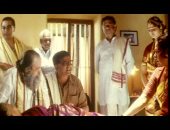 Just then they hear someone cry out. Upon investigation, they find that aunt Vasantha has fainted. Saket’s friend, Etty the doctor diagnoses her as all the others watch on curiously. It is found that aunt Vasantha has not eaten and hence has fainted out of hunger. As Etty informs this, he compares aunt Vasantha’s fast with that of Mahatma Gandhi as a joke. Upon this wisecrack, the people around him get upset. Uncle Bhashyam starts blaming Etty and attributes his irreverence to his bloodline. Saket’s mother-in-law Ambujam (Hema Malini) mentions that if Mahatma fasts, freedom will be obtained whereas if the lesser mortals do that, they will just faint like aunt Vasantha. She implicitly asks Etty to not utter such things again. Etty is embarrassed. The sequence again refers to the moderate nature of the people of the family who believe whole-heartedly in Gandhiji and his principles to the point of blindly following it.
 Mythili is sent into Saket’s room that night. She sees Saket reading some book sitting on the chair as she reluctantly enters. She finds that it is Gandhiji’s biography and says that it is her book. As Saket apologizes and tries to put the book away she stops him and asks his opinion about the book. He says that he does not like biographies. This is contrasted to her appreciation for the book that indicates her admiration of Gandhiji once again. The frame composition reflects the large distance between the two characters, both physically and emotionally. She tells Saket that she will change her clothes and come in a moment. She enters the next room and starts changing into a more casual wear when a lizard falls on her shoulders. She is scarred out of wits and starts shrieking at the top of her voice. As it goes on, the sounds of the shrieks turn into Aparna’s cries for help. Saket hears this and rushes towards the door. Saket bangs the door in order to get in. He feels his helplessness and calls out Aparna loudly. As Mythili opens the door after dealing with the lizard, Saket realizes the truth. He gets upset as Mythili asks who Aparna is. He goes inside the other room and shuts the door. As Mythili asks if he is all right, the others come into the room and bang the door to call Saket. Saket goes to the tap at the end of the room and drenches himself in a bucket of water. This is not only an act of desperation to snap back to reality but is also a symbol in Hindu tradition that signifies relinquishment of a kin. Saket is trying to get rid of Aparna or her memories at least.
 Another haunting sequence occurs now in the film. As Saket settles at the end of the room, he sees the figures of the people he had killed appearing in the room and greeting him. This is followed by the image of a lizard struggling to walk in a pool of blood on the floor. The lizard is the indicator of Saket himself. The lizard’s habitat is not the floor but the walls. It never comes down unless by an accident. It is unable to walk on the slippery blood on the floor. Likewise, Saket never expected himself to come down to the level of killing people and drenching himself in blood. As a result, he is unable to get a firm foot in life and is struggling to get back to his original position. Saket cringes on observing this image and starts shivering.
 The Seventh Art