CHAPTER 4: REVENGE
 He loads his gun and starts for the hunt. The starting of this sequence has a beautifully shot image that looks as though a mosque is burning. In actuality, the setting behind it burns. This shot aptly sums up the rest of the sequence. The Muslim settlements start burning. Old men are killed. Innocents try to feign their religion just in order to survive. Young ones kill their elders to save their skin. Negotiations go on in vain. Amidst all this, a frenzied Saket Ram is searching for his prey. His spectacles are broken, as if to say his view and reasoning have taken a blow. He limps, he is blood stained, but looks are far from important at this moment.
Another Hindu concept running parallel in the film is the rights and duties of the male of the species. As a man, one has to protect his wife from evil which is in essence the responsibility of masculinity. As a man who was helpless in saving his wife from the clutches of evil, Saket is hurt by his impotence and uselessness. Thus, he is determined to justify his masculinity and is out to slay the violators.
 He comes across Altaf’s shop. He tries to shoot at it and realized that it is a fruitless effort. After a moment, he sees Altaf himself tries to flee from the Hindu occupied area. Altaf too sees Saket and tries to reason even though he knows it is futile. Saket finishes the formalities, but also kills an innocent old man who tries to stop him. Everything is now trivial to Saket who carries on into the streets. He sees a young man killing an elder Muslim. When he approaches him, the young man prostrated and salutes. Saket is disgusted but fires only towards the sky. The boy escapes and Saket approaches the dying old man to finish the formalities. But as he shoots, he finds the pistol empty and starts to reload. The old man calls mutters that Saket has been sent by God to save him and summons someone from inside. Upon noticing movement from inside, Saket leaves the old man alone and enters the house. He looks up as if expecting a man, but is taken aback when he sees a small blind girl holding her doll. She murmurs “Grandpa, I’m very scared”. He is shocked and even goes blank. All he wants to do now is to get away from that place. He avoids touching that girl and hurries out of that place. It’s vintage Kamal all over this scene.
 As he hurries out of the place, he comes across a group of Hindu fanatics. He points his pistol at their leader who reciprocates. He notices the Upanayanam, the holy thread on Saket’s chest and realizes that Saket is a friend not a foe. He introduces himself to Saket in the traditional Hindu salute:
“Abhivadaye vishwamitra aagamarshana kaushika, triyashreya pravaranvitha kaushika gothra, aapasthambha sutra, yajusshakha adhyayee, Shriram Abhyankar sharma nama aham asmibhu”
(Of Kaushik, son of Vishwamitra…Of Kaushik, thrice blessed…Of Kaushik, the high priest of Yajur Veda… Of Kaushik, I bear my lineage. I am Shri Ram Abhyankar.)
He is Shriram Abhyankar (Atul Kulkarni), the pivotal character in the film. He realizes that pistols are luxuries and his opponent is indeed a man of higher class. He shows his own holy thread and hands over a newspaper to Saket and says
“Vande Mataram Bandhu, Would you like to hunt with us? I edit this news paper. This has my address on it. Come and meet me. We have a lot to do. “.
As Saket leaves, Shriram stops him to say:
“Don’t go like this. People won’t know what you are. Good Hunting”
He puts the holy Tilak on Saket’s forehead, as Saket leaves the scene with the newspaper. Saket runs to escape the madness. He notices that the madness is not confined to the Hindus and Muslims alone. He witnesses a group of Sikhs slay a young Muslim lad. He runs from the scene.
Soon, dawn breaks. There are eagles all over the city praying on the corpses while municipality workers race against them to gather the corpses. It is like peace after a storm. Saket strolls and avoids the eyes of the police. He observes civilians trying to identify the corpses of their dear ones.
 As Saket steps off the street, he notices an elephant standing alone. On a second sight he notices the mahout dead and lying besides it. The elephant is helpless without its master. It shakes him. It reminds him of his own situation. So far, he has been under the care of his wife who is the only person he needs to answer to. She has been his only master. After she is slain, Saket is helpless and is only as good as the orphaned elephant. He breaks down.
 He dodders to the address that Abhyankar gave him and finds that even the police is there. He tries to hide when suddenly, he feels someone calling him. It is Shriram Abhyankar, hiding among the ruins in the backyard of the building. He calls Saket over and informs him that the police is looking for him. Both of them walk away from the building. As they escape from the area, Saket finds that Abhyankar too, is a Tanjore Maratha Brahmin and hence speaks Tamil. This is a long shot that spans around 70 seconds. Delighted, Shriram asks if he had a good time “hunting” the day before. Saket is bewildered and explains that he was never like that and he was always a peace loving person. It was the murder of the wife that pushed him to this limit. Abhyankar interrupts him to tell Saket about a similar happening to his sister. He adds by telling that nobody naturally intends to kill but it is the circumstances that push one to the drastic limits.
He then asks Saket to point out who is responsible for all this loss. He asks him:
“Is it Bengal premier Suhrawardy? No. Is it Barrister Mohammad Ali Jinnah? No. There is only one man my friend. Barrister Mohandas Karamchand Gandhi. From the beginning, in the name of Khilafat movement and such stuff, he has nurtured the young green plant to make it a tree.”
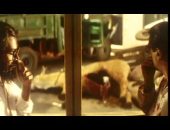 The last line occurs once more in the film where it is clearer about its clauses. Saket tries to leave the place when Abhyankar stops him to ask where he is going. Saket says that he is going to surrender himself to the police. Abhyankar retorts by saying that no one is fit to punish them. They are on their own. They strike up a conversation as Abhyankar tries to escape the police by getting on a tram. Abhyankar speaks as Saket watches a dog inside the stomach of a slaughtered cow. This shot is reminiscent of the shot of the dog carrying the severed arm in Akira Kurosawa’s Yojimbo (1961), both dealing with war torn cities.
Abhyankar: “If killing is wrong, then so is war. So is it wrong to fight in an army during the war.”
Saket: “But I’m not a soldier. I’m a civilian.”
Abhyankar:”This is a civil war, brother. And now, we are all soldiers.”
Abhyankar hands over a covered book to Saket and asks him to read without revealing it to anyone. As he indicated that this banned book is by Veer Savarkar, who was himself, a staunch Hindu activist, police spot Abhyankar and try to catch him. He bids adieu to Saket and escapes by jumping into the Ganges. Saket watches on.
Saket decides to vacate his Calcutta house and packs up. He is unable to see the helpers manhandling the piano during the packing. The piano that has so far signified his relationship with his wife is now dangling for its life. Saket is unable to bear this and asks the taxi driver to leave the place. As the taxi starts to take Saket out of Calcutta, the piano falls onto the ground and breaks. Aparna is dead and gone.
 As he leaves the city he notices the elephant from the previous scene going on a rampage with the stick that is used to pacify it. As if carrying a weapon, the creature is out of control and is on the loose. He again sees himself in the elephant and believes that his own madness and the outing with his weapon in the recent past are because of the murder of his mahout. As the screen fades, we hear the Tamil holy passage “Padham kondu nadathum vazhkkai” being played. It translates to:
On foot my life proceeds without a mahout.
Nor goad to pierce and direct me about.
Like a demented rogue elephant I roam.
O! Lord of Sriranga praised in the four Vedas since times unknown.
Unto thee I surrender.
The bridged audio plays on as the visuals transport us to the temples of South of India.
Go To Chapter
 August 16, Calcutta. Saket arrives at the railway station and takes a taxi to his house. He is surprised to see what is going on around: A large scale riot with masses of people running here and there. He also sees Altaf, his tailor among the Muslim rioters. Altaf recognizes Saket and makes way for the taxi to go. Upon inquiry, Saket finds out that the riots are indeed due to the partition claim by the Muslims of Calcutta.
 He kisses her as they both lean on the piano as Saket plays it. This is the second sight of the piano in the film. The image of the piano plays a vital part in describing Saket and will be recurrent in the story. A moment later, both of them are seen playing the piano together. They play it with such care and love. Their music is mellifluous and in harmony with each other. They make love as the melodious music proceeds.
 Saket gets up from the bed and presents her the Thirumangalyam, the holy necklace that he had bought for her. Upon asking for a Bengali styled marriage, Saket takes the red ink pen from the table and puts a mark on her forehead. When Saket asks for reciprocation, Aparna takes out one of her Mettis (Toe rings) and slips it into his finger. The toe ring is supposed to be a symbol of marriage and the well being of the husband. The toe ring forms a vital part of the narrative and will occur regularly. Saket asks for something to eat, Aparna indicates that the shops are closed and there is only bread and butter in the house. He asks her to get ready to go to the market to get something to eat for which she replies that she is scared to go out. Saket ridicules her and starts for the market.
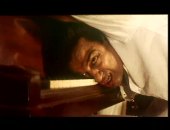 Saket takes his bike and sets out for the market. In some street he notices a young Sikh girl being chased by a mob. He manages to get the girl on his bike and takes her home. He slowly learns that the riots have worsened and it is unsafe to be in the streets. He returns to his apartments and finds out that something is wrong. He sees a corpse on the ground floor and runs to his flat. He finds that a group of men, led by Altaf are trying to break in into his apartment. Saket is held down as Altaf breaks in through the window. Saket tries to resist but is hurt. He is pushed harshly on the piano and lands on his face. He vents his anger on the piano and pounds his face on it. The music this time is anything but sweet. The somber and even a bit creepy tone reflects his state of distress. He is able to hear the cries of Aparna – “Ram, Ram”. He somehow coaxes one of the rioters to set him free and manages to kill the latter by pushing him out of the balcony. He reloads his pistol to shoot the rioters but is too late. Everyone has left. He rushed towards Aparna to check. She is found raped and her throat slit. Saket Ram is helpless and cannot even call the ambulance. Blood sprouts out of her throat as Saket tries to close it. Aparna passes away. Saket is mad. He cries, but it is of no use. He looks out at one of the dead rioters and with a shriek of anger he starts his rampage for revenge. This would mark his entering into the Vanaprastha from Grihasta. Saket would be exiling his true self to avenge his wife.
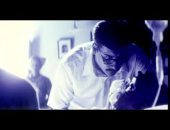 The doctor asks why the room is not lit. Ram replies that he has never seen his grandfather in the open or even in light upon which the doctor remarks Gandhiji’s habit of keeping the lights on even during his sleep. Ram is quick to reply that his grandfather has always liked darkness and he is no Mahatma. However, he is a good man. The small conversation sets up the contrast between the grandfather and Mahatma Gandhi which is to be observed during the rest of the movie. As the conversation proceeds, it is revealed that Ram is a celebrated writer and is very close to his grandfather. It is also found that the grandfather is of unstable mind and hence isolated. Nobody except his wife has seen him in his normal state. He has not opened himself to anyone except his grandson, that too in the form of stories which the latter regards no more than figments of imagination. The doctor picks up one of the three monkey skulls placed on the adjacent table in front of “Gandhiji’s three monkeys” and asks Ram about it. The dark light, that is suggestive of his exclusion from the outside world and his hidden past, slowly starts getting adulterated with bright light as he recounts his past. This bright light falls on the old man’s face as it is revealed that he was an archeologist at the Mohanjo-Daro ruins. The image of the dying man’s face is juxtaposed with that of a skull at an excavation site indicating the meeting point of his future and past.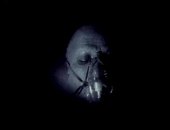

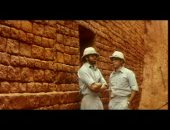 The year is 1946. An excavation site. Saket Ram (Kamal Haasan) and Amjad Khan (Shah Rukh Khan) are digging through the layers of the past. Eventually, Saket will be excavating his own true self, mirroring his profession, revealing many hitherto hidden layers within him. Saket is clean shaven and wears spectacles whereas Amjad is bearded. General Wheeler calls Saket from up above and asks him to pack up. Upon asking the reason, Wheeler says it is because of the communal riots as a result of the ongoing discussion about the partition of the country. Both are turned off but decide not to lose their temper as Mr. Wheeler shouts “It’s pack up time”. It is as though communal riots have become a commonplace and it is no news that a new one has broken out. Amjad points out that the Indus Valley civilization was miles ahead of the present one for they had much advanced thoughts but never had to fight about God and religion. So both decide to call it a day and head towards Karachi.
 This reply from Amjad is not just indicative about their college but the country itself. This reference of India as an “alternate mother” occurs throughout the film. This piece of conversation will ring loud during the final parts of the movie and will be reminded there. Just then, a call comes from Calcutta from Saket’s wife Aparna. Amjad and Lalwani fool around with the phone and even manage to tell a few lies about Saket to Aparna, all in good spirits. After the call, the three booze and start celebrating. The scene basically establishes the affluence and friendship of the three men from different religious and geographical backgrounds. Saket plays the piano for the first time in the film. A song “Ramar aanalum, Babur aanalum…” ensues which tells about the importance of friendship over religion. A lot of photographs are taken too.
 Finally here. Passing through its quota of controversies, production delay and legal attacks, Aascar Films’ Dasavatharam has finally made it to its destination. Dubbed as the most expensive movie made in India, the film has been in the making for over two years. If it was Sivaji – The Boss for 2007, it is very much Dasavatharam for this year. Apparently, the time between consecutive movies of Kamal Haasan has been larger than that of Superstar Rajnikanth‘s. The promos have been, surprisingly (for a Kamal movie), extremely low key. So, have the team’s efforts paid off? Let’s see.


 While watching Polladhavan, I realized that almost every other Tamil movie that releases today is based on underworld and organised crime. Gangwars, Hooligans in love, Rise to power of a henchman, common man pulled into violence and what not. We may even see a Dada learning bharatnatyam or a Gunda turning into a priest very soon. I then traced back to the movie that perhaps started it all, Mani Rathnam’s Nayakan. Released way back in 1986, the movie has inspired a whole new generation of filmmakers in the state.
 The Seventh Art