[From Luc Moullet’s Fritz Lang (1963/70, Seghers). See Table of Contents]

Should Man Revolt or Adapt? (1940-1949)

No matter its results, the revolutionary impulse seems to be condemned by Lang as foreign to nature and inspired by the desire to create a new social order, a new collective morality, while the asocial impulse—often stemming from the barriers that Society places around itself for protection—seems to him to be more congenial, as though reflecting an individual and natural morality. But these are only tendencies that we sense in the direction of actors, or which the dramatic construction hints at. Except when he’s dealing with some typical examples of the American society, ones particularly marked by it, Lang doesn’t judge and remains objective. He judges neither Joe Wilson nor Eddie Taylor, no more than he does the killer of Dusseldorf. He doesn’t show a path to follow. What counts for him are facts, their circumstances, their immediate significance. Even when there appears to be a moral significance, it is, more or less, simply the reflection of a metaphysics.

On the other hand, in this period, Lang becomes more of a moralist than a metaphysician. Not happy with simply showing reality, he now reflects on what he’s showing. His style becomes simpler, less lively, and more sober because he doesn’t have to recreate the world as he sees it anymore, i.e. through formal experiments, especially expressionism; Lang now simply shows how and why people act the way they do in a given milieu—which is the reason characters become more important than the sets—and tries to draw out a moral point of view.

America seems to be the chief reason for this evolution: in contrast to Germany, America is a country whose essential problems are moral and immediate. Now, Lang worked in three genres, the Western, the spy film, and the psychological drama. The first of these, especially, and the second, in part, are typical of America and are always conceived in moral terms. What we have here then is an adaptation of Lang’s world to existing genres, a period of trial and errors, of reflection which makes the oeuvre go around in circles, and which, though very successful, is less memorable than the previous period.

(more…)

[From Luc Moullet’s Fritz Lang (1963/70, Seghers). See Table of Contents]

Lang and Me

In 1941, when rumours began to circulate that Hitler’s ships were assembling to cross the English Channel, then known as the Corridor of Hell, and invade England, I had an idea for a script: what would happen if the London office of the Associated Press were to be destroyed by bombardment, if the AP set up shop in the wine cellar of the Ritz, and if its head found himself trapped by a German time bomb in the same cellar with the official censor of the British press? I’d thought of this story from the particular point of view of a practicing war correspondent, whose work has its own rules and duties: when must he deliver the information? Should he instead keep it a secret? What should he decide, redacted or good for print? Who can judge? What is the best solution? My AP head, a prisoner of the cell and the bomb, decides it’s good for print. The government deems him wrong; the profession deems him right. You probably remember, or were at least told about it, that Hitler’s attempt to invade England failed. The boats were scuttled, the Channel was full of oil, the free countries heaved a sigh of relief. That was the general situation at the time. In my original script, the AP head was killed by the bomb.

Since I’d never set foot in England, I sought the help of an old friend, the late Hank Welles. He had covered the Great War for The Chicago Tribune and had, at one time, managed the Paris office of the Tribune. I asked him a load of questions about London’s streets, its slums, its cellars, about transatlantic cable terminals near Penzance etc.  I wrote ninety-two pages of the adaptation in fifteen hours. Hank prepared cocktails of coffee and cognac. As I asked him technical details about London’s atmosphere, I played the keyboard—I mean I worked on the typewriter—while listening to him. 20th Century Fox bought the story, titled Confirm or Deny, for $20,000.

Hank and I were delighted to learn that Fritz Lang was to direct this film. A peerless creator, Lang remains a symbol full of meaning for all filmmakers. Darryl Zanuck had Jo Swerling adapt the script.

A while later, we heard that Lang wasn’t involved in the film anymore and that Archie Mayo, I think, was to replace him. Why? What had happened? Mayo, I know, was also a filmmaker with a lot of experience. But there were certain touches, certain nuances, certain secret flashes as imperceptible as an exclamation point in literature that Lang could’ve harnessed to the smallest detail, with which he could’ve nailed it so perfectly that you’d have your hair standing on the head.

Whatever it was, I was very disappointed. I knew Lang’s stylistic signature from M until Fury, this admirable cinematic account of mob rule and blind justice.

I was disappointed by the film too. It was a cheerful, rather ordinary melodrama sprinkled with love scenes and punctuated by humorous touches. There was everything except my original idea: the journalist’s struggle with himself to decide whether to print or withhold an information of international importance at a time of war. There was a syrupy love story, with a dash of the sour cream of goodness, embodied by an old journalist. This sermon didn’t move anyone. The war cry seemed to be coming from behind a lectern rather than a teletype. One of my key scenes was when the editor, caught in the trap and finding it impossible to warn the hotel manager that a bomb is about to go off in the cellar, uses the Allied transmission code to send an SOS to the rest of the world, so that it can reach the manager, who is five metres away on the other side of the wall. I thought this scene was sensational.

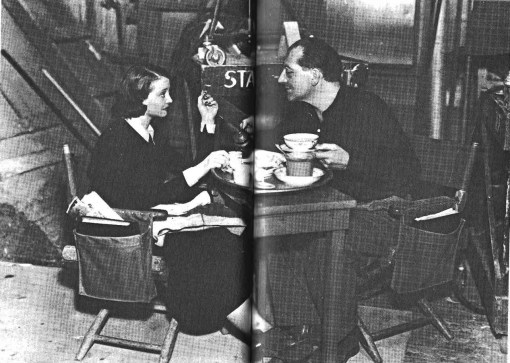
One day, at the bar of the Screen Director’s Guild, I met Fritz Lang and asked him what had happened to the story of Confirm or Deny. If I remember correctly, he told me that he had read the adaptation I’d written, that he had liked it, and that the final script had nothing to do with the original anymore. So he left the film, which I’ll always regret. I often think that if he hadn’t left, he might have introduced some of the original flavour that had excited him in the first place.

Now, I have something else to reveal to you that will amuse you. In 1946, I had an idea for a film. It was set inside an insane asylum [1]. I sent the script to Fritz Lang. His assistant returned it to me on June 26th 1946 with a letter from Universal under the letterhead of Diana Productions. The letter said that Lang thought my script was very interesting, but that he was already preparing a film on the same lines.

(Unpublished, 1962)


Footnote:

[1] It was to become Shock Corridor.
[From Luc Moullet’s Fritz Lang (1963/70, Seghers). See Table of Contents]

The Asocial Impulse

In these countries [that Lang migrated to], the difficulty consists in living without transgressing the law or becoming its victim. The heroes aren’t ambitious or vengeful anymore, like they were in Germany, but individuals like others, bogged down in the anonymity of apparently affluent and carefree crowds, common to both France and America.

Liliom (France, 1933) is loosely adapted from the play by Molnar. Liliom is a thug from the suburbs of Paris who once killed a man somewhat inadvertently. Will he go to hell or the purgatory? Up there, they discuss his case using movie projections of important moments from his life. A good deed allows him to return for a day to earth, where he meets his old friends. Liliom is something of a victim of his unfortunate circumstances and the film is an interrogation of his responsibility, his guilt or his innocence. The categorical affirmation found in the silent films makes way for an uncertainty about objectivity. That, in the film, it’s cinema that furnishes the case files comes across as a tribute to the art Lang has chosen. This intrusion of cinema into cinema will turn up again in Lang’s work from Fury to Die 1000 Augen des Dr. Mabuse, passing through Clash by Night. A tribute that’s at the same time a critique: appearances, as cinema unveils them to us, are misleading and could easily be contradicted with the evidence of another moment or of another camera angle. Adding to this fallibility of cinema is the theme of the sorcerer’s apprentice. Lang displays a real pleasure in dominating the world through film and seems to place himself under a slightly critical eye. A reflection on the notions of justice and responsibility, a reflection also on the value of his art, Liliom masks its seriousness with fantasy.

Lang’s humour, more substantial and more Bavarian in films between 1928 and 1932, turns out to be of a great finesse here; it’s accompanied by a certain nostalgia rather close to that of Max Ophüls, but more tender, less bitter. This nostalgia manifests particularly in the creation of a dreamworld that supplants reality. At that time, Lang was already doubly stateless: an émigré from the defunct Austro-Hungarian empire, an exile from a Germany defeated by arms and reduced to slavery by Nazism, separated from his wife whom he’d be forced to divorce, he had no ties other than those preserved by memory. As it happens, Liliom was made after the shelving of a project that demonstrated a nostalgia for old Vienna, Die Legende vom letzten Fiaker (The Legend of the Last Vienna Fiacre): in 1918, fiacres had to cede their favourite ground, the Hauptallee, to cars. The last coachman dies of bitterness and wants to take his fiacre to Heaven. They don’t allow the fiacre to enter. “Okay, I’ll go to Hell”, retorts the coachman. God intervenes: “Alright, alright, drive me in your fiacre…” The fiacre enters, getting mixed up with the Chariot, God’s regular vehicle. No doubt that Lang reused much of this project in Liliom.

We notice that the fable doesn’t reject reality, but moulds itself over the harshest, most unpleasant truth—that of the suburbs, its poor, and its apaches—affirmed here with power. This raw reality is always depicted with a poetry that transforms it into phantasmagoria. This dialectic gives the film its colour. The dialogues are deliberately theatrical and romantic. The actors deliver brilliant performances: chiefly of note are Antonin Artaud, Charles Boyer, Madeleine Ozeray, Florelle, Mila Parély and Viviane Romance, whom Lang discovered with this film. The amorous duo exhibits a rather outmoded romantic sensibility, notably in the flower scene. Unfortunately, Lang’s stylistic efforts in terms of sets and lighting don’t add up to much because the film, a commercial semi-failure, was massacred during its release by distributors, who mutilated it left and right, doing away with its Germanic aspect that threw the French audience off balance, and thus destroying the meaning of the work. It’s also unfortunate that the last reel of the film hasn’t been found yet.

(more…)

[From Luc Moullet’s Fritz Lang (1963/70, Seghers). See Table of Contents]

Man Seeks to Conquer the World (1922-1938)


The defeated man of 1918 tries to gather himself, and with the improvement in his condition, he forges a less tragic metaphysics for himself. In this normal reaction, we find two successive variations: the revolutionary impulse, where man seeks to become the master of the whole world, and the asocial impulse, where he seeks simply to become the master of his own life and must transgress an all-too-arbitrary law in order to do that. The revolutionary impulse dominates in the German films, while the asocial impulse belongs rather to the American period.


The Revolutionary Impulse (1922-1932)

The theme of the man who wants to dominate the world was already present in Die Spinnen (1919), before sporadically resurfacing in the expressionist period (Siegfried, Metropolis). But it’s a motif deriving most of all from the convention of crime stories. As always, Lang starts from the thematic and artistic traditions of his time, and not themes particular to his personality, and deepens them, finding their latent meaning.

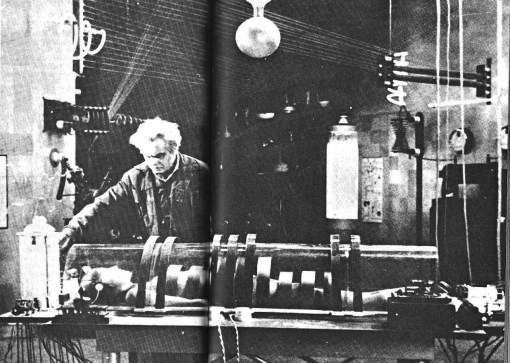
In the two parts of Dr. Mabuse, der Spieler (Dr. Mabuse the Gambler, 1922), the first carrying the same title and the second Inferno, we find not a deepening of the theme, but a realist depiction of facts and atmosphere which are its most evident components: secret societies, hidden vices, hypnotism, unlimited violence, multiple disguises, lust and depravity, secret doors and betrayals, thieves and forgers. Mabuse the sorcerer’s apprentice, whom we successively see as a psychiatrist, a drunk sailor and a great financier, seduces a degenerate, the countess Told, the top informant of his enemy, the prosecutor Wenk. He kidnaps her and does all he can to ruin her husband. He forces his regular mistress, the dancer Cara Carozza, to poison herself. He tries to get rid of Wenk twice. He hypnotizes him, drives him to commit suicide in his bathtub. The police intervene in time and rescue the countess as well. Mabuse ends up in an asylum.

Doctor Mabuse’s goal is of a practical, and not metaphysical, order: he seeks power for the benefits it brings him, material and sexual benefits in particular. This need for pleasure is justified as compensations for deprivations of the war and for the moral rigidity of the Empire. By way of an extravagant crime story, moreover, the film only reproduces facts prevalent in the depraved and divided Germany of the time: “The fight between the villains and the police recalls the street clashes ordered by Noske, the socialist home minister” (George Sadoul, Histoire du Cinéma mondial, p. 154).

Keeping things at a descriptive level means that there’s no moral judgment yet: Wenk employs the same sneaky means as Mabuse to defeat him, and he is as amoral as him. He intervenes, not as much to rid society of a criminal as to get back at a rival in love and win back his mistress. But one could say that this comes at a price: the first part, very different from the second as always in Lang, an excellent but banal soap opera, can be defined as a study of human gestures and attitudes, their movements and the relation between their movements, a phenomenological study that owes everything to improvisation and observation and almost nothing to expressionism, and which comes close to modern cinema, particularly Lang’s more recent works like Human Desire. With almost nothing—characters that move from one chair to another, light cigarettes and play cards—Lang creates an autonomous world more captivating and original than the mostly spectacular one of the second part, with its by-the-numbers fights and its car chases inspired from the exploits of the Bonnot Gang and the Apaches of Paris in 1910.

(more…)

[From Luc Moullet’s Fritz Lang (1963/70, Seghers). See Table of Contents]

We must undertake a project, accomplish a more commendable task without fail, by voluntarily letting go of the various means of expression that rely on technical virtuosity and which, by that fact, will always reek of artifice.

Fritz Lang (1926)

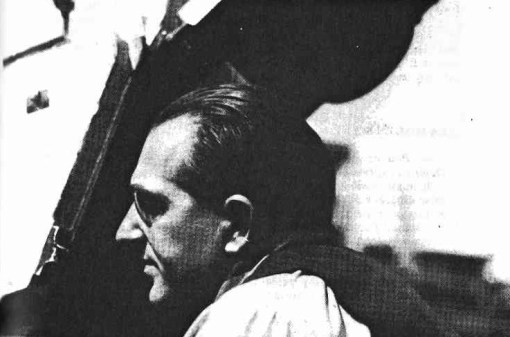
Born in 1890 in Vienna, Fritz Lang entered the film world in 1916. Having studied architecture, studied and practiced painting and other related arts—caricature, interior decoration, etching etc.—having amassed a vast knowledge of the world through faraway journeys and diverse experiences, the most painful of which was the war, Fritz Lang approached cinema via the intermediary of theatre at a point where he had already attained a certain maturity as a man.

That explains why, in his first directorial efforts (1919-1921) and even in his first scripts (1916-1919), we find themes, guiding principles and figures of style that we notice even in his most recent films, the only difference being a deepening intensified by the years.

Fritz Lang’s body of work is therefore one and indivisible. It’s founded on a certain conception of the world whose rudiments are distinctly discernible even in the first scripts he wrote. Rather than studying the films in chronological order as common sense demands, we must first study this conception of the world, this Idea existing prior to the creations it brought forth. The only possible order then is the one that traces different evolutionary forms of the Idea, which respect chronology only loosely.

(more…)

[The following is a translation of Luc Moullet’s Fritz Lang (1963/70, Seghers). The book consists of two parts: Moullet’s monograph and a collection of writings by and on Lang. I have chosen not to translate the second part because (a) Lang’s articles and interviews were originally published in English and are thus available in English elsewhere, (b) many of the texts on Lang (by Bazin, Godard, Rivette etc.) are already translated in their entirety into English, and (c) I think the second part, with its patchwork of excerpts, registers more as filler material that adds little value to Moullet’s monograph.]

I. Search (1916-1949)

II. Maturity (1951-1960)

III. Conclusion

[From Luc Moullet’s Politique des acteurs (1993, Cahiers du cinéma). See Table of Contents]

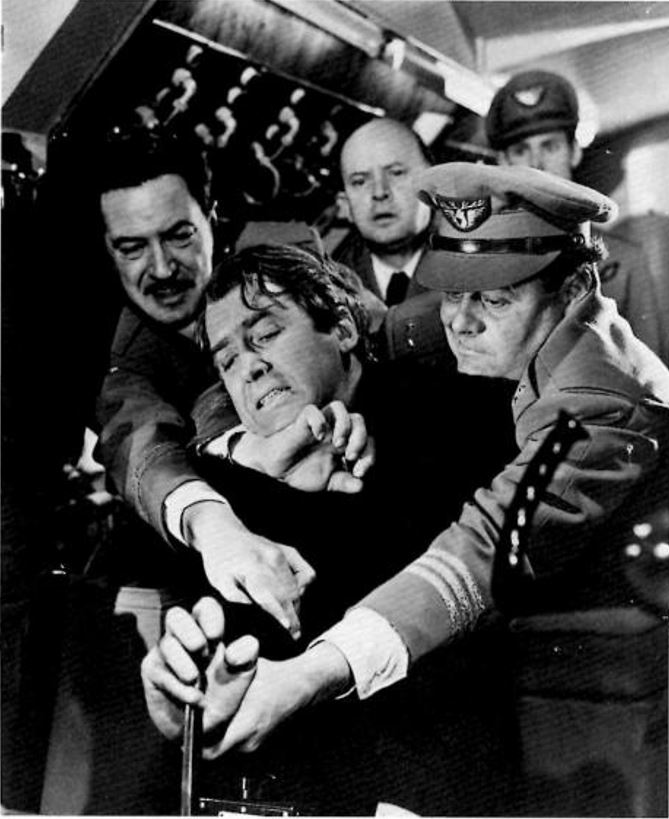
Four hands: another contagion effect (No Highway in the Sky, 1950)

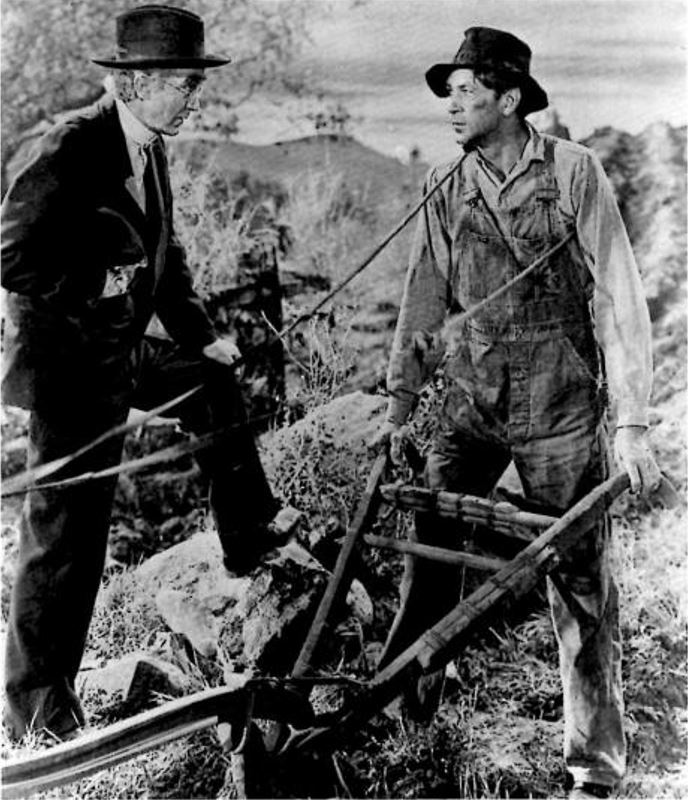
James Stewart appeared on the firmament of the film world in 1938 with Capra’s You Can’t Take It with You, which won the Oscar for Best Picture. This celebrity comes about awkwardly: first of all, Stewart has only the fourth role in the film, after Lionel Barrymore, Edward Arnold and Jean Arthur. More importantly, even though he is the prototype of the indolent dreamer, his character belongs to the world of the rich, while his fiancée lives in a family of outcasts, among whom he feels totally at ease. The interest is thus centred on the conflict between the heads of the two families, Stewart putting them in contact with each other. His role could’ve been stronger had his character reproduced the mentality of the rich, whereas it’s the opposite here.

This shakiness is aggravated by the fact that Stewart hasn’t yet found his line as an actor. With his co-star Jean Arthur, he copies Cary Grant (and she, Katharine Hepburn) as he moves across the restaurant, stuck behind her to hide the ridiculous inscription she has on her back, some months after the similar—and more successful—scene from Bringing Up Baby. The second film he makes with Capra, Mr. Smith Goes to Washington, contains some shots—notably during the turbulent meeting with the press after the publication of an article ridiculing him—that relate him to his great friend Henry Fonda: his hair falls over his forehead and comes close to his cheeks, making his face look very thin. We perceive in him the hunted, rebellious man of You Only Live Once. At one point in You Can’t Take It with You, he has, on one part of the forehead, the famous little lock of hair of Gary Cooper, the protagonist of the first Shopworn Angel that Stewart just remade. Moreover, Mr. Smith, with Capra’s help, is a close cousin to Mr. Deeds.

This proximity can be linked to the fact that Cooper, Fonda and Stewart are all Tauruses. I had the greatest contempt for astrology until the day I realized that most great actors (Fonda, Welles, Gabin, Fernandel, James Mason) were born under this sign. It’s too good to be a coincidence, especially considering that Capra was born on the 19th of May, a day before Stewart, and that Borzage (who gave JS the leading role in Mortal Storm) belonged to the same vintage: it’s really a great family…

From You Can’t Take onwards, Stewart’s individuality starts to manifest itself: his novel play of hands often has a precise signification. So the dance of his fingers on the table constitutes a direct allusion to the guests who are enjoying themselves at the house of his future father-in-law. The work on repurposed gestures is very successful: he raises his hand toward the boy employed by his father, as though to slap him. He abandons his primitive impulse, and regains his gesture in a way, so as to not look like an idiot: in the continuity of the movement, he goes on… to brush his jacket.

This work on hands is quite good in one scene of a film made slightly later, Made for Each Other (1939): he informs his mother that he is married to the girl next to him by pointing his thumb alternatively towards the girl and himself. In the same film, we find an identical principle, but with the head this time: he lets the viewer know that he has understood his wife’s allusive speech suggesting that she is pregnant, simply by lowering his head four times in a twitchy manner. Before this, we weren’t sure of the real meaning of this speech. This sharp movement, mixed with emotion, helps us understand everything. Great art consists of doing away with speech, of saying everything through gesture, especially when it involves important events: a marriage, a birth.

In You Can’t Take, his stubborn way of keeping his mouth open without speaking is particularly audacious. This trait allows us to better place the character: it’s the Capraesque Naïf, dazed and out of sync with reality. This perfectly suits Stewart, who displays the temperament of a dreamer in real life and whose physique, with his wide cheeks somewhat depressed towards a visible chin, midway between Jerry Lewis and Eddy Merckx, and his lanky figure, give the impression of ingenuousness.

(more…)

[From Luc Moullet’s Politique des acteurs (1993, Cahiers du cinéma). See Table of Contents]

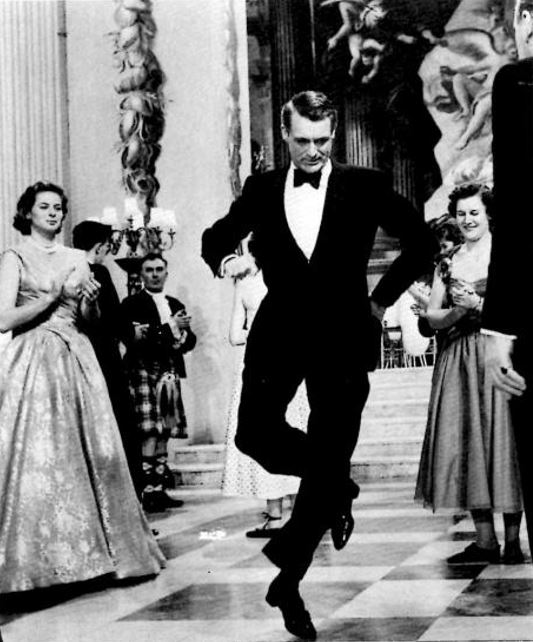
Each of the four limbs follows one or two different directions (Indiscreet, 1958)

Cary Grant is in the same boat as Cooper or Wayne: his first films, made for the same company—Paramount, as it happens—during the thirties, offer us a rather aseptic, standardized actor. We have the slightly caricatured proof of that in his role in Blonde Venus (Sternberg, 1932), where he plays opposite Marlene Dietrich as her wealthy seducer and impresario. Despite his brief scenes, we get to see him in the attire of a horseman, a yachtsman, and in several other expensive costumes. The husband, Herbert Marshall, and, especially, Marlene Dietrich get numerous medium shots. Not Grant, who is more of an image, a silhouette. Sternberg’s contribution to the film somewhat surpasses Paramount’s standards. With Cary Grant, Sternberg seems to have wanted to replicate the Gary Cooper of Morocco: the same short sentences, the same emphasis on the nose. Choosing Cary as a first name in 1932 was perhaps not an innocent choice. Grant appears much older than his age of twenty-eight. It’s perhaps the only time in his career that he has a massive appearance. With his large, immobile face, he resembles Sternberg’s future actors like Mature or Mitchum rather than Cooper. He moves very little. He delivers a blow to an adversary the first time we see him. He is entirely a Sternbergian man, having little to do with Grant’s personality of the years to follow.

Sylvia Scarlett (1935), his second excursion from Paramount, gifts us a real actor. The film revolves around a young woman (Katharine Hepburn) who is obliged to dress up as a man in order to help her fugitive father. Grant plays a curious character, an Englishman like himself (while he would be an American in the great majority of his films) of an indefinite status: a conman, he begins by shamefully exploiting the father and the “daughter” before helping and protecting them. He generally plays leading men in other films, but here, he vanishes towards the end, letting Katharine Hepburn marry Brian Aherne. But this isn’t exactly a disappearance, since Hepburn wears Grant’s black jacket and closely imitates his behaviour in the train, seen in the film’s very first scene.

There is a key to better understand, to differently understand Sylvia Scarlett and Grant’s entire body of work. At the beginning of this book, I intended to abstain from talking about the private life of the artists. I hope the reader will forgive me if I contradict this principle. I promise not do so again. But this infraction of critical ethics appears indispensable to me. Grant was married five times, for quite short periods of time. This added to his legend as a handsome seducer. But the recent biography by Charles Higham and Roy Moseley [1] indicates that Grant was bisexual, and that his heterosexual relations were generally, let’s say, less happy than the others. Since the book was not mired in any controversy, we could trust its authors. This explains the brevity of his marriages, and perhaps even Grant’s delayed paternity (at sixty-two years). The many marriages served, if not as a cover, at least as tryouts with varying degrees of success. These particularities were hushed up by gossip columnists. For if it was known that the greatest seducer of women was closeted, the whole Hollywood scaffolding could likely collapse, and the squealers with it.

I probably don’t even have to apologize for this reference to private life. For it fortunately makes up for another, more or less unconscious reference to a fake private life: if we were blind to Cary Grant’s ambiguity, it was because his image as an eternal skirt-chaser distracted us from the reality on screen, and prohibited us from thinking even for a moment of this ambiguity.

(more…)

[From Luc Moullet’s Politique des acteurs (1993, Cahiers du cinéma). See Table of Contents]

The first real appearance (Stagecoach, 1938)

Stagecoach (1938) is distinct in its sobriety and simplicity. There are effects but they aren’t visible. They are perfectly integrated into the continuity of editing. It’s the ideal stylistic exercise for film schools to take note of.

Even so, John Ford went for a flashy effect—just one—which is completely incongruent with the rest of film. It occurs in the first shot John Wayne appears in. Here is the film that will rescue him from oblivion and make him world famous. And how is he introduced? Firstly, notice that we see him eighteen minutes after the film has begun. A delayed entrance that is quite useful and well-planned: we have already heard much about Ringo Kid in the preceding conversation. This delay could seem normal: after all, Wayne’s is only the second name in the credits behind Claire Trevor, and as we have seen, it’s a good strategy to delay the entrance of the second protagonist.

But what an entrance! Everything has been smooth so far. Suddenly, without any narrative reason, there is a tight shot of the unknown Wayne all by himself, with the tracking camera culminating in a closeup, and the Monument Valley in the background, overlaid on a thunderous score. All this for a gentleman who stops the stagecoach with a hand signal, not for a holdup but simply to use the public service: to alert the driver…

We can’t think of a better beginning for a mythification. What’s curious is that it’s for a square almost unknown to the big studios, a handsome, scrappy giant, a sharpshooter trapped in Z movies of Republic Pictures where he had made forty mid-length features in six years. Ford seems to have wanted to create a star, his star, since they were to make fifteen films together in twenty-five years. The most faithful duo in the history of cinema. Amazing intuition, when none of the earlier films helped foresee Wayne’s abilities.

Ford places Wayne in the shadows—mythicizing darkness—as much as possible, while his partner Claire Trevor is frequently in full light in the preceding shot. One wonders if this doesn’t reflect a certain lack of confidence of Ford in the dramatic capabilities of his new protégé. Testimonies confirm this: Ford had asked Wayne to emote as little as possible, to stay impassive. Whatever the case, even if it was necessitated by fortuitous reasons, the mythification is no less present, and will continue to shape Wayne’s future work in a very perverse way.

At the end of the film, Wayne kills two villains within a few seconds. We don’t have time to see anything. As Wayne joins Claire Trevor, he is seen from behind. It’s only when he is very far in the background that he turns and lets us see his face.

(more…)

[From Luc Moullet’s Politique des acteurs (1993, Cahiers du cinéma). See Table of Contents]

The saga of the left profile: Cooper has to always have the most marked face possible… (Sergeant York, 1941)

Gary Cooper became famous, most of all, in uniform: thirty of his eighty-two films present him in attire, starting from Opus 5, Wings (1927), till the penultimate one, The Wreck of the Mary Deare (1959), and we must perhaps also include For Whom the Bell Tolls, where he is in plainclothes but at war. He stands, then, for the conventional, official Right, somewhat perverted towards the end of his career since, in the comedy You’re in the Navy Now (1951), he plays an officer holding a post that has nothing to do with his capabilities, since The Court Martial of Billy Mitchell (1955) shows him as an outcast general criticizing the decisions of the army. And the captain of the Mary Deare, the only man on board the ghost ship that traffics arms, would also go on trial, just like Billy Mitchell.

But more than a moral value, the uniform represents a visual asset: it throws Cooper’s great height into relief. His lean build makes him look almost like a model. All outfits go on him: army, navy, air force, ancient (in Westerns) or exotic (attire of the French legionnaires) uniforms, or both at once (The Lives of Bengal Lancer).

Morocco (1930) is not the first film where he is a legionnaire (there was Beau Sabreur already in 1928), but it’s the one that imposed this brand image. Undoubtedly, the success of Morocco incited lazy producers to cast him as an army man in five consecutive films from 1931 to 1933.

Watching Sternberg’s Morocco, we could say that Cooper is more of a silhouette, a statue, an image, a model, a prop, an element in the general aesthetic of the film. He belongs to the class of Sternbergian strongmen, the giant variety (like John Wayne later) that alternates with the stout variety (Bancroft, Jannings, McLaglen, Beery, Mature), the Mitchum of Macao being both — a predilection that might explain the failure of Crime and Punishment, Raskolnikov-Peter Lorre being evidently the antithesis of the Sternbergian man.

This mythical aspect goes hand in hand with the spirit of the film. You get the feeling that Sternberg—in this film as in his other works of the period—accepted and even sought out all the already-mythologized elements of convention—a handsome army man, a femme fatale, an impossible love, a rich and wily old French seducer, and the charms and the dangers of mysterious Africa. This strategy allowed him to come out of all charges unscathed: if the film failed, wise guy Sternberg could always claim that it was impossible to make anything from such a ridiculous plot. If the film succeeded, he could boast of having overcome all these superhuman obstacles.

(more…)