
Judy Versus Capitalism (Mike Hoolboom)
Hoolboom’s hourlong documentary is a biography of Canadian feminist and activist Judy Rebick presented in the voice of the subject herself. Divided arbitrarily into six chapters—titled ‘weight’, ‘abortion’, ‘others’ etc.—it traces Rebick’s childhood, the influence of her father on her romantic life, her first activist interventions, her conscious decision to gain weight as a defence mechanism, her involvement in the pro-choice movement leading up the legalization of abortion in Canada, her mental disorder and its roots, and her continuing struggle for the cause of social justice. As the years progress, we see Rebick’s concern grow beyond feminism, gradually encompassing questions of mental health and Israel-Palestine, and we end up with a picture of resistance and activism as a way of life. The account is chronological, and Hoolboom lets Rebick’s words drive the narrative. He illustrates her words with photos and videos from her personal album or associated archival footage from the corresponding time periods. The film is at its most inspired when Rebick opens up about her dissociative identity disorder, about the way it serves as a protective shield against the trauma of childhood abuse. As she talks about her various alters, Hoolboom, whose Scrapbook (2015) constitutes one of the most resonating cinematic explorations of selfhood and the ego, cuts to a series of faces of different ethnicities, genders and ages—a witty, sideways association with Rebick’s activism that’s constantly bound up with the question of ‘others’ outside herself. But for the most part, Judy Versus Capitalism falls short of its inventive title and remains a conventional portrait. Because Rebick’s testimony is powerful and stands on its own, Hoolboom is (rightfully) obliged to respect it and let it take centre stage. As a result, there’s little here that couldn’t have been accomplished by a more academic documentary.

From Time to Time, I Burn (Carlos Segundo)
With his dazzling debut Slits (2019), Brazilian filmmaker Carlos Segundo initiated a meditation on the nature of the digital image, and its relation to reality, memory, loss and mourning, against a backdrop of flagrant social inequality. In From Time to Time, I Burn, he continues this interrogation into the ontology of images and the way they fundamentally alter reality. But this time, he approaches them from the other end of photographic history. The quantum physicist of Slits studying high-definition digital images makes way for an experimental photographer, Louise (Rubia Bernasci), who works with the most rudimentary of photographic devices: a pinhole camera that she exposes to orchestrated movement of human bodies for several minutes. Standing naked before the device, she enacts a pseudo-ritual of seduction with another model. With its aperture always open, the camera ‘combines’ these bodies in a process of chemical communion into an organic composite in which racial and gender distinctions don’t hold anymore. Louise, an Afro-Brazilian who takes care of her pious, ailing mother, experiences a kind of religious epiphany when one of her models whispers something into her ear. Like Slits, From Time to Time is an enigmatic film about a subjective experience with images, and its narrative feels like an abstracted version of a longer treatment. In a short introduction, in which he also expresses solidarity with artists resisting the current “political virus” in Brazil, Segundo cites the Holy Trinity as an inspiration for both works. The claim is as baffling as the new film, but one gets the sense that, for Segundo, there’s something fundamentally religious about image-making, particularly in the kind of transubstantiation it effects between reality and representation. It may be that Segundo is shrouding very concrete political ideas in quasi-religious mystery, which seems to be a foundational value in his films. His subsequent work will, no doubt, throw more light.

Marriage Story (Jessie Jeffrey Dunn Rovinelli)
In its pared-down quality, Marriage Story seems to take off from the audiovisual abstraction that So Pretty (2019) ended with. This new short film does away with many of the narrative layers of the latter feature—community life, literary adaptation, political action. Even the carefully panning camera and exceptionally dense sound design of So Pretty give way to simpler formal elements. In fact, there are only three shots in the film, which may narratively be described as a rudimentary sketch of an afternoon session of sex between Rovinelli and her girlfriend Anika Kash. In the first, the filmmaker prepares coffee on a stove. In the second, she and Kash make love on the living room couch while, in the third, Kash sits on a chair reading out a text detailing a passionate sexual encounter with another woman. Bright red frames punctuate the film, and they constitute the entry and exit images as well. In every shot, a quotidian middle-class décor is subverted with elements that don’t typically belong there. The kitchen of the first scene is a picture of conventional piety and domesticity, complete with a religious painting on the wall. But Rovinelli has a slow stream of red light wash over the muted colours of the kitchen as though from a discotheque or a police siren. Combined with the sight of Rovinelli’s unconventional, naked body with its tattoos, breasts and dense armpit hair, the setting becomes something else. Similarly, in the third shot, we only see Kash’s ‘topless’, bare body on a chair, while a television set next to it projects the image of her head speaking the lines. Drawn from disparate sources, including the Song of Songs and writings by St. Theresa of Avila, the text conflates sacred and profane ecstasy in a manner that recalls Bernini’s St. Theresa. With all this, Rovinelli appears to be reintegrating what bourgeois religiosity keeps apart, i.e. the experiences of the spirit and the flesh.

Fireball: Visitors from Darker Worlds (Werner Herzog, Clive Oppenheimer)
Thank heavens for Werner Herzog, for he is one of the few remaining auteurs who still believe in the capacity of film for cosmic reflection, in whose work man is more than a moral-political creature. The visitors in Fireball are meteorites, i.e. rocks and dust formed millions of years ago in the far reaches of the universe that grace the earth. Herzog and British geologist Clive Oppenheimer go across the world in search of stories about these interstellar travellers—myths, legends, rituals, scientific accounts—even accompanying an Antarctic expedition for space rocks. They position these meteorites as objects alternatively of scientific research and around which the film’s human subjects create meaning: the rocks are rare minerals, but also existential tokens, like cave paintings, whose transhistorical origin relativizes our own lives. This bivalence could produce two different responses to the film. A viewer looking for a scientific investigation could be frustrated by the mystification Herzog’s methods bring, just as a viewer seeking philosophical edification could find the geological explanations wanting. While the film’s scientific orientation could arguably be ascribed to the influence of Oppenheimer, the manner in which it juxtaposes the absurd and the sublime is vintage Herzog. It’s the mark of the filmmaker’s strength and sophistication that he is able to identify both these potentials in his material without undercutting the value of either. Under his camera, the eccentric takes on a heroic aura just as the erudite acquires a touch of the ridiculous. Herzog shies away neither from Malick-like preciousness nor from Hollywood cynicism; he can break a solemn philosophical mood by joking that Bavarians like him are not made of stardust, but he can also provoke a tear or two with a cut from an aboriginal painting to a telescopic view of a meteorite crater. A borrowed shot of an explorer breaking down at a momentous discovery while the rear end of a busy team member occupies the background of the frame sums up the film’s all-accommodating generosity. Apt, considering the film’s theme is the twin role of meteorites as a destructive as well as a life-creating force.

Tenet (Christopher Nolan)
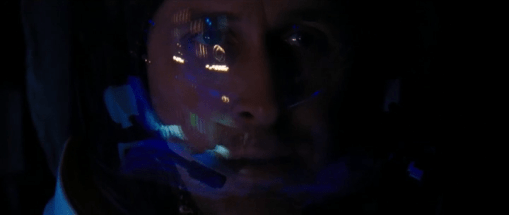
Christopher Nolan is a fanatic who has been increasingly willing to throw himself under the bus for the sake of his truth. Interstellar (2014) left behind his fanboys, Dunkirk (2017) thumbed its nose at sacred filmmaking tenets, while this new film ventures into even more untested terrains. That he has gaged a $250 million project for his personal desire to revive cinemagoing in the middle of a pandemic, moreover, cannot be ignored while evaluating the film. The world’s most popular poet of time has, once again, conceived of an ingenious, impenetrable syuzhet in which narratives in forward and reverse chronology are woven together within the framework of a spectacular if old-fashioned Euro-thriller: a CIA operative (John David Washington) must thwart the efforts of a future generation that seeks to annihilate all past in order to preserve itself. This chronological mesh makes for some unwittingly funny, but eye-popping reverse motion sequences that descend directly from the Lumières’ self-constructing wall. What’s impressive about Tenet, and its predecessor, is the filmmaker’s unapologetic privileging of an abstract figure of style over grammatic or affective considerations: the ‘trans-temporal’ crosscutting in Dunkirk, reverse motion here. In a way, these are bold, formal experiments that, in their failure, throw light on the mechanisms of classical storytelling. Nolan, who has always taken care to place his characters’ emotional or moral predicament at the centre of his narrative contraptions, does away with it in Tenet, Washington’s unflappable protagonist being little more than a sexless, humourless cipher. Despite the overwhelming intensity of the exposition scenes, he has also seemingly let go of the need to tie up the logical loose ends of his hypothesis, letting the contradictions and loopholes remain as they are. While a more thoughtful story could’ve drawn out all the themes of the intriguing premise, it is notable that Nolan, who has been crusading to preserve and employ celluloid from within a media climate hostile to such backward-looking attitudes, chose to make Tenet the tale of a man who fights to preserve the past at the expense of the future.

Corporate Accountability (Jonathan Perel)
In Toponymy (2015), Perel pursued the traces of Argentina’s military dictatorship on its landscape, examining in essence the way governments inscribe preferred narratives onto geography. In the new film, he continues this exploration by looking at the role of large private corporations in enabling and carrying out state-sponsored pogroms against political dissidents of the junta. The structure is simple: in static shots from the dashboard of his car, Perel photographs the company facilities as they are today while a brisk voiceover lists out how each firm helped military and security forces detain, torture and get rid of problematic workers in exchange for financial perks. The text, read out from an official 2015 report, is numbingly repetitious, and drives home the pervasiveness of these military-industrial operations. Perel’s decision to frame the sites through his car’s windshield creates a sense of illicit access, even though there is visibly little stopping him from going nearer the facilities. Some of the companies continue to operate under their own name, while some others have changed, with at least one site carrying a memorial sign for the injustice perpetrated there. Perel is, in effect, photographing the ur-filmic image of factory entrances, but all we see is a handful of vehicles leaving the gates. This eerie absence of human figures evokes the disappeared workers who, at some companies, were picked up at the entrance, a site, as Farocki has demonstrated, of class dialectics. But Corporate Accountability also exhibits kinship to landscape films such as Too Early, Too Late (1981), Landscape Suicide (1986), and to the more recent Did Wolff von Amerongen Commit Bankruptcy Offenses? (2004) and Status and Terrain (2019). The question that Perel raises is this: how do you film criminal responsibility when you are removed in time and space from these acts, and when you can’t put a face on to the perpetrators? After all, corporations aren’t people and you can’t indict a logo. The filmmaker foregrounds this crisis of representation by emphasizing the primacy of the source report, which carries the burden not just of describing the crimes but of differentiating criminal accountability from mere complicity. Perel’s reading out of the report’s copyright page is thus bitterly ironic since adapting it is precisely what he cannot do.


 Surely, it takes a bona fide auteur like David Cronenberg to locate his signature concerns in a text – such as Don Delillo’s – that deals with ideas hitherto unexplored by him and spin out the most exciting piece of cinema this year. Holed up in his stretch limo – an extension of his body, maneuvering through Manhattan inch by inch as though breathing – Eric Packer (Robert Pattinson) comprehends the universe outside like cinema, through a series of moving images projected onto his car windows. Why not? This world, whose master he is, is experiencing the epistemological crisis of late capitalism: the increasing abstraction of tactile reality into digital commodities. Packer, like many Cronenberg characters, is more machine than man, attempts – against the suggestions of his asymmetrical prostate and of the protagonist of Cronenberg’s previous film – to construct a super-rational predictable model of world economy – a project whose failure prompts him to embark on an masochistic odyssey to reclaim the real, to experience physicality, to be vulnerable and to ultimately die. At the end of the film, one imagines Packer shouting: “Death to Cyber-capitalism! Long live the new flesh!”
 Un chant d’amour for cinema, Leos Carax’s Holy Motors is an ambitious speculation about the total transformation of life into cinema and cinema into life – the death of the actor, audience and the camera. The European cousin to Apichatpong Weerasethakul’s Uncle Boonmee Who Can Recall His Past Lives (2010), Carax’s return-to-zero work draws inspiration from the process of film itself – death, resurrection and persistence of vision – and takes cinema to its nascence – fairground attractions, popular theatre and zoopraxography – while opening up to its future possibilities. Uncle Oscar (Denis Lavant, the raison d’etre of Holy Motors), like Cronenberg’s Packer, cruises the streets of Paris in his limo in search of purely physical experiences – a series of performance pieces carried out solely for “the beauty of the act” – only to find that the city is a gigantic simulacrum in which everyone is a performer and a spectator (and thus no one is) and where the distinction between the real and the fictional becomes immaterial. At the very least, Holy Motors is a reflection on the passing of “things”, of physicality, of the beauty of real gesture, of the grace of movement of men and machines.
 Nicolas Rey’s third feature, consisting of 9 short segments (reels, to be precise) projected in a random sequence, is a radical project that re-politicizes the cinematic image. Not only does the randomization of the order of projection of the reels circumvent the problem of the authoritarianism of a fixed narrative, it also exposes the seam between the semi-autonomous theses-like segments, thereby making the audience attentive to possible ideological aporias that are usually glossed over by the self-fashioned integrity of filmic texts. Furthermore, the existence of the film in the form separate reels is a breathing reminder of the material with which it was made: 16mm. The persistent dialectic between the visual – shots of highways, industries, farms and modernist suburban housing in the eponymous fictional city registering the sedate rhythm of everyday life – and the aural – snippets of conversations between two politicized industrial workers about the invisible tendons that enable a society to function smoothly – strongly drives home the chief, Althusserian concern of the film: the essential unity of the various, seemingly autonomous, strands of a state, contrary to claims of disjunction and autonomy.
 A film that is reminiscent of Weerasethakul’s many bipartite films, Miguel Gomes’ singular Tabu, too, works on a range of binaries – past/present, youth/old age, city/countryside, abundance/scarcity, modern/primitive, colonizer/colonized – and sets up a conversation between the carefree, profligate days of the empire full of love, laughter and danger and Eurocrisis-inflected, modern day Portugal marked by alienation and loneliness. The opening few minutes – a melancholy mini-mockumentary of sorts chronicling the adventures of a European explorer in Africa with a native entourage –announces that the film will be balancing distancing irony and classicist emotionality, donning an attitude that is in equal measure critical and sympathetic towards the past. In Gomes’ sensitive film, the heavy hand of the past weighs down on the present both on aesthetic (silent cinema stylistics, film stock, academy ratio, the excitement of classical genres) and thematic (collective colonial guilt, residual racism, punishment for forbidden love) levels and this inescapability of the past is also functions as (sometimes dangerous) nostalgia for the simplicity and innocence of a cinema lost and an entreaty for the necessity of exploring and preserving film history.
 What partially elevates the first film of Ulrich Seidl’s Paradise trilogy from its rather undistinguished concerns about emotional alienation and old age loneliness is the nexus of intriguing cultural forces that it brings into the picture by having a relatively affluent, 50-year old Austrian single-mother (Margarete Tiesel, in a no-holds-barred performance) indulge in sex tourism in Kenya along with five other women friends. The result is a rich, provocative negotiation along class, gender, race and age divides that upsets conventional, convenient oppressor-oppressed relationships. In doing so, the film wrenches love from the realm of the universal and the ahistorical and demonstrates that between two people lies the entire universe. Seidl’s heightened, bright colour palette that provides a sharp chromatic contrast to the bodies of Kenyan natives and his confrontational, static, frontal compositions (Seidl’s nudes are antitheses to those of the Renaissance), which make indoor spaces appear like human aquariums, both invite the voyeuristic audience to take a peek into this world and place it on another axis of power – of the observer and the observed.
 Sri Lankan filmmaker Prasanna Vithanage’s exquisite, exceptional adaptation of Fyodor Dostoyevsky’s The Meek One (1876) aptly locates the Russian tale of matrimonial discord between a bourgeois pawnbroker and the gentle creature he weds within the ethno-political conflict between nationalist and rebel factions of the country. Unlike humanist war dramas that, often naively, stress the underlying oneness among individuals on either side, Vithanage’s intelligent film underscores how the political haunts the personal and how the tragic weight of history impacts the compatibility between individuals here and now, while deftly retaining Dostoyevsky’s central theme of ownership of one human by another. Though liberal in narration and moderate in style compared to Mani Kaul’s and Robert Bresson’s adaptations of the short story, Vithanage, too, employs an attentive ambient soundtrack that counts down to an impending doom and numerous shots of hands to emphasize the centrality of transaction in interpersonal relationships. The metaphysical chasm between the possessor and the possessed finds seamless articulation in concrete sociopolitical relations between Sinhalese and Tamils, between the army and refugees, between the poor and the wealthy and between man and woman.
 There has always been something intensely spiritual about Tsai’s films, even when they seem to wallow in post-apocalyptic cityscapes and defunct social constructions. In Tsai’s hands, it would seem, an empty subway corridor shot in cheap digital video becomes the holiest of spaces ever filmed. Walker, a high-def video short made as a part of the Beautiful 2012 project commissioned by Hong Kong International Film Festival, crystallizes this particular tendency in the director’s work and centers on a Buddhist monk played by Lee Kang-sheng (a muse like no other in 21st century cinema). As the monk walks the hyper-commercialized streets of Hong Kong at a phenomenally slow pace for two days and two nights, his red robe becomes a visual anchor in stark contrast to the greys of the urban jungle and the blacks of people’s winter clothing and his very being, his eternal presence, becomes a spiritual grounding point amidst the impersonal hustle-bustle of this super-capitalist Mecca. Part performance art with a gently cynical punch line, part an exploration of the limits of DV, Walker is a deeply soothing and often moving work from one of Asia’s finest.
 Moving unsteadily with the help of a walking stick, the 79-year old founder of the National Film Archive of India (NFAI), P. K. Nair, despite himself, becomes a metaphor for the state of film archiving in the country. It is of considerable irony that, in a nation that prides itself for its rich cultural heritage, film archiving is considered a useless exercise. During the three decades that Nair headed the NFAI, he was instrumental in discovering the silent works and early talkies of Bombay and south Indian cinema, including those of Dadasaheb Phalke, the “father of Indian cinema”. Celluloid Man, bookended by scenes from Citizen Kane (1941), draws inspiration from Welles’ film and sketches a fascinating if reverential portrait of Nair constructed from interviews with international filmmakers, scholars, historians and programmers and curiously hinged on the fact of Nair’s “Rosebud” – ticket stubs, promotional material and assorted film-related curios that the man collected during his childhood. Shivendra Singh’s film is a irresistible romp through early Indian cinema and an endlessly absorbing tribute to a man who is fittingly dubbed the “Henri Langlois of India”. To paraphrase one of the interviewees, Phalke gave Indian cinema a past, Nair gave it a history.
 Although it might appear that it is perhaps the hollowness of Xavier Dolan’s previous feature that makes his latest, 160-minute music video look like a cinematic coup, Laurence Anyways really does succeed in accomplishing more than most of contemporary “LGBT-themed independent cinema”. While the latter – including this year’s Cahiers darling – almost invariably consists of realist, solidarity pictures that use social marginalization as shorthand for seriousness, Dolan’s emotionally charged film takes the game one step further and probes the inseparability of body and character, the effect of the physical transformation of a person on all his relationships – a transformation that is mirrored in the flamboyant, shape-shifting texture of the film – without sensationalizing the transformation itself. Rife, perhaps too much so, with unconventional aesthetic flourishes and personal scrapbook-ish inserts, the film rekindles and enriches the youthful verve of the Nouvelle Vague – a move that should only be welcome by film culture. If not anything more, Laurence Anyways establishes that critics need to stop using its author’s age as a cudgel and look at his cinema du look as something more than a compendium of adolescent affectations.
 Let me confess upfront that putting Wes Anderson’s (surprise!) whimsy, twee and self-conscious Moonrise Kingdom in my year-end list is less a full-hearted appreciation of the film than a confession that I find Anderson to be an important voice that I’m genuinely keen about, but can’t entirely celebrate. I don’t think I’ve seen any film that employs so many elements of industrial cinema yet feels meticulously artisanal, a film that, on the surface, seems to (literally) play to the gallery yet is so full of personality and one that is oddly familiar yet thoroughly refuses instant gratification. Moonrise Kingdom appears to have every ingredient of an obnoxious family comedy, but the unironic, straight-faced attitude and the single-minded conviction with which it moulds the material into an anti-realist examination of the anxieties of growing up, alone, is something not to be found either in cynical mainstream cinema or in the overwrought indie scene of America. Anderson’s neo-sincere film is, as it were, a classicist text couched within a postmodern shell, an emotional film without affect. Paper blossoms, but blossoms nonetheless.
 The Seventh Art