Dhobi Ghat (2010) (Mumbai Diaries)
Kiran Rao
Hindi/English
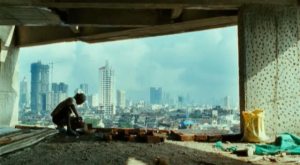 Kiran Rao’s Dhobi Ghat (2010) is a film about Mumbai (duh!). More precisely, it’s a film about the impossibility of making a film about Mumbai, an impressionistic look at the city which argues that it is the only possible way to look at the city at all. Everyone in Rao’s film is an artist. No, not just the four lead characters but everyone – even the myriad Jia-esque immigrant workers who literally build the city’s canvas – is an artist here, albeit removed from reality to varying degrees. If Rao’s Mumbai is the film crew, the sea at its end is the cinema screen, before whose stoic permanence social divisions vanish. (One character notes that the sea air smells of people’s desires). Everyone, and specifically the quartet at the centre, seems to attempt to find in art a subliminal hope of transcending class, of being on a level ground. Arun (Aamir Khan) – the film critic figure – can relate to the city space only through the arts. Shai (Monica Dogra) desires to level all spaces through her photography. Munna (Prateik Babbar) – ever at right angles to life – dreams of hitching to the mainstream through cinema. Yasmin (Kriti Malhotra) seeks to rationalize her condition through her art and hopes it will outlive her. Alas, right from the first scene, reality seeps in to foil such utopian plans. Rao, likewise, has a keen eye for urban and screen spaces, dividing and subletting the frame to emphasize the fragmentation that exists on multiple levels. This fragmentation is integral to Dhobi Ghat, for it is terrified of a complete view of the city, suggesting that a total understanding of the city – with its frightening disparities, unspoken calamities and tragicomic ironies – can only result in deep silence – of acknowledgement, of paralysis and of powerlessness. Like Arun’s last painting, like the old woman next door, like the sea.
Yuddham Sei (2011)
Myshkin
Tamil
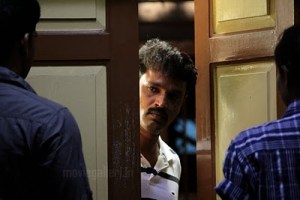 Myshkin’s fourth feature, Yuddham Sei (“Make War”), is a film in reverse. The Jake Gittes-like protagonist of the film JK (a tribute to philosopher Jiddu Krishnamurthy, from whose idea of the individual as the means of social change the film seems to take off from) maneuvers through an inverted world, as is literalized in the numerous garish-yet-impressive upside-down compositions. This is a place where everything revolves around missing persons (rather, missing parts of body), where deaths are the most commonplace of events and where people are more living than dead. JK is played by director Cheran – a casting choice that might be the wisest by Myshkin so far – whose very countenance points to a man whose eyes have been plucked out and soul sucked off through the sockets. An undead hero – not a cold professional as other movies of the genre might indicate – like Melville’s last lead character, he sleepwalks through the narrative space, witnessing physical fragility with utmost equanimity, until his lost past resurrects him back to life, with all its emotional vulnerability and subjectivity. By presenting grotesque instances of violence before revealing them to be calculated acts of revenge against a much more diabolical scheme of things (the sort of emotional swing that Mani Ratnam’s latest failed to achieve), Myshkin indulges in much what-is-justice kind of philosophizing – a la Irreversible (2002) without the flashy puckishness – calling into question the ways of the law (although he cops out by revealing the unjust elements to be merely aberrations in an otherwise healthy establishment). As if providing a corrective note to Anjathey (2008), which might have seemed like valorizing the police force – Myshkin keeps alienating his lead man from institutional justice, seemingly arguing for some abstract notion of individualized justice, even at the risk of glorifying violence. And yes, the legs are all there.
(Image Courtesy: The Cinema News)
 Kiran Rao’s Dhobi Ghat (2010) is a film about Mumbai (duh!). More precisely, it’s a film about the impossibility of making a film about Mumbai, an impressionistic look at the city which argues that it is the only possible way to look at the city at all. Everyone in Rao’s film is an artist. No, not just the four lead characters but everyone – even the myriad Jia-esque immigrant workers who literally build the city’s canvas – is an artist here, albeit removed from reality to varying degrees. If Rao’s Mumbai is the film crew, the sea at its end is the cinema screen, before whose stoic permanence social divisions vanish. (One character notes that the sea air smells of people’s desires). Everyone, and specifically the quartet at the centre, seems to attempt to find in art a subliminal hope of transcending class, of being on a level ground. Arun (Aamir Khan) – the film critic figure – can relate to the city space only through the arts. Shai (Monica Dogra) desires to level all spaces through her photography. Munna (Prateik Babbar) – ever at right angles to life – dreams of hitching to the mainstream through cinema. Yasmin (Kriti Malhotra) seeks to rationalize her condition through her art and hopes it will outlive her. Alas, right from the first scene, reality seeps in to foil such utopian plans. Rao, likewise, has a keen eye for urban and screen spaces, dividing and subletting the frame to emphasize the fragmentation that exists on multiple levels. This fragmentation is integral to Dhobi Ghat, for it is terrified of a complete view of the city, suggesting that a total understanding of the city – with its frightening disparities, unspoken calamities and tragicomic ironies – can only result in deep silence – of acknowledgement, of paralysis and of powerlessness. Like Arun’s last painting, like the old woman next door, like the sea.
 The Seventh Art