[This post is my final contribution to Sheila O’Malley’s Iranian Film Blogathon which concludes today. It has been an astonishing week, with dozens of insightful and informative articles and comments from across the blogosphere. A truly remarkable effort, Sheila. I hope your marvelous work paves way for lots more discussions on Iranian cinema, which, along with Chinese cinema, pretty much owned the last two decades. Cheers.]
Daryush Shokof, whose films have been my holy grail for a long time now, made Iran Prison (2010) at the wake of the 2009 presidential elections, which was marked by massive waves of public unrest. An open hate letter to the Ahmadinejad regime, the hour long film depicts the inhuman treatment of captured demonstrators in underground cells, which ranges from physical mutilation to murder. These scenes are shot mostly interior, in low-lit chiaroscuro arrangements with an earthy color tone, with handheld recorders and non-professional actors (Shokof casts himself as the supervisor of the facility). This thread of the film reminds one of Wang Bing’s Brutality Factory (2007), in the way it religiously narrows down its scope to merely recording the torture sessions. However, unlike Wang Bing’s movie, which situates itself in the past in order to open it up for contemporary analysis, Shokof’s film is almost totally anti-dialectical and it works upon a given set of firm beliefs and a clear cut ideology. But ‘objectivity’ or ‘nuanced’ synthesis is not its objective, in any case, and it is probably more fruitful to look at the film as a solidarity picture supporting the cause of the protestors against the Islamist regime than as an elaborate critique. Intercut with this fictional recreation of the torture sessions are amateur, low quality video clips (obtained from online video sites, I guess) of mass protests in the streets of Tehran, in which we see young men and women directly confronting the police, often with brutal consequences. This jarring (geographical, cinematic, political) contrast between the two narratives is, additionally, suggestive of Shokof’s own status as an outsider deeply involved with the situation in his home country.
Yek Atash (1961) (A Fire)
Ebrahim Golestan
Iran
24 Min.
The oldest Iranian film I’ve seen, Ebrahim Golestan’s short documentary A Fire (1961), chronicles an incident of fire at the oil wells near Ahwaz, Iran, that raged for several months and the relentless efforts to put it out. Edited by poet and Golestan’s partner Forough Farrokhzad, A Fire seemingly plays out as a straightforward reportage, although made about three years late. The firefighting is carried out mainly during the night time and we see silhouettes of men spraying water and of machines trying to clear the debris from the spot of the accident. (The men look like silhouettes even in daylight, thanks to heavy carbon deposits on their bodies). The narrator, speaking in English, tells us that the fire has been on for such a long time that it has become a part of the local landscape. Golestan (who, by the way, made one of the finest Iranian films I’ve seen) digresses regularly from the happenings at the centre to observe the impact of the fire on the residents of the adjacent village and the firefighters themselves. When we are told that the villagers were relocated in order to avoid being poisoned by the residual gases. (We are later informed that the well was shut down and another site was captured for the mining operation). The plight of the firefighters, on the other hand, is even more affecting. Assigned to some of the most life-threatening tasks by the American site managers, they appear as if resigned to fate, their eyes betraying a deep fatigue that’s more than just physical, their bodies (literally) moving ever closer to death, like moth flies approaching a light source. However, Golestan’s film stands in stark contrast to Herzog’s beautiful and atrocious decontextualization game, Lessons of Darkness (1992), in that it recognizes that its subjects are not fuelled by madness, but charcoaled by despair.
(This post comes as a part of the splendid Iranian Film Blogathon hosted by Sheila O’Malley)
Kiseye Berendj (1998) (Bag Of Rice)
Mohammad Ali-Talebi
Farsi
Mohammad Ali-Talebi’s (aptly) modestly titled Bag of Rice (1998) is the sort of film that is generally associated with Iranian cinema, thanks in no small part to the works of Majid Majidi: a drama of everyday events shot on location, with little or no music, usually involving children maneuvering through narrow bylanes in the outskirts of Tehran. These are, no doubt, conservative films that attempt to represent the country on a larger scale, perhaps even serve as a right-wing corrective to the ‘scandalous’ festival films. More than any other film of this ‘anti-movement’, it is Bag of Rice that appears the most unapologetic about its stance. Evil does not exist in Talebi’s film, at least as an active agent. Bad things happen not because of bad deeds, but just due to accidents. Even in films such as It’s a Wonderful Life(1946) or Rio Bravo (1959), there is at least a notion of evil (in the form of a social pervert or an outsider) which is utilized to build a case for conservatism. Not in Bag of Rice, a film that reveals itself as one of the most ethical and effective defences of that ideology. Every one in the city offers to help the old woman and the little girl who travel to the city to buy the titular sack of rice. One person’s task is distributed – like the rice in the bag – and executed willingly by a group. Both grandma and the kid have their own needs and (voluntary) responsibilities that play tug-of-war with each other, but the pair works through them amicably. Although the scenario keeps highlighting the financial crunch of its characters, conflict between classes is dissolved into an organic, throbbing, seamless and wholesome portrait of a community, in which clashes of interest, instead of rupturing relationships, are resolved through compassion and understanding. When the little girl wears the scarf for the first time towards the end, during a ceremony of communal good will, one wonders whether to read through the fissures of the film’s hardline, pro-revolution message or to appreciate the graciousness of what’s on the plate.
(Posted as part of the ongoing Iranian Film Blogathon at Sheila O’Malley‘s. Formidable collection of articles on Iranian cinema building up…)
Renowned painter and filmmaker Ali Akbar Sadeghi’s The Rook (1974) is a hilarious short animation based on a quick little game of chess. The idea of bringing the game to life, in itself, isn’t a terribly novel thing. Many people, like me, would have wondered how a film based on chess would pan out, given the inherent capacity for not only sadism and spectacle, but even analysis of class, war and bipolar politics. (Kubrick’s chess movie is probably the closest one comes to witnessing such a treatment). Sadeghi, given that he was working for the Kanun, undermines the scope for gratuitous violence throughout, instead opting for a Lego-like version of the war. The result is nearly as hysterical as Pudovkin’s and Shpikovsky’s brilliant comedy based on the game Chess Fever(1925). Sadeghi’s style of animation (that seems to have died out now and which one used to see so often in government sponsored animation programmes in India) generally consists of two planes of action, which appear as if they are sliding one beneath the other, and involves hand-drawn sketches animated to puppet-like gestures marked by repetition and rigidity. And the director uses this rigidity to great effect in The Rook. The kamikaze match (which actually sticks religiously to the rules of the game), right till its recursive, anti-climactic showdown is full of absurdities, not only in the way each move is presented, but also in the playing strategy itself. I don’t know if I should understand it as a remark on the absurdity of war or on the absurdity of the game, but Sadeghi sure harnesses the absurdity of the medium to its fullest here.
(Posted as part of the ongoing Iranian Film Blogathon at Sheila O’Malley‘s. Do check out the rich collection there)
Gozaresh (1977) (The Report)
Abbas Kiarostami
Farsi
The Report is a typical example of the marriage-in-crisis film that many great filmmakers seem to have made during the early part of their careers. Such a gesture is usually channeled as critical reassessment, a personal confession, wish-fulfillment or even self-justification. But, for Kiarostami here, it becomes an opportunity to telescope the social situation of the country into a deceptively simple marital drama. In many ways, The Report reminds us of the remarkable vérité films of early Tarr, especially in its preoccupation with diminishing and often suffocating urban spaces. Kiarostami’s film is not about stasis, as many films of the subgenre are, but about disintegration. It situates itself at a narrative and historic point where institutions can no longer hold together. Corruption reigns supreme in the public sphere and money becomes the focal point of almost all discussions. The stuffy, noisy streets of Tehran seem as though they are already in a state of decay. It appears as if there can be no way out but downward – for the society and the family. Kiarostami rarely films his couple (Kurosh Afsharpanah and Shohreh Aghdashloo) together in the frame. Like Certified Copy(2010), which is the closest film to this one in terms of scenario, the director severs the protagonists from each other with his shot patterns and blocking, with the only holding force being their little girl child. Kiarostami also employs a large number of static, fixed compositions with judicious use of walls and doors so as to allow long chunks of action unfold within the same shot. This sense of mundanity is compounded by a soundtrack without any music and consisting of only direct sound, which would later become the director’s forte in the 90s.
(This is a small contribution to Sheila O’Malley’s Iranian Film Blogathon (Feb 21-27), which has already received a number of terrific entries)
Rangha (1976) (aka Colours)
Abbas Kiarostami
Iran
15 Min.
I’m usually wary of tracing auteurist strains in a filmmaker’s very early works since this retrospective ‘curve fitting’ not only turns out contrived but imposes an unwarranted burden on the filmmaker by not allowing him to change with time. One of Abbas Kiarostami’s earliest short films, Colours (1976), both reveals traces of his subsequent preoccupations and stands antithetical to many facets that would become his trademark. Made for the film division of Kanun (Centre for the Intellectual Development of Children and Young Adults established by the Shah’s wife in the 60s), Colours is a educational documentary, possible targeted at the very young, which urges the children to discover various colours in natural and manmade objects around them. Like Satyajit Ray, Kiarostami started out as a graphic artist and Colours appears closer to that vocation than filmmaking. Presenting various items head on, more often than not amidst a white background, with a narrator describing what is shown, the short is completely preoccupied with objects and surfaces (like his very latest, can we say?). The soundtrack, with its redundant voiceover and a corny, loopy soundtrack is in direct contrast to Kiarostami’s later, minimalist ventures. But Colours is also one of the very few completely non-narrative films by the director, who seems to be more at ease here working with still life than live action. Kiarostami’s still on experimental grounds here and the Centre seems to have provided ample opportunities for that, even (especially?) after the revolution. The film ends with shots of drawings on a blackboard, which has quite easily become emblematic of Kiarostami’s early works at the Centre, the works of the Kanun, in general, and even Iranian cinema, in a way.
P.S: There’s an extended scene with toy racecars tracing curves on plastic tracks – so redolent and so-not-redolent of the director’s later works.
(This is a token contribution to Sheila O’Malley‘s Iranian Film Blogathon, which I’m eagerly looking forward to. Get over there pronto!)
7 Khoon Maaf (2011) (7 Murders Forgiven) Vishal Bhardwaj Hindi
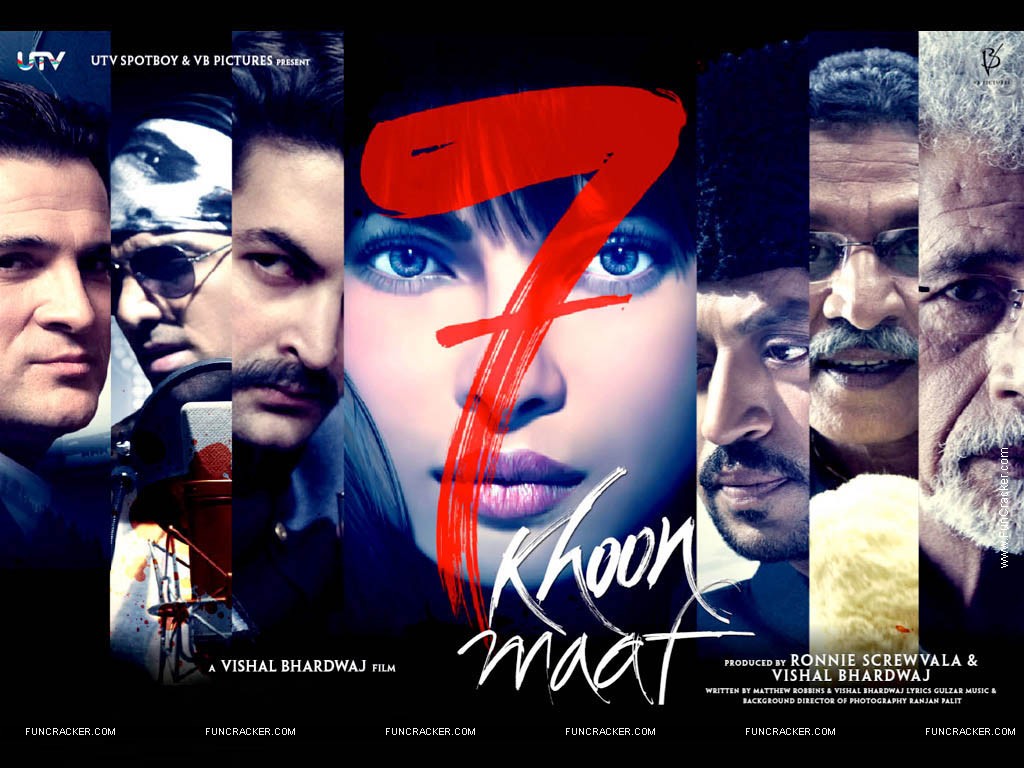
So we have two high-profile filmmakers releasing two remarkably symmetric films this weekend which wear their inspirations on their sleeves. Both these similarly structured films give us serial killers traumatized by childhood events. But, while Menon’s movie is like gazing into a fish bowl, Bhardwaj’s is akin to peeping through the door lens. It is not the protagonist, Susanna (who befittingly misses an emotional arc, played by Priyanka Chopra) but the world around her that is distorted in 7 Khoon Maaf. Right from the beginning, we are told, she is in search of father figures (through her six husbands) to replace her deceased biological father (which, of course, culminates with her marriage to the Son, her ordinance, which wittily distorts her line about drinking her husband’s blood). Along the way, she seems to see herself as a feminist twist on Christ (which goes well with Bhardwaj’s not-so-singular brand of militant feminism) who suffers for the sake of those who follow. She seeks forgiveness for her seven sins, her seventh sin being exactly this misinterpretation of Christ’s mission, to militarize Jesus, to bring him to earth, to replace forgiveness with retribution, to ‘kill’ him. However, where Bhardwaj’s film trumps Menon’s is that, although it lends itself to easy Lacanian reading like Naaygal, 7 Khoon never attempts to reduce characters to psychoanalytical toolboxes. Spanning several decades (Bhardwaj clumsily attempts to contextualize the narrative, using political events while, given the themes, he should have done precisely the opposite: collapse history and let anachronism reign), 7 Khoon hops across film subgenres of the west (costume drama, period film, concert picture etc.) all the while having a very ‘Indian’ heart (The commentary on Indian patriarchy almost swaps targets in the Russian segment), as if remarking upon Bollywood’s skin deep aping of Hollywood cinema. This masking of ‘Indian-ness’ by ‘European-ness’ and of (regressive) actualities by (progressive) surfaces and of the present seemingly repeating itself to eternity is, ultimately, is what 7 Khoon deals with. And it deals with pretty well, even if one gets the feeling that a rewrite would have done more good.
Nadunisi Naaygal (2011)
Gowtham Vasudev Menon
Tamil
Part rip-off, part tribute to Psycho (1960) – right from the plot to the up-down movements of objects and the camera – Gowtham Vasudev Menon’s Nadunisi Naaygal (“Midnight Dogs”) charts the activities of a soft-speaking serial killer, Veera, who lives with his (surrogate) surrogate mother in a mansion consisting of, well, three floors. Menon’s film is nearly as much about transgression – of mores, of geographical boundaries, of industry idioms – as Hitchcock’s picture was about deviation – of the narrative, of normalcy, of sexuality. Menon has said elsewhere that this is a film based on a true story, while it’s actually a pseudo-horror based on the superficies of a pseudo-science (spare me the Oedipii and the Electras), where, unlike the finale of Psycho, it is the director who plays the shrink all along, deeming deviance as just a product of other deviant practices. (Naaygal has one of the ugliest directorial schemes of recent times, with subjective and objective reality clearly delineated by awkward POV patterns). Menon has also proclaimed that Nadunisi Naaygal is his middle-finger-to-all film. True. It is, in fact, the film in which he actually wants his audience to hate him, to consider him as an outlaw. (He succeeds by leaps and bounds: He’s written a character that invites unanimous derision). Evidently, the director recognizes himself in the central character – a psychotic woman-slayer – which is only partly acknowledged by the employment of POV shots for both the filmmaker-killer and the audience-victims. (Tarantino nods abound, starting with the title). This is a refreshingly skewed perspective from and of a director who has been routinely killing off his lead women in his films. With Naaygal, like Veera, he almost denies that he had anything to do with his previous blockbusters at all. May be he’ll deny later that he had nothing to do with Naaygal as well. May be this is a turning point in his career. May be it’s the end of it. May be he hears those dogs howl at midnight.
“A film adrift in the cosmos… A film found on a dump.” – Week End (1967, JLG)
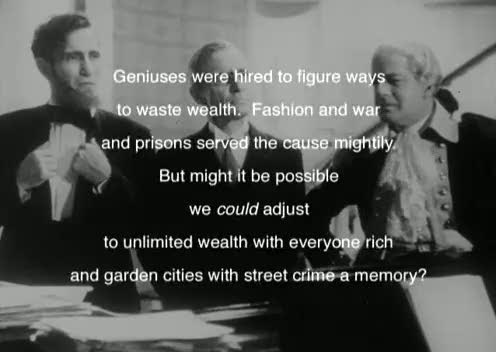
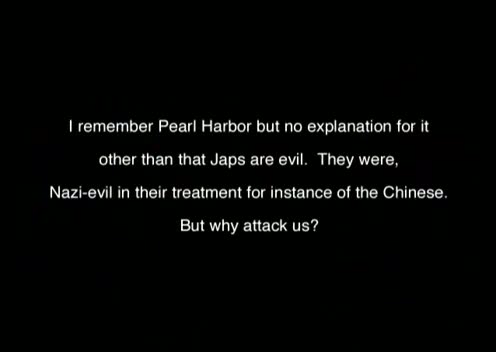
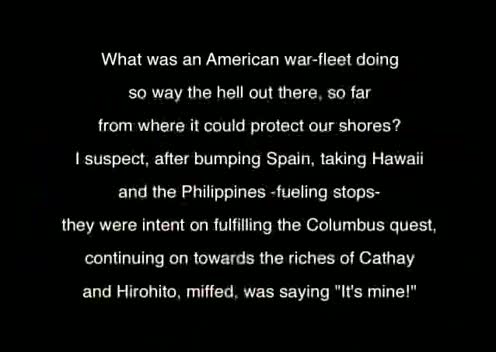
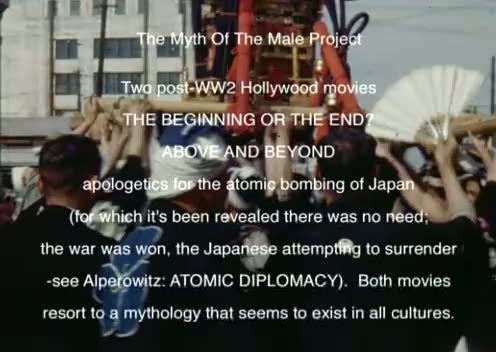
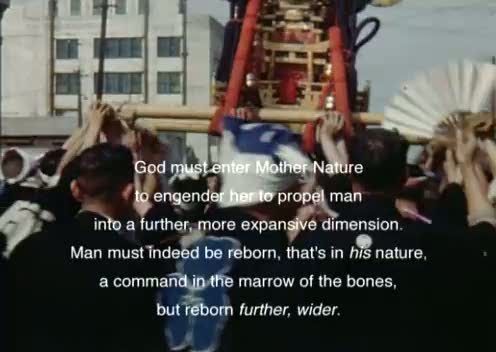
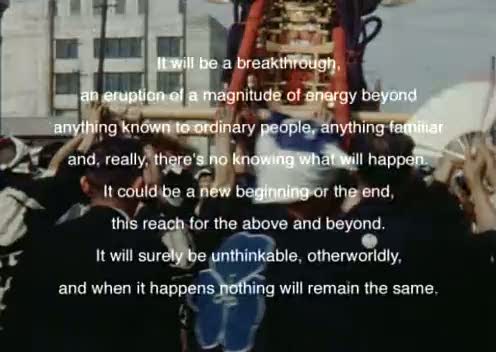
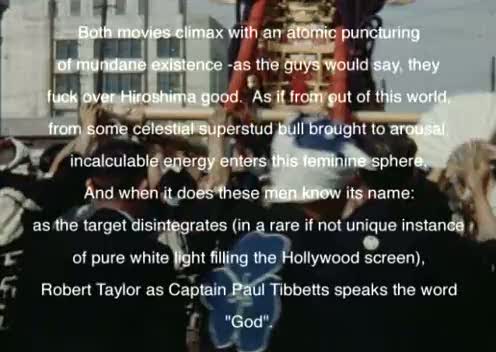
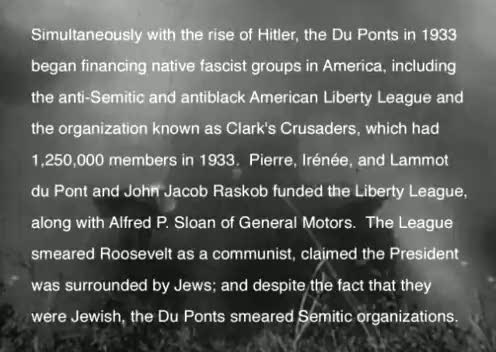
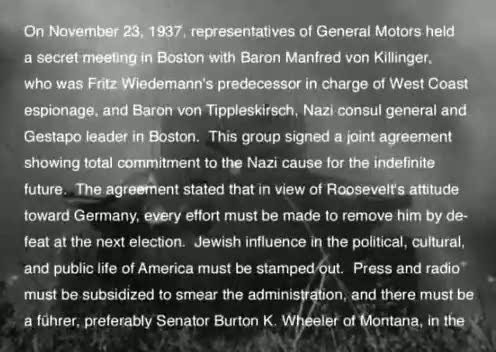
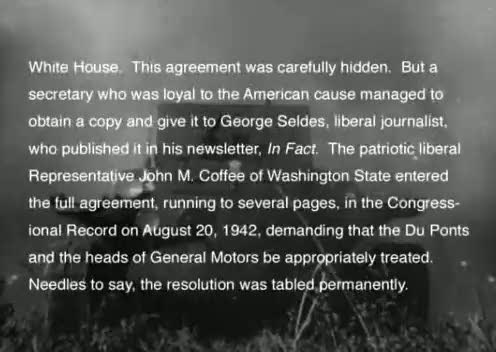
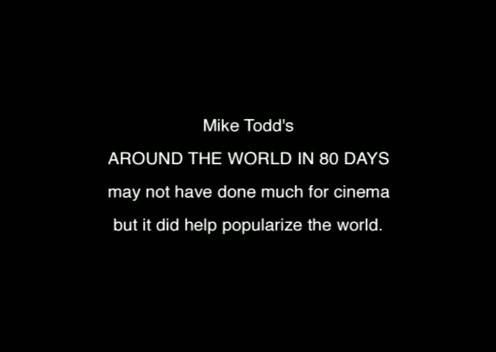
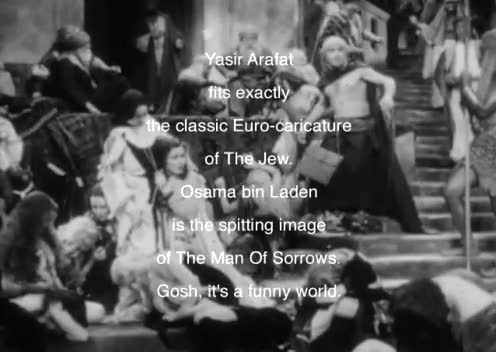
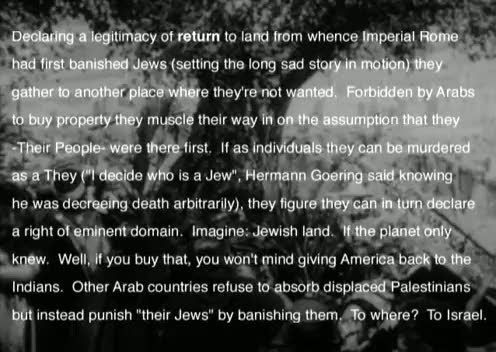
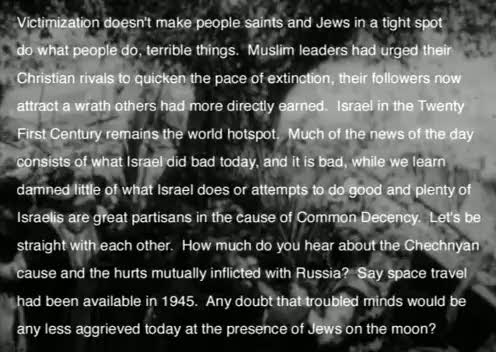
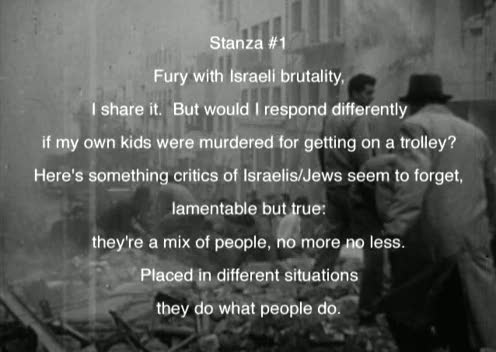
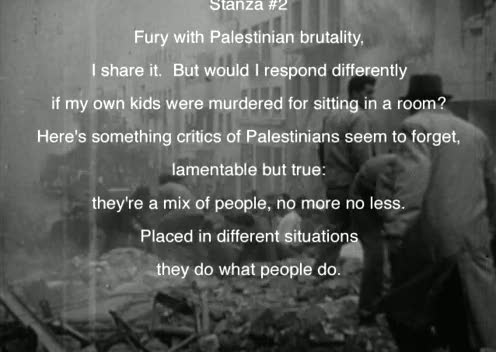
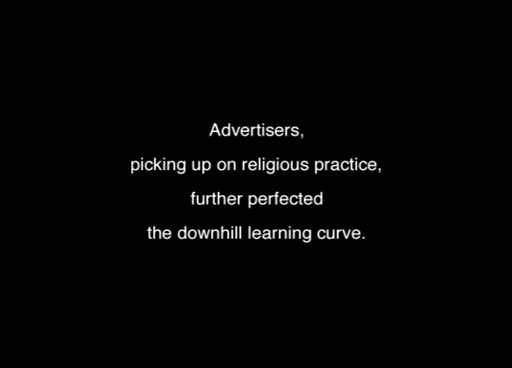
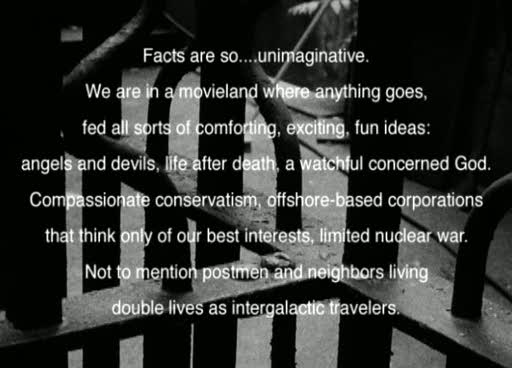
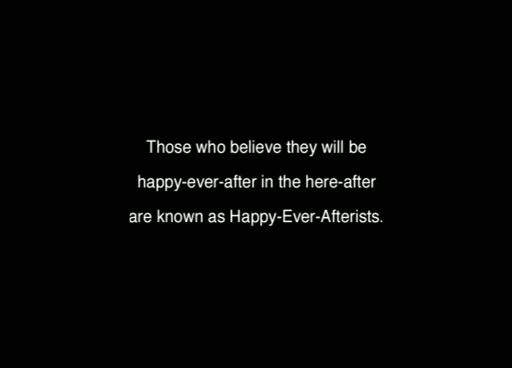
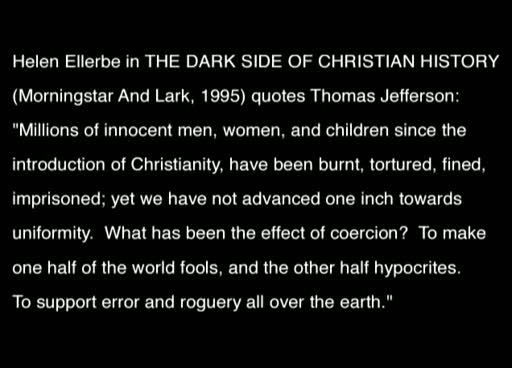
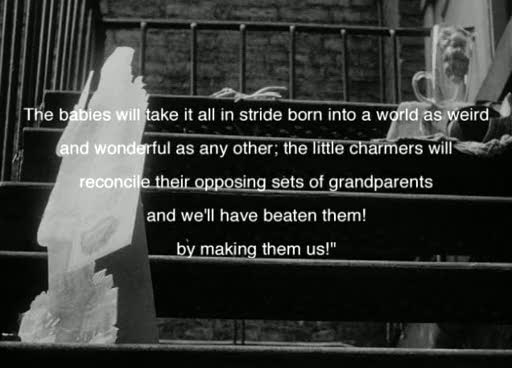
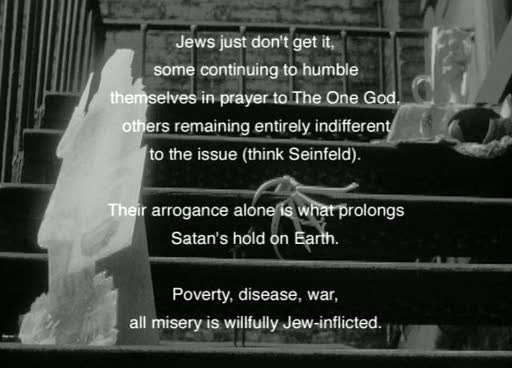
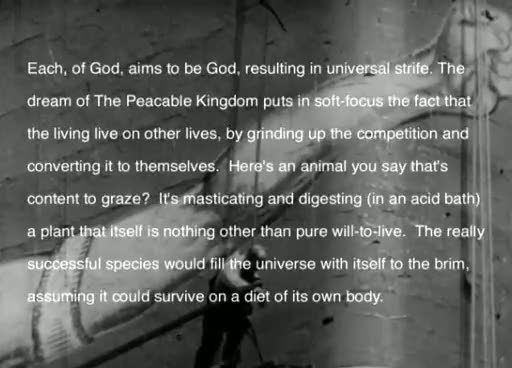
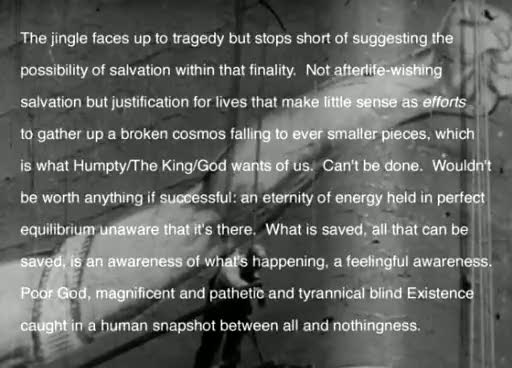
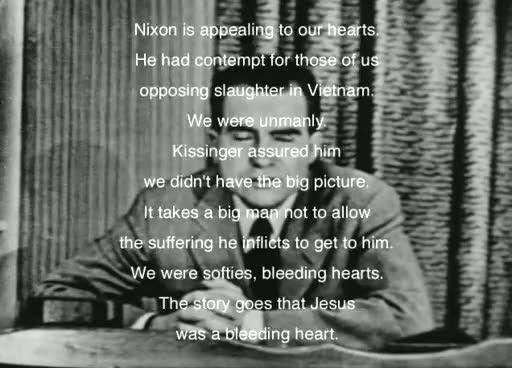
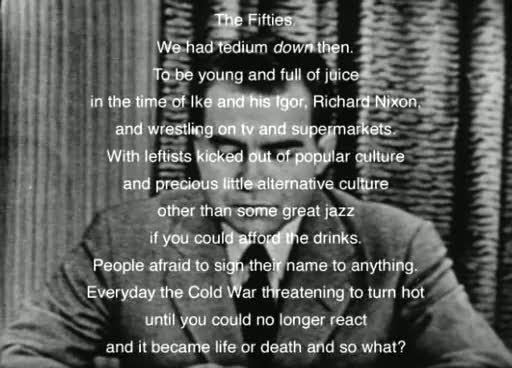
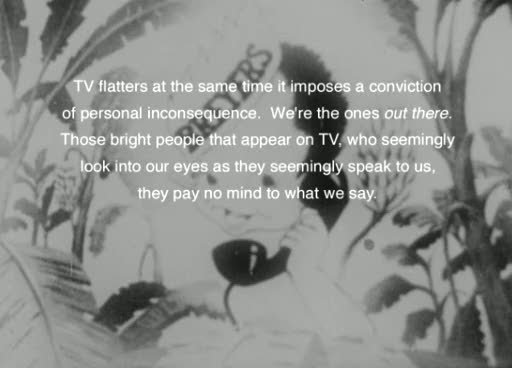
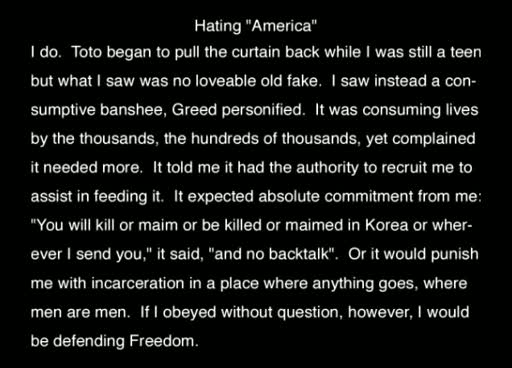
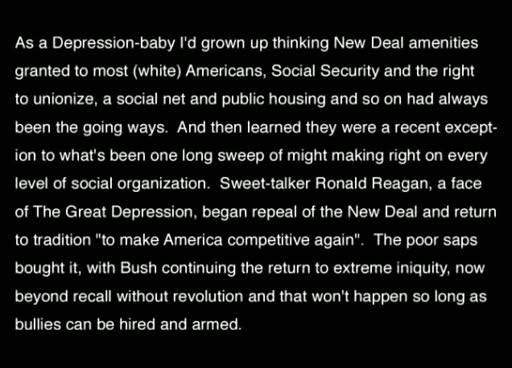
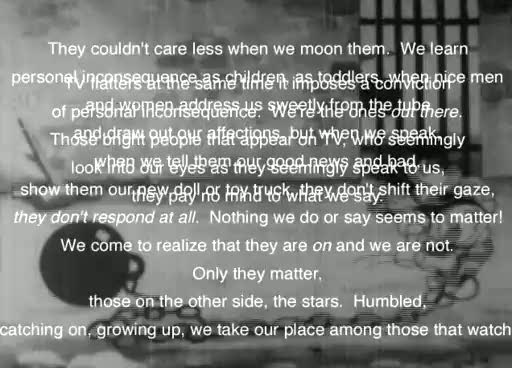
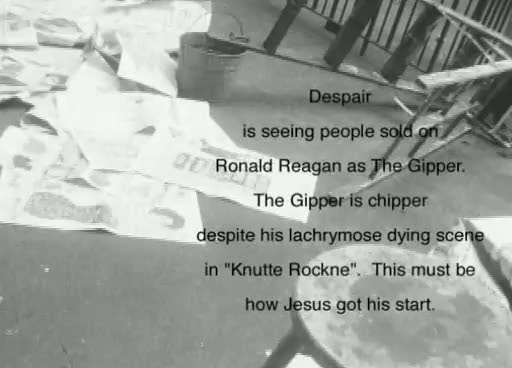
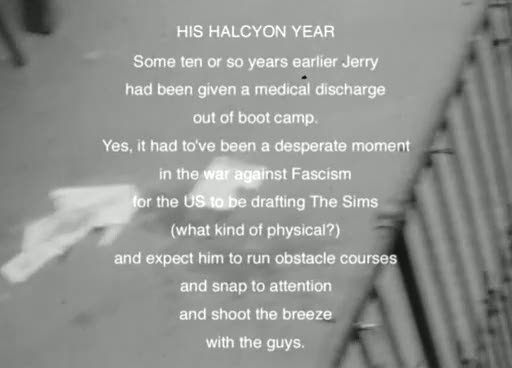
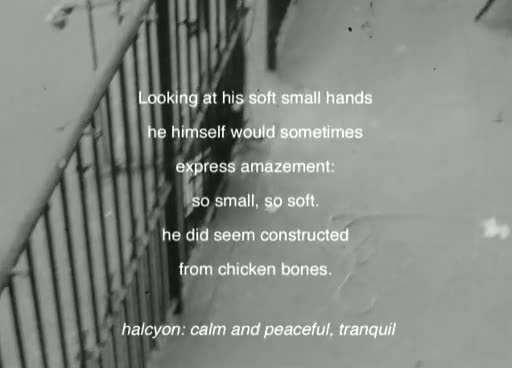
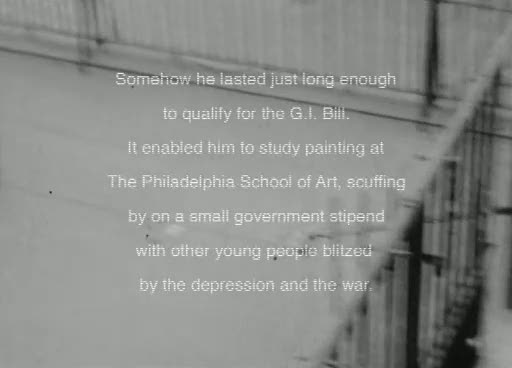
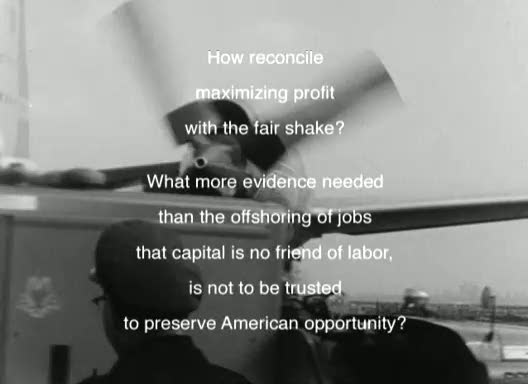
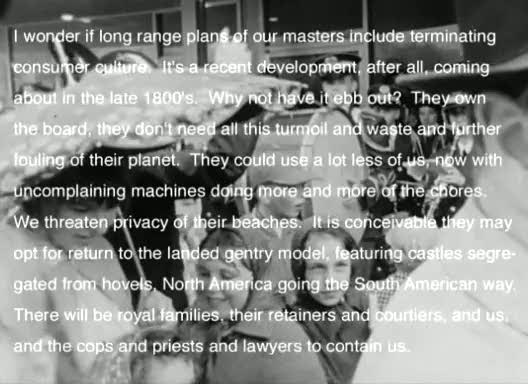
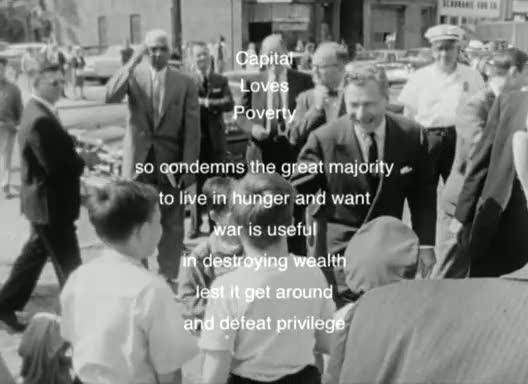
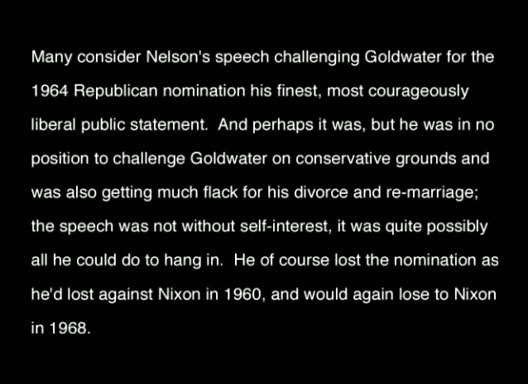
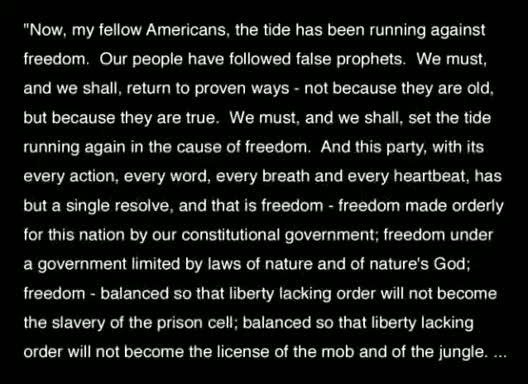
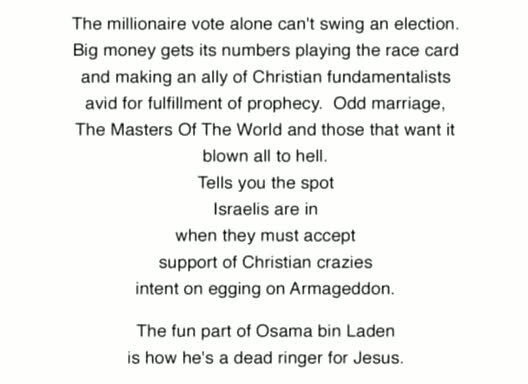
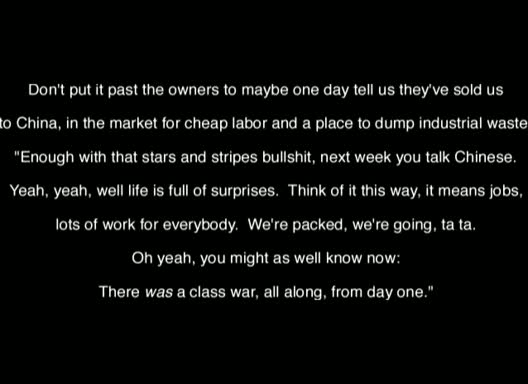
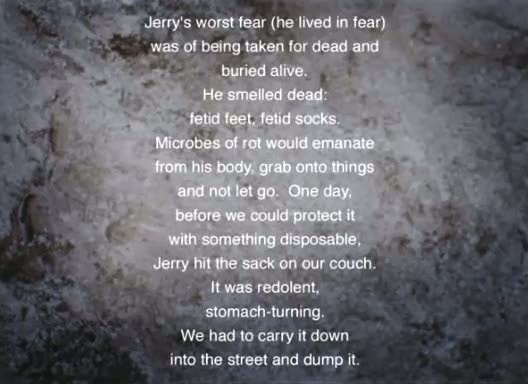
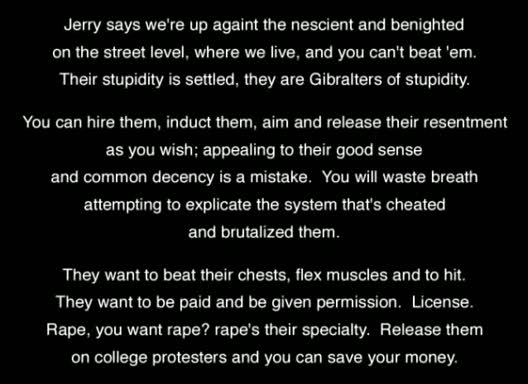
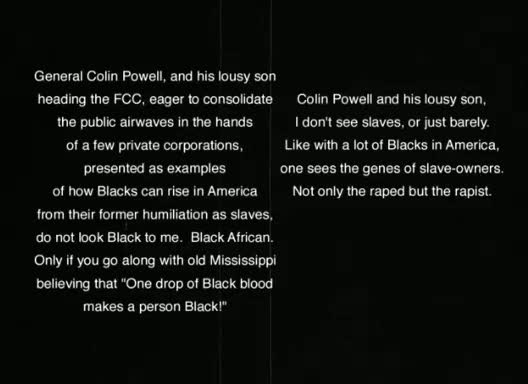
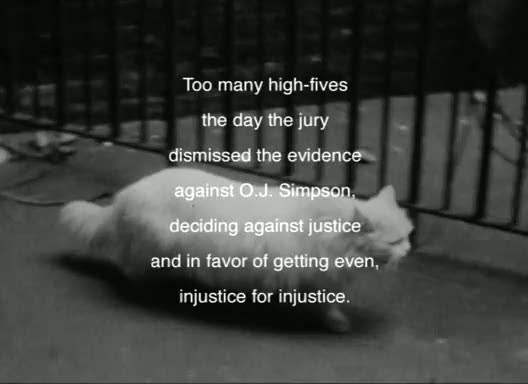
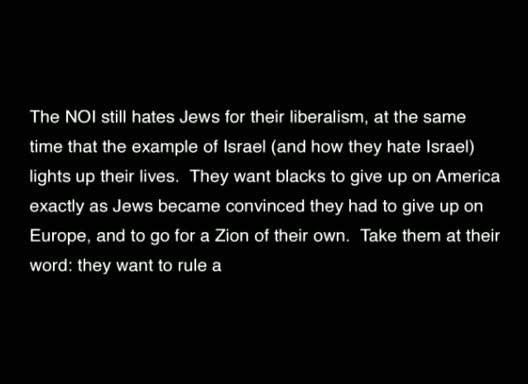
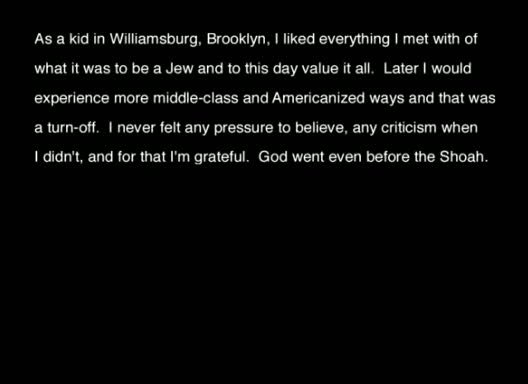
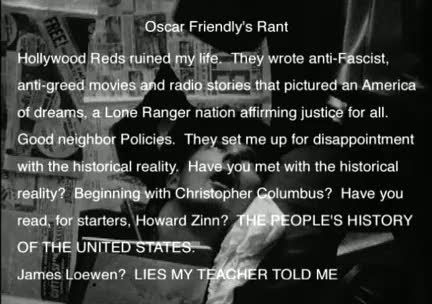
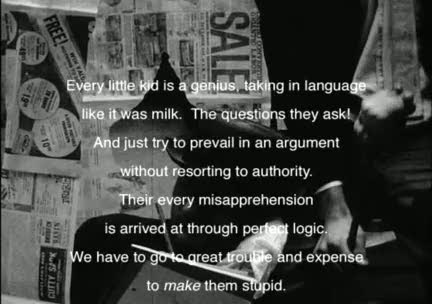
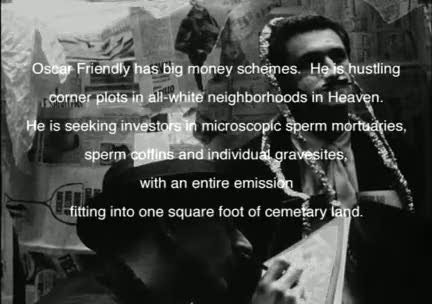
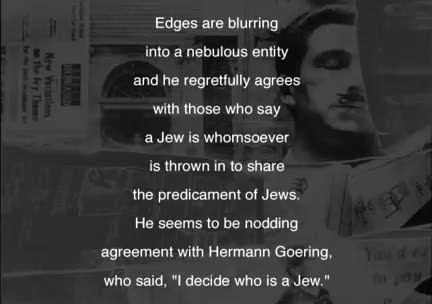
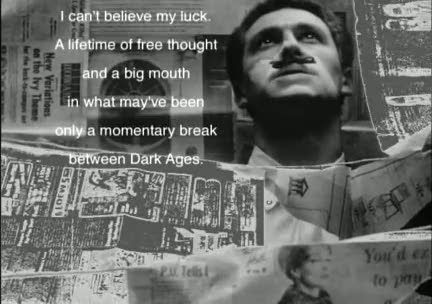
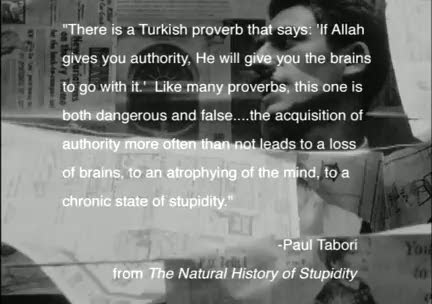
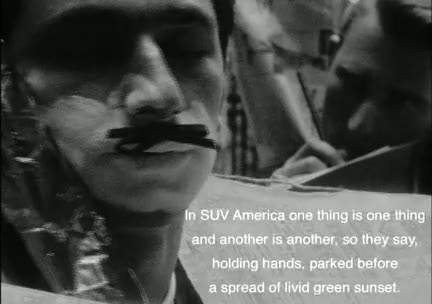
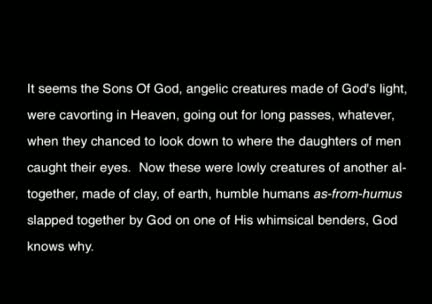
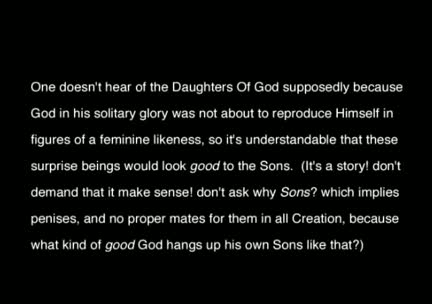
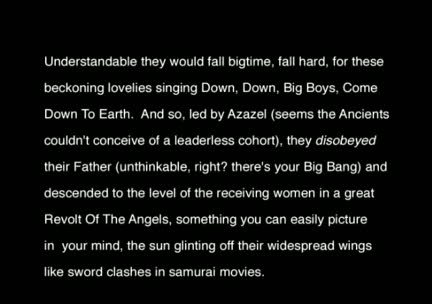
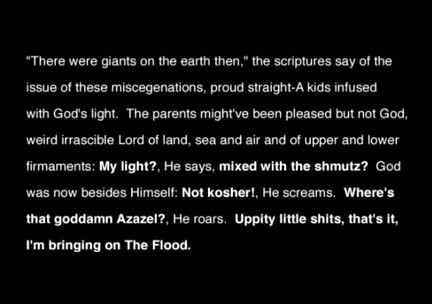
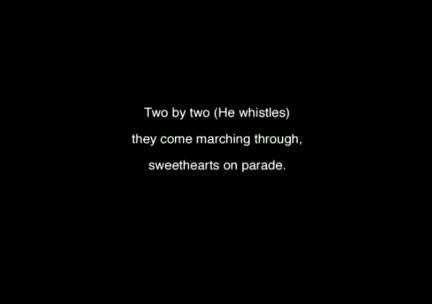
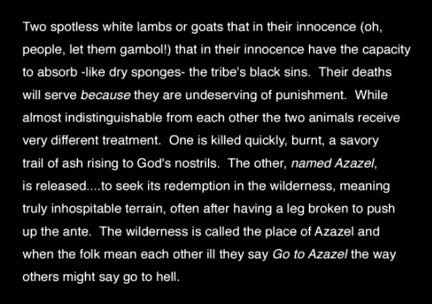
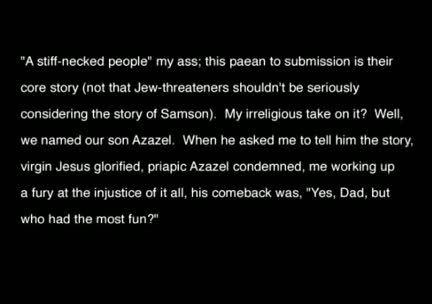
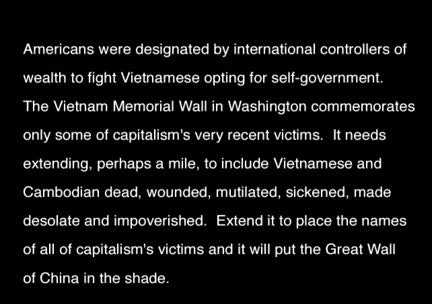
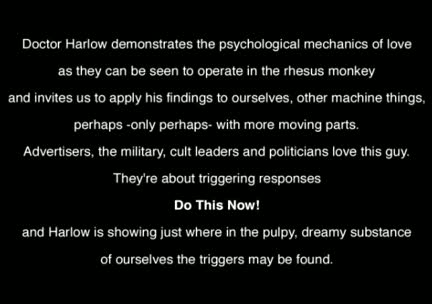
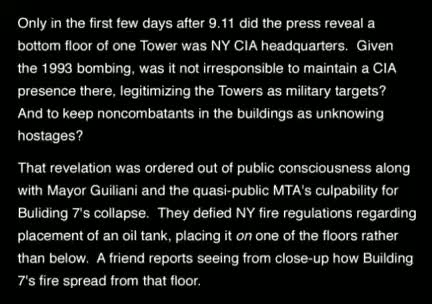
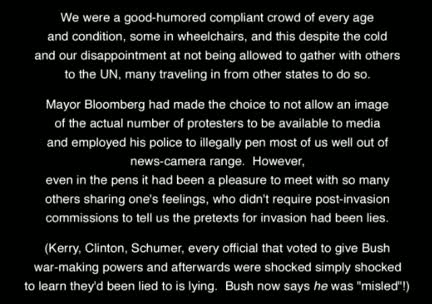
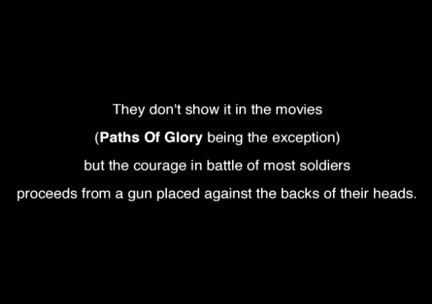
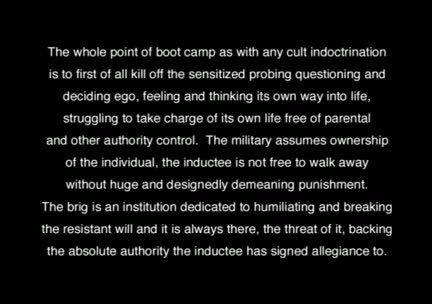
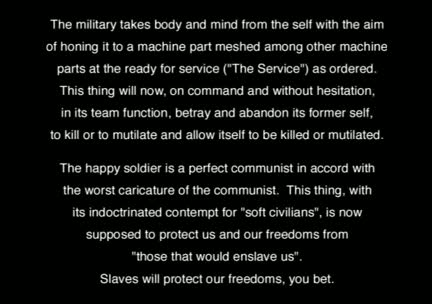
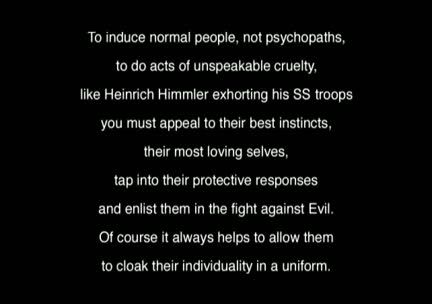
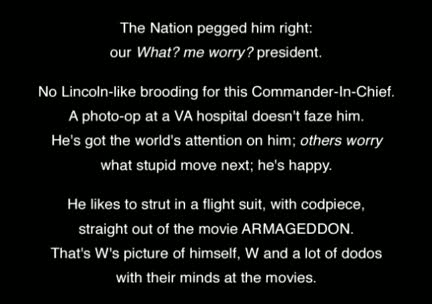
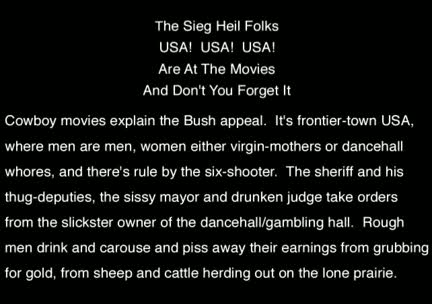
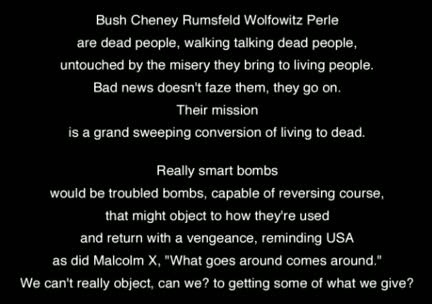
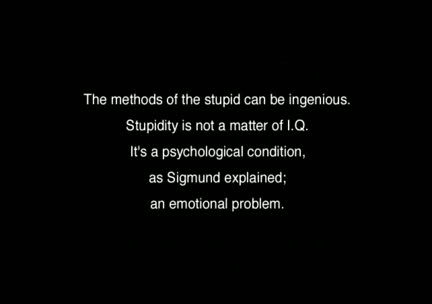
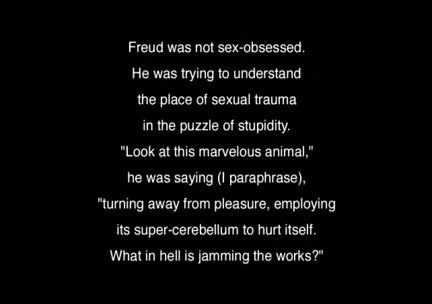
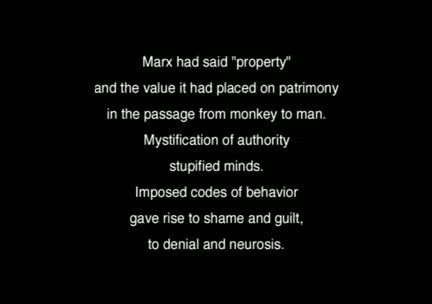
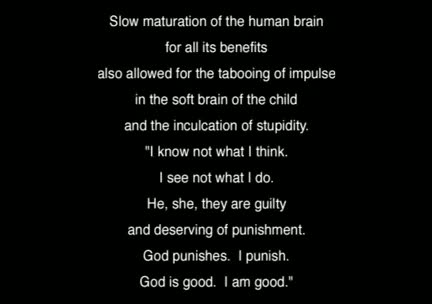
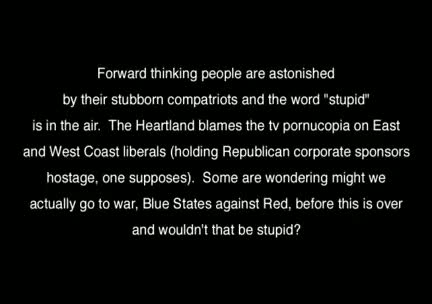
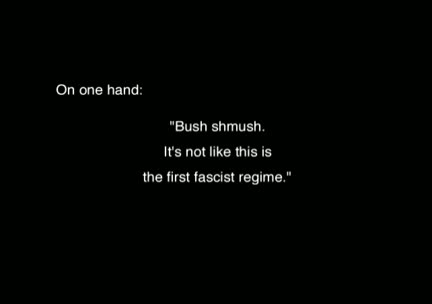
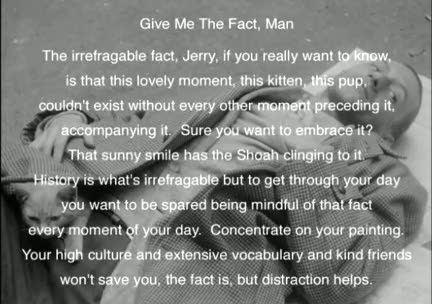
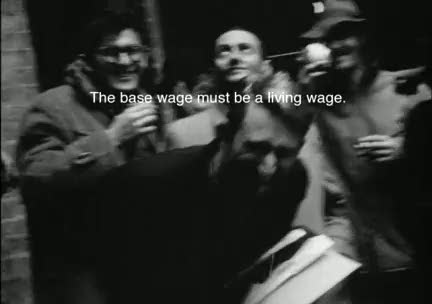
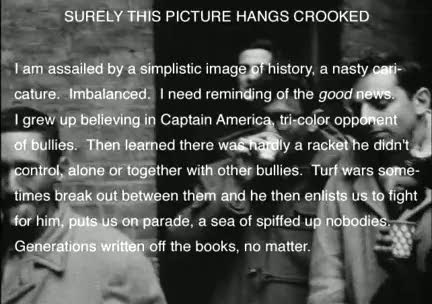
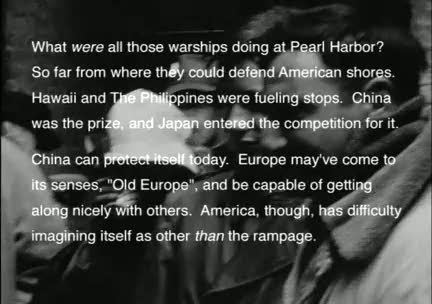
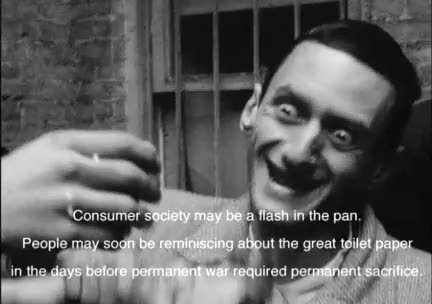
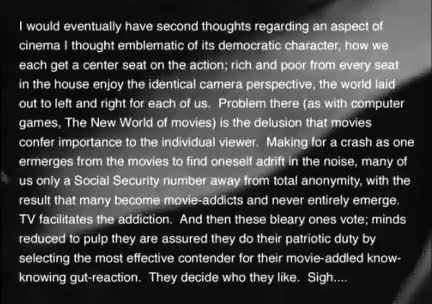
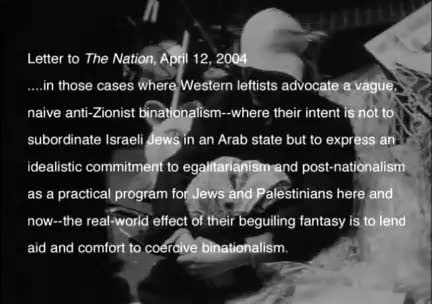
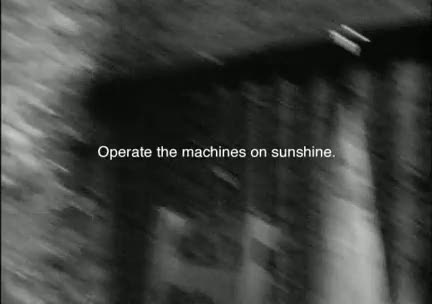
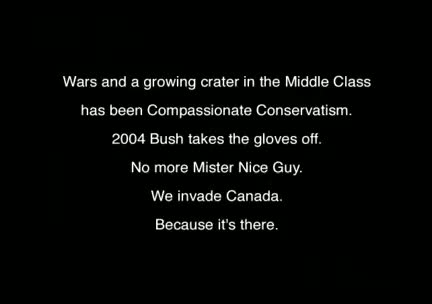
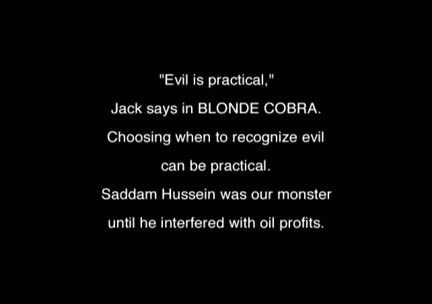
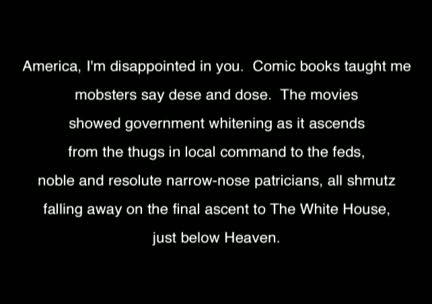
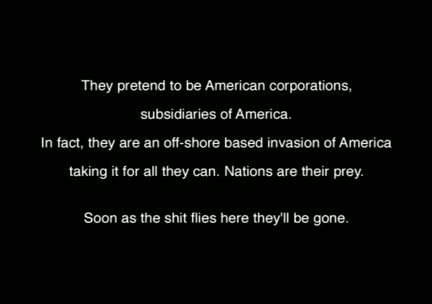
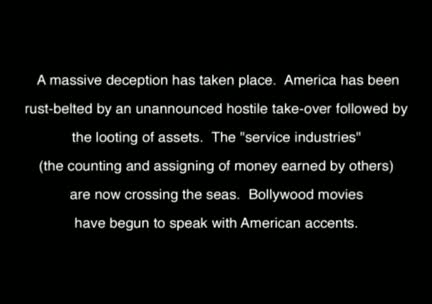
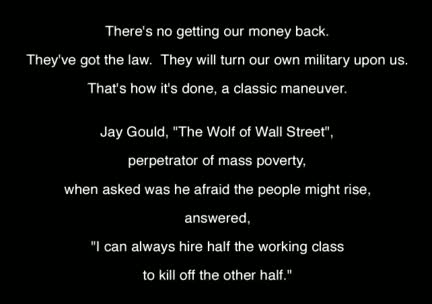
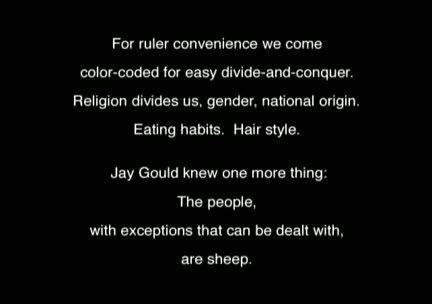
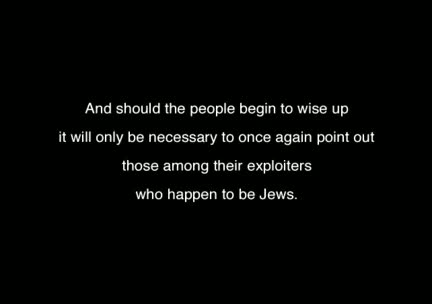
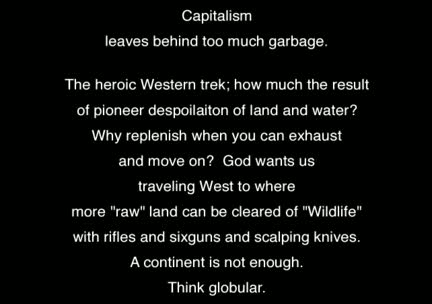
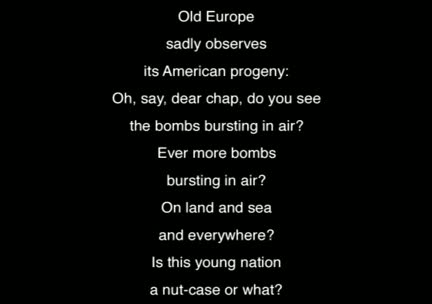
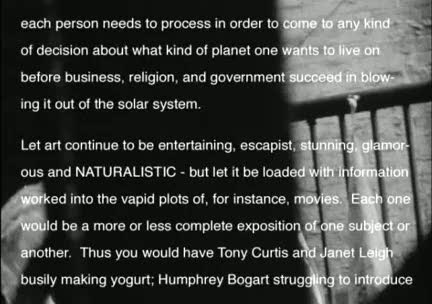
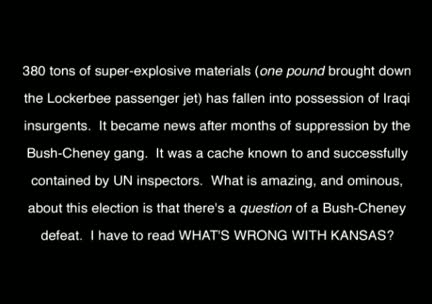
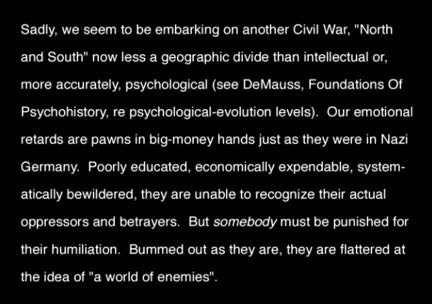
Whatever one attempts to say about Ken Jacobs’ sprawling, pointed, majestic, self-deprecating, playful, serious, enrapturing, frustrating underground work Star Spangled to Death (1957-2004), apart from becoming contradictory, only turns out reductive, for it is an unwieldy beast of a film. A relentlessly fragmented and remarkably sustained reflection on war, xenophobia, imperialism, religion, ideology, racism, resistance, justice and truth – although always in the American context – Jacobs’ film is simultaneously an anarchist critique of the USA and a celebration of its (possible) glories. Constructed using a dizzying amount of news reels, second rate TV specials, Disney cartoons, excerpts from early Hollywood productions, political speeches and amateur footage, among others, Star Spangled to Death is both a history of America constructed using its mass media and a deconstruction of historiography based on mass media. Rather than trying to write an inevitably insufficient review of this massive film, I chose to embark on a much more mechanical, much more pointless, much more painstaking, much more fascinating and, really, much more rewarding exercise.
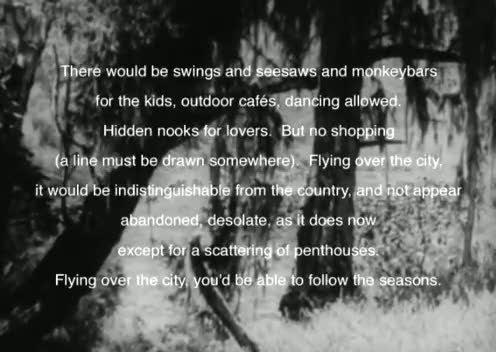
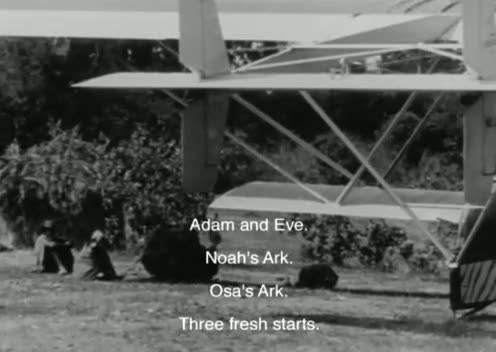
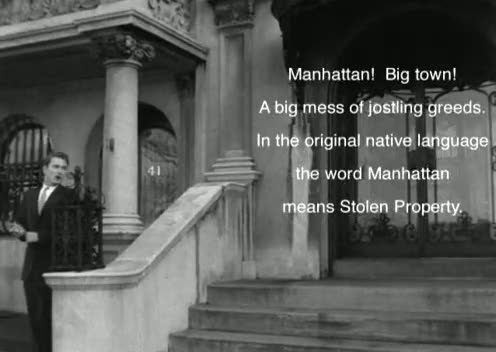
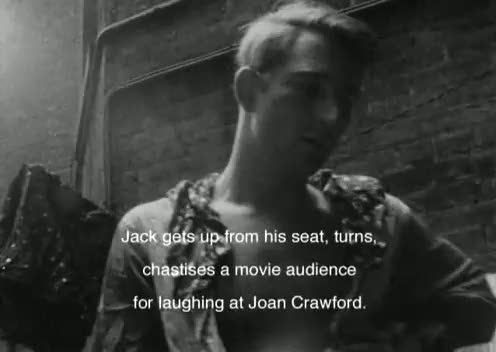
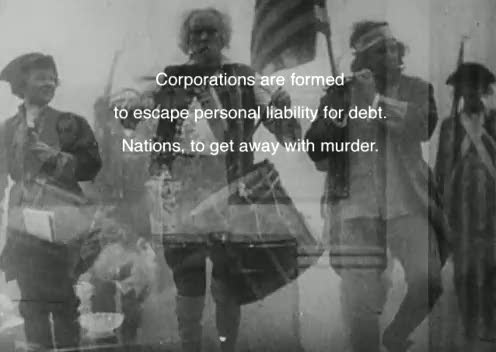
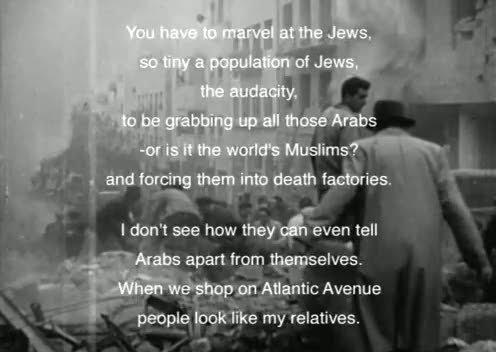
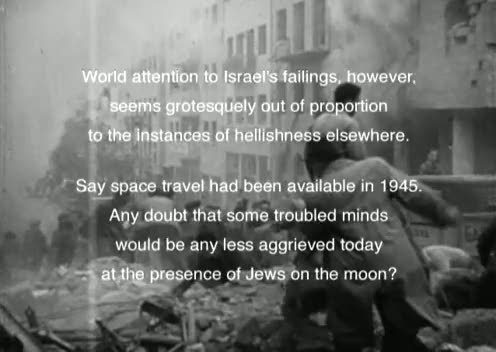
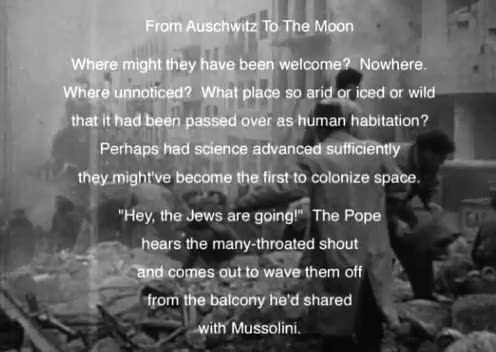
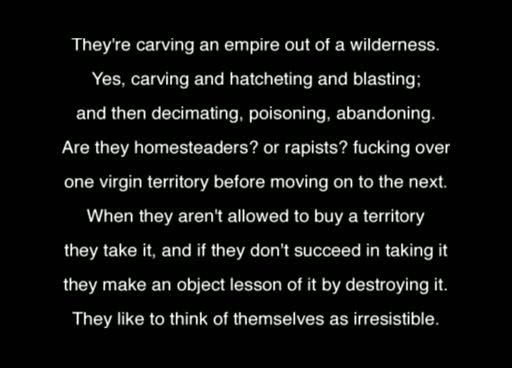
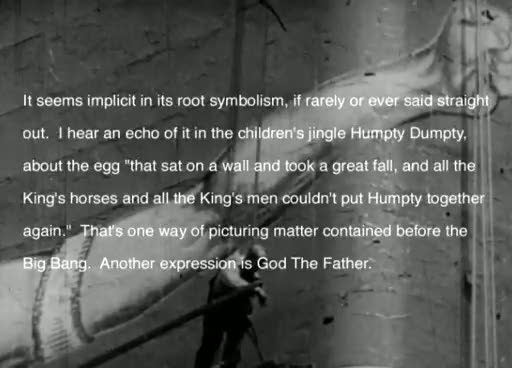
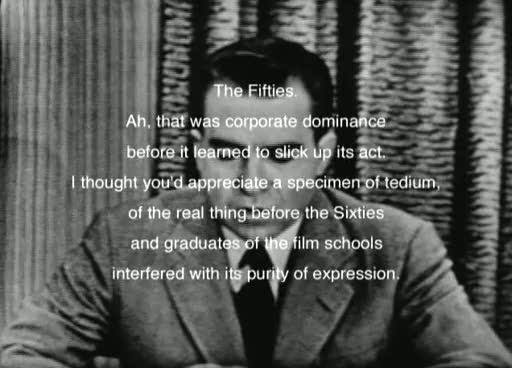
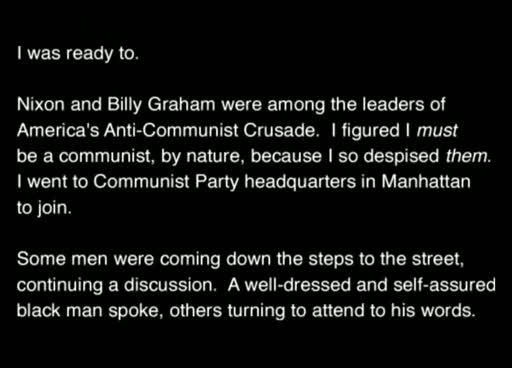
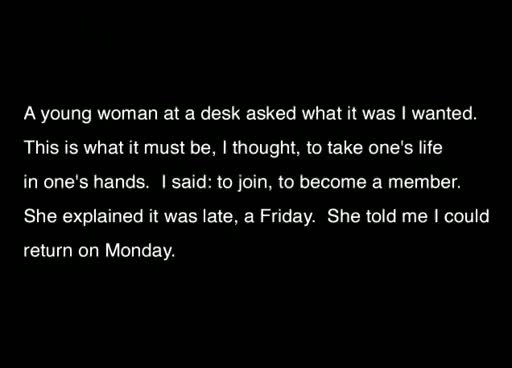
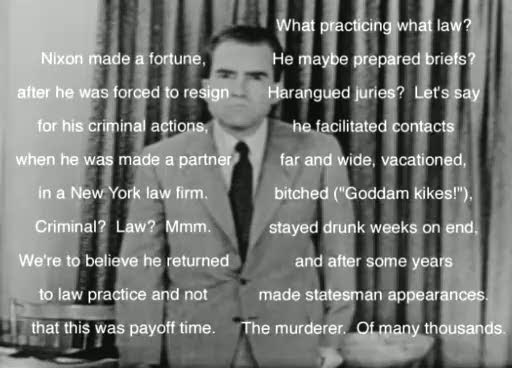
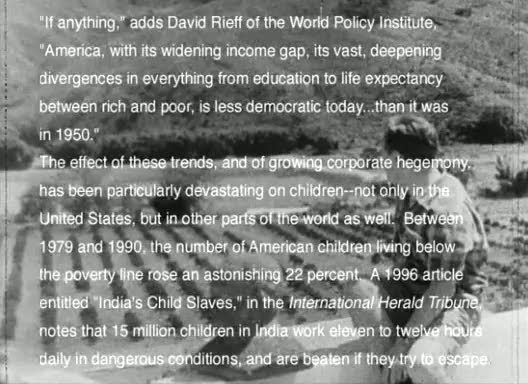
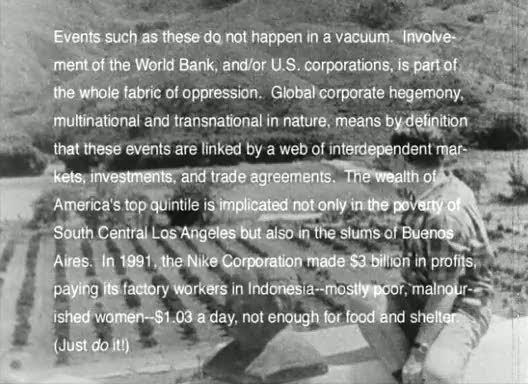
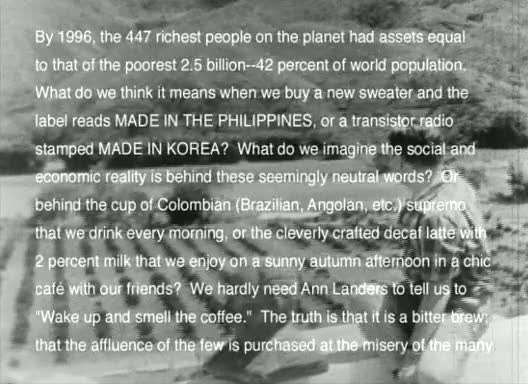
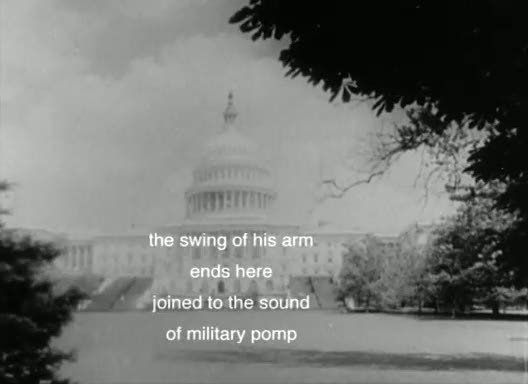
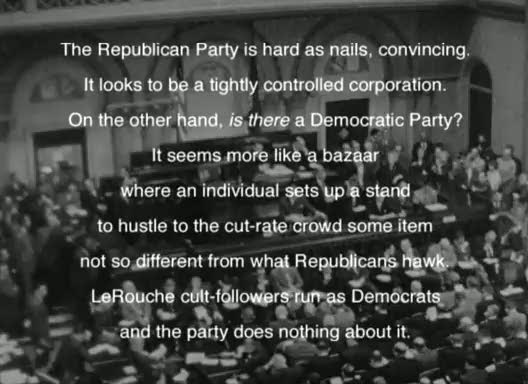
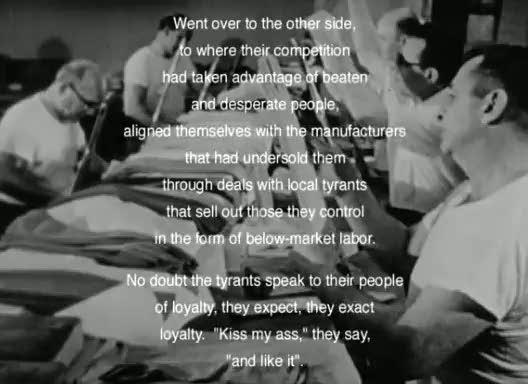
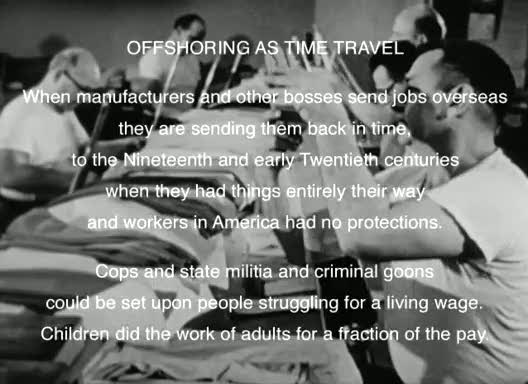
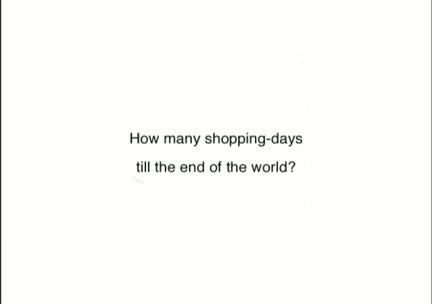
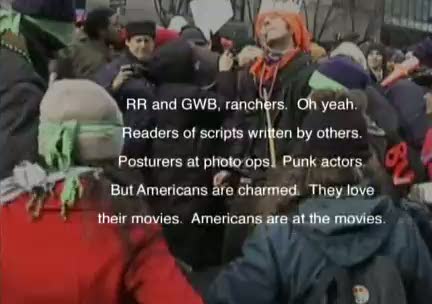
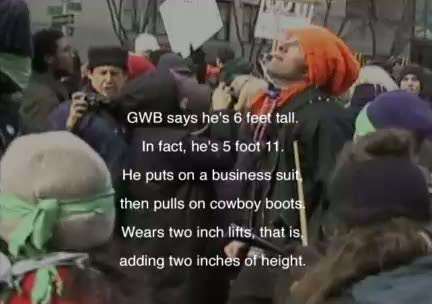
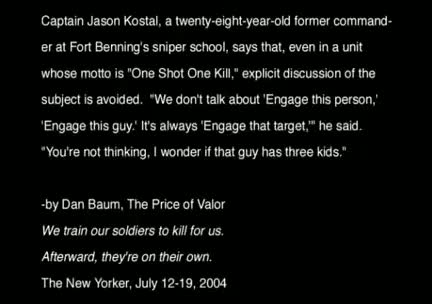
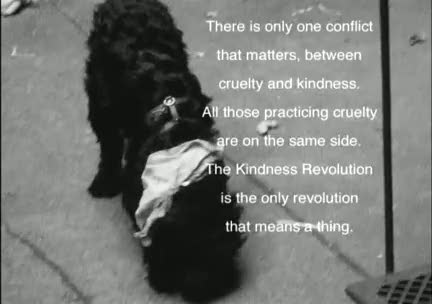
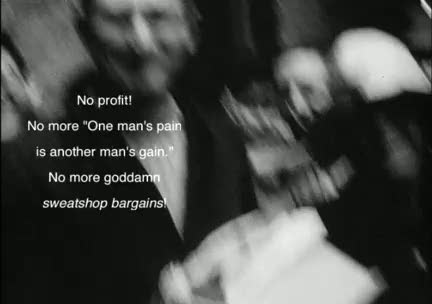
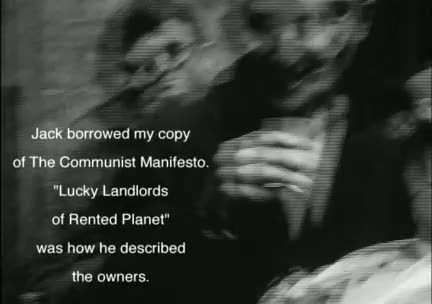
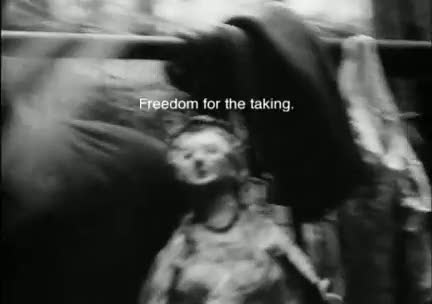
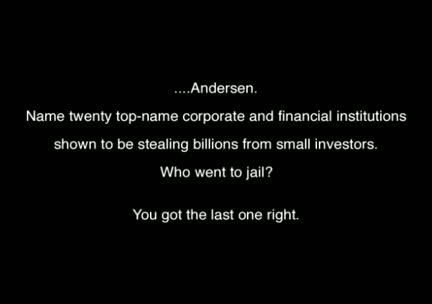
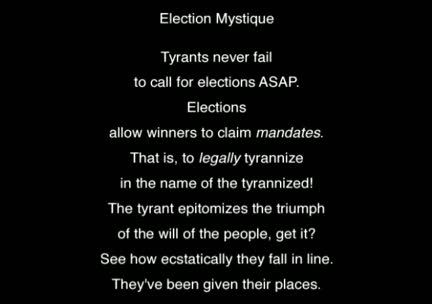
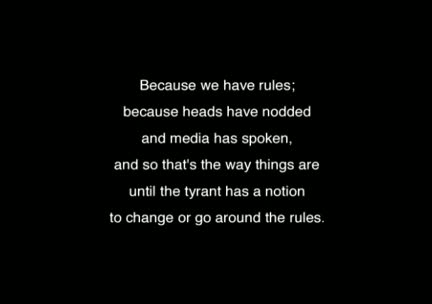
For the uninitiated, Jacobs plants hundreds of single frame flash texts – besides equally elusive shards of images and sounds – throughout the seven hour film, each of which lingers for about one twenty-fifth of a second on the screen, into the film. These texts perform the paradoxical function of aggravating the slippery nature of the film and presenting its ideas cut and dried. Of course, this hit-and-run approach is anything but subtle. It’s more like Freudian seepage from the film’s unconscious to its surface. Much like how Jacobs counterpoints narratives of the establishment with the film’s overall structure and trajectory, these texts prove to be the perfect foil to whatever assertions these dominating materials make. There’s another paradox at work here. One one hand, Jacobs’ film – specifically these flash texts – is one that’s uniquely encoded in the film format. These frames – with fixed position in time and space – are much easier to zero in on a reel of film than on an intangible stream of binary numbers. One the other, it’s only a home video that provides one the luxury to navigate the film with ease in order to grab these frames. If cinephilia, in a sense, is defined as an odyssey to capture for life that elusive frame, Star Spangled To Death literalizes the notion and takes it to its extreme.
There is probably no point to this undertaking at all, but I do think it will be useful for viewers like me who actually feel the itch to read all those transitory intertitles without choking the remote buttons. Of course, I must add that I might have missed a number of frames here. Please feel free to point them out to me or, if possible, provide the missing screenshots. (One of the ones here, thanks to the copy of the film I have, is smudged as well. I’d be grateful if anyone could provide a replacement). Without further ado, I present you those notorious twelve and a half seconds of Star Spangled to Death which, I’m guessing, only a few might have seen in its fragmented entirely. Or whatever.
[Readers who are already cursing me (and will be cursing, until this post ages off the main page) for the increased load times, here (6.7Mb) is the collection in a downloadable pdf format]
Chapter 1: Jack Is The Spirit Not Of Life But Of Living






































































































































 The Seventh Art
