February 2013
Monthly Archive
February 25, 2013
To Be Or Not To Be (1942)
Ernst Lubitsch
English
 Ernst Lubitsch’s divine To Be Or Not To Be (1942), which is arguably the greatest American comedy of the talking era alongside Dr. Strangelove (1964), opens with a sequence in which Adolf Hitler wanders the busy streets of pre-war Warsaw for apparently no reason. We are immediately taken into a flashback that purports to explain the faux-historical scene we just witnessed only to, eventually, reveal it as a piece of fiction – a provocative performance art – within the film. In fact, in Lubitsch’s movie, which is the most direct precursor to Inglourious Basterds (2009), History itself unfolds as theatre, with characters impersonating other characters, with Nazis playing Nazis, with timing, blocking, make-up and diction becoming questions of life and death; politics becomes theatrical and theatre becomes political. The funniest line in the film is perhaps also the most trenchant: “What he did to Shakespeare, we are now doing to Poland”. For these aesthetes of war, Warsaw becomes a theatrical space to be controlled, its inhabitants, actors to be directed and history, a grand narrative to be shaped. On the other hand, for the Polish acting troupe, the stage becomes the most politicized space, with even the most harmless subversion stamped out. In a disturbing way, History haunts Lubitsch’s film as farce, before unfurling as a tragedy a few years later. Like in Dr. Strangelove, History had not yet happened to separate comedy from horror. Now that it has, it has ensured that To Be Or Not To Be is not cheap propaganda but biting satire. Hysterical and terrifying from start to end, Lubitsch’s film is a coup de grâce from the greatest weapon that the Allies possessed: Hollywood.
February 17, 2013
Dancer In The Dark (2000)
Lars von Trier
English
 The least everyone could agree on Lars von Trier’s Dancer in the Dark (2000), without getting into a debate about its artistic merit, is that it is a work of immense range. Juxtaposing Dogme-styled kitchen sink ultra-realism with musical numbers replete with chorus dancers, it ambitiously attempts to marry genres that are positioned at the opposite ends of a spectrum. It’s a marriage that is perhaps doomed by construct, but in Trier’s film it is intended to be an unholy, internecine union. The flights of musical fantasy that Selma (Björk) launches into, like the stripped scenery of Dogville (2003), serve as Epic Theatrical devices that seek to thwart audience’s uncritical surrender to the film’s drama and continually remind them of the artificiality of the film’s construction. That even such a blatant disfiguration of the film’s tonal integrity doesn’t successfully prevent the audience from total emotional identification with Selma is less an indicator of the film’s conceptual failure than a demonstration of why a multi-generic cinema, like Bollywood, works on the same audience-character dynamic as the straightforward genre entries of the West and why a mixed-mode narrative doesn’t necessarily avoid the pitfalls of Realism. That’s because von Trier the screenwriter is an incurable melodramatist (tempered by von Trier the director), who, by heaping misery upon his protagonists, makes sure that there’s not a single dry eye in the house. (Unsurprisingly, he cites Douglas Sirk as a major inspiration here, but I’d think Sirk’s assimilation of Brecht’s method is a tad more successful). On the other hand, as a musical, von Trier’s film leaves a lot to be desired. He shoots musical numbers like action scenes (in contrast to Peckinpah, who shoots action scenes like musical numbers), forgetting that the secret to a great musical number lies in the Bazinian conquest of space and not time.
February 10, 2013
Der Fluss War Einst Ein Mensch (2011) (The River Used To Be A Man)
Jan Zabeil
English
 Jan Zabeil’s bone-rattling debut film The River Used To Be A Man (2011) revolves around an unnamed German tourist (Alexander Fehling) who embarks on a trip in the marshlands of Botswana. Early on, we see him on a boat – lying face upward, soaking in the atmosphere and, so to speak, reliving an imperial past – as an older local guide (Sariqo Sakega) rows him through the shallow river. He is the quintessential master of the universe that we have come to know through the movies: a young white male who can negotiate the thickest of woods and tame the wildest of rivers, an Übermensch for whom the world is a puzzle to be cracked, a finite space to be conquered. It is this all-too-pervasive, Caucasian, colonial Weltanschauung internalized by most of the world today that the film systematically dismantles when the guide suddenly dies in the middle of the forest and literally becomes the white man’s burden. The man dumps the corpse in the river and somehow ends up in the nearest village, where he is told that the deceased would come back for revenge unless his body is found. With no choice, he goes back, in vain, to look for the body, while occasionally witnessing the spectre of the dead man. We notice that he has not only acceded to the laws and beliefs of this pre-modern community but assimilated, interiorized and ratified it. Zabeil’s wildly inventive film tackles nothing less than the Enlightenment project itself – its Cartesian and Albertian perspectives and its ultimately arrogant repositioning of Man as the centre of the universe – and upends Renaissance-inflected rationalist approaches to filmic narrative. The final shot, in which the man – defeated and disturbed – looks outside the windows of his flight – presumably back home – only to feel as if he still floating in the river, is perhaps the most philosophically upsetting ending in cinema since The Birds (1963).
February 3, 2013
Kadal (2013) (The Sea)
Mani Ratnam
Tamil
 The title of Mani Ratnam’s latest feature, Kadal (“The Sea”, 2013), conjures images of vastness, infinity and extremity. Like the sea monsters of many a folklore, it has a mythic ring to it, which is very apt considering the last half hour of the film takes place entirely in the realm of the abstract, the mythical and the elemental. There is a leap of faith that is to be made on the part of the viewer if one is to take Ratnam’s film for what it is – a leap that corresponds to a risky gambit that the film makes towards its third act. It is a manoeuvre that catapults the film from a temperamentally placid, naturalistic portrait of stunted childhood and sea-side romance to a melodrama of heightened emotions and larger-than-life stakes. The jump is grating, sure, but those willing to hold on would see that Ratnam manages to find a more cogent articulation of the misplaced metaphysical arguments of Raavan (2010), especially because he thankfully divorces his tale from political topicality. At heart, Kadal works upon the classic temptation parable, wherein Thomas (Gautham Karthik) must choose between the ways of the Devil and God, which is tweaked here to posit the tainted nature of an Absolute Good or an Absolute Evil, the impossibility of a foundational morality. When, in the end, Bergmans (Arjun Sarja) laughs at Father Sam (Aravind Swamy) hanging upside down like Nolan’s Joker – a universe cut from the same moral fabric as Ratnam’s – we discover a deconstruction of the Good/Evil binary that is more thorough, pointed and pulsating than anything in Ratnam’s previous film.
 Ernst Lubitsch’s divine To Be Or Not To Be (1942), which is arguably the greatest American comedy of the talking era alongside Dr. Strangelove (1964), opens with a sequence in which Adolf Hitler wanders the busy streets of pre-war Warsaw for apparently no reason. We are immediately taken into a flashback that purports to explain the faux-historical scene we just witnessed only to, eventually, reveal it as a piece of fiction – a provocative performance art – within the film. In fact, in Lubitsch’s movie, which is the most direct precursor to Inglourious Basterds (2009), History itself unfolds as theatre, with characters impersonating other characters, with Nazis playing Nazis, with timing, blocking, make-up and diction becoming questions of life and death; politics becomes theatrical and theatre becomes political. The funniest line in the film is perhaps also the most trenchant: “What he did to Shakespeare, we are now doing to Poland”. For these aesthetes of war, Warsaw becomes a theatrical space to be controlled, its inhabitants, actors to be directed and history, a grand narrative to be shaped. On the other hand, for the Polish acting troupe, the stage becomes the most politicized space, with even the most harmless subversion stamped out. In a disturbing way, History haunts Lubitsch’s film as farce, before unfurling as a tragedy a few years later. Like in Dr. Strangelove, History had not yet happened to separate comedy from horror. Now that it has, it has ensured that To Be Or Not To Be is not cheap propaganda but biting satire. Hysterical and terrifying from start to end, Lubitsch’s film is a coup de grâce from the greatest weapon that the Allies possessed: Hollywood.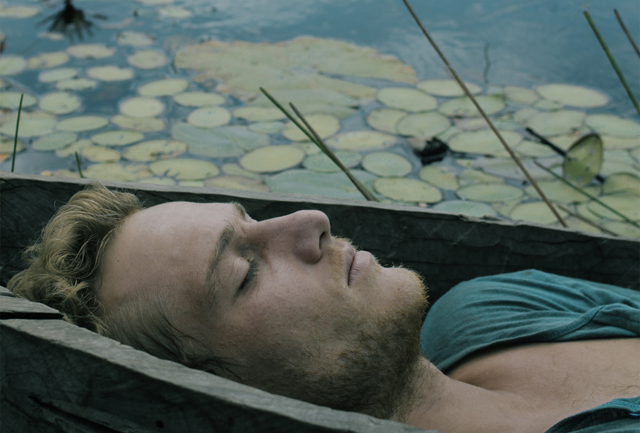

 The Seventh Art