Prismatic Ground, the New York–based festival of experimental documentary and avant-garde film, is honoring Indian filmmakers Kumar Shahani and Ashish Avikunthak in its upcoming fifth edition. Shahani, who passed away in February 2024 at the age of 83, will be commemorated with a four-film retrospective, while Avikunthak will receive the festival’s Ground Glass Award for “outstanding contribution in the field of experimental media.” The two filmmakers have more in common than meets the eye.
Born in Larkana in current-day Pakistan and moving to Bombay with his family after the 1947 Partition, Shahani studied at the Film Institute of India in Pune, where he came under the tutelage of filmmaker Ritwik Ghatak (The Cloud-Capped Star, 1960) and Marxist historian D.D. Kosambi. Another influence encountered during his formative years was Robert Bresson, on whose A Gentle Woman (1969) Shahani assisted while he was a visiting student at the Institut des hautes études cinématographiques in Paris.
His first feature, Maya Darpan(1972), a formally rigorous portrait of a desolate woman wilting in a feudal mansion, was such a radical departure from the intellectually respectable idiom of neorealism that Satyajit Ray excoriated it for “threatening film language with extinction.” With state funding of niche, commercially unviable titles becoming increasingly difficult, Shahani wouldn’t be able to make another feature for 12 years, inaugurating a working life marked by unrealized projects and long gaps between films that he would fill with research, writing, and teaching. Across four decades, he would make no more than seven features, in addition to numerous shorts.
Like Shahani, though a generation younger, Avikunthak was also a child of Partition, born into a Hindu family of Punjabi origin that moved from Pakistan to Calcutta, in India, after 1947. Where Shahani experienced the churn of May 1968 during his time in Paris, Avikunthak credits his political consciousness to living through the Hindu-Muslim riots of 1992-93 in Bombay. His body of work, spanning eight features and seven shorts including Kalighat Fetish (1999) and Vakratunda Swaha (2010), demonstrates a dedicated engagement with Hindu iconography. Avikunthak’s invocation of vernacular gods, often visceral in its nudity and graphic violence, resists both the perversions of colonial puritanism and the contemporary Hindu Right’s consolidation of heterogeneous religious beliefs and practices in the subcontinent.
Shahani and, to a lesser extent, Avikunthak have both been associated with the Parallel Cinema movement in India. But their high-modernist practice stands far removed from the socially minded but formally conservative works that dominate the Parallel Cinema tradition. Unlike their peers, the two artists present their films primarily as intellectual constructs undergirded by strong philosophical frameworks: a theory of the epic form in the case of Shahani, Tantric spiritual thought for Avikunthak. Not for them the intuitive groping evoked by the word “experimental.”
Above all, Shahani’s and Avikunthak’s films find common ground in their rejection of the psychological realism that dominates classical narrative cinema. A Marxist by persuasion, Shahani framed his rejection in pointedly Brechtian terms: “Realism of detail,” he wrote, “can be a mask for eluding the real problems of society, its class relations.” Denying viewers cathartic immersion in a self-contained fictional world, Shahani instead invited them to arrive at a rational analysis of the relations depicted in his films. For Avikunthak, this rejection is a matter of religious ritual. Emptied of individual psychology, his human figures become metaphysical vehicles embedded in predetermined textual and gestural transactions.
Audiences at Prismatic Ground will have the chance to discover two singular artists whose works, despite their seeming hermeticism, stand in serious dialogue with the politics of their times.
[Part of Curator’s Corner, a section dedicated to showcasing work of emerging and marginal filmmakers.]
Pseudo Emotions: the banner under which Bangalore-based filmmaker, music composer and poet MK Abhilash produced his earliest shorts gives a glimpse into what one can expect from his quirky and original body of work. Abhilash’s three recent short films revolve around highly melodramatic situations — infidelity, childlessness, terminal illness — set in recognizable everyday reality. But they derail our expectations of the premise through the introduction of a limited number of uncanny, bizarrely incongruous elements.
Take Kuuk Aah? (2024). A sleepyhead husband, living off his wife’s income, brings home a chicken that he rescues from a sadistic friend. As this idler roams the city looking for public places to sleep in, his long-suffering wife becomes emotionally involved with the fowl, now living in the house in a semi-human form, dressed like a butler. The basic dramatic situation is utterly familiar — marital strife, emotional neglect, extra-marital affair — but the plot unfolds with an otherworldly logic and texture that are anything but familiar.
The primary inspiration for his stories, Abhilash says, comes from the lives of those around him; in the case of Kuuk Aah?, the spontaneous lament of a neighbour whose wife eloped with a domestic help. But the films transmute these experiences, turning real human emotions into parodies – pseudo emotions – that work against conventional dramatic structures of viewer identification and empathy. Something is always ‘off’, keeping us at a distance while drawing us into a plausible world that resembles our own.
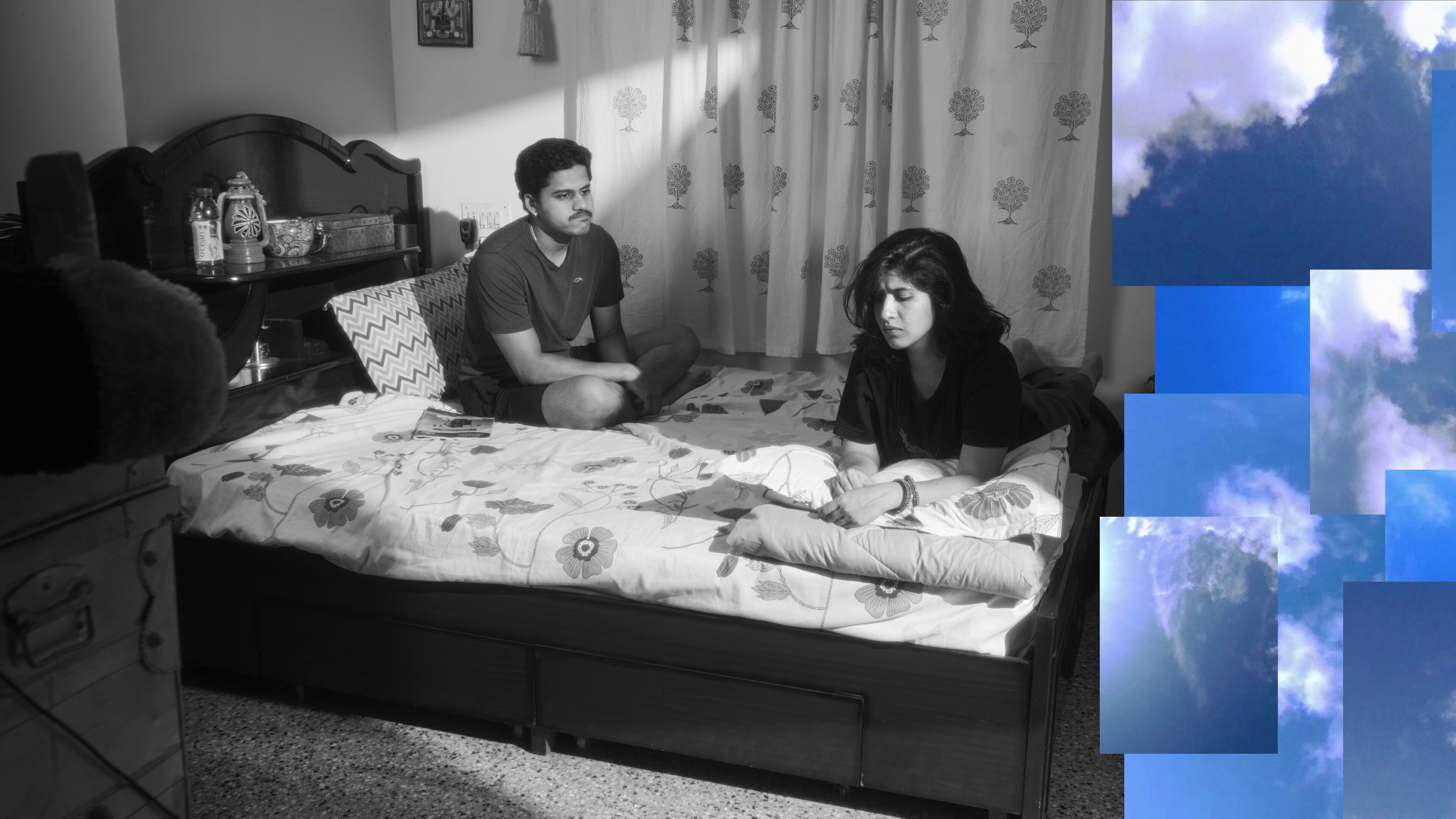
Break through their humorous exterior, you find darker undercurrents. Moda Moda (2025, awaiting premiere) centres on a childless couple comprising a chauvinist husband who doesn’t want to adopt and his dismayed wife. Things take a turn when the man’s pregnant sister comes home following a domestic dispute and persuades her brother to let her stay in his body. Lo! The ill-tempered husband is now pregnant himself and develops a loving bond with his wife. That is until the sister’s alcoholic husband arrives to take her back.
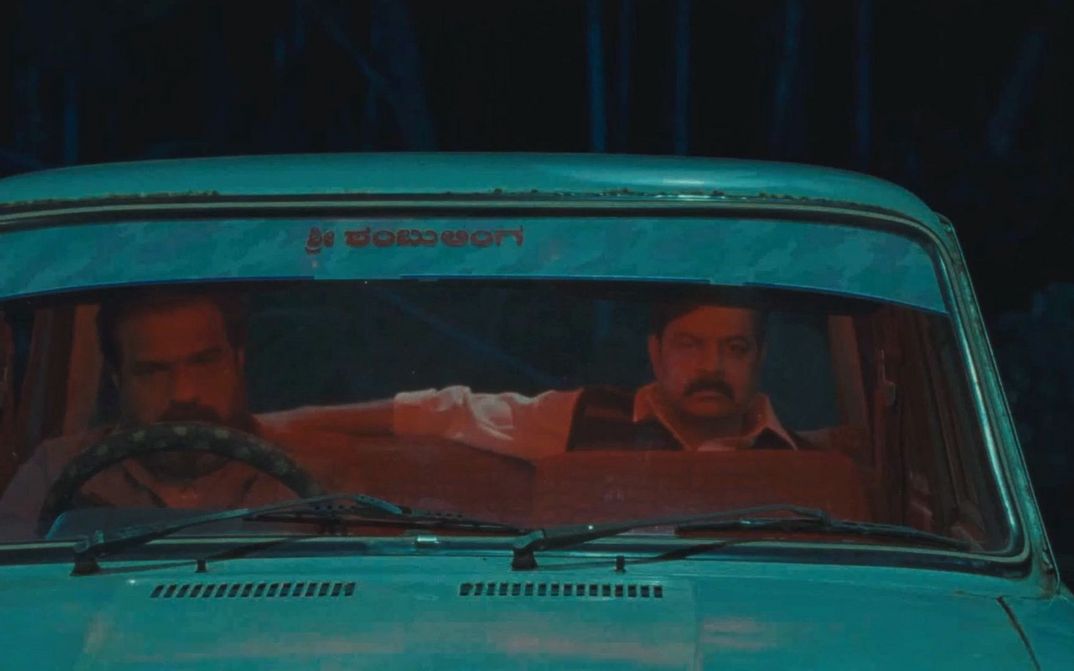
If Moda Moda overlays its atmosphere of inchoate dread with dark humour, Dictionary Mohan (2022) is positively bleak. Having befriended the last survivor of a whistle-speaking tribe, Mohan embarks on a whistle-to-Kannada dictionary to help his alien mate integrate into the society. Alas, Mohan is diagnosed with a terminal disease, leaving him incapable of completing the dictionary. Everyone around Mohan is self-absorbed, isolated, locked up in the silo of their mind, unable to communicate, doomed to incomprehension. The film would be unbearable if it weren’t funny.
The dissonance between subject matter and tone of Abhilash’s films is amplified by the non-naturalist acting style that swings between TV-soap hysteria and cartoonish flatness. Aashith, who plays the lead in all three films, has an expressive, comic earnestness at odds with the ironic nature of the film; the lazy husband he portrays in Kuuk Aah? might as well be a stick figure. Reactions in these films are exaggerated, gestures are isolated and amplified, and the dialogue is insistent and overly enunciated. The excessive politeness of the characters towards each other is undercut by bursts of unexpected nastiness.
Dictionary Mohan
Kuuk Aah?
Moda Moda
Compared to Abhilash’s earliest work, which are heavy on concept and denser in their writing, these three shorts attest to a conscious formal simplification. Set mostly indoors, the new films are shot on digital monochrome with a largely static camera, from oblique or frontal angles, and sometimes with overly dramatic lighting. The dialogue and the plotting are sparser and demand less effort of assimilation from the audience. Abhilash makes striking use of music and animation: 8-bit electronic loops, doodles and symbols overlaid on live-action footage and occasional use of saturated colour to offer visual relief, all of which are present in Moda Moda. In Dictionary Mohan, the whistle language is given a distinctly musical quality rather than the prosody of Kannada or English.
Abhilash currently produces his work as part of the Neelavarana Collective, a heterogeneous group of Ambedkarite artists from Bangalore who participate in each other’s projects. Mahishaa, the founder of the collective, shot Moda Moda while two other members, Naveen Tejaswi and Ajay Tambe, feature in the cast of Kuuk Aah?. Abhilash lends a helping hand in Mahishaa’s films and music videos, composing, for instance, the propulsive score for Babasaheb in Bengaluru (2024). Where the other works by the collective tend to adopt a style closer to realism and a more direct mode of engaging with real-world politics, Abhilash’s films and poems have a more whimsical, inward-looking quality, like the visions of someone staring dreamily out the window.
An intriguing aspect of Abhilash’s films is their curious emphasis on bodily transformations. In 8th Day of The Week (2017), a “human shadow” is anxiously waiting to become fully human, while A Mute’s Telephone (2018) features gender reassignment and voice transplant surgeries. The moribund lexicographer of Dictionary Mohan turns into an apple tree, just as the chicken of Kuuk Aah? transforms into a chivalrous gentleman. In Moda Moda, the human body is fully mutable, capable of hosting other bodies and their characteristics.
Some of these elements, particularly the taste for physical mutations, may have to do with Abhilash’s fondness for anime — he cites Satoshi Kon and Masaaki Yuasa as inspirations — as well as folk tales and local beliefs found across India. There seem to me to be few immediate precedents to Abhilash’s films, but in their shaggy-dog storytelling and their gleefully silly scrambling of the social code, they share something of wackiness found in the work of another musician-filmmaker, Quentin Dupieux. Like the Frenchman’s one-joke odysseys, Abhilash’s shorts come to embody a kind of vernacular surrealism that employs and explodes the codes of domestic melodrama in quaint and refreshingly absurd ways. Whether or not there is any greater significance, any hefty subtext, to these baffling stories, the films’ entertaining, provocative quality is beyond doubt. The result makes you wince and laugh out at the same time.
Bio
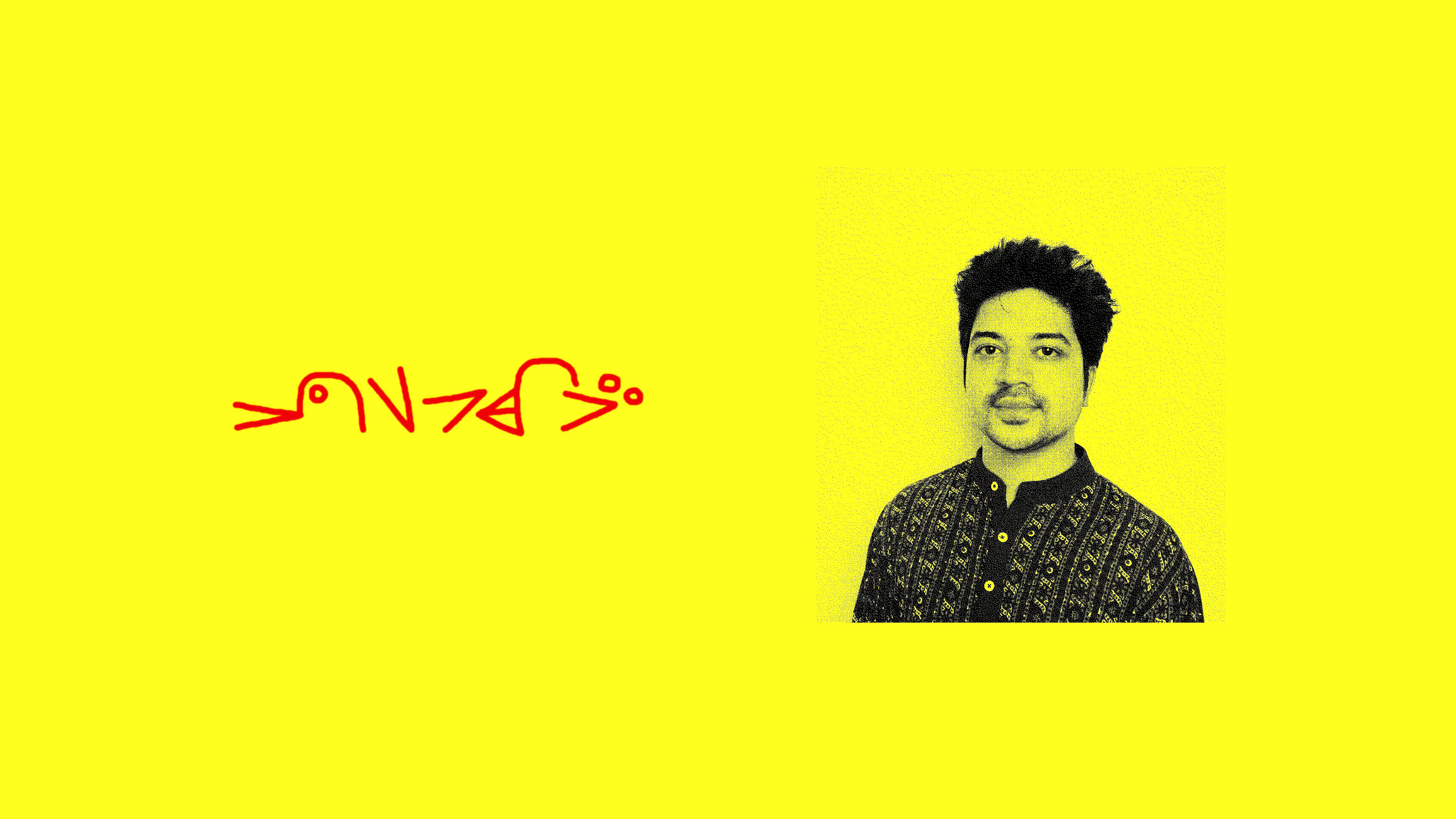
Born on January 5, 1997, MK Abhilash is a filmmaker, music producer, and poet. He earned his Bachelor’s degree in Engineering from MS Ramaiah Institute of Technology, Bangalore. He is part of Neelavarana, a Bangalore-based counter culture collective, which showcases Dalit-Bahujan aesthetics and narratives of the region.
The recently concluded 56th edition of Visions du Réel, Nyon, Switzerland, affirms it as one of the largest documentary festivals in the world, with 154 films from 57 countries in its lineup. Numbers, though, are for accountants and PR agents. What lends Visions du Réel its strength is the continuing vitality and diversity of its programme, its mix of the popular and the experimental. Plenty of films in the selection reflect current trends in commercial documentary — and perhaps even the institutionalization of a distinct Visions du Réel style, but that is a discussion for another day. At the same time, there are also adventurous works here that buck the trend, interrogate existing conventions and expand our conceptions of documentary filmmaking.
The feature that won the top prize of the festival, Clarisa Navas’ The Prince of Nanawa, for instance, may not appear on television or in the local arthouse cinema anytime soon, at least not in its current form. Ten years in the making, Navas’ 212-minute bildungsroman chronicles the life of Angel, a chirpy young boy from Nanawa, an impoverished border town between Argentina and Paraguay. Navas met Angel accidentally in the mid-2010s at a booming black market on a bridge between the two countries. She followed him home and filmed him regularly over the next decade, forging a deep and protective relationship with him.
We witness Angel grow up — from a pre-teen to a teen father — in a disadvantaged milieu mired in drugs and violence, his sensitive, introspective side in constant tussle with his sexist and homophobic environment. Beyond the raw poetry of watching a real human being grow older on screen, what is compelling about The Prince of Nanawa is its challenging of the classic documentary principles of observation and non-intervention. We see how the very act of making a film helps the (liberal, cosmopolitan) filmmakers exert a positive influence on Angel’s life and thoughts, how his continued participation in the project helps him narrativize and assume responsibility of his own life. At one point, Angel confesses his embarrassment at trying out drugs and his fear of disappointing Navas, whose friendship serves as a kind of watchful superego throughout his formative years.
Its uplifting moments notwithstanding, The Prince of Nanawa is not a fairy tale, and it’s not always smooth sailing into adulthood for Angel, who, even at the end of the film, makes a living smuggling goods across the border and cuts his eighteenth birthday cake with an infant in hand. Nevertheless, the film builds a case for a documentary form in which the camera consciously alters the reality it films, makes active interventions into the lives of its subjects.
Like Angel, the protagonists of various other films at Visions du Réel grapple with an unstable present and an unknown future. Obscure Night – “Ain’t I a Child?”, the concluding chapter of Sylvain George’s trilogy on illegal immigration, is an extraordinary object of close, unflinching observation. I haven’t seen the first two films in the trilogy, in which George follows Tunisian teenagers trying to cross over into Europe by entering Mellila, a Spanish enclave in North Africa. In the new film, we find three of them — Malik, Mehdi and Hassan — taking temporary refuge in Paris, after having been shuttled by immigration authorities across various cities in Western Europe.
As young Maghrebi males, Malik and co. are the very posterchildren for anti-immigration sentiment. George recognizes this very well, and within the first quarter hour of his 164-minute film, he pre-empts all the usual right-wing bugbears by acknowledging them: yes, the boys steal for survival; yes, they hold regressive views about women; yes, they want to lead an easy life in Europe and profit from its social welfare policies. Malik and co. aren’t the liberal fetish objects littered across European screens.
Yet, the film deems them worthy of human and aesthetic interest. With remarkable intimacy and equanimity, George’s camera films the gang at slightly below the eye-level as they wander the roads of night-time Paris, huddle around fire, get into nasty fights with their Algerian counterparts, listen to street music or make the occasional phone call back home. An indifferent Eiffel Tower glitters perpetually in the background while the boys find themselves prisoners under an open sky, enslaved to an eternal, sordid present, with no visible way out.
Shot in stark monochrome with eye-popping passages of abstraction, George’s film lends a monumental weight to images and lives we would rather not see. The approach is comparable to Pedro Costa’s work with the residents of Lisbon’s Fontainhas. As a white artist making films on vulnerable sans papiers, George is bound to ruffle some feathers. But his film demonstrates that, sometimes, you need to strain certain ethical boundaries to arrive at newer forms of looking and understanding. Neither incriminating its subjects nor making any apology for them, Obscure Night – “Ain’t I a Child?” reveals the herculean difficulty of creating a truly humanist work.
Sergei Loznitsa’s short Paleontology Lesson takes an oblique approach to an adjacent theme. A change of direction of sorts for this singular Ukrainian filmmaker, Paleontology Lesson centres on a class of middle-schoolers on a trip to the Natural History Museum in Kiev during the Russian invasion. The kids listen to the docent speaking about millennia-old fossils and artefacts carefully preserved in the museum – the present, the past and the future of the country under a single roof, all threatened by the bombs falling outside the facility. The film ends on an eerie note, with dioramas of prehistoric humans and exhibits of their skulls. Will we end up in the Natural History Museums of the future too?
Several titles I saw at the festival featured individuals and institutions coming to grips with a brave new world. Literally so in the case of Valerio Jalongo’s Wider Than the Sky and Jeffrey Zablotny’s Messengers. Both films craft poetic renditions of research work on cutting-edge science and technology — machine consciousness in the case of the first, neutrino astronomy in the second. These are works filled with a sense of awe at human curiosity and capacity for invention, but also at its insignificance faced with the complexity of our inner life and the vastness of the cosmos.
On an earthlier note is Fabienne Steiner’s Fitting In, a fascinating fly-on-the-wall document about a new batch of students at Eendrag, a residence at the Stellenbosch University in South Africa. Once an academic stronghold of the apartheid era, the university now aims at a more ethnically diverse intake reflective of the rainbow nation. Pangs of integration abound: white and non-white students alike struggle to get used to each other’s close presence withing the residence; official communication moves from Afrikaans-only to include Xhosa and English; debates surge around the problematic names assigned to residence sections; inclusivity becomes a major talking point in student elections.
Alas, one step forward, two steps back. News about attacks on Black students echo over the radio from time to time. Edgy jokes are misunderstood, and political correctness cripples spontaneity. Fitting In presents the new Eendrag as a kind of social lab in which otherness is negotiated and understood, a miniature model of South Africa and multicultural societies across the world. There are certainly teething troubles, lingering prejudices, pressures from external culture wars. The students proceed gropingly, sometimes walking on eggshells but always with an openness characteristic of youth. The kids, the film assures, are alright.
Johannes Büttner and Julian Vogel’s Soldiers of Light, in contrast, looks at a flight away from such a new world order. The film revolves around David aka Mister Raw, an alternate healer and social-media influencer advocating raw food, veganism and natural cures. David’s quackery and suspicion of modern medicine is dangerous enough, but he is also part of the “Soldiers of Light,” an eclectic, 23000-strong network of renegades who reject the authority of the Federal Republic of Germany and proclaim to be nationals of a certain Kingdom of Deutschland. On his channel, David, who is curiously a Black man himself, amplifies the views some of these reactionaries: racialists, self-styled spiritual gurus, assorted carpetbaggers and garden-variety right-wingers.
Soldiers of Light picks on a sensational and somewhat facile subject; David and his compatriots are generous in supplying self-incriminating soundbites for the camera. But it manages to put its finger on the mechanics and fallout of conspiratorial thought. David and co. join hands not in shared belief, but in their shared rejection of what they take to be a malevolent system. In the absence of rational voices to do the necessary work of dialectical thinking, these fringe elements come together to prey on the lost and the weak (in David’s case, a schizophrenic young man named Timo) — a phenomenon on full display every day on online platforms like 4chan and Twitter (formerly X). Soldiers of Light shows that evil flourishes there where reason has no incentive to.
[The following interview was conducted for the Forum section of the Berlinale, where the filmmaker’s second featureTiger’s Pondhad its world premiere in February 2025.]
Berlinale Forum: Welcome, Natesh, and congrats on your new feature. Perhaps we could begin with the title of the film which is Tiger’s Pond in English, and Vaghachipani in Kannada [the main language spoken in the southern Indian state of Karnataka, ed.]. Could we talk about the place that it is set in, also called Vaghachipani, which seems to be a fictional village, but also very strongly rooted to the region you come from?
Natesh Hegde: The film is shot in my hometown where I also shot my previous feature, Pedro (2021). I shot that film in the rainy season and this film in winter. The title comes from the name of a real village nearby. That name had always fascinated me. Also, in the film, there is the lurking presence of a tiger. I wanted to evoke that fear. So I thought this would be an apt title.
The credits say that the film is based on the stories of Amaresh Nugadoni. What attracted you to his writings and what did you draw from them?
The character of Pathi, the girl. I had seen one such mentally-challenged girl at the bus stop in the town of Sirsi, where I was doing my graduation. One day, I noticed that her tummy had suddenly bulged, and after some time, she disappeared. This character always intrigued me. What happened to her? How can a society behave that way? Such a character was in Amaresh Nugadoni’s writings. Then I rewrote the script and made lot of changes. Once a short story becomes a film, there is a shift of medium, where we are creating something else. So I took that as a starting point.
The figure of Pathi is so striking, especially the actor, her unforgettable face and her screen-piercing gaze. How did you cast this actor and what were your directions to her?
She’s a mentally-challenged girl from my village. I couldn’t direct her like other actors: explain a scene and make her act. She’s there and I created the film around her. It’s strange, but she started responding to me. The form of the film is derived from her being, instead of the other way around. It’s absurd, but I feel like the celluloid wanted her, you know.
How did you develop this character?
NH: I saw her as the central human figure around which there are all kinds of lust: lust for power, for money, for identity. She’s the only pure figure, the only character not pursuing these things, not bothered about anything. She’s just there, present.
Let’s begin by stating the obvious: Cinéma du réel, Paris, programmes weird stuff. Its main offering could be broadly described as experimental documentaries: works recognizably grappling with the real world, but demonstrating a strong commitment to formal innovation of the kind that challenges both our expectations of a film’s ostensible subject and our notion of what documentaries are. Rarely does one find in the festival’s lineup the sort of production that oils the machinery of the international documentary market. Few issue-based expository works are to be found here, hardly any fly-on-the-wall records, and no human-interest stories with appealing protagonists and clear dramaturgy.
The tendency is instead to embrace gaps, hesitations, ellipses, rough edges, acts of self-sabotage and blind leaps into the void. The image and sound in any given title in the selection are almost always orthogonal, the work deriving its meaning and affect instead from their dialectical organization. Films that may look like stubs, doodles, outtakes or half-formed sketches, by dint of adventurous curation and passionate presentation (evident from the insightful catalogue texts produced by the programming team), come to demand from the viewer a different way of looking and listening, and often a renewed conception of what a documentary can be.
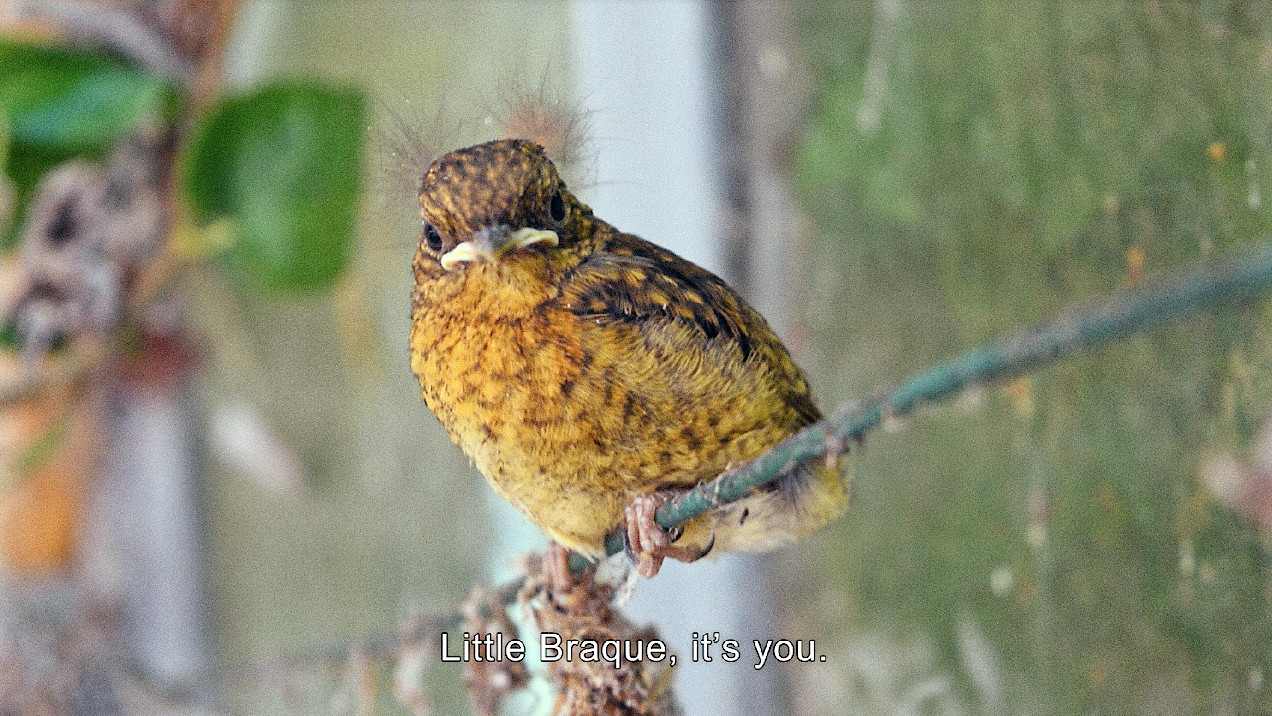
Consider, for instance, Look Through My Eyes and Give Me Your Own. Noëlle Pujol’s half-hour documentary features the filmmaker walking through Cubist pioneer Georges Braque’s studio in Varengeville-sur-Mer, Northern France. For the most part, the camera surveys the now abandoned structure, taken over by nature, and the vestiges of human culture still visible on its walls. Recalling Picasso’s aphorism “I don’t search, I find”, Pujol’s casual, liberatingly purposeless gaze roves about before resting on a small, exotic bird perched on a wire inside the studio. Unfazed by the intruder, the gorgeous little creature stares back at the camera, which resumes its aimless drift after this uncanny encounter.
Free of a conceptual framework or a conventional narrative outline, Pujol’s film is only as discursive as the viewer wants it to be. The same goes for Léo Bizeul’s Robert Taschen (whose synopsis simply reads “A man in his home.”). A seven-minute portrait of a poor, middle-aged man eking it out in a nondescript hovel, Bizeul’s beautifully shot but bafflingly sparse film furnishes very little that is specific beyond its title. Yet the sharpened quality of attention that it extracts from us, and the duration it imposes, elevate this everyman into a subject worthy of a renaissance tableau.
The longer works in the selection equally reflect this resistance to clear exposition and overarching meaning. Films such as Luo Li’s Air Base, Gaspard Hirschi’s I Am Night at Noonday and Ico Costa’s Balane 3 are, at the outset, quasi-sociological studies set in particular locations, but even so, they play it loose, letting their framing concept fall apart under the weight of stylization. Li’s film is nominally set around a hobbyist fishing pond in Wuhan just after the easing of pandemic restrictions. What begins like a record of the psychological toll of the lockdown takes vast excursions to observe the city through a slightly absurdist lens, full of formal rhymes and quirky images. The result grasps at a poetic truth rather than a rational analysis.
I Am Night at Noonday takes off, in fact, from a highly literary idea: dressed as Don Quixote, theatre director Manolo Bez wanders around Marseille on a horse along with a reluctant Sancho, a pizza guy named Daniel Saïd on a motorbike, engaging in humorous encounters with the people and landscapes of the port city. A relatively classical satire in the line of Borat (2006), the film employs Quixote’s outsider perspective to expose the paranoia and distrust gripping the racially diverse but economically polarized city. Yet the film scrambles this setup midway, segueing first into a cinema-vérité mode that allows Bez and Saïd to step out of their characters to address the camera as their real selves.
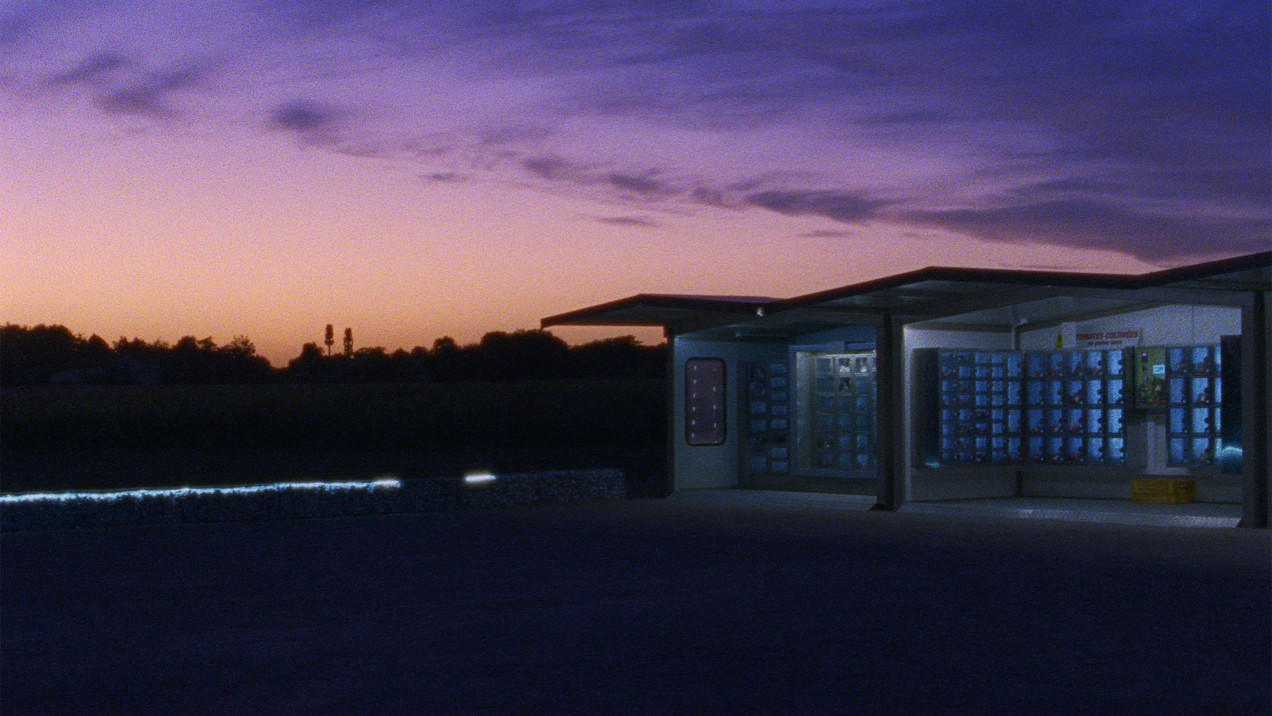
Coursing through the Cinéma du réel programme is the general sense that reality can only be accessed obliquely, through an elliptical form that conceals as much as it reveals. Two of the most remarkable films in the programme take this throughline to a conclusion of sorts, adapting a refusal to image the human body. Maureen Fazendeiro’s Les Habitants is set in an unnamed French village. We see this quaint commune go about its immutable routine, its picturesque streets well-maintained, its meadows neatly kept and its many glasshouses yielding rich produce. On the soundtrack, we hear letters from a mother to her daughter recounting the arrival of a group of Roma into the village, the opposition of the municipality to their presence and the material support that a few of the villagers offer to their nomadic guests.
Featuring interesting repetitions of banal information, the film’s voiceover offers a site of dramatic conflict – between the efforts of those trying to legally evict the squatters and those helping them prolong their stay in the village – while the visuals present a source of harmony. This contradiction between the sordid living conditions of the Roma group detailed on the soundtrack and the plush, first-world life on display serves to throw into relief the violence underlying suburban order. In filming the village after the immigrants’ departure, and refusing to feature them in any shape or form, Les Habitants points up cinema’s delay in keeping up with reality while also exploring the creative possibilities of this delay, of this spectral absence.
Elisabeth Subrin’s Manal Issa, 2024 goes further, eliminating the human body altogether. This ten-minute film is a companion piece to Subrin’s powerful 2022 work, Maria Schneider, 1983, in which the filmmaker had three actresses of varied backgrounds reenact an interview that Schneider gave for a French television show. In the interview, a visibly uncomfortable Schneider discusses the second-class treatment that actresses suffer in the industry, reveals that she turns down a lot of roles, deflects questions about Last Tango in Paris (1972) and generally resists the niceties and rituals of movie journalism. While the actors in Subrin’s film fastidiously re-create Schneider’s look and diction, they bring their own perspectives to bear upon the reenactment, locating themselves in Schneider’s experience as an exploited, marginalized film worker while extending her activist legacy to the present.
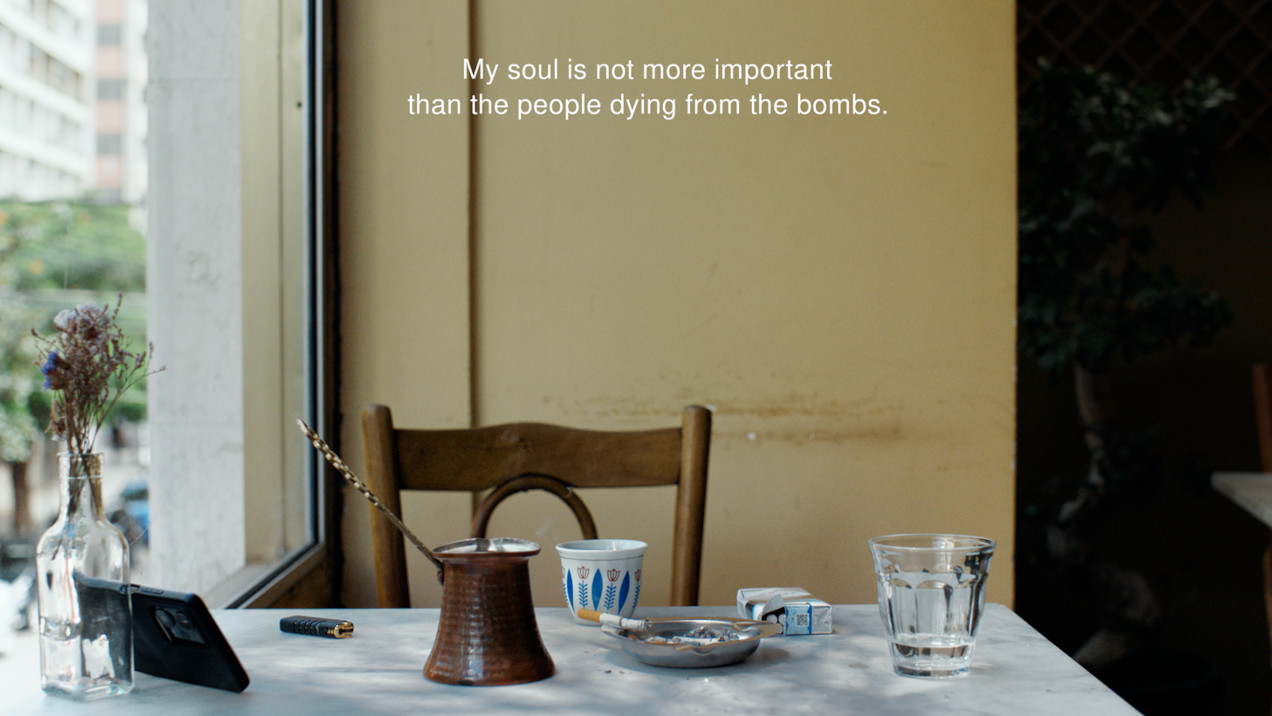
Where Maria Schneider, 1983 created doubles, excess bodies, Manal Issa, 2024 proposes a negation, one body too few. Here, Subrin poses to the Lebanese-French actress Manal Issa, one of the three participants of the former film, the same questions that Schneider was posed in the original interview. A publicly vocal actress, Issa talks about the poverty of meaningful roles offered to Arab-origin actresses, the limitations of the capitalist production model, the choice of moving back to Lebanon during crisis and the importance of speaking up against political iniquity. While we listen to her responses, Issa herself remains offscreen; all that we see is a table by the window containing signs of human presence: a pack of cigarettes, a lighter, an ashtray, a tea cup, a glass of water and a smartphone.
Issa’s refusal to take up pointless roles to sustain a career, to maintain a screen presence while censoring her critical voice, is echoed by Subrin’s refusal to show her. “If I’m on screen I’m something, and if I’m not I’m nothing? Khalas?” asks the actress, adding that she feels punished for her political opinions, for calling out Israel’s bombing of Gaza. “If I can’t be true to myself, there is no point showing myself,” Issa concludes, as the camera gently pans from the table to a street outside the window. Like Schneider’s, Issa’s self-negation stems from an outlook that privileges life over films, reality over fiction. Six hours after the filming, an end card notes, “Israeli airstrikes escalated throughout Lebanon, killing over 500 people in one day.”






 The Seventh Art