[The following review was first published in the June issue of Sight and Sound.]

There are at least four instances in Cactus Pears of someone gently stroking the head of 30-year-old Anand (Bhushaan Manoj). Each of these caresses has a different meaning, a different affective shade, reflecting Anand’s evolving sense of his place in the world. Director Rohan Kanawade’s Sundance-awarded debut embraces its many characters with a similar gentleness, never allowing their harsh circumstances to be seen to stunt their rich inner lives.
After the death of his long-ailing father, Anand is asked by his mother (Jayshri Jagtap) to accompany her to their ancestral village to perform the final rites. Anand hasn’t been to the village in years and, as a closeted gay man, he is stressed about the prying that awaits him. Sure enough, family members first object to an unmarried man performing the funerary rites, then advise him to get married at the earliest opportunity. They place restrictions on what he can do, eat and wear over the next ten days of rituals.
Anand doesn’t feel particularly close to his extended family; even so, he cannot bring himself to defy his relatives. Unwilling to ruffle feathers, he absorbs the pressure, concerned that any show of dissent could affect his mother, now dependent on the wider family for moral support. He finds relief from this miasma of grief, frustration and anger when he reconnects with the goatherd Balya (Suraaj Suman), a childhood crush from the village who leads a closeted existence himself.
This film arrives amid a recent surge of Indian independent features that engage with rural queerness and explore questions of sexual identity in the country’s vast hinterlands, among them Valli (2023), Jhanjhaarpur (2024), Parajya (2024) and A Life Inside Me (2025). The most prominent film in this wave, Cactus Pears subverts expectations of queer stories set in a pastoral milieu. Kanawade neither romanticises villages nor casts them as a hotbed of political reaction. Certainly, tradition, culture and, as Balya’s situation illustrates, economic necessity exert pressure on young villagers to conform to social norms around gender roles. But the filmmaker leaves ample room for the possibility of individual understanding and acceptance. The film is most touching in the benevolence and good faith it extends not just to Anand’s parents or lover, but to his relatives, who rise above their function as dramatic foils.
In fact, Kanawade avoids overt drama, conveying the friction between Anand and his relatives through little more than offhand remarks, stray words overheard. The emphasis is instead on Anand’s interiority, his constant unease and his self-imposed isolation from his family. The filmmaker introduces elements of subjectivity within the film’s otherwise cool, realist style. Early on, as mourning relatives carry away the body of Anand’s father from an ambulance, Anand reluctantly following, the camera remains behind the vehicle’s closed doors, the now-muffled soundtrack echoing Anand’s feelings of estrangement.
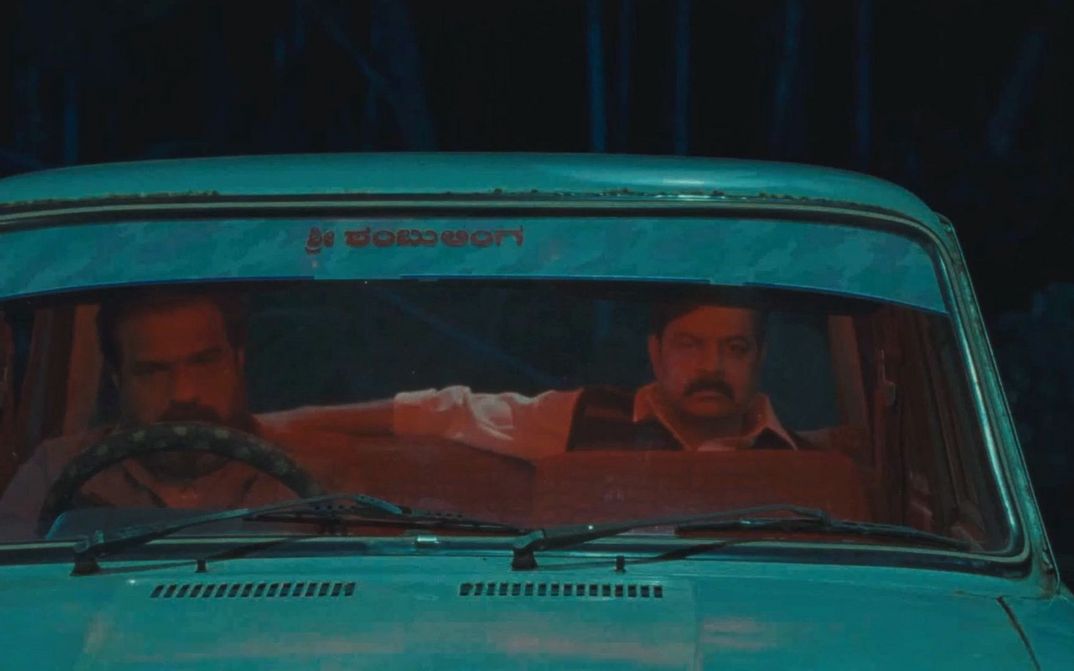
Cactus Pears is shot by cinematographer Vikas Urs in painterly tones, with impressionistic use of available light and static wide shots, occasionally relieved by sensual close-ups. The actors, largely drawn from local theatre troupes, exchange long, measured dialogue with studied pauses, their bodies often clustered in painterly tableaux. Their grief-sapped faces, well-worn costumes and practised gestures of everyday labour, whether milking cows or making ropes, attest to Kanawade’s keen observation and desire for authenticity.
In interviews, the filmmaker has said that his protagonist’s rural sojourn was inspired by his own experience of performing his father’s final rites in 2016. Anand’s relationship to his father is indeed the film’s emotional core and palpably its most personal aspect. The rapturous romance with Balya, in contrast, is the fruit of fantasy. In marrying the intractable facts of memoir with the restorative power of fiction, Cactus Pears radically expands the experiences that queer people have been permitted on Indian screens. The result is a luminous work, brimming with grace and delicacy.