All Posts


Sharon Lockhart

Sharon Lockhart 
(1964-)

Sharon Lockhart was born in 1964 in Norwood, Massachusetts. The American artist and filmmaker studied at the Art Center College of Design in Pasadena, and at the San Francisco Art Institute. She lives and works in Los Angeles. Her work has been shown in numerous exhibitions and screenings in America, Europe and in Japan and has won many awards. Lockhart is the recipient of fellowships from the Guggenheim Foundation, the Rockefeller Foundation and the Asian Cultural Council. Her films NO and TEATRO AMAZONAS both screened at the Berlinale, Forum of New Cinema. In February 2006, her work, PINE FLAT, was shown at the Berlinale within the context of Forum expanded, the new platform for video art and installations, hosted by Forum and KW Institute for Contemporary Art. [Bio Courtesy: Split Film Festival, Image Courtesy: Walker Art Center]


Photographer and experimental filmmaker Sharon Lockhart’s cinema is one that straddles multiple realms. It has been noted that her film works attempt to explore the boundary between photography and cinema. For one, most of her films are composed with a static camera and with self-conscious framing that photographs actions head on. The compositions serve to remind us that the camera’s vision is highly restricted and there’s a world that lies beyond its four edges. This is also reinforced by the numerous activities that take place off-screen in the films. Since the prime distinguishing factor between cinematography and photography is time, these works are highly conscious of their temporal dimension. While Lockhart introduces the element of time in her photography by perturbing the order in which the photographs were taken, she chooses to preserve the linearity of time in her films. Instead, she invokes the sense of passing of time by retaining the photographed image for a long time – by using overly prolonged shots of largely unchanging actions. It is perhaps best to look at her films in relation to her photographs and vice versa. Another prominent aspect of her cinematographic work is the relationship between people and the spaces they inhabit. These surroundings may counterpoint (an opera house in the Amazon, a basketball court in Japan) or define (a labyrinthine industrial corridor, dusty Polish courtyards) the way of life of the people within them, but, in all cases, the kinship between the two remains of central interest.

Another dialectic that permeates Lockhart’s filmography is that between art and ethnography/anthropology – between straightforward documentation and authorial stylization. Lockhart seems to be conscious of the fact that such a tug-of-war always runs the risk of entering the territory of exploitation and unwarranted anesthetization (“I was well aware of the problems of filming in another culture and had begun to think about the way ethnographic film works within an art context.”). She overcomes this deadlock, as do other documentary filmmakers, by choreographing routines (there are dance trainers and movement advisors who work in Lockhart’s films), by making the subjects active participants in the filmmaking process and by not imposing preformed psychoanalytic notions on them. She cites Jean Rouch as a major inspiration (“I became even more fascinated with ethnographic film, especially Jean Rouch. He took ethnographic film to a whole new level. His ideas of collaboration and being a catalyst are especially interesting to me, like the way he lets his subjects choose fictional characters or roles, through which something very real comes out”). Consequently, the actions in her films are both spontaneous (the anthropological) and rigged (the aesthetic) wherein the participants both perform and behave. They are carrying out their daily tasks and, at the same time, executing the choreography they have practiced.

Goshogaoka (1998)

GoshogaokaLockhart’s debut project, Goshogaoka (1998), shot in 16mm in a basketball stadium in Japan, opens with the image of a theatre curtain, thereby setting up the motif of theatricality that pervades the rest of the film. The stillness of the image is interrupted as we witness almost two dozen high school girls in sports outfit running in and out of the frame – apparently in a circle – making the shot indicative of the cinematic system itself – the projector and the screen (In one segment, the “actors” run towards the camera, projecting themselves on us, as if mirroring the light particles that bombard the screen within the film). In fact, Goshogaoka, in its entirety, could pass of as a metaphor for filmmaking where seemingly random acts are shaped and stylized into a coherent whole (“everyday routines recontextualized and reinterpreted as dance”), where order is arrived at through disorder and where the banal moulds itself into the beautiful. The impeccably ritualized nature of the activities in the early part of the film – as one would associate with the Japanese-ness of the participants – gives way to more improvised individual tasks where the girls “perform” consciously in front of the camera, floundering at times, as if on the audience’s demand. The illusion of the work being a straightforward documentation of routines is also broken by Lockhart’s self-referential framing and utilization of off-screen space wherein we are made to acknowledge that all that we see is as much posed as it is improvised. This concept of the cinema space, by its very purpose, being a zone of contemplation would be explored further in Lockhart’s next film.

Teatro Amazonas (1999)

Teatro AmazonasTeatro Amazonas (1999) is set in the eponymous opera house in Manaus, Brazil, which one might remember from Herzog’s Fitzcarraldo (1982), and consists of a single half-hour shot filmed in 35mm of a native audience listening to a piece of avant-garde music (scored by Becky Allen). As the film progresses, the voices of the audience completely overpower the vocals of the music in the same way our concentration is distracted by the length of the shot. The camera is on the stage and observes the audience head on, essentially making the film screen a portal of sorts through which cultural exchange – between two worlds, one might say – takes place. One is reminded of Kiarostami’s Shirin (2008) in the way the screen additionally acts as a mirror where one audience – watching Lockhart’s experimental work – resembles the other – listening to Allen’s experimental work. Being set in South America, the reversal of the subject-audience relationship here elicits other intriguing responses from us as well. Lockhart’s camera places us on the stage, with the Native American audience staring at us, and hence manages to reverse the colonial gaze (if one makes the fairly questionable assumption that the audience is predominantly European/North American). The “colony-wise” credits at the end only compound this revisionism. In that sense, each passing minute ratchets up the tension instead of accustoming us to the new space. Although Lockhart’s films don’t possess such overt political objectives, this particular film works on such an extreme Brechtian level that such a response doesn’t seem invalid.

NŌ (2003)

NoA companion piece to Goshogaoka in a number of ways, (2003) is a highly formalist work that attempts to study the properties of the film frame with the agricultural process of mulching as the backdrop (the ethnographic aspect of the film is very subdued). The film documents two Japanese farmers (Masa and Yoko Ito) amassing heaps of hay and later spreading them out on a field. We see that farther the farmers are from the camera, the longer they take to traverse the breadth of the frame. As the amount of hay gathered decreases with decreasing distance of the workers from the frame, we realize that the geographical and representational areas of a region are in inverse proportion to each other and that the field of vision of a camera is conical rather than cubical. Although is an examination of the relation between the XY plane and the Z-axis, it also functions as a painting unfolding in time. The screen is bisected by the horizon which separates the black soil from the reddish sky. As the farmers spread the hay over the soil, they end up coloring the lower half of the frame, literally assembling it. Coupled with ambient sounds of bird chirps, is like an impressionist painting on film in which both rapidly and gradually varying hues of light are registered (A little more plot and it could pass off as Jean Renoir). In that respect, the semi-static-semi-dynamic composition of the film largely resembles those of James Benning, where, too, quick changes in landscape are pitted against microscopic ones.

Pine Flat (2006)

Pine FlatLockhart’s longest feature to date, Pine Flat (2006) is shot in the eponymous rural area in California where she apparently lived for four years. Consisting of twelve silent ten minute sketches – most of them presented through skewed compositions – all of which deal with kids and teenagers residing the locality, Pine Flat preoccupies itself with the study of cinematic time. The first six sketches deal with children who are alone and the next six with groups of teenagers and kids hanging out together. Lockhart reveals that she wanted to investigate the subjective experience of time in both these types of situations. In both cases, the kids seem to be somehow beating boredom by indulging themselves and each other (The viewer’s experience of these stretches of time also plays a part in the film’s exploration). Lockhart’s idea of disrupting chronology in her photo works translates to prolongation of the film image in this work. Consequently, the segments are reduced to their functional minimum and come across as little more than photographic – a girl reading a book, a boy playing the harmonica, a kid waiting for the school bus, a boy sleeping on the ground and so on. This return to cinematic zero (if one can approximate cinema as photography in time) is also mirrored in the implied return to zero of nature. The kids playing and carrying out their petty activities happily in the lush woods is the image of serenity itself. Alternately, this sort of persistence on mundane gestures defamiliarizes them, elevating the quotidian into the realm of art (similar to Walhol’s works) and eventually urging us to see them with fresh eyes.

Lunch Break (2008)

Lunch BreakIn Lunch Break (2008), Sharon Lockhart seems to have taken to heart the Douglas Adams quip that time is an illusion and lunchtime doubly so. Shot in Bath Iron Works, Maine during the titular break period on a typical day, the film consists of a single tracking shot through the central corridor of the factory slowed down digitally to 75 minutes (It is probably the only film I’ve seen that takes longer to see than to shoot!). The dolly moves along the Z-axis of the frame – reminiscent of Kubrick’s tracking shots in the WW1 trenches – as rusty lockers and other furniture trudge past us. The film almost entirely consists of vertical planes, straining and training our eyes to such an extent that we start recognizing the minutest of lateral movements that the camera undergoes. Beyond a point, our eyes start playing tricks on us. If we concentrate at the centre of the image, the edges seem to melt away and the camera seems to move pretty fast and if we choose to pay attention to the edges, the camera seems slower than ever (an illusion that might be very useful in genre filmmaking). At times, when there are only machines in our view, we are not sure if we are witnessing a tracking shot within a real space or a zoom into a photograph (The one Lockhart film that most resembles Wavelength (1967) is this). It is only when the humans enter the frame that we have reference for the camera’s motion. Likewise, it is only during the lunch break that the human elements, for once, triumph over their mechanical counterparts, which continue to drone even during this cherished recess time.

Exit (2008)

ExitOver a 110 years after the Lumiére brothers photographed workers coming out of a factory, Sharon Lockhart embarks on a similar project, attempting to chronicle workers exiting a factory – Bath Iron Works again – over a time span of five days. Unlike in the earlier film, we don’t get to see the worker’s faces. Only a few of them even seem to notice the presence of a camera. Over the week, we see a number of workers walking into the frame, moving away from the camera and vanishing at a point near the centre. There is no strict pattern – in attendance, in attire or in mood – that is evident as we move from Monday to Friday. No insight into the psychology of the workers is given either. Instead we are left to speculate about the contents of the lunch boxes (which had made their debut in Lunch Break) and back packs (which many seem to be carrying), about the kind of work these workers are doing (not all seem to be involved in physical labor) and about the time of the day and season of the year (given the changes in the intensity of natural light). It’s kind of like guessing the contents of those mysterious trains in RR (2007). A man stops to chat with another. We barely hear their voices and are left wondering about the poetry of their lives. One striking thing that is evident is that the majority of the workers are wearing denim. This might give us an insight into the taste and economic standing of these people, but it is also suggestive of mass production of commodities, discrediting of human skill and homogenization of culture.

Podwórka (2009)

PodworkaPodwórka (2009) is shot in Lodz, Poland and consists of six sketches depicting the kids of the neighbourhood playing with each other in the courtyards of the city. A miniature version of sorts of Pine Flat, this film, too, presents a string of vignettes from the lives of children of a particular city. But, unlike Lockhart’s earlier film which shot the kids from at eye level and from a close distance, the kids here are photographed with a detached perspective and in long shots as if integrating them with their environment. This, in effect, presents them as human elements maneuvering through industrial landscapes which are – a la Lunch Break – marked by rusted pipes and seemingly defunct structures. Like Pine Flat, Podwórka attempts to study a locality by viewing it from different angles and through different people and to synthesize a version of the region that stays true to the filmmaker’s experience of it (although I don’t understand the geo-specificity of Poland for this project) – as if trying to hold on to the fleeting memories of childhood, which is influenced only too deeply by one’s environment. If it was the green trees in Pine Flat, it is Lodz’s mellowed courtyards that seem to be engulfing the children in Podwórka. The soiled, dilapidated walls of the neighbourhood seem to be of no bother to the kids, who are gleefully engaged in playing with mud, bicycles, footballs and the surrounding buildings. In that sense, one could say that the film is, as is Weerasethakul’s debut feature, a paean to dead times of the afternoon and to the power of human imagination.


(You can watch two of Lockhart’s films here)


Instructions For A Light And Sound Machine (2005)
Peter Tscherkassky
Silent


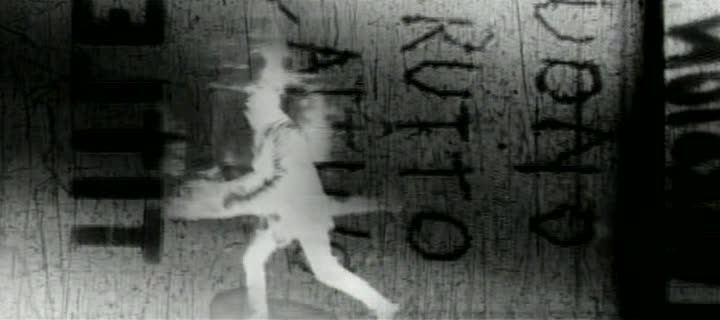
Instructions for a Light and Sound MachineAustrian experimental filmmaker Peter Tscherkassky has the most bizarre working method I’ve come across. He apparently only works on found footage which he doesn’t merely reuse. Using a specialized laser beam, he transfers the images partially from the footage onto a fresh stock, working painstakingly on a frame-by-frame basis, leaving certain areas of the latter unexposed. In other words, he literally ‘sculpts’ his film from the raw footage he gathers and gives them a whole new appearance and meaning. One could say that he is essentially responsible for every single speck present in the frames of his films. This fact is of utmost importance since the medium is the message in his 16-minute wonder, Instructions for a Light and Sound Machine (2005), a work that packs a wallop like a few films do. That Tscherkassky chooses Sergio Leone’s spaghetti Western, The Good, the Bad and the Ugly (1966), for his project is vital. Like the Kinski-esque man in it who steps in front of the camera to gaze into it, the Leone film is a self-conscious masterpiece that keeps the narrative to its bare minimum, dissolving the genre and asking us to see through its own construction (If he was allowed, Leone would probably have included the boom mike in the frame as well). Like the Italian film, Instructions is a work that has both narrative and formal concerns, but it goes one further in the way it calls attention to its narrative, its aesthetic and its medium, all at once. And how often do we see experimental films being made in 35mm CinemaScope?!

Instructions consists of a bunch of shots from the Leone film, almost all of which deal with Ugly/Tuco (Eli Wallach) running – for the treasure and for his life. Tscherkassky takes the shots through his elaborate transfer process, extracting, distorting, stressing and degrading them. Sometimes he repeats, reverses, negates, overexposes and overlaps the shots, creating a highly familiar yet vastly different stream of images. The soundtrack, likewise, is a dense collage of diegetic sounds and extra-textual mechanical noises. We hear a clamorous storm of bullets, the hum of a rickety projector, the footsteps of the characters, alarming wail of sirens and other cyclic machine sounds put together by Dirk Schaeffer. Instructions begins with a man – the surrogate audience – opening a window and peering into the horizon through his telescope. An exposed ellipse reveals to us that it’s Tuco arriving on a horse. Soon there are bunch of these ellipses as if a crowd of such men has gathered. We are soon thrust into a duel, bullets fly by, the image jars and switches between negative and positive, with lots of flickering of image and sound. The violence in film parallels the violence on film and, somehow, the latter prevents us from enjoying the former. The film is, hence, also violence on us, an assault on our senses. It’s sadism that’s being exhibited on every level – not just the filmmaker’s, ours too. By exposing the process of the film running, we are made to notice the politics of the narrative, of the form and of the material itself.

Instructions for a Light and Sound MachineTscherkassky seems to have found an apt metaphor for the filmmaking process in The Good, the Bad and the Ugly. An actor in a film dies at the end of each frame only to be born again in the next, like how Blondie (Clint Eastwood) – the director stand-in – surrenders Tuco to the sheriff for hanging only to save him again. This seemingly never-ending cycle of death and resurrection pervades the entire film as Tuco becomes the Sisyphus-ean man caught in the loop of film, never being able to escape the tyrannical circle. In the final scene, he finds himself in a cemetery full of graves, which might all well be his own. He runs from one grave to another trying to find the one that will redeem him. But what he does not know is that he is not in control of his situation. It is Blondie who makes him run from one grave to another. It is Tscherkassky who makes him run from one direction to another and back. Tuco tries to evade death by trying to jump onto the next frame and perhaps even out of the film, to no avail. He is puppet in the hands of the filmmaker who distorts Tuco’s figure to give it a phantom-like appearance, as if the man is on fire. Tuco vainly attempts to enforce his reality, to free himself from the machinations of the narrative, the filmmaker, the audience and the projection system. But, even after the ‘Finish’ frame has arrived (which is immediately juxtaposed with the ‘Start’ frame), he is still running, wandering the limbo between life and death, never to see real light.

Instructions is a meditation on the nature of film and its relationship to cinema in this world of digital video. Tscherkassky’s film is highly rooted in the ontology of the material using which it is made and this inseparability of the movie’s medium, aesthetic and content is what gives the work its special significance. In the director’s own words: “I attempt to create art works that can only be made with film. In other words, if there were nothing other than the computer, hard disk and magnetic tape, then these works would simply not exist”. More than anything, Instructions illustrates how the film medium is inherently a vehicle of personal expression and how it bears the authorial stamp more deeply than any other modern medium. A scratch on a piece of film denotes human authorship while a smudge on a piece of digital video does not. The scratch – be it a conscious distortion on the part of the filmmaker or a folly of the projectionist – proves and particularizes the existence of the piece of work in the real world. It stands witness to the human elements of the cinema enterprise – from the production of a film to its exhibition. It’s an existential question of sorts for the work being created, like for Tuco here. The medium of the work has to be palpable and has to be subject to physical impairment in order for it to testify its being. May be that’s why the combustion and destruction of film stock always has some romanticism associated with it. The death is what establishes its existence.

Instructions for a Light and Sound MachineA digital smudge, on the other hand, could happen anywhere within the production, distribution and exhibition systems. It might just be the corruption of a few thousand bits of data. It might purely be the work of a malfunctioning storage device. The smudge makes a film metaphysical by refusing to acknowledge its being in the real world (Tscherkassky’s film, in a way, could be read as an assault on digital video by film). In a sense, it sweeps the work off ground and makes it a bunch of floating images that find their meaning only in the minds of their beholders. Consequently, it is both interesting and problematic when one watches Tscherkassky’s film on the computer or on a DVD system. For one, the basic significance of the whole film is lost. It digitizes the analog. One is never sure if a particular defect in the image stream that we see is a part of the original film or a result of the inefficiency of the video encoder used. This additional dialectic goes to the extent of inverting the filmmaker’s and the spectator’s relationship with the film. The work ceases to be a set of instructions ‘for’ a light and sound machine and becomes a set of instructions ‘from’ a light and sound machine. We stop being the authors and the critics and become the passive screen on which the film projects itself back, assaulting and deceiving us with its glitches. Thanks to the proliferation of online video sites, we have managed to mass produce, more rapidly than ever, what was essentially to be found on a single reel of film. As Godard said, what we see is not even a copy of a reproduction.

In his seminal essay The Work of Art in the Age of Mechanical Reproduction (1935), Walter Benjamin optimistically examines how the invention of film (more or less coinciding with the birth of psychoanalysis) changed the perception of the world at large and redefined the function of art. He argues that cinema, by its inherent necessity to be reproduced on a large scale (owing to the sheer amount of financing that goes into it, unlike other arts), destroys the aura – to use Benjamin’s terminology – around a piece of art. The question of authenticity of a work of art, in such a case, becomes irrelevant. Thanks to such mass production, a work of art is no more the centre of the world that connoisseurs must travel miles to see. Art is now delivered at our doorstep, so to speak. It frees cultural expression from the confines of an arthouse by making it accessible to a large part of the public, hence making the perfect tool for political mobilization. He writes:

Mechanical reproduction emancipates the work of art from its parasitical dependence on ritual. To an ever greater degree the work of art reproduced becomes the work of art designed for reproducibility. From a photographic negative, for example, one can make any number of prints; to ask for the “authentic” print makes no sense. But the instant the criterion of authenticity ceases to be applicable to artistic production, the total function of art is reversed. Instead of being based on ritual, it begins to be based on another practice – politics.

This invalidation of the question of authenticity by mass production, far from being a death knell for the arts as some purists may cry, obviates the need to own and collect works of art. Mass production, on the most basic level, thus seems to override socioeconomic disparities, freeing art of the classism and elitism inherent in a ritualistic approach to it (One could dig a little further to see the underlying contradictions within modern, assembly-line production and marketing). This liberation of the arts rings truer in the world of video streaming and peer-to-peer sharing, where even collection of reproductions of work of art, like DVDs, has become a futile exercise (the ritualist cinephile’s last hope is, then, boasting about the number of films she’s watched). So a work of art, essentially, is stripped down to being about its ideas and emotions and our responses to them than about its authenticity, ownership and geographical location.

Instructions for a Light and Sound MachineNow, one could argue that films such as Tscherkassky’s (and others’ such as those of Stan Brakhage, which literally have its author’s signature imprinted), which thrive on the existence of a physical medium, only bring back the ritual culture generally alien to cinema (The tendency is also manifest when certain experimental films are auctioned for tens of thousands of dollars and even in certain tenets of the auteur theory). But one could also say that it’s their way of asserting their individuality amidst the ruthless homogenization of commercial cinema, over the effacement of a personal vision by the financial objectives of studios (Tscherkassky’s is very much a work of Second Cinema). Instructions, in particular, resorts to this ritualism only to illustrate the tyranny of film, the olden days when the author could make his material transmute on whim and even impart a part of his personality to his film. Not anymore. Authorship can no longer exist on the frame, only within it. As far as the physical medium goes, the author is dead now, which is not necessarily a bad thing. The film even seems to look forward to a newer, less egotistic cinema as suggested by the strange overlapping of ‘Start’ and ‘Finish’ frames. Now that Tscherkassky has mourned the death of the despotism of film, it’s time for some filmmaker to celebrate the democracy of digital video.


(You can watch the film here. The password to the video is “theauteurs”.)

Kanasembo Kudureyaneri (2010) (Riding The Stallion Of A Dream)
Girish Kasaravalli
Kannada


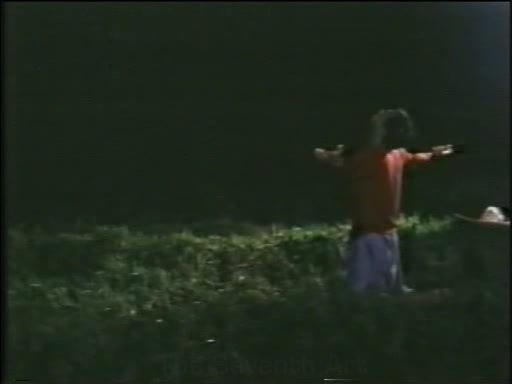
Riding the Stallion of DreamGirish Kasaravalli’s Riding the Stallion of a Dream (2010) is something of a blast from the past, specifically from the Indian parallel cinema of the 1970s of which Kasaravalli himself was a part (This regression in time might just be the point of the film). Like most films of that period, Riding has a keen sense of class politics at work in the hinterlands of the country (There is nothing very specifically 21st century about the script, except for the mention of factories buying farmlands). Furthermore, it embraces the typical aesthetic characteristics of the movement with its use of a traditional, downbeat soundtrack, its penchant for naturalism and, particularly, darkness and its employment of dubbed sound. But more importantly, it retains the optimistic belief of the age that change is indeed possible (even though Kasaravalli’s proposed means of change is much less romantic and much more grounded). However, unlike its predecessors, Kasaravalli’s film is unwilling to overlook the human elements comprising the class struggle. Indeed, this is where the script’s Arriaga-like structure is really put into good use. The film is essentially divided into four segments which alternately present reality as seen by Irya the village gravedigger and his wife Rudri and reality as seen by the son Shivanna and the daughter-in-law Hema of the recently deceased village elder (among other elites). Predictably for a film that deals with multiple classes, Riding is full of ironies small and big. The pristine corridors of the elder’s house are contrasted with the dilapidated interiors and streets of Irya’s home and neighbourhood. Shivanna and Hema are almost always seen trapped inside the claustrophobic villa, which is suffused with the stench of the rotting corpse of the village elder that reflects their moral decay, while the gravedigger and his wife are seen in glorious long shots traversing the wide open spaces and flower farms of the village. The death of the patriarch (whose body has to be forced to a sitting position and whom his son will be taking over from) spells doom for Shivanna and co. while it’s Rudri (there’s even a direct reference to her as Irya’s surrogate mother) who takes to herself to reconstruct her husband’s life. Revealing the old man’s death helps affirm Irya’s dream while it would shatter Shivanna’s and contrariwise. In both camps, it is a blind faith in God and religion that serves to preserve status quo. There is considerable tweaking of the mise en scène – especially in the lighting and actor blocking – as well that aids to emphasize this tug of war. Kasaravalli provides us almost exactly one half of the truth in each segment, leaving it to the subsequent or preceding segment to complement it. A simple shot from a particular segment finds its corresponding reverse shot in only the next segment and vice versa. Each of these couples in the story wants to lead a better, more dignified life, as defined by their social classes. Like the audience, these couples are unable to see what lies on the other side of the hedge and how their seemingly independent plans might affect the other. There is no moral dilemma that they see in their actions. This way, Kasaravalli calls into question the perceptibility of the class structure itself and, subsequently, uses his art to provide us that critical distance from reality which is required to understand it in totality. As a result, the characters in Kasaravalli’s film are not (save for a touch of contempt and sympathy the upper and lower class characters respectively receive from the director – a possible residue of the parallel cinema of yesteryear) class abstractions or oversimplified monsters and victims. They are both individuals with choice and products of their classes (Irya blows his money on alcohol and loafs about regularly, Rudri is a casual thief and some of the landowners in the village do genuinely care about Irya’s condition). Only that each of the couple wants to ride off on its own dream horse and in a direction that it wants. But what both don’t realize is that the horses are tied to the same chariot.


(Image Courtesy: Goethe Institute)

Serafin Geronimo: Ang Kriminal Ng Baryo Concepcion (1998) (Serafin Geronimo: The Criminal Of Barrio Concepcion)
Lav Diaz
Tagalog/English/Chinese/Filipino


Serafin Geronimo - The Criminal of Barrio ConcepcionDiaz’s debut, Serafin Geronimo: Criminal of Barrio Concepcion (1998), even without the burden of its successors, is a poorly made piece of cinema. It’s got all the trappings of a bad student film – laboured acting, ill-advised cuts, unwarranted zooms and an occasionally bombastic score – that only worsen its low production values. Very loosely based on Fyodor Dostoevsky’s Crime and Punishment, Serafin Geronimo chronicles the titular criminal’s act of sin and his subsequent confession and redemption. Diaz chooses to externalize the moral conflict of the protagonist through a dental infection whose pain seems to grow unbearable. Additionally, there’s a lot of gratuitous violence – graphic and described – in the film (even in the censored version) that underscores the savagery of the world Serafin (Raymond Bagatsing), like Hesus, is caught in. Evidently, like the Russian author, the film wants to observe human suffering in all its brutality. But what the film does not seem to understand is that human suffering can’t be captured on film by merely recording mutilated bodies or the physics of their destruction. Such documentation must attempt to record the death of the soul – the internal through the physical – as well (Compare this film with the sublime, genuinely Dostoevsky-ian passage depicting Kadyo’s demise in Evolution). However, the scenes at the countryside, set in the past, are executed with certain affection and restraint. Diaz pushes his political ambitions to the background as the quest for personal justice and redemption takes precedence here over national issues. The use of curious, hand held camera and the staging of action in deep space during indoor scenes are few of the traits that would be carried over and refined in Diaz’s later, superior works.


[Capsule added to The Films of Lav Diaz]

Hai Shang Chuan Qi (2010) (I Wish I Knew)
Jia Zhang-ke
Mandarin


I Wish I KnewA project commissioned by the state in view of the upcoming Shanghai World Expo, Jia Zhang-ke’s I Wish I Knew (2010) is a thematic extension of 24 City (2008) and is much more freely structured and much broader in scope compared to its predecessor. The larger part of the film presents interviews with older residents of Shanghai (along with those of Taiwan and Hong Kong) who gleefully recollect their family’s history, which reveal the ever-growing chasm between the city’s past and present. Personal histories seem to be based on and shaped by the city’s tumultuous politics and culture. We see that the people being talked about were viewed as mere ideological symbols incapable of erring or transforming. In addition to his employment of mirrors and reflective surfaces suggesting both documentation and subjectivity, Jia films the interviewees in extremely shallow focus as if pointing out their being cut off from the present (It takes them the sound of breaking glass or the ring of a cellphone snap back to reality). This tendency is contrasted with the final few interviews of younger people where we witness how life can change course so quickly and how one can assume multiple social personalities on whim and float about like free entities. Losing one’s sense of existence in a particular environment is perhaps not a big price to pay after all for the seeming freedom of choice it gives. One’s history is no longer defined by one’s geographical location. One is no longer bound by dialectical ideologies. There is apparently no influence of the past on the present, in every sphere of life, whatsoever. Mistakes of the past are obscured by the glory of the present and the loss of values, by cries of progress. Jia’s view of the city is, against our wishes for a disapproving perspective, neither nostalgic nor rosy. It’s holistic.

P.S: Don’t let the warmed up arthouse trick of having Zhao Tao wander the city streets in search of the city’s soul turn you off. Jia more than compensates for it with his search.


[Capsule added to The Films of Jia Zhang-ke]

Peepli [Live] (2010)
Anusha Rizvi, Mahmood Farooqui
Hindi


Peepli LiveA haggard, thirty-ish dimwit cum farmer Nathu (Omkar Das) lies in his house staring at a brand new – decidedly useless – hand pump presented to him after having almost inadvertently announced his suicide. Debutant writer-director Anusha Rizvi weaves a modest satire on mass media and electoral politics around this devastating existential premise that attempts to chastise the two entities for their opportunistic and exploitative response to the wave of farmer suicides in the country. What the film does not pay attention to is the fact that it is the same kind of corporations running these media outlets that are almost entirely responsible for the suicide wave across the nation as well. Not that the film is ignorant of the connection. It only knows the dynamics underpinning the phenomenon too well, as it indicates throughout with a hit-and-run approach, and chooses to concentrate on the effects rather than the causes. The result is a safe and rather neatly performed flogging of the dead horses known as media sensationalism and political hypocrisy that, predictably, detaches its target from the larger political fabric. Backed by some clever compositions and a noteworthy production design that provides an unsettling contrast between the part-godforsaken, part-heavenly hinterland and the sanitized, air-conditioned coldness of the studio interiors, the film is generally unmarred by its advertisement and photography-driven aesthetics and the sporadically sloppy direction. The film attains formidable density in the first half hour, where it starts exploring the imperceptibility of the moral gravity of one’s professional choices in the corporate ladder, and gets an easy and firm grasp of the bubbling up and trickling down processes of information and knowledge. It’s only when the film aims for the occasional dollop of profundity that it strains.


(Image courtesy: Emirates 24×7)

Historias Extraordinarias (2008) (aka Extraordinary Stories)
Mariano Llinás
Spanish

Thrilled, X thinks, “She’s done it. She managed to escape. The case is closed. She fooled them all.” Then adds with some pride, “all but me…” But this isn’t really the case. X is wrong about everything. He will never know it, but his entire theory is wrong.


Historias ExtraordinariasArgentine director Mariano Llinás’ Extraordinary Stories (2008) is an interesting bundle of paradoxes. For one, it is one of the most entertaining films of last decade, yet not many people seem to have seen it (Even its festival visits seem few and far). The film runs for more than four hours, yet it “feels” as if it is only a third of that length. The stories it tells are so interesting and seem ready-made for a mass, global audience, yet its running time precludes the possibility of a wide release. The film was made for a mere $40,000 and yet it’s more ambitious than an industry product made with thousand times that budget Corporations would be glad to distribute the picture and yet would probably ask Llinás to cut the film to half its original length, which would only unmake the entire film. These kinds of contradictions are present even within the film. Extraordinary Stories tells stories that are simple, lucid and linear enough to understand easily, yet the way it chooses to tell them agitates us, calling attention to itself and nearly undoing the emotional involvement the stories offer. Furthermore, it tells stories that imbibe many of the conventions of genre cinema and yet the film freewheels all the way, never succumbing to the baseless needs raised by the genres. The result is not a filmmaking mess as one might think, but a heady mix of addictive stories and spectacular storytelling.

So, what is Extraordinary Stories about? Where to begin and where to end? For starters, it tells us three parallel stories in eighteen chapters about three common men – X (Mariano Llinás himself), Z (Walter Jakob) and H (Agustin Mendilaharzu, also the cinematographer) – as narrated by an unseen narrator (rather three of them – Daniel Hendler, Juan Minujin and Veronica Llinás). X is a state-commissioned architect who, by a strange turn of events, becomes a murderer and pigeonholes himself into a hotel room in order to evade the police. Z is a small-time government official in a secluded town who gradually finds a deep interest in the secret life of his predecessor. H is a manual labourer who is hired by an old man to hunt for some specific relics that are supposedly lying on the banks of the local river. Also interspersed in generous amounts are threads about an escaped convict who plans to infiltrate a top-level meeting of businessman, a bet between two old men about the feasibility of a construction project, a short biopic of an iconic architect who built demonic structures in the most remotest of villages, a flashback of a random character recounting war time experiences, a love triangle and what not. The story deviates on its whim with the narrator seemingly improvising as he goes along. One might argue that none of these diversions makes sense, but these irrational detours are the stuff that stories are made of.

Although the film makes no claim to study the psychology of its characters or the motivation for their actions, it is very interesting to speculate on why the protagonists do what they do. X is like L. B, Jefferies, confining himself to the hotel and observing the world through the rear window of his room. He attempts to construct a coherent world from the random images he observes and believes, in vain, that the can make sense of it all. He is trying to hold together not only the world that appears to be going berserk and out of his comprehension, but also his sanity. If X was trying to construct a game around him, Z attempts to get into a game already built. Like Antonioni’s photographer, out of sheer boredom of a drab suburban life, he creates a puzzle within the world (where none may exist) and plunges into it, thereby ceasing to be a passive observer and becoming an active participant. H, on the other hand, is nudged into a game he never wanted to be in the first place. Preferring the untroubled life that he already leads, he tries to shut himself out of the new universe that he seems to have been pulled into and tries to reject the larger-than-life stories of the old man. He initially thinks that he’s being paid for much more than what he’s doing but, gradually, he discovers that he’s got himself into something much more than what he signed up for. What connects them is their realization that, even though things may not have turned out the way they wanted, the experience itself was worth the investment.

Historias ExtraordinariasThe first, and obviously, striking thing about Extraordinary Stories is the presence of a narrator who recites to us the events like a news reporter, giving a sense of immediacy to the proceedings and packing so much of narrative material into these paltry 245 minutes. He authoritatively comments on the characters, their motivations and actions as if he knows everything about them. The apparent redundancy is nullified along the film as Llinás provides friction between the soundtrack and the visual. This discrepancy between what we see and what the narrator tells us is both comical and unsettling. For instance, the narrator elaborates on the theory that X concocts only to tell us, at the end of it all, that he’s wrong. Similarly, he tells us what is going to happen at a scene much before the event actually takes place (In fact, halfway into the film, he gives away what is to happen towards the end). So, for us, the narrator seems both omniscient and suspicious. But having no other objective point of view, we are forced to trust him. This way, Extraordinary Stories is a film about storytelling itself – its methods, its pitfalls and its very nature – and, consequently, also about the role of the director in the filmmaking process. It is as if we are forced to acknowledge that no story can be free of the tyranny of authorial subjectivity, that every story tells as much about its storyteller as it does about its characters and that every version of a story gets refracted by the ideological prisms of each of the narrator it passes through.

Shot in video as expected and almost exclusively with a shallow focus, the film has all the coziness and visual blandness of a home video or, at best, an independent production, which is especially evident in scenes with little lighting where the images start bleeding. Llinás also probably saved a lot in the sound department, given that not much rerecording would have been required. However, the film is directed lovingly, with a keen interest in telling the stories. As indicated by the film’s promotional poster that imitates van Gogh, Extraordinary Stories is a work that lies somewhere between modernist distortion (the subjectivity and personal nature of storytelling are continually brought to the fore) and postmodernist pastiche. Like Kill Bill (2003-04), the film that first comes to mind while watching this one, Llinás’ film is divided into chapters and traverses various genres and styles, taking us on a tour of the various zones of popular cinema. One moment we have the film lurking in the dark waters of a psychological thriller and in the other, cruising in the carefree playgrounds of a romantic comedy. Using almost every form out there – graphic animation, photo essay, journalistic reportage, cinema vérité – Llinás fabricates a film that instantly recalls the early works of the Nouvelle Vague, especially the pictures of Truffaut whose on-the-fly narration of events it emulates. Like the films of the French director, Llinás’ film, despite the alienating presence of the narrator, is full of emotions – humour, pathos, fear and love –which prevent the characters from being reduced to caricatures or pawns of a larger structure.

Throughout the film, we struggle to find a connection between the three stories. Genre cinema, especially those written by Guillermo Arriaga, has taught us to expect these seemingly independent stories to gloriously clash and merge in a magisterial showdown. Accordingly, we earnestly wish that the all-powerful narrator will somehow tie all these stories up and prevent the film from becoming a very long shaggy dog story. The inherent trait of genre cinema is to provide patterns, to prepare us to expect certain types of stories, conflicts and closures. The successful genre film supplies minor variations within the larger structure whereas the ordinary ones act by the book. But all of them provide the audience an integral, causal world the events of which could all be accommodated neatly into an overarching “meaning”. And Llinás’ film avoids precisely that. If at all there is some connection between the three stories, it must be the idea that our lives change in ways we never would have imagined and through the kind of people we never would have expected to meet. X, Z and H may not have found what they wanted, but the important thing for them is that they rediscover themselves in that quest. The people they meet may or may not be what they think they are, but even more vital is the transformation that this motley bunch brings to the worldview of the three protagonists. To kill a cliché, the journey for them is more important than the destination. Likewise, Llinás’ film seems to suggest that the details of the stories – the inflections, the moments and the events – that it presents are far more enriching – far more intriguing certainly – and important than any resolution to these stories could be.

Historias ExtraordinariasTaken together, these three stories, save for a few tenuous connections between them, may not account for any singular “meaning” at all for Extraordinary Stories is the kind of film that abstains from making any grand statements about the world – political or otherwise. By actually recounting the tales through an active narrator, and not just presenting the stories visually, Llinás absolves the world within the fictional stories from the burden of causality, realism and meaning. If the film has something concrete to say at all, it can only be about storytelling and not the world. Now, one might argue that this form of depoliticization only obfuscates reality for the viewer. However, by freeing itself from the hinges of the genre, its mundane mechanizations and its inherent ideological choices, Llinás’ film provides true escapist entertainment that, for once, does not intimidate its audience. By rejecting the tyrannical structures of genre cinema such as pattern, meaning, closure and unambiguity, Llinás’ film brings back to stories what is absolutely essential to them – mystery. It is an achievement for the film that it does not hesitate to include what would otherwise be deemed superfluous elements. There is probably a whole film playing out through the eyes of the stray characters we see – the lovers at the town centre, the workers at the office and the old men at the village meeting, for instance – that would make for stories as fantastic as the ones we see. The greatest triumph for Llinás’ film is that it preserves such possibilities. It has, in essence, brought back the awe and curiosity that we felt as kids, sitting in the porch listening to the tall tales of our grandparents with wide eyes. Extraordinary stories indeed.


(Image Courtesy: Revista Post)

Workingman’s Death (2005)
Michael Glawogger
Pashtu/Yoruba/German/English/Ibo/Indonesian/Mandarin/Russian

We imitate the figures and pose like the soldiers and our ancestors up there. We think these poses look really funny and avant-garde.


Workingman's Death - HeroesMichael Glawogger’s Workingman’s Death (2005) is the kind of film that helps illustrate why an authorial viewpoint is so important in documentary filmmaking. More than anything, Glawogger’s film suffers from the absence of a voiceover. This occasional pseudo-neutrality and non-involvement of the filmmaker is troubling precisely because it runs the risk of alienating the subject from the filmmaker. When you set out to make a documentary on the lives of the oppressed and unprivileged, there are only two ways you can take. One, you film their situation from at a considerable distance, clinically analyzing the causes of their misery and, preferably, pointing out a way out of it. Or two, you go up, close and personal, empathize with them, understand them and document their condition as you would your own, always being critical of what they are going through. Merely gawking at their wretchedness, in the name of neutral observation, amounts to nothing more than crowding near a man run over by a car. Filmmakers such as Pedro Costa have tried to resolve the deadlock between the imperative to avoid exploitation of one’s subjects and the need to document their living condition by, as Michael Sicinski sharply notes, making them active participants in the creative process, by fictionalizing the documentary with the consent of its participants. What this effectively does is that it gives a voice to the subjects, as if they are expressing themselves through the film incidentally organized by the director. Additionally, other filmmakers like Werner Herzog (who has done some atrocious things as well) continually (and, some might say, overbearingly) intrude on their subject’s space – interrupting them, commenting upon them and essentially reducing what they’ve shot to the level of found footage – and hence display a deep personal commitment towards the topic at hand.

What is interesting about Workingman’s Death is that it assumes all the above attitudes in turn. There are phases in the film that are simply brilliant, some interesting, some insipid and some plainly worthy of contempt. There is nothing you learn from the film that’s not summed up in its title. What one expects from it, then, is to study the politico-historical reasons for the eponymous demise of the worker and what it means to the proletariat today. And the film starts on the right note. As the title credits play, we are shown a collage of news reels and archival footage, all depicting workers doing various strenuous activities, cut at a rapid pace reminiscent of the early Soviet films. Likewise, the soundtrack is a patchwork of drilling noise and ominous percussion-heavy music. This prelude ends with a clip depicting a pair of bubbling Soviet workers pledging that they will mine an amount of coal that is much more than is expected from them in a single year. They are filmed with the camera pointing upwards towards them. Following this, Glawogger cuts to the present, to the image of a tired worker, whose face is covered with coal dust, posing for the camera. An on-screen quote from Faulkner reads: “You can’t eat eight hours a day nor drink for eight hours a day nor make love for eight hours — all you can do for eight hours is work. Which is the reason why man makes himself and everybody else so miserable and unhappy”. The contrast that the subsequent image – a wintry, deserted townscape – provides to the preceding montage is jarring and drives home the point right away. That the town is in Ukraine – an erstwhile member of the Soviet Union – only reinforces the central idea, which is the failure of the Utopian socialist dream of the omnipotent worker.

Workingman's Death - GhostsHeroes’, this ironically titled and finely directed first part of the film, is set in Donbass, Ukraine, a former mining hub of Soviet Russia, and follows the working routine of a bunch of freelance miners who gather the last pieces of coal left in the mountains. We are told that the government-run mining industry has been shut down and these workers have been left with no choice other than to form small groups, dig out whatever coal they can, sell them and share the profits. Glawogger intercuts these snippets of interviews with a piece of propaganda that details Andrey Stakhanov’s record-breaking stint at the same mine in 1935 when his team collected 102 tons in a single shift, virtually triggering off the Stakhanovite movement. The image of charged workers carrying their drills over their shoulders like rifles and marching forward, heaving their chests and singing under the open sky stands in stark opposition to these handful of miners crawling in a mineshaft that is hardy a couple of feet high and which could collapse on the slightest of errors. We realize how the image of the worker as envisioned (and perhaps constructed) by the Stalinists became more of a self-deceiving prison than a liberating guide for the common worker (an idea that was superbly explored in Makavejev’s Man Is Not A Bird (1965)). Glawogger enters the mine along with the workers, crawling about just like them, to document them (It is an achievement that the movie is shot in film and not in video, which would have been logistically easier). It’s a Herzogian moment no doubt, but to bring in an auteurist dimension would be to undermine the vision of the film, which is nearly what Glawogger himself ends up doing later in the film.

We are also shown the women in the area, who, too, make money by mining and whose camaraderie reflects the men’s. They are more cynical about education and believe that they would have ended up at the same position even if they had gone to college. They laugh at the idea that a faith in God might save them. Perhaps this gender equality is all that remains of the socialist dream. The workers are no more the all-powerful beings in control of the machinery they operate and the nature they exploit. They are now gleaners squeezing every ounce of coal they can out the nearly exhausted mines. The 102 tons of coal that Stakhanov mined in a single shift has become the stuff of legends, much like Stakhanov himself. They are less like Stakhanov and more like Sisyphus – mining to live and living to mine – with seemingly no way out of this wearing circle. Much like the mythological hero, these people seem to have come to terms with their condition. Glawogger, too, ends the section on a note that isn’t much different from how Camus concludes his essay: “…one must imagine Sisyphus happy”. For the first time in the film, we see something that’s really cheerful – a wedding. The couple and their friends celebrate near the Stakhanov statue at the centre of the town. They have bonfires. They leave. Lest it should become a gesture of complacence, Glawogger signs off with the image of the Stakhanov statue standing alone in the wintry night, with the bride’s headwear hanging from his left arm – the answer to a question that will be asked at the end of the film.

Workingman's Death - LionsGhosts’ is shot in Kawahljen, Indonesia, where we see a group of workers chip away large chunks of Sulphur from a valley and carry them all the way to a factory where they get paid. Although the section stands in contrast to the claustrophobic undergrounds of the previous segment, it is equally suffocating to see these workers gagging themselves to avoid getting poisoned while mining these pieces of Sulphur. Glawogger directs the segment with traces of fiction, including what appear like rehearsed conversations and with dynamic camera movements which are simply too beautiful for their own good. There is even a thread consisting of what seems like a gay couple, which is clearly ridiculed by the other workers, that throws light upon the hierarchies of marginalization. We are also shown tourists who visit this breathtaking valley and have themselves photographed along with these workers or temporarily assuming their roles. These tourists humour the workers, treating them condescendingly. One of the workers even talks about a French woman who wanted to kiss him. Evidently, Glawogger is criticizing these middle-class folks for their hypocrisy and for glamorizing what is essentially a life of ordeals. The irony here is that Glawogger does the same thing later in the film. However, there is one sequence which shows one worker selling a improvised Sulphur curio to the tourists at exorbitant prices. For a moment the film attains remarkable density where, for once, the basic human elements of the film are not overshadowed by class-level analysis. However, the political context in this segment is weaker as compared to the previous segment. For one, there is no reason why the film must be set in Indonesia. The only reason for this deadly routine of these workers that we can think of is globalization. But unlike in ‘Heroes’, that connection is not stressed upon one bit (apart from the fact that one worker is wearing a football jersey!).

But it is in the third and fourth segments that the film really plummets. The middle section, ‘Lions’, takes place in Port Harcourt, Nigeria, and inside a slaughter-ground where hundreds of cattle are sacrificed, skinned and processed every day. Glawogger shows us all the killings in fine detail, without any restraint, spending considerable time chronicling the process of slaying, skinning and roasting the animals and lesser time talking to the people who do that. Of course, the reference point here is Franju’s Blood of the Beasts (1949, from which shots are borrowed by Glawogger for the title sequence), where the director took us through a graphic tour of Parisian slaughterhouses, revealing the opaqueness of our morality, among other things. But the subtle difference between the stylistics of Glawogger and of Franju reveals a world’s difference between the attitudes of both the filmmakers towards the killings. While Franju assembled the clips and provided a voice over that built on the material, Glawogger seems to treat the footage of the slaughter as an end in itself. As a result, Franju’s film became an analysis that based itself on the everyday work at the abattoirs whereas Glawogger’s film seems as if it merely wants to record workplace details (and possibly pass itself off as a “mature” film). The shots of animals being slit become the only destination for Glawogger here since his relationship between the people who carry out this task remains tenuous, at best, in this segment. The workers at the slaughter grounds mark the severed heads of the cattle they’ve slain so that they can reclaim them later. They ward off each other so that their share is not taken away. As indicated by the title of the segment and by its visual scheme where the workers appear nearly buried beneath the chunks of meat, Glawogger is actually comparing them with a pack of lions fiercely holding on to what they’ve hunted – quite a reproachable comparison I’d say.

Workingman's Death - BrothersThe fourth part of the film, titled ‘Brothers’, sees the film shift base from Africa back to Asia, this time to a shipyard in Gaddani, Pakistan. We witness workers dismantling large ships, piece by piece, where one false move could result in death (In fact, all the workers shown in the film stand on the verge of death. They risk their lives in order to survive). The group consists of a large number of native and immigrant workers – perhaps from Afghanistan – who help and motivate each other at the workplace. They pine for their beloveds, whom they get to see only during the year ends. We also get to see one photographer who visits the shipyard, offering people a chance to get photographed with a rifle for ten rupees. Are we supposed to pity these workers that they are misguidedly revering terrorists? Or are we supposed to see how deep the Islamic resistance to westernization goes? Glawogger doesn’t answer, and perhaps rightly so. The problem in this section, however, lies in its aesthetics. Glawogger shoots the dismantling work from various angles and distances, creating a symphony of destruction. He uses ultra slow motion and lets us see every speck of dust that rises as the pieces fall. The sense of awe near completely undoes the drudgery that we are witnessing. That Workingman’s Death is shot in film makes it all the more beautiful and hence very objectionable. But that is not the biggest flaw of this segment.

There is no apparent reason why both ‘Lions’ and ‘Brothers’ should be shot where they have been. The slogging that we witness at both the shipyard and the slaughter house is neither geopolitically specific nor a result of global politics. As Michael Atkinson says, there is no reason to believe that it the condition of these workers would have been much better during some other century (the film is subtitled “5 Portraits of Work in the 21st Century”) or if they were in some other country with similar political climate (one worker in Nigeria says that they would be better off if their country allowed them to export meat – a statement that called for further examination, even if it seems shortsighted). Perhaps Glawogger’s exploration is metaphysical rather than political, but the fact that he sets the film entirely in socialist or third world countries throws that argument into question (I guess it would have done the film some good had there been a segment chronicling workers living in developed countries). Moreover, three of the five segments document certain religious practices of the workers, two of which involve animal sacrifice. In all the three segments, the workers have a deep faith in God, deterministically accepting what God has preordained for them. The suffering is taken as a given and some of them are even proud of what they do. Perhaps they find solace and meaning in religion. That all the three countries are Islamic is somewhat troubling (the film was made in 2005 – a time when the demonizing of Muslims was at its peak), especially given that Glawogger could have chosen any three countries for his purpose since there is nothing very specific about Nigeria, Pakistan or Indonesia that he underscores.

Workingman's Death - FutureHowever, the film comes right back on track (or should I say, west of the track?!) in the final segment – the shortest and the best – of the film, “Future”, set in Liaoning, an industrial town in northeastern China. The segment opens with a bunch of men writing text on a platform at the town centre, moving backwards (Mandarin is written vertically), with what looks like volatile ink. The soundtrack plays the voice of chairman Mao extolling industrial workers. The point is clearly made: everything that we see and hear is transitory and is a relic of the past. This phenomenon of getting trapped in failed visions and unfulfilled promises of the past is what forms the central theme of ‘Future’ (in contrast to the disillusionment of ‘Heroes’). The focus soon shifts to the workers in the smelting factories of the township. The workers who are interviewed seem to have deep faith in their country and what it is doing for (and to) them. They acknowledge that times have changed, but retain that by equipping the factories with newer technologies, the nation could be back on the path of progress. These interview snippets are followed by a short conversation with a couple of youngsters standing near a people’s monument, located in the town, depicting workers enthusiastically toiling around a giant statue of Mao. The youngsters tell us that they like coming to this place and getting themselves photographed while assuming the poses of their ancestors. Of course, this attitude seems indicative of the workers as well, who insist on repeating rhetoric of the past even when the nation has moved into a market economy like the west.

There is also an epilog to the film, set in Duisburg-Nord Country Park, Germany – once the Duisburg-Meiderich Steelworks. The factory is evidently in a deplorable condition. We sense that only the phantom of the smelting plant remains. Kids have infested the rusted factory premises, hurling water balloons at each other. As night falls, we see teenagers making out. A narrator gives us the history of the smelting factory and what became of it later: “Then came the last shift. But not the end; rather a new beginning. The smelting plant was transformed into a unique leisure park. When night falls in Duisburg, the blast furnaces flare up. In neon green and fantastic colors. ARTificial light in the truest sense.” We realize that the factory was closed down, but we wonder what happened to the workers. Glawogger, meanwhile, seems to be wondering what happened to “the worker”. May be that’s what he was trying to ask – however objectionably, however inconsistently – throughout the film. As the attractions at the park wind down, as the teenagers and kids move out, as the neon lights fade to black, the manager at the theme park asks a question (which also happens to be the final line in the film), in the public announcement system, whose answer was already given by the image of the solitary statue of Andrey Stakhanov standing in the snow in the first segment: “Have we left anyone sitting in the dark?

Triumph of the Will

Triumph of the Will (1935)

The Fall of Berlin

The Fall of Berlin (1949)

The Ghost Writer

The Ghost Writer (2010)

Walang Alaala Ang Mga Paru-paro (2009) (Butterflies Have No Memories)
Lav Diaz
Tagalog/English


Butterflies Have No MemoriesThe director’s cut of Butterflies Have No Memories (2009) is something of a misnomer. For one, Diaz had to shoot and cut the film so that it didn’t run for a minute more than the one-hour mark. As a result, it feels as if Diaz had one eye on his film and the other on his watch. There are shots that are abruptly drained off their life and some that feel perfunctory. But the film also seems to mark a turning point in Diaz’s outlook towards the Filipino people. Perhaps for the first time, Diaz portrays the common folk (and perhaps a particular social class) as being almost completely responsible for their misery. In Butterflies, an ex-Chief Security Officer at the mines, Mang Pedring (Dante Perez), blames the mining company, which has withdrawn production after protests by the church and activist organizations, for the economic abyss he and his friends are living in. But it is also starkly pointed out to us that, while they were getting benefited by the mining company, these folks did nothing to set up alternate ways of business and earning and, as a result, find themselves foolishly hoping for a past to return, even when such a regression is harmful it is to the collective living on the island. Mang misguidedly plans to reverse time and reinstall the factory by kidnapping the daughter of the owner of the mining company (Lois Goff), who has returned to the island after several years and who calls Mang her second-father. What Mang tries to do overrides personal memory and disregards the fact that it is he who has lived like a moth, inside a cocoon. As, in the final shot, Mang and his friends stand wearing those Morione masks (which bring in the ideas of guilt, remembrance, conscience and redemption – so key to the film), they realize that they’ve gone way too far back in time than they would have liked – right into the moral morass of Ancient Rome.


[Capsule added to The Films of Lav Diaz]

« Previous PageNext Page »