We always have that “one foreign film” to top it all, don’t we? Continuing the tradition of extraordinary films like The Lives of Others (2006), 4 Months, 3 Weeks and 2 Days (2007), this year we have an Israeli flick Waltz with Bashir. Already a winner of the Golden Globe for the best foreign film of the year, the film is all set to make it big at theAcademy Awards late next month. Director Folman dedicated the Golden Globe to all the babies that were born during the production of the film and desired that when they watched the film in the future, they should think of the film as an ancient video game. And indeed, Waltz with Bashir is a sincere attempt to come to terms with the mistakes of the past.
Waltz with Bashir takes place 20 years after the “purging” operations of the Israeli army in Lebanon. Ron is one of the soldiers in the war who is leading a peaceful life as a filmmaker now. One gloomy night, after he hears about the strange dream that haunts his friend, Ron decides to dig up his past. This takes him to various places across the globe as he gradually recovers his memories of the fateful war. There is considerable romance in the events of the war, with Apocalypse Now – like celebrations of destruction. Men come, men go; No one recognizes the other completely, but each one has a story to tell. Each one has a version of the war. We are presented many POVs as Ron continues inquiring his role in the war. He isn’t happy about what he is discovering. But the thirst for truth keeps him going.
Waltz with Bashir presents a great paradox now. One that all of us carry with us in one form or the other. One that uniquely characterizes the human intelligence. A paradox of memory. When you want to forget something, your mind does not let you. It keeps coming back to haunt you until you confront it for good. And when you want to remember something desperately, the same memory starts playing tricks with you. It cooks up some mutated form of the past combining elements of truth and fantasy. Ron seems happy with his filmmaking business until the inevitable shadow called past catches up with him. He realizes the need to remember. But no one lets him – neither his own mind nor his friends’. Early on, Ron’s psychologist friend tells him of a memory experiment where people were found to accept small deviations from reality as reality itself. Similarly, everyone seems to have settled into some form of comfortable reality in order to barely escape from the horrors of the past and yet remember their years in the war. Unwilling to strike a balance between the need to document and the need to forget, Ron decides that he has to know what happened and not speculate.
It is but natural to be reminded of the previous year’s fantastic film Persepolis, for both employ animation to address issues of very high importance. Persepolis, using its childlike animation effectively along with its monochrome, presented one girl’s quest for identity and her abstraction of the ever-changing world. Marjane’s fantasies of a fairy-tale childhood are slowly corrupt by the knowledge of the harsh realities of the war-torn world. The ever-unsafe world prevents her from carrying on with her illusions of undisturbed happiness. Waltz with Bashir, on the other hand, is an account of one man’s struggle to recollect the past. It sort of reverses the structure of Persepolis and presents us a man who attempts to recall reality exactly as it happened. Ron does not want to concoct a “safe version” of reality that remains tough enough to reflect truth but comfortable enough to be complacent about what happened. In essence, Waltz with Bashir asks us to confront reality– without any pretense and escapism – and get over with it once and for all. And this, in my opinion, is the film’s greatest success.
One can’t entirely say that the film does not take sides. True, it is told from an Israeli point of view and yet comments on the atrocities done towards the Palestine refugees in Lebanon, but the Lebanese evangelists won’t be happy with the depiction of the massacre. However, this can not be considered a blatant caricaturing of them. Waltz with Bashir takes just a single event from the war – the refugee camp massacres at Sabra and Shatila – and questions the appropriateness of that event alone. Yes, it does take a stand there and it does condemn the way things unfolded on that dreadful day. But that’s about it. It does not extrapolate the incident to judge the present political policies of either country or even question the motives of the war that it depicts. It is as if the film isolates the lone event in order to denote the sheer enormity of it all and to show how such unwarranted acts of violence have a deep impact on the psyche of an individual and of a nation.
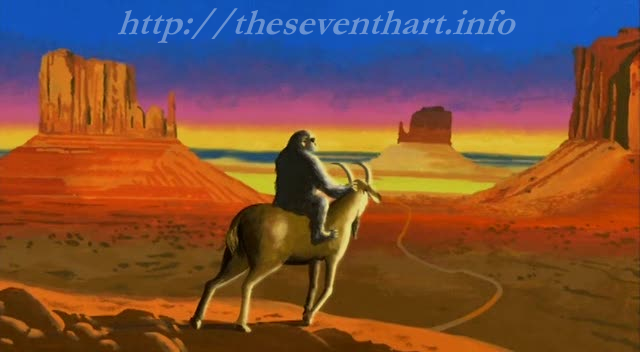
I can’t complain on the technical grounds either. The animated characters are deliberately out of sync with their environment, which gives the film a kind of surrealism that is in tone with Ron’s recurring dream. The dubbing is spontaneous with even mistakes finding their way into the film. The narrative proceeds non-linearly never once going over the head. But these are just the secondary reasons that make the film stand apart. In an age which is plagued by over-sensitivity towards issues such as racism, communalism and war, films such as Waltz with Bashir (and the surprise winner Gran Torino (2008) appeal for an acceptance of these issues as it is and to deal with them without much fuss. And that is a reason enough for me to cast my vote for Waltz with Bashir.
The Buzz: Nominated in the Best Documentary category
The Run: Won the Audience Award and the Grand Jury Prize (Documentary) at the Sundance Film Festival, BAFTA for Outstanding British Film
Audience On Wire
The much talked about documentary Man on Wire is about a man who breaks into rooftops of tall structures only to perform his ropewalking act on them. Specifically, it shows us Philippe Petit’s attempts to fulfill his cherished dream of walking between the twin towers of the World Trade Center on a wire. The film cuts to and fro between three time lines – Philip’s biographical history and his induction into this “crime”, hours before the actual event that is to occur, and the present year at the studio – and provides a seamless documentation of one of the most shocking moments in history.
Mr. Marsh, the director, crosscuts facts presented as interviews with fictionalized forms of the same, shot in B&W. Man on Wire carries the tagline “The artistic crime of the century”. And in retrospect, each word of the tagline seems to resonate loudly. “Artistic” because of the discoveries it can make – of one’s own unlimited physical and mental strength and of one’s own limitations. “Crime” because how it all happened. More than the event itself, the preparations of the event are so dramatic that they can pass of as sequences from a top-notch heist film. And the last word of the tagline is a subtle tribute to the famous twin structure that the new century could never retain. Interestingly, the film never laments about the destroyed structure and sticks to what happened with Philippe alone. And that is a move of great confidence.
As such, Man on Wire makes a great watch primarily because of the content it provides. There are pretty decent insights too into Philippe’s mind with respect to the death-defying act he performs. But I guess, even though it is lovingly directed, it may not go on to win the Oscar. True, that it throws a shiver down the spine but not more than the event itself. And kids, do not attempt this at home!
The Buzz: Nominated in the Best Leading Actor category
The Run: Won the NBR Spotlight Award
Overstaying The Welcome
The Visitor released in 2007 but Richard Jenkins is nominated for this year’s Oscars, making it a close race between three great performances. He may lose out, but not without this massive fight. His timid performance reminds one immediately of Gene Hackman’s in The Conversation (1974, not to mention the penchant for the musical instruments) and this perhaps may make the voters a bit skeptic.
The visitor follows an aging professor whose wife has just passed away. He seems to be the perfect loner. He teaches world politics and affairs, but is soon going to learn what he truly knows. He writes books on his subject and can never take credits for something he hasn’t done. He tries to learn the piano, in vain. Things turn for good when he discovers an African couple staying in his apartment located in another city. What begins as a sympathetic gesture by the professor turns into a deeper relation and goes on to become thick friendship. There is some great writing at work here and that doesn’t take away the credits from the production design team. As the film nears its end, one begins to question thoroughly who the title refers to after all. The Visitor is a film that knows its cultural identity and, along with Gran Torino (2008) and Frozen River (2008), is the kind of film that should define contemporary American cinema.
Save the last 20 minutes or so, The Visitor is decidedly an achievement of great proportions. The climactic portion of the film, so very unfortunately, takes side and tries to gain sympathy for its characters. What it did with its quiet brilliance, in the larger part of the film, is put under threat with this needless change of tone. The question it handles is a very sensitive one – not only bound by individualistic morals but by the rules of the law, economy and society. Sadly, The Visitor tries to simplify it all.
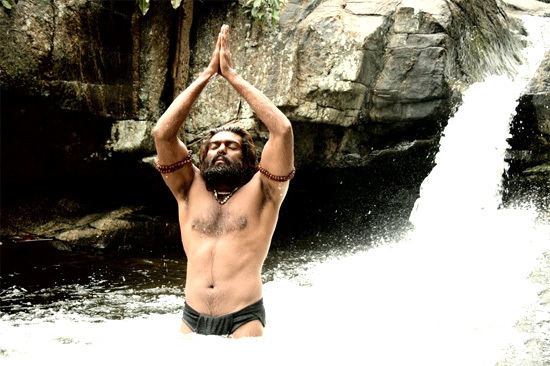
Bala’s Naan Kadavul is a stupendous failure. Its script is darn predictable. It is nothing more than a reworking of the damsel in distress template. Most of its characters are caricatures and exaggerated for dramatic effect. The final monologue is way over the top. Its shot compositions are weak and inconsistent. It glorifies violence. Its way too melodramatic for its own good. Rudran’s mother is a cardboard and her character, overdone. And so is the character of Thandavan. It uses music way too generously to corrupt its atmosphere. Its editing is way too jagged and at times too liberal. Don’t even get me started on the logical flaws.
Phew! Now that all that’s off my chest, let’s talk about the film.
Bala’s films have become like the Cricket World cup. They come out with much hype and after years of wait. What we have here is a director who has “grown out” of the industry. Rather than going with the flow of things, we have a director here who seems to pave his own way. Very few directors have managed to become independent of the market demand in Tamil film industry, leave alone with such a minuscule filmography. This is one of the very few directors who get a louder cheer than the lead actor of the film during the title credits. Let’s face it, which director, even with the remotest idea of what sells and what doesn’t, would have the guts to open a film in an alien land, with a Hindi title song? Or to follow it up with an extended Sanskrit track? Or to use considerable amounts of lines in Hindi and Sanskrit? Heck, who else would have a lead character who roams around in his loincloth and speaks sparing and barely legible lines? Welcome to Bala’s world.
Naan Kadavul is pretty much faulty with its techniques. Arthur Wilson’s cinematography is weak and shows glaringly in the indoor scenes. His two-shots betray the scene and show complacency. See, you build up tension with the scripted scene and why do you want to drive home the content by losing the atmosphere? Not to mention the scenes in the beggar lair. The whole camerawork is politically incorrect, as in Sethu (1999) too. You never look at the characters like that. Wilson’s camera is always curious. It tilts, it pans and it tracks. There’s no problem with that at all, but the grammar it uses isn’t right. It keeps looking down upon its characters. And also hurting the film is the slew of reaction shots that Bala uses. This technique, fortunately for Bala, proves itself to be a double edged sword in the film. You see, a reaction shot in a scene of drama is a sign of weakness. It is as if the director is showing us the gravity of the situation without letting the audience comprehend it. And Naan Kadavul is filled up with many of these. Interestingly, it is the reaction shot that makes a comedy scene work. More than the comic line or gesture, the reaction from “the victim” is what highlights it. Naan Kadavul is filled with those too. Take the scene where Hamsavali advices Rudran to go back to his family. This could have been one sick lecture, but see how Bala’s reaction shots distort the tone of the scene from melodrama to comedy. Sadly, the former type stands out too. However, the handhelds work well outdoors and, I feel, could have been used throughout the film. And so are the close-ups. It’s been a long time since we saw a director confident enough to use the close-ups. Bala closes in and his actors deliver.
Take the editing of the film too. Bala either cuts way too early for comfort or way too late for continuity. There are some absurd filler shots that are a sore. And some shots that should have been given a second or two more. Consider the scene where Rudran is on the terrace waking up the whole neighbourhood. We are shown a shot of the members of the family sitting together downstairs. They are shattered and helpless. There is a perfect distance achieved by the camera. And what happens? Bala cuts away. This shot could have made much more impact than the buckets of tears. Again, take the scene where the second beggar group is performing at the police station. We see a constable stationed outside, timidly trying to take a look at what is happening. This is great satire. But how many of us noticed it. This is not our problem as Bala refuses to show that for more than half a second. What happens essentially is that the cutting betrays good cinematography and vice versa.
Thirdly and most importantly, the use of background score undermines the quality of the film big time. With all due respects to Ilayaraja (whose score would shine as a standalone piece), I would say that the excessive use of emotional cues is a shot in the arm for Naan Kadavul. You see, the moment you have a violin in your film, you throw it away to the dogs. That is because, by the property of their sounds, violins are very evocative instruments. Bala’s scenes have enough raw power by themselves to convey the depth of the situation. He uses excessive amounts of highlighting score that tries to tell you what to feel eventually making the scenes mediocre. Consider the scenes of Rudran’s return home or the separation of the beggar kids by the thugs. There is already much happening and pop comes the background score to distract us. There is enough drama in all his scenes, aided by good performances. Why over-determine what you want to say? Bala is a director who has as much confidence as does the title of the film, but not (yet) on his audience. He should have believed that his audience would understand the emotional gravity that he felt, without resorting to such poor tricks. Bala is a director who has never shirked from showing raw emotions. So why shirk from hiding it when necessary? Luckily, Bala’s films so far have compensated for the form with their content, more or less. So I’ll just stop there with a hope that all this will be completely corrected in his forthcoming films.
There have always been two facets, taboos rather, that have plagued cinema world over – sex and violence. Their depiction on screen has been much debated over and their use much researched and their responsibilities, studied. The world is slowly opening up to the former, but the latter still remains a hot issue. Popular cinema, however, still treats them as it did decades ago. The use and the meaning it conveys have never been questioned by pop filmmakers of the world, leave alone the Indian ones. Indian cinema has always shown gratuitous amounts of violence on screen and seemed to have no problems with that. But ALL the violence it shows is based on a single moral premise – good over evil – that we all have been hypnotized with. I don’t mean the idea of good winning over its rival but the definition of good and bad itself. Films as graphic as Thevar Magan (1992) to ones as mellow asJaane Tu… Ya Jaane Na (2008) have firmly set their foot on this premise as far as their use of graphic violence is considered. And Bala’s film here, is no different. See how he creates the platform for violence by making his villain despicable. He imparts alarming one-dimensionality to Thandavan and resorts to shocking the audience with graphic torture. In essence, like the very many Indian films, he the sets audience’s mentality to consider violence as a optimum solution to the problem. And the ensuing violence arrives readily justified and as a consolation to the restless audience.
The term “glorifying violence” has been used by reviewers very loosely. They seem to consider any film that shows considerable amounts of it as glorifying violence. If that is so, all the popular films from the country would be glorifying violence. Does Naan Kadavul glorify violence? Of course, it does. But not in a very different way from the other films of today. But does it have an impact? Bala sets up the situation for accepting violence, but would one actually go on to be influenced? No. You see, by the virtue of the character that the script provides, the film provides us an instant alienation from Rudran. Though it makes the audience support his actions, it never would instigate them to follow suit. Naan Kadavul, like almost all pop films, presents itself in a whole new world and consequently cuts off any of its justification of its actions in the real one. And the audience never carries on its support out of the theatre (as much as it does for its morals). So even though the film (and all films that have a stunt sequence) glorifies violence, it never can offer this as a solution to social problems. As a result, the film isn’t a glorification of violence as much as it is of our strong morals.
To get a measure, consider Jaane Tu… Ya Jaane Na. This is a film that is much closer to our world. All the violence shown in the film is a single punch. Now, the film presents Jai as a character who is brought up against violence. He sticks to it for a large part of the film even though Aditi’s one-dimensional boyfriend provokes. And finally when the film reaches its match point – Wham! Jai punches him to prove his manhood and his love. The audience applauds. And since the film mirrors, to an extent, our world and behaviour, the audience reassures itself that violence is a good solution. It would very well take with itself subconsciously the idea that violence is a token of manhood and a good way of dealing with one’s insecurities. Now, compare this with Bala’s film. It oozes with gore and the gore is washed away from our minds once the end credits roll. This is what the world the director builds can do to the film and its responsibilities. This is Bala’s world. He is not interested in normal people. He is interested in the outcast and the outlawed. All the people he deals with are “strange ones”. Look how the “normal” people are indifferent in the temple scenes as they go on with their routine lives. There is much drama happening in the beggar crowd which they seem indifferent to. There is a Jai and an Aditi walking somewhere in that world surrounding the one that Bala’s interested in. And his success is his conviction that what interests him will interest us too.
[Video: Trailer of Naan Kadavul]
In Indian cinema, there is interestingly an addition to the two member “taboo” set above – that dreaded thing called religion. Our films have always alluded to it, touched it, gone around but have never once confronted it. The films that did deal with it extensively turned out to be one-sided duds like Velu Prabhakar’s films or Ramanarayanan’s. No film has explored how deep religion is linked to each one of our words and gestures. Hell, no film has even examined what religion means to the common man. Dasavatharam (2008) teased us with the possibilities, but stopped there. This is the biggest taboo of them all. Our Gods are a part of or daily talk. We make fun of them and we enjoy humourous anecdotes framed around them. We even spoof our gods never once hurting anyone’s feelings. But when it comes to serious discussion, on film or otherwise, we have never strayed away from our comfort levels. Our ideas about God are so complex that we never want to understand them. Instead, we stay in a safe zone but raise our voices when someone doesn’t. In our cinema, no director has ever approached the subject with honesty and without self-consciousness. That brings us to the strongest point and the raison d’etre of Naan Kadavul.
Naan Kadavul is essentially a mystic rehash of Bala’s own Nandha (2001), but one done with more maturity and confidence. Look how Bala directly “confronts” the issue. This “confrontation” can be very tricky. One has to both make ideas clear and direct and at the same time never stuff them down your throat or be dreadfully didactic. Case in point, Chimbudevan’s Arai En 305-il Kadavul (2008) – an honest but one-sided film that could pass off as a “Sunday school lesson”. Though similar in its ideas about God to Naan Kadavul, it spoon feeds its ideas never knowing when it crossed its boundaries. Take Naan Kadavul. Look at its characters. All of them are like us. They talk about Gods, they make fun of them. For them Gods are no greater than film stars and vice versa. Hell, they are even dressed as Gods but never once take that seriously. For these people, Gods are just another way of livelihood. They beg at places of worship and consider those their “markets”. Oh, but they do believe in Him. Only that they don’t know why. One of the “saints” at the temple quips when another rebukes Murugan for praying regularly “Let him, Why spoil the belief he has?” This is the kind of instinct that these guys have. Not very different from ours, I should say. These are the people who could very well represent a large part our society.
And then there is the contradicting arm of the movie – the character of Rudran. Bala could have easily redone the rational-man-delivering-the-radical-ideologies act, but that would have been one fatal blow to the film. Instead, he chooses a strange man who claims he is God. This instantly makes us repudiate his statements and even ridicule it. As a result, the didactic monologues are avoided and even turned into subtle expressions of Bala’s ideas (The film is called Naan Kadavul and not Naam Kadavul!). Bala is perhaps suggesting this is how every man should be. Every man for himself. Possible, but he never thrusts that idea on us like Arai En 305-il Kadavul.
The beggar people very well know that they need to make their own lives. Yet, they resort to God as a means of reassurance and security. Sort of Plan-B. What makes Rudran different from the beggar crowd is that he knows that weakness and acknowledges it too, but never calling himself an atheist or a revolutionary. In essence, the film does not make the audience hostile using a “normal” man questioning them, but one that makes it think. “Think” because Bala tantalizes us by not giving but by taking the ideas away from us. And this is how he confronts the delicate theme – through his audience.
One thing that was running throughout my mind when watching Naan Kadavul was the Slumdog Millionaire debate. No other film recently has generated so much conversations and arguments as Slumdog Millionaire. It has been accused of “pandering to the western fantasies” and “exposing the underbelly of the nation”. Looks at what Bala’s done here. Not better for sure. Even the cheerfulness, hope and escapist mood of Slumdog Millionaire is lost. Naan Kadavul wallows in misery. But it is hilarious and we laugh at all the jokes it makes. Let’s take a look at what evolves.
Naan Kadavul presents three worlds. The first one is the isolated world of its protagonists – one each for Rudran and the beggar team. The second is the world that surrounds them – the “society” in the film. And finally and most importantly, the audience that is on the other side of the screen. See how the behaviour of the three worlds is. Rudran is self-contained. The second world, the one that is around him, is scared of him. There is great satire here too. The police chase away the “saints” that they know are phony. But when a new one comes in, they are scared. They are unable to come to terms that this one is fake too even if their brain says so. He isn’t, but what if he is? They interrogate him with reverence. We know this is us – throwing in the towel when something seems to transcend reason and more importantly, succumbing to mass hysteria. On the other hand, the audience laughs at these two worlds. Only because it is where it is – the other side of the camera.
Again, the beggar-inhabitants of the first one are self-sufficient. They are occupied with their own work. They cook up their own jokes and celebrate them among themselves. It is a completely different world with its inhabitants challenged in one way or the other. Werner Herzog’s absurdist classic Even Dwarfs Started Small (1970) comes to mind. Bala presents these inhabitants as norms and not anomalies. The difference is brought in only due to the audience’s perception. We see them as a different group. We indulge them knowing that we are “here” and not “there”. The second world is totally oblivious to the first one. They completely ignore the first one and carry on with their lives. They seldom hold a relationship to the first world and when they do, it is only exploitative in nature. And finally, the alienated audience that observes (not without the subjectivity imposed by the cinematic elements) these worlds from a distance. We laugh at the not-so-funny-otherwise jokes made in the first world. We condescend on these characters. We patronize them. We feel good about it. But once we are out of the cinema halls, we step into the shoes of the second world. We have our own hectic lives to worry about. So does that mean Naan Kadavul panders to the needs of the upper and middle class for those three hours?
Yes, Naan Kadavul is exploitative, but not unlike every other film. Why! Pop cinema by itself is exploitative, for that matter. Happiness, for it, comes only at the expense of misery looming in it somewhere and from the reassurance and distance the film offers the audience. I don’t mean that we should exonerate such films. What I am saying is that one should not zero in on a single film just because it is being celebrated. What we have to go against is the culture that has been aiding to the rise of such cinema. But hey, those are complex functions of everything that has ever been related to a culture and are a part of a larger debate. And for our part, we need to be less sensitive about these issues I guess (I don’t mean irreverence). These things happen. So what? How long do we want to see perfect creatures leading perfect lives that we can only dream of? Not anymore, says Bala.
Verdict:
P.S: If a film can generate elaborate discussion, why not talk about it? I strongly recommend this movie.
[Edit]: I’ll be posting worthy articles on the film whenever I come across. Here is one from The Hindu today. Interesting, though I disagree at places. Mr. Srivathsan doesn’t find the film to be exploitative or manipulative. Here, I must clarify why I feel the film is exploitative. It doesn’t exploit its characters as much as it does the audience. It offers us distance and hence elicits from us a patronizing look on its characters. Ald this is the same way most exploitative films work. If Slumdog Millionaire was exploitative, it is in the same way. But that doesn’t mean the problem is with us. Essentially what is happening is that the filmmaker exploits both the characters and our gaze of them. And the artifice lies in showing them to be happy and self-sufficient. The exploitation would be seen through if the characters were portrayed to be regretting their situation
The Buzz: Nominated in the Best Original Screenplay category
The Run: Won the Golden Globe for Best Actress (Comedy or Musical)
Let's Put A Smile On That Face!
Mike Leigh’s Happy-Go-Lucky is about a teacher. This is just about the surety that one can bring in when describing its central character, Pauline aka Poppy. Narrated in a seemingly coherent string of episodes, Happy-Go-Lucky unfolds as much as it conceals. Poppy is a character we could easily meet life – easy to ridicule and easier to pass judgments on. Sally Hawkins should have replaced Jolie in the big list.
Mike Leigh does not give us easy answers and predictable characters. Look at how complex the character Poppy is. She is a teacher but is always seen learning things. She looks naïve but seems to know more than what shows. She is irritating to the core. Yet she seems to mean good. She tries to bring happiness in people’s lives, but not the momentarily gratifying one. God knows what she wants. But all this is not a result of bad writing, mind you. Leigh never allows anyone, neither the audience nor his own characters, to judge Poppy. The characters’ privacy is never jeopardized and they constantly dodge analysis. One is unable to even come to a conclusion like “Poppy is…” or “She likes…”. I can only repeat the strange man that Poppy seems to empathize with: “She is, she is, she is, she is, she is, she is,…. You know?” But what is sure is that Happy-Go-Lucky is rooted firmly in contemporary reality like a very few films. And it does this without ever beating its chest out.
And then there is Eddie Marsan. This bloke should have been given one of those Oscar nods. He matches Poppy’s intensity and brings such unbridled energy into the most mundane of conversations that you start looking forward to these driving classes yourself. The blink-and-you’ll-miss lines are all damn funny, all in the British way, but after a point seem to staged and more than spontaneous. But one thing, I would never want to meet a Poppy in my life!
It’s finally here. The first issue of Indian Auteur is out following the announcement of The Delhi Manifesto last month. My wishes to the whole team behind the effort. Let’s read, spread the word, participate and make it happen…
Cast: Sean Penn, Josh Brolin, James Franco, Emile Hirsch
The Buzz: Nominated in Best Picture, Best Director, Best Actor, Best Supporting Actor, Best Original Screenplay, Best Editing, Best Costume Design and Best Original Score categories
The Run: Won SAG Award for Best Actor
A Bit Cheesy
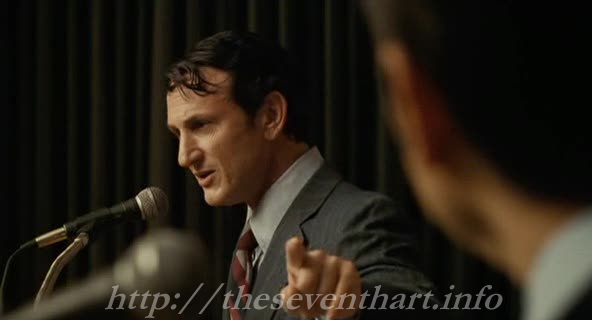
Sean Penn is one of the best actors around. No other actor, save DDL, has been so prolific and so perfect. Every gesture, move and expression that he presents is an indication that the academy has to more than make it up for their gross overlooking of his directorial film Into The Wild (2007). And Sean Penn is the only thing in Milk that actually lives up to all that hype.
Milk depicts the last eight years of Harvey Milk, America’s first “openly gay” statesman. This is a clever decision by Van Sant to spare us of the emotional torture and discrimination that Harvey might have faced in his teens and twenties. He makes the film event driven instead of character driven (which the subject matter might have readily prompted to). He starts off well utilizing newsreels to depict the political drama (without further unnecessary dramatization like Oliver Stone or now, Ron Howard) and shooting only the process of revolution using the most trivial of conversations taking place inside petty buildings. He never highlights Penn’s character and treats him as any other friendly neighbourhood hero. But all is consistent only till the half way. Van Sant is tempted to stage the political rising and breaks out into the open (may be that is the bloody point, but I don’t buy it). Newsreels take a back seat and Van Sant goes Hollywood. The underdog victory, the gruesome and sympathetic murder, the cut to the past, the consequence – we’ve all seen that before. All that one takes back is Penn’s wonderful portrayal of Harvey Milk – a person much more inspiring than the film.
Gus Van Sant has always been an enigma to me. I do not know what people saw in his earlier Palm D’Or winner Elephant (2003) and I do not understand what the hype around Milk is all about. Sean Penn’s masterful performance coupled with Obama’s dream run was perhaps the catalyst required to make emotions soar for the American audience. For me, it remains one of the most disappointing films of the year.
The Buzz: Nominated in Best Actress and Best Original Screenplay categories
The Run: Won the Grand Jury Prize at the Sundance Film Festival
Of Bread And Boundary
There is always something so absorbing while watching independent films. May be it’s because of the very tag of “independent film” alone or may be because they are so honest and true to their tag. I’d like to choose option 2 and Frozen River tells you why. Debutant Courtney Hunt has struck gold here and let’s hope she does not fade away into oblivion to like so many one-hit women directors.
Watching our Hollywood heroes romantically break the law and make a mockery of “the system” for years, Frozen River comes as a surprise. Here we have people so much engulfed by the arms of the law that they never think about the authoritarian nature of the law and the government. Abiding by the law is a part of their morals and comes as a natural instinct. There is no cribbing about what the government has done to them but a genuine desire to survive without deliberately doing “wrong things”. And this is what brings the characters closer to us and evokes a genuine concern for them. The great American dream, that all the immigrants that the film shows sell their bodies for, isn’t much of a dream when you are in it. Like the spiritual enlightenment that foreigners seek in India being a puzzle to us residents, the great American dream is a big joke for the protagonist when she says “they pay so much, to get here?”. There is no limelight on the statement here. There is no pretense of exposing reality. And the film’s triumph lies, here, in accepting the social structure as it is and carrying on life within this structure.
Melissa Leo may be called this year’s Gena Rowlands and reminds us of the veteran too. Her performance is so independent of the camera, the geography and the macrocosm of the society. She is pitted against heavyweights and favorites ranging from Meryl Streep to Kate Winslet at the Oscars. But she can rest assured considering that her performance is one of the best by any actress in recent years.
The Buzz: Nominated in the Best Documentary category
The Run: Werner Herzog’s name
The Grand Inquisition
If there is only one film from 2008 you are allowed to see, it better be Encounters at the End of the World. Not because it is easily the best movie made that year, but because it is so deep in its ideas, so uncompromising in its execution and so shattering in its discoveries. Werner Herzog has been making films for years and his filmography is probably the definitive stop to learn how profound documentaries can be.
As with most of Herzog’s films, Encounters at the end of the world is not just satisfied with the content it gives us. Herzog examines how the film is so important to him as a filmmaker and us as citizens of the earth. But by no way is this a didactic documentary about the “ecocalypse” nor is it about bonding between “fluffy penguins”. Herzog takes up a theme that has always fascinated him – about the nature of nature and the inherent savagery it exhibits. Why is it that some creatures are meant to be slaves and some masters? Why do some beings digress from the rest of their species? Why can’t man leave some part of nature unexplored or mysterious? Is nature like the Schrödinger’s cat that changes when observed? Through a multi-layered approach, Herzog studies how life goes on in the arcane world of Antarctica. There is considerable humour involved when we discover the stories behind the very many faces that have arrived at this edge of the planet. All this only questions us about how much we know about ourselves while we are studying the intelligence of single-celled organisms. “Hearing the universe’s cosmic harmonies through our ears and witnessing the universe’s glory through our eyes” answers one of them.
Encounters is a special film for me as I saw it amidst a Herzog retrospective. The most relentless filmmaker of our times after Godard, Herzog is the best example of how independent a filmmaker can be. Over 60 now, Herzog is everything a traveler, an artist, an adventurer or a roadie could ever hope to be. And Encounters is a gem with the master at the top of his game, as ever.
Cast: Meryl Streep, Philip Seymour Hoffman, Amy Adams, Viola Davis
The Buzz: Nominated in Best Actress, Best Supporting Actor, Best Supporting Actress (2) and Best Adapted Screenplay categories
The Run: Won SAG Award for Best Actress
Triumph Of Faith
When I think of Doubt, the first adjective that springs up in mind is “neat”. Yes, Doubt is a neat and clean film with no “artsy pretensions”, no unnecessary plot points and no unwarranted need to clarify itself. With names such as Meryl Streep, Philip Hoffman and now Amy Adams, the performances were bound to get your attention first and they do indeed.
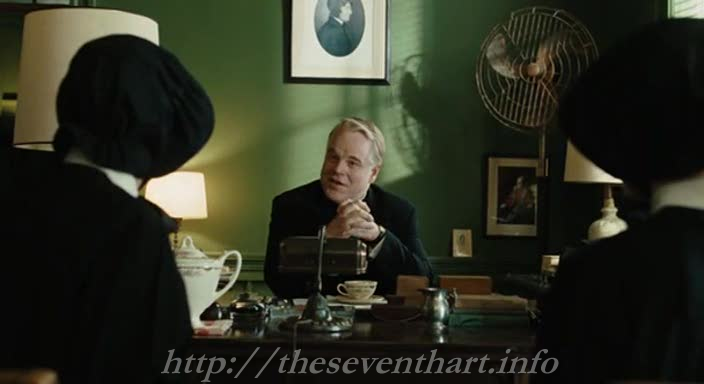
Doubt is set in the post war America at a time when the Beatles were gaining momentum and follows three individuals, all connected to a Christian school/convent. Father Flynn played by Philip Seymour Hoffman is a compassionate individual who believes that the Church must change with the changing times and loosen its strict moral codes. Sister Aloysius (the ever-imposing Meryl Streep) stands diametrically opposite to Flynn and is literally old school. She hates ball point pens and believes that the church should carefully disengage itself from the people it serves. And caught between these two adversarial ideologies is Sister James (a charming Amy Adams), an impressionable novice who struggles to come to terms with what she has learnt about the church and what she sees. Shanley’s astonishing execution deliberately does not implicate anyone in the story nor does it hint that no one is to be blamed. It cleverly places its audience in the shoes of every character, in turns. It bestows the characters’ prejudices on to the audience, never once allowing it to comfortably judge the characters.
Shanley adapted the film from a play and it shows. His attempts to provide that extra dimension to his script fall flat at some places as his metaphors become forced. But heck, no use of cribbing about such negligible issues when a large part of the film just sweeps you off the feet. The Academy has made a grave mistake by excluding it from the best picture category this year. And the same goes for Shanley who has become the Joe Wright of the year.