All Posts


The DC versus Marvel battle continues as Christopher Nolan’s The Dark Knight arrives along the wake of the success of Iron Man (2008). With almost all of the filmdom going gaga over the performance of Heath Ledger even before the film’s release, it was but naturally clever for Warner Brothers to leverage this mass curiosity and fabricate one dark power ride for the audience. The fans had already caught a glimpse of the sober Batman in the previous offering by Nolan in Batman Begins (2005), which changed the whole gravity of the franchise in contrast to the light-hearted prequels by Burton and Schumacher. The film does not disappoint, to say the least.

It is a time when Batman (Christian Bale) has become an integral part of Gotham City’s vocabulary and people have seriously started questioning his position as a saviour of the city. Meanwhile, the crime rate shoots up during the broad daylight. The Joker (Heath Ledger) concocts a series of crimes in the city and “introduces a little chaos into the system”. The district attorney Harvey Dent (Aaron Eckhart), his love interest Rachel (Maggie Gyllenhaal) and the Deputy Commissioner Gordon (Gary Oldman) join hands in order to track down the Joker, but find themselves unable to save their own skins, quite literally. The Joker demands Batman to bare his identity in order to save the people of the city. Though torn by the consequences of the choices, Batman decides to “endure” and hold his sanity.

Harvey says at a dinner that heroes either die or live long enough to see themselves become villains, quoting the corrupt emperors of Rome. Bruce decides that the people of Gotham City should need a superhero no more and it is their faith in their own laws, the citizens that abide them and the spirit of humanity which binds them all that would save them from the escalating crimes. Taking off from this, the film ends on a contemplative yet grand note, a la Yojimbo, as the masked crusader moves on towards the next stage of his life.  This way, the film raises questions about the need for heroes and dependence on a stranger for safety, opposed to the affirmative answer given by Clint Eastwood’s Flags of Our Fathers (2006).

Much has been talked about the performance of Heath Ledger and no review seems to be complete without the perfunctory statement about the posthumous Academy award. Is the performance that good, one is tempted to ask. The answer is a definite “Yo”. Right from the swaying of his tongue as if to widen his grotesque grin to the Jack Nicholson-esque preoccupation with contorting his facial muscles, you sense that such a performance does not come often. The performance would have lost no fraction of its intensity even if Ledger had been there today.

Christopher Nolan knows how to use his technicians and it shows. The brilliant cinematography is evident and needs no elaboration. The cross-cutting among multiple scenes, especially during key events in the film, tests one’s comfort and at the same time makes long scenes seem shorter. And there lies the success of The Dark Knight. No other superhero film could have gotten away with a excruciating runtime of over 150 minutes. This tautness in cutting is what that gives Nolan the breather to delve into the psychological part of the man behind the Batman, keeping the audience hooked all the while to the staple action scenes.

Though not a definitive statement about Hollywood, this year isn’t as productive as the last and there have been no real winners.  Let’s face it, most of the biggies (Read Indiana Jones and Iron Man) have been a letdown and the rest of them were just fillers. The Dark Knight has been the only film holding its head high amidst this slump. And just for that, “Let’s put a smile on that face!”.

Verdict:

Do Bhiga Zamin (1953) (aka Two Acres Of Land)
Bimal Roy
Hindi

“The land is the farmer’s mother. How can I sell my mother?”


DBZPost-war world cinema has been undoubtedly influenced by the Italian realist wave – be it the hard-hitting social commentary by Rosselini and Visconti or the soft delineation of day-to-day struggle by De Sica. After all, it gave birth to India’s greatest filmmaker Satyajit Ray! India, too, was quick to join the bandwagon and as a result, produced some terrific neo-realist films. Although a bit melodramatic, Bimal Roy’s Do Bigha Zamin (1953) may well be called the Indian answer to De Sica’s The Bicycle Thief (1947).

Shambhu (Balraj Sahni, the Indian Humphrey Bogart) is a petty farmer who is happy with his two acres of land, his wife Parvati (Nirupa Roy) and his son Kanhaiya (Rattan Kumar, who would go on to become the star in Raj Kapoor’s Boot Polish (1954)). Things are smooth until his tract of land comes under threat of industrialization – A scheme spearheaded by the zamindar and loan shark of the village Thakur Hamam Singh (Murad), who tricks Shambhu into either paying up a huge amount of money or relinquishing the claim on his land. As a result, he is forced to go to the city with his son and earn the required sum of money, leaving his father and wife behind in the village. Shambhu takes a range of jobs – from a coolie to a rickshaw puller – just in order to earn those few hundred rupees. Kanhaiya, too, tries to lend a helping hand to his father. The rest of the film follows their harsh life in the city of Calcutta, their hopes, struggles and the denouement of their exertions in a very pragmatic and undecorated fashion.

The ending, a poignant and satirical visual assembly, is a bit sorrowful contrary to the popular happy ending concept prevalent during its times. A very daring move by Roy that tests the comfort levels of the audience – an idea that would be given an in-your-face execution later in Clouzot’s The Wages of Fear (1957). The score by Salil Chowdhary, who also provided the story for the film, is low-key and does not manipulate the emotions of the viewers for most part of the movie while the restrained camerawork matches the intensity of its lead.

The consummate screenplay by to-be-legendary director Hrishikesh Mukherjee, who also edited the film, handles many social themes with ease. The issue of internecine twin migration among the rural and urban not only becomes an integral part of the narration, but also serves as an eye opener for the hundreds of villagers who abandon farming in the dream of making it big in the city. Its counterpart, where agrarian lands are scathed, drained and made lifeless in the name of industrialization and development, is also subtly critiqued.

The most positive aspect of the film is the accentuation on upholding of one’s dignity and self esteem in the most perturbing situations. Though Shambhu could have executed his task easily in more ways than one, he opts for the most ethical choice of all – hard work. This universal theme of strong moral stand against a tide of corrupting influences would be seen in hundreds of movies that followed, more famously in Charles Burnett’s Killer of Sheep (1977), which stands at the pinnacle of American Neorealism.

The indivisible nature of the family, all of whose members work towards the fulfillment of a single objective, which is a feature of the traditional Indian society yet universal in application, is a motif in the film. All of the members – Shambhu, his wife, his father and son – intend to alleviate his situation and try to contribute in every way possible. Another theme in the film that is characteristic of the then rural India is the issue of illiteracy among small time farmers that results in their economical exploitation by the money lenders and zamindars. On slight deliberation, it is easy to see that the root of Shambhu’s afflictions is his naiveté towards the legal issues of debt and interest. This issue would be lapped up later by Mehboob Khan’s Oscar nominee Mother India (1957).

Bimal Roy distributed the film abroad in the name “Calcutta – The Cruel City”. Indeed, the shattering image of Shambhu overtaking a horse cart as his customer offers more money for going faster shows how humans and beasts are considered no different in the cities. The film carries a recurring contrast between the warmth of bucolic life and the sheer frigidity of urban living throughout. Shambhu is consistently snubbed and ridiculed when he asks for a job in the city whereas he was offered a Hookah in the village without even asking.

Mahatma Gandhi said that the soul of the nation lies in its villages. What happens if the soul is ripped apart by the existentialism of its body? It is evident that Do Bhiga Zamin has been influenced by and influenced tens of masterful movies spanning different geographical, linguistic, social and temporal backgrounds, but still has a firm foot in its culture. This testifies that cinema knows no barriers and can be ecumenical but at the same time, be uniquely encoded in its culture. To paraphrase film theorist André Bazin – “it is both pre-translated and untranslatable”.

First published in Dear Cinema

La Dolce Vita (1960) (aka The Sweet Life)
Federico Fellini
Italian

“You are the first woman on the first day of creation. You are mother, sister, lover, friend, angel, devil, earth, home”


LDV

Whenever there is a discussion on Fellini’s ultimate masterpiece, the inevitable finalists are 8½ (1963) and La Dolce Vita (1960). Critics are thoroughly polarized on the former with Joseph Bennett (Kenyon Review) even calling it “The worst film made by a major Italian film director”! As for La Dolce Vita, it receives a much warmer response and is hailed as Fellini’s magnum opus almost unanimously. Along with Akira Kurosawa’s phenomenal Yojimbo (1961), it had become the zeitgeist of the 60’s as far as foreign films were considered.

La Dolce Vita takes us through the life of Marcello (Marcello Mastroianni) as a string of seven episodes, all of which start late in the evening and end at dawn the next day. Marcello encounters various situations and people including a one-night stand with lover Maddalena (Anouk Aimée), a fraud congregation revolving around a holy vision, a tantalizing night with an actress Sylvia (Anita Ekberg), a night out with his almost-alien father, a amateurishly done orgy, his relationship with his role model friend Steiner and a high-class party where he is totally out of place yet nobody cares. There is also a brief meeting with a pretty young girl at a beach resort who appears to be the only unsullied entity in the whole film.

Through his various encounters, Marcelo becomes increasingly aware of the vacuous style of his life and the meaninglessness of his existence. He knows he is straddling two worlds – one of reality which, his heart knows is moral, and another raised by his fantasies built around the fake lives of celebrities. Yet, he willingly prefers the latter and opts not to “cross the stream”, unlike Zampano of La Strada (1954) who turns contrite for his brutality. Much credit must go for Mastroianni for handling such a superficial yet complex character with such care. He takes the centre stage in some scenes and sidelines himself in others, all at the right places.

For followers of Fellini, La Dolce Vita may come as quite a big surprise. First off, it does have elements of neo-realism in it. Years after being panned for “betraying his neo-realistic roots”, Fellini came back with this film that included both his fantastic imagery and realistic backdrop. Also, more importantly, the film is devoid of the “Fellini magic” and is wrapped up in an atmosphere of depression and hopelessness, uncharacteristic of Fellini. Additionally, the themes handled in the film are closer in spirit to the works of Michelangelo Antonioni, especially Blowup (1966) and L’Avventura (1960), both of which trace the empty lives of humans in modern times. Considering these anomalies, it is remarkable to note that this quantum leap for Fellini has come immediately after the hugely successful The Nights of Cabiria (1957).

Facts apart, La Dolce Vita till date remains one of the most memorable cinematic journeys ever. The opening sequence, the Jesus statue being flown by a helicopter over the modern day Rome, can make the top five opening sequences any day (8½ can make it too!). The classic scene at the Fontana di Trevi made Anita Ekberg a craze around the world. Not to mention the irritating yet hilarious paparazzi who made it into the big screen for the first time. They not only provided a new word for the language, but also changed the perception of the public about the private lives of the celebrities.

Though a small section of viewers may find the three hour runtime of the film too long, the deluge of restless happenings and the episodic fashion of events keep one hooked irrespective of the age in which one watches the film. La Dolce Vita may not be a good starting point to get acquainted with the works of Fellini, but is an extremely rewarding film in its own right, especially if you are looking for entertainment as well as rumination.

Aguirre, Der Zorn Gottes (1972) (aka Aguirre: The Wrath Of God)
Werner Herzog
German

“I, the wrath of God, will marry my own daughter and with her I’ll found the purest dynasty the earth has ever seen.”


Aguirre

At the time when Rainer Werner Fassbinder was churning out a film in every two or three months, his contemporaries had to struggle to make a mark on the international arena. Things weren’t any better for Werner Herzog, a budding director just two films old, with severe restrictions on the funds and large scale noncompliance from his crew. Yet, after all the distress before and during production, Herzog had survived and how. His third film, Aguirre: the Wrath of God, is seldom left out in any dissection of the German cinema history. Such was the impact of the film on the styles of the existing legends in the business.

The film is set in the sixteenth century when a large group of Spaniards, along with a army of slaves set out into the interiors of Southern America in search of the city of gold – El Dorado. At a point in their journey, the leader of the group decides to send further just a group of men who whose fate would decide the next move of the group. This team, consisting of Ursúa, Aguirre, his daughter, a team of soldiers and other vital persons, set out on limited resources, with no clue about the perils are about to face. Mentalities change, personal interests surpass the mission objective and savagery becomes the backbone of the agenda.

Each character in the journey has its own motivations to undertake it. The locals are fuelled by greed, the soldiers by fear, the priest by his religious ideologies and Aguirre by his own visions and narcissism. Aguirre – a man swallowed by his own ambitions – does not stop at anything and sacrifices everything for the attainment of the ultimate goal, much like Daniel Plainview of There will be Blood (2007) or Howard Hughes of Aviator (2004). Additionally, there are hints to argue that Aguirre believed himself to be placed in a superior race (a la Adolf Hitler) and it was his responsibility to fabricate a new world – a world ruled by the descendants, purely of his blood, even if that means an incestuous relationship with his daughter.

Herzog cleverly lets imagery take the driver’s seat rather than verbalizing the complex diffusion and delirium of the mind. He uses the gorgeously lush yet singularly disturbing jungles and the seemingly clear stream to dictate the inner conflict of the titular character. As the stream grows wild and descends into the thick interiors of the savage forests, Aguirre’s “obsession” escalates into the point of hallucination and even absolute detachment from reality. This innovative style of harnessing landscapes to underscore the characters’ mentality would later be lapped up by Coppola in the extraordinary war epic Apocalypse Now (1979). Redoubling on the power of the imagery, Herzog also makes the film light on plot and dialogues. There is minimal conversation in the film and when it does appear, it makes a tremendous impact.

It is not rare that we see great films being made on a minuscule budget, for it is the fresh minds that bring in new ideas to the industry and are (hence) antonymous to sponsors. Aguirre, too, was made on a very small budget and the devastating filming conditions in the rainforests of Peru did no good. What is, perhaps, more interesting than the film itself is the hilarious and shocking bundle of tales behind its filming that deserves screen appearance, all by itself. Comparisons are unavoidable between Kinski and Aguirre himself and one does wonder how the pair worked for many more films after all that chaos during the shoot. Furthermore, it is stupefying how the team constructed shots such as the final one and the famous “ship on the tree” shot.

Aguirre: the Wrath of God is more of a psychological study of progressive insanity than an event oriented film. Its measured pace and direction induce a kind of trance into the involved viewer that one finds difficult to detach from. Do check out the Americanized version, Apocalypse Now, along with the film if you haven’t. The twin films powerfully complement each other and reveal the influence of internal and external crises on the minds of men.

Metropolis (1927)
Fritz Lang
German

“There can be no understanding between the hand and the brain unless the heart acts as mediator.”


Metropolis

When cinema was in its infancy during the teens and the twenties, many pioneers sought to provide it a definite shape and even assemble various tools and benchmarks for the decades of filmmakers to come. This led to the formation of various cinematic and narrative techniques, characteristic to their country of origin, which were later used by tens of directors from that country. One such trait, expressionism, was extensively used by the filmmakers of Germany such as F. W. Murnau and Fritz Lang. The latter’s magnum opus, Metropolis (1927), is a grand marriage of the expressionist method and unimaginably high ambitions for its time.

Joh Fredersen is a huge industrialist and the owner of the high-tech city of Metropolis. The workers of Metropolis are overworked and are exploited in exchange for small amounts of wages. This pains Freder (Gustav Fröhlich), the son of Fredersen who seeks to get justice for the workers from his father. The workers are on the verge of a revolution, but are held back by the hopes given by Maria (Brigitte Helm). Knowing this, Fredersen plans to use the evil genius of the city, Rotwang (Rudolf Klein-Rogge), and build a humanoid that resembles Maria in order to disorient the workers. However, Rotwang has his own plans and decides to double-cross Fredersen , in the process endangering everyone’s life.

To get an idea of the film’s influence on cinema it is enough to consider that it was the pioneer of the Sci-Fi genre – the one that Hollywood has never grown tired of. Its ideas of science and future have tricked down to every science fiction film made after it – both great and disastrous. Right from the struggle to create a whole new world (Minority Report, Sky Captain and the World of Tomorrow etc.) to the debate of humanity versus artificiality (Blade Runner, A. I. etc.), the impact of the film is omnipresent in the genre. The film’s special effects, needless to mention, were groundbreaking for their time (The Tower of Babel sequence retains its potency to amaze).

Going hand in hand with expressionism, the film is full of black and white characters and only aids the film’s heightened take on fantasy. Its consistent message of compassion for the working class may be a tad tasteless for viewers of today who do not expect any propaganda from the medium. However, this was, perhaps, required for Lang to drive home the point of the film which would otherwise have been deemed meaningless. Faith in the face of apocalypse becomes a joint theme, along with importance of humanity over science, which is supported well by biblical references.

Special mention must be made for the 2002 restoration of the epic which happens to coincide with its 75th anniversary of release. With over 25 percent of the film’s footage lost, the techies at the F. W. Murnau Foundation have done a staggering job of gathering the remaining material, removing the blemishes from each and every frame and providing intertitles summarizing the missing sections. The conventional score by Gottfried Huppertz for the version majestically supports the grandeur of the film.

Metropolis invariably takes the second place when the works of Fritz Lang are discussed and is overpowered by the dynamism and adrenaline of M (1931), immensely influential by itself and unbound by time. When watched today, Metropolis may look very amateurish in the execution of its themes and dated in its techniques, but placing oneself in its age and assessing its influence on future of the medium and the massiveness of its strides, it is ineluctable to call it a classic.

Der Himmel Über Berlin (1987) (aka Wings Of Desire)
Wim Wenders
Germany

“When the child was a child, it didn’t know that it was a child, everything was soulful, and all souls were one…


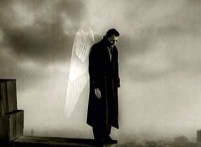
Wings of Desire (1987) takes off with a dedication to cinema’s three great stalwarts – Truffaut, Ozu and Tarkovsky. Indeed, elements of all the three directors’ works are present in the film. However, Wim Wender’s decidedly mood piece, released months after the Tarkovsky’s demise, is a film that is to be felt and not seen, much like the latter’s films. To quote Terrence Malick’s Days of Heaven (1978) – “Your eyes, your ears, your senses, will be overwhelmed”.

Damiel (Bruno Ganz) and Cassiel (Otto Sander) are two angels living in Berlin whose mission is to “assemble, testify and preserve” reality. They keep documenting the happenings in the city, going through the minds of its citizens in the process. Damiel meets a trapeze artist (Solveig Dommartin) and falls in love with her. After the suggestion from an ex-angel Peter Falk (as himself), he decides to shed his wings. Seemingly plotless and enigmatic, Wings of Desire makes a lasting impact on the viewers who watch it using their heart rather than their brains.

Damiel and Marion are a single soul separated by the ethereal skies (similar to Berlin itself where brethren of a single blood are divided by the ideological wall and humans have become no more than one-man islands). Both of them go through the same trauma. Both are strangers in spite of being around for a long time. Both have grown emotionless and are desperate to experience true feelings. Damiel acts as if he is one among the earthlings whereas Marion plays the part of an angel in the circus. Damiel wants to shed his omniscience, immortality and super-mobility in exchange for the mystery, fallibility and restrictions of human life. Damiel’s pining for petty human experiences holds quite an adversarial relationship with Cassiel who quietly and helplessly observes human suffering and even feels a bit hostile at the “conversion”.

The angels in the film represent everything that is both ancient and nascent, much like the city itself, which is a juxtaposition of culturally iconic structures (the Berlin Library, the Wall) and vignettes of massive reconstruction and renaissance (Nick Cave and the Bad Seeds, its skyscrapers). They have been around even before the appearance of the first creature on the planet, yet are mere infants, unable to differentiate between the emotional and sensual shades and colours. Like an infant, Damiel sees plain monochrome – he cannot discriminate between various souls (“everything was soulful, and all souls were one” ). But as the child grows up and as Damiel sheds his wings, they are no longer cherubic and recognize the harsh colours of humanity and become skillful (and even wily) enough to look at various hues and dimensions within people.

Cinematography is easily the first thing one notices and veteran Henri Alekan ensures that the camera velocity is neither too slow to contradict the dynamics of the scenes or too fast to prevent one from sinking into the ambience. The sepia tinged monochrome immediately enhances the already mellifluous verbal poetry. The film’s imagery and sound shuttle between subjective and objective realities, aptly sustaining the heavenly cinematic journey. The editing also suitably employs POV shots to compare and contrast the lives of people above and below the skies of Berlin. Bruno Ganz, who would ironically deliver the chilling performance as Hitler in The Downfall (2004), is out of the world, literally, and his childlike innocence emphatically emphasizes his emotions.

Wings of Desire is more than a yearning for preservation of humanity. It is a celebration of it. It is a celebration of sensitivity – of rubbing your hands during a cold winter day, of feeling pain due to a wound. It is a celebration of perceptibility – of sipping hot coffee while reading newspaper, of the occasional amusement at sight of red blood. It is a celebration of human life, its mortality, its diversity and its vulnerability. Each of its character is a poem, each image, a verse and each sound, a melody. Strongly recommended for anyone who loves mankind, reality and life.

(Spoilers ahead)

Iranian cinema was first put on the map when the films of Abbas Kiarostami caught the attention of the west. The avant-garde style and the peculiar yet totally fresh concept of “plotlessness” impressed the critics, invariably, throughout the world. After Kiarostami had made way for Iranian filmmakers to venture into the international scenario, it was up to the new generation to develop a stronghold and reserve a unique place for the cinema of their country without mimicking their forerunner. Quite a few of them have made it big, all in their own styles.

Jafar Panahi’s eye for the social issues and status of women in Iran, Bahman Ghobadi’s penchant for the portrayal of the fate of the Kurds and Mohsen Makhmalbaf’s authority on depiction of proletarian life still remain unchallenged. Majid Majidi, taking an altogether different path, too has made his mark on celluloid. His films remain detached from the society and hence radically different from his contemporaries. These films, nevertheless, make an equally deep impact on the viewers, but in a very different sense. The following passages attempt to examine few of the themes and motifs employed in four of his major works – The Father (1996), Children of Heaven (1997), Colour of Paradise (1999) and Baran (2001).

The most evident facet in Majid Majidi’s works is the firm bonding of the central character with his family, especially with his father. Though Mohammad’s relation with his father does not seem to be all rosy, Colour of Paradise is essentially about their eventual bonding. Memar acts as a surrogate father for the orphaned Lateef in Baran and supports him as a real father does. Needless to say, Pedar is all about the father-son relationship. Furthermore, his works also track the sacrifices his characters make for their beloved ones. Mehrollah goes to the city for earning money for his sisters and mother, Ali is determined to win his sister the shoes he promised even if it means wounding his feet and Lateef literally loses his identity to get money for Baran. The exception of Mohammad shows his inability to mend his family’s situation and tackle his own suffering, eventually relying on God to do the needful. However, his love for his family is unvanquished and unadulterated.

Running becomes an integral motif in Majidi’s films. The characters are frequently seen running for life and sometimes running away running away from it. These images are invariably captured by a pan shot, taking the audience along with the character and thereby placing them in the character’s shoes. Additionally, running also becomes the major part in the plot of Children of Heaven with Ali needing to come third in a marathon to win a pair of sneakers.

The protagonists in Majidi’s films are often seen connecting to the outside world and the nature in their moments of solitude and depression. Be it Lateef (Baran) feeding the pigeons, Mohammad (Colour of Paradise) caressing the birds of the nest or Ali (Children of Heaven) being “consoled” by the fishes of the pond (incidentally, the gold fish is a sign of good omen in Iran), the agonists are in a dire need to be heard and soothed. Again, the exception of Mehrollah (The Father), who has no emotional outlet into nature or to his friend, substantiates the closed and inaccessible nature of his mind.

Yet another motif in the four films is the image of a flowing stream of water. The stream, in various manifestations ranging from sleek to tumultuous, represents the flow of life and carries along with it the disappointments and lost opportunities of the characters’ lives. The central characters are shown making contacts with the stream flowing at various rates that reflect the emotional turbulence of the characters themselves.

Another noticeable aspect about the movies of Majidi is their poetic endings that carry with them a sense of resurrection – destruction of the old and beloved and the arrival of a new one. Mehrollah accepts a new father, Lateef notices the departure of one Baran (rain) and the onset of another, Mohammad is free from his paternal alienation and is able to feel God at the end of his fingers and Ali spoils his shoes as he gets a new pair. This kind of visual poetry overflows in Baran.

Of course, this list is non-exhaustive and Majidi’s films carry many more themes and symbols than specified here. For example, the images of Roti (Bread) and tea appear almost consistently. Though no explicit meaning can be assigned to this leitmotif, it does give a sense of realism and struggle for daily survival. Also, the close up of hands doing various activities that define the key idea of the film – hands trying to connect to loved ones, hands unsuccessful at the same and hands attempting to restore lost happiness – provide the right tone for the emphasis of the central ideas sans verbalization.

In a country whose political and artistic barriers are just opening up to the world, Majidi has carved a niche for himself and his films without offending the nation’s sentiments and ideologies or getting into controversies. More than anything, these recurring elements of visual composition and mellifluous poetry affirm Majidi’s position as a true cinematic auteur and have made him the most respected Iranian after Kiarostami and Makhmalbaf.

Le Salaire De La Peur (1953) (aka The Wages Of Fear)
Henri-Georges Clouzot
French

“When someone else is driving, I’m scared.


After his back to back successes with Le Salaire de la Peur (1953) and Les Diaboliques (1955), Henri-Georges Clouzot was considered a leading contender for the throne of “The Master of Suspense” and a force Hitchcock had to reckon with. Incidentally, Hitchcock himself was hot under the collar for having lost the filming rights of the above two films to Clouzot who had delivered them big time. Though not as prolific or consistent as Hitch, Clouzot is nevertheless placed in the same league as the former. His famous pair of films has spawned tens of remakes, both faithful and revamped. The Wages of Fear may arguably be the more potent of the two by a miniscule margin.

(Spoiler Alert)

Mario, Jo, Bimba and Luigi are the temporary residents of Las Piedras, a small town in South American. Each of them has a need to earn a tidy sum of money in a very short amount of time. Just then, they find out that one of the oil fields of Southern Oil Company (SOC), the drilling giant which owns a number of fields in the country, is on fire and two truckloads of nitroglycerine are required to put them out. However, a tiny jerk to these trucks could blow them to nonexistence. These four people volunteer to drive the truck to the oil field for a decent sum of money. The rest of the film follows their nasty ride to hell and beyond, literally.

No other film ending has been as much debated upon as the ending of The Wages of Fear. Clouzot, clearly making a statement against the Hollywood endings, did the unthinkable and totally shattered the perception about films of the audience then. Additionally, the ending sequence also raises questions about death, fate and their inevitability, that reach out to everyone irrespective of their age, situation or morality. Till date, the ending elicits mixed reactions, ranging from brilliant to silly.

In Richard Schickel’s documentary The Men Who Made the Movies: Alfred Hitchcock (1973), Hitchcock puts forth his idea of suspense as thus: “If two people are talking across a table and a bomb suddenly explodes from under it, the audience is excited for about 10 seconds. But if in the same situation, if you tell the audience that there is a bomb that will go in exactly 5 minutes, viewers are pushed the edge of their seats for the whole 5 minutes and will be praying for the men to get out of that place. You can’t make the bomb explode after that, for it will disrupt the comfort level of the audience”.

This is exactly the style used in The Wages of Fear too. Only that Clouzot does not care about the last clause. The best part about this theory regarding on-screen suspense is that it can never become obsolete. A bomb threat is as gripping now as 50 years earlier. This, perhaps, is the major reason for the slew of similar films from across the world. The audience knows what is going to happen in the next few minutes, but still finds the happenings irresistible. Don’t forget to check out Andrei Tarkovsky’s student film There Will Be No Leave Today (1959) for a different take on the same structure.

Clearly, the most prominent theme in the film is the capitalist exploitation and misuse of power over the developing and third world countries. The Southern Oil Company (SOC, obviously, representing the US oil giant) in the film is portrayed as a materialistic and ruthless firm that pays for the fear and lives of the men in terms of money. This provided the west yet another reason to boo down the film. However, the film had already been recognized as a classic and Clouzot became yet another French director to look out for.

KFPTraditionally, there have been two paths for animation filmmakers. One is to make the films as close to reality as possible. That is the path taken by Pixar and Sony Animation, which try to push animation technology to new extremes and squeeze out every bit of processing power and skill set they have. The other is the conventional path that tries to realize the creators’ most bizarre and outlandish fantasies and attempts to emulate the peaks attained by Disney and Miyazaki. The second path is what companies like Dreamworks Animation have adopted and, to an extent, succeeded. Their latest offering, Kung Fu Panda is a clever idea, but inefficiently harnessed.

Po (Jack Black) is a chubby panda working in a Chinese restaurant but dreams of making it big as a Kung Fu hero. He idolizes the biggest Kung Fu heroes of the village, namely, Tigress, Snake, Monkey, Mantis and Crane (Angelina Jolie, Lucy Liu, Jackie Chan, Seth Rogen and David Cross respectively). He, then, hears about the induction of the Dragon Master who will be selected by Master Oogway himself. By seemingly sheer luck (or bad luck), Po gets selected as the Dragon Master who is to protect the village from the claws of Tai Lung (Ian McShane). In his mission he is assisted by Master Shifu (Hoffman, unidentifiable) who first seeks to drive out Po, but turns over a new leaf after a while.

Po is as cute as an animation character can get, but it is a pity that the creators have not utilized Jack Black fully for Po and vice versa. A bit more dedicated reconstruction could have not only guaranteed a great character, but also a huge brand value for the character which could then be merchandised well. With a enviable cast for the Furious five, it is but natural to expect some big role for them. Unfortunately, the film spends most of its time bringing out Po’s vulnerability and innocence and hence, the characters are merely reduced to a bunch of creatures you will fascinate staring at a zoo. However, Shifu’s small stature (a red panda) and Hoffman’s efforts suit the etching of his character and makes his presence worthwhile. The depiction of Tai Lung is anything but novel.

One of the minor commendable points of the film is the choice of its fauna for the images of the characters. The monochromatic Po is totally out of place in the colourful world of Valley of Peace, the slow and steady tortoise is the intellectual master of the palace, subordinated by the relatively rash, hare-like Shifu and a black and white polar creature, Tai Lung is pitted against another. However, the writers are to blame for the biggest blow for the film, the utterly stale and predictable plot that has become a favorite of critics to pan down. No sir, we did not expect this from the creators of Shrek (2001) and Madagascar (2005).

Now there must be something in the film to counterbalance the wound created by the plot and there is. The fabulously rendered world of Valley of Peace and Chinese architecture, never once pretending to be realistic, vibrant and daring use of colours and Kung Fu action that can substitute many Hong Kong flicks are definitely noteworthy. The tone of imagery, which is now fast becoming the trademark of Dreamworks, is thankfully retained and this paves way for the future flicks from Dreamworks to add girth to the plot. Finally, there is a huge opportunity for a sequel with a lot of spaces to be filled from the first one. Hmm… I guess the image of the Furious five can be reinstated there.

Unlike Madagascar, which provided visual treat for the toddlers and also retained the adults with its hilarious one-liners, Kung Fu Panda is clearly for the children and hence focuses more on slapstick and juvenile verbal humour. This, without doubt, will entice the young ones, but grown ups (cinematically, that is) beware. With Madagascar’s sequel to hit in a few weeks, it is a good time for Dreamworks to recapture the adult market it may have lost with Kung Fu Panda.

Verdict:

Jaane Tu Ya Jaane NaNo, this is not a review of Nagesh Kukunoor’s box office bomb Bombay To Bangkok (2007) but of debutant director Abbas Tyrewala’s Jaane Tu Ya Jaane Na. Even before the film had got completed, the director had called it a typical Bollywood love story complete with its own quota of songs, fights and even the quintessential over-the-top airport climax. With that kind of a statement from a man who has some very successful scripts behind him, you can’t help but expect the film’s USP to be something completely fresh.

(Spoilers Ahead, yeah right!)

Jai (Imran Khan as a peace loving, meek yet mature guy) and Aditi (Genelia D’Souza in a zealous role) are two very close friends and are part of a small gang of youngsters who have their own share of pubbing, partying, cussing and fooling around. After their college gets over, they try to hook each other up with an apt partner. After they manage to find partners that they think are ideal, they slowly understand that this is not what they desired for. It is not soon when they realize that they have been with their best match all this time. As they struggle to reveal their love to each other, Aditi gets ready to leave for the USA. It is up to Jai to stop her at the airport and reveal his true love to her. Sounds familiar?

(End of already known spoilers)

The film’s almost effortless progress reminds us of the deluge of Korean rom-coms and the screwball comedies of the Clark Gable era. But that just shows how the international cultures have seeped into our own. Right from the generous dose of swearwords to the now-hackneyed dance floors, the movie would look totally outlandish for the village and town dwellers. The best part about the screenplay is that you know you have seen it all a thousand times, but are still attracted towards the film for some reason. That is where the director scores.

What separates Jaane Tu Ya Jaane Na from its predecessors is its grey treatment of characters, actions and emotions. There are no extraordinary monologues, fights, melodrama or reactions in the film. Unlike the bickering leads of yesteryear, Jai and Aditi realize each others’ persona and are mature enough to not quarrel with them for that. There is not one false note in the characterization of the cast and their relationships, with the possible exception of Sushant, Aditi’s fiancé, who is handled with a pinch of coldness. Parents who have closed in on the so-called generation gap, a brother who is more sensible than he looks, a protagonist who thinks everything has a non-violent solution, the characters ring true and are omnipresent in the cities. Be it the sibling relationship between Aditi and Amit or the miserable one between Meghna’s parents, there is honesty written all over.

Abbas Tyrewala seems to know that his target audience is miniscule and is unperturbed by that. He has deliberately let some things go over the head of the audience outside his reach and does not care about that. He is quite sure that the young metropolitan crowd, at whom the film is aimed at, will find a page out of their own lives in the film. This confidence is, perhaps, the director’s biggest success in the film. Imran Khan manages well with his small set of expressions and is overpowered by the more experienced Genelia who seems tailored for the role. Arbaaz and Sohail Khan steal the show in the few scenes they are in and the same can be said about veterans Paresh Rawal and Nasseeruddin Shah.

So when do you know it’s love? You do not realize the importance of a commonplace object until it becomes not-so-common. The film handles the same issue handled in Mani Ratnam’s successful flick Alaipayuthey (2000), but gives a totally urban look to the concept. What is more interesting than the film itself is the question that what a confident and clear writer and director, such as Abbas Tyrewala, is going to do in the future where not only would he have the funds to experiment, but also the opportunity to reach a universal crowd. Guess only time will tell. As for now, enjoy this fresh lease of energy amidst stale and pretentious multi-starrers while it lasts in theatres.

Verdict:

« Previous PageNext Page »