
Though Andrei Tarkovsky’s canon consisted of only seven features, three student films, one documentary and a couple of stage plays and there were more unrealized projects than filmed ones, each of the ideas that were completed were gems and remain unparalleled to date. Looking back, each one seems hand picked and “sculpted” second by second and without doubt, the experience just improves with multiple viewings. Of course, Tarkovsky means different things to different people and the section just attempts to give a universal outline of the projects.
Andrei Tarkovsky and his classmates Alexander Gordon and Marika Beiku, on the suggestion of the former, decided to collaborate and adapt the Ernest Hemingway short story. The Killers (1956) is Tarkovsky’s first documented work and is, for most of the runtime, un-Tarkovskian. The quarter hour long thriller consists of three scenes with the first and the last scenes directed by Tarkovsky. The film has a pretty conventional execution and carries a film noir feel with it. Its open ended nature and stress on off-screen events would ring a bell for one who has watched Ivan’s Childhood before. Apparently, the film was praised by Tarkovsky’s professor at VGIK.
Tarkovsky’s next collaboration with Alexander Gordon at the VGIK, There Will Be No Leave Today (1958), is larger in scope and vision than its short predecessor. Written on the lines of the Clouzot classic The Wages of Fear (1953), the film revolves around a group of soldiers who try to transport a very sensitive bunch of weapons to an explosion area. The thrill never wanes even for a minute and screenplay is kept as taut as possible. This was possibly an influence of the very many thrillers from France and the USA at that time and Tarkovsky’s style was yet to be revealed to the world.
The Steamroller and the Violin (1959) would be Tarkovsky’s first independent venture and was presented as his graduation film at the VGIK. The Steamroller and the Violin does show some characteristics of a Tarkovsky film, especially the emphasis on the seclusion of the artist from the society and the subsequent bonding of the Artist and the Worker. The film’s use of music, however, seems to be inspired by the Russian directors (Kalatazov et al.) of that time with tones of opera standing out. Also, the restriction on the colour palette, which would become stricter with subsequent films, is let loose and the film poses a childlike vivacity, much like the protagonist himself. The film won the best film at the New York Student’s film festival in 1961.
Tarkovsky’s first commercial feature, Ivan’s Childhood (1962), would be the starting of depiction of major autobiographical elements. Tarkovsky himself had spent a large part of childhood at the country side due to the war and he felt that many children who had such wonderful childhood were forced to witness the cruelty of the war. Pregnant with typically Tarkovskian imagery, the film remains one of the best anti-war films till date. The elements of nature depicted on monochrome are just perfect for the somber atmosphere it builds. Rather than showing the direct impact of violence on their minds, Ivan’s Childhood consists of the titular character’s life in between missions interspersed with dreams of the past. Ivan’s Childhood won the Golden Lion at the Venice film festival and would be his last film to win an award without any haggle.
1966 would witness Tarkovsky’s magnum opus, Andrei Rublev. Ingmar Bergman called it the best film he had seen till then and the world hailed it unanimously as a masterpiece of epic proportions. Indeed, Andrei Rublev is massive in its vision and execution and one does not hesitate to place it in the same league as Ran (1985), Spartacus (1960) and the like. Though set in the medieval era of Russia, Andrei Rublev is very much a contemporary film and serves as a commentary on art, the artist, his duty and his obstacles. Co-scripted by director Andrei Konchalovsky, the film shows that a true artist should not merely practice his art, but he should find faith in his work, connect with the natural and the supernatural and hence bridge them both with compassion. Tarkovsky favorite, Anatoly Solonitsyn plays the title character with perfection. Clearly, the film alludes to Tarkovsky’s own struggles in the Soviet that would exacerbate in the following years.
Dubbed as the Soviet reply to Kubrick’s 2001: A Space Odyssey (1968), Tarkovsky’s Solaris (1972) is much more human and much less of a science fiction than the former. Tarkovsky’s spat with co-writers continued for a third time, this time the reason being his departure from hardcore sci-fi of the book to the version he completed. Tarkovsky distorts time, space and reality like never before and disorients the viewer form any trace of rational explanation, perhaps mirroring the very nature of human memory. He shows how our own memories, past and experiences are inescapable and become an integral part of our own personality. True to its theory, Tarkovsky’s trauma of a fractured personal life directly shows in the relation between Kelvin and Hari. Tarkovsky describes how human love is still a complex phenomenon and even in this advanced age of science. The film also argues that knowledge should be based on morality and the fragility of both inner and outer nature must be respected.
Tarkovsky’s next feature Mirror (1974) is by far his most personal work and the most enigmatic too. Most of the events, locations and characters in the film are autobiographical and Tarkovsky makes a very personal mark on screen with them. His pining for lost beauty and innocence of childhood is evident. Repeatedly, Alexei tries to enter his dream as if to revive the past. He also sees the image of his mother and the absence of his father. This is contrasted with Alexei’s constrained relationship with his wife, who incidentally resembles his mother and his negligence towards his son. The most striking aspect of mirror is its use of past and historical events in the form of newsreels, perhaps suggesting that history, like the past, is ineluctable and forms a part of us. Through undifferentiated images of the past and the present, Tarkovsky blurs the line between dreams and reality and yet provides a stark contrast between the two. This poem of a film is hailed by many as his best work.
Stalker (1979) is arguably Tarkovsky’s most accessible work as far as its themes are concerned. The film takes us into the journey of a writer, a professor and a stalker into the Zone where one can realize one’s innermost wishes. The journey is that of discovery of faith with the professor representing the rational brain, the writer representing the intuitive heart and the stalker himself representing the doubting soul. The Zone, much like the Ocean of Solaris, is a reason-defying place that acts as the human mind and “changes by the minute”. The film’s amazing production design captures the spiritual decay in modern world effectively with its narrow colour range. Stalker, in more than one way, marks Tarkovsky’s transition from his earlier works to his trademark style that would be visible in the subsequent years. First off, Tarkovsky’s use of extremely long shots shows its roots here. Also, the quest for faith in a rotting post-modern world, that was also Tarkovsky’s own, would go on to become the primary theme in his next films.
During his journey to Italy in the early eighties, Tarkovsky shot his only documentary, Voyage in Time (1980), in collaboration with writer Tonino Guerra. Though not deliberately filmed for that purpose, Voyage in Time serves well as a companion piece to Tarkovsky’s next film Nostalgia. Not only does one get a partial insight into the mind of one of the most mysterious directors, but also gets to know how life and film was not much different for the director, the advice that he gives in the film for budding filmmakers The measured style of Tarkovsky is retained and one can see how Tarkovsky uses his experience and memories to reconstruct, almost exactly, the required situations and locations into his films. Voyage in Time lets us know the directors that Tarkovsky considered great, with the film never once feeling like a plain interview.
If one were to pick one film from Tarkovsky’s filmography that embodies all of his styles, ideologies and trademarks, it would most definitely be Nostalgia (1983). A deeply multi-layered film that conveys much more upon contemplation. The film follows, ironically, a translator Gorchakov who is unable to relate to his new country and yearns for return to past. He fails his Italian assistant who craves for his attention and eventually splits. Once again, Tarkovsky places his protagonist between inner and external conflicts. Gorchakov struggles to abolish internal and external boundaries in order to come to peace with himself. He finds faith with the help of Domenico, an outcast who asks the former to carry a candle across the pool in order to save the world. Nostalgia mirrors the director’s own struggles to believe and come to terms with his exile to Italy. The 9 minute shot of Gorchakov carrying the candle across is not just a revelation for the character but the viewer himself.
In 1986, Tarkovsky went on to make what would become a befitting end to a majestic career. The Sacrifice is out and away the most verbose of Tarkovsky’s films. Perhaps Tarkovsky, a person who had been consistently accused of being inarticulate and self-indulgent, foresaw what was to come and tried to express what he wanted to as clearly as possible. Taking off from Gorchakov’s act of faith in Nostalgia, The Sacrifice demands Alexander to make a large sacrifice in exchange for restoration of peace within himself and outside. Shot beautifully by Bergman favorite Sven Nykvist (both of whom passed away recently), Sacrifice takes Tarkovsky’s theory of “time-sculpting” to new heights with the film comprising of just 115 shots. The film is dedicated to Tarkovsky’s son, who wasn’t allowed to return to his father in exile, and like Bergman’s The Silence (1963), The Sacrifice hopes that sanity and belief will be restored by the new generation.
Tarkovsky died in the December of 1986 months after the premiere of The Sacrifice. In retrospection, it looks as if he had known his end (a psychic once told him that he would make no more than 7 films) and had it transformed on screen. With his demise, a whole new chapter in the history of Soviet cinema came to an end. His legacy was passed on to budding directors like Alexander Sokurov, who has carved a niche for himself in world cinema. Through films of directors like Kiarostami and Sokurov, one is time and again reminded how massive Tarkovsky’s contribution to cinema was and how, in his own words, “There’s no death, there is immortality. Time is one and undivided.”
 Whenever Kubrick’s canon of films is discussed, this quiet little early gem is invariably lost out amidst the mammoths like 2001: A Space Odyssey (1968), and A Clockwork Orange (1971). But very much in the same way the latter films defined cinema of their decades, The Killing (1956) forms a vital film of the 50’s Hollywood.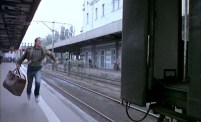


 My discovery of Tarkovsky’s first film was like a miracle. Suddenly, I found myself standing at the door of a room the keys of which had, until then, never been given to me. It was a room I had always wanted to enter and where he was moving freely and fully at ease. I felt encouraged and stimulated: someone was expressing what I had always wanted to say without knowing how. Tarkovsky is for me the greatest, the one who invented a new language, true to the nature of film, as it captures life as a reflection, life as a dream.”



 The slew of movies in Tamil cinema based on villages stopped with the late eighties as cities became the prime audience of the filmmakers. Though infinitely many stories still lie in the villages waiting to be told, not many movies from the nineties and the new century have tapped it. One film that has indeed done it, Kamal Haasan’s Thevar Magan (1992), stands out as a vital milestone in the history of Tamil Cinema.

