CHAPTER 3: LOSS OF A BELOVED
 August 16, Calcutta. Saket arrives at the railway station and takes a taxi to his house. He is surprised to see what is going on around: A large scale riot with masses of people running here and there. He also sees Altaf, his tailor among the Muslim rioters. Altaf recognizes Saket and makes way for the taxi to go. Upon inquiry, Saket finds out that the riots are indeed due to the partition claim by the Muslims of Calcutta.
The taxi manages to get out of the riot and reaches the calm and serene surroundings of Saket’s apartments. Saket asks the guard to bring his luggage up as he goes to his floor via the lift. He finds that many shops had to close because of the riot. He reaches his flat and plays a prank on Aparna (Rani Mukherjee) who gets frightened and takes up a pistol. When Saket reveals who it is, she gives his a slap and tells him that there is a telegram for him. He asks her casually whether it says that his father is ill or if he is no more. She says that it is worse than that and reads out the telegram. We find out that his father has called him back and has asked Saket to marry a girl they have chosen for him. It is here that we find that Saket is cut off from his parents and has left them for good. He has not even mentioned about Aparna and his later life. On Aparna’s apprehension, Saket promises that he will never marry another girl.
 He kisses her as they both lean on the piano as Saket plays it. This is the second sight of the piano in the film. The image of the piano plays a vital part in describing Saket and will be recurrent in the story. A moment later, both of them are seen playing the piano together. They play it with such care and love. Their music is mellifluous and in harmony with each other. They make love as the melodious music proceeds.
 Saket gets up from the bed and presents her the Thirumangalyam, the holy necklace that he had bought for her. Upon asking for a Bengali styled marriage, Saket takes the red ink pen from the table and puts a mark on her forehead. When Saket asks for reciprocation, Aparna takes out one of her Mettis (Toe rings) and slips it into his finger. The toe ring is supposed to be a symbol of marriage and the well being of the husband. The toe ring forms a vital part of the narrative and will occur regularly. Saket asks for something to eat, Aparna indicates that the shops are closed and there is only bread and butter in the house. He asks her to get ready to go to the market to get something to eat for which she replies that she is scared to go out. Saket ridicules her and starts for the market.
It should be noted here that the film has heavy overtones of religion, especially Hinduism and a lot of parallels are drawn between Saket’s life and the Hindu culture. These will be denoted whenever they appear. Hindu tradition mentions for vital stages of a man’s life – Balya (Childhood), Grihasta (Marital life), Vanaprastha (Exile/alienation) and Sanyasa (Relinquishing worldly things for salvation). Saket has just entered the second stage, Grihasta and is in the marital bliss. But he is unaware that this stage is a short lived one.
 Saket takes his bike and sets out for the market. In some street he notices a young Sikh girl being chased by a mob. He manages to get the girl on his bike and takes her home. He slowly learns that the riots have worsened and it is unsafe to be in the streets. He returns to his apartments and finds out that something is wrong. He sees a corpse on the ground floor and runs to his flat. He finds that a group of men, led by Altaf are trying to break in into his apartment. Saket is held down as Altaf breaks in through the window. Saket tries to resist but is hurt. He is pushed harshly on the piano and lands on his face. He vents his anger on the piano and pounds his face on it. The music this time is anything but sweet. The somber and even a bit creepy tone reflects his state of distress. He is able to hear the cries of Aparna – “Ram, Ram”. He somehow coaxes one of the rioters to set him free and manages to kill the latter by pushing him out of the balcony. He reloads his pistol to shoot the rioters but is too late. Everyone has left. He rushed towards Aparna to check. She is found raped and her throat slit. Saket Ram is helpless and cannot even call the ambulance. Blood sprouts out of her throat as Saket tries to close it. Aparna passes away. Saket is mad. He cries, but it is of no use. He looks out at one of the dead rioters and with a shriek of anger he starts his rampage for revenge. This would mark his entering into the Vanaprastha from Grihasta. Saket would be exiling his true self to avenge his wife.
Go To Chapter
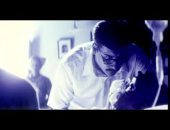 The doctor asks why the room is not lit. Ram replies that he has never seen his grandfather in the open or even in light upon which the doctor remarks Gandhiji’s habit of keeping the lights on even during his sleep. Ram is quick to reply that his grandfather has always liked darkness and he is no Mahatma. However, he is a good man. The small conversation sets up the contrast between the grandfather and Mahatma Gandhi which is to be observed during the rest of the movie. As the conversation proceeds, it is revealed that Ram is a celebrated writer and is very close to his grandfather. It is also found that the grandfather is of unstable mind and hence isolated. Nobody except his wife has seen him in his normal state. He has not opened himself to anyone except his grandson, that too in the form of stories which the latter regards no more than figments of imagination. The doctor picks up one of the three monkey skulls placed on the adjacent table in front of “Gandhiji’s three monkeys” and asks Ram about it. The dark light, that is suggestive of his exclusion from the outside world and his hidden past, slowly starts getting adulterated with bright light as he recounts his past. This bright light falls on the old man’s face as it is revealed that he was an archeologist at the Mohanjo-Daro ruins. The image of the dying man’s face is juxtaposed with that of a skull at an excavation site indicating the meeting point of his future and past.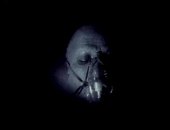

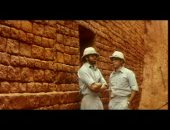 The year is 1946. An excavation site. Saket Ram (Kamal Haasan) and Amjad Khan (Shah Rukh Khan) are digging through the layers of the past. Eventually, Saket will be excavating his own true self, mirroring his profession, revealing many hitherto hidden layers within him. Saket is clean shaven and wears spectacles whereas Amjad is bearded. General Wheeler calls Saket from up above and asks him to pack up. Upon asking the reason, Wheeler says it is because of the communal riots as a result of the ongoing discussion about the partition of the country. Both are turned off but decide not to lose their temper as Mr. Wheeler shouts “It’s pack up time”. It is as though communal riots have become a commonplace and it is no news that a new one has broken out. Amjad points out that the Indus Valley civilization was miles ahead of the present one for they had much advanced thoughts but never had to fight about God and religion. So both decide to call it a day and head towards Karachi.
 This reply from Amjad is not just indicative about their college but the country itself. This reference of India as an “alternate mother” occurs throughout the film. This piece of conversation will ring loud during the final parts of the movie and will be reminded there. Just then, a call comes from Calcutta from Saket’s wife Aparna. Amjad and Lalwani fool around with the phone and even manage to tell a few lies about Saket to Aparna, all in good spirits. After the call, the three booze and start celebrating. The scene basically establishes the affluence and friendship of the three men from different religious and geographical backgrounds. Saket plays the piano for the first time in the film. A song “Ramar aanalum, Babur aanalum…” ensues which tells about the importance of friendship over religion. A lot of photographs are taken too.
 The concept of faithlessness in today’s world has been filmed by a number of directors around the world in various manifestations. But none have come close to Bergman’s “faith trilogy” (save Andrei Tarkovsky, who Bergman himself considered unparalleled). The final part of the trilogy Tystnaden (1963) is perhaps the most difficult and coldest of the three films. The film itself was (in)famous for its graphic images that were unacceptable in that period of time.
 Michaelangelo Antonioni‘s films have always tried to establish the growing distance between humans and the alienation of self in the modern society. Though L’Avventura (1960) is his most intense meditation of that concept, it is measured in its pace and may not entice viewers of the newer generation. Ironically, his Blowup (1966) has more lovers now than it had during its time! Unlike its contemporaries which age with time, Blowup‘s appeal seems to grow with the years.


 Pedro Almodóvar is nothing short of an icon for feminist cinema. The way how he uses his female characters, their position and responsibility in society, their independence in making decisions – all indicate his support for the equality of the sexes. Todo Sobre Mi Madre (1999) (as mentioned in the titles) is dedicated to all the women in the world and marks a very personal chapter in the canon of Almodóvar.
 Finally here. Passing through its quota of controversies, production delay and legal attacks, Aascar Films’ Dasavatharam has finally made it to its destination. Dubbed as the most expensive movie made in India, the film has been in the making for over two years. If it was Sivaji – The Boss for 2007, it is very much Dasavatharam for this year. Apparently, the time between consecutive movies of Kamal Haasan has been larger than that of Superstar Rajnikanth‘s. The promos have been, surprisingly (for a Kamal movie), extremely low key. So, have the team’s efforts paid off? Let’s see.
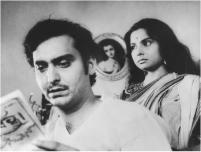 For a large part of the rest of the world, the name Satyajit Ray would immediately relate to the Apu trilogy and would probably stop at that. Ironically, a great number of his fabulous films have never reached the eyes of the Occident. Charulata (1964) is one such gem that never gets a mention when briefing the director’s work.
