Kakukshi-Toride No San-Akunin (1958) (aka The Hidden Fortress)
Japanese
Akira Kurosawa
“Get away from me! You stink of dead bodies!”
 Japanese cinematic master Akira Kurosawa has always been a source of inspiration for both contemporary and future film makers. Right from Sergio Leone to Kamal Haasan, every one who has come across his films have been entranced by it. Kakukshi-Toride No San-Akunin (1958), which is considered one of Kurosawa’s finest, apparently inspired George Lucas to script the characters and the narration in the Star Wars franchise based on the two slaves of the film.
Tahei and Matakishi are two slaves who dream of making big business during the war time. They are always fighting and trying to pull each others’ leg. They escape from a concentration camp and stumble upon some pieces of gold and discover that there is more where that came from. They are led by Rokurota Makabe who seems to have all the gold hidden at a secret place. They strike a deal with him wherein they get a share of the gold if they help him smuggle the gold across the heavily guarded border into another country. The gang go through a variety of dangerous situations, every time being saved by Rokurota Makabe. Gradually, they learn that Rokurota Makabe is not a lay man but he is the general of the Akizuki country and is in charge of getting Akizuki’s national treasure and its princess to the right place. The journey not only enlightens the princess about the plight of her subjects but also acts as a medium of settling the differences between the bickering duo.
“Unconventional” doesn’t start to describe this film that refuses to go traditional. Right from the starting conversation that is introduced without an establishing shot (that is reminiscent of the Tarantino age) to the style of narration of the story as viewed my the minor characters of the plot instead of the protagonists, the film breaks the canons of film making one by one with the action and thrill kept intact. Toshiro Mifune is majestic as ever with the right blend of the arrogance and humour. The film was the recipient of the FIPRESCI award at the Berlin International Film Festival in 1959.
 Very few films have come out that are based on mythology of their country of origin. Except for the slew of animations films, there are no mainstream mythological films from India, a country with the richest mythology. Japan, on the other hand is conscious of its heritage and has adapted the same in various forms. Masaki Kobayashi’s Kaidan (1964) is based on a compilation of ghost stories from Japan and consists of four segments.
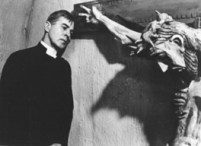 Faith and doubt in God have always been a critical theme in most Bergman films, especially the ones in the so-called “Faith Trilogy“. Nattvardsgästerna (1963) is the second installment in this trilogy following
  The first thing that strikes everyone about Japanese cinema is the Samurai culture. And the first thing that strikes about Samurai films is Akira Kurosawa. Akira Kurosawa’s later films, however, were not received well even though they were offbeat works such as Dodes’ka-den (1970), Dersu Uzala (1975) and Yume (1990). Yume presents itself as a episodic collection of eight vignettes apparently based on the director’s dreams.
 The objectives, outlooks and needs of different levels of a community, naturally, do not concur. One man’s grief is another man’s pleasure. Mohsen Makhmalbaf’s Bicycleran (1987) captures this difference in the context of an event as viewed from people from different sections of the society. Though a bit more dramatic than most films then from Iran, Bicycleran has enough raw power and truth value to be classified under the neo-realistic genre.
 Spielberg has chosen a very simple plot in order to not distract the audience. Indiana Jones (Harrison Ford) escapes from of group of commies led by Irina Spalko (Cate Blanchett) who are in search of an artifact. Removed from his college for getting involved with the communists, Dr. Jones is called for action by Mutt (ShiaLaBeouf) , the godson of Prof. Oxley (John Hurt), a long time friend. Henry informs him that his mother Mary Williams (Karen Allen) and Prof. Oxley have been kidnapped in South America while in the hunt for a so-called crystal skull. It his up to Jones to hunt for the skull and return it to its proper place. In the journey, he finds that there are others vying for the skull too and discovers his true relationship with his family and friends.


