Cinema of Germany


Director: Werner Herzog

Cast: Ryan Andrew Evans, Werner Herzog

The Buzz: Nominated in the Best Documentary category

The Run: Werner Herzog’s name

Encounters at the End of the World

The Grand Inquisition

If there is only one film from 2008 you are allowed to see, it better be Encounters at the End of the World. Not because it is easily the best movie made that year, but because it is so deep in its ideas, so uncompromising in its execution and so shattering in its discoveries. Werner Herzog has been making films for years and his filmography is probably the definitive stop to learn how profound documentaries can be.

As with most of Herzog’s films, Encounters at the end of the world is not just satisfied with the content it gives us. Herzog examines how the film is so important to him as a filmmaker and us as citizens of the earth. But by no way is this a didactic documentary about the “ecocalypse” nor is it about bonding between “fluffy penguins”. Herzog takes up a theme that has always fascinated him – about the nature of nature and the inherent savagery it exhibits. Why is it that some creatures are meant to be slaves and some masters? Why do some beings digress from the rest of their species? Why can’t man leave some part of nature unexplored or mysterious? Is nature like the Schrödinger’s cat that changes when observed? Through a multi-layered approach, Herzog studies how life goes on in the arcane world of Antarctica. There is considerable humour involved when we discover the stories behind the very many faces that have arrived at this edge of the planet. All this only questions us about how much we know about ourselves while we are studying the intelligence of single-celled organisms. “Hearing the universe’s cosmic harmonies through our ears and witnessing the universe’s glory through our eyes” answers one of them.

Encounters is a special film for me as I saw it amidst a Herzog retrospective. The most relentless filmmaker of our times after Godard, Herzog is the best example of how independent a filmmaker can be. Over 60 now, Herzog is everything a traveler, an artist, an adventurer or a roadie could ever hope to be. And Encounters is a gem with the master at the top of his game, as ever.

Allemagne 90 Neuf Zéro
(Germany Year 90 Nine Zero)
1991

And I thought Godard didn’t have a masterpiece. Once more after many years, Godard follows Lemmy Caution (remember Alphaville?), now the “world’s last spy”, after the collapse of communism in Germany and the breaking of the wall. If Alphaville was The Return of the Jedi, Germany 90 is the Revenge of the Sith.  In the first film, Lemmy was a virus eluding the clutches of the supposedly omnipotent Alpha 60 whereas here, he is a lone warrior meandering unharmed in the bigger Alphaville and the sole survivor of a species that would soon be extinct. Evidently a requiem for what Godard considers the death of Germany, Germany 90 is perhaps the best contender for the adjective “sublime”.

Germany Year 90 Nine Zero (1991)

Germany Year 90 Nine Zero (1991)

Tinged with a slight green throughout, the film juxtaposes images of sincere yearning by a man whose raison d’être has been questioned with fleeting sequences from the classics from the early expressionist German cinema. Godard classifies music, love and poetry as belonging to socialism alone and as languages not understood by the new world. Though elegiac in tone, the film is uncharacteristically (for Godard) hopeful in actuality. There is a definite promise of restoration in the form of Dora, the symbol of Germany in the film, and the assurance of “music after life”. On a lighter note Lemmy comments “You have to admit, Marx did triumph. When an idea is born among masses, it becomes a material force. That’s one way of looking at it.

Lemmy Caution who represented all that is living and all that is human in Alphaville represents all that is lost and destroyed in Germany 90. The recurrent images of exile crucifixion and torture may be for the whole of socialism itself, whose pro-mass approach was nailed down by the elite bourgeoisie. Now as Lemmy walks alone through the remains of the now- nonextant world, we see what Godard is referring to by “solitude of history” – Lenin icon amidst Greek ruins, people moving towards the west in blue cars, machines resembling dragons almost swallowing Lemmy, history books being sold as souvenirs. The fugitive events that shook the world seem to have single-handedly made Godard’s political period a thing of arthouse circuits. It is more than solitude of history, it is solitude of Cinema.

Berlin Alexanderplatz (1980)
Rainer Werner Fassbinder
German

“A chicken consists of the outside and the inside. Remove the outside, and the inside remains. Remove the inside, and the soul remains.”

Berlin Alexanderplatz

The prolific career of German wunderkind Rainer Werner Fassbinder has been marked by decidedly minimal and vital films that have almost single-handedly defined German cinema during that period, with no credits taken away from Schlöndorff and Herzog. His mastery over the melodrama genre and understanding of the medium have consistently placed him at par with world cinema giants. But Berlin Alexanderplatz (1980) forms the core of his cinematic achievements with the sheer length of the film capable of accommodating ten of his other films. Pulling off a film with a mammoth runtime of 931 minutes by itself is a landmark that only a few gifted souls can dream of.

Adapted from Alfred Doblin’s novel of the same name, Berlin Alexanderplatz was originally made as a 14 part television mini-series but is widely accepted as a monolithic piece. The film follows the life of Franz Biberkopf (played to perfection by Gunter Lamprecht), a visibly tormented man, right after he steps out from Tegel prison after serving for four long years. He tries gradually to return to normal life and meets his old acquaintances in the process. He is determined to turn over a new leaf and sets a strict moral code for himself that forbids him from taking to violence in even the most testing of times. He attempts to get a permanent and legal job but the city turns him down because of the prevalent social, political and economic conditions. He sells sleazy magazines, takes in women and dumps them later and takes up a fake political stand in order to earn but strictly adheres to his questionable code of conduct. His policy gains him more foes than friends and he is soon left with one arm amputated. In these testing times, his source of support comes from the various women he takes into his house. They are strangely attracted to him and believe Franz can really give a reboot to everything. He takes to alcoholism and casts off his policies. He continues to exist.

One will be tempted to think in the first scene as Biberkopf steps out of the jail that Fassbinder is going to show us what the cruel city is going to mete out to him and its consequences on his life. But Fassbinder adopts a totally different path. It isn’t the city that has brought Biberkopf to where he is, but his personal policies and principles that have got the better of him and have made him virtually devoid of any firm footing in life. Biberkopf is neither able to adopt himself to the changing times and its corruption of daily life nor is he able to fight it out in order to stay true to his resolution. As a result, he remains willingly passive to all the changes around him and hence becomes a victim of these very changes. He shuts himself from the world and immerses himself in excessive alcohol helplessly observing the world as it moves past him.

I’ve not read Alfred Doblin’s novel but Fassbinder’s visual version reminds me of Dostoyevsky’s Crime and Punishment. Both are set in tumultuous times where revolution is but evident and follow a simple individual battling his own troubles that are near independent of the socio-political conditions. Crime and Punishment is set when socialism was to take over the Russian elite administration whereas Berlin Alexanderplatz is set when “Fascism” was to oust the Socialistic regime in Germany. Both Raskolnikov and Biberkopf are individuals who have set high moral standards for themselves and get into deeper morass just because of that. Raskolnikov’s resolution is of utmost purity that he sticks to till the very end. On the other hand, Biberkopf’s fickle resolve is a product of his fear and is broken even before halfway. Also, Raskolnikov’s character is a mystery that grows more so as we progress whereas Fassbinder strips Biberkopf off all symptoms of a complex personality and leaves him as unsophisticated as an infant.

With such a huge runtime, one would naturally expect a meticulously etched character arc that takes a remorseful soul such as Franz Biberkopf and gradually portrays his transformation and ultimate attainment of redemption. Fassbinder, or perhaps Doblin, exactly shatters that presumption. Fassbinder carefully intersperses Biberkopf’s present with his moment of sin at multiple places. At one point in the film you feel bad for what the city has done to the man and appreciate his yearning for transformation and his mettle to put up with all this mess. In another, you loathe him for his reversion to crime and his attitude of acting upon impulses. This way, Biberkopf naturally becomes a multi-dimensional character and ultimately we come to know that he is as ordinary as a man can be with his own ideas of morality, with his own earthy human instincts and with his own set of flaws.

The two most critical factors for sustaining the film’s atmosphere are evidently its cinematography and production design. Xaver Schwarzenberger replaces long time collaborator Michael Ballhaus and does an equally impressive job. His organic camera movement sometimes cowers behind obstructions and at other times, accosts the characters aptly reflecting the mood of the scene. The masterful cinematography is enhanced by the haunting score by Fassbinder regular Peer Raben whose theme track is the X-factor the epic needed for its melodramatic completeness. For most part of the film, Fassbinder uses a brown tinge for his images which are supported by the excessive yellow lighting that provide the images the melodramatic quality it requires. Schwarzenberger employs the lens flare to the maximum extent with even the pupils of the characters looking like micro light sources. As a result, each image looks like an impressionist painting and the quality of the production shows in each frame.

The most and perhaps the only debated aspect of the film is its out and out surreal epilogue that sums up Fassbinder’s understanding of Doblin’s novel. Fassbinder sheds reality and shows us Biberkopf’s tour of the limbo using the most bizarre of images that include a torture factory and a human slaughterhouse. It is this chapter that will either increase the vitality of the film manifold or will pull it down to a wasted effort depending on your inclination to accept it as it is. We interestingly see Biberkopf being crucified with all his kith praying before him. Indeed, Biberkopf is like the messiah himself but his suffering has brought more sorrow to others than salvation. The epilogue by itself can concoct a full length film that forms an intensely personal chapter in Fassbinder’s life.

Berlin Alexanderplatz forms the central showpiece in Fassbinder’s glorious career. It effortlessly obscures his other brilliant films and perhaps even sums up his whole style of working. Performances of a lifetime, brilliant direction, gorgeous camera work and a memorable score are but some of the reasons that the film is of perpetual interest. Agreed that it is depressing and unconventionally uninspiring but that is precisely the reason why it must be seen. Till date it remains the best representation of an ordinary life of an ordinary person entangled in extraordinary situations.

Aguirre, Der Zorn Gottes (1972) (aka Aguirre: The Wrath Of God)
Werner Herzog
German

“I, the wrath of God, will marry my own daughter and with her I’ll found the purest dynasty the earth has ever seen.”


Aguirre

At the time when Rainer Werner Fassbinder was churning out a film in every two or three months, his contemporaries had to struggle to make a mark on the international arena. Things weren’t any better for Werner Herzog, a budding director just two films old, with severe restrictions on the funds and large scale noncompliance from his crew. Yet, after all the distress before and during production, Herzog had survived and how. His third film, Aguirre: the Wrath of God, is seldom left out in any dissection of the German cinema history. Such was the impact of the film on the styles of the existing legends in the business.

The film is set in the sixteenth century when a large group of Spaniards, along with a army of slaves set out into the interiors of Southern America in search of the city of gold – El Dorado. At a point in their journey, the leader of the group decides to send further just a group of men who whose fate would decide the next move of the group. This team, consisting of Ursúa, Aguirre, his daughter, a team of soldiers and other vital persons, set out on limited resources, with no clue about the perils are about to face. Mentalities change, personal interests surpass the mission objective and savagery becomes the backbone of the agenda.

Each character in the journey has its own motivations to undertake it. The locals are fuelled by greed, the soldiers by fear, the priest by his religious ideologies and Aguirre by his own visions and narcissism. Aguirre – a man swallowed by his own ambitions – does not stop at anything and sacrifices everything for the attainment of the ultimate goal, much like Daniel Plainview of There will be Blood (2007) or Howard Hughes of Aviator (2004). Additionally, there are hints to argue that Aguirre believed himself to be placed in a superior race (a la Adolf Hitler) and it was his responsibility to fabricate a new world – a world ruled by the descendants, purely of his blood, even if that means an incestuous relationship with his daughter.

Herzog cleverly lets imagery take the driver’s seat rather than verbalizing the complex diffusion and delirium of the mind. He uses the gorgeously lush yet singularly disturbing jungles and the seemingly clear stream to dictate the inner conflict of the titular character. As the stream grows wild and descends into the thick interiors of the savage forests, Aguirre’s “obsession” escalates into the point of hallucination and even absolute detachment from reality. This innovative style of harnessing landscapes to underscore the characters’ mentality would later be lapped up by Coppola in the extraordinary war epic Apocalypse Now (1979). Redoubling on the power of the imagery, Herzog also makes the film light on plot and dialogues. There is minimal conversation in the film and when it does appear, it makes a tremendous impact.

It is not rare that we see great films being made on a minuscule budget, for it is the fresh minds that bring in new ideas to the industry and are (hence) antonymous to sponsors. Aguirre, too, was made on a very small budget and the devastating filming conditions in the rainforests of Peru did no good. What is, perhaps, more interesting than the film itself is the hilarious and shocking bundle of tales behind its filming that deserves screen appearance, all by itself. Comparisons are unavoidable between Kinski and Aguirre himself and one does wonder how the pair worked for many more films after all that chaos during the shoot. Furthermore, it is stupefying how the team constructed shots such as the final one and the famous “ship on the tree” shot.

Aguirre: the Wrath of God is more of a psychological study of progressive insanity than an event oriented film. Its measured pace and direction induce a kind of trance into the involved viewer that one finds difficult to detach from. Do check out the Americanized version, Apocalypse Now, along with the film if you haven’t. The twin films powerfully complement each other and reveal the influence of internal and external crises on the minds of men.

Metropolis (1927)
Fritz Lang
German

“There can be no understanding between the hand and the brain unless the heart acts as mediator.”


Metropolis

When cinema was in its infancy during the teens and the twenties, many pioneers sought to provide it a definite shape and even assemble various tools and benchmarks for the decades of filmmakers to come. This led to the formation of various cinematic and narrative techniques, characteristic to their country of origin, which were later used by tens of directors from that country. One such trait, expressionism, was extensively used by the filmmakers of Germany such as F. W. Murnau and Fritz Lang. The latter’s magnum opus, Metropolis (1927), is a grand marriage of the expressionist method and unimaginably high ambitions for its time.

Joh Fredersen is a huge industrialist and the owner of the high-tech city of Metropolis. The workers of Metropolis are overworked and are exploited in exchange for small amounts of wages. This pains Freder (Gustav Fröhlich), the son of Fredersen who seeks to get justice for the workers from his father. The workers are on the verge of a revolution, but are held back by the hopes given by Maria (Brigitte Helm). Knowing this, Fredersen plans to use the evil genius of the city, Rotwang (Rudolf Klein-Rogge), and build a humanoid that resembles Maria in order to disorient the workers. However, Rotwang has his own plans and decides to double-cross Fredersen , in the process endangering everyone’s life.

To get an idea of the film’s influence on cinema it is enough to consider that it was the pioneer of the Sci-Fi genre – the one that Hollywood has never grown tired of. Its ideas of science and future have tricked down to every science fiction film made after it – both great and disastrous. Right from the struggle to create a whole new world (Minority Report, Sky Captain and the World of Tomorrow etc.) to the debate of humanity versus artificiality (Blade Runner, A. I. etc.), the impact of the film is omnipresent in the genre. The film’s special effects, needless to mention, were groundbreaking for their time (The Tower of Babel sequence retains its potency to amaze).

Going hand in hand with expressionism, the film is full of black and white characters and only aids the film’s heightened take on fantasy. Its consistent message of compassion for the working class may be a tad tasteless for viewers of today who do not expect any propaganda from the medium. However, this was, perhaps, required for Lang to drive home the point of the film which would otherwise have been deemed meaningless. Faith in the face of apocalypse becomes a joint theme, along with importance of humanity over science, which is supported well by biblical references.

Special mention must be made for the 2002 restoration of the epic which happens to coincide with its 75th anniversary of release. With over 25 percent of the film’s footage lost, the techies at the F. W. Murnau Foundation have done a staggering job of gathering the remaining material, removing the blemishes from each and every frame and providing intertitles summarizing the missing sections. The conventional score by Gottfried Huppertz for the version majestically supports the grandeur of the film.

Metropolis invariably takes the second place when the works of Fritz Lang are discussed and is overpowered by the dynamism and adrenaline of M (1931), immensely influential by itself and unbound by time. When watched today, Metropolis may look very amateurish in the execution of its themes and dated in its techniques, but placing oneself in its age and assessing its influence on future of the medium and the massiveness of its strides, it is ineluctable to call it a classic.

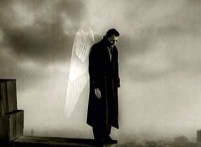
Der Himmel Über Berlin (1987) (aka Wings Of Desire)
Wim Wenders
Germany

“When the child was a child, it didn’t know that it was a child, everything was soulful, and all souls were one…


Wings of Desire (1987) takes off with a dedication to cinema’s three great stalwarts – Truffaut, Ozu and Tarkovsky. Indeed, elements of all the three directors’ works are present in the film. However, Wim Wender’s decidedly mood piece, released months after the Tarkovsky’s demise, is a film that is to be felt and not seen, much like the latter’s films. To quote Terrence Malick’s Days of Heaven (1978) – “Your eyes, your ears, your senses, will be overwhelmed”.

Damiel (Bruno Ganz) and Cassiel (Otto Sander) are two angels living in Berlin whose mission is to “assemble, testify and preserve” reality. They keep documenting the happenings in the city, going through the minds of its citizens in the process. Damiel meets a trapeze artist (Solveig Dommartin) and falls in love with her. After the suggestion from an ex-angel Peter Falk (as himself), he decides to shed his wings. Seemingly plotless and enigmatic, Wings of Desire makes a lasting impact on the viewers who watch it using their heart rather than their brains.

Damiel and Marion are a single soul separated by the ethereal skies (similar to Berlin itself where brethren of a single blood are divided by the ideological wall and humans have become no more than one-man islands). Both of them go through the same trauma. Both are strangers in spite of being around for a long time. Both have grown emotionless and are desperate to experience true feelings. Damiel acts as if he is one among the earthlings whereas Marion plays the part of an angel in the circus. Damiel wants to shed his omniscience, immortality and super-mobility in exchange for the mystery, fallibility and restrictions of human life. Damiel’s pining for petty human experiences holds quite an adversarial relationship with Cassiel who quietly and helplessly observes human suffering and even feels a bit hostile at the “conversion”.

The angels in the film represent everything that is both ancient and nascent, much like the city itself, which is a juxtaposition of culturally iconic structures (the Berlin Library, the Wall) and vignettes of massive reconstruction and renaissance (Nick Cave and the Bad Seeds, its skyscrapers). They have been around even before the appearance of the first creature on the planet, yet are mere infants, unable to differentiate between the emotional and sensual shades and colours. Like an infant, Damiel sees plain monochrome – he cannot discriminate between various souls (“everything was soulful, and all souls were one” ). But as the child grows up and as Damiel sheds his wings, they are no longer cherubic and recognize the harsh colours of humanity and become skillful (and even wily) enough to look at various hues and dimensions within people.

Cinematography is easily the first thing one notices and veteran Henri Alekan ensures that the camera velocity is neither too slow to contradict the dynamics of the scenes or too fast to prevent one from sinking into the ambience. The sepia tinged monochrome immediately enhances the already mellifluous verbal poetry. The film’s imagery and sound shuttle between subjective and objective realities, aptly sustaining the heavenly cinematic journey. The editing also suitably employs POV shots to compare and contrast the lives of people above and below the skies of Berlin. Bruno Ganz, who would ironically deliver the chilling performance as Hitler in The Downfall (2004), is out of the world, literally, and his childlike innocence emphatically emphasizes his emotions.

Wings of Desire is more than a yearning for preservation of humanity. It is a celebration of it. It is a celebration of sensitivity – of rubbing your hands during a cold winter day, of feeling pain due to a wound. It is a celebration of perceptibility – of sipping hot coffee while reading newspaper, of the occasional amusement at sight of red blood. It is a celebration of human life, its mortality, its diversity and its vulnerability. Each of its character is a poem, each image, a verse and each sound, a melody. Strongly recommended for anyone who loves mankind, reality and life.

« Previous Page