Bitter Chestnut (Gurvinder Singh)
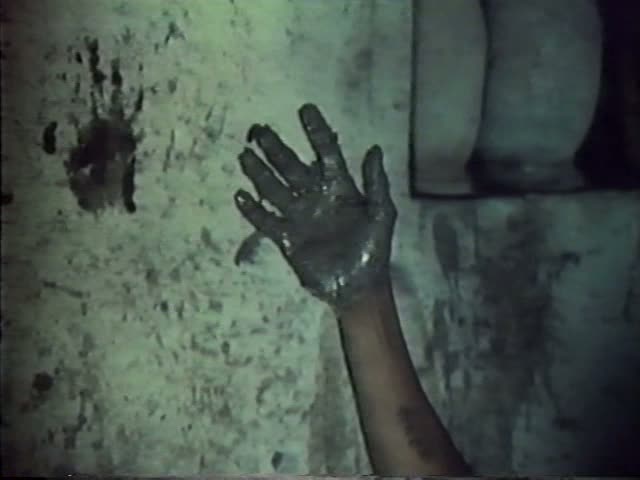
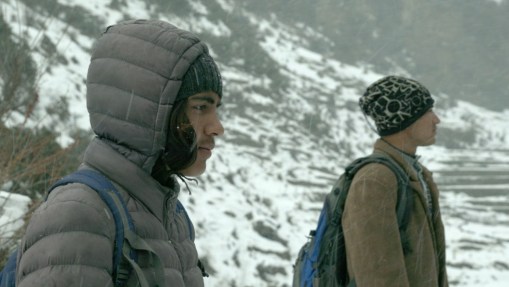
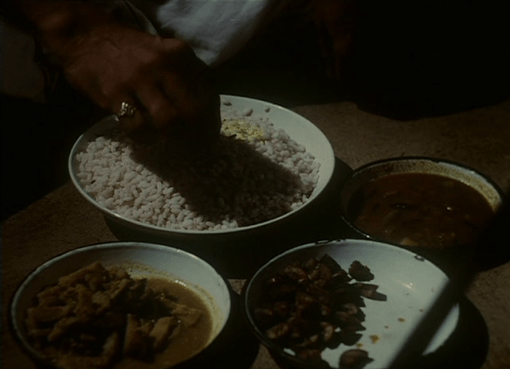
If cinema could substitute for voyages, it will look something like Gurvinder Singh’s Bitter Chestnut. The film immerses the viewer deep into the sights and sounds of an unnamed village in one of the valleys in Himachal Pradesh, where Gurvinder then lived and worked. The immersion is so total that the film could serve as a comprehensive catalogue of the way of life in the valley. Gurvinder is so fascinated with the textures of the place that the need to impose a fictional narrative on it becomes not just a secondary concern, but a hindrance at several points in the film. Bitter Chestnut is brimming with anthropological facts; the food, architecture, attire, language, occupations and rituals of the community become such important details that the film abandons its putative story half an hour in to become a full-blown documentary, resuming its narrative only much later. We are made privy to a baby’s first shower, the woman-only drunken revelry that follows, an oral history of fire hazard in the village, men and women daubing colour on each other during Holi, a newly-made cupboard moved through a celebrating crowd, not to mention elaborate scenes of the 17-year old protagonist, Kishan (Kishan Katwal), cooking. Even when the film introduces fiction, there’s no drama, Kishan’s low-key anxiety never snowballing into a conflict. Kishan’s family, around which the film revolves, leads a tough life sustained by a variety of occupations—hunting, carpentry, horse rearing, dairy farming, spinning—in addition to Kishan’s father’s and brother’s stints as labourers in the city from time to time. It’s an austere, pragmatic life, only occasionally given to festivals and faith.
Sporting a hoodie and sneakers, Kishan, like the community at large, is facing the slings of modernity. He makes pizzas at a restaurant (Gurvinder’s own, called Cloud Door, in homage to his mentor Mani Kaul) run by an outsider for international tourists. It’s a dead-end job, especially depressing considering that Kishan’s peers are leaving the valley for greener pastures in Delhi. His uncertain desire to move out is counterbalanced by the immediate economic and emotional needs of his family. It’s a modern predicament that goes against the time-worn mores of the valley. It’s also a narrative that hovers untethered over the documentary pleasures of Gurvinder’s film. Bitter Chestnut rests uneasily between two modes: the purity of the world at hand holds Gurvinder back from fictionalizing it too much, while the fiction prevents him from breaking the fourth wall, something which could have made for a richer work. Gurvinder works with simple camera and lighting setups, allowing large chunk of the scenes to unfold in the master shot itself. The participants are all non-actors from the valley playing their real selves. Their reticence before the camera shows when they are made to enact predetermined exchanges, while scenes of them celebrating or performing are more spontaneous. It is, however, the spellbinding (if at times touristy) Kangra district itself, spanning winter and springtime, that is the true protagonist of the film. Along with Amit Dutta’s films, Bitter Chestnut constitutes a distinct cinema of the region. I do nevertheless wonder if this is the kind of film the creator of Alms for a Blind Horse would ideally like to be making.
Status and Terrain (Ute Adamczewski)
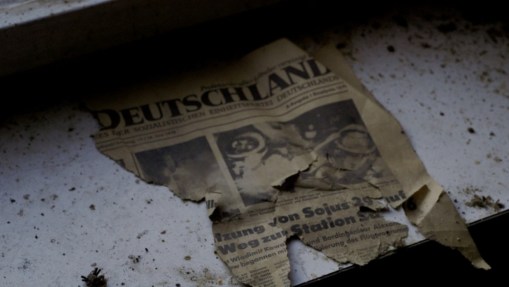
Ute Adamczewski’s excellent debut feature Status and Terrain begins with shots of homes, public structures and castles in the Saxony region of Germany. An archival text, spoken on the voiceover, tells us that the region was home to the labour movement of 1933, the backbone of the National Socialists (“Hitler belongs to the Elbe”, states one citation). It was the year that opponents to Nazism, especially Communists, were detained in “protective custody” under the Decree for the Protection of People and State. And it’s these youth clubs and castles that served as preliminary concentration camps for the detainees. And so Status and Terrain establishes its modus operandi early on. All through the film, we will be shown buildings, monuments and public spaces in current-day Saxony, captured in the mournful hues of winter. Read on the soundtrack are documents—official notices from the government, bureaucratic communication between state organs, diary entries and memoirs of the persecuted, prisoner release forms and surveillance reports—related to the structure under consideration: a shut-down notice to a cafeteria that has become a hotbed of subversion, a plea by the wife of a political prisoner assuring her husband’s recantation, an ordinance asking camp detainees to pay two reichsmarks every day for their own detention, a letter from traders around the Sachsenburg camp requesting the state to source supplies from them, a Soviet announcement declaring that Jews shouldn’t be considered the primary Nazi victims, and other such extraordinary communications.
In the film’s dialectical organization, the tumultuous past described on the soundtrack seems to belie the calm image of the present. But, as the description of more recent events are read out, it becomes clear that the present, rather than representing a rupture with the history, bears witness to continuing violence and fascism. This manner of tracing historical trauma in the visible signs of the present isn’t new. In that, Status and Terrain shares DNA with works like James Benning’s Landscape Suicide, John Gianvito’s Profit Motive and the Whispering Wind and, closer home, Nicolas Rey’s differently, Molussia and Thomas Heise’s Heimat is a Space in Time. But the present in Adamczewski’s film doesn’t just bear the weight of history, it is an active battleground of ideologies. In the eighty years of German history that Status and Terrain shuttles across, we see that different narratives contest for the same geographical space. After the war, an association of the persecuted wrote a letter to Soviet authorities asking them not to execute Nazis in the same space that Jews were. Antifa and pro-DDR graffiti are as visible as ultra-right-wing imperial flags. A WWI memorial was turned into a fascist monument in 1933, an anti-fascist monument in 1963, a symbol of German unity in 1990 and is now being run over by a supermarket. Like in Alex Gerbaulet’s Shift, all sediments of history over a place seem to be active at the same time, vying for dominance. Adamczewski’s gently roving camera picks up an encapsulating detail: celebratory plaques for great German composers embossed on the ceiling of a castle that was converted to a concentration camp.

The Cordillera of Dreams (Patricio Guzmán)
A return to the permanence of nature might be symptomatic of the desire of old age to distance itself from worldly affairs. But when Patricio Guzmán returned to the Atacama Desert in Nostalgia for the Light, it was to get back to the political past, both personal and national. The approach was reinforced in The Pearl Button, the vast Chilean coast being the subject of Guzmán’s dive into history. The Cordillera of Dreams completes the trilogy, the filmmaker now turning to the Cordillera, the stretch of the Andes mountain range that isolates Santiago from the rest of the world, as the object of his interrogation. “I was busy trying to change society”, says the filmmaker in his characteristically meditative voiceover, “that I was never interested in the Andes; I now see it as a gateway to understanding Chile”. The film is punctuated by awe-inducing helicopter shots of the snow-covered Cordillera, its rocky surfaces and barren, infinite valleys. Woven around these heart-stopping images are interviews with Santiago’s culturati—two sculptors, a singer, a writer and a volcanologist—who discuss the significance of the Andes: the mountains as a watchful mother, a carrier of scents, a muse for artists, a veritable coast that turns the country into an island. For Guzmán, however, the Cordillera stands as a silent witness to the nation’s hidden past. It’s as though the mountains are keeping a secret from me, he says in all sincerity, a secret that might be the coup d’état of 1973.
While a personal work like its predecessors, The Cordillera of Dreams however ventures deep into sentimental territory. The sight of the mountains, admits Guzmán, makes him want to go back to his childhood in this city that nevertheless “greets him with indifference”. He films the houses and streets he lived in, talks about the making of The Battle of Chile, his detention by the military and his subsequent flight to Europe. He confesses his desire to begin anew and rediscover the life he had left behind. Even in Europe, he says, he’s always been making films about Chile. He seeks to understand this gravitational pull that the country exerts on him through the figure of another filmmaker who did stay back. Pablo Salas is a documentarian who has been recording political happenings around him for 37 years. His personal archive of video tapes and hard drives fills his entire office, and they serve as the suppressed record of Chile under the Pinochet dictatorship. Guzmán and Salas discuss their work and politics at length: the challenges of filming protests, the tyranny of the dictatorship, the ruthless neoliberalist revision of Chilean economy, the inequality and rampant privatization of resources, and so on. Guzmán is wholly admirative of Salas, the man he wasn’t, and speaks of the filmmaker’s large archive as the memory of what was hidden. His own film, though, feels like an obligatory extension of Nostalgia for the Light and The Pearl Button. Part of the reason for the slide is that the Andes remains only a picturesque background to the investigation. Now and then, Guzmán does relate the mountains to history, as with the idea that the rocks from them were used for paving the streets of Santiago, which saw the boots of the military and blood of the protestors. These connections, though, remain far and few, unlike the tightly knit associations of the previous two remarkable works.

143 Sahara Street (Hassen Ferhani)
In a bright, panoramic shot of a desert, a microscopic figure on the left side moves slowly towards a rudimentary structure on the right. The figure is that of Malika, a rotund, elderly woman who lives and runs a shop on a highway just outside the town of El Menia, Algeria, in the Sahara. Malika lives with her cat Mimi and her joint, possessing the absurd address of the title, serves as a refreshment point for bikers and motorists passing by. Malika is an unusual woman, not just in that she’s an old woman running the shop independently, but also in that she’s unmarried, doesn’t have kids and prefers to stay away from her extended family. Her independence needs no extenuating context: when a client talks about newly legislated women’s rights, she lashes out, “I don’t need any rights”. Malika likes music and dance, hates religious hypocrisy and claims she can’t stand other women. The building she inhabits is spare and contains two rooms: a kitchen and a dining area for clients. There’s a fridge but no electricity. Living far from civilization, Malika, whom one visitor aptly christens “the gatekeeper of the void”, listens to whatever the radio can pick up. A petrol station-cum-restaurant is cropping up next door, potentially eating into her revenue. Malika, though, is unfazed, convinced that the new venture will shut shop in two weeks.
Outside of the occasional accident in the vicinity, Malika’s only entertainment and source of interaction is with the people who stop by at her place for tea, bread, cigarettes or soda. The characters are colourful enough: a Polish woman biking across two continents, a group of young men who mount a musical performance for Malika, a couple of imams from Algiers, immigrant workers who have come to Algeria for better prospects, a man looking for his lost brother whom Malika suspects of being a charlatan. Director Ferhani captures all this interaction in simple, front-on shots from a tripod. Inspired by the Sahara, his compositions are strongly horizontal, the desert constantly framed by the edges of doors and windows like a landscape painting. Over the course of the film, we are made intimately familiar as much with the building as with Malika. The various walls of the house against or through which we see Malika are later stitched together with a circular tracking shot around the house. Ferhani does not dissimulate his presence and regularly interacts with both Malika and her clients from behind the camera. Less than a hundred in number, the long shots of the film encapsulate the rhythm of the place, recording action in real time without ellipses. Despite its apparent modesty, there’s a philosophical undercurrent to Ferhani’s film. When Malika is by herself, the passing of time is all the more palpable, her mortality looming large. The infinite space of the desert, devoid of other human presence, invites an interrogation of the meaning of freedom, and whether or not one would trade it for the security of a community.



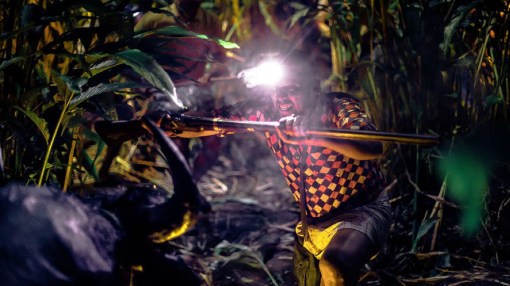


 Chan’s diaristic digital work is divided into chapters named after family members and unfurls as a process of piecing together of familial history. Through various confrontational interviews with her mother and father, the filmmaker attempts to understand their failed marriage, her strained relation with her step-father and the violence that has structured them both. Chan’s decision to put her entire life-story on film is a brave gesture, but the film closes upon itself, satisfied to be a melodrama valorizing personal experience over broader frameworks. (Consider, in contrast, the rigorous domestic formalism of Liu Jiayin or the socio-political tapestry of Jia Zhangke’s early work.) Chan misses the forest for the lone tree. Winner of the Adolfas Mekas award of the fest.
 Beep assembles anti-communist propaganda material from the 60s and the 70s commissioned by the South Korean state that was based on the mythologizing of a young boy, Lee Seung-bok, slain by North Korean soldiers. With the unseen, absent boy-hero at its focus, Kim’s film depicts the dialectical manner in which a nation defines itself in relationship to an imagined Other. Kim makes minimal aesthetic intervention into the source material – our relation to it automatically ironic by dint of our very distance from the period it was made in – restricting himself to adding periodic beep sounds to the footage, producing something like a cautionary transmission from another world.
 Black Sun opens with a composition in deep space presenting a metonym for a country in the process of development: high-rise buildings in the background as a pair of actors in period costumes rehearse a scene in the foreground. In a series of Jia Zhangke-like vignettes of Saigon set in middle-class youth hangouts scored to pop songs and television sounds, interspersed with images of a metamorphosing city, we see the distance that separates art from reality and the middle-class from the changes around it. The film culminates in a complex, home-made long take following the protagonist across her house and out into the terrace, where she dances, presumably to the eponymous song.
 The most challenging and elusive film of the competition I saw is also the most hypnotic. Cloud Shadow gives us a narrative of sorts in first person about a group of people who go into the woods and dissolve in its elements. The film is obliquely a story of the fascination with cinema, of the trans-individualist communal experience it promises, of the desire to dissolve the limits of one’s body into the images and sounds it offers. With an imagery consisting of sumptuous tints, and nuanced colour gradation and superimpositions, the film enraptures as much as it evades easy intellectual grasp. The one film of the festival that felt most like a half-remembered dream.
 Ferri’s teasing, playful Dog, Dear appropriates the filmed record of a Soviet zoological experiment in the 1940s in which scientists impart motor functions to different parts of a dead dog. In the incantatory soundtrack, a woman – presumably the animal’s owner – repeatedly conveys messages to it, with each of them prefaced by the titular term of endearment. Ferri’s film would serve sufficiently as a blunt political allegory about the dysfunction of communism, but I think it’s probably fashioning itself as a metaphysical question: the dog might well be kicking but is he alive? His physical resurrection will not be accompanied by a restoration of consciousness. He will not respond to his master’s voice.
 Put together from footage apparently shot over twenty years at a Thai army officer’s residence, Tesprateep’s film shows us four conscripts working in the general’s garden. We witness their camaraderie, their obvious boredom, the empty bravado in entrapping small animals and intimidating each other. The misuse of power by the officer in employing these youth to mow his lawn reflects a broader militaristic hierarchy, as is attested by the youths’ casual violence towards the animals and their brutal torturing of a prisoner. Endless, Nameless recalls Claire Denis in its emphasis on military performativity and Werner Herzog in its juxtaposition of idyllic nature and seething violence, all the while retaining an
  In Fictitious Force, Widmann incidentally poses himself the age-old challenge of ethnological cinema; how to film the Other without imposing your own worldview on him? The filmmaker smartly takes the Chris Marker route, avoiding explanatory voiceover for the rather physical Hindu ritual he photographs and instead holding it at a slightly mystifying – but never exoticizing – distance. Widmann’s film is about this distance, the chasm between experience and knowledge that prevents the observer from experiencing what the observed is experiencing, however understanding he might be. Fictitious Force’s considered reflexivity carefully circumvents the all-too-common trap of conflating the subjectivities of the photographer and the photographed.
 Fashioned out of footage that the artist shot during his visit to the titular natural reserve in Ontario, Fish Point comes across as an impressionist cine-sketch of the locale. The film opens with Daichi Saito-esque silhouettes of trees against harsh pulsating light – near-monochrome shots that are then superimposed over a slow, green-saturated pan shot of a section of a forest. This segment gives way to a passage with purely geometric compositions consisting of alternating browns and greens and strong horizontals and verticals. Forms change abruptly and tints become more diffuse and earthly. We are finally shown the sea and the horizon, with a rough map of the area overlaid on the imagery.
 A music video for a song that reportedly riffs on a holy chant and the traditional cry of the local ragman, Ye’s film starts out with shots of old women and men lip-syncing to the titular melody before turning increasingly darker. The rag picker of the poem progresses from accepting material refuse to buying off diseases, emotional traumas and even intolerable human characters. Ye builds the video using shots both documentary and voluntarily-performed that portray everyday life in Taiwan as being poised between tradition and modernity. The junkman of the film then becomes a witness to all that the society rejects and, hence, to all that it stands for.
 Set in a suburban Mumbai slum, Bhargava’s film takes a look into one of the reportedly many carrom clubs in the area where young boys come to play, smoke and generally indulge in displays of precocious masculinity. Where Imraan, the 11-year-old manager of the club, seems reticent before the camera, his peers and clients are much more willing to perform adulthood in front of the filming crew. While some of them are acutely aware of the intrusive presence of the camera, urging their friends not to project a bad image of the country, the film itself seems indifferent about the ethics of filming these youngsters, asking them condescending questions with a problematic, non-committal non-judgmentalism.
 Völter’s visually pleasing and relaxing silent film is a compilation of scientific documents of cloud movement over the Mount Fuji recorded from a static observatory by Japanese physicist Masanao Abe in the 1920s and 1930s. Abe’s problem was also one of cinema’s primary challenges: to study the invisible through the visible; in this case, to examine air currents through cloud patterns. The air currents take numerous different directions and these variegated views of the mountain situate the film in the tradition of Mt. Fuji paintings. The end product is a James Benning-like juxtaposition of fugitive and stable forms, a duet between rapidly changing and unchanging natural entities.
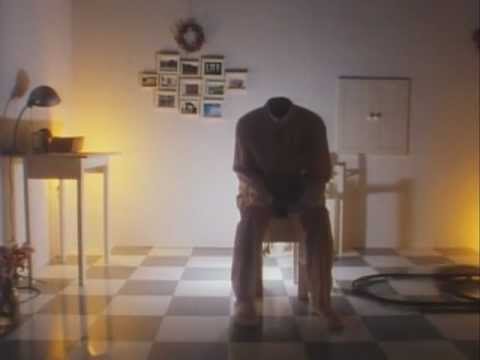
 The most narrative film of the competition, Memorials situates itself in the tradition of 21st century Slow Cinema with its elliptical exposition, stylized longueurs, (a bit too) naturalistic sound and its overall emphasis on Bazinian realism. A young man revisits his father’s house long after his passing and starts discovering him through the objects of his everyday use, while a dead fish becomes the instrument of meditation and grieving. Though rather conventional in its workings, Memorials offers the details in its interstices fairly subtly and touches upon the usual themes of inter-generational inheritance and posthumous rapprochement, while also gesturing towards a necessary break from the past.
 Punprutsachat’s work is a straightforward document of the protracted rescue of a water buffalo from a man-made well on a sultry summer afternoon by dozens of village folk. Shot with a handheld digital camera and employing mostly on-location sound, the film presents to us the efforts of the villagers in chipping away at the edifice, restraining the animal from agitating and finally allowing it to go back to its herd. Natee Cheewit attempts to encapsulate the idea of eternal struggle between man and animal and, more broadly, between nature and civilization. The remnants of the demolished pit and the dog wandering about it are reminders of this sometimes symbiotic, sometimes destructive interaction.
 Night Watch is reportedly set in the days following the military coup in Thailand in May, 2014 – a period of state repression dissimulated by triumphalist propaganda about reigning happiness. Chulphuthiphong’s debut film showcases one quiet night during this period. Jacques Tati-esque cross-sectional shots of isolated apartments and office spaces show the citizenry complacently cloistered in their domestic and professional spaces, much like the sundry critters that crawl about in the night. Someone surfs through television channels. Most of them are censored, the rest telecast inane entertainment. Night Watch underscores the mundanity and the ordinariness of the whole situation, which is the source of the film’s horror.
 A rapid editing rhythm approximating the audiovisual assault of the information age, a visual idiom weaving together anime, pencil-drawing and Pink Film aesthetic and a soundscape consisting of reversed audio and noise of clicking mice and shattering glass defines Ouchi’s high-strung portrayal of modern adolescent anxieties. In a progressively sombre, cyclic series of events, a teenager navigates the real and virtual worlds that are haunted by sex and death around her. Ouchi’s pulsating, mutating forms and her preoccupation with the hyper-sexualization of visual culture are reminiscent of
  One of the high points of the festival, Scrapbook consists of videograms shot in 1967 in a care centre in Ohio for autistic children with commentary by one of the patients, Donna, recorded (and curiously re-performed by a voiceover artist at Donna’s request) in 2014. Donna’s words – indeed, her very use of the pronoun ‘I’ – not only attest to the vast improvement in her personal mental condition, but also throw light on the psychological mechanisms that engender a self-identity. For Donna and the other children-patients filming each other, the act of filming and watching substitutes for their thwarted mirror-stage of psychological development, helping them experience their own individuality, reclaim their bodies. Bracing stuff.
 Canadian animator Leslie Supnet’s hand-drawn animation piece is an extension of her previous work
  According to the program notes, the project brings together a real-life DJ who has lost her job after the coup d’etat in 2014 and an actual illegal immigrant boy from Myanmar at a secluded pond in the woods to allow them to do what they can’t in real life. We see the DJ perform for the camera, talking with imaginary strangers, giving and playing unheard songs, while the boy is content in tossing stones into the moss-covered pond. Like a structural film, The Asylum, alternates between the DJ’s ‘calls’ and the boy’s quiet alienation, taking occasional albeit unmotivated excursions into impressionist image-making, to weave a vignette about ordinary people made fugitives overnight.
 A Kiarostami-like narrative minimalism characterizes Radjamuda’s naturalistic sketch in digital monochrome of a lazy holiday afternoon. A young boy perched near the window of his house engages in a series of self-absorbed activities, while actions quotidian and dramatic, including a hinted domestic conflict, wordlessly unfold around him off-screen. A series of shallow-focus shots rally around a wide-angle master shot of the backyard to establish clear spatial relations. Literally and metaphorically set at the boundary between the inside and the outside of the house – home and the world – Radjamuda’s film is a pocket-sized paean to childhood’s privilege of insouciance and to the transformative power of imagination.
 The shadow of Apichatpong Weerasethakul’s work is strongest in Kapadia’s three-part work about the cycles of life, death and reincarnation and the interaction between mankind and nature, between the real and the surreal. Set in various regions of India and in multiple languages and shot predominantly between dusk and dawn, the film has a beguiling though mannered visual quality to it, with its appeal predicated on primal, elemental evocations of the supernatural. While Kapadia’s superimposition of line drawings on shot footage to depict man’s longing for and transformation into nature demands attention, the film itself seems derivative and a bit too enamoured of its influences.
 A potential companion piece to Porumboiu’s
  At least as formally innovative as Rithy Panh’s
  Wind Castle opens with a complex composition made of an unfinished (or destroyed) building behind a burnt crater, with the moon in full bloom. We are somewhere in the Indian hinterlands, a brick manufacturing site tucked inside large swathes of commercial plantations. Basu’s camera charts the territory in precise, X-axis tracking shots that form a counterpoint to the verticality of the trees. Noise from occasional on-location radios and trucks fill the soundtrack. A surveyor studies the area and trees are marked. ‘Development’ is perhaps around the corner. But the rain gods arrive first. Basu’s quasi-rural-symphony paints an atmospheric picture of quiet lives closer to and at the mercy of nature.




 Surely, it takes a bona fide auteur like David Cronenberg to locate his signature concerns in a text – such as Don Delillo’s – that deals with ideas hitherto unexplored by him and spin out the most exciting piece of cinema this year. Holed up in his stretch limo – an extension of his body, maneuvering through Manhattan inch by inch as though breathing – Eric Packer (Robert Pattinson) comprehends the universe outside like cinema, through a series of moving images projected onto his car windows. Why not? This world, whose master he is, is experiencing the epistemological crisis of late capitalism: the increasing abstraction of tactile reality into digital commodities. Packer, like many Cronenberg characters, is more machine than man, attempts – against the suggestions of his asymmetrical prostate and of the protagonist of Cronenberg’s previous film – to construct a super-rational predictable model of world economy – a project whose failure prompts him to embark on an masochistic odyssey to reclaim the real, to experience physicality, to be vulnerable and to ultimately die. At the end of the film, one imagines Packer shouting: “Death to Cyber-capitalism! Long live the new flesh!”
 Un chant d’amour for cinema, Leos Carax’s Holy Motors is an ambitious speculation about the total transformation of life into cinema and cinema into life – the death of the actor, audience and the camera. The European cousin to Apichatpong Weerasethakul’s Uncle Boonmee Who Can Recall His Past Lives (2010), Carax’s return-to-zero work draws inspiration from the process of film itself – death, resurrection and persistence of vision – and takes cinema to its nascence – fairground attractions, popular theatre and zoopraxography – while opening up to its future possibilities. Uncle Oscar (Denis Lavant, the raison d’etre of Holy Motors), like Cronenberg’s Packer, cruises the streets of Paris in his limo in search of purely physical experiences – a series of performance pieces carried out solely for “the beauty of the act” – only to find that the city is a gigantic simulacrum in which everyone is a performer and a spectator (and thus no one is) and where the distinction between the real and the fictional becomes immaterial. At the very least, Holy Motors is a reflection on the passing of “things”, of physicality, of the beauty of real gesture, of the grace of movement of men and machines.
 Nicolas Rey’s third feature, consisting of 9 short segments (reels, to be precise) projected in a random sequence, is a radical project that re-politicizes the cinematic image. Not only does the randomization of the order of projection of the reels circumvent the problem of the authoritarianism of a fixed narrative, it also exposes the seam between the semi-autonomous theses-like segments, thereby making the audience attentive to possible ideological aporias that are usually glossed over by the self-fashioned integrity of filmic texts. Furthermore, the existence of the film in the form separate reels is a breathing reminder of the material with which it was made: 16mm. The persistent dialectic between the visual – shots of highways, industries, farms and modernist suburban housing in the eponymous fictional city registering the sedate rhythm of everyday life – and the aural – snippets of conversations between two politicized industrial workers about the invisible tendons that enable a society to function smoothly – strongly drives home the chief, Althusserian concern of the film: the essential unity of the various, seemingly autonomous, strands of a state, contrary to claims of disjunction and autonomy.
 A film that is reminiscent of Weerasethakul’s many bipartite films, Miguel Gomes’ singular Tabu, too, works on a range of binaries – past/present, youth/old age, city/countryside, abundance/scarcity, modern/primitive, colonizer/colonized – and sets up a conversation between the carefree, profligate days of the empire full of love, laughter and danger and Eurocrisis-inflected, modern day Portugal marked by alienation and loneliness. The opening few minutes – a melancholy mini-mockumentary of sorts chronicling the adventures of a European explorer in Africa with a native entourage –announces that the film will be balancing distancing irony and classicist emotionality, donning an attitude that is in equal measure critical and sympathetic towards the past. In Gomes’ sensitive film, the heavy hand of the past weighs down on the present both on aesthetic (silent cinema stylistics, film stock, academy ratio, the excitement of classical genres) and thematic (collective colonial guilt, residual racism, punishment for forbidden love) levels and this inescapability of the past is also functions as (sometimes dangerous) nostalgia for the simplicity and innocence of a cinema lost and an entreaty for the necessity of exploring and preserving film history.
 What partially elevates the first film of Ulrich Seidl’s Paradise trilogy from its rather undistinguished concerns about emotional alienation and old age loneliness is the nexus of intriguing cultural forces that it brings into the picture by having a relatively affluent, 50-year old Austrian single-mother (Margarete Tiesel, in a no-holds-barred performance) indulge in sex tourism in Kenya along with five other women friends. The result is a rich, provocative negotiation along class, gender, race and age divides that upsets conventional, convenient oppressor-oppressed relationships. In doing so, the film wrenches love from the realm of the universal and the ahistorical and demonstrates that between two people lies the entire universe. Seidl’s heightened, bright colour palette that provides a sharp chromatic contrast to the bodies of Kenyan natives and his confrontational, static, frontal compositions (Seidl’s nudes are antitheses to those of the Renaissance), which make indoor spaces appear like human aquariums, both invite the voyeuristic audience to take a peek into this world and place it on another axis of power – of the observer and the observed.
 Sri Lankan filmmaker Prasanna Vithanage’s exquisite, exceptional adaptation of Fyodor Dostoyevsky’s The Meek One (1876) aptly locates the Russian tale of matrimonial discord between a bourgeois pawnbroker and the gentle creature he weds within the ethno-political conflict between nationalist and rebel factions of the country. Unlike humanist war dramas that, often naively, stress the underlying oneness among individuals on either side, Vithanage’s intelligent film underscores how the political haunts the personal and how the tragic weight of history impacts the compatibility between individuals here and now, while deftly retaining Dostoyevsky’s central theme of ownership of one human by another. Though liberal in narration and moderate in style compared to Mani Kaul’s and Robert Bresson’s adaptations of the short story, Vithanage, too, employs an attentive ambient soundtrack that counts down to an impending doom and numerous shots of hands to emphasize the centrality of transaction in interpersonal relationships. The metaphysical chasm between the possessor and the possessed finds seamless articulation in concrete sociopolitical relations between Sinhalese and Tamils, between the army and refugees, between the poor and the wealthy and between man and woman.
 There has always been something intensely spiritual about Tsai’s films, even when they seem to wallow in post-apocalyptic cityscapes and defunct social constructions. In Tsai’s hands, it would seem, an empty subway corridor shot in cheap digital video becomes the holiest of spaces ever filmed. Walker, a high-def video short made as a part of the Beautiful 2012 project commissioned by Hong Kong International Film Festival, crystallizes this particular tendency in the director’s work and centers on a Buddhist monk played by Lee Kang-sheng (a muse like no other in 21st century cinema). As the monk walks the hyper-commercialized streets of Hong Kong at a phenomenally slow pace for two days and two nights, his red robe becomes a visual anchor in stark contrast to the greys of the urban jungle and the blacks of people’s winter clothing and his very being, his eternal presence, becomes a spiritual grounding point amidst the impersonal hustle-bustle of this super-capitalist Mecca. Part performance art with a gently cynical punch line, part an exploration of the limits of DV, Walker is a deeply soothing and often moving work from one of Asia’s finest.
 Moving unsteadily with the help of a walking stick, the 79-year old founder of the National Film Archive of India (NFAI), P. K. Nair, despite himself, becomes a metaphor for the state of film archiving in the country. It is of considerable irony that, in a nation that prides itself for its rich cultural heritage, film archiving is considered a useless exercise. During the three decades that Nair headed the NFAI, he was instrumental in discovering the silent works and early talkies of Bombay and south Indian cinema, including those of Dadasaheb Phalke, the “father of Indian cinema”. Celluloid Man, bookended by scenes from Citizen Kane (1941), draws inspiration from Welles’ film and sketches a fascinating if reverential portrait of Nair constructed from interviews with international filmmakers, scholars, historians and programmers and curiously hinged on the fact of Nair’s “Rosebud” – ticket stubs, promotional material and assorted film-related curios that the man collected during his childhood. Shivendra Singh’s film is a irresistible romp through early Indian cinema and an endlessly absorbing tribute to a man who is fittingly dubbed the “Henri Langlois of India”. To paraphrase one of the interviewees, Phalke gave Indian cinema a past, Nair gave it a history.
 Although it might appear that it is perhaps the hollowness of Xavier Dolan’s previous feature that makes his latest, 160-minute music video look like a cinematic coup, Laurence Anyways really does succeed in accomplishing more than most of contemporary “LGBT-themed independent cinema”. While the latter – including this year’s Cahiers darling – almost invariably consists of realist, solidarity pictures that use social marginalization as shorthand for seriousness, Dolan’s emotionally charged film takes the game one step further and probes the inseparability of body and character, the effect of the physical transformation of a person on all his relationships – a transformation that is mirrored in the flamboyant, shape-shifting texture of the film – without sensationalizing the transformation itself. Rife, perhaps too much so, with unconventional aesthetic flourishes and personal scrapbook-ish inserts, the film rekindles and enriches the youthful verve of the Nouvelle Vague – a move that should only be welcome by film culture. If not anything more, Laurence Anyways establishes that critics need to stop using its author’s age as a cudgel and look at his cinema du look as something more than a compendium of adolescent affectations.
 Let me confess upfront that putting Wes Anderson’s (surprise!) whimsy, twee and self-conscious Moonrise Kingdom in my year-end list is less a full-hearted appreciation of the film than a confession that I find Anderson to be an important voice that I’m genuinely keen about, but can’t entirely celebrate. I don’t think I’ve seen any film that employs so many elements of industrial cinema yet feels meticulously artisanal, a film that, on the surface, seems to (literally) play to the gallery yet is so full of personality and one that is oddly familiar yet thoroughly refuses instant gratification. Moonrise Kingdom appears to have every ingredient of an obnoxious family comedy, but the unironic, straight-faced attitude and the single-minded conviction with which it moulds the material into an anti-realist examination of the anxieties of growing up, alone, is something not to be found either in cynical mainstream cinema or in the overwrought indie scene of America. Anderson’s neo-sincere film is, as it were, a classicist text couched within a postmodern shell, an emotional film without affect. Paper blossoms, but blossoms nonetheless.