
Each passing year seems objectively, measurably worse than the one before, at least on a world-historical level, unveiling new lows for evil, stupidity, hypocrisy and tyranny across the globe. I’ve done nothing to change any of it, but I’m glad that, unlike me, there are people who aren’t desensitized, wilfully blind or paralyzed by analysis fighting the good fight. More power to them.
The blog hasn’t been terribly active this year. In February, I started a curatorial section on the site to showcase work from up-and-coming filmmakers, but I haven’t been able to keep it up at a rate I would like. I hope I can resume the section in 2024, even if at irregular intervals.
The primary reason for the inactivity is that I made my first foray into festival programming this year. I was on the South Asia selection committee for the Jio MAMI Mumbai Film Festival (October-November 2023) as well as the upcoming Berlin Critics Week (February 2024). Both assignments meant six months of intense, non-stop film viewing. A revelation from my time on the MAMI committee is that South Asian cinema is absolutely exploding, with crazy, ambitious works emanating from unlikely corners of the subcontinent, made by passionate individuals with little institutional or industry connections, with private resources unrelated to traditional channels of funding. It was truly an eye-opening discovery. Exciting times ahead for South Asian cinema.
For the first few months, however, I had a voluntary, almost systematic immersion into the history of avant-garde film, especially works from North America. I watched over 700 titles, long and short, canonical and lesser-known. I complemented this with reading books on the subject: Sheldon Renan, Amos Vogel, P. Adams Sitney, A.L. Rees, Stephen Dwoskin, William C. Wees, Jonathan Rosenbaum. But the single most instructive source was Scott MacDonald’s A Critical Cinema (1988-2005), five volumes of magnificently detailed interviews with avant-garde filmmakers from across generations and geographies. These exhilarating, demanding months of watching and reading truly felt like a substantial phase of my cinephile education.
It was also the year I published by second book, Moving Images, Still Lives, a lavishly illustrated monograph on Amit Dutta’s film Nainsukh (2010), published by Artibus Asiae of the Museum Rietberg Zurich. (Readers in India may consider buying a copy off Amazon, where a very, very limited number is on sale.) This book was an opportunity for me to undertake a different kind of writing — less spontaneous but more scholarly, with arguments propelled more by citations than passion. Also, until now, my references in visual arts were almost entirely European and American. Writing on Nainsukh meant researching into Pahari miniature painting and the world it issues from — an exposure I’m really grateful to have gotten.
I had no greater experience this year than watching Lijo Jose Pellissery’s Nanpakal Nerathu Mayakkam (2022), a work I would without hesitation count among the ten or so finest films ever made in India. Heck, had I seen it a few months earlier, it would’ve made it to my ballot for Sight & Sound’s all-time poll. With age, I encounter fewer and fewer films capable of shaking me up the way Pellissery’s masterpiece has. It is one of the great spiritual works of the cinema.
I didn’t see as many commercial releases as I would’ve liked, and the ones I did weren’t too inspiring. I’ve consistently had problems with Martin Scorsese’s films set in cultures foreign to him, and despite the thrilling opening hour, Killers of the Flower Moon felt crippled by the same respectful distance that hamper Kundun (1997) and Silence (2016). I found Oppenheimer and Barbie equally tedious, both movies arriving with their own halo. Among Indian releases, I found things to like in several works, such as Thankam, Maaveeran, Kaadhal: The Core, Chithha, Jigarthanda DoubleX, Animal, Viduthalai Part 1 and Haddi, but few were convincing in their entirety. So the list below is entirely composed of titles I saw at festivals or as part of my programming work. They all had their world premieres in 2023 at the festivals mentioned. Needless to say, this is a somewhat arbitrary list, and I can count about seventy other films that could be here instead. But I’ll spare you the hand-wringing. Happy new year.
1. Kayo Kayo Colour? (Shahrukhkhan Chavada, India)
 Rare are Indian films centred on marked Muslim characters, and rarer are those that don’t employ these characters primarily as objects of violence and social injustice. In Shahrukhkhan Chavada’s tender, trailblazing Kayo Kayo Colour?, Muslim bodies exist in an existential autonomy, untouched by dramatic aggression and capable of accessing a whole range of human experience. Chavada’s film depicts the everyday life of an extended working-class family in a Muslim quarter in the outskirts of Ahmedabad on a historic day. We see a woman waking up early to do household chores, her husband trying to procure funds to buy an autorickshaw, their children playing gender-segregated games. Public spaces come alive with shrieking middle-schoolers, a mother folds clothes with a daughter who has made it out of the ghetto, a girl sleeps over at her grandparents’ place—routines that become electrifying expressions of communal life. With striking passages of dead time and non-narrative digressions, the film creates space for its characters to breathe freely, to simply be. This is a work that opens up a new way of looking at life in India. In its wonderous gaze at the world, in its incredible generosity, in its profound humanity, there’s little I’ve seen of late that comes close. [World Premiere: International Film Festival Rotterdam]
2. Mr. Junjun (Niu Niu, China)
 In a masterpiece the world is sleeping on, Niu Niu forges a simmering, Dardennes-style character study of a middle-aged taxi driver on the brink of explosion. A fifty-year-old single man responsible for a recalcitrant, semi-paralyzed father, Mr. Junjun must recover his debts to get out of a deep financial hole, but every effort he makes in this direction pushes him further towards the point of no return. The cruel pleasure the film offers is in prolonging Junjun’s moment of rupture through a series of secondary errands that he must run order just to stay afloat: the picture of life passing by even before you can get a hold on it. And yet, this is no mean neorealist melodrama. We have very little access to the inner universe of the bespectacled Junjun, who is a pure man of action, filmed from behind, moving purposefully through the world if only in order to stay where he is. You sense that this man will break down any minute, yet there is tremendous tenderness and grace in him — and in the film, for him. Prepare to be knocked down by the most sublime ending of the year. [WP: Pingyao International Film Festival]
3. Slow Shift (Shambhavi Kaul, India-USA)
 The work of Shambhavi Kaul, which has a knack for transforming real landscapes into otherworldly vistas, finds its perfect subject in the medieval city of Hampi in Southern India. The seat of the Vijayanagara Empire in the fourteenth century, Hampi is today a World Heritage Site attracting tourists from across the globe. In Slow Shift, Kaul crafts a spectral, non-narrative travelogue of the site that unearths its historical, mythical, geological, ecological and cultural layers. Weaving together images of stately rock-cut monuments, precariously posed stone clusters and an army of langurs taking over the depopulated site, the film forges a post-human space eerily resonant with the barren cityscapes that became common during the pandemic years. In a manner reminiscent of Richard Serra’s monumental steel sculptures, Slow Shift strikes a precarious balance between majestic stasis and imminent collapse. By combining moments of instantaneous change in the landscape with more long-term transformations as evidenced by Hampi’s weatherworn structures, the film evokes the different time scales simultaneously at work in nature, reminding us that even the mightiest empire will turn to rubble one day. It’s truly a planet of the apes, and we’re only squatters. [WP: Toronto International Film Festival]
4. Fauna (Pau Faus, Spain)
 Aging shepherd Valeriano lives with his herd on the outskirts of Barcelona. With his children away and with a debilitating orthopaedic problem that requires him to hang his boots, he struggles to keep his profession alive. He supplies sheep to a high-tech laboratory next door, which runs tests on them as part of its research to develop a vaccine for the Covid19 virus. Except for animals brought in through carefully controlled doorways, the lab is hermetically sealed from all biological intrusions, while Valeriano makes periodic visits to the city hospital for his therapy. From this incredibly rich scenario, Pau Faus’ Fauna weaves an extraordinary, complex examination of the ways in which science, ecology and tradition prove inextricably linked in contemporary life. “I believe that truth has only one face: that of a violent contradiction,” these words from Georges Bataille form the epigraph to Faus’ deeply moving, frequently heartrending observational documentary. With equanimity and wit, the film shines a light on humankind’s curious tendency to accelerate change while also fighting it, to master nature and technology while also being overwhelmed by them. Fauna creates ample space for reflection and critique, but supplies no easy answers. [WP: Visions du Réel, Nyon]
5. The Film You Are About to See (Maxime Martinot, France)
 Maxime Martinot’s short essay is a brilliant investigation into the ways in which cinema exhibition and spectatorship are mediated by paratexts within and outside the films. Repurposing a range of verbal material intended to set context for viewing — disclaimers, introductory warnings, fourth-wall breaking intertitles, notices from theatre management — the film examines the fraught, slippery nature of the relationship between text and image in cinema. Systematically interspersed with these title cards are excerpts from across the history of moving images, arranged more or less in chronology. The Film You Are About to See cogently demonstrates the extent to which such title cards serve to fix the meaning and affect of images, and to counter, as Roland Barthes put it, “the terror of uncertain signs.” The disclaimers we see in the film have a striking resemblance to modern-day trigger warnings that seek to shield viewers from presumed psychic assaults. However, in its savvy assembly of ambiguous movie clips, Martinot’s film suggests that this is an ultimately futile enterprise, for images will always find a way to escape domestication and remain polysemous in the face of texts that seek to pin them down. [WP: Cinéma du Réel, Paris]
6. Valli (Manoj Shinde, India)
 Valli is a man forced to be a Jogta, a living deity with a female form, believed to be capable of blessing those who worship and honour her. When he isn’t in his Jogta form, though, Valli is bullied by the village men for his feminine ways. The premise prepares you for an overwrought, sentimentalist work, yet Valli is anything but. Manoj Shinde’s stellar film is less about an individual trapped in a body than about a body trapped in a role, deified and debased, outcast and central to the social fabric at once. Valli takes an ultra-melodramatic subject and drains it off all excess, at times with the grace and wisdom of Hou-hsiao Hsien. The lead character is subjected to abuse and insult, but what we see as his reaction is defiance, contempt, indifference, anger, humour — everything that assures us that his dignity and integrity can’t be taken away. Vast passages of non-dramatic action allow the individual to just be. Delivering what is for me the screen performance of the year, Deva Gadekar is phenomenal as Valli, infusing every frame he is in with astounding bits of non-narrative magic, his androgynous body and its gratuitous gestures becoming transfixing without being fetishized. [WP: Singapore International Film Festival]
7. Camping du Lac (Éléonore Saintagnan, Belgium-France)
 “I’d like to tell you an odd thing that happened.” So begins Éléonore Saintagnan’s gentle shape-shifting epic that metamorphoses from an understated fable to an absorbing myth to an startlingly immediate ecological parable. There will be no shortage of odd things in this one-of-a-kind film that revels in the power of invention and storytelling. Éléonore, played by the director herself, is stranded in Brittany, France, after her car breaks down on the way to the ocean. With little choice, she decides to lodge at a camping site by the Lake Guerlédan while her car is repaired. As she observes a host of characters at the camp, the film itself embarks on strange and beautiful narrative excursions. Together, these quaint detours, whose significance remains tantalizingly elusive, impart a starkly spiritual dimension to Saintagnan’s film, a sense of wonder at the various realities around us, visible and invisible. A gorgeously shot exploration of isolation and community, Camping du Lac may ultimately be about the ways we are (or fail to be) in communion with the mysteries of the world, and in that regard, this is a work wholly in tune with our times. [WP: Locarno International Film Festival]
8. Mithya (Sumanth Bhat, India)
 After the sudden death of their parents, eleven-year-old Mithya and his young sister are taken by their aunt and uncle to their home in Udupi, much to the exasperation of the boy’s paternal relatives back in Mumbai. While the two clans fight for custody, Mithya struggles to find his moorings in a new environment, his growing sense of security undermined by a creeping feeling of re-living his original tragedy. Engineer-turned-filmmaker Sumanth Bhat’s supremely assured first feature makes us intimate with the experience of its young protagonist while also keeping us at a critical remove from his thoughts. A work that trusts the audience’s capacity for imagination and empathy, Mithya equally respects the complexity of a bereaved child’s inner world, never giving into facile poetry or genre convention. The adults, too, are invested with great dignity even when they are flawed individuals; Mithya’s uncle gets possibly the most piercing line of dialogue I heard this year, one that reveals an entire childhood. With its magnificent child performances in long shots, bold sense of ellipsis, delicately sketched character motivations and unnerving editing associations, Mithya is a virtuoso work end-to-end, an exemplar of honest, personal filmmaking. [WP: MAMI Mumbai Film Festival]
9. Dreams About Putin (Nastia Korkia & Vlad Fishez, Russia)
 Following the Russian invasion of Ukraine, the widely reported phenomenon of people dreaming about Vladmir Putin found a new life, with Russian citizens turning to social media to describe their nocturnal encounters with their dear leader. In Dreams About Putin, Nastia Korkia and Vlad Fishez put together a hypnotic anthology of such dreams, recounted by interviewees to the camera and subsequently rendered as oneiric mindscapes in a 3D video-game engine. Periodically woven between these animated passages are archival clips of the real Putin delivering a Christmas address, atop a glider or going on a hike. Are the interviewees dreaming, or are they being dreamt? A work perfectly reflective of a world of tinpot dictators, lopsided wars and generative AI, Dreams About Putin presents a stunning look into the deliriums of those in power and the powerlessness of those who can only be witnesses to it. Korkia and Fishez concoct a bleak vision of a Russia trapped in a megalomaniac’s nightmare in which even live-action footage of Putin’s macho outings acquires a thoroughly surreal quality. Simple, funny, entrancing, with an end sequence that is the most glorious dream of all. [WP: International Documentary Film Festival Amsterdam]
10. Berlin (Atul Sabharwal, India)
 Few Indian filmmakers have a firmer command over vernacular genre filmmaking than Atul Sabharwal, who is at the top of his game in Berlin, a scintillating spy thriller revolving around sign language (!) in which we become, as one character puts it, outsiders who feel like insiders. 1993, New Delhi. The Indian Intelligence Bureau has arrested a deaf-mute man suspected of plotting the assassination of Russian president Boris Yeltsin, who is in the country to renew diplomatic ties after the fall of the Soviet Union. They recruit Pushkin, a sign-language instructor, to help them with their interrogation, but the translator is soon nudged out of his neutrality by a rival governmental organization. Berlin, named after a café that was a safe trading post for spies of all stripes, finds Pushkin, as well as India, at a moment of swaying allegiances. A masterclass in staging what is essentially an extended, talky interrogation, Sabharwal’s super-smart, giddily plotted film sweeps us into a treacherous terrain of self-preserving intelligence agencies competing for legitimacy in a new world order. Come for the spectacle of Rahul Bose chewing scenery, stay for an exquisite treatise on the slow demise of the Non-Alignment Movement. [WP: Indian Film Festival of Los Angeles]
Special Mention: The Other Profile (Armel Hostiou, France-DRC)
Favourite Films of
2022 • 2021 • 2020 • 2019 • 2015 • 2014 • 2013 • 2012 • 2011 • 2010 • 2009







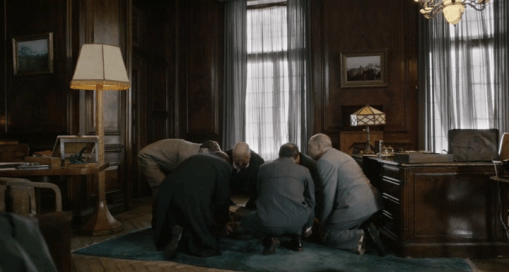
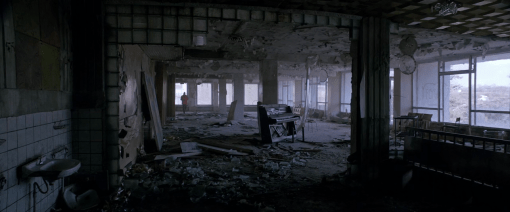
 At a time when Daesh funds itself by trafficking cultural artifacts and Europe announces asylum for threatened art works, Sokurov’s marvelous, piercing film offers nothing less than a revisionist historiography of art itself. For Francofonia, History is not the content of art but its very skin. Museums flatten time, and justifiably present their contents as the highest achievements of a culture, obfuscating, in effect, their history as objects involved in power brokerage, class conflict and market manipulation. Sokurov’s film flips this perspective inside out, identifying art as being frequently the currency of diplomatic power possessing the capacity to purchase peace and as being instruments in service of totalitarian collaboration. Napoleon,
  The jeu de mots in the title says it all. Not only is this deeply death-marked, Ozuvian film an unordinary home movie, but it is also a film about not having a home. Composed of footage shot in the filmmaker’s mother’s Brussels apartment and recorded video-conference sessions between the two, No Home Movie contrasts Akerman’s professional nomadism with the perennial confinedness of her mother Natalia. Between Chantal’s constant off-screen presence and Natalia’s self-imposed captivity (within the apartment as well as the computer screen), between Here and Elsewhere, lies the film’s true space – a part-real, part-virtual space of filial anxiety and affection. Akerman’s matrilineal counterpart to Porumboiu’s
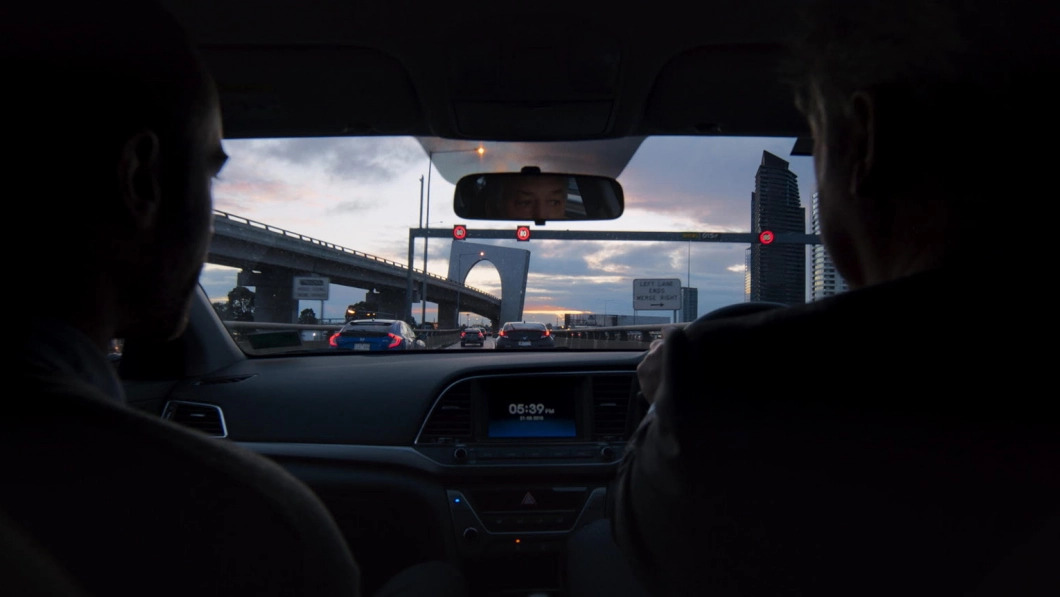
  Taxi opens with a shot of downtown Tehran photographed from the dashboard of a car. Announcing Panahi’s first cinematic outdoor excursion since his house arrest in 2011, this shot sets up the dialectics that would define the film: home/world, individual/social and freedom/captivity. Through the course of Taxi, the spied-upon filmmaker drives around the city in the guise of a cabbie, chauffeuring clients-actors from various strata of the society, and realizing a pre-scripted scenario with them whose urgent, didactic purpose can’t be more obvious. The Iranian state has forged a private prison for Panahi from the public spaces of Tehran, allowing him a mobility and false freedom that’s regulated by its watchful eyes. Panahi turns this power dynamic upside down, transforming the private space of the vehicle into a public space for debate, discussion, instruction and critique. Watching the film, I was constantly reminded of that saying beloved of Wittgenstein: “It takes all kinds to make a world”. Panahi’s very presence in the film – his image, his voice – becomes an audacious act of political defiance, a gesture of tremendous existential courage that stares at the possibility of death floating in the air. Taxi makes cinema still matter.
 A beautiful marine cousin to Guzman’s previous film, Nostalgia for the Light (2010), The Pearl Button turns its attention from the arid stretches of the Atacama to the waterfront and ice field of Southern Patagonia. Threading metaphor over metaphor, the director fashions a typically associative, richly suggestive essay film that turns the nature documentary form on its head. Guzman’s film plumbs the depths of the ocean, trying to uncover traces of suppressed, unseen history embodied by countless “missing people” – a project that derives its impetus from the filmmaker’s bittersweet childhood experience of the sea. Despite Chile’s economic indifference to its 4000-kilometer-long coastline, he notes, the sea has been indispensable those in power, serving first as the entry point of the European invaders, who wiped out the Patagonian natives, and then as the dumping ground of political prisoners during the Pinochet regime. Guzman teases out the different values that the sea holds for him, the autochthons and the Chilean state, in effect politicizing and historicizing that which conventional wisdom takes to be apolitical and ahistorical: geography and the perception of it. The result is a film of immense poetry and horror – a horror that only poetry can convey.
 The most impressive debut film of the year, Alexandra Gerbaulet’s ambitious, intoxicating Shift excavates the evolution of her hometown, Salzgitter, along with that of her family with archaeological care and scientific detachment. In Gerbaulet’s heady narration, anchored by a powerful, quasi-declamatory, rhythmic voiceover, Salzgitter’s transformation from a Nazi mining stronghold and concentration camp, through a waning industrial hub and to a nuclear waste dump parallels the gradual disintegration of the Gerbaulet family under the weight of unemployment, sickness and sexual repression. The filmmaker closely intercuts photographs and diary entries of her mother with impersonal material from popular and scientific culture, weaving in and out of both registers with ease. Gerbaulet’s film is literally an unearthing project, as the director scoops out the various historical, political and geographical layers of this war-weathered city whose tranquil current-day model housing sits atop a makeshift Jewish graveyard consisting of camp workers buried using industrial debris. “Man gets used to everything, even the scar”, declares the narrator bluntly. Shift unscrambles such a habituated view of things, observing the tragicomic tautologies in which history revisits the city. The more you dig, it would seem, the more of the same you get.
 One of my favorite films of the year is a commercial for a major power corporation made by a 106-year-old artist.
  Thomas McCarthy’s dramatization of Boston Globe’s exposé of child abuse in the Church is a robust, smart procedural that is less about picking apart the Catholic establishment than about elucidating the epistemological processes of the Information Age. Set at the transitional period between print and online news media, the film underscores the soon-to-be-outmoded physical nature of journalistic investigation. There are no antagonists of the traditional kind in Spotlight. The only obstacles to the knowledge required to carry out the exposé are the numerous procedures and institutional protocols that have for objective the protection or publication of information. It is telling that the entire film is about a pack of newswriters seeking information that’s already out in the open. What’s more, the film recognizes that the Spotlight team’s attempts to mount an institutional critique is itself inscribed within kindred ideological biases, operational strategies and structural iniquities of Boston Globe as an institution and that the metaphysical crisis that their story can potentially wreak amidst readers is but similar to the disillusionment the newsmen experience vis-à-vis their Protestant weltanschauung. With relatively uncommon formal and ethical restraint, McCarthy crafts an arresting film about how a society’s narratives are made, predicated they are as much on the dissemination of information as on their marginalization.
 ergei Loznitsa’s formidable follow-up to Maidan (2014) furthers the earlier film’s exploration of the aesthetics and mechanics of revolution, capturing a people coming together to make sense of a political limbo. Without context or a framing perspective, the film drops us straight into the streets of St. Petersburg just after the attempted reactionary coup d’état in Moscow in 1991. Confusion and mundanity – not heroics and determination – reign as we observe the formative process of a people’s movement and the imagined/imaginary social glue that causes individuals to cohere into a group. State apparatuses compete with each other for imposing a narrative onto the events, while the very toponymy of the city becomes an ideological battleground. Working off priceless archival footage, much of which is incredibly reminiscent of the filmmaker’s own cinematographic style, Loznitsa provides an invaluable glimpse into the unfurling of history, chronicling how numerous banal, unsure gestures and actions snowball into Historical Events. If Eisenstein’s better-than-the-original recreation of the October Revolution was the abstraction of materialist history into ideas, Loznitsa’s film, taking place at the same Palace Square 63 years later, rescues history from the reductions of ideology and brings it right back into the realm of the material.
 A remarkable American counterpart to J. P. Sniadecki’s The Iron Ministry (2014), In Transit unfolds predominantly as a series of interviews with a mixed bag of travellers on board The Empire Builder, a long-distance passenger train running over 3500 kilometers and spanning almost the entire width of the United States. The accounts of passengers seeking out professional and financial breakthroughs evoke the pioneer myth hinged on a “Go West” imperative while the stories of those aboard in search of their ‘calling’ demonstrate the essentially spiritual, even religious nature of their pilgrimage-like journey. The diversity and range of the interviewees and their interactions help the film depict the train as a miniature America, à la Stagecoach, and carve out a quasi-utopian space in which members across class, race and gender divides get an opportunity to converse with each other without personal baggage. Nonetheless, In Transit is less a cultural vision of a possible America than an existential meditation on what makes people embark on these journeys. One elderly war veteran remarks that he’ll never be able to see these plains again. To cite John Berger, “the desire to have seen has a deep ontological basis.”
 One of a piece with Gianvito’s Vapor Trail (Clark) (2010), Wake continues its precedent’s important investigation into the ecological consequences of the presence of America’s largest military bases in the Philippines during most of the 20th century. Like Profit Motive and the Whispering Wind (2007), Wake is guided by the spirit of Howard Zinn’s approach to history and sketches an economically-founded account of US-Philippines political and cultural relations – a history that seems to be have been lamentably wiped off from the Filipino national consciousness. Gianvito juxtaposes images from the Philippine-American war with current day images from the contaminated Subic naval base area, suggesting, in effect, the poisonous persistence of an agonizing, unacknowledged history. Wake is imperfect cinema – unwieldy and resourceful – and employs fly-on-the-wall records, talking heads, on-screen text, photographs and news clips to mount a potent critique of a historiography defined political amnesia and economic opportunism. More importantly, it is a necessary reminder that imperialism is not always about presence, action and exercise of power but sometimes also about the refusal of these very elements, that history is not only a matter of events but also processes and phenomena and that geography is always political.




 The Seventh Art