
Walden (Daniel Zimmermann)
In the first shot of Austrian artist Daniel Zimmermann’s Walden, a camera pans from left to right in the middle of a forest. It’s still and quiet, and it isn’t until minutes into the shot that we have the first human presence. A lumbering activity is underway and we hear the hum of a chainsaw in the distance. Around the eighth minute of the shot, amid cries of timber, a tree falls, its tip just a few feet from the camera. When the camera completes full circle, the view has changed so much that we aren’t sure whether it’s the same spot the camera started at. Human action on the environment is what Walden is about, traces as it does the conversion of the fallen tree into planks and its transportation over rail, road and sea to a forest location in Brazil. Walden tangentially fits into a tradition of narrative documentaries that purport to demonstrate the workings of a globalized economy by focusing on the provenance of specific consumer goods. While its cross-continental movement is still enabled by international trade, the timber here isn’t following the regular route of imported goods. As the film’s supporting text points out, the path of the planks in Walden is the reverse of the usual trajectory of goods in a global economy. The film never reveals the mystery of why a consignment of sawn wood must move from Austria to a tribal region in the Amazon.
This refusal to explain can partly be understood by the fact that Walden also inscribes itself into another tradition. Constructed out of thirteen 360-degree pan shots of about eight minutes each, it has a direct kinship to structural films such as those of James Benning. It’s especially reminiscent of Benning’s RR in its emphasis on movement of goods described in predetermined cinematic formulae. The structure raises the questions: why 360-degree pan shots and why nine minutes? I think there are no extra-cinematic explanations to these choices and that these are foundational parameters—arbitrary givens of the problem—that are to be taken for what they are. Besides, the shots don’t exactly complete full circle, most stop at three-fourths. The duration, too, ranges from seven to nine minutes. While Zimmermann’s camera moves at a constant pace, it gives the illusion of slowing down or speeding up depending on the movement that happens along the sweep of the camera. The moving timber makes its presence in every shot either at the beginning or the end, but the milieu it’s moving through—whether it’s a scenic port city in Brazil or a tribal village in the woods—is of equal interest. The film starts and ends in the stillness and silence of the jungle while its middle section consists of constant movement, just as it begins and closes deep within the woods, with its central passages having to do with modern facets of civilization. Zimmermann’s camera always seems to be at the right place and time to capture the most interesting action in the vicinity. This aspect reinforces its pre-determined structure over its documentary aspects.
The Whalebone Box (Andrew Kötting)
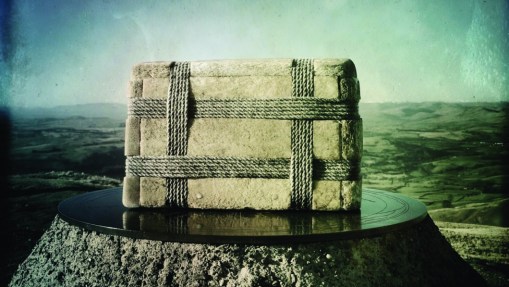
For those who have seen any of Kötting’s work, the confounding associations of The Whalebone Box shouldn’t come as a total curveball. The sixty-year-old Kötting makes playful experimental films featuring friends and family that work off English folklore and geography. A frequent protagonist is his daughter Eden, an artist herself, who was born with Joubert Syndrome. Eden is both the narrator and the inspiration for this new film. Two dominant narrative strands emerge from the audiovisual thicket of The Whalebone Box. In the first, we see Eden dressed as a May Queen, seated in a forest on a fauteuil holding a hunting rifle and peering through binoculars. She is admittedly looking for a whale to hunt down. We also see her at a museum and, more frequently, in bed. Subtitles express her thoughts and dreams, which are about a box made of whalebone, an artefact she recreates in cardboard. The second narrative strand is actually about the legendary whalebone box, which was reportedly created by sculptor Steve Dilworth on the Scottish island of Harris thirty years ago. The island, we are told, is now afflicted with an unknown epidemic and the box might hold a cure. So Kötting, the writer Iain Sinclair and the photographer Anonymous Bosch set out with the box on a journey from London to the north. They stop at places of mythological import to “charge the box” with curative energy. Several shots of the film show the box on the dashboard of the group’s car or Sinclair lugging it around the English landscape. Interspersed with this journey is monochrome clips of children playing and recreating pagan myths.
Now, how much of this myth is fabricated, we don’t know (I suspect all of it is); Kötting’s rough-hewn home movie aesthetic imparts a found-footage like authenticity to it. But what is evident is that The Whalebone Box is partly a wish fulfilment project in which Kötting fashions a film after his daughter’s dreamlike fiction. He departs from the basic idea of a mysterious whalebone box and weaves in all the references that it evokes. There’s Moby Dick, for instance, which had already made its appearance in Kötting’s earlier work. The filmmaker expands on the MacGuffin with soundbites from Robert Aldrich’s Kiss Me Deadly, also about a box with deadly powers, and Billy Wilder’s Sunset Boulevard. Other references include Pandora’s box, the black box of airplanes and Schrödinger’s box containing the cat, which here stands for the whale simultaneously in “a state of being on land and returning to ocean”. The artefact the trio carries is at times swapped with Eden’s cardboard version, making clear the playful, recreative intention behind the project. Shooting in 16mm, Kötting employs an amateur film style with handheld camera and washed out colours. He quotes titles from Philip Hoare’s book Leviathan and has poems read on the soundtrack. At times, he overlays recorded speech over the same words captured on location, imparting an oneiric rhythm and texture to the film.

So Pretty (Jessie Jeffrey Dunn Rovinelli)
Four gender-fluid youth spend their days in a shared apartment in Manhattan. They cook, have sex, paint protest posters, make music, organize reading sessions in the park and discuss communism. Trans filmmaker Jessie Jeffrey Dunn Rovinelli’s So Pretty presents the life of these young, queer folk as a self-sufficient world. Considering that we see it through the eyes of its participants and their friends, there’s no outsider gaze against which these lives are to be assessed. The camera often follows them walking the sidewalks of New York, this liberating gesture being a given. Their protests and the police crackdown of these protests are only suggested and remain in the periphery. Grafted on the documentary record of this everyday routine are details from the eponymous novel by German writer Ronald M. Schernika. So Pretty isn’t as much an adaptation as a dialogue with the novel. The actors of the film take turns reading passages from the book to each other. The film dramatizes what they read sometimes. Tonia, the “character” played by Rovinelli, is in fact in the process of translating the book and discusses with Franz (Thomas Love) on whether a particular word needs to be translated negatively as “coupledom” or positively as “togetherness”. At first, it appears that Paul (Edem Dela-Seshie) and Erika (Rachika Samarth) are a stable, “trans heterosexual” couple, but it soon becomes apparent that there’s no point boxing the desires of these characters. They make out and sleep with each other in every combination, their interlaced bodies on bed being a punctuating visual of the film.
Rather than the representational politics or particulars of the adaptation, it’s the film’s formal strategies that struck me the most. Rovinelli’s camera pans and tracks in extremely slow motion across the rooms, producing tableaux of people in ordinary interactions. In a remarkable early shot, six characters sit in the dining room making small talk in pairs. Some of them are off the frame, and their voices are mixed so that they vie equally for our attention. Like in a Robert Altman shot, there’s no central point of focus, and our ears and eyes shuttle from one pair to another, without every settling on any of them. In the following scene Franz and Tonia make their bed. Their heads out of the frame, our focus oscillates between the two across the vast negative space of the bed. I presume this asymmetrical manner of framing has a theoretical underpinning, but it’s also a visceral choice. Tonia suffers a heartbreak with Franz, but this never becomes a dramatic element. A long shot presents the two, now in a different apartment Tonia has taken up, cooking, doing dishes and eating in the kitchen, the tense, wordless atmosphere signalling the straining relationship. The film’s measured pace is further diluted as the relationship buckles and even more so when the police arrests Erika. The characters split up in two groups and the ambience becomes mournful. Towards the end, the film becomes a pure light-and-sound performance played against Erika’s music that mixes melody and atonality. In other words, a sustained mood piece.

Mother (Kristof Bilsen)
The Baan Kamlangchay centre in Chiang-May, Thailand, is a home run by a Swiss national for patients suffering from Alzheimer’s, dementia and related ailments. It shelters fourteen patients from German-speaking countries and employs three local caregivers. The film begins with the anguished thoughts of one of them. Pomm is separated from her husband and gets to visit her three children only occasionally. She works two jobs to pay back her debt and secure a future for her children. Bilsen’s film too juggles two narrative arcs. In the first, we follow Pomm’s routine: her comfortable rapport with her nonagenarian patient Elizabeth, her visits to her mother and children living several hours away, her interactions with her employer, her account of her father’s depression and eventual suicide, her mourning over Elizabeth’s passing, and articulations of her anxiety about her old age and her guilt over ignoring her mother. Running parallel to Pomm’s life is Maya’s in Switzerland. Maya is 57 years old and suffers from Alzheimer’s. After much deliberation and concern, her husband and daughters have decided to admit her to Baan Kamlangchay. They speak about the prejudice associated with sending your loved one to a home. Indeed, Maya’s family couldn’t be more loving. We see her daughters take her for daily walks, doing her hair and nails, preparing her move to Thailand, packing her medicines and clothes, and generally being there for Maya. Bilsen cuts between Pomm and Maya before they meet in reality, and when they do, he reinforces their almost predestined bond through a closed shot-reverse shot-reaction shot triad at the home.
Mother is evidently about caregiving and maternal affection, but it’s a detailed study in the cultural differences involved in familial bonds. Pomm is moved when she meets her mother after a while. She tells the camera that she wants to hug her, but wouldn’t dare to, given her cultural norms. On the other hand, we see Maya’s family expressing their love through embraces and kisses. Maya’s relation to her pre-teen children, in contrast, is much more intimate and physical than what Western parents would exhibit towards their adolescents. Bilsen intercuts between the two families to illustrate different verbal and non-verbal expressions of affection. Now, as an employee at the home, Pomm has to be much more physical with her Western patients, who are maternal figures to her, than she is with her own mother. This evocation of the effects of global capital on the most personal of relationships is what gives Mother its intellectual foundation. The very fact of the home being in Thailand, and not in expensive Switzerland, points to the economic underpinnings of the caregiving industry. Pomm discusses shifts and holidays with her boss, who calls his patients customers. But she is also genuinely caring of her patients. Mother doesn’t state that either capital or caregiving trumps the other. It merely throws light on newer forms of a labour that’s always been side-lined, and the contradictions that these new forms produce. Pomm reflects on the good fortune of her patients to be able to pay for the care, which she herself won’t be able to afford for her mother. In Marxist terms, Pomm is alienated from her own service, even when it doesn’t involve any means of production. What would happen to her, Pomm wonders, when she is old? Would her kids provide her the same care? If they move to Switzerland, perhaps.

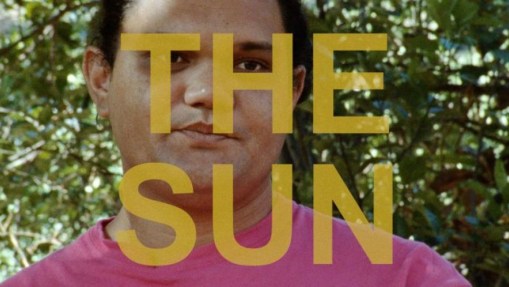


 Chan’s diaristic digital work is divided into chapters named after family members and unfurls as a process of piecing together of familial history. Through various confrontational interviews with her mother and father, the filmmaker attempts to understand their failed marriage, her strained relation with her step-father and the violence that has structured them both. Chan’s decision to put her entire life-story on film is a brave gesture, but the film closes upon itself, satisfied to be a melodrama valorizing personal experience over broader frameworks. (Consider, in contrast, the rigorous domestic formalism of Liu Jiayin or the socio-political tapestry of Jia Zhangke’s early work.) Chan misses the forest for the lone tree. Winner of the Adolfas Mekas award of the fest.
 Beep assembles anti-communist propaganda material from the 60s and the 70s commissioned by the South Korean state that was based on the mythologizing of a young boy, Lee Seung-bok, slain by North Korean soldiers. With the unseen, absent boy-hero at its focus, Kim’s film depicts the dialectical manner in which a nation defines itself in relationship to an imagined Other. Kim makes minimal aesthetic intervention into the source material – our relation to it automatically ironic by dint of our very distance from the period it was made in – restricting himself to adding periodic beep sounds to the footage, producing something like a cautionary transmission from another world.
 Black Sun opens with a composition in deep space presenting a metonym for a country in the process of development: high-rise buildings in the background as a pair of actors in period costumes rehearse a scene in the foreground. In a series of Jia Zhangke-like vignettes of Saigon set in middle-class youth hangouts scored to pop songs and television sounds, interspersed with images of a metamorphosing city, we see the distance that separates art from reality and the middle-class from the changes around it. The film culminates in a complex, home-made long take following the protagonist across her house and out into the terrace, where she dances, presumably to the eponymous song.
 The most challenging and elusive film of the competition I saw is also the most hypnotic. Cloud Shadow gives us a narrative of sorts in first person about a group of people who go into the woods and dissolve in its elements. The film is obliquely a story of the fascination with cinema, of the trans-individualist communal experience it promises, of the desire to dissolve the limits of one’s body into the images and sounds it offers. With an imagery consisting of sumptuous tints, and nuanced colour gradation and superimpositions, the film enraptures as much as it evades easy intellectual grasp. The one film of the festival that felt most like a half-remembered dream.
 Ferri’s teasing, playful Dog, Dear appropriates the filmed record of a Soviet zoological experiment in the 1940s in which scientists impart motor functions to different parts of a dead dog. In the incantatory soundtrack, a woman – presumably the animal’s owner – repeatedly conveys messages to it, with each of them prefaced by the titular term of endearment. Ferri’s film would serve sufficiently as a blunt political allegory about the dysfunction of communism, but I think it’s probably fashioning itself as a metaphysical question: the dog might well be kicking but is he alive? His physical resurrection will not be accompanied by a restoration of consciousness. He will not respond to his master’s voice.
 Put together from footage apparently shot over twenty years at a Thai army officer’s residence, Tesprateep’s film shows us four conscripts working in the general’s garden. We witness their camaraderie, their obvious boredom, the empty bravado in entrapping small animals and intimidating each other. The misuse of power by the officer in employing these youth to mow his lawn reflects a broader militaristic hierarchy, as is attested by the youths’ casual violence towards the animals and their brutal torturing of a prisoner. Endless, Nameless recalls Claire Denis in its emphasis on military performativity and Werner Herzog in its juxtaposition of idyllic nature and seething violence, all the while retaining an
  In Fictitious Force, Widmann incidentally poses himself the age-old challenge of ethnological cinema; how to film the Other without imposing your own worldview on him? The filmmaker smartly takes the Chris Marker route, avoiding explanatory voiceover for the rather physical Hindu ritual he photographs and instead holding it at a slightly mystifying – but never exoticizing – distance. Widmann’s film is about this distance, the chasm between experience and knowledge that prevents the observer from experiencing what the observed is experiencing, however understanding he might be. Fictitious Force’s considered reflexivity carefully circumvents the all-too-common trap of conflating the subjectivities of the photographer and the photographed.
 Fashioned out of footage that the artist shot during his visit to the titular natural reserve in Ontario, Fish Point comes across as an impressionist cine-sketch of the locale. The film opens with Daichi Saito-esque silhouettes of trees against harsh pulsating light – near-monochrome shots that are then superimposed over a slow, green-saturated pan shot of a section of a forest. This segment gives way to a passage with purely geometric compositions consisting of alternating browns and greens and strong horizontals and verticals. Forms change abruptly and tints become more diffuse and earthly. We are finally shown the sea and the horizon, with a rough map of the area overlaid on the imagery.
 A music video for a song that reportedly riffs on a holy chant and the traditional cry of the local ragman, Ye’s film starts out with shots of old women and men lip-syncing to the titular melody before turning increasingly darker. The rag picker of the poem progresses from accepting material refuse to buying off diseases, emotional traumas and even intolerable human characters. Ye builds the video using shots both documentary and voluntarily-performed that portray everyday life in Taiwan as being poised between tradition and modernity. The junkman of the film then becomes a witness to all that the society rejects and, hence, to all that it stands for.
 Set in a suburban Mumbai slum, Bhargava’s film takes a look into one of the reportedly many carrom clubs in the area where young boys come to play, smoke and generally indulge in displays of precocious masculinity. Where Imraan, the 11-year-old manager of the club, seems reticent before the camera, his peers and clients are much more willing to perform adulthood in front of the filming crew. While some of them are acutely aware of the intrusive presence of the camera, urging their friends not to project a bad image of the country, the film itself seems indifferent about the ethics of filming these youngsters, asking them condescending questions with a problematic, non-committal non-judgmentalism.
 Völter’s visually pleasing and relaxing silent film is a compilation of scientific documents of cloud movement over the Mount Fuji recorded from a static observatory by Japanese physicist Masanao Abe in the 1920s and 1930s. Abe’s problem was also one of cinema’s primary challenges: to study the invisible through the visible; in this case, to examine air currents through cloud patterns. The air currents take numerous different directions and these variegated views of the mountain situate the film in the tradition of Mt. Fuji paintings. The end product is a James Benning-like juxtaposition of fugitive and stable forms, a duet between rapidly changing and unchanging natural entities.
 The most narrative film of the competition, Memorials situates itself in the tradition of 21st century Slow Cinema with its elliptical exposition, stylized longueurs, (a bit too) naturalistic sound and its overall emphasis on Bazinian realism. A young man revisits his father’s house long after his passing and starts discovering him through the objects of his everyday use, while a dead fish becomes the instrument of meditation and grieving. Though rather conventional in its workings, Memorials offers the details in its interstices fairly subtly and touches upon the usual themes of inter-generational inheritance and posthumous rapprochement, while also gesturing towards a necessary break from the past.
 Punprutsachat’s work is a straightforward document of the protracted rescue of a water buffalo from a man-made well on a sultry summer afternoon by dozens of village folk. Shot with a handheld digital camera and employing mostly on-location sound, the film presents to us the efforts of the villagers in chipping away at the edifice, restraining the animal from agitating and finally allowing it to go back to its herd. Natee Cheewit attempts to encapsulate the idea of eternal struggle between man and animal and, more broadly, between nature and civilization. The remnants of the demolished pit and the dog wandering about it are reminders of this sometimes symbiotic, sometimes destructive interaction.
 Night Watch is reportedly set in the days following the military coup in Thailand in May, 2014 – a period of state repression dissimulated by triumphalist propaganda about reigning happiness. Chulphuthiphong’s debut film showcases one quiet night during this period. Jacques Tati-esque cross-sectional shots of isolated apartments and office spaces show the citizenry complacently cloistered in their domestic and professional spaces, much like the sundry critters that crawl about in the night. Someone surfs through television channels. Most of them are censored, the rest telecast inane entertainment. Night Watch underscores the mundanity and the ordinariness of the whole situation, which is the source of the film’s horror.
 A rapid editing rhythm approximating the audiovisual assault of the information age, a visual idiom weaving together anime, pencil-drawing and Pink Film aesthetic and a soundscape consisting of reversed audio and noise of clicking mice and shattering glass defines Ouchi’s high-strung portrayal of modern adolescent anxieties. In a progressively sombre, cyclic series of events, a teenager navigates the real and virtual worlds that are haunted by sex and death around her. Ouchi’s pulsating, mutating forms and her preoccupation with the hyper-sexualization of visual culture are reminiscent of
  One of the high points of the festival, Scrapbook consists of videograms shot in 1967 in a care centre in Ohio for autistic children with commentary by one of the patients, Donna, recorded (and curiously re-performed by a voiceover artist at Donna’s request) in 2014. Donna’s words – indeed, her very use of the pronoun ‘I’ – not only attest to the vast improvement in her personal mental condition, but also throw light on the psychological mechanisms that engender a self-identity. For Donna and the other children-patients filming each other, the act of filming and watching substitutes for their thwarted mirror-stage of psychological development, helping them experience their own individuality, reclaim their bodies. Bracing stuff.
 Canadian animator Leslie Supnet’s hand-drawn animation piece is an extension of her previous work
  According to the program notes, the project brings together a real-life DJ who has lost her job after the coup d’etat in 2014 and an actual illegal immigrant boy from Myanmar at a secluded pond in the woods to allow them to do what they can’t in real life. We see the DJ perform for the camera, talking with imaginary strangers, giving and playing unheard songs, while the boy is content in tossing stones into the moss-covered pond. Like a structural film, The Asylum, alternates between the DJ’s ‘calls’ and the boy’s quiet alienation, taking occasional albeit unmotivated excursions into impressionist image-making, to weave a vignette about ordinary people made fugitives overnight.
 A Kiarostami-like narrative minimalism characterizes Radjamuda’s naturalistic sketch in digital monochrome of a lazy holiday afternoon. A young boy perched near the window of his house engages in a series of self-absorbed activities, while actions quotidian and dramatic, including a hinted domestic conflict, wordlessly unfold around him off-screen. A series of shallow-focus shots rally around a wide-angle master shot of the backyard to establish clear spatial relations. Literally and metaphorically set at the boundary between the inside and the outside of the house – home and the world – Radjamuda’s film is a pocket-sized paean to childhood’s privilege of insouciance and to the transformative power of imagination.
 The shadow of Apichatpong Weerasethakul’s work is strongest in Kapadia’s three-part work about the cycles of life, death and reincarnation and the interaction between mankind and nature, between the real and the surreal. Set in various regions of India and in multiple languages and shot predominantly between dusk and dawn, the film has a beguiling though mannered visual quality to it, with its appeal predicated on primal, elemental evocations of the supernatural. While Kapadia’s superimposition of line drawings on shot footage to depict man’s longing for and transformation into nature demands attention, the film itself seems derivative and a bit too enamoured of its influences.
 A potential companion piece to Porumboiu’s
  At least as formally innovative as Rithy Panh’s
  Wind Castle opens with a complex composition made of an unfinished (or destroyed) building behind a burnt crater, with the moon in full bloom. We are somewhere in the Indian hinterlands, a brick manufacturing site tucked inside large swathes of commercial plantations. Basu’s camera charts the territory in precise, X-axis tracking shots that form a counterpoint to the verticality of the trees. Noise from occasional on-location radios and trucks fill the soundtrack. A surveyor studies the area and trees are marked. ‘Development’ is perhaps around the corner. But the rain gods arrive first. Basu’s quasi-rural-symphony paints an atmospheric picture of quiet lives closer to and at the mercy of nature.







 The Seventh Art