Profit Motive And The Whispering Wind (2007)
John Gianvito
English
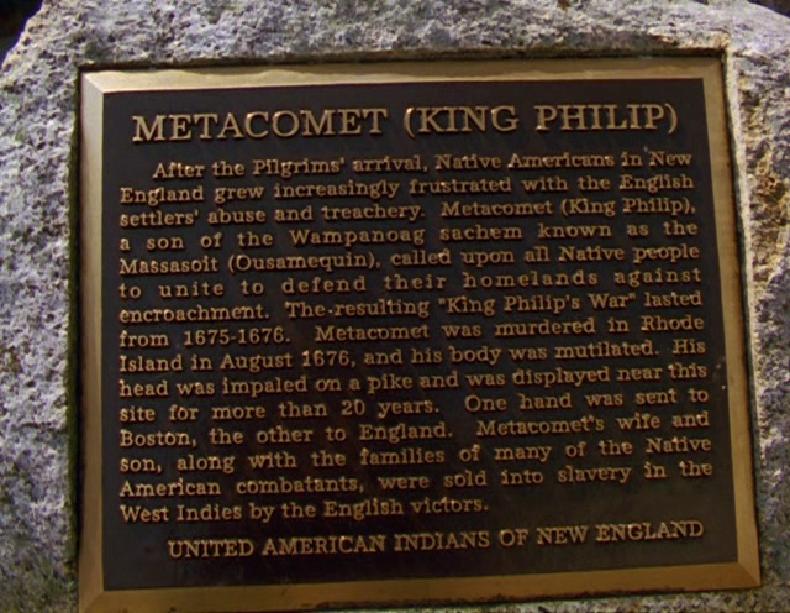 John Gianvito’s Profit Motive and the Whispering Wind (2007) is prefaced by a quote by Utah Philips (but attributed to a certain Claire Spark Loeb): “The long memory is the most radical idea in America”. Inspired by Howard Zinn’s A People’s History of the United States, Gianvito’s film is an attempt to chart the history of the country through gravestones, individual memorials and geo-historical markers. Unlike Zinn, however, Gianvito doesn’t have the descriptive advantage of the written text. His is, notwithstanding the texts we encounter within these images, a visual project in which history ‘materializes’ itself in the signatures of the visible. For Gianvito, this history, too, is a history of class struggles. Starting from the early Native American movements, through slave insurrections and worker uprisings of the industrial era, to the Civil Rights Movement and current-day social protests, the film, like Zinn’s book, sets the framework for a historiography of America based solely on – organized but not necessarily politicized – people’s movements. Profit Motive brings to mind essay films such as Landscape Suicide (1986), Robinson In Ruins (2010) and, more recently, differently, Molussia (2012) in the way it probes for the strains of a troubled past on a sedate visible present. Presenting indicators of modern life – highways and cars – right next to site markers detailing strikes and revolts that took place centuries ago, the film hints at a causality and reflects on how history continually affects and shapes the here and the now. The Whispering Wind of the title, which resembles a tribal Indian name, on the other hand, derives from the numerous shots of wind-ridden countryside, forests and grasslands that punctuate the film. (They remind one of D. W. Griffith’s comment about filming the wind in the trees.) These winds become something of connecting tissues between the shots of the monuments and have a mythic quality to them, as though they are immortal, invisible balladeers channeling history from one time and place to another.


 The least everyone could agree on Lars von Trier’s Dancer in the Dark (2000), without getting into a debate about its artistic merit, is that it is a work of immense range. Juxtaposing Dogme-styled kitchen sink ultra-realism with musical numbers replete with chorus dancers, it ambitiously attempts to marry genres that are positioned at the opposite ends of a spectrum. It’s a marriage that is perhaps doomed by construct, but in Trier’s film it is intended to be an unholy, internecine union. The flights of musical fantasy that Selma (Björk) launches into, like the stripped scenery of Dogville (2003), serve as Epic Theatrical devices that seek to thwart audience’s uncritical surrender to the film’s drama and continually remind them of the artificiality of the film’s construction. That even such a blatant disfiguration of the film’s tonal integrity doesn’t successfully prevent the audience from total emotional identification with Selma is less an indicator of the film’s conceptual failure than a demonstration of why a multi-generic cinema, like Bollywood, works on the same audience-character dynamic as the straightforward genre entries of the West and why a mixed-mode narrative doesn’t necessarily avoid the pitfalls of Realism. That’s because von Trier the screenwriter is an incurable melodramatist (tempered by von Trier the director), who, by heaping misery upon his protagonists, makes sure that there’s not a single dry eye in the house. (Unsurprisingly, he cites Douglas Sirk as a major inspiration here, but I’d think Sirk’s assimilation of Brecht’s method is a tad more successful). On the other hand, as a musical, von Trier’s film leaves a lot to be desired. He shoots musical numbers like action scenes (in contrast to Peckinpah, who shoots action scenes like musical numbers), forgetting that the secret to a great musical number lies in the Bazinian conquest of space and not time.


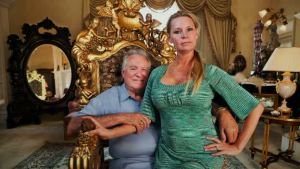 Hinged on the economic crisis of 2008, Lauren Greenfield’s cautious, measured The Queen of Versailles (2012) charts the riches-to-proverbial-rags trajectory of David A. Siegel, American real estate magnate, and his family as they plummet from being revoltingly rich to being nearly have-beens who are forced to relinquish the largest American home ever built. Greenfield’s film is full of improvisational metaphors, bitter little ironies and strokes of poetic justice, such as how the many employees whom Siegel laid off – not the big banks which refused to fund him – end up helping his family through thrift shopping. The most interesting aspect of the film, however, is how it throws light on how the familial fabric of the Siegel family, which no doubt is used to typify middle and upper American households, is dictated by factors outside their control and much larger than them, such as the global economic downturn – a direct demonstration of family being superstructural organization shaped by an economic base. These passages of the film play out like Metamorphosis as we witness the bourgeois family structure falling apart when the financial adhesive that held it together vanishes. Like Kafka’s novella, these scenes evoke a mix of revulsion and pathos: the repulsion one feels watching how thoroughly these relationships are founded on a bed of material transactions is counterbalanced by a pity for the children who seem to be oblivious to how tainted by excess wealth they are. If there is a lingering feeling, despite the film’s efforts to remain nonjudgmental and neutral about the events that transpire, that we feel pity for a group of people who are going from being extremely rich to merely rich, it is because the film rightly preserves the basic humanity of the Siegel family.

 The Seventh Art