Kanasembo Kudureyaneri (2010) (Riding The Stallion Of A Dream)
Girish Kasaravalli
Kannada
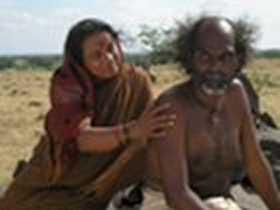
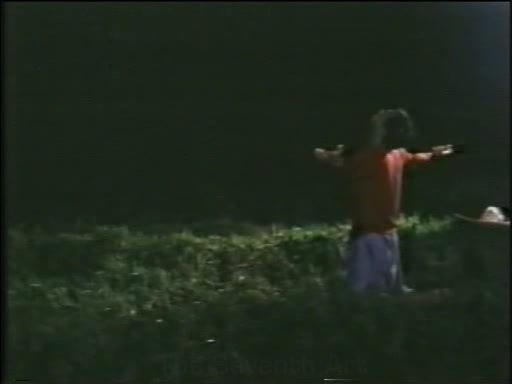
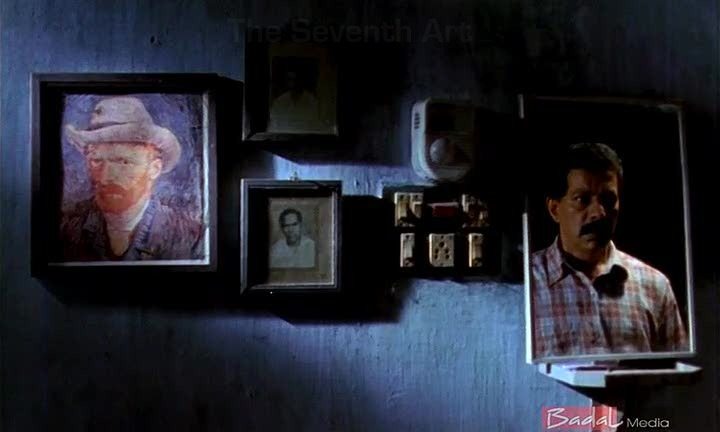
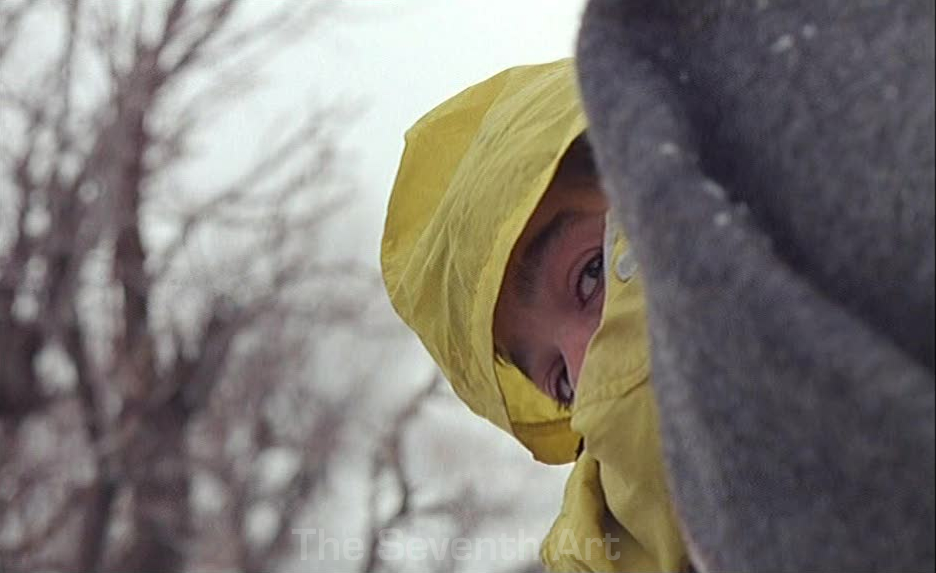
 Girish Kasaravalli’s Riding the Stallion of a Dream (2010) is something of a blast from the past, specifically from the Indian parallel cinema of the 1970s of which Kasaravalli himself was a part (This regression in time might just be the point of the film). Like most films of that period, Riding has a keen sense of class politics at work in the hinterlands of the country (There is nothing very specifically 21st century about the script, except for the mention of factories buying farmlands). Furthermore, it embraces the typical aesthetic characteristics of the movement with its use of a traditional, downbeat soundtrack, its penchant for naturalism and, particularly, darkness and its employment of dubbed sound. But more importantly, it retains the optimistic belief of the age that change is indeed possible (even though Kasaravalli’s proposed means of change is much less romantic and much more grounded). However, unlike its predecessors, Kasaravalli’s film is unwilling to overlook the human elements comprising the class struggle. Indeed, this is where the script’s Arriaga-like structure is really put into good use. The film is essentially divided into four segments which alternately present reality as seen by Irya the village gravedigger and his wife Rudri and reality as seen by the son Shivanna and the daughter-in-law Hema of the recently deceased village elder (among other elites). Predictably for a film that deals with multiple classes, Riding is full of ironies small and big. The pristine corridors of the elder’s house are contrasted with the dilapidated interiors and streets of Irya’s home and neighbourhood. Shivanna and Hema are almost always seen trapped inside the claustrophobic villa, which is suffused with the stench of the rotting corpse of the village elder that reflects their moral decay, while the gravedigger and his wife are seen in glorious long shots traversing the wide open spaces and flower farms of the village. The death of the patriarch (whose body has to be forced to a sitting position and whom his son will be taking over from) spells doom for Shivanna and co. while it’s Rudri (there’s even a direct reference to her as Irya’s surrogate mother) who takes to herself to reconstruct her husband’s life. Revealing the old man’s death helps affirm Irya’s dream while it would shatter Shivanna’s and contrariwise. In both camps, it is a blind faith in God and religion that serves to preserve status quo. There is considerable tweaking of the mise en scène – especially in the lighting and actor blocking – as well that aids to emphasize this tug of war. Kasaravalli provides us almost exactly one half of the truth in each segment, leaving it to the subsequent or preceding segment to complement it. A simple shot from a particular segment finds its corresponding reverse shot in only the next segment and vice versa. Each of these couples in the story wants to lead a better, more dignified life, as defined by their social classes. Like the audience, these couples are unable to see what lies on the other side of the hedge and how their seemingly independent plans might affect the other. There is no moral dilemma that they see in their actions. This way, Kasaravalli calls into question the perceptibility of the class structure itself and, subsequently, uses his art to provide us that critical distance from reality which is required to understand it in totality. As a result, the characters in Kasaravalli’s film are not (save for a touch of contempt and sympathy the upper and lower class characters respectively receive from the director – a possible residue of the parallel cinema of yesteryear) class abstractions or oversimplified monsters and victims. They are both individuals with choice and products of their classes (Irya blows his money on alcohol and loafs about regularly, Rudri is a casual thief and some of the landowners in the village do genuinely care about Irya’s condition). Only that each of the couple wants to ride off on its own dream horse and in a direction that it wants. But what both don’t realize is that the horses are tied to the same chariot.
(Image Courtesy: Goethe Institute)
 A refreshing and welcome relocation for Wang Bing from the decrepit industrial landscapes of post-Mao China, Man With No Name (2009) finds the director pointing his ever curious, never condescending, hand-held digital camera towards the eponymous, anonymous man living in a deserted wasteland in an unnamed part of the country. A Dersu Uzala incarnate, he lives in an underground shanty – an earthen igloo – in this harsh and otherworldly geography that seems to be entirely cut off from civilization, save for some broken plastic containers that the man uses. From an anthropological perspective, Wang Bing’s account is the idea of man being reduced to his most rudimentary elements. This unnamed man is largely seen taking care of his basic needs – food, clothing and shelter. But, additionally, he also appears to have developed an aesthetic need and we see him compacting heaps of earth and mending the mud walls of his neighbourhood during his “free time”. However, such a reading runs the risk of undermining the political question that the work raises. The moment a film relates one person to another, it goes political. And films such as Man With No Name become political by, ironically, being exceptions to that rule – politicization due to resistance to it. The man in Bing’s film is also a political concept, a new man who refuses to leave the (literal and figurative) womb of the earth, a man who, like Lisandro Alonso’s woodcutter, has seemingly succeeded in freeing himself from all ideology and leading a genuinely self-sustained life.



 The Seventh Art