Lest we fail to notice that the time period mentioned in the title of Danny Boyle’s latest refers to the gestation period before the spiritual and quasi-physical rebirth of the protagonist Aron Ralston (James Franco), the director showcases him emerging out of the vaginal cave, in a diminished stature, with his representative umbilical cord severed, struggling to walk and talk and, hang on, suckling on a metallic hook affixed to the ground. That 127 Hours turns out to be a terrific film despite Boyle’s periodic middle brow tendencies is emblematic of the schizophrenic nature of his sensibility, which so wildly swings from adolescent camp and calculated profundity, wherein, surprisingly, even strained poetry soars. Opening portentously with staccato shots of Aron’s right hand, which becomes a MacGuffin later on, 127 Hours follows Ralston’s five-day encampment at nature’s existential purgatory, where realistic emotions become absurd and absurd emotions the only valid ones and where freedom of the mind compensates for physical imprisonment. Aron is like the audience in a film hall whose material reality casts no influence on their psychological state. Likewise, Boyle’s film startlingly segues midway into a heady reflection on digital culture, in which history, memory and even real people are replaced by pop images, in which identities are split in order to deny reality and in which death is but a smudge in the recording. The correct genre to classify Boyle’s film is Erotica – with Anthony Dod Mantle’s camera probing the tanned skin and caressing the sensual curves of the landscape – in which man’s ceaseless love affair with nature both humbles and inspires him. (Aron’s manoeuvres through the canyon and his first attempts to free himself themselves resemble copulation, making him the father of his new self). But aren’t all these philosophical games ultimately exploitative? I think the film’s eventual humanism answers that question.
Allow me to begin with a cliché: 2010 has been an insipid year at the movies. I really struggled to come up with this list because it just didn’t feel like there were many contenders for it. The tail of this list is shaky at best and I wouldn’t want to defend it with all my heart, I think. I’m not saying that there were no great films made in 2010. One bizarre phenomenon of the recent years has been the growing time difference between the world premiere of a film and its distribution/release. Movie lists this year have been almost entirely made of films that actually premiered in 2009 (or earlier) and, going by the trend, it wouldn’t be really a surprise if the 2011 lists consisted wholly of movies that premiered in 2010. (This list, however, is based on world premieres alone). This is not a wild thought at all, considering how stellar the list of filmmakers who premiered their films this year, without a release, has been. (Trust me, there are about 50 big titles that haven’t been mentioned in many of the lists. My biggest misses this year include The Strange Case of Angelica, The Autobiography of Nicolae Ceausescu, Nostalgia for the Light, The Ditch, Meek’s Cutoff, Get Out Of The Car, Cave of Forgotten Dreams, Aurora and The Four Times, among others. Rest assured that I’ll drop an updated list here around March, hopefully). Given this, 2011 is truly going to be one hectic year for film buffs, with dozens of vital films from both years to be seen. Fasten your seat belts.
1. Uncle Boonmee Who Can Recall His Past Lives (Apichatpong Weerasethakul, Thailand/UK/France/Germany/Spain/Netherlands)
That Uncle Boonmee Who Can Recall His Past Lives is the greatest feature by the Thai director is only worthy of a footnote. It is, in fact, what Nathaniel Dorsky calls Devotional Cinema. Boonmee is a work that amalgamates the process of film, human metabolism and the intermittence of our being like no other. Treating life as one continuous entity without a beginning or an end, where death and reincarnation are just various modes of existence, Boonmee so lovingly examines how these modes are integral to functioning of film where, in each frame, the past dies, yet persists and projects itself into the future. Furthermore, the film is also Weerasethakul’s response to the recent upheavals in his country where the political past of the country seems to resist death, reincarnating itself in kindred happenings of the present. Weerasethakul’s picture is at once a tribute to national cinema of the past, an elegy for film and a welcome note to digital filmmaking. It is at once a return to nascence and a leap into the future. Uncle Boonmee is cinema. Uncle Boonmee is cinema.
2. Film Socialism (Jean-Luc Godard, France/Switzerland)
Even if Godard confirms the rumour that he’s going to call it a day, there’s nothing really to get vexed about. That’s because he has produced a body of work that is yet to be discovered in its full form, qualitatively and quantitatively. Film Socialism is not his last film because it is his last set of films. Yes, like that gargantuan video work of the 90s about the history of cinema, Film Socialism is a work that reconfigures and renews itself every time one sees it. It might all seem like a loosely connected set of arbitrary images, sounds and words. But that’s because arbitrariness is in its very DNA. If not anything else, it is “about” arbitrariness – of value, of ideologies, of laws and of languages – and the death of grand truths. Itinerating between the 70s style agitation, 80s style humanism and 90s style lamentation of his works and with a novel appreciation for individual images, words and objects, Film Socialism is simultaneously a summation of his career and an undoing of it. From the self-deprecating opening line of his first feature, to the “No Comment” 50 years later, Godard has probably said everything in between. Film Socialism is his signature.
3. Honey (Semih Kaplanoglu, Turkey/Germany)
Young Yusuf always looks up to his father. Literally. This might be partly due to his undernourishment, but it is also because he refuses to grow up. The final and the finest film in Kaplanoglu’s trilogy, Honey evokes the experience of childhood, or rather the experience of its end, like a few films do, intertwining reality, memories, dreams and anxieties of the age. It so affectingly captures what it means to be thrust into a fatherless world: a family without father, a film without a hero, a universe without God. (The previous film in the triad deals with Yusuf’s relationship with his mother). Yusuf’s conversations with his father, themselves, resemble private confessions to a higher power. Kaplonoglu’s picture is somewhat of a paradox. The reverse chronological structure of the trilogy prompts psychoanalysis while Honey itself is, cleverly, non-reductive. Like Erice’s The Spirit of the Beehive (1973) and Kiarostami’s Where Is the Friend’s Home? (1987), Honey is a film about childhood confronting adulthood against its own wishes. Ana dares to leave behind her childhood. Ahmed survives the confrontation. Yusuf refuses to grow up.
Abbas Kiarostami’s Certified Copy, at its worst, is a rundown of modern western philosophy, especially its key questions about perception, beauty and the self. So allow me to steal some from old Fred to sum up the film: “Artists alone hate this lazy procession in borrowed manners and left-over opinions and they reveal everyone’s secret bad conscience, the law that every man is a unique miracle; they dare to show us man as he is, unique even unto each move of his muscles; even more, that by strictly in consequence of this uniqueness, he is beautiful and worth regarding, new and incredible, as every work of nature, and never boring.”. Kiarostami probes the validity of every clause above and keeps examining what the ideal way to live is and whether there is an ideal way at all. Does one understand the world through grand mechanisms and regard what one sees and hears as abstractions of invisible truths or does one confront these concrete objects as they are and deem the ideas uniting them as abstract and removed from experience? Kiarostami’s film is an irresolvable tug-of-war between subtexts and surfaces, accidents and forethought, conservatism and radicalism and, well, form and content.
5. My Joy (Sergei Loznitsa, Ukraine/Germany/France/Netherlands)
I can’t believe I’m including this patently cynical, relentlessly dystopian and ideologically simplistic film in this list, but the talent and craft here are undeniably overwhelming. Sergei Loznitsa’s My Joy is a film that threatens the uniqueness of Uncle Boonmee in that it too collapses historical time to sketch the sociopolitical portrait of a country that has ceased to progress and is moving around in circles of betrayal, oppression and violence. Its causes might be varied – residual bureaucracy, newfound market economy, WW2, Cold War – the manifestations nevertheless, Loznistsa suggests, are the same. Echoes of a scene are felt in another, similar situations and outcomes permeate historically different periods and essentially nothing changes except costumes and period details. It’s as if the director and the set of actors are trying in vain to recreate another age that might offer escape. Loznitsa uses interruption itself as a stylistic device wherein the genre (road movie “detours” into a sci-fi nightmare) and the narrative (character identification killed) are disrupted for treatises on power and its abuse. As presaged in the opening scene, it is the director as tyrant and the audience as victim.
6. Of Gods And Men (Xavier Beauvois, France)
At a time when blanket rejection of all religion is the most advertised and subscribed worldview, Xavier Beauvois’ Of Gods and Men comes as a much needed dose of sobriety. A worthy successor to that staggering Winter Light(1963, plugs to Bergman galore), Of Gods and Men is a expertly mounted tightrope act that strikes a tense balance between faith and reason, individualism and collectivism, idealism and materialism and democracy and authoritarianism. True to this spirit of philosophical investigation, the best shots in the film are composed like tableaus from ancient Greece, of which either God or the audience is regularly made a part. The stance here is, clearly, neither pro-religion nor anti-terrorist. The film is neither a critique about the perversion of religion by politics nor a lamentation about the loss of faith in a Post-Enlightenment world. It is about what Faith means to the individual. The monks in the monastery are neither theists deluded by the promise of a paradise nor victims caught in the vortex of international events. They are merely Kierkegaardian knights who leap beyond rationality to discover what it means to be human, to be mortal, to believe.
7. Shutter Island (Martin Scorsese, USA)
An hommage to Alfred Hitchcock among others, and possibly a remake of Vertigo (1958) as well, Martin Scorsese’s atmospheric wonder Shutter Island is about the absolute loss of control, about not being able to know whether you’re awake or dreaming, about being swept off solid ground and left floating and about the agony of losing everything that was dear to you. For filmmakers, especially ones as authoritative as Hitch and Scorsese, this fear of losing hold is so palpable and justified. Set in post-war America, where red signaled danger in more ways than one and where either you were crazy or the entire world around you was, Scorsese’s film has someone or the other consciously playing roles throughout. The sense of artificiality and instability is accentuated all through with tribute-providing rear projection and matte backgrounds. As literalized in its story, Shutter Island is also a battle between modernist paranoia and postmodernist schizophrenia wherein the director’s playfulness is pitted against ambitions of serious, personal expression. And I’m sorry to spoil it for you, but there’s no twist in the film.
The greatest filmmaker of the last decade continues to do what he does best: make great films. Jia Zhang-ke’s I Wish I Knew, a cousin to his previous film, is a symphony of city symphonies. The sheer scope of Jia’s investigation and the humungous historical and geographical ground he covers is daunting. Walking a thin line between state propaganda and personal vision, dispassionate observation and critique and aesthetization and respectful documentation, Jia has created a film that might look like the most reverential and non-committed of all his works. Like his last film, Jia probes how the older Shangainese’s history and identity has inextricably been linked with that of the city and the state and how the younger generation seems to have found the luxury to be apolitical and the freedom to move beyond. Globalization isn’t so bad after all. Or is it? One could arrive at two wholly different films by just editing the film in two different ways – one film that the state wants Jia to make and the other that we want Jia to make. Jia’s probably made the film he wants.
As the marketers of old studio films would say, The Social Network is a film for everybody. It truly is a film for every ideology, every reading and every level of engagement. The film is whatever you want it to be. There’s something about Sorkin’s Zuckerberg that’s both seductive and repulsive. His triumph is one that’s both inspiring and horrifying. Barring the last scene of the film, which probably kills off the ambivalence thus far and impresses itself on our memory of the film a little too heavily, the film does a remarkable balancing act, placing immense trust on the details for the maintenance of this ambiguity. It doesn’t have as much to say about how we live our lives online as it does about how we generally live in a world infested by final clubs of every sort, all the time conforming to popular ideas about the price of genius. That’s why The Social Network works much better when read as a slightly metaphysical tale, displaced from its context, than as a critique of the new world. There’s a vicious, Greenberg-like bitterness about this new phenomenon no doubt, but there’s also a sense of optimism beyond its control which acknowledges that there might be a way out after all.
10. Scott Pilgrim Vs. The World (Edgar Wright, USA)
A hundred years from now, when social researchers (or aliens, if you are a Mayan) attempt to find out about this little curiosity called the internet, they will refer not to Fincher’s white elephant but this wicked termite that has volumes to say about how most of us perceive the world today. If The Social Network is about Web 2.0 as seen from outside, Scott Pilgrim vs. the World is the same experienced from within. If Fincher’s film is the Facebook movie, Wright’s is the Twitter movie. There is barely an action, a line or an event that is allowed to complete. Everything that is marginally superfluous or even implicit is edited out. Information travels at the speed of light and it is, more often than not, trivial, useless and self-parodying. Time and space melt down to form a unified, nearly irrational warp zone where there’s almost no difference between reality and dream. This confusion of identities, so typical of our era and often alluded to in the film, is reflected in the pastiche-like nature of the film which borrows as much from web design and TV commercials as it does from comic books and video games. Devilishly inventive, “sublime”.
You Will Meet A Tall Dark Stranger (2010)
Woody Allen
English
If you can get past its bone-deep cynicism, Woody Allen’s You Will Meet A Tall Dark Stranger (2010) is not half as terrible as it is made out to be. For those like me who’ve actually cared to follow Allen’s career in the noughts (or his career, in general), the message of Stranger shouldn’t come as a big surprise: The world is nondeterministic, completely random and morally neutral and those of us who’re lucky enough to have been caught in the right currents live happily, As for the less fortunate, we can always trick ourselves into believing that we are all special in our own way and we actually matter – in this life or the next. Or whatever else works. Given this unbridled pessimism, it is something of an achievement that Stranger is one of the most lighthearted films of the year. Of all his recent works, it is here that Allen makes the best use of voiceover. Where storytellers like Inarittu abstain from voice over to heighten the sense of haphazardness and unpredictability of the universe, Allen employs it to obtain a godlike ironic distance from the equally haphazard and unpredictable transactions. Allen keeps divorcing morality of actions from their consequences in such a systematic manner that even immorality is deemed pointless and left at the mercy of Lady Luck. With an effortless control over his expansive canvas of characters, he plays out every combination of attitudes and situations possible, all of which, as expected, dovetail into meaninglessness. (The film’s almost like a treatise on atoms and their various bonds. Someone even mentions Heisenberg). Stranger is additionally a meditation on spaces – private and pubic – and realms – art and reality – and the way their internal tensions influence the relationships between the people inhabiting them, as is underscored by the adept cinematography, editing and blocking. But then, what’s the point of it all?
God created man in his own image. Aaron Sorkin’s Mark Zuckerberg (Jesse Eisenberg), it appears, created the 21st century man in his own image: a two-dimensional, unchanging prisoner of a projected persona. This threatening, ever-endangered entity called the “image” – social and cinematic – is what both Mark Zuckerberg and director David Fincher are respectively after in The Social Network (2010), the one picture of recent times that has given birth to the finest of film criticism*. The closest the trajectories of these two figures ever come in the film is the surprising moment when Zuckerberg wields a digital camera to photograph his friends diving into the pool. Clearly, Fincher’s romanticizing of Zuckerberg’s dream run attempts to equate the latter with a film director – to possibly Fincher himself, although it is a bit difficult to imagine David Fincher as anything but the establishment – in the way both of these misfits vainly put up with the bureaucratic minutiae of the head honchos and thrust their vision – the images – forward even if it means compromise on personal fronts. Both of them overcome the schemes and vagaries of the real world – emotions, accidents and flaws – using the surety of binary numbers: Zuckerberg with his codes, Fincher with his Red One. Zuckerberg, however, belongs to both film noir and fantasy. He is both Jake Gittes who learns to give up hope the hard way and David who defeats the Goliaths of Harvard, both Mario who tries to win back his princess and the dragon that tries to imprison her in a digital jungle, both Faust and the Devil, a crusader who makes a million enemies to regain a friend. What makes The Social Network particularly rich is its beneficial (and sort of natural) ambivalence towards copyright, Web 2.0 and, in general, capitalism. In fact, Sorkin and Fincher seem to view Web 2.0 as being simultaneously socialistic and capitalistic, democratic and Darwinian, a refined laissez-faire system where the individual decides, drives and controls and a great leveler that brings down established social hierarchies in a matter of hours and a few keystrokes. These are exactly its pitfalls as well.
Fort Apache (1948), first of the director’s cavalry trilogy, marks a stark shift in tone and attitude for Ford. It is from this film onwards that Ford’s view of the west becomes progressively unromantic. For one, the central protagonist, Colonel Thursday (Henry Fonda), is gradually alienated from us. His actions seem increasingly misguided and the only force of sanity comes in the form of captain York (John Wayne) who acts as our mouthpiece in the film. Colonel Thursday is a prisoner of his own position in the army. He’s the first of Ford’s many men to show loyalty to external ideologies than to his conscience (“Tell them they’re not talking to me, but to the United States government” says Thursday). These men abandon what is essentially human for some vaguely defined concepts of glory and martyrdom (One can imagine how much Ford would have admired Stanley Kubrick’s first masterpiece). These are also invariably the men who believe in establishing hierarchies and locking people into rigidly defined categories that could systematically be manipulated and deployed (Ford’s reaction to such men would move from fascination to ambivalence to utter contempt, as is evident in his last Western). Consequently, the film, like most of Ford’s subsequent works, is full of petty rituals – ball room dances (compare this mechanical waltz with the divine dance sequence in The Grapes of Wrath), coldly worded field orders, automated salutations and bookish sentences. Ford would take a decade and a half to convert the cynicism of this film to a monumental tragedy.
3 Godfathers (1948)
To borrow Manny Farber’s terminology, 3 Godfathers (1948) is a very powerful termite that gradually grows into a giant white elephant (Compare John Wayne’s blue moon laughter in the first scene with his laboured theatrics towards the end). Yet another remake of a story filmed multiple times before, 3 Godfathers is the kind of movie that can pass off as a Sunday school lesson. Technically, Ford is at the top of his game here, walking through the film with ease, conjuring up one larger-than-life image after the other. But the film feels more like a showcase of Ford’s directorial skills than a coherent work driven by a vision. One also gets the feeling that Ford made this film more as an obligation and as a tribute to his one-time collaborator Harry Carey Sr. who starred in the film Three Godfathers (1916), which Ford himself remade three years later. Hence, the film seems more like a launching vehicle for Harry Carey Jr. that Ford was able to slip in between his cavalry trilogy. Complaints aside, it should also be noted how Ford manages to leave his fingerprints all over the film. At least, the first half hour is a complete throwback to Ford’s prewar Westerns. Glorious landscapes all over and even more glorious men cutting through them, mutually respecting lawmen and bandits of very high moral standards and the psychological tug-of-war they indulge in – one would think that the film just can’t go wrong from here. Sadly, it does. The last half hour is Ford sleepwalking though his material.
She Wore A Yellow Ribbon (1949)
She Wore A Yellow Ribbon (1949) is the best film in the director’s cavalry trilogy and, with the probable exception of The Quiet Man (1952), has to be his most personal work as well. Here we have John Wayne playing the old Captain Brittles, who’s just about John Ford’s age, ready to retire from the army in a few days. Like Ford, he’s a man who throws his weight around just to show how rough and demanding he is and within, he is a child. He’s like Colonel Thursday of Fort Apache on the outside (“I’m ordering you to volunteer” he says – a phrase that would recur in Ford’s later films) and Colonel Marlowe of The Horse Soldiers on the inside. Like Kane of High Noon (1952), he’s a man who feels responsible for the lives of his men even though he’ll become a complete stranger to them in a few hours. Moreover, the film is also about ageing, about giving up one’s game. Captain Brittles is a man who’s seen enough bloodshed in his life. His fervent wish is to save his men from sure death rather than to achieve glory or exhibit heroism (“Old men should stop wars” he says to the old Indian chief who wants to stay indifferent). One can’t help but think Ford might have intended this film to be a swansong of some sort. The most significant scenes in the film are shot at (artificial, accentuated) twilight that so directly registers the dread of being left alone. Brittles speaking to his deceased wife at her grave might be more than a sign of affection. It might be of desperation.
Rio Grande (1950)
The extremely eloquent and moving Rio Grande (1950) is evidently a thematic extension of the previous couple of films in the trilogy. If professional authority blinded Colonel Thursday of conscience and protected Captain Brittles from baring it, it prevents Colonel Kirby Yorke (John Wayne, perhaps reprising his role from Fort Apache) from bonding with his son. But there is also a sense of inevitability that permeates Rio Grande. Colonel York burns down his wife’s nursery as a part of his duty and pays the price for it. He also stays aloof from his son for he is his supervising officer. He keeps demoralizing his son and tries to siphon off any pride that the boy may have in his new profession. The question here is if one could really break such a barrier, giving in to emotionality or humanism. This idea of free will being overridden by man-made hierarchies echoes throughout in the film. Soldiers exhibit comradeship and honor among themselves whereas they stand stiff and unresponsive while dealing with higher officials (“I refuse to answer sir… respectfully” goes the reply, as it would elsewhere in Ford’s films). Rio Grande is gloriously lit and photographed and each of its images looks like a painting, a moment frozen in time. In this film too, it appears as if Ford is expressing something that is utmost personal in purely generic terms. And Wayne brings such honesty to the character that, when he comes in all white, for once, with a bouquet in his hand, you wish the film ends right there.
Wagon Master (1950)
Wagon Master is what one might call a “minor Ford” (shot in black and white with no stars), but that doesn’t do any justice to this superb Western. Less a story and more a journey, the film follows a pair of ranchers (Ben Johnson and Harry Carey Jr.) who agree to escort a community of Mormons on their way to establish a new settlement. The crew on the road entirely consists of people relegated to live on the fringes of the society, the latter being just an arbitrary, prejudiced crowd anyway in most of Ford’s westerns. Ford’s most optimistic film, Wagon Master can be seen as the director’s vision of an ideal West – a place where all races and religions can coexist peacefully, a place where real joy comes from not amassing wealth, but by building a healthy and closely-knit community and a place where the only gold to be found is in the fertility of the soil. Ford counterpoints this vision of utopia by introducing the Cleggs family (which is sort of carried over from My Darling Clementine) that embodies everything that is lamentable about the frontier – racism, hooliganism and intolerance. Watching Wagon Master, one gets the feeling that Ford would have made some very great films (as if he hasn’t already!) had he taken to documentaries. Ford builds the film upon moments of commonplace magic, dwelling considerably on the everyday activities of the Mormons and upon shots of people travelling, moving ahead against nature’s odds and exhibiting a sheer desire to live.
The Searchers (1956)
Everything significant about The Searchers (1956) is off-screen, in its untold passages, unfilmed spaces and undiscussed possibilities. It is as if Ford was commenting upon the genre, and on his own brand of cinema, without ever breaking it down, as if he was repudiating the racist falsities hitherto bestowed upon the Indians by showing how much the white community shares those traits with them and as if normalizing the “demonic” acts of the Natives by presenting them as justified if done by the whites. The Searchers is a film with a mass of unresolvable tensions at the core, each of which threatens to take the film apart. “He’s got to kill me”, says Ethan (John Wayne) about Scar (Henry Brandon). He knows as much about Scar as he does about himself. What are Scar and Ethan are but the same person born on either side of the frontier? Both are old timers who prefer revenge over justice and who believe that each of them has complete justification to kill the other. When they look at each other in the eye, what they are staring at is, in fact, the abyss within each of them. It’s not just Ethan and Martin who are the titular searchers, it is Scar too. That’s why The Searchers is, at heart, a tragedy. Somehow, Ethan seems to know his condition and that his choice of an artificial racist ideology over his conscience (unlike Martin) has done him more harm than good. Consequently, the journey, like the film itself, becomes a quest to define, once and for all, what Ethan is.
The Horse Soldiers (1959)
The Horse Soldiers (1959) is set during the American Civil War and unfolds primarily from the point of view of Colonel Marlowe (John Wayne), an officer in the union army who plans to blow up a key railway line to disrupt supplies to the Confederate forces. Locating the story within civil war helps Ford to comment on the war without taking sides, unlike the earlier films. Also in Colonel Marlowe’s cavalry is surgeon Kendall (William Holden), whose mere presence irritates Marlowe to no end, and a prisoner Miss Hunter (Constance Towers). As in My Darling Clementine, the Fordian male bonding is between a doctor and an army man. Hunter sees the doctor’s profession as one that saves lives and the army man’s as one that kills. Marlowe, on the other hand, considers doctors as parasites who want people to be sick and, perhaps, his kind as those who want then to be healthy. It is only towards the end of the film that Marlowe comes to realize that his grief of losing his wife after a failed operation is no more sorrowful than the doctor’s angst of not being able to save a patient who has come to him for help. This sense of empathizing with the ‘other’ forms the backbone of the morally complex work that is The Horse Soldiers. When the confederate army is, actually, made of school kids and old men, it’s hard not to see the futility of a war that is fought just for the sake of wiping out one side.
Sergeant Rutledge (1960)
If The Horse Soldiers was Ford empathizing with the Tories and Cheyenne Autumn would be him empathizing with the Native Americans, Sergeant Rutledge (1960) is Ford making amends for the under-representation of the African-Americans in his Westerns (This near total absence of African-Americans is startling given that Ford has made more than one film dealing with the Civil War). Basically a courtroom drama uniformed as a Western, but also historically particularized, Sergeant Rutledge is Ford tackling the issue of racism head on. The film unfolds piecewise, moving from one incomplete perspective to another while keeping the truth at an arm’s distance, so that the audience is never completely allowed to vindicate and sympathize with protagonist Rutledge (Woody Strode, ironically given the 4th place in the title credits!). It is interesting to imagine how the audience would have reacted to this kind of a narrative structure in the pre-PC era in which the film was made, especially given that the central drama involves a young black man and a white adolescent woman – arguably the most scandalizing combination of them all. Despite the fact that the film has some pointed writing (“What does it all add up to, sir?” Rutledge asks an edgy Tom Cantrell (Jeffery Hunter), who is not entirely free of racial prejudices and acts himself as one might be led to believe, coldly exposing the latter’s disbelief in him), Sergeant Rutledge suffers from Ford’s heavy-handed direction. Ford attempts earnestly to develop a mythical African-American hero in Rutledge, but the effort seems more like calculated posturing than genuine legend building.
Two Rode Together (1961)
Two Rode Together (1961) could be seen as an unequivocally liberalist reworking of The Searchers that resolves the irreconcilable tensions of the earlier film and takes a clear cut political stand. One could say that this is the film The Searchers would have been had there been no man called Ethan Edwards. Ford makes this clear by resorting to a plot that resembles that of the previous work (There is much intertextuality in the film, with characters, actors and lines being directly borrowed from the previous film) and commenting very strongly on the racist tendency espoused by some people of the white community at the frontier. A white boy who was captured and raised by Indians is traded back for some weapons by corrupt antihero sheriff Guthrie “Guth” MacCabe (James Stewart). The white community is asked to identify the boy and claim him back. The scenario has all the uneasy trappings of a slave market and that may just be the point of the film. And the sharp character arc that Guthrie undergoes could well apply for the whole of Ford’s cinema. Despite its occasional flourishes of melodrama, there is much left unanswered in the film and its take on mob mentality, fear of miscegenation and domestic racism leaves one very agitated. And yes, Two Rode Together has the greatest dialogues in all of Ford’s Westerns that are delivered with such panache that the film feels almost Hawksian. The conversation between Stewart and Widmark at the riverbank, spanning several minutes, is a sheer joy to watch.
How The West Was Won (1962)
An omnibus film directed by John Ford, Henry Hathaway and George Marshall and starring just about every living actor that you would associate with Westerns, How The West Was Won (1962) is the kind of film that cries out: “Look at me. I’m epic. Worship me”. Indeed. Made for Cinerama and shot in such spectacular fashion (that it might have well set the trend for present day epic cinema), I can imagine how viscerally enthralling it would have been to see it in its original projection. John Ford apparently directed the segment on civil war that comes halfway into the film. With the trappings of an episode from late Kurosawa, Ford’s segment is an uninspired piece of filmmaking starring John Wayne, who could easily have been replaced by a John Wayne impersonator here. The film, likewise, could have been titled “How the Western Was Won” for the work seems more like a reverent pastiche of great Westerns through the ages than a conglomeration of myths about the Wild West. Conservative to the point of being laughable (and this might have really turned off Ford, given the kind of films he was making at that time), the film has two well made segments that hold it together. The first is the charming interlude involving Gregory Peck and Debbie Raynolds which is actually a romance dressed up as a Western. The second redeeming section is the strikingly directed final half hour, which plays out in a High Noon-esque, traditional fashion that infuses the film with a spirit that is missing in the first two hours.
The Man Who Shot Liberty Valance (1962)
The proper place for John Ford’s greatest Western, The Man Who Shot Liberty Valance (1962), is not among Ford’s other westerns but among films like The Diary of a Country Priest (1951), Ordet (1955) and Winter Light (1962), for it is a spiritual work of the highest order. By the time the film ends, you almost get the feeling that all that you saw was a pair of eyes piercing the pristine screen. In the film, Ford examines what essentially comprise the soul the Western – Law and Morality – through three different embodiments of these entities – the good legal Ransom (James Stewart), the bad illegal Valance (Lee Marvin) and the good illegal Doniphon (John Wayne, a Farber termite, delivers the performance of a lifetime). The Fordian dialectic between tradition and modernity is at its most intense here, with Ransom’s civilization making way for Doniphon’s way of the gun. The Man Who Shot Liberty Valance is a textbook for genre filmmakers on how to light, stage, shoot and cut a film. Every second of the film, you feel you are there, in the midst of the action, living with the characters. The film is like a stretched rubber band, ready to snap any moment, with every character pulling the film’s moral center towards himself/herself. A tragedy of monumental proportions (It is from this film that The Dark Knight (2008) borrows heavily from), The Man Who Shot Liberty Valance is perhaps the one film that Ford should be remembered by. “When the legend becomes a fact, print the legend” says a newsman in the film. His voice might just be of John Ford.
Cheyenne Autumn (1964)
Cheyenne Autumn (1964) has widely been labeled as Ford’s official apology letter to the Native Americans for having usually cast them as bloodthirsty savages. If one follows all of Ford’s Westerns from The Searchers onwards, one would see that the film is also a logical conclusion of a trajectory. Cheyenne Autumn is a highly liberalist film, but it does not present a primitivist’s view of the Native Americans. Sure, it portrays them as a proud and peace-loving race, but Ford is more interested in treating them as a group of individuals who may or may not conform to stereotypes and perceived cultural truisms (“He is your blood, but he is not you” says the new clan leader). Actually, Ford endorses individualism more than ever in this film. He underscores the need for individual decision making and the need to act according to conscience. Elegiac in tone, as if mourning national and cinematic mistakes of the past, the film is almost entirely defined by its harsh, godforsaken landscapes. The central comical segment with Stewart as Earp should be disregarded for that’s how the director’s cut of this film would have turned out to be, even if it serves both as a throwback to pre-war Ford and as a hilarious critique of the racist tendency commonplace at the frontier townships. From Americans hiding in a hut from an Indian onslaught in Straight Shooting to Indians being imprisoned in a barn by the Americans in Cheyenne Autumn, Ford’s Westerns, spanning nearly half a century, seal the filmmaker’s position as a chronicler of both the history of America and the history of American cinema. Rife with, well, Fordian compositions, Cheyenne Autumn is a fitting, if not the ideal, farewell to Westerns for Ford and to Ford for Westerns.
Maine-born John Ford (born Sean Aloysius O’Fearna) originally went to Hollywood in the shadow of his older brother, Francis, an actor/writer/director who had worked on Broadway. Originally a laborer, propman’s assistant, and occasional stuntman for his brother, he rose to became an assistant director and supporting actor before turning to directing in 1917. Ford became best known for his Westerns, of which he made dozens through the1920s, but he didn’t achieve status as a major director until the mid-’30s, when his films for RKO (The Lost Patrol [1934], The Informer [1935]), 20th Century Fox (Young Mr. Lincoln [1939], The Grapes of Wrath [1940]), and Walter Wanger (Stagecoach [1939]), won over the public, the critics, and earned various Oscars and Academy nominations. His 1940s films included one military-produced documentary co-directed by Ford and cinematographer Gregg Toland, December 7th (1943), which creaks badly today (especially compared with Frank Capra’s Why We Fight series); a major war film (They Were Expendable [1945]); the historically-based drama My Darling Clementine (1946); and the “cavalry trilogy” of Fort Apache (1948), She Wore a Yellow Ribbon (1949), and Rio Grande (1950), each of which starred John Wayne. My Darling Clementine and the cavalry trilogy contain some of the most powerful images of the American West ever shot, and are considered definitive examples of the Western. Ford was the recipient of the first Life Achievement Award bestowed by the American Film Institute, and was the subject of Peter Bogdanovich’s documentary, Directed by John Ford (1971). He died in 1973. [Bio Courtesy: All Movie Guide, Image Courtesy: Star Pulse]
Mythmaker extraordinaire John Ford made over a hundred films in his career that now spans half of cinema’s lifetime. Even though these works cover a number of genres, Ford’s name has become synonymous with the Western. The Western as a genre originally had a specific historical context, but, as Bazin elaborates, it went on to become a narrative template, with its own clichés, conventions and myths – a form that needed content. Interestingly, Ford’s Westerns are a mixture of both kinds. The events in his films are historically particularized while the emotions that drive them are universal. Likewise, Ford himself is a historian and a humanist, a documentarian and a poet, a reporter and a raconteur. His cinema is an encyclopedia of American history, but it is also a treatise on human goodness. The eternal conversation between the human and the political dimensions in Ford’s Westerns is ingrained in the director’s aesthetic itself, where human drama is often juxtaposed with historical events (The latter may have given birth to the director’s semi-static compositions that serve the purpose of both establishing a scene and letting an action unfold in the same shot). Furthermore, Ford’s Westerns are documents about the evolution of the genre itself. No other director apart from John Ford can claim to have witnessed the evolution of the Western in its entirety. Each of his films carries within itself the spirit of its age, its cultural norms and the ever changing ambitions of the genre (In one early silent Western, the word “damn” is graphically censored while the word “chink” is retained. In fact, the self-censorship – or a lack of it – in Ford’s films helps trace out the general outlook of Hollywood towards many social issues).
Godard once remarked that it is only in Hitchcock’s films that the viewer remembers specific objects in the story more than the story itself. Similarly, Ford’s is a cinema which consists of a number of gestures and glances and, in the most brilliant instances, is made of just those. In the best of such moments, these gestures attain such clarity, individuality and grace that a comparison to Bresson shouldn’t invite surprise at all (Here’s Glenn Kenny on transcendental style in the films of Ford. Go figure.). To borrow what Donald Richie said about the director’s protégé Kurosawa, the battle in a Ford film is always spiritual and is won even before the actual fight starts. There is also something implicitly Bressonian about the way Ford uses his actors. It is a known fact that Ford casts the same set of actors very often in his films. The reason might be purely logistical, but the effect is startling, to say the least. By having the same actors play similar kind of roles over and over again (a technique that stands in direct opposition to Bresson’s, but nonetheless achieves the same effect, amusingly), he converts them from Method actors to icons, from White Elephants to busy termites and from the “signified” to the “signifiers” (to open a new can of worms). Beyond a few films, John Wayne didn’t have to convince people that he was a man from the West. The very image of him prompts the audience to take that as a given and to expect the only variation possible from him through his gestures, quips and postures, which is what Ford’s cinema is all about. This effect is compounded by Ford’s occasional tendency to be intertextual and to refer to his previous films through repeated characters, lines and situations.
Kumar Shahani once commented that it was just impossible not to think of the Odessa Steps or Eisenstein while shooting scenes involving a mass of people. Likewise, it is near impossible not to think of Ford while shooting vast horizons, especially when they are adorned by people moving in a file (Bergman’s Dance of Death is one of the very few shots that could emulate its inspiration). The horizon, along with the dusty skies, misty atmospheres and imposing silhouettes, helped Ford create some of the most iconic images and awe-inspiring heroes that cinema has ever seen. Even if the films themselves aren’t entirely successful, there are frames, shots and scenes in them that stay with you forever. Ford uses his musical score to multiply, rather than manipulate, the effect that an image has. His camera always seems to be placed in a position where the audience feels the maximum impact of a particular shot. But apart from these static compositions, what is remarkable in Ford’s films is his dynamic use of screen space that clearly shows Ford’s preoccupation with the material nature of the medium. His choreography and blocking of actors and deployment of action on multiple planes are two practices that elucidate Ford’s incisive knowledge about the representation of three dimensional spaces. If Tati made great silent films in sound, Ford’s early films reveal that he made great “talkies” before the advent of the technology (Ford is not unlike Tati in his judicious use of the screen area). One could go on about Ford’s genius and influence, but I think it is best to end this brief summary here – on the topic of silent cinema and talkies – for Ford’s cinema, like Chaplin’s, could well be just about the dialectic between “the image” and “the word”. The image in Ford’s films serves to mystify, creating larger-than-life beings who are worthy of worship. The word demystifies them, bringing them back to ground to reveal that these demigods are merely humans, living among us.
[Note: Many of Ford’s numerous Westerns are either partially or completely lost. By my calculation, less than two dozen survive and are in circulation. The following couple of posts deal with all the “complete” Ford Westerns that I could get my hands on]
Straight Shooting (1917)
Straight Shooting (1917), John Ford’s first feature length work, is a terrific Western that would rank among his best works. A number of things that would much later be deemed “Fordian” seem to have had their roots in this very film. The doorway shots and horse-rear compositions, which would eventually open and close a multitude of scenes in the director’s future works, are all present here in their utmost glory. The directness and economy of expression and the lived-in authenticity of the film (The acting in the film is strikingly naturalistic, revealing the schism between realist and theatrical filmmaking and even before the advent of sound) would later turn out to be features that define Ford’s cinema. Shooting outdoors sure does limit Ford’s depth of field, but the director already seems to be attempting to employ deep focus so that large chunks of action can unfold with their spatial tension intact. At the heart of the narrative is the trademark love triangle of Ford’s and, from here, he would only go on refining the relationships between its participants. The absence of multiplicative music is nearly compensated by visual underscoring techniques such as circles and ellipses that highlight the key moments of the film (this was probably the general studio trend). There are scenes taking place during a heavy downpour that could pass off as Kurosawa but for the costumes. But the icing of the film is surely the close-up shot-reverse shot of the hero and the villain before the showdown. Ford has already cracked the code: The secret’s in their eyes.
Bucking Broadway (1917)
Bucking Broadway (1917) is really a screwball comedy masquerading as a Western (The film appears to have been written entirely around its climactic action set piece!). Primarily a reworking of the country rat-city rat tale, Bucking Broadway follows a young ranch hand’s journey to the city of New York and his subsequent attempts to win back his girlfriend from a fraudster in the city. This film might be seen as Ford’s petition for a cinema with sound and the film virtually cries out for a voice (Ford actually throws in a scene with a piano in the film). However, most of the humour here is slapstick and some of the indoor sets look straight from a Sennett production. There is no real tension between the characters or within plot points and one always knows where the film is heading (the film itself has its tongue planted firmly in its cheek). But it is probably here that Ford is on his most experimental ground. For one, he dabbles in hypnotic chiaroscuro lighting, which he would only rarely use in the future (not considering the tinge of expressionism that graces his films now and then). Then there are the glorious horizons, that Ford frames off-center (almost always at the top of the frame here, as if pressing the characters down), as he would do very frequently in his Westerns. Finally and most importantly, there is the remarkably judicious use of all the three planes of the film image (The final brawl scene at Columbia Hotel toys with the focus of your eyes and presages the breakfast scene in The Searchers by about four decades).
Just Pals (1920)
Just Pals (1920) was apparently the first film Ford made for Fox Studios and the change is palpable. While the earlier couple of Westerns were transparent about their motives, with their trump cards being grand action set pieces, Just Pals leans more towards the sentimentalism and innocence epitomized by the films of Chaplin. In fact, Just Pals has a striking resemblance to The Kid (1921), where too a happy-go-lucky tramp is deeply transformed after he takes in an orphan – a scenario that would recur in many Ford films. As a result, the film is closer to the works of Capra than of Ford, with a preference for disarming emotionality over awe-inspiring grandeur. Given that the film plays hardly for an hour, it is commendable how much drama is packed into these precious minutes (There are at least three major concurrent conflicts in the film). Also noteworthy is how the film is more in line with the aesthetics of silent cinema than with those that Ford had developed so far. There are probably more close-ups than Ford would have liked. However, what both of them have in common is the strong sense of morality that would become the calling card for both Ford’s cinema and silent cinema at large. The film is fairly liberal and as inclusive as it can be. The love and contempt that Ford respectively has for socially marginal characters and the coterie that shuns it would echo in almost all of Ford’s Westerns that follow, where the conflict is translated to one between conscience and the law.
The Iron Horse (1924)
Self-proclaimed chronicle of the construction of railroad in the heartlands of America, The Iron Horse (1924) is a film that wears its epic nature on its sleeve. This is perhaps the film that the famed poetry of John Ford comes to the fore for the first time. This is perhaps also the first John Ford Western to recognize the often conflicting relationship between personal and national histories. An old man dies at a makeshift camp, two labourers dig his grave as the old man’s daughter stands mourning, the train carrying the rest of the company begins to leave, the two men quit working and join the train (“The old soak’s deep enough”), the girl watches on. The film contains many such instances of juxtaposition of personal anxieties with national ambitions – a theme that would permeate every substructure of the director’s Westerns. Other would-be Fordian elements that are present in this film are vignettes depicting camaraderie among the working class and sequences of barroom humour that implicitly comment on what law and order mean in these ever expanding, never clearly defined frontiers. The Iron Horse takes a sharp detour from the politics of the previous film with its text book conservatism and plausible xenophobia. Immigrant workers from Asia and Europe are the cause of most of the problems but they eventually unite when there’s a raid by the savage Indians! And all’s rosy once the national objective is accomplished. Ford would take a few decades to fully grow out of this world view.
3 Bad Men (1926)
I’m going to go out on a limb and proclaim that 3 Bad Men (1926) is Ford’s first Western masterpiece. Here’s where Ford the filmmaker truly meets Ford the epic poet and Ford the painter. Set during a gold rush in Dakota, in the lands previously belonging to the Sioux, the film charts the attempts of the three titular bandits to escort the daughter of the decently deceased mayor across the plains and away from the scheming mind of the local Sheriff. Hilarious, eloquent, tragic, grand and moving all at once, 3 Bad Men is a fitting farewell to silent Westerns for Ford (sadly, it bombed at the box office) that embodies both the innocence of silent cinema and the splendour of Ford’s brand of filmmaking. One could almost swear that this film was a talkie, for the dialogue (much deadpan comedy and lots of sarcasm!) and acting here is highly naturalistic and it seems as if the director was all set for the sound revolution. But then, being silent is also the best part of the film because it prevents it from flaunting its biblical overtones and its themes of sin and redemption – a temptation that a few of the director’s talkies give in to. Rife with iconic shots, including one stunning two-way dolly that could sit alongside the legendary tracking shot that Murnau would pull off next year, and backed by a terrific 2007 score by Dana Kaproff, 3 Bad Men is Ford at his mythmaking best.
Drums Along The Mohawk (1939)
Drums Along The Mohawk (1939), the first talking Western by Ford and the first of the director’s Westerns to be shot in Technicolor, is also arguably the first failure for the director in this genre. The failure is especially pronounced given the fact that the film was made during Ford’s most fertile period. The film is set during the American War of Independence (earliest time frame of all the director’s films) and follows the life of a newly wed couple (Claudette Colbert and Henry Fonda) that’s expecting a child. With all its flaws and flourishes, Drums Along The Mohawk serves to demonstrate why Clint Eastwood is the most Fordian of all directors working in Hollywood today (followed by Spielberg who has been consistently revealing his indebtedness to Ford in his movies). One of Ford’s most cherished beliefs, as is apparently Eastwood’s and Spielberg’s as well, is the idea that the United States is a nation built upon great sacrifices and heroic acts of its founding fathers. That might explain why there are so many father figures (and, to a lesser extent, pregnant women and mother figures) in Ford’s films. However, here, the spiritual center of the film – the most critical component of Ford’s filmmaking – is almost completely hollow and the characters, somehow, seem to be sacrificed to uphold a vague, romantic ideology. But it is the Native American community that gets the rawest deal of them all, having been portrayed as unreasonable barbarians and regressive patriarchs. The shot of a bunch of women rejoicing, while pouring boiling water over an invading group of Indians, marks the nadir for Ford’s cinema.
Stagecoach (1939)
To say that Stagecoach (1939) makes up for the folly called Drums Along The Mohawk would be a gross understatement. It is one of Ford’s finest films and some might even call it the director’s greatest Western. It has been said that Stagecoach changed the way Westerns were made. I don’t know about that, but the film sure does take both the genre and the director to the next evolutionary level. An incisive sociocultural examination of frontier settlements, Stagecoach unfolds as a study of a bunch of characters, each of which would go on to become a genre cliché and the sum of which embodies a whole society. The motley crew is a mixture of marginalized people and bourgeoisie (a la Just Pals) the most striking of whom is a negatively shaded banker – a move that exemplifies Ford’s admiration for FDR and which presages the socialist spirit of The Grapes of Wrath (1940). Ford apparently told Wayne once that the actor just needs to stare at infinity and that the audience, equipped with full knowledge about the character he is playing, would fill in the emotions themselves. That idea is manifest in this very film. We know nothing about this utterly fascinating, almost otherworldly, being played by John Wayne. But, along the film, we also have this feeling of having known him for a long time. It is perhaps for the first time that a Ford Western utilizes what lies beyond its narrative to enrich its story – a technique that would be taken to the extreme in the films to come.
My Darling Clementine (1946)
My Darling Clementine (1946) was made after the end of the Second World War and at a time when Hollywood was bitten by the Film Noir bug. As a result, My Darling Clementine is the first of Ford’s Westerns to go beyond the boundaries of a traditional Western to embrace other genres. Victor Mature’s Doc Holliday is a character straight out of film noir. It is revealed to us that he is a surgeon disillusioned by the uncertainty and brutality that marks his profession. He assumes a false identity, that of a rugged gun wielding gambler (!), to escape this existential angst and resorts to chronic drinking to forget his past (Kurosawa, influenced by Ford as ever, would resolve this duality into two separate characters in Drunken Angel (1948)). Wyatt Earp (Henry Fonda) himself is the quintessential existential hero, taking up the role of the judge, the jury and the executioner upon realizing that there is neither an established law to provide justice not a divine force to punish his brother’s killers (This character would be resolved into two by Ford himself, in his greatest Western). When Earp throws the drunken Indian out of the bar, he may have been acting out a historical truth, but it is also his way of imposing order upon a world that seems to have gone astray like his cattle. That is, of course, till he meets Clementine Carter (Cathy Downs), who is the film’s binding force and its sole symbol of moral purity and progress.
“There is always someone who’ll do you one better”
The more one learns about the life and works of Alfred Hitchcock, the more one sees how influential he has been on the generation of filmmakers that followed. More than the techniques and cinematic devices that Hitchcock had helped shape and the themes that he consistently dealt with, it is his very methodology of working – the now-legendary precision of his craft, the authorial domination that he seems to have exhibited (Godard had once equated him to tyrants and dictators) and the relentlessness of his approach – that seem to intrigue many. Interestingly, it is these very elements that elevate the films of Hitchcock into the realm of personal cinema wherein the director seems to have exerted a ruthless control over his films’ world in response to the unruliness of the real world. Although many filmmakers, such as Martin Scorsese and Quentin Tarantino, have forayed into the distinctive universe of Hitchcock, few filmmakers seem to be completely obsessed with his art. Directors such as David Lynch, Brian De Palma and Roman Polanski, each in their own unique way, have been carrying on the legacy of the master filmmaker with spectacular results. The filmography of the latter, especially, betrays such an obsession with that of Alfred Hitchcock that one can almost predict the next logical step for the director.
The major theme that pervades the entire body of work of Roman Polanski is that of the fickleness of the boundary between Good and Evil – the ease of induction of the former into the latter and the (in)ability of Good to recover from this demonic metamorphosis. For Polanski, like Hitchcock, Evil is an undeniable fact that lurks and simmers just beneath a veneer of order, propriety and Goodness. Most of his protagonists transition from a world of safety and predictability into a chaotic netherworld – from superego to id, if you will – where all their cherished beliefs go for a toss. The Bates Motel is just a turn away from the main road. Even when he adapts from existing works of literature, as in The Tragedy of Macbeth (1971), Tess (1979) and Oliver Twist (2005), his interest has always been on what motivates men to cross over to the other side. This theme relates directly in Polanski’s films to the question of commonplaceness of Evil and the existence of fascist tendencies within each one of us. A Freudian might connect this to Polanski’s traumatic childhood in the Jewish ghettos. Furthermore, this abstract theme also forms the template for a more personal examination of the male psyche, its fears and its insecurities. Evidently, these facets are also hallmarks of Hitchcock’s films and Polanski’s triumph lies in appropriating these elements and imparting his own artistic vision and personal dimension to them.
Even a cursory glance at Polanski’s early films illustrates both the presence of this motif and Polanski’s preoccupation with Hitchcock. Knife in the Water (1962) and Cul-de-sac (1966) are clinical, minimalist studies of the male psyche, reminding us of films such as Lifeboat (1944), and are direct predecessors of the film under consideration. Repulsion (1965) is, in some ways, a companion piece to Psycho (1960) and presents a pretty, young woman Carol (Catherine Deneuve) struggling against the fear of sexual conformism and ultimately breaking down in an alien land. Chinatown (1974) gives us Jake Gittes (Jack Nicholson) driving around Los Angeles with a wounded nose (that reminds one of the impotent, plastered leg of L. B. Jeffries in Rear Window (1954)) trying to get to the bottom of the supposed conspiracy around him, a la Scottie Ferguson, and eventually getting sucked into the inevitable spiral of impotence and death. Unlike what Hitchcock does in Vertigo (1958), Polanski does not severe our identification with the protagonist and makes us share his delirium throughout. The Tenant (1976), Polanski’s greatest film, is a glorious melting pot of Polanski’s Hitchcock influences, specifically Psycho, Rear Window and Vertigo, the essence of all his previous films and his Napoleon complex. Despite its flamboyance and non-committal nature, the two mirroring halves of What? (1972) are redolent of Vertigo.
Frantic (1988) is no different, although one could argue that Polanski’s disillusionment with the American ideals, especially that of Liberty (Interestingly, he was rallying for the same against the communist regime of Poland in his short films), adds an extra layer to the proceedings. The very economy of the title – Frantic – recalls the directness of the titles of Hitchcock’s films. Written by Polanski and regular collaborator Gerard Brach, Frantic is a thriller in the vein of Hitchcock’s espionage films and follows Dr. Richard Walker (Harrison Ford) scouring the sunlit streets and dark underbelly of Paris in search of his wife Sondra (Betty Buckley). The film opens with the POV shot of a car travelling on the highway as if to suggest the imminent journey of the protagonist deep into his own psyche. In the car are Mr. and Mrs. Walker reminiscing about the city of Paris, where they had their honeymoon two decades ago. “It’s changed too much” remarks Richard. He might very well have been talking about their matrimony. The cab breaks down. The replacement tyre is also flat. Perhaps that’s how the Walker couple is too. The Walkers find another taxi to arrive at Le Grand Hotel and check in to Room 402 where a strikingly directed, 10-minute set piece unfolds.
As the couple indulges in amusing romantic talk that rarely shows signs of a crumbling relationship, we get occasional glimpses of Richard’s possessiveness about Sondra and a tinge of dissatisfaction on her part towards him (“Promises, promises”). Although there is no specific set of devices that Polanski employs for identification with a character (The first human POV shot comes only after the half-hour mark), thanks to his star persona, we immediately identify (in a positive manner) with Ford. We still see him as a charismatic, flawless, blue collar version of Indiana Jones. Richard takes a nap after a shower and finds his wife missing when he wakes up. Of course, one could resort to the old solution of labeling whatever happens after this as merely a bad dream that Richard has and that interpretation does have some validity. But whether it happens really or in his mind is really irrelevant for what is important is the profound change that Richard’s personality undergoes. It is after this incident that Richard leaves the safe and orderly world of conferences and hotel room formalities into a chaotic underworld of smuggling, murder, double dealing and racial politics. And it is in this precarious world in which Richard’s presumptuousness and superiority is revealed and regularly punished.
Paris is no more the city of love that he had seen twenty years ago. It is as “dangerous” and “dark” as the notorious alleys back home. In this unpromising climate, Richard embarks on a detective mission on his own, like Roger Thornhill, in order to “bring back” his wife, now that he has lost confidence in both the Parisian police and the American embassy there. He tries to make his way through his obstacles using the seemingly limitless amount of money he has got and, to an extent, succeeds. But eventually, money proves to be too weak a weapon to control and shape the unruly and the near-bureaucratic world around him. The world around him continuously reveals how powerless and unimportant he is. Ford is no more the omnipotent, omnipresent and the omniscient adventurer who could get an autograph from Hitler, escape from South American tribes and permeate the deepest of Indian caves with ease. He has aged and is, truly, away from Hollywood. The medicine man becomes a drug user. The revered VIP is seen roaming around barefoot with a junkie. His sense of security and identity is dislodged piece by piece to the point that he indulges in fistfights with random strangers in a random apartment without a shred of dress to cover him. The hotel’s security officer suggests that perhaps Sondra is with “someone she has been thinking about” to which Richard reacts with amazement and denial. This is perhaps his biggest fear for Richard – of losing his wife and of her finding a better man (“There is always someone who’ll do you one better” he says, albeit in some other context). The possibility of that happening seems very high, given the status of their relationship. And this way, Polanski takes apart the myth of the American Hero – a man who simply has to be the best, there’s no two ways about it.
Of course, the last half-hour of Frantic is a significant failure. For one, it contradicts the themes set up so far in the film. While, till now, Walker’s pride and smugness was stripped off layer by layer and his own powerlessness pointed out to him endlessly, the last half an hour restores his original status as an American Hero who can penetrate any setup and rescue anyone. What had been a nightmare till now (Ennio Morricone’s surreal score deserves applause) turns into a dream where every move of Walker’s turns out right and with expected consequences. There might be a reason to this incoherence. Polanski was apparently forced to cut 15 minutes of the film and change the ending (note that Polanski was considered washed out by now). I hear, from a not-so-reliable source, that in the original ending that Polanski wrote, Sondra turns out to be a double agent herself. This twist ending would have served two purposes. First, it would have made a political statement, although superficial, about America’s involvement in the Israel-Palestine conflict (The nuclear detonator is concealed inside the miniature Statue of Liberty; the film was made during the Reagan era). Also, it would have been the final blow to Walker’s ego. His worst fear – that his wife is with someone else and that he is not competent enough for her fantasies – would have come true.
The studio’s intervention is telling. By having Richard plan and win the climactic showdown and save his wife heroically, the studio’s move only reinforces the glory of American conservatism that the film had hitherto satirized (Surely, the Walkers are conservatives. The Statue of Liberty a visual motif in the film. Richard mentions that they don’t vote anymore. Polanski and Brach don’t even give them token liberal statements to make). The Statue of Liberty which had till now been tossed around stands upright as the Walkers reunite. Additionally, the studio’s cut reestablishes the patriarchal structure of the Walker family that was threatened by the situation (It is only Richard who gets to give orders to his children). The whole point of the film is potentially undermined by the studio’s decision. Polanski would make amends for this blunder with his next film, Bitter Moon (1992), where too a couple plans to travel to the exotic east and rekindle their lost love. If the quintessential hero figure of Harrison Ford was the equivalent of Hitchcock’s Cary Grant, the stammering, insecure Hugh Grant would be that of James Stewart. In Bitter Moon, Nigel (Hugh Grant) ventures away from the boredom of his marriage and into his own erotic fantasy without a clue that he is still far from his wife’s. Polanski both brings down the last shred of esteem in the male character and the patriarchy that he embodies with the twist at the end (which is the kind of device that he seems to have had in mind for Frantic). Polanski, cleverly, even throws in gratuitous amounts of nudity, possibly, to appease the studio.
Interestingly, there is another film that achieves what Polanski’s film unfortunately doesn’t. Of course, Alfred Hitchcock’s Vertigo serves as the inspiration for Frantic, with the male fantasy being destroyed and chastised by the mysterious woman he seeks. And perhaps David Lynch’s Lost Highway (1997), which I’ve not seen, deals with the same thing too. But Frantic is remarkably similar to Kubrick’s final film, Eyes Wide Shut (1999). Kubrick’s film has often been compared to Polanski’s The Ninth Gate (1999) because both films deal with secret societies and strange rituals. Kubrick’s film is, in fact, closer to Frantic than The Ninth Gate, in which Polanski was eyeing something else altogether. In Eyes Wide Shut, Tom Cruise plays Dr. Bill Harford (Richard Walker in Frantic is also a doctor and Harford is an acronym for Harrison Ford!) who is nudged into a cat and mouse game of pursuing his wife’s fantasies and trying to build his own. Tom Cruise is the direct successor, in some ways, to Harrison Ford. Both are the icons of the confident, self-assured man in Hollywood. No one would imagine the existence of a weak, possessive and insecure person beneath their flawless exteriors. Had Polanski made his film a decade later, my guess is that he would have most definitely cast Tom Cruise in the lead role. While Polanski’s planned ending stops at the male’s disillusionment, the destruction of his dream and his subsequent return to harsh reality, Kubrick goes one step further and proposes what might be done for reconciliation.
Following the idyllic establishment shot of a quiet little street in Manhattan, which sets up the film’s notion of commonplaceness of evil, Alfred Hitchcock’s wonderful Rope (1948) presents us with an image from a murder that gives away the identities of both the victim and the killers. What follows is not a de-dramatized whodunit, but a taut psychological examination of the gruesome act that transcends its immediate settings. One criticism of the film that I can’t agree with is that it is too theatrical. Surely, a filmmaker with such refined cinematic sensibility as Hitchcock can never be content with merely filming a play. In fact, one could say that Rope is a seminal film that clearly defines where theatre ends and where cinema begins. Hitchcock’s rigorous framing scheme elucidates perfectly how cinema can, indeed, be more restrictive than theatre and how the fact that there lies a whole world beyond the cinematic frame can be harnessed for maximum effect. Hitchcock’s manipulation of space and his direction of the actors keep highlighting his central themes and character relationships. The shots are extremely long and fluid, giving a real sense of “being there” (not in the way those horrible shaky cams do). And, of course, there is the profundity of the text itself. Arthur Laurents’ script (in whose formation Hitch surely must have had a hand, considering how thematically consistent Rope is with the director’s filmography), probes the darkest corners of the human soul, analyzing the fascist tendencies inherent in all of us, however removed it is from our consciousness.
2009 has been one gold mine of a year for world cinema with so many great directors across the globe attempting, one last time, to register their name in the decades’ best list. Even if most of these films turn out to be minor works of major filmmakers, the sheer richness and variety it has brought within a small time span is remarkable. Here is the list of my favorite films of 2009 (in order of preference, with a tie at No. 10). Please note that the movies considered for this list were only the ones which had a world premiere in 2009. That means noteworthy films (some of which could have well made their way into this list) such as Denis’ 35 Shots of Rum (2008), Bigelow’s The Hurt Locker (2008) and Bahrani’s Goodbye Solo (2008) were not counted. Unfortunately, I have not seen films from some big names including Rivette’s Around A Small Mountain, Resnais’ Wild Grass, Campion’s Bright Star, Herzog’s My Son My Son, What Have Ye Done?, Farocki’s In Comparison, Noé’s Enter the Void, Denis’ White Material, Costa’s Ne Change Rien, Mendoza’s Lola and Kinatay, Reitman’s Up in the Air, Eastwood’s Invictus, Kashyap’s Gulaal, Anderson’s The Fantastic Mr. Fox and Coens’ A Serious Man. So, sadly, they would have to vie for this list later. And needless to say, the following list will most definitely shuffle and change with time.
“I don’t know whether it’s a comedy or a tragedy, but in any case it’s a masterpiece”, says one of the characters, self-referentially, in Godard’s A Woman is a Woman (1961). I’m tempted to say the same thing about Tarantino’s deceptively irreverent, endlessly enthralling and relentlessly inventive piece of bravura filmmaking. At once paying tribute to exploitative war movies and incriminating them, Tarantino’s swashbuckling “WW2-film film” is a war movie that ends all war movies. Absorbing as much from Truffaut as it does from Godard, Tarantino’s film is as potent and as personal as the “genre explosions” of the French directors. Essentially a mere medium of conversation between cinephiles on either sides of the film, Inglourious Basterds is the movie that seals the American auteur’s status as a contemporary giant of cinema and one that has the power to make its mark, deservedly, in our collective cultural vocabulary. With Inglourious Basterds, to steal from Michael Powell, Tarantino becomes the ventriloquist and his doll, the singer and the song, the painter and his palette, the pupil and the master.
2. The Maid (Sebastián Silva, Chile/Mexico)
A sister film, in some ways, to Jonathan Demme’s brilliant Rachel Getting Married (2008), Sebastián Silva’s The Maid is nothing short of a spiritual revelation at the movies. What could have been an one-note leftist tirade about Chile’s class system is instead elevated into the realm of human where one facial twitch, one stretch of silence and one impulsive word can speak much more than any expository monologue or contrived subplot. There is no simplification of human behaviour here, no easily classifiable moral categories and no overarching statement to which truth is sacrificed. Nor does Silva suspend his study of the classes to observe his characters. He merely lets the obvious stay in the background. And just when you think that Silva’s vision of the world is getting all too romantic, he delivers a fatal blow to shatter your smugness – a single, deceptively simple shot during the final birthday party that masterfully sums up everything from the irreconcilable, repressed tension that exists between classes in capitalistic societies to our adaptability as humans to live peacefully with each other despite socio-economic disparities.
3. Eccentricities of a Blonde-haired Girl (Manoel de Oliveira, Portugal/France/Spain)
Rigorous but oh-so-tender, centenarian Manoel de Oliveira’s one-hour wonder Eccentricities of a Blonde-haired Girl is a film in one and a half acts. Oliveira translates the work of Eça de Queiroz to the screen, running the 19th century tale of romance through the current economic landscape and harnessing the resultant anachronism to paint an achingly beautiful picture about the inability to transcend class, escape reality and lose oneself in art. Despite its decidedly Brechtian and ceaselessly self reflexive nature, Oliveira’s film is rife with moments of poignancy and touches of humour. Using double, triple and quadruple framing and achieving a mise-en-abyme of art and reality, Oliveira writes a ruminative essay on the impossibility of art and reality to merge, the confusion that exists between them and the classism that exists within and with respect to art. Flooded with references to art and art forms, Eccentricities is such a dense and intricate fabric of the arts that even the past is treated in a detached manner like a piece of art, where each image looks like a painting, each sound feels like a melody and each movement cries out: “cinema!”.
4. The Milk of Sorrow (Claudia Llosa, Peru/Spain)
Of all the recent movies that have attempted to acknowledge dark chapters in national histories and advocated looking forward to the future instead of crying over what is lost, perhaps, none is as sober, ethical and uncompromising as Claudia Llosa’s Golden Bear winner. Llosa inherits her tale from the terrorist atrocities that plagued Peru two decades ago (Inheritance being the prime motif of the film) but, subsequently, discards every possible opportunity for sensationalism or propaganda. Tightly framing the lead character, Fausta (Magaly Solier), within and against claustrophobic structures, doorways, photographs, windows, paintings, mirrors and walls, gradually varying the depth of focus along the movie to detach the protagonist and integrate her with her surroundings and using extremely long shots to dwarf her in vast opens spaces of the tranquil town, Llosa concocts a film of utmost narrative austerity and aesthetic rigor. Punctuating and contrasting these downbeat images of Fausta’s life are slice-of-life sequences from the town depicting various wedding rituals and parties which tenderly highlight Peruvian people’s open-hearted embracing of capitalism and their resolve to come out of the trauma of the past and move on with life.
If Inglourious Basterds was a coup from within the system, Jim Jarmusch’s The Limits of Control is an out-and-out war against the machine. The essential piece of cinema of resistance, The Limits of Control eschews simple genre classification and flips every ingredient of Hollywood’s conveyor belt products to surprise, appall, irritate and provoke us with each one of its moves. The complete absence of Jarmuschian brand of deadpan humour announces the film’s seriousness of intent. It is as if Jarmusch wants to establish once and for all that Hollywood does not equal American cinema and that the cinema that the former school marginalizes is truly alive and kicking. The Limits of Control is a film that can easily get on your nerves but, eventually, it succeeds in getting under your skin and evolving gradually to reveal how meticulously crafted it is. Using Cinematographer Christopher Doyle, production designer Eugenio Caballero and editor Jay Rabinowitz masterfully, Jarmusch creates a movie so meditative and relaxing that one feels exactly how William Blake (Johnny Depp) would have at the end of Dead Man (1995).
Porumboiu’s follow-up to one of the most hilarious comedies of the decade, 12:08 East of Bucharest (2006), is a companion of sorts to Jarmusch’s film not only in the sense that both of them negate the function of the genre they are supposed to belong to, by completely de-dramatizing their narratives, but also because Porumboiu’s film, too, is a conflict between two types of cinema – the cinema of analytical contemplation represented by the detective-protagonist of the film (Dragos Bucur) and the cinema of thoughtless action represented by his ready-for-ambush boss (Vlad Ivanov). However, more concretely, Police, Adjective is an examination of how our own political and social systems, partly due to the rigidity of our written languages, end up dominating us and how individual conscience and social anomalies are effaced clinically in order to have the bureaucratic clockwork running smoothly. Like Bucharest, Porumboiu, often self-reflexively, sketches the portrait of a bland and pacific city that tries to ape the far west and project itself as more dynamic than it actually is. The film’s disparate themes crystallize deliciously in the final, side-splitting, Tarantino-esque set piece where we witness the police chief urging his subordinates to act by the book, literally.
7. Tetro (Francis Ford Coppola, Italy/Argentina/USA/Spain)
Tetro is a beautiful film. Not just in the way it looks, but in the sheer romance it has for a lost world. The only worthy B&W film of this year out of the four I saw (the other three being Haneke’s The White Ribbon, Villeneuve’s Polytechnique and Lu’s City of Life and Death, the last one being my candidate for the worst film of the year), Tetro is a wonderful expressionistic melodrama in the vein of Powell and Pressburger – figures whose films form the thematic and narrative focal point of this movie. Like many of the films mentioned in this list, but with more optimism, Coppola investigates the possibility of revival of the past and revelation of the obscured using art – movies, theatre and literature, in this case – employing a number of experiments with the film’s aspect ratio, colour and sound. Coppola also comments upon, nostalgically, the filmic medium’s ability to influence people to see cinema as a reflection of personal histories. But most importantly, Tetro is Coppola’s ritual of killing his patron-turned-authoritarian father (like his mentor Bertolucci did in The Conformist (1970)) – Hollywood – as his decisive farewell to industrial cinema and an autobiographical allegory about the obliteration of artistic vision by the alluring yet dangerous, powerful yet ephemeral flash of light called fame.
8. Vincere (Marco Bellocchio, Italy/France)
Writer-director Marco Bellocchio’s ballad, based on a nebulous part of fascist leader Benito Mussolini’s life, can teach those so-called historical dramas a thing or two about locating personal ideologies within collective history without being exploitative or pandering to pop demands. Bellocchio’s film is far from a detailed recreation of Mussolini’s political life. It is, in fact, a commentary upon such “detailed recreations” of history based on documents written by winners. Bellocchio’s formidable script and mise en scène keep probing and remarking upon the tendency of fascist systems to suppress histories – personal and national – and exploit popular media, especially the relatively young and emotionally powerful cinema, to blind people of truth and forge a faux reality – a theme underscored in Tarantino’s film too. What more? Bellocchio constructs the film exactly like one of those Soviet agitprop films – not by easy spoofing, but by retaining their spirit and rhythm – using rapid montage, expressionistic performances and operatic sounds. Be it common folk fighting in a cinema hall over a news reel or a bereaved mother breaking down during the screening of The Kid (1921), cinema registers its omnipresence and omnipotence in Bellocchio’s film.
9. Samson and Delilah (Warwick Thornton, Australia)
The perfect antidote to the summer blockbuster, Warwick Thornton’s Samson and Delilah is an extremely assured and undeniably moving piece of cinema that arrives, appositely, as the golden jubilee reboot to Herzog’s thematically kindred movie, Where the Green Ants Dream (1984). Cleverly relegating specific issues such as the Australian government’s intervention and relocation policies for the Aborigines to the background, Thornton frees his films of broad, propagandist political agendas, without ever making the film lack social exploration. With an extraordinary sound design, Thornton keeps the word count in the film to an absolute minimum, letting the stretches of silence shared by his lead characters speak for themselves. The film’s observations about banality of racism in contemporary Australia, exploitation of tribal art and its consequences, the effect of colonialism, especially due to Christian missionaries, on the Aboriginal culture and the ever growing chasm between the tribal and white life styles themselves are fittingly subordinated to the beautiful, unspoken love story that, essentially, forms the heart of the film.
10. A Prophet (Jacques Audiard, France/Italy)
Let me dare to say this: Jacques Audiard’s A Prophet is either the most profound or the most pretentious movie of the year. For now, I choose the former. Audiard’s decidedly unflinching feature breaks free from the limitations of a generic prison drama and takes on multiple dimensions as the apolitical and irreligious protagonist of the film, Malik (played by Tahar Rahim), finds himself irreversibly entangled in ethnic gang wars within and outside the prison. A trenchant examination of religion as both a tool of oppression and a vehicle for political escalation, A Prophet is an audacious exploration of Muslim identity in the western world post-9/11. Although the plot developments may leave the viewer dizzy, it is easy to acknowledge how Audiard confronts the issues instead of working his way around it or making cheeky and superficial political statements. Strikingly juxtaposing and counterpointing Sufism and Darwinism in Malik’s search for identity, Audiard creates an immensely confident and nonjudgmental film that trusts its audience to work with the rich ambiguity it offers.
[EDIT: 7 Jan: Since it seems like The Beaches of Agnes had its premiere in 2008, I’m removing it from this list. That leaves exactly 10 movies on the list]
James Cameron’s Avatar (2009) is a masterpiece. It’s a movie that is epic in its scope and groundbreaking in its techniques. James Cameron is one of the most imaginative minds in Hollywood today and, in Avatar, he presents us a whole new universe so rich in detail and so endlessly inventive that one can’t help but surrender to the magic of the film. But more than being just an exciting movie experience, it provides us with so many profound subtexts that will have you ruminating long after you leave the cinema hall. Avatar is not just the special summer blockbuster, it is a scathing satire about man’s plundering of his environment, a parable about the conflict between nature and machines and the inevitable victory of the former, an appeal for conservation of diversity and a trenchant exploration of human greed and its consequences.
Ya, right. Now, the review:
James Cameron’s Avatar is a summation of all that’s wrong about Hollywood cinema. The only difference between James Cameron and the teenage fanboy who never misses out on any summer action movie is that Cameron has got the money. Endlessly exploitative, determinedly commercial, cinematically incompetent and morally dishonest, Avatar makes the films of Michael Bay seem like Martin Scorsese’s. At least in Michael Bay’s movies, like any other low-budget B-movie, one gesture of honesty shines through – that the people behind the camera are merely trying to make a living, by whatever means possible. With these movies, you at least know that everything is manipulated and put together with little creativity to sell and earn something. Unlike self-proclaimed artists like Spielberg and Cameron, these directors know their scope and are satisfied with sticking to what they do best (Can you imagine Bay making a Holocaust movie? Neither can he). Cameron returns to the screen after 12 long years, following Titanic (1997), to make this tepid genre movie and one only wonders if he was too immersed in his “research” to keep up with the pace of Hollywood in these dozen years.
The plot? Not a new one at all. The year is 2154 and it is a fact that humans have set foot on an exotic planet called Pandora inhabited by a race called Na’vi. They are here to mine some very valuable minerals and take them back home. But alas, the Na’vi are not willing to relocate and make way for the American mining company SecFor, headed by Parker Selfridge (Giovanni Ribisi), that has set up a base in Pandora. The company has two schools of action. One, led by Dr. Grace Augustine (Sigourney Weaver), believes in learning the Na’vi culture, becoming friends with them and proceeding with peaceful negotiations for the relocation. The other, headed by Colonel Quaritch (Stephen Lang), believes in brute force and has already mustered up enough arms to blow up the planet. Now, a disabled marine named Jake Sully (Sam Worthington) is transferred to the station and he has to act as the bodyguard (using a different body, of course) to the peaceful group as they move about in Pandora, condescending on Na’vi kids and hugging trees. But then, he discovers that he is the brave soul that the Na’vi are looking for. And all of a sudden, he becomes everyone’s hero. Knocking about in Grace’s camp, reporting to Lang and bonding with the Na’vi, Sully’s life is only all too good for him until the day, well, it isn’t.
Avatar is a conformist film. It acknowledges, reinforces and perpetuates every myth that the popular media has created and disseminated throughout the world. Mixing all possible ethnic and gender stereotypes, Cameron creates an alien race that seems just like the human race, living in perennial Halloween (Yes, there are the token Japanese, Indian and black American characters too). The Na’vi are modeled on oriental and African types of Hollywood – tall, lanky and with large nostrils and broad nasal bones. All their women have hourglass structures and the men, six packs. Their English accent and exotic religious practices are clearly those of the African clans or Asian settlements that Hollywood gives us. Not only does Cameron anthropomorphize aliens (which is only expected from popular cinema), but gives them the stock status of the noble tribe who live by strict Victorian morals and exist in harmony with nature with their simple desires and dreams. Furthermore, their emotional pattern is same as ours (surprise, surprise) with all the popular notions of love, sacrifice and fraternity intact. James Horner’s score suffuses the soundtrack with quintessential African chorus and ethnic vocals, the likes of which one can find in those movies about Tibet or Uganda. What next – a MacDonald’s outlet in Pandora? James Cameron’s film may have attempted to make some larger than life statements about imperialism, but, in the end, it is Cameron who turns out as the cultural imperialist.
This attempt by the script to overreach and make broad political statements is what really kills Avatar. Remove the 380 million dollar cover of the film and you will find a B War movie chuckling beneath. Avatar regularly tries to call our attention to the parallel it strikes with the WW2 and the Vietnam War (One character calls the Na’vi “blue monkeys” in the bushes and another wants to blow up a crater on the Pandora surface that generations will remember. Oh, how subtle). The sheath it uses to cover its shallow liberal messages is as deep as thin ice. And the movie harnesses every possible chance to demonize these characters who want to plunder the resources of Pandora at any cost. Is this a gesture of introspection or self-criticism? No, it’s fake repentance. Avatar still remains a film that upholds the political ethics of America and continues the streak of white man’s victory in an alien land. Look how Cameron has the handful of guys in the film, who apparently want to negotiate peacefully with the Na’vi, side with the natives and take up arms all of a sudden (as if they didn’t see this coming) and, in effect, segregates the “good” Americans from the “evil” ones. By alienating one set of Americans by intense caricaturing and observing the other with considerable empathy, Cameron successfully preserves the popular morality of the American armed forces, wherein the just alone shall be rewarded. It still takes the leadership of a white man and the martyrdom of a few others to defeat evil forces. Now, why in Pandora couldn’t the Na’vi kick all the imperialist butts by themselves in the first place?
In Starship Troopers (1997), a film that I don’t really care much for, Verhoeven avoids most of these pitfalls as he stretches the film’s campy nature all the way to leverage the resultant the absurdity to make his statement. But no. Cameron wants us to engage emotionally with the characters – with these shallow characters. Complete with the corniest of lines, which are at least three decades old for Hollywood, each character in the film is a cliché. The American dude, the geeky systems engineer, the savage colonel, the resolute female scientist, the brave and virtuous native girl and her tough suitor are all familiar to us now and not one of them has any depth (No, not because I saw the film in 2D). Only rarely are the characters aware of the same (Weaver seems to be consciously reprising her character from the Alien quadrilogy), but Cameron kills of any such cinematic joy immediately. Not just the characters, each body gesture, each conflict, each set piece and each emotional conversation falls on predictable lines, as in ordinary animation films. One can actually spot the precise points where the first and second acts end. Unlike Peter Jackson’s Rings trilogy or even the Warcraft series of games, Avatar just doesn’t have meaty literature or memorable characters to build upon and nudge us into a complete new world. And did someone say that Cameron was a visual storyteller? For most part, instead of simple on-screen text, Avatar’s story is told to us through unbelievable conversations between characters where they sum up situations and emotions (Parker has to remind grace about their mission even after years of working in Pandora). Avatar could have well served as a commentary about internet culture, where one can assume a whole new personality and lead a whole new life, where one can try to undo all the wrong moves he/she might have done in real life and which, like cinema, is a zone of wish-fulfillment. But the film sets its gaze elsewhere.
Suspending all my complaints about the shallow and pretentious script and considering Avatar as an uncomplicated genre movie does not help either. One strong point for the movie seems to be the exhilarating experience and the visual inventiveness the film supposedly offers. But there, too, Cameron’s movie seems utterly deficient (I have only seen the film in 2D, but I do believe that 3D, unless used for Brechtian causes, is purely a gimmick). Cameron sticks to tried and tested genre grammar and compositions which are far from the breakthrough that the film is being hailed as. The diagonally descending camera as the characters commute, the arcing shots when a CG delicacy unfolds, the handheld through the woods or even the sudden exposure of vast, open spaces are all tools exploited and killed many times over right from the Indiana Jones (Spielberg, now there is a visually inventive director) to the Transformers series. A lot of times, I felt, Cameron sacrifices composition for cheap 3D jolts (the arrow has to hit you some time in the movie, that’s the basic), which one can identify easily in the two dimensional version too. His cuts serve the purpose of hiding CG defects than to provide a new way of depicting action. Then, there is Cameron’s excessive use of close ups of the Na’vi that seem like moves to show off character design (the science behind which is indeed praiseworthy). These are shots that cry out for technical attention and which will be, without doubt, played endlessly in technical conferences and in the DVD extras where the makers would explain how they used “emotion capture” to create the Na’vi out of the actors and how they had to design separate jaw and dental systems for the creatures (Yes, I’m taking about you, Mr. Button). Mr. Cameron, we are the audience, not the auditors. You need not justify your budget within your film.
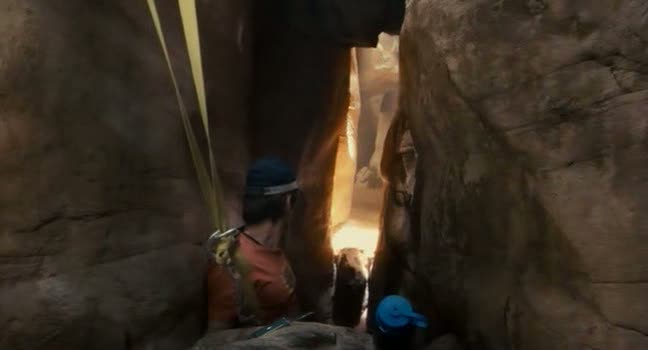 Lest we fail to notice that the time period mentioned in the title of Danny Boyle’s latest refers to the gestation period before the spiritual and quasi-physical rebirth of the protagonist Aron Ralston (James Franco), the director showcases him emerging out of the vaginal cave, in a diminished stature, with his representative umbilical cord severed, struggling to walk and talk and, hang on, suckling on a metallic hook affixed to the ground. That 127 Hours turns out to be a terrific film despite Boyle’s periodic middle brow tendencies is emblematic of the schizophrenic nature of his sensibility, which so wildly swings from adolescent camp and calculated profundity, wherein, surprisingly, even strained poetry soars. Opening portentously with staccato shots of Aron’s right hand, which becomes a MacGuffin later on, 127 Hours follows Ralston’s five-day encampment at nature’s existential purgatory, where realistic emotions become absurd and absurd emotions the only valid ones and where freedom of the mind compensates for physical imprisonment. Aron is like the audience in a film hall whose material reality casts no influence on their psychological state. Likewise, Boyle’s film startlingly segues midway into a heady reflection on digital culture, in which history, memory and even real people are replaced by pop images, in which identities are split in order to deny reality and in which death is but a smudge in the recording. The correct genre to classify Boyle’s film is Erotica – with Anthony Dod Mantle’s camera probing the tanned skin and caressing the sensual curves of the landscape – in which man’s ceaseless love affair with nature both humbles and inspires him. (Aron’s manoeuvres through the canyon and his first attempts to free himself themselves resemble copulation, making him the father of his new self). But aren’t all these philosophical games ultimately exploitative? I think the film’s eventual humanism answers that question.








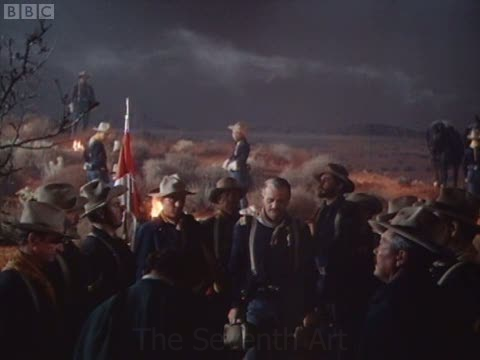
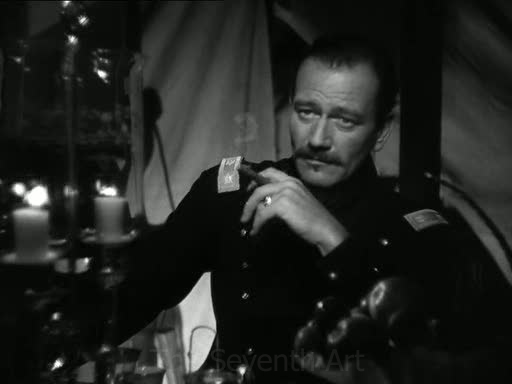
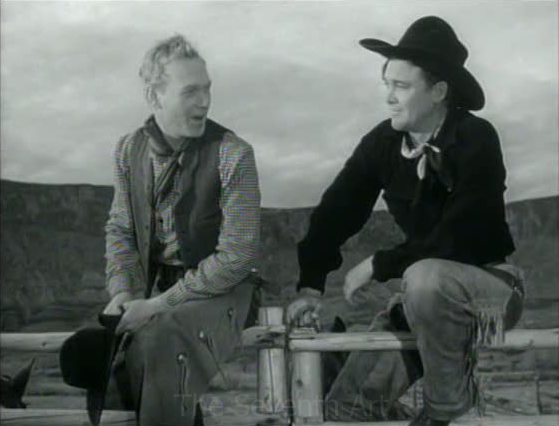


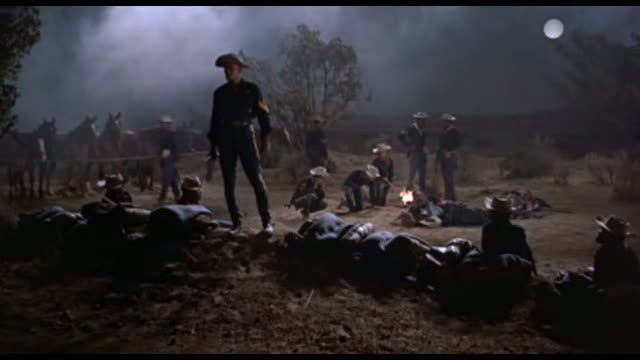


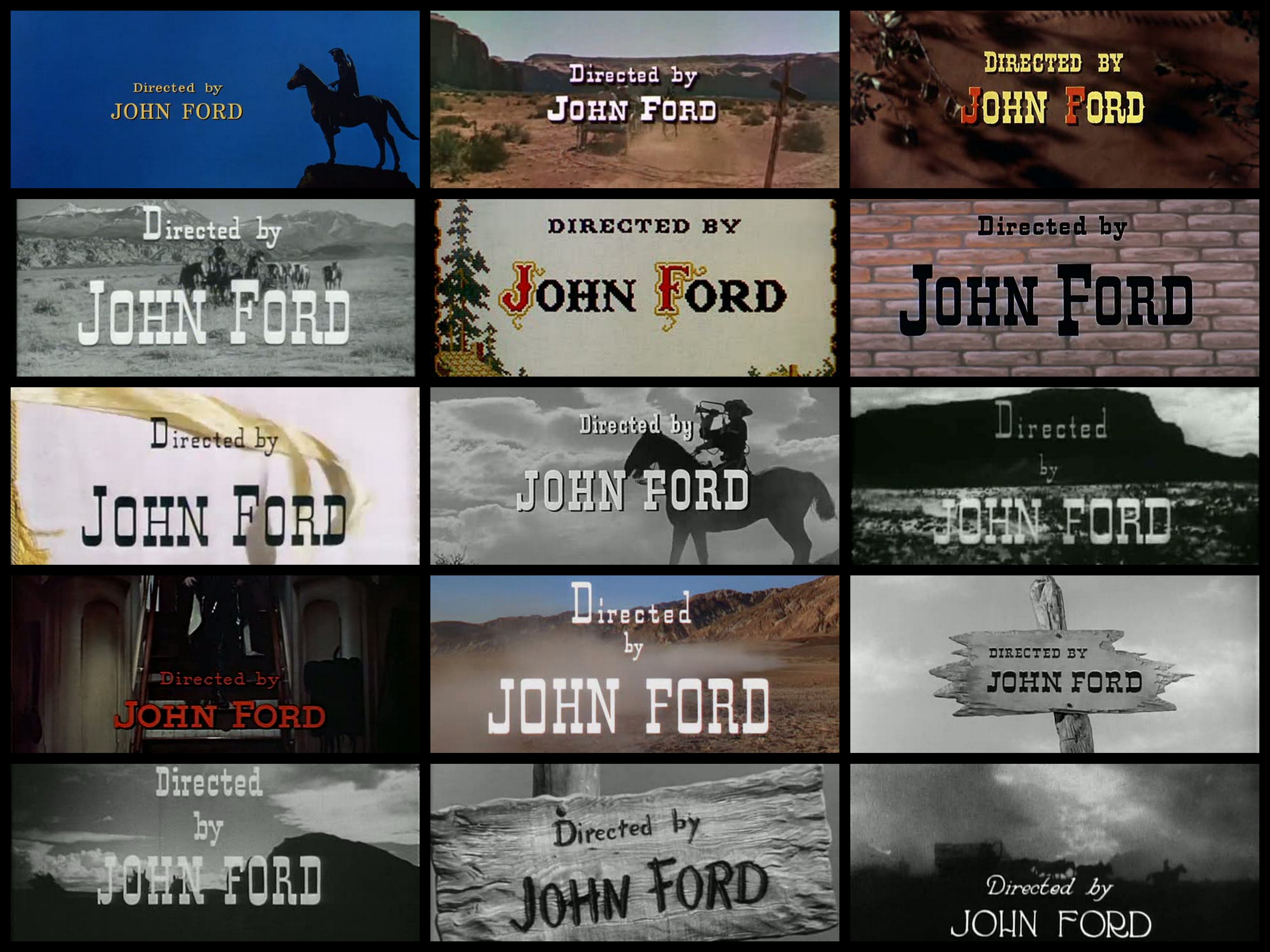


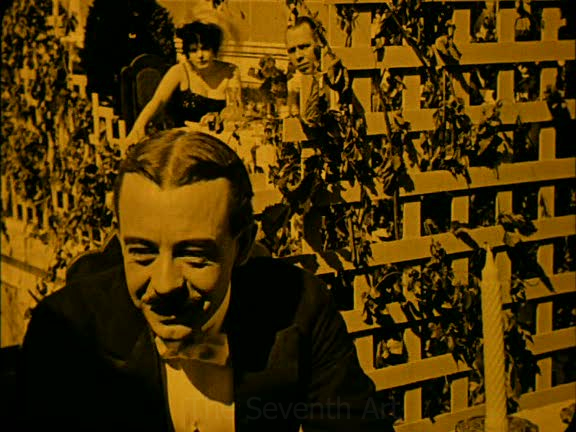
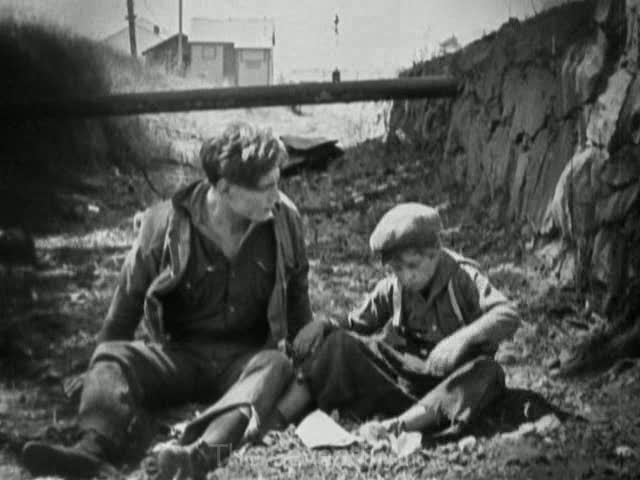


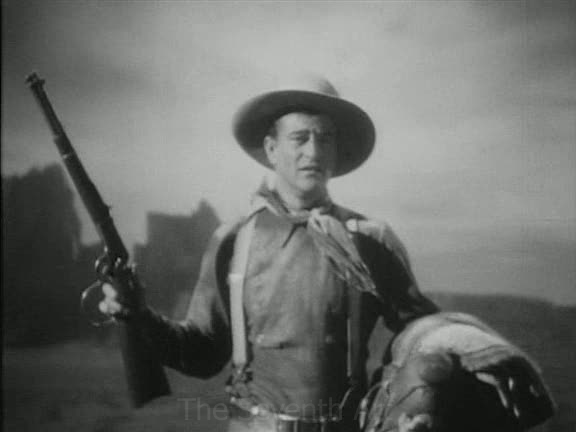

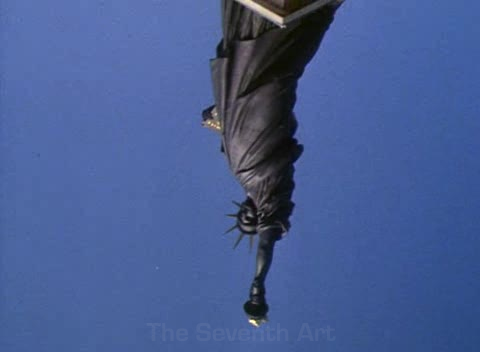
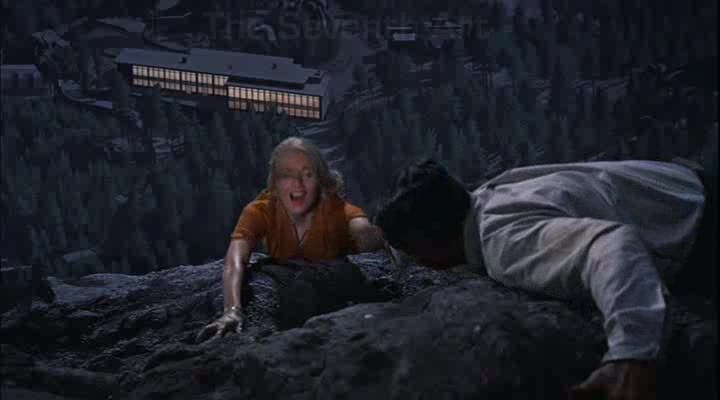


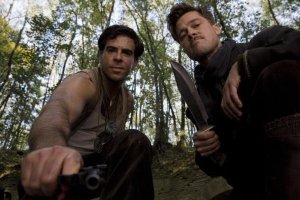 “I don’t know whether it’s a comedy or a tragedy, but in any case it’s a masterpiece”, says one of the characters, self-referentially, in Godard’s
 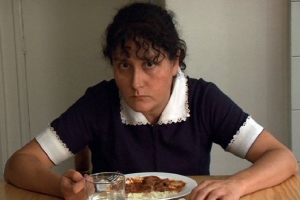 A sister film, in some ways, to Jonathan Demme’s brilliant Rachel Getting Married (2008), Sebastián Silva’s The Maid is nothing short of a spiritual revelation at the movies. What could have been an one-note leftist tirade about Chile’s class system is instead elevated into the realm of human where one facial twitch, one stretch of silence and one impulsive word can speak much more than any expository monologue or contrived subplot. There is no simplification of human behaviour here, no easily classifiable moral categories and no overarching statement to which truth is sacrificed. Nor does Silva suspend his study of the classes to observe his characters. He merely lets the obvious stay in the background. And just when you think that Silva’s vision of the world is getting all too romantic, he delivers a fatal blow to shatter your smugness – a single, deceptively simple shot during the final birthday party that masterfully sums up everything from the irreconcilable, repressed tension that exists between classes in capitalistic societies to our adaptability as humans to live peacefully with each other despite socio-economic disparities.
 Rigorous but oh-so-tender, centenarian Manoel de Oliveira’s one-hour wonder Eccentricities of a Blonde-haired Girl is a film in one and a half acts. Oliveira translates the work of Eça de Queiroz to the screen, running the 19th century tale of romance through the current economic landscape and harnessing the resultant anachronism to paint an achingly beautiful picture about the inability to transcend class, escape reality and lose oneself in art. Despite its decidedly Brechtian and ceaselessly self reflexive nature, Oliveira’s film is rife with moments of poignancy and touches of humour. Using double, triple and quadruple framing and achieving a mise-en-abyme of art and reality, Oliveira writes a ruminative essay on the impossibility of art and reality to merge, the confusion that exists between them and the classism that exists within and with respect to art. Flooded with references to art and art forms, Eccentricities is such a dense and intricate fabric of the arts that even the past is treated in a detached manner like a piece of art, where each image looks like a painting, each sound feels like a melody and each movement cries out: “cinema!”.
 Of all the recent movies that have attempted to acknowledge dark chapters in national histories and advocated looking forward to the future instead of crying over what is lost, perhaps, none is as sober, ethical and uncompromising as Claudia Llosa’s Golden Bear winner. Llosa inherits her tale from the terrorist atrocities that plagued Peru two decades ago (Inheritance being the prime motif of the film) but, subsequently, discards every possible opportunity for sensationalism or propaganda. Tightly framing the lead character, Fausta (Magaly Solier), within and against claustrophobic structures, doorways, photographs, windows, paintings, mirrors and walls, gradually varying the depth of focus along the movie to detach the protagonist and integrate her with her surroundings and using extremely long shots to dwarf her in vast opens spaces of the tranquil town, Llosa concocts a film of utmost narrative austerity and aesthetic rigor. Punctuating and contrasting these downbeat images of Fausta’s life are slice-of-life sequences from the town depicting various wedding rituals and parties which tenderly highlight Peruvian people’s open-hearted embracing of capitalism and their resolve to come out of the trauma of the past and move on with life.
 If Inglourious Basterds was a coup from within the system, Jim Jarmusch’s The Limits of Control is an out-and-out war against the machine. The essential piece of cinema of resistance, The Limits of Control eschews simple genre classification and flips every ingredient of Hollywood’s conveyor belt products to surprise, appall, irritate and provoke us with each one of its moves. The complete absence of Jarmuschian brand of deadpan humour announces the film’s seriousness of intent. It is as if Jarmusch wants to establish once and for all that Hollywood does not equal American cinema and that the cinema that the former school marginalizes is truly alive and kicking. The Limits of Control is a film that can easily get on your nerves but, eventually, it succeeds in getting under your skin and evolving gradually to reveal how meticulously crafted it is. Using Cinematographer Christopher Doyle, production designer Eugenio Caballero and editor Jay Rabinowitz masterfully, Jarmusch creates a movie so meditative and relaxing that one feels exactly how William Blake (Johnny Depp) would have at the end of Dead Man (1995).
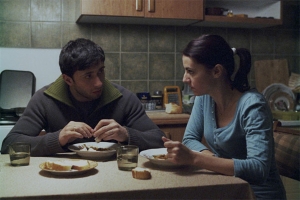 Porumboiu’s follow-up to one of the most hilarious comedies of the decade, 12:08 East of Bucharest (2006), is a companion of sorts to Jarmusch’s film not only in the sense that both of them negate the function of the genre they are supposed to belong to, by completely de-dramatizing their narratives, but also because Porumboiu’s film, too, is a conflict between two types of cinema – the cinema of analytical contemplation represented by the detective-protagonist of the film (Dragos Bucur) and the cinema of thoughtless action represented by his ready-for-ambush boss (Vlad Ivanov). However, more concretely, Police, Adjective is an examination of how our own political and social systems, partly due to the rigidity of our written languages, end up dominating us and how individual conscience and social anomalies are effaced clinically in order to have the bureaucratic clockwork running smoothly. Like Bucharest, Porumboiu, often self-reflexively, sketches the portrait of a bland and pacific city that tries to ape the far west and project itself as more dynamic than it actually is. The film’s disparate themes crystallize deliciously in the final, side-splitting, Tarantino-esque set piece where we witness the police chief urging his subordinates to act by the book, literally.
 Tetro is a beautiful film. Not just in the way it looks, but in the sheer romance it has for a lost world. The only worthy B&W film of this year out of the four I saw (the other three being Haneke’s
 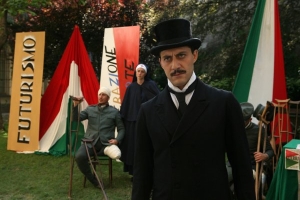 Writer-director Marco Bellocchio’s ballad, based on a nebulous part of fascist leader Benito Mussolini’s life, can teach those so-called historical dramas a thing or two about locating personal ideologies within collective history without being exploitative or pandering to pop demands. Bellocchio’s film is far from a detailed recreation of Mussolini’s political life. It is, in fact, a commentary upon such “detailed recreations” of history based on documents written by winners. Bellocchio’s formidable script and mise en scène keep probing and remarking upon the tendency of fascist systems to suppress histories – personal and national – and exploit popular media, especially the relatively young and emotionally powerful cinema, to blind people of truth and forge a faux reality – a theme underscored in Tarantino’s film too. What more? Bellocchio constructs the film exactly like one of those Soviet agitprop films – not by easy spoofing, but by retaining their spirit and rhythm – using rapid montage, expressionistic performances and operatic sounds. Be it common folk fighting in a cinema hall over a news reel or a bereaved mother breaking down during the screening of The Kid (1921), cinema registers its omnipresence and omnipotence in Bellocchio’s film.
 The perfect antidote to the summer blockbuster, Warwick Thornton’s Samson and Delilah is an extremely assured and undeniably moving piece of cinema that arrives, appositely, as the golden jubilee reboot to Herzog’s thematically kindred movie, Where the Green Ants Dream (1984). Cleverly relegating specific issues such as the Australian government’s intervention and relocation policies for the Aborigines to the background, Thornton frees his films of broad, propagandist political agendas, without ever making the film lack social exploration. With an extraordinary sound design, Thornton keeps the word count in the film to an absolute minimum, letting the stretches of silence shared by his lead characters speak for themselves. The film’s observations about banality of racism in contemporary Australia, exploitation of tribal art and its consequences, the effect of colonialism, especially due to Christian missionaries, on the Aboriginal culture and the ever growing chasm between the tribal and white life styles themselves are fittingly subordinated to the beautiful, unspoken love story that, essentially, forms the heart of the film.
 Let me dare to say this: Jacques Audiard’s A Prophet is either the most profound or the most pretentious movie of the year. For now, I choose the former. Audiard’s decidedly unflinching feature breaks free from the limitations of a generic prison drama and takes on multiple dimensions as the apolitical and irreligious protagonist of the film, Malik (played by Tahar Rahim), finds himself irreversibly entangled in ethnic gang wars within and outside the prison. A trenchant examination of religion as both a tool of oppression and a vehicle for political escalation, A Prophet is an audacious exploration of Muslim identity in the western world post-9/11. Although the plot developments may leave the viewer dizzy, it is easy to acknowledge how Audiard confronts the issues instead of working his way around it or making cheeky and superficial political statements. Strikingly juxtaposing and counterpointing Sufism and Darwinism in Malik’s search for identity, Audiard creates an immensely confident and nonjudgmental film that trusts its audience to work with the rich ambiguity it offers.


 The Seventh Art


