Hollywood


The view from afar...

The view from afar…

The Oscar Official entries are out (Full list here) and as many as 67 countries have submitted their candidates for the golden statuette – A record number by itself. With the nominations out in January, here is an early look at the major players this year.

GomorraItaly’s tale of the life and times in Camorra, the crime hub of Naples interweaves 5 stories of people living in the area and trying to make a life and name for themselves. The film is already making waves as the author of the book on which the film is based on is under a life threat. Confusing and unconventional narrative keeps one engaged. And the Academy won’t fail to notice such films.

The Baader Meinhof Complex: Consistent performer at the Oscar Awards, Germany’s fantastic portrayal of interconnected lives in The Edge of Heaven may have been overlooked, but this film about the rise of the Red Army Faction during the late 60’s seems to be the favorite especially since the Academy seems to have shed its policy of not embracing violence.

The Class: A sleeper, even for Cannes where it went all the way. It has become a thumb rule that Oscar should not be given to the Palm D’Or winner and The Class may just succumb to that. Another minimalist film, following its Cannes predecessor 4 Months. 3 Weeks and 2 Days, The Class serves as a exhibition of the various cultures and their intersection in the city of Paris. A low chance, but the Academy never ceases to surprise.

Waltz With BashirIsraeli reply to Persepolis follows the life of the director during his involvement in the Israel-Palestine war told in animation. The Academy loves issues – be it cultural or political (conditions apply!) – and what bigger issue at this time than the middle eastern conflict. Persepolis was unfairly ignored and let’s hope Waltz with Bashir makes up for that.

Dream Weavers: Beijing 2008: We’ve all seen it and we’ve all collapsed in awe – the 2008 Olympics in China. Surprising entrant is this documentary from China that follows the Chinese government’s run up to the Beijing Olympics. The film took 5 years to make and hope is that it is as grand as the Olympics itself. But a docu? Propaganda? And China? Fat Chance!

Opium War: Siddik Barmak made an instant mark with his film Osama (2003) and Opium War follows suit that follows life in Afghanistan as a country influenced by both the Russian and American involvement in War. With the film grabbing the top award at the Rome International Film Festival this year, this one comes as one of the dark horses in the race.

The Song Of SparrowsIran’s safest director Majid Majidi is embodiment of consistence and it may be high time he gets another nod after Children of Heaven (1998). The Song of Sparrows follows the life of a man after being fired from an Ostrich farm for his negligence. How the melodrama supporting academy views this one is a question mark. But the profile of the director may just give it the required boost.

Taare Zameen Par: The Indian entry is not exactly a strong contender and may be one of the first films to be weeded out. For a person not new to the Hollywood way of filmmaking, the ordeal of a boy suffering from Dyslexia and his subsequent treatment may be just too typical. Taare Zameen Par edged past contenders like Vallu, Tingya, A Wednesday, Mumbai Meri Jaan, Black & White, Jodhaa Akbar, Rock On and Ghanyam.

The Rest Is SilenceRomanian Follow up to the Cannes winner 4 Months. 3 Weeks and 2 Days is an unconventional movie that depicts how a film based on the Romanian war of independence is made. Part fact, part fiction, the film is being praised in internet circles for its extraordinary art direction and cinematography. We’ll have to wait to hear more about this seemingly strong contender.

Mermaid: Coming of age tale of a girl whose illusions of Childhood are slowly crumbled as she discovers love and the real world may not recreate the magic of Moscow Does not Believe in Tears (1980) at the Oscars, but given Russia’s track record of the Academy Awards, Mermaid seems to be a formidable player this year.

Captain Abu Raed: Jordan enters the race for the first time in its film history and how! Already the winner of the revered Sundance Audience Award and going great guns among the internet forums, Captain Abu Raed is the story of a janitor who is mistaken for a captain by the children in his neighbourhood. He begins to assume the bestowed role and develops fictional stories about his travels to far off countries. This genuine crowd pleaser may just be one of the five the Academy is looking for.

Let’s wait for January.
B for Vendetta

B for Vendetta

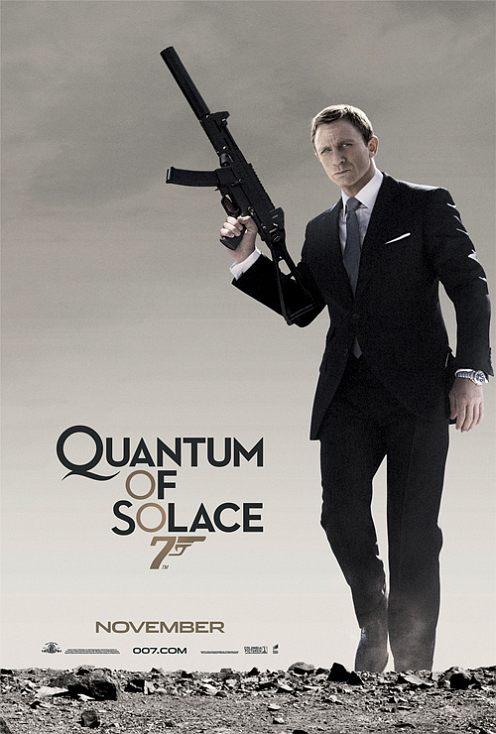
I didn’t want to start with this cliché, but Bond is back. This time, loaded with wrath in his heart, distrust in his mind and ammo in his gun. Instant hit Daniel Craig returns for his second performance in the first ever sequel to a bond film. And intriguingly Marc Forster takes the control of the Titanic, much to the concerns of the fans. And to negate the anxiety, the film has been shot in more locations than ever. So, does Quantum of Solace bring back the sheer fun of Goldfinger or does it bring the dreaded minutes of Die Another Day? Or plainly, does it have the licence to thrill?

Quantum of Solace takes off from where Casino Royale (2006) left us with the most stylish Bond ending ever. Bond has just learned his first lesson – one of intense mistrust and callousness. He is shattered by Vasper’s (Eva Green) death and is sets out on a roaring rampage of revenge (sorry Kiddo!). With the help of Eva’s endnote (not another Bond pun!) and Britain’s own forensic service, he traces the whereabouts of Vasper’s extortioner which brings him to Haiti. Almost immediately, he meets Camille (Olga Kurylenko), a borderline femme fatale who herself is on a venture of personal vendetta and intends to avenge the death of her father. Bond finds out that she has close relations with an environmental activist Dominic Greene (Mathieu Amalric) and employs her to get to him.

Greene says to Bond in one scene: “You make a fine couple – you are both, what is the expression? Damaged goods.” and that is what it is. Camille is Bond’s female counterpart in all sense of the term and equipoised as far as emotional state and instability is concerned. Both of them have lost the ones that they loved the most and both of them are determined to kill for personal relief. They feel tangled in a game they desperately want to finish. Bond helps alleviate Camille’s anxiety but she is unable to reciprocate, in spite of her wishes to free him from the vicious circle of survival and death. With the help of Camille, bond comes to realize that there is more to Greene’s plans than meets the eye. He tracks down Greene’s contacts, which reveals his unimaginable reach only affirming Bond’s now-natural suspicion.

Almost as a generalization, it is the megalomaniacs in Bond films that make them most interesting. Of course, there have been genius inventions such as Goldfinger and Scaramanga and gross mishaps such as Dr. Kananga and Gustav Graves. But it becomes their unwritten duty to make the films quirky, perhaps even lovably cheesy and essentially make them disparate from contemporary franchises such as Indiana Jones or Die Hard. Though the character of Greene is grossly underwritten (like Renard of The World is Not Enough (1999)), it is a very interesting one. He is not a man with steel teeth or huge underground lairs. For heaven’s sake, he does not even carry a gun. But his short stature, the slight hunch and mafia-like charm has enough to make him seem formidable. But as they say in the business world, it is the result that matters. And Greene’s character remains underdeveloped and green (I’m really sorry for that one!).

It is fascinating to see how the franchise has grown in the 46 years of its cinematic existence. From the incessant thriving on cold war and relationship with the Soviets in the Connery era, to chemical warfare and the space race in the Moore era, moving on to the post-Soviet world and the media’s intrusion in world affairs in the Brosnan era and the contemporary issues of terrorism and ecological threats with Craig, the humungous series has reinvented itself time and again to suit and sometimes succumb to the changing face of world culture and politics. The sexist tag on Bond has been discussed, M, a person with immense political power, has been made a woman, and Felix Leiter is now an African American, for crying out loud. All this is evidently a response to the gradual opening up of social outlooks of this mercurial world.

In Quantum of Solace, Greene doesn’t even care about the exhaustive oil race, but for something more rooted in the future and something more dreadful to the human race as a whole – a global issue that has been getting worthy attention in a lot of films off late – although the plot isn’t even relished explicitly by the baddie and not even its consequences stressed upon (another uncharacteristic quality of a Bond film, where the evil plot is usually the driving force for the narrative). Bond finds out Greene’s plans which he executes with the help of the legal privileges of Medrano (Joaquin Cosio), a general who has been trying to overthrow the Bolivian government and the watchful eyes (or rather the absence of it) of the CIA. And like the narrative, Bond does not care much about it and his sole intention is propelled by his need for vengeance.

The film’s basic premise reminds us of the Timothy Dalton starrer Licence To Kill (1989). Both follow Bond’s adventures as he sets out on a personal revenge in order to avenge the death of a beloved. And in both, the grim Bond is considered out of control and his licence to kill is revoked. However, in the older film, Bond never tries to kill almost throughout the whole film. Licence to Kill maintains a kind of tense atmosphere where the upper hand is gained by deceit and espionage and brutal action is but a luxury. And this is where Quantum of Solace itself goes out of control. Mr. Bond thinks by his gun and his primary objective remains dodging the next bullet.

Much talk is going on about how this film is so uncharacteristic of Bond and how un-Bond the franchise has become (yes, I know. No “Bond, James Bond”. No Q, No Moneypenny. No “Shaken, Not Stirred”, No puns…). So has Bond lost his suavity and panache? Yes and No. One should see that the age of Connery thrived on the elegance of the lead and his funny but daring escapades. The style part of the film arose because of the way the character was written and the uninterrupted shots that filmed him. The franchise was more of a spy series than an action till the age of Brosnan after which there has been a marked difference in the way Bond has been catered to the audience. Probably, fuelled by the financial debacle of Licence to Kill, Eon productions was hesitant to perpetuate the series and it was not until 1995 (GoldenEye) that they realized that the character should be marketed differently, perhaps as an influence of the CG wave. And now, the style aspect of the film rises from the progressive technology and the way it is utilized to furnish the high mojo quotient to the series. So it is true that Bond now isn’t what Ian Fleming imagined him to be, but only as a inevitable necessity owing to the changing times. But having said that, there is definitely a scope for marriage of the two eras and decidedly a possibility of restoration of Bond’s lost magic.

With a filmography that is highlighted by films such as Finding Neverland (2004) and The Kite Runner (2007), one wouldn’t place the odds in favour of the debutant Bond director Marc Forster. Perhaps, Forster himself was out on a mission – to prove that he is capable of experimenting with genres. The film seems Coppola-esque in a couple of scenes and Inarittu-ish in another, but maintains a Michael Bay-ian mindlessness almost throughout. High on action, with almost every alternate scene being a high octane automobile chase or a hand to hand combat, the average shot length for most part of the film is perhaps less than half a second and is at times (actually, many times) distracting. It feels like having no space to think or even breathe and of course, no quantum of solace. All of it seems acceptable when one is introduced to the third act. It looks as if the director has chopped off a good twenty minuets off the last act and as a result the whole showdown at the Bolivian desert feels abrupt and hurried.

All said, what is the bottom line? Another high-flying action extravaganza in this year’s tryingly long queue is satisfactory. Not as refreshing as Casino Royale and definitely not as pathetic as Die Another Day (2004), Quantum of Solace is a good film to watch for people who are new to Bond and they wouldn’t have any reason to complain (By the way, the film has a snazzy title track by Jack White and Alicia Keys). But for guys who have been boasting about Bond countdowns and ranting about the best and the worst of Bond, better stick to Connery!

Verdict:

P.S: This brings me to the end of the long and mostly enjoyable Bond marathon. Hope you enjoyed it too.

-FILE CLOSED-

007

So, With Quantum of Solace hitting the theaters today, here is a list of the best and worst aspects of the world’s most famous spy spanning his long yet youthful career of 21 films.

Best Bond Film

Goldfinger (1964)

Worst Bond Film

For Your Eyes Only (1981)

Best Bond Villain

Auric Goldfinger (Goldfinger)

Worst Bond Villain

Dr. Kananga (Live And Let Die)

Best Bond Girl

Pussy Galore (Goldfinger)

Worst Bond Girl

Melina Havelock (For Your Eyes Only)

Best Bond Thug

Jaws (The Spy Who Loved Me/Moonraker)

Worst Bond Thug

Bambi and Thumper (Diamonds Are Forever)

Best Bond Line

Bond, James Bond” (What else?)

Worst Bond Line

I’ve always wanted to have Christmas in Turkey” (The World Is Not Enough)

Best Bond Gadget

Little Nellie (You Only Live Twice)

Worst Bond Gadget

The Gas Pellet (Live And Let Die)

Best Bond Title Sequence

Casino Royale (2006)

Worst Bond Title Sequence

Die Another Day (2002)

Best Bond Repartee

Bond (being subjected to laser torture): “Do you expect me to talk?

Auric Goldfinger: “No, Mr. Bond. I expect you to die.

(Goldfinger)

Worst Bond Repartee

Hugo Drax (after Bond kills his Python): “Why did you break up the encounter with my pet python?

Bond: “I discovered it had a crush on me

(Moonraker)

Best Bond Moment

Q getting into the action in Octopussy (1983)

Worst Bond Moment

Death of Kananga in Live And Let Die (1973)

Best (!) Bond Disguise

best-bond-disguise

Octopussy (1983)

Worst Bond Disguise

worst-bond-disguise

You Only Live Twice (1967)

So, Here is the rank list of the Bond Films so far.

01. Goldfinger (1964)
02. From Russia With Love (1963)
03. The Living Daylights (1987)
04. Dr. No (1962)
05. Licence to Kill (1989)
06. The Man With The Golden Gun (1974)
07. Casino Royale (2006)
08. On Her Majesty’s Secret Service (1969)
09. Tomorrow Never Dies (1997)
10. Moonraker (1979)
11. The Spy Who Loved Me (1977)
12. Octopussy (1983)
13. You Only Live Twice (1967)
14. Diamonds Are Forever (1971)
15. A View To A Kill (1985)
16. GoldenEye (1995)
17. The World Is Not Enough (1999)
18. Thunderball (1965)
19. Live And Let Die (1973)
20. Die Another Day (2002)
21. For Your Eyes Only (1981)

Let’s wait for a day to see if Quantum of Solace infiltrates into the left side column or if it slips into the right.

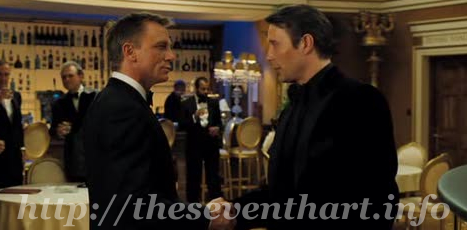
Casino Royale (2006)
Martin Campbell
Bond, James Bond: Daniel Craig
Arch Rival: Le Chiffre (Mads Mikkelsen)
Bond Girl: Vesper Lynd (Eva Green)

Casino Royale (2006)

Casino Royale (2006)

Daniel Craig becomes the sixth man to don the role of the British secret agent in Casino Royale. The film follows the early professional life of Bond, just after he has been elevated to the 00 status. He is naïve and trusts women he sees. In this installment he follows Le Chiffre, the investment giant who deals with the money lent to him by the leading terrorist organizations and multiplies it using Poker matches. Bond is sent to play him fair and square and turn him bankrupt, forcing himself to run out of business. He is aided by Vesper Lynd, responsible for handling the huge sum of money sent along with Bond, and Mathis, the local agent for MI6. Sure enough, the ordeal becomes one involving more than Bond’s brawns. Meanwhile, it is revealed that the match is not just between Le Chiffre and Bond, but a third hand too.

Bond is no more (or not yet!) the smooth talking, ever punning, suave gentleman. He is a mean killing machine and lives by his code of duty. Daniel Craig is an instant hit unlike someone like Roger Moore who had to convince us for a couple of movies or three. His USP remains his barely legible accent and I-mean-business attitude. Immensely stylish and high on production value, Casino Royale is still a bit unconvincing perhaps because of the nature of Bond himself. The opening stunt scene easily features in the best of Bond and one only wonders what they will come up with in the next one.

Die Another Day (2002)
Lee Tamahori
Bond, James Bond: Pierce Brosnan
Arch Rival: Gustav Graves (Toby Stephens)
Bond Girl: Jinx Johnson (Halle Berry)

Die Another Day (2002)

Die Another Day (2002)

Brosnan’s final film as Bond is a mess, to say the least. Strong contender for the title “1001 bad puns”, this installment follows James Bond after he is captured in North Korea following a betrayal by a fellow agent. He is exchanged for a notorious terrorist Zao, but not after being tortured like hell. He gets out of the confinement imposed on him by M and goes on a journey of personal vendetta and tries to get back Zao, in the process discovering an Icelandic diamond giant’s connections with Zao. Bond now travels to Iceland to meet this man, Gustav Graves and his assistant Miranda. He is also aided by another agent Jinx, as he tries to hunt down the person who betrayed him.

Perhaps the worst Bond film ever, Die Another Day goes on and on without even noting that nobody cares beyond the 70 minute point (and that is for the patient viewer). Toby Stephens as the villain seems like a high school kid who has stolen his father’s pistol and is threatening his fellow school kids. And what were they thinking when they put in the invisible car? A monumental showcase of characteristic Bond puns and double entendres, Die Another Day feels like His Girl Friday for its judicious use of runtime, only that it isn’t even half as funny. It feels like the dreaded days of Roger Moore again, for the bond between the films is so evident (oops!).

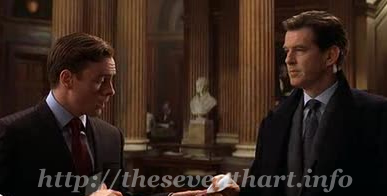
The World Is Not Enough (1999)
Michael Apted
Bond, James Bond: Pierce Brosnan
Arch Rival: Renard (Robert Carlyle)
Bond Girl: Christmas Jones (Denise Richards)

The World Is Not Enough (1999)

The World Is Not Enough (1999)

The next piece in the huge series would be The World Is Not Enough and follows Bond’s mission to Europe to investigate the rat in the family of Richard King, the wealthy oil giant with a project of a lifetime on the anvil, after his murder at the MI6 headquarters itself. Bond tracks down the person responsible to be Renard, a terrorist whose accident has rendered him incapable of any physical feeling. As Bond tries to restore the hurt pride of both M and the organization, he stumbles across the truth about King’s murder. Bond, in the process, meets an obviously and phenomenally miscast Denise Richards as Christmas Jones (Get ready for the cheesy gags), the nuclear physicist (cough, cough) who tugs along. Like GoldenEye (1995) Bond is caught in another moral conflict as he has to choose between cold formalities of duty and warmth of relationships.

This version scores on the action sequences with lots of eye-candy involving both incredible computer graphics and genuine stunts. However, Renard’s character, which could have been converted into one of the best Bond villains, is wasted primarily to share his screen space with his sweet heart.  One of the best soundtracks of the series features a spectacular title track by Garbage (!).This one definitely shows that Bond is not an anachronism and is inching towards the new generation.

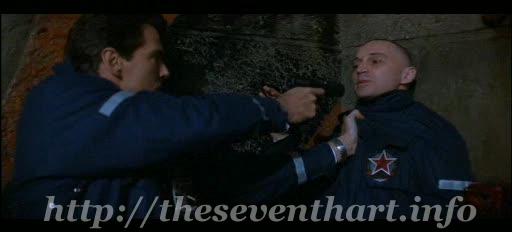
Tomorrow Never Dies (1997)
Roger Spottiswoode
Bond, James Bond: Pierce Brosnan
Arch Rival: Elliot Carver (Jonathan Pryce)
Bond Girl: Wai Lin (Michelle Yeoh)

Tomorrow Never Dies (1997)

Tomorrow Never Dies (1997)

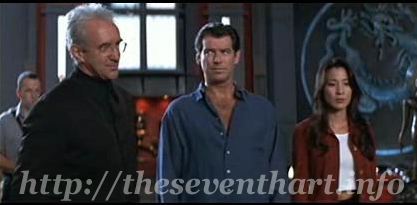
Pierce Brosnan would don the role of James Bond for the second time in Tomorrow Never Dies. In this part of the series, A Media Mogul named Elliot Carver, whose wife had been one of Bond’s many old flames, plans to induce war between the British and the Chinese governments in order to win the exclusive broadcasting rights of his satellite channel in China, the only country he hasn’t yet been able to get his hands on. He creates his news and executes them, thereby becoming the first one to publish and broadcast them. To gain advantage in China, he rigs up attacks on the defense forces on either country in order to trick them into believe that the other government had started the war. Enter Bond, who teams up with Chinese media official (?) Wai Lin to blow Carver’s cover and destroying his offshore operations and prevent war before things go out of hands.

There is a marked difference between Tomorrow Never Dies and the previous films in the series. Bond undergoes a much needed makeover and it works. The way issues and characters are handled is more refined (save Carver) and so is the suavity. The actions scenes are intact and issues handled are more pertinent to the age. It is refreshing to see no Soviet characters running all over. One of the better films of the series.

GoldenEye (1995)
Martin Campbell
Bond, James Bond: Pierce Brosnan
Arch Rival: Alec Trevelyan (Sean Bean)
Bond Girl: Natalya Simonova (Izabella Scorupco)

GoldenEye (1995)

GoldenEye (1995)

It is now time for the fifth actor to step into the shoes of the world’s greatest secret Agent. It is not just Pierce Brosnan who is new to the world of Bond, but even the new M is a lady, played by the no-nonsense Judy Dench. GoldenEye follows Bond’s adventures in Russia just after the collapse of Communism as he tries to dig into the mysterious character Janus, whose agents destroy the GoldenEye control center and steal its powering source. As the identity of Janus is revealed in the process of tracking down the criminals, Bond’s past is dug up. Bond meets up with Natalya, a programmer who luckily escapes n the massacre at the control centre, and both of them go to Cuba to trace out the other GoldenEye control centre. They have to stop Janus, who is planning the biggest bank robbery in history, from disrupting the computer systems of all the Banks in England. With Bond’s guilt plaguing him, can he act by the mind and not the heart?

Golden Eye remains the most delayed bond film ever, releasing six years after the previous installment. Yes, both Bond and M have changed, but the Russians still speak English among themselves with a Russian accent. Wittier and funnier than many bonds, GoldenEye tries to shed Bond’s macho image to an extent and delve into his personal life of harsh loneliness. Brosnan is good with his lover-boy looks and gives Bond a much required makeover in this otherwise regular Bond fodder.

Licence to Kill (1989)
John Glen
Bond, James Bond: Timothy Dalton
Arch Rival: Franz Sanchez (Robert Davi)
Bond Girl: Pam Bouvier (Carey Lowell)

Licence to Kill (1989)

Licence to Kill (1989)

Timothy Dalton takes up the role of James Bond for one more time in the sixteenth offering in the series. In this one, Bond must avenge the murder of Della, wife of Bond’s CIA friend Felix Leiter and that takes him on the trail of a Mexican drug lord Sanchez, who has established a huge scientific base for the production of narcotic material and has planned to expand his control to as far as East Asia. Bond, with the help of CIA friend Pam Bouvier, flies across the country and infiltrates Sanchez’s loyal group, virtually becoming one of them. He is also helped by Sanchez’s beautiful mistress Lupe Lamora, who seems to have fallen for Bond. He starts his double crossing game and puts down his rivals using Sanchez himself. But Sanchez isn’t as big a sucker as he seems.

Timothy Dalton gives a one-two punch with Licence to Kill after immensely impressing with The Living Daylights. It is a pity that Dalton didn’t play in more Bond films, for he is the best Bond after Connery. The film brings back Bond’s off-the-cuff humour back and it usually helps. Action scenes are all top-notch and make the Roger Moore flicks seem like cartoons. Sanchez makes a great villain and just his stare seems enough to tell that he means business. Look out for a young Benicio Del Toro as Sanchez’s personal assistant. A worthy Bond.

The Living Daylights (1987)
John Glen
Bond, James Bond: Timothy Dalton
Arch Rival: Georgi Koskov (Jeroen Krabbé)
Bond Girl: Kara Milovy (Maryam d’Abo)

The Living Daylights (1987)

The Living Daylights (1987)

After an excruciating seven film streak as the English spy, Roger Moore steps down to make way for Timothy Dalton to step into Bond’s shoes – and how! The Living Daylights is a real thriller that has Bond defending a Russian general Koskov who has defected and is under threat from the KGB. Bond succeeds at that but soon finds that he has been tricked and the defection was but an excuse to turn the MI6 organization against the KGB head Pushkin who, as per Koskov’s statement, has started a mission to put down prominent American and British secret agents. Koskov, meanwhile, is allied with the American arms seller Whitaker who is an admirer of tyrants and warlords. Bond along with Kara Milovy, Koskov’s girlfriend, also tricked by him, and a group of Mujahedins try to stop Koskov from getting a huge amount of Opium out of Afghanistan and in turn get ammunition into the country.

Timothy Dalton is one of the most underrated and least spoken about Bond. Even the one hit wonder Lazenby is praised often. Though not as handsome as Connery or Brosnan, he sure can play the part effectively. The film, by the way, is one of the best Bond flicks and the stunts top all the earlier Bond films. The cracker of a climax where Bond fights in mid air is breathtaking even by today’s standards and thank god, no bad puns. The Afghan connection may raise a brow or two today.

« Previous PageNext Page »